From Mechanisms to Application: A Case-Based Review of Paulownia-Derived Biochar in Turfgrass Systems



Abstract
1. Introduction
2. Production and Fundamental Properties of Biochar
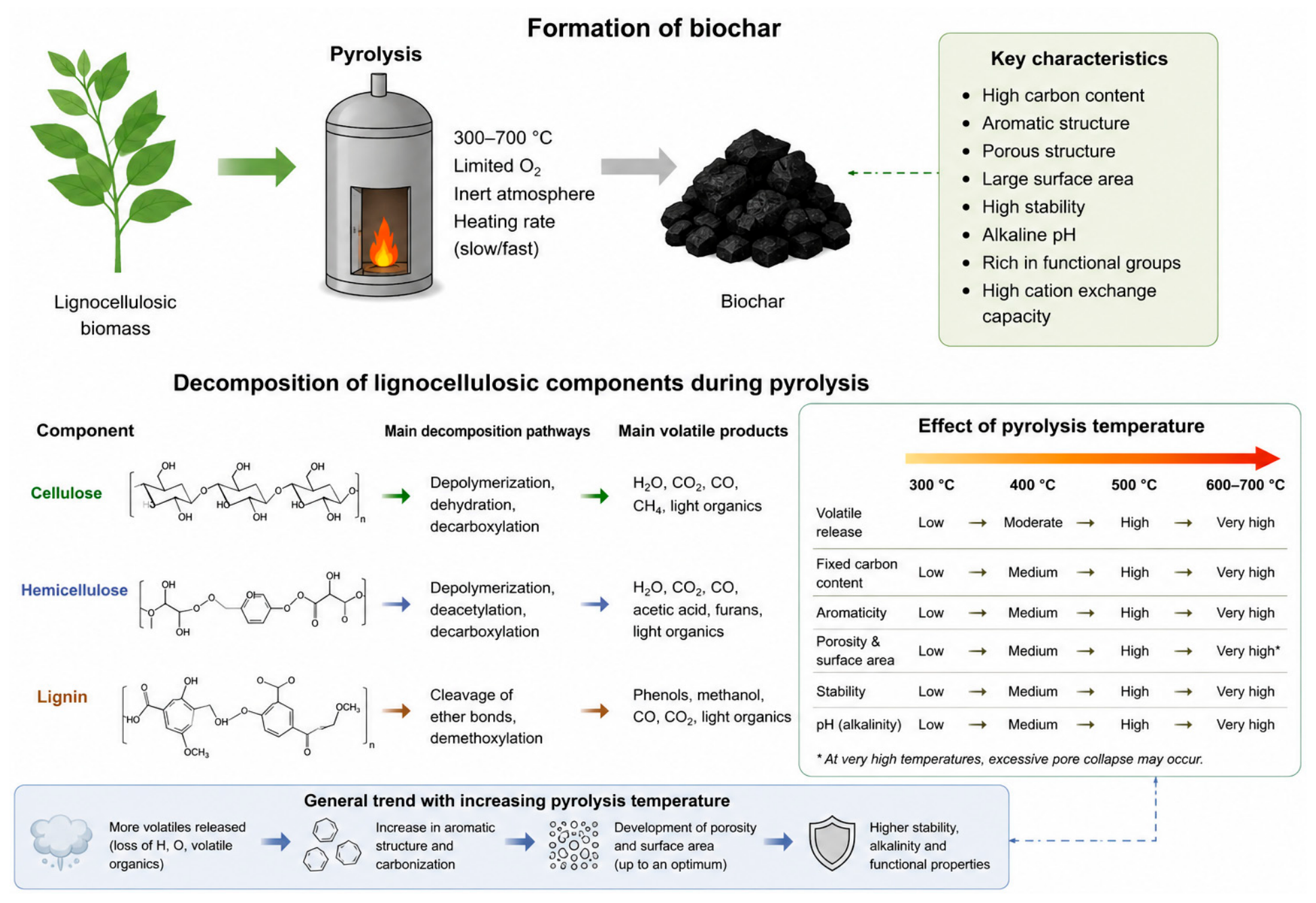
2.1. Formation Process
2.2. Common Biomass Feedstocks for Biochar Production and Their Role in Soil Improvement
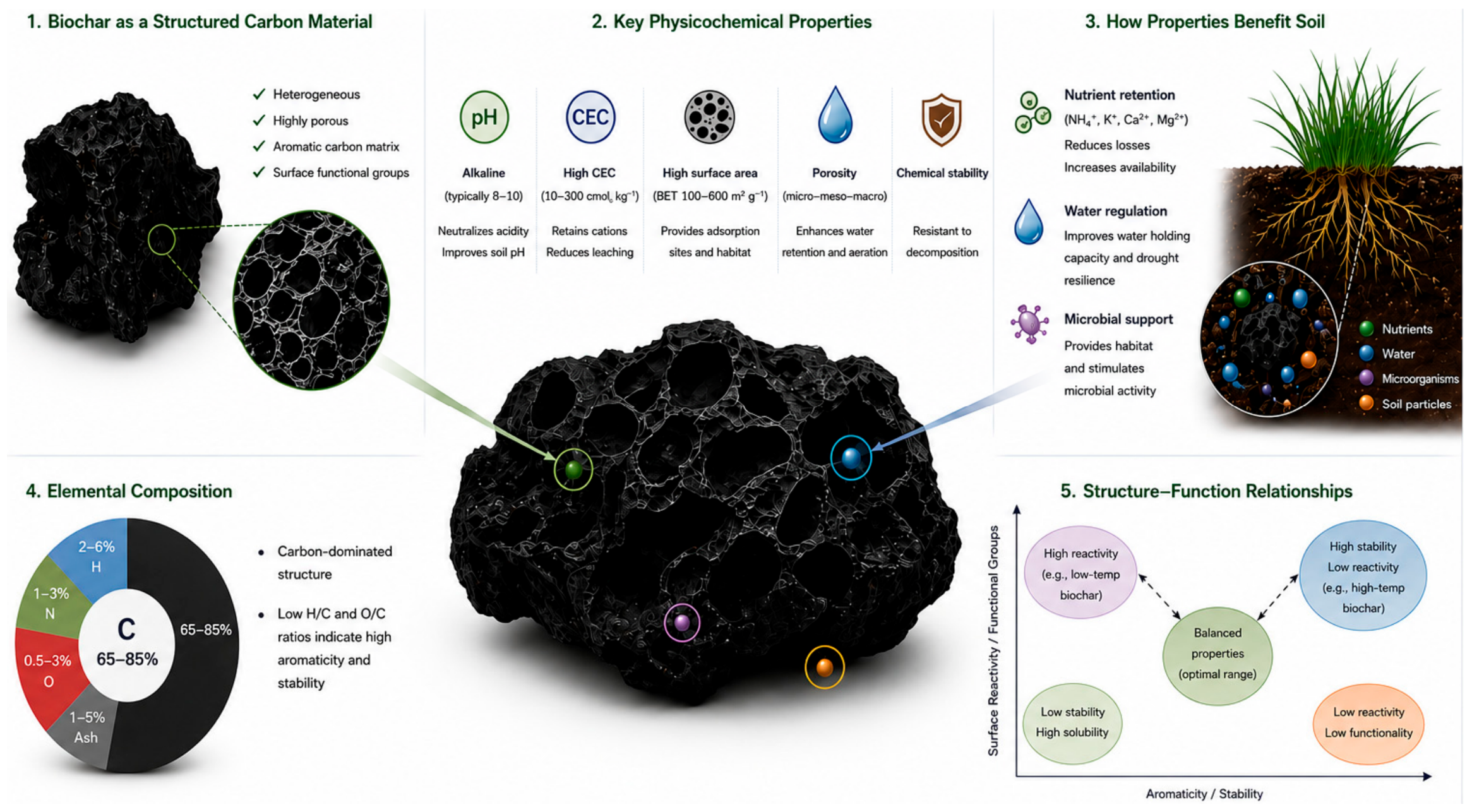
2.3. Structural, Chemical, and Textural Characteristics
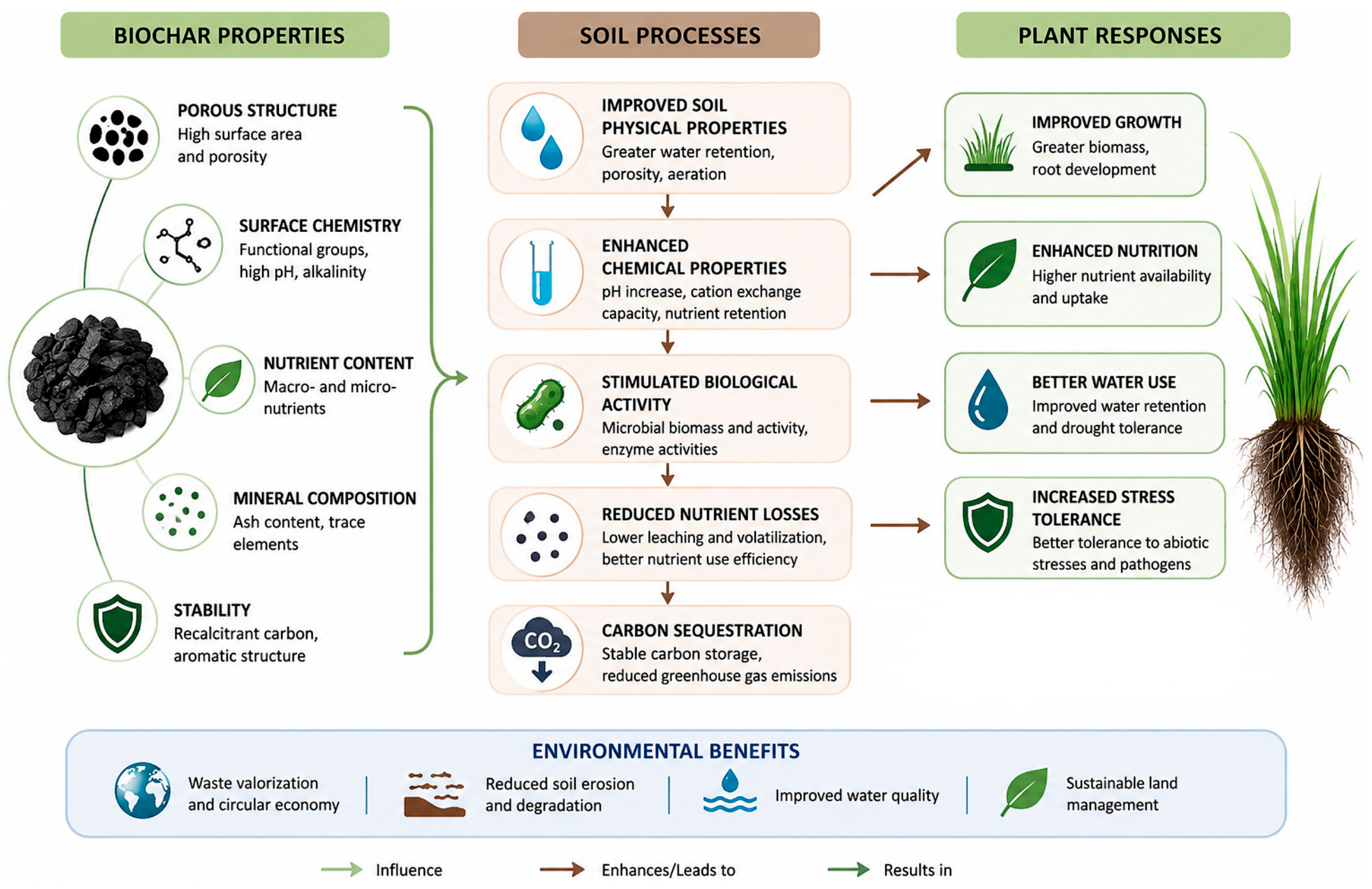
3. Mechanisms of Biochar Action in Soil
3.1. Soil pH Modification
3.2. Nutrient Storage and Cycling
3.3. Water Dynamics in Soil
3.4. Interaction with Soil Microorganisms
3.5. Plant Growth Responses
3.6. Impact of Biochar on Fertilizer-Use Efficiency
3.7. Critical Perspective, Knowledge Gaps and Practical Constraints
4. Case Study: Paulownia Leaf-Derived Biochar in Turfgrass Systems
4.1. Material Characteristics
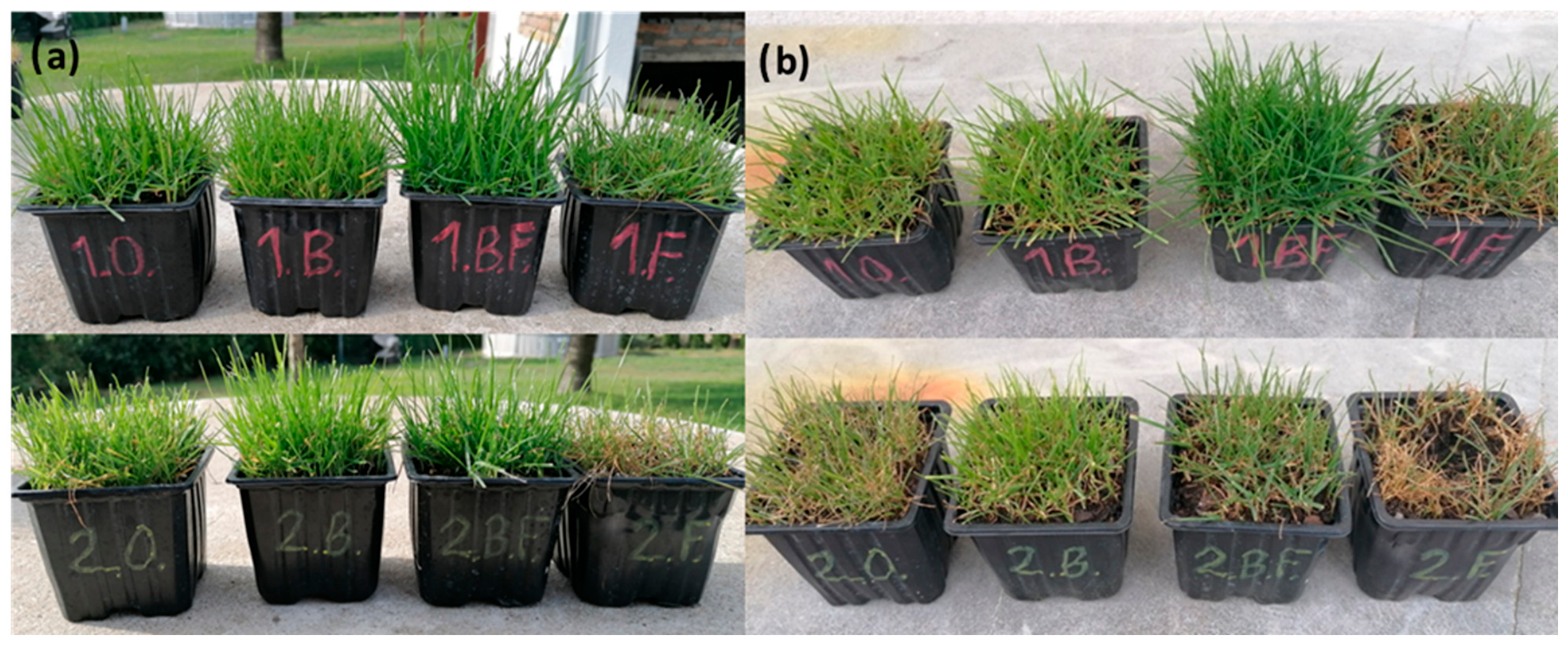
4.2. Soil and Plant Responses
4.3. Interpretation of Mechanisms
4.4. Paulownia-Derived and Related Derived Biochars
4.5. Comparison with Other Biochars and Practical Implications
4.6. Feedstock Characteristics as Drivers of PLB Functionality
4.7. Reconciling Positive, Neutral, and Negative Biochar Responses
5. Limitations and Future Perspectives
6. Conclusions
Author Contributions
Funding
Institutional Review Board Statement
Informed Consent Statement
Data Availability Statement
Acknowledgments
Conflicts of Interest
References
- Maula, I.M. Soil Degradation and its Challenges to Agricultural Production Resilience: An Overview from a Soil Traits Perspective. J. World Sci. 2026, 5, 57–63. [Google Scholar] [CrossRef] [Scilit]
- Adão, F.; Pádua, L.; Sousa, J.J. Evaluating Soil Degradation in Agricultural Soil with Ground-Penetrating Radar: A Systematic Review of Applications and Challenges. Agriculture 2025, 15, 852. [Google Scholar] [CrossRef] [Scilit]
- Shokri, N.; Robinson, D.A.; Afshar, M.; Alewell, C.; Aminzadeh, M.; Arthur, E.; Broothaerts, N.; Campbell, G.A.; Eklund, L.; Gupta, S.; et al. Rethinking global soil degradation: Drivers, impacts, and solutions. Rev. Geophys. 2025, 63, e2025RG000883. [Google Scholar] [CrossRef] [Scilit]
- Lal, R. Soil Degradation and Pollution as the Global Public Health Emergency. Med. Res. Arch. 2025, 13. [Google Scholar] [CrossRef] [Scilit]
- Felipe, A.J. The agricultural, environmental, and rehabilitation impacts of soil erosion in the Philippine economy—A walkaround review. Soil Secur. 2025, 21, 100213. [Google Scholar] [CrossRef] [Scilit]
- Mesfin, S.; Eik, L.O.; Evjen, O.; Sægrov, S.; Awet, E.; Singh, B.R. Impact of Biochar Application on Soil Health and Crop Productivity in Sub-Saharan Africa. In Sustainable Food Systems in Sub-Saharan Africa, Plant Derived Nutritious Foods-Volume 1; Singh, B.R., Banda, L.J., Safalaoh, A., Mwangwela, A., Haug, R., Eik, L.O., West, J.J., Lal, R., Eds.; Springer: Cham, Switzerland, 2026. [Google Scholar] [CrossRef] [Scilit]
- Kumar, M.; Bolan, S.; Kumar, R.; Gupta, J.; Chen, D.; Wu, H.; Stackpoole, S.; Chandel, N.; Mukherjee, S.; Garg, M.C.; et al. Biochar Modulates the Dynamics of Legacy Nutrients in Enhancing Soil Health and Crop Productivity. Land 2026, 15, 896. [Google Scholar] [CrossRef] [Scilit]
- Antonio Junior, A.; Guo, M. Efficacy of sewage sludge derived biochar on enhancing soil health and crop productivity in strongly acidic soil. Front. Soil Sci. 2023, 3, 1066547. [Google Scholar] [CrossRef] [Scilit]
- Zhu, Z.; Zhang, Y.; Tao, W.; Zhang, X.; Xu, Z.; Xu, C. The Biological Effects of Biochar on Soil’s Physical and Chemical Characteristics: A Review. Sustainability 2025, 17, 2214. [Google Scholar] [CrossRef] [Scilit]
- Ali, A.; Jabeen, N.; Chachar, Z.; Chachar, S.; Ahmed, S.; Ahmed, N.; Laghari, A.A.; Sahito, Z.A.; Farruhbek, R.; Yang, Z. The role of biochar in enhancing soil health & interactions with rhizosphere properties and enzyme activities in organic fertilizer substitution. Front. Plant Sci. 2025, 16, 1595208. [Google Scholar] [CrossRef] [Scilit] [PubMed]
- Qi, S.; Degen, A.; Wang, W.; Huang, M.; Li, D.; Luo, B.; Xu, J.; Dang, Z.; Guo, R.; Shang, Z. Systemic review for the use of biochar to mitigate soil degradation. GCB Bioenergy 2024, 16, e13147. [Google Scholar] [CrossRef] [Scilit]
- Tang, K.H.D. Biochar Amendments for Soil Restoration: Impacts on Nutrient Dynamics and Microbial Activity. Environments 2025, 12, 425. [Google Scholar] [CrossRef] [Scilit]
- Premalatha, R.P.; Poorna, B.J.; Nivetha, E.; Malarvizhi, P.; Manorama, K.; Parameswari, E.; Davamani, V. A review on biochar’s effect on soil properties and crop growth. Front. Energy Res. 2023, 11, 1092637. [Google Scholar] [CrossRef] [Scilit]
- Lehmann, J.; Joseph, S. (Eds.) Biochar for Environmental Management: Science, Technology and Implementation, 2nd ed.; Routledge: Abingdon, UK, 2015; 976p. [Google Scholar] [CrossRef] [Scilit]
- Shen, Y.; Yu, S.; Yuan, R.; Wang, P. Biomass pyrolysis with alkaline-earth-metal additive for co-production of bio-oil and biochar-based soil amendment. Sci. Total Environ. 2020, 743, 140760. [Google Scholar] [CrossRef] [Scilit] [PubMed]
- Hale, L.; Curtis, D.; Azeem, M.; Montgomery, J.; Crowley, D.; McGiffen, M., Jr. Influence of compost and biochar on soil biological properties under turfgrass supplied deficit irrigation. Appl. Soil Ecol. 2021, 168, 104134. [Google Scholar] [CrossRef] [Scilit]
- Ali, L.; Xiukang, W.; Naveed, M.; Ashraf, S.; Nadeem, S.M.; Haider, F.U.; Mustafa, A. Impact of Biochar Application on Germination Behavior and Early Growth of Maize Seedlings: Insights from a Growth Room Experiment. Appl. Sci. 2021, 11, 11666. [Google Scholar] [CrossRef] [Scilit]
- Domingues, R.; Trugilho, P.; Silva, C.; De Melo, I.C.; Melo, L.; Magriotis, Z.; Sánchez-Monedero, M. Properties of biochar derived from wood and high-nutrient biomasses with the aim of agronomic and environmental benefits. PLoS ONE 2017, 12, e0176884. [Google Scholar] [CrossRef] [Scilit] [PubMed]
- Chen, L.; Li, X.; Peng, Y.; Xiang, P.; Zhou, Y.; Yao, B.; Zhou, Y.; Sun, C. Co-application of biochar and organic fertilizer promotes the yield and quality of red pitaya (Hylocereus polyrhizus) by improving soil properties. Chemosphere 2022, 294, 133619. [Google Scholar] [CrossRef] [Scilit] [PubMed]
- Woolf, D.; Amonette, J.; Street-Perrott, F.A.; Lehmann, J.; Joseph, S. Sustainable biochar to mitigate global climate change. Nat. Commun. 2010, 1, 56. [Google Scholar] [CrossRef] [Scilit] [PubMed]
- Bera, B. Biomass-Derived Biochar and Its Role in Carbon Sequestration and Soil Health Improvement. Plant Sci. Rev. 2024, 5, 1–7. [Google Scholar] [CrossRef] [Scilit]
- Tang, H.; Hu, J.; Li, B.; Liu, Y.; Tong, W.K.; Yue, M.R.; Wang, J.; Wang, W.; Gao, M.T.; Liu, N.; et al. Degradation-Resistant Biochar Improves Soil Organic Carbon Storage: Promoting Autotrophic Metabolism & Increasing Refractory Organic Carbon. Bioresour. Technol. 2025, 428, 132452. [Google Scholar] [CrossRef] [Scilit] [PubMed]
- Ernest, B.; Yanda, P.; Hansson, A.; Fridahl, M. Long-term effects of adding biochar to soils on organic matter content, persistent carbon storage, and moisture content in Karagwe, Tanzania. Sci. Rep. 2024, 14, 30565. [Google Scholar] [CrossRef] [Scilit] [PubMed]
- Wang, Y.; Zhang, M.; Sun, A.; Fu, X.; Peng, Z.; Xu, H.; Xue, C. Biochar Application Enhances Soil Carbon Sequestration in the North China Plain by Improving Soil Properties and Reshaping Microbial Community Structure. Agronomy 2025, 15, 2539. [Google Scholar] [CrossRef] [Scilit]
- Ahmed, M.; Rajapaksha, A.U.; Lim, J.E.; Zhang, M.; Bolan, N.; Mohan, D.; Vithanage, M.; Lee, S.S.; Ok, Y.S. Biochar as a sorbent for contaminant management in soil and water: A review. Chemosphere 2014, 99, 19–33. [Google Scholar] [CrossRef] [Scilit] [PubMed]
- Liang, J.; Yang, J.; Li, N.; Yang, Q. Effects of biochar application and irrigation system on gregate and soil respiration. Agric. Water Manag. 2026, 326, 110248. [Google Scholar] [CrossRef] [Scilit]
- Nirmala, N.; Sood, Y. Potential of Biochar in Improving Soil Fertility and Carbon Sequestration. Int. J. Plant Soil Sci. 2025, 37, 609–624. [Google Scholar] [CrossRef] [Scilit]
- Omara, P.; Singh, H.; Singh, K.; Sharma, L.; Otim, F.; Obia, A. Short-term effect of field application of biochar on cation exchange capacity, pH, and electrical conductivity of sandy and clay loam temperate soils. Technol. Agron. 2023, 3, 16. [Google Scholar] [CrossRef] [Scilit]
- Omokaro, G.O.; Kornev, K.P.; Nafula, Z.S.; Chikukula, A.A.; Osayogie, O.G.; Efeni, O.S. Biochar for sustainable soil management: Enhancing soil fertility, plant growth and climate resilience. Farming Syst. 2025, 3, 100167. [Google Scholar] [CrossRef] [Scilit]
- Đukanović, N.; Apostolović, T.; Anojčić, J.; Mutić, S.; Marjanović Srebro, T.; Kozma, G.; Deák, C.; Maletić, S.; Beljin, J. Comparative Study of Biochar from Different Biomass Feedstocks: Toward Sustainable Resource Utilization and Environmental Applications. Molecules 2026, 31, 37. [Google Scholar] [CrossRef] [Scilit] [PubMed]
- Clough, T.J.; Condron, L.M.; Kammann, C.; Müller, C. A Review of Biochar and Soil Nitrogen Dynamics. Agronomy 2013, 3, 275–293. [Google Scholar] [CrossRef] [Scilit]
- Hossain, M.Z.; Bahar, M.M.; Sarkar, B.; Donne, S.W.; Ok, Y.S.; Palansooriya, K.N.; Kirkham, M.B.; Chowdhury, S.; Bolan, N. Biochar and its importance on nutrient dynamics in soil and plant. Biochar 2020, 2, 379–420. [Google Scholar] [CrossRef] [Scilit]
- Lehmann, J.; Rillig, M.; Thies, J.; Masiello, C.; Hockaday, W.; Crowley, D. Biochar effects on soil biota—A review. Soil Biol. Biochem. 2011, 43, 1812–1836. [Google Scholar] [CrossRef] [Scilit]
- Bolan, S.; Hou, D.; Wang, L.; Hale, L.; Egamberdieva, D.; Tammeorg, P.; Li, R.; Wang, B.; Xu, J.; Wang, T.; et al. The potential of biochar as a microbial carrier for agricultural and environmental applications. Sci. Total Environ. 2023, 886, 163968. [Google Scholar] [CrossRef] [Scilit] [PubMed]
- Beljin, J.; Kragulj Isakovski, M.; Maletić, S. Engineering Multifunctional Biochars for Integrated Environmental Systems: Multi-Medium Performance, Challenges, and Research Priorities. Processes 2026, 14, 714. [Google Scholar] [CrossRef] [Scilit]
- Jeffery, S.; Verheijen, F.G.A.; van der Velde, M.; Bastos, A.C. A quantitative review of the effects of biochar application to soils on crop productivity using meta-analysis. Agric. Ecosyst. Environ. 2011, 144, 175–187. [Google Scholar] [CrossRef] [Scilit]
- Wu, P.; Ata-Ul-Karim, S.T.; Singh, B.P.; Wang, H.; Wu, T.; Liu, C.; Fang, G.; Zhou, D.; Wang, Y.; Chen, W. A scientometric review of biochar research in the past 20 years (1998–2018). Biochar 2019, 1, 23–43. [Google Scholar] [CrossRef] [Scilit]
- Jakubowski, M. Cultivation Potential and Uses of Paulownia Wood: A Review. Forests 2022, 13, 668. [Google Scholar] [CrossRef] [Scilit]
- Zhao, Y.; Lundgren, M.R. Potential drivers of fast growth in Paulownia. Plants People Planet 2026, 8, 516–529. [Google Scholar] [CrossRef] [Scilit]
- Vaughn, S.; Kenar, J.; Tisserat, B.; Jackson, M.; Joshee, N.; Vaidya, B.; Peterson, S. Chemical and physical properties of Paulownia elongata biochar modified with oxidants for horticultural applications. Ind. Crops Prod. 2017, 97, 260–267. [Google Scholar] [CrossRef] [Scilit]
- Peterson, S. Silica-Milled Paulownia Biochar as Partial Replacement of Carbon Black Filler in Natural Rubber. J. Compos. Sci. 2019, 3, 107. [Google Scholar] [CrossRef] [Scilit]
- Mamirova, A.; Pidlisnyuk, V.; Hrabak, P.; Shapoval, P.; Nurzhanova, A. Biochar-Supported Phytoremediation of Dredged Sediments Contaminated by HCH Isomers and Trace Elements Using Paulownia tomentosa. Sustainability 2024, 16, 9080. [Google Scholar] [CrossRef] [Scilit]
- Wang, B.; Wu, M.; Li, Z.; Liu, W.; Zhang, M. Hierarchically porous and anisotropic biochar from fast-growing balsa and paulownia woods for effective microplastic removal. Environ. Res. 2026, 297, 124116. [Google Scholar] [CrossRef] [Scilit] [PubMed]
- Koprivica, M.; Petrović, J.; Simić, M.; Dimitrijević, J.; Ercegović, M.; Trifunović, S. Characterization and Evaluation of Biomass Waste Biochar for Turfgrass Growing Medium Enhancement in a Pot Experiment. Agriculture 2025, 15, 2206. [Google Scholar] [CrossRef] [Scilit]
- Koprivica, M.; Petrović, J.; Ercegović, M.; Simić, M.; Milojković, J.; Šoštarić, T.; Dimitrijević, J. Improvement of combustible characteristics of Paulownia leaves via hydrothermal carbonization. Biomass Conv. Bioref. 2024, 14, 3975–3985. [Google Scholar] [CrossRef] [Scilit]
- López, F.; Pérez, A.; Zamudio, M.; De Alva, H.; García, J. Paulownia as raw material for solid biofuel and cellulose pulp. Biomass Bioenergy 2012, 45, 77–86. [Google Scholar] [CrossRef] [Scilit]
- Li, L.; Long, A.; Fossum, B.; Kaiser, M. Effects of pyrolysis temperature and feedstock type on biochar characteristics pertinent to soil carbon and soil health: A meta-analysis. Soil Use Manag. 2023, 39, 43–52. [Google Scholar] [CrossRef] [Scilit]
- do Nascimento, Í.V.; Fregolente, L.G.; Pereira, A.P.D.A.; do Nascimento, C.D.V.; Mota, J.C.A.; Ferreira, O.P.; de Freitas Sousa, H.H.; da Silva, D.G.G.; Simões, L.R.; Souza Filho, A.G.; et al. Biochar as a carbonaceous material to enhance soil quality in drylands ecosystems: A review. Environ. Res. 2023, 233, 116489. [Google Scholar] [CrossRef] [Scilit] [PubMed]
- Drzewiecka, K.; Gąsecka, M.; Magdziak, Z.; Budzyńska, S.; Szostek, M.; Niedzielski, P.; Budka, A.; Roszyk, E.; Doczekalska, B.; Górska, M.; et al. The Possibility of Using Paulownia elongata S. Y. Hu × Paulownia fortunei Hybrid for Phytoextraction of Toxic Elements from Post-Industrial Wastes with Biochar. Plants 2021, 10, 2049. [Google Scholar] [CrossRef] [Scilit] [PubMed]
- Xiao, L.; Wu, J.; Li, W.; Yuan, G.; Xu, Q.; Wei, J.; Han, F. Mineral Coating Enhances the Carbon Seques-tration Capacity of Biochar Derived from Paulownia Biowaste. Agronomy 2023, 13, 2361. [Google Scholar] [CrossRef] [Scilit]
- Simić, M.; Koprivica, M.; Dimitrijević, J.; Ercegović, M.; Anđić, D.; Fiol, N.; Petrović, J. Valorization of Corn Processing Waste as Adsorbents for Soil and Water Remediation: A Systematic and Comparative Review of Native Biomass, Hydrochar, and Biochar. Processes 2026, 14, 1376. [Google Scholar] [CrossRef] [Scilit]
- Ouahabi, H.; Bayessi, O.; Mouaky, A.; Hirt, A.; Rachidi, S. Biochar revolution: Harnessing pyrolysis for climate resilience and circular environmental solutions. Carbon Trends 2026, 23, 100628. [Google Scholar] [CrossRef] [Scilit]
- Koprivica, M.; Petrović, J.; Simić, M.; Dimitrijević, J.; Ožegović, M.; Vuković, N.; Ercegović, M. From Paulownia Leaf Waste to APTES-Functionalized Biochar Adsorbents for Enhanced Pb(II) Removal from Water. Sustainability 2026, 18, 7245. [Google Scholar] [CrossRef] [Scilit]
- Varkolu, M.; Gundekari, S.; Omvesh; Palla, V.C.S.; Kumar, P.; Bhattacharjee, S.; Vinodkumar, T. Recent Advances in Biochar Production, Characterization, and Environmental Applications. Catalysts 2025, 15, 243. [Google Scholar] [CrossRef] [Scilit]
- Zhang, X.; Zhang, Y.; Zhang, S.; Yao, L.; Hao, Y. Lignocellulosic biomass pyrolysis: A review on the pretreatment and catalysts. Fuel Process. Technol. 2025, 279, 108352. [Google Scholar] [CrossRef] [Scilit]
- Hayat, M.K.; Mahmud, M.N.; Muniza, N.T.; Batool, R.; Ullah, Q.; Al Kafi, A.; Haider, W. Biochar-based strategies for improving soil fertility and mitigating environmental pollution. Discov. Environ. 2026, 4, 222. [Google Scholar] [CrossRef] [Scilit]
- Jiang, T.-J.; Morgan, H.M.; Tsai, W.-T.; Chien, H.; Yen, T.-B.; Lee, Y.-R. Thermochemical Conversion of Biomass into Biochar: Enhancing Adsorption Kinetics and Pore Properties for Environmental Sustainability. Sustainability 2024, 16, 6623. [Google Scholar] [CrossRef] [Scilit]
- Li, S.; Chen, J.; Jiang, J.; Liu, G.; Yin, A.; Wang, Z. Pyrolysis temperature-regulated evolution of micro-morphology and surface chemical structure of biochar derived from papermaking black liquor lignin. Ind. Crops Prod. 2026, 249, 123840. [Google Scholar] [CrossRef] [Scilit]
- Han, W.; Wang, Y.; Wang, L.; Xie, P.; Liu, T.; Wu, Q.; Zhou, C.; Guo, X.; Luo, L.; Sun, T.; et al. A comprehensive review of biomass torrefaction as a versatile platform for the synthesis of functional carbon materials. Sustain. Carbon Mater. 2026, 2, e007. [Google Scholar] [CrossRef] [Scilit]
- Roman, A.; Radu, L.G.; Bucura, F.; Tanislav, O.M.; Zaharioiu, A.M.; Constantinescu, M. Comparative multifactor optimization of biochar from pyrolysis and gasification: A Taguchi-ANOVA-RSM framework for climate-resilient soil applications. Int. J. Green Energy 2026, 23, 2051–2069. [Google Scholar] [CrossRef] [Scilit]
- Zhang, C.; Zhang, Z.; Zhang, L.; Li, Q.; Li, C.; Chen, G.; Zhang, S.; Liu, Q.; Hu, X. Evolution of the functionalities and structures of biochar in pyrolysis of poplar in a wide temperature range. Bioresour. Technol. 2020, 304, 123002. [Google Scholar] [CrossRef] [Scilit] [PubMed]
- Tomczyk, A.; Sokołowska, Z.; Boguta, P. Biochar physicochemical properties: Pyrolysis temperature and feedstock kind effects. Rev. Environ. Sci. Biotechnol. 2020, 19, 191–215. [Google Scholar] [CrossRef] [Scilit]
- Marin, F.; Tanislav, O.M.; Constantinescu, M.; Roman, A.; Bucura, F.; Oancea, S.; Zaharioiu, A.M. Biochar for Soil Fertility and Climate Mitigation: Review on Feedstocks, Pyrolysis Conditions, Functional Properties, and Applications with Emerging AI Integration. Agriculture 2025, 15, 2345. [Google Scholar] [CrossRef] [Scilit]
- Uzoma, K.C.; Inoue, M.; Andry, H.; Fujimaki, H.; Zahoor, A.; Nishihara, E. Effect of cow manure biochar on maize productivity under sandy soil condition. Soil Use Manag. 2011, 27, 205–212. [Google Scholar] [CrossRef] [Scilit]
- Abbasi, M.K.; Anwar, A.A. Ameliorating Effects of Biochar Derived from Poultry Manure and White Clover Residues on Soil Nutrient Status and Plant growth Promotion—Greenhouse Experiments. PLoS ONE 2015, 10, e0131592. [Google Scholar] [CrossRef] [Scilit] [PubMed]
- Nair, R.R.; Hammerschmiedt, T.; Nguyen, N.P.T.; Holatko, J.; Krysiak, Y.; Kintl, A.; Kucerik, J.; Baltazar, T.; Weichgrebe, D.; Brtnicky, M. Influence of biochar derived from lignin-rich feedstocks on soil properties and crop yield: The Case of Solanum lycopersicum L. (tomatoes). Renew. Agric. Food Syst. 2025, 40, e15. [Google Scholar] [CrossRef] [Scilit]
- Abrishamkesh, S.; Gorji, M.; Asadi, H.; Bagheri-Marandi, G.H.; Pourbabaee, A.A. Effects of rice husk biochar application on the properties of alkaline soil and lentil growth. Plant Soil Environ. 2015, 61, 475–482. [Google Scholar] [CrossRef] [Scilit]
- Akumuntu, A.; Hong, J.-K.; Jho, E.H.; Omidoyin, K.C.; Park, S.-J.; Zhang, Q.; Zhao, X. Biochar derived from rice husk: Impact on soil enzyme and microbial dynamics, lettuce growth, and toxicity. Chemosphere 2024, 349, 140868. [Google Scholar] [CrossRef] [Scilit] [PubMed]
- Hu, Y.; Sun, B.; Wu, S.; Femg, H.; Gao, M.; Zhang, B.; Liu, Y. After-effects of straw and straw-derived biochar application on crop growth, yield, and soil properties in wheat (Triticum aestivum L.)-maize (Zea mays L.) rotations: A four-year field experiment. Sci. Total Environ. 2021, 780, 146560. [Google Scholar] [CrossRef] [Scilit] [PubMed]
- Sun, Q.; Meng, J.; Sarkar, B.; Lan, Y.; Lin, L.; Li, H.; Yang, X.; Yang, T.; Chen, W.; Wang, H. Long-term influence of maize stover and its derived biochar on soil structure and organo-mineral complexes in Northeast China. Environ. Sci. Pollut. Res. 2020, 27, 28374–28383. [Google Scholar] [CrossRef] [Scilit] [PubMed]
- Zou, G.; Zhao, F.; Lan, X.; Nawaz, M.; Shohag, J.I. Role of Coconut Shell Biochar on Soil Properties, Microbial Diversity and Nitrogen Mineralization in Tropical Latosol. Pol. J. Environ. Stud. 2024, 33, 1487–1496. [Google Scholar] [CrossRef] [Scilit]
- Bramarambika, S.; Mamatha, B.; Jakir Hussain, K.N.; Srinivas Reddy, K.M.; Desai, N. The Effect of Coconut Shell Biochar on the Growth and Yield of Chilli (Capsicum annum L.) in Acidic Alfisols Soil. J. Adv. Biol. Biotechnol. 2024, 27, 203–211. [Google Scholar] [CrossRef] [Scilit]
- Zafeer, M.K.; Menezes, R.A.; Venkatachalam, H.; Bhat, K.S. Sugarcane bagasse-based biochar and its potential applications: A review. Emergent Mater. 2024, 7, 133–161. [Google Scholar] [CrossRef] [Scilit]
- Zhang, A.; Qiu, Y.; Chen, D.; Feng, Y.; Zhang, B. Valorization of fruit waste by biochar production via thermochemical conversion: A mini-review. J. Anal. Appl. Pyrolysis 2024, 182, 106688. [Google Scholar] [CrossRef] [Scilit]
- Dróżdż, D.; Malińska, K.; Wystalska, K.; Meers, E.; Robles-Aguilar, A. The Influence of Poultry Manure-Derived Biochar and Compost on Soil Properties and Plant Biomass Growth. Materials 2023, 16, 6314. [Google Scholar] [CrossRef] [Scilit] [PubMed]
- Nguyen, X.L.; Do, T.M.P. Optimizing biochar production: A review of recent progress in lignocellulosic biomass pyrolysis. Front. Agric. Sci. Eng. 2025, 12, 148–172. [Google Scholar] [CrossRef] [Scilit]
- Munzeiwa, W.A.; Tsekoa, P.; Kammies, L.R.D.; Chelechele, K.; Oluwalana-Sanusi, A.; Chaukura, N. Influence of biomass baseline potential on biochar properties and performance for targeted applications. Discov. Water 2025, 5, 77. [Google Scholar] [CrossRef] [Scilit]
- Ngo Ndoung, O.C.; de Figueiredo, C.C.; Gerosa Ramos, M.L. A scoping review on biochar-based fertilizers: Enrichment techniques and agro-environmental application. Heliyon 2021, 7, e08473. [Google Scholar] [CrossRef] [Scilit] [PubMed]
- Himanshu; Chauhan, P.R.; Awasthi, D.; Godara, R.; Deepti; Pal, K.; Vijay, V.; Aravind, P.V. Lignocellulosic biomass to biochar: An overview on impact of production technologies on biochar yield and techno-economics. J. Energy Inst. 2025, 123, 102233. [Google Scholar] [CrossRef] [Scilit]
- Nguyen, L.; Do, P.; Nguyen, C.; Kose, R.; Okayama, T.; Pham, T.; Nguyen, P.; Miyanishi, T. Properties of biochars prepared from local biomass in the Mekong Delta, Vietnam. BioResources 2018, 13, 7325–7344. [Google Scholar] [CrossRef] [Scilit]
- Ippolito, J.; Cui, L.; Kammann, C.; Wrage-Mönning, N.; Estavillo, J.; Fuertes-Mendizabal, T.; Cayuela, M.L.; Sigua, G.; Novak, J.; Spokas, K.; et al. Feedstock choice, pyrolysis temperature and type influence biochar characteristics: A comprehensive meta-data analysis review. Biochar 2020, 2, 421–438. [Google Scholar] [CrossRef] [Scilit]
- Chen, J.; Zhou, J.; Zheng, W.; Leng, S.; Ai, Z.; Zhang, W.; Yang, Z.; Yang, J.; Xu, Z.; Cao, J.; et al. A complete review on the oxygen-containing functional groups of biochar: Formation mechanisms, detection methods, engineering, and applications. Sci. Total Environ. 2024, 946, 174081. [Google Scholar] [CrossRef] [Scilit] [PubMed]
- Jatav, H.S.; Rajput, V.D.; Minkina, T.; Singh, S.K.; Chejara, S.; Gorovtsov, A.; Barakhov, A.; Bauer, T.; Sushkova, S.; Mandzhieva, S.; et al. Sustainable Approach and Safe Use of Biochar and Its Possible Consequences. Sustainability 2021, 13, 10362. [Google Scholar] [CrossRef] [Scilit]
- Artiola, J.F.; Wardell, L. Guide to Making and Using Biochar for Gardens in Southern Arizona; University of Arizona Cooperative Extension Publication AZ1752; The University of Arizona: Tucson, AZ, USA, 2017; Available online: http://hdl.handle.net/10150/670067 (accessed on 21 April 2026).
- Domingues, R.R.; Sánchez-Monedero, M.A.; Spokas, K.A.; Melo, L.C.A.; Trugilho, P.F.; Valenciano, M.N.; Silva, C.A. Enhancing Cation Exchange Capacity of Weathered Soils Using Biochar: Feedstock, Pyrolysis Conditions and Addition Rate. Agronomy 2020, 10, 824. [Google Scholar] [CrossRef] [Scilit]
- Joseph, S.; Cowie, A.; Van Zwieten, L.; Bolan, N.; Budai, A.; Buss, W.; Cayuela, M.L.; Graber, E.R.; Ippolito, J.A.; Kuzyakov, Y.; et al. How biochar works, and when it doesn’t: A review of mechanisms controlling soil and plant responses to biochar. GCB Bioenergy 2021, 13, 1731–1764. [Google Scholar] [CrossRef] [Scilit]
- Liu, S.; Cen, B.; Yu, Z.; Qiu, R.; Gao, T.; Long, X. The key role of biochar in amending acidic soil: Reducing soil acidity and improving soil acid buffering capacity. Biochar 2025, 7, 52. [Google Scholar] [CrossRef] [Scilit]
- Arwenyo, B.; Varco, J.; Dygert, A.; Brown, S.; Pittman, C.; Mlsna, T. Contribution of modified P-enriched biochar on pH buffering capacity of acidic soil. J. Environ. Manag. 2023, 339, 117863. [Google Scholar] [CrossRef] [Scilit] [PubMed]
- Nazir, M.M.; Li, G.; Nawaz, M.; Hameed, R.; Zulfiqar, F.; Jalil, S.; Li, J.; Zheng, X.; Zhao, X.; Du, D. Biochar ameliorates heavy metals and polycyclic aromatic hydrocarbons in the soil-plant interface. Ecotoxicol. Environ. Saf. 2025, 307, 119346. [Google Scholar] [CrossRef] [Scilit] [PubMed]
- Salem, T.M.; Refaie, K.M.; Sherif, A.E.E.A.; Eid, M.A.M. Biochar application in alkaline soil and its effect on soil and plant. Acta Agric. Slov. 2019, 114, 85–96. [Google Scholar] [CrossRef] [Scilit]
- Li, C.; Liang, H.; Gao, D.; Wang, Y.; Jin, K.; Liu, J.; Xue, D.; Chen, Y.; Li, Y.; Gao, T.; et al. Comparative study on the effects of soil quality improvement between urban spontaneous groundcover and lawn. Ecol. Indic. 2023, 148, 110056. [Google Scholar] [CrossRef] [Scilit]
- Zhang, Y.; Fang, J.; Wu, X.; Dong, L. Na+/K+ Balance and Transport Regulatory Mechanisms in Weedy and Cultivated Rice (Oryza sativa L.) Under Salt Stress. BMC Plant Biol. 2018, 18, 375. [Google Scholar] [CrossRef] [Scilit] [PubMed]
- Bekchanova, M.; Campion, L.; Bruns, S.; Kupprns, T.; Lehmann, J.; Jozefczak, M.; Cuypers, A.; Malina, R. Biochar improves the nutrient cycle in sandy-textured soils and increases crop yield: A systematic review. Environ. Evid. 2024, 13, 3. [Google Scholar] [CrossRef] [Scilit] [PubMed]
- de Jesus Duarte, S.; Hubach, A.; Glaser, B. Soil water balance and wettability methods in soil treated with biochar and/or compost. Carbon Res. 2022, 1, 31. [Google Scholar] [CrossRef] [Scilit]
- Fayaz, S.; Singh, P.; Singh, L.; Nawaz, M.M. Biochar Application for Enhancing Soil Water Holding Capacity. Sunshine Agric. e-Newsl. 2025, 5, 96–100. Available online: http://sunshineagriculture.vitalbiotech.org (accessed on 20 May 2026).
- Blanco-Canqui, H. Biochar and Soil Physical Properties. Soil Sci. Soc. Am. J. 2017, 81, 687–711. [Google Scholar] [CrossRef] [Scilit]
- Feng, W.; Wang, T.; Yang, F.; Cen, R.; Liao, H.; Qu, Z. Effects of biochar on soil evaporation and moisture content and the associated mechanisms. Environ. Sci. Eur. 2023, 35, 66. [Google Scholar] [CrossRef] [Scilit]
- Wei, B.; Peng, Y.; Lin, L.; Zhang, D.; Ma, L.; Jiang, L.; Li, Y.; He, T.; Wang, Z. Drivers of bio-char-mediated improvement of soil water retention capacity based on soil texture: A meta-analysis. Geoderma 2023, 437, 116591. [Google Scholar] [CrossRef] [Scilit]
- Ighalo, J.; Ohoro, C.; Ojukwu, V.; Oniye, M.; Shaikh, W.A.; Biswas, J.K.; Seth, C.S.; Mohan, G.B.M.; Chandran, S.A.; Rangabhashiyam, S. Biochar for ameliorating soil fertility and microbial diversity: From production to action of the black gold. iScience 2025, 28, 111524. [Google Scholar] [CrossRef] [Scilit] [PubMed]
- Rani, M.; Abideen, Z.; Munir, N.; Hasnain, M.; Mehdizadeh, M.; Qasim, M.; Radicetti, E. Enhancing soil fertility, nutrient recovery and carbon sequestration: The role of biochar, composted biochar, and biochar-compost mixtures in sustainable agriculture. J. Trace Elem. Miner. 2026, 15, 100276. [Google Scholar] [CrossRef] [Scilit]
- Gaurav, S.; Diptanu, B.; Mehta, C.; Prasann, K.; Nishihara, E. Effects of biochar amendment at various soil depths on maize roots and growth indices. Sci. Rep. 2025, 15, 26310. [Google Scholar] [CrossRef] [Scilit] [PubMed]
- Ghani, M.U.; Gong, Y.; Lin, T.; Xu, Y.; Zeng, T.; Kamran, M.; Waseem, M.; Ai, S. Pyrolysis temperature regulates biochar-soil interactions to enhance cation exchange capacity, plant growth, and photosynthetic performance. BMC Plant Biol. 2026, 26, 1016. [Google Scholar] [CrossRef] [Scilit] [PubMed]
- Suvendran, S.; Acevedo, M.F.; Smithers, B.; Walker, S.J.; Xu, P. Soil Fertility and Plant Growth Enhancement Through Compost Treatments Under Varied Irrigation Conditions. Agriculture 2025, 15, 734. [Google Scholar] [CrossRef] [Scilit]
- Qian, Z.; Tang, L.; Zhuang, S.; Zou, Y.; Fu, D.; Chen, X. Effects of biochar amendments on soil water retention characteristics of red soil at south China. Biochar 2020, 2, 479–488. [Google Scholar] [CrossRef] [Scilit]
- Sisay, A.; Girma, E. Biochar: Usage, Potential as Alternative to Chemical Fertilizer and Impact of Biochar on Soil-Microbial-Plant, Root Interaction. Ind. Eng. Manag. 2021, 10, 311. [Google Scholar]
- Chotimah, H.E.N.C.; Zubaidah, S.; Rahayuningsih, E.A.; Asie, E.R.; Sirenden, R.T. Coconut Shell Biochar and NPK Fertilizer Improve the Growth and Yield of Zucchini in Peat Soil. Acta Agrobot. 2026, 79, 197285. [Google Scholar] [CrossRef] [Scilit]
- Bano, A.; Aziz, M.K.; Prasad, B.; Ravi, R.; Shah, M. The multifaceted power of biochar: A review on its role in pollution control, sustainable agriculture, and circular economy. Environ. Chem. Ecotoxicol. 2025, 7, 286–304. [Google Scholar] [CrossRef] [Scilit]
- Nazim, M.; Ghafoor, A.; Hussain, A.; Tabassum, M.; Nawaz, A.; Ahmad, M.; Muhammad, M.; Ali, M. Biochar as a Climate-Smart Agricultural Practice: Reducing Greenhouse Gas Emissions and Promoting Sustainable Farming. Phyton 2025, 94, 65. [Google Scholar] [CrossRef] [Scilit]
- Guo, J.; Zhou, H.; Jia, L.; Wang, Y.; Fan, M. Effects of biochar from different pyrolysis temperatures on soil physical properties and hydraulic characteristics in potato farmland of arid and semi-arid regions. Agric. Water Manag. 2025, 313, 109483. [Google Scholar] [CrossRef] [Scilit]
- Liu, Y.; Chen, J. Effect of ageing on biochar properties and pollutant management. Chemosphere 2022, 292, 133427. [Google Scholar] [CrossRef] [Scilit] [PubMed]
- Peddle, S.; Hodgson, R.; Borrett, R.; Brachmann, S.; Davies, T.; Erickson, T.E.; Liddicoat, C.; Muñoz-Rojas, M.; Robinson, J.M.; Watson, C.D.; et al. Practical applications of soil microbiota to improve ecosystem restoration: Current knowledge and future directions. Biol. Rev. 2025, 100, 1–18. [Google Scholar] [CrossRef] [Scilit] [PubMed]
- Liang, X.; Yu, S.; Ju, Y.; Wang, Y.; Yin, D. Integrated Management Practices Foster Soil Health, Productivity, and Agroecosystem Resilience. Agronomy 2025, 15, 1816. [Google Scholar] [CrossRef] [Scilit]
- Roca Vallejo, R.; Krzywoszynska, A.; Katikas, L.; Naciph Mora, K.; Husseini, M.; Rodrigues, S.M.; van de Logt, R.; Johnson, K.; Vrščaj, B.; Ramezzano, C.; et al. Assessment of Knowledge Gaps Related to Soil Literacy. Land 2025, 14, 1372. [Google Scholar] [CrossRef] [Scilit]
- Patel, M.R.; Panwar, N.L. Evaluating the agronomic and economic viability of biochar in sustainable crop production. Biomass Bioenergy 2024, 188, 107328. [Google Scholar] [CrossRef] [Scilit]
- Sahoo, K.; Upadhyay, A.; Runge, T.; Bergman, R.; Puettmann, M.; Bilek, E. Life-cycle assessment and techno-economic analysis of biochar produced from forest residues using portable systems. Int. J. Life Cycle Assess. 2021, 26, 189–213. [Google Scholar] [CrossRef] [Scilit]
- Mishra, R.K.; Kumar, D.J.P.; Narula, A.; Chistie, S.M.; Naik, S.U. Production and beneficial impact of biochar for environmental application: A review on types of feedstocks, chemical compositions, operating parameters, techno-economic study, and life cycle assessment. Fuel 2023, 343, 127968. [Google Scholar] [CrossRef] [Scilit]



| Feedstock | Main Characteristics of Resulting Biochar | Potential Agricultural Effect | Ref. |
|---|---|---|---|
| Plant waste | Lower aromaticity; higher H/C ratio; more biodegradable and microbially available. | Increased tomato yield; enhanced carbon mineralization and soil microbial activity; promoted plant growth. | [65,66] |
| Walnut shell | Highly carbonized; high aromaticity; hydrophobic; highly stable. | Improved soil organic carbon stabilization and carbon sequestration; no significant increase in tomato yield. | [66] |
| Wood chips | Highly carbonized; aromatic; stable carbon structure. | Enhanced soil organic carbon stabilization; contributed to long-term soil quality improvement; no significant effect on tomato yield. | [66] |
| Rice husk | High silica content; alkaline pH; porous structure; high CEC. | Improved soil organic carbon, CEC, and available K; reduced bulk density; enhanced soil enzyme activity and beneficial microbial abundance; promoted plant growth and root development. | [67,68] |
| Wheat straw | Alkaline; porous carbon-rich structure; stable organic carbon. | Increased soil organic carbon, total N, microbial biomass, and nitrate retention; reduced nitrate leaching; improved crop growth and grain yield. | [69] |
| Maize stover (corn stover) | Carbon-rich; porous structure; stable organic carbon. | Improved soil aggregate stability; increased soil porosity and organic carbon; promoted organo-mineral complex formation; reduced bulk density. | [70] |
| Coconut shell | High carbon content, porosity, high alkaline pH, high CEC, chemically stable carbon structure | Increased soil pH and CEC, improved nutrient availability and N cycling, enhanced microbial activity and beneficial microbial communities, increased chilli growth and yield, improved soil fertility in acidic soils. | [71,72] |
| Sugarcane bagasse | High carbon content, alkaline properties, porous structure | Improves soil pH, CEC, and water-holding capacity, supports increased plant biomass and nutrient uptake. | [73] |
| Fruit-processing residues | High lignin-derived carbon, stable structure, good porosity | Enhances soil carbon content, structure, and water retention. Improves plant stress resistance and root development. | [74] |
| Animal manure | High ash content, enriched with N, P, K, Ca, and Mg | Provides nutrients, increases microbial activity and soil fertility. Promotes rapid plant growth and nutrient storage. | [64,65,75] |
| Sewage sludge | High mineral content, nutrient-rich ash fraction | Increases soil organic matter and nutrient supply. Can improve plant productivity when contaminant levels are controlled. | [8] |
| Paulownia leaves | Increased ash content, moderate CEC, alkalinity, liming potential | Improved soil pH, EC and CEC, Enhanced nutrient availability, improved soil fertility and plant growth response. | [44] |
| Feedstock | Pyrolysis T (°C) | pH | CEC (cmolc kg−1) | Ash (%) | C (%) | Stability | N, P, K (g kg−1) | Ref. |
|---|---|---|---|---|---|---|---|---|
| Paulownia leaves (PLB) | 400 | 8.7 | 74.4 | 17.9 | 63.4 | O/C = 0.11 | N: 48.4; P: 5.7; K: 15.7 | [44] |
| Paulownia elongata wood | >1000 | 9.4 | 27.4 | 4.1 | 88.1 | O/C = 0.073; H/C = 0.014 | - | [40] |
| Eucalyptus sawdust | 350 | 5.9 | 10.8 | 0.9 | 70.0 | - | - | [85] |
| Eucalyptus sawdust | 450 | 8.0 | 2.2 | 0.7 | 79 | - | - | [85] |
| Eucalyptus sawdust | 750 | 9.3 | 1.4 | 1.1 | 91.0 | - | - | [85] |
| Coffee husk | 350 | 9.7 | 69.7 | 13.0 | 60.5 | - | - | [85] |
| Coffee husk | 450 | 9.8 | 72.0 | 13.0 | 61.3 | - | - | [85] |
| Coffee husk | 750 | 9.8 | 18.9 | 20.0 | 66.0 | - | - | [85] |
| Sugarcane bagasse | 350 | 7.0 | 4.6 | 1.9 | 75.0 | - | - | [85] |
| Sugarcane bagasse | 450 | 8.7 | 1.8 | 2.1 | 82.0 | - | - | [85] |
| Sugarcane bagasse | 750 | 9.7 | 1.3 | 2.2 | 91.0 | - | - | [85] |
| Coconut shell | - | 9.7 | 8.2 | - | 62.1 | - | N: 5.8; P: 0.99; K: 12.7 | [72] |
| Mechanism | Primary Biochar Property | Effect on Soil | Plant Response | Key Influencing Factors |
|---|---|---|---|---|
| pH modification | Alkalinity, ash | Higher soil pH | Better nutrient availability | Feedstock, soil pH |
| Nutrient storage | CEC, functional groups | Lower nutrient losses | Higher nutrient uptake | Pyrolysis temperature |
| Water dynamics | Porosity | Higher water retention | Better drought tolerance | Soil texture |
| Microbial activity | Pore network | Enhanced nutrient cycling | Improved root environment | Soil microbiome |
| Fertilizer efficiency | Nutrient adsorption | Reduced nutrient losses | Higher biomass/yield | Fertilizer regime |
| PLB Characteristics | Observed Response in PLB Case Study | Proposed Mechanism | Potential Application | Potential Limitation/Context Dependence |
|---|---|---|---|---|
| Alkaline pH and buffering capacity | Increased soil pH | Alkaline mineral fraction and carbonate buffering | Acidic soils, turfgrass systems | Excessive pH increase in neutral/alkaline soils |
| High CEC | Changes in nutrient availability | Cation exchange and electrostatic interactions | Fertilized growing media | Strong sorption may reduce availability of some nutrients |
| Porous structure | Higher moisture content under limited irrigation | Water storage and redistribution | Water-limited turfgrass systems | Effect depends on soil texture and pore characteristics |
| Surface functional groups | Changes in nutrient availability | Surface adsorption and ion exchange | Nutrient management | Effects depend on biochar chemistry and nutrient species |
| High mineral content—K, Ca, Mg, P | Increased availability of selected nutrients | Mineral dissolution and buffering | Nutrient-poor or acidic growing media | Potential nutrient imbalance or increased EC at high application rates |
| Combined biochar + fertilizer application | Improved turfgrass performance under selected treatments | Complementary nutrient storage and fertilizer supply | Intensively managed turfgrass | Response depends on fertilizer rate, soil fertility and irrigation |
| Feedstock | Pyrolysis Conditions | Main Characteristics | Primary Application | Key Findings | Ref. |
|---|---|---|---|---|---|
| Paulownia elongata wood | Slow pyrolysis; oxidized and unmodified biochars | Alkaline pH, porous structure, favorable physicochemical properties | Horticultural substrates | Oxidation produced limited improvement; unmodified biochar already suitable for horticultural use | [31] |
| Paulownia wood | Pyrolysis followed by silica milling | Carbon-rich material with good reinforcing properties | Natural rubber composites | Partial replacement of carbon black while maintaining acceptable mechanical performance | [32] |
| Fast-growing Paulownia wood | Controlled pyrolysis | Hierarchically porous structure with high adsorption potential | Microplastic removal | Excellent adsorption performance due to engineered pore architecture | [34] |
| Paulownia leaves | 400 °C, 2 h | Alkaline pH, buffering capacity, nutrient-rich ash, improved water retention | Soil amendment and turfgrass cultivation | Improved soil properties and plant performance under different irrigation and fertilization regimes | [35] |
| Biochar Type | Key Properties | Advantages | Limitations | Application |
|---|---|---|---|---|
| Leaf-derived biochar | Higher ash/mineral content, alkaline pH, nutrient-rich surfaces | Nutrient storage, buffering, fast response | Lower long-term stability | Turfgrass, stressed soils |
| Woody biochar | Higher aromaticity, developed carbon structure, greater structural persistence | Long-term carbon stabilization, structural modification of soil | Lower nutrient availability | Long-term soil conditioning |
| Agricultural residue biochar | Highly variable mineral and organic compositions | Broad range of nutrient and soil conditioning functions | Strongly dependent on feedstock and production conditions | General soil amendment |
| Engineered/modified biochar | Enhanced surface area or tailored functionality | Target adsorption of nutrient storage performance | Additional processing, cost and potential environmental implications | Specialized remediation or nutrient-management applications |
Disclaimer/Publisher’s Note: The statements, opinions and data contained in all publications are solely those of the individual author(s) and contributor(s) and not of MDPI and/or the editor(s). MDPI and/or the editor(s) disclaim responsibility for any injury to people or property resulting from any ideas, methods, instructions or products referred to in the content. |
© 2026 by the authors. Licensee MDPI, Basel, Switzerland. This article is an open access article distributed under the terms and conditions of the Creative Commons Attribution (CC BY) license.
Share and Cite
Koprivica, M.; Simić, M.; Dimitrijević, J.; Ercegović, M.; Petrović, J. From Mechanisms to Application: A Case-Based Review of Paulownia-Derived Biochar in Turfgrass Systems. Plants 2026, 15, 2637. https://doi.org/10.3390/plants15172637
Koprivica M, Simić M, Dimitrijević J, Ercegović M, Petrović J. From Mechanisms to Application: A Case-Based Review of Paulownia-Derived Biochar in Turfgrass Systems. Plants. 2026; 15(17):2637. https://doi.org/10.3390/plants15172637
Chicago/Turabian StyleKoprivica, Marija, Marija Simić, Jelena Dimitrijević, Marija Ercegović, and Jelena Petrović. 2026. "From Mechanisms to Application: A Case-Based Review of Paulownia-Derived Biochar in Turfgrass Systems" Plants 15, no. 17: 2637. https://doi.org/10.3390/plants15172637
APA StyleKoprivica, M., Simić, M., Dimitrijević, J., Ercegović, M., & Petrović, J. (2026). From Mechanisms to Application: A Case-Based Review of Paulownia-Derived Biochar in Turfgrass Systems. Plants, 15(17), 2637. https://doi.org/10.3390/plants15172637