Phytochemical Profiling and Multitargeted Biological Activities of Crinum asiaticum L. var. anomalum Baker Leaf: In Vitro and In Silico Insights

 , , , and
Abstract
1. Introduction
2. Results and Discussion
2.1. Phytochemical Composition
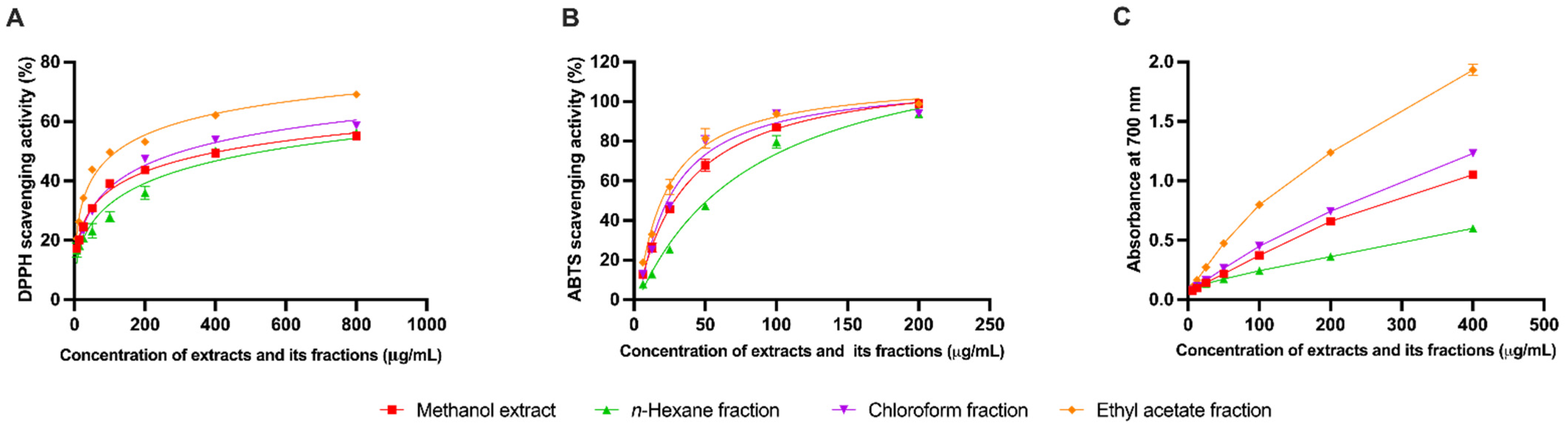
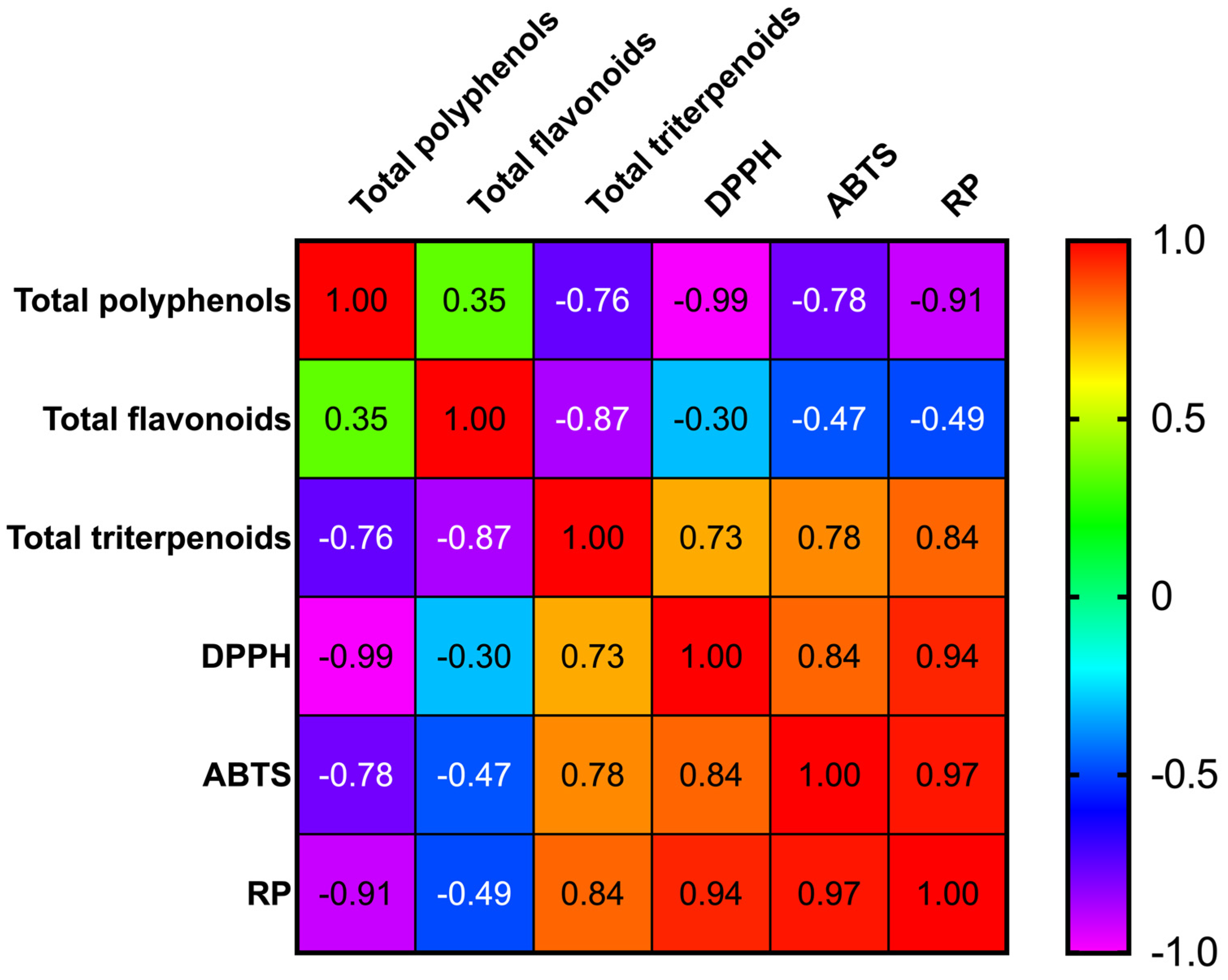
2.2. In Vitro Antioxidant Activity
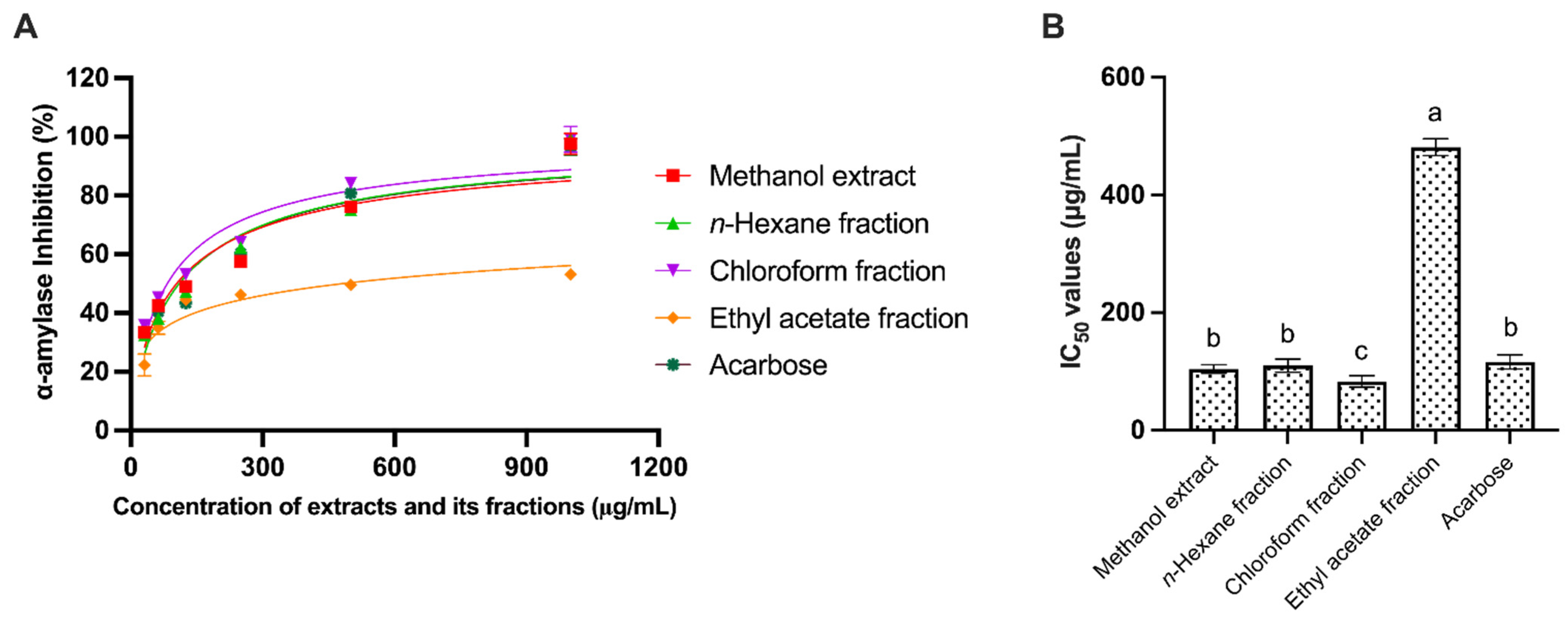
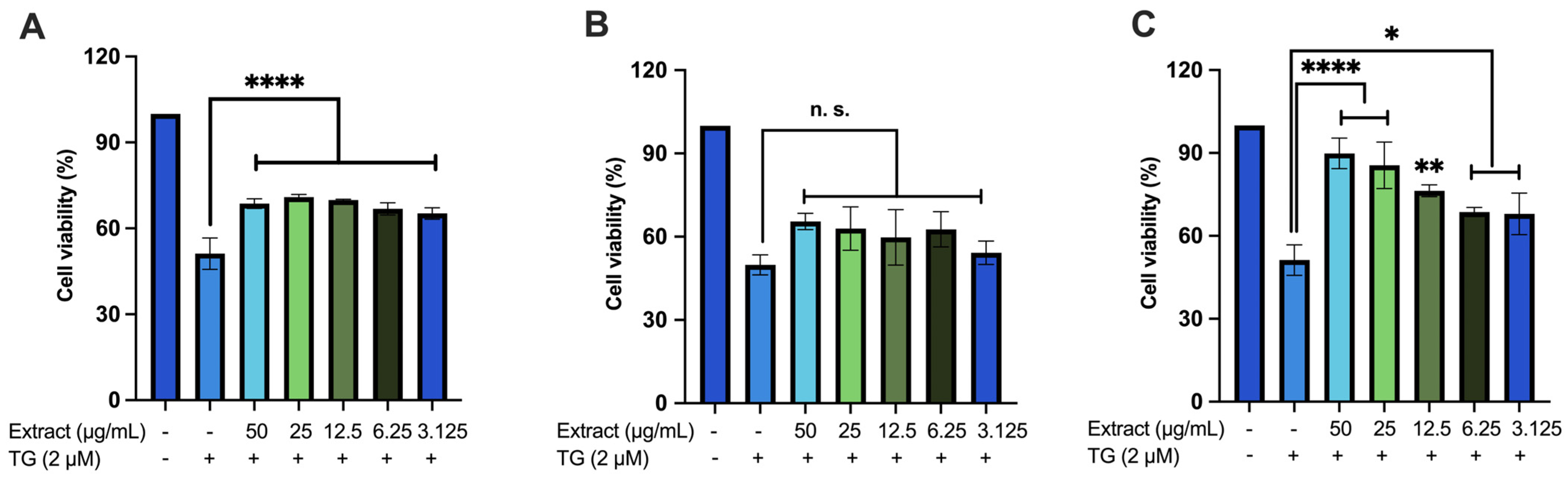
2.3. In Vitro α-Amylase Inhibitory and β-Cell Cytoprotective Activities of CAVA Leaf Extracts and Solvent Fractions
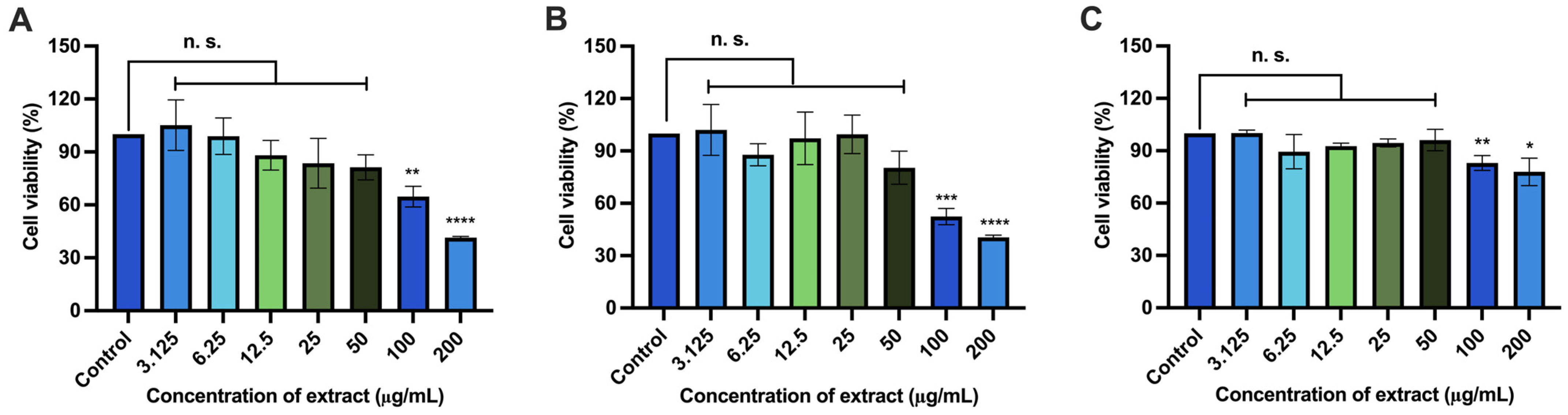
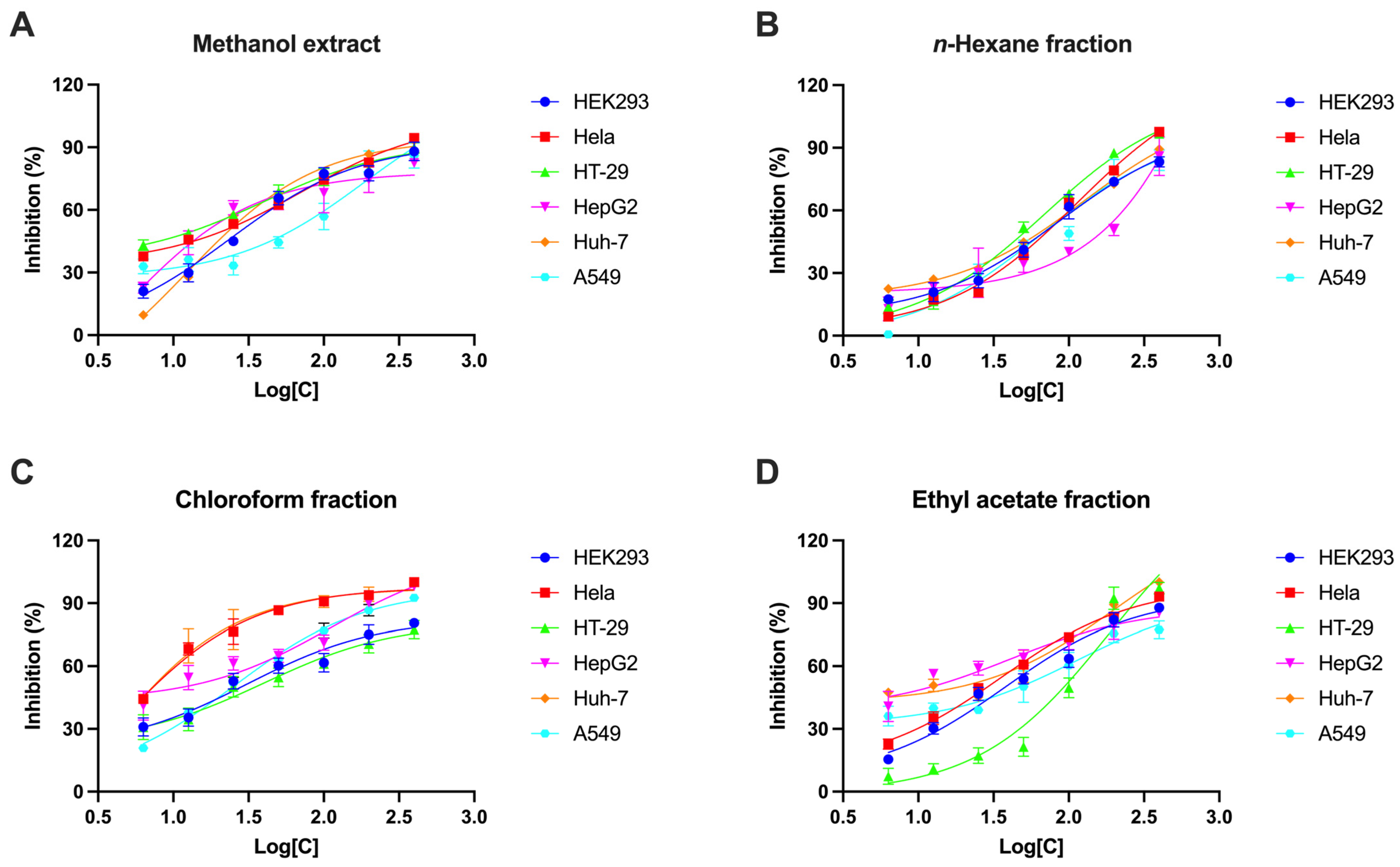
2.4. Anticancer Potential of CAVA Leaf Extracts
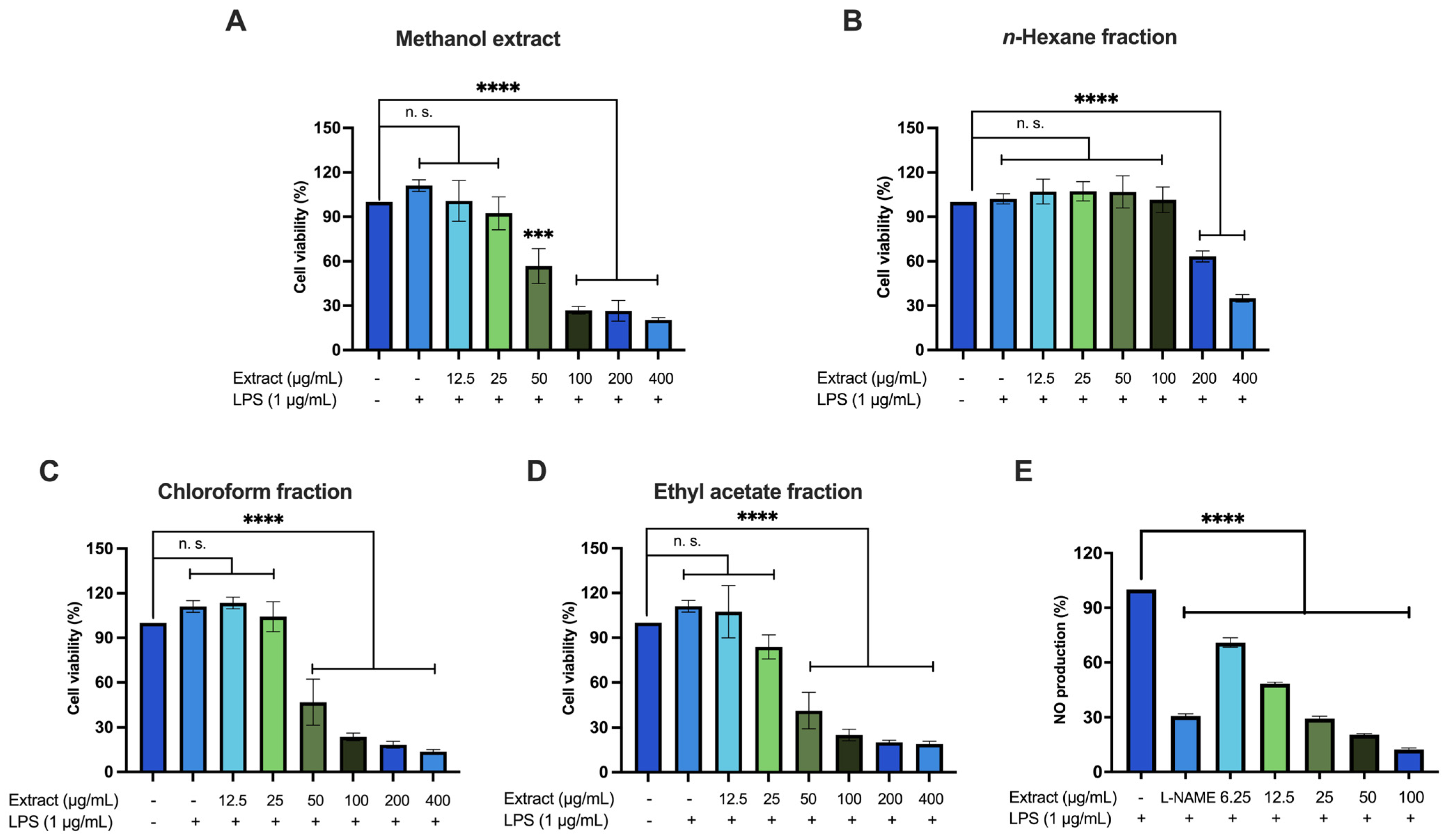
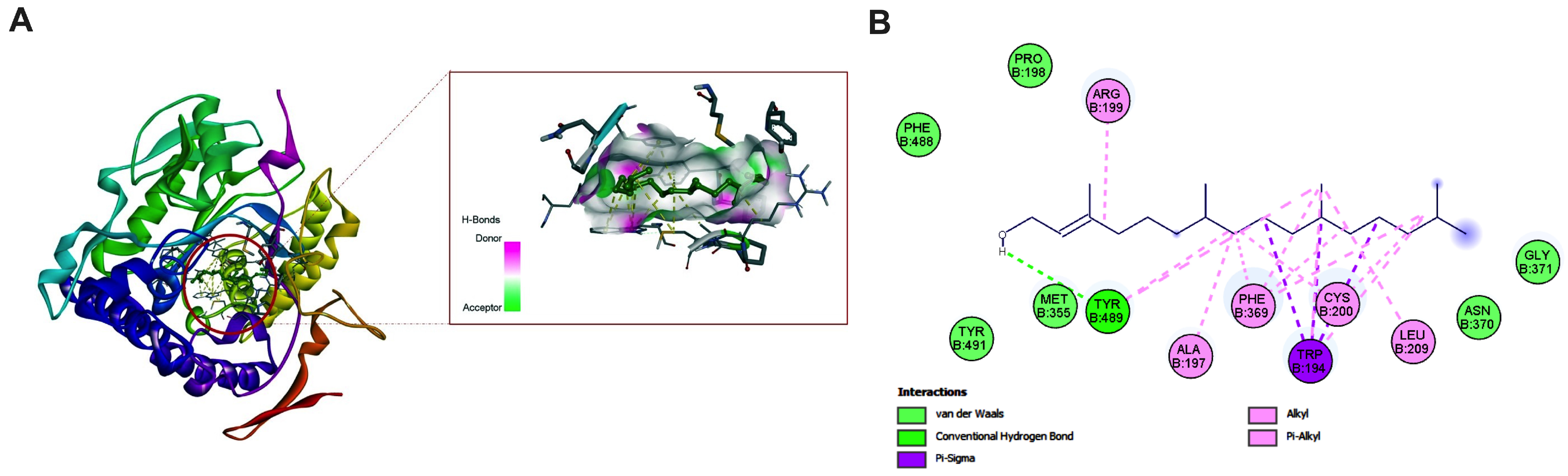
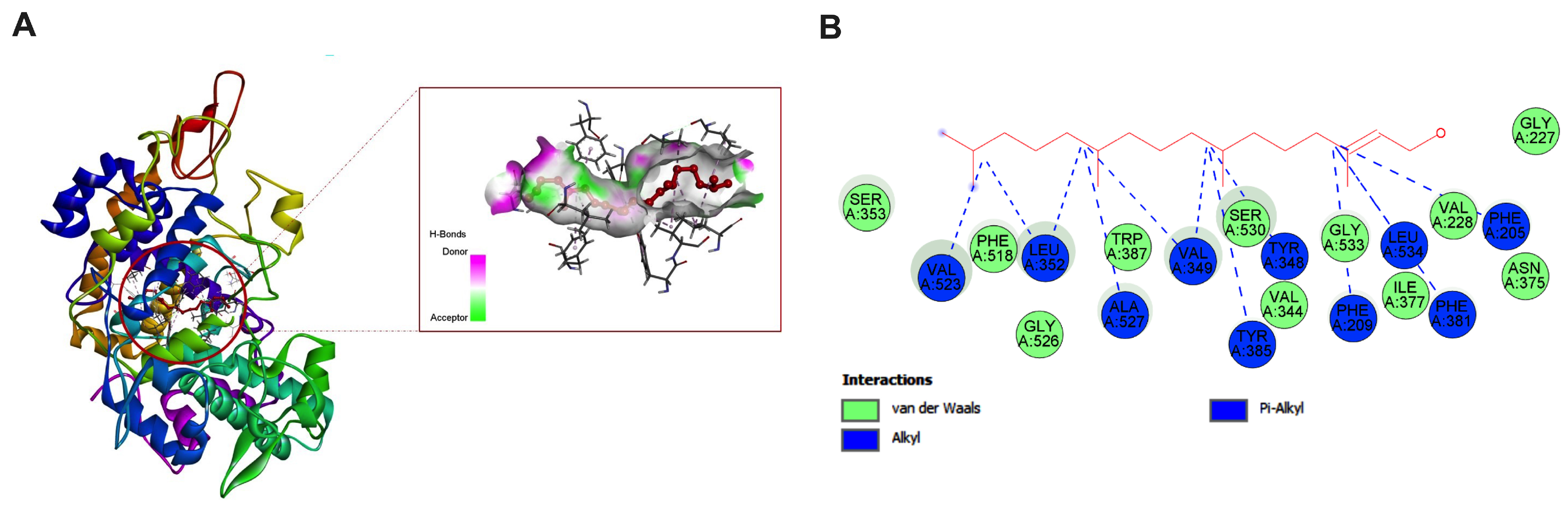
2.5. Anti-Inflammatory Effects of CAVA Leaf Extracts and Molecular Docking Analysis
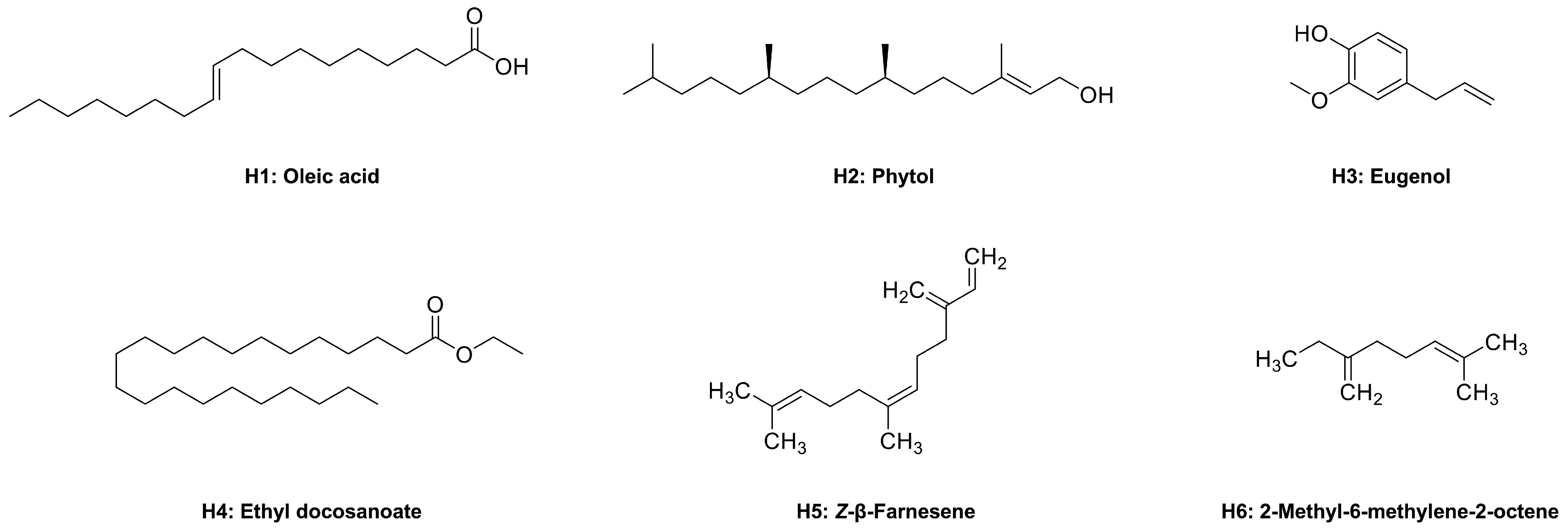
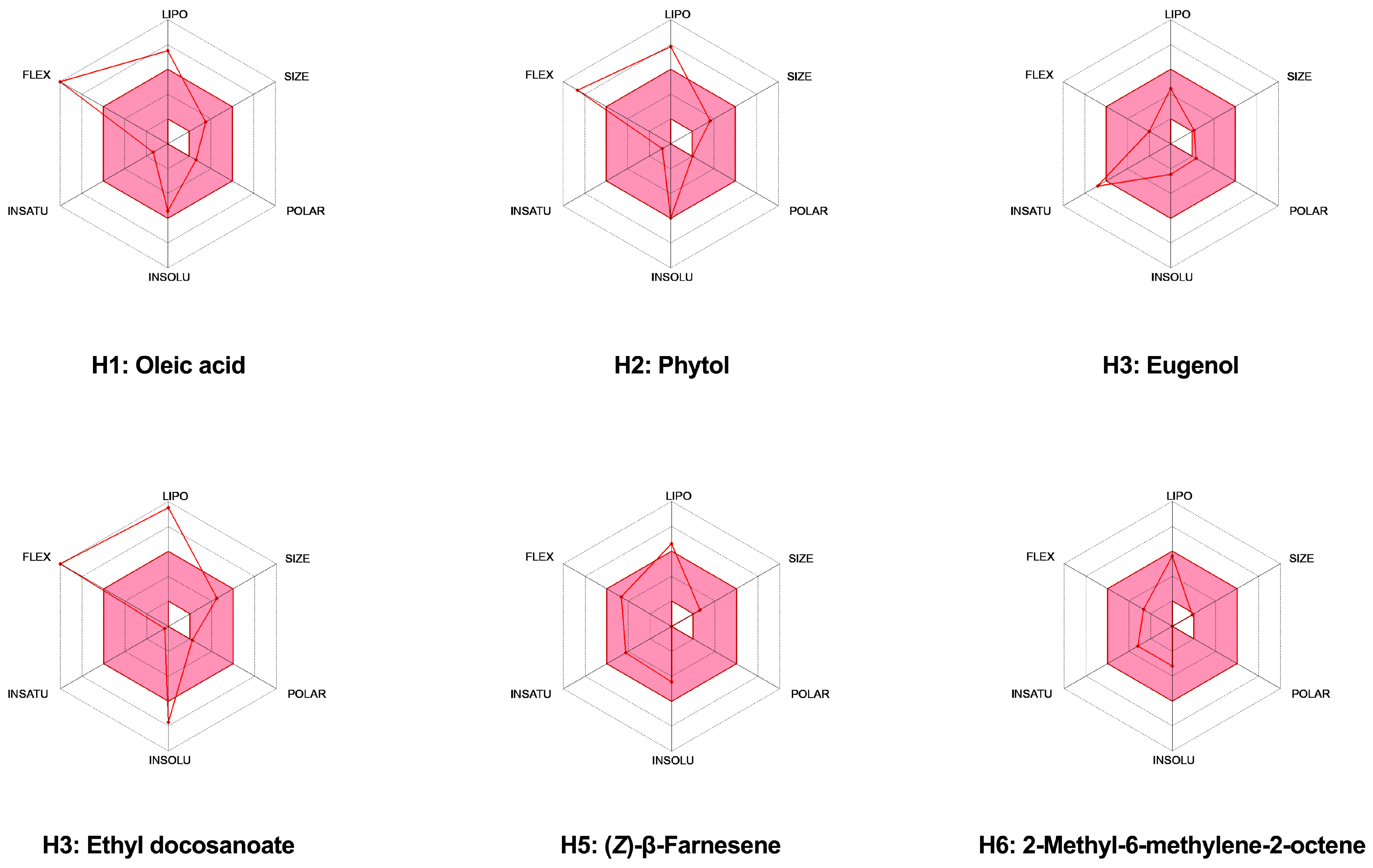
2.6. ADMET and Drug-Likeness Prediction of Bioactive Compounds in the n-Hexane Fraction

| Property | Model Name | Units | H1 | H2 | H3 | H4 | H5 | H6 |
|---|---|---|---|---|---|---|---|---|
| Absorption | Water solubility | log mol/L | −5.924 | −7.535 | −2.25 | −7.869 | −6.956 | −4.64 |
| Caco-2 permeability | log P in 10–6 cm/s | 1.563 | 1.399 | 1.559 | 1.091 | 1.405 | 1.405 | |
| Intestinal absorption (human) | % absorbed | 91.823 | 90.643 | 92.041 | 89.854 | 93.432 | 94.917 | |
| Skin permeability | log Kp | −2.725 | −2.631 | −2.207 | −2.819 | −1.281 | −1.038 | |
| Distribution | VDss | log L/kg | −0.558 | 0.385 | 0.24 | 0.238 | 0.574 | 0.375 |
| BBB permeability | log BB | −0.168 | 0.793 | 0.374 | 0.872 | 0.835 | 0.776 | |
| Metabolism | CYP2D6 substrate | Yes/No | No | No | No | No | No | No |
| CYP3A4 substrate | Yes/No | Yes | Yes | No | Yes | No | No | |
| CYP1A2 inhibitor | Yes/No | Yes | Yes | Yes | Yes | No | No | |
| CYP2C19 inhibitor | Yes/No | No | No | No | No | No | No | |
| CYP2C9 inhibitor | Yes/No | No | No | No | No | No | No | |
| CYP2D6 inhibitor | Yes/No | No | No | No | No | No | No | |
| CYP3A4 inhibitor | Yes/No | No | No | No | No | No | No | |
| Excretion | Total clearance | log mL/min/kg | 1.884 | 1.686 | 0.282 | 2.112 | 1.832 | 0.436 |
| Toxicity | Ames toxicity | Yes/No | No | No | Yes | No | No | No |
| hERG I inhibitor | Yes/No | No | No | No | No | No | No | |
| hERG II inhibitor | Yes/No | No | Yes | No | Yes | No | No | |
| Hepatotoxicity | Yes/No | No | No | No | No | No | No | |
| Skin sensitisation | Yes/No | Yes | Yes | Yes | Yes | Yes | No |
3. Materials and Methods
3.1. Materials
3.2. Preparation of Extracts and Solvent Fractions
3.3. Phytochemical Screening
3.4. Quantification of Total Bioactive Contents
3.4.1. Total Polyphenol Content
3.4.2. Total Flavonoid Content
3.4.3. Total Triterpenoid Content
3.5. In Vitro Antioxidant Activity Assays
3.5.1. DPPH Radical Scavenging Assay
3.5.2. ABTS Radical Scavenging Assay
3.5.3. Reducing Power (RP) Assay
3.6. In Vitro α-Amylase Inhibition and Pancreatic β-Cell Cytoprotective Assays
3.6.1. α-Amylase Inhibitory Activity
3.6.2. Cytotoxicity Assay
3.6.3. Protective Effects Against Thapsigargin
3.7. Anti-Inflammatory Assay
3.7.1. Cell Viability Assay on RAW 264.7 Cells
3.7.2. NO Production Inhibitory Assay
3.8. Anticancer Assay
3.9. Chemical Composition Analysis
3.10. Molecular Docking and ADMET Prediction
3.11. Statistical Analysis
4. Conclusions
Supplementary Materials
Author Contributions
Funding
Data Availability Statement
Conflicts of Interest
Abbreviations
| ABTS | 2,2-azino-bis-3-ethylbenzothiazoline-6-sulphonic acid |
| DPPH | 1,1-Diphenyl-2-picrylhydrazyl |
| TPC | Total polyphenol content |
| TFC | Total flavonoid content |
| TTC | Total triterpenoid content |
| RP | Reducing Power |
Appendix A
| Peak | Retention Time (tR, min) | Area | % Area (%) | Height | Name |
|---|---|---|---|---|---|
| 1 | 6.409 | 55,834 | 0.34 | 28,528 | 6-Methyl-5-heptene-2-one |
| 2 | 7.582 | 210,621 | 1.30 | 84,597 | 2-Methyl 6-methylene 2-octene |
| 3 | 7.695 | 33,011 | 0.20 | 20,090 | 3,7-Dimethyldecane |
| 4 | 8.362 | 30,729 | 0.19 | 18,059 | Dodecane |
| 5 | 9.896 | 65,815 | 0.41 | 32,426 | 6-Methylheptane-1,6-diol |
| 6 | 10.065 | 29,498 | 0.18 | 19,816 | Cryptone |
| 7 | 11.176 | 69,175 | 0.43 | 41,793 | Hexadecane |
| 8 | 11.456 | 80,606 | 0.50 | 42,098 | p-Propenylphenyl methyl ether |
| 9 | 11.880 | 51,011 | 0.31 | 26,997 | 6-Propyltridecane |
| 10 | 12.329 | 62,299 | 0.38 | 33,695 | 2-Bromomethyl-3,4,5,6-tetramethoxytetrahydropyran |
| 11 | 12.420 | 378,753 | 2.33 | 177,979 | Eugenol |
| 12 | 13.725 | 71,490 | 0.44 | 39,860 | cis-Geranylacetone |
| 13 | 14.256 | 59,290 | 0.37 | 28,227 | Hexadecane |
| 14 | 14.809 | 238,167 | 1.47 | 100,244 | (Z)-β-Farnesene |
| 15 | 14.887 | 257,957 | 1.59 | 59,323 | Ethyl docosanoate |
| 16 | 15.053 | 103,426 | 0.64 | 42,571 | (2,6,6-Trimethyl-2-hydroxycyclohexylidene) acetic acid lactone |
| 17 | 15.165 | 102,049 | 0.63 | 43,006 | Dodecanoic acid |
| 18 | 15.379 | 938,382 | 5.78 | 195,286 | Phytol |
| 19 | 15.944 | 13,395,775 | 82.52 | 3,438,531 | Oleic Acid |
| Total | 16,233,888 | 100.00 | 4,473,126 | ||
References
- Soto-Vásquez, M.R.; Rodríguez-Muñoz, C.A.; Tallini, L.R.; Bastida, J. Alkaloid Composition and Biological Activities of the Amaryllidaceae Species Ismene amancaes (Ker Gawl.) Herb. Plants 2022, 11, 1906. [Google Scholar] [CrossRef] [PubMed]
- Sun, Q.; Shen, Y.H.; Tian, J.M.; Tang, J.; Su, J.; Liu, R.H.; Li, H.L.; Xu, X.K.; Zhang, W.D. Chemical Constituents of Crinum asiaticum L. var. sinicum Baker and Their Cytotoxic Activities. Chem. Biodivers. 2009, 6, 1751–1757. [Google Scholar] [CrossRef] [PubMed]
- de Araújo, R.L.; de Pinho, C.L.C.; Farias, F.O.; Igarashi-Mafra, L.; Mafra, M.R. Crinum L. species as a potential source of alkaloids: Extraction methods and relevance for medicinal and pharmacological applications. S. Afr. J. Bot. 2022, 151, 720–734. [Google Scholar] [CrossRef]
- Gupta, C.; Mazumder, A.; Bansal, P. Phytochemical and Pharmacological Potential of Crinum asiaticum: A Review of Health Benefits. J. Nat. Remedies 2025, 25, 50303. [Google Scholar]
- Mahomoodally, M.F.; Sadeer, N.B.; Suroowan, S.; Jugreet, S.; Lobine, D.; Rengasamy, K.R.R. Ethnomedicinal, phytochemistry, toxicity and pharmacological benefits of poison bulb–Crinum asiaticum L. S. Afr. J. Bot. 2021, 136, 16–29. [Google Scholar]
- Yang, L.; Wen, K.S.; Ruan, X.; Zhao, Y.X.; Wei, F.; Wang, Q. Response of plant secondary metabolites to environmental factors. Molecules 2021, 26, 270. [Google Scholar] [PubMed]
- Do, M.K.; Shin, M.K.; Kodama, T.; Win, N.N.; Prema, P.; Nguyen, H.M.; Hayakawa, Y.; Morita, H. Flavanols and Flavanes from Crinum asiaticum and Their Effects on LPS Signaling Pathway Through the Inhibition of NF-ΚB. Planta Med. 2021, 88, 913–920. [Google Scholar] [CrossRef] [PubMed]
- Dludla, P.V.; Mabhida, S.E.; Ziqubu, K.; Nkambule, B.B.; Mazibuko-Mbeje, S.E.; Hanser, S.; Basson, A.K.; Pheiffer, C.; Kengne, A.P. Pancreatic β-cell dysfunction in type 2 diabetes: Implications of inflammation and oxidative stress. World J. Diabetes 2023, 14, 130–146. [Google Scholar] [CrossRef] [PubMed]
- Tran, N.; Pham, B.; Le, L. Bioactive Compounds in Anti-Diabetic Plants: From Herbal Medicine to Modern Drug Discovery. Biology 2020, 9, 252. [Google Scholar] [CrossRef] [PubMed]
- Son, N.H.; Tuan, N.T.; Tran, T.M. Investigation of Chemical Composition and Evaluation of Antioxidant, Antibacterial and Antifungal Activities of Ethanol Extract from Bidens Pilosa L. Food Sci. Technol. 2022, 42, e22722. [Google Scholar] [CrossRef]
- Mishra, A.; Singh, V.; Prasad, R.K.; Ahmad, M.H. Ameliorative Potential of Crinum asiaticum Linn Leaf Extracts on Elevated Blood Glucose in Alloxan-Induced Diabetic Rats. Res. J. Pharm. Technol. 2021, 14, 6359–6363. [Google Scholar] [CrossRef]
- Djilani, A.; Legseir, B.; Soulimani, R.; Dicko, A.; Younos, C. New Extraction Technique for Alkaloids. J. Braz. Chem. Soc. 2006, 17, 518–520. [Google Scholar] [CrossRef]
- Jaber-Vazdekis, N.E.; Gutierrez-Nicolás, F.; Ravelo, Á.G.; Zárate, R. Studies on Tropane Alkaloid Extraction by Volatile Organic Solvents: Dichloromethane vs. Chloroform. Phytochem. Anal. 2006, 17, 107–113. [Google Scholar] [CrossRef] [PubMed]
- Masiala, A.; Vingadassalon, A.; Aurore, G. Polyphenols in edible plant leaves: An overview of their occurrence and health properties. Food Funct. 2024, 15, 6847. [Google Scholar] [CrossRef] [PubMed]
- Scalbert, A.; Williamson, G. Dietary Intake and Bioavailability of Polyphenols. J. Nutr. 2000, 130, 2073S–2085S. [Google Scholar] [CrossRef]
- Ullah, A.; Munir, S.; Badshah, S.L.; Khan, N.; Ghani, L.; Poulson, B.G.; Emwas, A.H.; Jaremko, M. Important Flavonoids and Their Role as a Therapeutic Agent. Molecules 2020, 25, 5243. [Google Scholar] [CrossRef] [PubMed]
- Kongkwamcharoen, C.; Itharat, A.; Pipatrattanaseree, W.; Ooraikul, B. Effects of Various Preextraction Treatments of Crinum asiaticum Leaf on Its Anti-Inflammatory Activity and Chemical Properties. Evid. Based Complement. Altern. Med. 2021, 2021, 8850744. [Google Scholar] [CrossRef]
- Rakhi, S.A.; Hara, Y.; Islam, M.S.; Manome, T.; Alam, S.; Emon, N.U.; Al-Mansur, M.A.; Kuddus, M.R.; Sarkar, M.R.; Ishibashi, M.; et al. Isolation of Bioactive Phytochemicals from Crinum asiaticum L. along with Their Cytotoxic and TRAIL-Resistance Abrogating Prospect Assessment. Heliyon 2024, 10, e25049. [Google Scholar] [CrossRef] [PubMed]
- Goswami, S.; Das, R.; Ghosh, P.; Chakraborty, T.; Barman, A.; Ray, S. Comparative Antioxidant and Antimicrobial Potentials of Leaf Successive Extract Fractions of Poison Bulb, Crinum asiaticum L. Ind. Crops Prod. 2020, 154, 112667. [Google Scholar]
- Elgorashi, E.E. Phytochemistry and pharmacology of the family Amaryllidaceae: An overview of research at RCPGD. Nat. Prod. Commun. 2019, 14, 1934578X19857322. [Google Scholar] [CrossRef]
- Hu, D.; Gao, H.; Yao, X.S. Biosynthesis of Triterpenoid Natural Products. In Comprehensive Natural Products, 3rd ed.; Liu, H.W.B., Begley, T.P., Eds.; Elsevier: Amsterdam, The Netherlands, 2020; Volume 1, pp. 577–612. [Google Scholar]
- Olatunde, O.Z.; Yong, J.; Tian, D.; Lu, C. Comprehensive review of plant-derived triterpenoid types, structures and cytotoxicity: An update from 2015 to 2024. Org. Biomol. Chem. 2025, 23, 5929–6051. [Google Scholar] [CrossRef] [PubMed]
- Olufunmilayo, E.O.; Gerke-Duncan, M.B.; Holsinger, R.M.D. Oxidative Stress and Antioxidants in Neurodegenerative Disorders. Antioxidants 2023, 12, 517. [Google Scholar] [CrossRef] [PubMed]
- Pizzino, G.; Irrera, N.; Cucinotta, M.; Pallio, G.; Mannino, F.; Arcoraci, V.; Squadrito, F.; Altavilla, D.; Bitto, A. Oxidative Stress: Harms and Benefits for Human Health. Oxid. Med. Cell. Longev. 2017, 2017, 8416763. [Google Scholar] [CrossRef] [PubMed]
- Ali, L.; Khan, S.; Nazir, M.; Raiz, N.; Naz, S.; Zengin, G.; Mukhtar, M.; Parveen, S.; Shazmeen, N.; Saleem, M.; et al. Chemical Profiling, in Vitro Biological Activities and Pearson Correlation between Phenolic Contents and Antioxidant Activities of Caragana Brachyantha Rech.f. S. Afr. J. Bot. 2021, 140, 189–193. [Google Scholar] [CrossRef]
- Milella, R.A.; De Rosso, M.; Gasparro, M.; Gigante, I.; Debiase, G.; Forleo, L.R.; Marsico, A.D.; Perniola, R.; Tutino, V.; Notarnicola, M.; et al. Correlation between antioxidant and anticancer activity and phenolic profile of new Apulian table grape genotypes (V. Vinifera L.). Front. Plant Sci. 2023, 13, 1064023. [Google Scholar] [CrossRef] [PubMed]
- Seon, H.Y.; Sun, S.; Yim, S.H. Correlation of the Free Radical and Antioxidant Activities of Eriobotrya Japonica Lindl. with Phenolic and Flavonoid Contents. Food Sci. Technol. 2021, 41, 1025–1032. [Google Scholar] [CrossRef]
- Elosta, A.; Ghous, T.; Ahmed, N. Natural Products as Anti-Glycation Agents: Possible Therapeutic Potential for Diabetic Complications. Curr. Diabetes Rev. 2012, 8, 92–108. [Google Scholar] [CrossRef] [PubMed]
- Moneim, A.A.; Fayez, H. A Review on Medication of Diabetes Mellitus and Antidiabetic Medicinal Plants. Int. J. Bioassays 2015, 4, 4004–4012. [Google Scholar]
- Yu, X.-L.; Zhu, X.; Lv, X.; Ning, J.; Yuan, H. Antagonistic Polyphenol Interactions Underlie the α-Glucosidase Inhibitory Activity of Keemun Black Tea. Foods 2026, 15, 1061. [Google Scholar] [CrossRef] [PubMed]
- Uti, D.E.; Alum, E.U.; Atangwho, I.J.; Ugwu, O.P.; Egbung, G.E.; Aja, P.M. Lipid-based nano-carriers for the delivery of anti-obesity natural compounds: Advances in targeted delivery and precision therapeutics. J. Nanobiotechnol. 2025, 23, 336. [Google Scholar]
- Dodurga, Y.; Vural, H.; Kurar, E.; Eroglu, C.; Avci, E.; Secme, M. The Combination Effect of Ferulic Acid and Gemcitabine on Expression of Genes Related Apoptosis and Metastasis in PC-3 Prostate Cancer Cells. Eur. J. Biol. 2019, 77, 32–37. [Google Scholar]
- Chiu, S.P.; Batsaikhan, B.; Huang, H.M.; Wang, J.Y. Application of Electric Cell-Substrate Impedance Sensing to Investigate the Cytotoxic Effects of Andrographolide on U-87 MG Glioblastoma Cell Migration and Apoptosis. Sensors 2019, 19, 2275. [Google Scholar] [CrossRef] [PubMed]
- Ayoub, I.M.; El-Shazly, M.; Lu, M.C.; Singab, A.N.B. Antimicrobial and Cytotoxic Activities of the Crude Extracts of Dietes Bicolor Leaves, Flowers and Rhizomes. S. Afr. J. Bot. 2014, 95, 97–101. [Google Scholar] [CrossRef]
- Canga, I.; Vita, P.; Oliveira, A.I.; Castro, M.Á.; Pinho, C. In Vitro Cytotoxic Activity of African Plants: A Review. Molecules 2022, 27, 4989. [Google Scholar] [CrossRef] [PubMed]
- Riastri, A.; Putri, D.D.P.; Sa’adah, M.; Gani, A.P.; Murwanti, R. RAW 264.7 Macrophage Cell Line: In Vitro Model for the Evaluation of the Immunomodulatory Activity of Zingiberaceae. Trop. J. Nat. Prod. Res. 2023, 7, 2316–2324. [Google Scholar] [CrossRef]
- Abdallah, R.; Badran, S.; Badran, A.; Mesmar, J.E.; Baydoun, E. Ziziphus nummularia extract attenuates inflammatory markers in RAW 264.7 macrophages. Sci. Rep. 2025, 15, 26362. [Google Scholar] [CrossRef] [PubMed]
- Chaves de Jesus, P.; Rego Rodrigues Silva, D.M.; Macedo Moura, P.H.; Gopalsamy, R.G.; Dias Silva, E.E.; dos Santos Barreto, M.; Santana Santos, R.; Santos Martins, A.Y.; de Freitas Almeida, A.G.; Santana Corrêa, A.K.; et al. The In Vitro Pharmacokinetics of Medicinal Plants: A Review. Pharmaceuticals 2025, 18, 551. [Google Scholar] [CrossRef] [PubMed]
- Odhiambo, D.O.; Omosa, L.K.; Njagi, E.C.; Kithure, J.G.N.; Wekesa, E.N. In-Silico Pharmacokinetics ADME/Tox Analysis of Phytochemicals from Genus Dracaena for Their Therapeutic Potential. Sci. Afr. 2025, 29, e02796. [Google Scholar]
- Shoily, M.S.A.; Islam, M.E.; Rasel, N.M.; Parvin, S.; Barmon, J.; Aqib, A.H.; Roy, D.N.; Parvin, M.S. Unveiling the biological activities of Heliotropium indicum L. plant extracts: Anti-inflammatory activities, GC–MS analysis, and in-silico molecular docking. Sci. Rep. 2025, 15, 3285. [Google Scholar]
- Hansch, C.; Leo, A. Exploring QSAR: Fundamentals and Applications in Chemistry and Biology; American Chemical Society: Washington, DC, USA, 1995. [Google Scholar]
- Moore, A.I.; Moreira, A.S.P.; Conde, T.; Melo, T.; Domingues, P.; O’Boyle, N.M.; Domingues, M.R. Terpene Hydroperoxides as Lipid Peroxidation Inducers: Biomimetic and HaCaT Cell Studies in Allergic Contact Dermatitis. Contact Dermat. 2025, 93, 16–30. [Google Scholar]
- World Health Organization; Food and Agriculture Organization. Interim Summary of Conclusions and Dietary Recommendations on Total Fat & Fatty Acids; Joint FAO/WHO Expert Consultation on Fats and Fatty Acids: Geneva, Switzerland, 2008; Available online: https://openknowledge.fao.org/items/9c265445-f98f-4521-82b6-b089c2e0a26f (accessed on 3 June 2026).
- Sales-Campos, H.; Reis de Souza, P.; Peghini, B.C.; da Silva, J.S.; Cardoso, C.R. An overview of the modulatory effects of oleic acid in health and disease. Mini-Rev. Med. Chem. 2013, 13, 201–210. [Google Scholar] [CrossRef] [PubMed]
- Islam, M.T.; de Alencar, M.V.O.B.; da Conceição Machado, K.; da Conçeicão Machado, K.; de Carvalho Melo-Cavalcante, A.A.; de Sousa, D.P.; de Freitas, R.M. Phytol in a pharma-medico-stance. Chem. Biol. Interact. 2015, 240, 60–73. [Google Scholar] [CrossRef] [PubMed]
- Silva, R.O.; Sousa, F.B.M.; Damasceno, S.R.B.; Carvalho, N.S.; Silva, V.G.; Oliveira, F.R.M.A.; Sousa, D.P.; Aragão, K.S.; Barbosa, A.L.R.; Freitas, R.M.; et al. Phytol, a diterpene alcohol, inhibits the inflammatory response by reducing cytokine production and oxidative stress. Fundam. Clin. Pharmacol. 2014, 28, 455–464. [Google Scholar] [PubMed]
- Joint FAO/WHO Expert Committee on Food Additives (JECFA). Safety Evaluation of Certain Food Additives: Eugenol; WHO Food Additives Series; World Health Organization: Geneva, Switzerland; Available online: https://apps.who.int/food-additives-contaminants-jecfa-database/Home/Chemical/3278 (accessed on 3 June 2026).
- Pramod, K.; Ansari, S.H.; Ali, J. Eugenol: A natural compound with versatile pharmacological actions. Nat. Prod. Commun. 2010, 5, 1999–2006. [Google Scholar] [CrossRef] [PubMed]
- Bakkali, F.; Averbeck, S.; Averbeck, D.; Idaomar, M. Biological effects of essential oils—A review. Food Chem. Toxicol. 2008, 46, 446–475. [Google Scholar] [PubMed]
- Pires, D.E.V.; Blundell, T.L.; Ascher, D.B. PkCSM: Predicting Small-Molecule Pharmacokinetic and Toxicity Properties Using Graph-Based Signatures. J. Med. Chem. 2015, 58, 4066–4072. [Google Scholar] [PubMed]
- Jasuja, N.D.; Sharma, S.; Saxena, R.; Choudhary, J.; Sharma, R.; Joshi, S. Antibacterial, Antioxidant and Phytochemical Investigation of Thuja Orientalis Leaves. J. Med. Plant Res. 2013, 725, 1886–1893. [Google Scholar]
- Ayele, D.T.; Akele, M.L.; Melese, A.T. Analysis of Total Phenolic Contents, Flavonoids, Antioxidant and Antibacterial Activities of Croton Macrostachyus Root Extracts. BMC Chem. 2022, 16, 30. [Google Scholar] [CrossRef] [PubMed]
- Ogidigo, J.O.; Anosike, C.A.; Joshua, P.E.; Ibeji, C.U.; Ekpo, D.E.; Nwanguma, B.C.; Nwodo, O.F.C. UPLC-PDA-ESI-QTOF-MS/MS Fingerprint of Purified Flavonoid Enriched Fraction of Bryophyllum pinnatum; Antioxidant Properties, Anticholinesterase Activity and in Silico Studies. Pharm. Biol. 2021, 59, 444–456. [Google Scholar] [PubMed]
- Hua, S.; Li, Y.; Jin, F.; Gan, M.; Jiang, X.; Zhang, Y.; Zhang, B.; Li, X. Optimization of Ganoderma Lingzhi Triterpene Extraction Method and Its Hypoglycemic Activity. Prep. Biochem. Biotechnol. 2025, 55, 1180–1190. [Google Scholar] [CrossRef] [PubMed]
- Silva, F.; Veiga, F.; Cardoso, C.; Dias, F.; Cerqueira, F.; Medeiros, R.; Cláudia Paiva-Santos, A. A Rapid and Simplified DPPH Assay for Analysis of Antioxidant Interactions in Binary Combinations. Microchem. J. 2024, 202, 110801. [Google Scholar] [CrossRef]
- Platzer, M.; Kiese, S.; Herfellner, T.; Schweiggert-Weisz, U.; Miesbauer, O.; Eisner, P. Common Trends and Differences in Antioxidant Activity Analysis of Phenolic Substances Using Single Electron Transfer Based Assays. Molecules 2021, 26, 1244. [Google Scholar] [CrossRef] [PubMed]
- Ouahhoud, S.; Khoulati, A.; Kadda, S.; Bencheikh, N.; Mamri, S.; Ziani, A.; Baddaoui, S.; Eddabbeh, F.E.; Lahmass, I.; Benabbes, R.; et al. Antioxidant Activity, Metal Chelating Ability and DNA Protective Effect of the Hydroethanolic Extracts of Crocus sativus Stigmas, Tepals and Leaves. Antioxidants 2022, 11, 932. [Google Scholar] [CrossRef] [PubMed]
- Anh, V.T.T.; Trang, D.T.X.; Kamei, K.; Linh, T.C.; Pham-Khanh, N.H.; Tuan, N.T.; Danh, L.T. Phytochemicals, Antioxidant and Antidiabetic Activities of Extracts from Miliusa velutina Flowers. Horticulturae 2021, 7, 555. [Google Scholar] [CrossRef]
- Nguyen, T.Q.C.; Binh, T.D.; Pham, T.L.A.; Nguyen, Y.D.H.; Trang, D.T.X.; Nguyen, T.T.; Kanaori, K.; Kamei, K. Anti-Inflammatory Effects of Lasia spinosa Leaf Extract in Lipopolysaccharide-Induced Raw 264.7 Macrophages. Int. J. Mol. Sci. 2020, 21, 3439. [Google Scholar] [PubMed]
- Le-Trung, N.; Duong, T.M.; Dang, T.T.P.; Kamei, K. Potent Anti-Cancer Activity of Sphaerocoryne affinis Fruit against Cervical Cancer HeLa Cells via Inhibition of Cell Proliferation and Induction of Apoptosis. BMC Complement. Med. Ther. 2023, 23, 290. [Google Scholar] [PubMed]
- Duong, T.M.; Nguyen, T.C.Q.; Waku, T.; Kanaori, K.; Kamei, K. Wedelia trilobata (L.) Leaf Extract Induces Autophagy-Mediated Cell Death in HT-29 Colorectal Cancer Cells via Suppression of the Akt/mTOR Signaling Axis. Int. J. Mol. Sci. 2026, 27, 4636. [Google Scholar] [PubMed]
- Jayaram, B.; Singh, T.; Mukherjee, G.; Mathur, A.; Shekhar, S.; Shekhar, V. Sanjeevini: A Freely Accessible Web-Server for Target Directed Lead Molecule Discovery. BMC Bioinform. 2012, 13, S7. [Google Scholar] [CrossRef]


| Extract/Solvent Fractions | Polyphenols | Flavonoids | Alkaloids | Saponins | Triterpenoids | Glycosides |
|---|---|---|---|---|---|---|
| Methanol extract | + | + | + | + | + | + |
| n-Hexane fraction | + | + | + | + | + | + |
| Chloroform fraction | + | + | + | + | + | + |
| Ethyl acetate fraction | + | + | − | + | + | + |
| Extract/Fractions | TPC (mg GAE/g Extract) | TFC (mg QE/g Extract) | TTC (mg OAE/g Extract) |
|---|---|---|---|
| Methanol extract | 59.55 ± 1.12 c | 391.94 ± 5.15 a | 223.50 ± 8.66 c |
| n-Hexane fraction | 40.06 ± 1.95 d | 171.94 ± 1.57 d | 740.17 ± 6.01 a |
| Chloroform fraction | 71.02 ± 0.99 b | 223.61 ± 2.83 b | 502.94 ± 8.22 b |
| Ethyl acetate fraction | 111.71 ± 1.63 a | 202.50 ± 2.36 c | 151.83 ±8.82 d |
| Extracts/Fractions | DPPH Radical Scavenging Activity (IC50, µg/mL) | ABTS+ Scavenging Activity (IC50, µg/mL) | Reducing Power (Abs0.5, µg/mL) |
|---|---|---|---|
| Methanol extract | 415.00 ± 1.18 b | 33.23 ± 1.64 b | 165.81 ± 3.65 b |
| n-Hexane fraction | 538.90 ± 3.57 a | 82.36 ± 3.94 a | 306.85 ± 4.78 a |
| Chloroform fraction | 306.70 ± 1.56 c | 20.41 ± 5.48 c | 132.03 ± 9.15 c |
| Ethyl acetate fraction | 120.00 ± 1.78 d | 18.25 ± 3.65 c | 67.07 ± 2.28 d |
| Ascorbic acid | 9.70 ± 1.34 e | 4.64 ± 1.05 d | – |
| Gallic acid | – | – | 1.57 ± 0.12 e |
| Extracts | IC50/SI | HeLa Cells | HT-29 Cells | HUH-7 Cells | HepG2 Cells | A549 Cells |
|---|---|---|---|---|---|---|
| Methanol extract | IC50 (µg/mL) | 17.35 ± 1.30 c | 10.84 ± 3.25 d | 26.92 ± 1.57 b | 24.62 ± 7.50 b | 44.14 ± 9.57 b |
| SI | 1.34 | 2.14 | 0.86 | 0.94 | 0.53 | |
| n-Hexane fraction | IC50 (µg/mL) | 65.12 ± 3.45 a | 47.30 ± 4.35 b | 53.18 ± 0.40 a | 110.80 ± 9.47 a | 71.02 ± 7.15 a |
| SI | 1.35 | 1.85 | 1.65 | 0.79 | 1.23 | |
| Chloroform fraction | IC50 (µg/mL) | 7.10 ± 0.56 d | 33.21 ± 4.44 c | 7.24 ± 1.39 d | 10.69 ± 1.73 b | 24.53 ± 2.78 c |
| SI | 4.34 | 0.93 | 4.26 | 2.88 | 1.26 | |
| Ethyl acetate fraction | IC50 (µg/mL) | 26.87 ± 1.21 b | 87.96 ± 7.72 a | 14.63 ± 1.84 c | 13.78 ± 2.02 b | 35.47 ± 6.61 b,c |
| SI | 1.40 | 0.43 | 2.57 | 2.73 | 1.06 |
| Drug-Likeness Criteria | H1 | H2 | H3 | H4 | H5 | H6 | |
|---|---|---|---|---|---|---|---|
| Molecular weight | <500 Da | 282.468 | 296.539 | 164.204 | 368.646 | 204.357 | 138.254 |
| Hydrogen bond acceptors | <10 | 1 | 1 | 2 | 2 | 0 | 0 |
| Hydrogen bond donors | <5 | 1 | 1 | 1 | 0 | 0 | 0 |
| Molar refractivity | 40–130 | 89.94 | 98.94 | 49.06 | 118.77 | 72.32 | 49.24 |
| Lipophilicity (log P) | <5 | 6.1085 | 6.3641 | 2.1293 | 8.3714 | 5.2015 | 3.699 |
| Chemical Constituents | Test/Reagent | Observation and Inference |
|---|---|---|
| Polyphenols | 10% FeCl3 solution | Development of a characteristic dark green or blue-black coloration |
| Flavonoids | Concentrated H2SO4 | Development of deep yellow to orange colors (flavones/flavanols); deep red to blue-red (chalcones/aurones); or orange to red (flavanones). |
| Alkaloids | Dragendorff’s reagent | Formation of a distinct orange or orange-red precipitate. |
| Saponins | Frothing test (evaluated with HCl 0.1 N and NaOH 0.1 N) | Formation of a persistent and durable foam (honeycomb-like frothing). |
| Triterpenoids | Liebermann–Burchard test | Formation of a red, pink, or violet ring at the interface. |
| Glycosides | Keller–Kiliani test | Formation of a reddish-brown ring at the interface between the two liquid layers. |
Disclaimer/Publisher’s Note: The statements, opinions and data contained in all publications are solely those of the individual author(s) and contributor(s) and not of MDPI and/or the editor(s). MDPI and/or the editor(s) disclaim responsibility for any injury to people or property resulting from any ideas, methods, instructions or products referred to in the content. |
© 2026 by the authors. Licensee MDPI, Basel, Switzerland. This article is an open access article distributed under the terms and conditions of the Creative Commons Attribution (CC BY) license.
Share and Cite
Duong, T.M.; Nguyen, S.H.; Do, K.M.; Men, T.T.; Kanaori, K.; Kamei, K. Phytochemical Profiling and Multitargeted Biological Activities of Crinum asiaticum L. var. anomalum Baker Leaf: In Vitro and In Silico Insights. Plants 2026, 15, 1957. https://doi.org/10.3390/plants15131957
Duong TM, Nguyen SH, Do KM, Men TT, Kanaori K, Kamei K. Phytochemical Profiling and Multitargeted Biological Activities of Crinum asiaticum L. var. anomalum Baker Leaf: In Vitro and In Silico Insights. Plants. 2026; 15(13):1957. https://doi.org/10.3390/plants15131957
Chicago/Turabian StyleDuong, Tue Minh, Son Hoang Nguyen, Kiep Minh Do, Tran Thanh Men, Kenji Kanaori, and Kaeko Kamei. 2026. "Phytochemical Profiling and Multitargeted Biological Activities of Crinum asiaticum L. var. anomalum Baker Leaf: In Vitro and In Silico Insights" Plants 15, no. 13: 1957. https://doi.org/10.3390/plants15131957
APA StyleDuong, T. M., Nguyen, S. H., Do, K. M., Men, T. T., Kanaori, K., & Kamei, K. (2026). Phytochemical Profiling and Multitargeted Biological Activities of Crinum asiaticum L. var. anomalum Baker Leaf: In Vitro and In Silico Insights. Plants, 15(13), 1957. https://doi.org/10.3390/plants15131957