Medicinal Plants as Biopesticides Against Pests and Diseases of Maize (Zea mays L.) in Africa: Ethnobotanical Insights and Challenges

 , ,
, ,
Abstract
1. Introduction
2. Impact of Pests and Diseases on Maize Yield and Storage Losses
3. Limitations of Synthetic Chemicals
4. The Role of Plant-Based Insecticide
5. Limitations and Challenges of Plant-Based Biopesticides
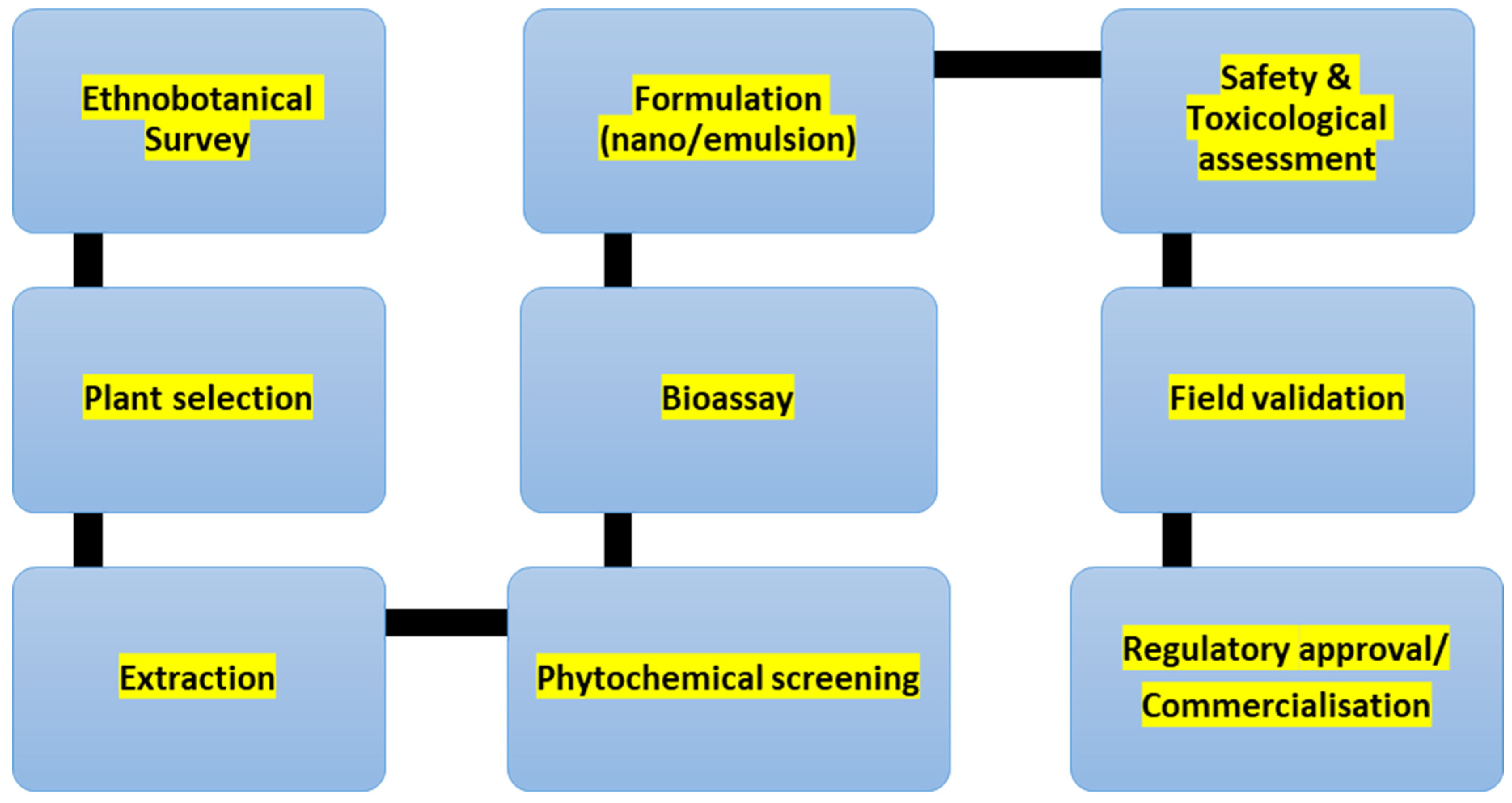
6. Ethnobotanical-to-Biopesticide Development Workflow
7. Ethnobotanical Knowledge and Use of Medicinal Plants in Maize Protection
8. Phytochemical Constituents of Insecticidal and Antifungal Plants
9. Phytochemical
9.1. Saponins
9.2. Alkaloids
9.3. Tannins
9.4. Flavonoids
9.5. Phenols
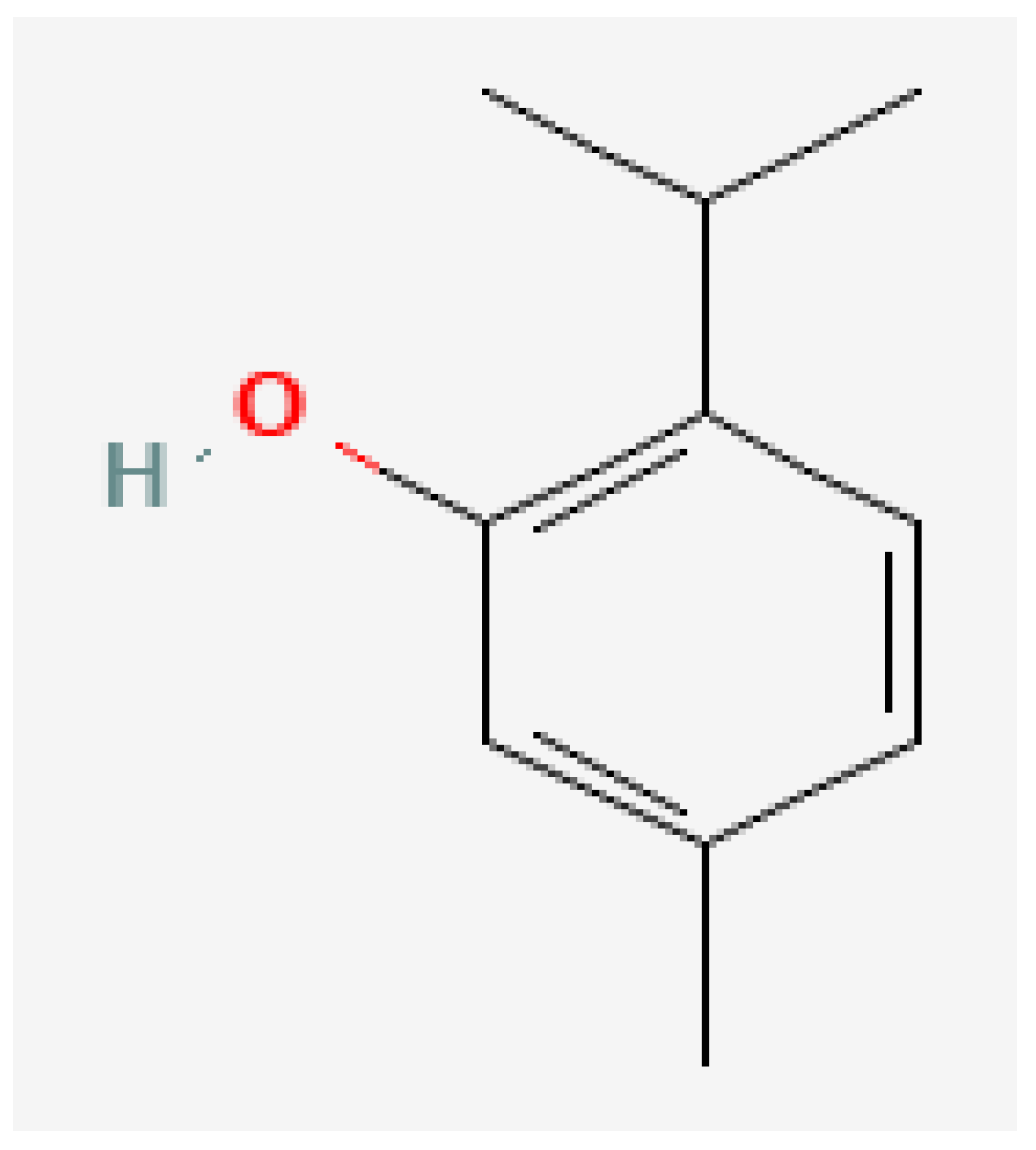
9.6. Terpenoids
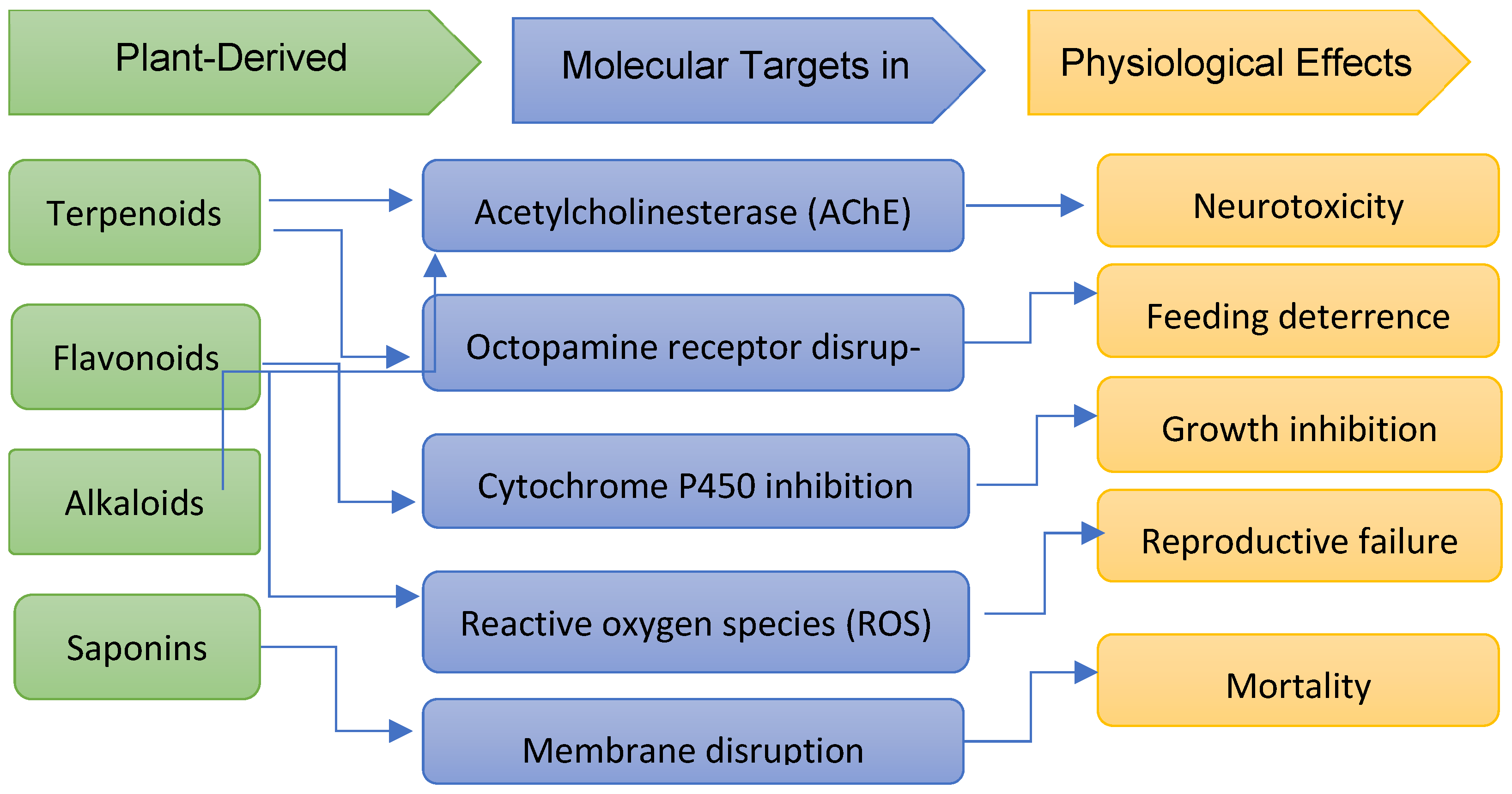
10. Mechanisms of Action
11. Pests and Diseases of Maize Targeted by Medicinal Plants
12. Advances in Biopesticide Formulation and Application
13. Research Gaps and Future Prospects
14. Conclusions
Author Contributions
Funding
Data Availability Statement
Acknowledgments
Conflicts of Interest
References
- Awata, L.A.; Tongoona, P.; Danquah, E.; Ifie, B.E.; Suresh, L.; Jumbo, M.; Marchelo-D’ragga, P.W.; Sitonik, C. Understanding Tropical Maize (Zea mays L.): The Major Monocot in Modernisation and Sustainability of Agriculture in Sub-Saharan Africa. Int. J. Adv. Agric. Res. 2019, 7, 32–77. [Google Scholar]
- Erenstein, O.; Jaleta, M.; Sonder, K.; Mottaleb, K.; Prasanna, B.M. Global Maize Production, Consumption and Trade: Trends and R&D Implications. Food Secur. 2022, 14, 1295–1319. [Google Scholar] [CrossRef]
- Yadesa, L.; Diro, D. Nutritional and Specialty Maize Production, Consumption, and Promising Impact on Ethiopia’s Food and Nutrition Security: A Review. EAS J. Nutr. Food Sci. 2023, 5, 142–157. [Google Scholar] [CrossRef]
- Shiferaw, B.; Prasanna, B.M.; Hellin, J.; Bänziger, M. Crops That Feed the World 6. Past Successes and Future Challenges to the Role Played by Maize in Global Food Security. Food Secur. 2011, 3, 307–327. [Google Scholar] [CrossRef]
- Pingali, P. Westernisation of Asian Diets and the Transformation of Food Systems: Implications for Research and Policy. Food Policy 2007, 32, 281–298. [Google Scholar] [CrossRef]
- Makkar, H. Feed Demand Landscape and Implications of Food-Not Feed Strategy for Food Security and Climate Change. Animal 2018, 12, 1744–1754. [Google Scholar] [CrossRef]
- Simanjuntak, C.; Gaiser, T.; Ahrends, H.E.; Ceglar, A.; Singh, M.; Ewert, F.; Srivastava, A.K. Impact of Climate Extreme Events and Their Causality on Maize Yield in South Africa. Sci. Rep. 2023, 13, 12462. [Google Scholar] [CrossRef]
- Jombo, S.; Abd Elbasit, M.A.; Zhang, C.; Gumbo, A.D. Opportunities and Challenges for Monitoring Maize Production in Sub-Saharan Africa: A Comprehensive Bibliometric Analysis of Remote Sensing Applications. Sci. Afr. 2025, 30, e03027. [Google Scholar] [CrossRef]
- Niazi, P.; Hejran, A.B. Biopesticides for Sustainable Agriculture: Formulations, Mechanisms, Regulations, and Market Trends. AgroTech-Food Sci. Technol. Environ. 2025, 4, 7–36. [Google Scholar]
- Masese, C.; Odira, M.; Marwa, C.; Masese, D.; Ponoth, P.; Gikonyo, A. Exploring the Potential of Plant-Based Biopesticides for Sustainable Crop Protection in Mwea, Kirinyaga County, Kenya. Scholast. Agric. 2025, 1, 1–11. [Google Scholar]
- Peña-Flores, C.; Zapién-Martínez, A.; Sánchez-Cruz, G.; Reyes-Velasco, L.; Segura-Salvador, A.; Vargas-Arzola, J.; Hernández-Osorio, L.A.; Torres-Aguilar, H.; Bernardino-Hernández, H.U. Insecticidal and Repellent Activity of Plant Powders on the Weevil (Sitophilus zeamais) in Stored Corn Grains in a Rural Community of Oaxaca, Mexico. Insects 2025, 16, 329. [Google Scholar] [CrossRef]
- Asibe, F.A.; Ngegba, P.M.; Mugehu, E.; Afolabi, C.G. Status and Management Strategies of Major Insect Pests and Fungal Diseases of Maize in Africa: A Review. Afr. J. Agric. Res. 2023, 19, 686. [Google Scholar] [CrossRef]
- Pavela, R. History, Presence and Perspective of Using Plant Extracts as Commercial Botanical Insecticides and Farm Products for Protection against Insects–a Review. Plant Prot. Sci. 2016, 52, 229–241. [Google Scholar] [CrossRef]
- Shai, K.N.; Chakale, M.V.; Materechera, S.A.; Amoo, S.O.; Aremu, A.O. Utilisation of Botanicals for the Management of Pests and Diseases Affecting Crops in Sub-Saharan Africa: A Review. J. Nat. Pestic. Res. 2024, 7, 100066. [Google Scholar] [CrossRef]
- Shamsuddeen, R.; Mathew, T.; Haladu, M.; Ahmad, K.; Adam, A.; Abubakar, M. Recent Advances in Biopesticides: A Review of Efficacy and Environmental Impact. Afr. J. Biochem. Mol. Biol. Res. 2024, 1, 706–725. [Google Scholar] [CrossRef]
- Anjaneyulu, B.; Chauhan, V.; Mittal, C.; Afshari, M. Innovative Nanocarrier Systems: A Comprehensive Exploration of Recent Developments in Nano-Biopesticide Formulations. J. Environ. Chem. Eng. 2024, 12, 113693. [Google Scholar] [CrossRef]
- Isman, M.B. Botanical Insecticides in the Twenty-First Century—Fulfilling Their Promise? Annu. Rev. Entomol. 2020, 65, 233–249. [Google Scholar] [CrossRef]
- Labonete, H.J.P.; Jimenez, E.A.; Torres, M.A.J.; Demayo, C.G. Ethnobotanical and Phytochemical Insights on Insecticidal Plants in the Philippines for Sustainable Crop Protection: A Systematic Review and Network Analysis. Int. J. Agric. Biosci. 2025, 14, 1206–1230. [Google Scholar]
- Silvie, P.J.; Martin, P.; Huchard, M.; Keip, P.; Gutierrez, A.; Sarter, S. Prototyping a Knowledge-Based System to Identify Botanical Extracts for Plant Health in Sub-Saharan Africa. Plants 2021, 10, 896. [Google Scholar] [CrossRef]
- Aisha, K.; Visakh, N.U.; Pathrose, B.; Mori, N.; Baeshen, R.S.; Shawer, R. Extraction, Chemical Composition and Insecticidal Activities of Lantana camara Linn. Leaf Essential Oils against Tribolium castaneum, Lasioderma serricorne and Callosobruchus chinensis. Molecules 2024, 29, 344. [Google Scholar] [CrossRef]
- Benjamin, J.; Idowu, O.; Babalola, O.K.; Oziegbe, E.V.; Oyedokun, D.O.; Akinyemi, A.M.; Adebayo, A. Cereal Production in Africa: The Threat of Certain Pests and Weeds in a Changing Climate—A Review. Agric. Food Secur. 2024, 13, 18. [Google Scholar] [CrossRef]
- Njeru, F.; Wambua, A.; Muge, E.; Haesaert, G.; Gettemans, J.; Misinzo, G. Major Biotic Stresses Affecting Maize Production in Kenya and Their Implications for Food Security. PeerJ 2023, 11, e15685. [Google Scholar] [CrossRef] [PubMed]
- Lobulu, J.; Shimelis, H.; Laing, M.; Mushongi, A.A. Maize Production Constraints, Traits Preference and Current Striga Control Options in Western Tanzania: Farmers’ Consultation and Implications for Breeding. Acta Agric. Scand. Sect. B—Soil Plant Sci. 2019, 69, 734–746. [Google Scholar]
- Agbodzavu, K.M.; Nanga Nanga, S.; Abang, A.F.; Fotso-Kuate, A.; Bamba, Z.; Masso, C.; Fiaboe, K.K.M. Impact of Spodoptera frugiperda (Lepidoptera: Noctuidae), on Maize Yield in Humid Tropical Zones of Central Africa. J. Econ. Entomol. 2024, 117, 1588–1605. [Google Scholar]
- Taddele, A.; Azerefegne, F.; Beyene, Y. Crop Injury and Yield Losses in Maize by the African Maize Stem Borer, Busseola fusca (Fuller) (Lepidoptera: Noctuidae) in Southern Ethiopia. Int. J. Pest. Manag. 2023, 69, 120–129. [Google Scholar] [CrossRef]
- Abbas, A.; Ullah, F.; Hafeez, M.; Han, X.; Dara, M.Z.N.; Gul, H.; Zhao, C.R. Biological Control of Fall Armyworm, Spodoptera frugiperda. Agronomy 2022, 12, 2704. [Google Scholar] [CrossRef]
- Mohamed, H.O.; Dahi, H.F.; Awad, A.A.; Gamil, W.E.; Fahmy, B.F. Damage Symptoms, Development, and Reproductive Performance of the Fall Armyworm, Spodoptera frugiperda (JE Smith) (Lepidoptera: Noctuidae) on Fodder Maize and Cob. Acad. Biol. 2023, 1, 1–9. [Google Scholar] [CrossRef]
- Makgoba, M.C.; Tshikhudo, P.P.; Nnzeru, L.R.; Makhado, R.A. Impact of Fall Armyworm (Spodoptera frugiperda) (JE Smith) on Small-Scale Maize Farmers and Its Control Strategies in the Limpopo Province, South Africa. Jàmbá J. Disaster Risk Stud. 2021, 13, 1016. [Google Scholar]
- Pfordt, A.; Paulus, S. A Review on Detection and Differentiation of Maize Diseases and Pests by Imaging Sensors. J. Plant Dis. Prot. 2025, 132, 40. [Google Scholar] [CrossRef]
- Khan, J.; Gul, P.; Liu, K. Grains in a Modern Time: A Comprehensive Review of Compositions and Understanding Their Role in Type 2 Diabetes and Cancer. Foods 2024, 13, 2112. [Google Scholar] [CrossRef]
- Duguma, H.T. Indigenous Knowledge of Farmer on Grain Storage and Management Practice in Ethiopia. Food Sci. Nutr. Technol. 2020, 5, 000224. [Google Scholar] [CrossRef]
- Bisheko, M.J.; Rejikumar, G. Major Barriers to Adoption of Improved Postharvest Technologies among Smallholder Farmers in Sub-Saharan Africa and South Asia: A Systematic Literature Review. World Dev. Sustain. 2023, 2, 100070. [Google Scholar] [CrossRef]
- Garcia-Cela, E.; Kiaitsi, E.; Sulyok, M.; Krska, R.; Medina, A.; Petit Damico, I.; Magan, N. Influence of Storage Environment on Maize Grain: CO2 Production, Dry Matter Losses and Aflatoxins Contamination. Food Addit. Contam. Part A 2019, 36, 175–185. [Google Scholar] [CrossRef]
- Gumede, B.C.; Kuria, S.K. Postharvest Practices and Farmers’ Knowledge in Managing Maize Pests in the Eastern Cape Province, South Africa. Insects 2025, 16, 48. [Google Scholar] [CrossRef]
- Sola, P.; Mvumi, B.; Ogendo, J.; Mponda, O.; Kamanula, J.; Nyirenda, S.; Belmain, S.; Stevenson, P. Botanical Pesticide Production, Trade and Regulatory Mechanisms in Sub-Saharan Africa: Making a Case for Plant-Based Pesticidal Products: P. Sola et al. Food Secur. 2014, 6, 369–384. [Google Scholar] [CrossRef]
- Berhe, M.; Subramanyam, B.; Chichaybelu, M.; Demissie, G.; Abay, F.; Harvey, J. Post-Harvest Insect Pests and Their Management Practices for Major Food and Export Crops in East Africa: An Ethiopian Case Study. Insects 2022, 13, 1068. [Google Scholar] [CrossRef]
- Chidege, M.Y.; Venkataramana, P.B.; Ndakidemi, P.A. Enhancing Food Grains Storage Systems through Insect Pest Detection and Control Measures for Maize and Beans: Ensuring Food Security Post-COVID-19 Tanzania. Sustainability 2024, 16, 1767. [Google Scholar] [CrossRef]
- Neupane, B.P.; Sharma, P.N.; Aryal, S.; Shrestha, J. Evaluation of Locally Available Botanicals for the Management of Maize Weevil (Sitophilus zeamais Motsch.) in Room Storage Condition. Psyche J. Entomol. 2022, 2022, 3362779. [Google Scholar] [CrossRef]
- Ndebugri, A.A.I.; Kugbe, J.X.; Adu-Acheampong, S.; Kyerematen, R. Two Plant Extracts Protect Stored Maize against Infestation of Sitophilus zeamais in Northern Ghana. J. Nat. Pestic. Res. 2024, 10, 100102. [Google Scholar] [CrossRef]
- Obeng-Ofori, D. Protecting Grain from Insect Pest Infestations in Africa: Producer Perceptions and Practices. Stewart Postharvest Rev. 2011, 3, 1–15. [Google Scholar] [CrossRef]
- Ayalew, A.A. Insecticidal Activity of Lantana camara Extract Oil on Controlling Maize Grain Weevils. Toxicol. Res. Appl. 2020, 4, 2397847320906491. [Google Scholar] [CrossRef]
- Sintim, H.O.; Ansah, K.D. Effects of Biopesticides Extracted with a Homemade Solvent on Stored Maize Protection. Agric. Trop. Subtrop. 2023, 56, 125–142. [Google Scholar] [CrossRef]
- Phokwe, O.J.; Manganyi, M.C. Medicinal Plants as a Natural Greener Biocontrol Approach to “The Grain Destructor” Maize Weevil (Sitophilus zeamais) Motschulsky. Plants 2023, 12, 2505. [Google Scholar] [CrossRef]
- Kadi, H.A.K.; Ibrahim, A.M.; Pendleton, B.B.; Aboubacar, K. Efficacy of Selected Botanical Powders to Control Maize Weevil, Sitophilus zeamais Motschulsky in Stored Sorghum Grain. J. Agric. Chem. Environ. 2025, 14, 23–36. [Google Scholar]
- Wakhungu, C. Loss of Soil Biodiversity through Judicious Use of Synthetic Pesticides; A Case Study of Trans Nzoia County, Kenya. Sci. Rep. Life Sci. 2023, 4, 1–24. [Google Scholar]
- Uwamahoro, C.; Jo, J.-H.; Jang, S.-I.; Jung, E.-J.; Lee, W.-J.; Bae, J.-W.; Kwon, W.-S. Assessing the Risks of Pesticide Exposure: Implications for Endocrine Disruption and Male Fertility. Int. J. Mol. Sci. 2024, 25, 6945. [Google Scholar] [CrossRef] [PubMed]
- Kozuharova, E.; Pasdaran, A.; Al Tawaha, A.R.; Todorova, T.; Naychov, Z.; Ionkova, I. Assessment of the Potential of the Invasive Arboreal Plant Ailanthus altissima (Simaroubaceae) as an Economically Prospective Source of Natural Pesticides. Diversity 2022, 14, 680. [Google Scholar] [CrossRef]
- López-Benítez, A.; Guevara-Lara, A.; Domínguez-Crespo, M.A.; Andraca-Adame, J.A.; Torres-Huerta, A.M. Concentrations of Organochlorine, Organophosphorus, and Pyrethroid Pesticides in Rivers Worldwide (2014–2024): A Review. Sustainability 2024, 16, 8066. [Google Scholar] [CrossRef]
- Navarro, I.; De la Torre, A.; Sanz, P.; Abrantes, N.; Campos, I.; Alaoui, A.; Christ, F.; Alcon, F.; Contreras, J.; Glavan, M. Assessing Pesticide Residues Occurrence and Risks in Water Systems: A Pan-European and Argentina Perspective. Water Res. 2024, 254, 121419. [Google Scholar] [CrossRef]
- Gulzar, M.; Maqsood, R.; Abbas, H.; Manzoor, M.; Suleman, M.; Bajwa, H.; Hamza, A.; Yar, S.; Zain, M.; Wadood, A. Use of Insecticides and Their Impact on Viral Diseases in Humans, Animals and Environment. Hosts Viruses 2024, 11, 64–77. [Google Scholar] [CrossRef]
- Yadav, I.C.; Devi, N.L. Pesticides Classification and Its Impact on Human and Environment. Environ. Sci. Eng. 2017, 6, 140–158. [Google Scholar]
- Abdollahdokht, D.; Gao, Y.; Faramarz, S.; Poustforoosh, A.; Abbasi, M.; Asadikaram, G.; Nematollahi, M.H. Conventional Agrochemicals towards Nano-Biopesticides: An Overview on Recent Advances. Chem. Biol. Technol. Agric. 2022, 9, 13. [Google Scholar] [CrossRef]
- Ngubane, Z.; Dzwairo, B.; Moodley, B.; Stenström, T.A.; Sokolova, E. Quantitative Assessment of Human Health Risks from Chemical Pollution in the uMsunduzi River, South Africa. Environ. Sci. Pollut. Res. 2023, 30, 118013–118024. [Google Scholar] [CrossRef]
- Hammad, A.M.A.; Bashir, H.A.A.A.; Abdelbagi, A.O.; Ishag, A.E.S.A.; Ali, M.M.Y.; Bashir, M.O.; Hur, J.-H.; Laing, M.D. Efficacy of Indigenous Entomopathogenic Fungi for the Control of the Tomato Leafminer Tuta absoluta (Meyrick) in Sudan. Int. J. Trop. Insect Sci. 2022, 42, 1449–1459. [Google Scholar] [CrossRef]
- Andersson, E.; Isgren, E. Gambling in the Garden: Pesticide Use and Risk Exposure in Ugandan Smallholder Farming. J. Rural. Stud. 2021, 82, 76–86. [Google Scholar] [CrossRef]
- Ratto, F.; Bruce, T.; Chipabika, G.; Mwamakamba, S.; Mkandawire, R.; Khan, Z.; Mkindi, A.; Pittchar, J.; Chidawanyika, F.; Sallu, S.M. Biological Control Interventions and Botanical Pesticides for Insect Pests of Crops in Sub-Saharan Africa: A Mapping Review. Front. Sustain. Food Syst. 2022, 6, 883975. [Google Scholar] [CrossRef]
- Chebbac, K.; Benziane Ouaritini, Z.; Allali, A.; Tüzün, B.; Zouirech, O.; Chalkha, M.; El Moussaoui, A.; Lafraxo, S.; Nafidi, H.-A.; Bin Jardan, Y.A. Promising Insecticidal Properties of Essential Oils from Artemisia aragonensis Lam. and Artemisia negrei L. (Asteraceae) by Targeting Gamma-Aminobutyric Acid and Ryanodine Receptor Proteins: In Vitro and in Silico Approaches. Separations 2023, 10, 329. [Google Scholar] [CrossRef]
- Evangelou, E.; Ntritsos, G.; Chondrogiorgi, M.; Kavvoura, F.K.; Hernández, A.F.; Ntzani, E.E.; Tzoulaki, I. Exposure to Pesticides and Diabetes: A Systematic Review and Meta-Analysis. Environ. Int. 2016, 91, 60–68. [Google Scholar] [CrossRef]
- Curl, C.L.; Spivak, M.; Phinney, R.; Montrose, L. Synthetic Pesticides and Health in Vulnerable Populations: Agricultural Workers. Curr. Environ. Health Rep. 2020, 7, 13–29. [Google Scholar] [CrossRef]
- Guerrero Ramírez, J.R.; Ibarra Muñoz, L.A.; Balagurusamy, N.; Frías Ramírez, J.E.; Alfaro Hernández, L.; Carrillo Campos, J. Microbiology and Biochemistry of Pesticides Biodegradation. Int. J. Mol. Sci. 2023, 24, 15969. [Google Scholar] [CrossRef]
- Rasool, S.; Rasool, T.; Gani, K.M. A Review of Interactions of Pesticides within Various Interfaces of Intrinsic and Organic Residue Amended Soil Environment. Chem. Eng. J. Adv. 2022, 11, 100301. [Google Scholar] [CrossRef]
- Matthew, O.; Folake, A.O.; Idu, O.M.; Philip, M.Y. Beneficial Activities of Ethnobotanical Plants on Selected Systems and Agriculture. J. Med. Plants Stud. 2023, 134, 13. [Google Scholar] [CrossRef]
- Gakuya, D.; Itonga, S.; Mbaria, J.; Muthee, J.; Musau, J. Ethnobotanical Survey of Biopesticides and Other Medicinal Plants Traditionally Used in Meru Central District of Kenya. J. Ethnopharmacol. 2013, 145, 547–553. [Google Scholar] [CrossRef]
- Ali, A.D.; Ior, L.D.; Dogo, G.A.; Joshua, J.I.; Gushit, J.S. Ethnobotanical Survey of Plants Used as Biopesticides by Indigenous People of Plateau State, Nigeria. Diversity 2022, 14, 851. [Google Scholar] [CrossRef]
- Kumar, J.; Ramlal, A.; Mallick, D.; Mishra, V. An Overview of Some Biopesticides and Their Importance in Plant Protection for Commercial Acceptance. Plants 2021, 10, 1185. [Google Scholar] [CrossRef]
- Fenibo, E.O.; Matambo, T. Biopesticides for Sustainable Agriculture: Feasible Options for Adopting Cost-Effective Strategies. Front. Sustain. Food Syst. 2025, 9, 1657000. [Google Scholar] [CrossRef]
- do Nascimento Junior, D.R.; Tabernero, A.; Cabral Albuquerque, E.C.d.M.; Vieira de Melo, S.A.B. Biopesticide Encapsulation Using Supercritical CO2: A Comprehensive Review and Potential Applications. Molecules 2021, 26, 4003. [Google Scholar] [CrossRef]
- Agboola, A.R.; Okonkwo, C.O.; Agwupuye, E.I.; Mbeh, G. Biopesticides and Conventional Pesticides: Comparative Review of Mechanism of Action and Future Perspectives. AROC Agric. 2022, 1, 14–32. [Google Scholar] [CrossRef]
- Petrović, S.; Leskovac, A. Biopesticides and Human Health Risks: A Critical Review. Toxics 2026, 14, 246. [Google Scholar] [CrossRef]
- Gautam, S.; Khanal, S.; Khanal, D.; Mishra, S.R.; Ghimire, S. Phytochemical Screening of Selected Botanicals and Their Effectiveness Against Maize Weevil (Sitophilus zeamais Motsch.) at Paklihawa, Rupandehi, Nepal. Adv. J. Grad. Res. 2022, 11, 34–44. [Google Scholar] [CrossRef]
- Abdallah, E.M.; Alhatlani, B.Y.; de Paula Menezes, R.; Martins, C.H.G. Back to Nature: Medicinal Plants as Promising Sources for Antibacterial Drugs in the Post-Antibiotic Era. Plants 2023, 12, 3077. [Google Scholar] [CrossRef]
- Said-Al Ahl, H.; Hikal, W.M.; Tkachenko, K.G. Essential Oils with Potential as Insecticidal Agents: A Review. Int. J. Env. Plan. Manag. 2017, 3, 23–33. [Google Scholar]
- Ukoroije, R.B.; Otayor, R.A. Review on the Bio-Insecticidal Properties of Some Plant Secondary Metabolites: Types, Formulations, Modes of Action, Advantages and Limitations. Asian J. Res. Zool. 2020, 3, 27–60. [Google Scholar]
- El-Saadony, M.T.; Saad, A.M.; Mohammed, D.M.; Alkafaas, S.S.; Abd El-Mageed, T.A.; Fahmy, M.A.; Ezzat Ahmed, A.; Algopishi, U.B.; Abu-Elsaoud, A.M.; Mosa, W.F. Plant Bioactive Compounds: Extraction, Biological Activities, Immunological, Nutritional Aspects, Food Application, and Human Health Benefits—A Comprehensive Review. Front. Nutr. 2025, 12, 1659743. [Google Scholar] [CrossRef]
- Hikal, W.M.; Baeshen, R.S.; Said-Al Ahl, H.A. Botanical Insecticide as Simple Extractives for Pest Control. Cogent Biol. 2017, 3, 1404274. [Google Scholar] [CrossRef]
- Chafiki, S.; Oukarroum, A.; Alouani, M.; Lahchimi, H.; Qessaoui, R.; El Assri, S.; El Arroussi, H.; Bouharroud, R. Microbial-and Plant-Based Biopesticides for Management of Crop Pests and Diseases: A Bibliographical Analysis. J. Umm Al-Qura Univ. Appl. Sci. 2026. [Google Scholar] [CrossRef]
- Lahlali, R.; Kouighat, M.; Khadiri, M.; Boutagayout, A.; Özer, G.; Laasli, S.-E.; Farhaoui, A. Biopesticides for a Sustainable Agriculture: Prospects and Challenges in Disease Management. Physiol. Mol. Plant Pathol. 2025, 142, 103096. [Google Scholar] [CrossRef]
- Siraj, J. Ethnobotany; IntechOpen: London, UK, 2022. [Google Scholar]
- Ishtiaq, M.; Sardar, T.; Hussain, I.; Maqbool, M.; Mazhar, M.W.; Parveen, A.; Ajaib, M.; Bhatti, K.H.; Hussain, T.; Gul, A. Traditional Ethnobotanical Knowledge of Important Local Plants in Sudhnoti, Azad Kashmir, Pakistan. Sci. Rep. 2024, 14, 22165. [Google Scholar] [CrossRef]
- Nko, K.I.; Mpolokeng, T.G.; Mokgau, K.; Asong, J.A.; Omotayo, A.O.; Aremu, A.O. Ethnobotanical, Biological, and Phytochemical Qualities of Locally Sourced Leafy Vegetables for Food Security, Good Health and General Well-Being in South Africa: A Review. S. Afr. J. Bot. 2024, 172, 52–68. [Google Scholar] [CrossRef]
- Suleiman, M.; Rugumamu, C.P.; Ibrahim, N.D. Repellency Potential of Some Botanicals against the Maize Weevil, Sitophilus zeamais (Motschulsky, 1855) (Coleoptera: Curculionidae) in Stored Sorghum. Pol. J. Entomol. 2018, 87, 85–99. [Google Scholar] [CrossRef]
- Arannilewa, S.; Ekrakene, T.; Akinneye, J. Laboratory Evaluation of Four Medicinal Plants as Protectants against the Maize Weevil, Sitophilus zeamais (Mots). Afr. J. Biotechnol. 2006, 5, 2030–2036. [Google Scholar]
- Ndungu, M.; Lwande, W.; Hassanali, A.; Moreka, L.; Chhabra, S.C. Cleome Monophylla Essential Oil and Its Constituents as Tick (Rhipicephalus appendiculatus) and Maize Weevil (Sitophilus zeamais) Repellents. Entomol. Exp. Appl. 1995, 76, 217–222. [Google Scholar] [CrossRef]
- Hiruy, B.; Getu, E. Efficacy of Solvent Extracts of Calpurnia aurea (Ait.) Benth and Milletia ferruginea (Hochest) Baker Leaves against Maize Weevils, Sitophilus zeamais (Motsch.) of Stored Maize in Ethiopia. J. Stored Prod. Postharvest Res. 2018, 9, 27–35. [Google Scholar]
- Hiruy, B.; Getu, E. Evaluation of Calpurnia Aurea Leaf Extracts as Natural Insect Repellents for Stored Product Insect Pests in Ethiopia. Life 2023, 16, 2163303. [Google Scholar] [CrossRef]
- Ukeh, D.A.; Birkett, M.A.; Pickett, J.A.; Bowman, A.S.; Mordue, A.J. Repellent Activity of Alligator Pepper, Aframomum melegueta, and Ginger, Zingiber Officinale, against the Maize Weevil, Sitophilus zeamais. Phytochemistry 2009, 70, 751–758. [Google Scholar] [CrossRef]
- Liu, Z.L.; Chu, S.S.; Liu, Q.R. Chemical Composition and Insecticidal Activity against Sitophilus Zeamais of the Essential Oils of Artemisia capillaris and Artemisia mongolica. Molecules 2010, 15, 2600–2608. [Google Scholar] [CrossRef]
- Akinneye, J.O.; Ogungbite, O.C. Insecticidal Activities of Some Medicinal Plants against Sitophilus zeamais (Motschulsky) (Coleoptera: Curculionidae) on Stored Maize. Arch. Phytopathol. Plant Prot. 2013, 46, 1206–1213. [Google Scholar] [CrossRef]
- Mohammad, M.Y.; Haniffa, H.M.; Sujarajiini, V. Insecticidal Effect of Selected Medicinal Plants on Sitophilus zeamais Mostschulsky in Stored Maize. Biocatal. Agric. Biotechnol. 2023, 48, 102635. [Google Scholar] [CrossRef]
- David, L.; Olajide, O.O.; Toluwalase, A.D. Laboratory Evaluation of Spice Powders and Extracts for Biocontrol of Maize Weevil (Sitophilus zeamais) in Stored Maize Seeds. Res. J. Bot. 2025, 20, 66–76. [Google Scholar] [CrossRef]
- Majdoub, S.; Chaabane-Banaoues, R.; Mokni, R.E.; Chaieb, I.; Piras, A.; Porcedda, S.; Hammami, S. Composition, Insecticidal and Antifungal Activities of Tunisian Daucus setifolius Essential Oil. Waste Biomass Valoris. 2022, 13, 3161–3170. [Google Scholar] [CrossRef]
- Seepe, H.A.; Lodama, K.E.; Sutherland, R.; Nxumalo, W.; Amoo, S.O. In Vivo Antifungal Activity of South African Medicinal Plant Extracts against Fusarium Pathogens and Their Phytotoxicity Evaluation. Plants 2020, 9, 1668. [Google Scholar] [CrossRef] [PubMed]
- Sanchez Matías, M.d.H.; Gómez, A.d.l.A.; Jiménez, C.M.; Tanguy Guillo, S.; Aristimuño Ficoseco, M.E.d.M.; Catalán, C.A.; Grougnet, R.; Kritsanida, M.; Sampietro, D.A. Antifungal Activity of Extracts from Justicia Species against Fusarium graminearum. Nat. Prod. Res. 2025, 39, 3361–3366. [Google Scholar] [CrossRef]
- Rashad, Y.M.; Aseel, D.G.; Hafez, E.E. Antifungal Potential and Defense Gene Induction in Maize against Rhizoctonia Root Rot by Seed Extract of Ammi visnaga (L.) Lam. Phytopathol. Mediterr. 2018, 57, 73–88. [Google Scholar]
- Magro, A.; Carolino, M.; Bastos, M.; Mexia, A. Efficacy of Plant Extracts against Stored Products Fungi. Rev. Iberoam. Micol. 2006, 23, 176–178. [Google Scholar] [CrossRef]
- Onyewuchi, O.; Ihejirika, G.; Alagba, A.; Chinyere, I. Effects of some plant extracts on the Curvularia leaf spot of maize. Int. J. Agric. Rural. Dev. 2016, 19, 2438–2443. [Google Scholar]
- Channya, F.K.; Chimbekujwo, I.; Talba, U.; Zakari, B.G. Control of Ear Rot Fungal Disease of Maize (Zea mays L.) Caused by Fusarium graminearum Using Plant Extracts. AROC Nat. Prod. Res. 2023, 3, 1–7. [Google Scholar] [CrossRef]
- Mungwari, C.P.; King’ondu, C.K.; Sigauke, P.; Obadele, B.A. Conventional and Modern Techniques for Bioactive Compounds Recovery from Plants. Sci. Afr. 2025, 27, e02509. [Google Scholar] [CrossRef]
- Park, K. The Role of Dietary Phytochemicals: Evidence from Epidemiological Studies. Nutrients 2023, 15, 1371. [Google Scholar] [CrossRef]
- Hossain, M.S.; Wazed, M.A.; Asha, S.; Amin, M.R.; Shimul, I.M. Dietary Phytochemicals in Health and Disease: Mechanisms, Clinical Evidence, and Applications—A Comprehensive Review. Food Sci. Nutr. 2025, 13, e70101. [Google Scholar] [CrossRef]
- Rodríguez-Negrete, E.V.; Morales-González, Á.; Madrigal-Santillán, E.O.; Sánchez-Reyes, K.; Álvarez-González, I.; Madrigal-Bujaidar, E.; Valadez-Vega, C.; Chamorro-Cevallos, G.; García-Melo, L.F.; Morales-González, J.A. Phytochemicals and Their Usefulness in the Maintenance of Health. Plants 2024, 13, 523. [Google Scholar] [CrossRef]
- Kumar, A.; P, N.; Kumar, M.; Jose, A.; Tomer, V.; Oz, E.; Proestos, C.; Zeng, M.; Elobeid, T.; K, S. Major Phytochemicals: Recent Advances in Health Benefits and Extraction Method. Molecules 2023, 28, 887. [Google Scholar] [CrossRef] [PubMed]
- Dincheva, I.; Badjakov, I.; Galunska, B. New Insights into the Research of Bioactive Compounds from Plant Origins with Nutraceutical and Pharmaceutical Potential. Plants 2023, 12, 258. [Google Scholar] [CrossRef] [PubMed]
- Greff, B.; Sáhó, A.; Lakatos, E.; Varga, L. Biocontrol Activity of Aromatic and Medicinal Plants and Their Bioactive Components against Soil-Borne Pathogens. Plants 2023, 12, 706. [Google Scholar] [CrossRef]
- Gindaba, A.; Negeri, M.; Abdisa, B.; Nemo, R.; Kitila, C. Phytochemical Screening and Insecticidal Activities of Some Medicinal Plants against the Maize Weevil, Sitophilus zeamais (Motschulsky) (Coleoptera: Curculionidae). Sci. Rep. 2024, 14, 8678. [Google Scholar] [CrossRef]
- Rodríguez, A.; Beato, M.; Usseglio, V.L.; Camina, J.; Zygadlo, J.A.; Dambolena, J.S.; Zunino, M.P. Phenolic compounds as controllers of Sitophilus zeamais: A look at the structure-activity relationship. J. Stored Prod. Res. 2022, 99, 102038. [Google Scholar] [CrossRef]
- Acheuk, F.; Basiouni, S.; Shehata, A.A.; Dick, K.; Hajri, H.; Lasram, S.; Yilmaz, M.; Emekci, M.; Tsiamis, G.; Spona-Friedl, M. Status and Prospects of Botanical Biopesticides in Europe and Mediterranean Countries. Biomolecules 2022, 12, 311. [Google Scholar] [CrossRef] [PubMed]
- Lin, D.; Xiao, M.; Zhao, J.; Li, Z.; Xing, B.; Li, X.; Kong, M.; Li, L.; Zhang, Q.; Liu, Y. An Overview of Plant Phenolic Compounds and Their Importance in Human Nutrition and Management of Type 2 Diabetes. Molecules 2016, 21, 1374. [Google Scholar] [CrossRef]
- Ninkuu, V.; Aluko, O.O.; Yan, J.; Zeng, H.; Liu, G.; Zhao, J.; Li, H.; Chen, S.; Dakora, F.D. Phenylpropanoids Metabolism: Recent Insight into Stress Tolerance and Plant Development Cues. Front. Plant Sci. 2025, 16, 1571825. [Google Scholar] [CrossRef]
- Rabizadeh, F.; Mirian, M.S.; Doosti, R.; Kiani-Anbouhi, R.; Eftekhari, E. Phytochemical Classification of Medicinal Plants Used in the Treatment of Kidney Disease Based on Traditional Persian Medicine. Evid.-Based Complement. Altern. Med. 2022, 2022, 8022599. [Google Scholar] [CrossRef]
- Lahlali, R.; El Hamss, H.; Mediouni-Ben Jemâa, J.; Barka, E.A. The Use of Plant Extracts and Essential Oils as Biopesticides. Front. Agron. 2022, 4, 921965. [Google Scholar] [CrossRef]
- Ayllón-Gutiérrez, R.; Díaz-Rubio, L.; Montaño-Soto, M.; Haro-Vázquez, M.d.P.; Córdova-Guerrero, I. Applications of Plant Essential Oils in Pest Control and Their Encapsulation for Controlled Release: A Review. Agriculture 2024, 14, 1766. [Google Scholar] [CrossRef]
- Yallappa, R.; Eraiah, K.H.; Babu, C.S.V. Chemical and Biological Investigation of Plectranthus amboinicus Essential Oil in the Control of Sitophilus oryzae L. Sci. Rep. 2025, 15, 20904. [Google Scholar] [CrossRef]
- Chaudhary, S.; Yadav, S.K.; Verma, P. Botanical Insecticides for Crop Protection: Major Classes and Possible Mechanisms of Action. In Insecticides in Pest Control-Impact, Challenges and Strategies: Impact, Challenges and Strategies; IntechOpen: London, UK, 2024; p. 161. [Google Scholar]
- Bakkali, F.; Averbeck, S.; Averbeck, D.; Idaomar, M. Biological Effects of Essential Oils—A Review. Food Chem. Toxicol. 2008, 46, 446–475. [Google Scholar] [CrossRef]
- Soujanya, P.L.; Sekhar, J.; Kumar, P.; Sunil, N.; Prasad, C.V.; Mallavadhani, U. Potentiality of Botanical Agents for the Management of Post-Harvest Insects of Maize: A Review. J. Food Sci. Technol. 2016, 53, 2169–2184. [Google Scholar] [CrossRef]
- Aremu, A.O.; Omogbene, T.O.; Fadiji, T.; Lawal, I.O.; Opara, U.L.; Fawole, O.A. Plants as an Alternative to the Use of Chemicals for Crop Protection against Biotic Threats: Trends and Future Perspectives. Eur. J. Plant Pathol. 2024, 170, 711–766. [Google Scholar] [CrossRef]
- Assadpour, E.; Can Karaça, A.; Fasamanesh, M.; Mahdavi, S.A.; Shariat-Alavi, M.; Feng, J.; Kharazmi, M.S.; Rehman, A.; Jafari, S.M. Application of Essential Oils as Natural Biopesticides; Recent Advances. Crit. Rev. Food Sci. Nutr. 2024, 64, 6477–6497. [Google Scholar]
- Devi, K.C.; Devi, S.S. Insecticidal and Oviposition Deterrent Properties of Some Spices against Coleopteran Beetle, Sitophilus Oryzae. J. Food Sci. Technol. 2013, 50, 600–604. [Google Scholar] [CrossRef]
- Ogendo, J.; Kostyukovsky, M.; Ravid, U.; Matasyoh, J.; Deng, A.; Omolo, E.; Kariuki, S.; Shaaya, E. Bioactivity of Ocimum gratissimum L. Oil and Two of Its Constituents against Five Insect Pests Attacking Stored Food Products. J. Stored Prod. Res. 2008, 44, 328–334. [Google Scholar] [CrossRef]
- Timilsena, Y.P.; Phosanam, A.; Stockmann, R. Perspectives on Saponins: Food Functionality and Applications. Int. J. Mol. Sci. 2023, 24, 13538. [Google Scholar] [CrossRef]
- Riaz, M.; Khalid, R.; Afzal, M.; Anjum, F.; Fatima, H.; Zia, S.; Rasool, G.; Egbuna, C.; Mtewa, A.G.; Uche, C.Z. Phytobioactive Compounds as Therapeutic Agents for Human Diseases: A Review. Food Sci. Nutr. 2023, 11, 2500–2529. [Google Scholar] [CrossRef]
- Tlak Gajger, I.; Dar, S.A. Plant Allelochemicals as Sources of Insecticides. Insects 2021, 12, 189. [Google Scholar] [CrossRef]
- Salim, R.; Nehvi, I.; Mir, R.; Tyagi, A.; Ali, S.; Bhat, O. A Review on Anti-Nutritional Factors: Unraveling the Natural Gateways to Human Health. Front. Nutr. 2023, 10, 1215873. [Google Scholar] [CrossRef]
- Guo, C.; Wang, L.; Chen, N.; Zhang, M.; Jia, J.; Lv, L.; Li, M. Advances in Research and Utilisation of Botanical Pesticides for Agricultural Pest Management in Inner Mongolia, China. Chin. Herb. Med. 2024, 16, 248–262. [Google Scholar]
- Ntalli, N.G.; Menkissoglu-Spiroudi, U. Pesticides of Botanical Origin: A Promising Tool in Plant Protection. In Pesticides: Formulations, Effects, Fate; BoD—Books on Demand: Hamburg, Germany, 2011; pp. 1–23. [Google Scholar]
- Pawase, P.A.; Goswami, C.; Shams, R.; Pandey, V.K.; Tripathi, A.; Rustagi, S. A Conceptual Review on Classification, Extraction, Bioactive Potential and Role of Phytochemicals in Human Health. Future Foods 2024, 9, 100313. [Google Scholar] [CrossRef]
- Varela, C.; Silva, F.; Costa, G.; Cabral, C. Alkaloids: Their Relevance in Cancer Treatment. In New Insights into Glioblastoma; Elsevier: Amsterdam, The Netherlands, 2023; pp. 361–401. [Google Scholar]
- Şengül Demirak, M.Ş.; Canpolat, E. Plant-Based Bioinsecticides for Mosquito Control: Impact on Insecticide Resistance and Disease Transmission. Insects 2022, 13, 162. [Google Scholar] [CrossRef]
- Muñoz, I.J.; Schilman, P.E.; Barrozo, R.B. Impact of Alkaloids in Food Consumption, Metabolism and Survival in a Blood-Sucking Insect. Sci. Rep. 2020, 10, 9443. [Google Scholar] [CrossRef]
- Qiao, K.; Zhao, M.; Huang, Y.; Liang, L.; Zhang, Y. Bitter Perception and Effects of Foods Rich in Bitter Compounds on Human Health: A Comprehensive Review. Foods 2024, 13, 3747. [Google Scholar] [CrossRef]
- Pizzi, A. Tannins Medical/Pharmacological and Related Applications: A Critical Review. Sustain. Chem. Pharm. 2021, 22, 100481. [Google Scholar] [CrossRef]
- Govindarajan, R.; Revathi, S.; Rameshkumar, N.; Krishnan, M.; Kayalvizhi, N. Microbial Tannase: Current Perspectives and Biotechnological Advances. Biocatal. Agric. Biotechnol. 2016, 6, 168–175. [Google Scholar] [CrossRef]
- Siddiqui, A.; Moid, H. An Introduction on Phytochemical Analysis and Their Types. Sch. Res. Libr. 2022, 14, 1–5. [Google Scholar]
- Mora, J.; Pott, D.M.; Osorio, S.; Vallarino, J.G. Regulation of Plant Tannin Synthesis in Crop Species. Front. Genet. 2022, 13, 870976. [Google Scholar] [CrossRef]
- Zayed, A.; Abdelkareem, S.; Talaat, N.; Dayem, D.A.; Farag, M.A. Tannin in Foods: Classification, Dietary Sources, and Processing Strategies to Minimize Anti-Nutrient Effects. Food Bioprocess. Technol. 2025, 18, 9221–9249. [Google Scholar] [CrossRef]
- Ullah, A.; Munir, S.; Badshah, S.L.; Khan, N.; Ghani, L.; Poulson, B.G.; Emwas, A.-H.; Jaremko, M. Important Flavonoids and Their Role as a Therapeutic Agent. Molecules 2020, 25, 5243. [Google Scholar] [CrossRef]
- Janabi, A.H.W.; Kamboh, A.A.; Saeed, M.; Xiaoyu, L.; BiBi, J.; Majeed, F.; Naveed, M.; Mughal, M.J.; Korejo, N.A.; Kamboh, R. Flavonoid-Rich Foods (FRF): A Promising Nutraceutical Approach against Lifespan-Shortening Diseases. Iran. J. Basic. Med. Sci. 2020, 23, 140. [Google Scholar]
- Mutha, R.E.; Tatiya, A.U.; Surana, S.J. Flavonoids as Natural Phenolic Compounds and Their Role in Therapeutics: An Overview. Future J. Pharm. Sci. 2021, 7, 25. [Google Scholar] [CrossRef]
- Liga, S.; Paul, C.; Péter, F. Flavonoids: Overview of Biosynthesis, Biological Activity, and Current Extraction Techniques. Plants 2023, 12, 2732. [Google Scholar] [CrossRef]
- Chen, S.; Wang, X.; Cheng, Y.; Gao, H.; Chen, X. A Review of Classification, Biosynthesis, Biological Activities and Potential Applications of Flavonoids. Molecules 2023, 28, 4982. [Google Scholar] [CrossRef]
- Dias, M.C.; Pinto, D.C.; Silva, A.M. Plant Flavonoids: Chemical Characteristics and Biological Activity. Molecules 2021, 26, 5377. [Google Scholar] [CrossRef]
- Verghese, A.; Soumya, C.; Shivashankar, S.; Manivannan, S.; Krishnamurthy, S. Phenolics as Chemical Barriers to Female Fruit Fly, Bactrocera Dorsalis (Hendel) in Mango. Curr. Sci. 2012, 103, 563–566. [Google Scholar]
- War, A.R.; Paulraj, M.G.; Ahmad, T.; Buhroo, A.A.; Hussain, B.; Ignacimuthu, S.; Sharma, H.C. Mechanisms of Plant Defense against Insect Herbivores. Plant Signal. Behav. 2012, 7, 1306–1320. [Google Scholar] [CrossRef]
- Pratyusha, S. Phenolic Compounds in the Plant Development and Defense: An Overview. In Plant Stress Physiology—Perspectives in Agriculture; IntechOpen: London, UK, 2022; p. 125. [Google Scholar]
- Khanam, S.; Mishra, P.; Faruqui, T.; Alam, P.; Albalawi, T.; Siddiqui, F.; Rafi, Z.; Khan, S. Plant-Based Secondary Metabolites as Natural Remedies: A Comprehensive Review on Terpenes and Their Therapeutic Applications. Front. Pharmacol. 2025, 16, 1587215. [Google Scholar] [CrossRef]
- Masyita, A.; Sari, R.M.; Astuti, A.D.; Yasir, B.; Rumata, N.R.; Emran, T.B.; Nainu, F.; Simal-Gandara, J. Terpenes and Terpenoids as Main Bioactive Compounds of Essential Oils, Their Roles in Human Health and Potential Application as Natural Food Preservatives. Food Chem. X 2022, 13, 100217. [Google Scholar] [CrossRef] [PubMed]
- de Oliveira, J.L.; Campos, E.V.R.; Bakshi, M.; Abhilash, P.; Fraceto, L.F. Application of Nanotechnology for the Encapsulation of Botanical Insecticides for Sustainable Agriculture: Prospects and Promises. Biotechnol. Adv. 2014, 32, 1550–1561. [Google Scholar] [CrossRef]
- Luneja, R.L.; Mkindi, A.G. Advances in Botanical-Based Nanoformulations for Sustainable Cotton Insect Pest Management in Developing Countries. Front. Agron. 2025, 7, 1558395. [Google Scholar] [CrossRef]
- Kutasy, B.; Hegedűs, G.; Kiniczky, M.; Pallos, J.P.; Nagy, Á.; Pócsi, I.; Pákozdi, K.; Kállai, M.; Weingart, C.; Andor, K. Garlic Extracts Nanoliposome as an Enhancer of Bioavailability of ABA and Thiamine Content and as an Antifungal Agent Against Fusarium oxysporum f. Sp. Pisi Infecting Pisum Sativum. Agronomy 2025, 15, 991. [Google Scholar] [CrossRef]
- Mukhtar, T. Plant Immunity and Resistance Mechanisms: An Editorial. Physiol. Mol. Plant Pathol. 2025, 140, 102903. [Google Scholar] [CrossRef]
- Oide, S.; Bejai, S.; Staal, J.; Guan, N.; Kaliff, M.; Dixelius, C. A Novel Role of PR 2 in Abscisic Acid (ABA) Mediated, Pathogen-induced Callose Deposition in Arabidopsis Thaliana. New Phytol. 2013, 200, 1187–1199. [Google Scholar] [CrossRef]
- Erb, M.; Reymond, P. Molecular Interactions between Plants and Insect Herbivores. Annu. Rev. Plant Biol. 2019, 70, 527–557. [Google Scholar] [CrossRef]
- Yang, Z.; Zhi, P.; Chang, C. Priming Seeds for the Future: Plant Immune Memory and Application in Crop Protection. Front. Plant Sci. 2022, 13, 961840. [Google Scholar] [CrossRef]
- Kasali, F.M.; Tusiimire, J.; Kadima, J.N.; Agaba, A.G. Ethnomedical Uses, Chemical Constituents, and Evidence-Based Pharmacological Properties of Chenopodium ambrosioides L.: Extensive Overview. Future J. Pharm. Sci. 2021, 7, 153. [Google Scholar] [CrossRef]
- Cortese, D.; Mareco Da Silva, M.M.; de Oliveira, G.S.; Mussury, R.M.; Fernandes, M.G. Repellency and Reduction of Offspring Emergence Potential of Some Botanical Extracts against Sitophilus zeamais (Coleoptera: Curculionidae) in Stored Maize. Insects 2022, 13, 842. [Google Scholar] [CrossRef]
- Suleiman, M.; Sani, I.; Yusuf, A.; Abdullahi, B. Entomocidal Activity of Some Plant Extracts against Sitophilus zeamais Motschulsky (Coleoptera: Curculionidae). Afr. J. Agric. Res. 2019, 14, 1862–1869. [Google Scholar] [CrossRef]
- Fernandes, E.T.; Favero, S. Óleo Essencial de Schinus molle L. Para o Controle de Sitophilus zeamais Most. 1855 (Coleoptera: Curculionidae) Em Milho. Rev. Bras. Agroecol. 2014, 9, 225–231. [Google Scholar]
- Seepe, H.A.; Nxumalo, W.; Amoo, S.O. Natural Products from Medicinal Plants against Phytopathogenic Fusarium Species: Current Research Endeavours, Challenges and Prospects. Molecules 2021, 26, 6539. [Google Scholar] [CrossRef]
- Gómez-Lama Cabanás, C.; Mercado-Blanco, J. Groundbreaking Technologies and the Biocontrol of Fungal Vascular Plant Pathogens. J. Fungi 2025, 11, 77. [Google Scholar] [CrossRef]
- Pan, X.; Guo, X.; Zhai, T.; Zhang, D.; Rao, W.; Cao, F.; Guan, X. Nanobiopesticides in Sustainable Agriculture: Developments, Challenges, and Perspectives. Environ. Sci. Nano 2023, 10, 41–61. [Google Scholar] [CrossRef]
- Ngangom, L.; Shabaaz Begum, J.; Gautam, S.; Venugopal, D.; Joshi, S. Nanotechnology in Food Crop Production and Food Processing Industry. In Food Production, Diversity, and Safety Under Climate Change; Springer: Berlin/Heidelberg, Germany, 2024; pp. 235–247. [Google Scholar]
- Kah, M.; Hofmann, T. Nanopesticide Research: Current Trends and Future Priorities. Environ. Int. 2014, 63, 224–235. [Google Scholar] [CrossRef]
- Ghosh, A.; Majumdar, D.; Biswas, H.; Chowdhury, A.; Podder, S. Nano-Biopesticide Formulation Comprising of Silver Nanoparticles Anchored to Ocimum Sanctum: A Sustainable Approach to Pest Control in Jute Farming. Sci. Rep. 2025, 15, 3414. [Google Scholar] [CrossRef] [PubMed]
- Jali, P.; Acharya, S.; Mahalik, G. Antimicrobial Efficacy of Nano-Particles for Crop Protection and Sustainable Agriculture. Discov. Nano 2024, 19, 117. [Google Scholar] [CrossRef] [PubMed]
- Vinci, G.; Savastano, M.; Restuccia, D.; Ruggeri, M. Nanobiopesticides: Sustainability Aspects and Safety Concerns. Environments 2025, 12, 74. [Google Scholar] [CrossRef]
- Mawcha, K.T.; Malinga, L.; Muir, D.; Ge, J.; Ndolo, D. Recent Advances in Biopesticide Research and Development with a Focus on Microbials. F1000Research 2025, 13, 1071. [Google Scholar] [CrossRef]
- Jomantas, T.; Kemzūraitė, A.; Steponavičius, D.; Andriušis, A.; Dorelis, M.; Balčiūnas, J. Management Measures for the Mitigation of Spray Drift of Very Fine Droplets Sprayed by a Spraying Robot. Sci. Rep. 2025, 15, 27741. [Google Scholar] [CrossRef]
- Assalin, M.R.; de Castro, S.C.; Mioti, M.V.; dos Santos, V.T.; Fazolin, M.; Forim, M.R.; do Nascimento Queiroz, S.C.; Marinho-Prado, J.S.; Tasic, L. Nanoencapsulation of Essential Oil of Piper aduncum: Evaluation of Insecticidal Activity and Phytotoxicity of a Botanical Pesticide. Plant Nano Biol. 2025, 11, 100137. [Google Scholar] [CrossRef]
- Wang, X.; Xie, H.; Wang, P.; Yin, H. Nanoparticles in Plants: Uptake, Transport and Physiological Activity in Leaf and Root. Materials 2023, 16, 3097. [Google Scholar] [CrossRef]
- Islam, S. Toxicity and Transport of Nanoparticles in Agriculture: Effects of Size, Coating, and Ageing. Front. Nanotechnol. 2025, 7, 1622228. [Google Scholar] [CrossRef]
- Alwora, G.O.; Gichuru, E.K.; Ogendo, J.O.; Okumu, O.O. An Overview of Biopesticides Use and Analysis of the Kenyan Legal Frameworks Regulating Biocontrol Agents: A Review. Front. Sustain. Food Syst. 2026, 10, 1734372. [Google Scholar] [CrossRef]
- Patel, M.; Surti, M.; Janiyani, K.; Adnan, M. Next-Generation Nanotechnology-Integrated Biosurfactants: Innovations in Biopesticide Development for Sustainable and Modern Agriculture. Adv. Colloid Interface Sci. 2025, 343, 103555. [Google Scholar] [CrossRef]
- Kutasy-Takács, B.; Pallos, J.P.; Kiniczky, M.; Hegedűs, G.; Virág, E. Plant-Derived Biostimulants and Liposomal Formulations in Sustainable Crop Protection and Stress Tolerance. Appl. Sci. 2026, 16, 490. [Google Scholar] [CrossRef]
- Chaud, M.; Souto, E.B.; Zielinska, A.; Severino, P.; Batain, F.; Oliveira-Junior, J.; Alves, T. Nanopesticides in Agriculture: Benefits and Challenge in Agricultural Productivity, Toxicological Risks to Human Health and Environment. Toxics 2021, 9, 131. [Google Scholar] [CrossRef] [PubMed]
- Yousef, H.A.; Fahmy, H.M.; Arafa, F.N.; Abd Allah, M.Y.; Tawfik, Y.M.; El Halwany, K.K.; El-Ashmanty, B.A.; Al-Anany, F.S.; Mohamed, M.A.; Bassily, M.E. Nanotechnology in Pest Management: Advantages, Applications, and Challenges. Int. J. Trop. Insect Sci. 2023, 43, 1387–1399. [Google Scholar] [CrossRef]
- Prieto, C.; Lagaron, J.M. Nanoencapsulation and Nanocoating of Bioactives of Application Interest in Food, Nutraceuticals and Pharma. Nanomaterials 2024, 14, 313. [Google Scholar] [CrossRef] [PubMed]



| Scientific Names of Plants | Family | Part Used | Solvent Used | Mode of Action | Major Active Ingredients | Key Findings | References |
|---|---|---|---|---|---|---|---|
| Euphorbia balsamifera, Lawsonia inermis, Mitracarpus hirtus, and Senna obtusifolia | Euphorbiaceae, Lythraceae, Rubiaceae, Fabaceae | Leaves | Powder, methanolic, ethanolic, and aqueous | Repellent | N/A | Senna obtusifolia was the least repellent of the botanicals, while Euphorbia balsamifera was shown to have a better repellency than permethrin powder. | [81] |
| Aristolochia ringens (Vahl), Allium sativum (L), Ficus exasperata (L), and Garcinia kola (H) | Aristolochiaceae, Liliaceae, Moraceae, Guttiferae | Roots, bark, bulbs, leaves, and seeds | Petroleum ether | Protectant | N/A | A. sativum and A. ringens showed some promise as repellents, food poisons, contact poisons, and antifeedants. | [82] |
| Cleome monophyla | Capparidaceae | Shrub | Essential oil | Repellent | Terpenolene, 1-a-terpeneol, pentacosane, (a + 3)-humulene, phytol, 2-dodecanone | The most repellent components against Sitophilus zeamais were l-a-terpeneol and 2-dodecanone. | [83] |
| Calpurnia aurea (Ait.) Benth and Milletia ferruginea (Hochst.) Baker | Fabaceae | Leaves | Distilled water, acetone, and ethanol | Protectant | N/A | At a rate of 10% and 15%, all of the evaluated polar solvent extracts of C. aurea and M. ferruginea were effective in defending maize grains against attacks by maize weevils. | [84] |
| Calpurnia aurea | Fabaceae | Leaves | Ethanol, acetone, methanol, distilled water, chloroform, n-hexane | Repellent | N/A | Three days after treatment, a 10% dosage of the polar solvent extract from Calpurnia aurea leaves exhibited 100% weevil repellency. | [85] |
| Aframomum melegueta and Zingiber officinale | Zingiberaceae | Seed and rhizome | Distilled water, hexane, and diethyl ether | Repellent | (S)-2-heptanol, (S)-2-heptyl acetate, (R)-linalool, and 1,8-cineole | For A. melegueta, the repellent activity was accounted for by a synthetic blend of (S)-2-heptanol, (S)-2-heptyl acetate, and (R)-linalool and for Z. officinale by a synthetic blend of 1,8-cineole, neral, and geranial. | [86] |
| Artemisia capillaris and Artemisia mongolica | Asteraceae | Aerial parts | Essential oil | Contact and fumigant | 1,8-cineole, germacrene D, and camphor. α-pinene, germacrene D, and γ-terpinene | The two essential oils were ten times less toxic to the maize weevil than the commercial fumigant MeBr, but they still had substantial fumigant toxicity against adult weevils. Additionally, the two essential oils demonstrated contact toxicity to maize weevils. | [87] |
| Zanthoxylum zanthoxyloides, Aristolochia ringens, Garcinia kola, Morinda lucida, Euphorbia hirta, Croton zambesicus, Colocasia esculenta, Ficus exasperata, and Tetrapleura tetraptera | Rutaceae, Aristolochiaceae, Clusiaceae, Rubiaceae, Euphorbiaceae, Araceae, Moraceae, Fabaceae | Roots, seeds, stem bark, shoot, leaves, and fruits | Powder | N/A | N/A | Zanthoxylum zanthoxyloides powder had the greatest effect on weevil mortality, reaching 100% in 72 h at 5% (wt/wt). | [88] |
| Momordica charantia, Annona muricata, Averrhoa bilimbi, Ocimum Selloi, Lantana camara, Ailanthus altissima, Eugenia caryophyllata, Azardirachta indica, Cassia alata, Ricinus communis | Cucurbitaceae, Annonaceae, Oxalidaceae, Lamiaceae, Verbenaceae, Simaroubaceae, Myrtaceae, Meliaceae, Fabaceae, Euphorbiaceae | Leaves | Methanol | Contact and repellent | Flavonoid, alkaloid, tannins, and saponins | The methanol extract of A. muricata showed the highest mortality, with 100% mortality within 7 days. O. selloi showed maximum (57.80 ± 21.2) repellency. | [89] |
| Curcuma longa and Piper guineense | Zingiberaceae, Piperaceae | Rhizome, seeds | Powder and ethanol | Protectant | N/A | P. guineense powder was the most effective; the extracts were more toxic than the powders. | [90] |
| Daucus setifolius | Apiaceae | Aerial parts | Essential oil | Repellent | Sabinene, selinene, terpinen-4-ol | After 120 min of exposure, the volatile oil showed greater repellency to Sitophilus zeamais. | [91] |
| Scientific Names of Plants | Family | Part Used | Target Pathogen/Diseases | Solvents | Major Active Ingredients | Key Findings | References |
|---|---|---|---|---|---|---|---|
| Withania somnifera, Combretum molle, Combretum erythrophyllum, Quercus acutissima, Solanum mauritianum, Melia azedarach, Lantana camara and Nicotiana glauca | Solanaceae, Combretaceae, Fagaceae, Solanaceae, Meliaceae, Verbenaceae Solanaceae | Leaves | Fusarium pathogens (F. proliferatum, F. oxysporum, F. subglutinans, F. verticilloides, F. semitectum, F. chlamydosporum, F. solani, F. equisite, and F. graminearum) | water, ethyl acetate, or acetone | N/A | This study concluded that plant extracts could prevent Fusarium diseases without having a negative impact on plant growth or maize seed germination. | [92] |
| Justicia specie | Acanthaceae | Stem and leaf | Fusarium graminearum/Ear rot | dichloro-methane, methanol, and ethyl acetate | lignans hino-kinin, isohibalactone, and savinin | Only the J. xylosteoides leaf and stem extracts showed inhibitory activity, with the dichloromethane leaf extract having the highest level of effectiveness. | [93] |
| Eucalyptus tereticornis Sm., Ammi visnaga (L.) Lam., Azadirachta indica A. Juss., Rheum Palmatum L., and Adansonia digitata L. | Myrtaceae Apiaceae Meliaceae Polygonaceae Malvaceae | Leaves, seeds, fruits, and roots | Rhizoctonia root rot (Rhizoctonia solani) | Methanol | Ammi visnaga: 8-methoxyp-soralen, glycerin, 3-piperidin-1-yl-1-(4-piperidin-1-yl-phenyl)-pyrrolidine-2,5-dione, 2-monopalmitin, palmitic acid, khellin, xanthyletin, cyclopenta[c]pyran-7-carboxaldehyde, oleic Acid, and 2-(1-Hydroxy-1-methylethyl)-2,3-dihydrofuro3,2 chromen-7-one | This study showed how Ammi visnaga methanol extracts can activate the maize immune system against Rhizoctonia solani. | [94] |
| Anthemis nobilis, Cinnamomum verum, Lavandula stoechas, Malva sylvestris, Mentha piperita, and Allium sativum | Asteraceae, Lauraceae, Lamiaceae, Malvaceae, Lamiaceae, and Amaryllidaceae | Dried leaves, bulb | Fusarium culmorum, Aspergillus candidus, Penicillium sp. and Aspergillus niger, | Aqueous extracts | N/A | The growth of the examined fungi was inhibited by the more concentrated extracts of chamomile and malva, with malva having the highest level of efficiency. | [95] |
| Veronica amygdalina Siam, Chromolaena odorata, Azadirachta indica, and a combination of all the plants Waltheria indica L. Senna tora (L.) Roxb. Vernonia amygdalina Delile | Asteraceae, Meliaceae Malvaceae Fabaceae Asteraceae | Leaves Root, stem, leaf, seed, and flower | Curvularia leaf spot (Curvularia lunata) Fungal ear rot (Fusarium graminearum) | Sterile distilled water Aqueous extracts | N/A N/A | Among all plant extracts, neem extract proved the most effective in controlling Curvularia leaf spot. The findings showed that all the plant extracts under investigation had an inhibitory effect on the conidial growth of F. graminearum. | [96,97] |
Disclaimer/Publisher’s Note: The statements, opinions and data contained in all publications are solely those of the individual author(s) and contributor(s) and not of MDPI and/or the editor(s). MDPI and/or the editor(s) disclaim responsibility for any injury to people or property resulting from any ideas, methods, instructions or products referred to in the content. |
© 2026 by the authors. Licensee MDPI, Basel, Switzerland. This article is an open access article distributed under the terms and conditions of the Creative Commons Attribution (CC BY) license.
Share and Cite
Aina, F.B.; Buwa-Komoreng, L.; Heshula, L.U.-N.P.; Mutengwa, C.S. Medicinal Plants as Biopesticides Against Pests and Diseases of Maize (Zea mays L.) in Africa: Ethnobotanical Insights and Challenges. Plants 2026, 15, 1549. https://doi.org/10.3390/plants15101549
Aina FB, Buwa-Komoreng L, Heshula LU-NP, Mutengwa CS. Medicinal Plants as Biopesticides Against Pests and Diseases of Maize (Zea mays L.) in Africa: Ethnobotanical Insights and Challenges. Plants. 2026; 15(10):1549. https://doi.org/10.3390/plants15101549
Chicago/Turabian StyleAina, Florence Bukky, Lisa Buwa-Komoreng, Lelethu Unathi-Nkosi Peter Heshula, and Charles Shelton Mutengwa. 2026. "Medicinal Plants as Biopesticides Against Pests and Diseases of Maize (Zea mays L.) in Africa: Ethnobotanical Insights and Challenges" Plants 15, no. 10: 1549. https://doi.org/10.3390/plants15101549
APA StyleAina, F. B., Buwa-Komoreng, L., Heshula, L. U.-N. P., & Mutengwa, C. S. (2026). Medicinal Plants as Biopesticides Against Pests and Diseases of Maize (Zea mays L.) in Africa: Ethnobotanical Insights and Challenges. Plants, 15(10), 1549. https://doi.org/10.3390/plants15101549