Breeding and Molecular Characterization of Insect-Resistant Transgenic Cotton

 ,
,
Abstract
1. Introduction
2. Results
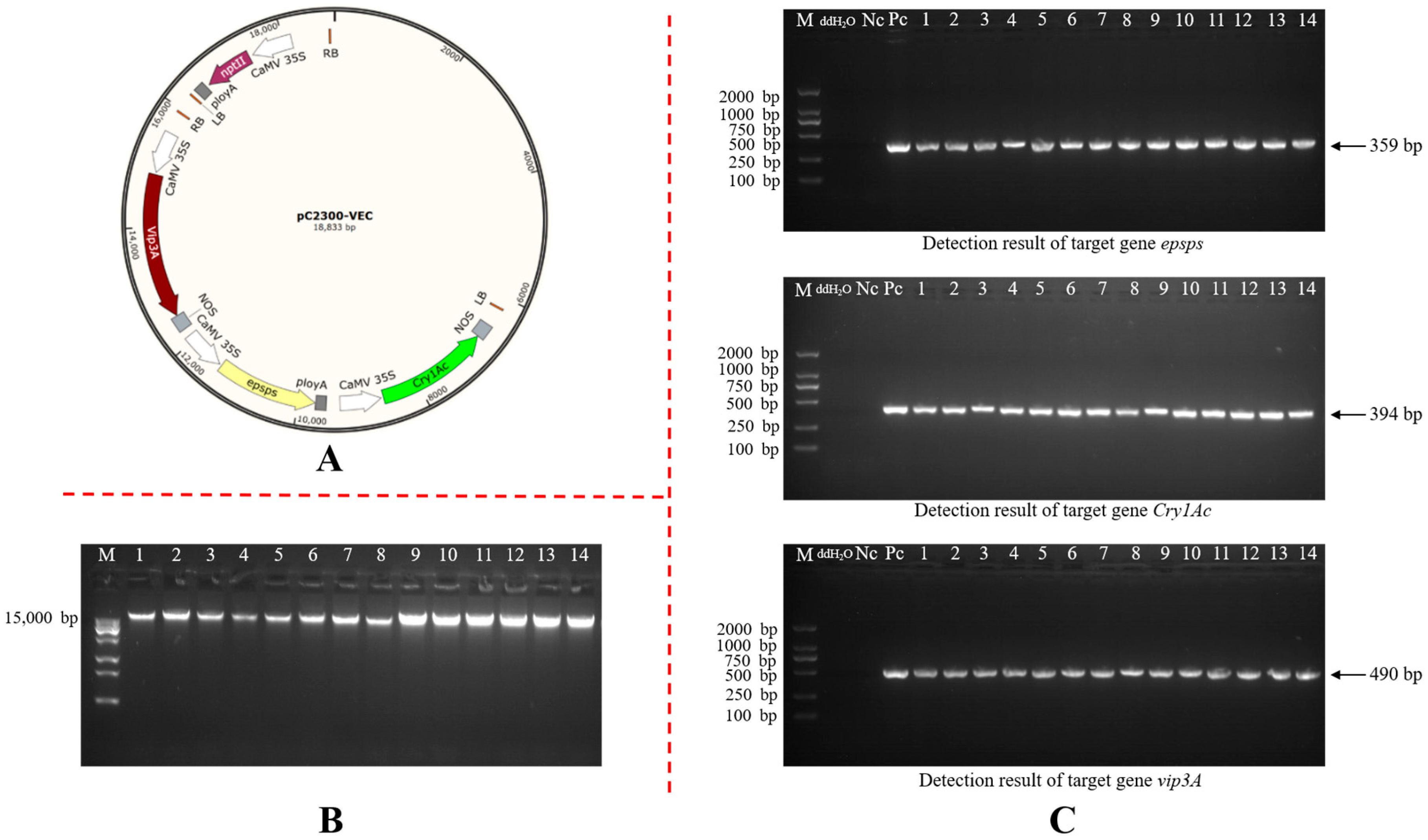
2.1. Genetic Transformation of Cotton and Screening of Transgenic Plants
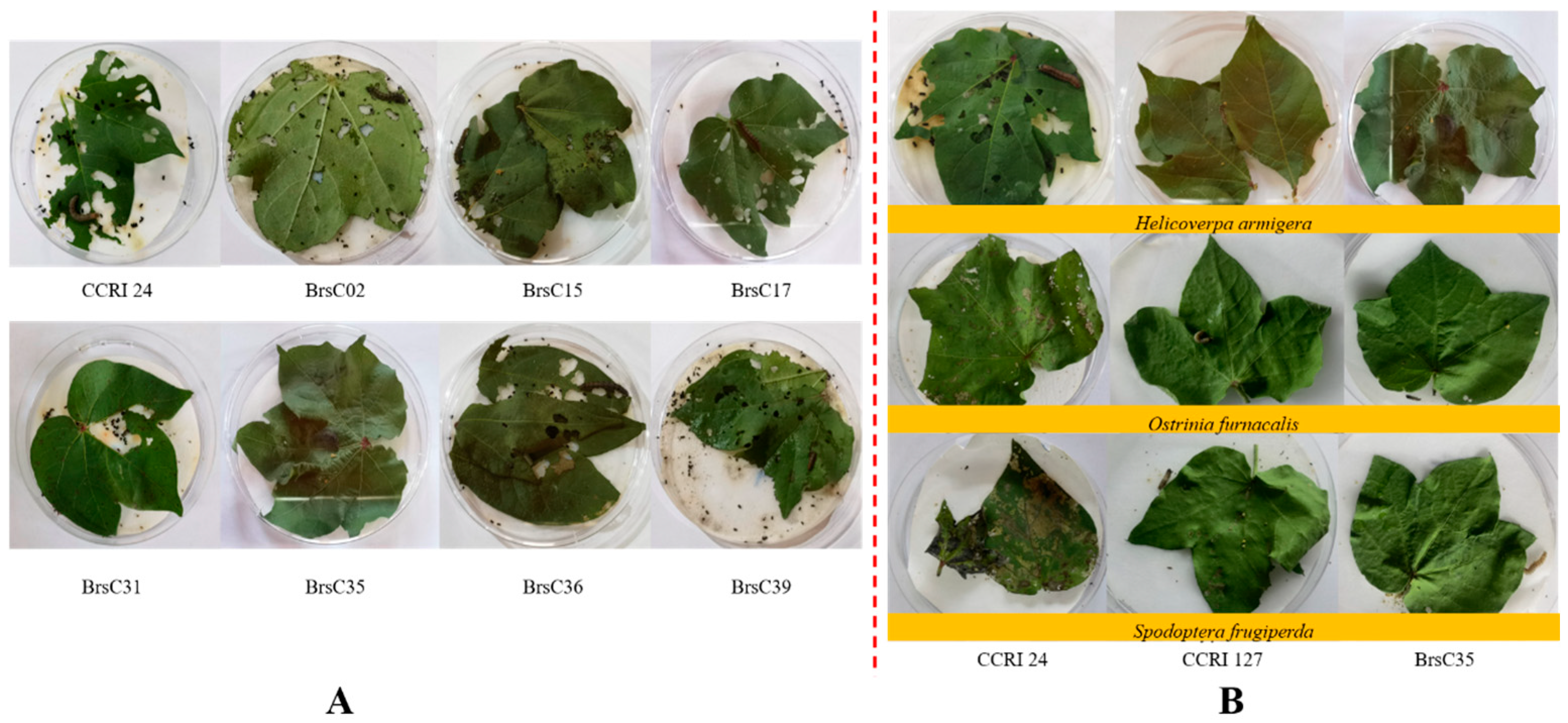
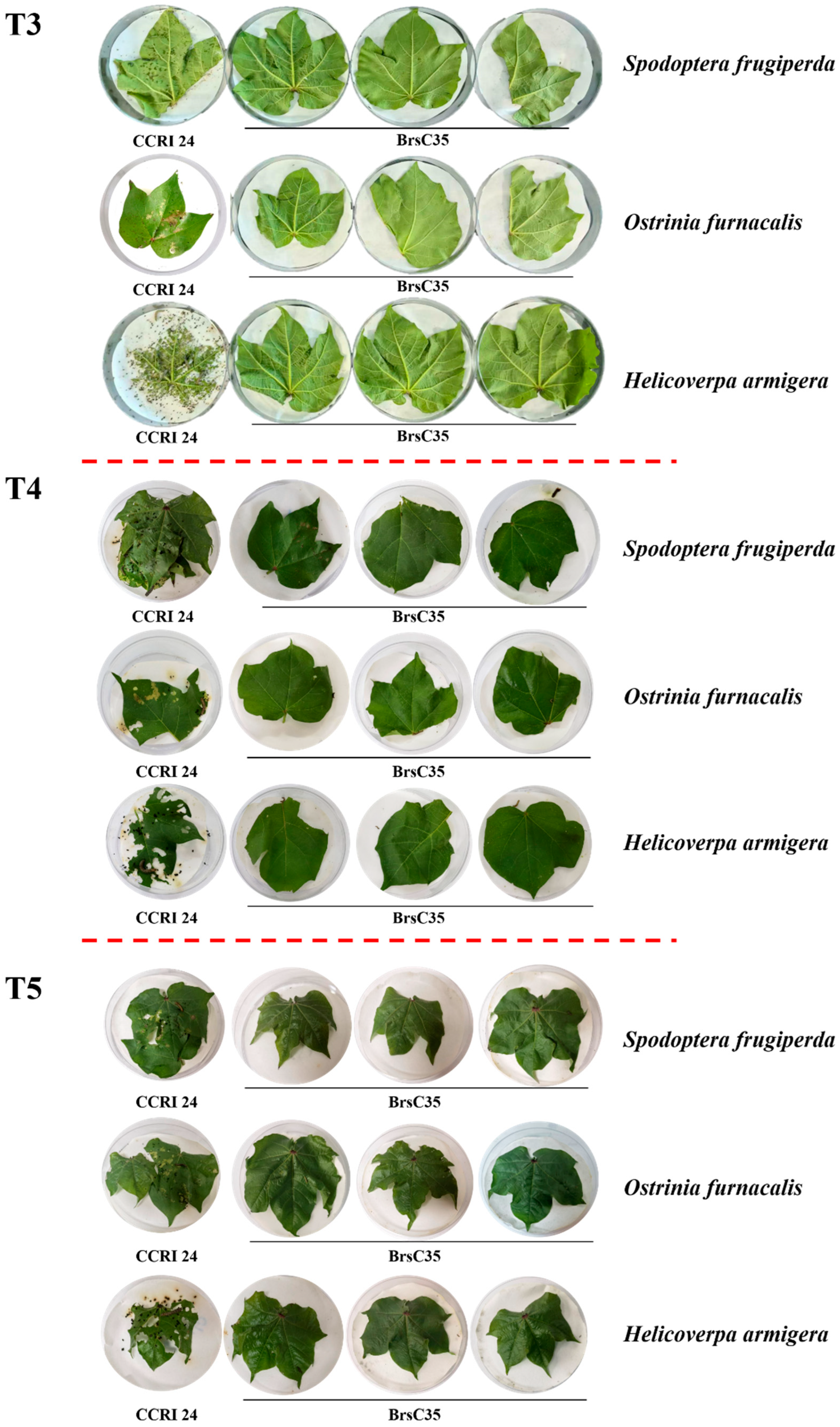
2.2. Selection of Insect-Resistant Transgenic Cotton Plants
2.3. Detection of Exogenous Protein Accumulation
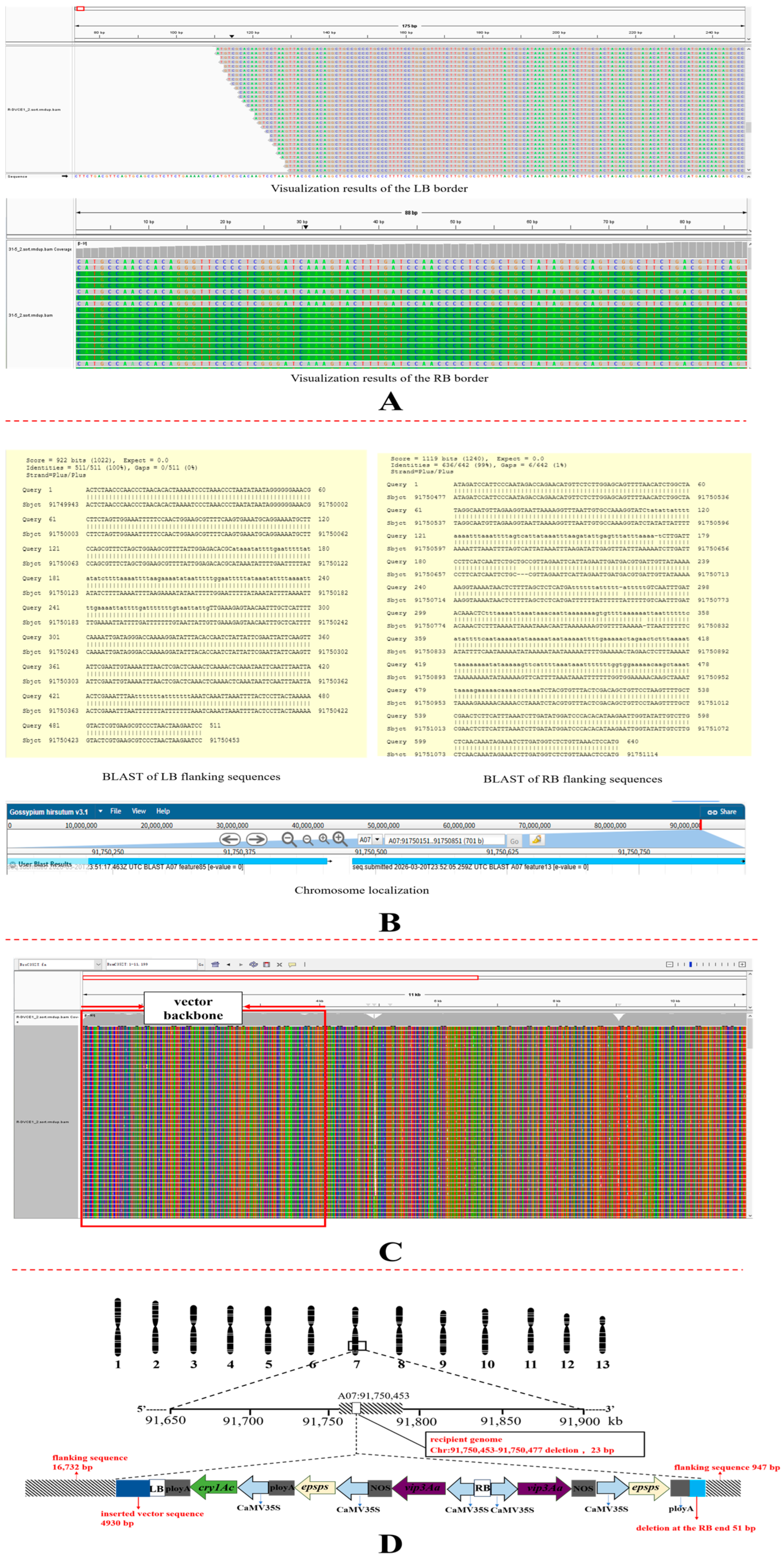
2.4. Molecular Characterization of Transgenic Cotton Line BrsC35 by PacBio Sequencing
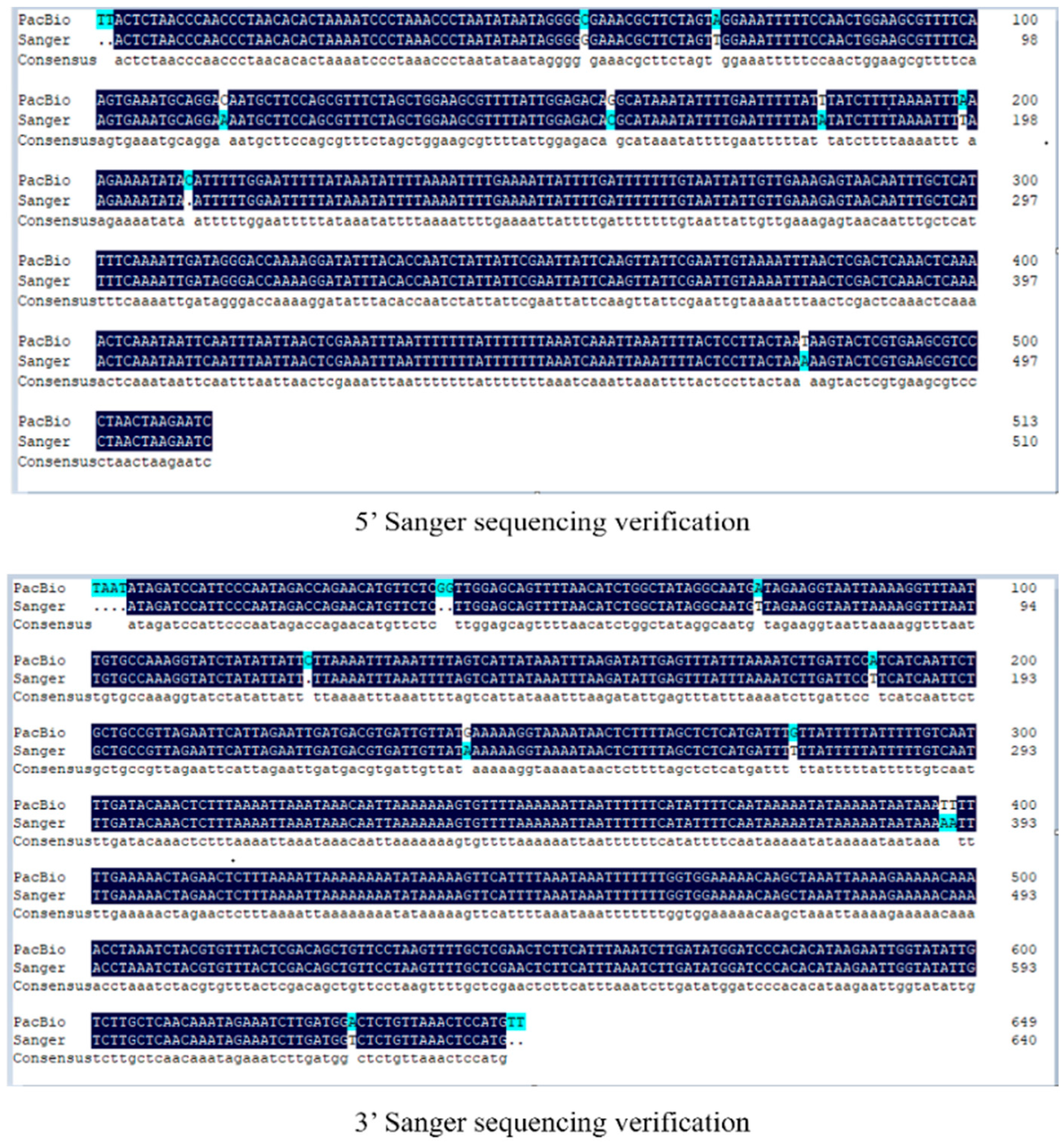
2.5. PCR Verification of BrsC35 Flanking Sequences
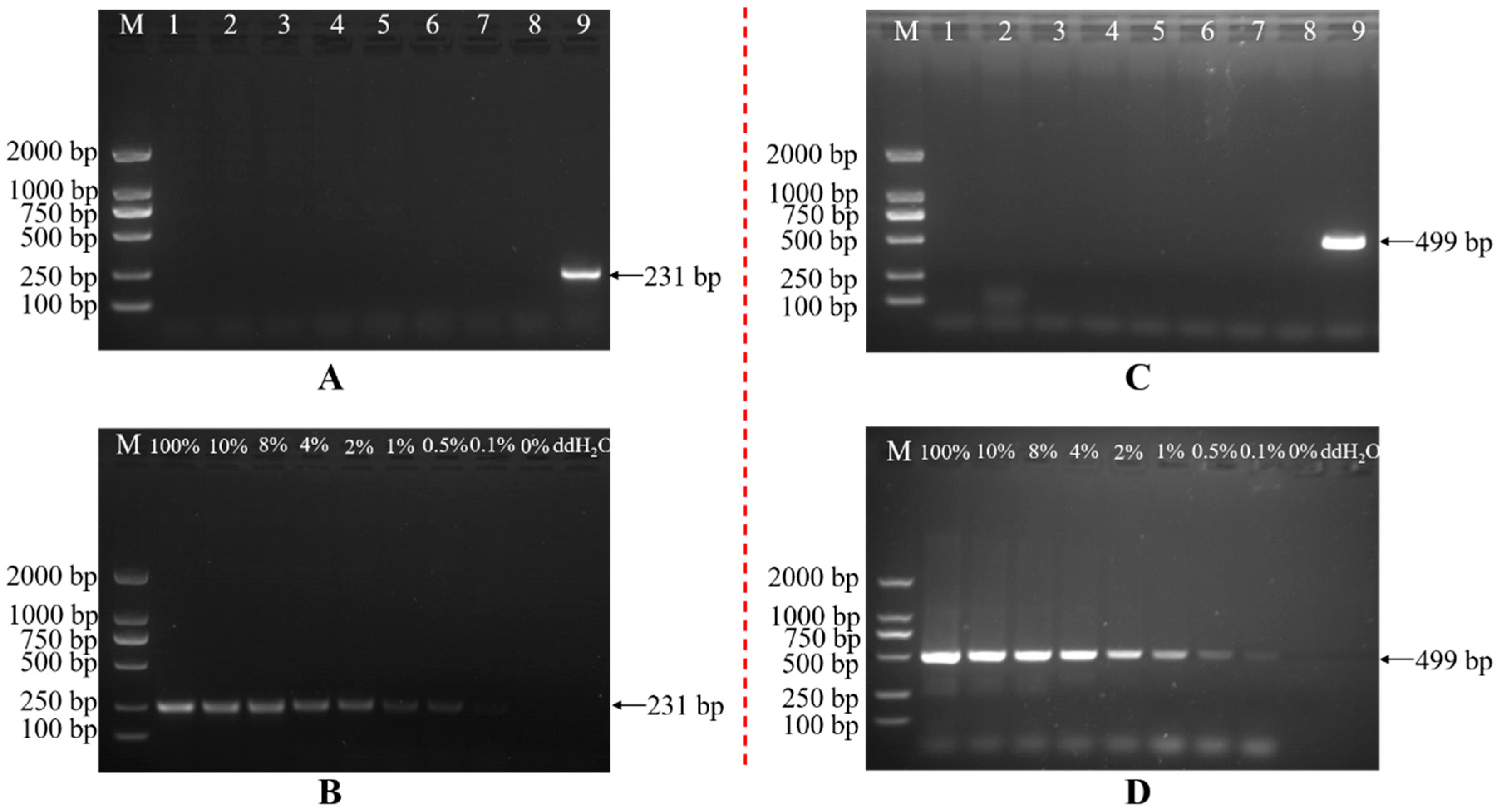
2.6. Establishment of a Specific PCR System for Transgenic Cotton Line BrsC35
- (1)
- Establishment of A Transformant-Specific PCR Detection System for the LB End
- (2)
- Establishment of a Transformant-Specific PCR Detection System for the RB End
2.7. Analysis of Genetic Stability of Target Genes in Transgenic Cotton Line BrsC35
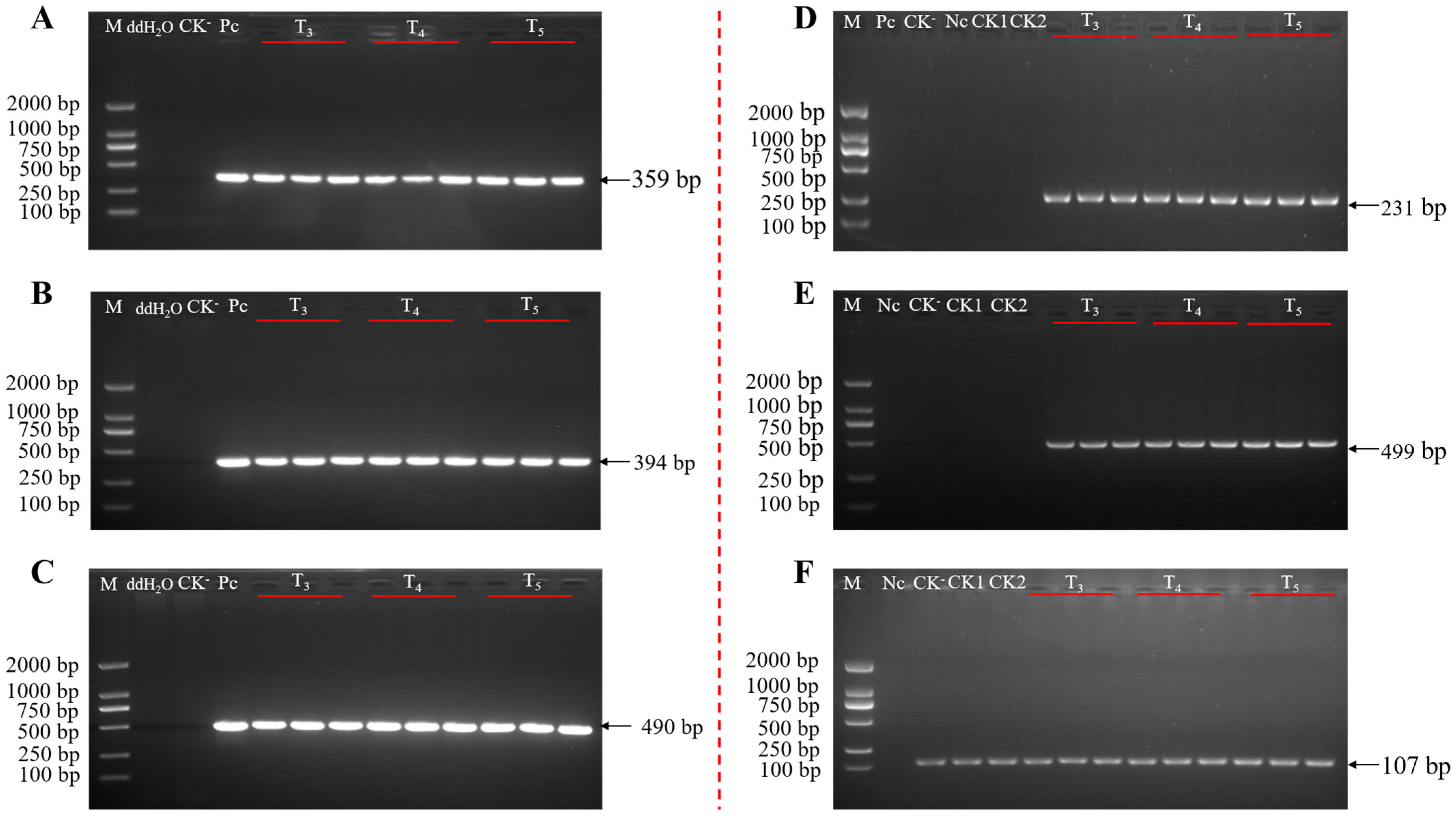
2.8. Analysis of Genetic Stability of Target Traits in Transgenic Cotton Line BrsC35
3. Discussion
4. Materials and Methods
4.1. Plant Materials, Plasmids and Strains
4.2. Enzymes and Reagents
4.3. Test Insects
4.4. Main Instruments
4.5. Vector Construction and Genetic Transformation
4.6. Preparation of Culture Medium
4.7. Screening of Transgenic Positive Plants and Identification of Insect Resistance
4.8. Expression Analysis of Target Protein in Transgenic Cotton
4.9. Molecular Characterization of Transgenic Cotton Line BrsC35 via PacBio Sequencing
- (1)
- DNA Extraction
- (2)
- Sequencing Library Construction
- (3)
- Sequencing Strategy
- (4)
- Data Quality Control
- (5)
- Data Analysis
4.10. PCR Identification of Flanking Sequences in Transgenic Cotton Line BrsC35
4.11. Establishment of a Specific PCR Detection System for Transgenic Cotton Line BrsC35
- (1)
- Establishment of a Left Border-Specific PCR Detection System for Transformant BrsC35
- (2)
- Establishment of a Right Border-Specific PCR Detection System for Transformant BrsC35
5. Conclusions
Author Contributions
Funding
Institutional Review Board Statement
Informed Consent Statement
Data Availability Statement
Conflicts of Interest
References
- Zhou, M.; Sun, G.; Sun, Z.; Tang, Y.; Wu, Y. Cotton proteomics for deciphering the mechanism of environment stress response and fiber development. J. Proteom. 2014, 105, 74–84. [Google Scholar] [CrossRef] [Scilit] [PubMed]
- Yang, Z.; Qanmber, G.; Wang, Z.; Yang, Z.; Li, F. Gossypium Genomics: Trends, Scope, and Utilization for Cotton Improvement. Trends Plant Sci. 2020, 25, 488–500. [Google Scholar] [CrossRef] [Scilit]
- Jan, M.; Liu, Z.; Guo, C.; Sun, X. Molecular Regulation of Cotton Fiber Development: A Review. Int. J. Mol. Sci. 2022, 23, 5004. [Google Scholar] [CrossRef] [Scilit]
- Kumar, S.; Kanakachari, M.; Gurusamy, D.; Kumar, K.; Narayanasamy, P.; Venkata, P.K.; Solanke, A.; Gamanagatti, S.; Hiremath, V.; Katageri, I.S.; et al. Genome-wide transcriptomic and proteomic analyses of bollworm-infested developing cotton bolls revealed the genes and pathways involved in the insect pest defence mechanism. Plant Biotechnol. J. 2016, 14, 1438–1455. [Google Scholar] [CrossRef] [Scilit]
- Malinga, L.N.; Laing, M.D. Efficacy of Biopesticides in the Management of the Cotton Bollworm, Helicoverpa armigera (Noctuidae), under Field Conditions. Insects 2022, 13, 673. [Google Scholar] [CrossRef] [Scilit]
- Meng, Z.; Han, X.; Yang, G.; Wang, Y.; Zhou, Y.; Zhou, Q.; Li, Y.; Zhou, T.; Guo, S.; Jin, S.; et al. Three Decades of China’s Bt Cotton: Achievements and insights. Plant Biotechnol. J. 2026. early view. [Google Scholar] [CrossRef] [Scilit]
- Shad, M.; Yasmeen, A.; Azam, S.; Bakhsh, A.; Latif, A.; Shahid, N.; Din, S.U.; Sadaqat, S.; Rao, A.Q.; Shahid, A.A. Enhancing the resilience of transgenic cotton for insect resistance. Mol. Biol. Rep. 2022, 49, 5315–5323. [Google Scholar] [CrossRef] [Scilit]
- Razzaq, A.; Ali, A.; Zafar, M.M.; Nawaz, A.; Deng, X.; Li, P.; Ge, Q.; Ashraf, M.; Ren, M.; Gong, W.; et al. Pyramiding of cry toxins and methanol producing genes to increase insect resistance in cotton. GM Crops Food 2021, 12, 382–395. [Google Scholar] [CrossRef] [Scilit] [PubMed]
- Zafar, M.M.; Mustafa, G.; Shoukat, F.; Idrees, A.; Ali, A.; Sharif, F.; Shakeel, A.; Mo, H.; Youlu, Y.; Ali, Q.; et al. Heterologous expression of cry3Bb1 and cry3 genes for enhanced resistance against insect pests in cotton. Sci. Rep. 2022, 12, 10878. [Google Scholar] [CrossRef] [Scilit]
- Sivakumar, J.S.; Gurusamy, D.; Chellamuthu, S.; Rathnasamy, S.A.; Krishnan, V. Development of transgenic cotton plants for insect resistance. Methods Mol. Biol. 2025, 2973, 137–148. [Google Scholar] [CrossRef] [Scilit] [PubMed]
- Hanif, M.; Saeed, S.; Ali, M.; Ishtiaq, M.; Khan, Z.; Li, X.; Fabrick, J.A. Field assessment of the effects of Cry1Ac and Cry1Ac + Cry2Ab Bt cotton against pink bollworm in Pakistan. J. Cotton Res. 2026, 9, 7. [Google Scholar] [CrossRef] [Scilit]
- Perlak, F.J.; Fuchs, R.L.; Dean, D.A.; McPherson, S.L.; Fischhoff, D.A. Modification of the coding sequence enhances plant expression of insect control protein genes. Proc. Natl. Acad. Sci. USA 1991, 88, 3324–3328. [Google Scholar] [CrossRef] [Scilit]
- Tabashnik, B.E.; Brévault, T.; Carrière, Y. Insect resistance to Bt crops: Lessons from the first billion acres. Nat. Biotechnol. 2013, 31, 510–521. [Google Scholar] [CrossRef] [Scilit]
- Li, Y.; Wu, Y.H.; McAvoy, R.; Duan, H. Transgenics in crops. Biotechnol. Annu. Rev. 2001, 7, 239–260. [Google Scholar] [CrossRef] [Scilit] [PubMed]
- Atkinson, H.J.; Green, J.; Cowgill, S.; Levesley, A. The case for genetically modified crops with a poverty focus. Trends Biotechnol. 2001, 19, 91–96. [Google Scholar] [CrossRef] [Scilit]
- Engel, K.H.; Frenzel, T.; Miller, A. Current and future benefits from the use of GM technology in food production. Toxicol. Lett. 2002, 127, 329–336. [Google Scholar] [CrossRef] [Scilit] [PubMed]
- Davies, W.P. An historical perspective from the Green Revolution to the gene revolution. Nutr. Rev. 2003, 61, S124–S134. [Google Scholar] [CrossRef] [Scilit]
- Privalle, L.S.; Chen, J.; Clapper, G.; Hunst, P.; Spiegelhalter, F.; Zhong, C.X. Development of an agricultural biotechnology crop product: Testing from discovery to commercialization. J. Agric. Food Chem. 2012, 60, 10179–10187. [Google Scholar] [CrossRef] [Scilit]
- Chen, Y.; Lv, W.; Yue, Q.; Wen, N.; Wang, Y.; Lang, Z.; Xu, W.; Li, S. Utilizing the Fungal Bicistronic System for Multi-Gene Expression to Generate Insect-Resistant and Herbicide-Tolerant Maize. Int. J. Mol. Sci. 2024, 25, 13408. [Google Scholar] [CrossRef] [Scilit] [PubMed]
- Lin, H.; Zhong, H.; Gao, H.; Lin, C.; Zheng, T.; Xu, C.; Ye, Y.; Shen, Z. Transgenic cowpea conferring insect resistance and glyphosate tolerance. Pest. Manag. Sci. 2025, 81, 5083–5091. [Google Scholar] [CrossRef] [Scilit]
- Zhou, G.; Weng, J.; Zeng, Y.; Huang, J.; Qian, S.; Liu, G. Introduction of exogenous DNA into cotton embryos. In Methods in Enzymology; Elsevier: Amsterdam, The Netherlands, 1983; Volume 101, pp. 433–481. [Google Scholar] [CrossRef] [Scilit]
- Huang, G.; Dong, Y.; Sun, J. Introduction of exogenous DNA into cotton via the pollen-tube pathway with GFP as a reporter. Chin. Sci. Bull. 1999, 44, 698–701. [Google Scholar] [CrossRef] [Scilit]
- Finer, J.J.; McMullen, M.D. Transformation of cotton (Gossypium hirsutum L.) via particle bombardment. Plant Cell Rep. 1990, 8, 586–589. [Google Scholar] [CrossRef] [Scilit] [PubMed]
- McCabe, D.E.; Martinell, B.J. Transformation of elite cotton cultivars via particle bombardment of meristems. Nat. Biotechnol. 1993, 11, 596–598. [Google Scholar] [CrossRef] [Scilit]
- Firoozabady, E.; DeBoer, D.L.; Merlo, D.J.; Halk, E.L.; Amerson, L.N.; Rashka, K.E.; Murray, E.E. Transformation of cotton (Gossypium hirsutum L.) by Agrobacterium tumefaciens and regeneration of transgenic plants. Plant Mol. Biol. 1987, 10, 105–116. [Google Scholar] [CrossRef] [Scilit] [PubMed]
- Rathore, K.S.; Sunilkumar, G.; Campbell, L.M. Cotton (Gossypium hirsutum L.). Methods Mol. Biol. 2006, 343, 267–279. [Google Scholar] [CrossRef] [Scilit]
- Zhang, B. Transgenic cotton: From biotransformation methods to agricultural application. Methods Mol. Biol. 2019, 1902, 3–16. [Google Scholar] [CrossRef] [Scilit]
- Brookes, G.; Barfoot, P. Environmental impacts of genetically modified (GM) crop use 1996–2016: Impacts on pesticide use and carbon emissions. GM Crops Food 2018, 9, 109–139. [Google Scholar] [CrossRef] [Scilit]
- Gowda, A.; Rydel, T.J.; Wollacott, A.M.; Brown, R.S.; Akbar, W.; Clark, T.L.; Flasinski, S.; Nageotte, J.R.; Read, A.C.; Shi, X.; et al. A transgenic approach for controlling Lygus in cotton. Nat. Commun. 2016, 7, 12213. [Google Scholar] [CrossRef] [Scilit]
- Kamthan, A.; Chaudhuri, A.; Kamthan, M.; Datta, A. Genetically modified (GM) crops: Milestones and new advances in crop improvement. Theor. Appl. Genet. 2016, 129, 1639–1655. [Google Scholar] [CrossRef] [Scilit]
- Mall, T.; Gupta, M.; Dhadialla, T.S.; Rodrigo, S. Overview of biotechnology-derived herbicide tolerance and insect resistance traits in plant agriculture. Methods Mol. Biol. 2019, 1864, 313–342. [Google Scholar] [CrossRef] [Scilit]
- Shehryar, K.; Khan, R.S.; Iqbal, A.; Hussain, S.A.; Imdad, S.; Bibi, A.; Hamayun, L.; Nakamura, I. Transgene Stacking as Effective Tool for Enhanced Disease Resistance in Plants. Mol. Biotechnol. 2020, 62, 1–7. [Google Scholar] [CrossRef] [Scilit] [PubMed]
- Kumar, K.; Gambhir, G.; Dass, A.; Tripathi, A.K.; Singh, A.; Jha, A.K.; Yadava, P.; Choudhary, M.; Rakshit, S. Genetically modified crops: Current status and future prospects. Planta 2020, 251, 91. [Google Scholar] [CrossRef] [Scilit]
- Hossain, F.; Pray, C.E.; Lu, Y.; Huang, J.; Fan, C.; Hu, R. Genetically modified cotton and farmers’ health in China. Int. J. Occup. Environ. Health 2004, 10, 296–303. [Google Scholar] [CrossRef] [Scilit] [PubMed]
- Qaim, M. Bt cotton, yields and farmers’ benefits. Nat. Plants 2020, 6, 1318–1319. [Google Scholar] [CrossRef] [Scilit]
- Chen, H.; Su, H.; Zhang, S.; Jing, T.; Liu, Z.; Yang, Y. Transcriptomic and metabolomic responses in cotton plant to Apolygus lucorum Infestation. Insects 2022, 13, 391. [Google Scholar] [CrossRef] [Scilit] [PubMed]
- Yu, J.; Hennessy, D.A.; Wu, F. Bt corn and cotton planting may benefit peanut growers by reducing aflatoxin risk. Plant Biotechnol. J. 2024, 22, 3028–3036. [Google Scholar] [CrossRef] [Scilit]
- Wu, F. Mycotoxin reduction in Bt corn: Potential economic, health, and regulatory impacts. Transgenic Res. 2006, 15, 277–289. [Google Scholar] [CrossRef] [Scilit]
- Campbell, P.J.; Stephens, P.J.; Pleasance, E.D.; O’Meara, S.; Li, H.; Santarius, T.; A Stebbings, L.; Leroy, C.; Edkins, S.; Hardy, C.; et al. Identification of somatically acquired rearrangements in cancer using genome-wide massively parallel paired-end sequencing. Nat. Genet. 2008, 40, 722–729. [Google Scholar] [CrossRef] [Scilit]
- Hillmer, A.M.; Yao, F.; Inaki, K.; Lee, W.H.; Ariyaratne, P.N.; Teo, A.S.; Woo, X.Y.; Zhang, Z.; Zhao, H.; Ukil, L.; et al. Comprehensive long-span paired-end-tag mapping reveals characteristic patterns of structural variations in epithelial cancer genomes. Genome Res. 2011, 21, 665–675. [Google Scholar] [CrossRef] [Scilit]
- Zhang, R.; Yin, Y.; Zhang, Y.; Li, K.; Zhu, H.; Gong, Q.; Wang, J.; Hu, X.; Li, N. Molecular characterization of transgene integration by next-generation sequencing in transgenic cattle. PLoS ONE 2012, 7, e50348. [Google Scholar] [CrossRef] [Scilit] [PubMed]
- Kovalic, D.; Garnaat, C.; Guo, L.; Yan, Y.; Groat, J.; Silvanovich, A.; Ralston, L.; Huang, M.; Tian, Q.; Christian, A.; et al. The use of next generation sequencing and junction sequence analysis bioinformatics to achieve molecular characterization of crops improved through modern biotechnology. Plant Genome 2012, 5, 149–163. [Google Scholar] [CrossRef] [Scilit]
- Zhang, Y.; Zhang, H.; Qu, Z.; Zhang, X.; Cui, J.; Wang, C.; Yang, L. Comprehensive analysis of the molecular characterization of GM rice G6H1 using a paired-end sequencing approach. Food Chem. 2020, 309, 125760. [Google Scholar] [CrossRef] [Scilit]
- Zhang, H.; Zhang, Y.; Xu, W.; Li, R.; Zhang, D.; Yang, L. Development and performance evaluation of whole-genome sequencing with paired-end and mate-pair strategies in molecular characterization of GM crops: One GM rice 114-7-2 line as an example. Food Chem. 2021, 4, 100061. [Google Scholar] [CrossRef] [Scilit] [PubMed]
- Liu, X.; Yang, J.; Cui, Y.; Zhang, X.; Wang, X.; Wang, Z. Multi-trait improvement of sorghum: Co-expression of bar, mcry1Ab, and mvip3A enhances herbicide tolerance and pest resistance. aBIOTECH 2025, 7, 100013. [Google Scholar] [CrossRef] [Scilit]
- Wu, L.; Di, D.W.; Zhang, D.; Song, B.; Luo, P.; Guo, G.Q. Frequent problems and their resolutions by using thermal asymmetric interlaced PCR (TAIL-PCR) to clone genes in Arabidopsis T-DNA tagged mutants. Biotechnol. Biotechnol. Equip. 2015, 29, 260–267. [Google Scholar] [CrossRef] [Scilit]
- Xu, J.M.; Zhu, J.S.; Li, M.Z.; Hu, H.; Mao, C.Z. Progress on methods for acquiring flanking genomic sequence. Hereditas 2022, 44, 313–321. [Google Scholar] [CrossRef] [Scilit] [PubMed]
- Siddique, K.; Wei, J.; Li, R.; Zhang, D.; Shi, J. Identification of T-DNA insertion site and flanking sequence of a genetically modified maize event IE09S034 using next-generation sequencing technology. Mol. Biotechnol. 2019, 61, 694–702. [Google Scholar] [CrossRef] [Scilit]
- Park, D.; Park, S.H.; Ban, Y.W.; Kim, Y.S.; Park, K.-C.; Kim, N.-S.; Kim, J.-K.; Choi, I.-Y. A bioinformatics approach for identifying transgene insertion sites using whole genome sequencing data. BMC Biotechnol. 2017, 17, 67. [Google Scholar] [CrossRef] [Scilit]



| Investigation Time | Treatment | Helicoverpa armigera | Ostrinia furnacalis | Spodoptera frugiperda | |||
|---|---|---|---|---|---|---|---|
| Mortality (%) | Calibrated Mortality (%) | Mortality (%) | Calibrated Mortality (%) | Mortality (%) | Calibrated Mortality (%) | ||
| 1 d | BrsC35 | 11.11 ± 19.24 | 0.00 ± 0.00 | 0.00 ± 0.00 | 0.00 ± 0.00 | 22.22 ± 19.24 | 0.00 |
| CCRI 127 | 11.11 ± 19.24 | 0.00 ± 0.00 | 11.11 ± 19.24 | 0.00 ± 0.00 | 0.00 ± 0.00 | 0.00 ± 0.00 | |
| CCRI 24 | 0.00 ± 0.00 | - | 0.00 ± 0.00 | - | 0.00 | - | |
| 3 d | BrsC35 | 33.33 ± 0.00 | 33.33 ± 0.00 | 22.22 ± 19.24 | 22.22 ± 19.24 | 44.44 ± 38.49 | 21.05 ± 33.33 |
| CCRI 127 | 33.33 ± 0.00 | 33.33 ± 0.00 | 11.11 ± 19.24 | 0.00 ± 0.00 | 33.33 ± 0.00 | 33.33 ± 0.00 | |
| CCRI 24 | 0.00 ± 0.00 | - | 0.00 ± 0.00 | - | - | 0.00 ± 0.00 | |
| 5 d | BrsC35 | 77.78 ± 19.24 | 77.78 ± 19.24 | 66.67 ± 0.00 | 66.67 ± 0.00 | 77.78 ± 19.24 | 72.73 ± 15.79 |
| CCRI 127 | 66.67 ± 0.00 | 66.67 ± 0.00 | 66.67 ± 0.00 | 66.67 ± 0.00 | 66.67 ± 0.00 | 66.67 ± 0.00 | |
| CCRI 24 | 0.00 ± 0.00 | - | 0.00 ± 0.00 | - | 0.00 ± 0.00 | - | |
| 7 d | BrsC35 | 100.00 ± 0.00 | 98.15 ± 0.00 | 100.00 ± 0.00 | 100.00 ± 0.00 | 100.00 ± 0.00 | 100.00 ± 0.00 |
| CCRI 127 | 100.00 ± 0.00 | 100.00 ± 0.00 | 100.00 ± 0.00 | 100.00 ± 0.00 | 100.00 ± 0.00 | 100.00 ± 0.00 | |
| CCRI 24 | 0.00 ± 0.00 | - | 11.11 ± 0.00 | - | 0.00 ± 0.00 | - | |
| Stages | Tissues | Protein Classification | Protein Content (ng/g fwt) | |
|---|---|---|---|---|
| BrsC35 | CCRI 24 | |||
| seedling stage | leaf | Vip3A | 937.45 ± 56.74 | NA |
| Cry1Ac | 1074.84 ± 17.07 | NA | ||
| squaring stage | leaf | Vip3A | 1409.69 ± 73.59 | NA |
| Cry1Ac | 1155.96 ± 44.81 | NA | ||
| flower bud | Vip3A | 774.28 ± 47.16 | NA | |
| Cry1Ac | 604.16 ± 19.82 | NA | ||
| flowering and boll stage | leaf | Vip3A | 1306.85 ± 12.04 | NA |
| Cry1Ac | 1143.43 ± 40.79 | NA | ||
| cotton boll | Vip3A | 607.32 ± 14.67 | NA | |
| Cry1Ac | 421.21 ± 10.54 | NA | ||
| Enzymes/Reagents | Source |
|---|---|
| Taq polymerase, restriction enzymes | New England Biolabs, Ipswich, MA, USA |
| Trans DNA Marker | TransGen Biotech, Beijing, China |
| Phanta Max DNA Polymerase | Vazyme Biotech, Nanjing, China |
| Amp | BioDee, Beijing, China |
| DH5α competent cells | CoWin Biotech, Taizhou, China |
| Plant Genome DNA Extraction Kit | Tiangen Biotech, Beijing, China |
| ELISA Kit | YouLong Biotech, Shanghai, China |
| Agarose Gel Extraction Kit | Majorbio, Shanghai, China |
| Conventional chemicals | BUCT, Beijing, China |
| Test insects | Source |
|---|---|
| Spodoptera frugiperda | Meiyan Agricultural Tech., Beijing, China |
| Helicoverpa armigera | Meiyan Agricultural Tech., Beijing, China |
| Ostrinia furnacalis | Meiyan Agricultural Tech., Beijing, China |
| Name | Source |
|---|---|
| Room-temperature centrifuge | Thermo D-37520, Waltham, MA, USA |
| Vortex mixer | DAIHAN Scientific, Seoul, Republic of Korea |
| Ice maker | Snowke Electric Co., Ltd., Hefei, China |
| Constant temperature shaker | THZ-C, Peiying, China |
| Constant temperature incubator | DH3600A, Taisite Instrument Co., Ltd., Tianjin, China |
| Gel imaging system | G:BOX, Syngene, Cambridge, UK |
| PCR amplifier | BIO-RAD ALS1296, Hercules, CA, USA |
| Artificial climate chamber | Dongnan Instrument Co., Ltd., Ningbo, China |
| Covaris M220 Focused-ultrasonicator | Covaris, Woburn, MA, USA |
| NanoDrop 2000 Micro-volume UV-Vis Spectrophotometer | Thermo Scientific, Waltham, MA, USA |
| Primers Name | Primer Sequences (5′ to 3′) | Target Amplified Band Size/bp |
|---|---|---|
| JC-Cry1Ac-F1 | TGGATAGGAACCTCGATGTAACCACG | 394 bp |
| JC-Cry1Ac-R1 | TCGCCTACGGTACTTCTTCCAACCTG | |
| JC-Epsps-F1 | CGTCCTCACCCTCCAGAAGTCC | 359 bp |
| JC-Epsps-R1 | CGTCGCTTTCCCAGTCACCAAG | |
| JC-Vip3A-F1 | AGATGATGAAGTTATCGCCCCAGGCT | 490 bp |
| JC-Vip3A-R1 | CTCATCACCCTCACTTGCAAGTCAT | |
| A07QTY-F1 | CGAATTGTAAAATTTAACTCGACTCA | 231 bp |
| A07QTY-R4 | AGCCTGAATGGCGAATGCTAGAGCAG | |
| A07-HTY-F1 | ATACAAAGGCAGCATAATAGCTCGAG | 499 bp |
| A07-HTY-R2 | TCTAACGGCAGCAGAATTGATGAAGG | |
| A07-QF1 | ACTCTAACCCAACCCTAACACACTA | 800 bp |
| A07-QR2 | ATGATTACGAATTCGAGCTCGGTAC | |
| A07-HF1 | ATACAAAGGCAGCATAATAGCTCGAG | 934 bp |
| A07-HR1 | TCGCCAGCTGGCGTAATAGCGAAGA | |
| Sad1-F | CCAAAGGAGGTGCCTGTTCA | 107 bp |
| Sad1-R | TTGAGGTGAGTCAGAATGTTGTTC |
Disclaimer/Publisher’s Note: The statements, opinions and data contained in all publications are solely those of the individual author(s) and contributor(s) and not of MDPI and/or the editor(s). MDPI and/or the editor(s) disclaim responsibility for any injury to people or property resulting from any ideas, methods, instructions or products referred to in the content. |
© 2026 by the authors. Licensee MDPI, Basel, Switzerland. This article is an open access article distributed under the terms and conditions of the Creative Commons Attribution (CC BY) license.
Share and Cite
Zhang, X.; Yang, J.; Chen, Y.; Wang, M.; Zhang, X.; Shen, M.; Zhang, S.; Wang, Z.; Wang, X. Breeding and Molecular Characterization of Insect-Resistant Transgenic Cotton. Plants 2026, 15, 1551. https://doi.org/10.3390/plants15101551
Zhang X, Yang J, Chen Y, Wang M, Zhang X, Shen M, Zhang S, Wang Z, Wang X. Breeding and Molecular Characterization of Insect-Resistant Transgenic Cotton. Plants. 2026; 15(10):1551. https://doi.org/10.3390/plants15101551
Chicago/Turabian StyleZhang, Xiaochun, Jiangtao Yang, Yuxiao Chen, Mengyu Wang, Xuanming Zhang, Mingni Shen, Shuo Zhang, Zhixing Wang, and Xujing Wang. 2026. "Breeding and Molecular Characterization of Insect-Resistant Transgenic Cotton" Plants 15, no. 10: 1551. https://doi.org/10.3390/plants15101551
APA StyleZhang, X., Yang, J., Chen, Y., Wang, M., Zhang, X., Shen, M., Zhang, S., Wang, Z., & Wang, X. (2026). Breeding and Molecular Characterization of Insect-Resistant Transgenic Cotton. Plants, 15(10), 1551. https://doi.org/10.3390/plants15101551