


Abstract
The Belamcanda chinensis (L.) Redouté is a perennial herb belong to the genus Belamcanda, primarily found in China, but with additional distribution in North Korea, South Korea, Japan, and India. The rhizomes of B. chinensis have a long history of use as a traditional herbal medicine in China, one that is recognized for its effects in clearing heat, in detoxifying and eliminating phlegm, and in soothing the throat. In this review, we conducted a comprehensive search across several databases, both Chinese and international, using the primary keyword Belamcanda chinensis paired with a relevant research area (e.g., chemical composition, pharmacology). The databases included Sci-Finder, ScienceDirect, PubMed, China National Knowledge Infrastructure, Wiley, Springer Baidu Scholar and Research Gate, as well as domestic materia medica. We illustrated the chemical structures using ChemBioDraw Ultra 22.0 software. There are more than 10 proprietary Chinese medicines already on the market that consist of or originate from B. chinensis. More than 200 natural products have been isolated and identified from B. chinensis, including iridal-type triterpenoids, flavonoids, phenolics, quinones, sesquiterpenes, and polysaccharides. Modern pharmacological studies indicate that both crude extracts and monomeric compounds exhibit anti-inflammatory, anti-tumor, antioxidant, neuroprotective and anti-diabetic activities, with potential regulatory pathways. Additionally, B. chinensis demonstrates toxicity to fish, mollusks and arthropods. Clinical studies have shown that formulas containing B. chinensis as the main ingredient have a good therapeutic effect on respiratory diseases. In summary, B. chinensis presents promising prospects for application in medicine, functional food, cosmetics and agriculture. Therefore, we have reviewed the chemical composition, pharmacological activities (both in vivo and in vitro), structure–activity relationships, toxicity and clinical application of B. chinensis over the past 40 years, aiming to provide a theoretical basis for the subsequent comprehensive utilization of the plants.
1. Introduction
Belamcanda chinensis (L.) Redouté is a perennial herb belonging to the Iridaceae family and is widely distributed across Northeast Asia, including regions such as China, North Korea, South Korea and Japan, as well as in India. In China, the genus Belamcanda comprises only one species, B. chinensis, the rhizome of which is utilized for medicinal purposes [1]. Dried whole herbs of B. chinensis are employed in traditional medicine in Guangdong, Guangxi, and several other areas in China [2]. The medicinal history of B. chinensis dates back to the Han Dynasty in China, where it was documented as a treatment for laryngeal paralysis and sore throat [2]. Historical records of traditional Chinese medicine indicate that B. chinensis is primarily used for its effects in clearing heat and detoxifying, as well as in alleviating phlegm and improving throat conditions [3]. Currently, more than ten proprietary Chinese medicines already on the market containing B. chinensis are included in the Chinese Pharmacopoeia (2020 Edition), with clinical applications addressing cough with phlegm, sore throat, chest tightness and abdominal distension. Another two approved Chinese patent medicines, She Gan Li Yan Kou Fu Ye and She Gan Kang Bing Du Zhu She Ye, utilize B. chinensis as a primary ingredient, specifically for antiviral purposes and sore throat treatment. Moreover, “She Gan Li Yan Kou Fu Ye” is derived from the “Shegansa” formula documented in the Taiping Shenghui Fang of the Song Dynasty, which is a national protected variety of traditional Chinese medicine, specifically designed to treat symptoms associated with children’s cough, as well as red and itchy throat, indicative and of lung and stomach heat [4].
In recent years, B. chinensis has been found to possess a structurally rich chemical composition as well as a variety of biological activities. To date, more than 200 compounds have been isolated from B. chinensis, including triterpenoids, flavonoids, phenolics, quinones, sesquiterpenoids, and steroids. Iridal-type triterpenoids, which are characteristic components of B. chinensis primarily consist of single-ring and spiral-ring structures. These compounds exhibit excellent anti-tumor, anti-inflammatory, hepatoprotective and kidney protective activity, and they also demonstrate potent ichthyotoxicity against killifish [5]. Isoflavones are the main structural types in B. chinensis, and also exert a variety of biological activities. Tectorigenin, a representative isoflavone component in B. chinensis that has been shown to regulate prostate-related gene products and inhibit tumor growth [6], scavenges DPPH free radicals [7] and inhibits liver damage caused by carbon tetrachloride to exert antioxidant and hepatoprotective activity [8]. It also exerts an increase in the cell viability of PC12 cells damaged by MPP+ to show neuroprotective activity [9]. In addition, macromolecular polysaccharides derived from natural plants have become a research hotspot in recent years because of their safety and low toxicity. There are eight polysaccharides isolated from dried rhizomes of B. chinensis that have performed structural characterization, and have been confirmed to indicate a potential application in the inhibition of liver cancer and anti-complementary activity [10,11,12,13].
Modern pharmacological activity studies have demonstrated that B. chinensis exhibits significant anti-inflammatory activity, which in turn has a potential therapeutic effect on diseases caused by inflammation [5]. Furthermore, B. chinensis has shown inhibitory effects on various tumor cells, offering additional therapeutic strategies for cancer treatment [14]. Additionally, it exhibits antioxidant [7], anti-diabetic [15] and hepatorenal protective activities [16,17]. There are also lesser-studied activities, including anti-VSMC proliferation [18] and anti-tussive, expectorant, analgesic [19] and anti-psoriatic effects [20], indicating that B. chinensis has the potential for drug development targeting these conditions. Moreover, toxicity studies have revealed that iridal-type triterpenoids in B. chinensis show some toxicity to Oryzias latipes and Pomacea canaliculate, while the extract demonstrates toxicity to Brine Shrimp nauplii.
Clinical studies have demonstrated that B. chinensis is predominantly utilized in conjunction with other medicinal herbs, either as part of a prescription or in combination with Western medicine, to treat various respiratory diseases, including bronchial asthma [21,22], cough variant asthma [23], chronic bronchitis [24] and chronic obstructive pulmonary disease [25]. Additionally, it has been employed in the treatment of other respiratory diseases conditions.
Therefore, we review the chemical composition, pharmacological activities, and toxicity of B. chinensis, to gain a comprehensive and systematic understanding of this plant and to provide a theoretical foundation for its future applications.
2. Materials and Methods
This review is the result of a comprehensive bibliographic analysis and aims to collate all available morphological, ethnomedical, phytochemical, pharmacological and toxicological studies on B. chinensis. Our literature search utilized a variety of scientific databases, including Sci-Finder, ScienceDirect, PubMed, China National Knowledge Infrastructure, Wiley, Springer Baidu Scholar and Sci-Hub, as well as domestic materia medica. The primary keyword used in this study is Belamcanda chinensis, paired with a relevant research area (e.g., chemical composition, pharmacology). The compiled bibliography included more than 100 references, ranging from original articles and reviews to essays, books, and book chapters, as well as websites covering publications from 1957 to 2025. We excluded unpublished papers and conference communications. All references included in this review were in Chinese and English and we accessed them in their entirety or through information abstracts. Chemical structures were cross-referenced and illustrated using ChemBioDraw Ultra 22.0 software.
3. Plant Description and Distribution
B. chinensis is a perennial herb that reaches a height of 1 to 1.5 m. Its rhizomes are yellow to yellowish-brown, obliquely extended, and irregularly lumpy, with numerous yellowish fibrous roots. The leaves are sword-shaped, lack a midrib, and are arranged alternately in 2 rows, measuring 20 to 40 cm in length and 2 to 4 cm in width. The apical inflorescence exhibits forked branches, with membranous bracts at the junctions of the peduncles. The flowers are orange-red with purplish-brown spots. The perianth lobes are obovate or oblong-elliptic, with the inner whorls being slightly shorter and narrower than the outer whorls. The stamens have anthers that dehisce linearly outward and measure 1.8 to 2 cm in length, while the stigma is adorned with fine short hairs. The capsule is obovate, featuring an erect fruit shaft at its center, measuring 2.5 to 3 cm in length, and exhibits dorsal dehiscence along with outward-curving petals. The seeds are spherical, blackish-purple and glossy. The whole plant and morphological characteristics of its various parts of B. chinensis are presented in Figure 1. B. chinensis is widely distributed in China, primarily inhabiting low altitude areas such as forest edges or hillside grasslands, but it also thrives in the southwestern mountainous regions at altitudes of 2000 to 2200 m. Additionally, it is found in countries such as North Korea and Japan [1]. The global distribution of B. chinensis is shown in Figure 2.
Figure 1.
B. chinensis: (A) whole plant; (B) rhizomes; (C) roots; (D) flowers; (E) leaves; (F) fruits; (G) seeds. (The image is sourced from the iplant).
Figure 2.
Map of the distribution of B. chinensis (GBIF, https://www.gbif.org/species/2748796, accessed on 29 November 2025).
4. Traditional Use
The rhizomes of the B. chinensis were used as an important medicine for the treatment of laryngeal paralysis in ancient times, the use of the rhizomes of B. chinensis as a medicine was recorded at the first time in the Shen Nong Ben cao Jing [26], where it was used to treat throat paralysis and sore throat and had the effect of clearing heat, relieving pain and relieving cough. It was recorded in Hua Tuo Shen Fang that B. chinensis can be used to treat menstrual irregularities and amenorrhea in women. It has been documented to dissipate knots, relieve pain and desilting in Ming Yi Bie Lu [27] and Zhou Hou Bei Ji Fang [28]. Qian Jin Yi Fang [29] has reported that it has an effect on eyesight. Shang Han Zong Bing Lun [30] and Sheng Ji Zong Lu [31] documented it has an expectorant effect. Additionally, it has been reported that it has been used to treat hot carbuncles. Among these works, the most representative is Ben Cao Gang Mu [32], where it is mentioned that B. chinensis is clinically used for the treatment of laryngeal paralysis and sore throat. Beyond the treatment of chest and flank fullness, women’s menstrual irregularities, and heat carbuncles, this work was also the first to propose that one mash the juice of the rhizomes of the B. chinensis and dispense it in that manner, in order to treat difficulties in urination and defecation. In addition, as a Thai medicinal plant, B. chinensis is used traditionally for the regulation of menstrual disorders [33]. Consequently, B. chinensis are used in pediatrics, gynecology, respiratory issues, carbuncles gangrene, sores, poison, scabies and other aspects.
According to the statistics of Zhong Yi Fang Ji Da Ci Dian, there are about 382 ancient formulas containing B. chinensis, most of which are used to treat heat-based diseases, and only 36 ancient formulas are used to treat cold-style diseases [34]. A total of representative prescriptions containing B. chinensis from various classics are summarized in Table 1.
Belamcandae Rhizoma is the dry rhizome of B. chinensis. When the stems and leaves first sprout in early spring or wither in late autumn, they are dug to remove fibrous roots and sediment and dried for subsequent use. It has the effects of clearing heat, detoxifying and eliminating phlegm, and relieving the pharynx (The Committee for the Pharmacopoeia of PR China, 2020) [35].
Table 1.
The traditional prescriptions containing B. chinensis.
5. Phytochemical Compositions
B. chinensis is rich in chemical components, which have been subjected to various separation and identification technologies to characterize their complex compositions. Currently, 228 chemical components have been isolated and identified from this plant, including triterpenoids, flavonoids, phenolics, quinones, sesquiterpenoids, and steroids, as well as eight polysaccharides. The proportion of different types of compounds in B. chinensis are shown in Figure 3. Among all of the components, triterpenoids and flavonoids are the primary constituents, predominantly found in the rhizomes of B. chinensis.
Figure 3.
Proportion of different types of compounds in B. chinensis (%).
5.1. Triterpenoids
Triterpenoids are characterized by a fundamental structure consisting of 30 carbon atoms, derived from 6 isoprene units. To date, a total of 75 triterpenoids have been isolated from B. chinensis, including 55 iridal-type triterpenoids (1–48, 67–69, 75), which are recognized as the hallmark constituents of the Iridaceae family, primarily sourced from rhizomes and seeds. Additionally, there are 18 four-ringed triterpenoids (49–66) and 5 five-ringed triterpenoids (70–74). Inside the eight newly identified iridal-type triterpenoids (1, 4, 12, 16–18, 28, 29) isolated from the rhizomes of B. chinensis, belamcanoxide B (16) has demonstrated moderate cytotoxicity against HCT-116 and MCF-7 cell lines [40]. Ichthyotoxic activity-guided fractionation of fresh rhizomes of B. chinensis has led to the isolation of six new iridal-type triterpenoids (7, 8, 20, 24–27) alongside known triterpenoids (5, 22). Among these compounds, 16-O-acetylisoiridogermanal A (3), belachinal (21), and spiroiridal (22) exhibited potent ichthyotoxic activity against killifish. Furthermore, the new dimeric iridal-type triterpenoid (75) from B. chinensis has been shown to possess significant molluscicidal activity. The components of triterpenoids are shown in Table 2, and their structures are shown in Figure 4.
Figure 4.
Chemical structures of triterpenoids (1–75) isolated from B. chinensis.
Table 2.
Isolation and identification of triterpenoids from B. chinensis.
5.2. Flavonoids
Flavonoids are phenolic compounds derived from benzo-γ-pyrone, characterized by diverse structures and a wide distribution in the natural world. They exhibit a broad spectrum of pharmacological activities, including anti-inflammatory [51], antioxidant [52], hypoglycemic [53], estrogen receptor modulator [54] and anticancer [6] effects. To date, a total of 77 flavonoids have been isolated from various organs of B. chinensis. Among these, isoflavonoids represent the main structural type, comprising (76–129), followed by 23 flavones (130–152), 3 xanthones (153–155) and 4 neoflavonoids (158–161). There are 16 flavonoids isolated from the CH2Cl2 fraction of the rhizomes (78–81, 110, 118, 121, 125–126, 128–129, 139, 156–159), of which tectorigenin (78), iristectorigenin B (79), irigenin (81), irisflorentin (110) and 5-O-demethylnobiletin (139) exert their inhibitory effects on the nitric oxide production in lipopolysaccharide (LPS)-induced Mouse leukemia cells of monocyte macrophage (RAW264.7) cells [51]. Additionally, four isoflavones (108, 114–115, 124) have been identified using on-line HPLC–DAD coupled with chemiluminescence and ESI-Q-TOF-MS/MS [52]. Notably, tectorigenin (78) possesses both estrogen receptor modulator and anticancer effects [6,54]. The components of flavonoids are shown in Table 3, and their structures are shown in Figure 5.
Figure 5.
Chemical structures of flavonoids (76–152, 156–159) and xanthones (153–155) isolated from B. chinensis.
Table 3.
Isolation and identification of flavonoids from B. chinensis.
5.3. Phenolics
Phenolics represent a significant class of aromatic compounds, which are mainly formed by the substitution of hydrogen by hydroxyl groups on the aromatic ring, and their structural types are rich and diverse. Up to now, 38 phenolics (160–188) and their derivatives have been mainly obtained from the CH2Cl2 and EtOAc extracts of the different parts of B. chinensis. There are 11 phenolics (160–170), which contain only 1 benzene that has been isolated from the rhizomes and seeds. Furthermore, vanillin (160) and apocynin (161) exhibited significant inhibitory effects of NO production in RAW 264.7 cells with IC50 values in the range of 18.0–52.6 µM. The 10 sucrosephenylpropanoid esters (184–187, 189–194) have been isolated from the whole plants of B. chinensis. The components of phenolics are shown in Table 4, and their structures are shown in Figure 6.
Figure 6.
Chemical structures of phenolics (160–199) isolated from B. chinensis.
Table 4.
Isolation and identification of phenolics from B. chinensis.
5.4. Miscellaneous Compounds
In addition to the above compounds, quinones, sesquiterpenoids, diterpenoids, sterols, furfuraloids and C16-noriridals have also been isolated from B. chinensis. Until now, the seven quinones (200–206), which are 1,4-benzoquinones, have all been derived from the seeds of B. chinensis. The nine sesquiterpenoids (207–215) and one diterpenoid (228) have been isolated from the rhizomes and roots. The five sterols (216–220) are obtained from the EtOAc extracts of rhizomes and roots. Additionally, 5-hydroxymethyl-2-furaldehyde (224) and 5-hydroxymethyl-2-formyl-pyrrol (225) have been isolated from the rhizomes of B. chinensis, which contain a furan ring, an aldehyde group and a hydroxymethyl group in the molecule. This is an important fine chemical raw material for the preparation of various derivatives through oxidation, hydrogenation and condensation reactions. In addition, two C16-noriridals (226–227) have been isolated from the rhizomes of B. chinensis. The components of miscellaneous compounds are shown in Table 5, and their structures are shown in Figure 7.
Figure 7.
Chemical structures of miscellaneous compounds (200–228) isolated from B. chinensis.
Table 5.
Isolation and identification of miscellaneous compounds from B. chinensis.
5.5. Polysaccharides
Polysaccharides are natural, large-molecule, long-chain polymers composed of more than ten monosaccharide units linked by glycosidic bonds, exhibiting a variety of biological activities [79]. Currently, eight polysaccharides have been isolated from the dried rhizomes of B. chinensis. These polysaccharides demonstrate varying degrees of anti-liver cancer activity, complement inhibition, and offer significant cytoprotective effects on PC12 cells [10,11,12,13]. The components of these polysaccharides are detailed in Table 6.
Table 6.
Isolation and identification of polysaccharides from B. chinensis.
6. Pharmacological Activity
6.1. Anti-Inflammatory Activity
Inflammation is the body’s response to cellular damage or infection, and serves as a precursor to various diseases, including cancer, diabetes, cardiovascular disease, and depression. All phases of the inflammatory reaction are response by external cellular mediators, including cytokines, chemokines, growth factors, eicosanoids (such as prostaglandins), and complement proteins. Recent in vivo and in vitro studies have demonstrated that extracts and monomeric compounds derived from B. chinensis exhibit anti-inflammatory activity through diverse pathways, thereby expanding the therapeutic strategies available for treating inflammation-induced diseases [19]. The molecular mechanisms of B. chinensis on anti-inflammatory activities are shown in Figure 8.
Figure 8.
Molecular mechanisms of B. chinensis on anti-inflammatory activities.
Mouse leukemia cells of monocyte macrophage (RAW264.7) were derived from tumors induced by Abelson’s leukemia virus (A-MuLV) in male BALB/c mice. Under the action of lipopolysaccharide (LPS), RAW264.7 cells will mimic the inflammatory response and release or up-regulate a variety of inflammatory mediators, such as nitric oxide (NO), cyclooxygenase-2 (COX-2), tumor necrosis factor (TNF), interleukin-6 (IL-6). This serves as the most commonly used in vitro research model for screening anti-inflammatory actives. To date, many compounds isolated from B. chinensis have been evaluated for their anti-inflammatory effects against RAW264.7 cells in vitro. Jeong et al. isolated isoiridogermanal, iridobelamal A and iridobelamal B from the roots of B. chinensis and assessed their inhibitory activities against human neutrophil elastase (HNE) using a spectrophotometric method. Their results indicated that all three compounds exhibited selective inhibition of HNE. Then, they used RNA isolation and reverse transcriptase (RT)-polymerase chain reaction (PCR) to test the expression of proinflammatory cytokines, their results showed that isoiridogermanal and iridobelamal A displayed significant anti-inflammatory effects by suppressing the expressions of inducible nitric oxide synthase (iNOS), interleukin-1β (IL-1β), and TNF in LPS-stimulated RAW 264.7 cells. Then Western Blot analysis with nuclear and cytoplasmic fractions were used to judge nuclear translocation of the p65 protein, which further determined that the isolates exert anti-inflammatory effects by suppressing the expressions proinflammatory cytokines through the nuclear factor-κB (NF-κB) pathway in LPS-stimulated RAW 264.7 cells. This study represented the first report identifying iridal-type triterpenoids as the responsible phytochemicals for anti-inflammatory effects of B. chinensis [43]. Nine isolated compounds from the rhizomes of B. chinensis have been shown to inhibit NO production in RAW 264.7 macrophage cells, with IC50 values ranging from 8.8 to 52.6 μM. Here, the sesquiterpene lactone demonstrated the most potent inhibitory effect, with an IC50 value of 8.8 μM, which is better than the positive drug, aminoguanidine, which had an IC50 value of 17.5 μM [51]. Seok et al. demonstrated irigenin dose-dependently suppressed LPS-induced NO and prostaglandin E2 production. Moreover, this compound reduced the expression of inducible iNOS and COX-2 proteins and mRNAs without significant cytotoxicity [80]. Festus identified a 50% or greater inhibition rate against COX-2 in LPS-stimulated RAW264.7 cells for 13 compounds isolated from the CH2Cl2 extract of B. chinensis. Here, 3′,5,7-trihydroxy-8,4′-dimethoxyisoflavone showed the strongest inhibition rate, with an IC50 value of 4.20 µM. Additionally, iristectorigenin A, iristectorigenin B and dalspinin demonstrated moderate activities with IC50 values of 7.23 µM, 7.84 µM, and 8.20 µM, respectively [56]. Qian evaluated the activity of 23 monomeric compounds isolated and identified from the roots of B. chinensis in vitro. It was found that 6 compounds, including 4 iridal-type triterpenoids, 1 phenolic and 1 steroid, exhibited a significant inhibitory effect on the LPS-induced release of NO from RAW 264.7 macrophages, with the inhibitory activity of 15-dihydro-26-hydroxyspiroirida-15(28)-16-diena showing IC50 values of 0.56 ± 0.04 µM, which is substantially higher than that of the positive control drug, PDTC (with IC50 values of 4.83 ± 0.13 µM). Additionally, among these compounds, two of them, iridal-type triterpenoid and steroid, demonstrated an inhibitory effect on IL-6 [16]. To investigate anti-inflammatory activity and mechanism in vitro, LPS-induced RAW264.7 macrophages were employed as the inflammatory model. Guo et al. discovered that the isoflavones iristectorin A and iristectorin B modulated the cholinergic anti-inflammatory pathway, the arachidonic acid metabolic pathway and the NO pathway. These compounds can reduce the release of inflammatory mediators such as NO, TNF, IL-1β and IL-6 in macrophages, thereby achieving a multi-pathway anti-inflammatory effect [81].
Liu et al. employed a luciferase assay to determine the inhibition rates against the NF-κB signaling pathway, thereby assessing the anti-inflammatory activities of B. chinensis. At the concentration of 10 μM, the phenolic compounds, including tectoridin A, nigricin A and naringenin, from the rhizomes of B. chinensis demonstrated inhibition rates of 53.71%, 57.68% and 88.71% against the NF-κB signaling pathway, respectively, in SW480 human colon cancer cells [63]. In the no cytotoxicity range, concentrations of 10, 20 or 40 µM, irigenin protected the human corneal epithelial cell line against hyperosmolarity-induced inflammation and dysfunction by reducing interleukin-18 (IL-18) levels, enhancing cell viability, proliferation and migration, and inhibiting the apoptosis in hyperosmolarity-induced human comeal epithelial cells-2 (HCE-2 cells). Consequently, irigenin showed potential as a candidate for the development of therapeutic agents for dry eye disease [82].
Furthermore, mangiferin was found to reduce both the macro- and microscopic damage scores and the malondialdehyde (MDA) levels in colon tissues. At a dosage of 100 mg/kg, mangiferin significantly decreased the concentrations of TNF and IL-17, as well as superoxide dismutase (SOD) activity in colon tissues. Therefore, mangiferin is able to relieve 2,4,6-trinitro-benzenesulfonicacid (TNBS)-induced colitis in rats [83].
The polar extraction method was employed to separate the B. chinensis extract into chemical component groups based on their differing polarities. Subsequently, pharmacodynamics tests were conducted to assess anti-inflammatory effects on these chemical component groups. The results indicated that a high dose of B. chinensis extract significantly inhibited the swelling rate of rat paws at the peak period of one hour post-injection of the egg white, showing a notable difference when compared with the model control group (p < 0.05), which suggests its anti-inflammatory properties. Moreover, both the ethyl acetate extract and n-butanol extract exhibited a pronounced antagonistic effect during the early stage of the swelling peak [19]. Furthermore, RSV infection in guinea pigs resulted in a thickening of the alveolar walls, a significant increase in inflammatory cells, and elevated levels of interleukin-4 (IL-4), while the level of interferon-γ (IFN-γ) was markedly reduced. The intervention with B. chinensis extract significantly decreased the total number of inflammatory cells in bronchoalveolar lavage fluid (BALF), increased the level of IFN-γ, and decreased the levels of IL-4 and leukotriene C4 (LTC4) in the bronchoalveolar lavage fluid (BALF) supernatant. These findings support the potential application of B. chinensis in alleviating lung inflammation [84]. Yang et al. investigated the anti-inflammatory activities of the ethanol extract of B. chinensis (EEBC) and its underlying mechanisms. The results demonstrated that intraperitoneal injection of EEBC at doses of 100 and 200 mg/kg significantly reduced carrageenan-induced foot swelling and xylene-induced ear swelling in mice. Additionally, at doses of 100 and 200 mg/kg, EEBC markedly decreased LPS-induced NO secretion, inhibited iNOS activity, and lowered the levels of TNF, IL⁃1β, and IL-6 [85]. Feng investigated the potential mechanisms by which B. chinensis extract may ameliorate polycystic ovary syndrome (PCOS) through inflammatory pathways. Following BCE treatment, a notable decrease in the total macrophage population and M1 infiltration was observed, which corresponded with reduced levels of IL-6, IL-12, IL-1β, and NO. Additionally, an increase in M2 infiltration was noted, while the expression of chemokine-1 in ovarian tissues decreased. These findings suggest that the improvement of ovarian polycystic morphology in polycystic ovary syndrome (PCOS) mice following BCE treatment may be associated with the reduction of M1 infiltration, decreased expression of monocyte chemoattractant protein-1 (MCP-1), and increased infiltration of M2 macrophages in the ovaries [86].
The aforementioned studies indicate that extracts and compounds derived from B. chinensis greatly inhibit the release or up-regulation variety of inflammatory mediators such as NO, COX-2, TNF, IL-6 and IL-1β caused by LPS-induced microglial activation, moreover, some compounds have better inhibitory activity than positive drugs. Additionally, the potential of the regulation of the NF-κB signaling pathway to exert the Anti-inflammatory activity has been proven. Furthermore, B. chinensis demonstrated promising therapeutic effects on conditions such as psoriasis, lung inflammation, dry eye syndrome, and polycystic ovary syndrome caused by inflammation. The molecular mechanisms of B. chinensis on anti-inflammatory activities are shown in Figure 8.
6.2. Anti-Tumor Activity
Cancer represents a significant global health challenge and continues to lack completely effective treatments. Compounds derived from B. chinensis have been shown to inhibit several cancer cell lines by inhibiting proliferation and migration and by inducing apoptosis, including those associated with breast, liver, colon, stomach, and prostate cancers. The molecular mechanisms of B. chinensis on anti-tumor activities are shown in Figure 9. Three iridal-type triterpenoids, isolated from the rhizomes of B. chinensis, exhibited moderate cytotoxic activities against three human cancer cell lines: HCT-116, HepG2, and MCF-7. Specifically, belamcanoxide B demonstrated cytotoxic activities against the HCT-116 and MCF-7 cell lines, with IC50 values of 5.58 and 3.35 μM, respectively, while 16-O-acetylisoiridogermanal displayed moderate cytotoxic activities against the HepG2 and MCF-7 cell lines, with IC50 values of 7.66 and 6.43 μM, respectively. Furthermore, 3-O-acetyliridobelamal A exhibited moderate cytotoxicity against the HCT-116 and HepG2 cell lines, with IC50 values of 8.71 and 7.22 μM, respectively. These findings suggest that the iridal-type triterpenoids containing an ether bridge moiety may play a critical role in their cytotoxic activities [40]. Ni et al. discovered a novel tricyclic-fused triterpenoid from B. chinensis named belamchinenin A, which features a flexible geranyl side chain attached to a rigid half-caged nucleus scaffold system. The cytotoxic activities of belamchinenin A were evaluated against NCI-H1650, HepG2, BGC-823, HCT-116, and MCF-7 cells using the MTT assay, demonstrating significant cytotoxic effects against several cancer cell lines [44]. Similarly, four iridal-type triterpenoids, namely belamcanoxide A, iridobelamal A, isoiridogermanal, and iridal, exhibited moderate cytotoxic activities against five cancer cell lines, with IC50 values ranging from 3.26 to 8.63 μM [41]. Liu et al. reported that pentacyclic triterpenes derived from the ethyl acetate extract demonstrated moderate inhibitory activities, exhibiting a synergistic effect against the growth of human carcinoma cell lines. Notably, ursolic acid inhibited the growth of MGC-803 cells by inducing apoptosis in tumor cells [49]. These findings provide further evidence that iridals possess significant cytotoxic activities against cancer cell lines and represent promising candidates for the development of new anticancer drugs.
Figure 9.
Molecular mechanisms of B. chinensis on anti-tumor activities.
Triple-negative breast cancer (TNBC) is a highly malignant tumor characterized by strong invasiveness, a high degree of deterioration, and poor prognosis, accounting for 15–20% of all breast cancers. All TNBC cases are negative for progesterone receptor (PR), estrogen receptor (ER), and human epidermal growth factor receptor 2 (Her-2). Currently, chemotherapy is the primary treatment for TNBC. Exploring active components in natural plant resources presents a feasible strategy for TNBC management. Commonly used triple-negative breast cancer cell lines include, but are not limited to, MDA-MB-231 and MDA-MB-468. Recent findings indicate that extracts from B. chinensis possess the potential to combat triple-negative breast cancer. Ten compounds were isolated from the rhizomes of B. chinensis, including three phenolic acids, three isoflavones, two iridal-type triterpenoids, one flavonoid and one sterol, all of which exhibited significant antiproliferation effects across five breast cancer cell lines (BT549, 4T1, MCF7, MDA-MB-231, and MDA-MB-468). Notably, isoiridogermanal demonstrated the highest activity against the 4T1 and MDA-MB-468 cell lines. Further flow cytometry was used in studies to reveal that isoiridogermanal acts by inhibiting cell metastasis, inducing cell cycle arrest in the G1 phase, down-regulating mitochondrial membrane potential, and generating excessive reactive oxygen species (ROS) to induce apoptosis in 4T1 and MDA-MB-468 cells. In summary, these findings suggest that isoiridogermanal holds promising potential for the treatment of triple-negative breast cancer and warrants further evaluation [14]. Additionally, Yi employed the CCK8 method to trace the active components of B. chinensis against triple-negative breast cancer, revealing that both isoiridogermanal and isoiridogermanal B exhibited anti-proliferative effects on five breast cancer cell lines (MDA-MB-468, MDA-MB-23, MCF-7, BT549, 4T1) with the most pronounced inhibitory effect observed on MDA-MB-468 cells, with IC50 values of 15.74 ± 1.04 μM and 26.97 ± 2.68 μM. These compounds significantly inhibited the proliferation and migration of MDA-MB-468 cells in a dose-dependent manner and arrested the cell cycle of these cells in the G1 phase. Furthermore, they induced apoptosis in MDA-MB-468 cells by significantly decreasing mitochondrial membrane potential and increasing ROS levels [42].
The 4′-O-methylnyasol from the rhizomes of B. chinensis, classified as a dihydroflavonol, demonstrated an antiproliferative activity of 84.91% against the K562 human leukemia cell line, with an IC50 value of 4.20 μM [63].
Prostate cancer is the most prevalent malignancy among men, characterized by significant dietary influences and an extended latency period. Therefore, it is crucial to delay the initiation or progression of the disease. Thelen et al. used real time RT-CR, ELISA, TRAP assays and Western Blots to measure the antiproliferative effects of isoflavones on cancer cells. Notably, the isoflavone tectorigenin effectively corrects the aberrant expression of several essential gene products involved in prostate cancer, including pleiotropic transcription factor (PDEF), prostate specific antigen (PSA), insulin like growth factor-1(IGF-1) receptor mRNA, and hTERT mRNA, and in vitro studies have shown that telomerase activity is down-regulated, while TIMP-3 mRNA is up-regulated. Furthermore, the growth of subcutaneous tumors in nude mice administered extracts from B. chinensis was significantly delayed and diminished. These findings suggest that isoflavonoids such as tectorigenin etc. from B. chinensis represent valuable targets for future applications in prostate cancer management [6]. Additionally, Thelen et al. reported that Belamcanda chinensis extracts, as phytoestrogens, exhibit chemopreventive properties in prostate cancer by decreasing the expression of the androgen receptor (AR) and its coactivator PDEF, concomitant with reduced cell proliferation and PSA secretion, as well as the expression of NKX3.1 [87].
Chen et al. established a mouse model of inflammatory associated colorectal cancer by the chemical induction of azoxymethane (AOM) and dextran sulfate sodium (DSS), and used the ELISA method to investigate the effect of B. chinensis extract on the inflammatory response related to intestinal cancer in AOM/DSS mice as well as its potential its possible mechanism. The results demonstrate a significant reduction in the levels of signal transducer and activator of transcription 3 (STAT3) and IL-6 proteins in the serum of the mice. The mechanism of action appears to be linked to the inhibition of the IL-6/STAT3 signaling pathway. Furthermore, the study reveals that B. chinensis extract also decreases the expression levels of mitogen-activated protein kinases (MAPK) and the phosphoinositide 3-kinase (PI3K) in the serum of AOM/DSS model mice, thereby inhibiting the progression of enteritis to intestinal cancer by modulating the ERK/MAPK and PI3K/Akt signaling pathways [88,89].
The genesis and development of lung adenocarcinoma is a complex process involving multiple factors, steps, and genes. Tectoridin acts on lung adenocarcinoma cells, causing the production of reactive oxygen species (ROS), which in turn inhibits the PI3K/AKT pathway. This action leads to the down-regulation of Snail expression and the inhibition of epithelial-mesenchymal transition (EMT), ultimately resulting in reduced tumor cell migration [90]. Similarly, the ethanol extract of B. chinensis significantly inhibits both the growth and invasion capabilities of H460 lung cancer cells by markedly down-regulating the expression of microRNA-21 in these cells [91].
Liu et al. investigated the effects of tectoridin on autophagy and apoptosis in the human gastric cancer cell line HGC-27 by CCK-8, clone formation test, flow cytometry and Western blotting. Their results indicated that tectoridin inhibited the proliferation of HGC-27 cells in a time- and dose-dependent manner, promoted autophagy and apoptosis, up-regulated the protein expression of the autophagy factor Beclin-1, and the apoptosis factors p53 and BAX, while decreasing the protein expression of the anti-apoptotic molecule B-cell lymphoma-2 (Bcl-2). Furthermore, they used KEGG enrichment assay to determine that the inhibition of HGC-27 cell growth is associated with the suppression of the PI3K/Akt/mTOR signaling pathway, which induced apoptosis and autophagy [92]. Zhao et al. isolated an undisclosed polysaccharide, BCP80-2, and activity assays demonstrated that BCP80-2 significantly suppressed the growth, metastasis, and angiogenesis of HepG2 cells in zebrafish. Mechanistic studies have indicated that BCP80-2 inhibited the migration of HepG2 cells by suppressing the FAK signaling pathway. Additionally, BCP80-2 activated immunomodulation and up-regulated the secretion of co-stimulatory molecules CD40, CD86, CD80, and MHC-II [11]. Furthermore, Zhao et al. coupled BCP50-2 with gold nanorods to gain BCP50-2-AuNRs, which had a great photothermal conversion effect. Under near-infrared (NIR) light irradiation, this exhibited a great effect in suppressing the growth of HepG2, A549, and MCF-7 cells. Additionally, it was able to inhibit tumor proliferation, migration, and angiogenesis in zebrafish [10].
Guo et al. assessed the anti-tumor effects of tectorigenin against osteosarcoma and investigated its underlying biological mechanisms. They found that tectorigenin inhibited the proliferation of osteosarcoma cells (Saos2 and U2OS) in a dose- and time-dependent manner. Furthermore, tectorigenin significantly inhibited migration and invasion in osteosarcoma cells, up-regulating the expression of cleaved cysteinyl aspartate specific proteinase-3 (caspase-3) while down-regulating the expression of matrix metalloproteinases, including MMP1, MMP2, and MMP9 [93].
In vivo and in vitro studies have demonstrated that the active compounds of B. chinensis exhibit significant antitumor activity by inhibiting tumors through various mechanisms, including cell cycle arrest and the induction of apoptosis. These results provide further evidence that B. chinensis may serve as a promising candidate for the development of new anticancer drugs.
6.3. Antioxidant and Antimutagenic
Song evaluated the antioxidant activity of belamcanosides A and B in relation to cholesterol synthesis and metabolism at the gene level. The findings indicated that belamcanosides A and B could regulate the expression of genes associated with cholesterol synthesis and metabolism, including 3-hydroxy-3-methylglutaryl-coenzyme A reductase (HMGCR), squalene epoxidase (SQLE), low-density lipoprotein receptor (LDLR), and sortilin (SORT1), in HepG2 cells [55]. Additionally, the antioxidant activities of iridal-type triterpenoid derivatives, characterized by a 6/5/6 tricyclic ring skeleton and isolated from the rhizomes of B. chinensis, were assessed using an MDA colorimetric assay in Fe2+/cysteine-induced liver microsomal lipid peroxidation. The results demonstrated that belamchinenin C-F effectively suppressed Fe2+/cysteine-induced liver microsomal lipid peroxidation at a concentration of 10 μM [45].
Zhang et al. firstly evaluated the capacity to scavenge DPPH free radicals to investigate the antioxidant activity of compounds from B. chinensis, using vitamin C as a positive control. They found that dichotomintin, irigenin, tectorigenin, and iridin could scavenge DPPH free radicals with IC50 values of 22.8, 190.1, 76.6, and 28.5, and 10.2 mg/mL, respectively. Furthermore, the antioxidant activity of iridin was found to surpass that of vitamin C (VC) [7]. Additionally, Festus evaluated antioxidant activity using three different assays: DPPH, Ferric ion reducing antioxidant power (FRAP), and ABTS. The results indicated that the isoflavones dalspinin, iriatorigenin B and 3′,5,7-trihydroxy-8,4′-dimethoxyisoflavone exhibited the strongest DPPH radical scavenging activity (IC50 = 10.44 µM), highest ABTS free radical scavenging activity (IC50 = 13.49 µM), and strongest FRAP resistance (4.77 µM Fe2+), respectively, and where dalspinin outperformed the positive control, vitamin C [56].
With VC as a positive control, Lu evaluated the reducing power of total terpenes from the fruit, stem, and beard of B. chinensis on FeCl3, as well as the DPPH and ABTS+ free radical scavenging rates to assess their antioxidant capacity. The results indicated that all samples exhibited certain reducing abilities, with fruit total terpenes demonstrating the most significant activity in DPPH and ABTS+ free radical scavenging [94].
6.4. Neuroprotective Activity
Stroke poses a significant threat to human health and is recognized as one of the major diseases affecting the population. Consequently, there is increasing interest in natural anti-stroke drugs, which are noted for their efficacy and reduced side effects. Evaluating the activity of chemical components in these natural drugs is of the great significance. The PC12 cell activity screening technique was employed to preliminarily assess the neuroprotective effects of the crude extract of B. chinensis. The results indicated a significant enhancement in the cell viability of MPP+-injured PC12 cells. Subsequently, lactate dehydrogenase inhibitors were accurately screened from the crude extract of B. chinensis using ultrafiltration mass spectrometry. The study identified tectoridin, iridin, tectorigenin, irigenin, and iriflorentin as compounds that could biologically interact with lactate dehydrogenase, thereby inhibiting its biological activity. This finding suggests that isoflavones derived from B. chinensis possess potential anti-stroke activity [9]. Furthermore, Zhou analyzed and verified the effects of iristectorin B on the proteomics of an ischemic stroke cell model to explore its protective mechanisms on PC12 cells. The results demonstrated that iristectorin B significantly reduced PC12 cell injury induced by oxygen-glucose deprivation/reoxygenation (OGD/R), decreased apoptosis, increased cell survival rates, and lowered the levels of Ca2+, lactate dehydrogenase (LDH), and ROS. Proteomic analysis revealed that it could modulate differentially expressed proteins such as heme ooxygenase 1 (HMOX1), transferrin receptor protein 1 (TFR1), and solute carrier family 3 member 2 (SLC3A2), which are primarily involved in the regulation of ferroptosis [95]. Additionally, Duan et al. employed alcohol gradient ethanol precipitation combined with column chromatography separation technology to obtain four polysaccharides. In order to evaluate the protective effects of the PC12 cells of the four polysaccharides, they established an OGD/R model and tested the cell viability via the CCK-8 method. The result suggested that BCP50-1a, BCP70-1a, and BCP90-1a exhibited protective effects against the injury that OGD/R induces in PC12 cells [12]. Although no studies to date have investigated compounds or extracts derived from B. chinensis in the MACO model, other plant-derived compounds or extracts have demonstrated efficacy in ameliorating MCAO-induced acute cerebral ischemic injury [96,97], suggesting its potential value for further research in vivo.
Liu elucidated the underlying molecular mechanisms by which tectorigenin-treated neuron-like NT2/D1 cells significantly induced the expression of Erythropoietin (EPO) mRNA through the accumulation of hypoxia inducible factor-1α (HIF-1α) in both cultured neuron-like NT2/D1 cells and rat cortical neurons, thereby playing a crucial role in the treatment of these cultured neurons, whereby tectorigenin up-regulation of EPO in neurons works to exhibit the neuroprotective function [98]. Sylwester Ślusarczyk employed an ELISA microtiter assay to evaluate the inhibitory effects of various compounds on acetylcholinesterase (AChE) and butyrylcholinesterase (BchE). The results indicated that piceatannol exhibited inhibition of both cholinesterases by up to 67% and 91%, respectively, while irilin D and resveratrol were selectively effective against BchE. Additionally, Irisflorentin was identified as a weakly selective inhibitor of AchE. Consequently, these compounds were proposed as potential lead structures for cholinesterase inhibition and dementia management [62]. In an effort to develop new effective therapeutic interventions for alleviating Parkinson’s disease (PD)-associated pathologies, Guo et al. explored the effects of irigenin on MPP+-induced BV-2 cells. The results demonstrated that irigenin attenuated the MPP+-induced increase in malondialdehyde content and the activities of superoxide dismutase, catalase, and glutathione peroxidase in BV-2 cells, while also suppressing apoptosis, caspase-3/7 activity, and cytochrome C expression. Furthermore, irigenin activated the kelch-like ECH-associated protein 1(Keap1)/nuclear factor erythroid 2-related factor 2 (Nrf2) pathway in MPP+-induced BV-2 cells, which was crucial for alleviating MPP+-induced neurotoxicity [99].
6.5. Hypoglycemic Activity
In the study conducted by Wu et al., the α-glucosidase inhibitory effects of the aqueous leaf extract of B. chinensis (BCL) and its rough isoflavone preparation (BIF) were evaluated both in vitro and in vivo. Male Kunming mice were administered BCL at doses of 500 mg/kg and 1000 mg/kg, and BIF at doses of 250 mg/kg and 500 mg/kg, respectively. The results indicated that both BCL and BIF significantly inhibited the increase in blood glucose levels in normal mice one hour after starch intake, demonstrating a dose-dependent relationship. Subsequently, the α-glucosidase inhibitory activity was assessed in vitro, revealing that six isoflavones isolated from BCL exhibited strong α-glucosidase inhibitory activity, with swertisin identified as the principal active component, with an IC50 value of 119 µg/mL [53]. Yuan investigated the biological activity of B. chinensis, screening 24 compounds including 9 phenolics, 7 isoflavones and 4 flavones for α-glucosidase inhibitory activity, among which 5 compounds, including 19α-Trihydroxy-28-norurs-12-ene, 6-hydroxybiochanin A, 5,4′-dihydroxy-7,3′-dimethoxyflavanone, 5-hydroxy-7,3′,4′-trimethoxyflavanone and trans-resveratrol, inhibited α-glucosidase by more than 50% [16]. Li utilized ultrafiltration mass spectrometry to discover that tectorigenin, irigenin, iristectorigenin A, and irisflorentin could bind to the α-glucosidase receptor, thereby exhibiting inhibitory effects on α-glucosidase [9]. Yan isolated the aqueous extract of B. chinensis leaves and explored the spectrum-effect relationships between HPLC chromatograms and the hypoglycemic activities of various isolates from the leaf extract. The study concluded that flavonoids were the primary contributors to the hypoglycemic activity [100].
Aldose reductase (AR), a key enzyme in the polyol pathway, is essential for preventing diabetic complications. Jung evaluated the active principles for aldose reductase inhibition derived from the rhizomes of B. chinensis by measuring rat lens AR activity. The compounds tectoridin and tectorigenin exhibited the highest inhibitory potency, exhibiting IC50 values of 1.08 µM for both. These compounds were administered orally at a dosage of 100 mg/kg to streptozotocin-induced diabetic rats over a period of 10 consecutive days, resulting in a significant reduction of sorbitol accumulation in tissues such as the lens, sciatic nerves, and red blood cells [101].
Guo et al. investigated the effects of the extract of B. chinensis leaves on obesity-induced diabetes using KK-Ay mice. Their findings revealed that component F2, which was precipitated from 95% isopropanol of BCLE, alleviated hyperglycemia and insulin resistance, as evidenced by decreased levels of fasting blood glucose (FBG), area under the curve (AUC), glycosylated serum protein (GSP), lactate dehydrogenase (LDH), and insulin. Furthermore, F2 was shown to inhibit glycogen synthase kinase-3 beta (GSK-3β) and enhance liver glycogen levels, demonstrating that F2 could play a significant role in inhibiting hepatic gluconeogenesis and promoting glycogen accumulation. Additionally, an increase in peroxisome proliferator-activated receptor gamma (PPAR γ) was observed, indicating that F2 may prevent insulin resistance via the PI3K signaling pathway. Moreover, component F1 of BCLE was found to prevent cell degeneration and reduce pathological tissue injury in pancreatic tissue. Collectively, these results suggest that F2 exhibits substantial hypoglycemic activity and could be further explored as a potential therapeutic agent for type 2 diabetes mellitus [15]. Then, they investigated the lipid-lowering effects of BCLE on obese diabetic KK-Ay mice, revealing that component F2 markedly ameliorated lipid disorders and decreased body weight, liver index, and levels of triglyceride (TG), total cholesterol (TC), and low-density lipoprotein cholesterol (LDL-c) in serum and liver. Additionally, it exhibited significant antioxidant activity by enhancing liver SOD and inhibiting MDA levels. Moreover, the supernatant component F1 reduced TG, LDL-c, and MDA levels in the liver. These results suggest that F2 may have therapeutic potential in the prevention and treatment of hyperlipidemia and liver disease associated with obesity-related diabetes [15].
B. chinensis is a traditional Chinese herbal medicine, supported by these studies for its remarkable hypoglycemic activity, underscoring its potential in diabetes treatment.
6.6. Other Activities
In addition to the aforementioned activities, studies have demonstrated that B. chinensis exhibits hepatoprotective, antibacterial, and antiviral estrogenic properties, as well as anti-psoriatic and nephroprotective activities etc. The molecular mechanisms of B. chinensis on other activities are shown Figure 10.
Figure 10.
Molecular mechanisms of B. chinensis on other activities.
Jun et al. carried out transfection and luciferase assays to establish that iristectorigenin B functions as a novel liver X receptor (LXR) modulator, significantly inducing the transactivation of both LXR-α (540% at 20 μM) and LXR-β (331% at 20 μM) in a dose-dependent manner in HEK 293 cells. Furthermore, they used cholesterol efflux experiments and quantitative PCR to determine that iristectorigenin B enhances cholesterol efflux by inducing ATP binding cassette transporter A1(ABCA1) and ATP binding cassette subfamily G Member 1 (ABCG1), thereby demonstrating hypocholesterolemic effects without inducing hepatic steatosis [102]. Yuan developed a hyperlipidemic model, using HepG2 cells with 0.5 mM oleic acid for 24 h, to assess the inhibition of triglyceride accumulation by compounds derived from B. chinensis. The results indicated that two norsesquiterpenes (belchinoid A-B), one isoflavone (6,7,8,4′-tetramethoxy-5-hydroxy isoflavone), and three iridal triterpenoids (3-O-capryloyl-16-O-acetylisoiridogermanal, 16-O-acetyliridobelamal A, and anhydrobelachinal) exhibited significant lipid-lowering activity, suggesting their potential for the treatment of nonalcoholic fatty liver disease [16]. Li et al. utilized B. chinensis as a precursor to synthesize nanometer components of its charcoal via a high-temperature pyrolysis method, termed BRC-NCs. They subsequently established an acute liver injury model induced by carbon tetrachloride (CCl4) in mice to investigate the hepatoprotective effects of Belamcande Rhizoma Carbonisatum nano components (BRC-NCs). The results indicated that BRC-NCs significantly reduced serum levels of alanine aminotransferase (ALT), aspartate aminotransferase (AST), direct bilirubin (DBIL), and indirect bilirubin (IBIL), as well as MDA in liver homogenate, while markedly increasing SOD levels in liver homogenate (p < 0.05) and alleviating liver pathological damage. This study represents the first identification of BRC-NCs from Carbonisatum and confirms their significant role in acute liver injury. This finding not only expands the application range of nano-compounds but also provides a reference for the clinical treatment of liver injury [103]. To investigate the antioxidant activities of isoflavones derived from the rhizomes of B. chinensis on carbon tetrachloride-induced hepatic injury in rats, Jung et al. assessed the serum activities of AST and ALT, hepatic antioxidative enzyme activities, and levels of lipid peroxidation in tectorigenin and tectoridin. They found that these compounds significantly reduced the levels of MDA, AST, and ALT in CCl4-intoxicated rats, while also restoring the activities of superoxide dismutase SOD, catalase, and glutathione peroxidase GSH-px impaired by CCl4. These findings suggest that tectorigenin and tectoridin isolated from B. chinensis possess not only antioxidative properties but also hepatoprotective effects in CCl4-intoxicated rats [8].
Bacterial infections are a significant threat to patients in intensive care units (ICUs), serving as a primary contributor to life-threatening organ dysfunction and the progression to sepsis. Consequently, it is essential to investigate medicinal therapies targeting bacterial infections. Li et al. conducted a study examining the sensitivity of extracts from B. chinensis with varying polarities against various bacterial strains. Their findings indicated that Streptococcus pneumoniae and Pseudomonas aeruginosa exhibited sensitivity to the extracts of B. chinensis, with inhibition zones exceeding 19 mm in diameter. Furthermore, the extracts significantly decreased the mortality in mice caused by Staphylococcus aureus yeast suspension, demonstrating a bacteriostatic effect in vivo [19,104]. Xiang investigated the potential of irisflorentin (IFL) as a treatment for diseases caused by bacterial infections, such as sepsis. The study demonstrated that IFL could suppress the inflammatory response induced by methicillin-resistant staphylococcus aureus (MRSA) or a synthetic mimic of bacterial lipoprotein (Pam3CSK4). Additionally, IFL was found to up-regulate the expression of the phagocytic receptors SR-A1 and FcγR2a, thereby enhancing the phagocytic ability of macrophages against bacteria. Furthermore, IFL inhibited the secretion of IL-6 and TNF induced by heat-killed MRSA in mouse bone marrow-derived macrophages. Therefore, we speculate that IFL has the potential to be a leading compound for host-directed therapy in the treatment of bacterial infections [105]. Jahan et al. used the disc diffusion method to evaluate the antibacterial activity of B. chinensis extract. The results indicated that tectorigenin exhibited strong antifungal activity against dermatophytes of the genus Trichophyton, with a minimum inhibitory concentration (MIC) ranging from 3.12 to 6.25 mL [106].
B. chinensis exhibits properties that clear heat and eliminate toxins. Dong investigated the antiviral activity of the acetyl acetate extract fraction derived from the ethanol extract of the rhizomes of B. chinensis. Initially, the researcher evaluated its effect on the influenza virus in chick embryos. The results indicated that, compared with the control group, the virus titer in the experimental group decreased by more than 2 logs, demonstrating a significant inhibitory effect on the titers of both the influenza A virus and the influenza B virus. Subsequently, the antiviral activity was tested in mice. Under mild ether anesthesia, mice were infected with 20 LD50 of the virus via nasal drops. The findings revealed that the extract provided a protective effect against the death of mice caused by the influenza virus and extended the survival time of the mice [20]. Li et al. employed a cytopathic effect inhibition assay (CPEI) to evaluate the anti-influenza virus FM1 and anti-RSV effects of the B. chinensis extract. The results demonstrated that the B. chinensis extract exhibited a significant inhibitory effect on both FM1 and RSV, with the EC50 value of 122.17 µg/mL and 119.16 µg/mL [19].
Nowak et al. initially investigated the antiosteoporotic properties of mangiferin, focusing on bone turnover, bone mineral density (BMD), and bone microarchitecture in vivo. They measured a range of serological markers of the bone turnover and histomorphometric parameters of the proximal tibial metaphysis. Their findings indicate that mangiferin inhibits the reduction of tibial BMD and enhances bone microarchitecture in the ovariectomized group. Additionally, normalization of the beta C-terminated telopeptide of type I collagen (bCTX) level was observed in mangiferin-treated rats [107]. Meanwhile, Ga et al. investigated the mechanism by which irilin D (IRD) inhibits receptor activator of NF-κB ligand (RANKL)-induced osteoclast formation and function. Mechanistically, IRD disrupts the RANKL-induced activation of MAPKs and NF-κB, resulting in the inhibition of c-Fos and nuclear factor of activated T cells cytoplasmic 1 (NFATc1) activation. Furthermore, IRD suppresses the expression of RANKL-induced NFATc1 target genes, including dendrocyte expressed seven transmembrane protein (DC-STAMP), artrate resistant acid phosphatase 5 (ACP5), and cathepsin K (CtsK). Therefore, it is suggested that IRD mitigates LPS-induced inflammatory bone resorption in mice by inhibiting RANKL-activated MAPKs and NF-κB signaling pathways, indicating its potential as a natural isoflavone for the prevention or treatment of osteoclast-associated diseases [108]. Manh Tuan Ha conducted an initial investigation into the anti-osteoclastogenic activity of compounds derived from B. chinensis. Among all of the compounds studied, belamchinoside A and irilin D demonstrated the most significant inhibitory effects on the formation of TRAP-positive osteoclasts in RAW264.7 cells, effectively reducing the RANKL-induced expression of NFATc1 in a concentration-dependent manner [76].
In the search for novel estrogenic compound-derived plants, Orawan investigated the extract of the rhizomes of B. chinensis. Among the compounds identified, resveratrol, iriflophenone, tectorigenin, tectoridin, and belamphenone were found to stimulate the proliferation of both MCF-7 and T-47D human breast cancer cells [58]. D. Seidlova confirmed the selective estrogen receptor modulator activities of tectorigenin. The study demonstrated that tectorigenin induced transactivation in ERα-expressing MCF-7 cells and ERβ-expressing MDA-MB-231 reporter gene-transfected cells. Furthermore, it inhibited pulsatile pituitary LH secretion in ovariectomized (ovx) rats and was able to sustain uterine weight as well as estrogen-regulated uterine gene expression [54].
Song et al. evaluated the biological activities associated with the kidney protection offered by belamcandaoid C and belamcandaoid M, which were isolated from the seeds of B. chinensis. The results indicated that belamcandaoid C and belamcandaoid M could respectively reduce the expression of fibronectin and collagen I in TGF-β1-induced kidney proximal tubular cells [17]. Furthermore, they demonstrated that belamchinanes A–D, also isolated from the seeds of B. chinensis, provide dose-dependent protection against age-related renal fibrosis in vitro [48].
To investigate the effect of tectoridin on the Th17/Treg balance in psoriatic mice, a psoriasis model was established by applying 5% imiquimod cream to mice. The results indicated that tectoridin can ameliorate the pathological changes in the skin of psoriatic mice, inhibit abnormal proliferation, and reduce the inflammatory response. Specifically, tectoridin decreased the serum levels of TNF, IL-6, and IL-10, as well as the Th17/Treg ratio in peripheral blood [20].
Do discovered that isoswertisin, embinin, 6″-O-acetylembinin, 3″-O-acetylembinin, and iridin extracted from a 70% ethanol solution of B. chinensis significantly inhibited vascular smooth muscle cell (VSMC) proliferation, thereby effectively regulating the growth and proliferation of these cells [18]. Furthermore, the extracts of B. chinensis have been confirmed to exhibit antitussive, expectorant, and analgesic effects, as well as to enhance humoral immunity in healthy male ICR mice [19]. Fu et al. found that irisflorentin diminished LPS-stimulated dendritic cell (DC)-elicited allogeneic T-cell proliferation. Subsequently, treatment with irisflorentin clearly weakened 2,4-dinitro-1-fluorobenzene-induced delayed-type hypersensitivity. These findings suggest new insights into the role of irisflorentin as an immunotherapeutic adjuvant through its capability to modulate the properties of DCs [109]. Gary Ka et al. developed a screening platform whereby human embryonic kidney 293 cell (HEK293T) fibroblasts were transfected with a pTOPFLASH DNA construct, a screened tectoridin and extracts of Belamcandae Rhizoma were shown to significantly activate Wnt/catenin signaling in the assay of pTOPFLASH-transfected cells, which play a role in promoting hair growth in vibrissae hair follicles. Therefore, tectoridin, as well as the herbal extract of Belamcandae Rhizoma, possesses hair promoting activity, something which deserves further development [110]. The pharmacological activities, extract, model and results of B. chinensis. are summarized in Table 7.
Table 7.
The pharmacological activities, extract, model and results of B. chinensis. are summarized.
Based on the above summary of the chemical constituents and pharmacological activities in B. chinensis, we now discuss the structure–activity relationships of the active compounds. Triterpenoids are primarily responsible for anti-inflammatory, antitumor, and antioxidant activities, with iridals being the main active triterpenoids. Comparison of compounds 1–16 revealed that only compounds 2, 3, and 14 exhibited significant anti-inflammatory activity. Unlike inactive compounds, these three lack a hydroxyl group at C-3 but possess a hydroxyl group at C-8, suggesting that hydroxylation at C-3 and C-8 is critical for activity. Furthermore, comparing compounds 2 and 14, the latter showed superior activity, indicating that the configuration of the double bond between C-3 and C-7 also influences activity, with the Z-configuration being more favorable than the E-configuration. Overall analysis of compounds 17, 23, and 38 indicates that the presence of a spirocyclic structure at C-11 enhances activity. Iridal-type triterpenoids 2–4, 10, 14, 16, 17, 19, and 30 exhibited varying degrees of antitumor activity. Comparison of compounds 1–17 indicates that hydroxylation at C-4 slightly enhances activity compared with unsubstituted derivatives. In contrast, the presence of a long-chain acyl group at C-8 leads to loss of activity. Notably, compound 17 showed significantly stronger activity than other analogues, primarily due to the ether linkage between C-7 and C-9, which appears to be an activity-enhancing feature. Comparison of compounds 14 and 16 further indicates that a hydroxyl group at C-8 contributes to higher potency. Overall, compound 17 demonstrated the strongest activity among the active iridals (2–4, 10, 14, 16, 17, 19), likely attributable to the cyclization between C-1 and C-7, which is proposed to be an activity-enhancing structural motif. Compounds 72–75 also exhibited certain antitumor activity. Comparison among compounds 73–75 revealed that substitution with a carbonyl group at C-3 leads to higher activity than hydroxyl substitution. Furthermore, the presence of a carboxyl group at C-18 confers superior activity compared with a hydroxymethyl group. Compounds 32–35 exhibited varying degrees of antioxidant activity. Compared with compound 30, these active compounds lack methoxy groups, suggesting that methoxylation is detrimental to activity. Furthermore, the relative configuration of the aldehyde group at C-11 in compounds 30 and 31 is inverted when compared with that in the active analogues, indicating that the stereochemistry at C-11 is also a critical factor for activity. A detailed comparison of compounds 32–35 revealed that the β-orientation of the hydroxyl group at C-16 confers higher activity than the α-orientation. During comparison of compounds 39–50, we found that only compounds 40 and 48 exhibited inhibitory activity against PTP1B, which revealed that the E-configuration of the double bond between C-3 and C-7 is essential for activity. Furthermore, the greater potency of compound 48 relative to 40 implies that the presence of an ethoxy group at C-26 enhances potency, suggesting that it functions as an activity-enhancing moiety. Separately, compounds 53 and 61 demonstrated kidney protective activity. Analysis of compounds 51–63 indicated that activity is retained when position C-12 is either unsubstituted or substituted with a carbonyl group.
Flavonoids exhibit diverse structures and demonstrate promising anti-inflammatory, antitumor, antioxidant, neuroprotective activities and anti-VSMC proliferation. Compounds 76, 78, 81, 98, 100, 101, 110, 116, 121, 130, and 139 displayed anti-inflammatory activity. A comparison of compounds 76, 78, 81, 110, and 113 revealed that the activity is positively correlated with the number of methoxy groups; however, the presence of a methoxy group at C-3′ reduces activity. Additionally, the dioxolane ring between C-6 and C-7 in compound 112 appears to diminish activity. Analysis of compounds 98, 113, and 130 suggests that the attachment position of the B-ring also influences activity, with linkage at C-2 conferring significantly higher activity than at C-3. Furthermore, comparison of compounds 121 and 139–141 indicated that a methoxy group at C-8 markedly enhances activity, suggesting that it serves as an activity-enhancing moiety. Isoflavonoids are the primary structural class responsible for the antitumor activity. A comparison of compounds 78–81 revealed that the activity depends on both the position and number of oxygen-containing groups on the B-ring. Activity is observed only when substitution occurs solely at C-4′ or when positions C-3′, C-4′, and C-5′ are all substituted. Analysis of compounds 98–101 indicated that the presence of a hydroxyl group at C-3′ leads to loss of activity, suggesting that it is a deactivating substituent. Combined with the analysis of the antioxidant activity of isoflavonoids, compounds 76, 78, 81, 105, 118, and 121 exhibited certain activity. Evaluation of compounds 76–83 and 98–105 revealed that methoxy substitution at C-3′ abolishes activity, indicating that it acts as a deactivating group. The presence of a glycosyl group at the C-7 position of compound 105 significantly enhances its activity. Furthermore, activity is observed only when a single oxygen-containing substituent is present at C-4′ or when positions C-3′, C-4′, and C-5′ are all substituted. This substitution pattern is consistent with the structure–activity relationship described above for the antitumor activity of isoflavonoids, suggesting that the oxygenation pattern on the B-ring is a key factor influencing isoflavonoid activity. Compounds 78, 81, 89, 98, 101, 105, and 110 exhibited neuroprotective activity. A comprehensive analysis of compounds 76–110 confirms that the previously observed conclusion regarding B-ring oxygenation remains valid: activity depends on the presence of oxygen-containing substituents at either C-4′ alone or at C-3′, C-4′, and C-5′ simultaneously. Notably, compounds with monosubstitution at C-4′ showed slightly stronger activity than those substituted at all three positions. Furthermore, glycosylation at C-7 in compounds 98 and 105 contributed to a markedly enhanced activity when compared with other compounds. Based on the analysis of isoflavonoids with hypoglycemic activity (compounds 76, 88, 119, and 120), activity is observed only when an oxygen-containing substituent is present exclusively at the C-4′ position, a structural requirement distinct from those observed for antioxidant and neuroprotective activities. In contrast to its enhancing effect in other activity profiles, glycosylation at C-7 leads to reduced hypoglycemic activity. For compounds 122, 123, 144, and 148, a hydroxyl group at C-4′ confers stronger activity than a methoxy group at the same position, while a rhamnosyl moiety is associated with diminished efficacy.
Beyond their anti-inflammatory and antitumor activities, structurally diverse phenolic acids also demonstrate estrogen receptor modulating activity, bone metabolism regulation, and hypoglycemic effects. Among the mono-aromatic compounds 160–169, only 160, 161, 166, and 169 exhibited activity, suggesting that ester and aldehyde groups serve as key functional moieties, and that symmetrical substitution patterns also contribute to bioactivity. A comparison of compounds 171–174 revealed that the presence of a carbonyl group in the linker connecting the two benzene rings enhances activity, indicating that the carbonyl group functions as an activity-enhancing moiety. Moreover, shorter chain length between the aromatic rings correlates with improved efficacy.
The correlation between active compounds/extracts and their pharmacological activities is summarized in Figure 11.
Figure 11.
The correlation between active compounds/extracts and their pharmacological activities.
7. Toxicity
Despite the triterpenoids from B. chinensis possessing significant anti-inflammatory, anti-tumor, antioxidant, and kidney protective activities, they also pose a primary source of toxicity. Ito et al. found that hexane and ether extracts of B. chinensis exhibited ichthyotoxic activity. Specifically, 16-O-acetylisoiridogermanal, belachinal, and spiroiridal isolated from these extracts demonstrated highly ichthyotoxic activity against Oryzias latipes, with median tolerance limit (TLm) values ranging from 1.6 to 3.5 µg/mL after 24 h, which is comparable to buddledin B cytotoxicity on P-388 lymphocytes [5]. Song et al. isolated a novel dimeric triterpenoid, designated dibelamcandal A, from the rhizomes of B. chinensis. This compound exhibited significant molluscicidal activity against Pomacea canaliculata, with an LC50 value of 1.26 µg/mL and an LC95 value of 10.57 µg/mL [50]. Liu et al. isolated androsin from a 70% ethanol extract of B. chinensis, which was identified as a toxic component reported for the first time in this plant [73]. In the study conducted by Jahan et al., the toxicity of B. chinensis was evaluated using the Brine Shrimp lethality bioassay. The results indicated that the methanol and ethyl acetate soluble fractions demonstrated significant toxicity to Brine Shrimp nauplii, with LC50 values of 16.218 μg/mL and 0.048 μg/mL, respectively [106].
Documented in the Ben Cao Gang Mu, B. chinensis is characterized by a bitter taste and a cold property with mild toxicity. It is recorded that prolonged administration may result in physical weakness, and excessive consumption will induce diarrhea [32]. It is contraindicated in pregnant women to avoid potential adverse effects on the fetus. Processing reduces the toxicity of B. chinensis. Historically, it is documented that “B. chinensis is boiled with bamboo leaves from noon to midnight, then filtered and sun-dried” [115]. Zou et al. investigated the hepatosplenic toxicity of raw and processed B. chinensis with bamboo leaves by measuring serum biochemical indices AST, ALT, and TG in inflammation model rats. The results showed that the raw B. chinensis group exhibited significantly increased AST and ALT levels and decreased TG content. In contrast, the processed group demonstrated markedly reduced AST and ALT and increased TG compared with the raw group, indicating attenuated toxicity after processing with bamboo leaves [116]. In addition, Zuo et al. observed the effect of the extract of B. chinensis on digestive enzymes, amylase and gastrin in normal rats. The result is that the spleen index of rats fed with an extract of B. chinensis decreased, and that the rats showed decreased appetite, lethargy, weight loss and unformed stools, which indicated that the extract of B. chinensis had a certain hepatosplenic toxicity. Meanwhile, B. chinensis processed with rice swill can improve the conditions of decreased appetite and weight loss, while increasing serum amylase and gastrin levels. Rice-swilled processing of B. chinensis may mitigate its toxic effects by reinforcing the spleen [117]. A case of generalized muscle rigidity lasting for 6 h has been reported following self-administration of a soaked extract of B. chinensis. However, the underlying mechanism responsible for this case remains elusive. Further investigation is warranted to establish scientific treatment protocols for such poisoning, including whether muscle relaxants can be safely applied and any associated precautions [118].
In summary, while B. chinensis possesses valuable pharmacological properties, it is associated with mild yet non-negligible toxicity, as documented historically and confirmed by modern research. Scientific processing methods and adherence to appropriate usage guidelines are crucial to mitigating its toxic risks. Therefore, it is important to ensure its safe application and harness its therapeutic potential while minimizing potential hazards. The toxicity, extract, model and results of B. chinensis are summarized in Table 8.
Table 8.
The toxicity, extract, model and results of B. chinensis are summarized.
8. Clinical Application and Product Development
8.1. Clinical Application
Clinically, B. chinensis is not typically used in isolation, rather, it is predominantly employed in conjunction with other medicinal herbs, among which Shegan Mahuang decoction is a classic prescription for the treatment of cold asthma. Modern clinical practice is mostly used to treat bronchial asthma, cough variant asthma, chronic bronchitis and chronic obstructive pulmonary disease and other respiratory diseases, with good clinical efficacy. To explore the effect of She Gan Ma Huang decoction combined with salbutamol in the treatment of elderly patients with an acute attack of bronchial asthma and its influence on respiratory function. Cai analyzed data from 94 elderly patients with acute bronchial asthma treated between November 2017 and November 2018. The results indicated that the combination of Shegan Mahuang decoction combined with salbutamol in the treatment of acute attacks of bronchial asthma in the elderly can significantly improve the clinical symptoms of patients, effectively adjust respiratory function, and offer a high level of safety [21]. Additionally, Fang et al. conducted a study on the effect of Shegan Mahuang decoction on pulmonary function, osteopontin (OPN) and TLR in patients with acute attack of bronchial asthma. They selected 86 patients from January 2016 to June 2020 for observation. The findings revealed that Shegan Mahuang decoction can effectively improve the treatment effect and lung function by modulating the serum hypersensitive C-reactive protein (hs-CRP), IL-6, IL-8, OPN and TLR in individuals suffering from acute bronchial asthma, confirming that the treatment is safe and reliable [22]. Li et al. conducted an analysis on the clinical effect of Shegan Mahuang decoction in patients with cough variant asthma. A total of 70 patients recruited from January 2020 to June 2022 were treated with either salmeterol ticasone inhalation powder spray or Shegan Mahuang decoction. The clinical outcomes of both treatment groups were subsequently compared. The findings indicated that Shegan Mahuang decoction significantly alleviates the clinical symptoms associated with cough variant asthma [23]. In a separate randomized controlled trial involving 70 elderly patients experiencing acute episodes of chronic bronchitis, participants were divided into two groups. The control group received conventional western medicine, while the study group was treated with Shegan Mahuang decoction in addition to the control treatment. Results demonstrated that Shegan Mahuang decoction effectively enhanced the treatment efficacy for patients suffering from acute attacks of chronic bronchitis while also reducing serum levels of IL-6, hs-CRP and procalcitonin (PCT) [24]. Zhu observed the clinical efficacy of Shegan Mahuang decoction in the treatment of the syndrome whereby cold fluid is retained in the lungs during acute exacerbation of chronic obstructive pulmonary disease (COPD). Both groups received standard treatment with Western medicine. In addition, the treatment group was given Shegan Mahuang decoction with oral administration. The results indicated that Shegan Mahuang decoction is effective in the treatment of the syndrome of cold fluid retention in the lungs during acute exacerbation of COPD [25]. Furthermore, Gancao Jiegeng Shegan decoction demonstrated significant therapeutic effects in the clinical treatment of acute simple pharyngitis, notably reducing patient pain and improving quality of life [119,120].
Numerous classical formulations are clinically used to treat various types of asthma and other respiratory diseases, with variations in efficacy and adverse effects. A network meta-analysis comparing nine classical prescriptions for asthma, in combination with conventional Western medicine, revealed that Shegan Mahuang decoction centered on B. chinensis demonstrated a superior overall response rate when compared with eight other formulations, including Yupingfeng San centered on Astragali Radix and Xiaoqinglong decoction centered on Ephedrae Herba and Ramulus Cinnamomi. Although its improvement in pulmonary function following treatment was lower than that of Yupingfeng San, it remained more effective than the other seven formulations, with no reported adverse events [121]. Furthermore, B. chinensis was ranked first in the frequency of use among formulations for treating cold asthma, outperforming other herbs such as Pinellia ternata (Thunb.) Ten. ex Breitenb. and Pinellia. [122].
To date, the preparation of a prescription containing B. chinensis as the primary ingredient is primarily utilized for treating respiratory diseases, showing significant therapeutic effect and minimal adverse reactions. This decoction can complement the combined treatment of Western medicine, highlighting its substantial research value and providing a model for the modern application of traditional medicine.
8.2. Product Development
Currently, there are 509 patents related to B. chinensis worldwide (https://www.lens.org/), with China holding the largest share at thirty-three percent. These patents primarily focus on applications in medicine, functional food, cosmetics, agriculture and other fields. Over ten proprietary Chinese medicines that incorporate B. chinensis are officially documented in the Chinese Pharmacopoeia (2020 Edition) (The Committee for the Pharmacopoeia of PR China, 2020) [35]. All of these include many TCM herbs or components demonstrating significant clinical efficacy. Notably, She Gan Kang Bing Du Zhu She Ye and She Gan Li Yan Kou Fu Ye are essential medications for the treatment of lung diseases in modern times, especially for the treatment of phlegm syndrome (https://www.nmpa.gov.cn/datasearch/search-result.html (accessed on 14 April 2025)). Proprietary Chinese medicines that include B. chinensis are shown in Table 9. Prudence is warranted with some patent medicines due to their complex components. For example, She Gan Kang Bing Du Zhu She Ye has been reported to cause allergic reactions, close monitoring is recommended during the initial administration [123]. In a rat model of COPD, She Ma Kou Fu Ye demonstrated therapeutic effects at medium and high dosage, with the high-dose group showing superior efficacy [124]. However, this preparation contains 8–14 mg of ephedrine per 15 mL, as well as refined honey as an excipient [35]. For COPD patients with tachyarrhythmia or diabetes, caution should be exercised regarding the dosage during use, and heart rate and blood sugar should be monitored during administration. During the course of Qing Yan Run Hou Wan, Qing Ge Wan, Qing Yan Li Ge Wan, and Gan Lu Xiao Du Wan, spicy, greasy, and rich foods are contraindicated. Among these, caution is advised regarding the use of Qing Yan Run Hou Wan and Qing Ge Wan in pregnant women and children [35], which is likely attributed to the documented toxicity of Sophora tonkinensis contained in their formulations. Despite the well-established efficacy and generally low toxicity of most Chinese medicines, clinical use should involve consideration of individual patient conditions, identification of contraindications, and appropriate dose adjustment to maximize treatment safety.
Table 9.
Proprietary Chinese medicines that include B. chinensis.
In the functional food industry, B. chinensis is combined with honeysuckle flowers, licorice, and other ingredients to produce a tea aimed at preventing and treating constipation in the elderly. The formulation consists of Lonicerae Japonicae Flos (30–50 parts), B. chinensis (10–30 parts), Glycyrrhizae Radix et Rhizoma (3–10 parts), along with Chrysanthemi Flos, Canarii Fructus, and Kudingcha. The mixture is decocted, filtered, and concentrated into an extract. Subsequently, honey (10–50 parts) and spring water (200–600 parts) are added. The final product is obtained after a sterilization process. The efficacy was assessed using a mouse model of constipation. Results indicated that all three tested doses of the formulation significantly enhanced intestinal motility and reduced the time to first defecation. This tea effectively clears heat and toxins, relieves constipation, and is suitable for long-term consumption by the elderly [125]. A healthcare tea bag incorporating traditional Chinese medicines has also been developed, containing 10–30 parts of Elsholtzia ciliate, 10–30 parts of B. chinensis, 10–30 parts of Alpinia katsumadai seeds, 5–10 parts of Osmanthus fragrans flowers, and 5–10 parts of Asarum sieboldii. The weighed herbal materials are dried, pulverized, sieved, and packed into tea bags. In a clinical observation involving 270 patients with oral malodor, the preparation was administered as a tea infused with hot water after meals. The results demonstrated an improvement rate of 91.11% in halitosis symptoms, indicating its effectiveness in eliminating bad breath with regular consumption [126].
In the cosmetics industry, B. chinensis is valued for its potent anti-inflammatory, antioxidant, and antibacterial activities. One cosmetic composition contains 0.05–10.0 wt% of a B. chinensis extract, 0.025–5.0 wt% of vitamin C, and/or 0.025–5.0 wt% of vitamin E. The B. chinensis extract was prepared using a mixed water–alcohol solvent, followed by the addition of EtOAc, CHCl3, or CH2Cl2 and water to separate the phases. The organic solvent fraction was collected and dried under reduced pressure. Bioactivity assays confirmed that this composition inhibits iNOS expression in skin cells, particularly keratinocytes and fibroblasts, thereby suppressing NO production and effectively cleansing the skin [127]. Additionally, a composition for hair dyeing and scalp care contains 0.01–30 wt% of an alcohol extract or a hot water extract of B. chinensis. The alcohol extraction involves heating at 30–50 °C for 8–12 h, while the hot water extraction is performed at 60–90 °C for 10–15 h. Testing has shown that this composition promotes the coordinated synthesis of several proteins and enzymes involved in the production of elastic fibers, thereby improving skin elasticity. Consequently, the B. chinensis extract utilized in protective hair dyes for hair and scalp enhances hair gloss without causing harm to the human body and alleviates issues related to hair and scalp irritation [128].
In agriculture, B. chinensis serves as a key component in a natural bactericide for preventing and treating peach brown rot. One such fungicide is composed of the following components by weight: B. chinensis (0.5–1.5 parts), Momordicae Charantiae Fructus, Phragmitis Rhizoma, Puerariae Thomsonii Radix (4–6 parts), Aristolochiae Fructus, Atractylodis Macrocephalae Rhizoma (2–4 parts), Polygoni Cuspidati Rhizoma, Bruceae Fructus, Pogostemonis Herba (1–3 parts), and Pyrolae Herba (0.5–1.5 parts). The raw materials are pulverized, sieved, and thoroughly mixed. This mixture is then extracted with 5–10 volumes of a 95% ethanol aqueous solution at 50–70 °C for 2–4 h. After filtration, the residue undergoes a second extraction under the same conditions. The combined filtrates are concentrated until the alcohol odor is eliminated, and the resulting concentrate is dissolved in water to obtain the final fungicide preparation. In mycelial growth rate assays, this fungicide demonstrated high efficacy against Monilinia fructicola, achieving an inhibition rate greater than 86% [129]. Beyond its widespread use in pharmaceuticals, B. chinensis has been utilized in diverse product forms across different regions. In southern China, it serves as a key ingredient in functional foods and agricultural products but constitutes a minor component in agricultural products. Meanwhile, South Korea has primarily explored the potential of its extract in the cosmetics industry. The preparation methods vary significantly depending on the intended application: functional teas typically employ simple decoction, whereas cosmetics and agricultural fungicides require extraction with organic solvents to isolate the active components.
Overall, B. chinensis not only demonstrates a significant role in the clinical treatment of respiratory system diseases, but also shows considerable potential for growth in the development of functional foods, cosmetics and agricultural products.
9. Conclusions and Prospect
This review systematically summarizes recent advances in traditional applications, phytochemistry, pharmacology, toxicology and clinical application of B. chinensis, and the structure–activity relationships of the active compounds were discussed. Widely utilized in traditional Chinese medicine for treating throat disorders, this plant has yielded 228 identified chemical components, including 75 triterpenoids, 84 flavonoids,40 phenolics, and 29 other compounds, with triterpenoids and flavonoids representing the majority of newly identified constituents. Pharmacological investigations reveal that extracts and isolated compounds from B. chinensis exhibit anti-inflammatory, antitumor, antioxidant, neuroprotective, and hypoglycemic activities in vitro and in vivo. Moreover, a variety of Chinese patent medicines containing B. chinensis have been marked in China, demonstrating its significant application value in modern medicine, as well as the key role it plays in food, cosmetics and other fields.
However, there are still limitations in the existing research on B. chinensis. Firstly, most of the research on the phytochemical composition of B. chinensis have concentrated on the rhizomes, likely due to their status as the active part. It is noteworthy that iridal-type triterpenoids with a novel carbon framework have been identified in the dried seeds, suggesting that other parts of the plant warrant greater attention to potentially discover more structurally unique compounds and maximize the utilization of B. chinensis. Secondly, pharmacological activity studies have predominantly focused on in vitro evaluations, while in vivo studies and mechanistic investigations of its pharmacological effects remain limited. Conducting in vivo activity studies is crucial for providing data support for clinical research. Thirdly, B. chinensis contains a variety of active ingredients, and the main components along with their interactions require in depth exploration to systematically elucidate the primary active ingredients and the mechanism of action of B. chinensis. Additionally, B. chinensis is frequently used in combination with other drugs to treat related diseases; however, its interaction needs further investigation, and the risk of drug interactions poses a potential concern. Therefore, a systematic study on the interaction between B. chinensis and other commonly used drugs is necessary to provide guidance for the clinical rational use of drugs in clinical settings.
All in all, as a traditional medicinal plant, B. chinensis has a long history of use both domestically and internationally, characterized by its wide distribution and abundant resources. Existing studies have demonstrated that B. chinensis possesses significant application value not only in the prevention and treatment of diseases, but also in the preparation of functional food and cosmetics and the development of agricultural products. The research of natural products also shows that B. chinensis has the potential to develop compounds with novel structures and excellent activity biological activity. Consequently, this paper summarizes the chemical composition, traditional use, pharmacological activities toxicity and clinical application of B. chinensis, providing valuable references for its comprehensive utilization.
Author Contributions
T.Z.: Writing—original draft, investigation, visualization, data curation. M.L.: Writing—original draft, investigation, visualization, investigation, data curation. Z.H.: Investigation, data curation. L.J.: Investigation, data curation. Y.L.: Investigation, data curation. Y.D.: Data curation. J.S.: Investigation, visualization. W.Z.: Writing—review and editing, conceptualization. G.L.: Writing—review and editing, conceptualization. All authors have read and agreed to the published version of the manuscript.
Funding
This work was funded by National Natural Science Foundation of China (Nos. 82360805 and 82360683).
Conflicts of Interest
The authors declare no conflicts of interest.
Abbreviations
| ABTS | 2,2′-azino-bis-(3-ethylbenzenthiazoline-6-sulphonic) acids | Keap1 | Kelch-like ECH associated protein 1 |
| ABCA1 | ATP binding cassette transporter A1 | LDH | Lactate dehydrogenase |
| ABCG1 | ATP binding cassette subfamily G Member 1 | LDL-c | Low-density lipoprotein cholesterol |
| AChE | Acetylcholinesterase | LDLR | Low-density lipoprotein receptor |
| ACP5 | Artrate resistant acid phosphatase 5 | LTC4 | Leukotriene C4 |
| ALT | Alanine aminotransferase | LDL | Low-density lipoprotein |
| AOM | Azoxymethane | LPS | Lipopolysaccharide |
| AR | Androgen receptor | LXR | Liver X receptor |
| AST | Aspartate aminotransferase | MAPK | Mitogen-activated protein kinases |
| AUC | Area under the curve | MCP-1 | Monocyte chemoattractant protein-1 |
| BALF | Bronchoalveolar lavage fluid | MDA | Malondialdehyde |
| Bax | B-cell lymphoma-2-associated X protein | MIC | Minimum inhibitory concentration |
| BchE | Butyrylcholinesterase | MPP+ | N-Methyl-4-Phenylpyridinium |
| Bcl-2 | B-cell lymphoma-2 | MRSA | Methicillin-resistant Staphylococcus aureus |
| bCTX | Beta C-terminated telopeptide of type I collagen | MMP1 | Matrix metalloproteinase 1 |
| BMD | Bone turnover, bone mineral density | MMP3 | Matrix metalloproteinase 3 |
| caspase-3 | Cleaved cysteinyl aspartate specific proteinase-3 | MMP9 | Matrix metalloproteinase 9 |
| CCl4 | Carbon tetrachloride | NF-κB | Nuclear factor-κB |
| COX-2 | Cyclooxygenase-2 | NFATc1 | Nuclear factor of activated T cells cytoplasmic 1 |
| CPEI | Cytopathic effect inhibition assay | NIR | Near-infrared |
| CtsK | Cathepsin K | NO | Nitric oxide |
| DBIL | Direct bilirubin | Nrf2 | Nuclear factor erythroid 2-related factor 2 |
| DPPH | 2,2-Diphenyl-1-picrylhydrazyl | OGD/R | Oxygen-glucose deprivation/reoxygenation |
| DSS | Extran sulfate sodium | OPN | Osteopontin |
| EC50 | 50% effective concentration | ovx | Ovariectomized |
| EMT | Epithelial-mesenchymal transition | Pam3CSK4 | Bacterial lipoprotein |
| EPO | Erythropoietin | PCOS | Polycystic ovary syndrome |
| ER | Estrogen receptor | PCR | Polymerase chain reaction |
| ERK | Extracellular regulated protein kinases | PD | Parkinson’s disease |
| FBG | Fasting blood glucose | PDEF | Pleiotropic transcription factor |
| FRAP | Ferric ion reducing antioxidant power | PI3K | Phosphatidylinositol 3 kinase |
| GSH-Px | Glutathione peroxidase | PPAR γ | Peroxisome proliferator-activated receptor gamma |
| GSK-3β | Glycogen synthase kinase-3 beta | PR | Progesterone receptor |
| GSP | Glycosylated serum protein | PSA | Prostate specific antigen |
| HCE-2 cells | Human comeal epithelial cells-2 | RANKL | Receptor activator of NF-κB ligand |
| Her-2 | Human epidermal growth factor receptor 2 | ROS | Reactive oxygen species |
| HIV | Human immunodeficiency virus | RAW 264.7 | Mouse leukemia cells of monocyte macrophage |
| HMGCR | 3-hydroxy-3-methylglutaryl-coenzyme A reductase | RT | RNA isolation and reverse transcriptase |
| HMOX1 | Heme ooxygenase 1 | SOD | Superoxide dismutase |
| HNE | Human neutrophil elastase | SLC3A2 | Solute carrier family 3 member 2 |
| IBIL | Indirect bilirubin | SORT1 | Sortilin |
| IC100 | Inhibitory concentration | SQLE | Squalene epoxidase |
| IC50 | Half maximal inhibitory concentration | TC | Triglyceride |
| IFN-γ | Interferon-γ | TFR1 | Transferrin receptor protein 1 |
| IGF-1 | Insulin like growth factor-1 | TG | Total cholesterol |
| iNOS | Inducible nitric oxide synthase | Th17 | T helper 17 cell |
| IL-10 | Interleukin-10 | TLm | Median tolerance limit |
| IL-1β | Interleukin-1β | TLR4 | Toll-like receptor protein 4 |
| IL-2 | Interleukin-2 | TNBC | Triple-negative breast cancer |
| IL-4 | Interleukin-4 | TNF | Tumor necrosis factor |
| IL-6 | Interleukin-6 | VC | Vitamin C |
| IL-12 | Interleukin 12 | VSMC | Vascular smooth muscle cell |
References
- Flora of China Editorial Committee. Flora of China. In Flora of China Vol.16; Science Press & Missouri Botanical Garden Press: Beijing, China, 1985; Volume 16, p. 131. [Google Scholar]
- Wang, T.Q.; Zhang, Y.; You, X.M.; Li, G.X. Textual Research of Prescription Application of Belamcanda chinensis. Zhonghua Zhongyiyao Xuekan 2016, 34, 2728–2731. [Google Scholar] [CrossRef]
- Wen, W.; Ma, Y.H.; Zhu, J.H.; Zou, G.X.; Qin, W.Y.; Li, G.X. Textual Research on Traditional Effect Verification of Belamcanda chinensis and Its Pharmacological Experimental Verification. World Sci. Technol. Mod. Tradit. Chin. Med. Mater. Med. 2017, 19, 846–850. [Google Scholar]
- Xu, T.H.; Li, X.M.; Zhang, Y.F.; Wang, M.Y.; Chen, D.D.; Zhang, G.F.; Liu, X.; Hu, S.Y. Multi-center clinical trial of Shegan Liyan oral liquid in treating acute infantile pharyngitis with intenseness of heat in lung and stomach. Tianjin J. Tradit. Chin. Med. 2014, 31, 138–141. [Google Scholar]
- Ito, H.; Onoue, S.; Miyake, Y.; Yoshida, T. Iridal-type triterpenoids with ichthyotoxic activity from Belamcanda chinensis. J. Nat. Prod. 1999, 62, 89–93. [Google Scholar] [CrossRef] [Scilit] [PubMed]
- Thelen, P.; Scharf, J.G.; Burfeind, P.; Hemmerlein, B.; Wuttke, W.; Spengler, B.; Christoffel, V.; Ringert, R.H.; Seidlová-Wuttke, D. Tectorigenin and other phytochemicals extracted from leopard lily Belamcanda chinensis affect new and established targets for therapies in prostate cancer. Carcinogenesis 2005, 26, 1360–1367. [Google Scholar] [CrossRef] [Scilit]
- Zhang, X.R.; You, X.M.; Zou, G.X.; Li, G.X. Separation and Antioxidant Activity of Belamcanda Chinensis’s Effective Components in Anti-inflammatory and cough. Liaoning J. Tradit. Chin. Med. 2014, 41, 1712–1714. [Google Scholar] [CrossRef]
- Jung, S.H.; Lee, Y.S.; Lim, S.S.; Lee, S.; Shin, K.H.; Kim, Y.S. Antioxidant activities of isoflavones from the rhizomes of Belamcanda chinensis on carbon tetrachloride-induced hepatic injury in rats. Arch. Pharm. Res. 2004, 27, 184–188. [Google Scholar] [CrossRef] [Scilit] [PubMed]
- Li, S.L. Study on the Separation, Extraction and In Vitro Activity of the Isoflavonoids from Belamcanda chinensis. Master’s Thesis, Changchun Normal University, Changchun, China, 2018. [Google Scholar]
- Zhao, Y.N.; Wang, X.L.; Li, Y.L.; Liu, Y.H.; Hou, J.T.; Guo, Y.Q. Preparation and photothermal therapy of gold nanorods modified by Belamcanda chinensis (L.) DC polysaccharide. Int. J. Biol. Macromol. 2024, 255, 127854. [Google Scholar] [CrossRef] [Scilit]
- Zhao, Y.N.; Hou, J.T.; Liu, Y.H.; Xu, J.; Guo, Y.Q. An arabinose-rich heteropolysaccharide isolated from Belamcanda chinensis (L.) DC treats liver cancer by targeting FAK and activating CD40. Carbohydr. Polym. 2024, 331, 121831. [Google Scholar] [CrossRef] [Scilit]
- Duan, Y.Q.; Sun, J.F.; Xue, Y.K.; Xu, W.W.; Jiang, Y.X.; Zong, T.Q.; Zhou, W.; Hu, Z.Y.; Li, G. Physicochemical Properties and Cytoprotective Effects on PC12 Cells of Polysaccharides from Belamcanda chinensis (L.) DC. Obtained via a Gradient Ethanol Precipitation Method. Molecules 2025, 30, 998. [Google Scholar] [CrossRef] [Scilit]
- Duan, Y.Q.; Hu, Z.Y.; Jin, L.; Zong, T.Q.; Huang, Y.Y.; Sun, J.F.; Zhou, W.; Li, G. Isolation, Characterization and Anticomplementary Activity of Polysaccharides from the Rhizomes of Belamcanda chinensis (L.) DC. Chem. Biodivers. 2022, 19, e202200525. [Google Scholar] [CrossRef] [Scilit]
- Guo, Y.P.; Yi, P.; Shi, Q.Q.; Yu, R.R.; Wang, J.H.; Li, C.Y.; Wu, H.Q. Cytotoxic Compounds from Belamcanda chinensis (L.) DC Induced Apoptosis in Triple-Negative Breast Cancer Cells. Molecules 2023, 28, 4715. [Google Scholar] [CrossRef] [Scilit]
- Guo, Y.; Dai, R.; Deng, Y.; Sun, L.; Meng, S.; Xin, N. Hypoglycemic activity of the extracts of Belamcanda chinensis leaves (BCLE) on KK-A(y) mice. Biomed. Pharmacother. 2019, 110, 449–455. [Google Scholar] [CrossRef] [Scilit]
- Qian, S.Y.H. Study on Chemical Constituents and Biological Activities of Belamcanda chinensis. Master’s Thesis, Guizhou University, Guizhou, China, 2024. [Google Scholar]
- Song, Y.Y.; Jiang, J.B.; Yan, Y.M.; Cheng, Y.X. Isolation and identification of belamcandaoids A-N from Belamcanda chinensis seeds and their inhibition on extracellular matrix in TGF-β1 induced kidney proximal tubular cells. Bioorg. Chem. 2021, 114, 105067. [Google Scholar] [CrossRef] [Scilit] [PubMed]
- Ha, D.T.; Binh, B.T.; Thu, N.T.; Bich Thu, N.T.; Thanh Tung, P.H.; Oh, W.K. Four New Compounds Isolated from the Aerial Part of Belamcanda chinensis (L.) and Their Effect on Vascular Smooth Muscle Cell (VSMC) Proliferation. Chem. Pharm. Bull. 2019, 67, 41–46. [Google Scholar] [CrossRef] [Scilit]
- Li, G.X. Study on the Therapeutic Basis of Traditional Chinese Medicinal preparation Belamcanda chinensis About Bacteriostasis, Antiinflammation, Astopping Cough Effect and Pharamcokinetics of Related Elements. Doctoral Dissertation, Liaoning University of Traditional Chinese Medicine, Shenyang, China, 2008. [Google Scholar]
- Pei, W.T.; Hou, J. Effects of tectoridinon Th17/Treg balance in mice with psoriasis. Chin. Tradit. Pat. Med. 2022, 44, 1460–1466. [Google Scholar]
- Cai, S.C. Effect of Shegan Mahuang Decoction combined with salbutamol in thetreatment of elderly patients with acute attack of bronchial asthma and its influence on respiratory function. Chin. Community Dr. 2021, 37, 85–87. [Google Scholar]
- Fang, M.; Zhang, G.Q. Clinical Observation of Shegan Mahuang Decoction in the treatment of Acute Attack of Bronchial Asthma. Guangming J. Chin. Med. 2022, 37, 633–637. [Google Scholar]
- Li, L.; Wang, X.F. Classical Prescription in the Treatment of Cough Variant Asthmn. Chin. Med. Mod. Distance Educ. 2024, 22, 66–68. [Google Scholar]
- Liu, Y.H. Analysis of the Treatment of PCT Patients with Inflammatory Conditions and Sheganmahuang Decoction in Acute Attack of Senile Chronic Bronchitis. Clin. J. Tradit. Chin. Med. 2019, 31, 1108–1110. [Google Scholar] [CrossRef]
- Zhu, X.J. Clinical Observation on Shegan Mahuang Decoction in the Treatment of Syndrome of Cold Fluid Retained in Lung of Acute Exacerbation Chronic Obstructive Pulmonary Disease. Chin. Med. Mod. Distance Educ. 2020, 18, 200–202. [Google Scholar]
- Wang, Z.S.; Xue, H. (Eds.) Shen Nong Ben cao Jing, Critical Edition ed.; Sichuan Science and Technology Press: Chengdu, China, 2008; p. 143. [Google Scholar]
- Tao, H. Ming Yi Bie Lu; People’s Medical Publishing House: Beijing, China, 1986. [Google Scholar]
- Ge, H. Zhouhou Beiji Fang; Tianjin Science and Technology Press: Tianjin, China, 2011. [Google Scholar]
- Sun, S. Qianjin Yi Fang, Critical Edition ed.; Lu, Z., Ed.; Liaoning Science and Technology Press: Shenyang, China, 1997. [Google Scholar]
- Pang, A.S. Shanghan Zongbing Lun, Critical Edition ed.; Wang, Z., Ed.; People’s Medical Publishing House: Beijing, China, 2007. [Google Scholar]
- Zhao, J. Shengji Zonglu, Facsimile Edition ed.; People’s Medical Publishing House: Beijing, China, 1987. [Google Scholar]
- Li, S.Z. Bencao Gangmu, Critical Edition ed.; Liu, H., Ed.; People’s Medical Publishing House: Beijing, China, 2004. [Google Scholar]
- De Eknamkul, W.; Umehara, K.; Monthakantirat, O.; Toth, R.; Frecer, V.; Knapic, L.; Braiuca, P.; Noguchi, H.; Miertus, S. QSAR study of natural estrogen-like isoflavonoids and diphenolics from Thai medicinal plants. J. Mol. Graph. Model. 2011, 29, 784–794. [Google Scholar] [CrossRef] [Scilit]
- Lian, W.W.; Xiong, W.Z.; Jia, Y.M.; Wang, Y.M.; Li, L. Discussion on Clinical Application of Blackberry Lily Rhizome and Its Prescription. Acta Chin. Med. 2018, 33, 2184–2190. [Google Scholar] [CrossRef]
- Chinese Pharmacopoeia Commission. Pharmacopoeia of the People’s Republic of China, 2020 Edition ed.; China Medical Science Press: Beijing, China, 2020. [Google Scholar]
- Zhang, Z. Jingui Yaolue Fanglun, Critical Edition ed.; He, R., Ed.; People’s Medical Publishing House: Beijing, China, 2012. [Google Scholar]
- Wang, T. WaiTai MiYao, Facsimile Edition ed.; Gao, W., Ed.; People’s Medical Publishing House: Beijing, China, 1957. [Google Scholar]
- Wang, H.Y. TaiPing ShengHui Fang, Critical Reprint Edition ed.; People’s Medical Publishing House: Beijing, China, 1958. [Google Scholar]
- Chen, W.Z. Xiao Er Dou Zhen Fang Lun, Critical Edition ed.; People’s Medical Publishing House: Beijing, China, 1995. [Google Scholar]
- Li, J.; Ni, G.; Li, L.; Liu, Y.; Mai, Z.; Wang, R.; Yu, D. New iridal-type triterpenoid derivatives with cytotoxic activities from Belamcanda chinensis. Bioorg. Chem. 2019, 83, 20–28. [Google Scholar] [CrossRef] [Scilit]
- Ni, G.; Shi, G.R.; Li, J.Y.; Yu, D.Q. The unprecedented iridal lactone and adducts of spiroiridal and isoflavonoid from Belamcanda chinensis. RSC Adv. 2017, 7, 20160–20166. [Google Scholar] [CrossRef] [Scilit]
- Yi, P. Identification and Effect Evaluation of Active Ingredients in Belamcanda chinensis Anti-Triple-Negative Breast Cancer. Master’s Thesis, Shenzhen University, Shenzhen, China, 2023. [Google Scholar]
- Kim, J.H.; Ban, Y.J.; Baiseitova, A.; Nyiramana, M.M.; Kang, S.S.; Kang, D.; Park, K.H. Iridal-Type Triterpenoids Displaying Human Neutrophil Elastase Inhibition and Anti-Inflammatory Effects from Belamcanda chinensis. Molecules 2021, 26, 6602. [Google Scholar] [CrossRef] [Scilit]
- Ni, G.; Li, J.Y.; Yu, D.Q. Belamchinenin A, an unprecedented tricyclic-fused triterpenoid with cytotoxicity from Belamcanda chinensis. Org. Biomol. Chem. 2018, 16, 3754–3759. [Google Scholar] [CrossRef] [Scilit]
- Li, J.; Ni, G.; Liu, Y.; Wang, R.; Yu, D. New iridal-type triterpenoid analogues with 6/5/6-fused carbon skeleton from the rhizomes of Belamcanda chinensis. Fitoterapia 2022, 157, 105040. [Google Scholar] [CrossRef] [Scilit] [PubMed]
- Ni, G.; Li, J.Y.; Mai, Z.P.; Yu, D.Q. Belamcandanes A and B, two unprecedented tricyclic-iridal triterpenoids from Belamcanda chinensis. Tetrahedron Lett. 2018, 59, 151–155. [Google Scholar] [CrossRef] [Scilit]
- Li, J.; Ni, G.; Liu, Y.; Mai, Z.; Wang, R.; Yu, D. Iridal-Type Triterpenoids with a Cyclopentane Unit from the Rhizomes of Belamcanda chinensis. J. Nat. Prod. 2019, 82, 1759–1767. [Google Scholar] [CrossRef] [Scilit]
- Song, Y.Y.; Miao, J.H.; Qin, F.Y.; Yan, Y.M.; Yang, J.; Qin, D.P.; Hou, F.F.; Zhou, L.L.; Cheng, Y.X. Belamchinanes A-D from Belamcanda chinensis: Triterpenoids with an Unprecedented Carbon Skeleton and Their Activity against Age-Related Renal Fibrosis. Org. Lett. 2018, 20, 5506–5509. [Google Scholar] [CrossRef] [Scilit] [PubMed]
- Liu, M.; Yang, S.; Jin, L.; Hu, D.; Wu, Z.; Yang, S. Chemical constituents of the ethyl acetate extract of Belamcanda chinensis (L.) DC roots and their antitumor activities. Molecules 2012, 17, 6156–6169. [Google Scholar] [CrossRef] [Scilit]
- Song, Z.J.; Xu, X.M.; Deng, W.L.; Peng, S.L.; Ding, L.S.; Xu, H.H. A new dimeric iridal triterpenoid from Belamcanda chinensis with significant molluscicide activity. Org. Lett. 2011, 13, 462–465. [Google Scholar] [CrossRef] [Scilit]
- Lee, J.W.; Lee, C.; Jin, Q.; Lee, M.S.; Kim, Y.; Hong, J.T.; Lee, M.K.; Hwang, B.Y. Chemical constituents from Belamcanda chinensis and their inhibitory effects on nitric oxide production in RAW 264.7 macrophage cells. Arch. Pharm. Res. 2015, 38, 991–997. [Google Scholar] [CrossRef] [Scilit]
- Xie, G.Y.; Zhu, Y.; Shu, P.; Qin, X.Y.; Wu, G.; Wang, Q.; Qin, M.J. Phenolic metabolite profiles and antioxidants assay of three Iridaceae medicinal plants for traditional Chinese medicine “She-gan” by on-line HPLC-DAD coupled with chemiluminescence (CL) and ESI-Q-TOF-MS/MS. J. Pharm. Biomed. Anal. 2014, 98, 40–51. [Google Scholar] [CrossRef] [Scilit]
- Wu, C.; Shen, J.; He, P.; Chen, Y.; Li, L.; Zhang, L.; Li, Y.; Fu, Y.; Dai, R.; Meng, W.; et al. The α-Glucosidase Inhibiting Isoflavones Isolated from Belamcanda chinensis Leaf Extract. Rec. Nat. Prod. 2012, 6, 110–120. [Google Scholar]
- Seidlová-Wuttke, D.; Hesse, O.; Jarry, H.; Rimoldi, G.; Thelen, P.; Christoffel, V.; Wuttke, W. Belamcanda chinensis and the thereof purified tectorigenin have selective estrogen receptor modulator activities. Phytomedicine 2004, 11, 392–403. [Google Scholar] [CrossRef] [Scilit]
- Song, Y.Y.; Liu, Y.; Yan, Y.M.; Lu, X.; Cheng, Y.X. Phenolic Compounds from Belamcanda chinensis Seeds. Molecules 2018, 23, 580. [Google Scholar] [CrossRef] [Scilit]
- Kimutai, F. Study on the Chemical Constituents of Belamcanda chinensis and Their Antioxidant and Anti-Inflammatory Activities. Master’s Thesis, University of Chinese Academy of Sciences, Beijing, China, 2021. [Google Scholar]
- Jin, L.; Jin, Y.S.; Chen, H.S.; Shen, Y.; Liang, S.; Xiang, Z.B. Phenolic constituents of Belamcanda chinensis. Chem. Nat. Compd. 2007, 43, 700–701. [Google Scholar] [CrossRef] [Scilit]
- Monthakantirat, O.; De-Eknamkul, W.; Umehara, K.; Yoshinaga, Y.; Miyase, T.; Warashina, T.; Noguchi, H. Phenolic constituents of the rhizomes of the Thai medicinal plant Belamcanda chinensis with proliferative activity for two breast cancer cell lines. J. Nat. Prod. 2005, 68, 361–364. [Google Scholar] [CrossRef] [Scilit] [PubMed]
- Moriyasu, M.; Igi, Y.; Ichimaru, M.; Iwasa, K.; Kobayakawa, J.; Sato-Nishimori, F.; Matsukawa, Y.; Nagase, C. New isoflavones from Belamcandae Rhizoma. J. Nat. Med. 2007, 61, 329–333. [Google Scholar] [CrossRef] [Scilit]
- Qin, M.J.; Ji, W.L.; Wang, Z.T.; Ye, W.C. A New Isoflavonoid from Belamcanda chinensis (L.) DC. J. Integr. Plant Biol. 2005, 47, 1404–1408. [Google Scholar] [CrossRef] [Scilit]
- Qian, S.Y.H.; Huang, L.; Jin, J.; Li, Y.M.; Li, Y.N.; Hao, X.J.; Yuan, C.M. Three rare nor-sesquiterpenoids with lipid-lowering activity from Belamcanda chinensis††Electronic supplementary information (ESI) available. Org. Biomol. Chem. 2023, 21, 9640–9646. [Google Scholar] [CrossRef] [Scilit]
- Ślusarczyk, S.; Senol Deniz, F.S.; Woźniak, D.; Pecio, Ł.; Pérez-Sánchez, H.; Cerón-Carrasco, J.P.; Stochmal, A.; den-Haan Alonso, H.; Matkowski, A.; Orhan, I.E. Selective in vitro and in silico cholinesterase inhibitory activity of isoflavones and stilbenes from Belamcandae chinensis rhizoma. Phytochem. Lett. 2019, 30, 261–272. [Google Scholar] [CrossRef] [Scilit]
- Liu, K.D.; Yang, W.Q.; Dai, M.Z.; Xu, Y.; Qin, Y.P.; Dong, Y.Y.; Fu, J.; Qu, J. Phenolic constituents with anti-inflammatory and cytotoxic activities from the rhizomes of Iris domestica. Phytochemistry 2022, 203, 113370. [Google Scholar] [CrossRef] [Scilit]
- Qiu, Y.K.; Gao, Y.B.; Xi, B.X.; Liu, K. Studies on Chemical Constituents of Belamcanda chinensis. Chin. Pharm. J. 2006, 41, 1133–1135. [Google Scholar]
- Zhang, W.D.; Wang, X.J.; Yang, W.J.; Wang, R.H.; Gu, Y.; Wang, R. Study on chemical constituents from Belamcanda chinensis. Chin. J. Hosp. Pharm. 2011, 31, 435–436. [Google Scholar]
- Jin, L.; Chen, H.S.; Xiang, Z.B.; Liang, S.; Jin, Y.S.; Liu, J.G. New flavone and isoflavone glycoside from Belamcanda chinensis. Chin. Chem. Lett. 2007, 18, 158–160. [Google Scholar] [CrossRef] [Scilit]
- Zhang, Y.Y.; Wang, Q.; Qi, L.W.; Qin, X.Y.; Qin, M.J. Characterization and determination of the major constituents in Belamcandae Rhizoma by HPLC–DAD–ESI-MSn. J. Pharm. Biomed. Anal. 2011, 56, 304–314. [Google Scholar] [CrossRef] [Scilit]
- Ito, H.; Onoue, S.; Yoshida, T. Isoflavonoids from Belamcanda chinensis. Chem. Pharm. Bull. 2001, 49, 1229–1231. [Google Scholar] [CrossRef] [Scilit]
- Zong, T.Q.; Cui, L.T.; Sun, J.F.; Hu, Z.Y.; Yang, P.C.; Li, M.X.; Jin, M.; Zhou, W.; Li, G. Two new phenolic glycosides from the roots of Iris domestica (L.) Goldblatt & Mabb and their cytotoxic activity. Nat. Prod. Res. 2024, 1–9. [Google Scholar] [CrossRef] [Scilit]
- Feng, C.W.; Shen, G.; Chen, H.S. Studies on chemical constituents of Belamcanda chinensis. J. Second Mil. Med. Univ. 2010, 31, 1120–1122. [Google Scholar] [CrossRef] [Scilit]
- Chen, Y.J.; Liang, Z.T.; Zhu, Y.; Xie, G.Y.; Tian, M.; Zhao, Z.Z.; Qin, M.J. Tissue-specific metabolites profiling and quantitative analyses of flavonoids in the rhizome of Belamcanda chinensis by combining laser-microdissection with UHPLC-Q/TOF-MS and UHPLC-QqQ-MS. Talanta 2014, 130, 585–597. [Google Scholar] [CrossRef] [Scilit] [PubMed]
- Fukuyama, Y.; Okino, J.; Kodama, M. Structures of Belamcandols A and B Isolated from the Seed of Belamcanda chinensis. Chem. Pharm. Bull. 1991, 39, 1877–1879. [Google Scholar] [CrossRef] [Scilit]
- Liu, Y.J.; Wu, B.; Zhang, Y.; Tian, X.Y. Toxicity Componential Analysis of Belamcanda Chinensis (L.)DC. J. Shenyang Agric. Univ. 2011, 42, 491–493, Cnki:Sun:Syny.0.2011-04-023. [Google Scholar]
- Zhou, L.X.; Lin, M. A new stilbene dimer—Shegansu B from Belamcanda chinensis. J. Asian Nat. Prod. Res. 2000, 2, 169–175. [Google Scholar] [CrossRef] [Scilit]
- Lin, M.; Zhou, L.; He, W.; Cheng, G. Shegansu C, a Novel Phenylpropanoid Ester of Sucrose from Belamcanda chinensis. J. Asian Nat. Prod. Res. 1998, 1, 67–75. [Google Scholar] [CrossRef] [Scilit]
- Ha, M.T.; Gal, M.; Kim, J.A.; Lee, J.H.; Min, B.S. Sucrosephenylpropanoid esters and isoflavonoids isolated from Belamcanda chinensis roots and their potential anti-osteoclastogenic activity. Bioorg. Chem. 2024, 143, 107066. [Google Scholar] [CrossRef] [Scilit]
- Seki, K.; Haga, K.; Kaneko, R. Belamcandones A-D, dioxotetrahydrodibenzofurans from Belamcanda chinensis. Phytochemistry 1995, 38, 703–709. [Google Scholar] [CrossRef] [Scilit]
- Zhang, L.; Wei, K.; Xu, J.; Yang, D.; Zhang, C.; Wang, Z.; Li, M. Belamcanda chinensis (L.) DC-An ethnopharmacological, phytochemical and pharmacological review. J. Ethnopharmacol. 2016, 186, 1–13. [Google Scholar] [CrossRef] [Scilit] [PubMed]
- Cheng, J.B.; Hu, J.L.; Geng, F.; Nie, S.P. Bacteroides utilization for dietary polysaccharides and their beneficial effects on gut health. Food Sci. Hum. Wellness 2022, 11, 1101–1110. [Google Scholar] [CrossRef] [Scilit]
- Ahn, K.S.; Noh, E.J.; Cha, K.H.; Kim, Y.S.; Lim, S.S.; Shin, K.H.; Jung, S.H. Inhibitory effects of Irigenin from the rhizomes of Belamcanda chinensis on nitric oxide and prostaglandin E(2) production in murine macrophage RAW 264.7 cells. Life Sci. 2006, 78, 2336–2342. [Google Scholar] [CrossRef] [Scilit]
- Guo, W.H.; Gao, M.; Yang, Y.F.; Xiong, H.; Chen, H.F.; Zhu, W.J.; Yang, W.L. Preparation of iristectorin A and iristectorin B and their anti-inflammatory mechanism in vitro. Chin. J. New Drugs 2024, 33, 1943–1951. [Google Scholar]
- Yuan, S.M.; Li, G.; Feng, F.F. Active Ingredient Irigenin from Belamcanda chinensis (L.) DC Alleviates IL-18-Mediated Pyroptosis of Corneal Epithelial Cells in Dry Eye Disease. J. Biol. Regul. Homeost. Agents 2024, 38, 3167–3176. [Google Scholar] [CrossRef] [Scilit]
- Szandruk, M.; Merwid-Ląd, A.; Szeląg, A. The impact of mangiferin from Belamcanda chinensis on experimental colitis in rats. Inflammopharmacology 2018, 26, 571–581. [Google Scholar] [CrossRef] [Scilit]
- Wang, G.H.; Sun, X.L.; Zou, G.X.; You, X.M.; Xin, X.Y.; Liu, J.; Li, G.X. Study on Mechanism of Belamcanda Chinensis Based on Traditional Chinese Medicine Theory and Clinical Verification. World Sci. Technol. Mod. Tradit. Chin. Med. Mater. Med. 2018, 20, 118–122. [Google Scholar]
- Yang, Y.; Li, X.L.; Wang, C.Q.; Yuan, X.F.; He, X.R. Study on antinociceptive and anti-inflammatory activities and mechanism of ethanol extract of Belamcanda chinensis (L.) Redouté. J. Zunyi Med. Univ. 2021, 44, 723–729. [Google Scholar] [CrossRef]
- Feng, J.J. Study on the Effect and Mechanism of Belamcanda chinensis Extract on Polycystic Ovary Syndrome in Mice. Master’s Thesis, Changchun University of Technology, Changchun, China, 2024. [Google Scholar]
- Thelen, P.; Peter, T.; Hünermund, A.; Kaulfuss, S.; Seidlová-Wuttke, D.; Wuttke, W.; Ringert, R.H.; Seseke, F. Phytoestrogens from Belamcanda chinensis regulate the expression of steroid receptors and related cofactors in LNCaP prostate cancer cells. BJU Int. 2007, 100, 199–203. [Google Scholar] [CrossRef] [Scilit]
- Chen, H.; Dong, X.Q.; Cui, M.H.; Ge, X.S.; Fan, Y.L.; Wu, X.L.; Mu, Y.N.; Qin, W.Y. The Effect and Mechanism of Shegan Extract on Inflammation-related Colorectal Cancer in AOM/DSS Mice. J. Pract. Tradit. Chin. Intern. Med. 2022, 36, 116–118+153. [Google Scholar] [CrossRef]
- Ge, X.S.; Gan, Y.; Chen, H.; Li, G.X.; Zhang, H.; Qin, W.Y. Effects of She gan Extract on MAPK And PI3K in AOM/DSS Mouse Model of Inflammatory Associated Colorectal Cancer. J. Pract. Tradit. Chin. Intern. Med. 2023, 37, 29–31+157. [Google Scholar] [CrossRef]
- Huang, Y.S.; Chen, R.J.; Lu, R.; Xie, R.; Wu, Z.H. Effect of Tectoridin on migration of lung adenocarcinoma cells and the mechanism. Acta Acad. Med. Wannan 2022, 41, 108–112. [Google Scholar]
- Wang, Z.F.; Liu, L.; Chen, Y.X.; Liang, J.Q.; Liu, Y.Y.; Te, B.Q. Research on the Inhibition of Malignant Behavior of Lung Cancer Cells of Rhizoma Belamcandae Extract. Forum Tradit. Chin. Med. 2018, 33, 57–59. [Google Scholar] [CrossRef]
- Liu, X.Y.; Wang, Z.Q.; Yao, N.N.; Han, L.; Lu, Y.C. Tectoridin induces apoptosis and autophagy in gastric cancer cells through the PI3K/Akt/mTOR signaling pathway Zhonghua Zhongyiyao Xuekan 2025, 1–15. Available online: https://link.cnki.net/urlid/21.1546.R.20250312.1452.010 (accessed on 29 November 2025).
- Guo, Y.; Chen, Y.H.; Cheng, Z.H.; Ou-Yang, H.N.; Luo, C.; Guo, Z.L. Tectorigenin inhibits osteosarcoma cell migration through downregulation of matrix metalloproteinases in vitro. Anticancer Drugs 2016, 27, 540–546. [Google Scholar] [CrossRef] [Scilit] [PubMed]
- Lu, Y.T. Extraction and Purification of Triterpenoids from Belamcanda chinensis and Their Effects on Obesity Model Mice. Master’s Thesis, Jiamusi University, Jiamusi, China, 2024. [Google Scholar]
- Zhou, M. Proteomic Study of Protective Effects of Iristectorin B in a Cellular. Master’s Thesis, Changchun Normal University, Changchun, China, 2023. [Google Scholar]
- Zhang, W.; Zhang, P.; Xu, L.H.; Gao, K.; Zhang, J.L.; Yao, M.N.; Li, R.L.; Guo, C.; Wang, J.W.; Wu, Q.X. Ethanol extract of Verbena officinalis alleviates MCAO-induced ischaemic stroke by inhibiting IL17A pathway-regulated neuroinflammation. Phytomedicine 2024, 123, 155237. [Google Scholar] [CrossRef] [Scilit]
- Jiang, J.; Dai, J.; Cui, H. Vitexin reverses the autophagy dysfunction to attenuate MCAO-induced cerebral ischemic stroke via mTOR/Ulk1 pathway. Biomed. Pharmacother. 2018, 99, 583–590. [Google Scholar] [CrossRef] [Scilit] [PubMed]
- Liu, E.Y.; Zheng, Z.X.; Zheng, B.Z.; Xia, Y.; Guo, M.S.; Dong, T.T.; Tsim, K.W.K. Tectorigenin, an isoflavone aglycone from the rhizome of Belamcanda chinensis, induces neuronal expression of erythropoietin via accumulation of hypoxia-inducible factor-1α. Phytother. Res. 2020, 34, 1329–1337. [Google Scholar] [CrossRef] [Scilit]
- Guo, F.; Wang, X.; Liu, X. Protective effects of irigenin against 1-methyl-4-phenylpyridinium-induced neurotoxicity through regulating the Keap1/Nrf2 pathway. Phytother. Res. 2021, 35, 1585–1596. [Google Scholar] [CrossRef] [Scilit]
- Chen, Y.; Wu, C.M.; Dai, R.J.; Li, L.; Yu, Y.H.; Li, Y.; Meng, W.W.; Zhang, L.; Zhang, Y.; Deng, Y.L. Combination of HPLC chromatogram and hypoglycemic effect identifies isoflavones as the principal active fraction of Belamcanda chinensis leaf extract in diabetes treatment. J. Chromatogr. B Anal. Technol. Biomed. Life Sci. 2011, 879, 371–378. [Google Scholar] [CrossRef] [Scilit]
- Jung, S.H.; Lee, Y.S.; Lee, S.; Lim, S.S.; Kim, Y.S.; Shin, K.H. Isoflavonoids from the rhizomes of Belamcanda chinensis and their effects on aldose reductase and sorbitol accumulation in streptozotocin induced diabetic rat tissues. Arch. Pharm. Res. 2002, 25, 306–312. [Google Scholar] [CrossRef] [Scilit]
- Jun, H.J.; Hoang, M.H.; Lee, J.W.; Yaoyao, J.; Lee, J.H.; Lee, D.H.; Lee, H.J.; Seo, W.D.; Hwang, B.Y.; Lee, S.J. Iristectorigenin B isolated from Belamcanda chinensis is a liver X receptor modulator that increases ABCA1 and ABCG1 expression in macrophage RAW 264.7 cells. Biotechnol. Lett. 2012, 34, 2213–2221. [Google Scholar] [CrossRef] [Scilit]
- Li, Y.R.; Zhao, Y.F.; Chen, Y.M.; Chang, R.R.; Tian, Y.; Zhang, Y.; Luo, J.; Kong, H.; Zhao, Y.; Qu, H.H. Study of Nano-components in Shegan (Belamcandae Rhizoma) Carbonisatum and Thier Hepatoprotective Effect. Guid. J. Tradit. Chin. Med. Pharm. 2022, 28, 1–6+12. [Google Scholar] [CrossRef]
- Qin, W.Y.; Zhao, J.M.; Qi, Y.; Guan, Z.Y.; Li, G.X. Bacteriostatic Effects of Belamcanda chinensis Extract in vitro and in vivo. Chin. J. Exp. Tradit. Med. Formulae 2011, 17, 147–150. [Google Scholar] [CrossRef]
- Xiang, T.; Zou, Y.; Jiang, X.; Xu, L.; Zhang, L.; Zhou, C.; Hu, Y.; Ye, X.; Yang, X.D.; Jiang, X.; et al. Irisflorentin promotes bacterial phagocytosis and inhibits inflammatory responses in macrophages during bacterial infection. Heliyon 2024, 10, e23225. [Google Scholar] [CrossRef] [Scilit]
- Jahan, I.; Mim, I.; Bristy, S.; Lima, K.; Islam, S.; Mahmud, M.; Angum, N.; Jahan, T.; Hossain, M.; Sabuz, S.; et al. Screening of in vitro antioxidant, cytotoxic and antimicrobial activities of Belamcanda chinensis aerial part. World J. Pharm. Res. 2021, 10, 1–22. [Google Scholar]
- Nowak, B.; Matuszewska, A.; Szandruk, M.; Matkowski, A.; Woźniak, D.; Zduniak, K.; Rzeszutko, M.; Landwójtowicz, M.; Jędrzejuk, D.; Piasecki, T.; et al. Effect of long-term administration of mangiferin from Belamcanda chinensis on bone metabolism in ovariectomized rats. J. Funct. Foods 2018, 46, 12–18. [Google Scholar] [CrossRef] [Scilit]
- Gal, M.; Tuan, H.M.; Park, J.H.; Park, K.H.; Kim, O.; Min, B.S.; Lee, J.H. Irilin D suppresses RANKL-induced osteoclastogenesis and prevents inflammation-induced bone loss by disrupting the NF-κB and MAPK signaling pathways. Eur. J. Pharmacol. 2024, 982, 176956. [Google Scholar] [CrossRef] [Scilit]
- Fu, R.H.; Tsai, C.W.; Tsai, R.T.; Liu, S.P.; Chan, T.M.; Ho, Y.C.; Lin, H.L.; Chen, Y.M.; Hung, H.S.; Chiu, S.C.; et al. Irisflorentin modifies properties of mouse bone marrow-derived dendritic cells and reduces the allergic contact hypersensitivity responses. Cell Transplant. 2015, 24, 573–588. [Google Scholar] [CrossRef] [Scilit]
- Yuen, G.K.; Ho, B.S.; Lin, L.S.; Dong, T.T.; Tsim, K.W. Tectoridin Stimulates the Activity of Human Dermal Papilla Cells and Promotes Hair Shaft Elongation in Mouse Vibrissae Hair Follicle Culture. Molecules 2022, 27, 400. [Google Scholar] [CrossRef] [Scilit]
- Wu, Y.J. Studies on the Chemical Constituents and Anti-Inflammatory Activities of the Ethanol Extracts of Belamcandae Rhizome and Iris Rhizome In Vitro. Master’s Thesis, Hebei University of Chinese Medicine, Shijiazhuang, China, 2023. [Google Scholar]
- Gong, Y.X.; Lu, Y.T.; Ren, J.; Liu, C.J.; Xie, W.K.; Geng, Y.D. Optimization of total triterpene extraction process from different parts of Belamcanda chinensis and analysis of its antioxidant activity. Feed Res. 2024, 47, 82–88. [Google Scholar] [CrossRef]
- Wozniak, D.; Janda, B.; Kapusta, I.; Oleszek, W.; Matkowski, A. Antimutagenic and anti-oxidant activities of isoflavonoids from Belamcanda chinensis (L.) DC. Mutat. Res. 2010, 696, 148–153. [Google Scholar] [CrossRef] [Scilit]
- Dong, Y. Antiviral Chemical Constituents from Belamcanda chinensis Rhizomes. Master’s Thesis, Shenyang Pharmaceutical University, Shenyang, China, 2005. [Google Scholar]
- Liu, S.; Lei, X. Leigong Paozhi Lun, Critical Edition ed.; Jiangsu Science and Technology Press: Nanjing, China, 1985. [Google Scholar]
- Zou, G.X.; Sun, X.L.; You, X.M.; Xin, X.Y.; Zhao, Y.; Li, G.X. Effect of Belamcanda Chinensis and Processed Products on Serum Biochemical Indexes in Rats. J. Liaoning Univ. Tradit. Chin. Med. 2018, 20, 8–10. [Google Scholar] [CrossRef]
- Zuo, F.; Wang, G.H.; Jiang, H.; Zou, G.X.; Mu, Y.N.; Li, G.X. Comparative study on raw Belamcanda and processed rice swill based on the theory of “invigorating spleen and reducing dryness”. Lishizhen Med. Mater. Med. Res. 2022, 33, 597–599. [Google Scholar]
- Li, C.J. A Case Report of Generalized Muscle Rigidity Caused by Belamcanda Chinensis Poisoning. J. New Med. 2005, 55. Cnki:Sun:Xyxx.0.2005-10-039. [Google Scholar]
- Huang, Y.L.; Zheng, Z.L.; Zhou, Y. Modified Gancao Jiegeng Shegan Decoction for Acute Simple Pharyngitis with Excessive Heat Syndrome of Lung and Stomach. J. Emerg. Tradit. Chin. Med. 2021, 30, 257–260. [Google Scholar]
- Huang, Y.L.; Yang, X.J.; Zhao, C.X.; Zhou, Y.; Han, S.W. Clinical Observation and Study on the Treatment of Acute Simple Pharyngitis with Gancao Jiegeng Shegan Decoction. Jilin J. Tradit. Chin. Med. 2020, 40, 1480–1483. [Google Scholar] [CrossRef]
- Zhang, Z.J.; Huang, G.R.; Zhang, S.Y.; Huang, S.Y.; Cui, H.S. A Network Meta-analysis of the Efficacy of Nine Commonly Used Classical Prescriptions in Treating Bronchial Asthma in Adults. World Chin. Med. 2024, 19, 1092–1098+1107. [Google Scholar]
- Wang, T.; Rao, L.; Liang, J.R.; Zhang, M.F.; Huang, H.T.; Luo, Z.Y.; Jiang, Y.; Zhan, S.F.; Liu, Q.; Huang, X.F. Pharmacophenomics characteristics and mechanisms of traditional Chinese medicine under different symptomatic phenotypes of asthma airway remodeling based on “phenotype-syndrome-traditional Chinese medicine” association network. Chin. Tradit. Herb. Drugs 2025, 56, 1292–1309, Cnki:Sun:Zcyo.0.2025-04-018. [Google Scholar]
- Zhang, R.R.; Liu, Y.P.; Nie, X.Z.; Yang, D.H.; Liu, F. Preliminary Study on the Pseudoallergic Reaction of Shegan Kangbingdu Injection. World Chin. Med. 2016, 11, 682–685, Cnki:Sun:Sjza.0.2016-04-040. [Google Scholar]
- Feng, J.H.; Bi, M.D.; Sun, Z.T.; Liao, X. Expert Consensus on Clinical Application of Shema Oral Liquid in Treatment of Chronic Obstructive Pulmonary Disease. Chin. Arch. Tradit. Chin. Med. 2023, 41, 254–258. [Google Scholar] [CrossRef]
- Zhang, Z.T.; He, L.H. Tea for Preventing and Treating Elderly Constipation and Preparation Method Thereof. CN Patent 102422938 A, 25 April 2012. [Google Scholar]
- Huang, R.; Zhang, H.; Jia, Y. A Halitosis Removing Health-Care Tea Bag and a Preparation Method Thereof. CN Patent 104904940 A, 16 September 2015. [Google Scholar]
- Huh Mun, Y.; Kim Hyeon, P.Y.O.; Kim Jeong, H.A.; Lee Gang, T.A.E. Cosmetic Compositions Containing Belamcanda Extracts. KR Patent 20010092068 A, 24 October 2006. [Google Scholar]
- Lee Hoon, K.O.O.; Seo Dong, S.O.O.; Sok Chang, H. Hair and Scalp Protective Composition for Hair Dyeing. KR Patent 20130092921 A, 16 February 2015. [Google Scholar]
- Yang, D.; Yang, X. Natural Bactericide for Prevention and Treatment of Peach Brown Rot and Preparation Method Thereof. CN Patent 103340218 A, 11 February 2015. [Google Scholar]
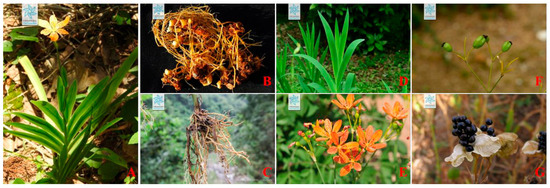
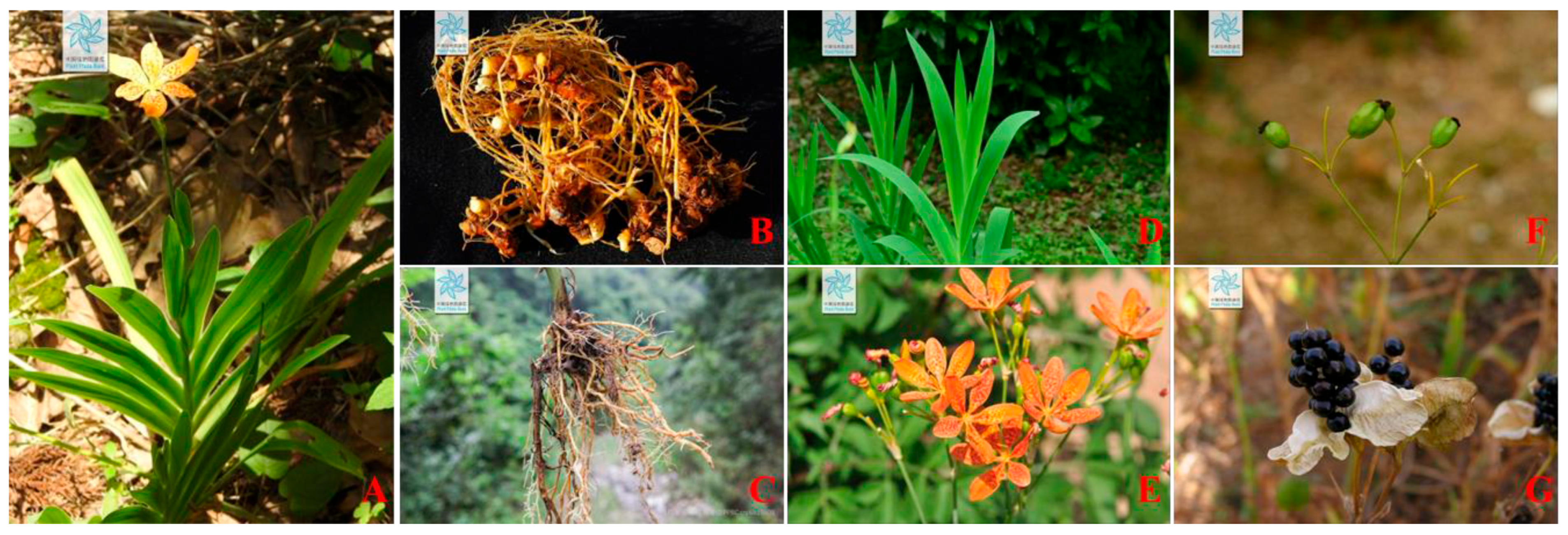
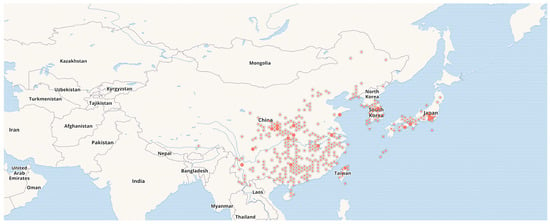
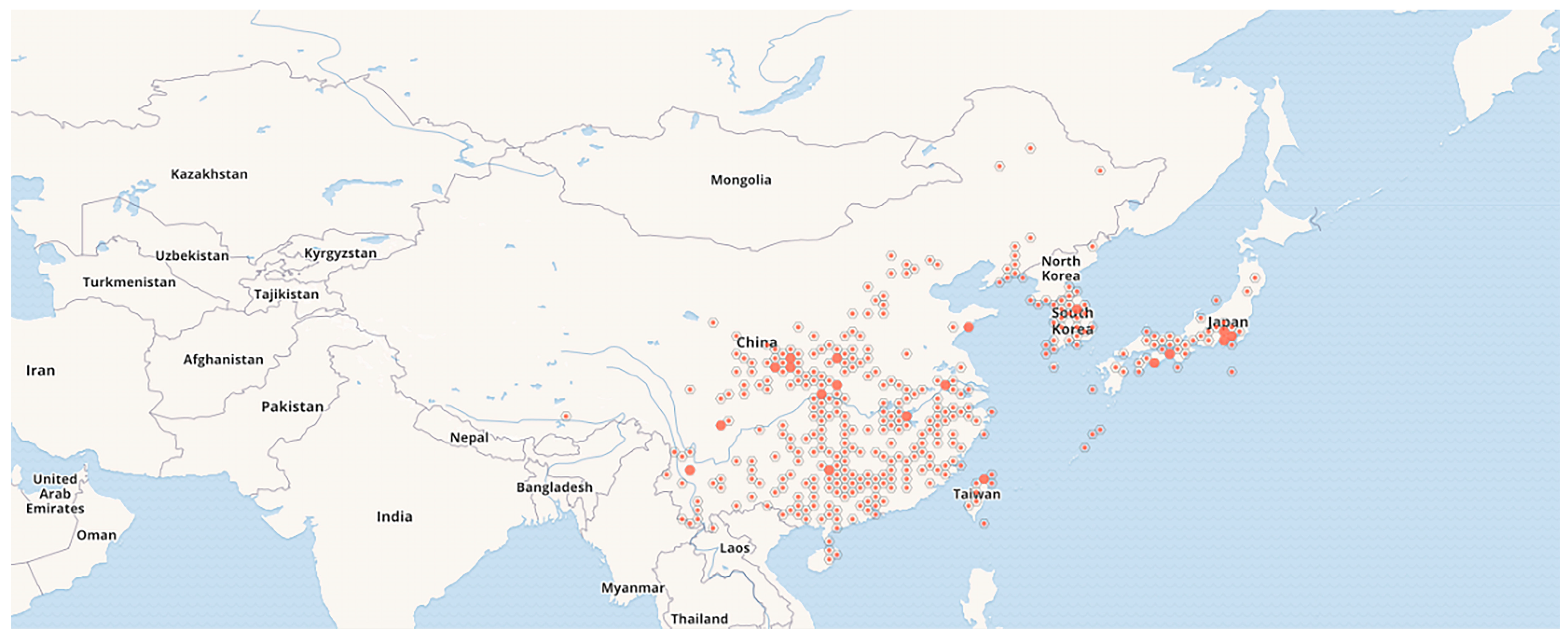
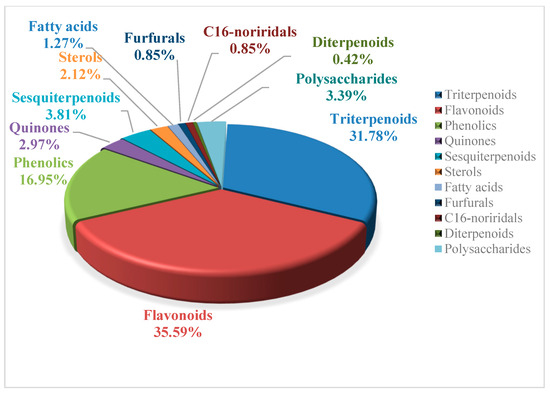
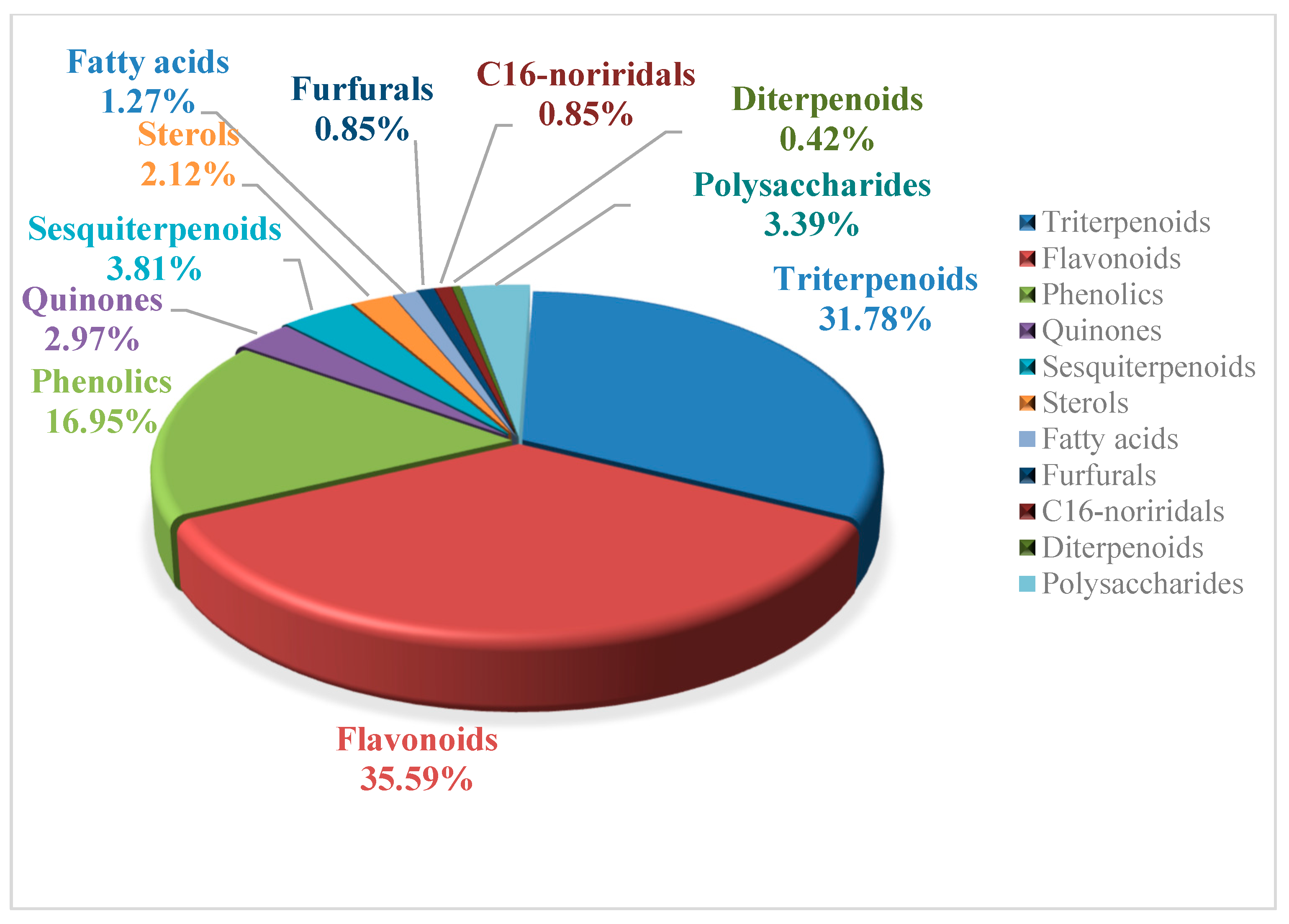
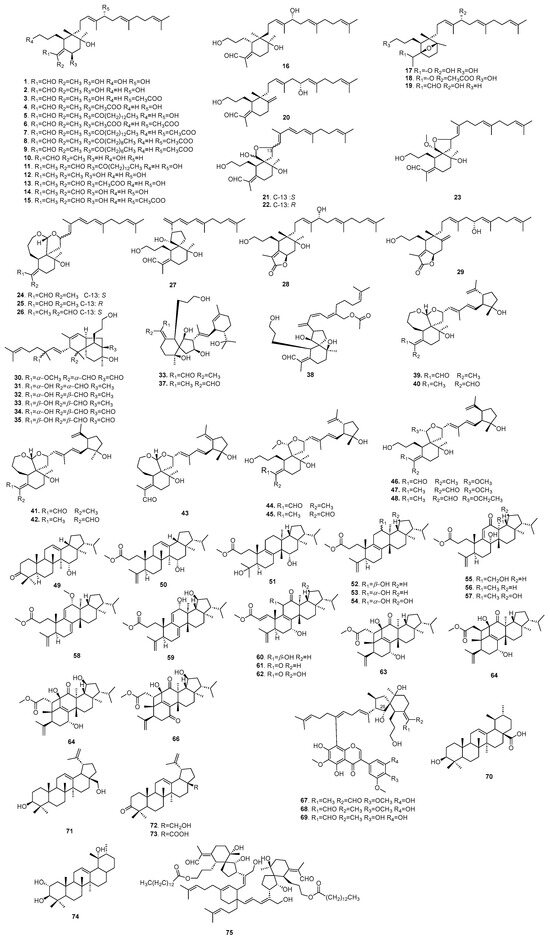
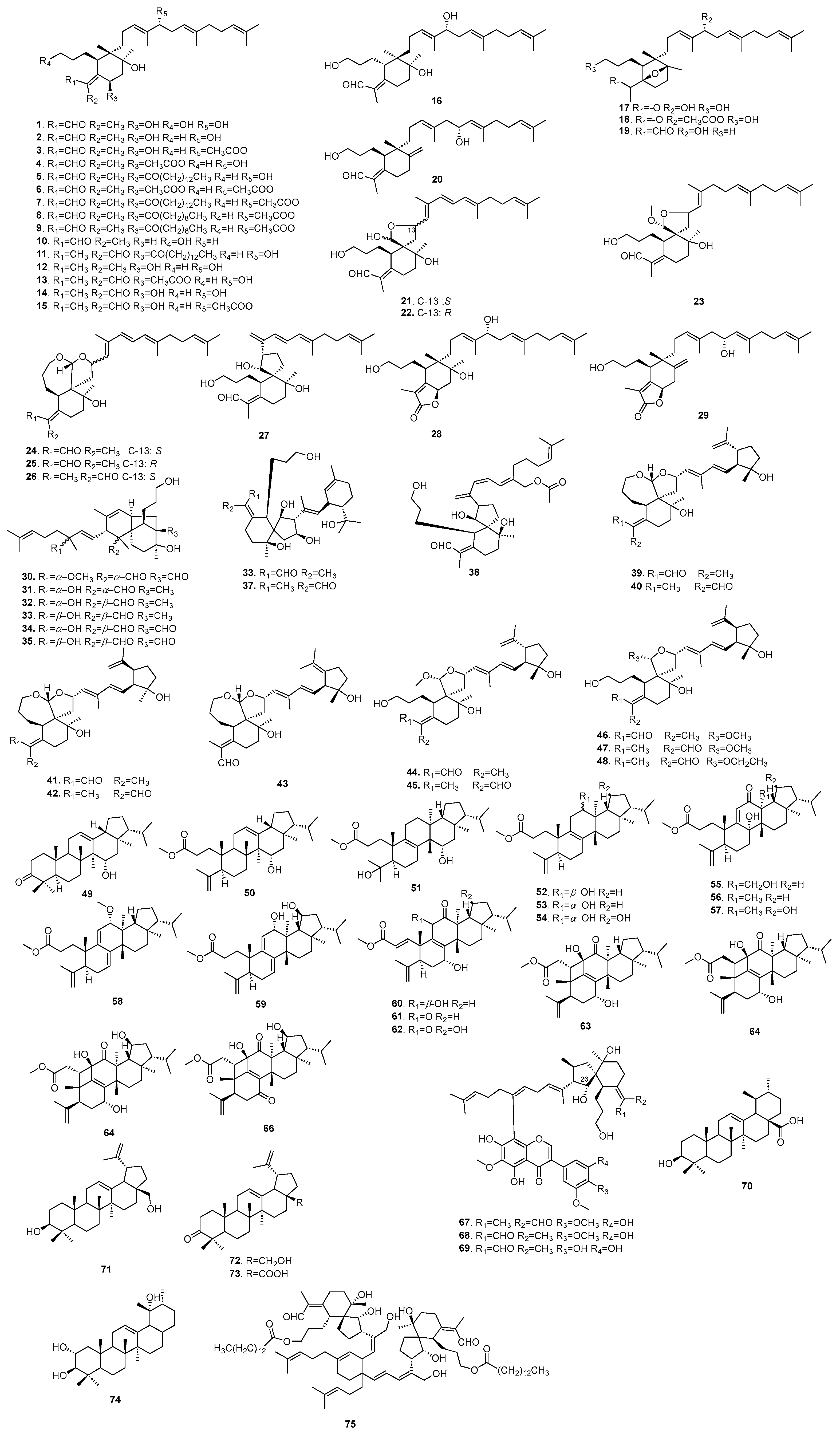
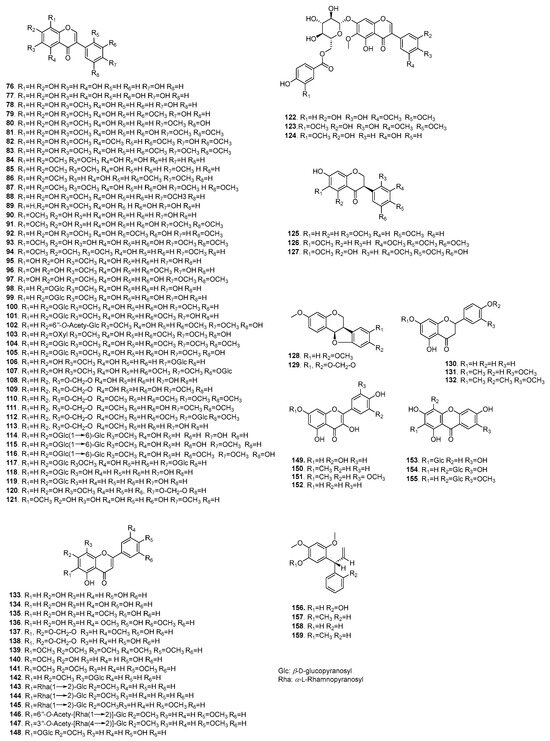
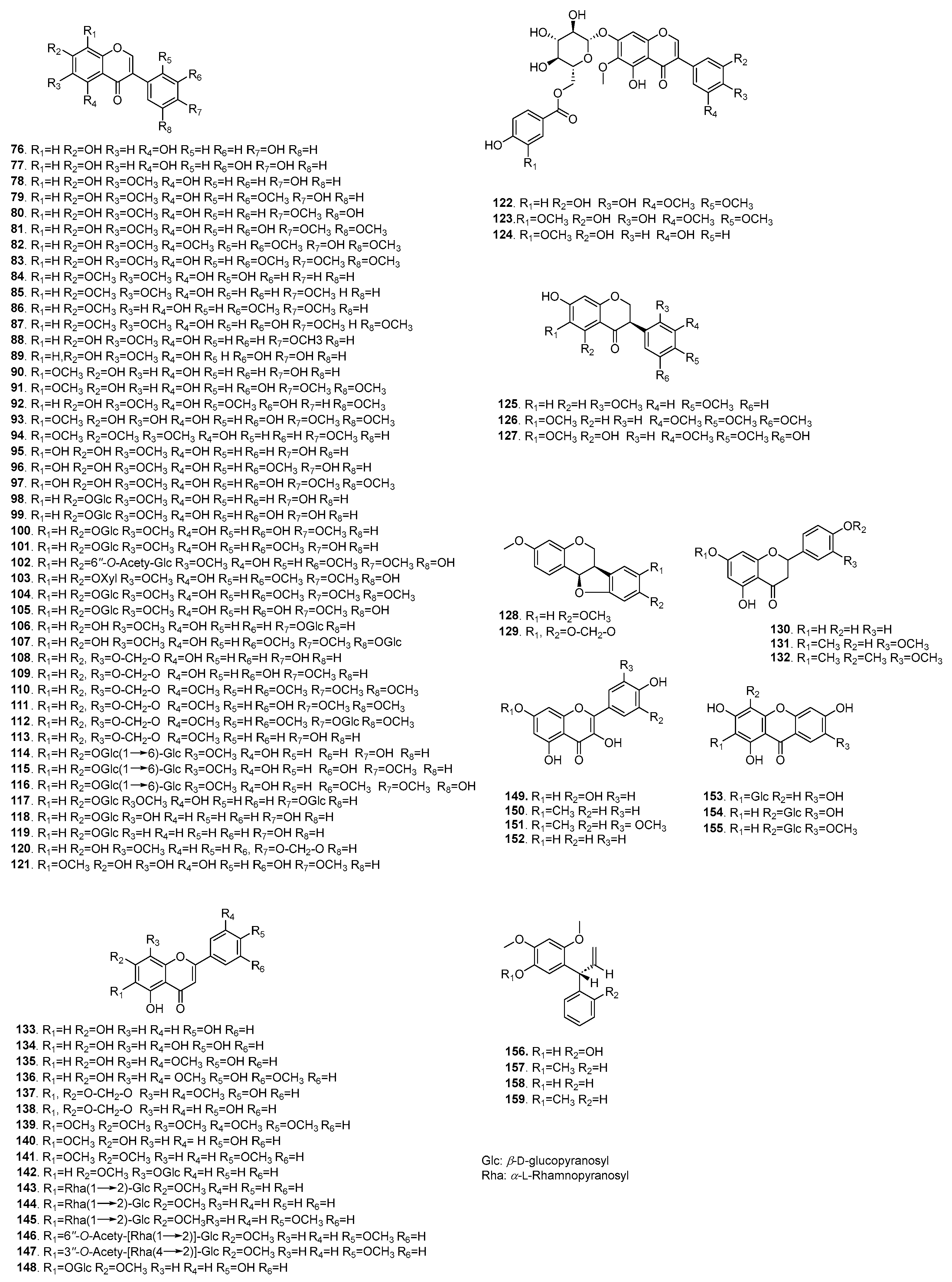
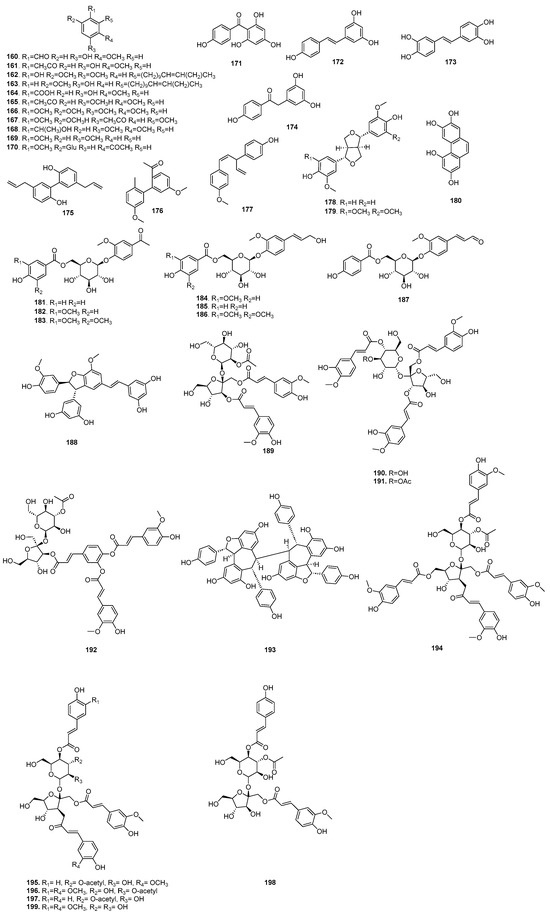
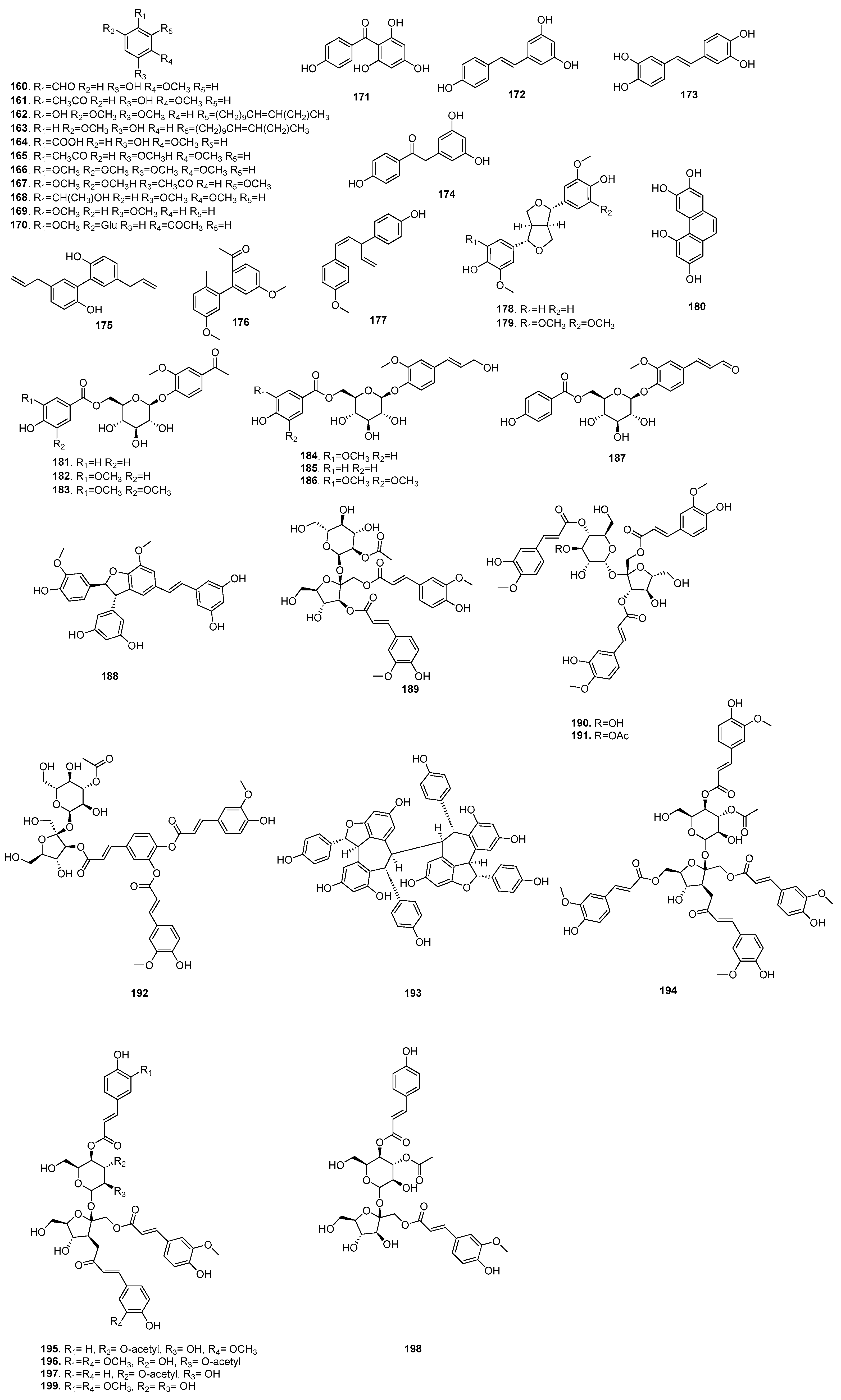
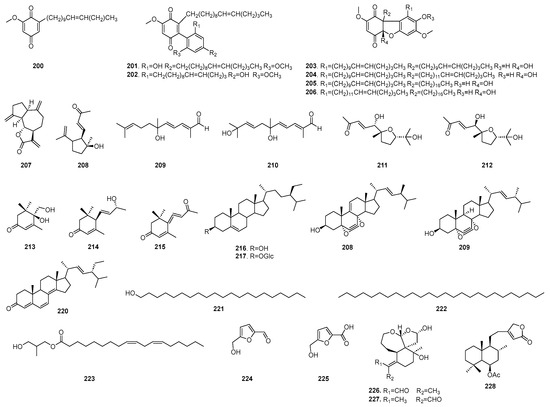
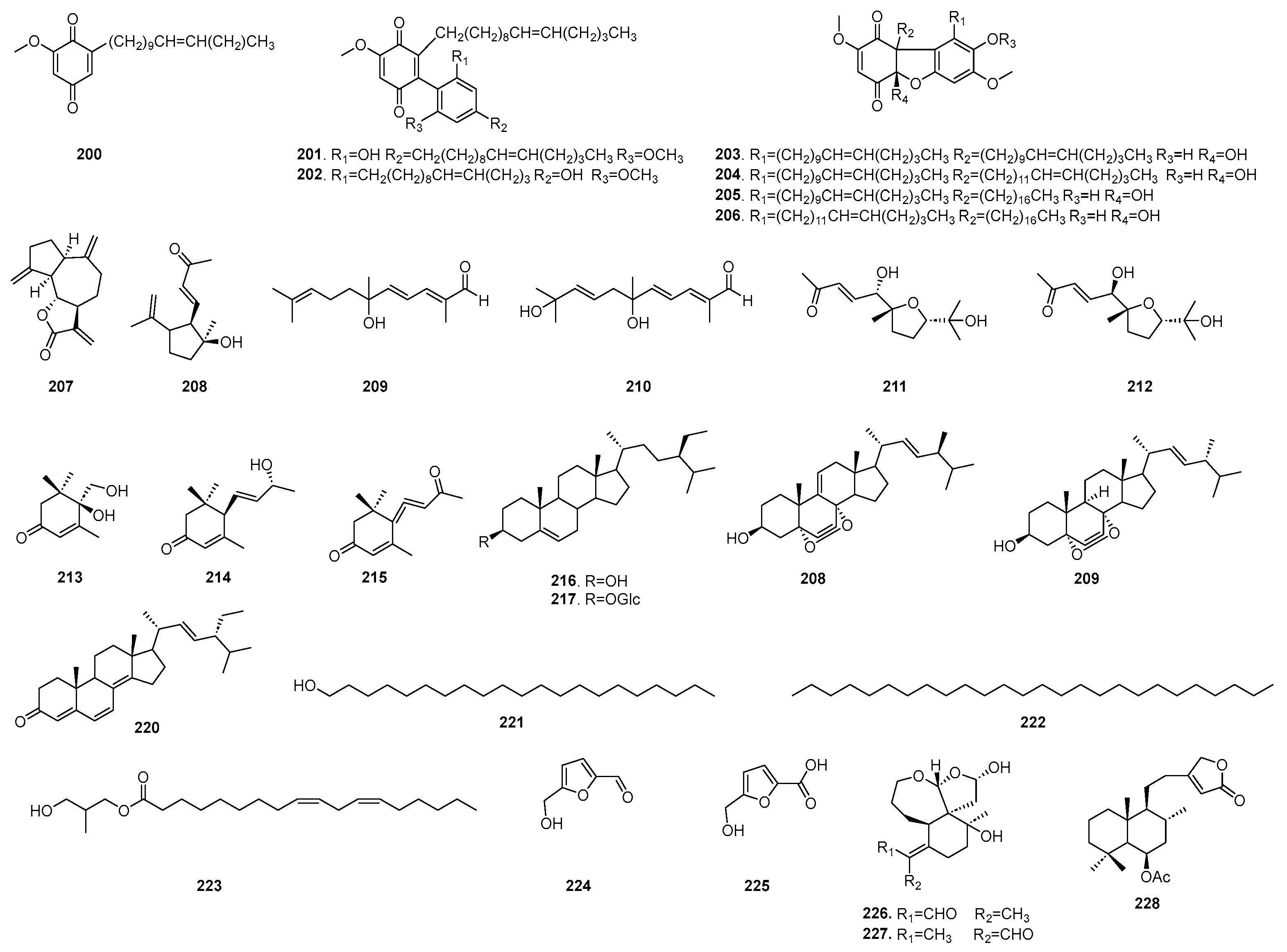
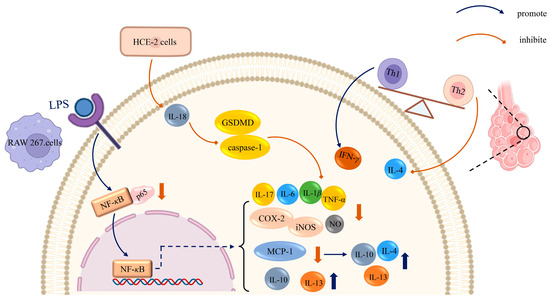
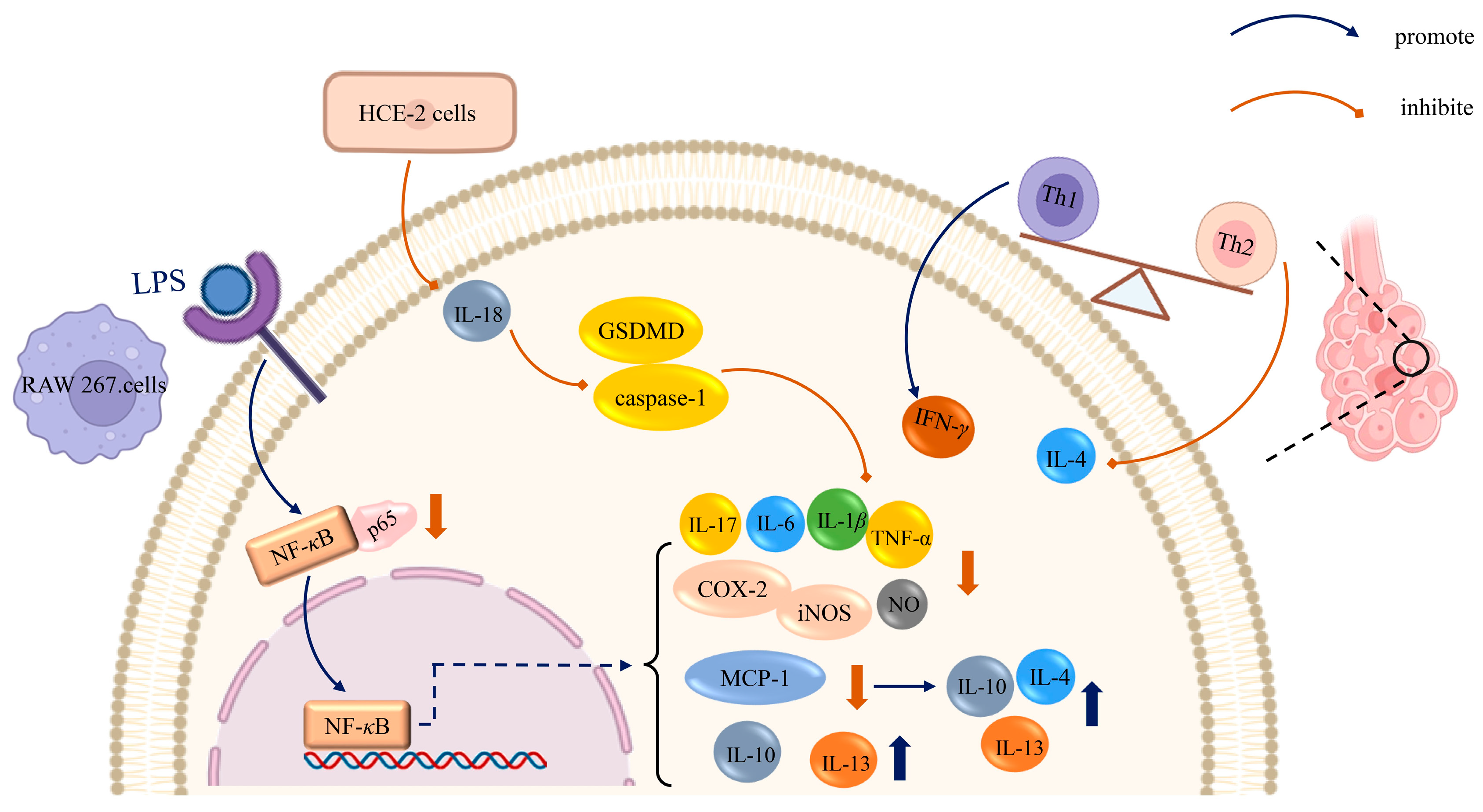
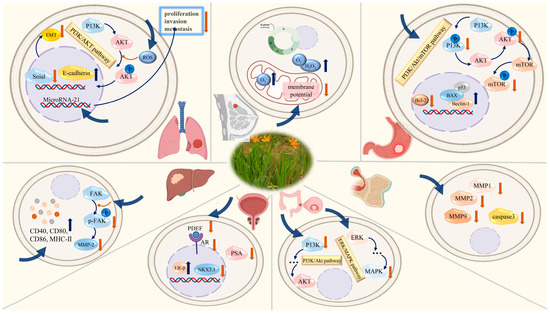
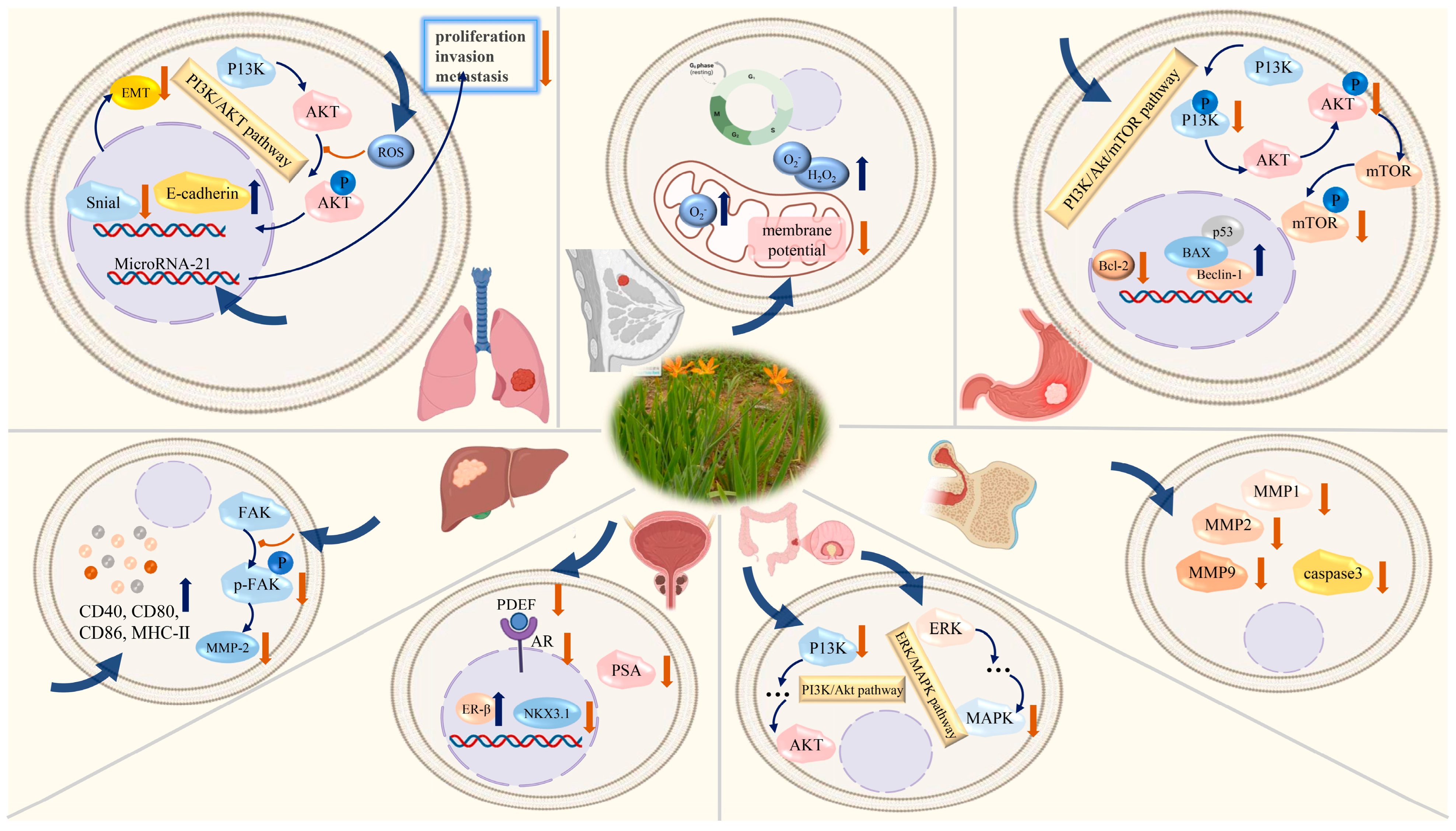
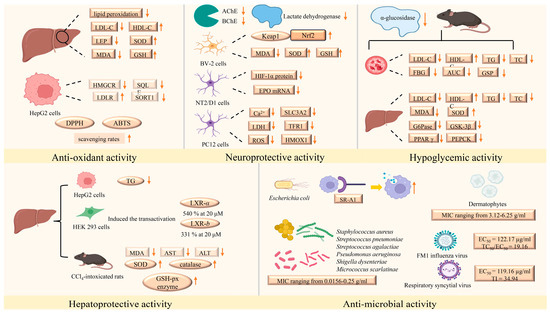
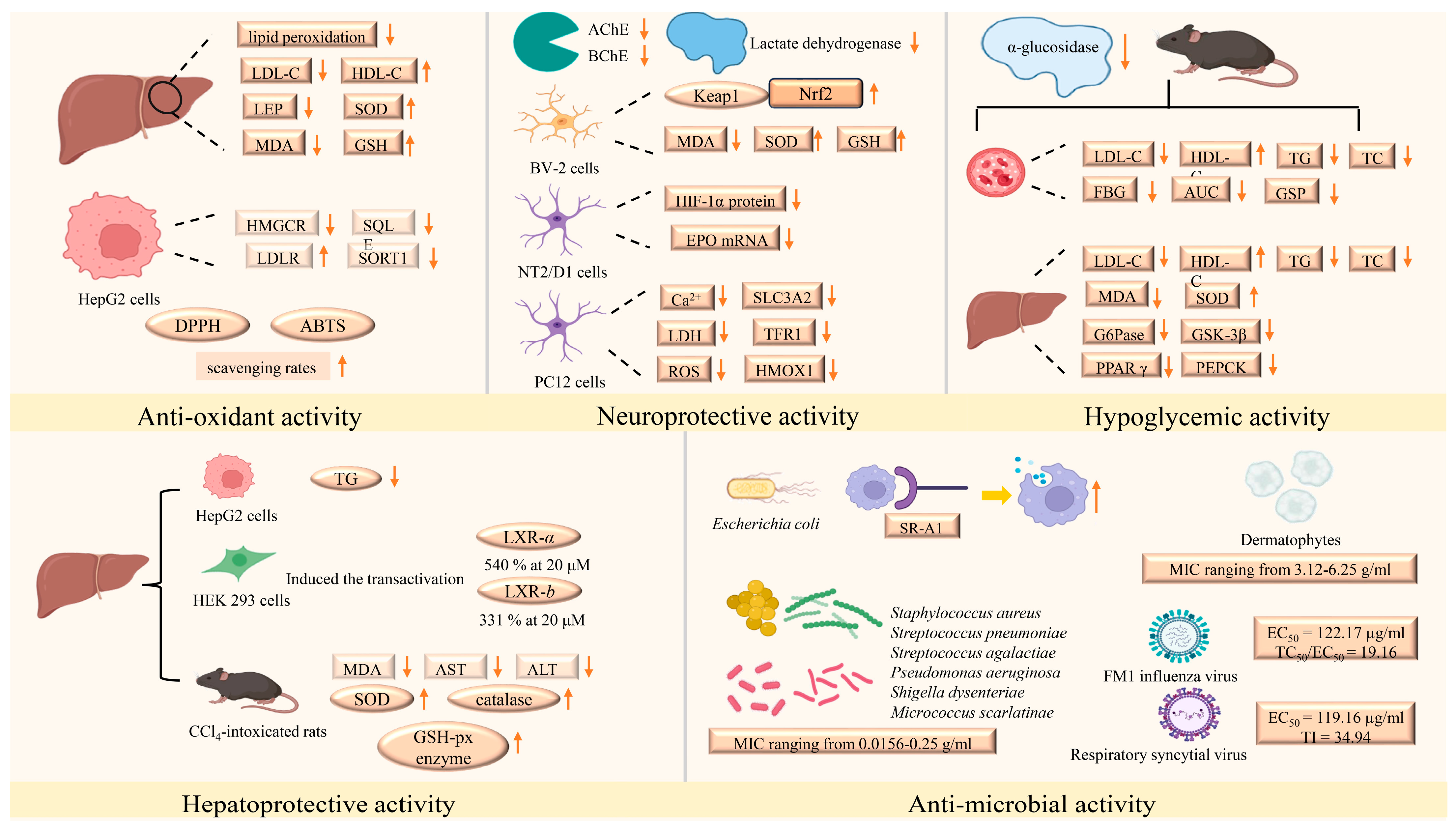
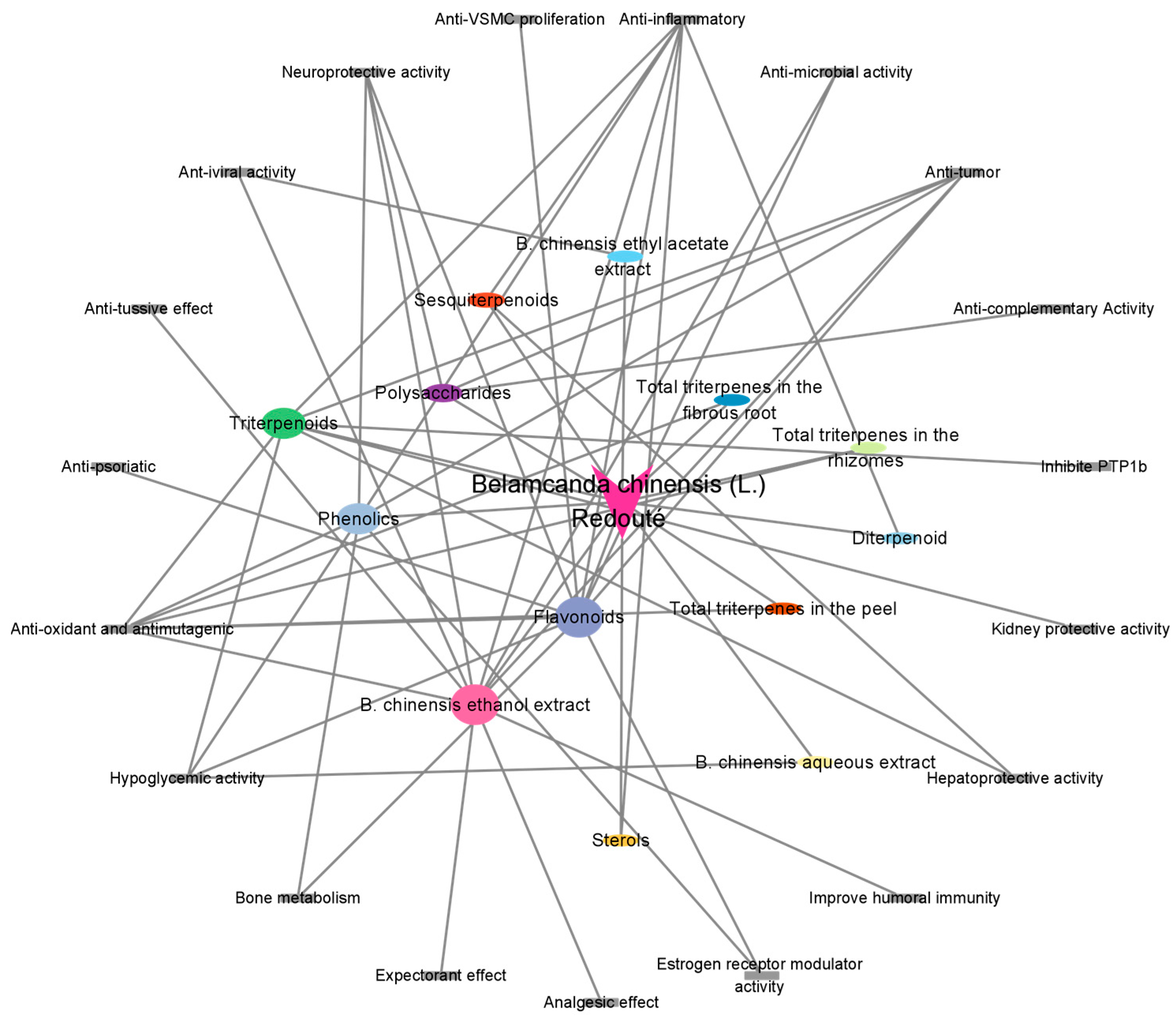

Disclaimer/Publisher’s Note: The statements, opinions and data contained in all publications are solely those of the individual author(s) and contributor(s) and not of MDPI and/or the editor(s). MDPI and/or the editor(s) disclaim responsibility for any injury to people or property resulting from any ideas, methods, instructions or products referred to in the content. |
© 2025 by the authors. Licensee MDPI, Basel, Switzerland. This article is an open access article distributed under the terms and conditions of the Creative Commons Attribution (CC BY) license (https://creativecommons.org/licenses/by/4.0/).