Review

Salt Tolerance in Soybean (Glycine max L.): A Comprehensive Review of Molecular Mechanisms, Key Regulators, and Future Perspectives for Saline Soil Utilization


1
Institute of Biomedical Engineering, College of Life Sciences, Qingdao University, Qingdao 266071, China
2
Research Institute of Modern Agricultural Industry Innovation in Yellow River Delta Saline-Alkali Land, Dongying Vocational College, Dongying 257000, China
*
Author to whom correspondence should be addressed.
Plants 2025, 14(23), 3668; https://doi.org/10.3390/plants14233668 (registering DOI)
Submission received: 31 October 2025 / Revised: 29 November 2025 / Accepted: 30 November 2025 / Published: 2 December 2025
(This article belongs to the Section Plant Response to Abiotic Stress and Climate Change)

Abstract

Soil salinization poses a significant threat to global agricultural productivity. Among crops, soybean (Glycine max), an important source of oil and protein, is more susceptible to salt stress compared to other major crops such as wheat (Triticum aestivum) and rice (Oryza sativa). To better utilize saline land resources, understanding the mechanisms underlying salt tolerance in soybean is essential for developing new salt-tolerant soybean varieties that contribute to food security. This review synthesizes current knowledge on the molecular mechanisms of salt tolerance in soybean, with a focus on ion homeostasis, osmotic adjustment, oxidative balance restoration, structural adaptations, and transcriptional regulatory networks. Key findings highlight the critical roles of ion transporters—such as GmNHX1, GmSOS1, GmHKT1, and GmCLC1—in maintaining Na+/K+ and Cl balance; the accumulation of osmoprotectants like proline and LEA proteins to alleviate osmotic stress; and the activation of antioxidant systems—including SOD, CAT, and APX—to scavenge reactive oxygen species (ROS). Additionally, structural adaptations, such as salt gland-like features observed in wild soybean (Glycine soja), and transcriptional regulation via ABA-dependent and independent pathways (e.g., GmDREB, GmbZIP132, GmNAC) further enhance tolerance. Despite these advances, critical gaps remain regarding Cl transport mechanisms, rhizosphere microbial interactions, and the genetic basis of natural variation in salt tolerance. Future research should integrate genomic tools, omics-based breeding, genome editing techniques such as CRISPR-Cas9, microbial technologies, and traditional breeding methods to develop salt-tolerant soybean varieties, providing sustainable solutions for the utilization of saline–alkali soils and enhancing global food security.

1. Background

Soil salinization has become a critical issue and a major constraint on sustainable agricultural development. High evaporation and low precipitation, coupled with unsustainable agricultural practices such as excessive irrigation, poor drainage, and over-fertilization, have led to severe soil salinity accumulation [1]. Approximately 1.4 billion hectares of land worldwide are affected by salinization, with over 1 billion hectares classified as high-risk areas. About 20% of irrigated farmland is impacted by salinity, primarily in regions such as China, Pakistan, Argentina, Central Asia, and West Asia. Notably, China accounts for 10.1% of the world’s saline–alkali land area [2], primarily distributed across arid and semi-arid regions in the central and western areas, the Northeast region, and eastern coastal areas [3]. In Shandong Province, saline–alkali soils are predominantly found in the Yellow River Delta, where the river deposits silt into Bohai Bay, gradually filling the bay and creating new saline–alkali land [4]. For plants, exposure to salt stress triggers a cascade of detrimental physiological effects, including osmotic stress, ionic toxicity, and oxidative damage. These interconnected stresses collectively hinder plant growth, disrupt key developmental processes, and severely reduce crop yields.
Soybean (Glycine max (L.) Merr.) is a globally important oilseed crop, providing a primary source of vegetable oil and high-quality plant protein for human consumption and livestock feed [5]. However, China faces two major challenges in soybean production: first, domestic soybean yields remain relatively low, leading to a heavy dependence on imports [6]; second, China has limited per capita arable land, most of which is dedicated to growing staple crops such as wheat (Triticum aestivum), rice (Oryza sativa), and corn (Zea mays) [7]. As a result, conducting in-depth research into the molecular mechanisms underlying soybean salt tolerance, along with the identification, development, and utilization of salt-tolerant genetic resources, holds significant theoretical and practical value. Advancements in these areas will directly contribute to accelerating the breeding of salt-tolerant soybean varieties, promoting the sustainable use of saline soil, and strengthening global food security.

2. The Detrimental Impacts of Soil Salinization on Plants and Soybeans

Salt accumulation is a widespread environmental challenge that significantly impacts crop productivity on a global scale [8]. The detrimental effects of salinity on plants can be observed at various physiological and biochemical levels, leading to impaired growth and substantial yield reductions.

2.1. Growth Inhibition

At the growth level, high-salt environments directly hinder plant development, leading to a reduction in plant height [9]. Specifically, salt stress impedes cell elongation and disrupts the activity of transport proteins, such as H+-ATPase and H+-PPase, thereby hindering plant growth [10]. Additionally, elevated salt levels limit nitrogen uptake by plants due to interactions between Cl and NO3, as well as Na+ and NH4+, further affecting plant growth and crop yields [11]. Salt stress impairs plant development at multiple stages: primary root growth declines sharply after salt exposure, entering a phase of stagnation before partially recovering. The stagnation of lateral roots can last for more than two days, with their growth rate decline being significantly more pronounced than that of primary roots [12].
Certain soybean varieties show notable differences in salt sensitivity at different developmental stages. For instance, William 82 seedlings showed growth inhibition under 100–200 mmol/L NaCl treatment but recovered once the stress was removed. A concentration of 300 mmol/L NaCl induced severe growth inhibition without plant mortality. After 6 days of exposure to 400 mmol/L NaCl, the leaves wilted and curled, and recovery was impossible after 11 days of treatment [13]. In contrast, the germination stage exhibits greater tolerance, with a 40% germination rate maintained even when Na+ concentrations in the hypocotyl reach 9.3 mg/g fresh weight (FW) [14]. However, there is no inherent correlation between the salt tolerance of seedlings and that of mature plants across different varieties. For example, salt stress during the seedling stage had minimal effect on ‘Lee’, with a significantly smaller reduction in aboveground dry matter during the mature stage compared to other varieties such as ‘Clark 63’ [15].

2.2. Photosynthesis and Metabolism

Photosynthesis, the core process of carbon fixation, is significantly disrupted by salt stress. Exposure to high salinity induces stomata closure, reducing intercellular CO2 concentration and subsequently limiting the carbon supply essential for photosynthesis. Moreover, salt stress damages the structure of chloroplast and diminishes the levels of photosynthetic pigments, leading to decreased quantum yield and impaired electron transport efficiency within photosystem II (PSII), ultimately lowering the overall photosynthetic rate [16,17]. For example, salt stress severely inhibits strawberry (Fragaria × ananassa) growth, partially due to a decline in chlorophyll content, which directly reduces photosynthetic activity [18]. This reduction also affects chlorophyll synthesis and metabolism. High-salinity conditions inhibit the activity of chlorophyll synthetic enzymes, such as porphyrin IX oxidase and magnesium chelating enzyme, while promoting the production of reactive oxygen species (ROS), including superoxide free anions (O2) and H2O2 [19]. These ROS damage thylakoid membranes and chloroplast components, accelerating chlorophyll degradation [20]. For example, salt stress causes a decrease in chlorophyll content in sorghum with a concomitant loss in photosynthetic efficiency [21]. Additionally, salt stress specifically impacts metabolism and crop quality. It notably reduces seed protein content, while its effect on oil content varies depending on the specific variety and environmental conditions [22].
In soybeans, the normal functions of the photosynthetic system were enhanced under 50 mM NaCl stress but inhibited under 150 mM NaCl stress. Under the higher salt concentration, biomass, net leaf photosynthetic rate, stomatal conductance, intercellular carbon dioxide concentration, transpiration rate, chlorophyll fluorescence parameters all decreased [23].

2.3. Ion Toxicity and Water Deprivation

Ion homeostasis and water balance are further disrupted under saline–alkali conditions. Excessive Na+ and Cl in the soil hinder the uptake of essential cations such as K+ and Ca2+, resulting in intracellular ionic imbalance and impairing enzyme activity as well as cellular function [24,25]. In rice, salt stress leads to a marked increase in leaf Na+ content and a significant decline in the K+/Na+ ratio [26]. Additionally, elevated concentrations of soluble salts in the soil lower the water potential of the soil solution, reducing water availability to plants. This induces physiological drought and interferes with normal cellular metabolism [27,28,29].
In soybeans, salt sensitivity is primarily attributed to Na+ toxicity rather than Cl. Specifically, reduced seed dry mass to 30% of the control, which is a greater reduction compared to Cl salts, which only reduced it to 60% of the control. Additionally, NaCl and Na+ salts (without Cl) had a more pronounced negative effect on soybean photosynthesis (Pn), reducing it to 50% of the control, compared to Cl salts (without Na+) [30]. The degree of leaf yellowing is positively correlated with Cl content. Salt-sensitive cultivars tend to accumulate higher Cl levels than salt-tolerant ones [31,32]. For example, the salt-tolerant cultivar ‘Lee’ maintains lower Na+ and Cl concentrations in its leaves under saline conditions compared with the sensitive cultivars ‘Clark 63’ [15].

2.4. Oxidative Damage

Salt stress induces the production of large quantities of ROS, including O2, H2O2, and hydroxyl radical (OH [33]), which cause significant oxidative damage to plants. These molecules have strong oxidizing properties, leading to DNA mutations, membrane disruption, and the degradation of lipids, proteins, photosynthetic pigments, and other cellular components [34]. For example, in canola (Brassica napus L.) under salt stress, accumulation of ROS like H2O2 results in increased oxidative damage in cells [35]. The oxidative stress resulting from salt stress triggers lipid peroxidation, producing malondialdehyde (MDA), which serves as a biomarker for the extent of lipid peroxidation and reflects the degree of cellular damage [36]. Salt-tolerant varieties can mitigate lipid peroxidation by enhancing antioxidant enzyme activities, thereby enhancing their resilience to salt stress. For instance, under salt stress, the salt-sensitive cultivar (XY15) of rapeseed (Brassica napus L.) exhibited significantly greater increases in MDA content in both roots and leaves compared to the salt-tolerant cultivar (HY9). Concurrently, XY15 also displayed higher levels of H2O2 accumulation and relative electrolyte leakage, indicating more severe lipid peroxidation and membrane damage [37].
In soybean, salt stress suppresses the activity of antioxidant enzymes, disrupts the ROS scavenging equilibrium, and consequently leads to elevated levels of oxidative stress markers such as MDA [5]. Specifically, upon 150 mmol/L NaCl stress in the salt-sensitive soybean cultivar “411”, there is an increase in MDA levels and a decrease in the activities of glutathione reductase (GR), ascorbate peroxidase (APX), catalase (CAT), and superoxide dismutase (SOD) [38]. Another study demonstrated that under mild salinity stress, elevated levels of antioxidant enzymes and a decline in glutathione content can protect nodules against ROS, and hence avoid the breakdown of leghemoglobin and peroxidation of lipid and protein. However, severe salt treatment leads to an increase in GR activity and higher levels of glutathione in its reduced form [39].

2.5. Specific Damage to the Symbiotic Nitrogen Fixation System in Soybean

Under salt stress conditions, oxidative damage to soybean root nodules is closely associated with their nitrogen-fixing capacity [38]. Although most research has concentrated on ion and osmotic regulatory mechanisms, the effects of salt stress on plant symbiotic relationships remain underexplored. Nonetheless, it is well-documented that the symbiotic nitrogen fixation (SNF) system between soybeans and rhizobia is highly sensitive to salt stress [40,41]. Salt stress reduces both the number and biomass of nodules and significantly decreases nitrogen-fixing efficiency. Several key mechanisms contribute to this salt-induced disruption of the soybean–rhizobia symbiosis. These include inhibition of rhizobial aerobic respiration, a reduction in leghemoglobin content within nodules, depletion of the energy needed for nitrogen fixation, impeded perception of nodulation factors by root hairs, and inhibition of symbiosis initiation [41,42].

3. Molecular Mechanisms of Salt Tolerance in Plants

3.1. Salt Signaling in Plants

The plant response to salt stress begins with the perception and early signaling of Na+. Non-selective cation channels (NSCCs) are the primary pathway for Na+ entry into root cells [43,44], and their activity is regulated by Ca2+, cyclic guanosine monophosphate (cGMP), and ROS. Membrane GIPCs synthesized via MOCA1, a glucuronosyltransferase, bind monovalent cations such as Na+, subsequently activating Ca2+ channels and triggering downstream signals like calcium waves [12]. Early signaling molecules such as Ca2+, ROS, and cGMP play crucial roles in initiating and amplifying salt stress signals [45,46,47].
As noted in the review by van Zelm et al., salt stress rapidly increases intracellular Ca2+ concentrations, leading to the formation of calcium peaks and waves that can be categorized into fast and late responses. This signaling process also involves the release of Ca2+ from vesicles through the TPC1 channel, enabling long-distance signaling. Calcium signaling is decoded by the CBL-CIPK protein complex, with the SOS pathway (SOS3/CBL4-SOS2/CIPK24-SOS1/NHX7) acting as a central component for promoting Na+ efflux and maintaining ionic homeostasis [12]. Concurrently, salt stress induces the rapid production of extracellular ROS (e.g., H2O2), mediated by the RBOH family of NADPH oxidases. ROS play a crucial role in facilitating the intercellular spread of Ca2+ signals during salt stress [48]. A positive feedback loop is established between ROS and Ca2+: Ca2+ activates RBOH to generate ROS, while ROS enhance Ca2+ endocytosis, thereby regulating ionic homeostasis and cellular redox balance [48]. Moreover, the early elevation of cGMP enhances Ca2+ influx, reduces Na+ uptake and K+ efflux, effectively enhancing the overall signaling response in coordination with Ca2+ and ROS [49]. Together, these tightly integrated signaling pathways enable plants to rapidly adapt to saline conditions by maintaining ionic homeostasis and mitigating oxidative stress.
In addition to ion sensing, changes in the cell wall can be detected by the receptor kinase FERONIA (FER), which plays a role in later signaling events and may contribute to growth regulation during the later stages of the salt stress response [50]. As summarized in the review by to van Zelm et al., under salt stress, the replacement of Ca2+ by Na+ disrupts pectin cross-linking and leads to cell wall relaxation; the microtubule network is first depolymerized and then reorganized, which affects the localization of cellulose synthesis complexes (CSCs) through the regulation of the PROPYZAMIDE HYPERSENSITIVE1 (PHS1) kinase and the SPIRAL1 (SPR1) protein, and then regulates cell expansion [12]. The receptor kinase FER senses cell wall changes and triggers a late calcium wave that prevents root tip cell swelling and rupture [50].

3.2. Hormones Coordinate Growth Stages and Signaling Pathways upon Salt Stress

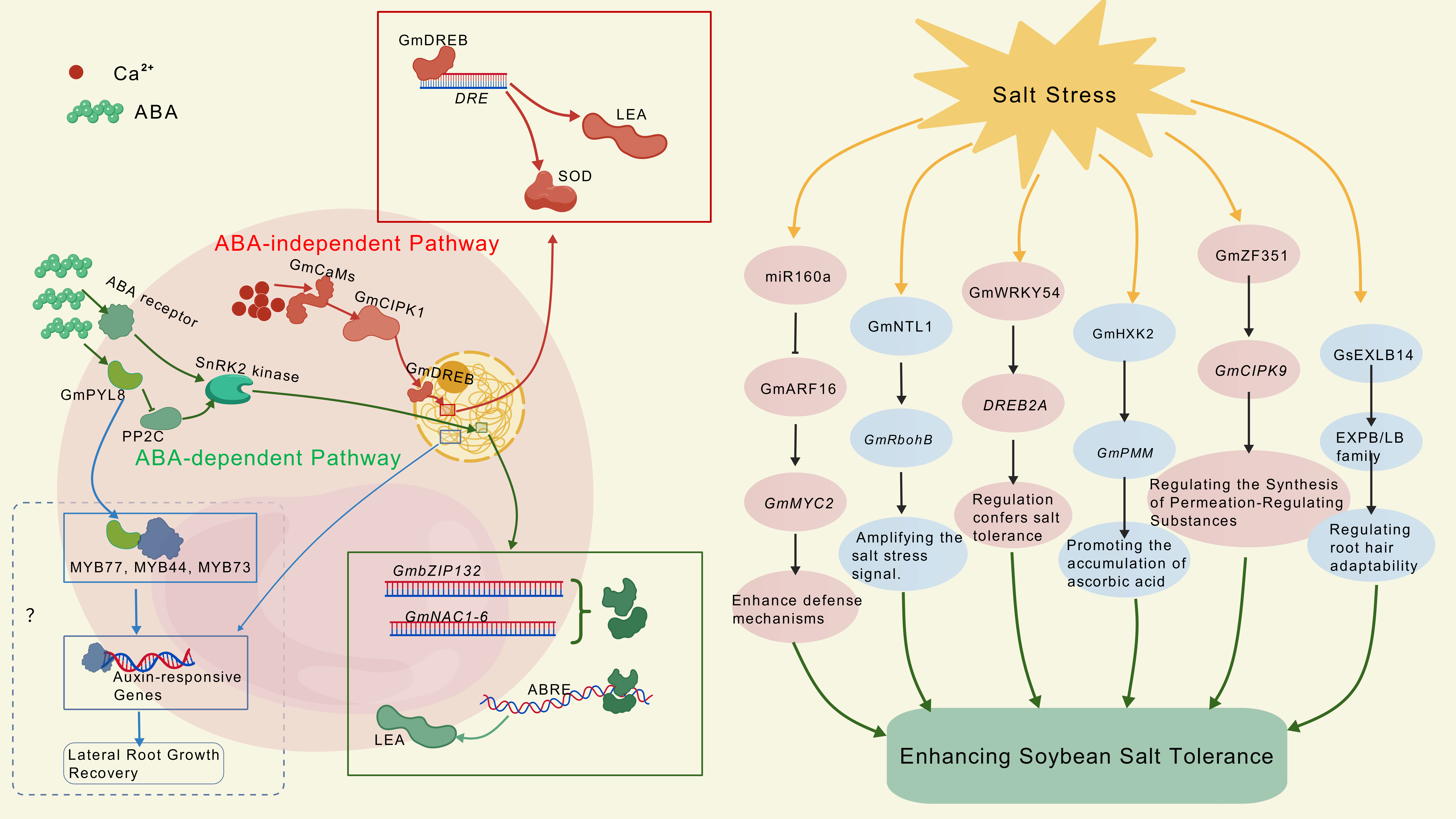
Salt stress leads to significant changes in plant morphology through dynamic, multistage growth responses and tissue-specific regulation, all modulated by hormonal signals. As described in the review by van Zelm et al., hormones play a vital role in regulating salt tolerance by coordinating ion transport, growth and stress responses, with abscisic acid (ABA) playing a central role [12]. Under salt stress, ABA synthesis is induced in vascular tissues of roots and leaves, primarily through the activation of the NCED3 gene. The synthesized ABA is transported to guard cells via ABCG25/40 transporters, where it triggers adaptive responses [51,52]. A key response involves the activation of SnRK2.6/OST1, which stimulates the opening of anion channels in guard cells by phosphorylating KAT1 and SLAC1, leading to stomatal closure and reduced water loss [53,54,55]. In addition, under salt stress, ABA signaling initially activates SnRK2 protein kinases to inhibit lateral root growth after emergence from the primary root. However, as the stress continues, the roots recover, and these lateral roots resume growth. Interestingly, ABA has been found to promote the recovery of lateral root growth following this inhibition. This process is mediated by the receptor PYL8, which interacts with transcription factors MYB77, MYB44, and MYB73 to enhance auxin signaling pathway and support lateral root development [56].
In addition to regulating growth and water conservation, ABA activates the expression of genes responsible for synthesizing and accumulating compatible solutes. These substances lower cellular osmotic potential, enabling cells to absorb water from the external environment. Furthermore, they protect enzymes and membrane structures from destabilization caused by high ionic concentrations [57]. Additionally, ABA enhances salt tolerance by upregulating the expression of vacuolar membrane ion transporters, such as AtNHX1, and modulating the activity of the Na+/H+ antiporter via the ABI1 signaling pathway [58,59].
Under salt stress, brassinosteroids (BRs) are perceived at the cell surface primarily by the receptor BRASSINOSTEROID INSENSITIVE 1 (BRI1) [60] and its homologs BRL1 and BRL3 [61]. Upon BR perception by the BRI1-BAK1 receptor complex at the plasma membrane, downstream cytoplasmic kinases, BR-SIGNALING KINASES (BSKs), are activated [62]. This activation triggers the phosphatase BSU1 [63], leading to a defined phosphorylation/dephosphorylation cascade that ultimately transduces the signal to the key transcription factors BES1 and BZR1. The dephosphorylated BES1/BZR1 transcription factors may directly bind to the ‘BR-response element’ (BRRE) in the promoters of target genes, thereby initiating their transcription [64,65]. For example, 2,4-epibrassinolide (EBR) treatment significantly upregulates the expression of CaSOS1, CaHKT1, and CaSOD in pepper (Capsicum annuum L.) [66]. In addition, BR applications have been shown to reduce the severity of damages caused by salt stress in peppermint (Mentha piperita L.) plants. Specifically, BR positively influences the production of secondary metabolites in salt-treated peppermint [67]. Auxin also plays a crucial role in the plant’s response to salt stress. Under salt conditions, endocytosis of PIN2 and asymmetric distribution of AUX1 lead to root bending toward the low-salt side, while also upregulating local growth hormone synthesis genes (e.g., YUCCA, CYP79B2/3), which regulate lateral root growth [12]. Salt inhibits root growth by suppressing TIR1/AFB receptors or stabilizing AUX/IAA inhibitors, thereby reducing auxin responsiveness [68,69]. Additionally, ethylene promotes growth recovery by regulating microtubule rearrangement. During salt stress, ethylene signaling participates in microtubule repolymerization and bundling, aiding cellular growth recovery in the later stages of stress [70]. Moreover, ethylene influences potassium homeostasis by regulating the expression of the high-affinity potassium transporter HAK5, thereby helping to maintain a more favorable K+/Na+ ratio under salt stress [71].
Jasmonic Acid (JA) plays a critical role in plant responses to salt stress through multiple mechanisms, including the activation of signaling pathways, regulation of ion homeostasis, enhancement of antioxidant defense, and interactions with other hormones like ABA. Furthermore, exogenous JA application has been shown to be an effective strategy to enhance plant salt tolerance [72]. Gibberellic acid (GA), a key regulator of normal plant growth, is highly sensitive to salt stress, with its biosynthesis significantly inhibited under such conditions, leading to growth inhibition. Maintaining or restoring GA levels is crucial for mitigating salt stress. Within the plant hormone network, GA acts antagonistically to stress hormones like ABA and SA. By adjusting this hormonal balance, plants improve their salt tolerance, optimizing the trade-off between stress responses and growth [73].

3.3. Plants Maintain Na+/K+ Balance Through Precise Regulation of Ion Transport, the Core of Salt Tolerance

The proton pump plays a crucial role in salt tolerance mechanisms. Plasma membrane H+-ATPases create a proton gradient that drives the extrusion of Na+ from the cell, while plasma membrane P-ATPases maintain membrane potential and facilitate Na+ efflux mediated by SOS1 transporter [74,75]. SOS1/NHX7 encodes a plasma membrane Na+/H+ antiporter that plays a critical role in sodium extrusion and in controlling long-distance Na+ transport from the root to shoot [76,77]. SOS3 encodes an EF-hand Ca2+-binding protein that functions as a calcium sensor for salt tolerance [78]. Under salt stress, elevated intracellular calcium levels activate SOS3, a calcium-binding protein, which then forms a complex with SOS2, a serine/threonine protein kinase. SOS3 directs SOS2 to the plasma membrane, where SOS2 acts as the central regulator of the SOS signaling pathway. Upon activation by SOS3, SOS2 phosphorylates SOS1, enhancing its Na+/H+ antiport function and increasing Na+ efflux capacity. Additionally, SOS2 localizes to the vacuolar membrane, where it regulates proteins such as vacuolar H+-ATPase and the Ca2+/H+ exchanger CAX1, thereby facilitating Na+ compartmentalization into vacuoles to reduce cytosolic toxicity [79].
Within the SOS pathway, the SOS1 and SOS2 proteins are regulated by the ESCRT component FYVE4. FYVE4 enhances the phosphorylation level of SOS1 by promoting its interaction with SOS2, thereby activating the sodium ion efflux function [80]. SOS2 directly phosphorylates and inhibits the key ESCRT protein FREE1, thereby weakening FREE1’s interactions with other ESCRT components. This reshapes endocytic transport and the vacuolar system, effectively enhancing intracellular Na+ buffering capacity and consequently improving plant salt tolerance [81]. Photosensitive pigments also play a role in regulating salt tolerance in plants. For example, the photosensitive pigments phyA and phyB in Arabidopsis (Arabidopsis thaliana) enhance the activity of SOS2 kinase, thereby promoting the expression of salt tolerance genes under salt stress [82]. Ammonium nitrogen also regulates ammonium homeostasis under salt stress by enhancing SOS2 protein kinase activity, thereby promoting its phosphorylation of AMT1;1, which enhances plant salt tolerance [83]. Phosphatidic acid (PA) is generated by phospholipases and plays a crucial role in binding and regulating SnRK2 protein kinases, such as SnRK2.4 and SnRK2.10 [84]. This regulation influences various processes, including the endocytosis of the growth hormone transporter protein PIN2, mRNA degradation via VCS proteins, and Na+ efflux through the activation of SOS1 [12]. The SnRK2 family is categorized into ABA-dependent and non-dependent types. The ABA-dependent SnRK2s primarily regulate ABA-related transcription and stomatal closure, while the non-dependent SnRK2s are involved in regulating root growth and mRNA stability under salt stress [85].
Research indicates that in Arabidopsis, the AtNHX1 protein is localized to the vacuolar membrane, where it primarily functions as a Na+/H+ antiporter, mediating the active transport of sodium ions into the vacuole. This activity leads to the sequestration and accumulation of Na+ within the vacuole, helping to mitigate cytosolic sodium toxicity [86]. In contrast, NHX5/6, as endosomal proteins localized to the Golgi apparatus and trans-Golgi network (TGN), may enhance salt tolerance by regulating endosomal pH and influencing the Na+/H+ transporter on the vacuolar membrane [87].
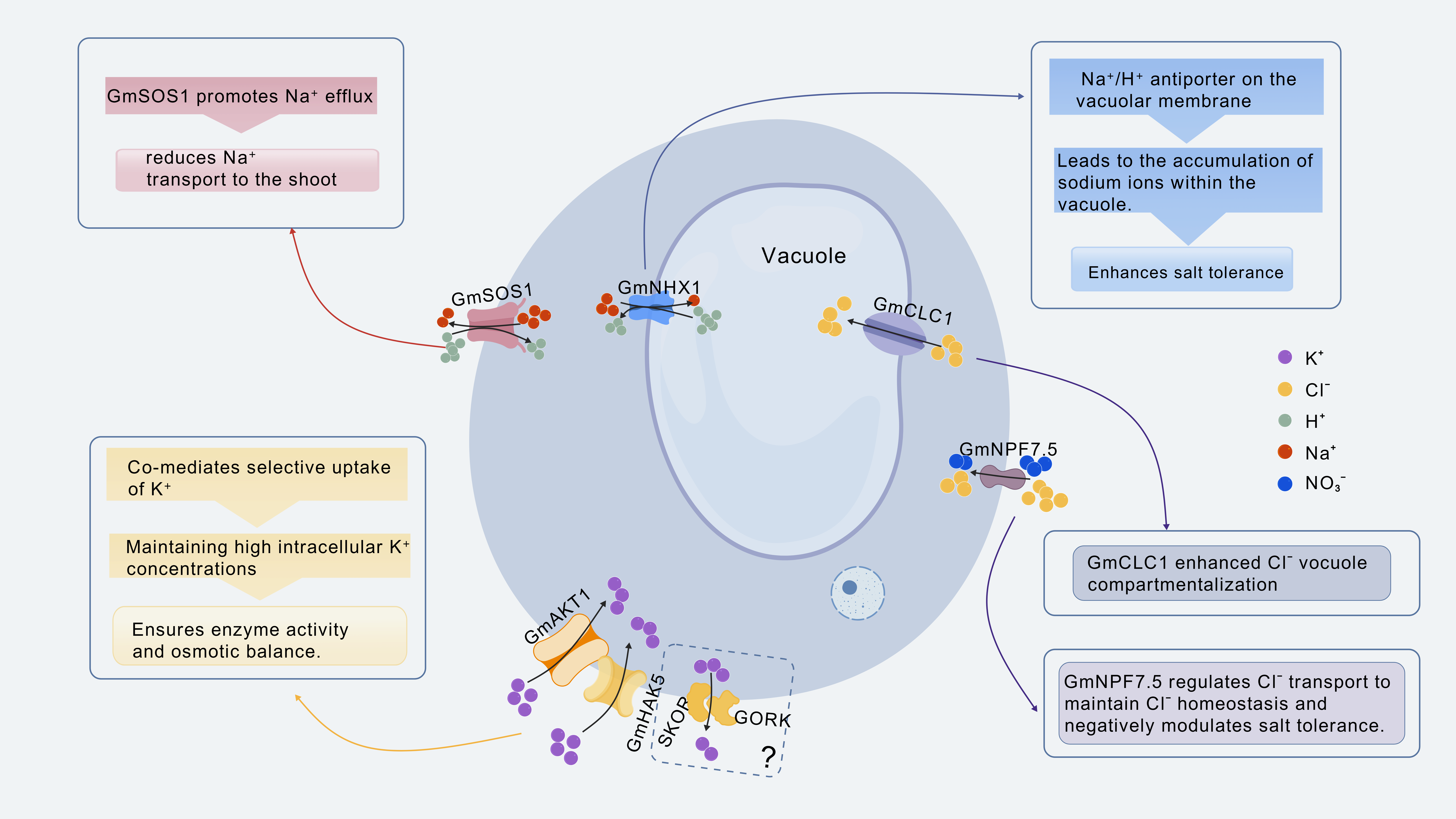
In addition, HAK5 is a high-affinity K+ transporter that preferentially facilitates K+ uptake under both low and high salt conditions. In Arabidopsis, the loss of AtHAK5 impairs the plant’s ability to absorb K+ under low potassium conditions, particularly during salt stress [88]. Under salt stress conditions, AKT1 mediates potassium ion influx [89], whereas GORK and SKOR are responsible for potassium ion efflux (Figure 1). Notably, Arabidopsis gork-skor double mutants accumulate higher levels of K+ than wild-type plants under salt stress, providing strong evidence that GORK/SKOR contribute to K+ loss [90].
In plants, HKT transporters alleviate Na+ cytotoxicity by modulating the distribution of Na+ within the plant [91]. For example, in Arabidopsis, AtHKT1;1 unloads Na+ from the xylem, thereby reducing Na+ accumulation in the leaves [92]. In rice, OsHKT1;5, expressed in the xylem parenchyma cells, restricts the transport of Na+ to the shoot [93].
Proteins of the chloride channel family (CLC, ChLoride Channel) function as anion channels and anion/proton antiporters, playing important roles in nitrate (NO3) and chloride homeostasis (Cl) at both cellular and whole-plant levels [94]. In Arabidopsis, seven CLC proteins have been identified: CLCa, CLCb, CLCc, CLCd, CLCe, CLCf, and CLCg, all of which are localized to intracellular membranes. However, their specific functions are not yet fully understood [95]. Among these, CLC-b, CLC-c, and CLC-g have been suggested to localized to the vacuolar membrane, with CLC-b speculated to preferentially transport NO3, while CLC-c and -g are selective for Cl, mediating its sequestration into vacuoles [96].

3.4. Osmoregulation

Salt stress causes an increase in extracellular osmotic pressure. To counteract this, plants reduce their intracellular osmotic pressure by accumulating low-molecular-weight osmoprotectants within the cytoplasm, thereby maintaining water uptake and cell turgor pressure. These osmoprotective compounds include proline, sugars, and others, which serve both osmoregulatory functions and protect biomolecules from stress-induced damage [54]. Proline, a key osmoprotectant, rapidly accumulates under salt stress, helping to reduce water loss by lowering cytoplasmic osmotic potential and stabilizing protein structures [97]. Similarly, sugars such as sucrose, fructose, and inositol increase in concentration during salt stress and contribute to osmoregulation. Other compounds, including betaine and trehalose, further support osmotic regulation by stabilizing cell membranes and enzyme activity [98].
Osmotin plays a crucial role in the response to salt stress. Tobacco osmotin (Tbosm) significantly enhances soybean tolerance to salt stress by promoting proline accumulation, facilitating osmotic adjustment, activating the antioxidant system, protecting photosynthetic functions, and improving cellular water retention capacity [99].
In addition to accumulating osmoprotectants, directly reducing the transpiration rate in plants is an effective strategy to limit water loss under salt stress. For example, overexpression of the wheat aquaporin gene TdPIP2;1 has been shown to enhance salt tolerance by improving water use efficiency and osmotic adjustment [100].

4. Molecular Pathways Involved in Salt Tolerance in Soybean

4.1. Ion Homeostasis

Under salt stress, excessive Na+ and Cl disrupt cellular functions [101]. Soybean maintains intracellular ion homeostasis through the coordinated activity of ion-transporting proteins (Figure 1). The sodium-hydrogen antiporter GmNHX1, located on the vacuolar membrane, transports excess Na+ from the cytoplasm into the vacuole, thereby reducing cytoplasmic toxicity. Studies have shown that overexpression of GmNHX1 enhances salt tolerance by promoting Na+ sequestration into vacuoles [102]. Meanwhile, the plasma membrane–localized GmSOS1, a homolog of Arabidopsis SOS1, found on the plasma membrane, is proposed to facilitate Na+ efflux from the roots, thereby reducing Na+ transport to aerial tissues [103].
Chloride (Cl) channels located on the vacuole membrane transport Cl into vacuoles, effectively reducing cytoplasmic Cl accumulation. Overexpression of GmCLC1 in transgenic tobacco BY-2 cells has been shown to enhance vacuolar compartmentalization of Cl, thereby improving cell viability under salt stress [102]. Meanwhile, a recent study identified a NITRATE TRANSPORTER 1 (NRT1)/PEPTIDE TRANSPORTER family (NPF) protein, GmNPF7.5, as the dominant gene locus influencing Cl homeostasis and negatively regulating salt tolerance in soybean. GmNPF7.5 can transport Cl and NO3, but it shows a preference for Cl. Furthermore, GmPI4Kγ4 interacts with and phosphorylates GmNPF7.5, enhancing soybean salt tolerance by inhibiting Cl transport without affecting NO3- permeability [104].
Additionally, the inwardly rectifying K+ channel (GmAKT1) facilitates K+ uptake, ensuring high intracellular K+ levels, which are essential for enzyme activity and osmotic balance [89]. In soybean, the plasma membrane-localized potassium transporter GmHAK5 also plays a key role in K+ uptake by transporting K+ into the cell, contributing to the maintenance of elevated intracellular K+ concentrations [105]. Notably, salt-tolerant varieties sustain higher K+/Na+ ratios under salt stress, which supports their enhanced tolerance.
Concurrently, GmHKT1;1 functions as a Na+-selective transporter with low affinity for K+, demonstrating typical sodium specificity. This property allows GmHKT1;1 to primarily mediate Na+ transport rather than Na+/K+ cotransport. Under salt stress conditions, such selectivity is critical for excluding or compartmentalizing Na+ from sodium-sensitive tissues, such as leaves [106].

4.2. Osmotic Adjustment

Salt stress leads to cellular water loss, prompting soybean to maintain osmotic balance by accumulating osmoprotectants and synthesizing stress-related proteins. Although soybean has a limited capacity for glycine betaine synthesis, exogenous application has been shown to enhance photosynthetic efficiency, nitrogen fixation, and yield, while also stabilizing proteins and membrane structures [107,108]. Proline accumulation, observed in some salt-tolerant species, may aid water uptake by lowering osmotic potential; however, findings across studies have been inconsistent, potentially due to differences in genetic background and stress severity [109]. The salt-tolerant soybean variety ‘Forrest’ maintains osmotic balance by accumulating trigonelline (TRG), a response not seen in the sensitive variety ‘Essex’ [110]. Furthermore, under drought and salt stress, pinitol content in soybean leaves increased significantly. Soybean germplasm from arid or semi-arid regions also exhibits higher basal pinitol levels, suggesting that osmotic stress adaptation involves regulation of genes related to pinitol synthesis [111].
Late embryogenesis-enriched proteins (LEA proteins) are a class of hydrophilic, heat-stabilized proteins [5]. Induced expression under salt stress, it exerts its effects through three mechanisms: as an antioxidant to scavenge ROS, to stabilize membrane and protein structures, and to maintain osmotic balance and prevent cell lysis [112]. All four types of LEA proteins were found in soybean. LEA proteins participate in the osmotic salt tolerance process of soybeans through multiple mechanisms. Group 1 and Group 2 primarily exert protective effects by stabilizing membrane structure and proteins [113]; Group 3 specifically responds to ionic stress, potentially maintaining cellular homeostasis through ion chelation [114]; and Group 4 reduces dehydration damage through conformational adjustments [115]. These proteins collectively enhance soybeans’ osmotic regulatory capacity under salt stress, constituting a crucial component of salt tolerance mechanisms. A recent study revealed that GmPM30 indirectly reinforces the function of the LEA family through protein–protein interactions within the GmLEA1-GmPM30-GmLEC1 module, collaboratively maintaining membrane integrity. Furthermore, GmPM30 significantly upregulates the expression of genes involved in ROS scavenging and those related to ion homeostasis and transport (e.g., GmNHX2, GmCHX19, GmRbohB-2), collectively enhancing soybean tolerance to salt stress [116].

4.3. Restoration of Oxidative Balance

Under salt stress, soybean plants accumulate excessive levels of reactive oxygen species (ROS). RESPIRATORY BURST OXIDASE HOMOLOG B (GmRbohB) is a key gene governing ROS production and signaling. The protein encoded by GmRbohB belongs to the plant-specific NADPH oxidase family and functions as the central catalytic unit for intracellular H2O2 synthesis, providing a molecular basis for stress signal transduction [117]. The accumulation of ROS, in turn, activates the plant’s antioxidant system to scavenge these reactive oxygen species and mitigate oxidative damage. In salt-tolerant varieties, activities of key antioxidant enzymes—glutathione reductase (GR), superoxide dismutase (SOD), ascorbate peroxidase (APX), and catalase (CAT)—are significantly increased. For example, the salt-tolerant variety ‘BB52’ exhibits enhanced SOD and APX activities under salt stress, accompanied by reduced superoxide (O2) production [118]. GmAPX and GmCAT are core enzymes responsible for ROS scavenging and maintenance of cellular redox homeostasis. These two enzymes cooperate synergistically to cope with biotic/abiotic stresses, as well as regulate plant growth and development. GmAPX relies on ascorbic acid for efficient ROS scavenging, whereas GmCAT is a heme-containing redox enzyme that can directly catalyze the decomposition of H2O2 without requiring additional electron donors [119]. Soybean mitigates lipid peroxidation induced by salt stress by regulating the expression of specific enzymes. For instance, the mitochondrion-localized purple acid phosphatase (GmPAP3), via its Fe3+ center, participates in redox reactions, effectively reducing the level of lipid peroxidation under salinity. Transgenic Arabidopsis plants overexpressing GmPAP3 gene exhibit enhanced salt tolerance compared to wild-type plants [120,121]. Furthermore, research has demonstrated that the expression of GmPAP3 could enhance salt tolerance in rice. Transgenic rice plants show improved germination rates, longer shoots and roots, and higher survival rates under salt stress. These plants also exhibit increased activity of SOD and CAT, higher proline, water, and chlorophyll content compared to the untransformed control [122]. Non-enzymatic antioxidants such as ascorbic acid, glutathione (GSH), and carotenoids (Car) accumulate in salt-tolerant varieties and work synergistically with enzymatic systems to scavenge ROS [5].
Recent research has revealed that the GmAPC/C-GmPEX11C axis regulates abiotic stress tolerance in soybean. GmAPC/C, an E3 ubiquitin ligase, modulates peroxisomal homeostasis and ROS balance by ubiquitinating and degrading GmPEX11C. Gmilpa1/apc8 mutant impedes the degradation of GmPEX11C and exhibited enhanced salt and drought tolerance, conversely, the enhanced salt-tolerant phenotype conferred by the Gmilpa1/apc8 mutation is abolished by knocking down GmPEX11C. [123]. In addition, the GmTP55 gene encodes a protein belonging to the aldehyde dehydrogenase 7 (ALDH7) family that helps maintain cellular redox balance by removing reactive aldehydes produced by lipid peroxidation under salt stress, thereby indirectly participating in osmotic regulation. This gene is induced under salt and dehydration stress, and its heterologous expression enhances tobacco tolerance to oxidative and salt stress [124].

4.4. Structural Adaptation

Salt gland-like structures have been identified in the leaves and stems of wild soybean (Glycine soja), particularly in populations near the Yellow River estuary, where they may facilitate salt excretion through secretion. These structures are uniquely configured with a “spherical head + stalk-like base”. The head cells are expanded spheres with a diameter of approximately 21.6 μm, while the basal cells are small and stalk-shaped, together forming a complete salt gland unit. Salt glands play a critical role in salt excretion in soybean plants. Mature salt glands decompose salts to release corresponding ions, thereby effectively alleviating saline–alkali stress [125]. The glandular trichomes secrete sap with high concentrations of Na+ and Cl. When treated with salt gland inhibitors, the accumulation of Na+ and Cl within leaf cells increases, further supporting the role of these structures in salt regulation [126].
Additionally, salt stress triggers the expression of proline-rich proteins, which enhance mechanical strength by altering cell wall structure to better withstand stress [5]. Salt-tolerant varieties also enhance membrane stability and reduce electrolyte leakage by maintaining the phospholipid/galactolipid ratio (PG ratio). For example, the salt-tolerant variety ‘Wenfeng 7’ exhibited an increased PG ratio under salt stress, whereas the sensitive variety ‘Lianhe’ showed a decreasing trend [127]. Salt stress induces modifications in plant cell walls and modulates cell membrane lipid composition to maintain cellular structural stability [12].

4.5. Transcriptional Regulatory Networks

Soybeans regulate the expression of salt-tolerance genes through complex signaling pathways, primarily involving Ca2+-mediated signaling, ABA-dependent and -independent pathways, as well as various cross-regulatory factors. In the ABA-independent pathway (Figure 2), initial salt stress triggers a transient increase in intracellular Ca2+ concentration. Ca2+, acting as a second messenger, is recognized by its sensor, calmodulin GmCaMs. GmCaMs transmit the signal to the downstream component cyclophosphamide kinase (GmCIPK1), thereby initiating a phosphorylation cascade. Key DREB family transcription factors GmDREB1 and GmDREB2 are activated through post-translational modifications such as phosphorylation. Activated GmDREB proteins translocate to the nucleus, where they specifically bind to DRE cis-acting elements within the promoter regions of downstream target genes. This binding directly activates transcription of osmotic regulation and antioxidant genes, including antioxidant enzymes such as superoxide dismutase (SOD) and LEA proteins [5]. Notably, transgenic tobacco overexpressing GmDREB2 exhibits increased proline content and enhanced salt tolerance [128]. In soybeans, the overexpression of GmDREB2 upregulates the transcription of the P5CS gene, which in turn promotes proline accumulation and enhances drought tolerance [129].
In contrast, the ABA-dependent pathway (Figure 2) is initiated by salt stress-induced synthesis of the stress hormone ABA. Upon recognition by plasma membrane receptors, ABA initiates intracellular signaling that is transmitted to the nucleus via SnRK2 kinases. Within the nucleus, the bZIP transcription factor GmbZIP132 and NAC family members (GmNAC1-6) regulate gene expression—including that of LEA proteins—by binding to ABRE elements [5]. These genes are crucial for maintaining osmotic and oxidative homeostasis.
In addition to the transcription factors previously mentioned, multiple genes and regulatory modules exert synergistic effects in salt tolerance in soybean (as shown in Table 1 and Figure 2). Soybeans acquire salt tolerance through a complex regulatory network composed of transcription factors and functional genes. For example, key negative regulators such as GmARF16 are suppressed by miR160a under salt stress, thereby activating positive regulators like GmMYC2 to enhance defense mechanisms [130]. Furthermore, salt stress induces the expression of transcription factors such as GmNTL1 and GmNAC06, promoting the expression of downstream genes involved in ion homeostasis regulation and antioxidant responses [117,131]. Additionally, GmWRKY54 may confer salt and drought tolerance through the regulation of DREB2A and STZ/Zat10 [132]. Under salt stress conditions, the overexpressed GmDREB6 protein recognizes and binds to the GT-1 cis-element in the promoter of the GmP5CS gene via its AP2 domain. This binding significantly upregulates GmP5CS transcription, leading to proline accumulation and thereby achieving osmotic adjustment [133].
Salt stress also induces the expression of GmSIN1. The GmSIN1 protein subsequently activates GmNCED3s and GmRbohBs, thereby promoting ABA biosynthesis and ROS production. The accumulated ABA and ROS, in turn, further induce GmSIN1 expression. This creates a positive feedback loop, ‘GmSIN1-ABA/ROS-GmSIN1’, which rapidly amplifies the salt stress signal and maintains optimal levels of ABA and ROS in the roots. This regulatory circuit ultimately promotes root growth and enhances salt tolerance [134].
Moreover, under salt stress, GmST2 directly binds to the NAC core motif in the promoters of GmAOC3 and GmAOC4, thereby activating these JA biosynthetic genes and promoting JA accumulation. Key JA biosynthetic enzyme genes (e.g., GmAOC3, GmAOC4, GmLOX, GmAOS) are significantly upregulated in GmST2-overexpressing lines, accompanied by increased JA levels. Furthermore, GmPRL1b enhances GmST2 function by promoting the accumulation of the GmST2 protein. Together, this forms a coherent GmPRL1b-GmST2-GmAOC3/4 regulatory module that promotes JA accumulation and ultimately salt tolerance [135].
Research further indicates that GsPRX9 activates the transcription of GsCAD genes (e.g., GsCAD9-14g, GsCAD9-17g, GsCAD4), accelerating lignin biosynthesis. This process strengthens root cell wall compactness and stability, thereby reducing Na+ influx and water loss. Additionally, GsPRX9 enhances antioxidant enzyme activity to scavenge excess ROS, protecting the catalytic function of CAD enzymes and further activating stress defense responses [136].
Additionally, GmHXK2 improves antioxidant capacity by upregulating GmPMM, promoting ascorbate accumulation [137]. Moreover, GmZF351 directly binds to the promoter of GmCIPK9, activating its expression and inducing stomatal closure under drought stress to reduce water loss. GmZF351 further contributes to dual tolerance against salt and drought stress by upregulating genes related to lipid accumulation and modulating the transport of osmotic solutes [138]. In addition, GsEXLB14 confers salt tolerance by upregulating expansin (EXPB/LB family) genes and modulating root hair adaptability [139].
Table 1. Transcription factors involved in the regulation of salt tolerance in soybean.
Transcription FactorFunctionDownstream Genes References
GmARF16Salt stress induces miR160a to suppress GmARF16, thereby activating downstream salt tolerance defense mechanisms.GmMYC2[130]
GmNTL1Establishes a H2O2 positive feedback loop, amplifying the salt stress signal.GmRbohB[117]
GmNAC06Directly combines and activates multiple downstream functional genes, synergistically regulating ion homeostasis and reactive oxygen species balance.GmUBC2, GmHKT1[131]
GmZF351Promote stomatal closure and prevent water loss.GmCIPK9[138]
GmHXK2Promote ascorbic acid accumulation to enhance antioxidant capacity.GmPMM[137]
GmDREB6Promote proline accumulation.GmP5CS[133]
GsEXLB14Enhance the salt tolerance of soybean root hairs.EXPB/LB family[139]
GsPRX9Accelerate lignin biosynthesis and enhance root cell wall compactness and stability, leading to reduced Na+ influx and water loss.GsCAD[136]
GmSIN1Promoting ABA biosynthesis and ROS production.GmNCED3s, GmRbohBs[134]
GmST2Promoting JA accumulationGmAOC3, GmAOC4[135]
GmWRKY54May confer salt and drought tolerance through the regulation of DREB2A and STZ/Zat10.DREB2A[132]

4.6. Microbial-Mediated Mechanisms of Salt Tolerance in the Soybean Rhizosphere

Plant growth-promoting rhizobacteria (PGPR) are known to enhance growth [140,141] and induce tolerance to abiotic stresses, including salinity [142]. One study demonstrated that PGPR application enhances soybean growth, microbial diversity, and salt tolerance under salinity stress [143]. Specifically, PGPR significantly reduced Na+ concentration in leaves while increasing K+ levels in leaves, roots, and grains. Additionally, PGPR boosted carbon assimilation and soybean yield and enhanced antioxidant enzyme activities. Furthermore, PGPR enriched beneficial bacterial phyla, likely contributing to improved nutrient cycling and plant–microbe interactions, thereby further enhancing soybean resilience to salinity. Another study identified that four PGPR strains isolated from Amphicarpaea bracteata, a North American relative of soybean, substantially improved shoot and root growth in soybean. Among these, Rhizobium sp. SL42 and Hydrogenophaga sp. SL48 demonstrated the greatest beneficial effects on soybean growth and salinity tolerance [143].

5. Concluding Remarks and Perspectives

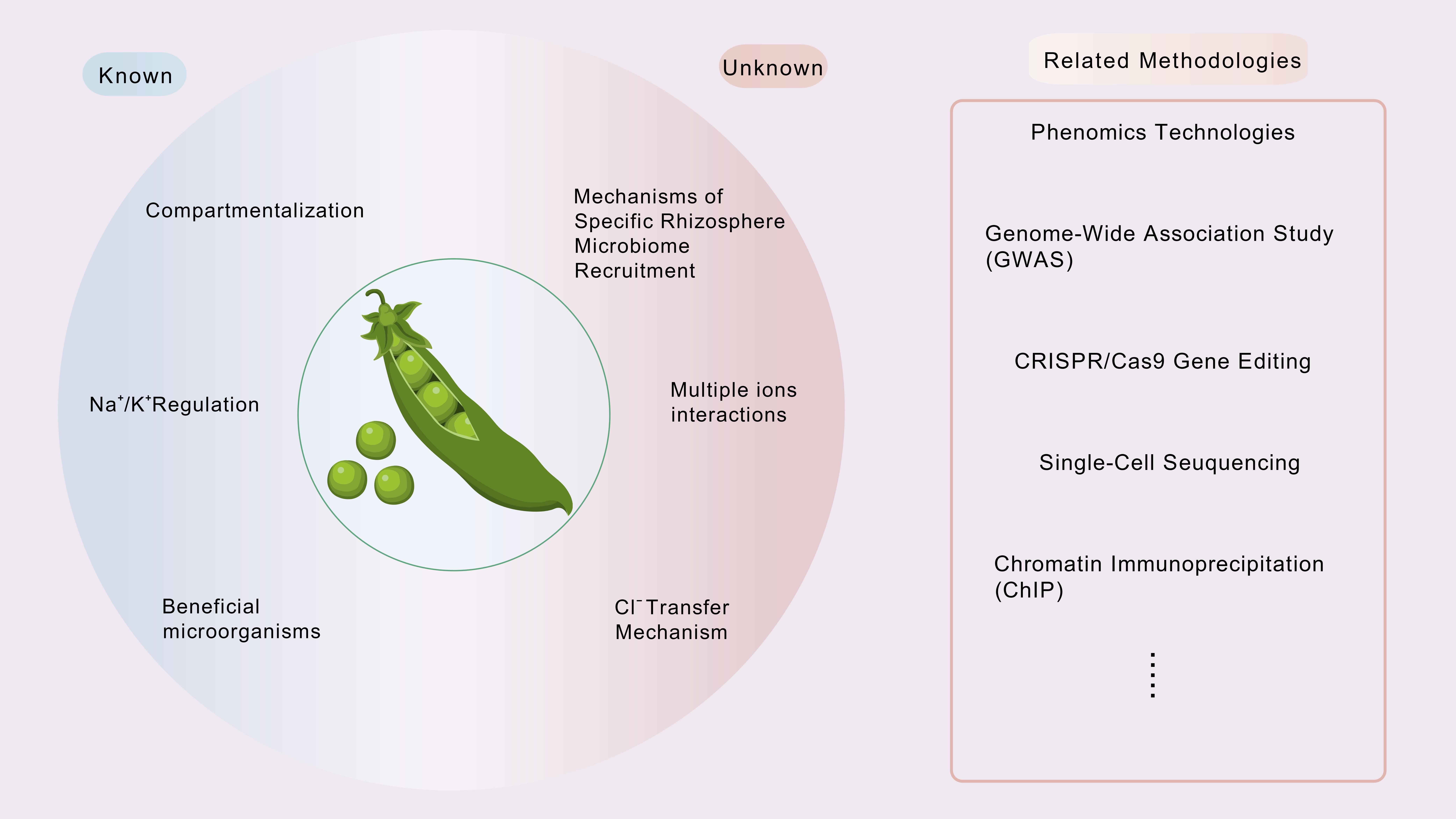
Compared to other major crops such as wheat and rice, soybeans are generally more sensitive to salinity, with yields severely reduced or even completely lost under saline stress conditions. Although some progress has been made in understanding the mechanisms of soybean salt tolerance, significant gaps remain compared to other crops, highlighting the need for more in-depth research (Figure 3).
In the field of ion transport, current research primarily focuses on the regulation of intracellular ion homeostasis and salt tolerance by plant sodium–potassium pumps. However, to date, little is known about the key genes and mechanisms governing Cl transport in soybeans. While multiple protein families responsible for Cl absorption and transport have been identified, such as CLC and SLAC/SLAH, further investigation is needed to clarify the specific roles of these proteins in soybeans, their differential expression among soybean varieties, and how to precisely manipulate them to enhance Cl tolerance. Additionally, although ions like Na+ and K+ have been extensively studied, the synergistic functions and transport mechanisms of other essential ions, such as Ca2+ and Mg2+, in soybean salt tolerance are relatively underexplored. Understanding how these ions interact with Na+ and K+ under salt stress to maintain intracellular ion balance could provide a more comprehensive view of the ion regulatory network involved in soybean salt tolerance. Future research should also emphasize the specificity of salt signaling, along with the spatial and temporal patterns of tissue responses and adaptive mechanisms that vary among different crops, to better enhance crop salt tolerance.
Rhizosphere microorganisms play a crucial role in regulating plant stress tolerance, yet research on the relationship between soybean rhizosphere microbial communities and salt tolerance remains limited. On the one hand, further investigation is needed to understand how soybeans recruit specific rhizosphere microorganisms under salt stress and the mechanisms through which these microorganisms assist soybeans in adapting to high-salt environments—such as by improving soil structure, modulating plant hormone levels, or enhancing plant antioxidant capacity. On the other hand, exploring strategies to utilize beneficial microorganisms through exogenous application or by manipulating the rhizosphere microenvironment—via specific biofertilizers or soil pH adjustments—could offer practical approaches for leveraging microbial technology to enhance soybean salt tolerance and improve the productivity of saline–alkali soils in agricultural production.
Significant variation in salt tolerance exists among different soybean varieties; however, the genetic basis underlying this natural variation remains largely unclear. Future research could leverage multi-omics and large-scale genome-wide association studies (GWAS), combined with comprehensive salt tolerance phenotyping of soybean germplasm collections from diverse geographical regions and ecological environments, to identify additional genetic loci and haplotypes closely linked to salt tolerance. For example, Xu et al. identified 10 SNP loci tightly linked to soybean salt tolerance through GWAS and genome-wide prediction [144]. Pruthi et al. identified key candidate genes involved in stress signaling—including GmHAK5, GmGSTU19, GmKUP6, GmTDT, GmCHX20a, GmOST1/SnRK2.6, GmERF98, and GmERF1—through comparative transcriptomic analysis between genotypes [145]. Despite these advances, many salt tolerance genes remain to be explored within the soybean genome. Subsequent studies should focus on elucidating how these natural genetic variations affect the expression and function of salt tolerance-related genes in soybean. This work will provide valuable genetic resources and precise molecular markers to facilitate molecular breeding efforts aimed at developing new soybean varieties with enhanced salt tolerance, tailored to thrive in various saline soil conditions.

Author Contributions

T.D. and L.W. wrote the manuscript. L.Y., J.W., and Y.N. revised the manuscript. All authors have read and agreed to the published version of the manuscript.

Funding

L.W. acknowledged the National Natural Science Foundation of China (32300636), the Natural Science Foundation of Shandong Province (2024HWYQ-068 and ZR2023QC315) for the financial support.

Data Availability Statement

Data is contained within the article.

Conflicts of Interest

The authors declare that they have no known competing financial interests or personal relationships that could have appeared to influence the work reported in this paper.

References

  1. Qadir, M.; Oster, J.D. Crop and irrigation management strategies for saline-sodic soils and waters aimed at environmentally sustainable agriculture. Sci. Total Environ. 2004, 323, 1–19. [Google Scholar] [CrossRef]
  2. Lei, S.; Jia, X.; Zhao, C.; Shao, M. A review of saline-alkali soil improvements in China: Efforts and their impacts on soil properties. Agric. Water Manag. 2025, 317, 109617. [Google Scholar] [CrossRef]
  3. Li, K.S.; Geng, Y.H.; Li, Q.X.; Liu, C.X. Characterization of the Microstructural Properties of Saline-Alkali Soils in the Yellow River Delta, China. Commun. Soil Sci. Plant Anal. 2021, 52, 1527–1543. [Google Scholar] [CrossRef]
  4. Liu, L.; Wang, B. Protection of Halophytes and Their Uses for Cultivation of Saline-Alkali Soil in China. Biology 2021, 10, 353. [Google Scholar] [CrossRef] [PubMed]
  5. Phang, T.H.; Shao, G.; Lam, H.M. Salt tolerance in soybean. J. Integr. Plant Biol. 2008, 50, 1196–1212. [Google Scholar] [CrossRef] [PubMed]
  6. Sun, J.; Mooney, H.; Wu, W.; Tang, H.; Tong, Y.; Xu, Z.; Huang, B.; Cheng, Y.; Yang, X.; Wei, D.; et al. Importing food damages domestic environment: Evidence from global soybean trade. Proc. Natl. Acad. Sci. USA 2018, 115, 5415–5419. [Google Scholar] [CrossRef]
  7. Yang, S.; Li, D.; Liao, H.; Zhu, L.; Zhou, M.; Cai, Z. Analysis of the Balance between Supply and Demand of Arable Land in China Based on Food Security. Sustainability 2023, 15, 5706. [Google Scholar] [CrossRef]
  8. Liang, W.J.; Ma, X.L.; Wan, P.; Liu, L.Y. Plant salt-tolerance mechanism: A review. Biochem. Biophys. Res. Commun. 2018, 495, 286–291. [Google Scholar] [CrossRef]
  9. Liang, W.; Cui, W.; Ma, X.; Wang, G.; Huang, Z. Function of wheat Ta-UnP gene in enhancing salt tolerance in transgenic Arabidopsis and rice. Biochem. Biophys. Res. Commun. 2014, 450, 794–801. [Google Scholar] [CrossRef]
  10. Zhang, J.L.; Shi, H.Z. Physiological and molecular mechanisms of plant salt tolerance. Photosynth. Res. 2013, 115, 1–22. [Google Scholar] [CrossRef]
  11. Kamran, M.; Parveen, A.; Ahmar, S.; Malik, Z.; Hussain, S.; Chattha, M.S.; Saleem, M.H.; Adil, M.; Heidari, P.; Chen, J.T. An Overview of Hazardous Impacts of Soil Salinity in Crops, Tolerance Mechanisms, and Amelioration through Selenium Supplementation. Int. J. Mol. Sci. 2019, 21, 148. [Google Scholar] [CrossRef]
  12. van Zelm, E.; Zhang, Y.; Testerink, C. Salt Tolerance Mechanisms of Plants. Annu. Rev. Plant Biol. 2020, 71, 403–433. [Google Scholar] [CrossRef]
  13. Fu, S.; Wang, L.; Li, C.; Zhao, Y.; Zhang, N.; Yan, L.; Li, C.M.; Niu, Y. Integrated Transcriptomic, Proteomic, and Metabolomic Analyses Revealed Molecular Mechanism for Salt Resistance in Soybean (Glycine max L.) Seedlings. Int. J. Mol. Sci. 2024, 25, 13559. [Google Scholar] [CrossRef]
  14. Hosseini, M.K.; Powell, A.A.; Bingham, I.J. Comparison of the seed germination and early seedling growth of soybean in saline conditions. Seed Sci. Res. 2002, 12, 165–172. [Google Scholar] [CrossRef]
  15. Essa, T.A. Effect of Salinity Stress on Growth and Nutrient Composition of Three Soybean (Glycine max L. Merrill) Cultivars. J. Agron. Crop. Sci. 2002, 188, 86–93. [Google Scholar] [CrossRef]
  16. Gururani, M.A.; Venkatesh, J.; Tran, L.S.P. Regulation of Photosynthesis during Abiotic Stress-Induced Photoinhibition. Mol. Plant 2015, 8, 1304–1320. [Google Scholar] [CrossRef]
  17. Gengmao, Z.; Shihui, L.; Xing, S.; Yizhou, W.; Zipan, C. The role of silicon in physiology of the medicinal plant (Lonicera japonica L.) under salt stress. Sci. Rep. 2015, 5, 12696. [Google Scholar] [CrossRef] [PubMed]
  18. Zahedi, S.M.; Abdelrahman, M.; Hosseini, M.S.; Hoveizeh, N.F.; Tran, L.-S.P. Alleviation of the effect of salinity on growth and yield of strawberry by foliar spray of selenium-nanoparticles. Environ. Pollut. 2019, 253, 246–258. [Google Scholar] [CrossRef] [PubMed]
  19. Parida, A.K.; Das, A.B. Salt tolerance and salinity effects on plants: A review. Ecotoxicol. Environ. Saf. 2005, 60, 324–349. [Google Scholar] [CrossRef] [PubMed]
  20. Pattanayak, G.K.; Tripathy, B.C. Overexpression of protochlorophyllide oxidoreductase C regulates oxidative stress in Arabidopsis. PLoS ONE 2011, 6, e26532. [Google Scholar] [CrossRef]
  21. Netondo, G.W.; Onyango, J.C.; Beck, E. Sorghum and Salinity. Crop. Sci. 2004, 44, 806–811. [Google Scholar] [CrossRef]
  22. Wan, C.; Shao, G.; Chen, Y.; Yan, S. Relationship between salt tolerance and chemical quality of soybean under salt stress. Chin. J. Oil Crop Sci. 2002, 24, 67–72. [Google Scholar]
  23. Luo, B.; Wang, C.; Wang, X.D.; Zhang, H.; Zhou, Y.A.; Wang, W.S.; Song, P. Changes in photosynthesis and chlorophyll fluorescence in two soybean (Glycine max L.) varieties under NaCl stress. Int. J. Agric. Biol. Eng. 2021, 14, 76–82. [Google Scholar] [CrossRef]
  24. Hajiboland, R.; Aliasgharzadeh, N.; Laiegh, S.F.; Poschenrieder, C. Colonization with arbuscular mycorrhizal fungi improves salinity tolerance of tomato (Solanum lycopersicum L.) plants. Plant Soil 2010, 331, 313–327. [Google Scholar] [CrossRef]
  25. Hussain, M.; Park, H.; Farooq, M.; Jabran, K.; Lee, D.; Hussain, M.; Park, H.-W.; Farooq, M.; Jabran, K.; Lee, D.-J. Full Length Article Morphological and Physiological Basis of Salt Resistance in Different Rice Genotypes. Int. J. Agric. Biol. 2013, 15, 1560–8530. [Google Scholar]
  26. Hussain, S.; Zhong, C.; Bai, Z.; Cao, X.; Zhu, L.; Hussain, A.; Zhu, C.; Fahad, S.; James, A.B.; Zhang, J.; et al. Effects of 1-Methylcyclopropene on Rice Growth Characteristics and Superior and Inferior Spikelet Development Under Salt Stress. J. Plant Growth Regul. 2018, 37, 1368–1384. [Google Scholar] [CrossRef]
  27. Evelin, H.; Kapoor, R.; Giri, B. Arbuscular mycorrhizal fungi in alleviation of salt stress: A review. Ann. Bot. 2009, 104, 1263–1280. [Google Scholar] [CrossRef] [PubMed]
  28. James, R.A.; Blake, C.; Byrt, C.S.; Munns, R. Major genes for Na+ exclusion, Nax1 and Nax2 (wheat HKT1;4 and HKT1;5), decrease Na+ accumulation in bread wheat leaves under saline and waterlogged conditions. J. Exp. Bot. 2011, 62, 2939–2947. [Google Scholar] [CrossRef] [PubMed]
  29. Munns, R. Genes and salt tolerance: Bringing them together. New Phytol. 2005, 167, 645–663. [Google Scholar] [CrossRef]
  30. Le, L.T.T.; Kotula, L.; Siddique, K.H.M.; Colmer, T.D. Na+ and/or Cl Toxicities Determine Salt Sensitivity in Soybean (Glycine max (L.) Merr.), Mungbean (Vigna radiata (L.) R. Wilczek), Cowpea (Vigna unguiculata (L.) Walp.), and Common Bean (Phaseolus vulgaris L.). Int. J. Mol. Sci. 2021, 22, 1909. [Google Scholar] [CrossRef]
  31. Abel, G.H.; MacKenzie, A.J. Salt Tolerance of Soybean Varieties (Glycine max L. Merrill) During Germination and Later Growth. Crop. Sci. 1964, 4, 157–161. [Google Scholar] [CrossRef]
  32. Abel, G.H. Inheritance of the Capacity for Chloride Inclusion and Chloride Exclusion by Soybeans. Crop. Sci. 1969, 9, 697–698. [Google Scholar] [CrossRef]
  33. Noctor, G.; Foyer, C.H. Ascorbate and glutathione: Keeping Active Oxygen Under Control. Annu. Rev. Plant Physiol. Plant Mol. Biol. 1998, 49, 249–279. [Google Scholar] [CrossRef]
  34. Demiral, T.; Türkan, İ. Comparative lipid peroxidation, antioxidant defense systems and proline content in roots of two rice cultivars differing in salt tolerance. Environ. Exp. Bot. 2005, 53, 247–257. [Google Scholar] [CrossRef]
  35. Bekheta, M. Protective role of selenium in canola (Brassica napus L.) plant subjected to salt stress. Egypt. J. Exp. Biol. 2013, 9, 199–211. [Google Scholar]
  36. Farmer, E.E.; Mueller, M.J. ROS-Mediated Lipid Peroxidation and RES-Activated Signaling. Annu. Rev. Plant Biol. 2013, 64, 429–450. [Google Scholar] [CrossRef]
  37. Yan, L.; Lu, M.; Riaz, M.; Gao, G.; Tong, K.; Yu, H.; Wang, L.; Wang, L.; Cui, K.; Wang, J.; et al. Differential response of proline metabolism defense, Na+ absorption and deposition to salt stress in salt-tolerant and salt-sensitive rapeseed (Brassica napus L.) genotypes. Physiol. Plant. 2024, 176, e14460. [Google Scholar] [CrossRef]
  38. Comba, M.E.; Benavides, M.P.; Gallego, S.M.; Tomaro, M.L. Relationship between nitrogen fixation and oxidative stress induction in nodules of salt-treated soybean plants. Phyton-Int. J. Exp. Bot. 1997, 60, 115–126. [Google Scholar]
  39. Comba, M.E.; Benavides, M.P.; Tomaro, M.L. Effect of salt stress on antioxidant defence system in soybean root nodules. Aust. J. Plant Physiol. 1998, 25, 665–671. [Google Scholar] [CrossRef]
  40. Singleton, P.W.; Bohlool, B.B. Effect of Salinity on Nodule Formation by Soybean 1. Plant Physiol. 1984, 74, 72–76. [Google Scholar] [CrossRef]
  41. Delgado, M.J.; Ligero, F.; Lluch, C. Effects of salt stress on growth and nitrogen fixation by pea, faba-bean, common bean and soybean plants. Soil Biol. Biochem. 1994, 26, 371–376. [Google Scholar] [CrossRef]
  42. Duzan, H.M.; Zhou, X.; Souleimanov, A.; Smith, D.L. Perception of Bradyrhizobium japonicum Nod factor by soybean [Glycine max (L.) Merr.] root hairs under abiotic stress conditions. J. Exp. Bot. 2004, 55, 2641–2646. [Google Scholar] [CrossRef] [PubMed]
  43. Demidchik, V.; Maathuis, F.J.M. Physiological roles of nonselective cation channels in plants: From salt stress to signalling and development. New Phytol. 2007, 175, 387–404. [Google Scholar] [CrossRef]
  44. Demidchik, V.; Tester, M. Sodium fluxes through nonselective cation channels in the plasma membrane of protoplasts from Arabidopsis roots. Plant Physiol. 2002, 128, 379–387. [Google Scholar] [CrossRef] [PubMed]
  45. Donaldson, L.; Ludidi, N.; Knight, M.R.; Gehring, C.; Denby, K. Salt and osmotic stress cause rapid increases in Arabidopsis thaliana cGMP levels. FEBS Lett 2004, 569, 317–320. [Google Scholar] [CrossRef]
  46. Kiegle, E.; Moore, C.A.; Haseloff, J.; Tester, M.A.; Knight, M.R. Cell-type-specific calcium responses to drought, salt and cold in the Arabidopsis root. Plant J. Cell Mol. Biol. 2000, 23, 267–278. [Google Scholar] [CrossRef]
  47. Miller, G.; Suzuki, N.; Ciftci-Yilmaz, S.; Mittler, R. Reactive oxygen species homeostasis and signalling during drought and salinity stresses. Plant Cell Environ. 2010, 33, 453–467. [Google Scholar] [CrossRef]
  48. Evans, M.J.; Choi, W.G.; Gilroy, S.; Morris, R.J. A ROS-Assisted Calcium Wave Dependent on the AtRBOHD NADPH Oxidase and TPC1 Cation Channel Propagates the Systemic Response to Salt Stress. Plant Physiol. 2016, 171, 1771–1784. [Google Scholar] [CrossRef]
  49. Bibi, G.; Shafique, I.; Ali, S.; Ahmad, R.; Shah, M.M.; Naqvi, T.A.; Zeb, I.; Maathuis, F.J.M.; Hussain, J. Cyclic guanosine monophosphate improves salt tolerance in Solanum lycopersicum. J. Plant Res. 2024, 137, 111–124. [Google Scholar] [CrossRef]
  50. Feng, W.; Kita, D.; Peaucelle, A.; Cartwright, H.N.; Doan, V.; Duan, Q.; Liu, M.C.; Maman, J.; Steinhorst, L.; Schmitz-Thom, I. The FERONIA receptor kinase maintains cell-wall integrity during salt stress through Ca2+ signaling. Curr. Biol. 2018, 28, 666–675. [Google Scholar] [CrossRef]
  51. Kang, J.; Hwang, J.U.; Lee, M.; Kim, Y.Y.; Assmann, S.M.; Martinoia, E.; Lee, Y. PDR-type ABC transporter mediates cellular uptake of the phytohormone abscisic acid. Proc. Natl. Acad. Sci. USA 2010, 107, 2355–2360. [Google Scholar] [CrossRef] [PubMed]
  52. Kawa, D.; Julkowska, M.M.; Sommerfeld, H.M.; Ter Horst, A.; Haring, M.A.; Testerink, C. Phosphate-Dependent Root System Architecture Responses to Salt Stress. Plant Physiol. 2016, 172, 690–706. [Google Scholar] [CrossRef] [PubMed]
  53. Wang, L.; Chang, C. Stomatal improvement for crop stress resistance. J. Exp. Bot. 2024, 75, 1823–1833. [Google Scholar] [CrossRef] [PubMed]
  54. Zhao, S.; Zhang, Q.; Liu, M.; Zhou, H.; Ma, C.; Wang, P. Regulation of Plant Responses to Salt Stress. Int. J. Mol. Sci. 2021, 22, 4609. [Google Scholar] [CrossRef]
  55. Liang, S.; Lu, K.; Wu, Z.; Jiang, S.C.; Yu, Y.T.; Bi, C.; Xin, Q.; Wang, X.F.; Zhang, D.P. A link between magnesium-chelatase H subunit and sucrose nonfermenting 1 (SNF1)-related protein kinase SnRK2.6/OST1 in Arabidopsis guard cell signalling in response to abscisic acid. J. Exp. Bot. 2015, 66, 6355–6369. [Google Scholar] [CrossRef]
  56. Zhao, Y.; Xing, L.; Wang, X.; Hou, Y.J.; Gao, J.; Wang, P.; Duan, C.G.; Zhu, X.; Zhu, J.K. The ABA receptor PYL8 promotes lateral root growth by enhancing MYB77-dependent transcription of auxin-responsive genes. Sci. Signal. 2014, 7, ra53. [Google Scholar] [CrossRef]
  57. Sah, S.K.; Reddy, K.R.; Li, J. Abscisic Acid and Abiotic Stress Tolerance in Crop Plants. Front. Plant Sci. 2016, 7, 571. [Google Scholar] [CrossRef]
  58. Shi, H.; Zhu, J.-K. Regulation of expression of the vacuolar Na+/H+ antiporter gene AtNHX1 by salt stress and abscisic acid. Plant Mol. Biol. 2002, 50, 543–550. [Google Scholar] [CrossRef]
  59. Yang, R.; Yang, T.; Zhang, H.; Qi, Y.; Xing, Y.; Zhang, N.; Li, R.; Weeda, S.; Ren, S.; Ouyang, B.; et al. Hormone profiling and transcription analysis reveal a major role of ABA in tomato salt tolerance. Plant Physiol. Biochem. 2014, 77, 23–34. [Google Scholar] [CrossRef]
  60. Friedrichsen, D.M.; Joazeiro, C.A.; Li, J.; Hunter, T.; Chory, J. Brassinosteroid-insensitive-1 is a ubiquitously expressed leucine-rich repeat receptor serine/threonine kinase. Plant Physiol. 2000, 123, 1247–1256. [Google Scholar] [CrossRef]
  61. Caño-Delgado, A.; Yin, Y.; Yu, C.; Vafeados, D.; Mora-García, S.; Cheng, J.C.; Nam, K.H.; Li, J.; Chory, J. BRL1 and BRL3 are novel brassinosteroid receptors that function in vascular differentiation in Arabidopsis. Development 2004, 131, 5341–5351. [Google Scholar] [CrossRef]
  62. Tang, W.; Kim, T.W.; Oses-Prieto, J.A.; Sun, Y.; Deng, Z.; Zhu, S.; Wang, R.; Burlingame, A.L.; Wang, Z.Y. BSKs mediate signal transduction from the receptor kinase BRI1 in Arabidopsis. Science 2008, 321, 557–560. [Google Scholar] [CrossRef]
  63. Kim, T.W.; Guan, S.; Burlingame, A.L.; Wang, Z.Y. The CDG1 kinase mediates brassinosteroid signal transduction from BRI1 receptor kinase to BSU1 phosphatase and GSK3-like kinase BIN2. Mol. Cell 2011, 43, 561–571. [Google Scholar] [CrossRef]
  64. Yu, X.; Li, L.; Zola, J.; Aluru, M.; Ye, H.; Foudree, A.; Guo, H.; Anderson, S.; Aluru, S.; Liu, P.; et al. A brassinosteroid transcriptional network revealed by genome-wide identification of BESI target genes in Arabidopsis thaliana. Plant J. Cell Mol. Biol. 2011, 65, 634–646. [Google Scholar] [CrossRef]
  65. He, J.X.; Gendron, J.M.; Yang, Y.; Li, J.; Wang, Z.Y. The GSK3-like kinase BIN2 phosphorylates and destabilizes BZR1, a positive regulator of the brassinosteroid signaling pathway in Arabidopsis. Proc. Natl. Acad. Sci. USA 2002, 99, 10185–10190. [Google Scholar] [CrossRef] [PubMed]
  66. Jin, Y.; Yang, P.; Li, J.; Yang, Y.; Yang, R.; Fu, H.; Li, J. Brassinosteroids Alleviate Salt Stress by Enhancing Sugar and Glycine Betaine in Pepper (Capsicum annuum L.). Plants 2024, 13, 3029. [Google Scholar] [CrossRef]
  67. Çoban, Ö.; Baydar, N.G. Brassinosteroid effects on some physical and biochemical properties and secondary metabolite accumulation in peppermint (Mentha piperita L.) under salt stress. Ind. Crops Prod. 2016, 86, 251–258. [Google Scholar] [CrossRef]
  68. Zenser, N.T. Understanding Auxin Signaling Through Studies in Aux /IAA Proteolysis; University of California: Davis, CA, USA, 2002. [Google Scholar]
  69. Du, W.C.; Lu, Y.; Li, Q.; Luo, S.X.; Shen, S.X.; Li, N.; Chen, X.P. TIR1/AFB proteins: Active players in abiotic and biotic stress signaling. Front. Plant Sci. 2022, 13, 13. [Google Scholar] [CrossRef]
  70. Dou, L.; He, K.; Higaki, T.; Wang, X.; Mao, T. Ethylene Signaling Modulates Cortical Microtubule Reassembly in Response to Salt Stress. Plant Physiol. 2018, 176, 2071–2081. [Google Scholar] [CrossRef] [PubMed]
  71. Jiang, C.; Belfield, E.J.; Cao, Y.; Smith, J.A.C.; Harberd, N.P. An Arabidopsis Soil-Salinity–Tolerance Mutation Confers Ethylene-Mediated Enhancement of Sodium/Potassium Homeostasis. Plant Cell 2013, 25, 3535–3552. [Google Scholar] [CrossRef]
  72. Wang, Y.; Mostafa, S.; Zeng, W.; Jin, B. Function and Mechanism of Jasmonic Acid in Plant Responses to Abiotic and Biotic Stresses. Int. J. Mol. Sci. 2021, 22, 8568. [Google Scholar] [CrossRef]
  73. Hamayun, M.; Khan, S.A.; Khan, A.L.; Shin, J.H.; Ahmad, B.; Shin, D.H.; Lee, I.J. Exogenous Gibberellic Acid Reprograms Soybean to Higher Growth and Salt Stress Tolerance. J. Agric. Food Chem. 2010, 58, 7226–7232. [Google Scholar] [CrossRef]
  74. Sun, J.; Dai, S.; Wang, R.; Chen, S.; Li, N.; Zhou, X.; Lu, C.; Shen, X.; Zheng, X.; Hu, Z.; et al. Calcium mediates root K+/Na+ homeostasis in poplar species differing in salt tolerance. Tree Physiol. 2009, 29, 1175–1186. [Google Scholar] [CrossRef]
  75. Bassil, E.; Blumwald, E. The ins and outs of intracellular ion homeostasis: NHX-type cation/H+ transporters. Curr. Opin. Plant Biol. 2014, 22, 1–6. [Google Scholar] [CrossRef]
  76. Shi, H.; Quintero, F.J.; Pardo, J.M.; Zhu, J.K. The putative plasma membrane Na+/H+ antiporter SOS1 controls long-distance Na+ transport in plants. Plant Cell 2002, 14, 465–477. [Google Scholar] [CrossRef] [PubMed]
  77. Shi, H.; Ishitani, M.; Kim, C.; Zhu, J.K. The Arabidopsis thaliana salt tolerance gene SOS1 encodes a putative Na+/H+ antiporter. Proc. Natl. Acad. Sci. USA 2000, 97, 6896–6901. [Google Scholar] [CrossRef] [PubMed]
  78. Liu, J.; Zhu, J.K. A calcium sensor homolog required for plant salt tolerance. Science 1998, 280, 1943–1945. [Google Scholar] [CrossRef] [PubMed]
  79. Lou, L.J.; Yu, F.F.; Tian, M.M.; Liu, G.C.; Wu, Y.R.; Wu, Y.J.; Xia, R.; Pardo, J.M.; Guo, Y.; Xie, Q. ESCRT-I Component VPS23A Sustains Salt Tolerance by Strengthening the SOS Module in Arabidopsis. Mol. Plant 2020, 13, 1134–1148. [Google Scholar] [CrossRef]
  80. Liu, C.; Lin, X.; Xu, M.; Zheng, Z.; Wang, Z.; Huang, X.; Wu, F.; Liu, G.; Liu, W.; Peng, C.; et al. The ESCRT component FYVE4 modulates salt-stress response by strengthening the SOS1-SOS2 interaction in Arabidopsis. Plant Commun. 2025, 6, 101428. [Google Scholar] [CrossRef]
  81. Liu, G.; Zeng, Y.; Li, B.; Wang, X.; Jiang, L.; Guo, Y. SOS2 phosphorylates FREE1 to regulate multi-vesicular body trafficking and vacuolar dynamics under salt stress. Plant Cell 2025, 37, koaf012. [Google Scholar] [CrossRef]
  82. Ma, L.; Han, R.; Yang, Y.; Liu, X.; Li, H.; Zhao, X.; Li, J.; Fu, H.; Huo, Y.; Sun, L.; et al. Phytochromes enhance SOS2-mediated PIF1 and PIF3 phosphorylation and degradation to promote Arabidopsis salt tolerance. Plant Cell 2023, 35, 2997–3020. [Google Scholar] [CrossRef]
  83. Ma, L.; Qin, D.B.; Sun, L.; Zhang, K.; Yu, X.; Dang, A.K.; Hou, S.; Zhao, X.; Yang, Y.; Wang, Y.; et al. SALT OVERLY SENSITIVE2 and AMMONIUM TRANSPORTER1;1 contribute to plant salt tolerance by maintaining ammonium uptake. Plant Cell 2025, 37, koaf034. [Google Scholar] [CrossRef]
  84. Julkowska, M.M.; McLoughlin, F.; Galvan-Ampudia, C.S.; Rankenberg, J.M.; Kawa, D.; Klimecka, M.; Haring, M.A.; Munnik, T.; Kooijman, E.E.; Testerink, C. Identification and functional characterization of the Arabidopsis Snf1-related protein kinase SnRK2.4 phosphatidic acid-binding domain. Plant Cell Environ. 2015, 38, 614–624. [Google Scholar] [CrossRef]
  85. Kawa, D.; Meyer, A.J.; Dekker, H.L.; Abd-El-Haliem, A.M.; Gevaert, K.; Van De Slijke, E.; Maszkowska, J.; Bucholc, M.; Dobrowolska, G.; De Jaeger, G.; et al. SnRK2 Protein Kinases and mRNA Decapping Machinery Control Root Development and Response to Salt. Plant Physiol. 2020, 182, 361–377. [Google Scholar] [CrossRef]
  86. Apse, M.P.; Aharon, G.S.; Snedden, W.A.; Blumwald, E. Salt tolerance conferred by overexpression of a vacuolar Na+/H+ antiport in Arabidopsis. Science 1999, 285, 1256–1258. [Google Scholar] [CrossRef] [PubMed]
  87. Bassil, E.; Ohto, M.A.; Esumi, T.; Tajima, H.; Zhu, Z.; Cagnac, O.; Belmonte, M.; Peleg, Z.; Yamaguchi, T.; Blumwald, E. The Arabidopsis intracellular Na+/H+ antiporters NHX5 and NHX6 are endosome associated and necessary for plant growth and development. Plant Cell 2011, 23, 224–239. [Google Scholar] [CrossRef] [PubMed]
  88. Nieves-Cordones, M.; Alemán, F.; Martínez, V.; Rubio, F. The Arabidopsis thaliana HAK5 K+ transporter is required for plant growth and K+ acquisition from low K+ solutions under saline conditions. Mol. Plant 2010, 3, 326–333. [Google Scholar] [CrossRef]
  89. Feng, C.; Hussain, M.A.; Zhao, Y.; Wang, Y.; Song, Y.; Li, Y.; Gao, H.; Jing, Y.; Xu, K.; Zhang, W.; et al. GmAKT1-mediated K+ absorption positively modulates soybean salt tolerance by GmCBL9-GmCIPK6 complex. Plant Biotechnol. J. 2025, 23, 2276–2289. [Google Scholar] [CrossRef] [PubMed]
  90. Hiya, H.J.; Nakashima, Y.; Takeuchi, A.; Nakamura, T.; Nakamura, Y.; Murata, Y.; Munemasa, S. Outward-rectifying potassium channels GORK and SKOR function in regulation of root growth under salt stress in Arabidopsis thaliana. J. Plant Physiol. 2024, 302, 154322. [Google Scholar] [CrossRef]
  91. Riedelsberger, J.; Miller, J.K.; Valdebenito-Maturana, B.; Piñeros, M.A.; González, W.; Dreyer, I. Plant HKT Channels: An Updated View on Structure, Function and Gene Regulation. Int. J. Mol. Sci. 2021, 22, 1892. [Google Scholar] [CrossRef]
  92. Sunarpi; Horie, T.; Motoda, J.; Kubo, M.; Yang, H.; Yoda, K.; Horie, R.; Chan, W.Y.; Leung, H.Y.; Hattori, K.; et al. Enhanced salt tolerance mediated by AtHKT1 transporter-induced Na unloading from xylem vessels to xylem parenchyma cells. Plant J. Cell Mol. Biol. 2005, 44, 928–938. [Google Scholar] [CrossRef]
  93. Ren, Z.H.; Gao, J.P.; Li, L.G.; Cai, X.L.; Huang, W.; Chao, D.Y.; Zhu, M.Z.; Wang, Z.Y.; Luan, S.; Lin, H.X. A rice quantitative trait locus for salt tolerance encodes a sodium transporter. Nat. Genet. 2005, 37, 1141–1146. [Google Scholar] [CrossRef] [PubMed]
  94. Nedelyaeva, O.I.; Shuvalov, A.V.; Balnokin, Y.V. Chloride Channels and Transporters of the CLC Family in Plants. Russ. J. Plant Physiol. 2020, 67, 767–784. [Google Scholar] [CrossRef]
  95. Zifarelli, G.; Pusch, M. CLC transport proteins in plants. Febs Lett. 2010, 584, 2122–2127. [Google Scholar] [CrossRef]
  96. Lv, Q.D.; Tang, R.J.; Liu, H.; Gao, X.S.; Li, Y.Z.; Zheng, H.Q.; Zhang, H.X. Cloning and molecular analyses of the Arabidopsis thaliana chloride channel gene family. Plant Sci. 2009, 176, 650–661. [Google Scholar] [CrossRef]
  97. Szabados, L.; Savouré, A. Proline: A multifunctional amino acid. Trends Plant Sci. 2010, 15, 89–97. [Google Scholar] [CrossRef]
  98. Marusig, D.; Tombesi, S. Abscisic Acid Mediates Drought and Salt Stress Responses in Vitis vinifera-A Review. Int. J. Mol. Sci. 2020, 21, 8648. [Google Scholar] [CrossRef] [PubMed]
  99. Subramanyam, K.; Arun, M.; Mariashibu, T.S.; Theboral, J.; Rajesh, M.; Singh, N.K.; Manickavasagam, M.; Ganapathi, A. Overexpression of tobacco osmotin (Tbosm) in soybean conferred resistance to salinity stress and fungal infections. Planta 2012, 236, 1909–1925. [Google Scholar] [CrossRef]
  100. Ayadi, M.; Brini, F.; Masmoudi, K. Overexpression of a Wheat Aquaporin Gene, TdPIP2;1, Enhances Salt and Drought Tolerance in Transgenic Durum Wheat cv. Maali. Int. J. Mol. Sci. 2019, 20, 2389. [Google Scholar] [CrossRef]
  101. Gao, J.-P.; Chao, D.-Y.; Lin, H.-X. Understanding abiotic stress tolerance mechanisms: Recent studies on stress response in rice. Integr. Plant Biol. 2007, 49, 742–750. [Google Scholar] [CrossRef]
  102. Li, W.Y.; Wong, F.L.; Tsai, S.N.; Phang, T.H.; Shao, G.; Lam, H.M. Tonoplast-located GmCLC1 and GmNHX1 from soybean enhance NaCl tolerance in transgenic bright yellow (BY)-2 cells. Plant Cell Environ. 2006, 29, 1122–1137. [Google Scholar] [CrossRef]
  103. Phang, T.H.; Shao, G.; Liao, H.; Yan, X.; Lam, H.M. High external phosphate (Pi) increases sodium ion uptake and reduces salt tolerance of ‘Pi-tolerant’ soybean. Physiol. Plant. 2009, 135, 412–425. [Google Scholar] [CrossRef]
  104. Wu, Y.; Yuan, J.; Shen, L.; Li, Q.; Li, Z.; Cao, H.; Zhu, L.; Liu, D.; Sun, Y.; Jia, Q.; et al. A phosphorylation-regulated NPF transporter determines salt tolerance by mediating chloride uptake in soybean plants. EMBO J. 2025, 44, 923–946. [Google Scholar] [CrossRef]
  105. Chao, M.N.; Li, L.B.; Zhang, J.Y.; Huang, L.; Ren, R.; Xu, X.J.; Huang, Z.W. Structural features and expression regulation analysis of potassium transporter gene GmHAK5 in soybean (Glycine max L.). Plant Growth Regul. 2024, 102, 471–483. [Google Scholar] [CrossRef]
  106. Liu, L.; Luo, S.; Ma, L.; Zhang, Y.; Wang, T.; Wang, J.; Liang, X.; Xue, S. Analysis of Ion Transport Properties of Glycine max HKT Transporters and Identifying a Regulation of GmHKT1;1 by the Non-Functional GmHKT1;4. Plant Cell Physiol. 2024, 65, 1399–1413. [Google Scholar] [CrossRef] [PubMed]
  107. Agboma, P.C.; Sinclair, T.R.; Jokinen, K.; Peltonen-Sainio, P.; Pehu, E. An evaluation of the effect of exogenous glycinebetaine on the growth and yield of soybean: Timing of application, watering regimes and cultivars. Field Crops Res. 1997, 54, 51–64. [Google Scholar] [CrossRef]
  108. Mäkelä, P.S.A.; Peltonen-Sainio, P.; Jokinen, K.J.; Pehu, E.; Setälä, H.; Hinkkanen, R.; Somersalo, S.J.P.S. Uptake and translocation of foliar-applied glycinebetaine in crop plants. Plant Sci. 1996, 121, 221–230. [Google Scholar] [CrossRef]
  109. Per, T.S.; Khan, N.A.; Reddy, P.S.; Masood, A.; Hasanuzzaman, M.; Khan, M.I.R.; Anjum, N.A. Approaches in modulating proline metabolism in plants for salt and drought stress tolerance: Phytohormones, mineral nutrients and transgenics. Plant Physiol. Biochem. PPB 2017, 115, 126–140. [Google Scholar] [CrossRef]
  110. Wood, A.J. Comparison of Salt-Induced Osmotic Adjustment and Trigonelline Accumulation in Two Soybean Cultivars. Biol. Plant. 1999, 42, 389–394. [Google Scholar] [CrossRef]
  111. Streeter, J.G.; Lohnes, D.G.; Fioritto, R.J. Patterns of pinitol accumulation in soybean plants and relationships to drought tolerance. Plant Cell Environ. 2001, 24, 429–438. [Google Scholar] [CrossRef]
  112. Tunnacliffe, A.; Wise, M.J. The continuing conundrum of the LEA proteins. Die Nat. 2007, 94, 791–812. [Google Scholar] [CrossRef]
  113. Calvo, E.S.; Wurtle, E.S.; Shoemaker, R.C. Cloning, mapping, and analyses of expression of the Em-like gene family in soybean [Glycine max (L). Merr.]. Theor. Appl. Genet. 1997, 94, 957–967. [Google Scholar] [CrossRef]
  114. Lan, Y.; Cai, D.; Zheng, Y.-Z. Expression in Escherichia coli of Three Different Soybean Late Embryogenesis Abundant (LEA) Genes to Investigate Enhanced Stress Tolerance. J. Integr. Plant Biol. 2005, 47, 613–621. [Google Scholar] [CrossRef]
  115. Shih, M.D.; Hsieh, T.Y.; Lin, T.P.; Hsing, Y.I.; Hoekstra, F.A. Characterization of two soybean (Glycine max L.) LEA IV proteins by circular dichroism and Fourier transform infrared spectrometry. Plant Cell Physiol. 2010, 51, 395–407. [Google Scholar] [CrossRef]
  116. Huang, S.; Xia, Y.; Yang, J.; Si, Y.; Chen, X.; Zhang, H.; Liu, T.; Zheng, W.; Chen, X.; Zhao, Z.; et al. A Coding SNP in GmPM30 Enhances Soybean Salinity Tolerance and Yield through the GmLEA1-GmPM30-GmLEC1 Module. Adv. Sci. 2025, 12, e09391. [Google Scholar] [CrossRef] [PubMed]
  117. Zhang, W.; Zhi, W.; Qiao, H.; Huang, J.; Li, S.; Lu, Q.; Wang, N.; Li, Q.; Zhou, Q.; Sun, J.; et al. H2O2-dependent oxidation of the transcription factor GmNTL1 promotes salt tolerance in soybean. Plant Cell 2023, 36, 112–135. [Google Scholar] [CrossRef]
  118. Yu, B.; Liu, Y. Effect of salt stress on the metabolism of active oxygen in seedlings of annual halophyte Glycine soja. Acta Bot. Boreali-Occident. Sin. 2003, 23, 18–22. [Google Scholar]
  119. Aleem, M.; Aleem, S.; Sharif, I.; Aleem, M.; Shahzad, R.; Khan, M.I.; Batool, A.; Sarwar, G.; Farooq, J.; Iqbal, A.; et al. Whole-Genome Identification of APX and CAT Gene Families in Cultivated and Wild Soybeans and Their Regulatory Function in Plant Development and Stress Response. Antioxidants 2022, 11, 1626. [Google Scholar] [CrossRef]
  120. Li, W.-Y.F.; Shao, G.; Lam, H.-M. Ectopic expression of GmPAP3 alleviates oxidative damage caused by salinity and osmotic stresses. New Phytol. 2008, 178, 80–91. [Google Scholar] [CrossRef]
  121. Liao, H.; Wong, F.-L.; Phang, T.-H.; Cheung, M.-Y.; Li, W.-Y.F.; Shao, G.; Yan, X.; Lam, H.-M. GmPAP3, a novel purple acid phosphatase-like gene in soybean induced by NaCl stress but not phosphorus deficiency. Gene 2003, 318, 103–111. [Google Scholar] [CrossRef]
  122. Deng, L.; Chen, F.; Jiang, L.; Lam, H.-M.; Xiao, G. Ectopic expression of GmPAP3 enhances salt tolerance in rice by alleviating oxidative damage. Plant Breed. 2014, 133, 348–355. [Google Scholar] [CrossRef]
  123. Zhang, Y.; Yang, X.; Chen, T.; Su, K.; Zhu, Y.; Li, S.; Xiang, F.; Lu, Q. Pupylation-based proximity labeling reveals APC/C-mediated ubiquitination and degradation of PEROXIN11C in soybean abiotic stress responses. Cell Rep. 2025, 44, 116331. [Google Scholar] [CrossRef] [PubMed]
  124. Rodrigues, S.M.; Andrade, M.O.; Gomes, A.P.; Damatta, F.M.; Baracat-Pereira, M.C.; Fontes, E.P. Arabidopsis and tobacco plants ectopically expressing the soybean antiquitin-like ALDH7 gene display enhanced tolerance to drought, salinity, and oxidative stress. J. Exp. Bot. 2006, 57, 1909–1918. [Google Scholar] [CrossRef] [PubMed]
  125. Li, Y.; Li, X.; Chen, Z.-Q.; Ma, Y.; Yang, G.-Y.; Zhang, Y.; Sun, M.-C.; Zhang, L.-H.; Chu, J.-M.; Lu, J.-M.; et al. Application of Plant Print Identification Technology in Salt-resistant Soybean Breeding. J. Plant Growth Regul. 2021, 40, 1557–1565. [Google Scholar] [CrossRef]
  126. Zhou, S.; Zhao, K.F. Discussion on the problem of salt gland of Glycine soja. Acta Bot. Sin. 2003, 45, 574–580. [Google Scholar]
  127. Yu, B.J.; Lam, H.M.; Shao, G.H.; Liu, Y.L. Effects of salinity on activities of H+ -ATPase, H+ -PPase and membrane lipid composition in plasma membrane and tonoplast vesicles isolated from soybean (Glycine max L.) seedlings. J. Environ. Sci. 2005, 17, 259–262. [Google Scholar]
  128. Chen, M.; Wang, Q.Y.; Cheng, X.G.; Xu, Z.S.; Li, L.C.; Ye, X.G.; Xia, L.Q.; Ma, Y.Z. GmDREB2, a soybean DRE-binding transcription factor, conferred drought and high-salt tolerance in transgenic plants. Biochem. Biophys. Res. Commun. 2007, 353, 299–305. [Google Scholar] [CrossRef]
  129. Pham, T.T.N.; Nguyen, H.Q.; Nguyen, T.N.L.; Dao, X.T.; Sy, D.T.; Le, V.S.; Chu, H.M. Overexpression of the GmDREB2 gene increases proline accumulation and tolerance to drought stress in soybean plants. Aust. J. Crop Sci. 2020, 14, 495–503. [Google Scholar] [CrossRef]
  130. Wang, C.; Li, X.; Zhuang, Y.; Sun, W.; Cao, H.; Xu, R.; Kong, F.; Zhang, D. A novel miR160a-GmARF16-GmMYC2 module determines soybean salt tolerance and adaptation. New Phytol. 2024, 241, 2176–2192. [Google Scholar] [CrossRef]
  131. Li, M.; Chen, R.; Jiang, Q.; Sun, X.; Zhang, H.; Hu, Z. GmNAC06, a NAC domain transcription factor enhances salt stress tolerance in soybean. Plant Mol. Biol. 2021, 105, 333–345. [Google Scholar] [CrossRef]
  132. Zhou, Q.Y.; Tian, A.G.; Zou, H.F.; Xie, Z.M.; Lei, G.; Huang, J.; Wang, C.M.; Wang, H.W.; Zhang, J.S.; Chen, S.Y. Soybean WRKY-type transcription factor genes, GmWRKY13, GmWRKY21, and GmWRKY54, confer differential tolerance to abiotic stresses in transgenic Arabidopsis plants. Plant Biotechnol. J. 2008, 6, 486–503. [Google Scholar] [CrossRef] [PubMed]
  133. Nguyen, Q.H.; Vu, L.T.K.; Nguyen, L.T.N.; Pham, N.T.T.; Nguyen, Y.T.H.; Le, S.V.; Chu, M.H. Overexpression of the GmDREB6 gene enhances proline accumulation and salt tolerance in genetically modified soybean plants. Sci. Rep. 2019, 9, 19663. [Google Scholar] [CrossRef]
  134. Li, S.; Wang, N.; Ji, D.; Zhang, W.; Wang, Y.; Yu, Y.; Zhao, S.; Lyu, M.; You, J.; Zhang, Y.; et al. A GmSIN1/GmNCED3s/GmRbohBs Feed-Forward Loop Acts as a Signal Amplifier That Regulates Root Growth in Soybean Exposed to Salt Stress. Plant Cell 2019, 31, 2107–2130. [Google Scholar] [CrossRef]
  135. Li, S.; Wang, M.; Du, X.; Wang, Y.; Pan, Y.; Ji, D.; You, J.; Shan, M.; Bao, G.; Liu, X.; et al. The GmPRL1b-GmST2-GmAOC3/4 Module Confers Salt Tolerance and Botrytis cinerea Resistance by Inducing Jasmonic Acid Biosynthesis in Soybean. Plant Biotechnol. J. 2025; Online ahead of print. [Google Scholar]
  136. Jin, T.; Sun, Y.; Zhao, R.; Shan, Z.; Gai, J.; Li, Y. Overexpression of Peroxidase Gene GsPRX9 Confers Salt Tolerance in Soybean. Int. J. Mol. Sci. 2019, 20, 3745. [Google Scholar] [CrossRef]
  137. Guo, Y.; Liu, C.; Chen, S.; Tian, Z. GmHXK2 promotes the salt tolerance of soybean seedlings by mediating AsA synthesis, and auxin synthesis and distribution. BMC Plant Biol. 2024, 24, 613. [Google Scholar] [CrossRef] [PubMed]
  138. Wei, W.; Lu, L.; Bian, X.H.; Li, Q.T.; Han, J.Q.; Tao, J.J.; Yin, C.C.; Lai, Y.C.; Li, W.; Bi, Y.D.; et al. Zinc-finger protein GmZF351 improves both salt and drought stress tolerance in soybean. J. Integr. Plant Biol. 2023, 65, 1636–1650. [Google Scholar] [CrossRef] [PubMed]
  139. Wang, L.; Zhang, T.; Li, C.; Zhou, C.; Liu, B.; Wu, Y.; He, F.; Xu, Y.; Li, F.; Feng, X. Overexpression of Wild Soybean Expansin Gene GsEXLB14 Enhanced the Tolerance of Transgenic Soybean Hairy Roots to Salt and Drought Stresses. Plants 2024, 13, 1656. [Google Scholar] [CrossRef]
  140. Adesemoye, A.O.; Kloepper, J.W. Plant-microbes interactions in enhanced fertilizer-use efficiency. Appl. Microbiol. Biotechnol. 2009, 85, 1–12. [Google Scholar] [CrossRef]
  141. Hynes, R.K.; Leung, G.C.; Hirkala, D.L.; Nelson, L.M. Isolation, selection, and characterization of beneficial rhizobacteria from pea, lentil, and chickpea grown in western Canada. Can. J. Microbiol. 2008, 54, 248–258. [Google Scholar] [CrossRef]
  142. Yang, J.; Kloepper, J.W.; Ryu, C.M. Rhizosphere bacteria help plants tolerate abiotic stress. Trends Plant Sci. 2009, 14, 1–4. [Google Scholar] [CrossRef]
  143. Ilangumaran, G.; Schwinghamer, T.D.; Smith, D.L. Rhizobacteria From Root Nodules of an Indigenous Legume Enhance Salinity Stress Tolerance in Soybean. Front. Sustain. Food Syst. 2021, 4, 617978. [Google Scholar] [CrossRef]
  144. Xu, R.; Yang, Q.; Liu, Z.; Shi, X.; Wu, X.; Chen, Y.; Du, X.; Gao, Q.; He, D.; Shi, A.; et al. Genome-wide association analysis and genomic prediction of salt tolerance trait in soybean germplasm. Front. Plant Sci. 2024, 15, 1494551. [Google Scholar] [CrossRef] [PubMed]
  145. Pruthi, R.; Chaudhary, C.; Sharma, J.; Rana, P.; Kondi, R.K.R.; Richards, J.; Nguyen, H.T.; Subudhi, P.K. A comparative transcriptomic analysis provides insights into molecular mechanisms driving salt tolerance in soybean. Sci. Rep. 2025, 15, 31869. [Google Scholar] [CrossRef] [PubMed]
Figure 1. Schematic diagram of ion transporters linked to salt tolerance in soybean. Purple dots represent K+, yellow dots represent Cl, red dots represent Na+, and blue dots represent NO3. Under salt stress, GmSOS1 promotes Na+ efflux from roots; the GmNHX1 protein compartmentalizes Na+ from the cytoplasm into vacuoles; GmCLC1 enhances Cl compartmentalization into the vacuole; GmNPF7.5 regulates Cl-transport and negatively modulates salt tolerance; GmAKT and GmHAK jointly mediate selective K+ uptake, maintaining high intracellular K+ concentrations; GORK and SKOR jointly mediate K+ efflux, leading to cellular K+ loss; however, their roles in soybean remains unclear.
Plants 14 03668 g001
Figure 2. ABA signaling pathways and transcription factors that play crucial roles in mediating salt tolerance in soybean. The red dots in the left diagram represent Ca2+, while the green spheres denote ABA. The red portion depicts the ABA-independent pathway, where Ca2+ serves as the primary signaling molecule. GmCaMs receive Ca2+ signals and transmit them to GmCIPK1, which activates GmDREB through a cascade reaction. The activated GmDREB protein translocates to the nucleus, specifically binding to DRE cis-acting elements within the promoter regions of downstream target genes. This subsequently activates transcription of osmotic regulation genes (e.g., SOD and LEA proteins) and antioxidant genes. The green section depicts the ABA-dependent pathway: In this pathway, ABA is perceived by plasma membrane receptors, initiating intracellular signal transduction that leads to the activation of SnRK2 kinases. Alternatively, ABA binding to PYL receptors inhibits PP2C activity, which subsequently also results in SnRK2 kinase activation. The signal is then transduced to the nucleus, where the transcription factor GmbZIP132 and members of the NAC family (GmNAC1-6) bind to ABRE elements, thereby regulating the expression of LEA proteins. The blue route below the green section illustrates how PYL8 directly interacts with transcription factors such as MYB77, MYB44, and MYB73 to potentiate the auxin signaling pathway, consequently promoting the recovery of lateral root growth; however, this aspect remains subject to debate in soybean research. The right panel depicts the regulatory pathways of multiple transcription factors under salt stress.
Plants 14 03668 g002
Figure 3. Soybean Salt Tolerance: Known and Unknown.
Plants 14 03668 g003
Disclaimer/Publisher’s Note: The statements, opinions and data contained in all publications are solely those of the individual author(s) and contributor(s) and not of MDPI and/or the editor(s). MDPI and/or the editor(s) disclaim responsibility for any injury to people or property resulting from any ideas, methods, instructions or products referred to in the content.