Salt Tolerance in Soybean (Glycine max L.): A Comprehensive Review of Molecular Mechanisms, Key Regulators, and Future Perspectives for Saline Soil Utilization


Abstract
1. Background
2. The Detrimental Impacts of Soil Salinization on Plants and Soybeans
2.1. Growth Inhibition
2.2. Photosynthesis and Metabolism
2.3. Ion Toxicity and Water Deprivation
2.4. Oxidative Damage
2.5. Specific Damage to the Symbiotic Nitrogen Fixation System in Soybean
3. Molecular Mechanisms of Salt Tolerance in Plants
3.1. Salt Signaling in Plants
3.2. Hormones Coordinate Growth Stages and Signaling Pathways upon Salt Stress
3.3. Plants Maintain Na+/K+ Balance Through Precise Regulation of Ion Transport, the Core of Salt Tolerance
3.4. Osmoregulation
4. Molecular Pathways Involved in Salt Tolerance in Soybean
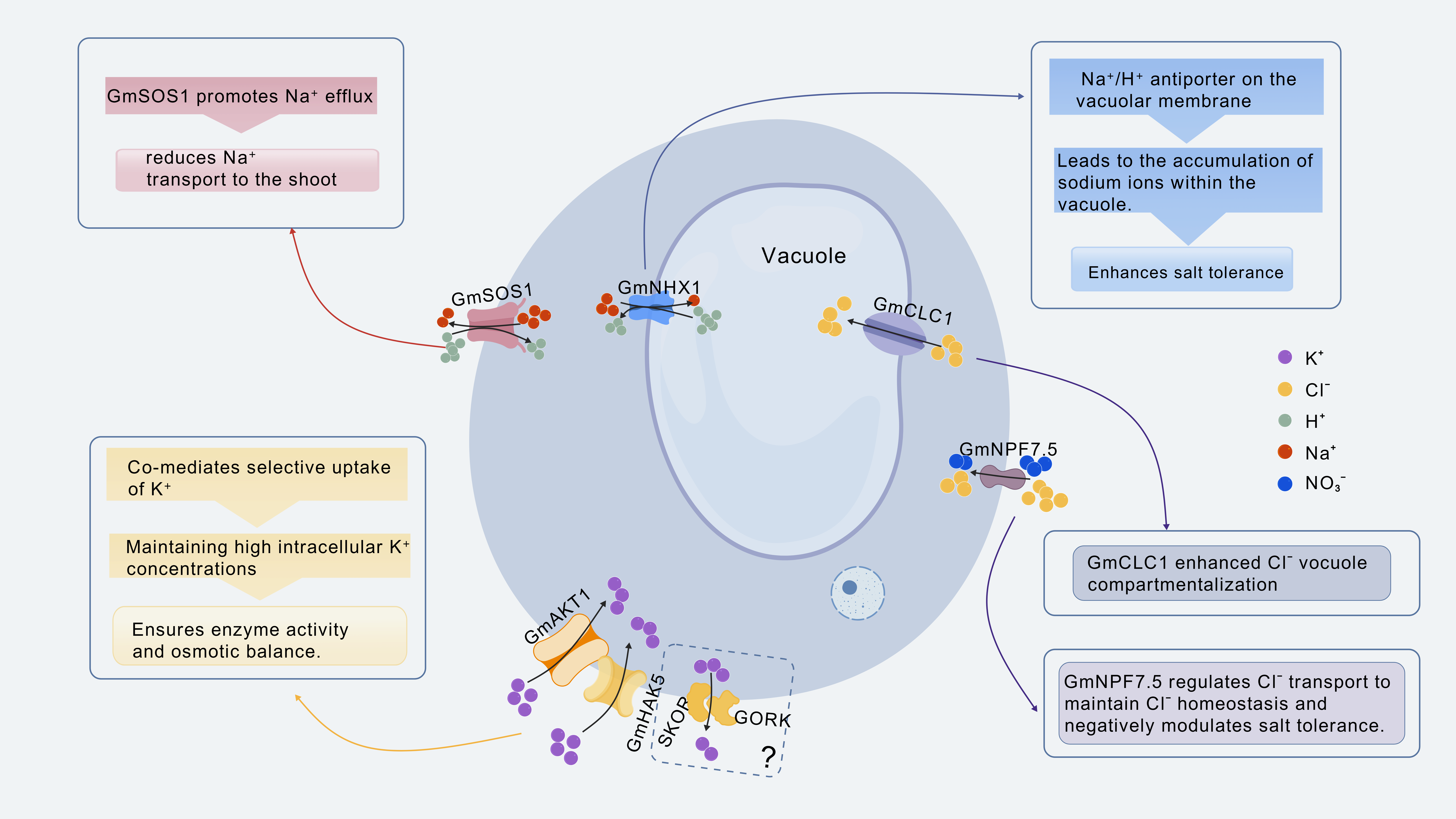
4.1. Ion Homeostasis
4.2. Osmotic Adjustment
4.3. Restoration of Oxidative Balance
4.4. Structural Adaptation
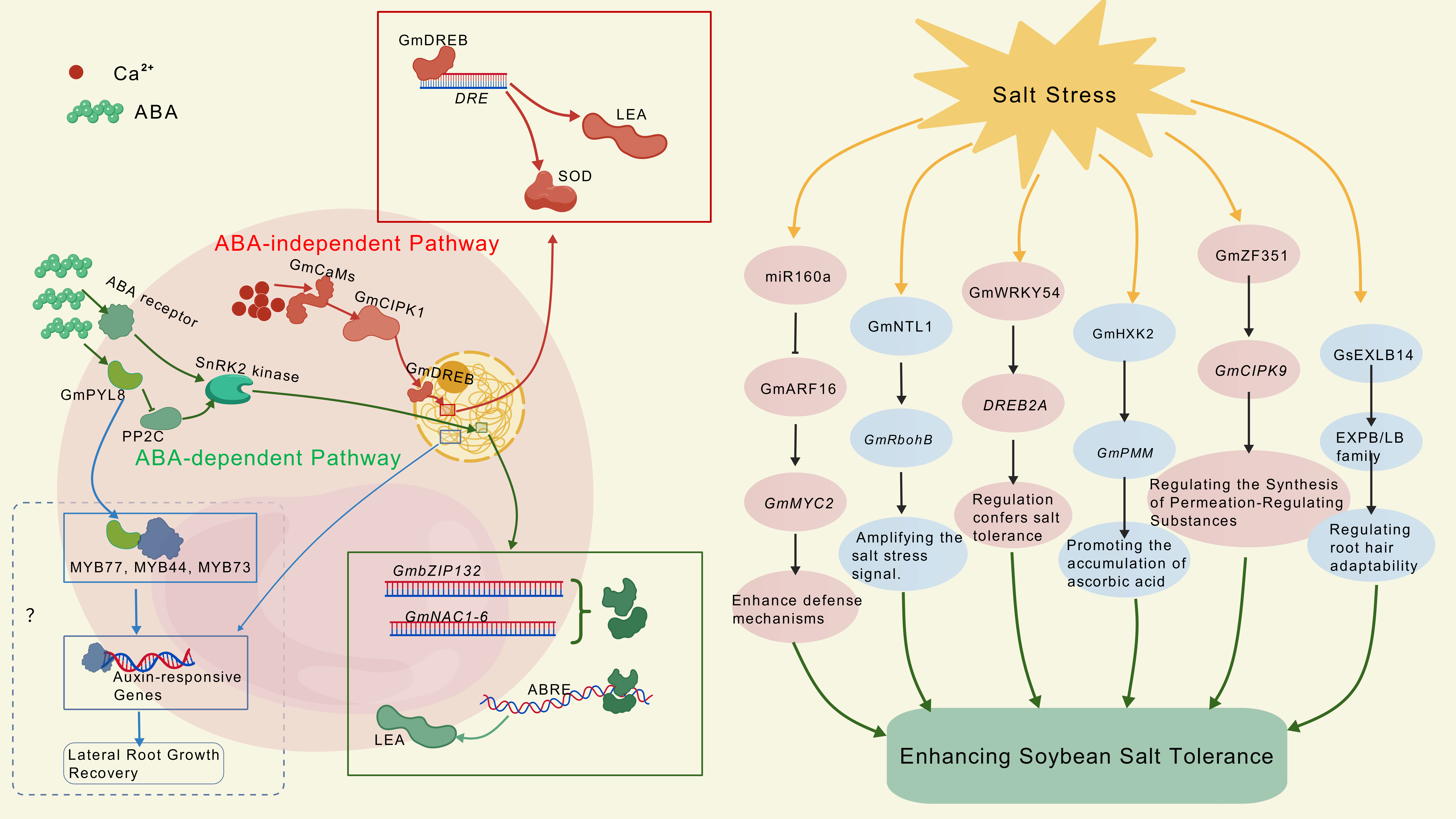
4.5. Transcriptional Regulatory Networks

| Transcription Factor | Function | Downstream Genes | References |
|---|---|---|---|
| GmARF16 | Salt stress induces miR160a to suppress GmARF16, thereby activating downstream salt tolerance defense mechanisms. | GmMYC2 | [130] |
| GmNTL1 | Establishes a H2O2 positive feedback loop, amplifying the salt stress signal. | GmRbohB | [117] |
| GmNAC06 | Directly combines and activates multiple downstream functional genes, synergistically regulating ion homeostasis and reactive oxygen species balance. | GmUBC2, GmHKT1 | [131] |
| GmZF351 | Promote stomatal closure and prevent water loss. | GmCIPK9 | [138] |
| GmHXK2 | Promote ascorbic acid accumulation to enhance antioxidant capacity. | GmPMM | [137] |
| GmDREB6 | Promote proline accumulation. | GmP5CS | [133] |
| GsEXLB14 | Enhance the salt tolerance of soybean root hairs. | EXPB/LB family | [139] |
| GsPRX9 | Accelerate lignin biosynthesis and enhance root cell wall compactness and stability, leading to reduced Na+ influx and water loss. | GsCAD | [136] |
| GmSIN1 | Promoting ABA biosynthesis and ROS production. | GmNCED3s, GmRbohBs | [134] |
| GmST2 | Promoting JA accumulation | GmAOC3, GmAOC4 | [135] |
| GmWRKY54 | May confer salt and drought tolerance through the regulation of DREB2A and STZ/Zat10. | DREB2A | [132] |
4.6. Microbial-Mediated Mechanisms of Salt Tolerance in the Soybean Rhizosphere
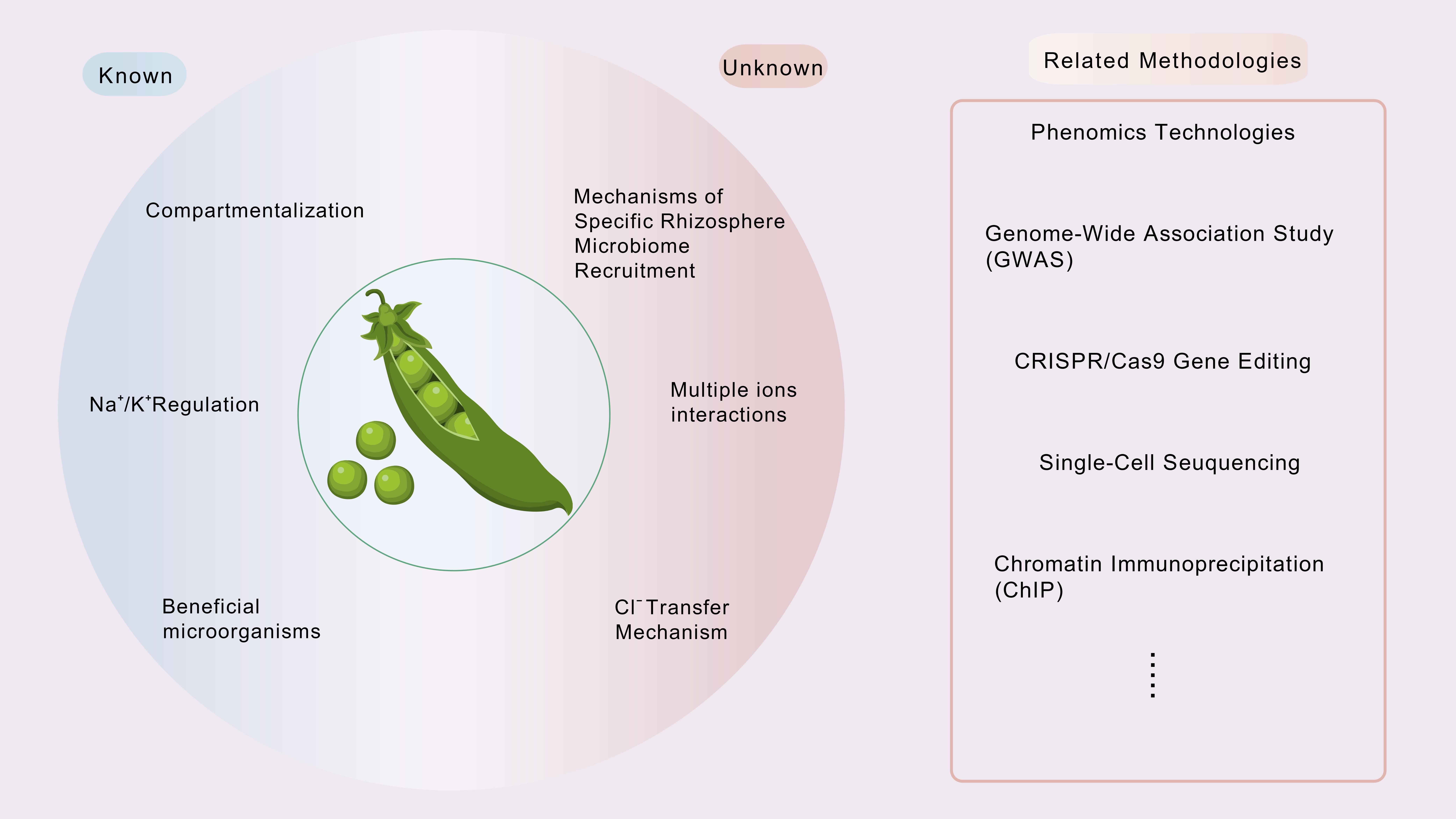
5. Concluding Remarks and Perspectives
Author Contributions
Funding
Data Availability Statement
Conflicts of Interest
References
- Qadir, M.; Oster, J.D. Crop and irrigation management strategies for saline-sodic soils and waters aimed at environmentally sustainable agriculture. Sci. Total Environ. 2004, 323, 1–19. [Google Scholar] [CrossRef]
- Lei, S.; Jia, X.; Zhao, C.; Shao, M. A review of saline-alkali soil improvements in China: Efforts and their impacts on soil properties. Agric. Water Manag. 2025, 317, 109617. [Google Scholar] [CrossRef]
- Li, K.S.; Geng, Y.H.; Li, Q.X.; Liu, C.X. Characterization of the Microstructural Properties of Saline-Alkali Soils in the Yellow River Delta, China. Commun. Soil Sci. Plant Anal. 2021, 52, 1527–1543. [Google Scholar] [CrossRef]
- Liu, L.; Wang, B. Protection of Halophytes and Their Uses for Cultivation of Saline-Alkali Soil in China. Biology 2021, 10, 353. [Google Scholar] [CrossRef] [PubMed]
- Phang, T.H.; Shao, G.; Lam, H.M. Salt tolerance in soybean. J. Integr. Plant Biol. 2008, 50, 1196–1212. [Google Scholar] [CrossRef] [PubMed]
- Sun, J.; Mooney, H.; Wu, W.; Tang, H.; Tong, Y.; Xu, Z.; Huang, B.; Cheng, Y.; Yang, X.; Wei, D.; et al. Importing food damages domestic environment: Evidence from global soybean trade. Proc. Natl. Acad. Sci. USA 2018, 115, 5415–5419. [Google Scholar] [CrossRef]
- Yang, S.; Li, D.; Liao, H.; Zhu, L.; Zhou, M.; Cai, Z. Analysis of the Balance between Supply and Demand of Arable Land in China Based on Food Security. Sustainability 2023, 15, 5706. [Google Scholar] [CrossRef]
- Liang, W.J.; Ma, X.L.; Wan, P.; Liu, L.Y. Plant salt-tolerance mechanism: A review. Biochem. Biophys. Res. Commun. 2018, 495, 286–291. [Google Scholar] [CrossRef]
- Liang, W.; Cui, W.; Ma, X.; Wang, G.; Huang, Z. Function of wheat Ta-UnP gene in enhancing salt tolerance in transgenic Arabidopsis and rice. Biochem. Biophys. Res. Commun. 2014, 450, 794–801. [Google Scholar] [CrossRef]
- Zhang, J.L.; Shi, H.Z. Physiological and molecular mechanisms of plant salt tolerance. Photosynth. Res. 2013, 115, 1–22. [Google Scholar] [CrossRef]
- Kamran, M.; Parveen, A.; Ahmar, S.; Malik, Z.; Hussain, S.; Chattha, M.S.; Saleem, M.H.; Adil, M.; Heidari, P.; Chen, J.T. An Overview of Hazardous Impacts of Soil Salinity in Crops, Tolerance Mechanisms, and Amelioration through Selenium Supplementation. Int. J. Mol. Sci. 2019, 21, 148. [Google Scholar] [CrossRef]
- van Zelm, E.; Zhang, Y.; Testerink, C. Salt Tolerance Mechanisms of Plants. Annu. Rev. Plant Biol. 2020, 71, 403–433. [Google Scholar] [CrossRef]
- Fu, S.; Wang, L.; Li, C.; Zhao, Y.; Zhang, N.; Yan, L.; Li, C.M.; Niu, Y. Integrated Transcriptomic, Proteomic, and Metabolomic Analyses Revealed Molecular Mechanism for Salt Resistance in Soybean (Glycine max L.) Seedlings. Int. J. Mol. Sci. 2024, 25, 13559. [Google Scholar] [CrossRef]
- Hosseini, M.K.; Powell, A.A.; Bingham, I.J. Comparison of the seed germination and early seedling growth of soybean in saline conditions. Seed Sci. Res. 2002, 12, 165–172. [Google Scholar] [CrossRef]
- Essa, T.A. Effect of Salinity Stress on Growth and Nutrient Composition of Three Soybean (Glycine max L. Merrill) Cultivars. J. Agron. Crop. Sci. 2002, 188, 86–93. [Google Scholar] [CrossRef]
- Gururani, M.A.; Venkatesh, J.; Tran, L.S.P. Regulation of Photosynthesis during Abiotic Stress-Induced Photoinhibition. Mol. Plant 2015, 8, 1304–1320. [Google Scholar] [CrossRef]
- Gengmao, Z.; Shihui, L.; Xing, S.; Yizhou, W.; Zipan, C. The role of silicon in physiology of the medicinal plant (Lonicera japonica L.) under salt stress. Sci. Rep. 2015, 5, 12696. [Google Scholar] [CrossRef] [PubMed]
- Zahedi, S.M.; Abdelrahman, M.; Hosseini, M.S.; Hoveizeh, N.F.; Tran, L.-S.P. Alleviation of the effect of salinity on growth and yield of strawberry by foliar spray of selenium-nanoparticles. Environ. Pollut. 2019, 253, 246–258. [Google Scholar] [CrossRef] [PubMed]
- Parida, A.K.; Das, A.B. Salt tolerance and salinity effects on plants: A review. Ecotoxicol. Environ. Saf. 2005, 60, 324–349. [Google Scholar] [CrossRef] [PubMed]
- Pattanayak, G.K.; Tripathy, B.C. Overexpression of protochlorophyllide oxidoreductase C regulates oxidative stress in Arabidopsis. PLoS ONE 2011, 6, e26532. [Google Scholar] [CrossRef]
- Netondo, G.W.; Onyango, J.C.; Beck, E. Sorghum and Salinity. Crop. Sci. 2004, 44, 806–811. [Google Scholar] [CrossRef]
- Wan, C.; Shao, G.; Chen, Y.; Yan, S. Relationship between salt tolerance and chemical quality of soybean under salt stress. Chin. J. Oil Crop Sci. 2002, 24, 67–72. [Google Scholar]
- Luo, B.; Wang, C.; Wang, X.D.; Zhang, H.; Zhou, Y.A.; Wang, W.S.; Song, P. Changes in photosynthesis and chlorophyll fluorescence in two soybean (Glycine max L.) varieties under NaCl stress. Int. J. Agric. Biol. Eng. 2021, 14, 76–82. [Google Scholar] [CrossRef]
- Hajiboland, R.; Aliasgharzadeh, N.; Laiegh, S.F.; Poschenrieder, C. Colonization with arbuscular mycorrhizal fungi improves salinity tolerance of tomato (Solanum lycopersicum L.) plants. Plant Soil 2010, 331, 313–327. [Google Scholar] [CrossRef]
- Hussain, M.; Park, H.; Farooq, M.; Jabran, K.; Lee, D.; Hussain, M.; Park, H.-W.; Farooq, M.; Jabran, K.; Lee, D.-J. Full Length Article Morphological and Physiological Basis of Salt Resistance in Different Rice Genotypes. Int. J. Agric. Biol. 2013, 15, 1560–8530. [Google Scholar]
- Hussain, S.; Zhong, C.; Bai, Z.; Cao, X.; Zhu, L.; Hussain, A.; Zhu, C.; Fahad, S.; James, A.B.; Zhang, J.; et al. Effects of 1-Methylcyclopropene on Rice Growth Characteristics and Superior and Inferior Spikelet Development Under Salt Stress. J. Plant Growth Regul. 2018, 37, 1368–1384. [Google Scholar] [CrossRef]
- Evelin, H.; Kapoor, R.; Giri, B. Arbuscular mycorrhizal fungi in alleviation of salt stress: A review. Ann. Bot. 2009, 104, 1263–1280. [Google Scholar] [CrossRef] [PubMed]
- James, R.A.; Blake, C.; Byrt, C.S.; Munns, R. Major genes for Na+ exclusion, Nax1 and Nax2 (wheat HKT1;4 and HKT1;5), decrease Na+ accumulation in bread wheat leaves under saline and waterlogged conditions. J. Exp. Bot. 2011, 62, 2939–2947. [Google Scholar] [CrossRef] [PubMed]
- Munns, R. Genes and salt tolerance: Bringing them together. New Phytol. 2005, 167, 645–663. [Google Scholar] [CrossRef]
- Le, L.T.T.; Kotula, L.; Siddique, K.H.M.; Colmer, T.D. Na+ and/or Cl− Toxicities Determine Salt Sensitivity in Soybean (Glycine max (L.) Merr.), Mungbean (Vigna radiata (L.) R. Wilczek), Cowpea (Vigna unguiculata (L.) Walp.), and Common Bean (Phaseolus vulgaris L.). Int. J. Mol. Sci. 2021, 22, 1909. [Google Scholar] [CrossRef]
- Abel, G.H.; MacKenzie, A.J. Salt Tolerance of Soybean Varieties (Glycine max L. Merrill) During Germination and Later Growth. Crop. Sci. 1964, 4, 157–161. [Google Scholar] [CrossRef]
- Abel, G.H. Inheritance of the Capacity for Chloride Inclusion and Chloride Exclusion by Soybeans. Crop. Sci. 1969, 9, 697–698. [Google Scholar] [CrossRef]
- Noctor, G.; Foyer, C.H. Ascorbate and glutathione: Keeping Active Oxygen Under Control. Annu. Rev. Plant Physiol. Plant Mol. Biol. 1998, 49, 249–279. [Google Scholar] [CrossRef]
- Demiral, T.; Türkan, İ. Comparative lipid peroxidation, antioxidant defense systems and proline content in roots of two rice cultivars differing in salt tolerance. Environ. Exp. Bot. 2005, 53, 247–257. [Google Scholar] [CrossRef]
- Bekheta, M. Protective role of selenium in canola (Brassica napus L.) plant subjected to salt stress. Egypt. J. Exp. Biol. 2013, 9, 199–211. [Google Scholar]
- Farmer, E.E.; Mueller, M.J. ROS-Mediated Lipid Peroxidation and RES-Activated Signaling. Annu. Rev. Plant Biol. 2013, 64, 429–450. [Google Scholar] [CrossRef]
- Yan, L.; Lu, M.; Riaz, M.; Gao, G.; Tong, K.; Yu, H.; Wang, L.; Wang, L.; Cui, K.; Wang, J.; et al. Differential response of proline metabolism defense, Na+ absorption and deposition to salt stress in salt-tolerant and salt-sensitive rapeseed (Brassica napus L.) genotypes. Physiol. Plant. 2024, 176, e14460. [Google Scholar] [CrossRef]
- Comba, M.E.; Benavides, M.P.; Gallego, S.M.; Tomaro, M.L. Relationship between nitrogen fixation and oxidative stress induction in nodules of salt-treated soybean plants. Phyton-Int. J. Exp. Bot. 1997, 60, 115–126. [Google Scholar]
- Comba, M.E.; Benavides, M.P.; Tomaro, M.L. Effect of salt stress on antioxidant defence system in soybean root nodules. Aust. J. Plant Physiol. 1998, 25, 665–671. [Google Scholar] [CrossRef]
- Singleton, P.W.; Bohlool, B.B. Effect of Salinity on Nodule Formation by Soybean 1. Plant Physiol. 1984, 74, 72–76. [Google Scholar] [CrossRef]
- Delgado, M.J.; Ligero, F.; Lluch, C. Effects of salt stress on growth and nitrogen fixation by pea, faba-bean, common bean and soybean plants. Soil Biol. Biochem. 1994, 26, 371–376. [Google Scholar] [CrossRef]
- Duzan, H.M.; Zhou, X.; Souleimanov, A.; Smith, D.L. Perception of Bradyrhizobium japonicum Nod factor by soybean [Glycine max (L.) Merr.] root hairs under abiotic stress conditions. J. Exp. Bot. 2004, 55, 2641–2646. [Google Scholar] [CrossRef] [PubMed]
- Demidchik, V.; Maathuis, F.J.M. Physiological roles of nonselective cation channels in plants: From salt stress to signalling and development. New Phytol. 2007, 175, 387–404. [Google Scholar] [CrossRef]
- Demidchik, V.; Tester, M. Sodium fluxes through nonselective cation channels in the plasma membrane of protoplasts from Arabidopsis roots. Plant Physiol. 2002, 128, 379–387. [Google Scholar] [CrossRef] [PubMed]
- Donaldson, L.; Ludidi, N.; Knight, M.R.; Gehring, C.; Denby, K. Salt and osmotic stress cause rapid increases in Arabidopsis thaliana cGMP levels. FEBS Lett 2004, 569, 317–320. [Google Scholar] [CrossRef]
- Kiegle, E.; Moore, C.A.; Haseloff, J.; Tester, M.A.; Knight, M.R. Cell-type-specific calcium responses to drought, salt and cold in the Arabidopsis root. Plant J. Cell Mol. Biol. 2000, 23, 267–278. [Google Scholar] [CrossRef]
- Miller, G.; Suzuki, N.; Ciftci-Yilmaz, S.; Mittler, R. Reactive oxygen species homeostasis and signalling during drought and salinity stresses. Plant Cell Environ. 2010, 33, 453–467. [Google Scholar] [CrossRef]
- Evans, M.J.; Choi, W.G.; Gilroy, S.; Morris, R.J. A ROS-Assisted Calcium Wave Dependent on the AtRBOHD NADPH Oxidase and TPC1 Cation Channel Propagates the Systemic Response to Salt Stress. Plant Physiol. 2016, 171, 1771–1784. [Google Scholar] [CrossRef]
- Bibi, G.; Shafique, I.; Ali, S.; Ahmad, R.; Shah, M.M.; Naqvi, T.A.; Zeb, I.; Maathuis, F.J.M.; Hussain, J. Cyclic guanosine monophosphate improves salt tolerance in Solanum lycopersicum. J. Plant Res. 2024, 137, 111–124. [Google Scholar] [CrossRef]
- Feng, W.; Kita, D.; Peaucelle, A.; Cartwright, H.N.; Doan, V.; Duan, Q.; Liu, M.C.; Maman, J.; Steinhorst, L.; Schmitz-Thom, I. The FERONIA receptor kinase maintains cell-wall integrity during salt stress through Ca2+ signaling. Curr. Biol. 2018, 28, 666–675. [Google Scholar] [CrossRef]
- Kang, J.; Hwang, J.U.; Lee, M.; Kim, Y.Y.; Assmann, S.M.; Martinoia, E.; Lee, Y. PDR-type ABC transporter mediates cellular uptake of the phytohormone abscisic acid. Proc. Natl. Acad. Sci. USA 2010, 107, 2355–2360. [Google Scholar] [CrossRef] [PubMed]
- Kawa, D.; Julkowska, M.M.; Sommerfeld, H.M.; Ter Horst, A.; Haring, M.A.; Testerink, C. Phosphate-Dependent Root System Architecture Responses to Salt Stress. Plant Physiol. 2016, 172, 690–706. [Google Scholar] [CrossRef] [PubMed]
- Wang, L.; Chang, C. Stomatal improvement for crop stress resistance. J. Exp. Bot. 2024, 75, 1823–1833. [Google Scholar] [CrossRef] [PubMed]
- Zhao, S.; Zhang, Q.; Liu, M.; Zhou, H.; Ma, C.; Wang, P. Regulation of Plant Responses to Salt Stress. Int. J. Mol. Sci. 2021, 22, 4609. [Google Scholar] [CrossRef]
- Liang, S.; Lu, K.; Wu, Z.; Jiang, S.C.; Yu, Y.T.; Bi, C.; Xin, Q.; Wang, X.F.; Zhang, D.P. A link between magnesium-chelatase H subunit and sucrose nonfermenting 1 (SNF1)-related protein kinase SnRK2.6/OST1 in Arabidopsis guard cell signalling in response to abscisic acid. J. Exp. Bot. 2015, 66, 6355–6369. [Google Scholar] [CrossRef]
- Zhao, Y.; Xing, L.; Wang, X.; Hou, Y.J.; Gao, J.; Wang, P.; Duan, C.G.; Zhu, X.; Zhu, J.K. The ABA receptor PYL8 promotes lateral root growth by enhancing MYB77-dependent transcription of auxin-responsive genes. Sci. Signal. 2014, 7, ra53. [Google Scholar] [CrossRef]
- Sah, S.K.; Reddy, K.R.; Li, J. Abscisic Acid and Abiotic Stress Tolerance in Crop Plants. Front. Plant Sci. 2016, 7, 571. [Google Scholar] [CrossRef]
- Shi, H.; Zhu, J.-K. Regulation of expression of the vacuolar Na+/H+ antiporter gene AtNHX1 by salt stress and abscisic acid. Plant Mol. Biol. 2002, 50, 543–550. [Google Scholar] [CrossRef]
- Yang, R.; Yang, T.; Zhang, H.; Qi, Y.; Xing, Y.; Zhang, N.; Li, R.; Weeda, S.; Ren, S.; Ouyang, B.; et al. Hormone profiling and transcription analysis reveal a major role of ABA in tomato salt tolerance. Plant Physiol. Biochem. 2014, 77, 23–34. [Google Scholar] [CrossRef]
- Friedrichsen, D.M.; Joazeiro, C.A.; Li, J.; Hunter, T.; Chory, J. Brassinosteroid-insensitive-1 is a ubiquitously expressed leucine-rich repeat receptor serine/threonine kinase. Plant Physiol. 2000, 123, 1247–1256. [Google Scholar] [CrossRef]
- Caño-Delgado, A.; Yin, Y.; Yu, C.; Vafeados, D.; Mora-García, S.; Cheng, J.C.; Nam, K.H.; Li, J.; Chory, J. BRL1 and BRL3 are novel brassinosteroid receptors that function in vascular differentiation in Arabidopsis. Development 2004, 131, 5341–5351. [Google Scholar] [CrossRef]
- Tang, W.; Kim, T.W.; Oses-Prieto, J.A.; Sun, Y.; Deng, Z.; Zhu, S.; Wang, R.; Burlingame, A.L.; Wang, Z.Y. BSKs mediate signal transduction from the receptor kinase BRI1 in Arabidopsis. Science 2008, 321, 557–560. [Google Scholar] [CrossRef]
- Kim, T.W.; Guan, S.; Burlingame, A.L.; Wang, Z.Y. The CDG1 kinase mediates brassinosteroid signal transduction from BRI1 receptor kinase to BSU1 phosphatase and GSK3-like kinase BIN2. Mol. Cell 2011, 43, 561–571. [Google Scholar] [CrossRef]
- Yu, X.; Li, L.; Zola, J.; Aluru, M.; Ye, H.; Foudree, A.; Guo, H.; Anderson, S.; Aluru, S.; Liu, P.; et al. A brassinosteroid transcriptional network revealed by genome-wide identification of BESI target genes in Arabidopsis thaliana. Plant J. Cell Mol. Biol. 2011, 65, 634–646. [Google Scholar] [CrossRef]
- He, J.X.; Gendron, J.M.; Yang, Y.; Li, J.; Wang, Z.Y. The GSK3-like kinase BIN2 phosphorylates and destabilizes BZR1, a positive regulator of the brassinosteroid signaling pathway in Arabidopsis. Proc. Natl. Acad. Sci. USA 2002, 99, 10185–10190. [Google Scholar] [CrossRef] [PubMed]
- Jin, Y.; Yang, P.; Li, J.; Yang, Y.; Yang, R.; Fu, H.; Li, J. Brassinosteroids Alleviate Salt Stress by Enhancing Sugar and Glycine Betaine in Pepper (Capsicum annuum L.). Plants 2024, 13, 3029. [Google Scholar] [CrossRef]
- Çoban, Ö.; Baydar, N.G. Brassinosteroid effects on some physical and biochemical properties and secondary metabolite accumulation in peppermint (Mentha piperita L.) under salt stress. Ind. Crops Prod. 2016, 86, 251–258. [Google Scholar] [CrossRef]
- Zenser, N.T. Understanding Auxin Signaling Through Studies in Aux /IAA Proteolysis; University of California: Davis, CA, USA, 2002. [Google Scholar]
- Du, W.C.; Lu, Y.; Li, Q.; Luo, S.X.; Shen, S.X.; Li, N.; Chen, X.P. TIR1/AFB proteins: Active players in abiotic and biotic stress signaling. Front. Plant Sci. 2022, 13, 13. [Google Scholar] [CrossRef]
- Dou, L.; He, K.; Higaki, T.; Wang, X.; Mao, T. Ethylene Signaling Modulates Cortical Microtubule Reassembly in Response to Salt Stress. Plant Physiol. 2018, 176, 2071–2081. [Google Scholar] [CrossRef] [PubMed]
- Jiang, C.; Belfield, E.J.; Cao, Y.; Smith, J.A.C.; Harberd, N.P. An Arabidopsis Soil-Salinity–Tolerance Mutation Confers Ethylene-Mediated Enhancement of Sodium/Potassium Homeostasis. Plant Cell 2013, 25, 3535–3552. [Google Scholar] [CrossRef]
- Wang, Y.; Mostafa, S.; Zeng, W.; Jin, B. Function and Mechanism of Jasmonic Acid in Plant Responses to Abiotic and Biotic Stresses. Int. J. Mol. Sci. 2021, 22, 8568. [Google Scholar] [CrossRef]
- Hamayun, M.; Khan, S.A.; Khan, A.L.; Shin, J.H.; Ahmad, B.; Shin, D.H.; Lee, I.J. Exogenous Gibberellic Acid Reprograms Soybean to Higher Growth and Salt Stress Tolerance. J. Agric. Food Chem. 2010, 58, 7226–7232. [Google Scholar] [CrossRef]
- Sun, J.; Dai, S.; Wang, R.; Chen, S.; Li, N.; Zhou, X.; Lu, C.; Shen, X.; Zheng, X.; Hu, Z.; et al. Calcium mediates root K+/Na+ homeostasis in poplar species differing in salt tolerance. Tree Physiol. 2009, 29, 1175–1186. [Google Scholar] [CrossRef]
- Bassil, E.; Blumwald, E. The ins and outs of intracellular ion homeostasis: NHX-type cation/H+ transporters. Curr. Opin. Plant Biol. 2014, 22, 1–6. [Google Scholar] [CrossRef]
- Shi, H.; Quintero, F.J.; Pardo, J.M.; Zhu, J.K. The putative plasma membrane Na+/H+ antiporter SOS1 controls long-distance Na+ transport in plants. Plant Cell 2002, 14, 465–477. [Google Scholar] [CrossRef] [PubMed]
- Shi, H.; Ishitani, M.; Kim, C.; Zhu, J.K. The Arabidopsis thaliana salt tolerance gene SOS1 encodes a putative Na+/H+ antiporter. Proc. Natl. Acad. Sci. USA 2000, 97, 6896–6901. [Google Scholar] [CrossRef] [PubMed]
- Liu, J.; Zhu, J.K. A calcium sensor homolog required for plant salt tolerance. Science 1998, 280, 1943–1945. [Google Scholar] [CrossRef] [PubMed]
- Lou, L.J.; Yu, F.F.; Tian, M.M.; Liu, G.C.; Wu, Y.R.; Wu, Y.J.; Xia, R.; Pardo, J.M.; Guo, Y.; Xie, Q. ESCRT-I Component VPS23A Sustains Salt Tolerance by Strengthening the SOS Module in Arabidopsis. Mol. Plant 2020, 13, 1134–1148. [Google Scholar] [CrossRef]
- Liu, C.; Lin, X.; Xu, M.; Zheng, Z.; Wang, Z.; Huang, X.; Wu, F.; Liu, G.; Liu, W.; Peng, C.; et al. The ESCRT component FYVE4 modulates salt-stress response by strengthening the SOS1-SOS2 interaction in Arabidopsis. Plant Commun. 2025, 6, 101428. [Google Scholar] [CrossRef]
- Liu, G.; Zeng, Y.; Li, B.; Wang, X.; Jiang, L.; Guo, Y. SOS2 phosphorylates FREE1 to regulate multi-vesicular body trafficking and vacuolar dynamics under salt stress. Plant Cell 2025, 37, koaf012. [Google Scholar] [CrossRef]
- Ma, L.; Han, R.; Yang, Y.; Liu, X.; Li, H.; Zhao, X.; Li, J.; Fu, H.; Huo, Y.; Sun, L.; et al. Phytochromes enhance SOS2-mediated PIF1 and PIF3 phosphorylation and degradation to promote Arabidopsis salt tolerance. Plant Cell 2023, 35, 2997–3020. [Google Scholar] [CrossRef]
- Ma, L.; Qin, D.B.; Sun, L.; Zhang, K.; Yu, X.; Dang, A.K.; Hou, S.; Zhao, X.; Yang, Y.; Wang, Y.; et al. SALT OVERLY SENSITIVE2 and AMMONIUM TRANSPORTER1;1 contribute to plant salt tolerance by maintaining ammonium uptake. Plant Cell 2025, 37, koaf034. [Google Scholar] [CrossRef]
- Julkowska, M.M.; McLoughlin, F.; Galvan-Ampudia, C.S.; Rankenberg, J.M.; Kawa, D.; Klimecka, M.; Haring, M.A.; Munnik, T.; Kooijman, E.E.; Testerink, C. Identification and functional characterization of the Arabidopsis Snf1-related protein kinase SnRK2.4 phosphatidic acid-binding domain. Plant Cell Environ. 2015, 38, 614–624. [Google Scholar] [CrossRef]
- Kawa, D.; Meyer, A.J.; Dekker, H.L.; Abd-El-Haliem, A.M.; Gevaert, K.; Van De Slijke, E.; Maszkowska, J.; Bucholc, M.; Dobrowolska, G.; De Jaeger, G.; et al. SnRK2 Protein Kinases and mRNA Decapping Machinery Control Root Development and Response to Salt. Plant Physiol. 2020, 182, 361–377. [Google Scholar] [CrossRef]
- Apse, M.P.; Aharon, G.S.; Snedden, W.A.; Blumwald, E. Salt tolerance conferred by overexpression of a vacuolar Na+/H+ antiport in Arabidopsis. Science 1999, 285, 1256–1258. [Google Scholar] [CrossRef] [PubMed]
- Bassil, E.; Ohto, M.A.; Esumi, T.; Tajima, H.; Zhu, Z.; Cagnac, O.; Belmonte, M.; Peleg, Z.; Yamaguchi, T.; Blumwald, E. The Arabidopsis intracellular Na+/H+ antiporters NHX5 and NHX6 are endosome associated and necessary for plant growth and development. Plant Cell 2011, 23, 224–239. [Google Scholar] [CrossRef] [PubMed]
- Nieves-Cordones, M.; Alemán, F.; Martínez, V.; Rubio, F. The Arabidopsis thaliana HAK5 K+ transporter is required for plant growth and K+ acquisition from low K+ solutions under saline conditions. Mol. Plant 2010, 3, 326–333. [Google Scholar] [CrossRef]
- Feng, C.; Hussain, M.A.; Zhao, Y.; Wang, Y.; Song, Y.; Li, Y.; Gao, H.; Jing, Y.; Xu, K.; Zhang, W.; et al. GmAKT1-mediated K+ absorption positively modulates soybean salt tolerance by GmCBL9-GmCIPK6 complex. Plant Biotechnol. J. 2025, 23, 2276–2289. [Google Scholar] [CrossRef] [PubMed]
- Hiya, H.J.; Nakashima, Y.; Takeuchi, A.; Nakamura, T.; Nakamura, Y.; Murata, Y.; Munemasa, S. Outward-rectifying potassium channels GORK and SKOR function in regulation of root growth under salt stress in Arabidopsis thaliana. J. Plant Physiol. 2024, 302, 154322. [Google Scholar] [CrossRef]
- Riedelsberger, J.; Miller, J.K.; Valdebenito-Maturana, B.; Piñeros, M.A.; González, W.; Dreyer, I. Plant HKT Channels: An Updated View on Structure, Function and Gene Regulation. Int. J. Mol. Sci. 2021, 22, 1892. [Google Scholar] [CrossRef]
- Sunarpi; Horie, T.; Motoda, J.; Kubo, M.; Yang, H.; Yoda, K.; Horie, R.; Chan, W.Y.; Leung, H.Y.; Hattori, K.; et al. Enhanced salt tolerance mediated by AtHKT1 transporter-induced Na unloading from xylem vessels to xylem parenchyma cells. Plant J. Cell Mol. Biol. 2005, 44, 928–938. [Google Scholar] [CrossRef]
- Ren, Z.H.; Gao, J.P.; Li, L.G.; Cai, X.L.; Huang, W.; Chao, D.Y.; Zhu, M.Z.; Wang, Z.Y.; Luan, S.; Lin, H.X. A rice quantitative trait locus for salt tolerance encodes a sodium transporter. Nat. Genet. 2005, 37, 1141–1146. [Google Scholar] [CrossRef] [PubMed]
- Nedelyaeva, O.I.; Shuvalov, A.V.; Balnokin, Y.V. Chloride Channels and Transporters of the CLC Family in Plants. Russ. J. Plant Physiol. 2020, 67, 767–784. [Google Scholar] [CrossRef]
- Zifarelli, G.; Pusch, M. CLC transport proteins in plants. Febs Lett. 2010, 584, 2122–2127. [Google Scholar] [CrossRef]
- Lv, Q.D.; Tang, R.J.; Liu, H.; Gao, X.S.; Li, Y.Z.; Zheng, H.Q.; Zhang, H.X. Cloning and molecular analyses of the Arabidopsis thaliana chloride channel gene family. Plant Sci. 2009, 176, 650–661. [Google Scholar] [CrossRef]
- Szabados, L.; Savouré, A. Proline: A multifunctional amino acid. Trends Plant Sci. 2010, 15, 89–97. [Google Scholar] [CrossRef]
- Marusig, D.; Tombesi, S. Abscisic Acid Mediates Drought and Salt Stress Responses in Vitis vinifera-A Review. Int. J. Mol. Sci. 2020, 21, 8648. [Google Scholar] [CrossRef] [PubMed]
- Subramanyam, K.; Arun, M.; Mariashibu, T.S.; Theboral, J.; Rajesh, M.; Singh, N.K.; Manickavasagam, M.; Ganapathi, A. Overexpression of tobacco osmotin (Tbosm) in soybean conferred resistance to salinity stress and fungal infections. Planta 2012, 236, 1909–1925. [Google Scholar] [CrossRef]
- Ayadi, M.; Brini, F.; Masmoudi, K. Overexpression of a Wheat Aquaporin Gene, TdPIP2;1, Enhances Salt and Drought Tolerance in Transgenic Durum Wheat cv. Maali. Int. J. Mol. Sci. 2019, 20, 2389. [Google Scholar] [CrossRef]
- Gao, J.-P.; Chao, D.-Y.; Lin, H.-X. Understanding abiotic stress tolerance mechanisms: Recent studies on stress response in rice. Integr. Plant Biol. 2007, 49, 742–750. [Google Scholar] [CrossRef]
- Li, W.Y.; Wong, F.L.; Tsai, S.N.; Phang, T.H.; Shao, G.; Lam, H.M. Tonoplast-located GmCLC1 and GmNHX1 from soybean enhance NaCl tolerance in transgenic bright yellow (BY)-2 cells. Plant Cell Environ. 2006, 29, 1122–1137. [Google Scholar] [CrossRef]
- Phang, T.H.; Shao, G.; Liao, H.; Yan, X.; Lam, H.M. High external phosphate (Pi) increases sodium ion uptake and reduces salt tolerance of ‘Pi-tolerant’ soybean. Physiol. Plant. 2009, 135, 412–425. [Google Scholar] [CrossRef]
- Wu, Y.; Yuan, J.; Shen, L.; Li, Q.; Li, Z.; Cao, H.; Zhu, L.; Liu, D.; Sun, Y.; Jia, Q.; et al. A phosphorylation-regulated NPF transporter determines salt tolerance by mediating chloride uptake in soybean plants. EMBO J. 2025, 44, 923–946. [Google Scholar] [CrossRef]
- Chao, M.N.; Li, L.B.; Zhang, J.Y.; Huang, L.; Ren, R.; Xu, X.J.; Huang, Z.W. Structural features and expression regulation analysis of potassium transporter gene GmHAK5 in soybean (Glycine max L.). Plant Growth Regul. 2024, 102, 471–483. [Google Scholar] [CrossRef]
- Liu, L.; Luo, S.; Ma, L.; Zhang, Y.; Wang, T.; Wang, J.; Liang, X.; Xue, S. Analysis of Ion Transport Properties of Glycine max HKT Transporters and Identifying a Regulation of GmHKT1;1 by the Non-Functional GmHKT1;4. Plant Cell Physiol. 2024, 65, 1399–1413. [Google Scholar] [CrossRef] [PubMed]
- Agboma, P.C.; Sinclair, T.R.; Jokinen, K.; Peltonen-Sainio, P.; Pehu, E. An evaluation of the effect of exogenous glycinebetaine on the growth and yield of soybean: Timing of application, watering regimes and cultivars. Field Crops Res. 1997, 54, 51–64. [Google Scholar] [CrossRef]
- Mäkelä, P.S.A.; Peltonen-Sainio, P.; Jokinen, K.J.; Pehu, E.; Setälä, H.; Hinkkanen, R.; Somersalo, S.J.P.S. Uptake and translocation of foliar-applied glycinebetaine in crop plants. Plant Sci. 1996, 121, 221–230. [Google Scholar] [CrossRef]
- Per, T.S.; Khan, N.A.; Reddy, P.S.; Masood, A.; Hasanuzzaman, M.; Khan, M.I.R.; Anjum, N.A. Approaches in modulating proline metabolism in plants for salt and drought stress tolerance: Phytohormones, mineral nutrients and transgenics. Plant Physiol. Biochem. PPB 2017, 115, 126–140. [Google Scholar] [CrossRef]
- Wood, A.J. Comparison of Salt-Induced Osmotic Adjustment and Trigonelline Accumulation in Two Soybean Cultivars. Biol. Plant. 1999, 42, 389–394. [Google Scholar] [CrossRef]
- Streeter, J.G.; Lohnes, D.G.; Fioritto, R.J. Patterns of pinitol accumulation in soybean plants and relationships to drought tolerance. Plant Cell Environ. 2001, 24, 429–438. [Google Scholar] [CrossRef]
- Tunnacliffe, A.; Wise, M.J. The continuing conundrum of the LEA proteins. Die Nat. 2007, 94, 791–812. [Google Scholar] [CrossRef]
- Calvo, E.S.; Wurtle, E.S.; Shoemaker, R.C. Cloning, mapping, and analyses of expression of the Em-like gene family in soybean [Glycine max (L). Merr.]. Theor. Appl. Genet. 1997, 94, 957–967. [Google Scholar] [CrossRef][Green Version]
- Lan, Y.; Cai, D.; Zheng, Y.-Z. Expression in Escherichia coli of Three Different Soybean Late Embryogenesis Abundant (LEA) Genes to Investigate Enhanced Stress Tolerance. J. Integr. Plant Biol. 2005, 47, 613–621. [Google Scholar] [CrossRef]
- Shih, M.D.; Hsieh, T.Y.; Lin, T.P.; Hsing, Y.I.; Hoekstra, F.A. Characterization of two soybean (Glycine max L.) LEA IV proteins by circular dichroism and Fourier transform infrared spectrometry. Plant Cell Physiol. 2010, 51, 395–407. [Google Scholar] [CrossRef]
- Huang, S.; Xia, Y.; Yang, J.; Si, Y.; Chen, X.; Zhang, H.; Liu, T.; Zheng, W.; Chen, X.; Zhao, Z.; et al. A Coding SNP in GmPM30 Enhances Soybean Salinity Tolerance and Yield through the GmLEA1-GmPM30-GmLEC1 Module. Adv. Sci. 2025, 12, e09391. [Google Scholar] [CrossRef] [PubMed]
- Zhang, W.; Zhi, W.; Qiao, H.; Huang, J.; Li, S.; Lu, Q.; Wang, N.; Li, Q.; Zhou, Q.; Sun, J.; et al. H2O2-dependent oxidation of the transcription factor GmNTL1 promotes salt tolerance in soybean. Plant Cell 2023, 36, 112–135. [Google Scholar] [CrossRef]
- Yu, B.; Liu, Y. Effect of salt stress on the metabolism of active oxygen in seedlings of annual halophyte Glycine soja. Acta Bot. Boreali-Occident. Sin. 2003, 23, 18–22. [Google Scholar]
- Aleem, M.; Aleem, S.; Sharif, I.; Aleem, M.; Shahzad, R.; Khan, M.I.; Batool, A.; Sarwar, G.; Farooq, J.; Iqbal, A.; et al. Whole-Genome Identification of APX and CAT Gene Families in Cultivated and Wild Soybeans and Their Regulatory Function in Plant Development and Stress Response. Antioxidants 2022, 11, 1626. [Google Scholar] [CrossRef]
- Li, W.-Y.F.; Shao, G.; Lam, H.-M. Ectopic expression of GmPAP3 alleviates oxidative damage caused by salinity and osmotic stresses. New Phytol. 2008, 178, 80–91. [Google Scholar] [CrossRef]
- Liao, H.; Wong, F.-L.; Phang, T.-H.; Cheung, M.-Y.; Li, W.-Y.F.; Shao, G.; Yan, X.; Lam, H.-M. GmPAP3, a novel purple acid phosphatase-like gene in soybean induced by NaCl stress but not phosphorus deficiency. Gene 2003, 318, 103–111. [Google Scholar] [CrossRef]
- Deng, L.; Chen, F.; Jiang, L.; Lam, H.-M.; Xiao, G. Ectopic expression of GmPAP3 enhances salt tolerance in rice by alleviating oxidative damage. Plant Breed. 2014, 133, 348–355. [Google Scholar] [CrossRef]
- Zhang, Y.; Yang, X.; Chen, T.; Su, K.; Zhu, Y.; Li, S.; Xiang, F.; Lu, Q. Pupylation-based proximity labeling reveals APC/C-mediated ubiquitination and degradation of PEROXIN11C in soybean abiotic stress responses. Cell Rep. 2025, 44, 116331. [Google Scholar] [CrossRef] [PubMed]
- Rodrigues, S.M.; Andrade, M.O.; Gomes, A.P.; Damatta, F.M.; Baracat-Pereira, M.C.; Fontes, E.P. Arabidopsis and tobacco plants ectopically expressing the soybean antiquitin-like ALDH7 gene display enhanced tolerance to drought, salinity, and oxidative stress. J. Exp. Bot. 2006, 57, 1909–1918. [Google Scholar] [CrossRef] [PubMed]
- Li, Y.; Li, X.; Chen, Z.-Q.; Ma, Y.; Yang, G.-Y.; Zhang, Y.; Sun, M.-C.; Zhang, L.-H.; Chu, J.-M.; Lu, J.-M.; et al. Application of Plant Print Identification Technology in Salt-resistant Soybean Breeding. J. Plant Growth Regul. 2021, 40, 1557–1565. [Google Scholar] [CrossRef]
- Zhou, S.; Zhao, K.F. Discussion on the problem of salt gland of Glycine soja. Acta Bot. Sin. 2003, 45, 574–580. [Google Scholar]
- Yu, B.J.; Lam, H.M.; Shao, G.H.; Liu, Y.L. Effects of salinity on activities of H+ -ATPase, H+ -PPase and membrane lipid composition in plasma membrane and tonoplast vesicles isolated from soybean (Glycine max L.) seedlings. J. Environ. Sci. 2005, 17, 259–262. [Google Scholar]
- Chen, M.; Wang, Q.Y.; Cheng, X.G.; Xu, Z.S.; Li, L.C.; Ye, X.G.; Xia, L.Q.; Ma, Y.Z. GmDREB2, a soybean DRE-binding transcription factor, conferred drought and high-salt tolerance in transgenic plants. Biochem. Biophys. Res. Commun. 2007, 353, 299–305. [Google Scholar] [CrossRef]
- Pham, T.T.N.; Nguyen, H.Q.; Nguyen, T.N.L.; Dao, X.T.; Sy, D.T.; Le, V.S.; Chu, H.M. Overexpression of the GmDREB2 gene increases proline accumulation and tolerance to drought stress in soybean plants. Aust. J. Crop Sci. 2020, 14, 495–503. [Google Scholar] [CrossRef]
- Wang, C.; Li, X.; Zhuang, Y.; Sun, W.; Cao, H.; Xu, R.; Kong, F.; Zhang, D. A novel miR160a-GmARF16-GmMYC2 module determines soybean salt tolerance and adaptation. New Phytol. 2024, 241, 2176–2192. [Google Scholar] [CrossRef]
- Li, M.; Chen, R.; Jiang, Q.; Sun, X.; Zhang, H.; Hu, Z. GmNAC06, a NAC domain transcription factor enhances salt stress tolerance in soybean. Plant Mol. Biol. 2021, 105, 333–345. [Google Scholar] [CrossRef]
- Zhou, Q.Y.; Tian, A.G.; Zou, H.F.; Xie, Z.M.; Lei, G.; Huang, J.; Wang, C.M.; Wang, H.W.; Zhang, J.S.; Chen, S.Y. Soybean WRKY-type transcription factor genes, GmWRKY13, GmWRKY21, and GmWRKY54, confer differential tolerance to abiotic stresses in transgenic Arabidopsis plants. Plant Biotechnol. J. 2008, 6, 486–503. [Google Scholar] [CrossRef] [PubMed]
- Nguyen, Q.H.; Vu, L.T.K.; Nguyen, L.T.N.; Pham, N.T.T.; Nguyen, Y.T.H.; Le, S.V.; Chu, M.H. Overexpression of the GmDREB6 gene enhances proline accumulation and salt tolerance in genetically modified soybean plants. Sci. Rep. 2019, 9, 19663. [Google Scholar] [CrossRef]
- Li, S.; Wang, N.; Ji, D.; Zhang, W.; Wang, Y.; Yu, Y.; Zhao, S.; Lyu, M.; You, J.; Zhang, Y.; et al. A GmSIN1/GmNCED3s/GmRbohBs Feed-Forward Loop Acts as a Signal Amplifier That Regulates Root Growth in Soybean Exposed to Salt Stress. Plant Cell 2019, 31, 2107–2130. [Google Scholar] [CrossRef]
- Li, S.; Wang, M.; Du, X.; Wang, Y.; Pan, Y.; Ji, D.; You, J.; Shan, M.; Bao, G.; Liu, X.; et al. The GmPRL1b-GmST2-GmAOC3/4 Module Confers Salt Tolerance and Botrytis cinerea Resistance by Inducing Jasmonic Acid Biosynthesis in Soybean. Plant Biotechnol. J. 2025; Online ahead of print. [Google Scholar]
- Jin, T.; Sun, Y.; Zhao, R.; Shan, Z.; Gai, J.; Li, Y. Overexpression of Peroxidase Gene GsPRX9 Confers Salt Tolerance in Soybean. Int. J. Mol. Sci. 2019, 20, 3745. [Google Scholar] [CrossRef]
- Guo, Y.; Liu, C.; Chen, S.; Tian, Z. GmHXK2 promotes the salt tolerance of soybean seedlings by mediating AsA synthesis, and auxin synthesis and distribution. BMC Plant Biol. 2024, 24, 613. [Google Scholar] [CrossRef] [PubMed]
- Wei, W.; Lu, L.; Bian, X.H.; Li, Q.T.; Han, J.Q.; Tao, J.J.; Yin, C.C.; Lai, Y.C.; Li, W.; Bi, Y.D.; et al. Zinc-finger protein GmZF351 improves both salt and drought stress tolerance in soybean. J. Integr. Plant Biol. 2023, 65, 1636–1650. [Google Scholar] [CrossRef] [PubMed]
- Wang, L.; Zhang, T.; Li, C.; Zhou, C.; Liu, B.; Wu, Y.; He, F.; Xu, Y.; Li, F.; Feng, X. Overexpression of Wild Soybean Expansin Gene GsEXLB14 Enhanced the Tolerance of Transgenic Soybean Hairy Roots to Salt and Drought Stresses. Plants 2024, 13, 1656. [Google Scholar] [CrossRef]
- Adesemoye, A.O.; Kloepper, J.W. Plant-microbes interactions in enhanced fertilizer-use efficiency. Appl. Microbiol. Biotechnol. 2009, 85, 1–12. [Google Scholar] [CrossRef]
- Hynes, R.K.; Leung, G.C.; Hirkala, D.L.; Nelson, L.M. Isolation, selection, and characterization of beneficial rhizobacteria from pea, lentil, and chickpea grown in western Canada. Can. J. Microbiol. 2008, 54, 248–258. [Google Scholar] [CrossRef]
- Yang, J.; Kloepper, J.W.; Ryu, C.M. Rhizosphere bacteria help plants tolerate abiotic stress. Trends Plant Sci. 2009, 14, 1–4. [Google Scholar] [CrossRef]
- Ilangumaran, G.; Schwinghamer, T.D.; Smith, D.L. Rhizobacteria From Root Nodules of an Indigenous Legume Enhance Salinity Stress Tolerance in Soybean. Front. Sustain. Food Syst. 2021, 4, 617978. [Google Scholar] [CrossRef]
- Xu, R.; Yang, Q.; Liu, Z.; Shi, X.; Wu, X.; Chen, Y.; Du, X.; Gao, Q.; He, D.; Shi, A.; et al. Genome-wide association analysis and genomic prediction of salt tolerance trait in soybean germplasm. Front. Plant Sci. 2024, 15, 1494551. [Google Scholar] [CrossRef] [PubMed]
- Pruthi, R.; Chaudhary, C.; Sharma, J.; Rana, P.; Kondi, R.K.R.; Richards, J.; Nguyen, H.T.; Subudhi, P.K. A comparative transcriptomic analysis provides insights into molecular mechanisms driving salt tolerance in soybean. Sci. Rep. 2025, 15, 31869. [Google Scholar] [CrossRef] [PubMed]


Disclaimer/Publisher’s Note: The statements, opinions and data contained in all publications are solely those of the individual author(s) and contributor(s) and not of MDPI and/or the editor(s). MDPI and/or the editor(s) disclaim responsibility for any injury to people or property resulting from any ideas, methods, instructions or products referred to in the content. |
© 2025 by the authors. Licensee MDPI, Basel, Switzerland. This article is an open access article distributed under the terms and conditions of the Creative Commons Attribution (CC BY) license (https://creativecommons.org/licenses/by/4.0/).
Share and Cite
Dong, T.; Yan, L.; Wang, J.; Niu, Y.; Wang, L. Salt Tolerance in Soybean (Glycine max L.): A Comprehensive Review of Molecular Mechanisms, Key Regulators, and Future Perspectives for Saline Soil Utilization. Plants 2025, 14, 3668. https://doi.org/10.3390/plants14233668
Dong T, Yan L, Wang J, Niu Y, Wang L. Salt Tolerance in Soybean (Glycine max L.): A Comprehensive Review of Molecular Mechanisms, Key Regulators, and Future Perspectives for Saline Soil Utilization. Plants. 2025; 14(23):3668. https://doi.org/10.3390/plants14233668
Chicago/Turabian StyleDong, Tingjia, Lei Yan, Jiahui Wang, Yusheng Niu, and Lu Wang. 2025. "Salt Tolerance in Soybean (Glycine max L.): A Comprehensive Review of Molecular Mechanisms, Key Regulators, and Future Perspectives for Saline Soil Utilization" Plants 14, no. 23: 3668. https://doi.org/10.3390/plants14233668
APA StyleDong, T., Yan, L., Wang, J., Niu, Y., & Wang, L. (2025). Salt Tolerance in Soybean (Glycine max L.): A Comprehensive Review of Molecular Mechanisms, Key Regulators, and Future Perspectives for Saline Soil Utilization. Plants, 14(23), 3668. https://doi.org/10.3390/plants14233668