Article

Genomic and Functional Characterization of Acetolactate Synthase (ALS) Genes in Stress Adaptation of the Noxious Weed Amaranthus palmeri

1
MARA Key Laboratory of Sustainable Crop Production in the Middle Reaches of the Yangtze River (Co-construction by Ministry and Province)/Hubei Key Laboratory of Waterlogging Disaster and Agricultural Use of Wetland, College of Agriculture, Yangtze University, Jingzhou 432000, China
2
Key Laboratory of Integrated Pest Management of Crops in Central China, Ministry of Agriculture/Hubei Key Laboratory of Crop Diseases, Insect Pests and Weeds Control, Institute of Plant Protection and Soil Science, Hubei Academy of Agricultural Sciences, Wuhan 430064, China
3
Hubei Provincial National Forest Farm Workstation, Wuhan 430070, China
*
Authors to whom correspondence should be addressed.
Plants 2025, 14(19), 3088; https://doi.org/10.3390/plants14193088

Submission received: 30 August 2025 / Revised: 30 September 2025 / Accepted: 4 October 2025 / Published: 7 October 2025

Abstract

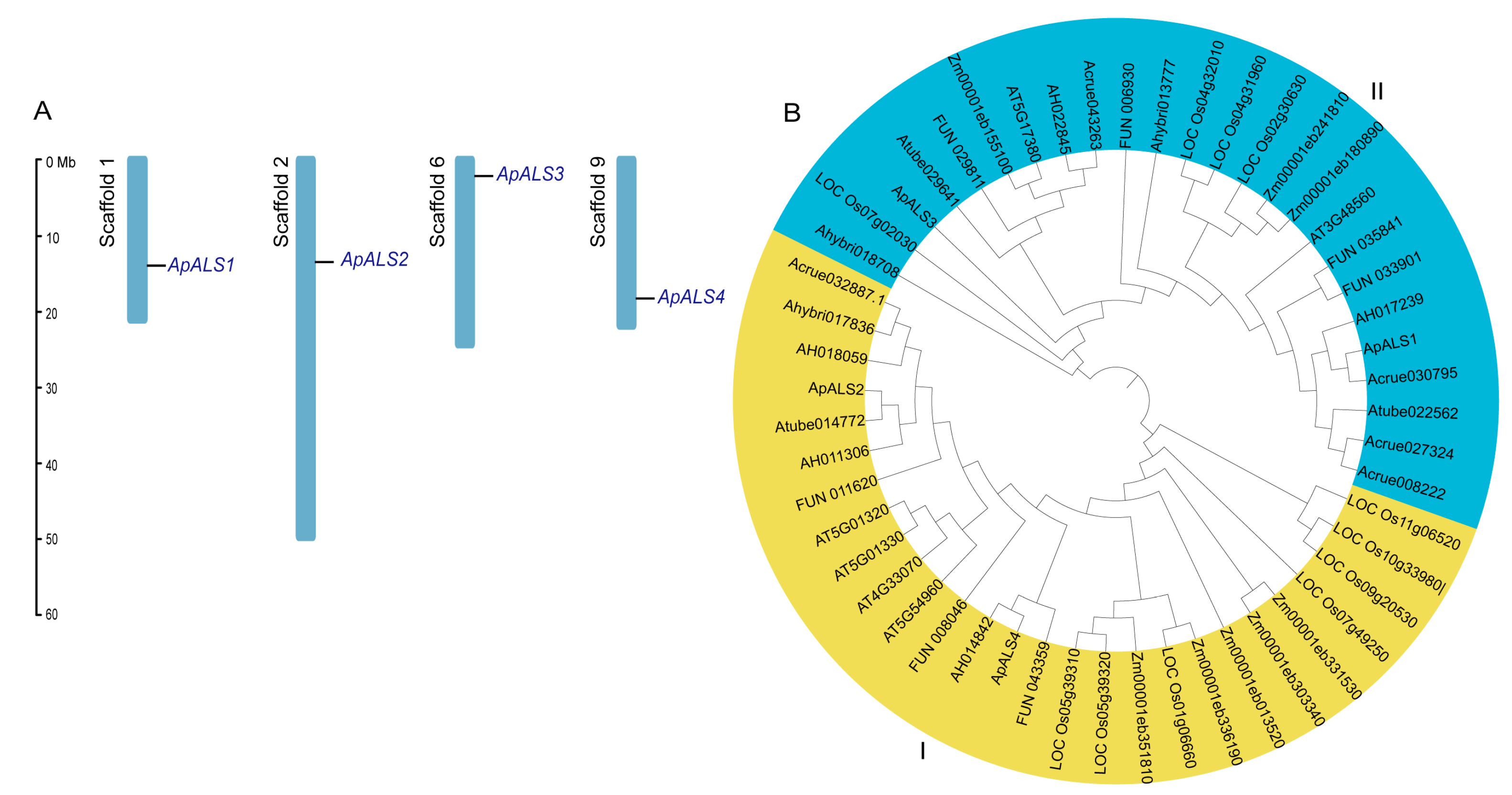
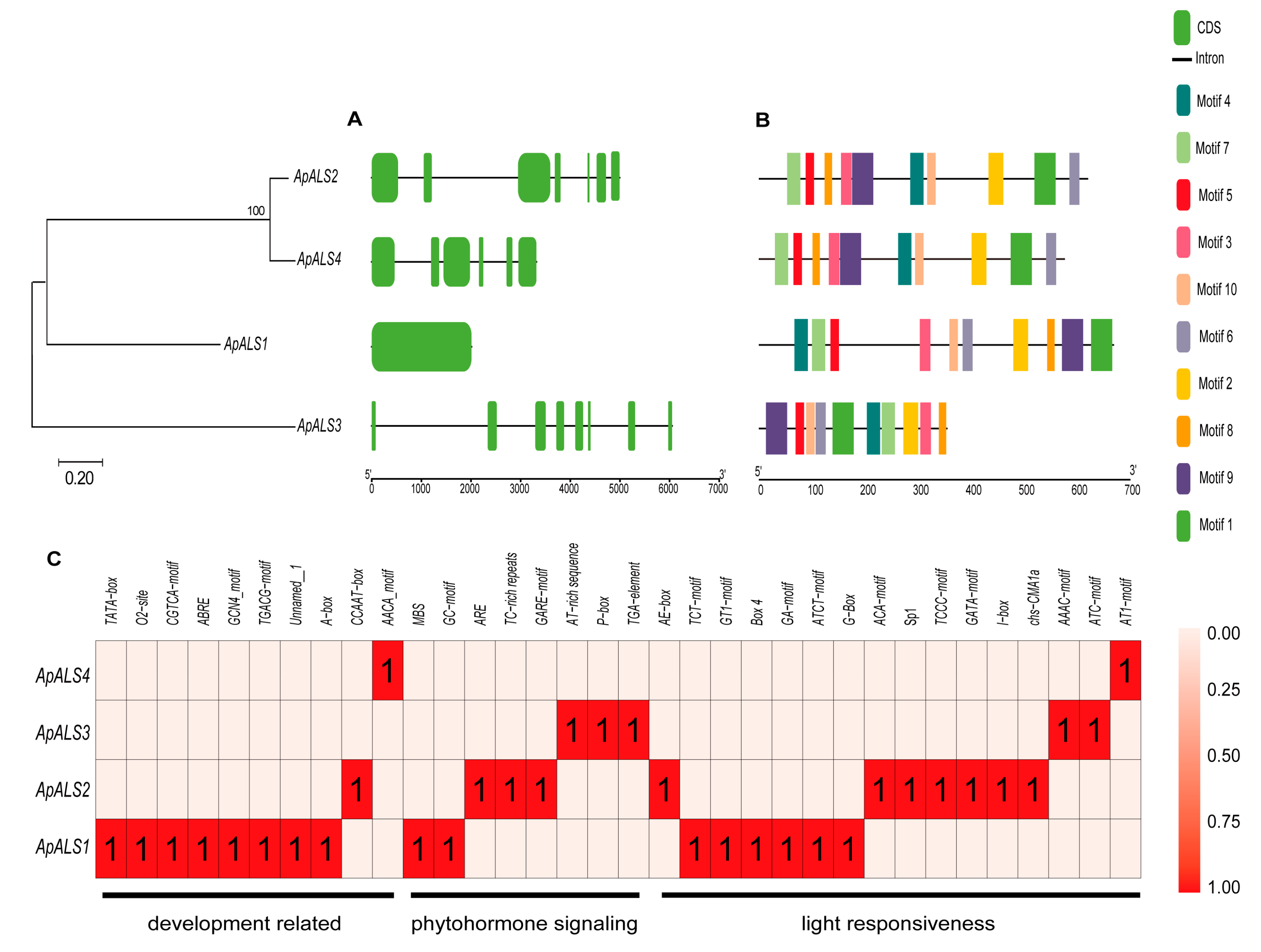
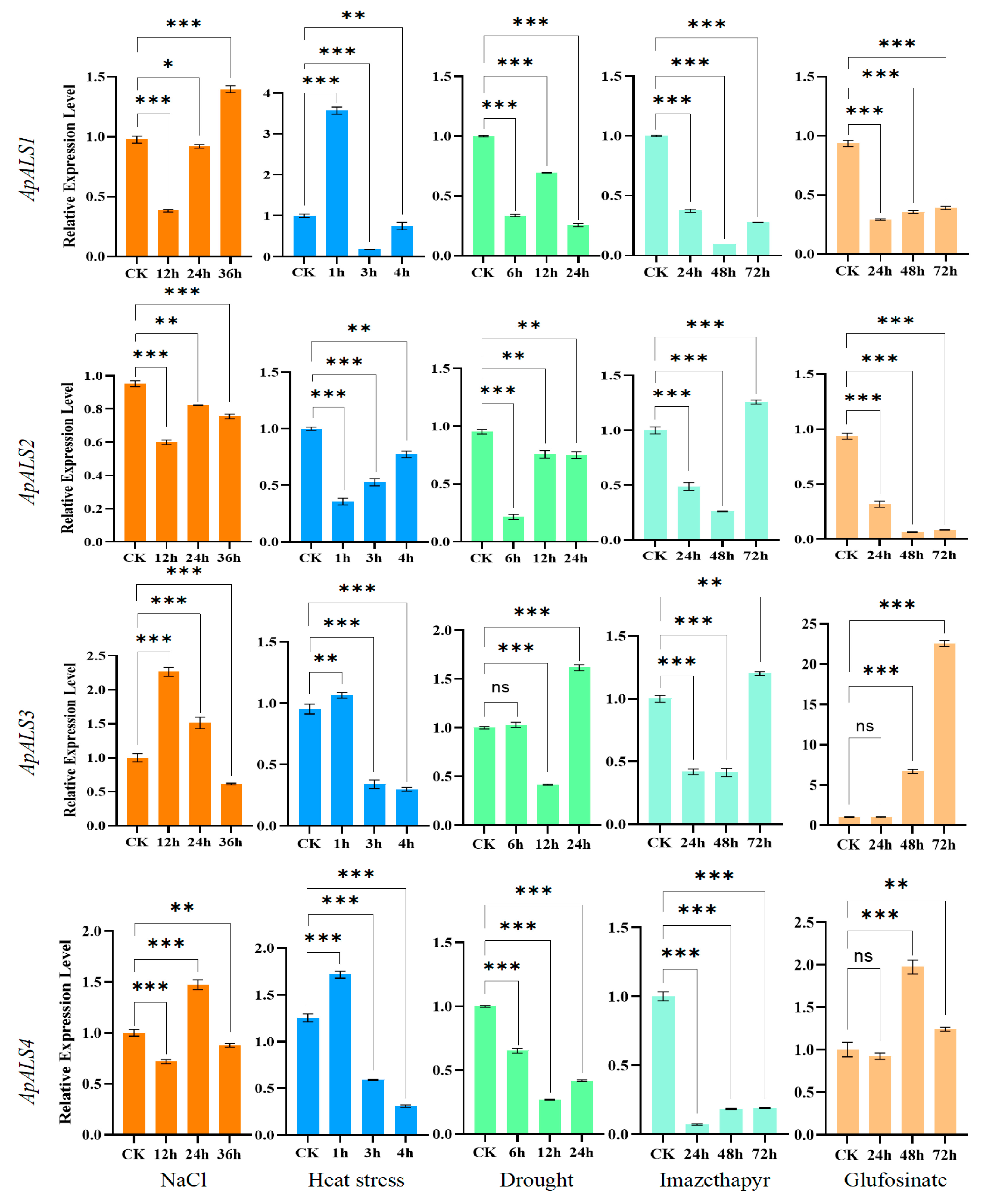
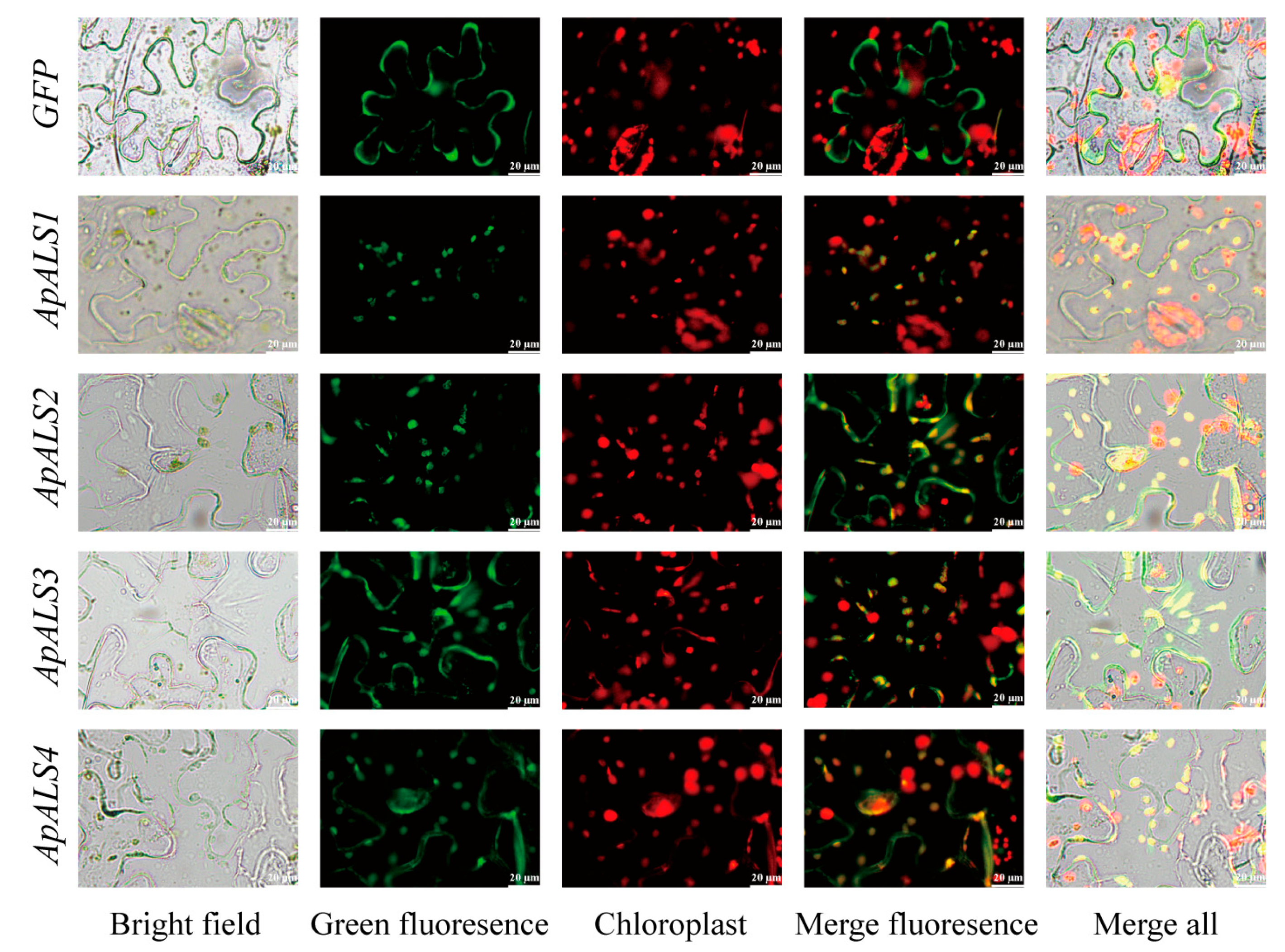
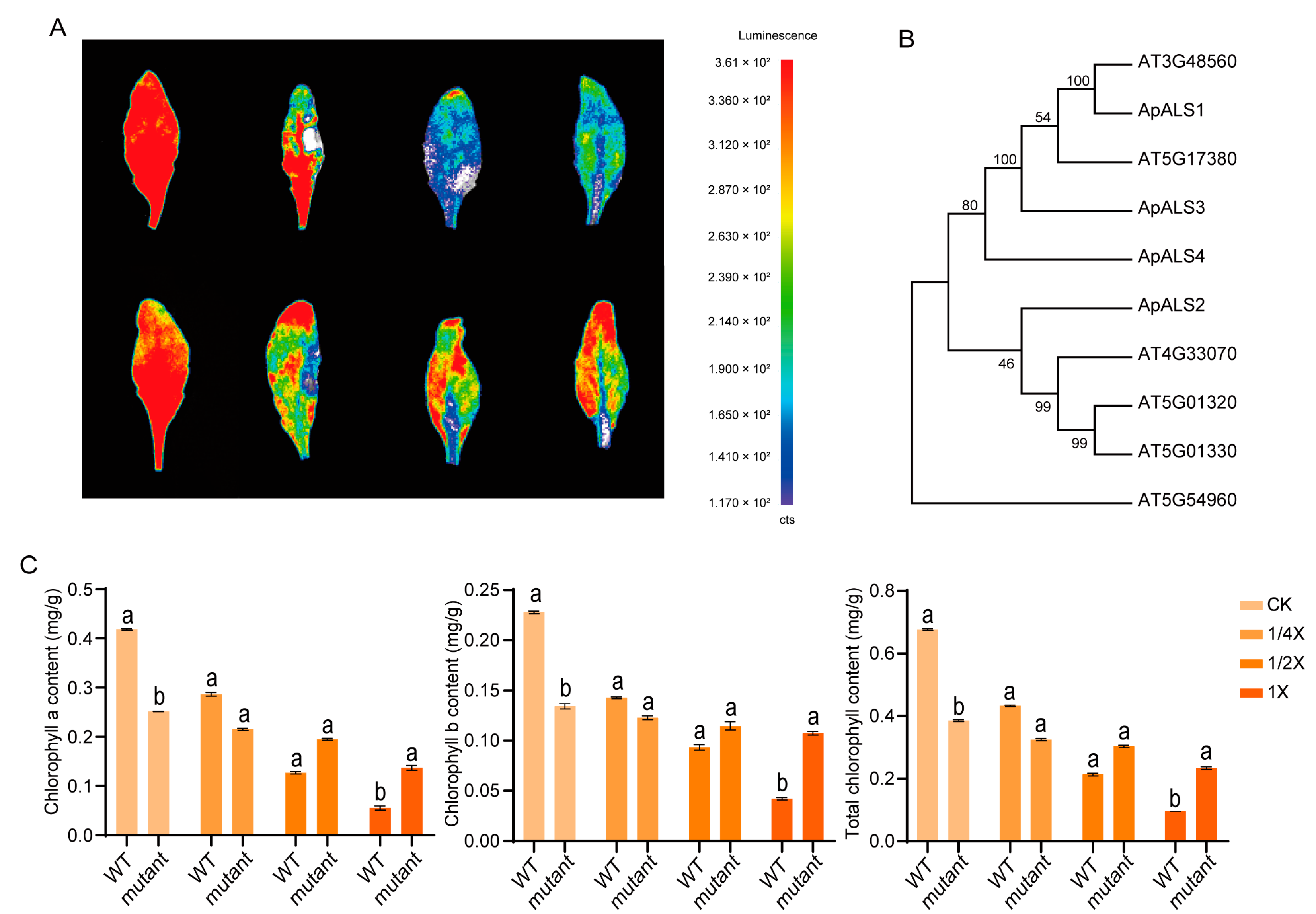
Acetolactate synthase (ALS) is an important enzyme in plant branched-chain amino acid biosynthesis and the target of several major herbicide classes. Despite its agronomic importance, the role of ALS genes in stress adaptation in the invasive weed Amaranthus palmeri remains unstudied. In this study, four ApALS genes with high motif conservation were identified and analyzed in A. palmeri. Phylogenetic analysis classified ApALS and other plant ALS proteins into two distinct clades, and the ApALS proteins were predicted to localize to the chloroplast. Gene expression analysis demonstrated that ApALS genes are responsive to multiple stresses, including salt, heat, osmotic stress, glufosinate ammonium, and the ALS-inhibiting herbicide imazethapyr, suggesting roles in both early and late stress responses. Herbicide response analysis using an Arabidopsis thaliana ALS mutant (AT3G48560) revealed enhanced imazethapyr resistance, associated with higher chlorophyll retention. Furthermore, high sequence homology between AT3G48560 and ApALS1 suggests a conserved role in protecting photosynthetic function during herbicide stress. This study provides the first comprehensive analysis of the ALS gene family in A. palmeri and offers important insights into its contribution to stress resilience. These findings establish a vital foundation for developing novel strategies to control this pervasive agricultural weed and present potential genetic targets for engineering herbicide tolerance in crops.
Keywords: weed; abiotic stress; herbicide response; gene expression; chlorophyll weed; abiotic stress; herbicide response; gene expression; chlorophyll