Evaluation of Salinity Tolerance Potentials of Two Contrasting Soybean Genotypes Based on Physiological and Biochemical Responses
Abstract
1. Introduction
- Evaluate and compare the effects of salinity on key physiological traits, including relative water content, stomatal conductance, membrane stability index, and K+/Na+ ratio;
- Assess changes in biochemical markers such as proline content, hydrogen peroxide (H2O2), malondialdehyde (MDA), and ascorbic acid (AsA) under salt stress;
- Examine the interrelationships among physiological and biochemical traits under salinity through correlation analysis to identify potential markers associated with salt tolerance;
- Apply principal component analysis (PCA) to integrate physiological and biochemical data for distinguishing genotype-specific responses and identifying key contributing traits to salt tolerance;
- Identify genotype-specific responses that may inform the selection and breeding of salt-tolerant soybean cultivars.
2. Materials and Methods
2.1. Plant Material and Genotypes
2.2. Seed Preparation and Germination
2.3. Hydroponic Growth Conditions
2.4. Salinity Stress and Treatment Application
2.5. Experimental Design
2.6. Data Collection
2.6.1. Physiological Measurements
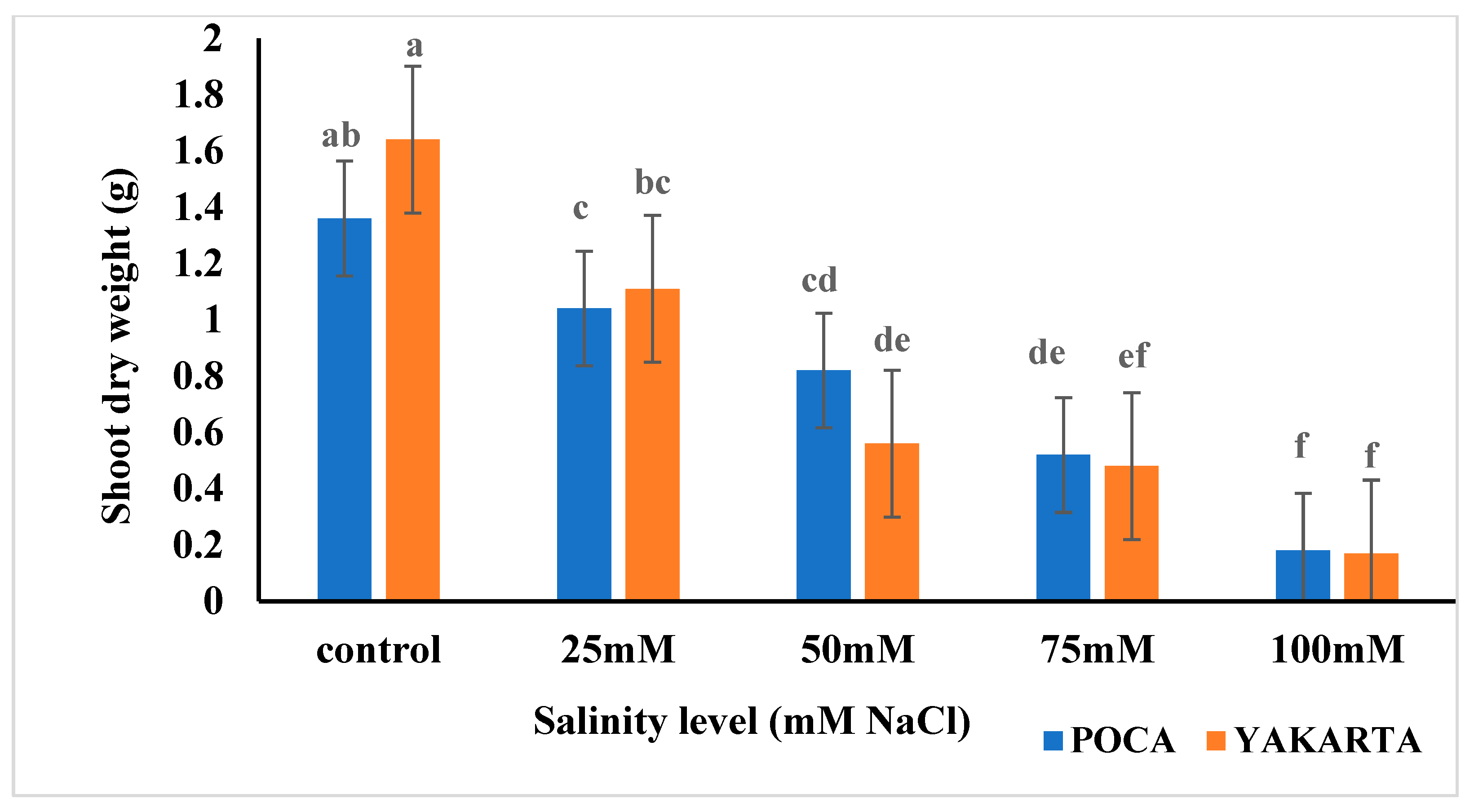
Shoot Dry Weight (g)
Measurement of Leaf Relative Water Content (RWC%)
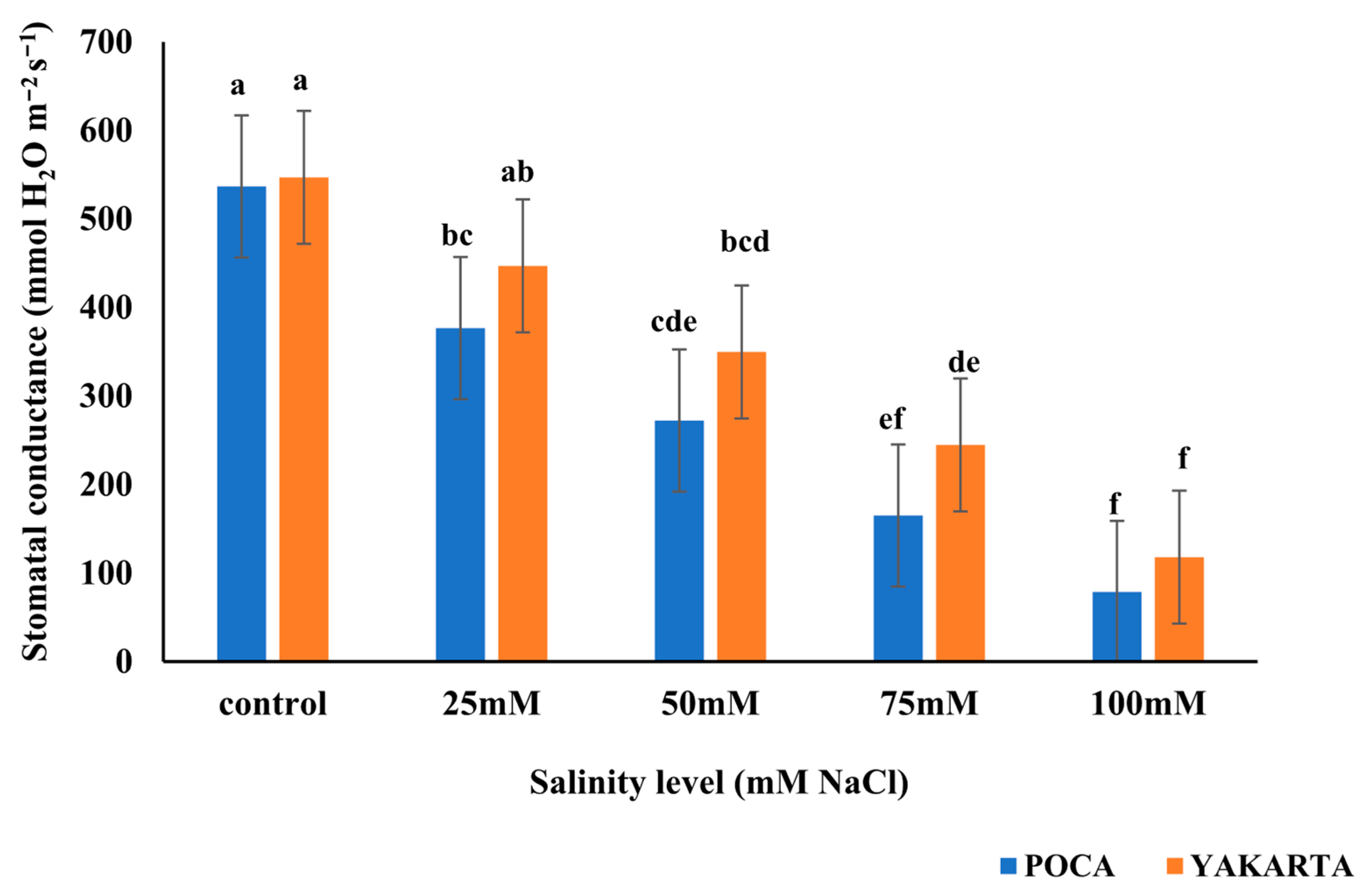
Stomatal Conductance Measurements (gs, mmol H2O m−2 s−1)
2.6.2. Biochemical Measurements
Measurement of Proline Content (Prol., µmol g−1 Fresh Weight)
Measurement of Membrane Integrity (Solute Leakage) (%)
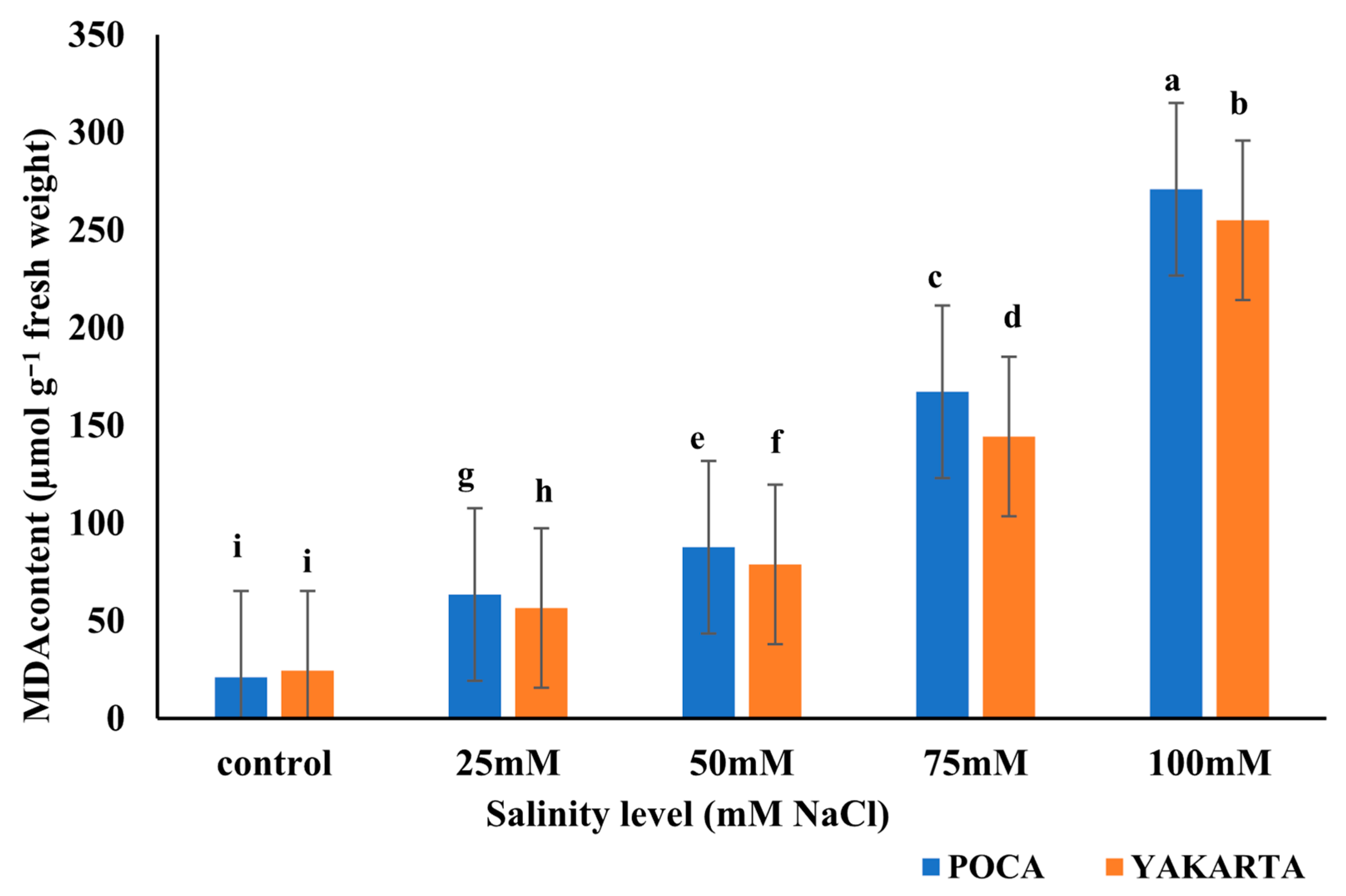
Lipid Peroxidation Assay (µmol g−1 Fresh Weight)
Measurement of Na+ and K+ Ratio
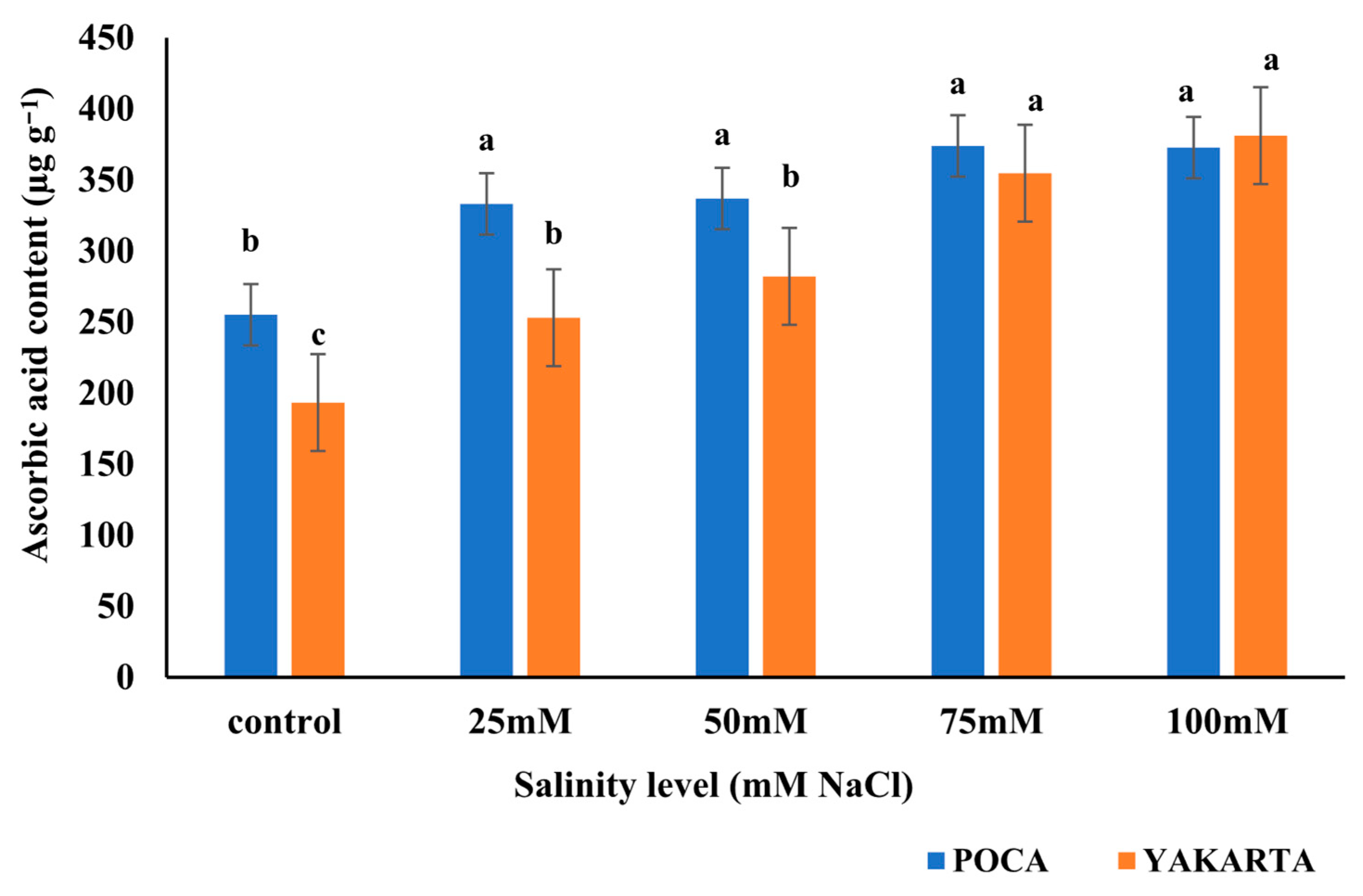
Measurement of Ascorbic Acid Content (AsA, µg g−1)
Measurement of Hydrogen Peroxide (H2O2, µmol g−1 Fresh Weight)
2.7. Statistical Analysis
3. Results
3.1. Shoot Dry Weight (g)
3.2. Relative Water Content (%)
3.3. Stomatal Conductance (mmol H2O m−2 s−1)
3.4. Proline Content (µmol g−1 Fresh Weight)
3.5. Membrane Integrity (Solute Leakage) (%)
3.6. Malondialdehyde Content (µmol g−1 Fresh Weight)
3.7. The Potassium-to-Sodium Ratio
3.8. Ascorbic Acid Content (µg g−1)
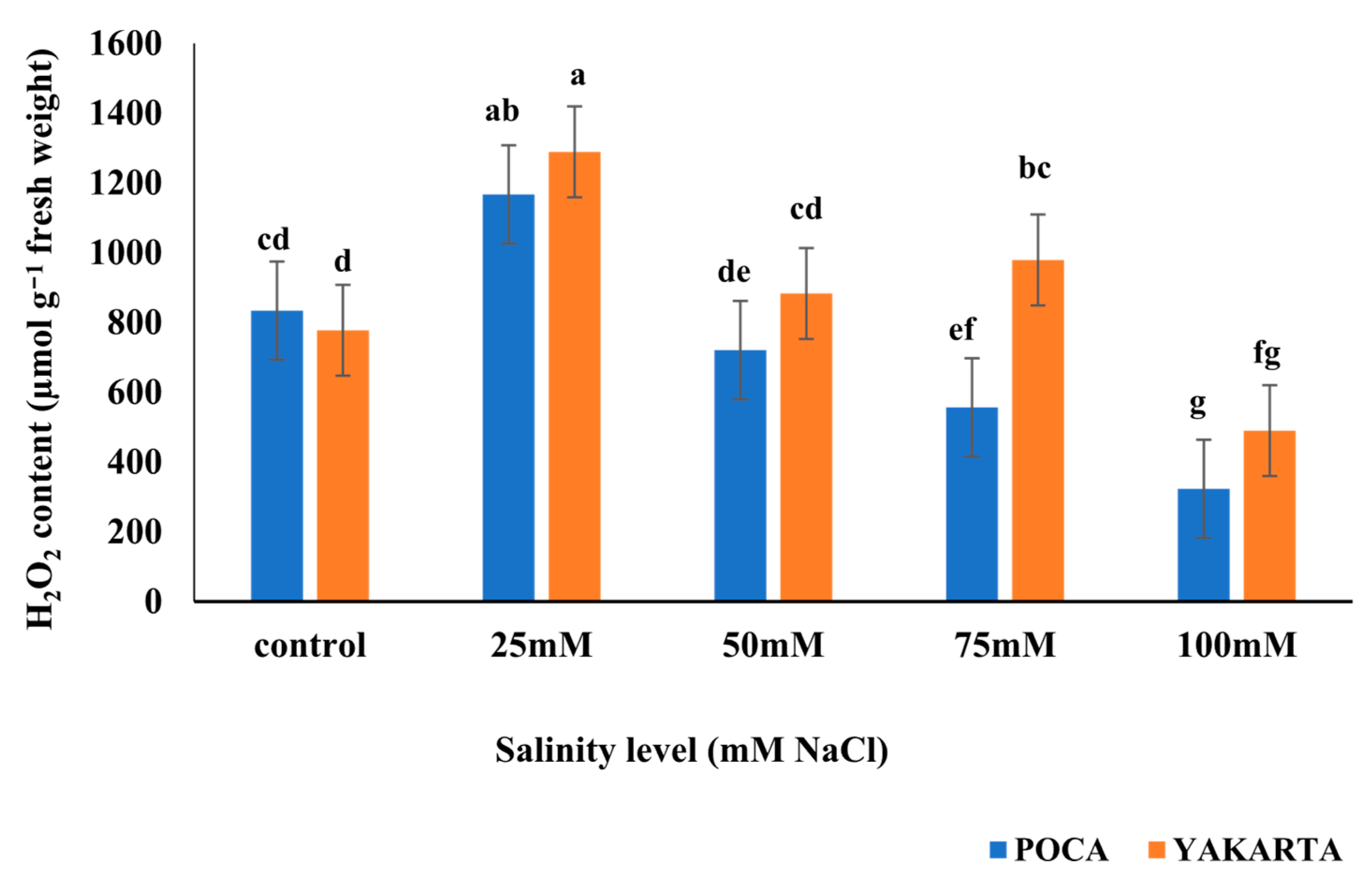
3.9. Hydrogen Peroxide Content (µmol g−1 Fresh Weight)
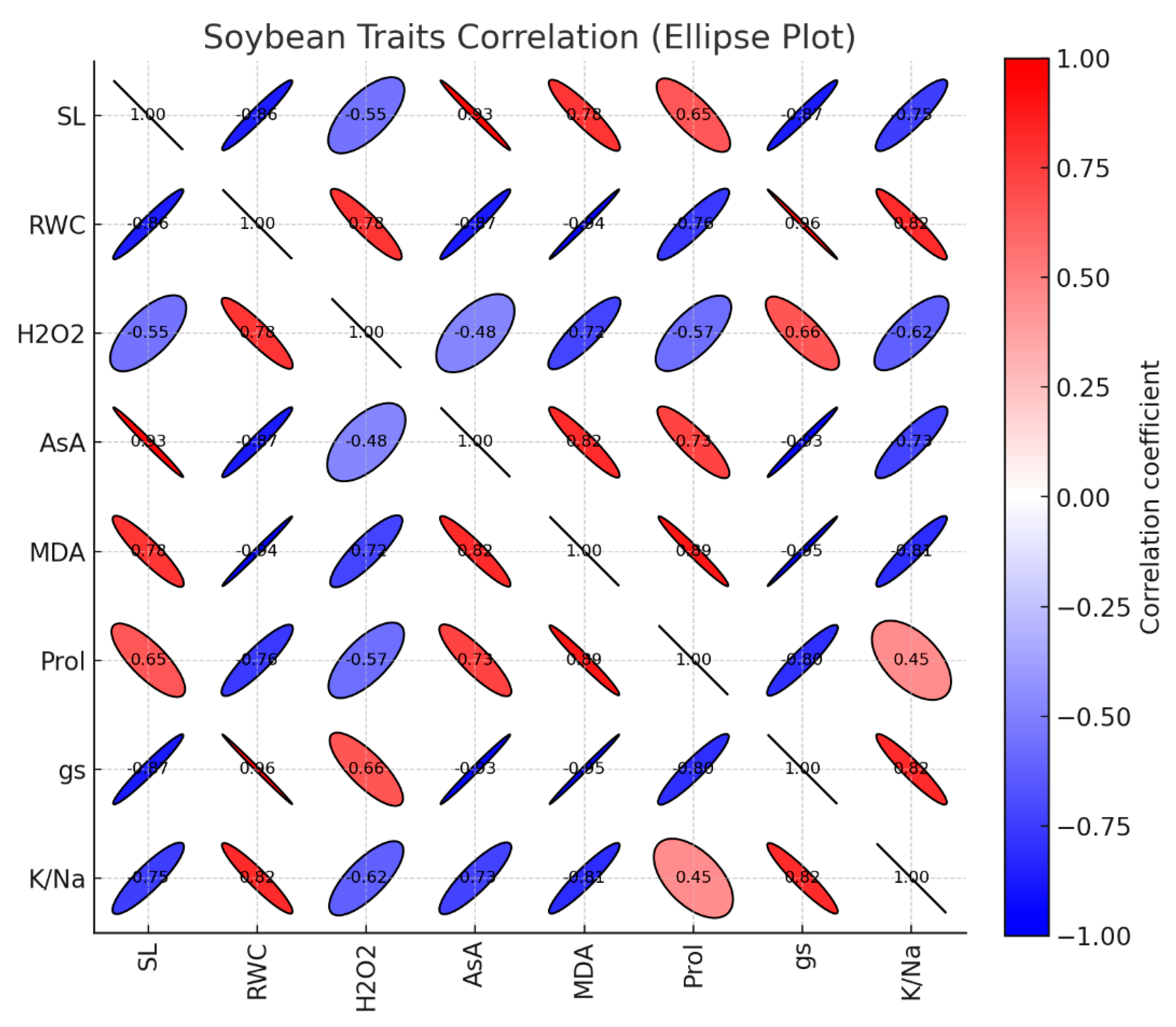
4. Correlation Analysis
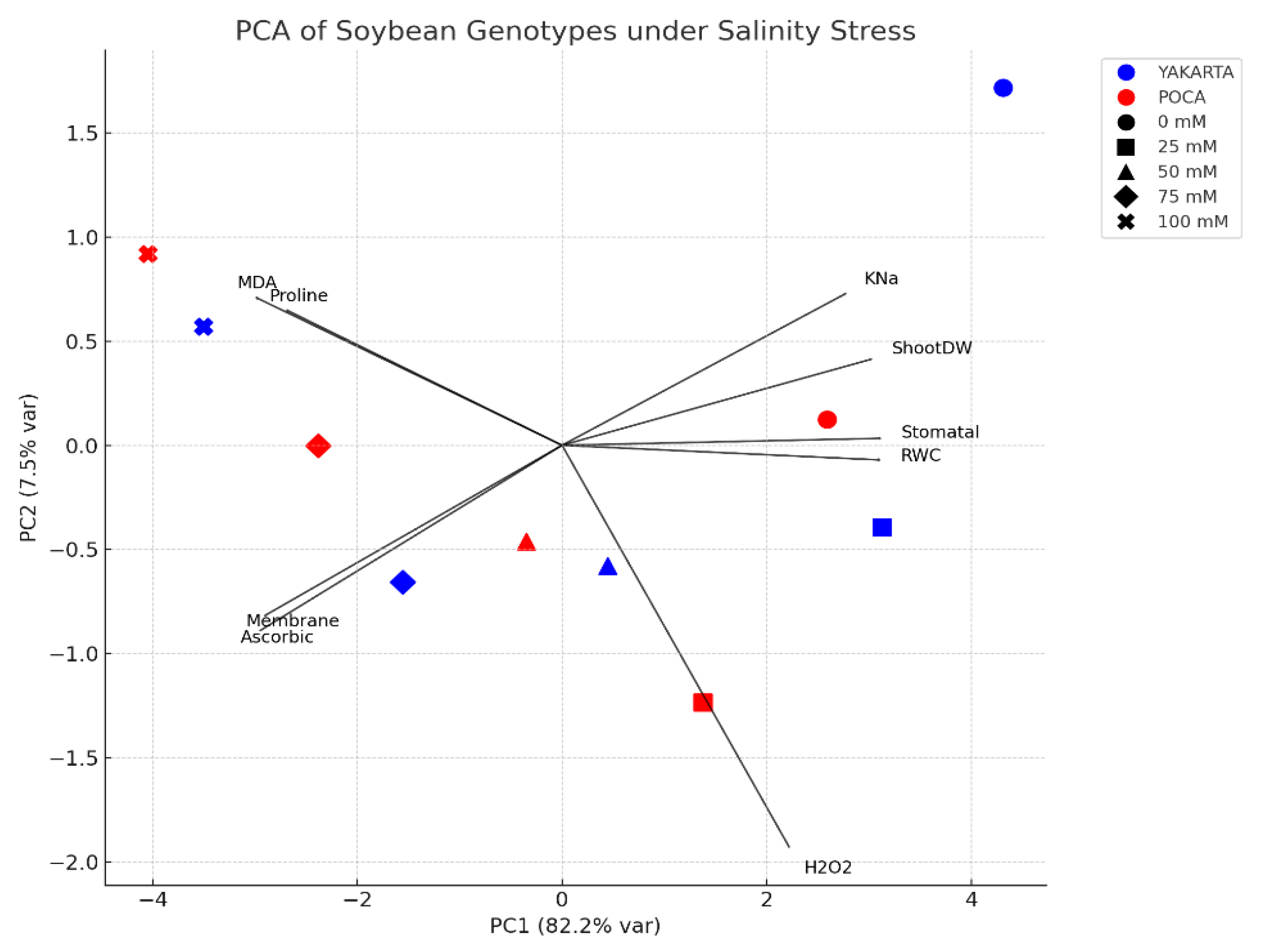
5. Principal Component Analysis (PCA)
6. Discussion
6.1. Morpho-Physiological and Biochemical Responses to Salinity Stress

6.1.1. Shoot Growth, Biomass Decline, and Osmotic Constraints
6.1.2. Osmotic Adjustment and Proline Accumulation
6.1.3. Membrane Integrity and Oxidative Stress: Contrasting Genotypic Behavior
6.1.4. Hydrogen Peroxide Dynamics: A Biphasic Response Pattern
6.1.5. Ion Homeostasis: Central Role of the K+/Na+ Ratio
6.2. Integrated Interpretation into Salinity Tolerance Mechanisms
6.3. Future Research Directions
7. Conclusions
Supplementary Materials
Author Contributions
Funding
Data Availability Statement
Acknowledgments
Conflicts of Interest
References
- Rotundo, J.L.; Marshall, R.; McCormick, R.; Truong, S.K.; Styles, D.; Gerde, J.A.; Gonzalez-Escobar, E.; Carmo-Silva, E.; Janes-Bassett, V.; Logue, J.; et al. European soybean to benefit people and the environment. Sci. Rep. 2024, 14, 7612. [Google Scholar] [CrossRef]
- Kumar, S.P.J.; Susmita, C.; Sripathy, K.V.; Agarwal, D.K.; Pal, G.; Singh, A.N.; Kumar, S.; Rai, A.K.; Simal-Gandara, J. Molecular characterization and genetic diversity studies of Indian soybean (Glycine max (L.) Merr.) cultivars using SSR markers. Mol. Biol. Rep. 2022, 49, 2129–2140. [Google Scholar] [CrossRef]
- Alebel, M.G.; Urge, M.; Assefa, G.; Worku, B.; Abebe, A. The effect of using either soybean or groundnut straw as part of basal diet on body weight gain and carcass characteristics of Gumuz Sheep. Int. J. Livest. Prod. 2019, 10, 70–76. [Google Scholar]
- Sardar, H.; Khalid, Z.; Ahsan, M.; Naz, S.; Nawaz, A.; Ahmad, R.; Razzaq, K.; Wabaidur, S.M.; Jacquard, C.; Širić, I.; et al. Enhancement of salinity stress tolerance in lettuce (Lactuca sativa L.) via foliar application of nitric oxide. Plants 2023, 12, 1115. [Google Scholar] [CrossRef]
- Jakhar, S.; Mehrotra, S.; Dimkpa, C.O.; Goyal, V. Survival mechanisms of chickpea (Cicer arietinum) under saline conditions. Plant Physiol. Biochem. 2023, 205, 108168. [Google Scholar] [CrossRef] [PubMed]
- Rasheed, A.; Raza, A.; Jie, H.; Mahmood, A.; Ma, Y.; Zhao, L.; Xing, H.; Li, L.; Hassan, M.U.; Qari, S.H.; et al. Molecular tools and their applications in developing salt-tolerant soybean (Glycine max L.) cultivars. Bioengineering 2022, 9, 495. [Google Scholar] [CrossRef] [PubMed]
- Chen, L.; Peng, L.; Ouyang, W.; Yao, H.; Ye, Y.; Shan, Z.; Cao, D.; Chen, S.; Yang, Z.; Huang, Y.; et al. Screening and identification of salt tolerance soybean varieties and germplasms. Oil Crop Sci. 2024, 9, 204–210. [Google Scholar] [CrossRef]
- Kumar, S.; Li, G.; Yang, J.; Huang, X.; Ji, Q.; Liu, Z.; Ke, W.; Hou, H. Effect of salt stress on growth, physiological parameters, and ionic concentration of water dropwort (Oenanthe javanica) cultivars. Front. Plant Sci. 2021, 12, 660409. [Google Scholar] [CrossRef]
- Ji, X.; Tang, J.; Zhang, J. Effects of salt stress on the morphology, growth and physiological parameters of Juglans microcarpa L. seedlings. Plants 2022, 11, 2381. [Google Scholar] [CrossRef] [PubMed]
- Joshi, A.; Rajput, V.D.; Verma, K.K.; Minkina, T.; Ghazaryan, K.; Arora, J. Potential of Suaeda nudiflora and Suaeda fruticosa to adapt to high salinity conditions. Horticulturae 2023, 9, 74. [Google Scholar] [CrossRef]
- FAOSTAT: Agricultural Database; Food and Agriculture Organization of the United Nations: Rome, Italy, 2009; Available online: https://www.fao.org/faostat/en/#home (accessed on 20 December 2023).
- Aredehey, G.; Libsekal, H.; Brhane, M.; Welde, K.; Giday, A. Top-soil salinity mapping using geostatistical approach in the agricultural landscape of Timuga irrigation scheme, South Tigray, Ethiopia. Cogent Food Agric. 2018, 4, 1514959. [Google Scholar] [CrossRef]
- Assaha, D.V.M.; Ueda, A.; Saneoka, H.; Al-Yahyai, R.; Yaish, M.W. The role of Na+ and K+ transporters in salt stress adaptation in glycophytes. Front. Physiol. 2017, 8, 509. [Google Scholar] [CrossRef] [PubMed]
- Dichala, O.; Giannakoula, A.E.; Therios, I. Effect of salinity on physiological and biochemical parameters of leaves in three pomegranate (Punica granatum L.) cultivars. Appl. Sci. 2022, 12, 8675. [Google Scholar] [CrossRef]
- Liu, X.; Chang, R.; Guan, R.; Qiu, L. Establishment of screening method for salt-tolerant soybean at emergence stage and screening of tolerant germplasm. Acta Agron. Sin. 2020, 46, 1–8. [Google Scholar]
- Begum, N.; Hasanuzzaman, M.; Li, Y.; Akhtar, K.; Zhang, C.; Zhao, T. Seed germination behavior, growth, physiology and antioxidant metabolism of four contrasting cultivars under combined drought and salinity in soybean. Antioxidants 2022, 11, 498. [Google Scholar] [CrossRef]
- Alizadeh, M.M.; Gerami, M.; Majidian, P.; Ghorbani, H.R. The potential application of biochar and salicylic acid to alleviate salt stress in soybean (Glycine max L.). Heliyon 2024, 10, e026677. [Google Scholar] [CrossRef]
- Cho, K.H.; Kim, M.Y.; Kwon, H.; Yang, X.; Lee, S.H. Novel QTL identification and candidate gene analysis for enhancing salt tolerance in soybean (Glycine max (L.) Merr.). Plant Sci. 2021, 313, 111085. [Google Scholar] [CrossRef]
- Pavli, O.I.; Foti, C.; Skoufogianni, G.; Karastergiou, G.; Panagou, A. Effect of salinity on seed germination and seedling development of soybean genotypes. Int. J. Environ. Sci. Nat. Resour. 2021, 27, 556210. [Google Scholar] [CrossRef]
- Basal, O.; Szabó, A.; Veres, S. Physiology of soybean as affected by PEG-induced drought stress. Curr. Plant Biol. 2020, 22, 100135. [Google Scholar] [CrossRef]
- Mannan, M.A.; Karim, M.A.; Haque, M.M.; Khaliq, Q.A.; Higuchi, H.; Nawata, E. Response of soybean to salinity: III. Water status and accumulation of mineral ions. Trop. Agric. Dev. 2013, 57, 41–48. [Google Scholar]
- Essa, T.A. Effect of salinity stress on growth and nutrient composition of three soybean (Glycine max (L.) Merrill) cultivars. J. Agron. Crop Sci. 2002, 188, 86–93. [Google Scholar] [CrossRef]
- Amirjani, M.R. Effect of salinity stress on growth, mineral composition, proline content, antioxidant enzymes of soybean. Am. J. Plant Physiol. 2010, 5, 350–360. [Google Scholar] [CrossRef]
- Wu, G.; Zhou, Z.; Chen, P.; Tang, X.; Shao, H.; Wang, H. Comparative ecophysiological study of salt stress for wild and cultivated soybean species from the Yellow River Delta, China. Sci. World J. 2014, 2014, 651745. [Google Scholar] [CrossRef] [PubMed]
- Das, A.K.; Anik, T.R.; Rahman, M.M.; Keya, S.S.; Islam, M.R.; Rahman, M.A.; Sultana, S.; Ghosh, P.K.; Khan, S.; Ahamed, T.; et al. Ethanol treatment enhances physiological and biochemical responses to mitigate saline toxicity in soybean. Plants 2022, 11, 272. [Google Scholar] [CrossRef] [PubMed]
- Sadak, M.S.; Abd El-Hameid, A.R.; Zaki, F.S.A.; Dawood, M.G.; El-Awadi, M.E. Physiological and biochemical responses of soybean (Glycine max L.) to cysteine application under sea salt stress. Bull. Natl. Res. Cent. 2020, 44, 1. [Google Scholar] [CrossRef]
- Noreen, S.; Ali, S.; Khalid, M.; Shahid, M.; Ahmad, R. Foliar fertigation of ascorbic acid and zinc improves growth, antioxidant enzyme activity and harvest index in barley (Hordeum vulgare L.) grown under salt stress. Plant Physiol. Biochem. 2021, 158, 244–254. [Google Scholar] [CrossRef]
- Razmi, N.; Ebadi, A.; Daneshian, J.; Jahanbakhsh, S. Salicylic acid-induced changes on antioxidant capacity, pigments, and grain yield of soybean genotypes in water deficit condition. J. Plant Interact. 2017, 12, 457–464. [Google Scholar] [CrossRef]
- Ashraf, M.; Harris, P.J.C. Potential biochemical indicators of salinity tolerance in plants. Plant Sci. 2004, 166, 3–16. [Google Scholar] [CrossRef]
- Phang, T.H.; Shao, G.; Lam, H.M. Salt tolerance in soybean. J. Integr. Plant Biol. 2008, 50, 1196–1212. [Google Scholar] [CrossRef]
- Khan, M.I.; Asgher, M.; Khan, N.A. Alleviation of salt-induced photosynthesis and growth inhibition by salicylic acid involves glycinebetaine and ethylene in mungbean (Vigna radiata L.). Plant Physiol. Biochem. 2014, 80, 67–74. [Google Scholar] [CrossRef]
- Marschner, H.; Oberle, H.; Cakmak, I.; Römheld, V. Growth enhancement by silicon in cucumber (Cucumis sativus) plants depends on imbalance in phosphorus and zinc supply. Plant Soil 1990, 124, 211–219. [Google Scholar] [CrossRef]
- Wei, P.; Wang, L.; Liu, A.; Yu, B.; Lam, H.M. GmCLC1 confers enhanced salt tolerance through regulating chloride accumulation in soybean. Front. Plant Sci. 2015, 5, 1082. [Google Scholar] [CrossRef] [PubMed]
- Khan, F.; Hakeem, K.R.; Siddiqi, T.O.; Ahmad, A. RAPD markers associated with salt tolerance in soybean genotypes under salt stress. Appl. Biochem. Biotechnol. 2013, 170, 257–272. [Google Scholar] [CrossRef] [PubMed]
- Ghirardelli, A.; Schiavon, M.; Zanin, G.; Ostapczuk, P.; Masin, R. Short term responses to salinity of soybean and Chenopodium album grown in single and mixed species hydroponic systems. Agronomy 2021, 11, 1481. [Google Scholar] [CrossRef]
- Nguyen, N.T.L.; Cham, L.T.T.; Thang, V.N. Effects of salinity stress on the growth, physiology, and yield of soybean (Glycine max (L.) Merrill). Vietnam J. Agric. Sci. 2021, 4, 1043–1055. [Google Scholar] [CrossRef]
- El Sabagh, A.; Omar, A.; Saneoka, H.; Barutçular, C. Comparative physiological study of soybean (Glycine max L.) cultivars under salt stress. Yuzuncu Yil Univ. J. Agric. Sci. 2015, 25, 269–284. [Google Scholar] [CrossRef]
- Barrs, H.D.; Weatherley, P.E. A re-examination of the relative turgidity technique for estimating water deficits in leaves. Aust. J. Biol. Sci. 1962, 15, 413–428. [Google Scholar] [CrossRef]
- Bates, L.S.; Waldren, R.P.; Teare, I.D. Rapid determination of free proline for water-stress studies. Plant Soil 1973, 39, 205–207. [Google Scholar] [CrossRef]
- Leopold, A.C.; Musgrave, M.E.; Williams, K.M. Solute leakage resulting from leaf desiccation. Plant Physiol. 1981, 68, 1222–1225. [Google Scholar] [CrossRef]
- Heath, R.L.; Packer, L. Photoperoxidation in isolated chloroplasts. Arch. Biochem. Biophys. 1968, 125, 189–198. [Google Scholar] [CrossRef]
- Wolf, B. A comprehensive system of leaf analysis and its use for diagnosing crop nutrient status. Commun. Soil Sci. Plant Anal. 1982, 13, 1035–1059. [Google Scholar] [CrossRef]
- De Pinto, M.C.; Francis, D.; Gara, L. The redox state of ascorbate-dehydroascorbate pairs as a specific sensor of cell division in tobacco BY-2 cells. Protoplasma 1999, 209, 90–97. [Google Scholar] [CrossRef]
- Velikova, V.; Yordanov, I.; Edreva, A. Oxidative stress and some antioxidant systems in acid rain-treated bean plants. Protective role of exogenous polyamines. Plant Sci. 2000, 151, 59–66. [Google Scholar]
- Munns, R.; Tester, M. Mechanisms of salinity tolerance. Annu. Rev. Plant Biol. 2008, 59, 651–681. [Google Scholar] [CrossRef]
- Blum, A. Plant Breeding for Water-Limited Environments; Springer: New York, NY, USA, 2011; p. 345. [Google Scholar]
- Ashraf, M.; Foolad, M.R. Crop breeding for salt tolerance in the era of molecular markers and marker-assisted selection. Plant Breed. 2013, 132, 10–20. [Google Scholar] [CrossRef]
- Tavakkoli, E.; Fatehi, F.; Coventry, S.; Rengasamy, P.; McDonald, G.K. Additive effects of Na+ and Cl− ions on barley growth under salinity stress. J. Exp. Bot. 2011, 62, 2189–2203. [Google Scholar] [CrossRef]
- Flowers, T.J.; Colmer, T.D. Salinity tolerance in halophytes. New Phytol. 2008, 179, 945–963. [Google Scholar] [CrossRef]
- Ahmad, P.; Jaleel, C.A.; Salem, M.A.; Nabi, G.; Sharma, S. Roles of enzymatic and nonenzymatic antioxidants in plants during abiotic stress. Crit. Rev. Biotechnol. 2010, 30, 161–175. [Google Scholar] [CrossRef] [PubMed]
- Gill, S.S.; Tuteja, N. Reactive oxygen species and antioxidant machinery in abiotic stress tolerance in crop plants. Plant Physiol. Biochem. 2010, 48, 909–930. [Google Scholar] [CrossRef] [PubMed]
- Szabados, L.; Savouré, A. Proline: A multifunctional amino acid. Trends Plant Sci. 2010, 15, 89–97. [Google Scholar] [CrossRef]
- Ben Rejeb, K.; Abdelly, C.; Savouré, A. How reactive oxygen species and proline face stress together. Plant Physiol. Biochem. 2014, 80, 278–284. [Google Scholar] [CrossRef]
- Hasanuzzaman, M.; Raihan, M.R.H.; Masud, A.A.C.; Rahman, K.; Nowroz, F.; Rahman, M.; Nahar, K.; Fujita, M. Regulation of reactive oxygen species and antioxidant defense in plants under salinity. Int. J. Mol. Sci. 2021, 22, 9326. [Google Scholar] [CrossRef]
- An, M.; Huang, X.; Long, Y.; Wang, Y.; Tan, Y.; Qin, Z.; Ai, X.; Wang, Y. Salt tolerance evaluation and key salt-tolerant traits at germination stage of upland cotton. Front. Plant Sci. 2025, 15, 1489380. [Google Scholar] [CrossRef]
- Hasanuzzaman, M.; Nahar, K.; Alam, M.M.; Roychowdhury, R.; Fujita, M. Physiological, biochemical, and molecular mechanisms of heat stress tolerance in plants. Int. J. Mol. Sci. 2013, 14, 9643–9684. [Google Scholar] [CrossRef]
- Sairam, R.K.; Rao, K.V.; Srivastava, G.C.D. Differential response of wheat genotypes to long-term salinity stress in relation to oxidative stress, antioxidant activity and osmolyte concentration. Plant Sci. 2002, 163, 1037–1046. [Google Scholar] [CrossRef]
- Rana, V.; Ram, S.; Nehra, K.; Sharma, I. Expression of genes related to Na+ exclusion and proline accumulation in tolerant and susceptible wheat genotypes under salt stress. Cereal Res. Commun. 2016, 44, 404–413. [Google Scholar] [CrossRef]
- Nounjan, N.; Nghia, P.T.; Theerakulpisut, P. Exogenous proline and trehalose promote recovery of rice seedlings from salt-stress and differentially modulate antioxidant enzymes and expression of related genes. J. Plant Physiol. 2012, 169, 596–604. [Google Scholar] [CrossRef]
- Das, K.; Roychoudhury, A. Reactive oxygen species (ROS) and response of antioxidants as ROS-scavengers during environmental stress in plants. Front. Environ. Sci. 2014, 2, 53. [Google Scholar] [CrossRef]
- Choudhury, F.K.; Rivero, R.M.; Blumwald, E.; Mittler, R. Reactive oxygen species, abiotic stress and stress combination. Plant J. 2017, 90, 856–867. [Google Scholar] [CrossRef] [PubMed]
- Mittler, R. Oxidative stress, antioxidants and stress tolerance. Trends Plant Sci. 2002, 7, 405–410. [Google Scholar] [CrossRef]
- Apel, K.; Hirt, H. Reactive oxygen species: Metabolism, oxidative stress, and signal transduction. Annu. Rev. Plant Biol. 2004, 55, 373–399. [Google Scholar] [CrossRef]
- Blokhina, O.; Virolainen, E.; Fagerstedt, K.V. Antioxidants, oxidative damage and oxygen deprivation stress: A review. Ann. Bot. 2003, 91, 179–194. [Google Scholar] [CrossRef] [PubMed]
- Mittler, R. ROS are good. Trends Plant Sci. 2017, 22, 11–19. [Google Scholar] [CrossRef] [PubMed]
- Baxter, A.; Mittler, R.; Suzuki, N. ROS as key players in plant stress signalling. J. Exp. Bot. 2014, 65, 1229–1240. [Google Scholar] [CrossRef]
- Haque, U.S.; Elias, S.M.; Jahan, I.; Seraj, Z.I. Functional genomic analysis of K+ related salt-responsive transporters in tolerant and sensitive genotypes of rice. Front. Plant Sci. 2023, 13, 1089109. [Google Scholar] [CrossRef]
- Chen, T.; Niu, Y.; Yang, C.; Liang, Y.; Xu, J. Screening of rice (Oryza sativa L.) genotypes for salinity tolerance and dissecting determinants of tolerance mechanism. Plants 2024, 13, 1036. [Google Scholar] [CrossRef] [PubMed]
- Guan, R.; Qu, Y.; Guo, Y.; Yu, L.; Liu, Y.; Jiang, J.; Chen, J.; Ren, Y.; Liu, G.; Tian, L.; et al. Salinity tolerance in soybean is modulated by natural variation in GmSALT3. Plant J. 2014, 80, 937–950. [Google Scholar] [CrossRef]
- Qu, Y.; Guan, R.; Bose, J.; Henderson, S.W.; Wege, S.; Qiu, L.; Gilliham, M. Soybean CHX type ion transport protein GmSALT3 confers leaf Na+ exclusion via a root derived mechanism, and Cl− exclusion via a shoot derived process. Plant Cell Environ. 2021, 44, 856–869. [Google Scholar] [CrossRef]


| Salinity Level (mM NaCl) | YAKARTA | POCA | Mean |
|---|---|---|---|
| Control | 94.25 aA | 89.83 aA | 92.04 A |
| 25 | 87.90 bA | 80.62 bB | 84.26 B |
| 50 | 75.18 cA | 66.43 cB | 70.80 C |
| 75 | 62.39 dA | 53.25 dB | 57.82 D |
| 100 | 57.83 eA | 44.35 eB | 51.09 E |
| Mean | 75.51 A | 66.97 B | - |
| Variable | Genotypes | Salinity levels | Interaction |
| LSD (0.01) | 9.75 | 4.78 | 6.77 |
| CV (%) | 3.85 | ||
| Salinity Level (mM NaCl) | YAKARTA | POCA | Mean |
|---|---|---|---|
| Control | 0.25 dA | 0.24 dA | 0.25 C |
| 25 | 0.45 dA | 0.35 dA | 0.40 C |
| 50 | 0.77 dA | 0.67 dA | 0.72 C |
| 75 | 14.0 bA | 7.76 cB | 10.9 B |
| 100 | 15.3 aA | 12.8 bB | 14.0 A |
| Mean | 6.15 A | 4.36 B | - |
| Variable | Genotypes | Salinity levels | Interaction |
| LSD (0.01) | 1.56 | 1.43 | 2.02 |
| CV (%) | 16.1 | ||
| Salinity Level (mM NaCl) | YAKARTA | POCA | Mean |
|---|---|---|---|
| Control | 63.4 dA | 81.6 bcB | 72.5 D |
| 25 | 73.4 cA | 83.8 bB | 78.6 CD |
| 50 | 82.0 bcA | 85.2 abA | 83.6 BC |
| 75 | 85.9 abA | 90.9 abA | 88.4 AB |
| 100 | 91.2 abA | 94.2 aA | 92.7 A |
| Mean | 79.2 B | 87.1 A | - |
| Variable | Genotypes | Salinity levels | Interaction |
| LSD (0.01) | 5.84 | 6.80 | 3.52 |
| CV (%) | 4.85 | ||
| Salinity Level (mM NaCl) | YAKARTA | POCA | Mean |
|---|---|---|---|
| Control | 154.00 aA | 79.50 bB | 117 A |
| 25 | 151.00 aA | 78.30 bB | 115 A |
| 50 | 2.41 cA | 2.12 cA | 2.27 B |
| 75 | 1.32 cA | 0.67 cB | 1.00 B |
| 100 | 0.27 cA | 0.22 cA | 0.24 B |
| Mean | 61.8 A | 32.20 B | - |
| Variable | Genotypes | Salinity levels | Interaction |
| LSD (0.01) | 3.52 | 3.54 | 7.03 |
| CV (%) | 8.53 | ||
Disclaimer/Publisher’s Note: The statements, opinions and data contained in all publications are solely those of the individual author(s) and contributor(s) and not of MDPI and/or the editor(s). MDPI and/or the editor(s) disclaim responsibility for any injury to people or property resulting from any ideas, methods, instructions or products referred to in the content. |
© 2025 by the authors. Licensee MDPI, Basel, Switzerland. This article is an open access article distributed under the terms and conditions of the Creative Commons Attribution (CC BY) license.
Share and Cite
Sobh, M.; Zargar, T.B.; Basal, O.; AL-Ouda, A.S.; Veres, S. Evaluation of Salinity Tolerance Potentials of Two Contrasting Soybean Genotypes Based on Physiological and Biochemical Responses. Plants 2026, 15, 10. https://doi.org/10.3390/plants15010010
Sobh M, Zargar TB, Basal O, AL-Ouda AS, Veres S. Evaluation of Salinity Tolerance Potentials of Two Contrasting Soybean Genotypes Based on Physiological and Biochemical Responses. Plants. 2026; 15(1):10. https://doi.org/10.3390/plants15010010
Chicago/Turabian StyleSobh, Mawia, Tahoora Batool Zargar, Oqba Basal, Ayman Shehada AL-Ouda, and Szilvia Veres. 2026. "Evaluation of Salinity Tolerance Potentials of Two Contrasting Soybean Genotypes Based on Physiological and Biochemical Responses" Plants 15, no. 1: 10. https://doi.org/10.3390/plants15010010
APA StyleSobh, M., Zargar, T. B., Basal, O., AL-Ouda, A. S., & Veres, S. (2026). Evaluation of Salinity Tolerance Potentials of Two Contrasting Soybean Genotypes Based on Physiological and Biochemical Responses. Plants, 15(1), 10. https://doi.org/10.3390/plants15010010