Article

A Phylogenetic and Morphological Evolution Study of Ribes L. in China Using RAD-Seq

1
College of Life Science, Northeast Forestry University, Harbin 150040, China
2
Key Laboratory of Sustainable Forest Management and Environmental Microorganism Engineering of Heilongjiang Province, Northeast Forestry University, Harbin 150040, China
3
Northeast Asia Biodiversity Research Center, Harbin 150040, China
*
Authors to whom correspondence should be addressed.
Plants 2023, 12(4), 829; https://doi.org/10.3390/plants12040829

Submission received: 20 January 2023 / Revised: 6 February 2023 / Accepted: 10 February 2023 / Published: 13 February 2023
(This article belongs to the Special Issue Plant Morphology and Phylogenetic Evolution)

Abstract

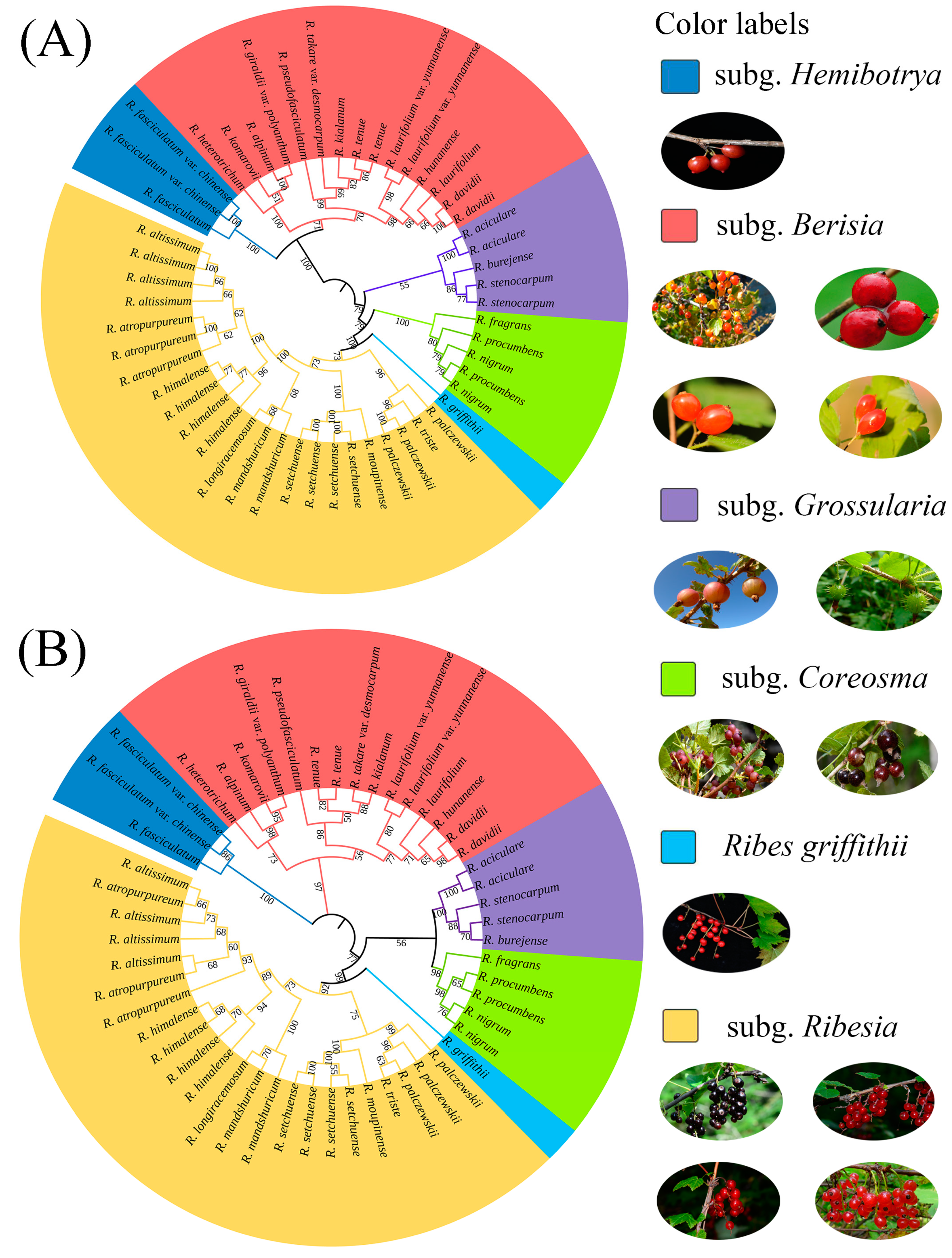
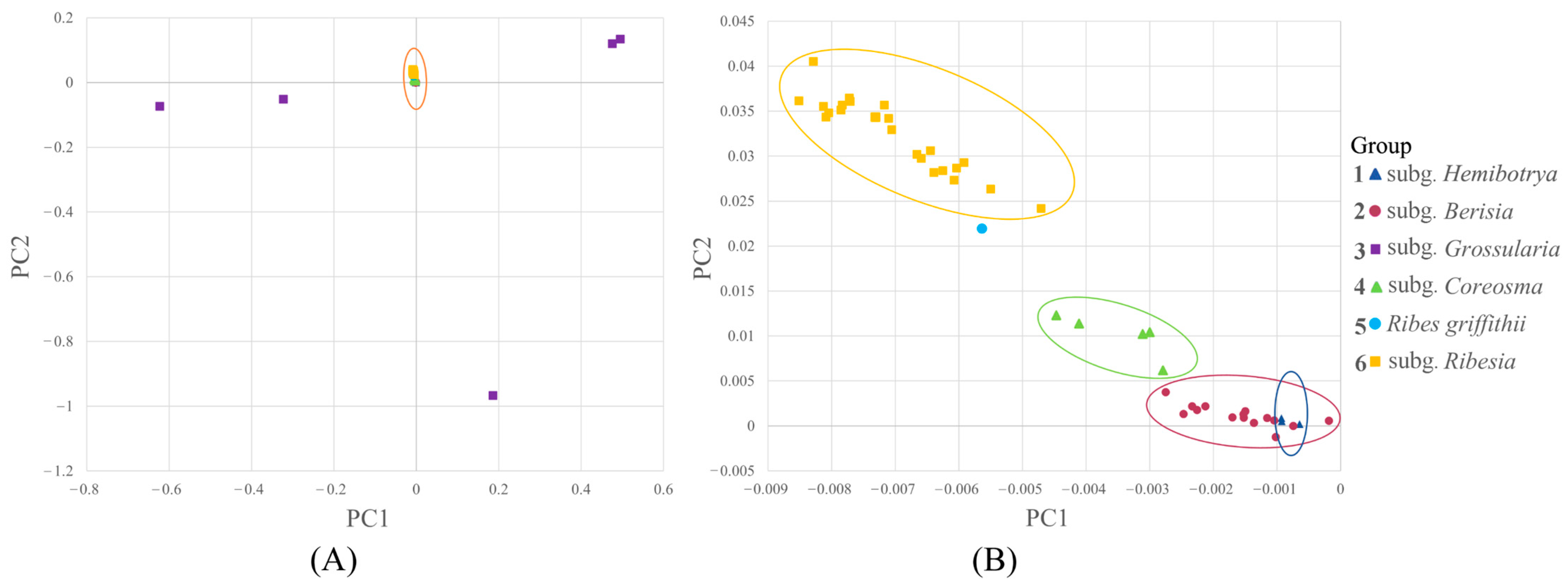
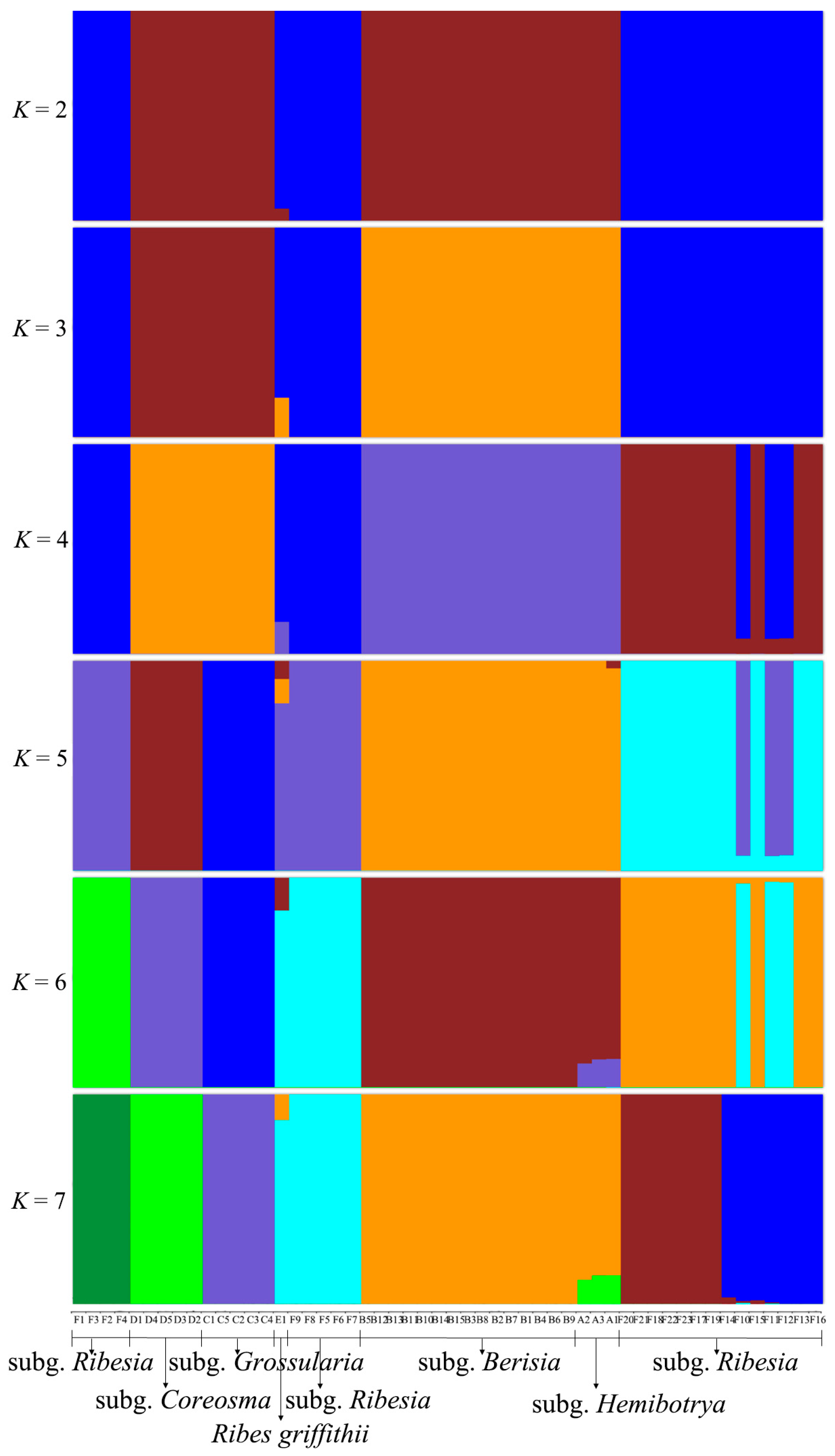
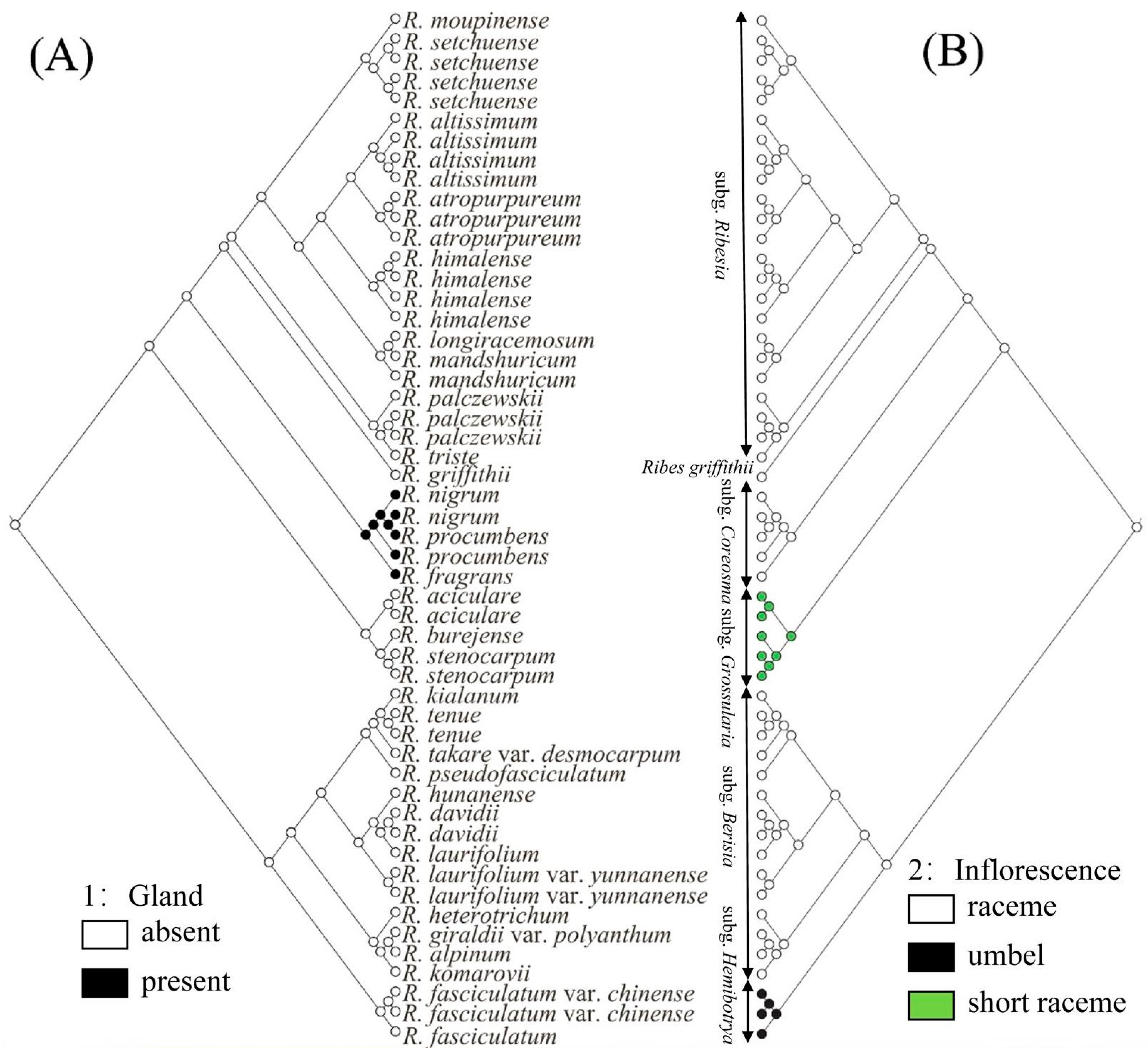
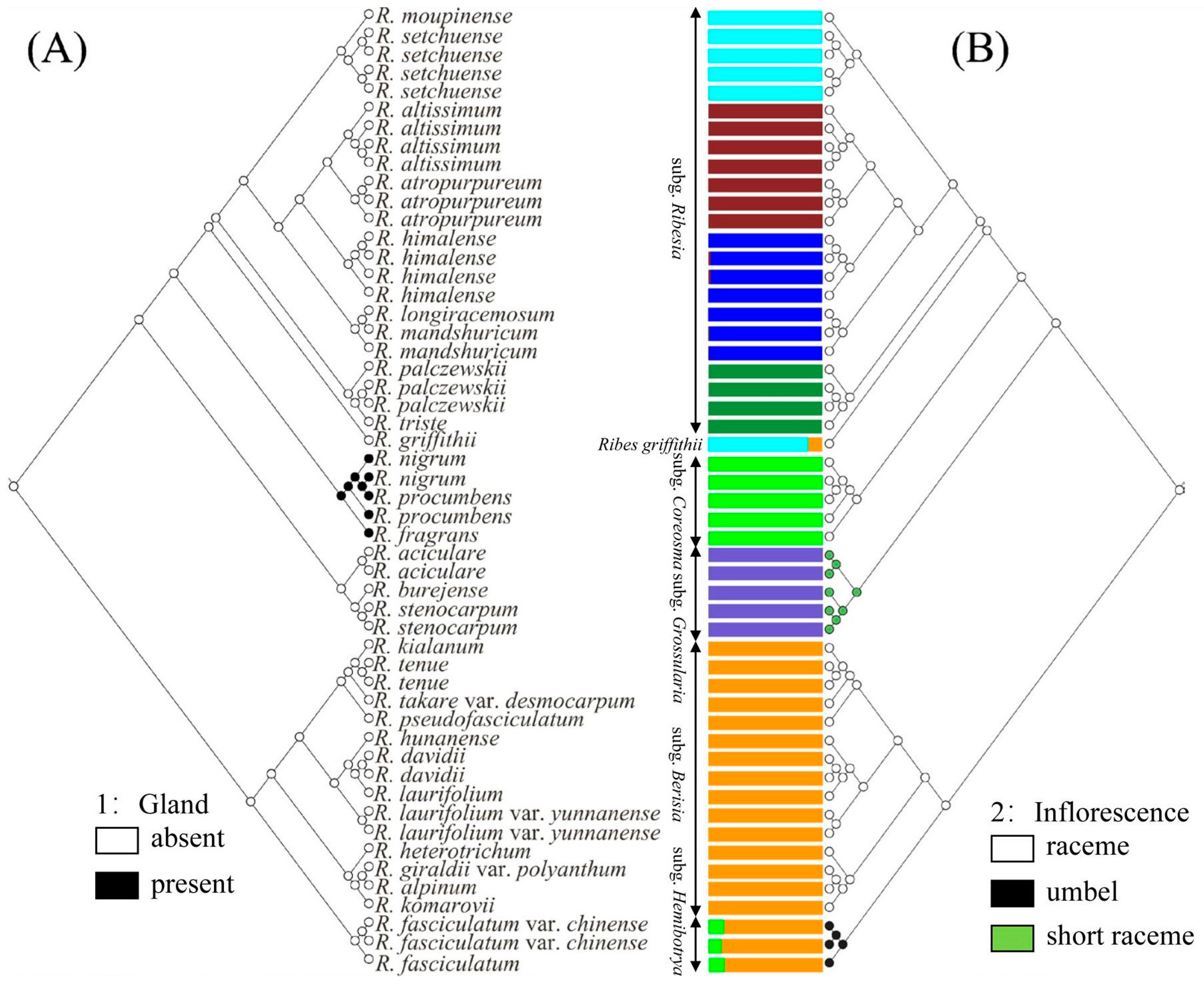
Ribes L. belongs to the Grossulariaceae family and has important edible, medicinal, ornamental, and landscaping values. Taxonomic classification within this genus is difficult due to its large variety of species, wide distribution, large morphological variations, and presence of two complex taxonomic groups with bisexual or unisexual flowers. Our study aims to clarify the phylogenetic relationships of Ribes L. taxa in China, and further, to provide a reference for a revised global classification of it. The phylogenetic analysis of 52 Ribes L. samples from 30 species was constructed based on restriction site-associated DNA sequencing and single nucleotide polymorphisms. Afterward, two important taxonomic characters were selected for ancestral state reconstruction over the molecular phylogeny. The results showed that the 52 samples could be divided into six branches, i.e., six subgenera, which caused some controversy regarding the morphological classification of Ribes L. in China. The molecular phylogeny supported the separation of subg. Coreosma from subg. Ribesia and subg. Hemibotrya from subg. Berisia and validated the rationale for recognizing subg. Grossularia as an independent subgenus, the rationality of which was further verified by the reconstruction of ancestor traits. Gene flow among Ribes L. was identified and further confirmed our results.
Keywords: Ribes L.; phylogenetic; plant morphology; evolution; RAD-seq; China Ribes L.; phylogenetic; plant morphology; evolution; RAD-seq; China