Article

Linking Leaf Functional Traits with Soil and Climate Factors in Forest Ecosystems in China

1
College of Nuclear Technology and Automation Engineering, Chengdu University of Technology, Chengdu 610059, China
2
College of Life and Environmental Sciences, Minzu University of China, No. 27 Zhongguancun South Street, Haidian, Beijing 100081, China
3
Applied Nuclear Techniques in Geosciences Key Laboratory of Sichuan, Chengdu University of Technology, Chengdu 610059, China
*
Authors to whom correspondence should be addressed.
These authors contributed equally to this work.
Plants 2022, 11(24), 3545; https://doi.org/10.3390/plants11243545

Submission received: 22 November 2022 / Revised: 8 December 2022 / Accepted: 12 December 2022 / Published: 15 December 2022

Abstract

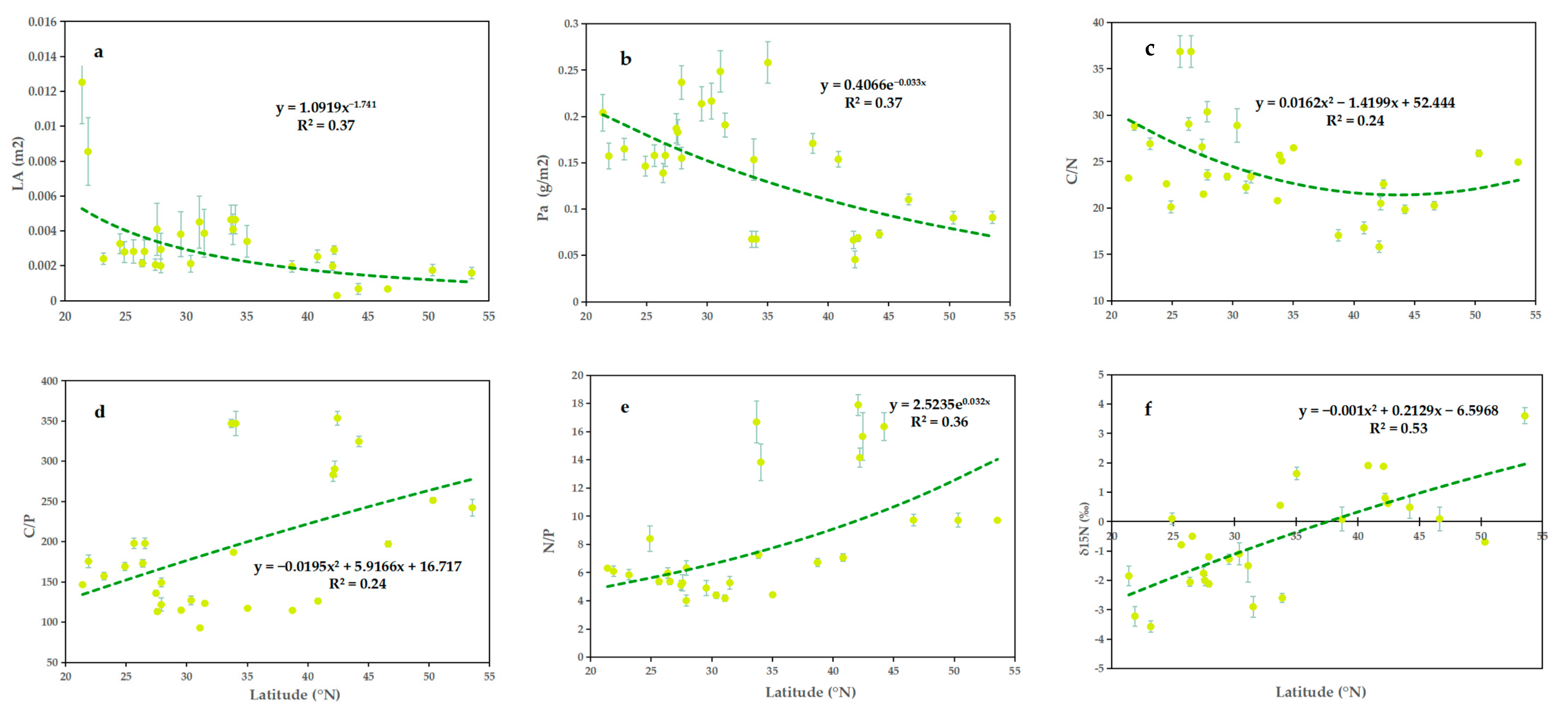
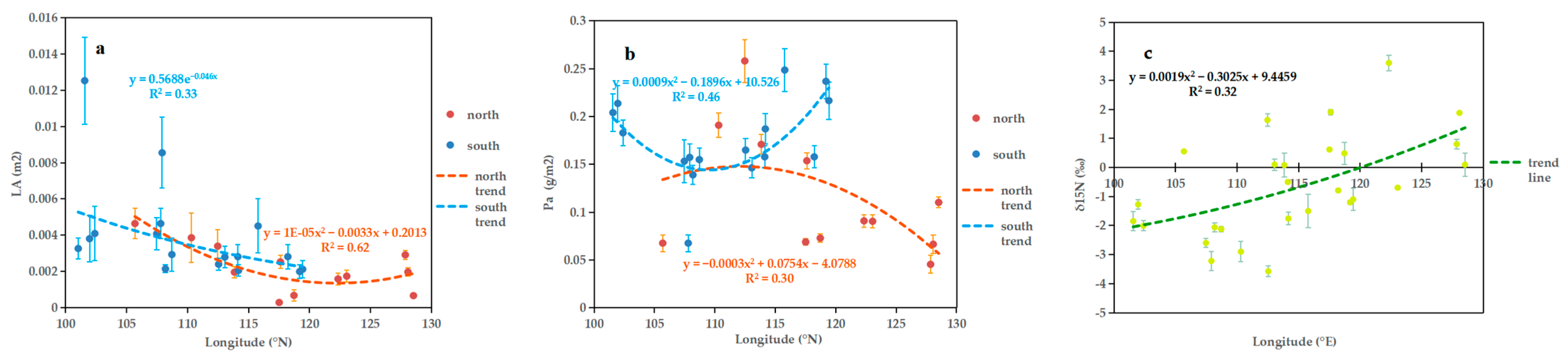
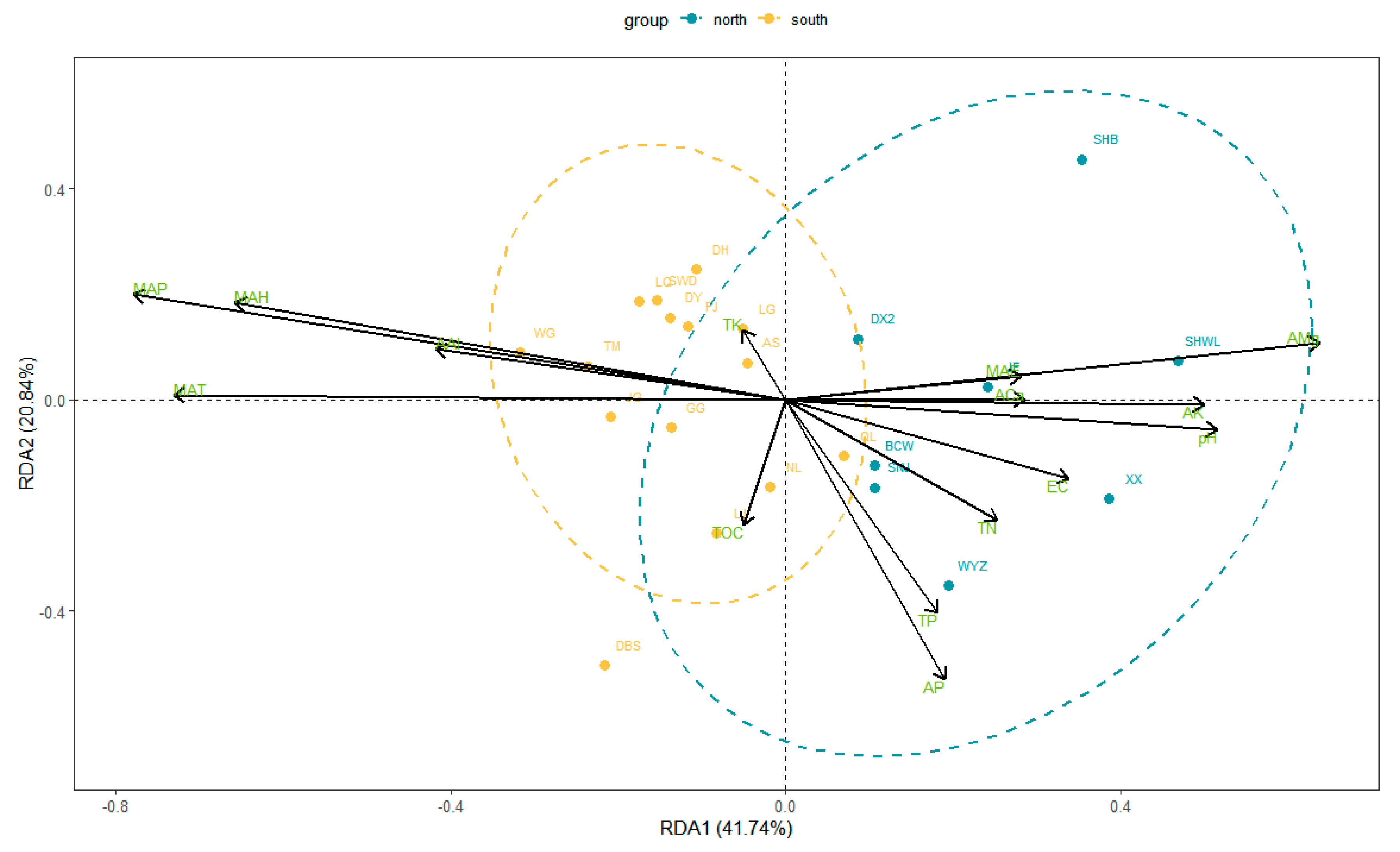
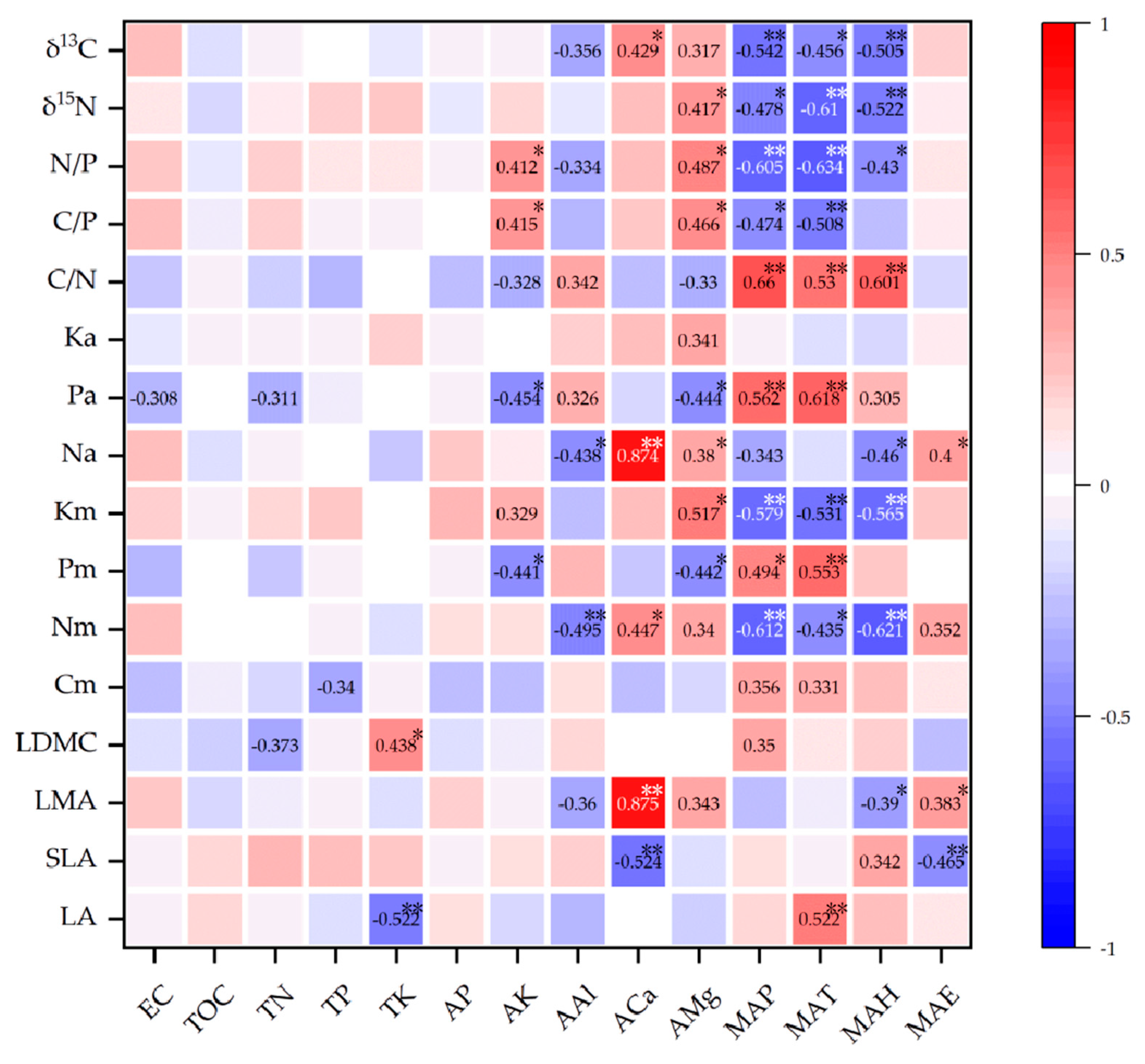
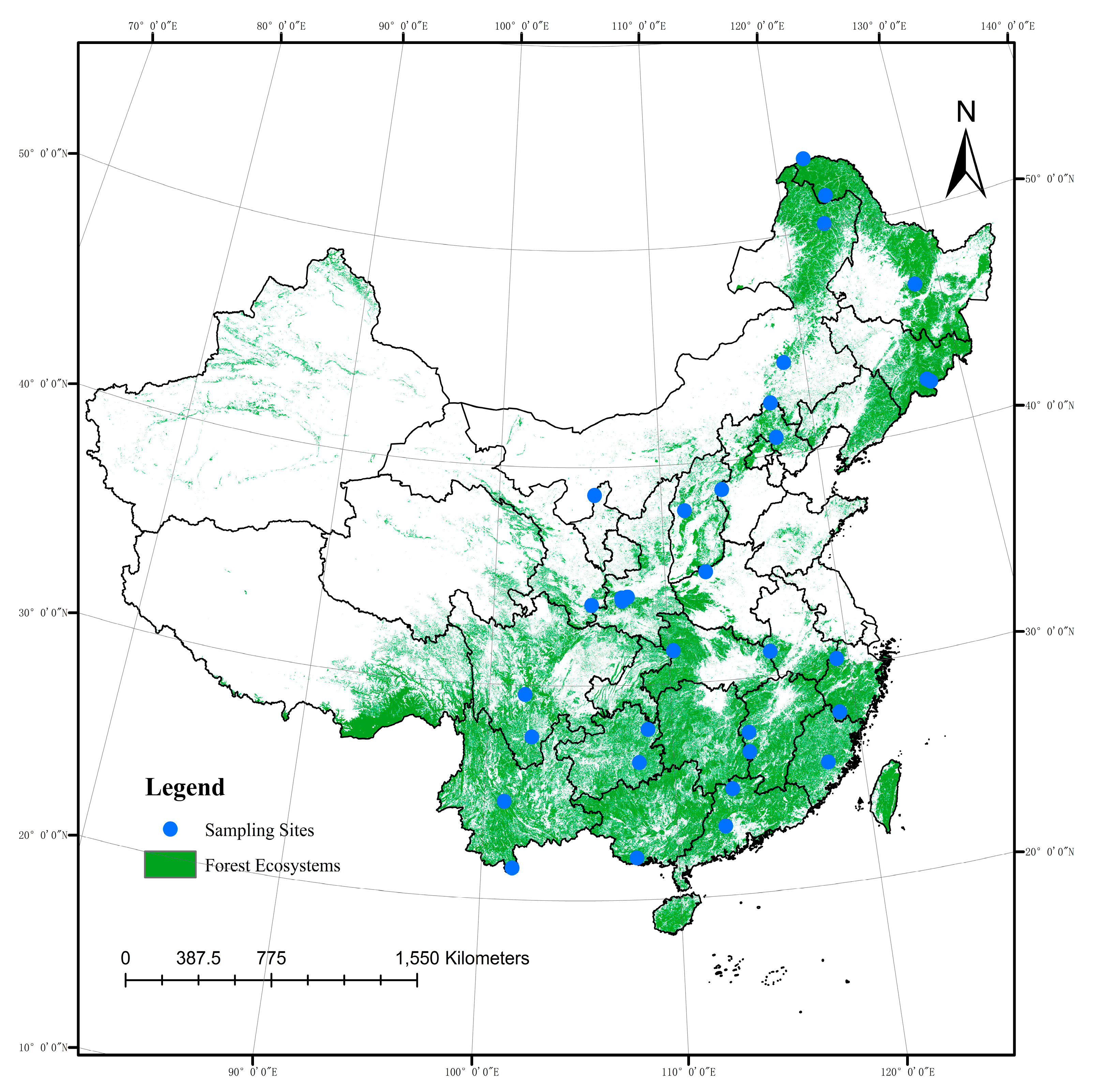
Plant leaf functional traits can reflect the adaptive strategies of plants to environmental changes. Exploring the patterns and causes of geographic variation in leaf functional traits is pivotal for improving ecological theory at the macroscopic scale. In order to explore the geographical variation and the dominant factors of leaf functional traits in the forest ecosystems of China, we measured 15 environmental factors on 16 leaf functional traits in 33 forest reserves in China. The results showed leaf area (LA), carbon-to-nitrogen ratio (C/N), carbon-to-phosphorus ratio (C/P), nitrogen-to-phosphorus ratio (N/P), phosphorus mass per area (Pa) and nitrogen isotope abundance (δ15N)) were correlated with latitude significantly. LA, Pa and δ15N were also correlated with longitude significantly. The leaf functional traits in southern China were predominantly affected by climatic factors, whereas those in northern China were mainly influenced by soil factors. Mean annual temperature (MAT), mean annual precipitation (MAP) and mean annual humidity (MAH) were shown to be the important climate factors, whereas available calcium (ACa), available potassium (AK), and available magnesium (AMg) were shown to be the important climate factors that affect the leaf functional traits of the forests in China. Our study fills the gap in the study of drivers and large-scale geographical variability of leaf functional traits, and our results elucidate the operational mechanisms of forest–soil–climate systems. We provide reliable support for modeling global forest dynamics.
Keywords: leaf functional traits; climate; soil; geographical variation; δ13C; δ15N; forest ecosystem leaf functional traits; climate; soil; geographical variation; δ13C; δ15N; forest ecosystem