Article

Morphological Formation, Fatty Acid Profile, and Molecular Identification of Some Landraces of Ethiopian Brassica as a Promising Crop to Support Breeding Programs

1
Agronomy Department, Faculty of Agriculture, Fayoum University, Fayoum 63514, Egypt
2
Genetic Engineering and Biotechnology Research Institute (GEBRI), City of Scientific Research and Technology Applications (SRTA-City), New Borg El Arab 21934, Egypt
3
Food Science and Technology Department, Faculty of Agriculture, Fayoum University, Fayoum 63514, Egypt
4
Botany Department, Faculty of Agriculture, Fayoum University, Fayoum 63514, Egypt
5
Department of Biology, College of Science, Taif University, P.O. Box 11099, Taif 21944, Saudi Arabia
6
Genetics Department, Faculty of Agriculture, Fayoum University, Fayoum 63514, Egypt
*
Author to whom correspondence should be addressed.
Plants 2021, 10(7), 1431; https://doi.org/10.3390/plants10071431

Submission received: 8 June 2021 / Revised: 9 July 2021 / Accepted: 10 July 2021 / Published: 13 July 2021
(This article belongs to the Collection Advances in Plant Breeding)

Abstract

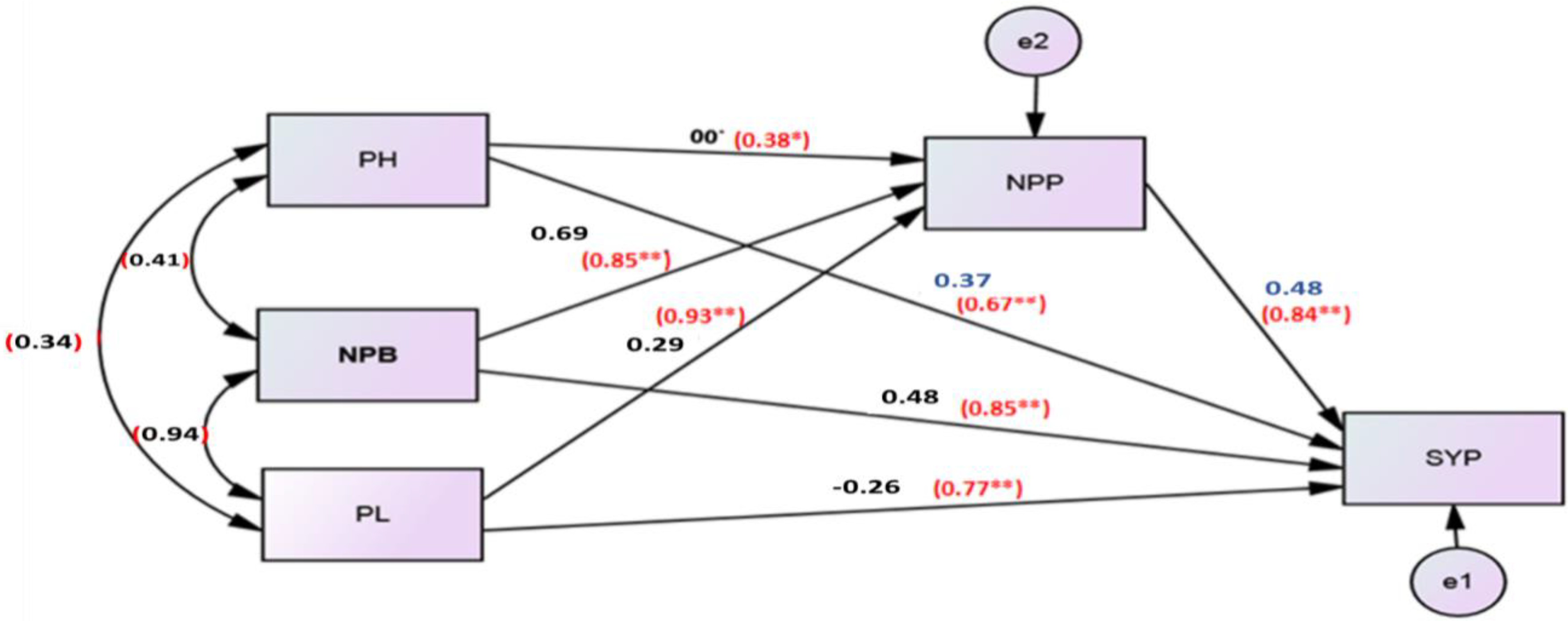
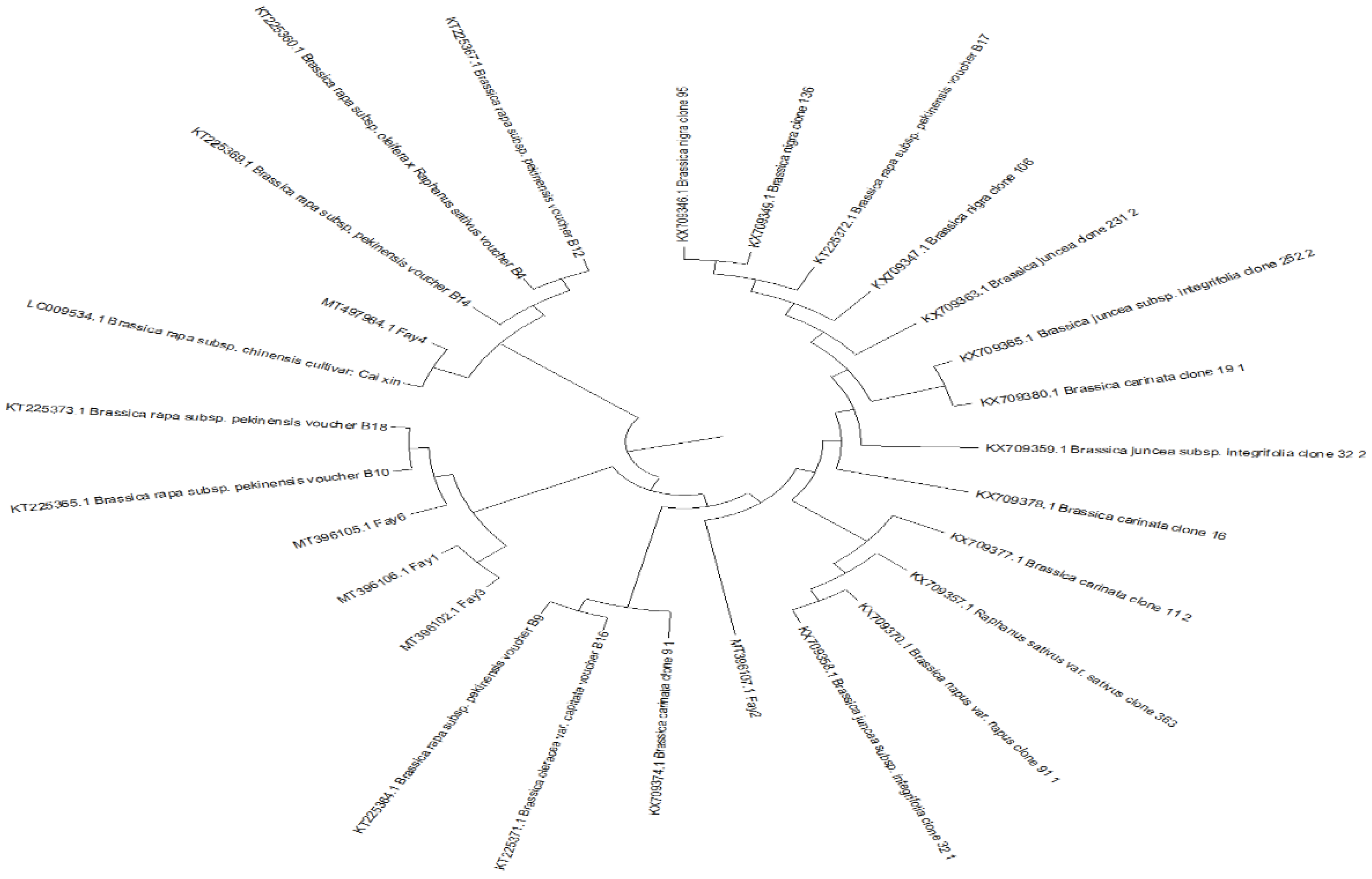
There has been an increased interest in oilseed crops for agro-industry research and development breeding programs to secure sustainable food and agriculture. The introgression of exotic genotypes of oilseed Brassica into cultivated relatives is inevitable in the genetic improvement of oilseed crops. This experimental attempt aimed to characterize the morphological and molecular basis for the identification and characterization of some Brassica genotypes. Fatty acid profile, yield, and morphology are under genetic control and can be used to identify genotypes. Characterization and identification were fulfilled for five accessions from Brassica spp. Plant height, height of first branch, number of branches and pods per plant, seed yield per plant, average pod length, number of seeds per pod, protein and oil contents (%), and fatty acid profile were examined. Besides, the relationship between seed yield and seed yield-contributing characteristics was estimated, as well as the phylogenetic relationship of the internal transcribed spacer (ITS). The genotypes varied significantly for all examined traits, taking into account the most important traits: seed yield per plant and oil content. For example, oil content in the samples ranged between 41.1 and 49.3%. Path analysis results showed a high and positive direct effect between each number of primary branches and the number of pods per plant with seed yield per plant (0.48). The morphological and molecular observations suggest that the Fay1, Fay3, Fay4, and Fay6 accessions belong to Brassica rapa, while Fay2 belongs to Brassica carinata. It can be concluded based on the present findings that the Fay3 genotype with the highest oil content and the lowest erucic acid content compared to the other genotypes can be proposed as a potential donor for future breeding programs for oil production and quality, while Fay1 can be utilized as donor to increase the seed yield per plant.
Keywords: Brassica; morphological traits; oil quality; internal transcribed spacer; molecular analysis; genetic diversity; path analysis Brassica; morphological traits; oil quality; internal transcribed spacer; molecular analysis; genetic diversity; path analysis