Article

Evaluation of Two Predictive Models for Forecasting Olive Leaf Spot in Northern Greece

by
Thomas Thomidis
1,*,
Konstantinos Michos
2,
Fotis Chatzipapadopoulos
2 and
Amalia Tampaki
2
1
Department of Nutritional Science and Diabetics, International Hellenic University, Sindos, 57400 Thessaloniki, Greece
2
Neuropublic S.A., Information Technologies & Smart Farming Services, Piraeus, 18545 Attica, Greece
*
Author to whom correspondence should be addressed.
Plants 2021, 10(6), 1200; https://doi.org/10.3390/plants10061200

Submission received: 17 March 2021 / Revised: 1 June 2021 / Accepted: 10 June 2021 / Published: 12 June 2021
(This article belongs to the Special Issue Epidemiology and Control of Plant Diseases)

Abstract

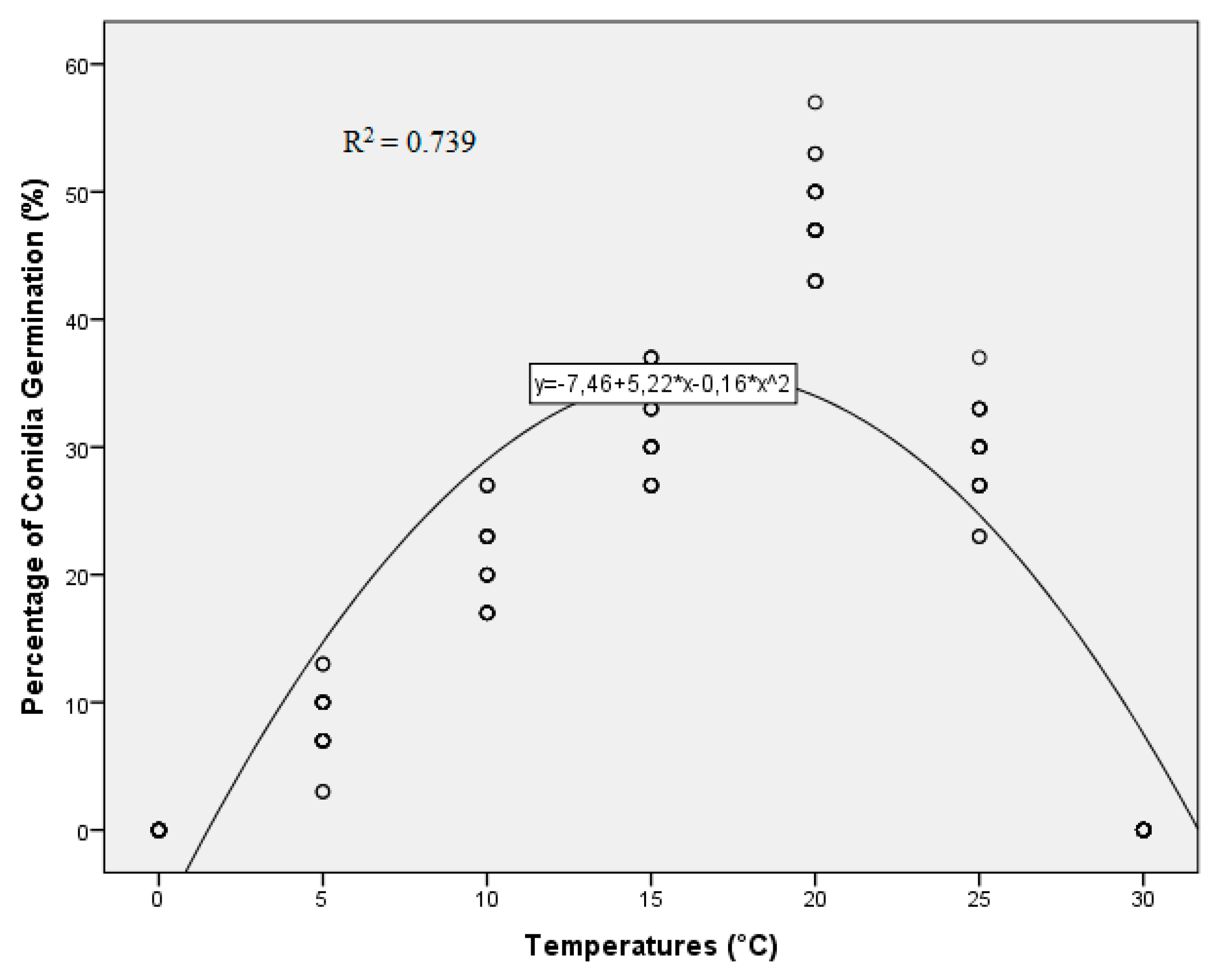
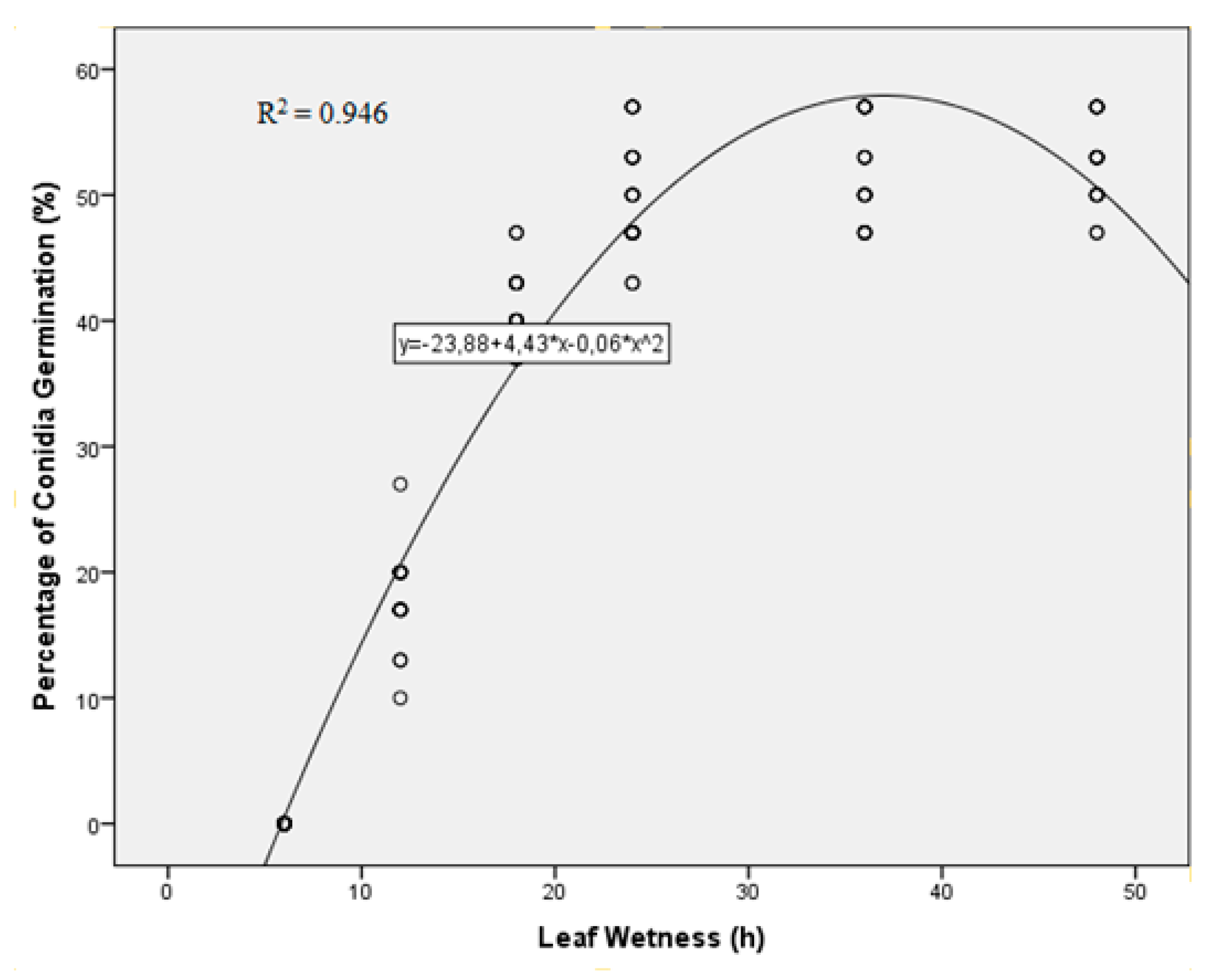
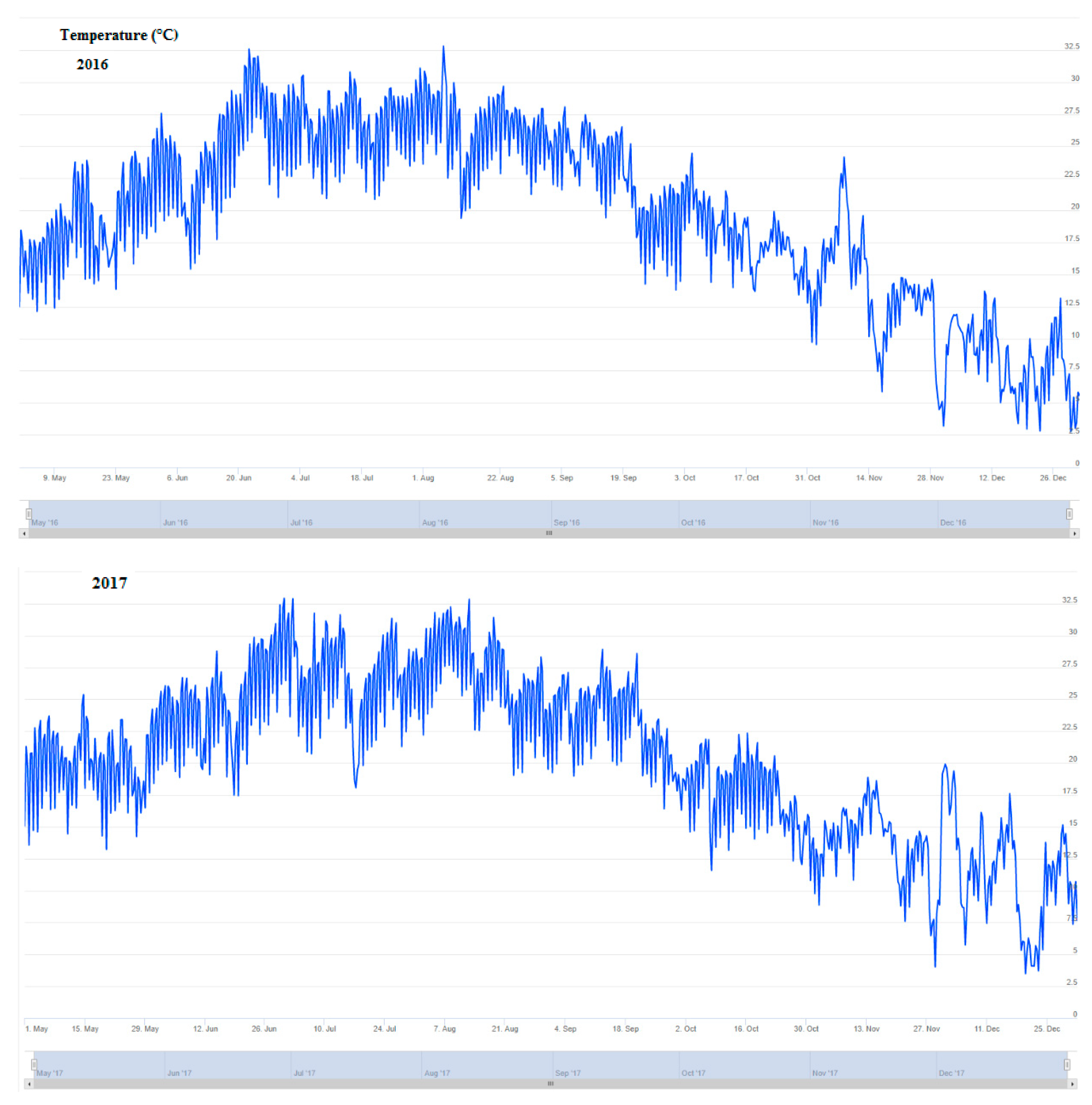
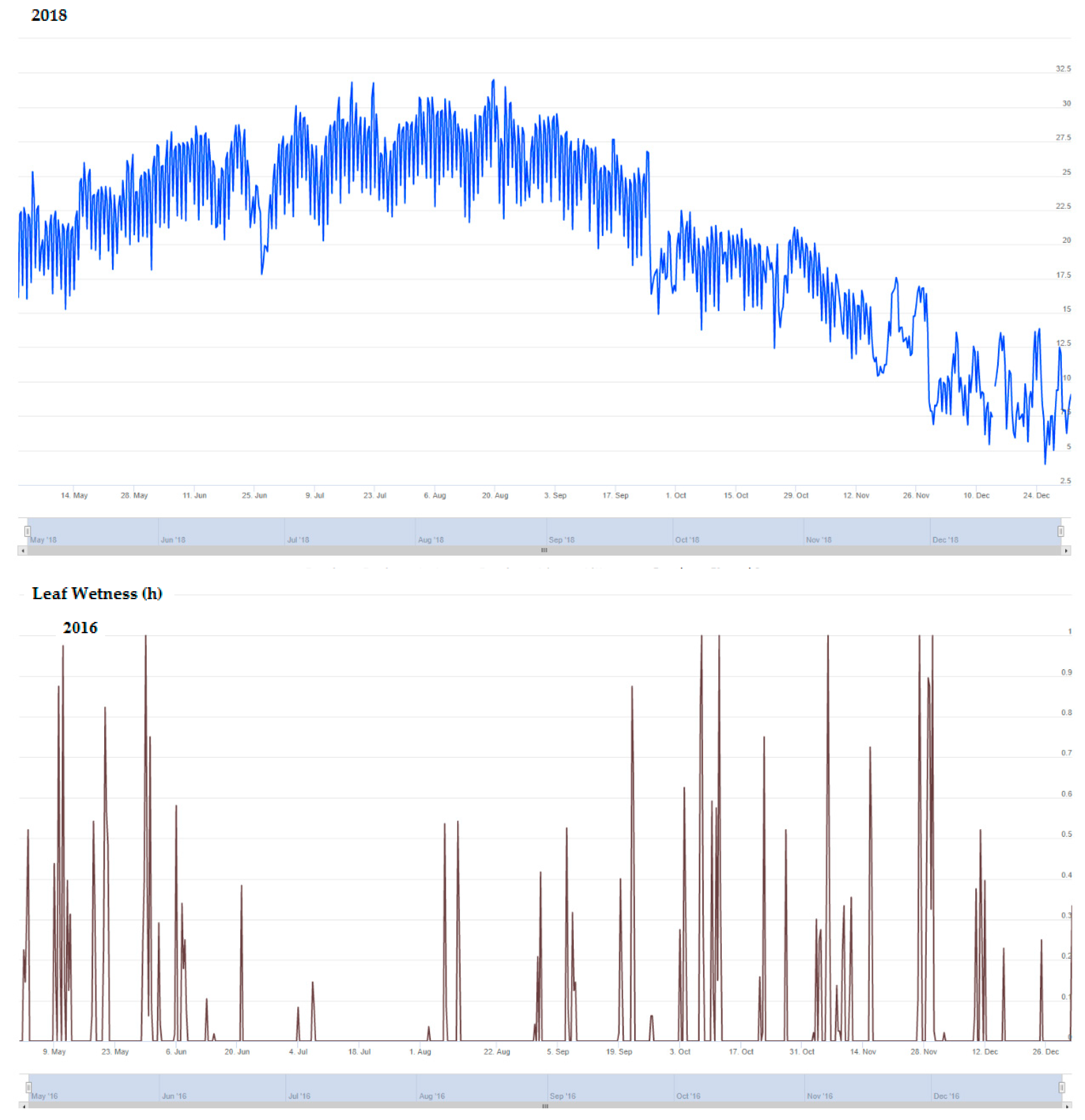
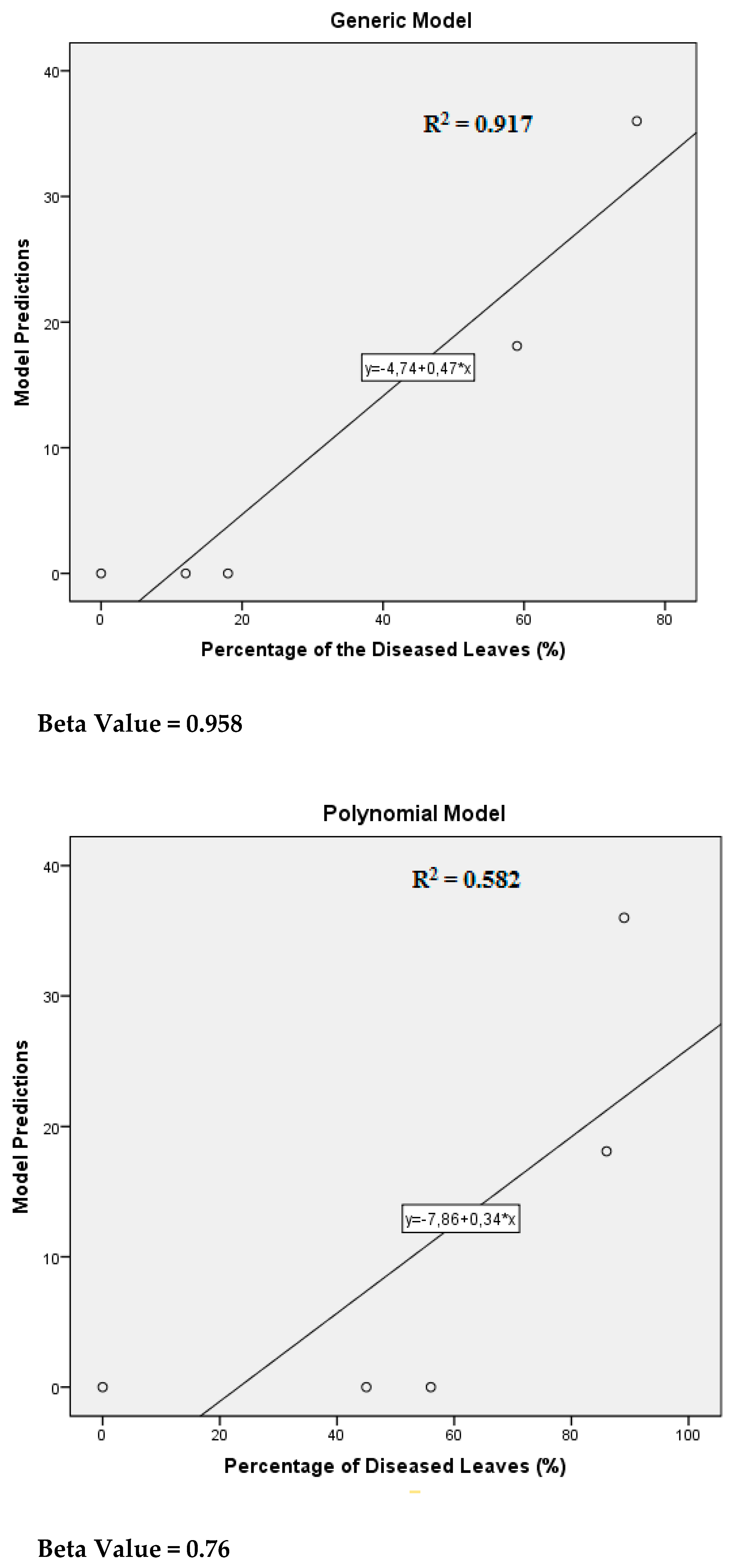
Olive leaf spot (Venturia oleaginea) is a very important disease in olive trees worldwide. The introduction of predictive models for forecasting the appearance of a disease can lead to improved disease management. One of the aims of this study was to investigate the effect of temperature and leaf wetness on conidial germination of local isolates of V. oleaginea. The results showed that a temperature range of 5 to 25 °C was appropriate for conidial germination, with 20 °C being the optimum. It was also found that at least 12 h of leaf wetness was required to start the germination of V. oleaginea conidia at the optimum temperature. The second aim of this study was to validate the above generic model and a polynomial model for forecasting olive leaf spot disease under the field conditions of Potidea Chalkidiki, Northern Greece. The results showed that both models correctly predicted infection periods. However, there were differences in the severity of the infection, as demonstrated by the goodness-of-fit for the data collected on leaves of olive trees in 2016, 2017 and 2018. Specifically, the generic model predicted lower severity, which fits well with the incidence of the disease symptoms on unsprayed trees. In contrast, the polynomial model predicted high severity levels of infection, but these did not fit well with the incidence of disease symptoms.
Keywords: leaf wetness; temperatures; validation; Venturia oleaginea leaf wetness; temperatures; validation; Venturia oleaginea