Article

Root-System Architectures of Two Cuban Rice Cultivars with Salt Stress at Early Development Stages
by
Alenna Vázquez-Glaría
1,
Bettina Eichler-Löbermann
2,
F. G. Loiret
1,
Eduardo Ortega
1 and
Mareike Kavka
2,*
1
Laboratorio de Fisiología Vegetal, Dpto. Biología Vegetal, Facultad de Biología, Universidad de La Habana, Avenida de la Universidad s/n entre Ronda y G, CP Habana 10400, Cuba
2
Agronomy, Faculty of Agriculture and Environmental Sciences, University of Rostock, Justus-von-Liebig-Weg 6, 18059 Rostock, Germany
*
Author to whom correspondence should be addressed.
Plants 2021, 10(6), 1194; https://doi.org/10.3390/plants10061194

Submission received: 18 May 2021 / Revised: 3 June 2021 / Accepted: 10 June 2021 / Published: 11 June 2021
(This article belongs to the Special Issue Plants Subjected to Salinity Stress)

Abstract

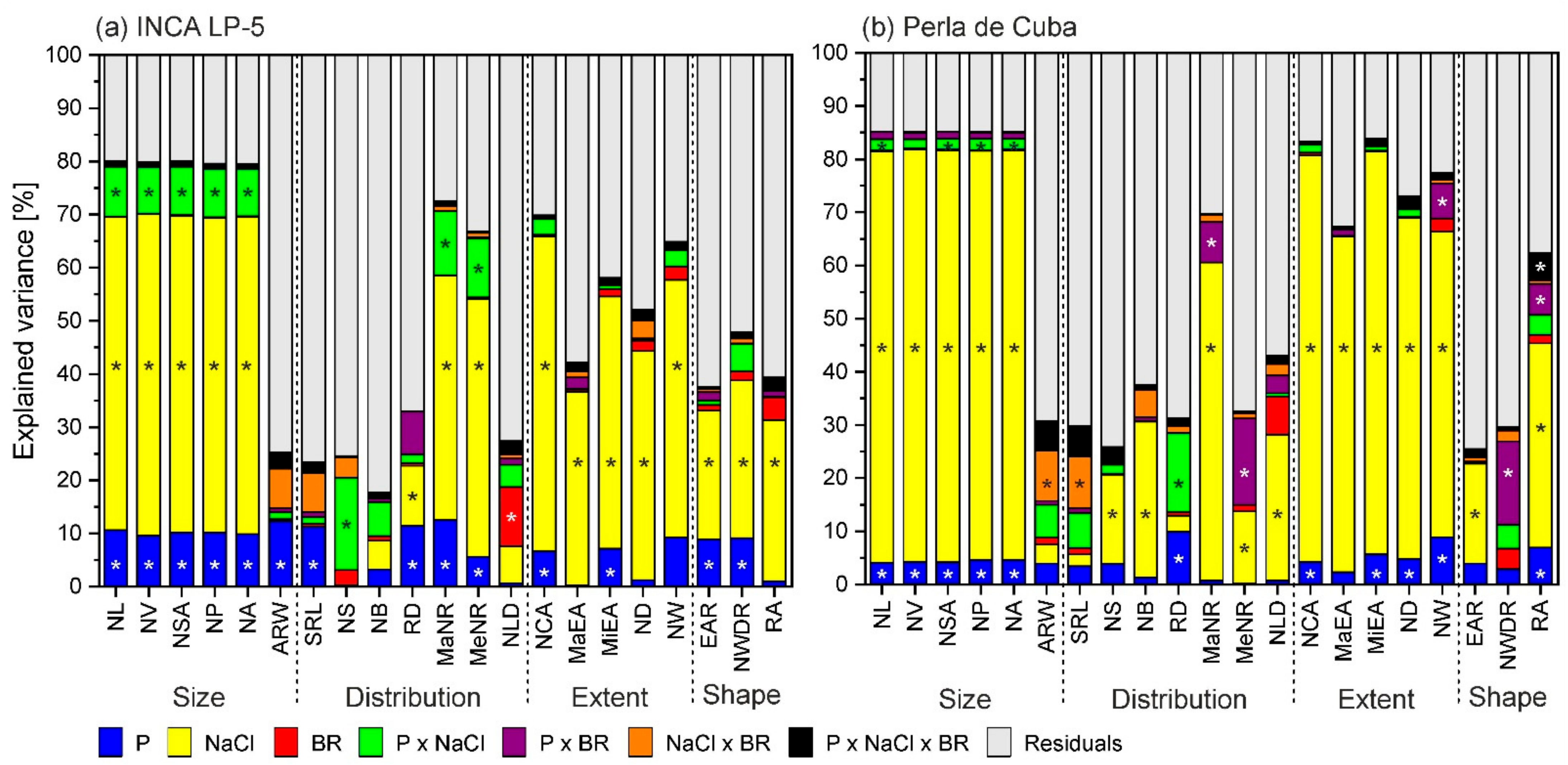
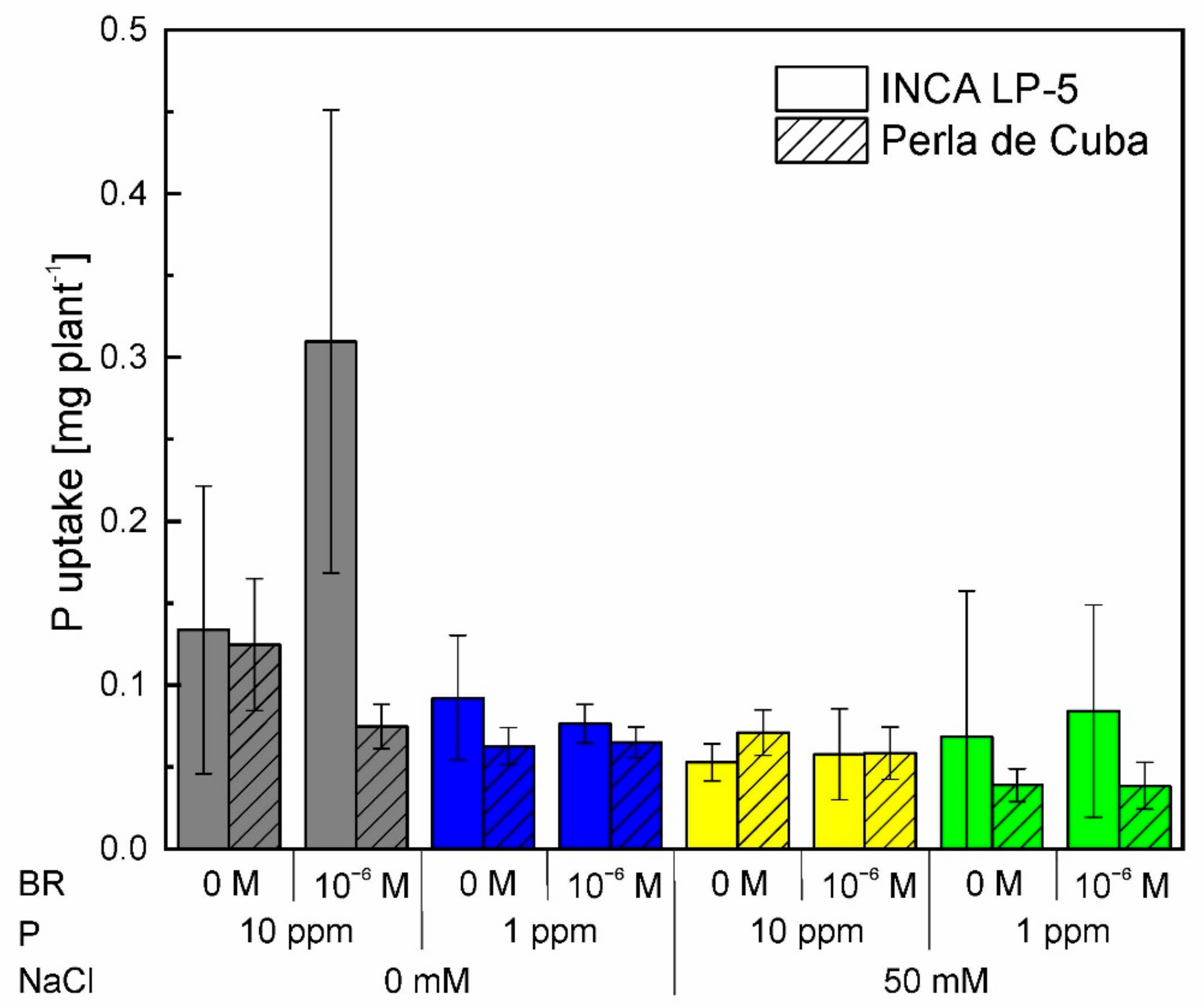
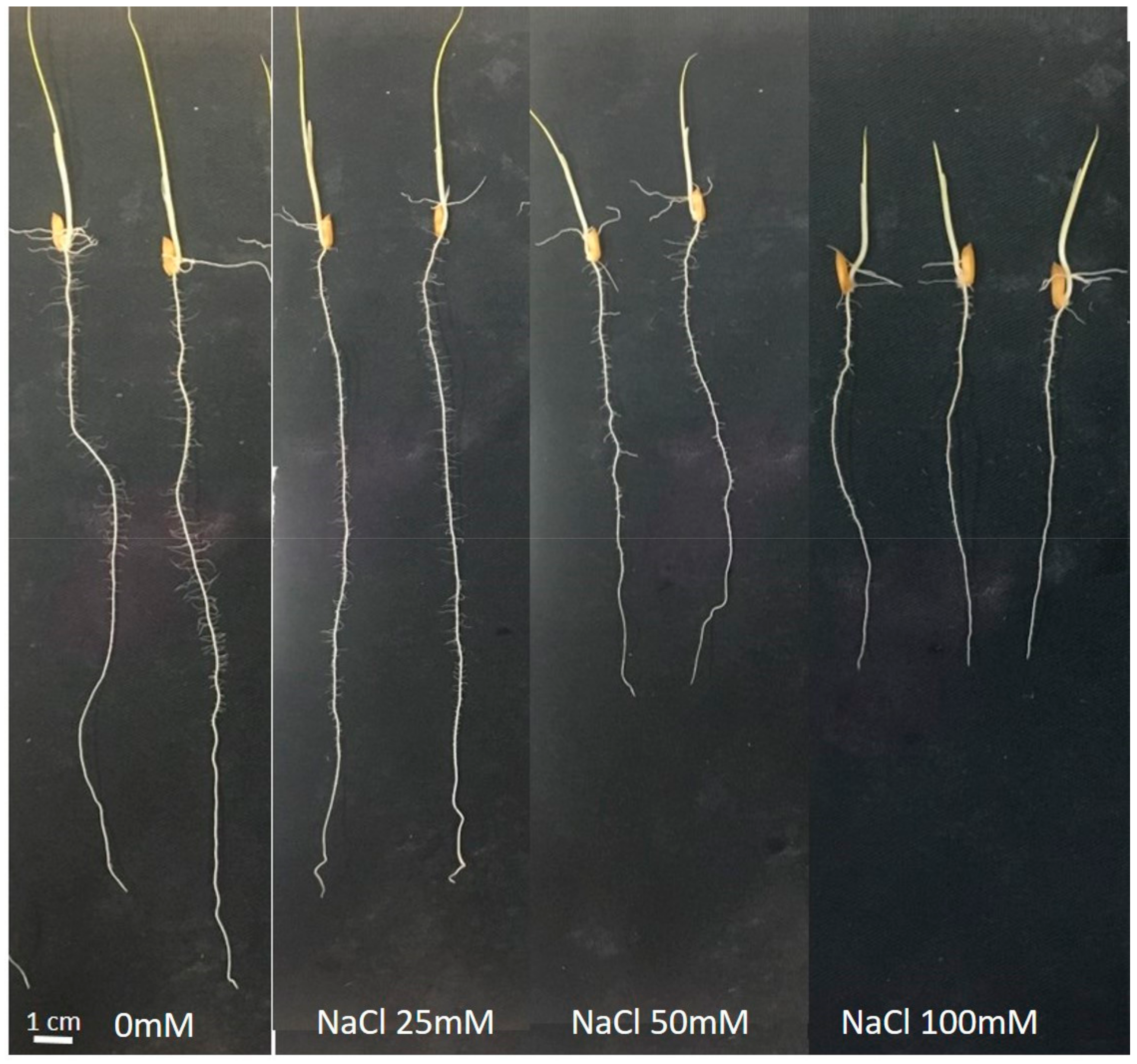
Soil salinity is a critical problem for rice production and is also often associated with phosphors (P) deficiency. Plant hormones, like brassinosteroids, were shown to play a role in plant responses to different stresses and are also expected to mitigate salt stress. The aim of this study was to compare shoot growth and root architecture traits of two rice cultivars (INCA LP-5 and Perla de Cuba) during early plant development in response to salt, P limitation and a brassinosteroid. Seeds were placed in (I) paper rolls for 7 days and (II) mini-rhizotrons for 21 days without or with salt (50 mM NaCl), without or with 24-epibrassinolide (10−6 M) pre-treatment, and with two levels of P (10 or 1 ppm). The root system of LP-5 was larger in size and extent, while the roots of Perla were growing denser. Salt affected mainly the size- and extent-related root characteristics and explained about 70% of the variance. The effect of P was more pronounced without salt treatment. In Perla, P supply reduced the salt effect on root growth. The brassinosteroid had hardly any effect on the development of the plants in both experiments. Due to the high dependence on experimental factors, root length and related traits can be recommended for selecting young rice cultivars regarding salt stress and P deprivation.
Keywords: Oryza sativa; root-system architecture; salt stress; phosphorus deprivation; epibrassinolide Oryza sativa; root-system architecture; salt stress; phosphorus deprivation; epibrassinolide