Article

Is “Esterhazy II”, an Old Walnut Variety in the Hungarian Gene Bank, the Original Genotype?

1
Centre for Horticultural Sciences, Hungarian University of Agriculture and Life Sciences, Park u. 2, 1223 Budapest, Hungary
2
Forest Research Institute, University of Sopron, Várkerület 30/A, 9600 Sárvár, Hungary
*
Author to whom correspondence should be addressed.
Plants 2021, 10(5), 854; https://doi.org/10.3390/plants10050854

Submission received: 5 March 2021 / Revised: 4 April 2021 / Accepted: 22 April 2021 / Published: 23 April 2021
(This article belongs to the Special Issue Improvements/Innovations Related to Fruit Varieties)

Abstract

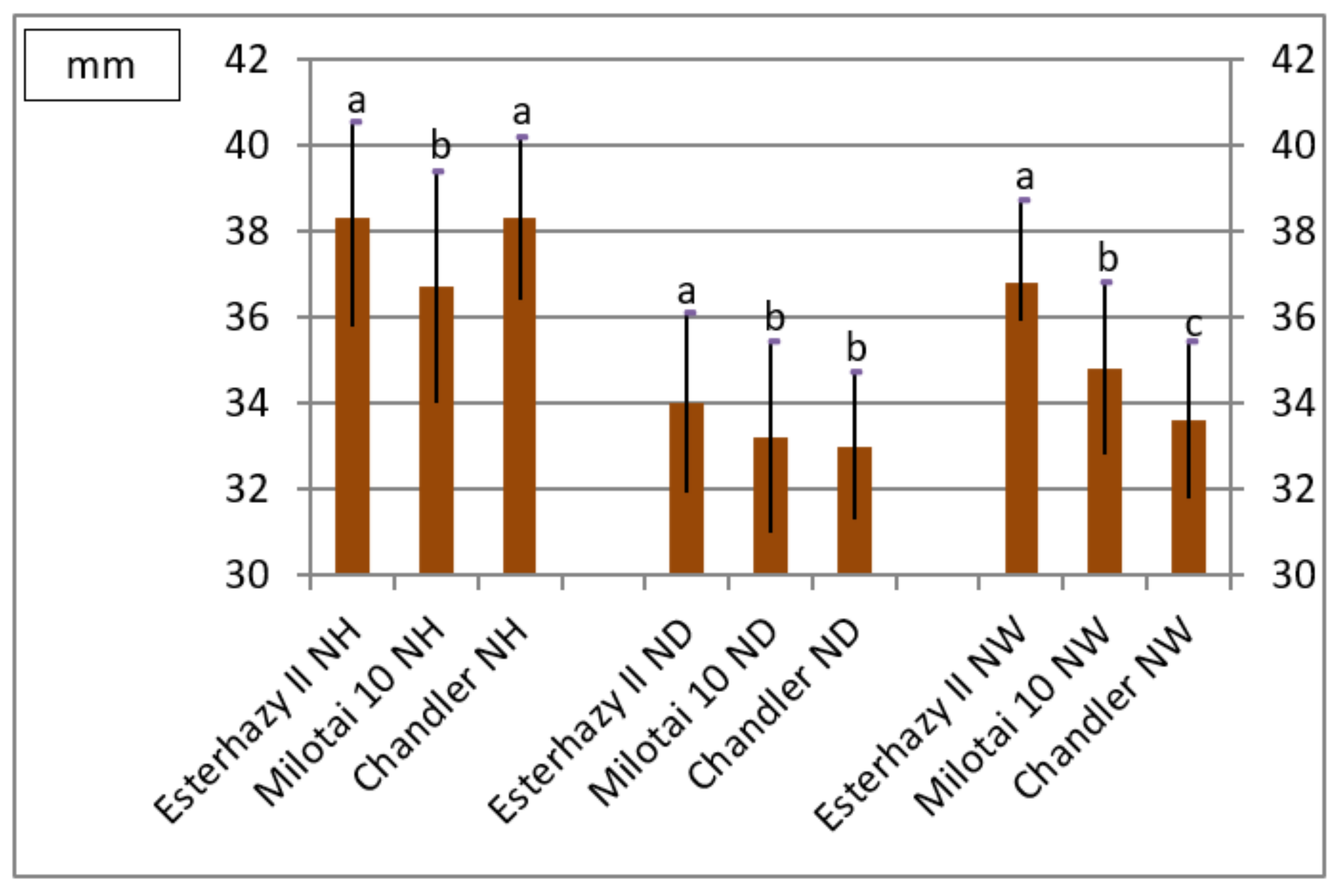
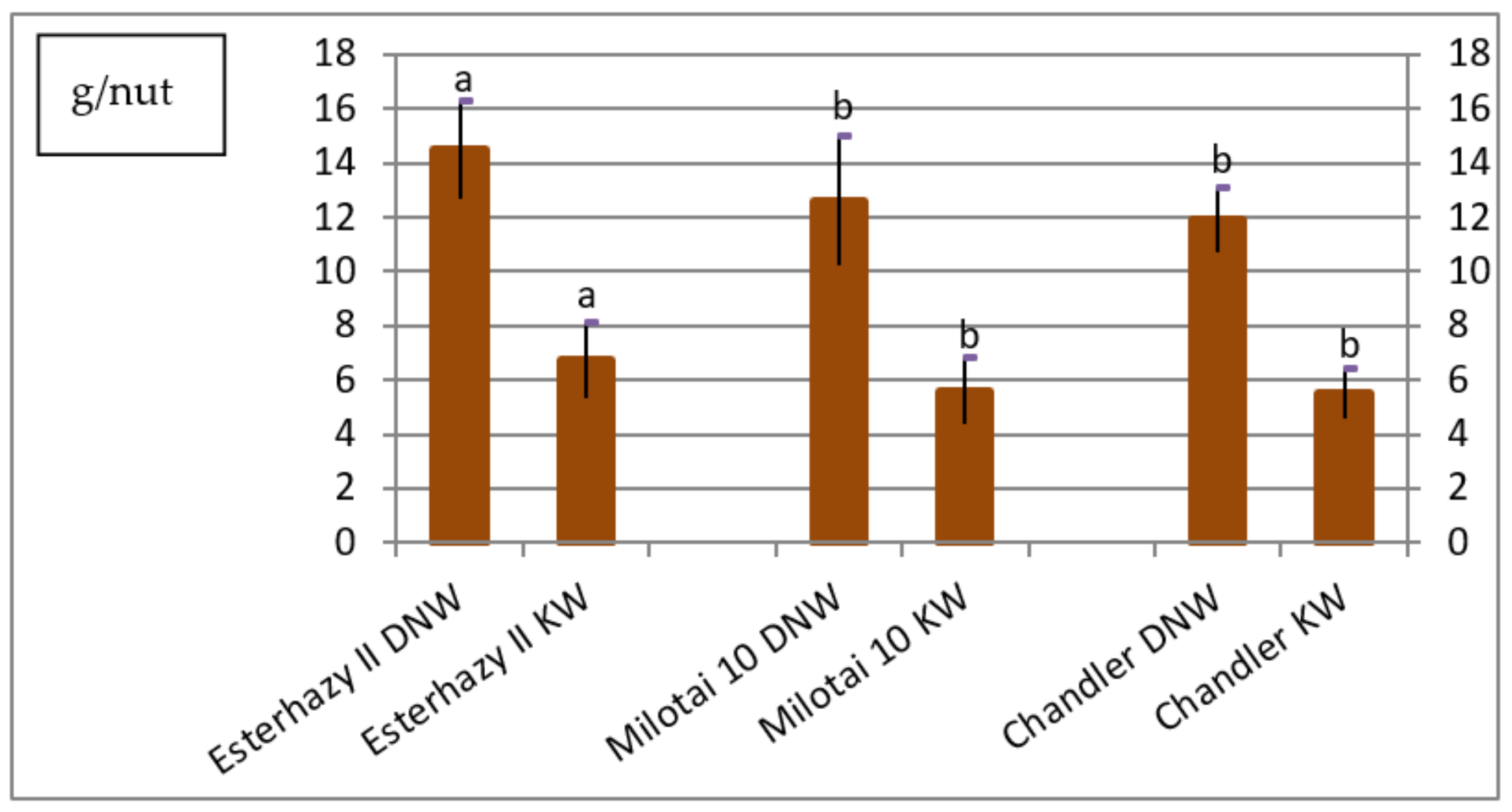
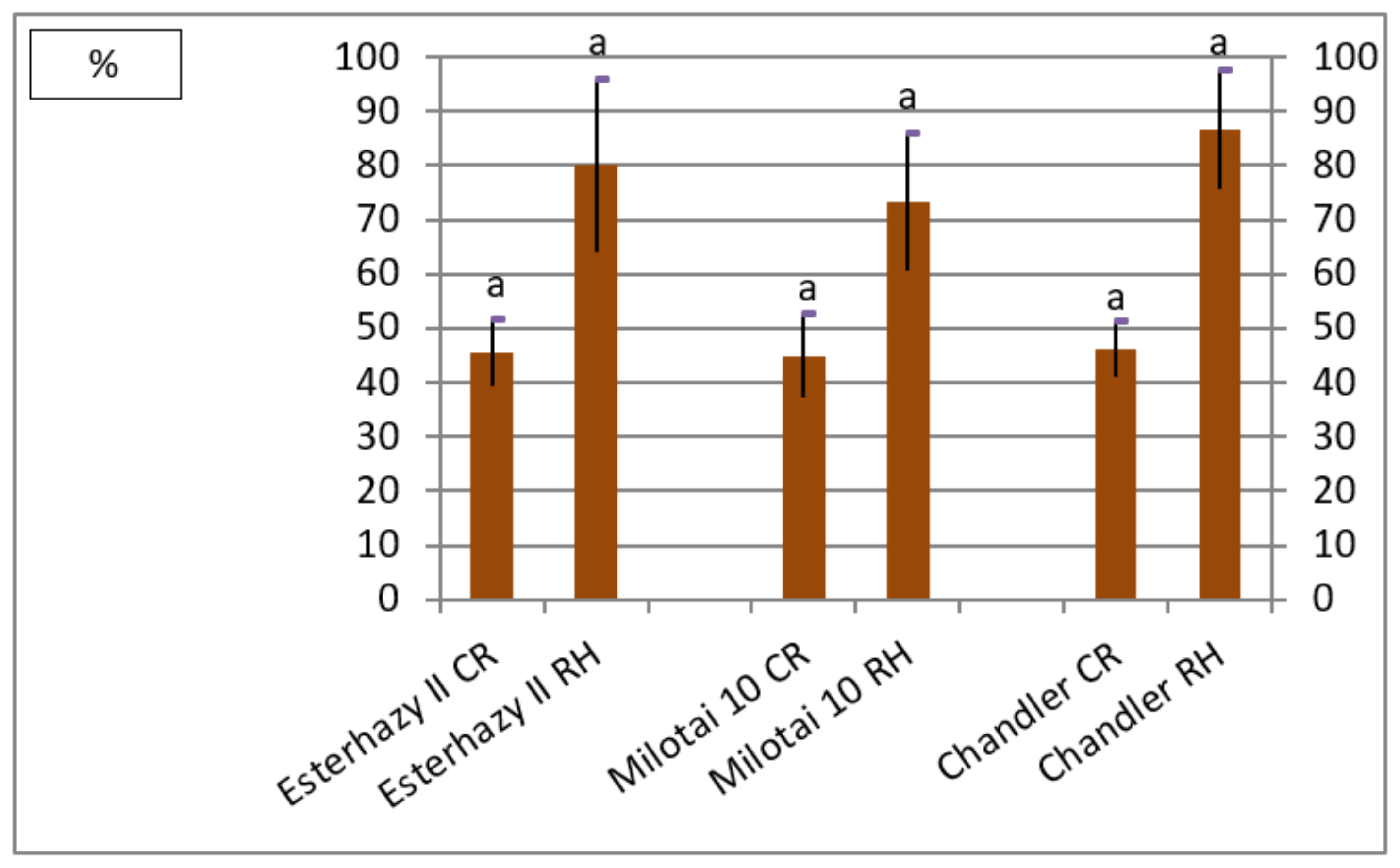
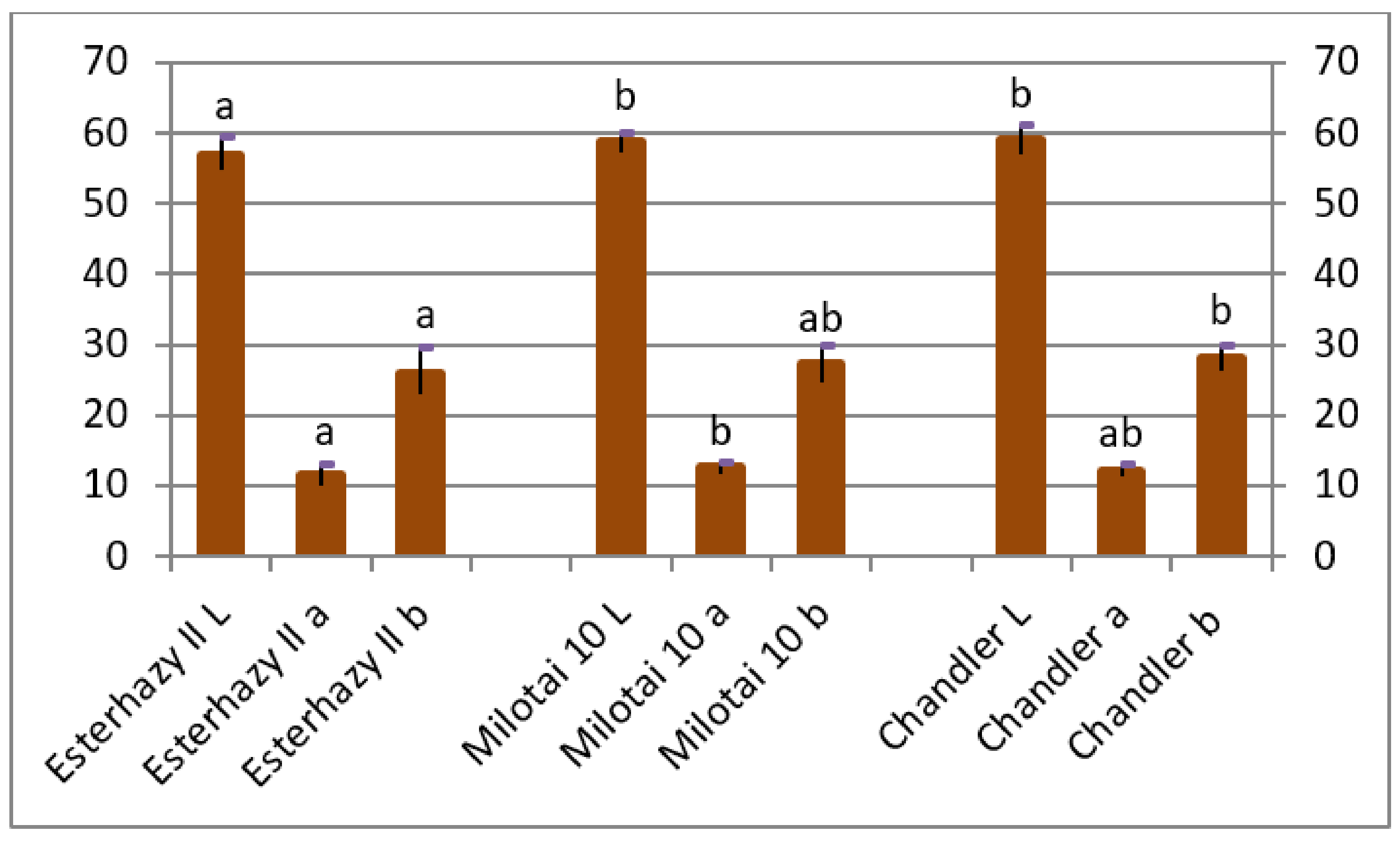
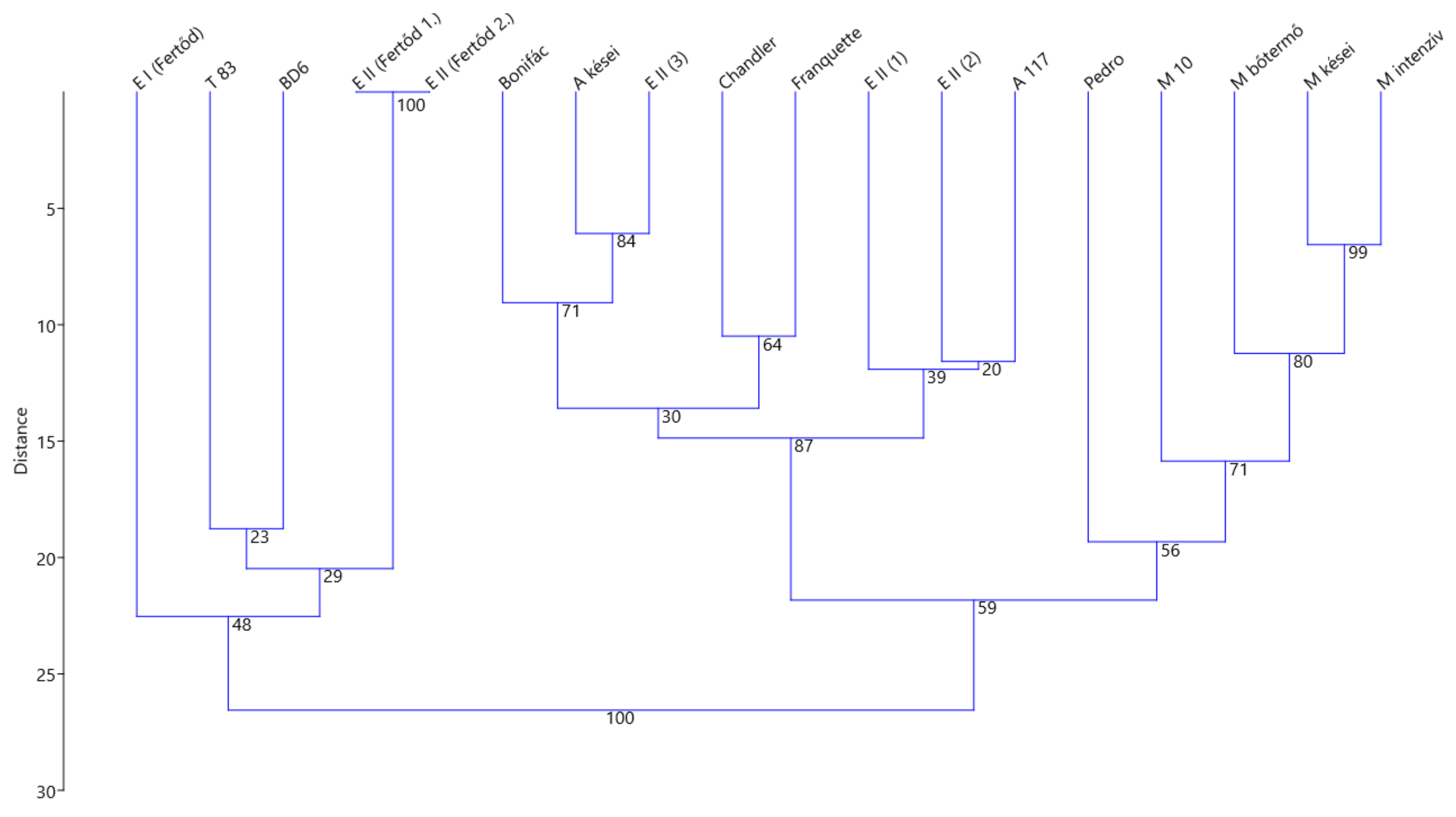
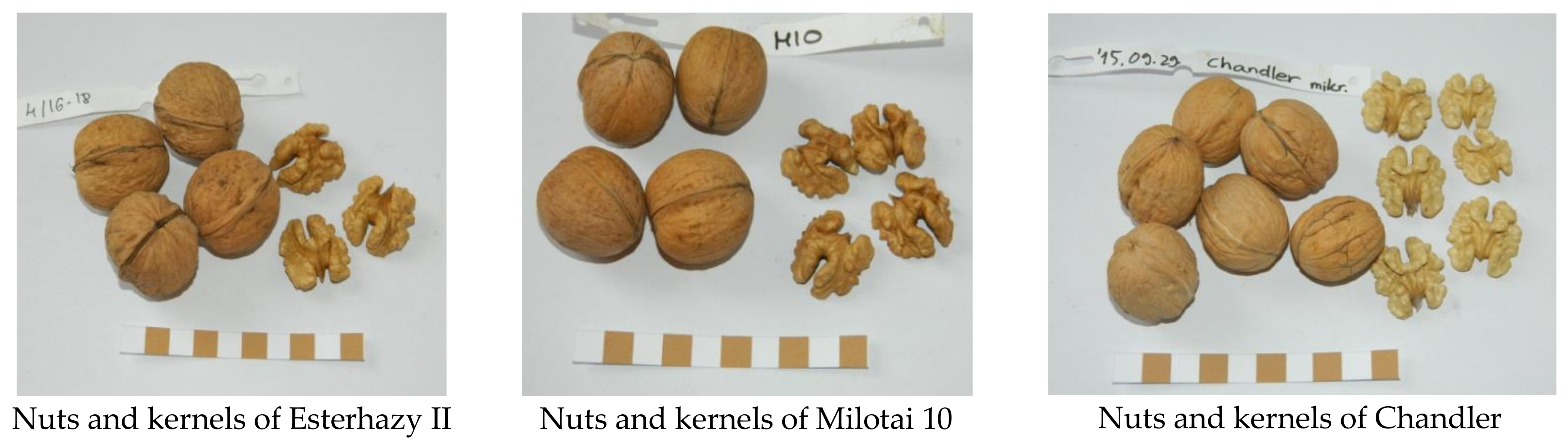
The old walnut (Juglans regia L.) genotype called “Esterhazy II” was well-known in the Austro-Hungarian Monarchy before World War II, and it can still be found in the Austrian, German and Swiss backyard gardens today. Unfortunately, nowadays, vegetatively propagated progenies of the original “Esterhazy II” are not available anymore around the world because walnut grafting started later than this genotype had become well-known. Although various accessions with “Esterhazy II”-“blood“ are available, it is difficult to determine which one can be considered true or the most similar to the original one. In this paper, phenological and nut morphological characteristics of an “Esterhazy II” specimen planted in a Hungarian gene bank were compared to the varieties “Milotai 10” and “Chandler”. Examined characteristics were: budbreak, blossom time, type of dichogamy, ripening time, nut and kernel features. An additional SSR fingerprinting was used to identify identical genotypes and to demonstrate the relatedness of the analyzed “Esterhazy II” genotype to the other Hungarian walnut cultivars. It can be concluded that under the name “Esterhazy II”, several different genotypes can be observed. All the checked characteristics except budbreak fitted well with the previous descriptions. Our results confirmed that the examined “Esterhazy II” genotype shows high similarity to the “original“ “Esterhazy II” described in the literature.
Keywords: field observation; old cultivar; Hungary; Juglans regia; phenology; SSR markers field observation; old cultivar; Hungary; Juglans regia; phenology; SSR markers