
Article

The Link Between Urban Resilience and Sustainable Development: Research Trends in Global Nature-Based Solutions Based on Bibliometric Analysis Using CiteSpace and VOSviewer

1
School of Fine Arts, Hubei Polytechnic University, Huangshi 435003, China
2
School of Environmental Science and Engineering, Hubei Polytechnic University, Huangshi 435003, China
3
School of Urban Construction, Fuzhou Technology and Business University, Fuzhou 350007, China
4
School of Energy and Environment, Anhui University of Technology, Ma’anshan 243002, China
5
School of Fine Art and Design, Hubei University of Science and Technology, Xianning 437100, China
6
Xingzhi College, Zhejiang Normal University, Lanxi 321004, China
7
School of Economics and Management, China University of Geosciences (Beijing), Beijing 100083, China
*
Author to whom correspondence should be addressed.
ISPRS Int. J. Geo-Inf. 2026, 15(7), 322; https://doi.org/10.3390/ijgi15070322
Submission received: 7 May 2026 / Revised: 4 July 2026 / Accepted: 14 July 2026 / Published: 16 July 2026

Abstract

Rapid urbanization and climate change have intensified environmental pressures and social inequalities, making the integration of urban resilience and sustainable development a critical global challenge, with Nature-based Solutions (NbS) emerging as a promising pathway; however, the knowledge structure, collaboration patterns, and evolutionary trends of NbS research remain fragmented and insufficiently understood. This study conducts a comprehensive bibliometric analysis of 1261 publications from the Web of Science Core Collection (2005–2025), employing tools including VOSviewer 1.6.20, CiteSpace 6.4.R1, and Bibliometrix 4.1.3 to map publication trends, collaboration networks, knowledge bases, and thematic evolution. The results reveal a rapid expansion of NbS research since 2013, characterized by strong interdisciplinarity and a multicentric yet uneven geographical distribution dominated by China, the United States, and Europe. Four major research clusters are identified, encompassing policy governance, environmental benefits, ecosystem services, and social equity, reflecting a shift from ecological performance to integrated socio-ecological frameworks. Additionally, thematic evolution indicates growing emphasis on governance mechanisms, public health, and environmental justice. Overall, NbS research is transitioning toward a multi-scale, multi-objective, and governance-oriented paradigm. These findings highlight the need for strengthened international collaboration, standardized evaluation frameworks, and inclusive policy design to enhance the effectiveness and global applicability of NbS in advancing urban sustainable development.

1. Introduction

Rapid urbanization has exacerbated ecological degradation, biodiversity loss, and climate-related risks, posing unprecedented challenges to the sustainable development of cities worldwide [1,2]. Against this backdrop, Nature-based Solutions (NbS) have increasingly been recognized as a comprehensive framework that leverages ecosystem processes to address urban environmental and social challenges while promoting urban resilience and human well-being [3]. The International Union for Conservation of Nature (IUCN) defines NbS as “actions designed to effectively and adaptively address societal challenges through the conservation, sustainable management, and restoration of natural or modified ecosystems [4].” Green infrastructure (GI) denotes interconnected urban ecological networks that supply diverse regulating, cultural and supporting ecosystem services. GI refers to tangible physical urban ecological carriers, while NbS represents operable planning and governance instruments constructed based on such spatial systems to mitigate multi-faceted urban sustainability challenges [5]. As the global sustainable development agenda advances, NbS is increasingly recognized as a transformative pathway to achieving sustainable urban development [6,7,8]; International initiatives such as the EU Green Deal, the Horizon 2020 program, and the United Nations Sustainable Development Goals (SDGs) have placed NbS at the core of climate adaptation and urban resilience strategies, thereby fostering interdisciplinary collaboration and knowledge production [9,10].
In recent years, research on NbS has rapidly expanded across multiple dimensions, including its ecological efficacy [11], social and governance mechanisms [12], and pathways for integration into spatial planning and policy frameworks [13]. These studies indicate that NbS not only mitigates environmental impacts but also delivers multiple co-benefits, such as improved public health, enhanced social equity, and strengthened community engagement [14]. However, the rapid growth of NbS research has also led to fragmentation within the knowledge base, manifested in inconsistent research methods, diverse conceptual understandings, and uneven geographical distribution [15].
Although academic and policy attention toward NbS continues to grow, several critical gaps remain in understanding the research architecture and evolution of NbS within the context of urban sustainable development. First, existing research largely focuses on conceptual or case-based analyses, lacking a systematic assessment of the global research landscape, knowledge architecture, and collaborative networks [16,17]. Second, while Europe dominates NbS research and practice, research participation from the Global South remains relatively low, limiting the transferability and inclusivity of NbS knowledge [18]. Third, the interdisciplinary nature of NbS requires comprehensive assessments across environmental, social, and governance dimensions, yet such holistic research frameworks remain rare [19].
Compared to 2023–2025 NbS bibliometric reviews, this study makes two core contributions. First, it develops a GIS spatial bibliometric framework based on a complete 2005–July 2025 dataset covering post-2023 environmental justice literature overlooked by earlier studies. Second, integrated CiteSpace timeline, VOSviewer and Bibliometrix analyses reveal the socio-ecological evolution of NbS research; an integrated framework further identifies North–South research gaps and proposes differentiated policy insights rarely discussed in prior reviews. These dual advances highlight the novelty of this work.
To address these shortcomings, this study conducts a comprehensive bibliometric analysis of NbS research related to urban sustainability using the Web of Science Core Collection database. By employing tools such as VOSviewer, CiteSpace, and the Bibliometrix 4.1.3 package, this study aims to (1) map publication and collaboration trends in global NbS research [20]; (2) identify influential authors, institutions, and knowledge cluster structures [21]; (3) reveal the evolutionary trajectory and cutting-edge research directions of the NbS field [22]. The findings are expected to provide a systematic understanding of how NbS drives sustainable urban development and serves as a reference for future research and policy-making.

2. Materials and Methods

2.1. Data Sources and Search Strategy

To ensure the authority, comprehensiveness, and comparability of the research data, this study selected the Web of Science (WoS) Core Collection database as the primary retrieval platform. Compared to other databases such as Scopus or Dimensions, the WoS Core Collection extensively covers high-quality academic journals in the natural sciences, engineering, and related interdisciplinary fields. The WoS database boasts distinct strengths in cross-disciplinary literature coverage, citation tracing, and duplicate record elimination. Such merits make WoS an independent data source that can fully support bibliometric research within a specific domain, eliminating the need to integrate supplementary databases [23].
In terms of search strategy design, this study constructed a search query covering multidimensional keywords based on the characteristics of the research topic to maximize the coverage of the relevant literature. The search employed the Topic Search (TS) mode, with the following query: TS = ((“nature-based solution” OR “nature-based solution” OR “green infrastructure”) AND (“urban” OR “cities” OR “urban area” OR “urban environment” OR “city” OR “urbanization” OR “urban system”) AND (“sustainable development” OR “urban sustainability” OR “sustainable urban development” OR “sustainable city” OR “sustainability”)).
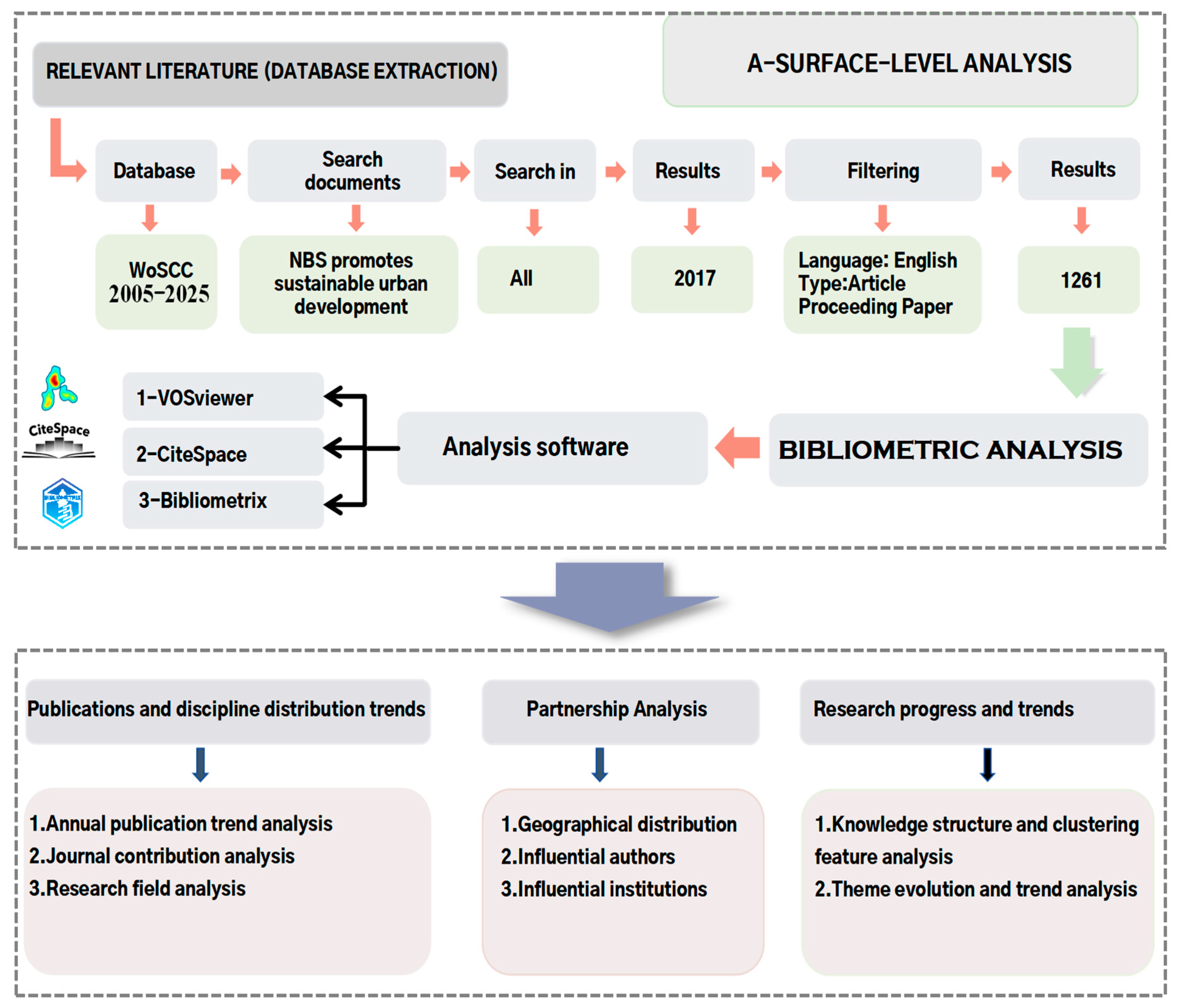
The search time frame was set from 1 January 2005, to 31 July 2025, covering the critical period of rapid growth for NbS in the context of urban sustainable development. January 2005 is set as the retrieval starting cutoff on theoretical grounds. The landmark 2005 Millennium Ecosystem Assessment (MEA) built a unified ecosystem service framework laying the foundation for modern NbS research. Pre-2005 papers only covered fragmented urban greening without formal NbS frameworks, introducing irrelevant thematic noise. The initial search yielded a total of 2017 records. To ensure the academic quality and comparability of the analysis, the language of the literature was further restricted to English (1983 articles), and the document types were filtered to include formally published “Articles,” “Review Articles,” and “Proceedings Papers.” Additionally, Early Access articles (37), Editorial Material (25), Book Chapters (1), Book Reviews (1), Corrections (1), Letters (1), Retracted Publications (1), and Retractions (1) were excluded, leaving 1954 documents for preliminary analysis. Subsequently, the research team manually reviewed the above literature based on titles, abstracts, and keywords, removing documents with weak relevance to the research topic or those showing significant deviation. Ultimately, 1261 highly relevant core documents were identified as the dataset for subsequent analysis. This process strictly adhered to the PRISMA 2020 guidelines, ensuring the authority of the data sources and the scientific rigor of the analysis sample. The screening process is illustrated in Figure 1.
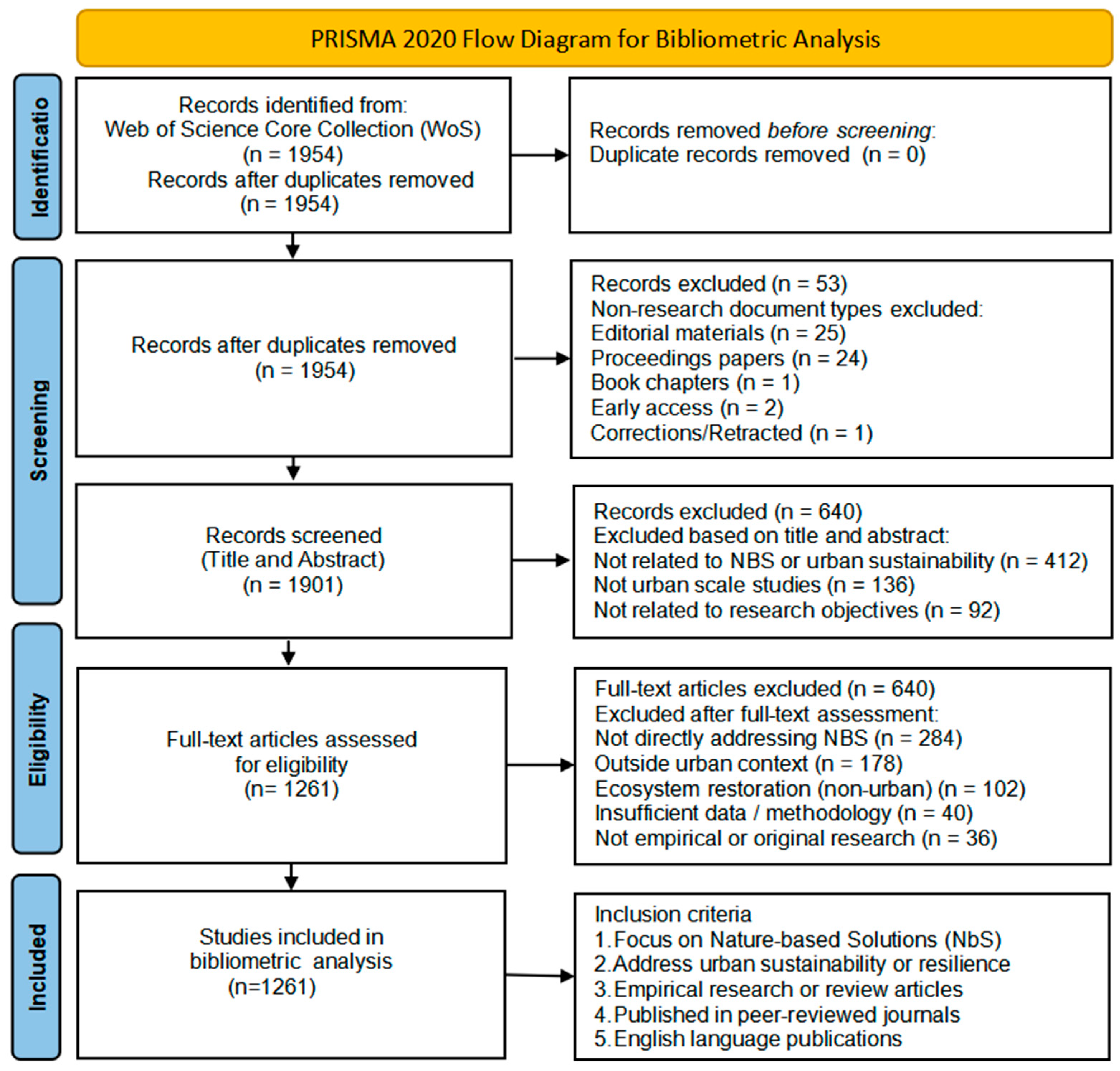
The literature selection followed PRISMA 2020 guidelines in this study. Starting from 1954 WoS records with zero duplicates identified, we first excluded 53 non-academic document types, then discarded another 640 irrelevant articles via title–abstract and full-text evaluation. All retained papers satisfied the five predefined inclusion criteria, leaving 1261 eligible documents for subsequent bibliometric analysis. The complete screening process is illustrated in Figure 2.

2.2. Data Processing and Analysis Methods

The present study employed bibliometric analysis, using the Web of Science Core Collection as the data source, to systematically organize and quantitatively analyze the relevant literature. Through statistical and visualization techniques, bibliometric analysis effectively reveals the development trends, knowledge structures, collaborative relationships, and thematic evolution within the research field, providing a solid quantitative foundation for academic research in the area of urban sustainable development.
During data processing and analysis, VOSviewer 1.6.20 was first used to conduct collaboration network and keyword clustering analyses on the sample literature. The time range covered 2005–2025 with a 1-year time slice. Documents were screened via the g-index (k = 25) with LRF = 3.0, L/N = 10, LBY = 5, e = 1.0 and set the minimum keyword occurrence threshold fixed at 20. VOSviewer possesses the capability to efficiently process large-scale literature data and can intuitively display collaboration relationships and aggregation characteristics across different levels—such as authors, institutions, and countries—through network visualization. The present study used VOSviewer 1.6.20 to construct collaboration network diagrams of publishing countries, core authors, and high-output institutions, and utilized keyword co-occurrence networks to reveal research hotspots, thematic clusters, and their underlying connections in the field of NbS-driven urban sustainable development.
Tools such as CiteSpace 6.4.R1 and Bibliometrix 4.1.3 were employed to conduct co-citation analysis and explore thematic evolution trends. CiteSpace can uncover latent connections among publications, identify the knowledge base and research frontiers of the field, and prune co-citation networks using the Pathfinder algorithm to ensure the clarity and validity of the network structure. The present study utilized CiteSpace to identify high-impact references and their academic standing in the field of NbS and urban sustainable development. Concurrently, Bibliometrix 4.1.3 was employed for the time-series analysis of keywords and thematic visualization, revealing the phased evolution and multidimensional expansion trends of research hotspots in the NbS field. Through the coordinated application of multiple software tools, this study achieved a systematic bibliometric analysis and knowledge mapping of the collaborative networks, knowledge base, and thematic evolution in the field of NbS-driven urban sustainable development.
Additionally, GIS spatial visualization serves as a methodological extension of bibliometrics. This technique geocodes literature metadata to introduce a geographic dimension, which validates and supplements quantitative bibliometric results.

3. Results

3.1. Trends in Publication and Disciplinary Distribution

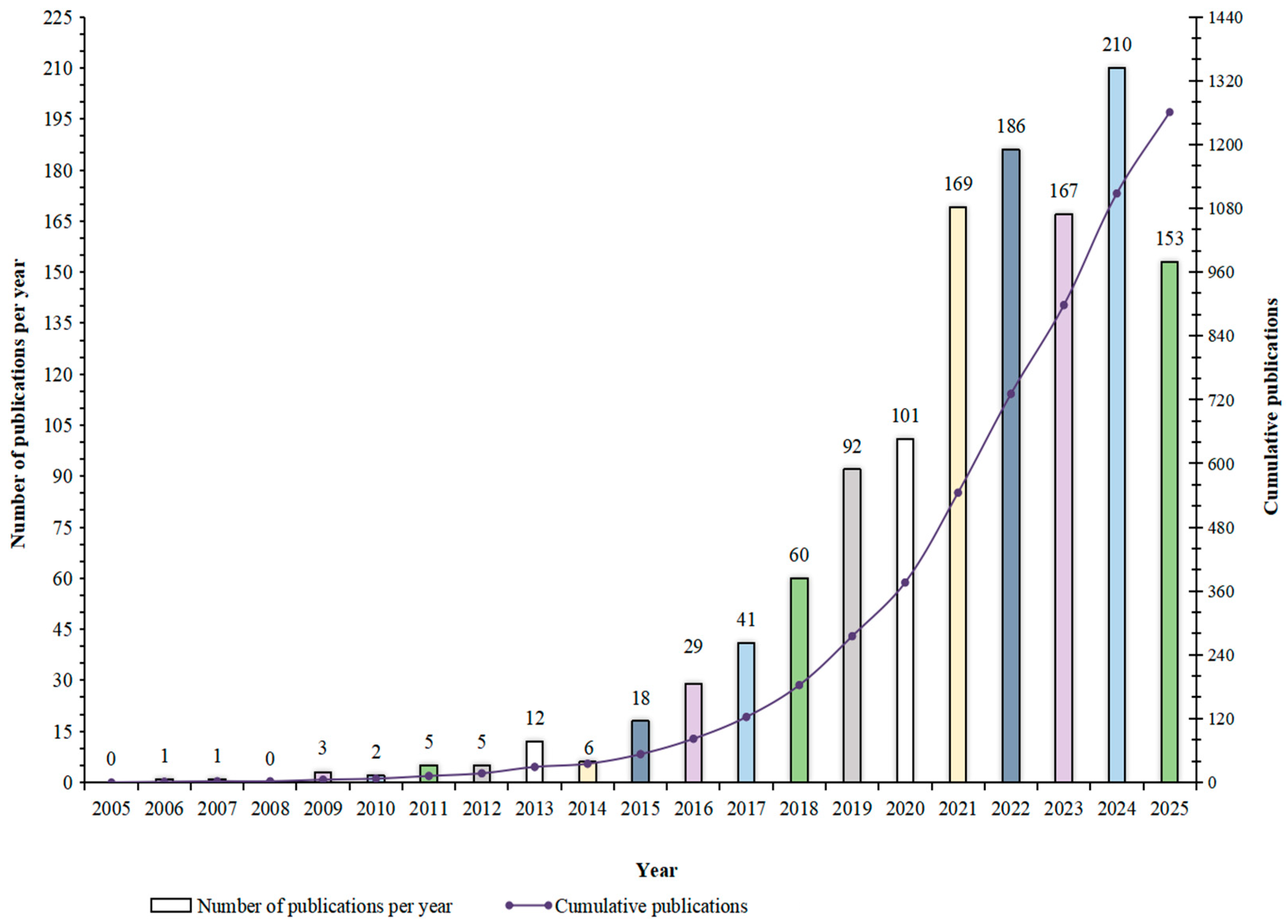
An analysis of annual publication trends helps reveal the developmental trajectory of research themes, the evolution of disciplinary focus, and potential future research directions. Figure 3 illustrates the changes in annual publication volume in this research field from 2005 to 2025. It can be observed that from 2005 to 2012, the number of publications grew slowly, with an average of fewer than five papers per year and a cumulative total of only 17 papers, indicating that the research was still in its nascent stage. Literature from this period primarily focused on conceptual discussions and preliminary case studies, and NbS had not yet become a mainstream strategy for urban sustainable development. Starting in 2013, the annual number of publications began to increase significantly, reaching 18 by 2015, indicating that the application of NbS in urban sustainable development was gradually being recognized and adopted. From 2016 to 2020, the annual number of publications continued to rise, increasing from 29 to 101, with an average annual growth rate exceeding 35%. During this phase, NbS research gradually focused on practical application issues such as ecological infrastructure, green spaces, and climate adaptation, marking the entry of the research into a period of rapid development.
From 2021 to 2024, the number of publications experienced explosive growth. In 2021, there were 169 articles; this figure further increased to 186 in 2022. Although there was a slight decline to 167 in 2023, the number rose again to 210 in 2024, setting a new annual record. During this phase, NbS research has developed a mature theoretical framework and diversified practical pathways. The relevant literature covers a wide range of topics, spanning multiple interdisciplinary fields such as climate resilience, social equity, and urban health, reflecting the highly comprehensive and cutting-edge nature of this subject.
Overall, over the past 20 years, research on NbS and urban sustainable development has undergone a phased evolution characterized by a slow start, steady growth, and rapid expansion. This trajectory aligns closely with global sustainable development agendas (such as the United Nations 2030 Agenda for Sustainable Development), climate change policy frameworks, and the NS strategy promoted by the European Union. This trend not only reveals the growing importance of this topic within the academic community but also indicates its broad prospects for development in policy practice and interdisciplinary research.
Journal contribution analysis helps identify the primary channels for knowledge dissemination and the landscape of academic influence within this research field, thereby revealing the distribution characteristics of research outputs across different disciplinary platforms. Table 1 lists the top ten core journals. Statistical results show that the top ten core journals collectively published 485 relevant articles, accounting for 38.4% of the total, indicating that these journals have played a central leading role in knowledge dissemination and disciplinary development. Among them, “Sustainability” ranks first with 156 publications, demonstrating its sustained focus on NbS research and strong inclusivity. However, the journal’s impact factor (IF = 3.3) is relatively low, suggesting that its contribution is primarily reflected in its quantitative advantage and broad coverage of research topics, while its academic influence remains somewhat limited. Close behind are “Land” (76 articles) and “Urban Forestry and Urban Greening” (58 articles). Although “Urban Forestry and Urban Greening” has a relatively small number of publications, its citation count (NC = 2719) is high, and its impact factor reaches 6.7, demonstrating its outstanding academic influence in green infrastructure and urban ecology topics, characterized by “quality over quantity.” Sustainable Cities and Society” ranks sixth with 29 publications and 1410 citations, yet its impact factor is as high as 12, making it one of the most influential journals in the field. This indicates that while the journal does not hold a quantitative advantage, it leads in the publication and dissemination of high-quality research.
Overall, NbS-related research findings are primarily distributed across mainstream international journals at the intersection of multiple fields, including environmental science, urban studies, and sustainable development. This reflects both the breadth of research topics and highlights their policy-oriented nature and practical value. As issues such as urban climate resilience and green infrastructure continue to gain prominence, NbS research in high-impact journals like “Sustainable Cities and Society” is likely to increase further, propelling the field into a phase of deeper development.
Statistical analysis of the Web of Science classifications reveals that this research exhibits significant interdisciplinary characteristics, spanning multiple fields including environmental science, urban planning, ecology, and engineering. Table 2 lists the top 20 research fields. Among all research fields, Environmental Sciences ranked first with 601 publications, accounting for nearly 50% of the total, indicating that this topic holds a central position within the field of environmental science. Environmental Studies follows closely behind (487 papers), reflecting that NbS not only focuses on natural ecosystems themselves but also emphasizes the coupling relationships among environmental policies, governance mechanisms, and social systems. Green Sustainable Science and Technology ranks third (305 papers), indicating that sustainable technologies and green innovation have become key directions in NbS research. Fields closely related to urban development, such as Urban Studies (213 papers) and Regional Urban Planning (135 papers), also occupy prominent positions, indicating that NbS possesses a broad theoretical and applied foundation in urban spatial planning, enhancing urban resilience and promoting coordinated regional development. The continued contributions from traditional ecological fields, such as Ecology (100 papers) and Forestry (82 papers), ensure the ecological foundation for the theoretical development of NbS.
In summary, the role of NbS in promoting urban sustainable development is a highly interdisciplinary research topic. Its research foundation is rooted in environmental science and urban planning, with ecology and engineering integrated into its development. In the future, it may further expand into fields such as climate science, public health, and digital remote sensing, demonstrating a trend of multidimensional, synergistic disciplinary convergence.

3.2. Geographic Distribution of Publications

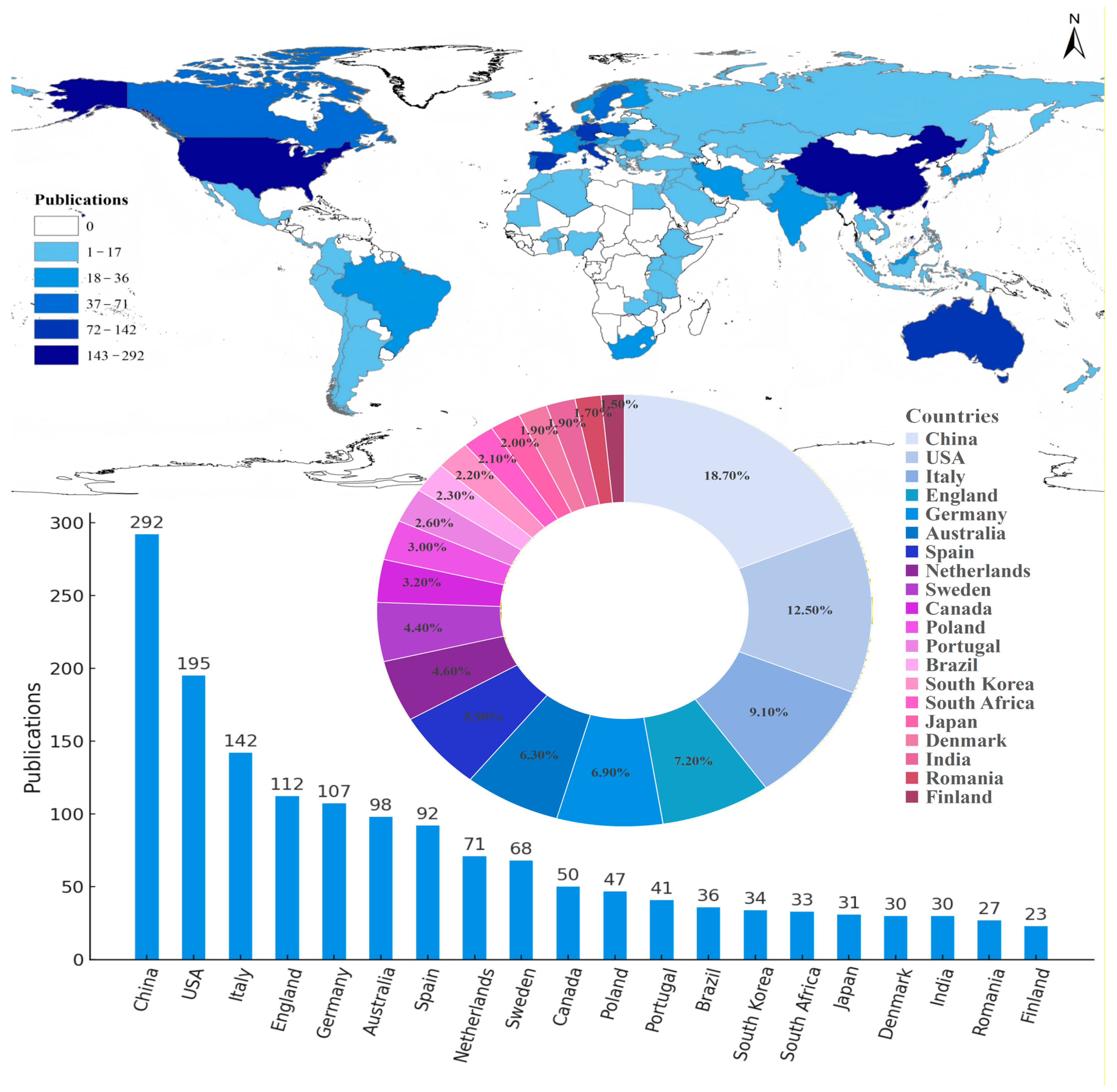
Analyzing the global publication landscape of Nature-based Solutions (NbS) and urban sustainable development research at the national level helps reveal the level of participation and dominant forces within the international academic community in this field. Figure 4 illustrates the number of publications by country and their geographical distribution. As shown in the figure, China ranks first globally with 292 publications, accounting for 23.2% of the total, reflecting the strong research momentum and sustained focus of Chinese scholars in the field of NbS for promoting urban sustainable development. The United States follows with 195 publications (15.5%), closely trailed by Italy (142, 11.3%), the United Kingdom (112, 8.9%), and Germany (107, 8.5%). Countries such as Australia, Spain, the Netherlands, Sweden, and Canada are also active contributors, each publishing over 50 papers, demonstrating their significant academic influence in the field of NbS research.
In terms of geographical distribution, high-output countries are primarily concentrated in developed nations in Europe and the United States, as well as major economies in the Asia-Pacific region, reflecting a combination of research resources, policy support, and academic traditions. At the same time, NbS research in many developing countries and nations of the Global South remains in its early stages, with publication volumes generally low in Africa, Latin America, and Central Asia, highlighting the geographical imbalance in global NbS research.
In summary, research on NbS and urban sustainable development has formed a multi-polar structure centered on China, the United States, and Europe, demonstrating strong potential for transnational collaboration. In the future, North–South cooperation and interregional exchange of experiences should be further strengthened to enhance the applicability and replicability of research findings across different urban contexts.
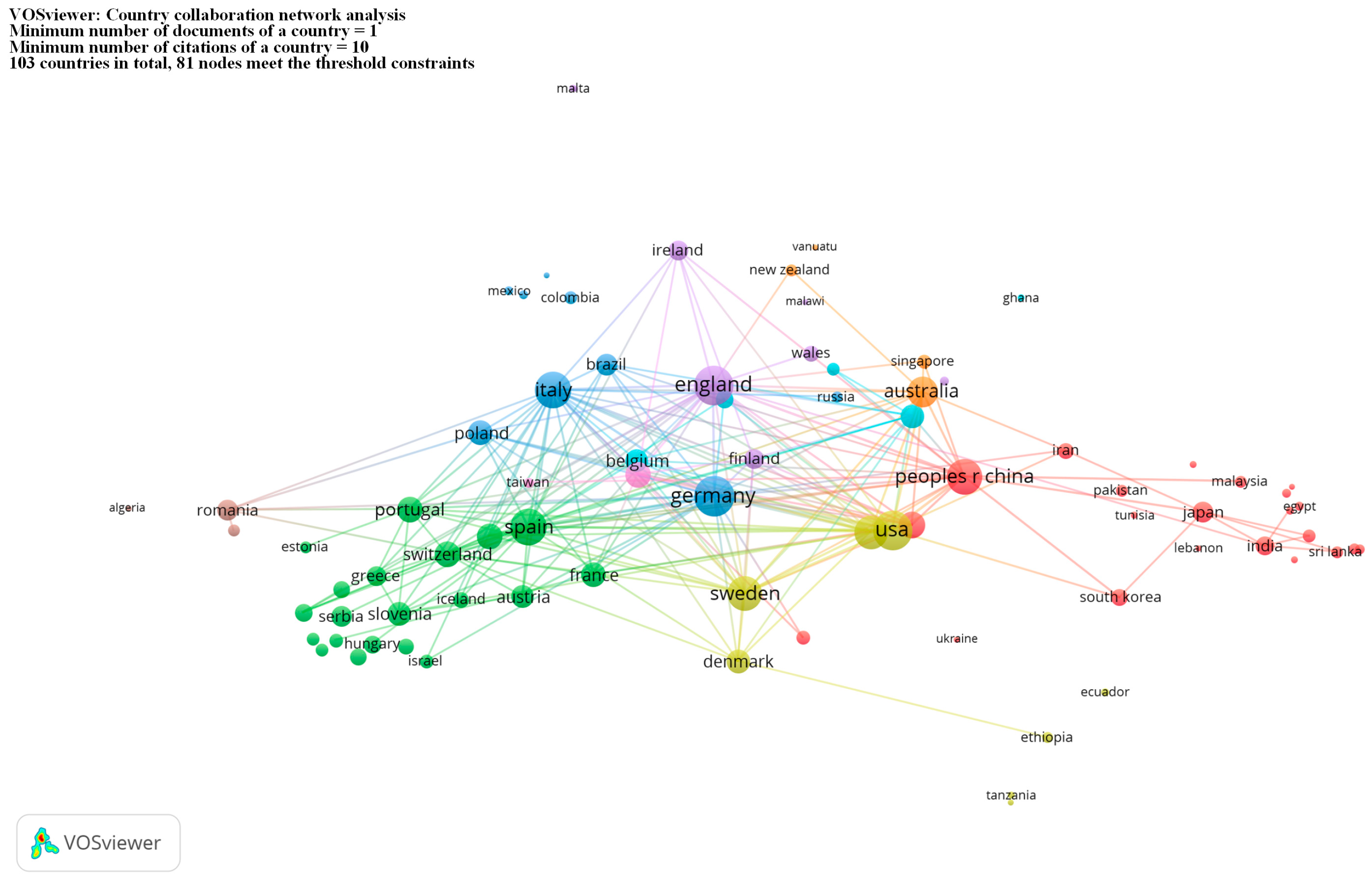
To further reveal the pattern of academic cooperation among countries in the field of global NbS for urban sustainable development, this study utilized the VOSviewer 1.6.20 software to conduct a visual analysis of national collaborative relationships. As shown in Figure 5, countries such as China, the United States, the United Kingdom, Germany, Italy, Australia, and Spain feature prominent nodes concentrated in the central region; this visual pattern, alongside their relatively high publication counts, may suggest frequent cross-border co-authorship ties across these nations, though formal network centrality metrics are not quantified in this visualization. In particular, China and the United States display broad co-authorship linkages with numerous partners across Asia, Europe, and Oceania, which may create channels for cross-border academic communication within the global NbS research community. European scholars maintain tight collaboration, with the UK, Germany, Italy, Spain and the Netherlands forming closely connected research clusters with frequent knowledge exchange. Such active cooperation stems from EU policy and financial backing for urban sustainability and ecological innovation, alongside Europe’s long-term investment in NbS research and open academic traditions. Globally, NbS research features multi-polar networked collaboration led by Europe, the US and China. Future work should boost cross-regional knowledge exchange and strengthen developing countries’ capacity for international cooperation to advance NbS implementation.

3.3. Influential Authors and Institutions

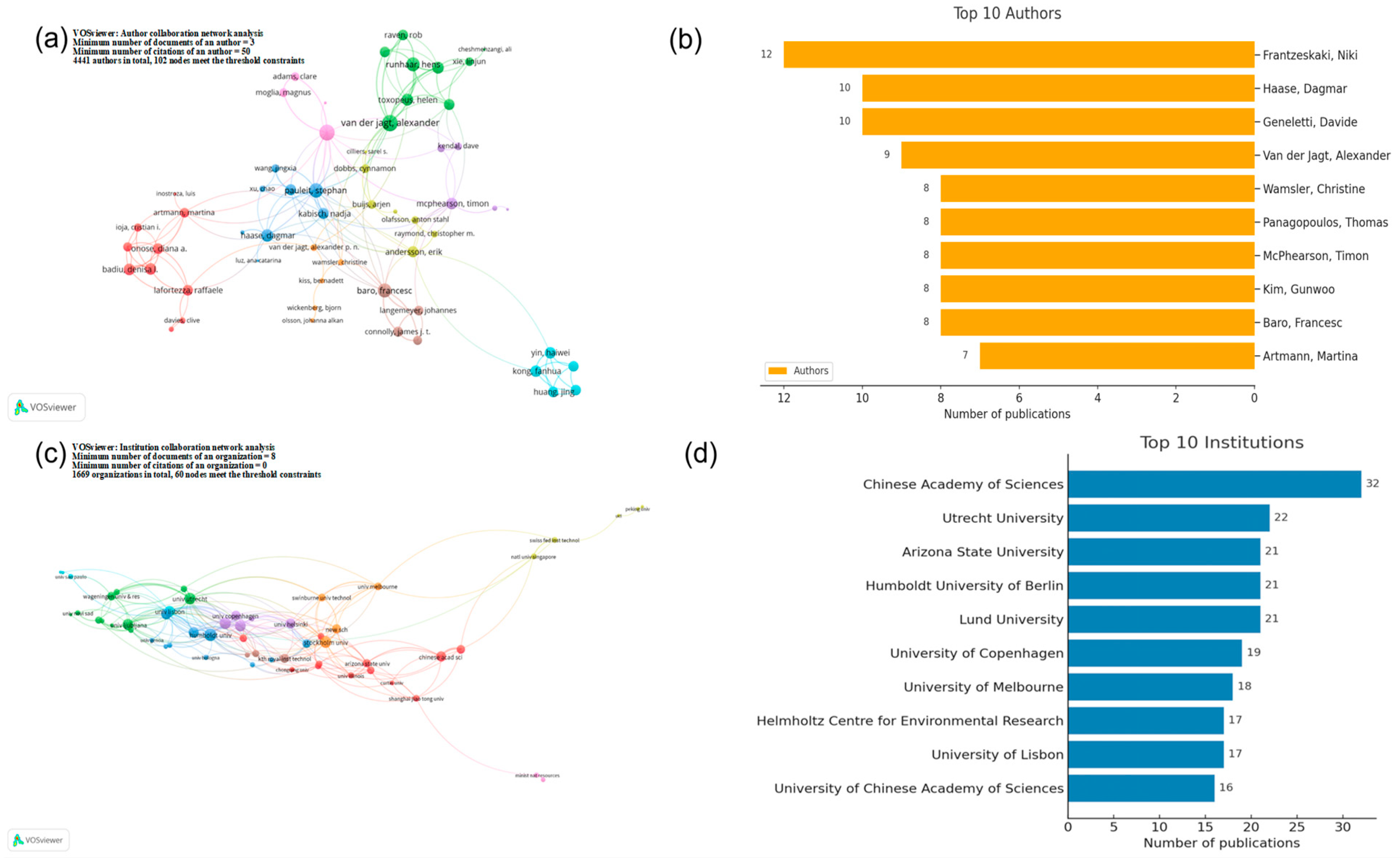
This study uses VOSviewer to map author and institutional collaboration networks for NbS urban sustainability research (Figure 6), reflecting scholars’ academic output.
Figure 6b lists top productive researchers: Frantzeskaki, Niki leads with 12 papers on urban sustainability transition and NbS policy integration. Haase, Dagmar and Geneletti, Davide each have 10 works, focusing on urban ecosystem services and spatial planning evaluation, respectively. Van der Jagt (nine papers) and Wamsler (eight papers) follow, researching NbS social governance and climate resilience pathways.
The author collaboration network (Figure 6a) shows typical core–periphery patterns. The network centered on Van der Jagt, Alexander shows a high degree of cohesion, connecting multiple sub-clusters. He has established stable transnational collaborative relationships with scholars such as Runhaar, Hens and Toxopeus, Helen, creating a connected European research group focused on urban NbS policy in the field of urban NbS policy research in Europe. Another tight cluster led by Haase, Dagmar, Kabisch, Nadja and Pauleit, Stephan concentrates on urban green space and ecological equity research.
At the institutional level (Figure 6d), the Chinese Academy of Sciences ranks first with 32 papers. Utrecht University (22) takes second, while Arizona State University, Humboldt University of Berlin and Lund University tie for third (21 each). These institutions advance both theoretical NbS research and international knowledge sharing.
The institutional collaboration map (Figure 6c) presents obvious clustered cooperation groups. Copenhagen, Stockholm and Lund University hold central network positions with high betweenness centrality. Such topological features may imply that these institutions could act as potential linkages across separate collaborative clusters, which might facilitate cross-group knowledge exchange and transnational research cooperation. An active East Asian alliance consisting of the Chinese Academy of Sciences, Tsinghua University and Shanghai Jiao Tong University focuses on NbS technology and urban ecosystem modeling, maintaining intercontinental cooperation with North American universities.
In summary, core authors and high-output institutions form a mature collaborative network, with cross-disciplinary and international cooperation expanding research depth. Future work should strengthen the North–South academic exchange and link policy research with practical NbS governance worldwide.

3.4. Research Knowledge Base

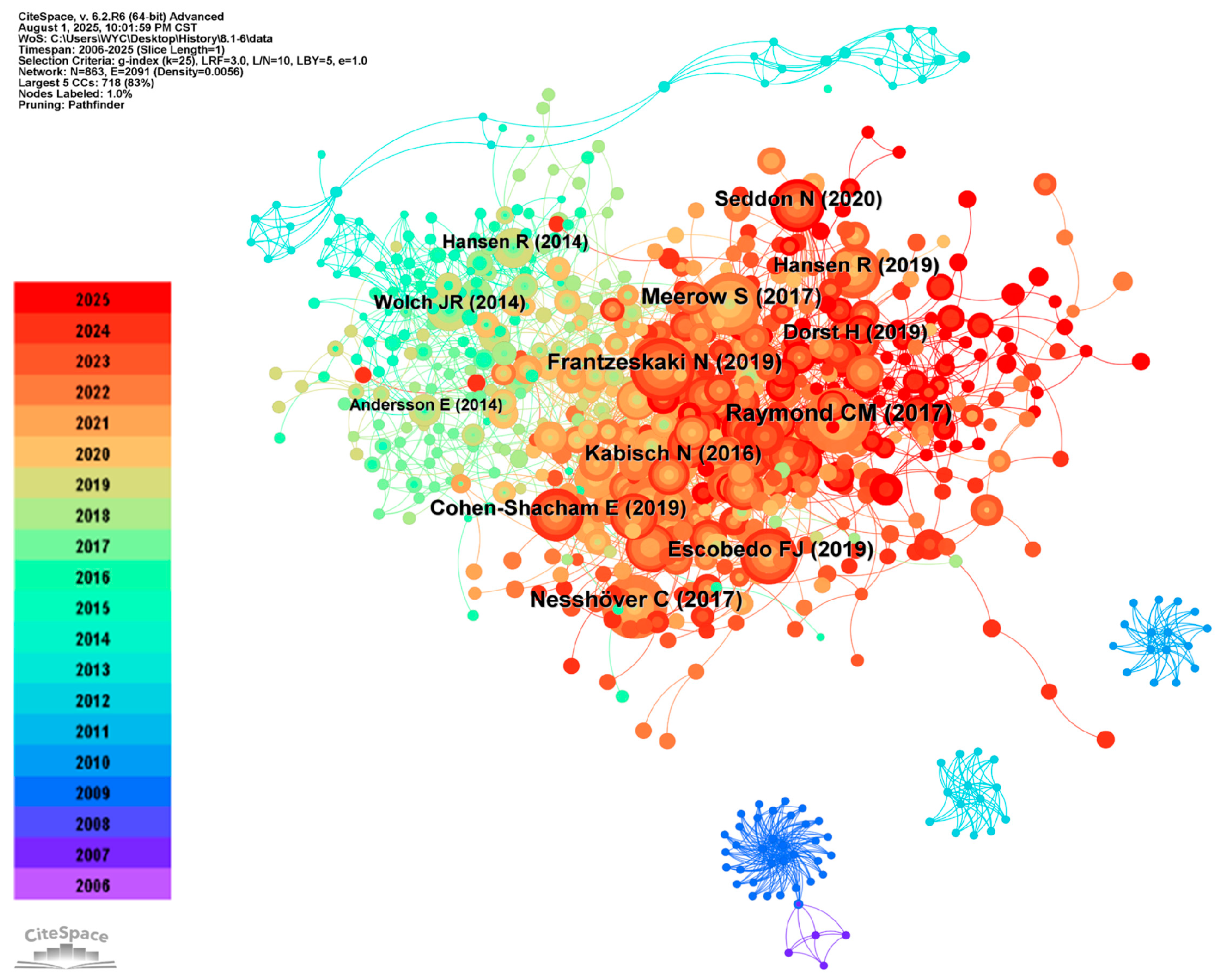
Co-citation refers to the phenomenon that two documents are cited together in a subsequent document, revealing potential connections in their knowledge content and identifying the knowledge base, research hotspots, and development trajectories within a specific field. The present study employed CiteSpace to conduct co-citation analysis on the relevant literature from 2005 to 2025. Figure 7 illustrates the co-citation network structure, where nodes represent publications, node size reflects citation frequency, and color indicates the temporal attributes of the publications. The network was pruned using the Pathfinder algorithm to ensure the clarity and validity of the network structure.
Among the highly cited publications, the 2017 European Commission report Nature-Based Solutions in the EU: Innovating with nature to address social, economic and environmental challenges stands as a landmark node within the co-citation network, accumulating 433 citations to reflect its foundational academic and policy influence. This official document constructs a top-tier holistic framework that systematically unpacks the multi-faceted social, economic and environmental co-benefits delivered by urban NbS, identifies prominent practical barriers to on-the-ground deployment, and advocates standardized assessment systems and integrated multi-stakeholder governance to scale up urban blue–green infrastructure development. It lays core theoretical and policy foundations for subsequent global research on NbS planning, impact evaluation and institutional arrangement.
Additionally, the 2020 work authored by Liberalesso T., published in Land Use Policy, constitutes another influential node with a total citation count of 187. Drawing on worldwide urban empirical data, this paper conducts targeted analysis of incentive mechanisms for vertical green infrastructure such as green roofs and green walls. It classifies mainstream policy instruments adopted by global cities and pinpoints key implementation constraints, including unequal financial support for urban greening and inadequate long-term maintenance incentives. This research provides actionable empirical references for optimizing targeted NbS policy design and advancing the equitable provision of urban green space across diverse urban contexts.

3.5. Knowledge Structure and Clustering Characteristics

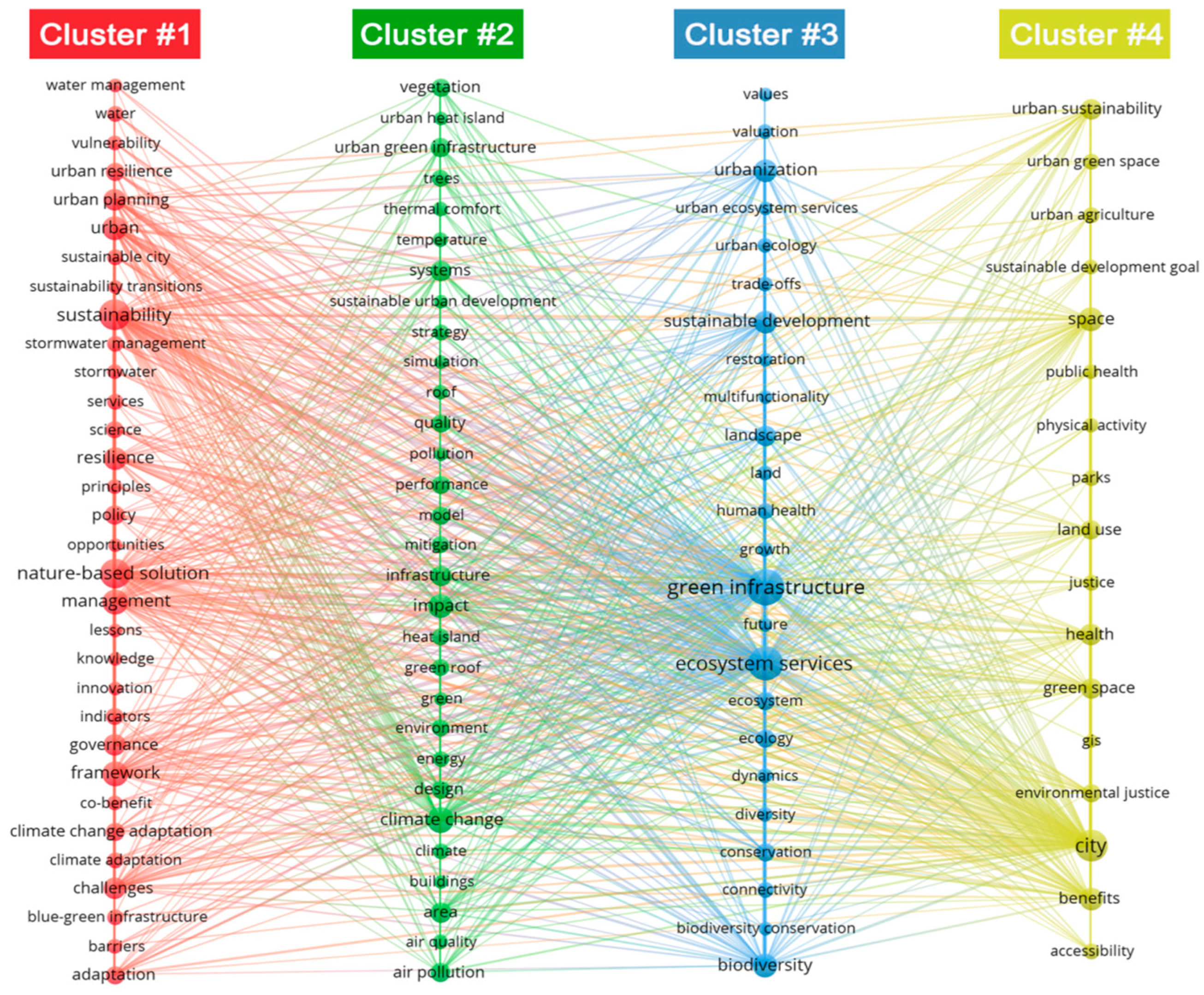
To comprehensively reveal the knowledge structure and research hotspots of NbS in the field of urban sustainable development, we utilized the VOSviewer software to screen 4731 keywords and identify 112 high-frequency terms appearing at least 20 times. Subsequently, through manual consolidation of synonyms and phrases with similar meanings, the keywords underwent standardization, ultimately retaining 104 keywords, which were used to construct a keyword co-occurrence network diagram (see Figure 8). In this network diagram, node size represents keyword frequency, line thickness reflects co-occurrence strength, and different node colors denote distinct thematic clusters. Through clustering algorithms, related research themes were automatically grouped into several clusters, thereby further clarifying the primary directions and hotspots of NbS research in urban sustainable development.
Four thematic clusters were identified in the keyword co-occurrence network.
Cluster 1 centers on water management, urban resilience, sustainable city and climate adaptation, which explores NbS applications in climate and urban risk control. Within this cluster, urban resilience primarily describes cities’ hydrological recovery capacity against flash floods and stormwater hazards enabled by blue–green NbS; this research branch highlights policy and institutional instruments to lift urban adaptive capacity and frames NbS as a core strategy for water regulation and resilience development.
Cluster 2 focuses on environmental benefits and technical pathways, with core keywords including urban heat islands, green infrastructure and air quality. Relevant research relies on simulation and modeling to quantify the ecological functions of NbS such as heat alleviation and climate regulation.
Cluster 3 revolves around ecosystem services and Sustainable Development Goals, covering biodiversity and human well-being. The existing literature confirms that NbS act as a feasible pathway to facilitate the achievement of UN SDGs together with other governance tools, and research perspectives have expanded from isolated ecological assessment to integrated socio-ecological analysis that underscores the multi-functional characteristics of NbS.
Cluster 4 features a social equity and public health orientation, linking the spatial allocation of urban green spaces to environmental justice and residents’ public health, which reveals a social-focused research transition beyond pure ecological benefit evaluation.
Clusters differ in research scales: sustainability covers watershed-city macro scales, green infrastructure applies to all spatial tiers, city studies target neighborhoods, and heat island research fills district-level gaps. Based on PRISMA 2020, this study uses CiteSpace and VOSviewer for keyword clustering, only summarizing existing model results without independent simulation. In impact dimensions: sustainability pursues flood and climate governance gains, green infrastructure delivers diverse ecological benefits, and urban research prioritizes public health and environmental equity. This triple framework identifies distinct cluster research focuses.
The four interconnected clusters form a progressive socio-ecological framework. Cluster 1 provides institutional support; research on ecological technologies within Cluster 2 supports the ecosystem service themes of Cluster 3, which further advances the social equity objectives of Cluster 4.

3.6. Evolution of Themes and Trend Analysis

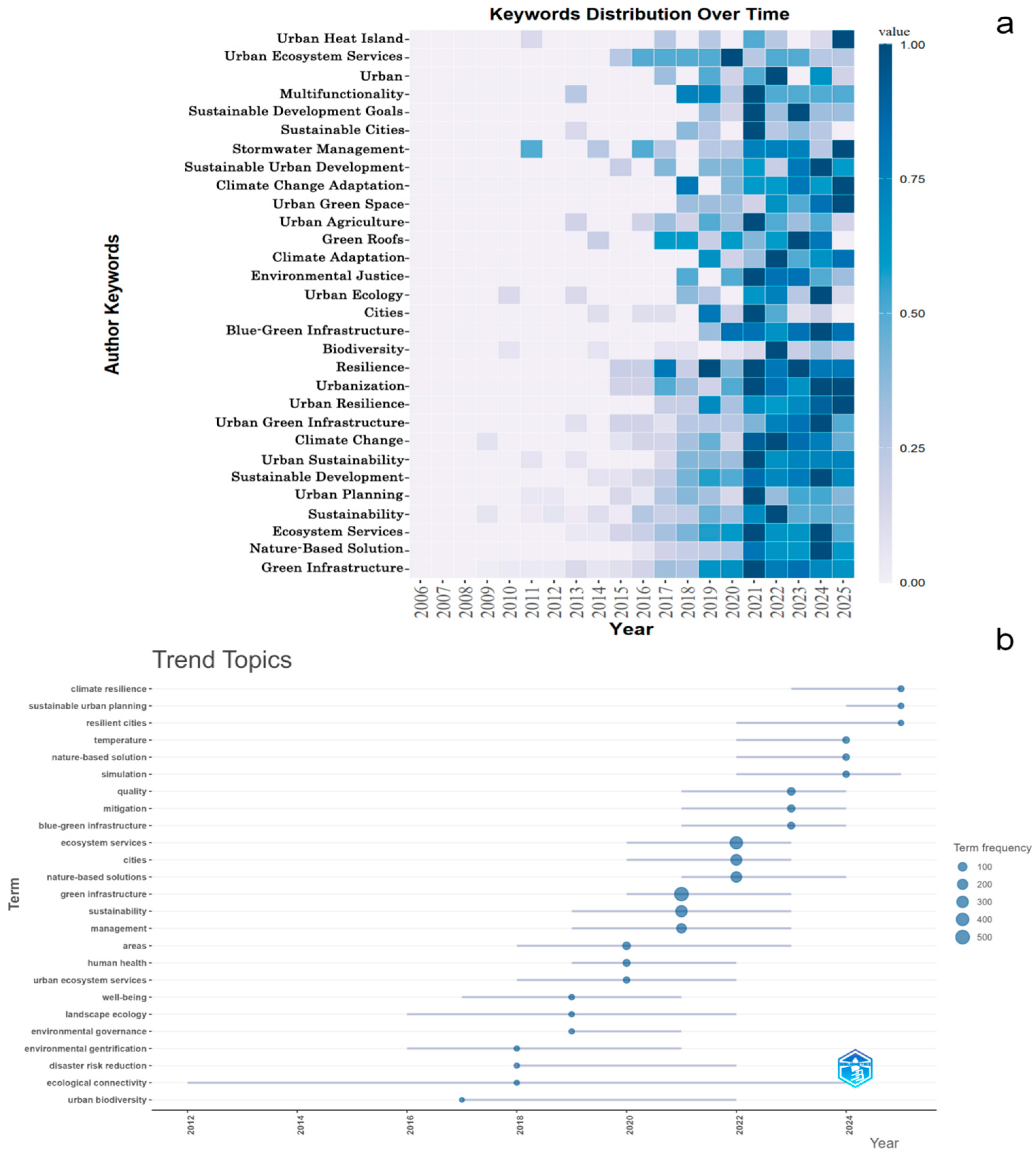
To uncover thematic shifts in urban NbS research, this study uses Bibliometrix 4.1.3 to visualize keyword temporal trends. Figure 9a (2006–2025 heatmap) tracks changing research priorities, and the bubble chart in Figure 9b outlines research evolution and emerging hotspots.
The heatmap (Figure 9a) shows NbS research developed from scattered early attempts to systematic integrated analysis. Early studies (2006–2012) addressed urban heat islands, ecosystem services and stormwater risk control. Spurred by SDGs and the Paris Agreement post-2015, green infrastructure and climate adaptation became mainstream, launching multidimensional research.
In the keyword temporal evolution section, urban resilience highlights thermal adaptive capacity to extreme heat and urban heat island effects, coupled with social equity recovery for vulnerable groups. Recent studies (2020–2025) focus on urban resilience, sustainable cities and environmental justice, expanding research from pure ecological benefits to social equity and governance.
Yearly keywords can be grouped into environmental, social and urban governance dimensions matching SDGs. The 2021 keywords cover climate, urban agriculture and planning (SDG 6,10,11,13,15). Environmental themes dominated 2024, while 2025 focused on heat adaptation, equitable green space and urban resilience. Such keywords support SDG implementation.
The bubble chart (Figure 9b) presents three developmental phases with interdisciplinary trends. Ecosystem services and green infrastructure were core topics (2012–2016). From 2017 to 2020, scholars shifted to urban health, governance and disaster reduction. Since 2021, climate resilience, environmental gentrification and ecological connectivity have become new focuses, integrating NbS with socio-ecology and environmental justice. This trend pushes the field toward interdisciplinary, practice-oriented research.
In summary, NbS research has shifted from single ecological assessment to integrated socio-ecological analysis. Future research needs to balance climate mitigation, social equity and urban sustainable transformation as the core agenda.

3.7. Quantitative Analysis for National Collaboration Networks

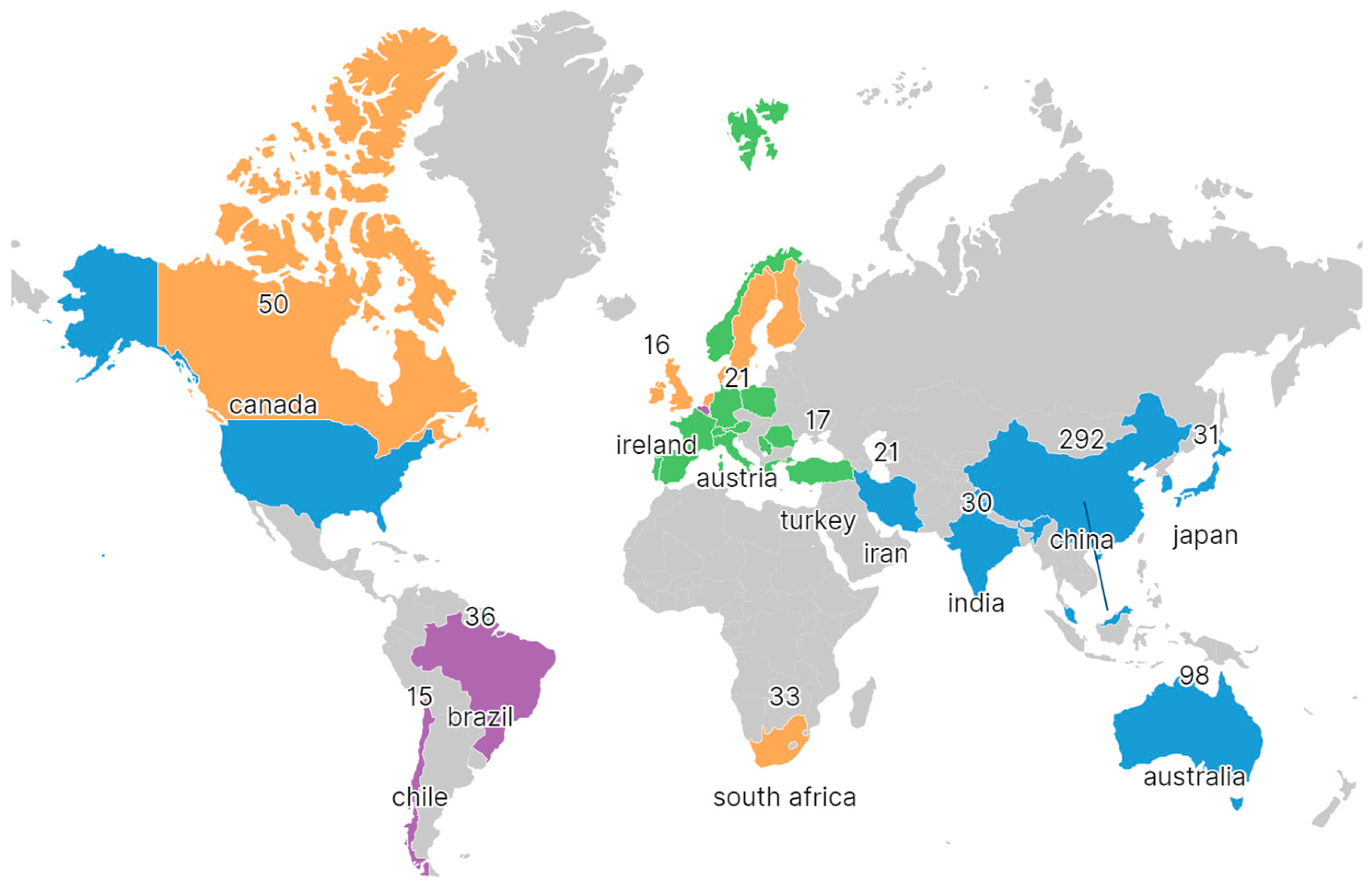
Figure 10 illustrates global urban NbS publication distribution, with labels marking national paper quantities. Outputs cluster in East Asia, Western Europe and Oceania. China leads with 292 papers, followed by Australia (98) and Canada (50). Brazil, South Africa and India have slowly growing research outputs, while Eastern Europe, Central Asia and most of Africa remain understudied.
The above spatial statistics are objective bibliometric results. The following cross-regional thematic analysis is a qualitative interpretation, not direct mapping output.
China’s dominant publications feature localized research orientations distinct from European and North American work. Stemming from the 2014 Sponge City program, domestic studies focus on blue–green–gray infrastructure and flood control instead of institutional governance [24]. Chinese scholarship integrates NbS into territorial spatial planning for ecological security and watershed management, and links flood regulation with carbon sequestration under dual-carbon goals, a rarely explored topic abroad.
Europe prioritizes environmental justice and cross-border cooperation, whereas the U.S. and Australia concentrate on ecosystem service assessment and public health. These thematic gaps may result from divergent national policies and urban challenges [25].
Table 3 lists the top 10 countries with the largest publication volume on Nature-based Solutions and urban sustainability, covering total articles, independent publications (SCPs), international collaborative publications (MCPs), collaboration percentage and average citations per paper. China leads the ranking with 284 papers (22.5%), followed by Italy and England. All listed countries maintain a high international collaboration level with MCP percentages over 80%. Western European countries such as Sweden and the Netherlands show superior average citation performance, while China’s large publication output is accompanied by relatively lower average citations, indicating gaps in the overall influence of its research outputs.

4. Discussion

4.1. Key Findings

Based on a systematic bibliometric analysis of 1261 articles from the Web of Science Core Collection (2005–2025), this study reveals several key characteristics of the Nature-based Solutions (NbS) and urban sustainable development fields.
First, the field exhibits a significant growth trend, transitioning from a conceptual exploration phase to a rapid expansion phase since 2013. In particular, empirical and policy-oriented research has notably increased since 2020 [26,27,28].
Second, the disciplinary composition exhibits a highly interdisciplinary nature, spanning fields such as environmental science, ecological engineering, sustainable technology, and urban studies and planning [29,30]. This indicates that NbS research has expanded from a singular focus on ecological performance assessment to multidimensional perspectives encompassing governance, planning, and the social sciences [31,32,33].
Third, the geographical distribution of research exhibits a “multicentric yet uneven” pattern, with China, the United States, the United Kingdom, Italy, and Germany leading in output, while Africa, Latin America, and Central Asia lag significantly, reflecting regional disparities in global knowledge production and practice dissemination [34,35].
Furthermore, an analysis of the knowledge structure identified four core research themes: (1) policy governance and adaptive management [36]; (2) environmental effects and technical pathways [37]; (3) ecosystem services and the Sustainable Development Goals [38]; (4) social equity and public health [39].

4.2. Research Hotspots and Trends

Keyword evolution and cluster analysis reveal five core hotspots and trends in NbS and urban sustainable development research.
First, research priorities have shifted from single ecological effects toward multi-faceted co-benefits: studies published between 2006 and 2016 mainly addressed ecological functions including heat mitigation and stormwater regulation, while recent work further highlights NbS-associated public health, social and economic gains [40,41].
Second, institutional and governance topics have grown markedly in importance. Scholarly attention has transferred from isolated case demonstrations to stakeholder participation and policy embedding, exploring how NbS can be systematically integrated into urban planning and fiscal frameworks [42,43].
Third, social equity and accessibility have attracted rising academic attention after 2020, with abundant discussions on environmental justice, green space access and green gentrification to unpack the uneven social distribution impacts of NbS [44,45].
Fourth, research methodologies have diversified and integrated. Beyond conventional field monitoring and numerical simulation, scholars widely adopt remote sensing, big data statistics, questionnaires and participatory evaluation; bibliometric and network analytical tools are also popularly applied [46,47].
Fifth, cross-scale and cross-sector collaboration has become a mainstream orientation. NbS research has extended from individual green infrastructure to watershed connectivity and multi-level urban-regional planning, emphasizing systematic solutions and interdepartmental joint governance [48,49,50].
Overall, NbS research is transitioning toward a comprehensive research paradigm characterized by “multi-objective, multi-scale, interdisciplinary, and governance-oriented” approaches, with the research focus shifting from exploring “whether it is effective” to “how to implement and scale it effectively and equitably [51].”

4.3. Issues, Challenges and Study Limitations

4.3.1. Practical Issues and Field Challenges

Despite booming NbS research, prominent theoretical, methodological and practical challenges remain.
First, inconsistent NbS definitions across disciplines and policy contexts reduce cross-study comparability, while the absence of an integrated evaluation framework covering ecological, social and governance indicators restricts the systematic assessment of NbS benefits [52,53].
Second, NbS ecological gains may trigger green gentrification, including land value hikes and vulnerable group displacement; insufficient inclusive governance will erode the social legitimacy and sustainability of such solutions [54,55].
Third, sustained financing channels such as dedicated maintenance funds, cross-departmental budgets and private capital participation mechanisms are lacking, alongside performance-oriented incentives, which prevent NbS from developing into permanent urban public infrastructure [56,57,58].

4.3.2. Limitations of the Present Analysis

Despite rigorous design, this study has multiple limitations for result interpretation and future research.
First, only English WoS Core Collection papers were analyzed, excluding Scopus, regional databases and non-English gray literature, which underrepresents NbS achievements from the Global South and non-English regions; future bibliometric analyses should combine multilingual databases to reduce such bias.
Second, NbS inherently links urban sustainability and urban resilience as inseparable research themes [59]. Studies focusing on NbS-driven urban resilience frequently adopt sustainability-related keywords such as urban environment, urban system and sustainable urban development rather than relying solely on the standalone term “urban resilience”. Such conceptual overlap ensures our search string captures the majority of resilience-relevant publications. Nevertheless, the absence of explicit resilience-specific keywords in our query still creates minor omissions; future bibliometric work can supplement dedicated resilience terms to expand the dataset coverage.
Third, citation counts merely reflect publication exposure instead of intrinsic academic value, disturbed by publication age, self-citation and regional communication gaps, so citation-derived findings need careful interpretation.

5. Conclusions

Based on 1261 eligible WoS articles published from 2005 to July 2025, this study adopts VOSviewer, CiteSpace and Bibliometrix to systematically map the global research landscape of urban NbS for sustainability. The field has boomed since 2013 with strong interdisciplinary features and a multicentric yet uneven global distribution, and four core thematic clusters are identified. We further summarize theoretical contributions and targeted policy proposals below.

5.1. Research Contributions

This study constructs a long-term 2005–2025 GIS-aided bibliometric framework to systematically map publication trends, global collaboration networks and the thematic evolution of urban NbS research; unlike recent reviews, it incorporates overlooked post-2023 environmental justice literature and addresses flaws of prior single-case or thematic reviews to produce a replicable field knowledge map. Keyword clustering further identifies four core research clusters and reveals the field’s shift from ecological assessment to social governance, equity and human health, establishing a structured framework for future theoretical integration. Rather than merely presenting descriptive bibliometric statistics as most previous reviews do, this paper further dissects the four causal drivers behind the thematic transition of NbS research, and such causal evolutionary analysis strengthens the theoretical novelty of this work. By quantifying cross-regional publication gaps and international collaboration patterns, this work pinpoints barriers to large-scale NbS deployment and delivers differentiated North–South policy suggestions, offering empirical evidence for urban resource allocation, governance and financing design. Additionally, this paper demonstrates a replicable multi-tool analytical pipeline combining CiteSpace, VOSviewer and Bibliometrix for tracking academic hotspots, providing methodological references for interdisciplinary review studies.

5.2. Policy and Research Recommendations

The following policy and governance recommendations are interpretive insights derived from bibliometric results and literature synthesis, not direct statistical outputs of this analysis:
Future reviews should integrate Scopus, regional databases and non-English gray literature to better compare Global South experiences. Scholars and practitioners need to jointly build unified ecological–social–governance NbS indicators and long-term monitoring systems for cross-case research and policy-making. More controlled, quasi-experimental and long-term panel studies are required to verify NbS long-term effects and causal mechanisms. NbS planning and assessment must address environmental justice, green access and gentrification risks to protect vulnerable groups. Pilot performance-based finance, public–private partnerships and community co-management are needed to resolve funding and interdepartmental coordination obstacles.
Overall, this study systematically maps the evolutionary trajectory, knowledge structure, and collaborative landscape of NbS in urban sustainable development research via bibliometric statistics, which suggests a trend toward multidimensional integration—shifting from studies of ecological efficacy to governance, social justice, and health. Despite limitations arising from database and language selection, this paper offers a reference for understanding the NbS research landscape, identifying research gaps, and outlining potential future research directions. The outlook for practical NbS implementation below is an extended interpretation rather than a direct statistical result; future research may strengthen long-term causal evidence to support sustainable, inclusive, and replicable NbS practices across diverse urban contexts.

Author Contributions

Conceptualization, Li Zhu and Lien-Chieh Lee; methodology, Li Zhu and Lien-Chieh Lee; software, Li Zhu; validation, Li Zhu; investigation, Li Zhu and Xudong Yuan; resources, Wei Zhou and Ting Wu; data curation, Li Zhu and Lien-Chieh Lee; writing—original draft preparation, Li Zhu, Lien-Chieh Lee and Meihua Song; writing—review and editing, Meihua Song, Li Zhu and Lien-Chieh Lee; visualization, Li Zhu; supervision, Lien-Chieh Lee, Junjun Liu, Wei Zhou and Ting Wu; funding acquisition, Lien-Chieh Lee. All authors have read and agreed to the published version of the manuscript.

Funding

This work was supported by the project of the Research Center for Mining and Metallurgical Culture and Economic and Social Development in the Middle Reaches of the Yangtze River; Key Social Science Project of Hubei Polytechnic University (25xjr03A); Doctoral research project at the Hubei University of Science and Technology (BK202427); Philosophy Science Research Project of the Education Department of Hubei Province (25Y035); The Open Fund of Hubei Key Laboratory of Mine Environmental Pollution Control and Remediation (2026KQHJR01).

Data Availability Statement

The original contributions presented in this study are included in the article. Further inquiries can be directed to the corresponding author.

Conflicts of Interest

The authors declare no conflicts of interest.

References

  1. Kabisch, N.; Korn, H.; Stadler, J.; Bonn, A. Nature-Based Solutions to Climate Change Adaptation in Urban Areas—Linkages between Science, Policy and Practice. In Nature-Based Solutions to Climate Change Adaptation in Urban Areas; Springer: Cham, Switzerland, 2017; pp. 1–11. [Google Scholar]
  2. Nesshöver, C.; Assmuth, T.; Irvine, K.N.; Rusch, G.M.; Waylen, K.A.; Delbaere, B.; Haase, D.; Jones-Walters, L.; Keune, H.; Kovacs, E.; et al. The science, policy and practice of nature-based solutions: An interdisciplinary perspective. Sci. Total Environ. 2017, 579, 1215–1227. [Google Scholar] [CrossRef] [Scilit] [PubMed]
  3. Raymond, C.M.; Frantzeskaki, N.; Kabisch, N.; Berry, P.; Breil, M.; Nita, M.R.; Geneletti, D.; Calfapietra, C. A framework for assessing and implementing the co-benefits of nature-based solutions in urban areas. Environ. Sci. Policy 2017, 77, 15–24. [Google Scholar] [CrossRef] [Scilit]
  4. Cohen-Shacham, E.; Walters, G.; Maginnis, S.; Janzen, C. Nature-Based Solutions to Address Global Societal Challenges; International Union for Conservation of Nature: Gland, Switzerland, 2016. [Google Scholar]
  5. Zarei, M.; Shahab, S. Nature-based solutions in urban green infrastructure: A systematic review of success factors and implementation challenges. Land 2025, 14, 818. [Google Scholar] [CrossRef] [Scilit]
  6. Cook, E.M.; Kim, Y.; Grimm, N.B.; Mcphearson, T.; Anderson, P.; Bulkeley, H.; Collier, M.J.; Diep, L.; Morató, J.; Zhou, W.Q. Nature-based solutions for urban sustainability. Proc. Natl. Acad. Sci. USA 2025, 122, e2315909122. [Google Scholar] [CrossRef] [Scilit] [PubMed]
  7. Fang, X.N.; Li, J.W.; Ma, Q.; Zhou, R.; Du, S.Q. A quantitative review of nature-based solutions for urban sustainability (2016–2022): From science to implementation. Sci. Total Environ. 2024, 927, 172219. [Google Scholar] [CrossRef] [Scilit] [PubMed]
  8. de Oliveira, F.L. Nature in nature-based solutions in urban planning. Landsc. Urban Plan. 2025, 256, 105282. [Google Scholar] [CrossRef] [Scilit]
  9. Adams, C.; Frantzeskaki, N.; Moglia, M. Mainstreaming nature-based solutions in cities: A systematic literature review and a proposal for facilitating urban transitions. Land Use Policy 2023, 130, 106661. [Google Scholar] [CrossRef] [Scilit]
  10. Frantzeskaki, N. Seven lessons for planning nature-based solutions in cities. Environ. Sci. Policy 2019, 93, 101–111. [Google Scholar] [CrossRef] [Scilit]
  11. Lafortezza, R.; Chen, J.Q.; van den Bosch, C.K.; Randrup, T.B. Nature-based solutions for resilient landscapes and cities. Environ. Res. 2018, 165, 431–441. [Google Scholar] [CrossRef] [Scilit] [PubMed]
  12. Toxopeus, H.; Kotsila, P.; Conde, M.; Katona, A.; van der Jagt, A.P.N.; Polzin, F. How ‘just’ is hybrid governance of urban nature-based solutions? Cities 2020, 105, 102839. [Google Scholar] [CrossRef] [Scilit]
  13. Hansen, R.; Buizer, M.; Buijs, A.; Pauleit, S.; Mattijssen, T.; Fors, H.; van der Jagt, A.; Kabisch, N.; Cook, M.; Delshammar, T.; et al. Transformative or piecemeal? Changes in green space planning and governance in eleven European cities. Eur. Plan. Stud. 2023, 31, 2401–2424. [Google Scholar]
  14. da Silva Bezerra, D. Nature-based solutions to climate change. Sci. Rep. 2025, 15, 22095. [Google Scholar] [CrossRef] [Scilit] [PubMed]
  15. Mayor, B.; Toxopeus, H.; McQuaid, S.; Croci, E.; Lucchitta, B.; Reddy, S.E.; Egusquiza, A.; Altamirano, M.A.; Trumbic, T.; Tuerk, A.; et al. State of the art and latest advances in exploring business models for nature-based solutions. Sustainability 2021, 13, 7413. [Google Scholar] [CrossRef] [Scilit]
  16. Dunlop, T.; Khojasteh, D.; Cohen-Shacham, E.; Glamore, W.; Haghani, M.; van den Bosch, M.; Rizzi, D.; Greve, P.; Felder, S. The evolution and future of research on Nature-based Solutions to address societal challenges. Commun. Earth Environ. 2024, 5, 132. [Google Scholar] [CrossRef] [Scilit]
  17. Zyoud, S.; Zyoud, A.H. Revealing global trends on nature-based solutions: Mapping and visualizing research landscapes. Nat.-Based Solut. 2025, 7, 100229. [Google Scholar] [CrossRef] [Scilit]
  18. Mazzega, P.; Rugmini, D.M.; Barros-Platiau, A.F. Where is the “Global South” located in scientific research? Earth Syst. Gov. 2025, 25, 100269. [Google Scholar] [CrossRef] [Scilit]
  19. Frantzeskaki, N.; McPhearson, T.; Collier, M.J.; Kendal, D.; Bulkeley, H.; Dumitru, A.; Walsh, C.; Noble, K.; van Wyk, E.; Ordóñez, C.; et al. Nature-based solutions for urban climate change adaptation: Linking science, policy, and practice communities for evidence-based decision-making. BioScience 2019, 69, 455–466. [Google Scholar] [CrossRef] [Scilit]
  20. Han, D.G.; Xia, J.; Wu, D.L. Ecological resilience and urban health: A global analysis of research hotspots and trends in nature-based solutions. Forests 2025, 16, 1305. [Google Scholar] [CrossRef] [Scilit]
  21. Choi, E.; Kim, R.; Chae, J.; Yang, A.-R.; Jang, E.; Lee, K.Y. Analysis of nature-based solutions research trends and integrated means of implementation in climate change. Atmosphere 2023, 14, 1775. [Google Scholar] [CrossRef] [Scilit]
  22. Yang, H.; Chae, J.; Song, C.; Choi, E. Research trends of nature-based solutions: From urban to climate change. Front. For. Glob. Change 2024, 7, 1351189. [Google Scholar] [CrossRef] [Scilit]
  23. Yang, P.; Chen, Q.; Xie, J.; Sun, Y.; Jiang, J. Bibliometric mapping of lignocellulose-to-food upgrading: When sugar becomes the gateway. Food Biosci. 2026, 78, 108566. [Google Scholar] [CrossRef] [Scilit]
  24. Zhang, H.; Hong, Q.; Jiang, Y.; Xie, Y. The synergistic effects of green-blue-gray infrastructure for flood risk management in plain river network areas. J. Environ. Manag. 2025, 392, 126671. [Google Scholar] [CrossRef] [Scilit]
  25. McPhearson, T.; Frantzeskaki, N.; Ossola, A.; Diep, L.; Anderson, P.M.L.; Blatch, T.; Collier, M.J.; Cook, E.M.; Culwick Fatti, C.; Grabowski, Z.J.; et al. Global synthesis and regional insights for mainstreaming urban nature-based solutions. Proc. Natl. Acad. Sci. USA 2025, 122, e2315910121. [Google Scholar] [CrossRef] [Scilit] [PubMed]
  26. Adarsh, T.; Haneena, K.P. Trends and insights in Nature-Based Solutions: A bibliometric study. Int. J. Disaster Stud. Clim. Resil. 2025, 1, 22–34. [Google Scholar] [CrossRef] [Scilit]
  27. Guo, Y.J.; Liu, S.L.; Dong, Y.H.; Wu, G.; Liu, J.J.; Wang, W.T.; Wang, J. Research progress and prospects of nature-based solutions in green infrastructure: A bibliometric analysis. Ecol. Front. 2025, 45, 561–571. [Google Scholar] [CrossRef] [Scilit]
  28. Zhao, J.J.; Davies, C.; Veal, C.; Rubiales, J.M.; Xu, C.Y.; Zhang, X.N. A bibliometric analysis of nature-based solutions and urban forests as a nature-based solution using Web of Science and CiteSpace™ during its foundational stage. Urban For. Urban Green. 2025, 112, 128955. [Google Scholar] [CrossRef] [Scilit]
  29. Echebarria, C.; de Salazar, I.G. Bibliometric and literature review of research on nature-based solutions and climate change: Implications for policy and practice. Ambio 2026, 55, 689–713. [Google Scholar] [PubMed]
  30. Li, L.; Cheshmehzangi, A.; Chan, F.K.S.; Ives, C.D. Mapping the research landscape of nature-based solutions in urbanism. Sustainability 2021, 13, 3876. [Google Scholar] [CrossRef] [Scilit]
  31. Adams, C.; Moglia, M.; Frantzeskaki, N. Design principles for mainstreaming of nature-based solutions in cities: A proposal for future pathways. Nat.-Based Solut. 2024, 6, 100155. [Google Scholar] [CrossRef] [Scilit]
  32. Lemos, G.L.D.; Eslabão, A.D.A.; dos Santos, J.F.; Rodrigues, A.T.; Costa, L.F.D.; Costa, H.K.D.M.; Fagá, M.T.W.; Santos, E.M.D. Nature-based solutions experiences: A systematic literature review for public policies. Nat.-Based Solut. 2024, 5, 100121. [Google Scholar] [CrossRef] [Scilit]
  33. Quesada-Román, A.; Montalván-Burbano, N. Global trends in scaling nature-based solutions for disaster risk reduction. Phys. Chem. Earth Parts A/B/C 2026, 142, 104302. [Google Scholar] [CrossRef] [Scilit]
  34. Wang, M.; Liu, H.; Zhang, M.H.; Adnan, R.M. Advancing nature-based solutions with artificial intelligence: A bibliometric and semantic analysis using ChatGPT. Atmosphere 2025, 16, 1102. [Google Scholar] [CrossRef] [Scilit]
  35. Zingraff-Hamed, A.; Hüesker, F.; Albert, C.; Brillinger, M.; Huang, J.; Lupp, G.; Scheuer, S.; Schlätel, M.; Schröter, B. Governance models for nature-based solutions: Seventeen cases from Germany. Ambio 2021, 50, 1610–1627. [Google Scholar] [PubMed]
  36. Goodwin, S.; Olazabal, M.; Castro, A.J.; Pascual, U. Global mapping of urban nature-based solutions for climate change adaptation. Nat. Sustain. 2023, 6, 458–469. [Google Scholar] [CrossRef] [Scilit]
  37. Upreti, K.; Radhakrishnan, G.V.; Góra-Błaszczykowska, A.; Date, S.; Gautam, M.; Jain, R. Integrated biogasification and carbon capture pathways: A system-level review of technologies, storage options, and deployment challenges. Environ. Syst. Decis. 2026, 46, 15. [Google Scholar] [CrossRef] [Scilit]
  38. Xu, Z.H.; Peng, J. Recognizing ecosystem service’s contribution to SDGs: Ecological foundation of sustainable development. Geogr. Sustain. 2024, 5, 511–525. [Google Scholar] [CrossRef] [Scilit]
  39. Bateman, B.L.; Feng, M.-L.E.; Grand, J.; Taylor, L.; Wu, J.X.; Saunders, S.P.; Reault, S.; Wilsey, C.B. A nature-based conservation framework that aligns opportunities for bird biodiversity, climate mitigation, and human equity. Sci. Rep. 2025, 15, 32096. [Google Scholar] [CrossRef] [Scilit] [PubMed]
  40. Lafortezza, R.; Sanesi, G. Nature-based solutions: Settling the issue of sustainable urbanization. Environ. Res. 2019, 172, 394–398. [Google Scholar] [CrossRef] [Scilit] [PubMed]
  41. Watkin, L.J.; Ruangpan, L.; Vojinovic, Z.; Weesakul, S.; Torres, A.S. A framework for assessing benefits of implemented nature-based solutions. Sustainability 2019, 11, 6788. [Google Scholar] [CrossRef] [Scilit]
  42. Hölscher, K.; Frantzeskaki, N.; Collier, M.J.; Connop, S.; Kooijman, E.D.; Lodder, M.; McQuaid, S.; Vandergert, P.; Xidous, D.; Bešlagić, L.; et al. Strategies for mainstreaming nature-based solutions in urban governance capacities in ten European cities. Npj Urban Sustain. 2023, 3, 54. [Google Scholar] [CrossRef] [Scilit]
  43. King, P.; Martin-Ortega, J.; Armstrong, J.; Ferré, M.; Bark, R.H. Mainstreaming nature-based solutions: What role do Communities of Practice play in delivering a paradigm shift? Environ. Sci. Policy 2023, 144, 53–63. [Google Scholar] [CrossRef] [Scilit]
  44. Cucca, R.; Friesenecker, M.; Thaler, T. Green gentrification, social justice, and climate change in the literature: Conceptual origins and future directions. Urban Plan. 2023, 8, 283–295. [Google Scholar] [CrossRef] [Scilit]
  45. Tallent, T.; Zabala, A. Social equity and pluralism in Nature-based Solutions: Practitioners’ perspectives on implementation. Environ. Sci. Policy 2024, 151, 103624. [Google Scholar] [CrossRef] [Scilit]
  46. Biancifiori, S.; Torabi Moghadam, S.; Lombardi, P. Participatory digital solutions for nature-based solution urban projects: A systematic PRISMA literature review. Sustainability 2025, 17, 7945. [Google Scholar] [CrossRef] [Scilit]
  47. Kumar, P.; Debele, S.E.; Sahani, J.; Rawat, N.; Marti-Cardona, B.; Alfieri, S.M.; Basu, B.; Basu, A.S.; Bowyer, P.; Charizopoulos, N.; et al. An overview of monitoring methods for assessing the performance of nature-based solutions against natural hazards. Earth-Sci. Rev. 2021, 217, 103603. [Google Scholar] [CrossRef] [Scilit]
  48. Hutt-Taylor, K.; Chamberland-Fontaine, S.; Bardekjian, A.C.; Khan, A.; Duncan, A.; Mokdad, A.; Munson, A.; Black, A.L.; Morales, A.; Smit, A.; et al. Improving cross-sectoral collaboration towards urban nature-based solutions: Insights from a participatory workshop. FACETS 2025, 10, 1–17. [Google Scholar] [CrossRef] [Scilit]
  49. Langergraber, G.; Castellar, J.A.C.; Andersen, T.R.; Andreucci, M.-B.; Baganz, G.F.M.; Buttiglieri, G.; Canet-Martí, A.; Carvalho, P.N.; Finger, D.C.; Griessler Bulc, T.; et al. Towards a cross-sectoral view of nature-based solutions for enabling circular cities. Water 2021, 13, 2352. [Google Scholar] [CrossRef] [Scilit]
  50. Martin, J.G.C.; Scolobig, A.; Linnerooth-Bayer, J.; Irshaid, J.; Aguilera Rodriguez, J.J.; Fresolone-Caparrós, A.; Oen, A. The nature-based solution implementation gap: A review of nature-based solution governance barriers and enablers. J. Environ. Manag. 2025, 388, 126007. [Google Scholar] [CrossRef] [Scilit]
  51. Li, M.; Remme, R.P.; van Bodegom, P.M.; van Oudenhoven, A.P.E. Solution to what? Global assessment of nature-based solutions, urban challenges, and outcomes. Landsc. Urban Plan. 2025, 256, 105294. [Google Scholar] [CrossRef] [Scilit]
  52. Olivadese, M. Rethinking nature-based solutions: Unintended consequences, ancient wisdom, and the limits of nature. Land 2025, 14, 1272. [Google Scholar] [CrossRef] [Scilit]
  53. Sheng, L.S.; Hao, Y.Y.; Zhou, S.Q.; Tan, B.; Yuan, Q.; Xu, D.F.; Zhao, B. Nature-based Solutions (NbS) in China: Implementation and practice modes. Environ. Res. Commun. 2025, 7, 051002. [Google Scholar] [CrossRef] [Scilit]
  54. Hafferty, C.; Tomude, E.S.; Wagner, A.; McDermott, C.; Hirons, M. Unpacking the politics of Nature-based Solutions governance: Making space for transformative change. Environ. Sci. Policy 2025, 163, 103979. [Google Scholar] [CrossRef] [Scilit]
  55. Bressane, A.; Pinto, J.P.D.C.; Medeiros, L.C.D.C. Countering the effects of urban green gentrification through nature-based solutions: A scoping review. Nat.-Based Solut. 2024, 5, 100131. [Google Scholar] [CrossRef] [Scilit]
  56. Thompson, A.; Bunds, K.; Larson, L.; Cutts, B.; Hipp, J.A. Paying for nature-based solutions: A review of funding and financing mechanisms for ecosystem services and their impacts on social equity. Sustain. Dev. 2023, 31, 1991–2066. [Google Scholar] [CrossRef] [Scilit]
  57. Biasin, A.; Toxopeus, H.; Pettenella, D.; Polzin, F.; Masiero, M. Financing urban nature-based solutions (NBS): A literature review from the perspective of funders. Nat.-Based Solut. 2024, 15, 100218. [Google Scholar] [CrossRef] [Scilit]
  58. Toxopeus, H.; Polzin, F. Reviewing financing barriers and strategies for urban nature-based solutions. J. Environ. Manag. 2021, 289, 112371. [Google Scholar] [CrossRef] [Scilit]
  59. Ahmad, N.; Hassan, Q. Ecosystem services linked to nature-based solutions for resilient and sustainable cities in India. Front. Water 2025, 6, 1504492. [Google Scholar] [CrossRef] [Scilit]
Figure 1. Research flowchart.
Ijgi 15 00322 g001
Figure 2. PRISMA 2020 flow diagram illustrating the screening, eligibility assessment and inclusion process of the literature for bibliometric analysis on urban sustainability-oriented Nature-based Solutions.
Ijgi 15 00322 g002
Figure 3. Annual and cumulative publication volume trends of studies on NbS for urban sustainable development, 2005–2025. Bars represent annual publications, and the line represents cumulative publications.
Ijgi 15 00322 g003
Figure 4. National publication volume and geographical distribution of NbS-related studies. The world map shows publication density by country, while the bar chart presents the top 20 countries by publication count.
Ijgi 15 00322 g004
Figure 5. National cooperation network diagram.
Ijgi 15 00322 g005
Figure 6. Author and institutional collaboration networks and distribution of high-output authors/institutions. (a) Author collaboration network. (b) Top 10 authors by publications. (c) Institutional collaboration network. (d) Top 10 institutions by publications.
Ijgi 15 00322 g006
Figure 7. Co-citation network of references for NbS research, generated using CiteSpace. Nodes represent cited publications, with size proportional to co-citation frequency.
Ijgi 15 00322 g007
Figure 8. Keyword co-occurrence network diagram.
Ijgi 15 00322 g008
Figure 9. (a) Heatmap of keyword temporal distribution; (b) visualization of thematic trend evolution.
Ijgi 15 00322 g009
Figure 10. Global geographical distribution of publications on Nature-based Solutions and urban sustainability.
Ijgi 15 00322 g010
Table 1. Top 10 core journals by publication volume.
RankJournalsNP aNC bIF c (2024)
1Sustainability15627503.3
2Land7611193.2
3Urban Forestry and Urban Greening5827196.7
4Ecological Indicators329197.4
5Landscape and Urban Planning3218359.2
6Sustainable Cities and Society29141012
7Land Use Policy2819315.9
8Science of the Total Environment2710458.0
9Journal of Environmental Management247878.4
10Environmental Science and Policy2312455.2
a NP = Number of publications. b NC = Number of citations. c IF (2024) = 2024 impact factor.
Table 2. The top 20 dominant WoS subject categories sorted by the number of publications (NPs).
RankWoS CategoriesNPRankWoS CategoriesNP
1Environmental Sciences60111Plant Sciences72
2Environmental Studies48712Civil Engineering68
3Green and Sustainable Science and Technology30513Water Resources56
4Urban Studies21314Biodiversity Conservation50
5Regional Urban Planning10315Physical Geography49
6Ecology10016Energy Fuels48
7Geography9117Public, Environmental, and Occupational Health31
8Forestry8218Meteorology and Atmospheric Sciences29
9Engineering and Environmental Sciences7519Geosciences (Multidisciplinary)27
10Construction and Building Technology7420Remote Sensing26
Table 3. Top 10 countries in terms of publications in Nature-based Solutions and urban sustainability research.
RankCountryArticlesProportionSCP ᵃMCP ᵇMCP %Avg. Art. Cites. c
1China28422.52126392.623.12
2Italy14211.31013290.224.27
3England1128.91110190.243.21
4Germany1078.5310497.245.85
5Australia987.8128687.843.08
6Spain927.358794.633.65
7Netherlands715.636895.850.76
8Sweden685.436595.659.06
9Canada504.024896.045.38
10Poland473.793880.925.38
a SCP: Single-country publications. b MCP: Multiple-country publications. c Avg. Art. Cites.: Average article citations.
Disclaimer/Publisher’s Note: The statements, opinions and data contained in all publications are solely those of the individual author(s) and contributor(s) and not of MDPI and/or the editor(s). MDPI and/or the editor(s) disclaim responsibility for any injury to people or property resulting from any ideas, methods, instructions or products referred to in the content.