


Revealing Nonlinear Relationships Between Urban Morphology and Diurnal Land Surface Temperature via Spatial Heterogeneity


Abstract
1. Introduction
2. Materials and Methods
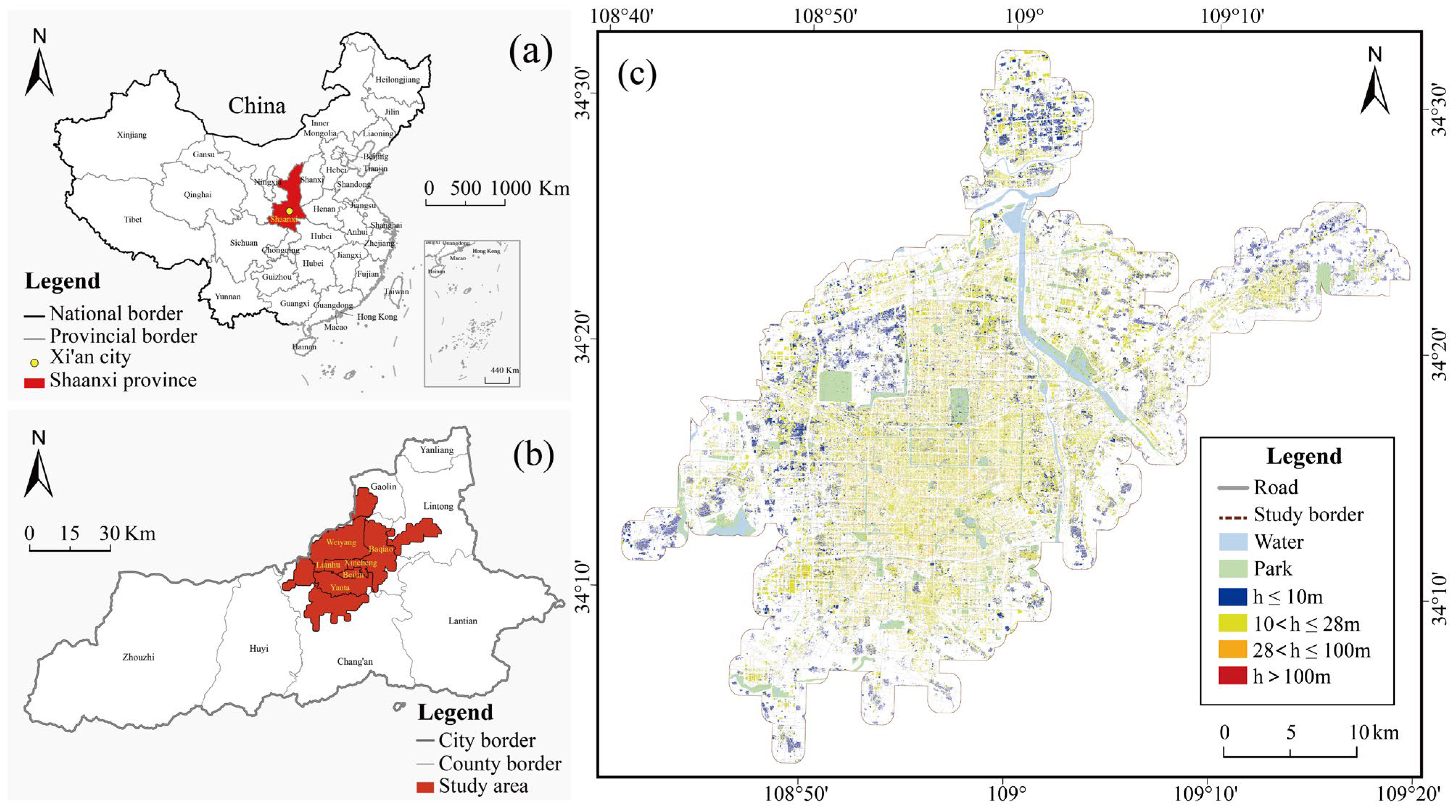
2.1. Study Area
2.2. Data Source
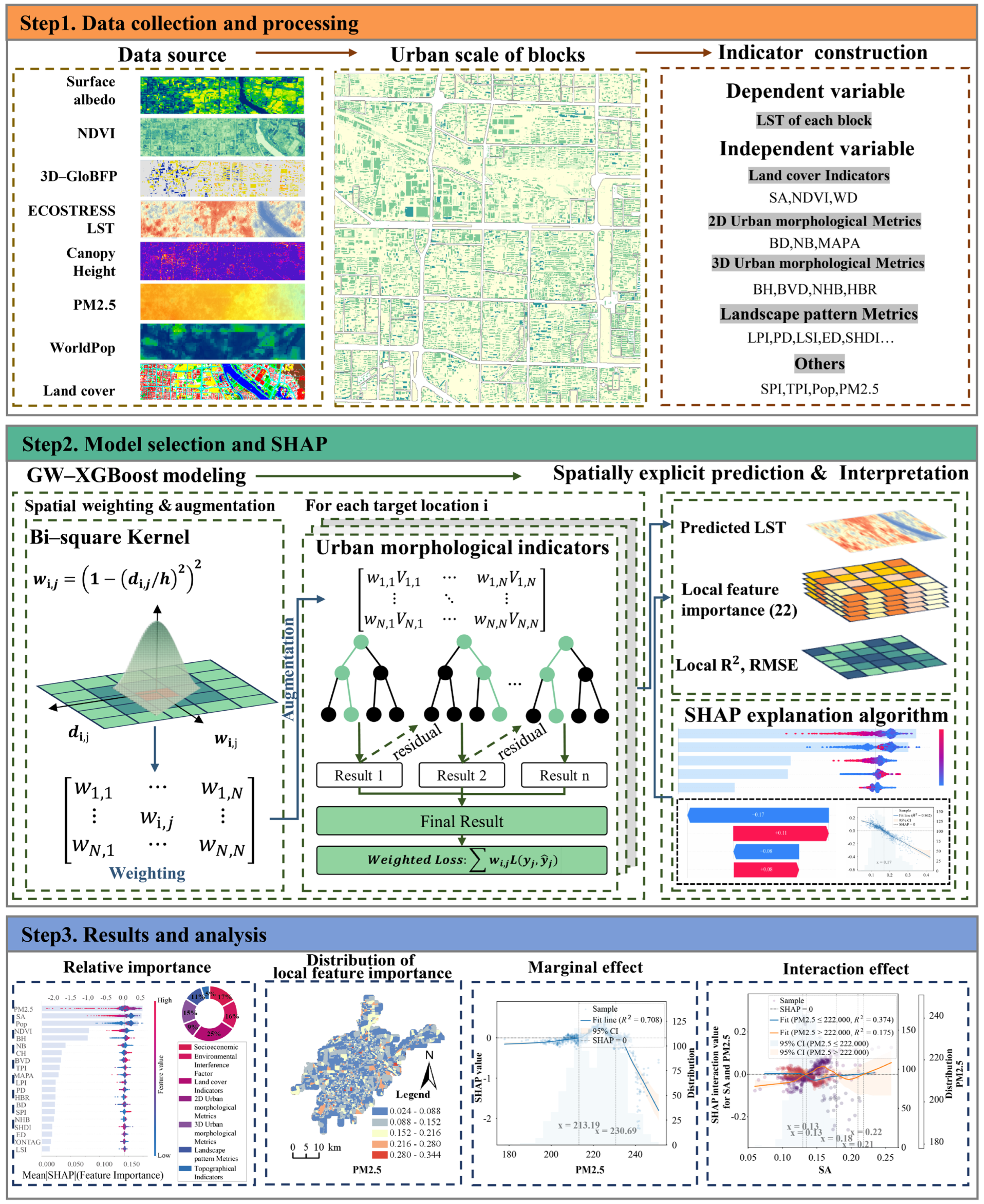
2.3. Study Framework
2.4. LST Processing
2.5. Urban Morphological Metrics
2.6. Model Construction
2.6.1. Model Evaluation
2.6.2. Interpretability Analysis Based on SHAP
3. Results
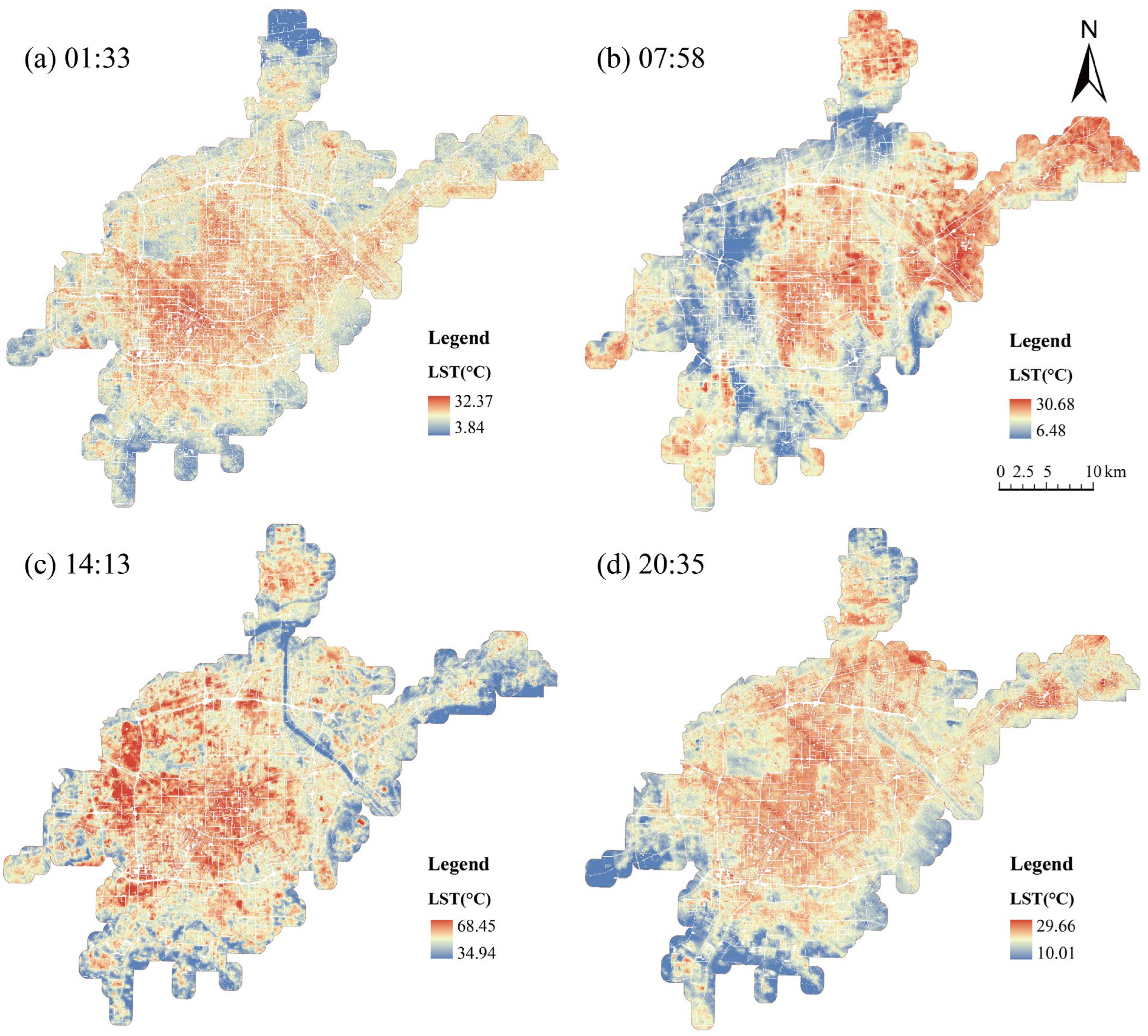
3.1. Spatial Distribution of LST
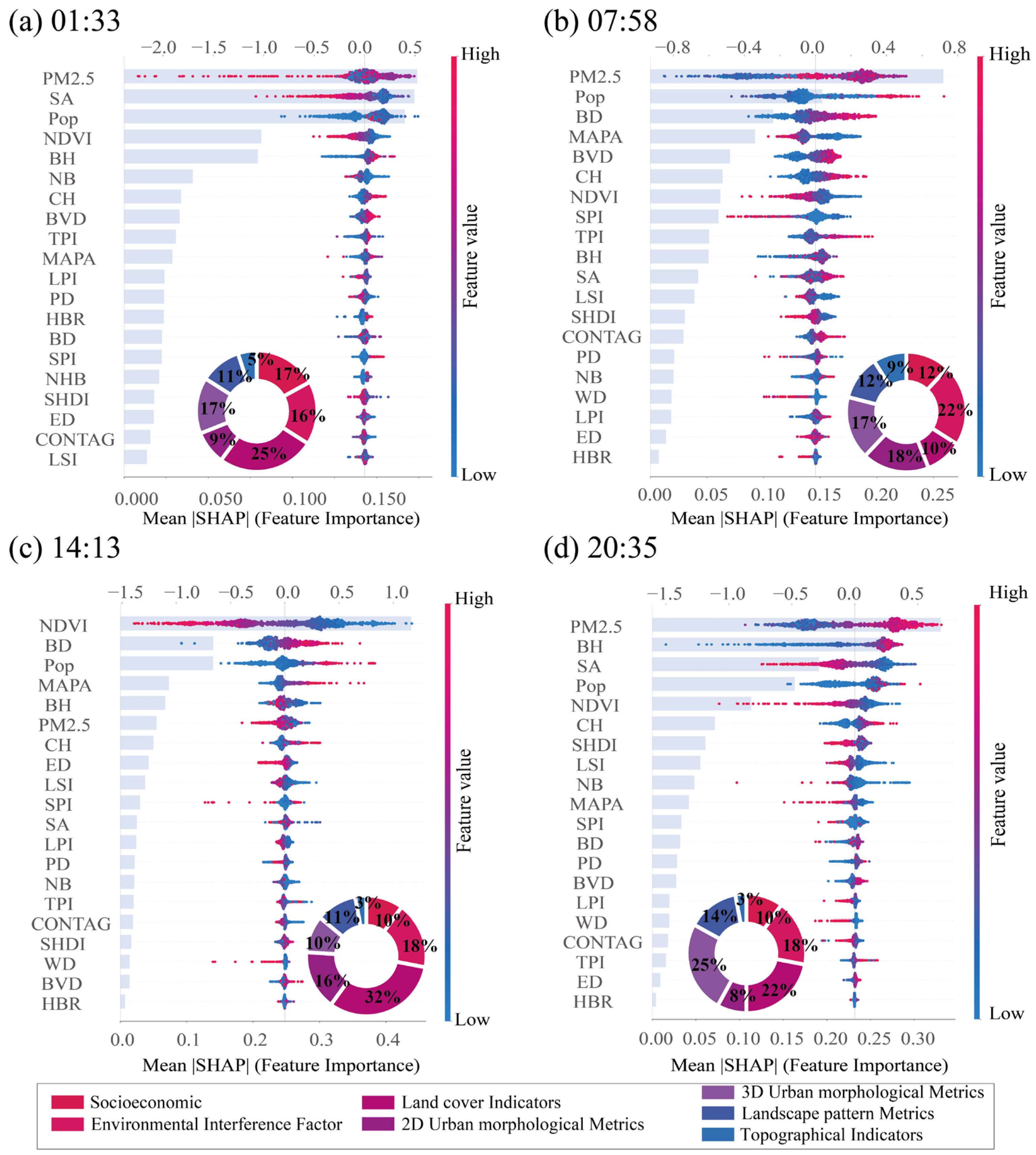
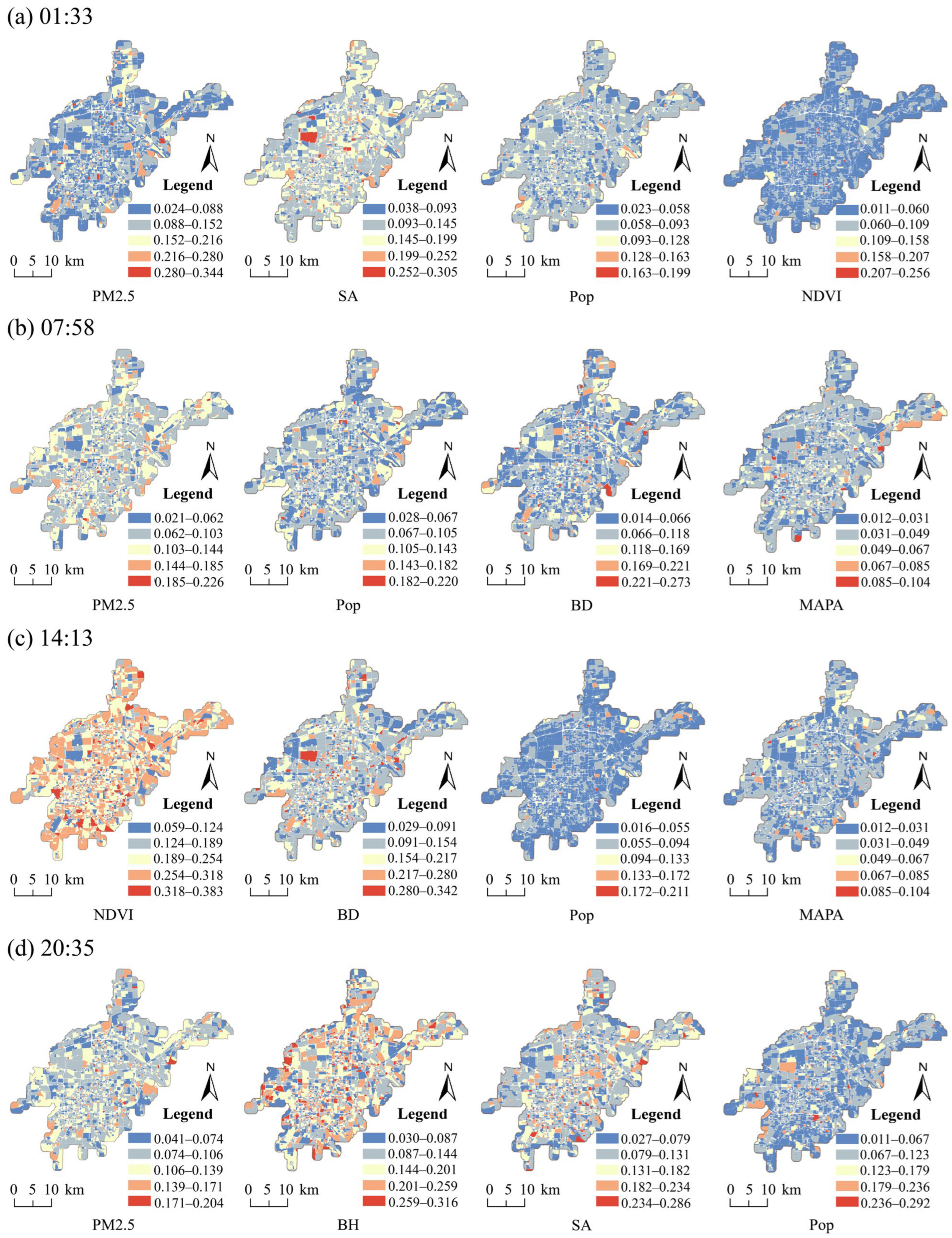
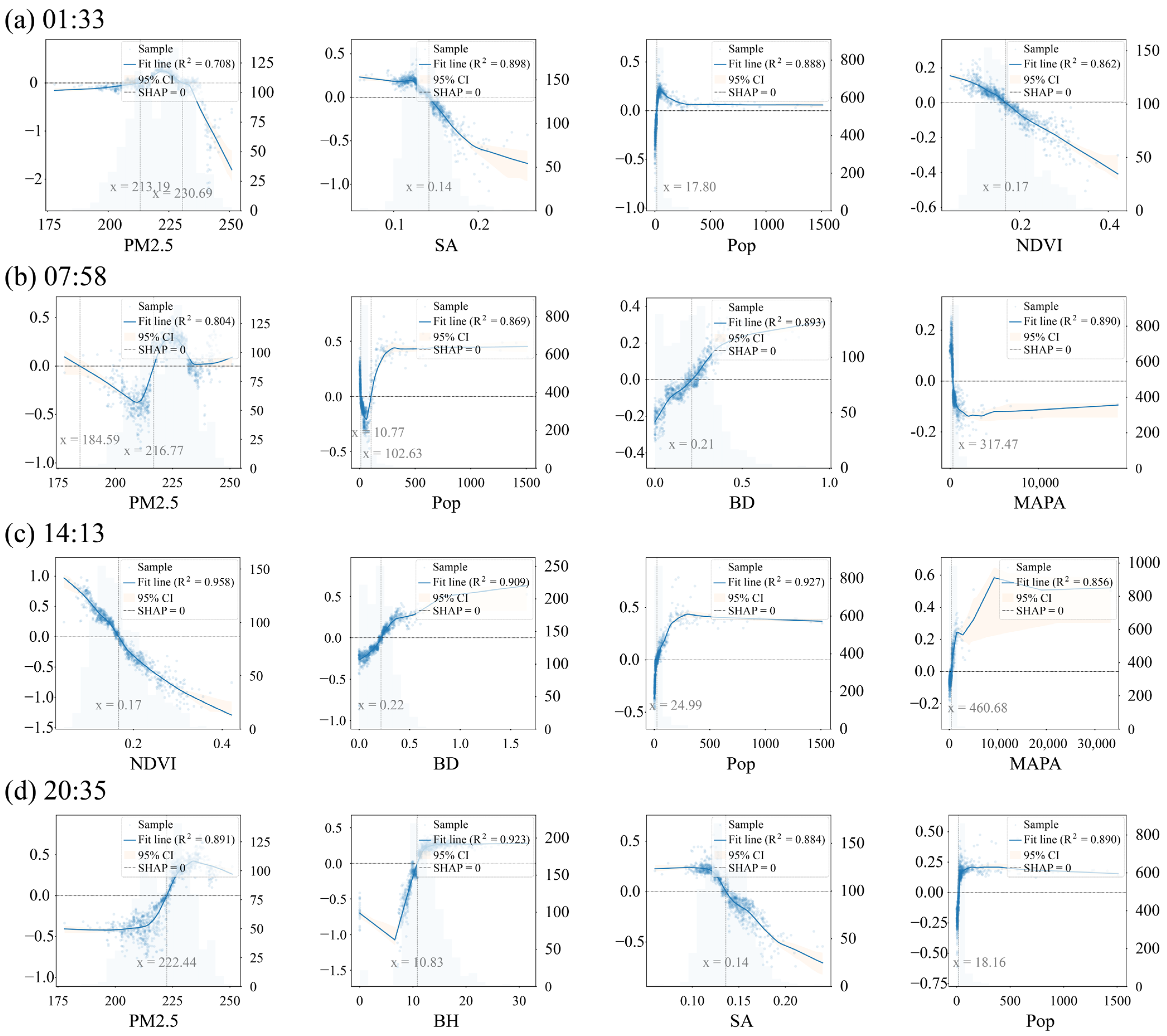
3.2. Deciphering the Global and Local Driving Mechanisms of Diurnal LST
- Nocturnal surface albedo (SA)-PM2.5 synergy, where aerosol insulation restricts the cooling potential of high-reflectance surfaces.
- Noon NDVI-building density (BD) independence, reflecting the decoupled operation of biological and physical cooling paths.
- Pop centripetal driving, indicating the morning concentration of anthropogenic heat.
- PM2.5 patchy distribution, underscoring its dependence on microscale boundary layers.
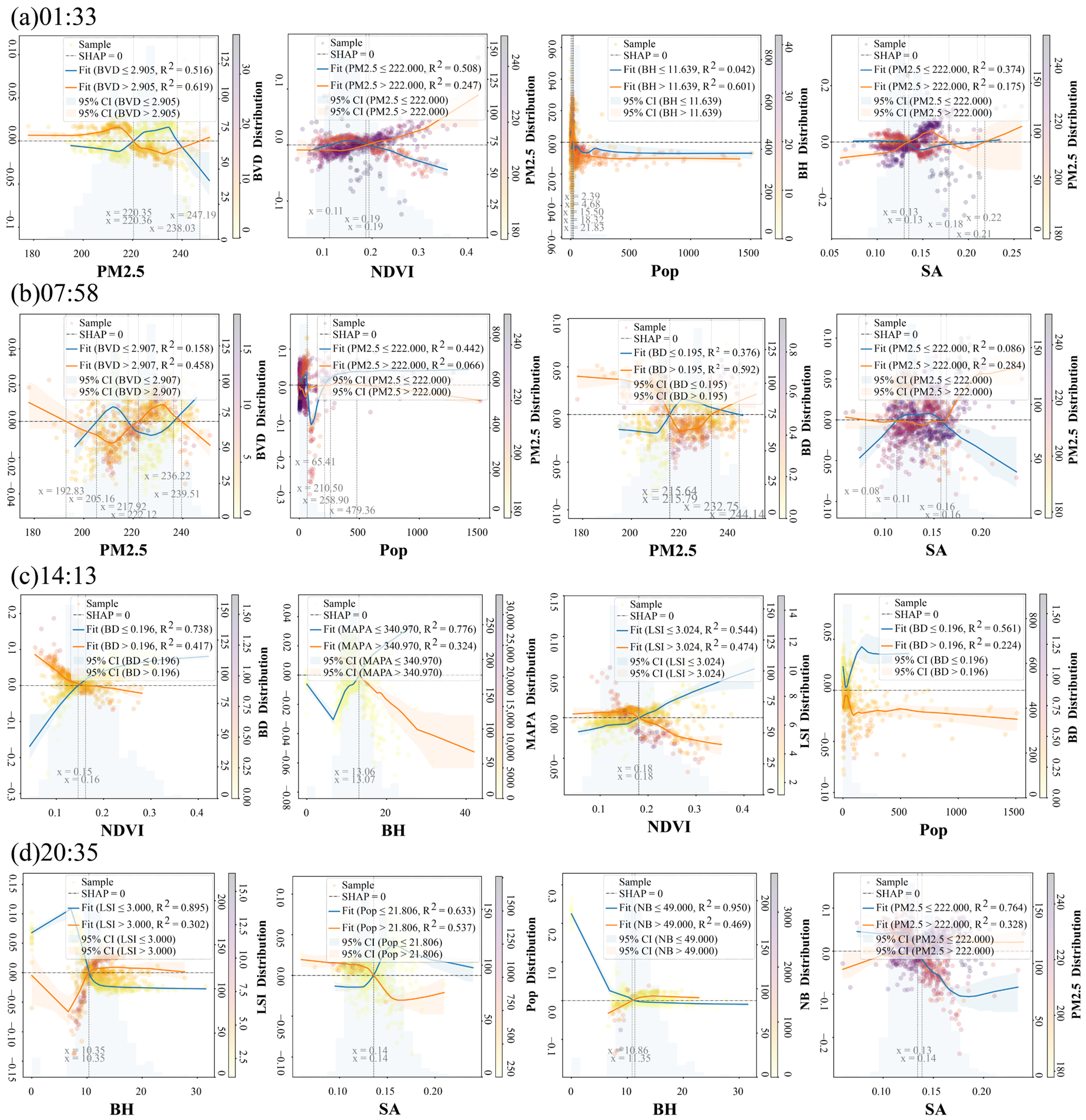
3.3. Non-Monotonic Response and Interaction Threshold Representation
4. Discussion
4.1. The Influence of Urban Features on LST
4.2. Urban Planning Implications
4.3. Limitations
5. Conclusions
- Diurnal non-linearity of driving mechanisms: LST drivers exhibit a significant non-linear evolution across the diurnal cycle. NDVI serves as the core cooling agent during peak solar radiation (noon), while PM2.5 emerges as the dominant warming factor at night and dawn. This confirms that aerosols in the stable boundary layer hinder surface longwave radiation dissipation through an enhanced “atmospheric warming effect.” Consequently, urban planners should adopt a time-stratified approach to heat mitigation: prioritizing greening strategies for daytime cooling while focusing on “local emission control zones” and atmospheric transparency restoration to alleviate nocturnal heat trapping.
- Hierarchy and necessity of multi-source indicators: While built environment variables emerge as the primary drivers of diurnal LST (averaging 29.5% importance), the significant roles played by environmental interference (18.5%) and socioeconomic factors (12.25%) underscore the necessity of a multi-dimensional indicator system for precise thermal risk assessment. This hierarchy suggests that effective heat mitigation cannot rely solely on vegetation; planners must integrate socioeconomic density management and environmental pollution control into a holistic climate-resilient framework.
- Non-monotonic interaction thresholds: Synergistic effects between variables demonstrate distinct threshold characteristics. In the early morning, high-density clusters (BVD ≥ 2.905) exhibit a cooling effect when PM2.5 is within 220–238 μg/m3, attributable to 3D street-canyon shielding. Conversely, the cooling marginality of high-reflectance surfaces (SA) is suppressed by aerosol insulation at night, only stabilizing within a specific window of 0.18–0.22. These thresholds serve as quantitative benchmarks for refined design: in high-intensity zones, encouraging high-rise layouts (BH > 13.07 m) with BVD > 2.905 can utilize “shading cooling” pathways, while the promotion of high-albedo materials should be precisely targeted within the 0.18–0.22 range to optimize long-wave radiative dissipation under polluted conditions.
- Spatial non-stationarity and geographical differentiation: The influence of urban morphology shows significant geographical boundaries. The northeastern and northern sectors are primarily regulated by SA and PM2.5 interactions, with SA peaking in sensitivity across open areas. Meanwhile, BD induces significant warming in high-intensity western development zones. The extremely weak interaction between NDVI and BD suggests that biological transpiration and physical shading operate through independent spatial pathways. Therefore, differentiated spatial planning is required: connecting isolated green patches into complex networks (LSI > 3.024) can maximize evapotranspiration in ecological corridors, whereas compact neighborhoods with limited vegetation (NDVI < 0.15) must prioritize limiting building density (BD < 0.196) and optimizing street orientation to facilitate waste heat diffusion.
Author Contributions
Funding
Data Availability Statement
Acknowledgments
Conflicts of Interest
References
- Un-Habitat. World Cities Report 2022: Envisaging the Future of Cities; Un-Habitat: Nairobi, Kenya, 2022. [Google Scholar]
- Ward, K.; Lauf, S.; Kleinschmit, B.; Endlicher, W. Heat Waves and Urban Heat Islands in Europe: A Review of Relevant Drivers. Sci. Total Environ. 2016, 569–570, 527–539. [Google Scholar] [CrossRef]
- Kong, J.; Zhao, Y.; Strebel, D.; Gao, K.; Carmeliet, J.; Lei, C. Understanding the Impact of Heatwave on Urban Heat in Greater Sydney: Temporal Surface Energy Budget Change with Land Types. Sci. Total Environ. 2023, 903, 166374. [Google Scholar] [CrossRef]
- Kong, J.; Zhao, Y.; Gao, K.; Strebel, D.; Carmeliet, J.; Lei, C. Highly Inhomogeneous Interactions between Background Climate and Urban Warming across Typical Local Climate Zones in Heatwave and Non-Heatwave Days. Environ. Res. Lett. 2024, 19, 114083. [Google Scholar] [CrossRef]
- Li, X.; Zhou, Y.; Yu, S.; Jia, G.; Li, H.; Li, W. Urban Heat Island Impacts on Building Energy Consumption: A Review of Approaches and Findings. Energy 2019, 174, 407–419. [Google Scholar] [CrossRef]
- Heaviside, C.; Macintyre, H.; Vardoulakis, S. The Urban Heat Island: Implications for Health in a Changing Environment. Curr. Environ. Health Rep. 2017, 4, 296–305. [Google Scholar] [CrossRef]
- Taylor, J.; Wilkinson, P.; Davies, M.; Armstrong, B.; Chalabi, Z.; Mavrogianni, A.; Symonds, P.; Oikonomou, E.; Bohnenstengel, S.I. Mapping the Effects of Urban Heat Island, Housing, and Age on Excess Heat-Related Mortality in London. Urban. Clim. 2015, 14, 517–528. [Google Scholar] [CrossRef]
- Ellis, K.N.; First, J.M.; Kintziger, K.W.; Hunter, E. Overnight Heat in Sleep Spaces of Housed and Unhoused Residents: Results and Recommendations from a Knoxville, Tennessee, Case Study. Int. J. Biometeorol. 2024, 68, 637–646. [Google Scholar] [CrossRef] [PubMed]
- Laaidi, K.; Zeghnoun, A.; Dousset, B.; Bretin, P.; Vandentorren, S.; Giraudet, E.; Beaudeau, P. The Impact of Heat Islands on Mortality in Paris during the August 2003 Heat Wave. Environ. Health Perspect. 2012, 120, 254–259. [Google Scholar] [CrossRef] [PubMed]
- Yao, X.; Zeng, X.; Zhu, Z.; Lan, Y.; Shen, Y.; Liu, Q.; Yang, F. Exploring the Diurnal Variations of the Driving Factors Affecting Block-Based LST in a “Furnace City” Using ECOSTRESS Thermal Imaging. Sustain. Cities Soc. 2023, 98, 104841. [Google Scholar] [CrossRef]
- Chen, J.; Wang, K.; Du, P.; Zang, Y.; Zhang, P.; Xia, J.; Chen, C.; Yu, Z. Quantifying the Main and Interactive Effects of the Dominant Factors on the Diurnal Cycles of Land Surface Temperature in Typical Urban Functional Zones. Sustain. Cities Soc. 2024, 114, 105727. [Google Scholar] [CrossRef]
- He, W.; Cao, S.; Du, M.; Meng, X.; Yang, Z.; Yang, Y. The Effect of Urban Form Parameters on Annual and Diurnal Cycles of Land Surface Temperature with 30-Meter Hourly Resolution. Sustain. Cities Soc. 2024, 115, 105806. [Google Scholar] [CrossRef]
- Han, D.; Cai, H.; Wang, F.; Wang, M.; Xu, X.; Qiao, Z.; An, H.; Liu, Y.; Jia, K.; Sun, Z.; et al. Understanding the Role of Urban Features in Land Surface Temperature at the Block Scale: A Diurnal Cycle Perspective. Sustain. Cities Soc. 2024, 111, 105588. [Google Scholar] [CrossRef]
- Wang, Q.; Wang, X.; Meng, Y.; Zhou, Y.; Wang, H. Exploring the Impact of Urban Features on the Spatial Variation of Land Surface Temperature within the Diurnal Cycle. Sustain. Cities Soc. 2023, 91, 104432. [Google Scholar] [CrossRef]
- Wang, Q.; Wang, H.; Ren, L.; Chen, J.; Wang, X. Hourly Impact of Urban Features on the Spatial Distribution of Land Surface Temperature: A Study across 30 Cities. Sustain. Cities Soc. 2024, 113, 105701. [Google Scholar] [CrossRef]
- Peng, J.; Xie, P.; Liu, Y.; Ma, J. Urban Thermal Environment Dynamics and Associated Landscape Pattern Factors: A Case Study in the Beijing Metropolitan Region. Remote Sens. Environ. 2016, 173, 145–155. [Google Scholar] [CrossRef]
- Ahmed, B.; Kamruzzaman, M.; Zhu, X.; Rahman, M.; Choi, K. Simulating Land Cover Changes and Their Impacts on Land Surface Temperature in Dhaka, Bangladesh. Remote Sens. 2013, 5, 5969–5998. [Google Scholar] [CrossRef]
- Briciu, A.-E.; Mihăilă, D.; Oprea, D.I.; Prisăcariu, A. Urban Stream Temperature Surge—Streamwater Temperature Variability after Rainfall in Suceava City Metropolitan Area. Sustainability 2023, 15, 7882. [Google Scholar] [CrossRef]
- Huang, Y.; Hong, T.; Ma, T. Urban Network Externalities, Agglomeration Economies and Urban Economic Growth. Cities 2020, 107, 102882. [Google Scholar] [CrossRef]
- Luo, P.; Yu, B.; Li, P.; Liang, P.; Zhang, Q.; Yang, L. Understanding the Relationship between 2D 3D Variables and Land Surface Temperature in Plain and Mountainous Cities: Relative Importance and Interaction Effects. Build. Environ. 2023, 245, 110959. [Google Scholar] [CrossRef]
- Han, D.; An, H.; Wang, F.; Xu, X.; Qiao, Z.; Wang, M.; Sui, X.; Liang, S.; Hou, X.; Cai, H. Understanding Seasonal Contributions of Urban Morphology to Thermal Environment Based on Boosted Regression Tree Approach. Build. Environ. 2022, 226, 109770. [Google Scholar] [CrossRef]
- Oke, T.R. The Energetic Basis of the Urban Heat Island. Q. J. R. Meteoro Soc. 1982, 108, 1–24. [Google Scholar] [CrossRef]
- Li, H.; Li, Y.; Wang, T.; Wang, Z.; Gao, M.; Shen, H. Quantifying 3D Building Form Effects on Urban Land Surface Temperature and Modeling Seasonal Correlation Patterns. Build. Environ. 2021, 204, 108132. [Google Scholar] [CrossRef]
- Zheng, Z.; Zhou, W.; Yan, J.; Qian, Y.; Wang, J.; Li, W. The Higher, the Cooler? Effects of Building Height on Land Surface Temperatures in Residential Areas of Beijing. Phys. Chem. Earth Parts A/B/C 2019, 110, 149–156. [Google Scholar] [CrossRef]
- Sezer, N.; Yoonus, H.; Zhan, D.; Wang, L.; Hassan, I.G.; Rahman, M.A. Urban Microclimate and Building Energy Models: A Review of the Latest Progress in Coupling Strategies. Renew. Sustain. Energy Rev. 2023, 184, 113577. [Google Scholar] [CrossRef]
- Ma, X.; Yang, J.; Zhang, R.; Yu, W.; Ren, J.; Xiao, X.; Xia, J. XGBoost-Based Analysis of the Relationship Between Urban 2-D 3-D Morphology and Seasonal Gradient Land Surface Temperature. IEEE J. Sel. Top. Appl. Earth Obs. Remote Sens. 2024, 17, 4109–4124. [Google Scholar] [CrossRef]
- Niu, J.; Chen, J.; Zang, Y.; Wang, K.; Ni, D.; Xu, Z.; Wang, P. Deciphering the Roles of 2-D and 3-D Urban Landscape Metrics in Diurnal Surface Thermal Environment Along Urban Gradients. IEEE J. Sel. Top. Appl. Earth Obs. Remote Sens. 2024, 17, 16449–16466. [Google Scholar] [CrossRef]
- Lin, Z.; Xu, H.; Han, L.; Zhang, H.; Peng, J.; Yao, X. Day and Night: Impact of 2D 3D Urban Features on Land Surface Temperature and Their Spatiotemporal Non-Stationary Relationships in Urban Building Spaces. Sustain. Cities Soc. 2024, 108, 105507. [Google Scholar] [CrossRef]
- Cao, C.; Lee, X.; Liu, S.; Schultz, N.; Xiao, W.; Zhang, M.; Zhao, L. Urban Heat Islands in China Enhanced by Haze Pollution. Nat. Commun. 2016, 7, 12509. [Google Scholar] [CrossRef] [PubMed]
- Liu, S.; Zhang, J.; Chen, W.; Ding, S.; Wang, L. Synergistic Mechanism of Spatiotemporal Dynamics in Urban Thermal Environments and Air Pollutants in China. Remote Sens. 2025, 17, 3810. [Google Scholar] [CrossRef]
- Ngarambe, J.; Joen, S.J.; Han, C.-H.; Yun, G.Y. Exploring the Relationship between Particulate Matter, CO, SO2, NO2, O3 and Urban Heat Island in Seoul, Korea. J. Hazard. Mater. 2021, 403, 123615. [Google Scholar] [CrossRef]
- Bi, P.; Williams, S.; Loughnan, M.; Lloyd, G.; Hansen, A.; Kjellstrom, T.; Dear, K.; Saniotis, A. The Effects of Extreme Heat on Human Mortality and Morbidity in Australia: Implications for Public Health. Asia Pac. J. Public Health 2011, 23, 27S–36S. [Google Scholar] [PubMed]
- Bansal, M.B. Hepatic Fibrogenesis. In Hepatology; Elsevier: Amsterdam, The Netherlands, 2025; pp. 247–272. [Google Scholar]
- Deng, J.-Y.; He, Y.; Dai, M. Evaluation of the Outdoor Thermal Environment for Three Typical Urban Forms in Nanjing, China. Build. Environ. 2023, 238, 110358. [Google Scholar] [CrossRef]
- Hou, L.; Dai, Q.; Song, C.; Liu, B.; Guo, F.; Dai, T.; Li, L.; Liu, B.; Bi, X.; Zhang, Y.; et al. Revealing Drivers of Haze Pollution by Explainable Machine Learning. Environ. Sci. Technol. Lett. 2022, 9, 112–119. [Google Scholar] [CrossRef]
- Lan, H.; Hou, H.C.; Gou, Z. A Machine Learning Led Investigation to Understand Individual Difference and the Human-Environment Interactive Effect on Classroom Thermal Comfort. Build. Environ. 2023, 236, 110259. [Google Scholar] [CrossRef]
- Zhang, Y.; Ge, J.; Wang, S.; Dong, C. Optimizing Urban Green Space Configurations for Enhanced Heat Island Mitigation: A Geographically Weighted Machine Learning Approach. Sustain. Cities Soc. 2025, 119, 106087. [Google Scholar] [CrossRef]
- Zhang, Q.; Shen, Y.; Liu, Q.; Huang, M.; Yao, X.; Luo, Y.; Chen, Z.; Shen, Z.; Che, Z. Impact of Urban Spatial Forms on Marine Cooling Effects: A Multi-Temporal Comparison of Land-Island Regional Disparities. Sustain. Cities Soc. 2025, 131, 106721. [Google Scholar] [CrossRef]
- Cheng, H.; Cai, Y.; Zhang, D.; Luo, S.; Li, M.; Hu, Y.; Ma, S. Neighboring Matters: Quantifying Internal Morphology and External Spatial Interactions on Land Surface Temperature among Urban Functional Zones. Sustain. Cities Soc. 2025, 131, 106689. [Google Scholar] [CrossRef]
- Wang, Z.; Zhou, R.; Rui, J.; Yu, Y. Revealing the Impact of Urban Spatial Morphology on Land Surface Temperature in Plain and Plateau Cities Using Explainable Machine Learning. Sustain. Cities Soc. 2025, 118, 106046. [Google Scholar] [CrossRef]
- Sun, G.; Dong, Z.; Cai, M.; Guo, Y.; Chen, Y.; Chen, J. Differentiated Impacts of Urban Morphology on Land Surface Temperature across Local Climate Zones: Interaction and Seasonality. IEEE J. Sel. Top. Appl. Earth Obs. Remote Sens. 2025, 18, 26446–26462. [Google Scholar] [CrossRef]
- Li, J.; Liu, T.; Yang, J.; Jie, J.; Huang, X. Mapping of 30m Global Urban Boundaries from 1972 to 2021 Based on Multi-Source Geographic Information Fusion. Zenodo 2024. [Google Scholar] [CrossRef]
- Tang, J.; Xu, L.; Yu, H.; Jiang, H.; He, D.; Li, T.; Xiao, W.; Zheng, X.; Liu, K.; Li, Y.; et al. A Dataset of Multi-Level Street-Block Divisions of 985 Cities Worldwide. Sci. Data 2025, 12, 456. [Google Scholar] [CrossRef]
- Che, Y.; Li, X.; Liu, X.; Wang, Y.; Liao, W.; Zheng, X.; Zhang, X.; Xu, X.; Shi, Q.; Zhu, J.; et al. Building Height of Asia in 3D-GloBFP. Zenodo10 2024, 5281. [Google Scholar] [CrossRef]
- Lang, N.; Jetz, W.; Schindler, K.; Wegner, J.D. A High-Resolution Canopy Height Model of the Earth. Nat. Ecol. Evol. 2023, 7, 1778–1789. [Google Scholar] [CrossRef]
- Wei, J.; Li, Z. ChinaHighPM2.5 (2022–Present). 2025, (Version 4). Zenodo 2025. [Google Scholar] [CrossRef]
- Wei, J.; Li, Z.; Cribb, M.; Huang, W.; Xue, W.; Sun, L.; Guo, J.; Peng, Y.; Li, J.; Lyapustin, A.; et al. Improved 1 Km Resolution PM2.5 Estimates across China Using Enhanced Space–Time Extremely Randomized Trees. Atmos. Chem. Phys. 2020, 20, 3273–3289. [Google Scholar] [CrossRef]
- Wei, J.; Li, Z.; Lyapustin, A.; Sun, L.; Peng, Y.; Xue, W.; Su, T.; Cribb, M. Reconstructing 1-Km-Resolution High-Quality PM2.5 Data Records from 2000 to 2018 in China: Spatiotemporal Variations and Policy Implications. Remote Sens. Environ. 2021, 252, 112136. [Google Scholar] [CrossRef]
- Zhang, E.; Huang, X.; Li, J.; Zhou, J. EcoVision: Sub-Meter Land Cover Map over China’s 42 Major Cities Derived by an Innovative Artificial Data Annotation Engine. J. Remote Sens. 2025, 5, 0811. [Google Scholar] [CrossRef]
- Chang, Y.; Xiao, J.; Li, X.; Middel, A.; Zhang, Y.; Gu, Z.; Wu, Y.; He, S. Exploring Diurnal Thermal Variations in Urban Local Climate Zones with ECOSTRESS Land Surface Temperature Data. Remote Sens. Environ. 2021, 263, 112544. [Google Scholar] [CrossRef]
- Ma, X.; Zou, B.; Deng, J.; Gao, J.; Longley, I.; Xiao, S.; Guo, B.; Wu, Y.; Xu, T.; Xu, X.; et al. A Comprehensive Review of the Development of Land Use Regression Approaches for Modeling Spatiotemporal Variations of Ambient Air Pollution: A Perspective from 2011 to 2023. Environ. Int. 2024, 183, 108430. [Google Scholar] [CrossRef] [PubMed]
- Ye, M.; Zhu, L.; Li, X.; Ke, Y.; Huang, Y.; Chen, B.; Yu, H.; Li, H.; Feng, H. Estimation of the Soil Arsenic Concentration Using a Geographically Weighted XGBoost Model Based on Hyperspectral Data. Sci. Total Environ. 2023, 858, 159798. [Google Scholar] [CrossRef] [PubMed]
- Li, Z.; Wu, W.; Chen, S.; Zhang, Y.; Tian, S.; Li, L.; Zhao, X. A Multi-Scale Analysis of the Relationship between Land Surface Temperature and PM2.5 in Different Land Use Types. J. Clean. Prod. 2024, 467, 142980. [Google Scholar] [CrossRef]
- Li, J.; Zhou, M.; Lenschow, D.H.; Cheng, Z.; Dou, Y. Observed Relationships Between the Urban Heat Island, Urban Pollution Island, and Downward Longwave Radiation in the Beijing Area. Earth Space Sci. 2020, 7, e2020EA001100. [Google Scholar] [CrossRef]
- Li, Z.; Xie, M.; Wang, H.; Chen, B.; Wu, R.; Chen, Y. The Spatiotemporal Heterogeneity of the Relationship between PM2.5 Concentrations and the Surface Urban Heat Island Effect in Beijing, China. Progress Phys. Geogr. Earth Environ. 2022, 46, 84–104. [Google Scholar] [CrossRef]
- Jiang, S.; Zhan, W.; Li, L.; Wang, C.; Dong, P.; Wang, S.; Ji, Y.; Huang, F.; Liu, Z.; Gao, Y. Contrasting Moist Heat across Local Climate Zones in Heat and Non-Heat Waves: Insights from 29 Chinese Metropolises. Build. Environ. 2024, 253, 111328. [Google Scholar] [CrossRef]
- Arnfield, A.J. Two Decades of Urban Climate Research: A Review of Turbulence, Exchanges of Energy and Water, and the Urban Heat Island. Int. J. Climatol. 2003, 23, 1–26. [Google Scholar] [CrossRef]
- Oke, T.R.; Mills, G.; Christen, A.; Voogt, J.A. Urban Climates, 1st ed.; Cambridge University Press: Cambridge, UK, 2017. [Google Scholar]
- Yang, X.; Li, Y. The Impact of Building Density and Building Height Heterogeneity on Average Urban Albedo and Street Surface Temperature. Build. Environ. 2015, 90, 146–156. [Google Scholar] [CrossRef]
- Yang, L.; Chen, Y.; Li, Y.; Zhu, H.; Yang, X.; Li, S.; Tang, G. Is 3D Building Morphology Really Related to Land Surface Temperature? Insights from a New Homogeneous Unit. Build. Environ. 2024, 266, 112101. [Google Scholar] [CrossRef]
- Kong, J.; Zhao, Y.; Carmeliet, J.; Lei, C. Urban Heat Island and Its Interaction with Heatwaves: A Review of Studies on Mesoscale. Sustainability 2021, 13, 10923. [Google Scholar] [CrossRef]
- Qi, J.; Xiong, W.; Li, J.; Zheng, J.; Ye, Q.; Hu, M. Investigating Non-Linear and Synergistic Effects of Urban Functional Zone Morphology on Land Surface Temperature. Sustain. Cities Soc. 2025, 130, 106546. [Google Scholar] [CrossRef]
- He, M.; Yuan, C.; Zhang, X.; Wang, P.; Yao, C. Impacts of Green-Blue-Grey Infrastructures on High-Density Urban Thermal Environment at Multiple Spatial Scales: A Case Study in Wuhan. Urban Clim. 2023, 52, 101714. [Google Scholar] [CrossRef]
- Sheng, S.; Wang, Y. Configuration Characteristics of Green-Blue Spaces for Efficient Cooling in Urban Environments. Sustain. Cities Soc. 2024, 100, 105040. [Google Scholar] [CrossRef]
- Asgarian, A.; Amiri, B.J.; Sakieh, Y. Assessing the Effect of Green Cover Spatial Patterns on Urban Land Surface Temperature Using Landscape Metrics Approach. Urban. Ecosyst. 2015, 18, 209–222. [Google Scholar] [CrossRef]
- Bao, T.; Li, X.; Zhang, J.; Zhang, Y.; Tian, S. Assessing the Distribution of Urban Green Spaces and Its Anisotropic Cooling Distance on Urban Heat Island Pattern in Baotou, China. ISPRS Int. J. Geo-Inf. 2016, 5, 12. [Google Scholar] [CrossRef]
- Clinton, N.; Gong, P. MODIS Detected Surface Urban Heat Islands and Sinks: Global Locations and Controls. Remote Sens. Environ. 2013, 134, 294–304. [Google Scholar] [CrossRef]
- Ma, D.; Jode, M.D.; Maclachlan, A.; Hudson-Smith, A. Hyperlocal Thermal Modeling with IoT Sensors and UMEP in London’s Queen Elizabeth Olympic Park. In Proceedings of the 33rd Annual GIS Research UK Conference, Bristol, UK, 23–25 April 2025; pp. 1–6. [Google Scholar] [CrossRef]





| Data Type | Spatial Resolution | Data Usage | Data Source |
|---|---|---|---|
| Street Blocks | - | Research area block data | Tang et al., 2025 [43] |
| Building height | - | Building height data | Che et al., 2024 [44] |
| Landsat-8 satellite image | 30 m | Calculate various factors | USGS, https://earthexplorer.usgs.gov/ (accessed on 9 November 2025) |
| ECOSTRESS | 70 m | Invert LST | USGS, https://earthexplorer.usgs.gov/ (accessed on 3 November 2025) |
| Copernicus Global Land Service (CGLS) | 5 km | Correct LST data | CMLS, https://land.copernicus.eu/en/products/temperature-and-reflectance/hourly-land-surface-temperature-global-v2-0-5km (accessed on 26 November 2025) |
| WorldPop | 100 m | Population data | WorldPop, www.worldpop.org (accessed on 9 November 2025) |
| Canopy height (CH) | 10 m | Tree canopy height data | Lang et al., 2023 [45] |
| PM2.5 | 1 km | PM2.5 data | Wei and Li, 2025 [46,47,48] |
| Buildings land cover | 0.5 m | Calculate the landscape index and the water index | Zhang et al., 2025 [42,49] |
| Categories | Variable Name | Description |
|---|---|---|
| Land cover Indicators | Surface albedo (SA) | Earth’s ability to reflect solar radiation. |
| NDVI | Measures vegetation density and health. | |
| Water density (WD) | Percentage of the landscape area occupied by water bodies within a block. | |
| 2D Urban morphological Metrics | Building density (BD) | The ratio of building footprint area to total block area. |
| Number of buildings (NB) | Total number of buildings within the study area. | |
| Mean area of projected architecture (MAPA) | Average area of a building’s vertical projection onto the ground. | |
| 3D Urban morphological Metrics | Building height (BH) | Average building height within the block. |
| Building volume density (BVD) | The ratio of total building volume to land area. | |
| Number of high buildings (NHB) | Number of high-rise buildings in the study area. | |
| High building ratio (HBR) | The proportion of high-rise buildings in the total number of buildings. | |
| Landscape pattern Metrics | Largest patch index (LPI) | Percentage of the landscape occupied by the largest patch, measuring dominance. |
| Patch density (PD) | Number of patches per unit area, assessing landscape fragmentation. | |
| Landscape shape index (LSI) | Describe the complexity of the shape of the plaque. | |
| Edge density (ED) | Total edge length per unit area between heterogeneous landscape patches. | |
| Shannon’s diversity index (SHDI) | Measure landscape diversity and heterogeneity. | |
| Contagion (CONTAG) | Describe the spatial clustering or connectivity of different land cover types. | |
| Topographical Indicators | Stream power index (SPI) | Represents the potential erosive power of overland water flow. |
| Topographic position index (TPI) | Identifies landform positions relative to the local neighborhood. | |
| Socioeconomic | Population density (Pop) | Number of permanent residents per unit area, reflecting anthropogenic heat intensity. |
| Environmental interference | PM2.5 | . |
Disclaimer/Publisher’s Note: The statements, opinions and data contained in all publications are solely those of the individual author(s) and contributor(s) and not of MDPI and/or the editor(s). MDPI and/or the editor(s) disclaim responsibility for any injury to people or property resulting from any ideas, methods, instructions or products referred to in the content. |
© 2026 by the authors. Published by MDPI on behalf of the International Society for Photogrammetry and Remote Sensing. Licensee MDPI, Basel, Switzerland. This article is an open access article distributed under the terms and conditions of the Creative Commons Attribution (CC BY) license.
Share and Cite
Huang, R.; Wang, H.; Ma, X. Revealing Nonlinear Relationships Between Urban Morphology and Diurnal Land Surface Temperature via Spatial Heterogeneity. ISPRS Int. J. Geo-Inf. 2026, 15, 187. https://doi.org/10.3390/ijgi15050187
Huang R, Wang H, Ma X. Revealing Nonlinear Relationships Between Urban Morphology and Diurnal Land Surface Temperature via Spatial Heterogeneity. ISPRS International Journal of Geo-Information. 2026; 15(5):187. https://doi.org/10.3390/ijgi15050187
Chicago/Turabian StyleHuang, Ruifan, Haitao Wang, and Xuying Ma. 2026. "Revealing Nonlinear Relationships Between Urban Morphology and Diurnal Land Surface Temperature via Spatial Heterogeneity" ISPRS International Journal of Geo-Information 15, no. 5: 187. https://doi.org/10.3390/ijgi15050187
APA StyleHuang, R., Wang, H., & Ma, X. (2026). Revealing Nonlinear Relationships Between Urban Morphology and Diurnal Land Surface Temperature via Spatial Heterogeneity. ISPRS International Journal of Geo-Information, 15(5), 187. https://doi.org/10.3390/ijgi15050187