1. Introduction
Human health and well-being are shaped by a wide range of landscape-related factors in rural, natural, semi-natural, and urban environments, including accessibility, biodiversity, opportunities for recreation, and environmental quality [
1,
2,
3]. Among these factors, the aesthetic qualities of forest landscapes represent a particularly important dimension, as they are perceived to provide visual pleasure and are closely associated with stress reduction, psychological restoration, and improved self-reported well-being [
4,
5,
6,
7,
8]. Given the impacts of land-use/cover changes on aesthetic value [
9], decision-makers predicting the effects of forest management must understand the consequences of landscape elements and establish land-use policies that enhance or maintain the original aesthetic quality [
10,
11].
To identify the crucial elements and assess the impacts of proposed forest policies, many studies have established relationships between objective landscape elements and aesthetic values, acquiring subjective perceptions of forest-landscape aesthetic values through questionnaires or interviews [
12,
13,
14,
15], through online big data such as social media posts [
16,
17,
18,
19,
20], and more recently, through machine learning techniques [
21]. These subjective perceptions have been linked to several objective spatial metrics, including composition metrics such as water and vegetation [
22,
23], and configuration metrics such as landscape diversity [
24] and visual scale [
25,
26]. Most of these studies collectively assess the landscape elements within a fixed viewing distance rather than across different distance ranges. However, in practical applications, understanding the effects of landscape metrics across specified distance ranges is necessary for developing targeted forest management strategies.
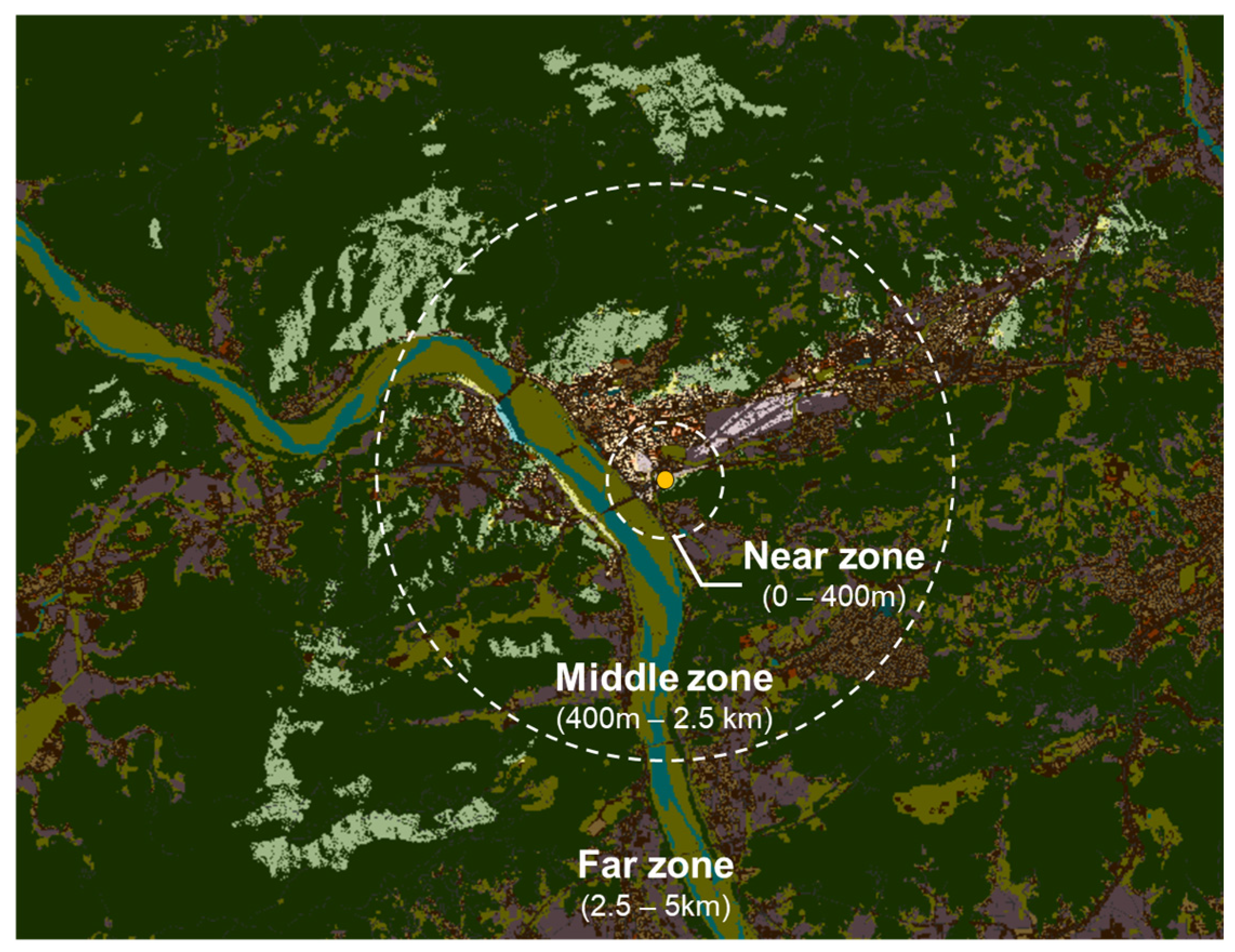
The visual distance from a given viewpoint influences human perception of natural environments. This dependence has been recognized since the early development of landscape theory. Originating from painting and pictorial arts, landscape is frequently divided into foreground, middle-ground, and background zones [
27]. The foreground is the zone of maximum detail perception, including the surface patterns of bark and the juxtaposition of tree trunks. The middle-ground view provides a broader spatial context, revealing patterns such as the connections of hills into ranges or the visual simplification of vegetative surfaces into textures. The background view is visually simplified, dominated by elements such as skylines and ridge lines against other land surfaces [
27]. Schirpke et al. [
28] related scenic beauty in mountain regions to different zones. After calculating the distance-weighting factors, they found that the near zone exerts the strongest impact. Building on these findings, many studies have calculated landscape elements using distance–buffer theory, providing more precise models of scenic beauty. For example, Wu et al. [
29] demonstrated that the distance d from the viewpoint influences the relationship between landscape features and visual quality. Accordingly, they weighted each landscape element by 1/d. Schirpke et al. [
28] adjusted the spatial resolution of digital elevation model (DEM) data to 20 m × 20 m data in the near zone, 100 m × 100 m in the middle zone, and 1 km × 1 km in the far zone. This model has been refined and applied in subsequent studies [
9,
30,
31]. Despite these advances, previous studies have not isolated the landscape metrics across different viewing distances, which is necessary for assessing the distinct effects of these metrics. Therefore, the existing approaches provide limited actionable insights into land-use planning in forest policy.
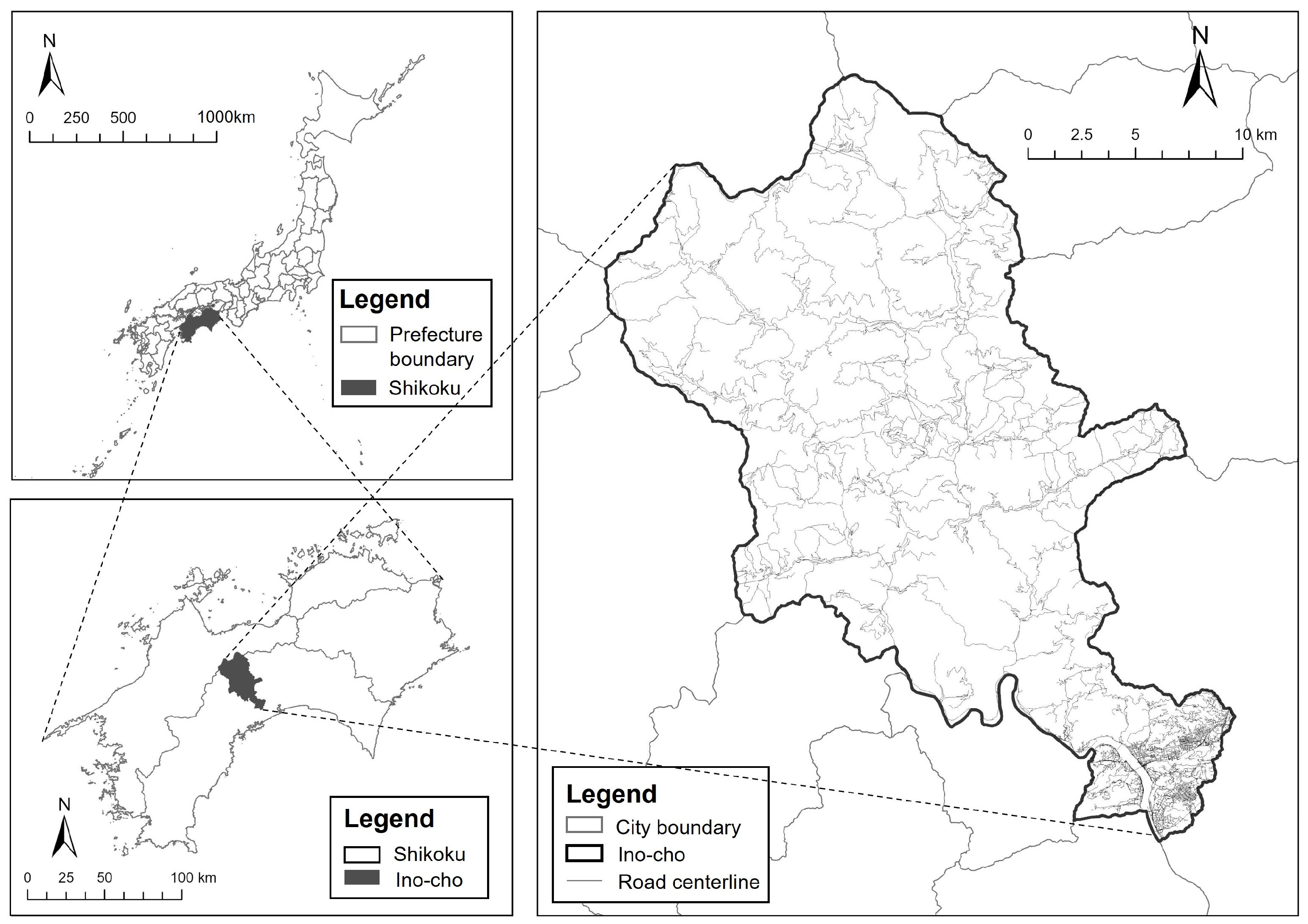
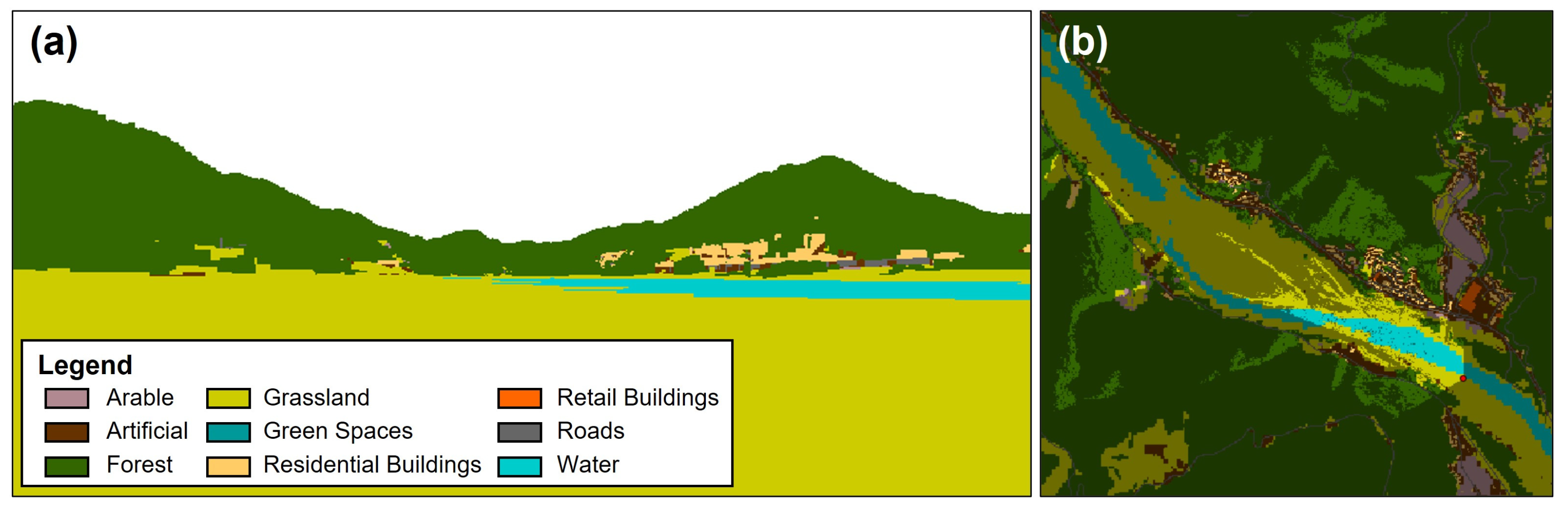
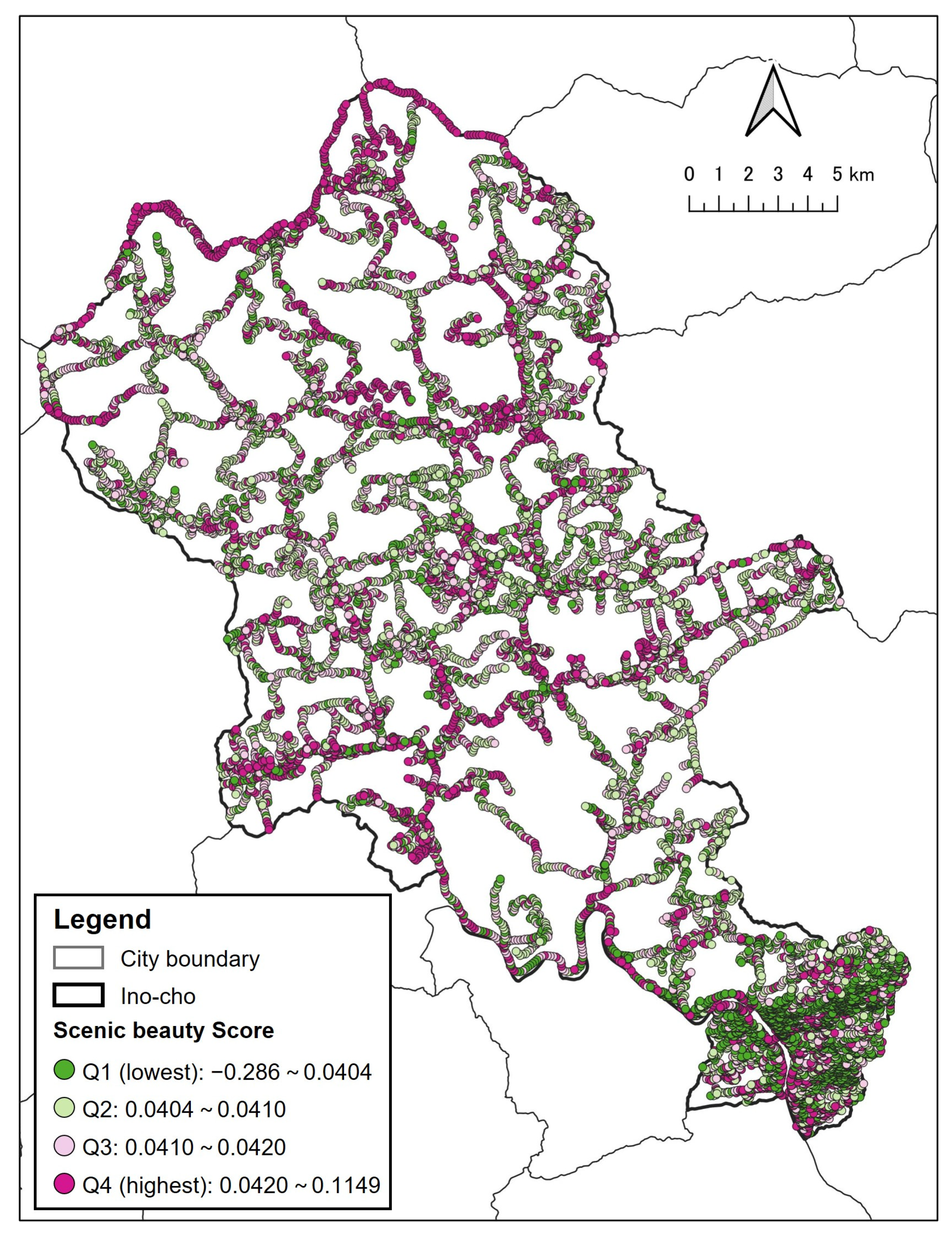
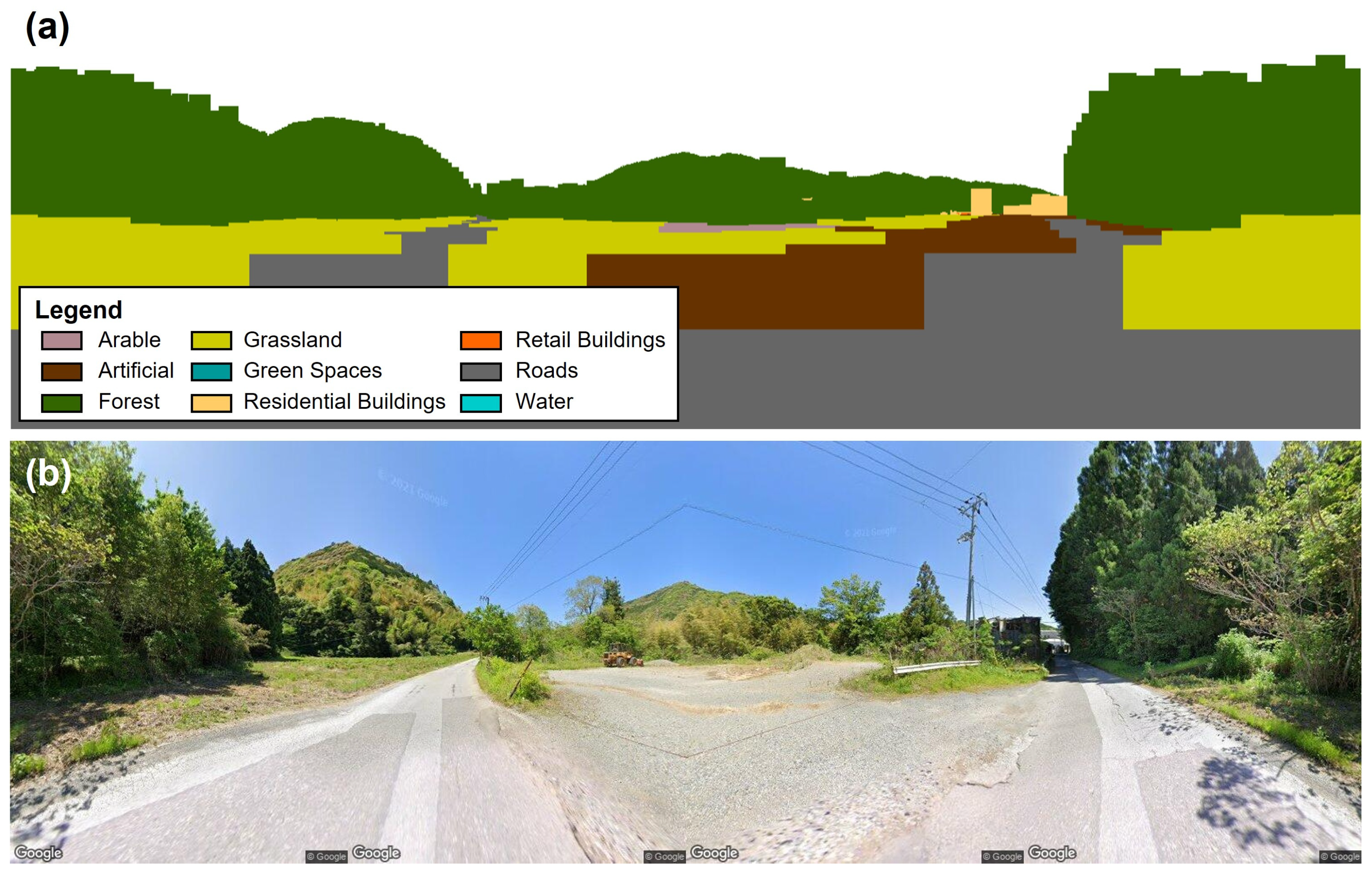
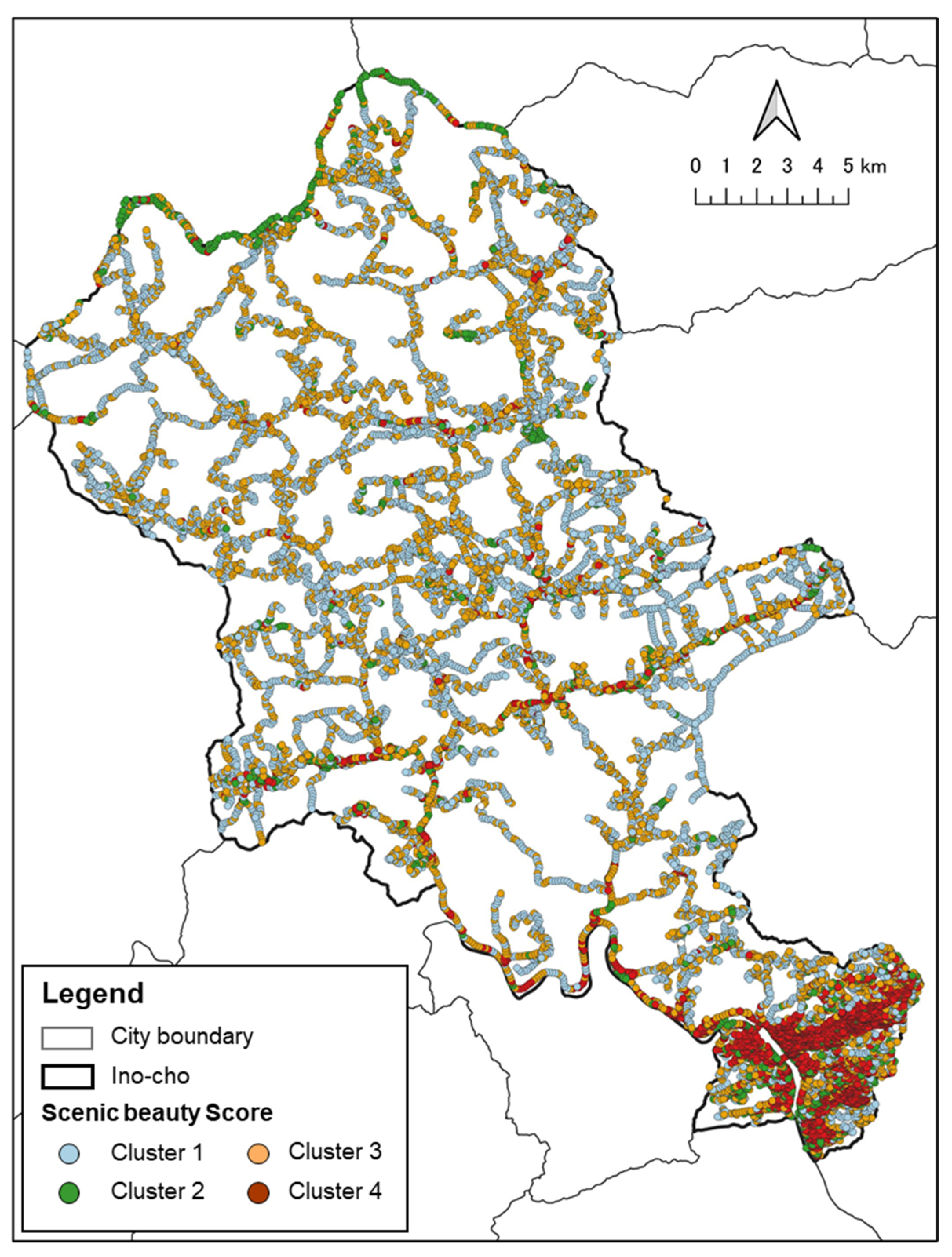
To address these research gaps, we investigated the effects of landscape elements within different viewing zones on human perceptions of forest landscapes and propose targeted forest-management strategies for different landscape patterns. We hypothesized that the same elements may exert different, or even opposite, effects at varying viewing distances and in varying landscape patterns. The objectives were met through the following processes: (1) mapping the perceived scenic beauty of the forest within a forested region in Japan, (2) measuring the spatial metrics derived from land-cover data in each view distance zone, (3) modeling the perceived forest scenic beauty using regression analysis with the spatial metrics as independent variables, and (4) classifying the perceived landscape patterns using cluster analysis and modeling the scenic beauty of each pattern.
4. Discussion
Introducing the concept of view distance within landscape theory, this study aimed to predict forest scenic beauty values from spatial metrics across the near, middle, and far-distance zones. Through this approach, we can gain a more nuanced understanding of how landscape elements and their arrangement across different view distances affect the perceived aesthetic qualities of forest landscapes. Moreover, understanding the differential effects of spatial elements across landscape patterns enables the development of targeted strategies for specific spatial contexts, thereby supporting improved forest management decisions.
4.1. Effects of Spatial Metrics Across Distance Zones
This study reports the first examination of landscape-element effects on aesthetic value across different viewing distances. In the spatial metric calculations, the distance boundaries (400 m, 2.5 km, and 5 km) were decided based on the existing literature in Japan.
The regression models in each visual range confirmed that the influence of landscape elements depends on scale. Although all three models exhibited relatively low R
2 values, diagnostic checks suggest no major departures from the assumptions of linear regression (see
Supplementary Materials). Furthermore, because each model was fitted within a single viewing distance zone and included only zone-specific predictors, modest R
2 values are considered acceptable for the comparative purpose of this analysis. The strongest effect (R
2 = 0.264) was observed in the near zone, consistent with previous studies [
28,
45]. However, unlike prior research reporting a stronger mid-view influence, we report a slightly stronger effect of the far view (R
2 = 0.173) than of the mid-view (R
2 = 0.167), likely imposed by differences in the defined viewing distance ranges. In particular, the mid- and far-view ranges were farther from the observer in prior works (middle zone: 1.5–10 km; far zone: 10–50 km) than in the present study. Moreover, whereas earlier studies observed pronounced differences among the three ranges and a relatively weak far-view effect, our findings suggest more comparable influences of the near-, mid-, and far-view ranges. This discrepancy may stem from methodological differences. Specifically, previous work estimated the weight of each visual range from photographs, removing one or more ranges at each time [
28,
45]. This approach focuses solely on the visible features, overlooking openness and other non-visible attributes that can also shape aesthetic perception.
Furthermore, as revealed in the distance-specific regression analyses, the number of composition variables exhibiting significant effects decreased with increasing viewing distance. This trend was particularly evident for elements occupying smaller proportions of the visual field, such as residential buildings. Previous studies have similarly stated that increasing the distance decreases the discernibility of details [
46] and diminishes the index related to visual features [
29]. Investigating the influences of elements across different distance zones, we found that overall, artificial and natural elements tended to exert negative and positive effects, respectively. The influence of the same element also differed across different visual ranges; for instance, artificial land exerted negative and positive effects in the near and middle-view zones, respectively, possibly because artificial land provides an open visual field at mid-range. In contrast, the influences of the configuration variables increased with increasing distance. Metrics such as patch density and Shannon diversity, which are known to enhance scenic beauty [
25,
40,
47], proved to be more influential in the far zone than in the other zones, suggesting that spatial structure and landscape heterogeneity more saliently shape scenic beauty as the visual distance increases.
4.2. Implications for Forest Management Based on Landscape Patterns
To understand how elements influence predictions of scenic beauty and to develop forest management policies, a consideration of the landscape patterns might be essential. Therefore, the final part of this study explored the relationships between landscape metrics and scenic beauty value in specific landscape patterns.
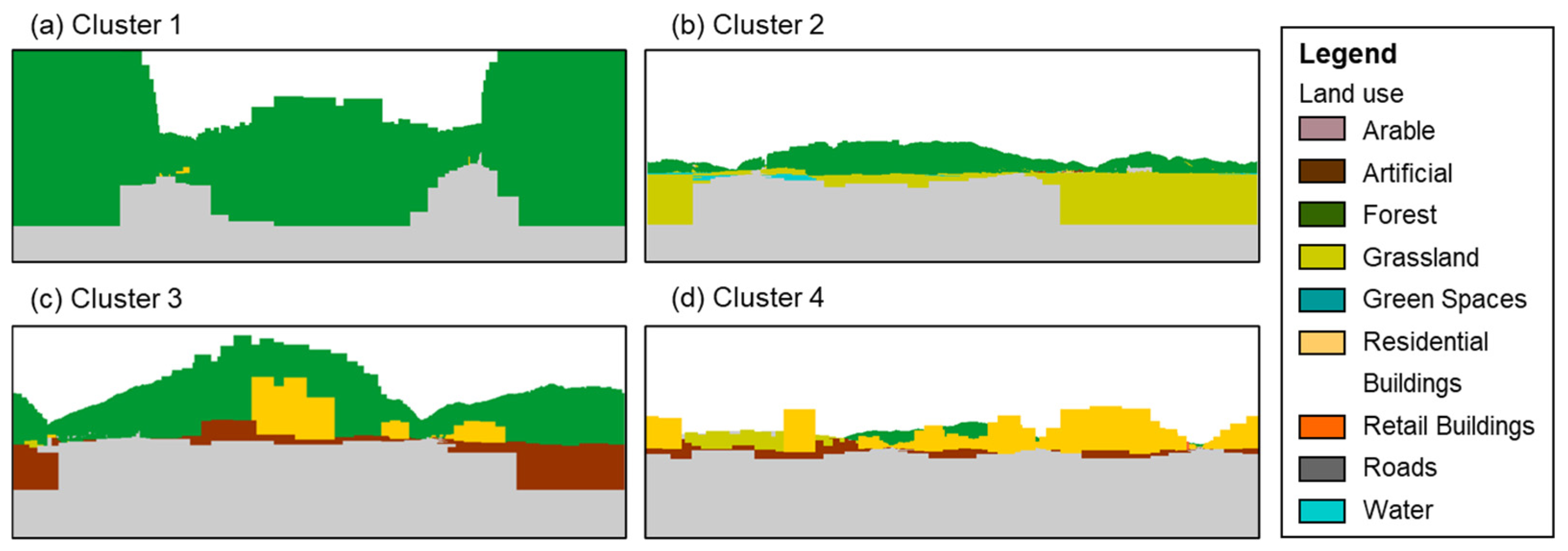
The K-means cluster analysis broadly divided the eye-level landscape patterns into natural-oriented (Clusters 1 and 2) and artificial-oriented (Clusters 3 and 4) patterns. The regression analysis results revealed varying explanatory powers in different landscape clusters, which may be attributed to the different influences of the landscape elements on aesthetic perception at multiple spatial levels. The explanatory power was highest in Cluster 2 (R2 = 0.753), likely owing to the broad viewing range with unobstructed near and middle views and extensive forest cover in the far view. The explanatory contribution of multi-scale landscape factors can be strengthened within the spatial composition of Cluster 2. In contrast, the explanatory power of the landscape elements was below 0.3 in Clusters 1 and 4, possibly because local obstructions in the near and middle zones limit the visual impact of far-view elements, thereby reducing the model’s capacity to explain aesthetic evaluations.
Based on the regression results of each landscape type, we propose differentiated strategies to enhance the aesthetic quality of forest landscapes. In Cluster 1, which mainly represents roads through the forest, trees should be removed from the near or middle zones to expand the view in areas of predominantly natural middle or distant areas. In Cluster 2, characterized by open natural scenery, enhancing the naturalness of the middle view and the heterogeneity of the far view is apparently more effective than merely increasing the openness. In Clusters 3 and 4, where artificial structures constitute major visual barriers and expanding the openness may be difficult, partial screening of buildings through strategic placement of near- and middle-view vegetation is a potentially practical and aesthetically pleasing solution.
Note that our cluster analysis does not classify forest types. Aesthetic differences are primarily driven by the openness, topographic context, and spatial relationships of forests with non-forest elements, rather than by the forest composition itself. The identified significant zone-specific and pattern-specific effects of landscape elements (such as grassland) provide practical insights for the management of landscapes dominated by forests, irrespective of specific forest types.
4.3. Limitations and Future Work
Several limitations of this study must be mentioned. First, the scenic beauty values were predicted by a regression model developed in previous research and were not backed by subjective surveys. That is, scenic beauty scores were computed using an established perception-based scoring model that is itself a linear combination of several eye-level visual variables (e.g., forest, grassland, water, roads, retail buildings, skyline, DISTave, and green spaces) with fixed coefficients. Therefore, statistical associations between scenic beauty scores and landscape variables that overlap conceptually or operationally with these inputs should not be interpreted as independent validation of those specific components. In this study, our inferences focus on comparative patterns (i.e., how relationships vary across viewing distance zones and landscape-pattern contexts) under a consistent scoring framework, rather than on the absolute effect sizes of individual predictors. Future work could examine coefficient sensitivity and alternative parameterizations of the scenic beauty model. In addition, as the evaluations of eye-level metrics and scenic beauty were derived solely from the information of element proportions in the view, they cannot capture the detailed differences among observations of landscape elements in real-life scenarios. The employed regression formula was originally developed using images from urban fringe areas in Europe and may not be fully applicable to forest areas in Japan. Therefore, a perceptual survey of landscape preferences using photographs from the study area is warranted in the future.
Second, while the modest explanatory power of the zone-specific models is consistent with the analytical design aimed at isolating viewing-distance-specific effects, incorporating additional relevant variables may help better capture the complexity of the relationships between landscape elements and scenic beauty perception across viewing distances. Spatially explicit regression approaches (e.g., geographically weighted regression) could also be explored to examine continuous spatial heterogeneity in these relationships, thereby complementing the present zone- and pattern-based framework.
Moreover, the topological data in the DEM were limited to Kochi Prefecture. As data were missing in the northern area of the 5-km buffer of Ino Town, the open area values were artificially raised at viewpoints close to the northern border. Finally, the present study established fundamental distance-zone relationships in forest-dominated landscapes; the effects of specific forest types (coniferous, deciduous, mixed) and structural characteristics (age, density, species diversity) on aesthetic perception within each distance zone should be investigated in the future.
5. Conclusions
In summary, this study addressed a research gap in forest landscape perception by examining distance- and pattern-dependent variations in how spatial landscape elements relate to perceived scenic beauty. The results extend previous understanding of landscape effects—often expressed in simplified terms (e.g., uniformly positive effects of natural elements and negative effects of artificial features)—by demonstrating that these effects vary and can even be reversed across viewing distance zones and eye-level landscape patterns.
From a practical perspective, these findings can help forest managers and landscape planners prioritize context-specific interventions to enhance aesthetic value rather than applying uniform management measures, thereby supporting more efficient use of limited resources. Notably, although this study was conducted in Japan, the eye-level features were derived from objective spatial datasets, the study area encompasses diverse forest-related landscape environments, and the results are reported across landscape patterns. Therefore, the proposed analytical workflow can be applied in other regions where comparable spatial data are available, and the resulting insights may be informative for scenic beauty discussions in other spatial (e.g., rural or peri-urban) and socio-cultural contexts.