
Article

Study on Spatial Equity of Greening in Historical and Cultural Cities Based on Multi-Source Spatial Data

School of Civil Engineering and Architecture, Henan University, Kaifeng 475000, China
*
Author to whom correspondence should be addressed.
ISPRS Int. J. Geo-Inf. 2025, 14(9), 348; https://doi.org/10.3390/ijgi14090348
Submission received: 31 July 2025 / Revised: 1 September 2025 / Accepted: 8 September 2025 / Published: 12 September 2025

Abstract

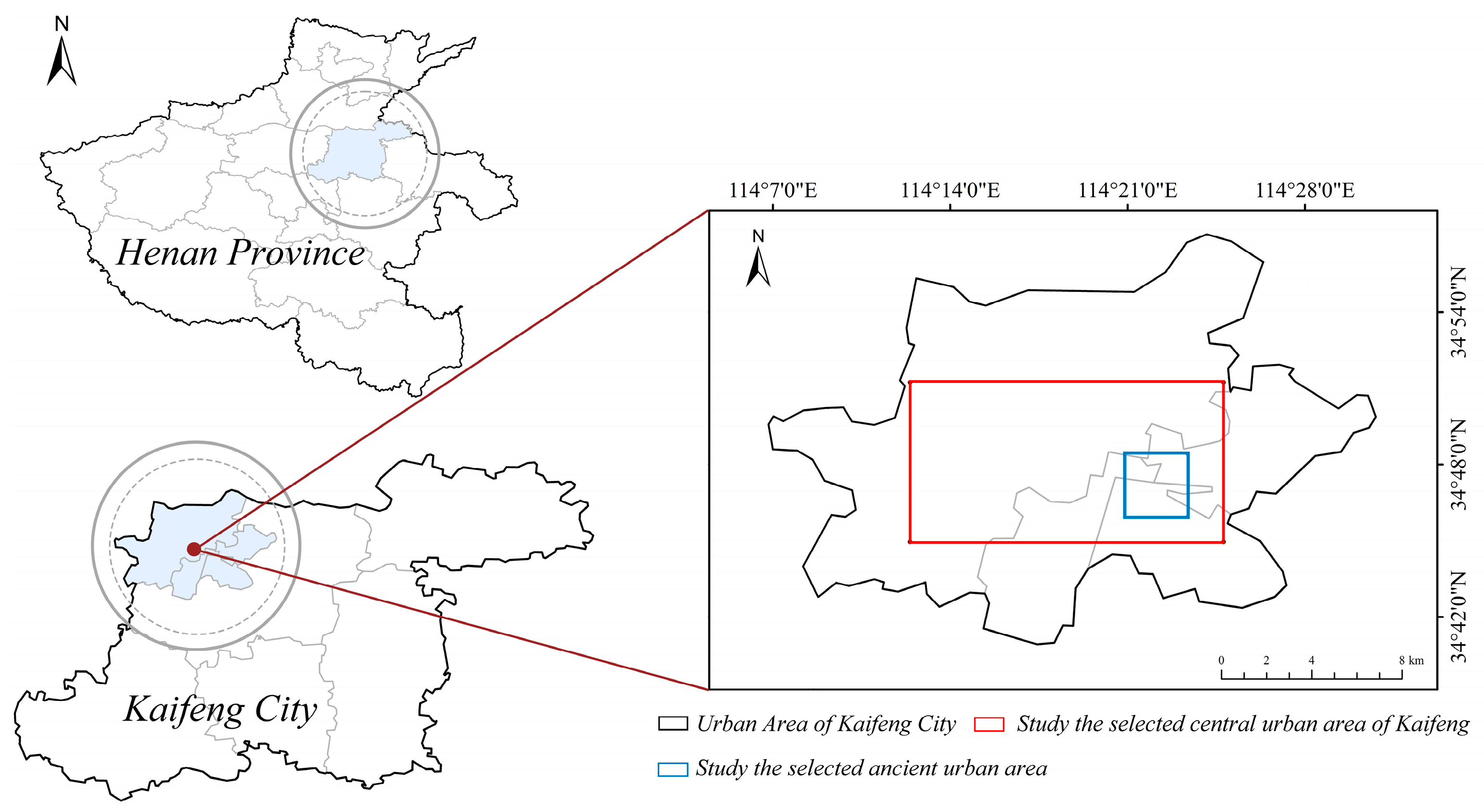
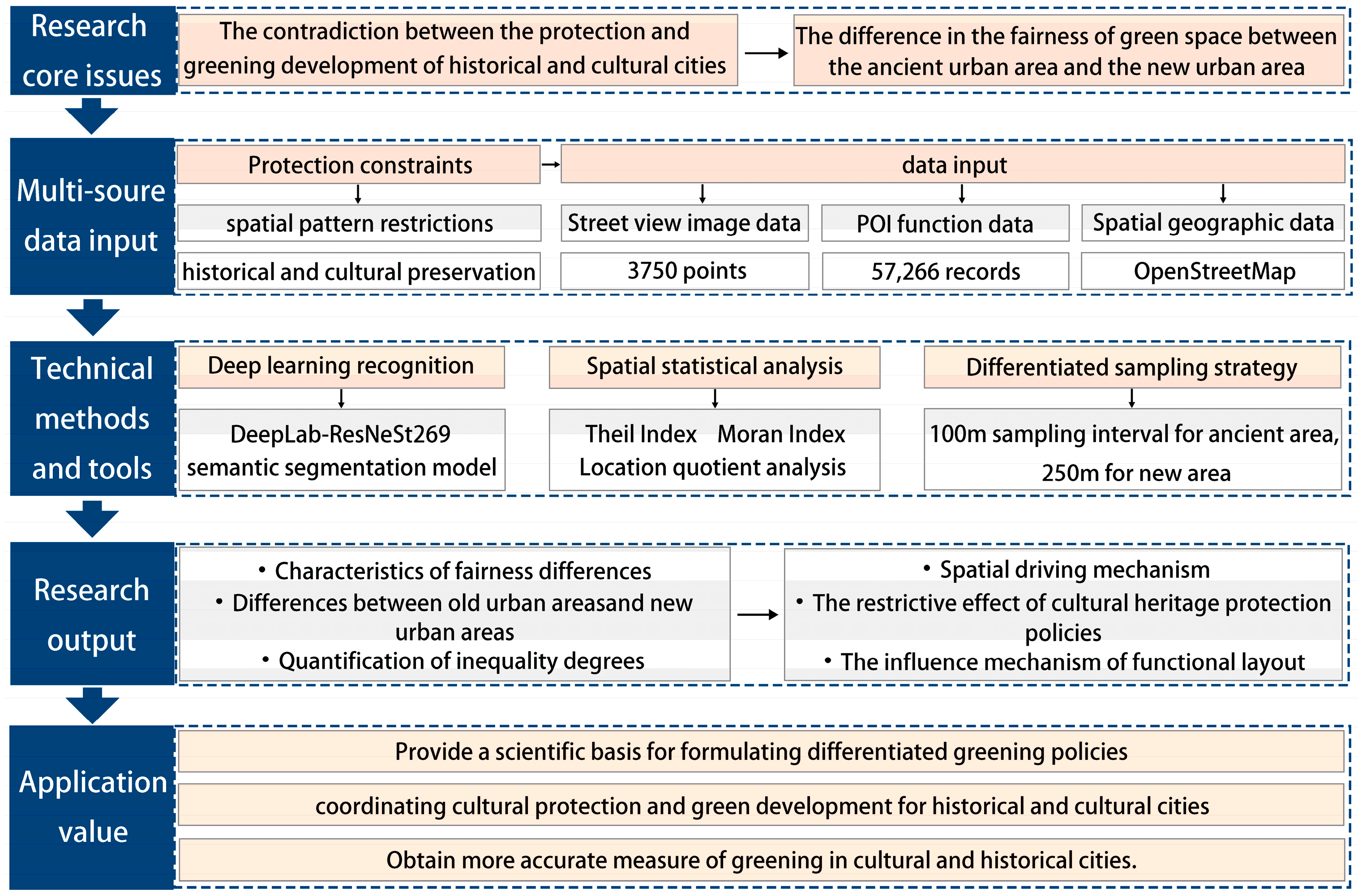
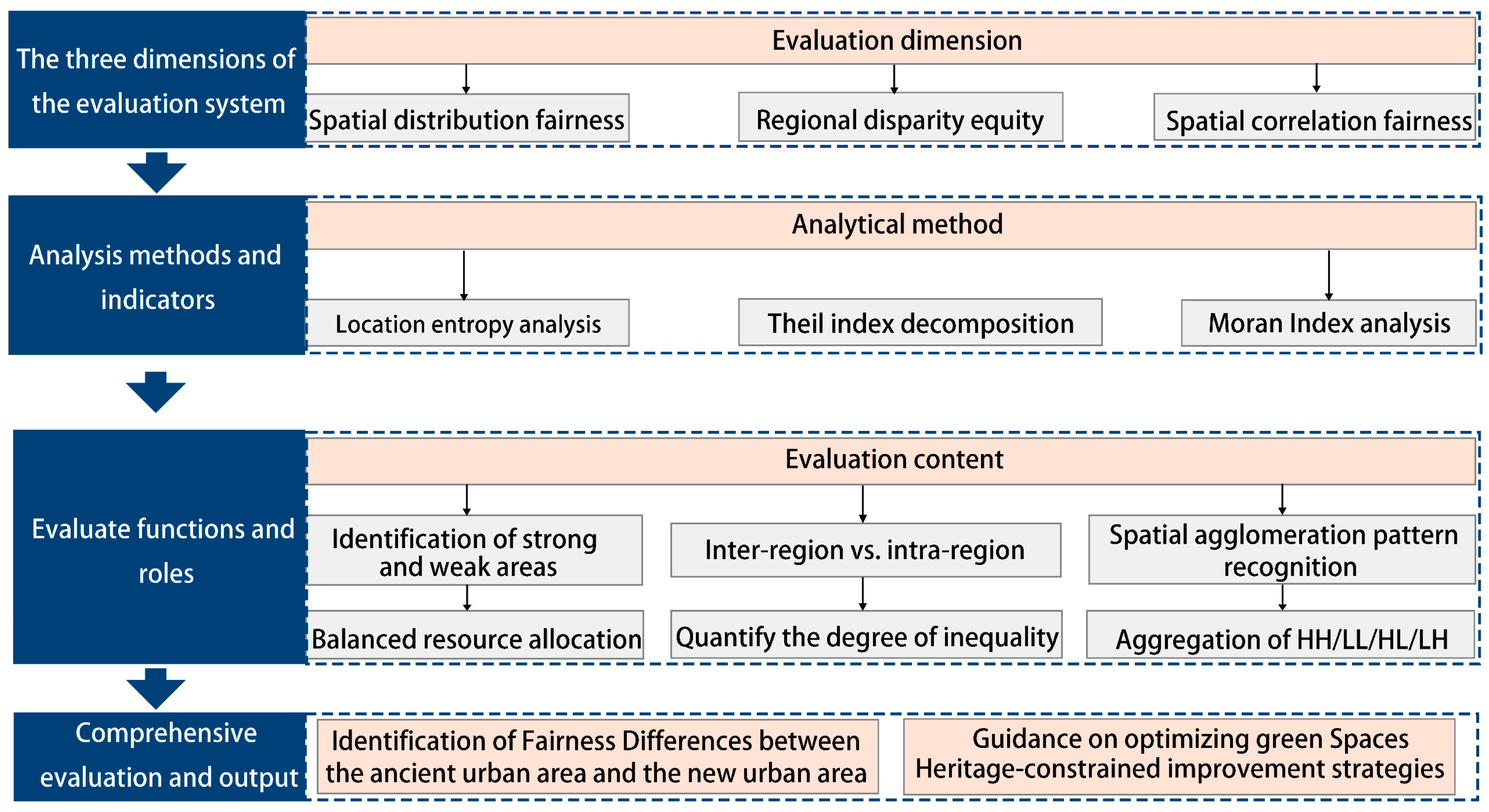
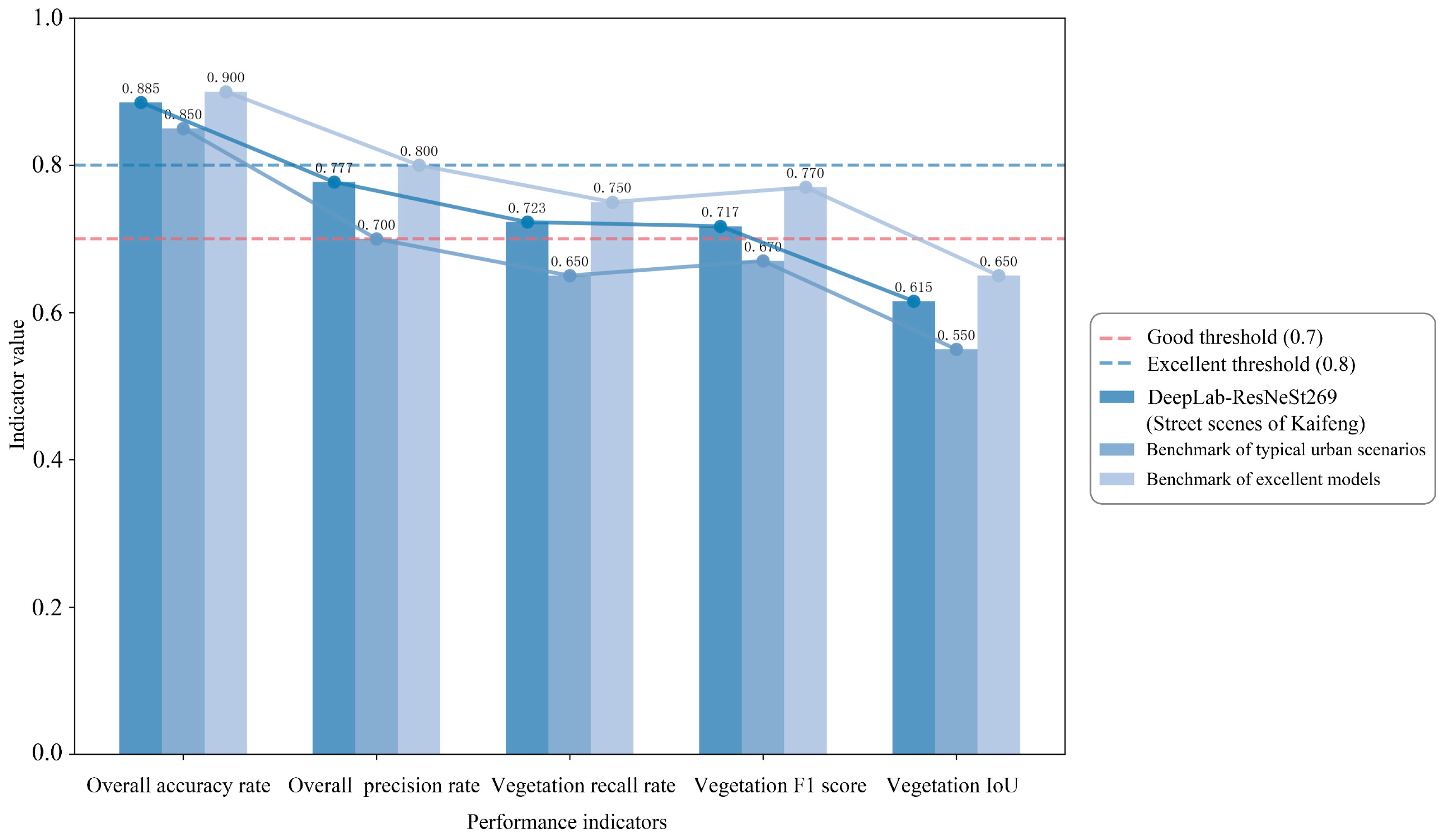
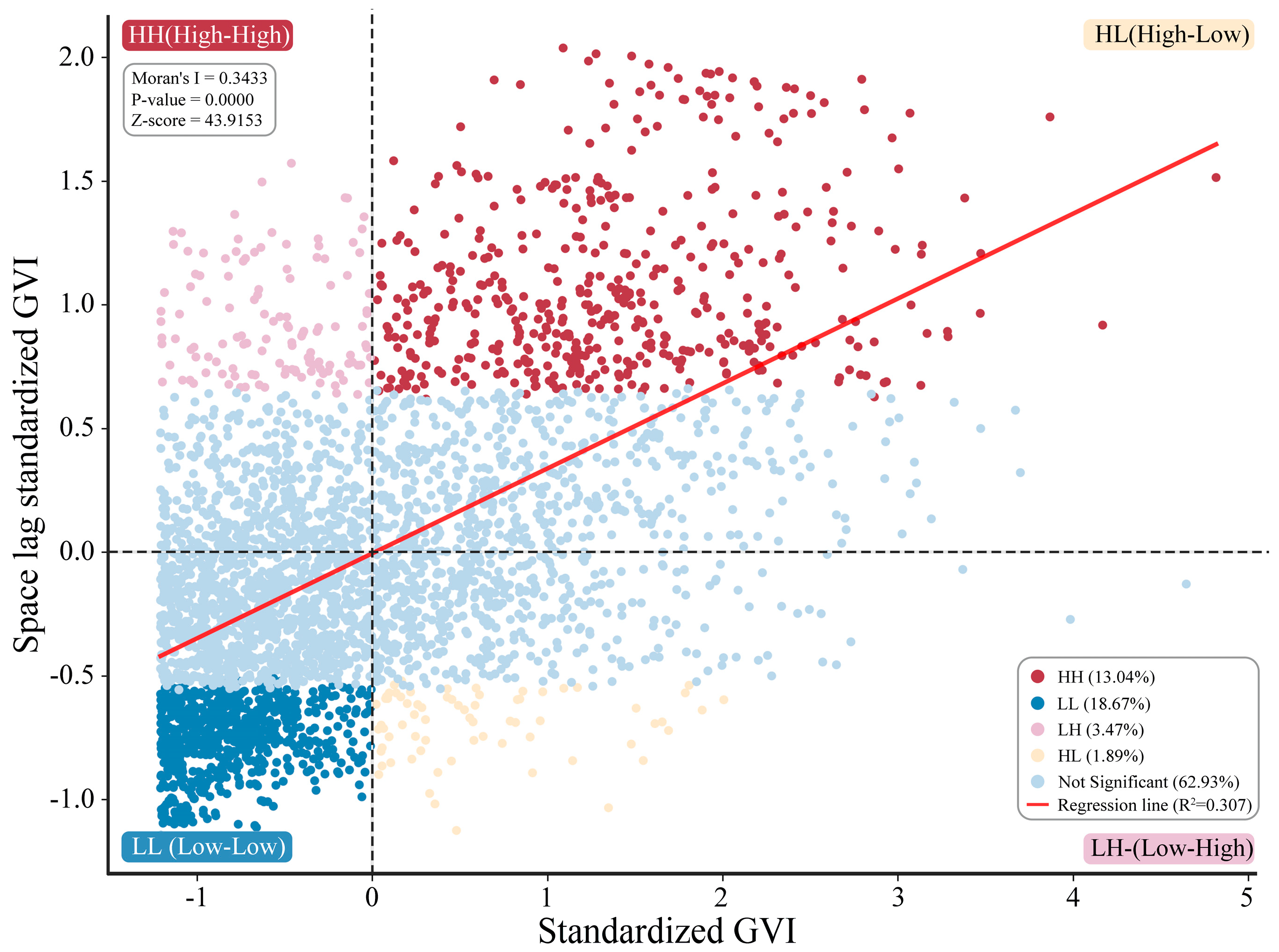
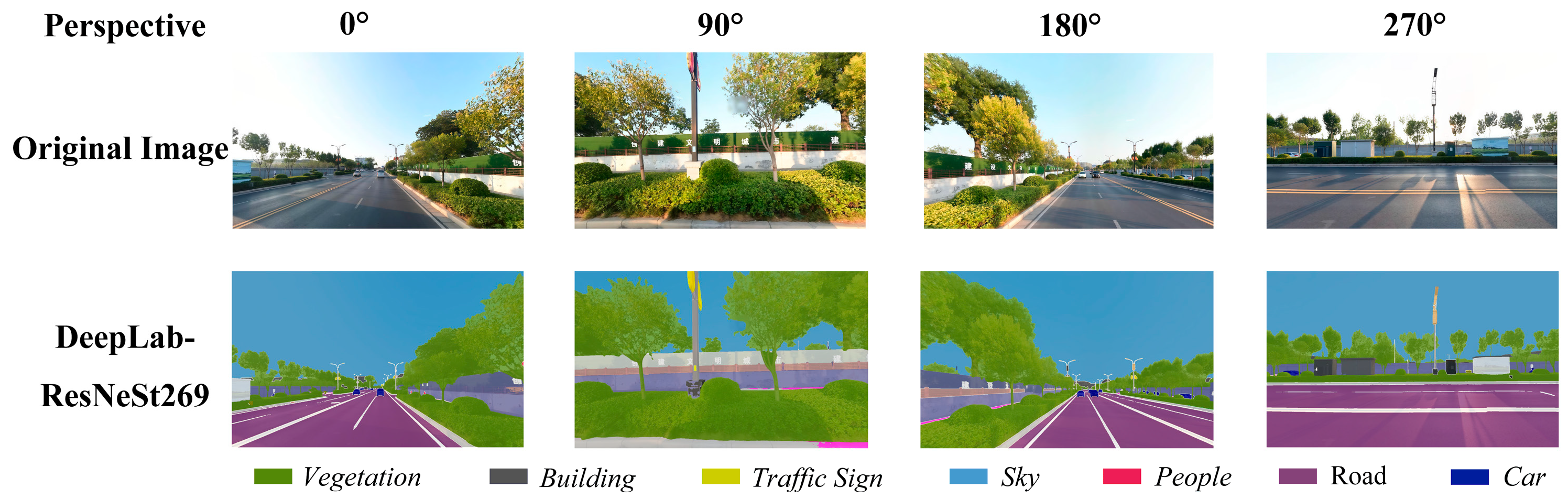
Urban green space, a vital part of urban ecosystems, offers inhabitants essential ecosystem services, and ensuring its fair distribution is essential to preserving their ecological well-being. This study uses Kaifeng City in Henan Province as the research object and aims to address the unique conflict between the preservation of well-known historical and cultural cities and the development of greening. It does this by integrating streetscape big data (2925 sampling points) and point of interest (POI) density data (57,266 records) and using the DeepLab-ResNeSt269 semantic segmentation model in conjunction with spatial statistical techniques (Moran’s Index, Locational Entropy and Theil Index Decomposition) to quantitatively analyze the spatial equity of the green view index (GVI) in Kaifeng City. The results of the study show that (1) The Theil Index reveals that the primary contradiction in Kaifeng City’s distribution pattern—low GVI in the center and high in the periphery—is the micro-street scale difference, suggesting that the spatial imbalance of the GVI is primarily reflected at the micro level rather than the macro urban area difference. (2) The distribution of the GVI in Kaifeng City exhibits a significant spatial polarization phenomenon, with the proportion of low-value area (35.40%) being significantly higher than that of high-value area (25.10%) and the spatial clustering being evident (Moran’s Index 0.3824). Additionally, the ancient city area and the new city area exhibit distinct spatial organization patterns. (3) POI density and GVI had a substantial negative correlation (r = −0.085), suggesting a complicated process of interaction between green space and urban functions. The study reveals that the fairness of green visibility in historical and cultural cities presents the characteristics of differentiated distribution in different spatial scales, which provides a scientific basis for the optimization of greening spatial layouts in historical and cultural cities while preserving the traditional landscape.
Keywords: green view index; spatial analysis; point of interest data; deep learning; green space equity; historic and cultural cities green view index; spatial analysis; point of interest data; deep learning; green space equity; historic and cultural cities