
Article

Can Urban Information Infrastructure Development Improve Resident Health? Evidence from China Health and Retirement Longitudinal Survey

1
School of Management, Guangzhou University, Guangzhou 510006, China
2
Academy of Guangzhou Development, Guangzhou University, Guangzhou 510006, China
3
Department of Civil and Environment Engineering, National University of Singapore, Singapore 117576, Singapore
*
Author to whom correspondence should be addressed.
ISPRS Int. J. Geo-Inf. 2025, 14(12), 496; https://doi.org/10.3390/ijgi14120496
Submission received: 30 September 2025 / Revised: 2 December 2025 / Accepted: 9 December 2025 / Published: 16 December 2025

Abstract

Taking the “Broadband China” policy (BCP) as a quasi-natural experiment, this paper utilizes nationwide tracking data from the China Health and Retirement Longitudinal Survey (CHARLS) for 2011, 2013, 2015, and 2018 and employs a Difference-in-Differences (DID) model to evaluate whether and how urban information infrastructure development affects resident health. We identify a clear and significant improvement in health outcomes attributable to BCP. After the implementation of BCP, physical health and mental health increase by 2.5% and 1.7%, respectively. Furthermore, mechanism analysis confirms that BCP enhances resident health primarily by improving information and communication technology (ICT) levels and by promoting local economic development. The positive health effect of BCP is more pronounced in regions with a better medical environment, suggesting the presence of complementary public-service capacity. At the individual level, heterogeneity tests reveal that BCP exerts a stronger positive influence on the physical health of male and rural respondents, while the benefits for older respondents are relatively smaller. At the city level, the health-promoting effect of BCP is stronger in economically less developed regions, and cities with higher administrative status exhibit more substantial health improvements.

1. Introduction

In an era of rapid internet development, the significance of resident health has become increasingly prominent. The widespread penetration of internet technology has profoundly reshaped lifestyles, work patterns, and social interaction [1,2,3]. While urban information infrastructure development drives technological progress and facilitates access to healthcare services, such as online medical consultations and health management applications [4,5], it also introduces new health challenges. Prolonged screen time, irregular online habits, and associated issues like eye fatigue and sleep deprivation have emerged as critical public health concerns [6,7]. Furthermore, risks related to information security and privacy protection pose additional threats to resident health [8,9]. These dual effects underscore the need to holistically evaluate the relationship between urban information infrastructure and resident health, balancing technological benefits with potential risks.
Resident health is shaped by a complex interplay of internal and external factors. Internal factors, such as genetic predispositions, age, gender, and physiological conditions, form the biological foundation of health outcomes. External factors, however, encompass a broader spectrum of determinants, including environmental quality (e.g., air pollution, water safety), socioeconomic status (e.g., income, education), lifestyle behaviors (e.g., diet, physical activity), healthcare accessibility, and technological environments [10,11]. Recent trajectory big-data studies provide new insights into health-related behaviors. They show that urban environments and digital accessibility can influence residents’ physical activity patterns, offering additional evidence that external environments shape health behaviors [12,13,14].
Existing studies highlight multifaceted pathways through which external factors influence health. For instance, environmental degradation, such as exposure to PM2.5, significantly increases respiratory and cardiovascular disease risks [15]. Socioeconomic disparities limit access to nutritious food and quality healthcare, exacerbating health inequalities [16]. Meanwhile, lifestyle factors like sedentary behavior and poor dietary habits contribute to rising rates of obesity and diabetes [17]. In contrast, urban information infrastructure, particularly internet penetration and digital technologies, exerts a more nuanced influence. Research demonstrates that internet access improves health outcomes by enhancing medical information dissemination, enabling remote healthcare services, and fostering social connectivity to mitigate mental health risks [18]. For instance, internet use significantly reduces depression levels among the elderly [19,20]. Similarly, digital finance development correlates with better self-rated health and reduced depressive symptoms, particularly for socioeconomically disadvantaged groups [21]. At the macro level, urban information infrastructure lowers mortality rates by advancing education, healthcare modernization, and equitable urbanization [22].
Beyond the Chinese context, similar national broadband strategies have been implemented in many countries. Australia’s National Broadband Network (NBN) was among the earliest nationwide projects designed to provide universal high-speed connectivity. However, evidence from its implementation shows persistent challenges in ensuring equity and reducing regional disparities [23]. In the United States, the Affordable Connectivity Program (ACP) provides subsidies for internet access and digital devices to low-income households and has expanded the use of telehealth services. Yet, limited digital literacy and low public awareness continue to constrain actual participation [24]. Recent research further suggests that although broadband-enabled telehealth can reduce geographic barriers to care, uneven network coverage and affordability gaps may unintentionally reinforce existing health inequalities [25,26]. These international experiences illustrate that national broadband strategies have the potential to enhance social welfare and improve healthcare access, but their ultimate effectiveness depends on appropriate policy design, affordability safeguards, and integration with public service delivery systems. Against this background, the Broadband China Strategy provides a valuable empirical setting for examining how large-scale investments in digital infrastructure can translate into measurable improvements in population health.
However, the existing literature exhibits three critical gaps. First, while studies have explored traditional determinants like pollution and income, the health implications of infrastructure policies remain underexamined, despite their profound impact on digital equity and service accessibility [27]. Second, mechanistic insights are limited: while ICT’s role in health is acknowledged, the mediating pathways and moderating contexts lack empirical validation. Third, there are inadequate heterogeneity analyses across demographics like gender, age, and urban–rural divides. These limitations hinder a holistic understanding of how information infrastructure interacts with other determinants to shape health outcomes.
To address these gaps, this study leverages China’s “Broadband China” policy as a quasi-natural experiment. Initiated in 2013, the policy prioritized broadband as strategic public infrastructure, deploying three batches of pilot cities (2014–2016) to expand network coverage, drive industrial upgrades, and strengthen digital ecosystems [27]. Despite its societal impact, the policy’s health consequences remain understudied. Using data from the China Health and Retirement Longitudinal Survey (CHARLS), the Chinese City Statistics Database (CCSD), and the China Urban Statistical Yearbook, we employ a Difference-in-Differences approach to evaluate the policy’s effect on resident health. We further analyze mediating roles of ICT and economic development, moderating effects of regional healthcare environments, and heterogeneity across demographics.
This paper contributes to the literature in three key ways. First, it provides the first empirical assessment of the “Broadband China” policy’s health impacts, addressing prior neglect of infrastructure policies in health research. Second, it uncovers the dual mediating pathways of ICT advancement and economic growth, clarifying how infrastructure development translates into health improvements. Third, it reveals the moderating role of healthcare environments, demonstrating that regions with stronger medical systems amplify the health benefits of infrastructure. These findings align with and directly respond to the limitations of existing studies, offering policymakers insights for optimizing infrastructure investments and health outcomes.
The remainder of this paper is structured as follows: Section 2 outlines the policy background and hypotheses, Section 3 describes the methodology and data, Section 4 presents the results, and Section 5 concludes with policy recommendations.

2. Policy Background and Research Hypothesis

2.1. Policy Background

Prior to the launch of the Broadband China Strategy, China had already introduced several early digital infra—structure initiatives. One of the most important was the “Three-Network Convergence” policy launched in 2010, which aimed to integrate telecommunications, broadcasting, and internet services. Another example is the rural “Village Access Project” (2004–2010), which achieved near-universal telephone coverage in administrative villages. However, these policies did not fully address problems related to broadband access, service quality, or regional inequality, particularly in rural and western regions. As a result, substantial gaps in digital service availability remained. It was under these circumstances that the Broadband China Strategy was introduced as a more comprehensive national initiative. The development of the urban information infrastructure relies on the overall societal infrastructure for networking. In China, since August 2013, the “Broadband China” policy (BCP) has become one of the fundamental strategies toward digitization (Source: https://www.gov.cn/zhengce/content/2013-08/16/content_5060.htm. Date: 16 November 2025). This signifies that “broadband” is, for the first time, recognized as a national strategic public infrastructure, ushering China into a new era of accelerating broadband construction. The BCP encompasses a comprehensive framework that includes substantial fiscal investments, stringent technical standards, and robust regulatory measures. Specifically, the central government allocated over 100 billion yuan between 2013 and 2016 to support broadband infrastructure development. The policy mandated the adoption of advanced technical standards, such as the deployment of fiber-optic networks capable of delivering minimum download speeds of 100 Mbps in urban areas and 20 Mbps in rural regions. Additionally, the Ministry of Industry and Information Technology (MIIT) implemented strict regulatory oversight to ensure compliance with these standards and to promote fair competition among service providers.
Following the announcement of this policy by the State Council, the National Development and Reform Commission and the Ministry of Industry and Information Technology launched three batches of pilot cities for the Broadband China Project. The spatial distribution of the policy pilot cities is shown in Figure 1. The first batch, comprising 41 cities assessed by experts, implemented the policy in 2014, followed by the second batch of 38 cities in 2015, and the third batch of 37 cities in 2016. The selection of pilot cities under the Broadband China Strategy was not based on simple geographical coverage. Instead, it followed a clear and deliberate policy logic. According to official documents issued by the Ministry of Industry and Information Technology (MIIT) and the National Development and Reform Commission (NDRC), several criteria guided the selection. These include the existing level of local information infrastructure, regional representativeness, and the national goal of promoting balanced development across eastern, central, and western China. In practice, the first batch mainly consisted of municipalities, provincial capitals, and economically advanced cities with strong digital foundations. Later batches adopted a broader and more inclusive approach, expanding coverage to entire provinces and placing greater emphasis on central and western regions as well as inland areas. The core objective was to reduce both urban–rural and interregional digital disparities. Overall, this phased and progressive rollout reflects a strategic logic of first consolidating experience in leading areas and then promoting diffusion and nationwide coverage through replication. The primary approach of policy implementation involves expanding the coverage of access networks, supporting industrial upgrading and diversification of network applications, and enhancing the network industry chain through the industrialization of key products. Since its promulgation, the BCP has garnered significant attention from society and has been actively executed. Undoubtedly, it has effectively promoted China’s level of informatization, exerting a positive influence on the formation of urban information infrastructure development.
In conclusion, the “Broadband China” policy represents a pivotal step in China’s journey toward becoming a global leader in information technology and digital infrastructure. By providing a clear roadmap for broadband development, backed by substantial financial resources and stringent regulatory frameworks, the BCP has laid a solid foundation for the country’s ongoing digital transformation. By providing a clear roadmap that addresses the shortcomings of earlier policies, the BCP has laid a stronger foundation for unified, high-quality digital infrastructure development. As China continues to expand and upgrade its broadband networks, the policy’s long-term benefits are expected to permeate all aspects of society, fostering economic growth, social inclusion, and technological innovation.

2.2. Research Hypothesis

The widespread adoption of urban information infrastructure has transformed the industrial landscape in the healthcare sector, providing multifaceted support for the enhancement of resident health levels [28]. Firstly, individuals now find it easier to access health information through search engines and specialized health websites. This convenient access to information contributes to increased health awareness, encouraging individuals to actively engage in their own health management. Secondly, internet technology plays a crucial role in healthcare services. For instance, telemedicine and online consultations enable patients to quickly obtain medical advice. Particularly in remote areas, these technologies help address the issue of uneven distribution of medical resources, improving the accessibility of healthcare services [29]. This efficient and convenient healthcare service facilitates early detection and treatment of diseases, thereby improving overall resident health levels. Moreover, social media platforms serve as effective channels for promoting resident health and health awareness. Governments, healthcare institutions, and health professionals use these platforms to disseminate health knowledge and disease prevention information, effectively encouraging the public to adopt healthier lifestyles. The interactivity and shareability of social media enable information to spread widely, generating a greater societal impact. Additionally, the application of urban information infrastructure in medical research and big data analysis provides robust support for resident health decision-making [30]. Through the collection and analysis of large-scale health data, scientists can gain deeper insights into the patterns of disease transmission and risk factors, providing a scientific basis for disease prevention and the formulation of resident health policies [31]. In summary, the development of urban information infrastructure promotes information access, healthcare services, health promotion, and research, effectively enhancing resident health levels. Based on the above content, this paper proposes Hypothesis 1.
Hypothesis 1.
Urban information infrastructure development will significantly enhance resident health levels.
The rapid development of urban information infrastructure drives improvements in resident health through three interlinked theoretical mechanisms rooted in technological advancement, economic growth, and institutional accessibility. First, enhanced information and communication technology levels optimize healthcare delivery by reducing information asymmetry and improving service efficiency. Drawing on Rogers’ Diffusion of Innovations Theory [32], the adoption of electronic health records and telemedicine platforms enables real-time data sharing and remote diagnostics, thereby reducing medical errors [33,34]. This aligns with Grossman’s Health Production Function, where ICT acts as a critical input to “produce” health outcomes by lowering transaction costs and increasing healthcare output quality.
Second, urban information infrastructure stimulates economic development, which indirectly elevates health outcomes through dual channels: household income growth and public fiscal capacity. According to endogenous growth theory, digital infrastructure fosters innovation and productivity gains across industries, generating higher tax revenues for governments. The resulting economic growth provides governments with more financial support, enabling them to intervene on a larger scale and in deeper layers in the field of resident health [35,36]. Simultaneously, the digital economy creates job opportunities, raising individual incomes and enabling households to afford better healthcare [37]. This mirrors the “health-wealth gradient”, where economic empowerment reduces health disparities.
Third, improved healthcare accessibility bridges gaps in service delivery. Guided by Andersen’s Behavioral Model of Health Services Use [38], digital infrastructure dismantles geographic and financial barriers. For example, telemedicine reduces travel costs for rural patients and big data analytics helps optimize resource allocation to underserved areas [39]. This institutional shift aligns with the WHO’s emphasis on “universal health coverage” [40], ensuring equitable access to preventive and curative services.
Hypothesis 2.
Urban information infrastructure development primarily improves resident health by enhancing information and communication technology levels, promoting economic development and healthcare accessibility.
In regions with a more favorable medical health environment, the impact of urban information infrastructure development on resident health is more pronounced. Firstly, these areas typically possess more advanced medical facilities and skilled professionals, and the application of urban information infrastructure can optimize the allocation of healthcare resources more effectively. Secondly, these regions have more research institutions and researchers, and the rapid dissemination of information and data sharing facilitated by the Internet enable scientists to collaborate and conduct research more conveniently. Through big data analysis, they can gain a deeper understanding of the characteristics and transmission patterns of diseases in these areas, providing a more accurate scientific foundation for the formulation of resident health policies. Additionally, social media is more widely utilized for health promotion and education in regions with a better medical health environment. Information from these areas is often more authoritative and credible, facilitating the more effective transmission of health knowledge to the public and promoting the adoption of healthier lifestyles [34].
Finally, residents in these regions are more likely to enjoy the convenience of Internet-enabled healthcare services, encouraging them to actively participate in individual health management. For instance, they can utilize technologies such as telemedicine and online appointments to make healthcare more accessible [41]. These technologies promote earlier seeking of medical assistance, reducing the treatment costs incurred after the onset of illness. Therefore, in regions with a better medical health environment, the development of the urban information infrastructure permeates more deeply into various aspects of resident health, further enhancing overall health levels. Based on the above content, this paper proposes Hypothesis 3.
Hypothesis 3.
In regions with a better medical health environment, the positive impact of urban information infrastructure development on resident health is stronger.

3. Methods and Data

3.1. Data

This study utilized nationally tracked data from the China Health and Retirement Longitudinal Survey (CHARLS) project, collected by the project team in 2011, 2013, 2015, and 2018. The sample covers 28 provinces, autonomous regions, and directly administered municipalities across the nation (excluding Ningxia, Tibet, Hainan Island, and Hong Kong, Macao, and Taiwan). The dataset comprises a total of 64,080 observations. The CHARLS project was organized and conducted by the National School of Development at Peking University, employing a multistage sampling approach. Probability proportional to size sampling was applied to randomly select individuals aged 45 and above, along with their spouses, in villages or communities as the primary respondents. The survey investigated the health, income, and employment status of the respondents and their family members. Covering the majority of provinces nationwide, this database contains extensive information reflecting residents’ health conditions, providing ample samples and appropriate indicators for the quasi-natural experimental design used in this paper.
Ethical considerations for this study were in strict accordance with the principles of research integrity. Informed consent was obtained from all participants, and the study was approved by an appropriate ethical review board. All data were anonymized to protect the privacy of the respondents. Regarding the methodology, it is important to note that the most recent data collection year is 2018. This could be considered a potential limitation as more recent data may have provided a more up-to-date understanding of the health, income, and employment trends in China. However, the 2018 dataset remains the latest available public release at the time of this study’s analysis.
Regional-level variables were sourced from the Chinese City Statistics Database (CCSD) available on the Chinese Research Data Services (CNRDS) Platform (https://www.cnrds.com/Home/Index#/FinanceDatabase/DB/CCSD) (accessed on 5 January 2024) and from the China Urban Statistical Yearbook.

3.2. Econometric Model

To assess the impact of urban information infrastructure development on resident health, this paper constructs the following baseline DID model:
h e a l t h i , r , t = β 0 + β 1 × B C P r , t + C o n t r o l i , r , t + λ t + γ r + ε i , r , t
B C P r , t = 0 ,   B C P   i s   n o t   i m p l e m e n t e d . 1 ,   B C P   i s   i m p l e m e n t e d   i n   c i t y   r   a t   y e a r   t .  
where healthi,r,t denotes the level of resident health of individuals i in city r at year t. This paper measures the resident health of individual i through the perspective of physical health and mental health. BCPr,t denotes implementation of “Broadband China”, and the estimated coefficient β 1 denotes the average treatment effect of BCP on resident health. C o n t r o l i , r , t denotes a series of control variables affecting the level of resident health of individuals, λ t denotes time fixed effects, γ r denotes city fixed effects, and ε i , r , n , t denotes error term.

3.3. Variables

The dependent variable of this study is resident health, and we measure the health level of the respondents from two dimensions: physical health and mental health [42]. Specifically, this study assesses physical health using two indicators, namely acute shock and chronic shock, as they are commonly used to measure immediate and long-term health effects in population health studies. Acute shock is often used to assess the immediate impact of environmental or health shocks [43,44], while chronic shock is used to capture the long-term consequences of sustained health stressors [45]. These two indicators have been validated in prior health research for their ability to capture different temporal dimensions of health impacts.
Additionally, mental health is assessed through three indicators: situational memory, mental cognition, and depression self-assessment. These indicators have been widely used and validated in previous studies as reliable and effective measures of mental health status. Situational memory has been shown to be a strong indicator of cognitive function in elderly populations [46,47], while mental cognition is considered an important predictor of overall well-being and quality of life [48]. Depression self-assessment, often used in self-reported surveys, has been proven to be both reliable and valid for assessing the severity of depressive symptoms [49,50].
The choice of these indicators is based on their ability to capture distinct and comprehensive aspects of health. Acute shock and chronic shock reflect physical health disturbances from both short-term and long-term stressors, while situational memory, mental cognition, and depression self-assessment address different facets of mental health, including cognitive function and emotional well-being. The measurement methods for these indicators are presented in Table 1 below. Each sub-indicator is standardized to a numerical range of 0 to 1, and the values for physical health and mental health are calculated using a weighted average method. For instance, the calculation of the Physical health score is as follows: (acute shock/3 + chronic shock/9)/2.
The independent variable in this paper is the implementation of BCP. According to Equation (2), the sample after the implementation of BCP takes the value of 1, and the sample before the implementation of BCP takes the value of 0. The control variables selected in this paper include age (lnage), gender (gender), marital status (marital), residence properties (residence), health cost (lncost), sanitary environment (toilet), and domestic water (water). The measurement and descriptive statistics of each variable are shown in Table 2.

4. Results

4.1. Impact of Urban Information Infrastructure Development on Resident Health

Table 3 reports the results of the impact of urban information infrastructure development on resident health in this study, assessing resident health from the dimensions of physical health and mental health. Columns (1) and (2) present the effects of urban information infrastructure development on physical health, while columns (3) and (4) report the effects on mental health.
According to the regression results in Table 3, the regression coefficients for BCP in columns (1) and (2) are 0.023 and 0.025, respectively, both of which pass the 1% significance level test. This indicates that urban information infrastructure development significantly enhances individual levels of physical health. Furthermore, in columns (3) and (4), the regression coefficients for BCP are 0.020 and 0.017, both also passing the 1% significance level test, suggesting that urban information infrastructure development significantly improves individual levels of mental health. Based on the analysis controlling for individual characteristics, as well as city and year fixed effects, urban information infrastructure development significantly enhances resident health, with respective improvement effects on physical health and mental health of 2.5% and 1.7%. The observed outcomes may be attributed to the fact that, from the perspective of physical health, urban information infrastructure development positively influences resident health by providing more health information, medical resources, and health services [51]. Regarding mental health, urban information infrastructure development may offer additional social and psychological support resources through platforms such as social media and online support groups, aiding in stress relief and alleviating issues like anxiety and depression [52].

4.2. Further Analysis

4.2.1. Differences in the Impact of Urban Information Infrastructure Development on Different Health Indicators

To further assess the impact of urban information infrastructure development on different dimensions of physical and mental health, this study estimates the effects using five secondary indicators, namely Acute shock, Chronic shock, Situational memory, Mental cognition, and Depression self-assessment, as dependent variables. The results are presented in Table 4.
According to the estimated results in Table 4, the coefficients of BCP on Acute shock, Chronic shock, Situational memory, Mental cognition, and Depression self-assessment are −0.012, −0.411, 0.100, 0.168, and 0.432, respectively, all of which pass the 1% significance level test. Based on these results, in terms of physical health, we find that urban information infrastructure development significantly reduces the probability of respondents experiencing acute shocks and chronic shocks, with a remarkable reduction effect of 41.1% for chronic shocks, while the reduction effect on the probability of experiencing acute shocks is only 1.2%. The reason for such results may be that the urban information infrastructure can quickly disseminate emergency information for coping with acute shocks, but for chronic shocks, such as the management and rehabilitation of long-term illnesses, the advantages of the urban information infrastructure in terms of continuity, depth, and breadth are more pronounced.
Therefore, the reduction effect of urban information infrastructure development on the probability of experiencing chronic shocks is more significant. In terms of mental health, we find that although urban information infrastructure development significantly improves respondents’ situational memory and mental cognition, it also significantly increases depression self-assessment. This suggests that while urban information infrastructure development overall enhances respondents’ mental health, attention should still be given to the heightened levels of self-reported depressive symptoms it brings. These results indicate that the urban information infrastructure has succeeded in providing information and cognitive stimulation but may also lead to some negative effects, such as negative emotions in self-assessment [53]. This could be related to the presence of negative information on the internet, comparison psychology on social media, and other factors. Therefore, the overall enhancement effect of urban information infrastructure development on mental health needs to be balanced.

4.2.2. Mechanism of Urban Information Infrastructure Development Affecting Resident Health

To further test Hypothesis 2, i.e., whether urban information infrastructure development affects resident health through improving information and communication technology level and economic development level, the following mediating effect model is constructed:
y i , r , t = β 0 + β 1 × B C P r , t + C o n t r o l i , r , t + λ t + γ r + ε i , r , t
M r , t = β 0 + β 1 × B C P r , t + λ t + γ r + ε r , t
y i , r , t = β 0 + β 1 × B C P r , t + β 2 × M r , t + β 3 × C o n t r o l i , r , t + λ t + γ r + ε i , r , t
where yi,r,t denotes the level of resident health of individuals i living in city r at year t in the mechanism analysis, and Mr,t denotes the level of information and communication technology and economic development of city r in year t. If β1 in Equation (4) passes the 10% significance level test, it indicates that urban information infrastructure development has a significant impact on the level of information and communication technology and economic development. On this basis, if both β2 and β3 in Equation (5) pass the 10% significance level test, it indicates that urban information infrastructure development enhances resident health by improving the information and communication technology level and the economic development level.
Table 5 reports the estimated results of the impact mechanisms. Columns (1), (4) and (7) detail the effects of BCP implementation on urban information and communication technology (ICT), economic development and accessibility of medical services. Columns (2), (5) and (8) present the estimated results of the mediation model with Physical health as the dependent variable, while columns (3), (6) and (9) report the results of the mediation model with Mental health as the dependent variable.
According to the estimates in the first column of Table 5, the regression coefficient for BCP is 0.716, passing the 1% significance level, indicating that urban information infrastructure development significantly enhances the level of urban information and communication technology (ICT). In columns (2) and (3), the regression coefficients for lnict are 0.021 and 0.017, respectively, both passing the 1% significance level test. This suggests that the implementation of BCP improves both Physical health and Mental health by enhancing the level of urban information and communication technology. In the fourth column, the estimated result shows that the regression coefficient for BCP is 0.324, passing the 1% significance level, indicating that urban information infrastructure development significantly enhances the level of urban economic development. In columns (5) and (6), the regression coefficients for lnrgdp are 0.071 and 0.031, respectively, both passing the 1% significance level test. This indicates that the implementation of BCP improves both Physical health and Mental health by enhancing the level of urban economic development. The estimation results in column (7) show that the coefficient of BCP on lnha is 0.197, which passes the 1% significance level test, indicating that urban information infrastructure development significantly improves healthcare accessibility. Meanwhile, the estimated coefficients of lnha in columns (8) and (9) are 0.148 and 0.028, respectively, which both pass the 1% significance level test. This indicates that urban information infrastructure development enhances the health of the population by improving the accessibility of healthcare services.
It can be observed that urban information infrastructure development can enhance resident health by improving the levels of urban information and communication technology, economic development and accessibility of healthcare services [54]. The reason for these results may be that the urban information infrastructure, by improving the level of urban information and communication technology, provides the public with faster and more convenient access to health information, encouraging individuals to adopt healthier behaviors more effectively [55]. Additionally, with economic development, the urban information infrastructure supports the optimal allocation of medical resources, promotes medical technology innovation, and enhances the efficiency and quality of healthcare services.

4.2.3. Moderating Effects of Resident Healthcare Environment

To test hypothesis 3, i.e., whether an increase in the degree of resident health enhances the effect of urban information infrastructure development on resident health, the following moderating effect model is constructed:
y i , r , t = β 0 + β 1 × ln p h e r , t + C o n t r o l i , r , t + λ t + γ r + ε i , r , t
y i , r , t = β 0 + β 1 × B C P r , t + β 2 × ln p h e r , t + β 3 × ln p h e r , t × B C P r , t + β 4 × C o n t r o l i , r , t + λ t + γ r + ε i , r , t
where lnpher,t denotes the degree of resident health of city r in year t, which is measured by the logarithmic value of the number of doctors, as commonly applied in previous research. First, this paper explores the impact of resident healthcare environment on individual health levels through Equation (6). Second, this paper further adds the interaction term lnpher,t × BCPr,t in Equation (7) to test the moderating effect of resident health level.
Table 6 reports the estimated results of the moderation effect, with columns (1) and (3) detailing the impact of the public medical health environment on Physical health and Mental health, and columns (2) and (4) reporting the moderation effect of the public medical health environment.
According to the estimated results in Table 6, the coefficients of the public medical health environment (lnphe) in columns (1) and (3) are 0.047 and 0.046, respectively, both passing the 1% significance level test. This indicates that the enhancement of the public medical health environment significantly improves the levels of Physical health and Mental health. Furthermore, the coefficients of the interaction term in columns (2) and (4) are 0.005 and 0.006, respectively, also passing the 1% significance level test. This implies that in cities with a stronger public medical health environment, the implementation of BCP has a stronger positive effect on both Physical health and Mental health. Thus, it can be concluded that strengthening the public medical health environment significantly enhances the positive impact of urban information infrastructure development on resident health. The reasons for these results may be that a robust health environment signifies more comprehensive and efficient medical services, facilitating better handling of acute shocks and the provision of chronic disease management by relevant institutions [56]. Additionally, Internet technologies are more easily integrated into such environments, promoting the sharing of medical information and digital services. This further enhances the positive impact of urban information infrastructure development on resident health.

4.3. Heterogeneity Analysis

4.3.1. Individual-Level Heterogeneity Analysis

There are significant differences in the levels of Physical health and Mental health among different genders, residence, and age groups. When assessing the impact of urban information infrastructure development on resident health, it is necessary to further explore its heterogeneity across different groups. Table 7 below reports the differences in the impact of urban information infrastructure development on the resident health of respondents from different gender, residence, and age groups. In this table, ‘gender’ takes a value of 1 for males and 0 for females. ‘Residence’ takes a value of 1 for rural residents and 0 for urban residents. ‘Age’ takes a value of 1 for respondents aged 45 to 60, and 0 for those aged over 61.
According to the results in Table 7, the regression coefficients of the interaction term BCP × gender in columns (1) and (2) are 0.002 and −0.003, respectively. The coefficient in column (1) passes the 1% significance level test, while the coefficient in column (2) does not pass the 10% significance level test. This indicates that the implementation of BCP has a higher positive effect on physical health for males compared to females, with an increase of 0.2%. However, there is no significant difference in its impact on mental health between different genders. In columns (3) and (4), the regression coefficients of the interaction term BCP × residence are 0.015 and −0.004, respectively. The coefficient in column (3) passes the 1% significance level test, while the coefficient in column (4) does not pass the 10% significance level test. This suggests that the implementation of BCP has a higher positive effect on physical health for respondents in rural areas compared to urban areas, with an increase of 1.5%. However, there is no significant difference in its impact on mental health between respondents in rural and urban areas. In columns (5) and (6), the regression coefficients of the interaction term BCP × age are 0.001 and 0.010. The coefficient in column (5) does not pass the 10% significance level test, while the coefficient in column (6) passes the 1% significance level test. This indicates that the implementation of BCP has a significant difference in its impact on physical health across different age groups. Therefore, the positive effect of BCP on mental health is higher by 1% for respondents aged between 45 and 60 compared to those aged over 60.
In conclusion, the impact of urban information infrastructure development on resident health varies among respondents of different genders, residences, and age groups. Urban information infrastructure development has a stronger positive effect on the Physical health of males and respondents living in rural areas. Meanwhile, there is no significant difference in its impact on Mental health between different genders and residence groups, but its positive effect is lower for older respondents. The reasons for these results may be that the urban information infrastructure provides rural residents with a pathway to overcome traditional information barriers, and males may have different health needs for certain health issues, with personalized internet services better meeting these needs. This makes urban information infrastructure development more effective in improving physical health for males and rural residents. In terms of mental health, the impact of the urban information infrastructure on gender and residence differences is minimal, but its positive effect is lower for older respondents, possibly due to the relative lag in digital technology use and acceptance of social media among the elderly.

4.3.2. Regional Heterogeneity Analysis

In addition to individual differences, there exists significant imbalance in the development of various regions in China, primarily manifested in the differences in economic development levels and administrative hierarchies [57]. Regions with higher economic development levels or higher administrative hierarchies possess more information infrastructure and medical resources. Therefore, it is essential to further assess the differences in the impact of urban information infrastructure development on the resident health of respondents in cities with different economic development levels and administrative hierarchies [58,59]. Table 8 and Table 9 report the estimated results of different regions. Table 8 presents the differences in the impact of urban information infrastructure development among the eastern, central, and western regions, while Table 9 reports the differences in the impact of urban information infrastructure development between ordinary prefecture-level cities and non-ordinary prefecture-level cities. In this study, provincial capitals, sub-provincial cities, or directly administered municipalities are defined as non-ordinary prefecture-level cities, while other cities are considered ordinary prefecture-level cities [60].
According to the estimated results in Table 8, the coefficients of the impact of BCP on the Physical health of respondents in the eastern, central, and western regions are 0.024, 0.024, and 0.025, respectively, all passing the 1% significance level test. The coefficients of the impact of BCP on the Mental health of respondents in the eastern, central, and western regions are 0.017, 0.009, and 0.029, respectively, all passing the 1% significance level test. Considering that the samples used in the grouped regressions are different, the conclusions obtained from a direct comparison of coefficient sizes are not reliable. In this paper, grouped coefficients are compared using the Fisher test, which is performed via the bdiff command in stata. For Table 8, since the heterogeneity analysis was split into 3 groups, we need to perform the test twice. The first test is for the difference in coefficients between eastern and non-eastern regions, and the second test is for the difference in coefficients between western and non-western regions. The reason why we did not choose the central region is that the division of the three types of regions is based on the level of economic development, and the central region is medium, so we can just choose the most economically developed eastern region and the least economically developed western region. According to the results in Table 8, BdiffE and BdiffW passed the 1% significance level test in both Physical health and Mental health, indicating that the coefficients are significantly different between groups. This means that the positive impact of BCP on the health of the population in the non-eastern region is higher than in the eastern region. And the positive impact of BCP on the health of the population in the non-western region is lower than in the western region.
The above analysis results indicate that the implementation of BCP has the strongest impact on the Physical health and Mental health of respondents in the western region. This suggests that urban information infrastructure development has a more pronounced improvement in the resident health levels of regions with lower economic development. The possible reasons for this result may be that urban information infrastructure development enables residents to conveniently schedule medical services and access medication, and it also promotes the popularity of telemedicine services. This allows residents to obtain remote diagnosis and advice from doctors through digital platforms, addressing the insufficient medical resources in remote areas.
According to the estimated results in Table 9, the coefficients of the impact of BCP on the Physical health of respondents in non-ordinary prefecture-level cities and ordinary prefecture-level cities are 0.035 and 0.020, respectively, both passing the 1% significance level test. The coefficients of the impact of BCP on the Mental health of respondents in non-ordinary prefecture-level cities and ordinary prefecture-level cities are 0.020 and 0.017, respectively, both passing the 1% significance level test. In Table 9 below, Bdiff is the difference between the coefficients of ordinary prefecture-level cities and those of non-ordinary prefecture-level cities. The results show that for Physical health and Mental health the differences in the coefficients between the groups are −0.015 and −0.003, respectively, and both pass the 1% significance level test. The above results indicate that the implementation of BCP has a stronger impact on the Physical health and Mental health of respondents in non-ordinary prefecture-level cities compared to ordinary prefecture-level cities.
Therefore, the positive impact of urban information infrastructure development on resident health is more pronounced in cities with higher administrative hierarchies. The possible reasons for this result may be that cities with higher administrative hierarchies typically have more and higher-quality medical resources, including medical institutions, specialized doctors, and advanced medical technologies. The development of urban information infrastructure enables these cities to integrate and utilize medical resources, improving the balance and accessibility of medical services through online appointments, telemedicine, and other means, thereby exerting a more substantial positive impact on resident health overall.

4.4. Robustness Tests

4.4.1. Re-Estimation Based on PSM-DID

To ensure that sample selection bias does not affect the reliability of the conclusions in this paper, we use a difference-in-difference model after propensity score matching (PSM-DID) for re-estimation. In this paper, we adopt the 1:1 nearest-neighbor matching method and radius matching method with a radius of 0.03 to match the control group samples to the treatment group.
The results of PSM-DID are shown in the following Table 10. According to the estimated results in Table 10, the coefficients of BCP in columns (1) to (4) are 0.025, 0.017, 0.033, and 0.018, respectively, all passing the 1% significance level test. This result indicates that the implementation of BCP significantly enhances the physical health and mental health levels of the respondents, which is consistent with the conclusions in Table 3. Therefore, the estimation results of this study demonstrate robustness.

4.4.2. Re-Estimation Using Different Dependent Variable

To ensure the robustness of the estimation results, this study re-estimates the model using self-reported health assessment from the survey questionnaire as a measure of resident health. The results are shown in Table 11.
Self-reported health assessment refers to respondents’ evaluations of their own health conditions, with response options being Excellent (scored as 5), Very good (scored as 4), Good (scored as 3), Fair (scored as 2), and Poor (scored as 1). The estimation results are presented in Table 11. In Table 11, the first column represents the results without controlling for covariates, and the second column reports the results with the inclusion of control variables. The regression coefficients for BCP in the first and second columns are 0.555 and 0.516, respectively, both passing the 1% significance level test. This result is consistent with the baseline regression in Table 3, indicating the robustness of the conclusions drawn in the study.

4.4.3. Re-Estimation with Additional City-Level Control Variables

Considering that regional level factors also affect resident health, this paper further adds four factors into the model for re-estimation, including regional economic development (lnrgdp), industrial structure (is), informatization level (ict) and government health investment (gov) [61]. The estimation results are shown in Table 12 below. The estimated coefficients of the Broadband China policy on the physical health and mental health of the residents are 0.003 (p < 0.01) and 0.015 (p < 0.01), respectively. This is consistent with the findings in Table 3 of the benchmark regression. Thus, the implementation of the Broadband China policy also has a significant positive impact on the health of the population, even after accounting for city-level factors.

4.4.4. Placebo Test

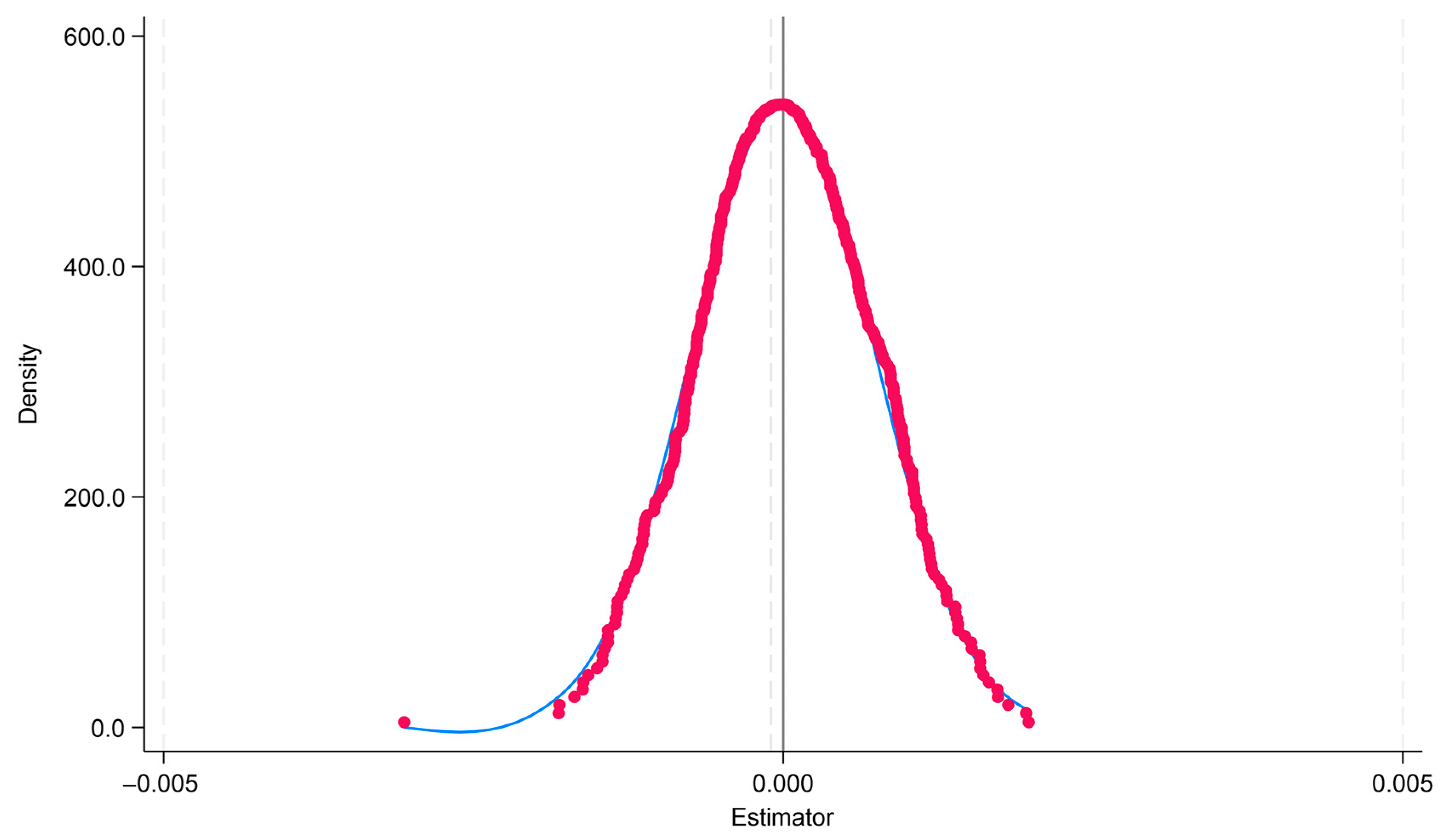
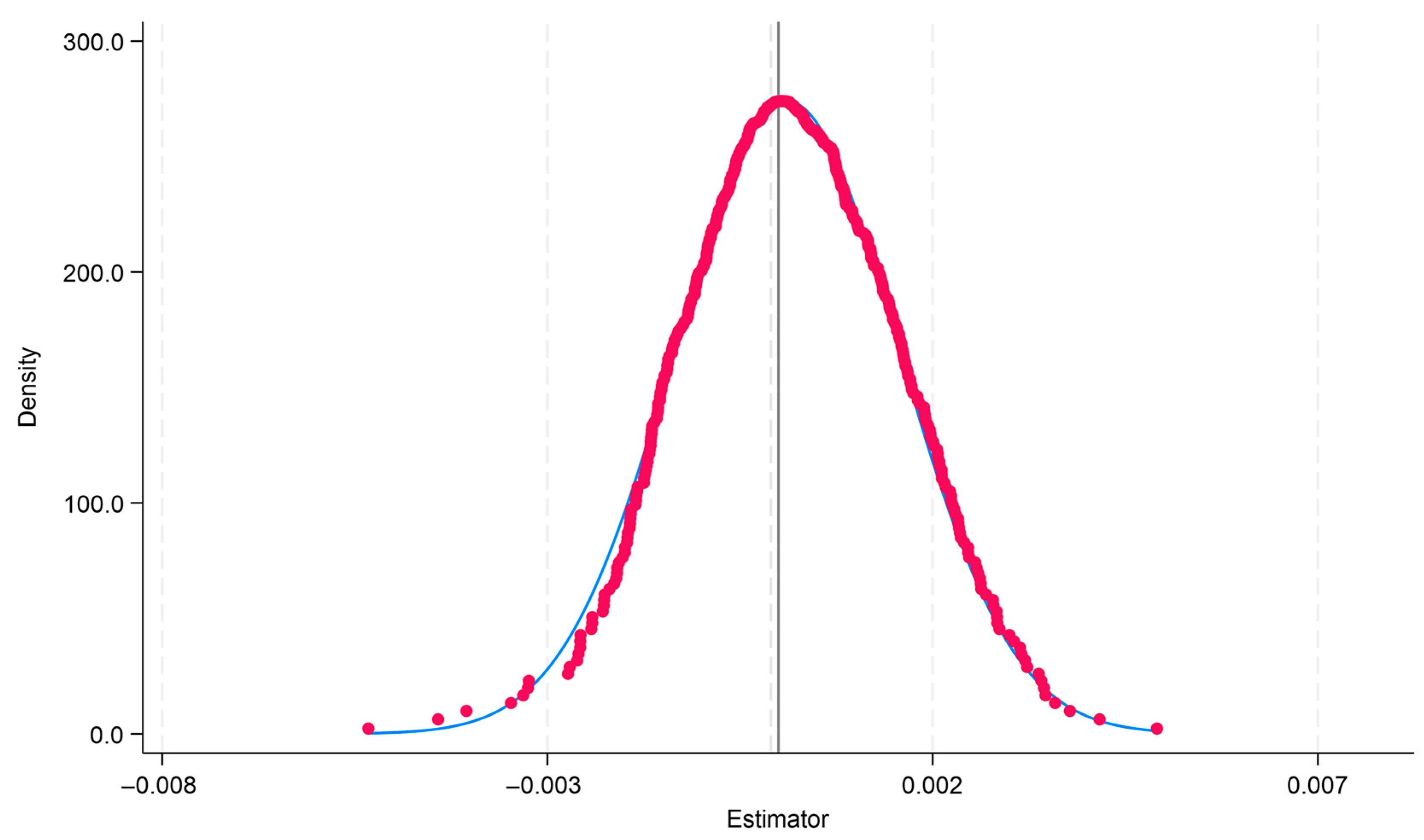
Since the BCP may also affect the health levels of residents in non-pilot cities, this paper employs the Monte Carlo simulation method to conduct a placebo test. First, we repeatedly randomly sampled from the control group to create pseudo-treatment groups. Subsequently, we performed DID regression analysis and parameter estimation based on these samples. If the estimated parameters follow a normal distribution with a mean of 0, the analytical results of this study would be deemed reliable. Figure 2 and Figure 3 present the distribution of estimated coefficients and kernel density curves after 500 random samplings. As anticipated by the placebo test, the estimated coefficients exhibit a normal distribution with a mean centered around zero, indicating that changes in health outcomes observed in the actual treatment group stem from the implementation of the BCP.

5. Discussion and Conclusions

5.1. Discussion

This study highlights the positive impact of urban information infrastructure on physical (2.5%) and mental health (1.7%). The increased access to health information through digital platforms empowers residents to make informed decisions, improving overall health outcomes. First, the infrastructure helps reduce both acute and chronic health shocks, particularly chronic conditions. However, the heightened self-assessment of depression suggests that digital information may also increase awareness of mental health issues, calling for a balanced approach to mitigate negative effects. Second, information technology and economic development mediate the relationship between infrastructure and health by improving access to resources and services. The healthcare environment moderates these effects, with stronger local healthcare systems amplifying the benefits. Third, heterogeneity analysis shows that males and rural residents benefit more in physical health, while elderly individuals gain less in mental health. City-level differences suggest targeted policies for regions with lower economic development or higher administrative levels. Recent evidence from the COVID-19 pandemic shows that broadband-based digital health services, such as telemedicine and online consultations, helped ensure access to medical care during periods of restricted mobility [62,63,64]. This experience further highlights the public health value of information infrastructure, suggesting that its significance extends beyond the time frame covered in this study.
While the overall findings confirm the health-promoting role of urban information infrastructure, it is also necessary to acknowledge potential risks that may offset its benefits. Excessive reliance on digital devices may lead to physical inactivity, fatigue, sleep disruption, and weakened offline social interaction, which are increasingly recognized as emerging public health concerns. In addition, digital healthcare services may create financial burdens during their early rollout, because the cost of telemedicine can initially exceed the cost of traditional clinic-based care in some countries. Although digital services in China have become more affordable with government regulation and public platform development, challenges related to accessibility, affordability, and fairness remain. Therefore, policymakers should not only expand infrastructure investment but also monitor and minimize potential adverse effects through price regulation, privacy safeguards, digital literacy initiatives, and targeted interventions for disadvantaged groups. These efforts are essential to ensure that technological progress translates into inclusive and sustainable health gains. Finally, it is important to note that the dataset used in this study ends in 2018. This means that the analysis does not capture the evolving health dynamics during the COVID-19 pandemic. Future research could use more recent data to examine post-pandemic trends. It may also include behavioral and psychological health indicators that are not covered in CHARLS, which would allow for a more comprehensive assessment of the long-term health effects of digital infrastructure.

5.2. Conclusions

The impact of urban information infrastructure development on resident health is an important concern for the government and a key reference when adjusting the path of urban information infrastructure development and assessing its outcomes. This study utilizes nationwide tracking data from the CHARLS project in 2011, 2013, 2015, and 2018 as the research sample and employs the Difference-in-Differences (DID) model to evaluate the impact of urban information infrastructure development on resident health. Additionally, this paper discusses the mediating effects of information technology and economic development, as well as the moderating effect of the medical health environment. The main findings are as follows.
Firstly, the study reveals a significant positive impact of urban information infrastructure development on resident health. Following the implementation of the ‘Broadband China’ policy, resident health levels experienced a noticeable improvement, with the effects of urban information infrastructure development on Physical health and Mental health being 2.5% and 1.7%, respectively.
Secondly, the study finds that the development of information technology and economic levels has a mediating effect on the relationship between urban information infrastructure development and resident health. Empirical results indicate that the implementation of Broadband China Policy (BCP) enhances both Physical health and Mental health by improving urban economic development. Urban information infrastructure development, by enhancing information and communication technology and promoting economic growth, improves sanitation facilities, and enhances medical technology, bringing about positive transformations in resident health. This comprehensive impact contributes to a more comprehensive and in-depth improvement in resident health levels.
Thirdly, the study identifies that the resident health environment moderates the relationship between urban information infrastructure development and resident health. Empirical results demonstrate that in cities with a stronger resident health environment, the implementation of BCP has a stronger positive effect on both Physical health and Mental health. This implies that the enhancement of the resident health environment significantly amplifies the positive impact of urban information infrastructure development on resident health. The improvement in the resident health environment leads to a further enhancement of related medical facilities, reinforcing the positive effects of urban information infrastructure development on resident health. Additionally, individual-level heterogeneity analysis indicates that urban information infrastructure development has a stronger positive effect on the Physical health of male and rural respondents, while its impact on Mental health does not significantly differ among respondents of different genders and residences. However, its positive impact on elderly respondents is lower. City-level heterogeneity analysis results suggest that urban information infrastructure development has a more pronounced positive impact on resident health in regions with lower economic development levels, and the positive impact of urban information infrastructure development on resident health is more evident in cities with higher administrative levels.
Based on these findings, the paper proposes the following policy recommendations to promote the positive impact of urban information infrastructure development on resident health:
First, focus on economically underdeveloped regions and implement differential investment in information infrastructure. Given the more significant health effects found in underdeveloped areas in the research, priority should be given to expanding the coverage rate of information infrastructure in the central and western regions and rural areas, especially focusing on regions with weak medical resources. This also requires integrating broadband deployment with primary care capacity-building, such as ensuring full coverage of gigabit fiber optics and 5G networks in township health centers, village clinics, and community service centers. Set up a special “Health Digital Infrastructure” item in central fiscal transfer payments to support the popularization of remote medical terminals in remote areas.
Second, deepen the integration of Internet healthcare and the existing medical system. In view of the conclusion that the health improvement of the elderly group and rural residents is insufficient, promote Internet healthcare to become a core tool for primary public health services. Incorporate Internet healthcare services such as remote consultations and electronic prescriptions into the basic public health service package, and reduce the use cost through medical insurance reimbursement. In addition, policymakers should develop long-term mechanisms that link digital services with chronic disease management, preventive care, and health education, so that digital infrastructure becomes an integral part of public health delivery rather than a stand-alone technology platform.
Lastly, build a health-oriented digital economy development model, strengthen the coordinated mechanism between regional medical environments and information infrastructure, design precise intervention programs for key groups, and establish a dynamic monitoring and feedback mechanism for policy effects. Utilize the mediating effects of ICT and economic growth, and incorporate health benefits into the assessment system of digital economy policies. For instance, provide tax relief and priority procurement support to enterprises developing age-friendly health monitoring tools and primary medical AI-assisted systems, or set up a Health Conversion Rate indicator in the digital economy development plan to guide resources to tilt towards the health field. Furthermore, improving interoperability between digital platforms and public health databases would allow policymakers to transform infrastructure benefits into actionable population health outcomes.

Author Contributions

Conceptualization, Zhanchuang Han and Chenyang Yu; methodology, Zhanchuang Han and Chenyang Yu; software, Zhanchuang Han; validation, Zhanchuang Han, Huiling Zhao and Chenyang Yu; formal analysis, Zhanchuang Han; investigation, Zhanchuang Han; resources, Chenyang Yu; data curation, Zhanchuang Han and Huiling Zhao; writing—original draft preparation, Zhanchuang Han; writing—review and editing, Huiling Zhao and Chenyang Yu; visualization, Zhanchuang Han; supervision, Chenyang Yu; project administration, Chenyang Yu; funding acquisition, Chenyang Yu. All authors have read and agreed to the published version of the manuscript.

Funding

This research was funded by the National Social Science Foundation of China (Major Project), grant number 22ZD03; Guangdong Provincial Department of Education Project (No. 2023WTSCX069); and The Humanities and Social Sciences Research Program of Chongqing Municipal Education Commission (Grant No. 23SKGH261).

Data Availability Statement

The datasets generated and analyzed during the current study are available from the corresponding author on reasonable request.

Conflicts of Interest

The authors declare no conflicts of interest.

References

  1. Bergmark, K.H.; Bergmark, A.; Findahl, O. Extensive Internet Involvement—Addiction or Emerging Lifestyle? Int. J. Environ. Res. Public Health 2011, 8, 4488–4501. [Google Scholar] [CrossRef]
  2. Wu, H.; Ba, N.; Ren, S.; Xu, L.; Chai, J.; Irfan, M.; Hao, Y.; Lu, Z.-N. The Impact of Internet Development on the Health of Chinese Residents: Transmission Mechanisms and Empirical Tests. Socio-Econ. Plan. Sci. 2022, 81, 101178. [Google Scholar] [CrossRef]
  3. Aghdam, Z.N.; Rahmani, A.M.; Hosseinzadeh, M. The Role of the Internet of Things in Healthcare: Future Trends and Challenges. Comput. Methods Programs Biomed. 2021, 199, 105903. [Google Scholar] [CrossRef] [PubMed]
  4. Wald, H.S.; Dube, C.E.; Anthony, D.C. Untangling the Web—The Impact of Internet Use on Health Care and the Physician–Patient Relationship. Patient Educ. Couns. 2007, 68, 218–224. [Google Scholar] [CrossRef]
  5. Caballero, J.C.S.; Ching, C.B.D.; Co, S.P.S.; Noble, H.O.; Barcelo, A.B. LifeDoc: Availability and Monitoring System of Online Medical Consultation. In Proceedings of the 2021 11th IEEE International Conference on Control System, Computing and Engineering (ICCSCE), Penang, Malaysia, 27 August 2021; IEEE: Piscataway, NJ, USA, 2021; pp. 103–108. [Google Scholar]
  6. Batham, V.; Modi, B.S.; Thakur, C. Impact of Digital Screen Use in Relation to Dry Eye Symptoms and Quality of Sleep: A Study in Tertiary Care Centre. J. Adv. Med. Pharm. Sci. 2023, 5, 2415–2419. [Google Scholar]
  7. Šmotek, M.; Fárková, E.; Manková, D.; Kopřivová, J. Evening and Night Exposure to Screens of Media Devices and Its Association with Subjectively Perceived Sleep: Should “Light Hygiene” Be given More Attention? Sleep Health 2020, 6, 498–505. [Google Scholar] [CrossRef]
  8. Alarfaj, K.A.; Rahman, M.M.H. The Risk Assessment of the Security of Electronic Health Records Using Risk Matrix. Appl. Sci. 2024, 14, 5785. [Google Scholar] [CrossRef]
  9. Keshta, I.; Odeh, A. Security and Privacy of Electronic Health Records: Concerns and Challenges. Egypt. Inf. J. 2021, 22, 177–183. [Google Scholar] [CrossRef]
  10. Solar, O.; Irwin, A. A Conceptual Framework for Action on the Social Determinants of Health; WHO: Geneva, Switzerland, 2010. [Google Scholar]
  11. Dahlgren, G.; Whitehead, M. Policies and Strategies to Promote Social Equity in Health; Institute for Futures Studies: Stockholm, Sweden, 1991; Volume 27, pp. 4–41. [Google Scholar]
  12. Yang, W.; Fei, J.; Li, J.; Li, W.; Xie, X. Environmental Determinants of Dynamic Jogging Patterns: Insights from Trajectory Big Data Analysis and Interpretable Machine Learning. Appl. Geogr. 2025, 178, 103596. [Google Scholar] [CrossRef]
  13. Yang, W.; Wu, C.; Zhang, Y.; Pan, Y.; Xie, X.; Tian, Z. Deciphering Spatiotemporal Patterns and Mobility Network of Outdoor Jogging Utilizing Large-Scale GPS Trajectory Data. Cities 2025, 165, 106185. [Google Scholar] [CrossRef]
  14. Yang, W.; Chen, H.; Fei, J.; Xie, X. The Role of Blue-Green Spaces in Shaping Leisure Jogging: Explainable Machine Learning Insights into Jogging Flow and Duration. Travel Behav. Soc. 2025, 41, 101081. [Google Scholar] [CrossRef]
  15. Nongphromma, N. The Link Between PM2.5 Exposure and Cardiovascular Health Risks. Int. J. Sci. Healthc. Res. 2024, 9, 71–79. [Google Scholar] [CrossRef]
  16. Marmot, M. Social Determinants of Health Inequalities. Lancet 2005, 365, 1099–1104. [Google Scholar] [CrossRef]
  17. Popkin, B.M.; Corvalan, C.; Grummer-Strawn, L.M. Dynamics of the Double Burden of Malnutrition and the Changing Nutrition Reality. Lancet 2020, 395, 65–74. [Google Scholar] [CrossRef]
  18. Sieck, C.J.; Sheon, A.; Ancker, J.; Castek, J.; Callahan, B.; Siefer, A. Digital Inclusion as a Social Determinant of Health. NPJ Digit. Med. 2021, 4, 52. [Google Scholar] [CrossRef]
  19. Wang, Y.; Zhang, H.; Feng, T.; Wang, H. Does Internet Use Affect Levels of Depression among Older Adults in China? A Propensity Score Matching Approach. BMC Public Health 2019, 19, 1474. [Google Scholar] [CrossRef]
  20. Zhang, H.; Wang, H.; Yan, H.; Wang, X. Impact of Internet Use on Mental Health among Elderly Individuals: A Difference-in-Differences Study Based on 2016–2018 CFPS Data. Int. J. Environ. Res. Public Health 2021, 19, 101. [Google Scholar] [CrossRef]
  21. Liao, L.; Du, M. How Digital Finance Shapes Residents’ Health: Evidence from China. China Econ. Rev. 2024, 87, 102246. [Google Scholar] [CrossRef]
  22. Li, H.; Li, Y. The Impact of Digital Economy Development on Public Health: Evidence from Chinese Cities. Front. Public Health 2024, 12, 1347572. [Google Scholar] [CrossRef]
  23. Alam, K.; Mahumud, R.A.; Alam, F.; Keramat, S.A.; Erdiaw-Kwasie, M.O.; Sarker, A.R. Determinants of Access to eHealth Services in Regional Australia. Int. J. Med. Inf. 2019, 131, 103960. [Google Scholar] [CrossRef] [PubMed]
  24. Fisher, M.; Freeman, T.; Schram, A.; Baum, F.; Friel, S. Implementing Policy on Next-Generation Broadband Networks and Implications for Equity of Access to High Speed Broadband: A Case Study of Australia’s NBN. Telecommun. Policy 2020, 44, 101911. [Google Scholar] [CrossRef]
  25. Liu, L.; Onega, T.; Moen, E.L.; Tosteson, A.N.A.; Smith, R.E.; Wang, Q.; Cowan, L.; Wang, F. Digital Divides in Telehealth Accessibility for Cancer Care in the United States. NPJ Digit. Med. 2025, 8, 534. [Google Scholar] [CrossRef]
  26. Adepoju, O.E.; Dang, P.; Fuentes, C.; Liaw, W. Examining the Affordable Connectivity Program and Telehealth Use: A Pilot Survey of the Affordable Connectivity Program, Telehealth, Video and Audio Visits in a Racially Diverse, Lower-Income Population. Sci. Rep. 2025, 15, 2321. [Google Scholar] [CrossRef]
  27. Zhong, X.; Liu, G.; Chen, P.; Ke, K.; Xie, R. The Impact of Internet Development on Urban Eco-Efficiency—A Quasi-Natural Experiment of “Broadband China” Pilot Policy. Int. J. Environ. Res. Public Health 2022, 19, 1363. [Google Scholar] [CrossRef] [PubMed]
  28. Amaraweera, S.P.; Halgamuge, M.N. Internet of Things in the Healthcare Sector: Overview of Security and Privacy Issues. In Security, Privacy and Trust in the IoT Environment; Mahmood, Z., Ed.; Springer International Publishing: Cham, Switzerland, 2019; pp. 153–179. ISBN 978-3-030-18074-4. [Google Scholar]
  29. Li, L.; Fu, H. China’s Health Care System Reform: Progress and Prospects. Health Plan. Manag. 2017, 32, 240–253. [Google Scholar] [CrossRef]
  30. Laroche, E.; L’Espérance, S.; Mosconi, E. Use of Social Media Platforms for Promoting Healthy Employee Lifestyles and Occupational Health and Safety Prevention: A Systematic Review. Saf. Sci. 2020, 131, 104931. [Google Scholar] [CrossRef]
  31. Aceto, G.; Persico, V.; Pescapé, A. Industry 4.0 and Health: Internet of Things, Big Data, and Cloud Computing for Healthcare 4.0. J. Ind. Inf. Integr. 2020, 18, 100129. [Google Scholar] [CrossRef]
  32. Venugopal, P.; Priya, S.; Manupati, V.; Varela, M.L.; Machado, J.M.; Putnik, G. Impact of UTAUT Predictors on the Intention and Usage of Electronic Health Records and Telemedicine from the Perspective of Clinical Staffs. In Innovation, Engineering and Entrepreneurship; Springer International Publishing: Cham, Switzerland, 2018. [Google Scholar] [CrossRef]
  33. Beaulieu, M.; Bentahar, O. Digitalization of the Healthcare Supply Chain: A Roadmap to Generate Benefits and Effectively Support Healthcare Delivery. Technol. Forecast. Soc. Change 2021, 167, 120717. [Google Scholar] [CrossRef]
  34. Zheng, X.; Sun, S.; Mukkamala, R.R.; Vatrapu, R.; Ordieres-Meré, J. Accelerating Health Data Sharing: A Solution Based on the Internet of Things and Distributed Ledger Technologies. J. Med. Internet Res. 2019, 21, e13583. [Google Scholar] [CrossRef]
  35. Li, X.; Krumholz, H.M.; Yip, W.; Cheng, K.K.; De Maeseneer, J.; Meng, Q.; Mossialos, E.; Li, C.; Lu, J.; Su, M.; et al. Quality of Primary Health Care in China: Challenges and Recommendations. Lancet 2020, 395, 1802–1812. [Google Scholar] [CrossRef] [PubMed]
  36. Cristea, M.; Noja, G.G.; Stefea, P.; Sala, A.L. The Impact of Population Aging and Public Health Support on EU Labor Markets. Int. J. Environ. Res. Public Health 2020, 17, 1439. [Google Scholar] [CrossRef]
  37. Wang, M.; Yin, Z.; Pang, S.; Li, Z. Does Internet Development Affect Urban-Rural Income Gap in China? An Empirical Investigation at Provincial Level. Inf. Dev. 2023, 39, 107–122. [Google Scholar] [CrossRef]
  38. Babitsch, B.; Gohl, D.; Von Lengerke, T. Re-Revisiting Andersen’s Behavioral Model of Health Services Use: A Systematic Review of Studies from 1998–2011. GMS Psycho-Soc.-Med. 2012, 9, Doc11. [Google Scholar]
  39. Mohammadzadeh, N.; Rezayi, S.; Saeedi, S. Telemedicine for Patient Management in Remote Areas and Underserved Populations. Disaster Med. Public Health Prep. 2023, 17, e167. [Google Scholar] [CrossRef]
  40. Bloom, D.E.; Khoury, A.; Subbaraman, R. The Promise and Peril of Universal Health Care. Science 2018, 361, eaat9644. [Google Scholar] [CrossRef] [PubMed]
  41. Shahid, J.; Ahmad, R.; Kiani, A.K.; Ahmad, T.; Saeed, S.; Almuhaideb, A.M. Data Protection and Privacy of the Internet of Healthcare Things (IoHTs). Appl. Sci. 2022, 12, 1927. [Google Scholar] [CrossRef]
  42. Melo, M.C.A.; De Bruin, V.M.S.; Das Chagas Medeiros, F.; Santana, J.A.P.; Lima, A.B.; De Francesco Daher, E. Health of Psychiatry Residents: Nutritional Status, Physical Activity, and Mental Health. Acad. Psychiatry 2016, 40, 81–84. [Google Scholar] [CrossRef]
  43. Kessler, R.C.; Sonnega, A.; Bromet, E.; Hughes, M.; Nelson, C.B. Posttraumatic Stress Disorder in the National Comorbidity Survey. In Fear and Anxiety; Routledge: London, UK, 2013; pp. 22–34. [Google Scholar]
  44. Thompson, J.; Conley, D. Health Shocks and Social Drift: Examining the Relationship between Acute Illness and Family Wealth. RSF Russell Sage Found. J. Soc. Sci. 2016, 2, 153. [Google Scholar] [CrossRef]
  45. Selye, H. The Stress of Life, Revised ed.; McGraw-Hill: New York, NY, USA, 1978. [Google Scholar]
  46. Chen, L.; Soldan, A.; Oishi, K.; Faria, A.; Zhu, Y.; Albert, M.; Van Zijl, P.C.M.; Li, X. Quantitative Susceptibility Mapping of Brain Iron and β-Amyloid in MRI and PET Relating to Cognitive Performance in Cognitively Normal Older Adults. Radiology 2021, 298, 353–362. [Google Scholar] [CrossRef] [PubMed]
  47. Richmond, L.L.; Brackins, T.; Rajaram, S. Episodic Memory Performance Modifies the Strength of the Age–Brain Structure Relationship. Int. J. Environ. Res. Public Health 2022, 19, 4364. [Google Scholar] [CrossRef]
  48. Schlechter, P.; Morina, N. The Associations among Well-being Comparisons and Affective Styles in Depression, Anxiety, and Mental Health Quality of Life. J. Clin. Psychol. 2024, 80, 355–369. [Google Scholar] [CrossRef]
  49. Zimmerman, M.; Kiefer, R.; Kerr, S.; Balling, C. Reliability and Validity of a Self-Report Scale for Daily Assessments of the Severity of Anxiety Symptoms. Compr. Psychiatry 2019, 90, 37–42. [Google Scholar] [CrossRef]
  50. Liu, R.; Wang, F.; Liu, S.; Zhang, Q.; Feng, Y.; Sim, K.; Cui, X.; Lin, J.-X.; Ungvari, G.S.; Xiang, Y.-T. Reliability and Validity of the Quick Inventory of Depressive Symptomatology—Self-Report Scale in Older Adults with Depressive Symptoms. Front. Psychiatry 2021, 12, 686711. [Google Scholar] [CrossRef] [PubMed]
  51. Dang, L.M.; Piran, M.J.; Han, D.; Min, K.; Moon, H. A Survey on Internet of Things and Cloud Computing for Healthcare. Electronics 2019, 8, 768. [Google Scholar] [CrossRef]
  52. Schröder, J.; Berger, T.; Westermann, S.; Klein, J.P.; Moritz, S. Internet Interventions for Depression: New Developments. Dialogues Clin. Neurosci. 2016, 18, 203–212. [Google Scholar] [CrossRef] [PubMed]
  53. Nopiana, N.; Egie, J.; Mers, O. The Impact of Internet Addiction on Introvert Personality. World Psychol. 2022, 1, 73–89. [Google Scholar] [CrossRef]
  54. Cheng, C.-Y.; Chien, M.-S.; Lee, C.-C. ICT Diffusion, Financial Development, and Economic Growth: An International Cross-Country Analysis. Econ. Model. 2021, 94, 662–671. [Google Scholar] [CrossRef]
  55. Raghupathi, V.; Raghupathi, W. Healthcare Expenditure and Economic Performance: Insights from the United States Data. Front. Public Health 2020, 8, 156. [Google Scholar] [CrossRef] [PubMed]
  56. Kreuter, M.W.; Thompson, T.; McQueen, A.; Garg, R. Addressing Social Needs in Health Care Settings: Evidence, Challenges, and Opportunities for Public Health. Annu. Rev. Public Health 2021, 42, 329–344. [Google Scholar] [CrossRef]
  57. Xiong, N.; Wong, S.W.; Ren, Y.; Shen, L. Regional Disparity in Urbanizing China: Empirical Study of Unbalanced Development Phenomenon of Towns in Southwest China. J. Urban Plan. Dev. 2020, 146, 5020013. [Google Scholar] [CrossRef]
  58. Wang, J.; Wang, W.; Ran, Q.; Irfan, M.; Ren, S.; Yang, X.; Wu, H.; Ahmad, M. Analysis of the Mechanism of the Impact of Internet Development on Green Economic Growth: Evidence from 269 Prefecture Cities in China. Environ. Sci. Pollut. Res. 2022, 29, 9990–10004. [Google Scholar] [CrossRef] [PubMed]
  59. Liu, G.; Liu, Y.; Zhang, C. Factor Allocation, Economic Growth and Unbalanced Regional Development in China. World Econ. 2018, 41, 2439–2463. [Google Scholar] [CrossRef]
  60. Yu, B.; Zhou, X. Urban Administrative Hierarchy and Urban Land Use Efficiency: Evidence from Chinese Cities. Int. Rev. Econ. Financ. 2023, 88, 178–195. [Google Scholar] [CrossRef]
  61. Tu, C.; Zang, C.; Tan, Y.; Zhou, Y.; Yu, C. Can Information Infrastructure Development Improve the Health Care Environment? Evidence from China. Front. Public Health 2022, 10, 987391. [Google Scholar] [CrossRef]
  62. Shen, Y.-T.; Chen, L.; Yue, W.-W.; Xu, H.-X. Digital Technology-Based Telemedicine for the COVID-19 Pandemic. Front. Med. 2021, 8, 646506. [Google Scholar] [CrossRef]
  63. Nittari, G.; Savva, D.; Tomassoni, D.; Tayebati, S.K.; Amenta, F. Telemedicine in the COVID-19 Era: A Narrative Review Based on Current Evidence. Int. J. Environ. Res. Public Health 2022, 19, 5101. [Google Scholar] [CrossRef]
  64. Jerjes, W.; Harding, D. Telemedicine in the Post-COVID Era: Balancing Accessibility, Equity, and Sustainability in Primary Healthcare. Front. Digit. Health 2024, 6, 1432871. [Google Scholar] [CrossRef]
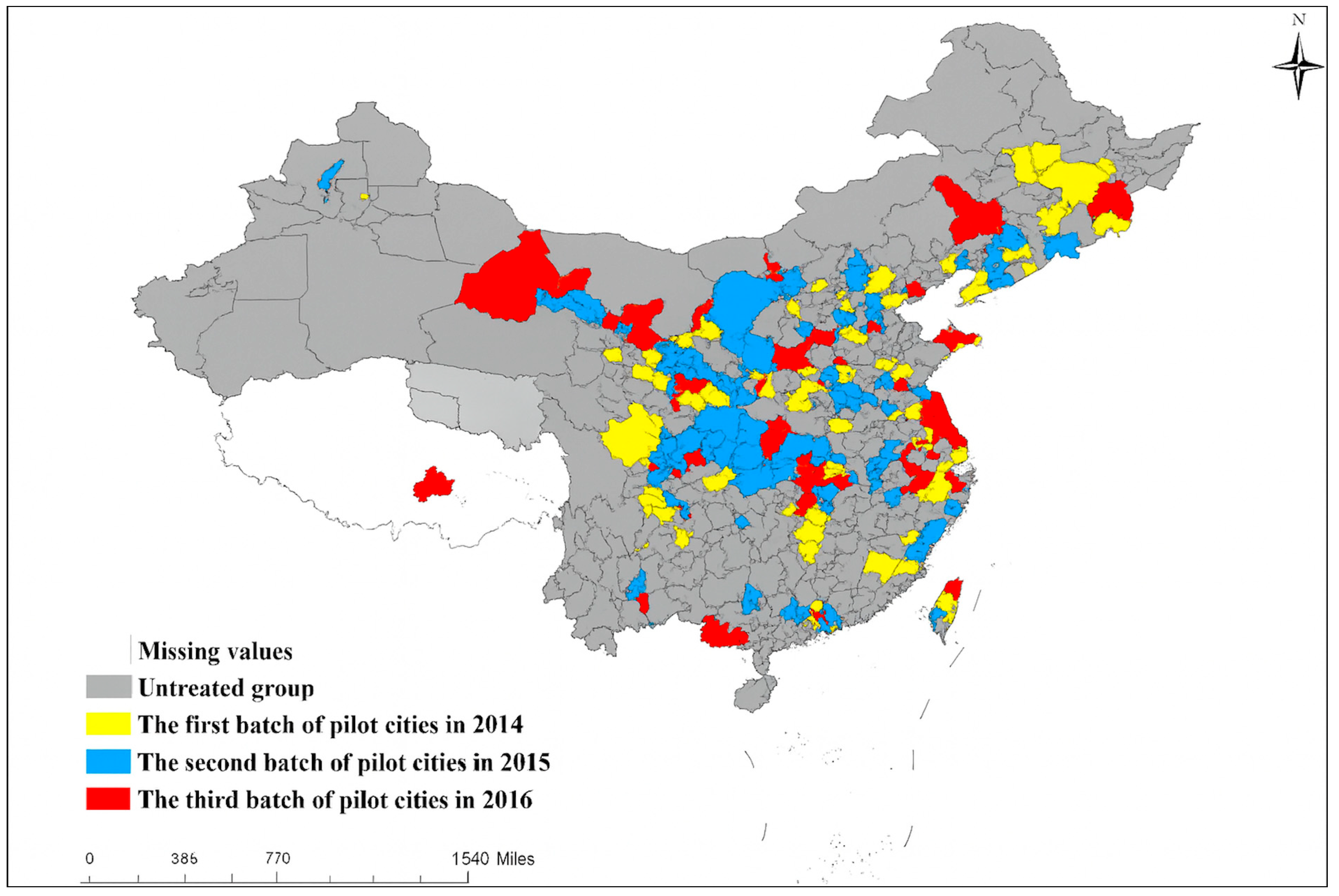
Figure 1. Spatial distribution of BCP implementation cities.
Ijgi 14 00496 g001
Figure 2. Placebo test based on physical health.
Ijgi 14 00496 g002
Figure 3. Placebo test based on mental health.
Ijgi 14 00496 g003
Table 1. Measurement of resident health.
Resident HealthVariablesIndicatorsDescription of IndicatorsProperties
Physical healthHealth_physicalAcute shockAcute shocks encompass conditions such as heart disease, stroke, cancer, and so forth, with each occurrence of a specific ailment assigned one point. The cumulative count of distinct illnesses constitutes the score for acute shocks. The scoring range is [0, 3].Negative
Chronic shockChronic shocks comprise conditions such as hypertension, lipid abnormalities, diabetes, chronic respiratory diseases, liver diseases, kidney diseases, gastrointestinal diseases, arthritis, asthma, and so forth. Each instance of a specific condition is assigned one point, and the cumulative count of distinct ailments constitutes the score for chronic shocks. The scoring range is [0, 9].Negative
Mental healthHealth_mentalSituational memoryIncluding short-term memory issues and delayed memory problems, the sum of the correct responses to these questions yields the situational memory score for the respondents. The scoring range is [0, 20].Positive
Mental
cognition
Including calculations, inquiries about the date and season of the visit, graphic representations, and similar questions, the sum of correct responses to these queries yields the mental cognition score for the respondents. The scoring range is [0, 12].Positive
Depression self-assessmentComprising 10 questions concerning the respondents’ feelings and behaviors in the previous week, participants choose from four options representing the frequency of occurrences. The sum of the scores associated with their selected options constitutes the depression self-assessment score. The scoring range is [10, 40].Negative
Table 2. Descriptive statistics.
VariablesVariable Description NMeanMinMaxStd
Dependent
variable
Health_physicalPhysical health64,0800.9700.2781.0000.072
Health_mentalMental health64,0800.4690.0591.0000.148
Independent
variable
BCPImplementation of BCP64,0800.1940.0001.0000.396
lnictInformation and communication technology level64,08013.60410.75816.5470.935
lnrgdpLogarithmic values of GDP per capita64,08010.5958.84213.0560.591
lnhaLogarithmic values for healthcare providers64,0809.9818.20112.0100.636
Control
variable
lnageLogarithmic value of age64,0804.0933.8074.7710.162
genderMale = 1, female = 064,0800.5150.0001.0000.500
maritalMarried = 1, otherwise = 064,0800.8670.0001.0000.340
residenceRural = 1, urban = 064,0800.1280.0001.0000.334
lncostLogarithmic value of hospitalization Costs64,0801.0340.00014.1522.803
toiletNo toilet = 0, otherwise = 164,0800.7880.0001.0000.409
waterNo running water = 0, otherwise = 164,0800.7300.0001.0000.444
Table 3. Impact of urban information infrastructure development on resident health.
VariablesHealth_PhysicalHealth_Mental
(1)(2)(3)(4)
BCP0.023 ***0.025 ***0.020 ***0.017 ***
(0.001)(0.001)(0.002)(0.002)
lnage −0.018 *** 0.198 ***
(0.002) (0.004)
gender −0.003 *** 0.053 ***
(0.001) (0.001)
marital −0.001 −0.037 ***
(0.001) (0.002)
residence −0.013 *** −0.038 ***
(0.001) (0.002)
lncost −0.002 *** 0.002 ***
(0.000) (0.000)
toilet 0.001 0.015 ***
(0.001) (0.002)
water 0.008 *** 0.022 ***
(0.001) (0.002)
C0.966 ***1.042 ***0.465 ***−0.419 ***
(0.000)(0.008)(0.001)(0.019)
City FEYYYY
Year FEYYYY
Observation64,08064,08064,08064,080
F608.866139.069143.575777.521
R20.0240.0360.0610.168
Note: *** denotes significance at the 1% level. Individual-level cluster robust standard errors are reported in parentheses.
Table 4. Impact of urban information infrastructure development on different health indicators.
VariablesAcute ShockChronic ShockSituational MemoryMental
Cognition
Depression
Self-Assessment
(1) (2) (3) (4) (5)
BCP−0.012 ***−0.411 ***0.100 **0.168 ***0.432 ***
(0.004)(0.011)(0.050)(0.051)(0.066)
C−0.438 ***0.555 ***37.787 ***70.950 ***23.822 ***
(0.030)(0.093)(0.531)(2.070)(0.720)
ControlYYYYY
City FEYYYYY
Year FEYYYYY
Observation64,08064,08064,08064,08064,080
F91.528222.904836.781171.381207.284
R20.0310.0390.1660.6940.065
Note: *** and ** denote significance at the 1% and 5% levels, respectively. Individual-level cluster robust standard errors are reported in parentheses.
Table 5. Mechanism of urban information infrastructure development affecting resident health.
VariableslnictHealth_
Physical
Health_
Mental
lnrgdpHealth_
Physical
Health_
Mental
lnmaHealth_
Physical
Health_
Mental
(1)(2)(3)(4)(5)(6)(7)(8)(9)
BCP0.716 ***0.010 ***0.006 ***0.324 ***0.003 ***0.008 ***0.197 ***0.003 ***0.023
(0.078)(0.001)(0.002)(0.023)(0.001)(0.002)(0.017)(0.001)(0.002)
lnict 0.021 ***0.017 ***
(0.001)(0.001)
lnrgdp 0.071 ***0.031 ***
(0.002)(0.003)
lnha 0.148 ***0.028 ***
(0.002)(0.004)
C13.464 ***0.779 ***−0.633 ***10.532 ***0.324 ***−0.734 ***9.942 ***−0.395 ***−0.150 ***
(0.015)(0.013)(0.023)(0.005)(0.018)(0.033)(0.003)(0.025)(0.041)
ControlYYYYYYYYY
City FEYYYYYYYYY
Year FEYYYYYYYYY
Obs64,08064,08064,08064,08064,08064,08064,08064,08064,080
F84.016185.603719.118193.827284.693704.929134.24477.97704.35
R20.7930.0510.1710.8960.0700.1700.9500.1180.169
Note: *** denotes significance at the 1% level. Individual-level cluster robust standard errors are reported in parentheses.
Table 6. Moderating effects of resident health.
VariablesHealth_PhysicalHealth_Mental
(1)(2)(3)(4)
lnphe0.047 ***0.041 ***0.046 ***0.027 ***
(0.008)(0.002)(0.009)(0.003)
BCP 0.046 *** 0.046 **
(0.012) (0.020)
lnphe × BCP 0.005 *** 0.006 ***
(0.001) (0.002)
C0.538 ***0.677 ***0.039−0.654 ***
(0.074)(0.018)(0.079)(0.032)
ControlYYYY
City FEYYYY
Year FEYYYY
Observation 64,08064,08064,08064,080
F33.659146.83329.715630.247
R20.0310.0460.0630.170
Note: *** and ** denote significance at the 1% and 5% levels, respectively. Individual-level cluster robust standard errors are reported in parentheses.
Table 7. Differences in the effect of urban information infrastructure development on the resident health by gender, residence and age.
VariablesGenderResidenceAge
Health_
Physical
Health_
Mental
Health_
Physical
Health_
Mental
Health_
Physical
Health_
Mental
(1)(2)(3)(4)(5)(6)
BCP0.021 ***0.022 ***0.022 ***0.018 ***0.025 ***0.013 ***
(0.002)(0.005)(0.001)(0.002)(0.001)(0.002)
BCP × gender0.002 **−0.003
(0.001)(0.003)
BCP × residence 0.015 ***−0.004
(0.002)(0.004)
BCP × age 0.0010.010 ***
(0.001)(0.003)
C1.043 ***−0.420 ***1.043 ***−0.419 ***1.041 ***−0.440 ***
(0.008)(0.019)(0.008)(0.019)(0.009)(0.019)
ControlYYYYYY
City FEYYYYYY
Year FEYYYYYY
Observation 64,08064,08064,08064,08064,08064,080
F123.611692.186124.718691.735128.543695.521
R20.0360.1690.0370.1690.0360.169
Note: *** and ** denote significance at the 1% and 5% levels, respectively. Individual-level cluster robust standard errors are reported in parentheses.
Table 8. Differences in the effect of urban information infrastructure development on the resident health in different regions.
VariablesHealth_PhysicalHealth_Mental
Eastern
Region
Central
Region
Western
Region
Eastern
Region
Central
Region
Western
Region
(1)(2)(3)(4)(5)(6)
BCP0.024 ***0.024 ***0.025 ***0.017 ***0.009 ***0.029 ***
(0.002)(0.002)(0.002)(0.003)(0.003)(0.003)
BdiffE (Eastern0.001 ***0.001 ***
vs. Non-Eastern)(0.000)(0.000)
BdiffW (Western−0.001 ***−0.016 ***
vs. Non-Western)(0.000)(0.000)
C1.051 ***1.045 ***1.024 ***−0.423 ***−0.454 ***−0.380 ***
(0.013)(0.015)(0.016)(0.030)(0.032)(0.035)
ControlYYYYYY
City FEYYYYYY
Year FEYYYYYY
Observation 24,02022,03418,02624,02022,03418,026
F50.32249.44948.400270.765266.634248.421
R20.0360.0330.0390.1440.1590.186
Note: *** denotes significance at the 1% level. Individual-level cluster robust standard errors are reported in parentheses. BdiffE denotes the coefficient for Non-Eastern region minus the coefficient for Eastern region, and the p-values are reported in parentheses below. BdiffW denotes the coefficient for Non-Western region minus the coefficient for Western region.
Table 9. Differences in the effect of urban information infrastructure development on the resident health by urban administrative rank.
VariablesHealth_PhysicalHealth_Mental
Non-Ordinary Prefecture-Level CitiesOrdinary Prefecture-Level CitiesNon-Ordinary Prefecture-Level CitiesOrdinary Prefecture-Level Cities
(1)(2)(4)(5)
BCP0.035 ***0.020 ***0.020 ***0.017 ***
(0.002)(0.001)(0.003)(0.002)
Bdiff−0.015 ***−0.003 ***
(0.000)(0.000)
C1.060 ***1.037 ***−0.329 ***−0.437 ***
(0.020)(0.009)(0.044)(0.021)
ControlYYYY
City FEYYYY
Year FEYYYY
Observation 11,44852,63211,44852,632
F59.31383.44389.695715.241
R20.0730.0290.1220.179
Note: *** denotes significance at the 1% level. Individual-level cluster robust standard errors are reported in parentheses. Bdiff denotes the coefficient for ordinary prefecture-level cities minus the coefficient for non-ordinary prefecture-level cities, and the p-values are reported in parentheses below.
Table 10. Re-estimation based on PSM-DID.
VariablesNearest Neighbor Matching (n = 1)Radius Matching (r = 0.03)
Health_PhysicalHealth_MentalHealth_PhysicalHealth_Mental
(1)(2)(3)(4)
BCP0.025 ***0.017 ***0.033 ***0.018 ***
(0.001)(0.002)(0.005)(0.007)
lnage−0.022 ***0.215 ***−0.014 ***0.210 ***
(0.003)(0.006)(0.003)(0.008)
gender−0.002 ***0.051 ***−0.0010.049 ***
(0.001)(0.002)(0.001)(0.003)
marital−0.001−0.034 ***0.001−0.036 ***
(0.001)(0.003)(0.002)(0.004)
residence−0.013 ***−0.037 ***−0.005 ***−0.040 ***
(0.001)(0.003)(0.002)(0.004)
lncost−0.002 ***0.001 ***−0.002 ***0.001 ***
(0.000)(0.000)(0.000)(0.000)
toilet0.003 **0.016 ***−0.0010.019 ***
(0.001)(0.002)(0.002)(0.004)
water0.006 ***0.022 ***0.0020.024 ***
(0.001)(0.002)(0.002)(0.003)
C1.051 ***−0.495 ***1.013 ***−0.475 ***
(0.012)(0.028)(0.015)(0.037)
City FEYYYY
Year FEYYYY
Observation 27,94427,94414,23214,232
F105.182372.95423.579201.236
R20.0520.1770.0660.188
Note: *** and ** denote significance at the 1% and 5% levels, respectively. Individual-level cluster robust standard errors are reported in parentheses.
Table 11. Re-estimation using different dependent variable.
Variables(1)(2)
BCP0.555 ***0.516 ***
(0.014)(0.014)
lnage −0.284 ***
(0.037)
gender −0.171 ***
(0.011)
marital −0.060 ***
(0.018)
residence 0.280 ***
(0.017)
lncost −0.051 ***
(0.002)
toilet 0.078 ***
(0.013)
water 0.179 ***
(0.013)
C1.698 ***3.003 ***
(0.006)(0.159)
City FEYY
Year FEYY
Observation 64,08064,080
F1494.992413.237
R20.0500.080
Note: *** denotes significance at the 1% level. Individual-level cluster robust standard errors are reported in parentheses.
Table 12. Re-estimation with additional city-level control variables.
VariablesHealth_PhysicalHealth_Mental
(1)(2)
BCP0.003 ***0.015 ***
(0.001)(0.002)
lnage−0.025 ***0.196 ***
(0.002)(0.004)
gender−0.003 ***0.052 ***
(0.001)(0.001)
marital−0.001−0.038 ***
(0.001)(0.002)
residence−0.015 ***−0.048 ***
(0.001)(0.002)
lncost−0.002 ***0.002 ***
(0.000)(0.000)
toilet0.0000.011 ***
(0.001)(0.002)
water0.003 ***0.015 ***
(0.001)(0.001)
ict−0.0010.003 **
(0.001)(0.001)
is0.0010.017 ***
(0.002)(0.002)
gov−0.557 ***−0.232 ***
(0.058)(0.084)
lnrgdp0.076 ***−0.023 ***
(0.002)(0.002)
C0.292 ***−0.206 ***
(0.019)(0.027)
City FEYY
Year FEYY
Observation 64,08064,080
F223.889540.479
R20.0710.147
Note: *** and ** denote significance at the 1% and 5% levels, respectively. Individual-level cluster robust standard errors are reported in parentheses. regional economic development (lnrgdp) is measured by the logarithm of GDP per capita, industrial structure (is) is measured by the ratio of the tertiary sector to the secondary sector, informatization level (ict) is measured by the number of mobile Internet users per 10,000 people, and government health investment (gov) is measured by the ratio of health and medical expenditures to fiscal expenditures.
Disclaimer/Publisher’s Note: The statements, opinions and data contained in all publications are solely those of the individual author(s) and contributor(s) and not of MDPI and/or the editor(s). MDPI and/or the editor(s) disclaim responsibility for any injury to people or property resulting from any ideas, methods, instructions or products referred to in the content.