


Abstract
The vitality of areas around tourist attractions plays a crucial role in promoting the sustainable development of both tourism and the regional economy. However, there is a lack of comprehensive studies on the methods for mining vitality around attraction perimeters, and existing approaches are often inadequate to meet the evolving needs of contemporary tourism development. To address this gap, we proposed a method for inferring vitality around attractions based on a knowledge graph. Our approach began by analyzing the functional and morphological characteristics of the areas surrounding the attractions, followed by the design of a vitality calculation model for these regions. Next, we developed a knowledge graph structure tailored for vitality reasoning around the attractions and established reasoning rules based on this graph. Finally, we conducted experiments to apply the vitality inference method to the main urban area of Kaifeng City as a case study. The results indicated that our method could effectively reason about vitality around the attractions. Notably, the vitality levels around the attractions in Kaifeng’s main urban area exhibited clear spatial differentiation. Attractions such as the Yang Family’s Tianbo Mansion, the Millennium City Park, and Lord Bao’s Memorial Temple showed higher vitality values, largely due to their advantageous functional integration and synergistic morphological characteristics.
1. Introduction
The vitality of areas surrounding tourist attractions refers to the comprehensive level of activity generated by tourism, commercial development, cultural interactions, and other factors within these zones. It serves as a key indicator for measuring the economic, social, and cultural dynamism of such regions. A vibrant area surrounding a tourist attraction typically attracts more visitors and investment, thereby promoting economic growth and innovation [1]. However, with the acceleration of global urbanization, these areas face challenges such as traffic congestion, declining public services, and environmental degradation [2]. Therefore, cultivating and enhancing the vitality of areas surrounding tourist attractions has become crucial for their sustainable development.
Research on the vitality surrounding tourist attractions falls under the broader field of urban spatial vitality studies, which can be traced back to Jane Jacobs’ theory of urban vitality [3]. She proposed that urban vitality stems from functional diversity and frequent interpersonal interactions, particularly in areas with convenient transportation and high spatial accessibility, which are conducive to economic and social development. Maas [4] defined three components of urban vitality: the continuous presence of people in streets and public spaces, their activities and opportunities, and the environment in which these activities occur. Evidently, urban vitality is multidimensionally related to urban texture, environmental characteristics, and human activities. Therefore, its measurement requires fine-scale indicators and spatially explicit methods.
In recent years, big data has provided new opportunities for spatially explicit measurement of urban vitality through its characteristics of large capacity, real-time nature, precise localization, and open-source accessibility. Big data is increasingly being utilized to gauge urban vitality. Numerous studies have employed multi-source data such as street view imagery [5,6], point-of-interest (POI) data [7,8], social media data [9,10], and remote sensing data [11,12] to analyze regional characteristics and explore area vitality. For instance, Gan et al. [13] employed small food and beverage establishments, POI density, social media check-in density, and review density data, utilizing kernel density estimation to assess Wuhan’s urban vitality. Wu et al. [14] analyzed how four environmental dimensions influence urban vitality across different urban contexts by integrating LBS big data, Weibo check-in data, Dianping data, Baidu heatmap data, POIs, and street view imagery. Jiang et al. [1] conducted spatial distribution analysis of regional vitality based on mobile phone data, nighttime light data, and origin-destination data. They selected POIs, buildings, roads, and green space areas as influencing factors, modeling regional vitality using global and local regression. Zhang et al. [12] established a five-dimensional urban vitality evaluation system based on multi-source remote sensing data. They employed partial least squares structural equation modeling to quantify the direct and indirect relationships between these multidimensional factors and urban vitality. The above methods employ diverse datasets to study urban vitality, achieving promising results and providing effective guidance for further research on the vitality of areas surrounding attractions based on multidimensional factors.
Multidimensional factors from diverse sources form the foundation for regional vitality modeling. Effectively organizing and representing the relationships between these multidimensional factors and regional vitality is crucial for constructing robust regional vitality models [15]. Traditional relational databases (such as PostgreSQL, MySQL, etc.) exhibit low efficiency when handling complex relationships and require intricate ETL operations during data integration [16]. Additionally, their architecture tends to be rigid, lacking native support for semantics and automated reasoning. In contrast, knowledge graphs represent entities in the real world as nodes and edges within a vast semantic network. In contrast, knowledge graphs feature flexible architectural designs that efficiently handle complex relationships while natively supporting semantic and ontology reasoning, facilitating seamless data integration [17,18]. Knowledge graphs, with their capabilities for reasoning, scalability, and efficient handling of complex relationships, are widely applied in the organization and mining of multi-source data [19]. Chen et al. [20] investigated a CrowdGeoKG, focusing on the association and representation between OpenStreetMap and Wikidata geographic entities to serve geographic knowledge retrieval; Yang et al. [21] proposed a COVID-19 pandemic situation knowledge graph construction method considering spatial relationships, enabling spatial feature analysis of cases, trend analysis, source analysis, and case relationship analysis. Li et al. [22] introduced a geographic simulation method integrating knowledge graphs with model services, applying geographic simulation knowledge to urban stormwater disaster management to promote the sharing and application of geographic simulation models and knowledge. Zhang et al. [23] constructed a multimodal knowledge graph for ship communications guided by existing ontologies and domain knowledge, enabling real-time prediction of communication quality and query of ship communication knowledge, thereby providing critical safeguards for safe and smooth vessel navigation. Consequently, using knowledge graphs to organize and represent complex relationships among diverse geographic elements such as POIs, roads, and buildings facilitates the construction of regional vitality models and effective reasoning about regional vitality.
Therefore, to achieve the efficient organization of multidimensional vitality influencing factors around attractions and promote intelligent inference of surrounding vitality, this paper proposes a knowledge graph-based vitality assessment method, comprehensively considering vitality evaluation indicators. Taking the main urban area of Kaifeng City as an example, an attraction knowledge graph and vitality inference for the surrounding areas are conducted. This research not only provides a more accurate and intelligent assessment of the vitality surrounding attractions, offering decision-making support for enhancing the vitality and attractiveness of tourist areas, but also helps to drive local economic development and enhance the overall competitiveness of the regional tourism industry.
2. Materials and Methods
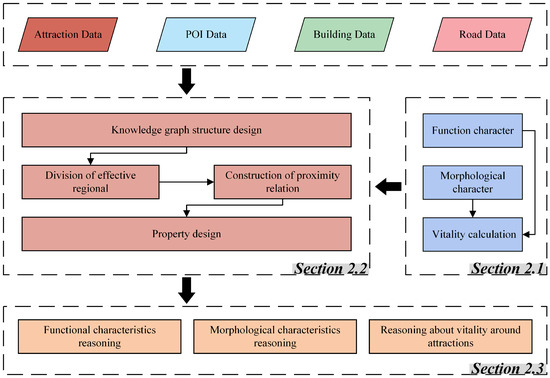
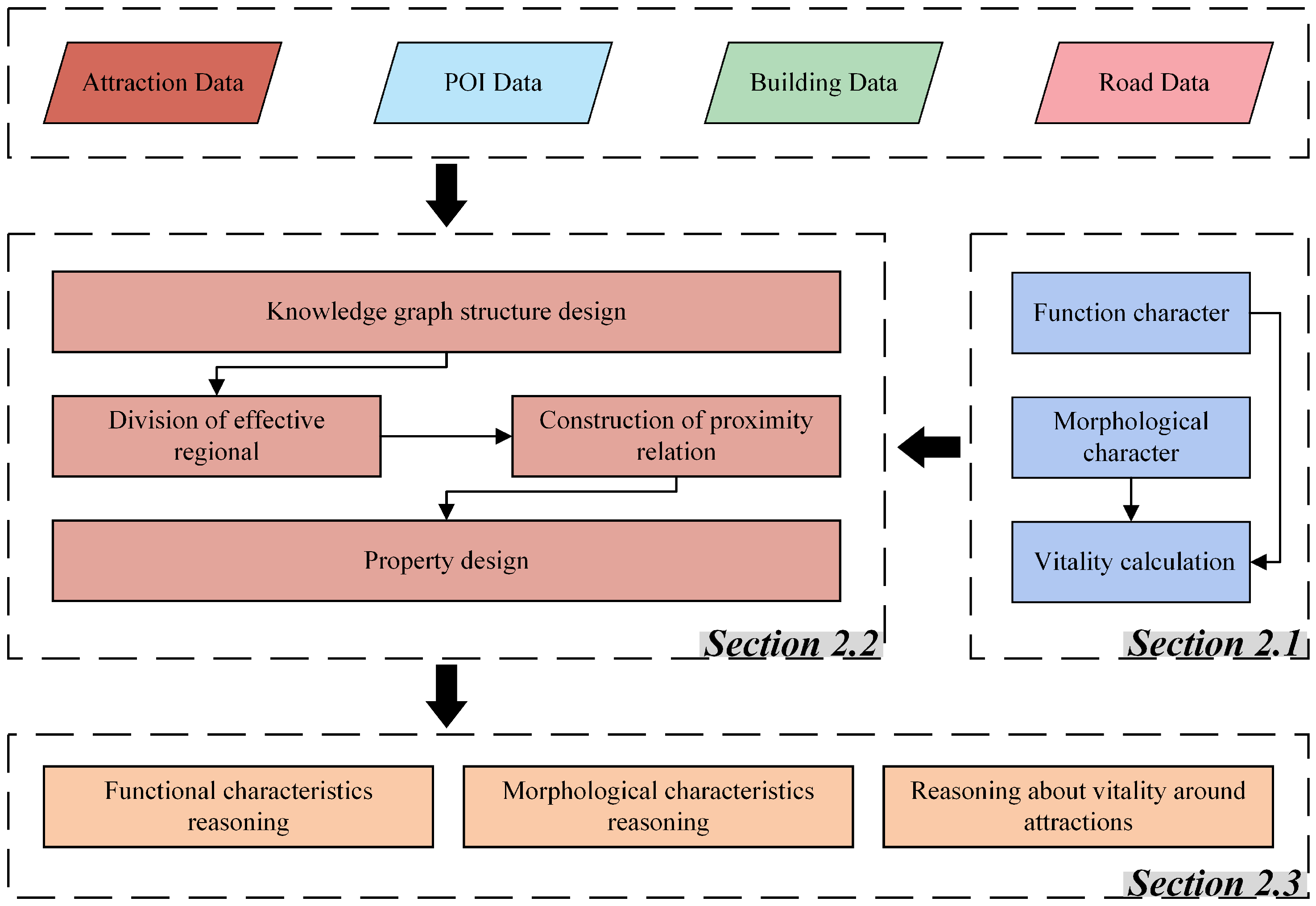
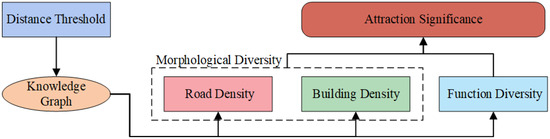
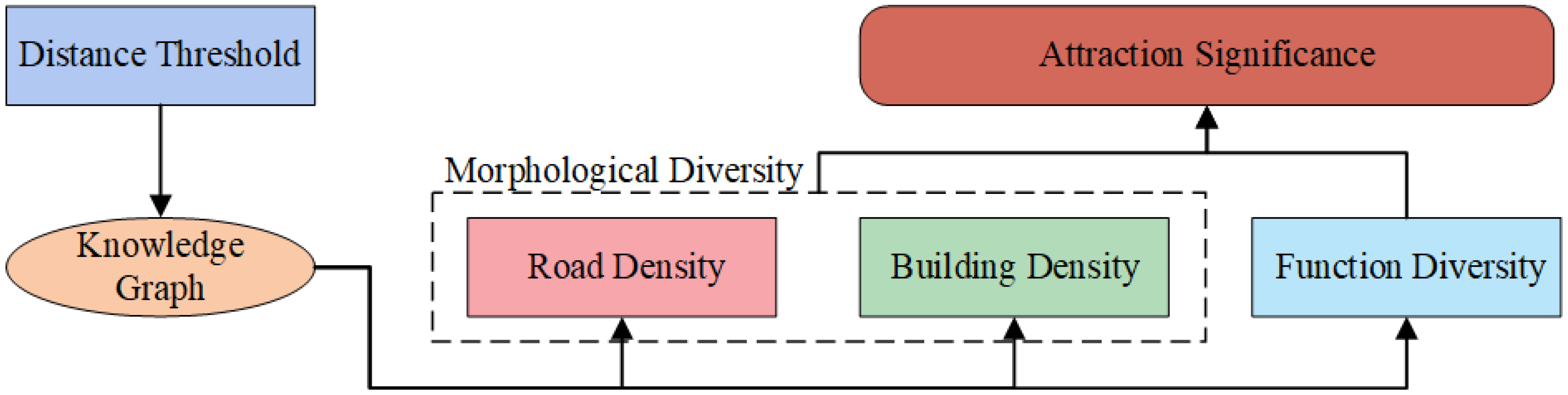
In this paper, a method for reasoning about the vitality around attractions was proposed, based on the knowledge graph. The method involved three key modules: attraction vitality model design, attraction knowledge graph construction, and vitality reasoning. First, functional characteristics (POI functional diversity) and morphological characteristics (road density and building density) were selected to construct the vitality model for the attractions. Then, Voronoi diagrams were generated using the Delaunay triangulation algorithm to define the attraction’s influence area. The attraction knowledge graph was built through entity and relationship extraction. Finally, a method for reasoning about the peripheral vitality of attractions was developed. The detailed process is shown in Figure 1.
Figure 1.
Surrounding vitality reasoning of attractions supported by knowledge graph.
2.1. Vitality Modeling of the Surrounding Area of the Attractions
Vitality around the attraction refers to the dynamic and active degree of the area centered around the attraction, incorporating spatial, functional, social, economic, and other dimensions [1,24]. This vitality reflects both the attractiveness and sustainability of the region, serving as a key indicator of the overall quality of a tourist destination. To analyze this vitality systematically, we categorized it into two main dimensions: functional characteristics and morphological characteristics [25,26,27]. Functional characteristics focused on the social and economic activities and service capacity of the area, including economic vitality, social vitality, and service vitality. Morphological characteristics, on the other hand, emphasized the spatial vitality, which was manifested in the spatial structure and physical environment, directly affecting accessibility, comfort, and the functional carrying capacity of the area.
2.1.1. Functional Characteristics
Functional areas are key spatial carriers for various economic functions in cities, and different functional types of spatial areas form distinct urban spaces. Many scholars have studied functional area delineation, using diverse data sources such as POI data, remote sensing images, and multi-source heterogeneous data [28,29,30,31]. Among these, POI data have become particularly popular due to their rich semantic information, low acquisition cost, and relevance to current urban conditions [32,33]. POI was employed to represent the functional attributes of research units, categorized into six types: commercial, transportation, residential, daily living, leisure, and entertainment [1,27] (Table 1).
Table 1.
Functional factor description.
The functional factor [27] is calculated as shown in Equation (1).
where F is the functional diversity; n is the number of categories for POI functional factors within the research unit (commercial, transportation, residential, lifestyle, leisure, entertainment); and is the proportion of the number of POIs in category i to the total number of POIs within the study unit.
2.1.2. Morphological Characteristics
Buildings are essential spaces for both production and daily life, while roads serve as the primary carriers of daily travel, playing a critical role in national economic development [30]. In this study, we focused on building density [27] and road network density [1] key morphological characteristics. Building density indicated the development intensity around the attraction, while road network density reflected traffic accessibility and the efficiency of pedestrian flow. The morphological factor characteristics and their calculation formulas [27] were shown in Table 2.
Table 2.
Morphological factor description.
2.1.3. Calculation Model for Vitality in the Surrounding Attraction Areas
A comprehensive evaluation model of vitality around the attraction is constructed by integrating functional factors (Equation (1)) and morphological factors (Table 2). In the model construction process, we first standardized each influencing factor through preprocessing. The polar deviation normalization method (Equation (2)) was then applied to linearly map all index data to the interval of 0 to 1. This step eliminated the impact of different scales and magnitudes on the results, ensuring that the factors are comparable and suitable for the model calculation. Subsequently, a multiple linear regression method [34] was employed to establish a quantitative formula for vitality around the attractions (Equation (3)), with the weight coefficients of each factor estimated using the least squares method. This approach enabled a scientific assessment and prediction of vitality around the scenic spots.
where, is the normalized value, is the initial value, is the maximum value in the group of data, and is the minimum value in the group of data.
Vitality modeling around attractions is calculated as follows:
where is the importance of the attraction, and , , , and are the weights.
2.2. Construction of Attration Knowledge Graph
2.2.1. Knowledge Graph Structure Design
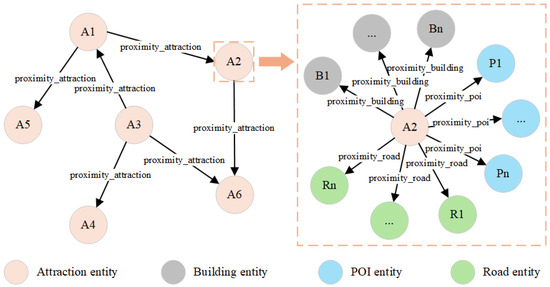
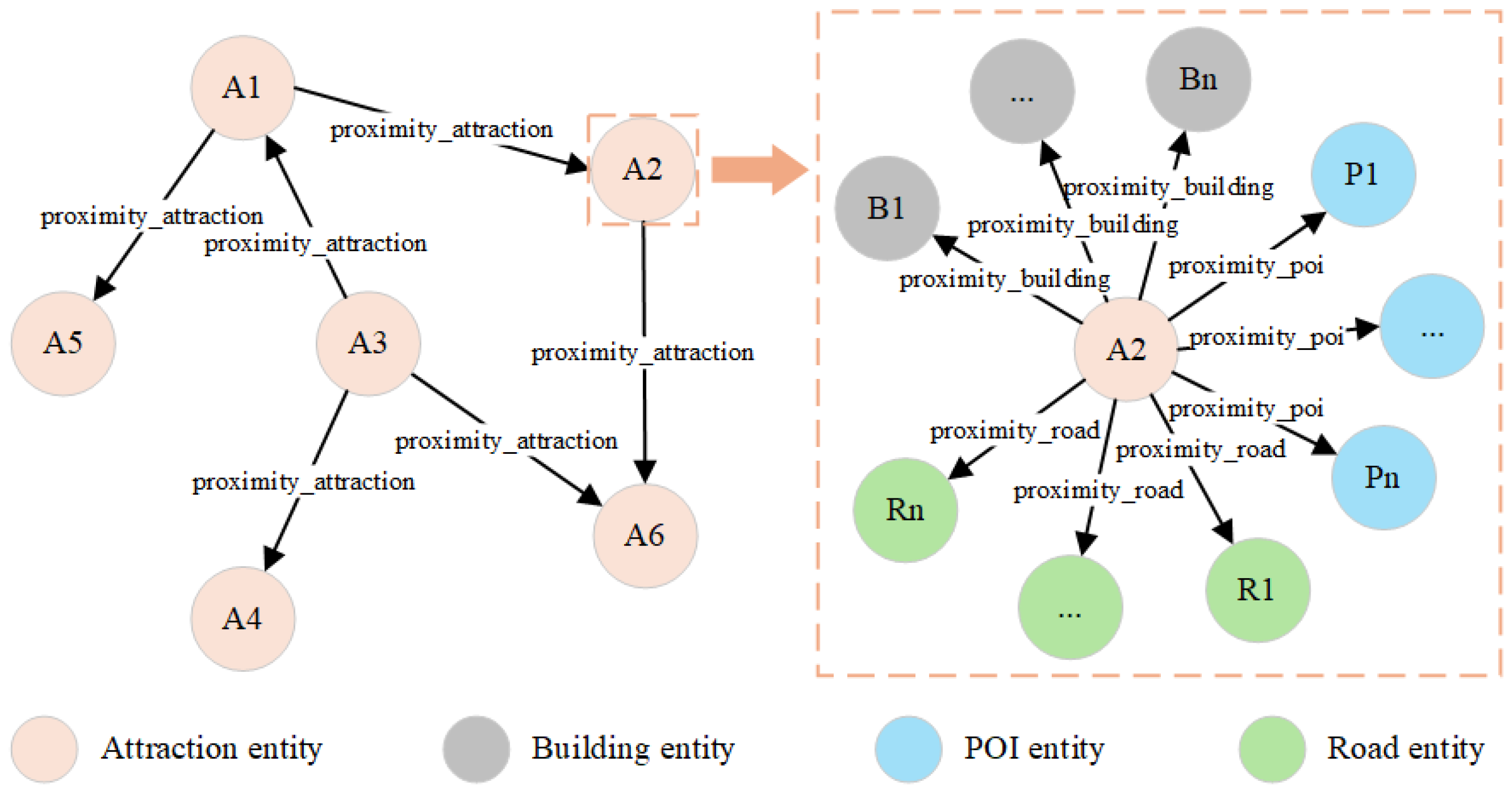
To effectively organize the associations between attractions and proximity geospatial elements, we designed a knowledge graph structure that includes attractions, buildings, roads, and POIs, as shown in Figure 2. The structure captured the following proximity relationships: the relationship between an attraction and another attraction <Attraction, proximity_attraction, Attraction>, the relationship between an attraction and a building <Attraction, proximity_building, Building>, the relationship between an attraction and a road <Attraction, proximity_road, Road>, and the relationship between an attraction and a POI <Attraction, proximity_poi, POI>.
Figure 2.
Knowledge graph architecture design.
2.2.2. Attraction Influence Area Delineation
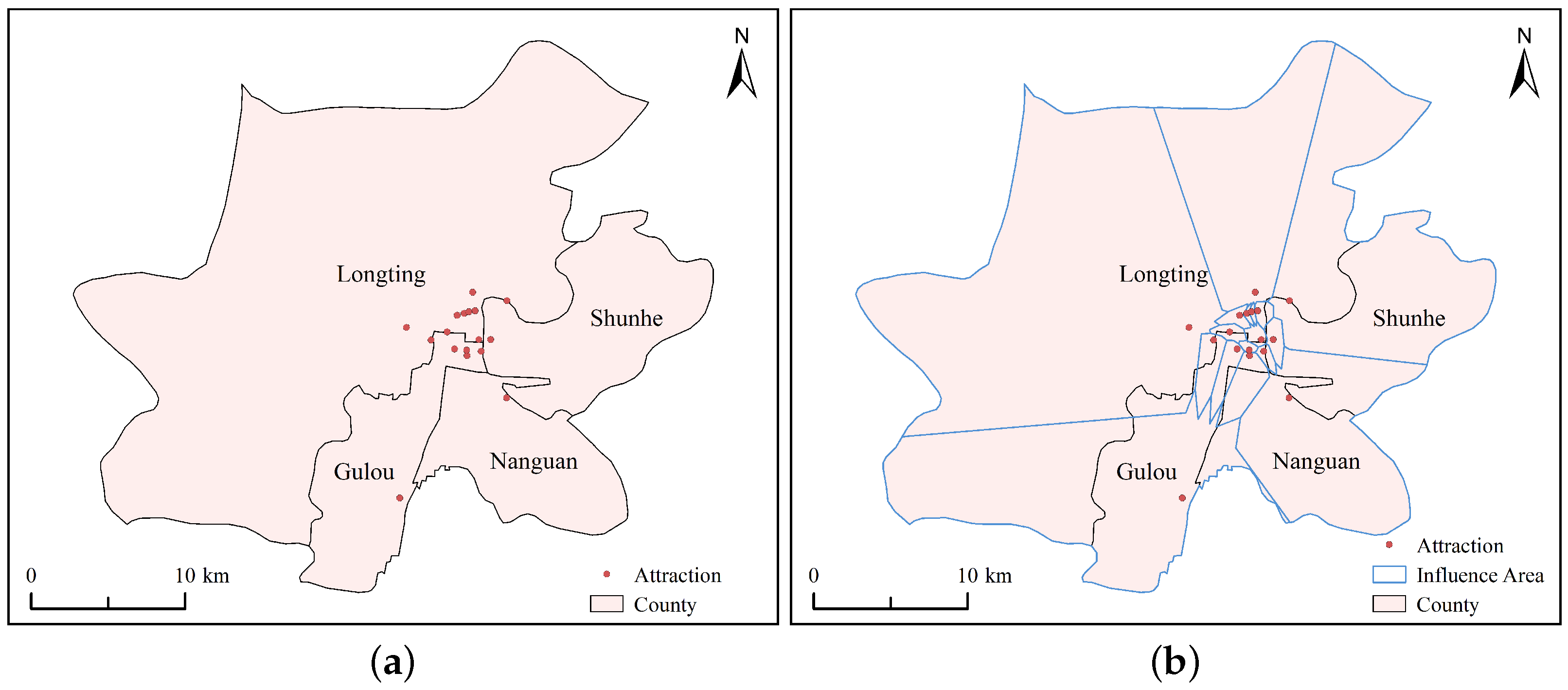
The delineation of attraction influence areas is crucial for establishing correlations between attractions and proximity geospatial elements. To achieve this, we focused on methods for defining these influence areas. Common approaches included buffer zones and Voronoi diagrams [35], with the latter being widely used due to its favorable topological properties [36]. Hence, we adopted the Voronoi diagram [37] for attraction influence area delineation, which involved the following steps:
- Step 1.
- Construct the attraction Voronoi regions using the Delaunay triangulation algorithm, ensuring the distance from each point to the nearest attraction is minimized within each region.
- Step 2.
- Intersect the Voronoi regions with the administrative boundaries of Kaifeng main city to define the influence area of each attraction, as shown in Figure 3.Figure 3. Results of the construction of the influence area of the attraction. (a) Attraction distribution. (b) Influence area of the attractions.
2.2.3. Proximity Relation
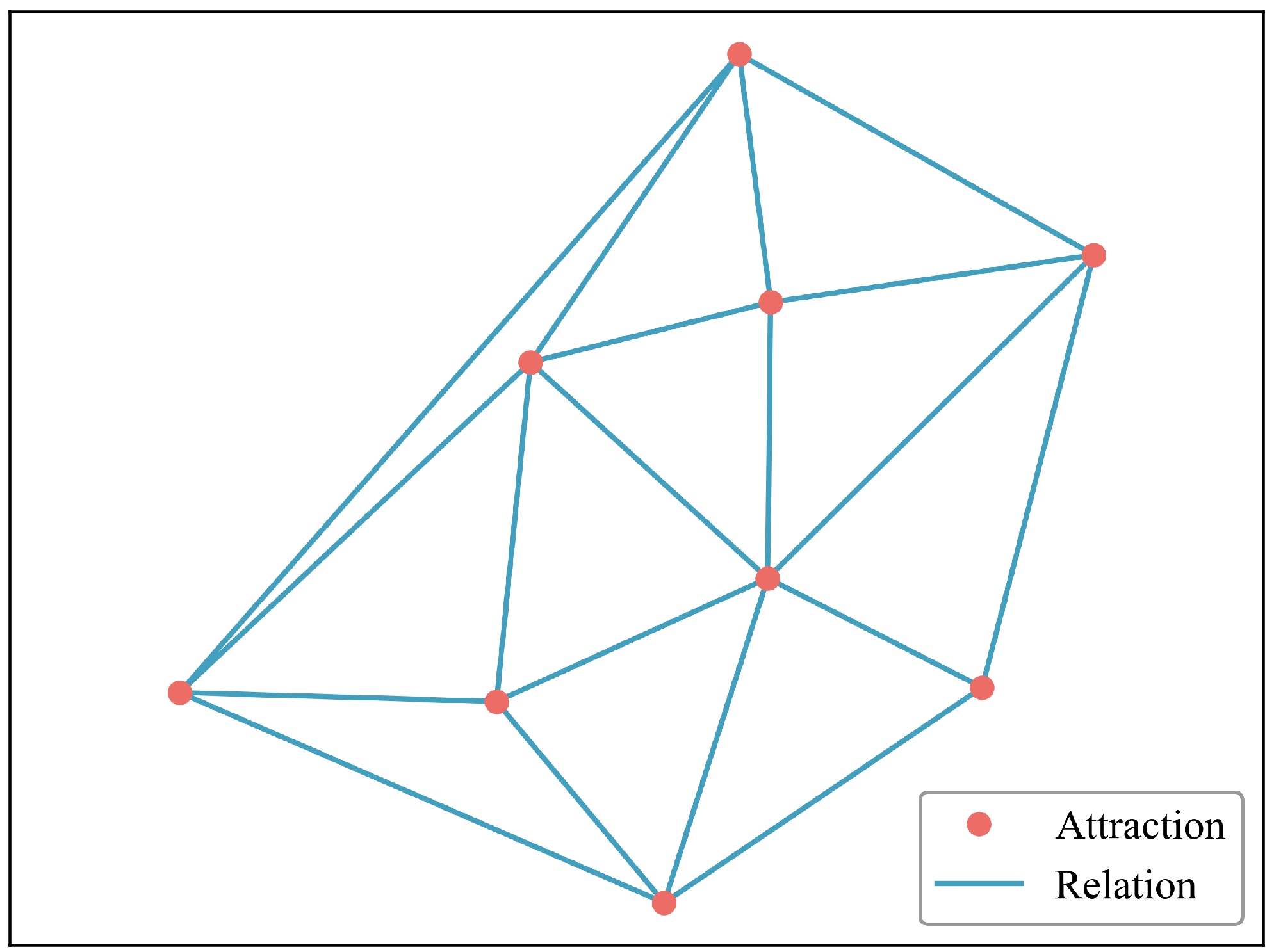
Delaunay triangular mesh transforms spatial proximity into computable topological structures through geometric optimization, making it a core tool in geographic information science, engineering simulation, and computer vision. In this paper, we applied the Delaunay triangular mesh to establish proximity relationships between attractions by constructing the mesh and sharing triangles (Figure 4).
Figure 4.
Attractions proximity relation construction.
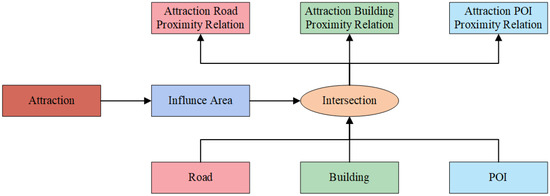
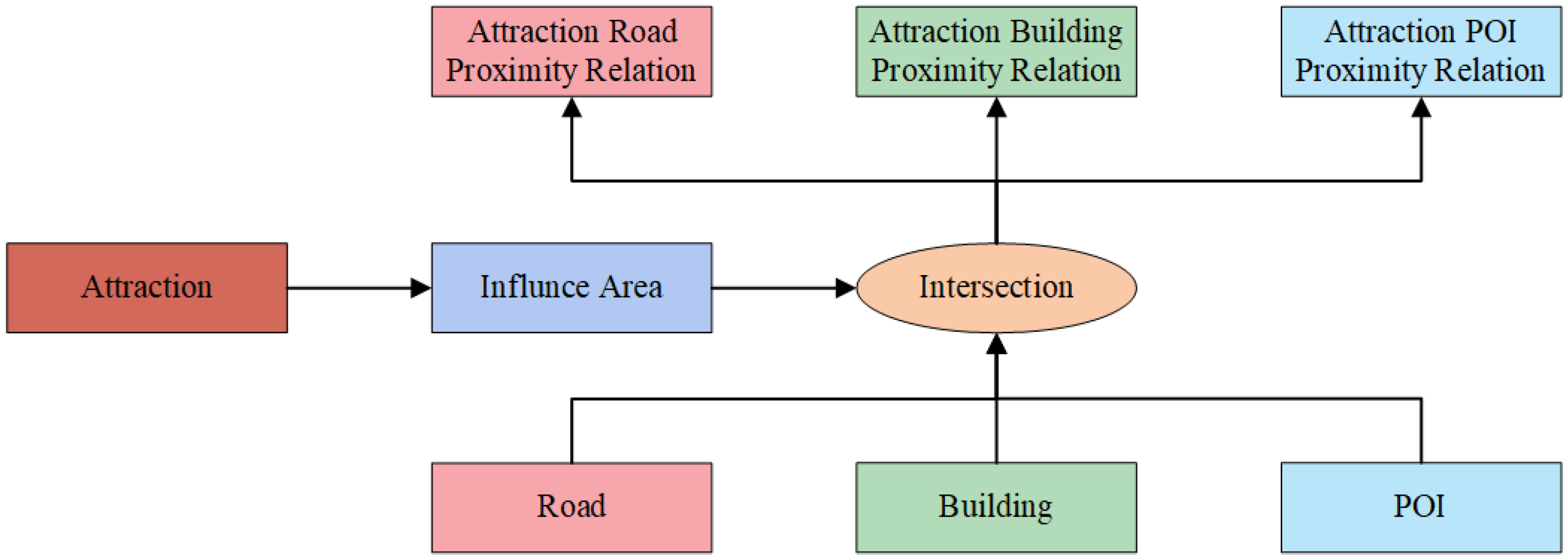
The proximity relationships between attractions and geographic entities such as POIs, roads, and buildings were constructed using the attraction influence regions from Section 2.2.2 (Figure 5). First, we intersected attractions with the influence areas to establish their associations. Then, POIs, roads, and buildings were intersected with the attraction influence region to define their respective associations. Finally, the relationships between POIs, roads, buildings, and attractions were determined based on the common influence region index.
Figure 5.
Attractions and POI building roads proximity relation construction.
2.2.4. Property Design
The knowledge graph attribute design consists of entity attributes and relationship attributes, as shown in Table 3. Entity attribute design focused on the attributes of attraction, POI, building, and road entities. Geometric data was stored in WKT format, with spatial reference described using the geographic coordinate system and projection defined by the EPSG international standard. For attraction entities, attributes included name and class; POI entities recorded name and function; road entities focused on class and length; and building entities recorded area. Relationship attribute design primarily described the proximity relationships between attractions, POIs, roads, and buildings, with the key attribute being the distance between entities.
Table 3.
Properties of entities and relation.
2.3. Rule-Based Reasoning for Surrounding Vitality Reasoning of Attractions
Based on the constructed attraction knowledge graph, the distance range for calculating surrounding vitality was defined, driving the knowledge graph to perform reasoning between attractions and adjacent geographic entities. According to the vitality model proposed in Section 2.1, we designed functional characteristics, morphological characteristics, and surrounding vitality inference rules to achieve the calculation of surrounding vitality for attractions.
2.3.1. Functional Characteristic Reasoning
The functional characteristics and diversity of POIs around the attraction were analyzed to clarify the spatial structure and physical environment of the surrounding area through reasoning (Figure 6).
Figure 6.
Functional characteristics reasoning process.
- Step 1.
- Determine the distance threshold dis around the attraction that needs to be queried.
- Step 2.
- Based on the distance threshold dis, carry out the knowledge graph reasoning to obtain the POI within the scope of the research unit.
- Step 3.
- Further statistics of the categories of POI to get the statistical results of each functional category .
- Step 4.
- Based on the calculation results of Step 3, carry out functional diversity calculation according to Equation (1), and get the functional diversity calculation results .
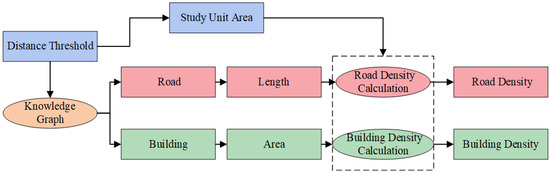
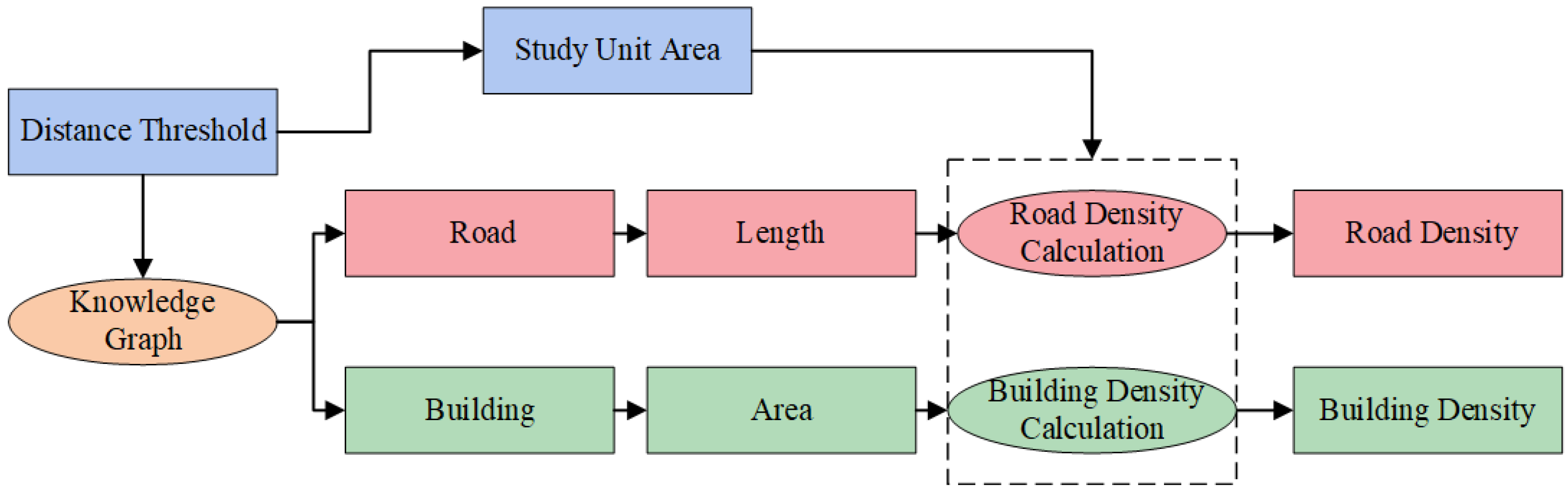
2.3.2. Morphological Characteristics Reasoning
Reasoning based on the knowledge graph about the morphological diversity around the attraction, focusing on road and building density, helped clarify the socio-economic activities and service capacity of the surrounding area (Figure 7).
Figure 7.
Morphological characteristics reasoning process.
- Step 1.
- Determine the distance threshold dis around the attraction to be queried.
- Step 2.
- Based on the distance threshold dis scenic influence area calculation to obtain the scenic research unit .
- Step 3.
- Reasoning based on the distance threshold dis, obtain the building entities and road entities whose distance from the attraction is less than dis.
- Step 4.
- Calculate the building density based on the scenic research unit and building entities , and obtain the building density calculation results.
- Step 5.
- Calculate the density of road based on the research unit of attraction and road entity , and get the calculation result of road density .
2.3.3. Vitality Reasoning in the Surrounding Attraction Areas
By analyzing the functional and morphological characteristics of the area around the attraction, we conducted vitality reasoning to clarify the dynamic activity of the attraction in terms of space, function, society, and economy (Figure 8).
Figure 8.
Vitality reasoning process in the surrounding attraction areas.
- Step 1.
- Determine the distance threshold dis that needs to be queried around the attraction.
- Step 2.
- Based on Section 2.3.1, conduct functional diversity reasoning within the research unit, and get the functional diversity reasoning result .
- Step 3.
- Based on Section 2.3.2, reason about the road density and building density within the research unit, and get the results of the road density calculation and building density calculation .
- Step 3.
- Based on the results obtained from Step 2 and Step 3, carry out the vitality calculation of the area around the attraction through Equation (3).
3. Experiments and Results
3.1. Study Area and Data
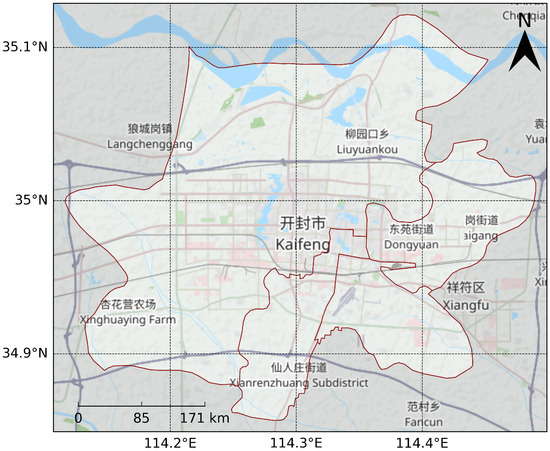
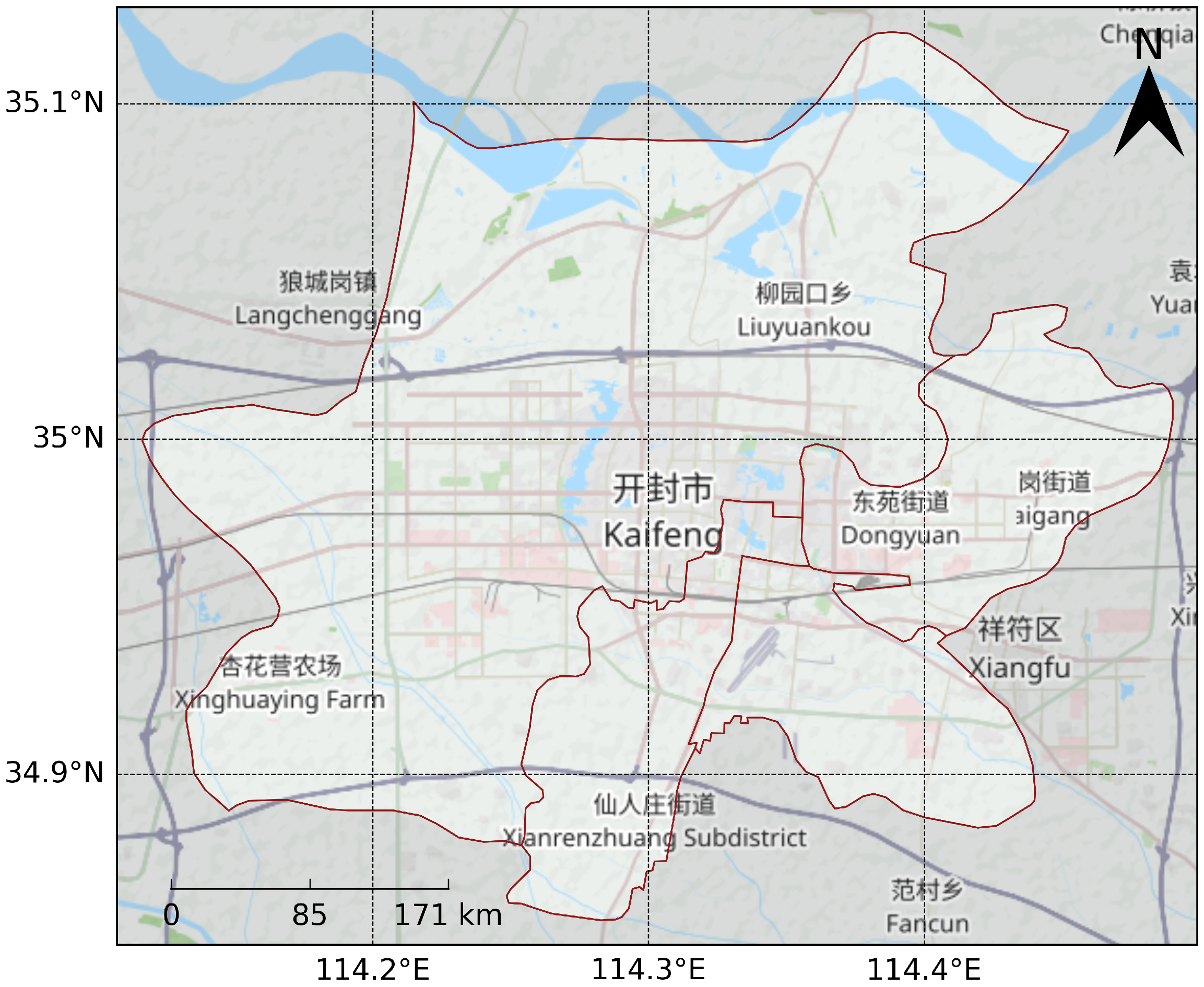
Kaifeng City is a renowned ancient capital of the eight dynasties in China (Figure 9), boasting over 2800 years of urban history and a profound cultural heritage. As a prominent tourist city in Henan Province, data from the Kaifeng Municipal Bureau of Statistics’ “2024 Statistical Bulletin on National Economic and Social Development of Kaifeng City” (http://tjj.kaifeng.gov.cn/) indicates that, Kaifeng received 105 million tourist visits, a 5.2% increase from the previous year. Tourism revenue reached 77.955 billion yuan, growing by 7.1%. By year-end, the city’s permanent resident population reached 4.698 million, with a gross domestic product (GDP) of 276.11 billion yuan. This study focuses on Kaifeng’s main urban area as its core research scope. This region features concentrated tourist attractions, well-developed transportation, and thriving economic and cultural activities. It encompasses 17 A-level tourist attractions, including 1 5A-level sites and 8 4A-level sites, forming a multi-tiered tourism attraction system characterized by Song Dynasty culture.
Figure 9.
Location of Kaifeng City’s main urban area (the base map is sourced from OpenCycleMap).
The data sources used in our experiment were shown in the Table 4. This study primarily used road data from the OpenStreetMap platform and building/POI data from the Amap API. A total of 9190 valid POI data points were obtained, covering 17 data types (corporations, finance, government agencies, education and training, hotels, culture and media, transportation facilities, real estate, life services, automobile services, medical care, beauty salons, sports and fitness, tourist attractions, recreation and entertainment, shopping, and gourmet food). These were classified into six functional categories based on urban function analysis (Table 1): business (1373, 14.9%), transportation (218, 2.4%), residential (2443, 26.6%), life (1130, 12.3%), leisure (599, 6.5%), and entertainment (3427, 37.3%).
Table 4.
Data source.
3.2. Attractions Knowledge Graph Construction Results
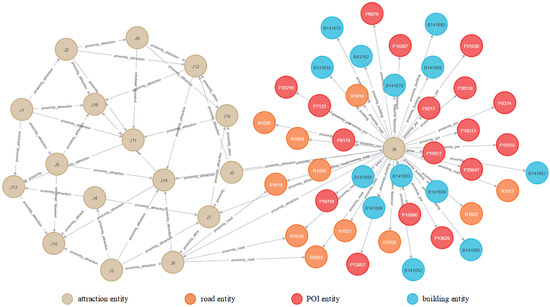
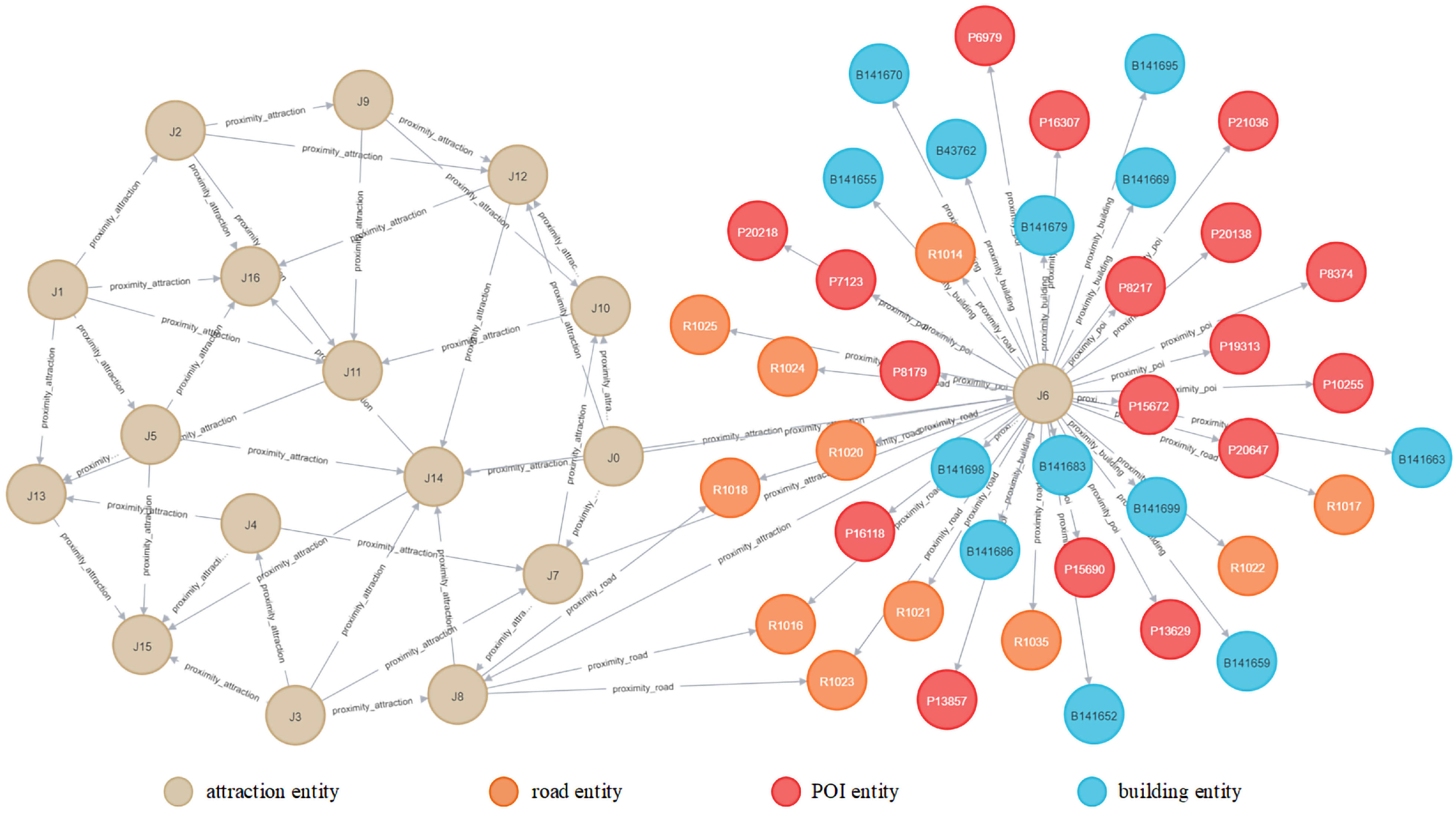
The construction of the attraction knowledge graph involved several main processes. First, the Voronoi regions of attractions were generated using the Delaunay triangulation algorithm, which helped define their influence areas. Based on these areas, the proximity relationships between geographic elements (such as POIs, roads, and buildings) around each attraction were identified. This allowed for the creation of entities for attractions, POIs, roads, and buildings, and the establishment of relationships between them. Once these entities and relationships were constructed, they were stored in Neo4j. A part of the resulting attraction knowledge graph was shown in Figure 10. The scale of the knowledge graph was detailed in Table 5, which listed the following entities.
Figure 10.
Attractions knowledge graph construction results.
Table 5.
Knowledge graph scale.
3.3. Results of Vitality Reasoning of the Surrounding Area of the Attractions
3.3.1. Reasoning About the Functional Characteristics of the Surrounding Area of the Attractions
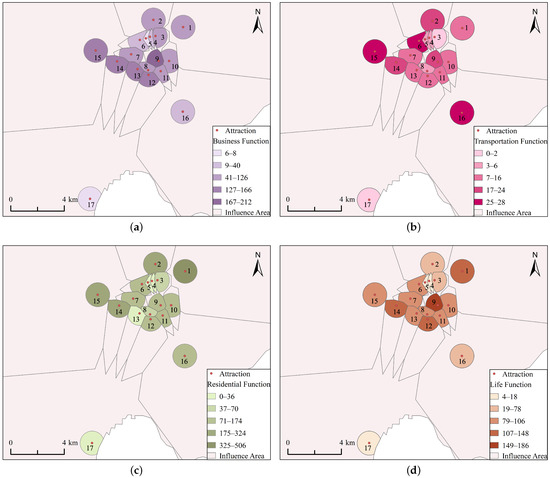
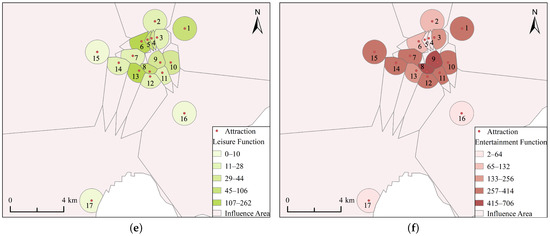
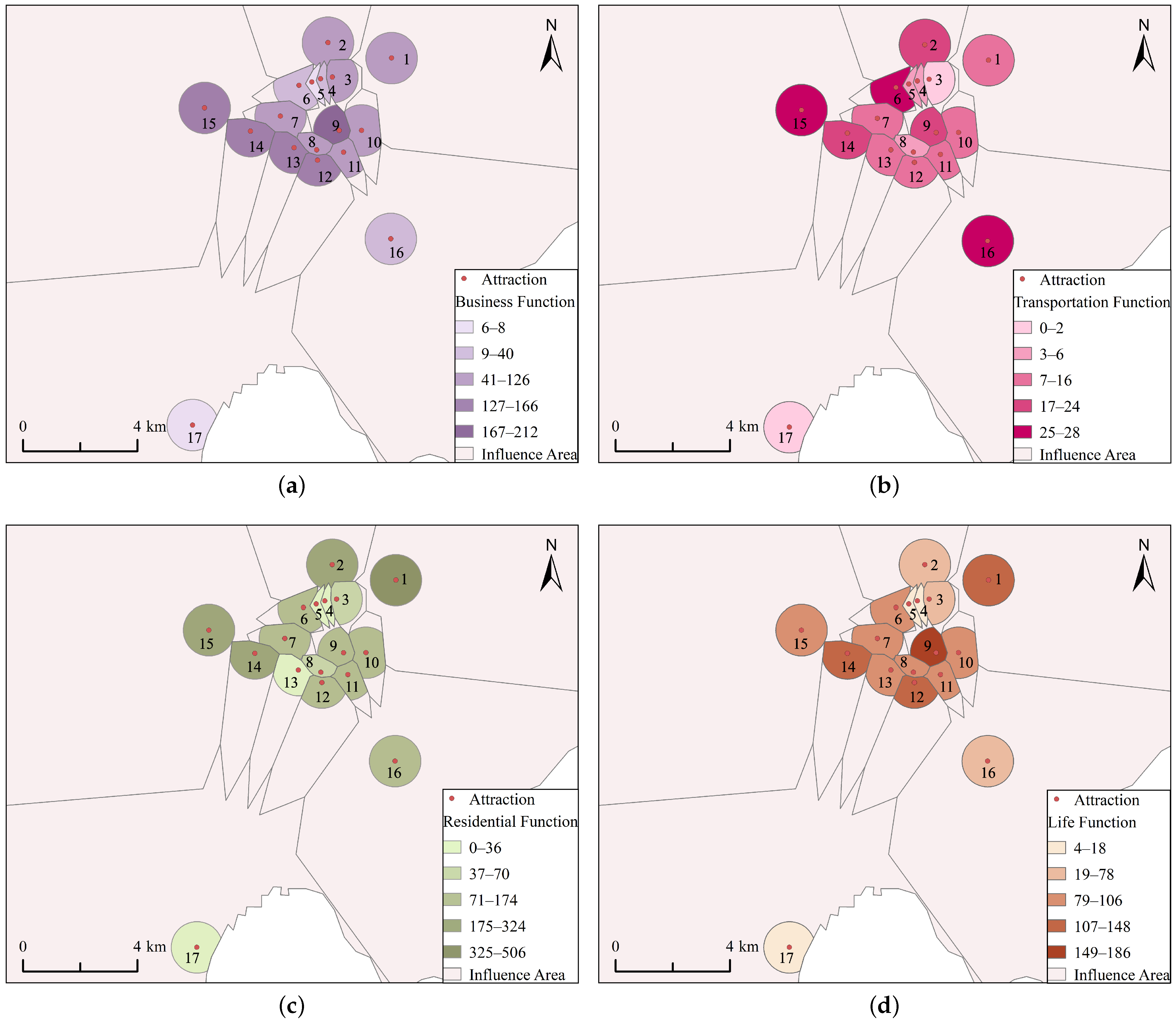
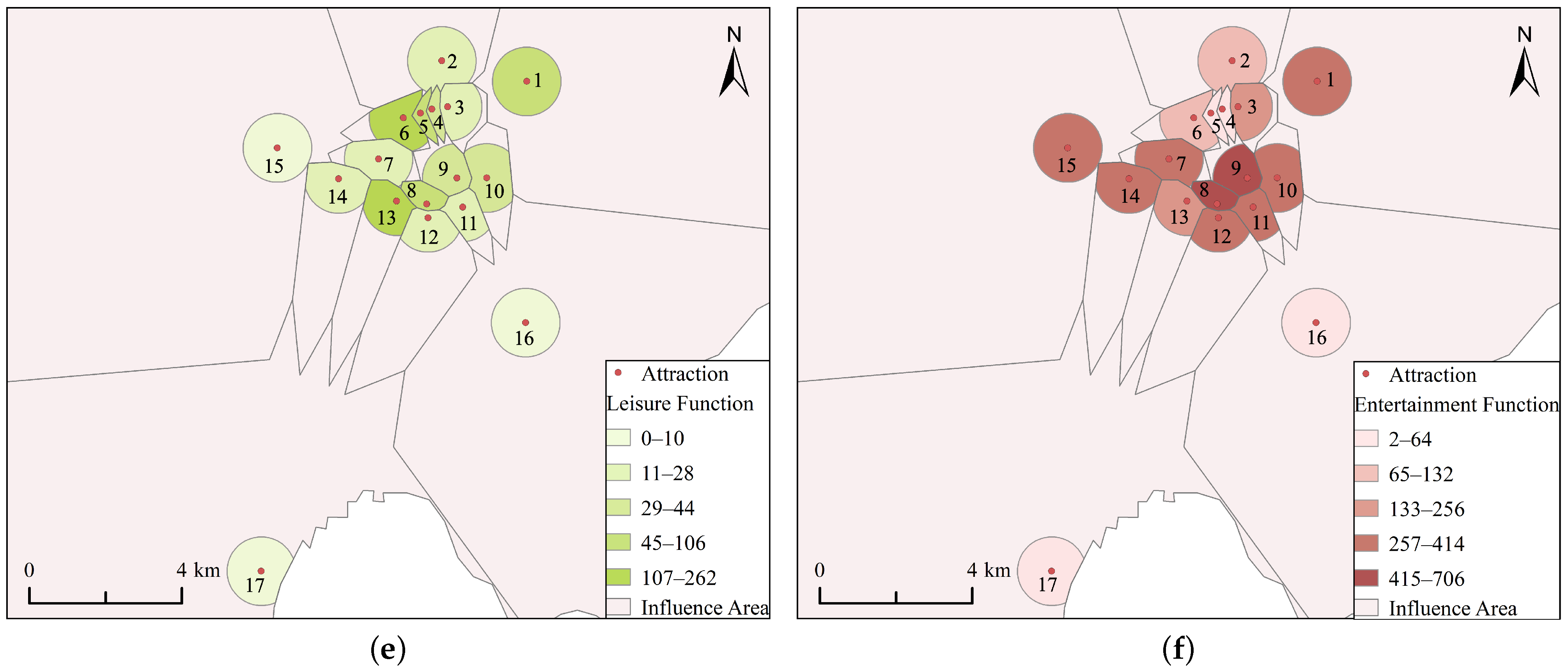
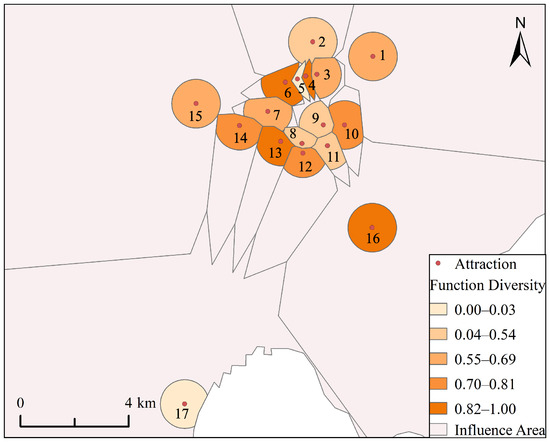
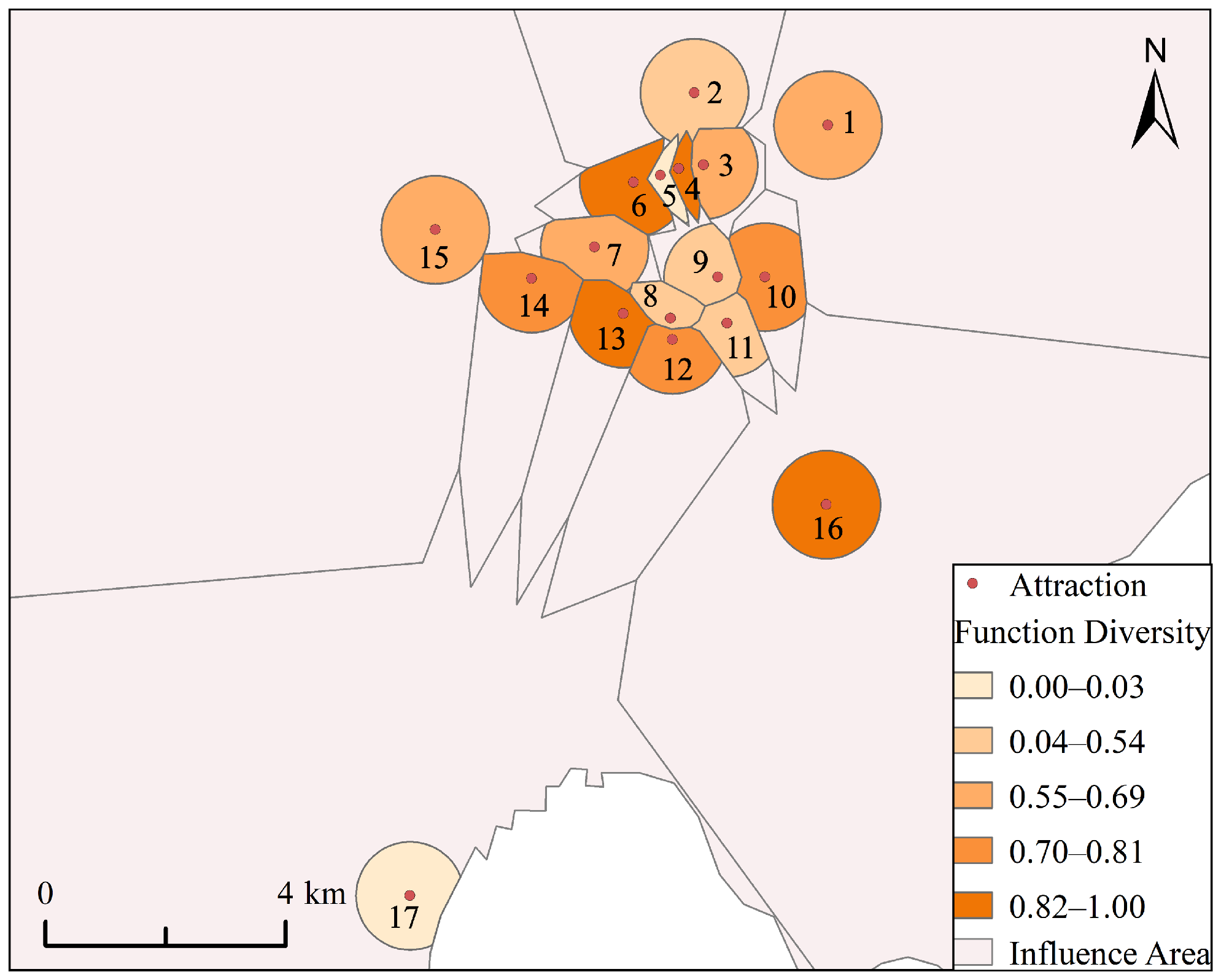
Based on the functional feature inference process outlined in Section 2.3.1, the distance threshold for querying elements surrounding attractions is set to 900 m (half of the minimum distance between attractions). The query range for elements around attractions is combined with the attraction’s influence area to generate the attraction’s surrounding zone (the irregular circular area in Figure 11). Functional feature analysis results for the attraction’s surrounding zone are obtained according to the inference process (Figure 11 and Table 6). It showed that the surrounding areas of Kaifeng’s major attractions exhibited significant functional differentiation and integration. The distribution of various functions was as follows: Business functions were primarily clustered around historical and cultural tourism complexes, such as the Shan-Shaan-Gan Guild Hall and Kaifeng Prefecture. Transportation functions were mainly concentrated in key distribution centers, including Millennium City Park and Bianliang Song City. Residential functions were centered around community-type attractions, such as the Iron Pagoda Scenic Area and Wansui Mountain Song Dynasty Martial Arts City. Life functions formed a supporting cluster around the Shan-Shaan-Gan Guild Hall and Kaifeng Prefecture. Leisure functions were emphasized in cultural experience zones like Millennium City Park and Lord Bao’s Memorial Temple. Entertainment functions were concentrated in areas like Shan-Shaan-Gan Guild Hall and Yanqing Taoist Temple. Overall, the Yang Family’s Tianbo Mansion, the Millennium City Park, and Lord Bao’s Memorial Temple showed a high functional diversity index (Figure 12).
Figure 11.
Reasoning results on the functional characteristics of the surrounding area of the attractions. (a) Business function. (b) Transportation function. (c) Residential function. (d) Life function. (e) Leisure function. (f) Entertainment function.
Table 6.
Results of vitality reasoning of the surrounding area of the attractions.
Figure 12.
Function diversity.
3.3.2. Reasoning About Morphological Characteristics of the Surrounding Area of the Attractions
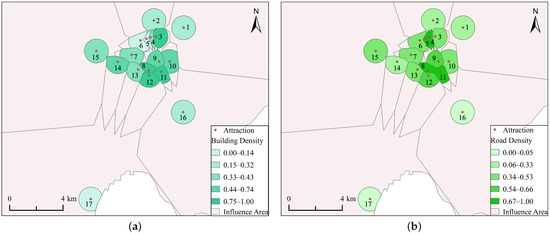
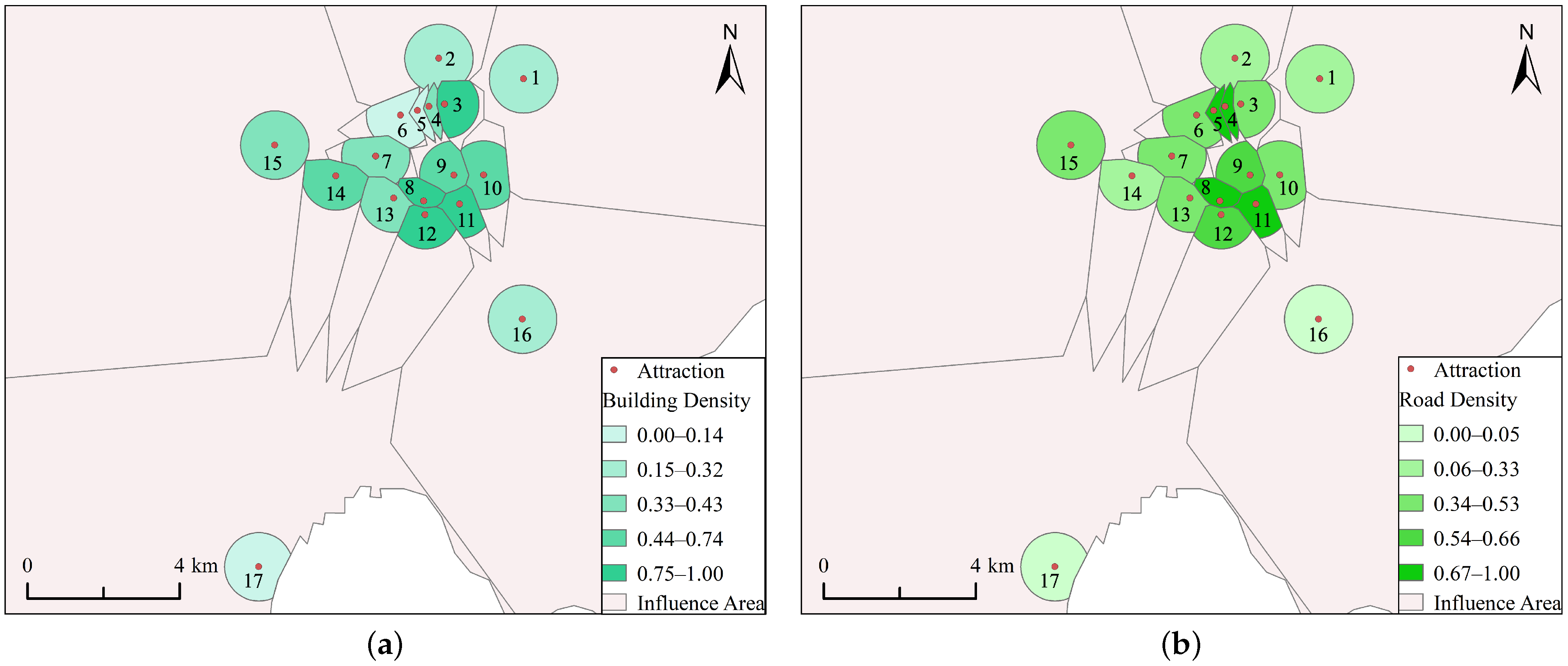
Based on the morphological feature process outlined in Section 2.3.2, the distance threshold for querying elements surrounding attractions was set to 900 m. The query range for elements around attractions was combined with the attraction’s influence area to generate the attraction’s surrounding region (the irregular circular area in Figure 13). The morphological feature analysis results for the attraction’s surrounding region were obtained through the inference process (Figure 13). It revealed that the areas around the Daxiangguo Buddhist Temple, Yanqing Taoist Temple, and Kaifeng Prefecture exhibited higher building density, reflecting a strong spatial agglomeration effect. In contrast, the attractions of the Yang Family’s Tianbo Mansion, Chinese Han Yuan, and Daxiangguo Buddhist Temple showed higher road density, forming a more complete transportation accessibility network. Overall, the Daxiangguo Buddhist Temple area exhibited a high degree of morphological distinctiveness, characterized by both a high building density and road density.
Figure 13.
Reasoning results of morphological characteristics. (a) Building density. (b) Road density.
3.3.3. Reasoning About Vitality of the Surrounding Area of the Attractions
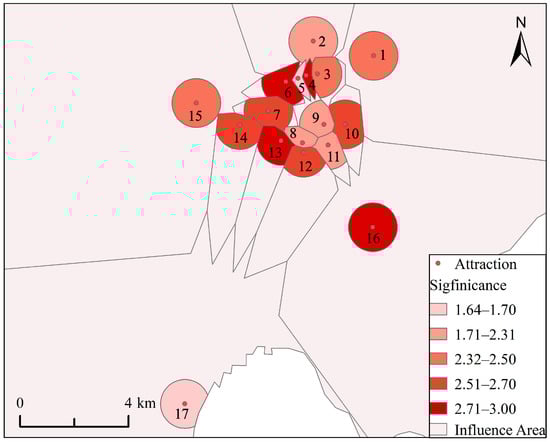
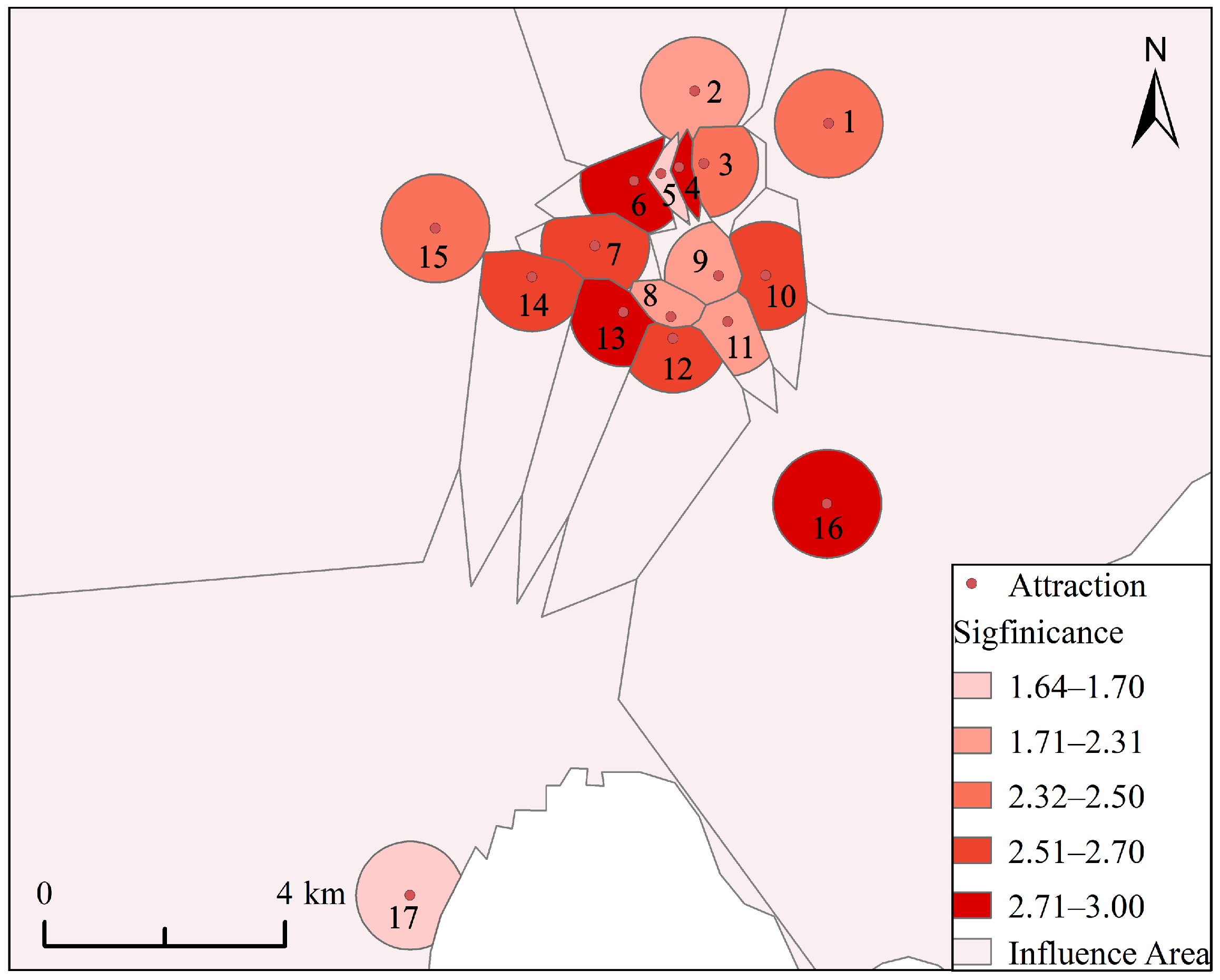
Based on the attraction vicinity vitality inference process outlined in Section 2.3.3, combined with the inference results of the functional characteristics (Section 3.3.1) and morphological characteristics (Section 3.3.2) of the attraction vicinity, the vitality of the attraction vicinity was inferred. The results are shown in Figure 14. It indicated that the level of vitality around the attractions exhibited obvious spatial differentiation. The areas around the Yang Family’s Tianbo Mansion, Millennium City Park, and Lord Bao’s Memorial Temple had higher vitality values, mainly due to their superior functional complexity and morphological synergy. On one hand, these areas had formed a well-integrated industry system through the multifunctional mixed layout of cultural experiences, commercial services, leisure, and entertainment. On the other hand, the reasonable building density and road configuration effectively enhanced the accessibility and utilization efficiency of the space. In contrast, the vitality values around the Yanqing Taoist Temple, China Han Garden and Stele Forest, and Yudian Rural Tourism Resort were relatively low.
Figure 14.
Results of vitality reasoning of the surrounding area of the attractions.
4. Discussion
The vitality of areas surrounding tourist attractions holds significant importance for increasing tourist traffic, optimizing the spatial layout around attractions, and promoting economic development. Researching models for reasoning the vitality of these surrounding areas provides crucial guidance for enhancing their dynamism. Therefore, we conducted research on modeling the vitality around attractions based on multidimensional factors, proposing a knowledge graph-supported reasoning method for assessing the vitality of areas surrounding attractions. And using Kaifeng’s main urban area as a case study, we validated the effectiveness of our approach.
Existing regional vitality calculation models predominantly treat entire cities as research units [25,38]. By incorporating multidimensional factors (environment, function, morphology), they calculate urban vitality within these units [5,26]. However, this often involves massive datasets and requires accounting for complex relationships among multidimensional factors, which can compromise computational efficiency. Therefore, when calculating vitality around tourist attractions, we used a knowledge graph to establish and represent the relationships between attractions and multidimensional factors. By converting extensive computational work into semantic reasoning, we significantly enhance the efficiency of vitality inference around attractions.
Our method, which integrated knowledge graphs for vitality reasoning around tourist attractions, enables effective calculation and expression of such vitality. However, our approach also has certain limitations in performing surrounding vitality reasoning, such as insufficient consideration of multimodal factors. Furthermore, we neglected environmental characteristics within the attraction area, including green space ratio, enclosed space ratio, and visible sky ratio. In the future, we will incorporate multi-source data to expand the attraction knowledge graph, thereby improving the accuracy of the surrounding vitality inference.
5. Conclusions
Vitality in the surrounding attraction areas is an important measure of the sustainability of tourist destinations. This paper proposed a method for reasoning about the vitality around attractions based on knowledge graphs. The method systematically described how to calculate the attraction surrounding the vitality model, divide the influence area of attractions, construct the attraction knowledge graph, and reason about vitality, providing a new perspective for the intelligent and dynamic calculation of attraction surrounding vitality. To verify the effectiveness of this method, it was applied to the main city of Kaifeng. First, functional characteristics (POI functional diversity) and morphological characteristics (road and building density) were selected to construct the vitality calculation model. Then, the Delaunay triangular profile algorithm was used to generate Voronoi diagrams for constructing the influence area of attractions. Following that, the knowledge graph of attractions was built using entity and relationship extraction. Finally, the vitality around attractions was calculated by combining the vitality calculation model. The conclusions were as follows:
- The areas surrounding attractions in Kaifeng’s main urban district exhibited distinct functional differentiation. Yang Family’s Tianbo Mansion, Millennium City Park, and Lord Bao’s Memorial Temple all exhibited high functional diversity indices, forming a composite functional spatial structure.
- The areas surrounding attractions in Kaifeng’s main urban district exhibited a pronounced feature of morphological integration. Daxiangguo Buddhist Temple possessed distinct morphological characteristics, featuring both high building density and high road network density.
- The vitality level around attractions in the main urban area of Kaifeng City exhibited obvious spatial differentiation. The Yang Family’s Tianbo Mansion, the Millennium City Park, and Lord Bao’s Memorial Temple demonstrated higher vitality values, primarily due to their superior functional complexity and morphological synergy effects. In contrast, Yanqing Taoist Temple, China Han Garden and Stele Forest, and Yudian Rural Tourism Resort exhibited relatively lower vitality values in their surrounding areas.
Author Contributions
Conceptualization, Yi Liu; methodology, Lili Wu and Youneng Su; software, Lili Wu, Youneng Su; validation, Yi Liu; formal analysis, Yi Liu, Lili Wu, Youneng Su; investigation, Yi Liu and Lili Wu; resources, Yi Liu, Lili Wu, and Youneng Su; data curation, Lili Wu and Youneng Su; writing—original draft, Yi Liu; writing—review and editing, Yi Liu, Lili Wu, Youneng Su; visualization, Yi Liu, Lili Wu, Youneng Su; supervision, Yi Liu and Lili Wu; project administration, Lili Wu. All authors have read and agreed to the published version of the manuscript.
Funding
This work was supported by the grant titled “Research on Geographic Feature Attribute Information Mining Technology Based on Multimodal Data” [grant number SKLGIE2024-M-4-2].
Data Availability Statement
The data that support the findings of this study are available from the corresponding author upon reasonable request.
Conflicts of Interest
The authors declare no conflict of interest.
References
- Jiang, Y.; Huang, Z.; Zhou, X.; Chen, X. Evaluating the impact of urban morphology on urban vitality: An exploratory study using big geo-data. Int. J. Digit. Earth 2024, 17, 2327571. [Google Scholar] [CrossRef] [Scilit]
- Yuan, C.; Ren, S.; He, J. Urban Sprawl and Economic Vitality: Evidence from 284 Cities in China. J. Urban Plan. Dev. 2025, 151, 04025013. [Google Scholar] [CrossRef] [Scilit]
- Zikirya, B.; Xing, Y.; Zhou, C. The Matching Relationship Between the Distribution Characteristics of High-Grade Tourist Attractions and Spatial Vitality in Xinjiang. Sustainability 2024, 16, 9426. [Google Scholar] [CrossRef] [Scilit]
- Maas, P.R. Towards a Theory of Urban Vitality. Ph.D. Dissertation, University of British Columbia, Vancouver, BC, Canada, 1961. [Google Scholar]
- Ma, Z. Deep exploration of street view features for identifying urban vitality: A case study of Qingdao city. Int. J. Appl. Earth Obs. Geoinf. 2023, 123, 103476. [Google Scholar] [CrossRef] [Scilit]
- Nathvani, R.; Cavanaugh, A.; Suel, E.; Bixby, H.; Clark, S.N.; Metzler, A.B.; Nimo, J.; Moses, J.B.; Baah, S.; Arku, R.E.; et al. Measurement of urban vitality with time-lapsed street-view images and object-detection for scalable assessment of pedestrian-sidewalk dynamics. ISPRS J. Photogramm. Remote Sens. 2025, 221, 251–264. [Google Scholar] [CrossRef] [Scilit] [PubMed]
- Wu, Y.; Yang, M.; Li, X.; Wei, X.; Qian, Y. Study on the Influence of Strip-Shaped Urban Rail Transit Stations on Urban Vitality Distribution Based on Point of Interest Data. Appl. Sci. 2025, 15, 2031. [Google Scholar] [CrossRef] [Scilit]
- Wang, T.; Li, Y.; Li, H.; Chen, S.; Li, H.; Zhang, Y. Research on the Vitality Evaluation of Parks and Squares in Medium-Sized Chinese Cities from the Perspective of Urban Functional Areas. Int. J. Environ. Res. Public Health 2022, 19, 15238. [Google Scholar] [CrossRef] [Scilit]
- Chen, J.; Ren, K.; Li, P.; Wang, H.; Zhou, P. Toward effective urban regeneration post-COVID-19: Urban vitality assessment to evaluate people preferences and place settings integrating LBSNs and POI. Environ. Dev. Sustain. 2024. [Google Scholar] [CrossRef] [Scilit]
- Lu, S.; Shi, C.; Yang, X. Impacts of Built Environment on Urban Vitality: Regression Analyses of Beijing and Chengdu, China. Int. J. Environ. Res. Public Health 2019, 16, 4592. [Google Scholar] [CrossRef] [Scilit]
- Zikirya, B.; He, X.; Li, M.; Zhou, C. Urban Food Takeaway Vitality: A New Technique to Assess Urban Vitality. Int. J. Environ. Res. Public Health 2021, 18, 3578. [Google Scholar] [CrossRef] [Scilit]
- Zhang, Z.; Liu, J.; Zhao, Y.; Zhou, Q.; Song, L.; Xu, S. Community-Level Urban Vitality Intensity and Diversity Analysis Supported by Multisource Remote Sensing Data. Remote Sens. 2025, 17, 1056. [Google Scholar] [CrossRef] [Scilit]
- Gan, X.; Huang, L.; Wang, H.; Mou, Y.; Wang, D.; Hu, A. Optimal Block Size for Improving Urban Vitality: An Exploratory Analysis with Multiple Vitality Indicators. J. Urban Plan. Dev. 2021, 147, 04021027. [Google Scholar] [CrossRef] [Scilit]
- Wu, W.; Liu, X.; Zhou, Y.; Zhao, K. Spatial heterogeneity of built environment’s impact on urban vitality using multi-source big data and MGWR. Sci. Rep. 2025, 15, 23459. [Google Scholar] [CrossRef] [Scilit] [PubMed]
- Yue, W.; Chen, Y.; Zhang, Q.; Liu, Y. Spatial Explicit Assessment of Urban Vitality Using Multi-Source Data: A Case of Shanghai, China. Sustainability 2019, 11, 638. [Google Scholar] [CrossRef] [Scilit]
- Yan, W.J.; Liu, S.T. Built Equality and Sustainable Urban Cultural Space: A Case Study of Quanzhou, China. Buildings 2023, 13, 2337. [Google Scholar] [CrossRef] [Scilit]
- Liu, Y.; Ding, J.; Fu, Y.; Li, Y. UrbanKG: An Urban Knowledge Graph System. ACM Trans. Ligent Syst. Technol. 2023, 14, 60. [Google Scholar] [CrossRef] [Scilit]
- Hogan, A.; Blomqvist, E.; Cochez, M.; D’Amato, C.; de Melo, G.; Gutierrez, C.; Kirrane, S.; Labra Gayo, J.E.; Navigli, R.; Neumaier, S.; et al. Knowledge Graphs. ACM Comput. Surv. 2021, 54, 71. [Google Scholar] [CrossRef] [Scilit]
- Gao, J.; Qiu, P.; Yu, L.; Huang, Z.; Lu, F. An interpretable attraction recommendation method based on knowledge graph. Sci. Sin. Informationis 2020, 50, 1055–1068. [Google Scholar] [CrossRef] [Scilit]
- Dsouza, A.; Tempelmeier, N.; Yu, R.; Gottschalk, S.; Demidova, E. WorldKG: A World-Scale Geographic Knowledge Graph. In Proceedings of the 30th ACM International Conference on Information & Knowledge Management (CIKM ’21), Virtual Event, Queensland, Australia, 1–5 November 2021; ACM: New York, NY, USA, 2021; pp. 4475–4484. [Google Scholar] [CrossRef] [Scilit]
- Yang, X.; Li, W.; Chen, Y.; Guo, Y. Construction of a COVID-19 Pandemic Situation Knowledge Graph Considering Spatial Relationships: A Case Study of Guangzhou, China. ISPRS Int. J. Geo-Inf. 2022, 11, 561. [Google Scholar] [CrossRef] [Scilit]
- Li, H.; Zhang, C.; Xiao, Z.; Chen, M.; Lu, D.; Liu, S. A Web-based geo-simulation approach integrating knowledge graph and model-services. Environ. Model. Softw. 2021, 144, 105160. [Google Scholar] [CrossRef] [Scilit]
- Zhang, Y.; Xu, R.; Lu, W.; Mayer, W.; Ning, D.; Duan, Y.; Zeng, X.; Feng, Z. Multi-Modal Spatio-Temporal Knowledge Graph of Ship Management. Appl. Sci. 2023, 13, 9393. [Google Scholar] [CrossRef] [Scilit]
- Yang, H.; He, Q.; Cui, L.; Taha, A.M.M. Exploring the Spatial Relationship between Urban Vitality and Urban Carbon Emissions. Remote Sens. 2023, 15, 2173. [Google Scholar] [CrossRef] [Scilit]
- Li, S.; Wu, C.; Lin, Y.; Li, Z.; Du, Q. Urban Morphology Promotes Urban Vibrancy from the Spatiotemporal and Synergetic Perspectives: A Case Study Using Multisource Data in Shenzhen, China. Sustainability 2020, 12, 4829. [Google Scholar] [CrossRef] [Scilit]
- Gao, C.; Li, S.; Sun, M.; Zhao, X.; Liu, D. Exploring the Relationship between Urban Vibrancy and Built Environment Using Multi-Source Data: Case Study in Munich. Remote Sens. 2024, 16, 1107. [Google Scholar] [CrossRef] [Scilit]
- Liu, F.; Tang, Z.; Zhang, L.; Yu, L.; Liu, K. Exploring the Relationship between Spatiotemporal Distribution of Urban Vibrancy and Neighborhood Attributes by Coupling Multi-Source Data: A Case of Nanshan District in Shenzhen. Trop. Geogr. 2025, 45, 410–422. [Google Scholar] [CrossRef]
- Liu, F.; Andrienko, G.; Andrienko, N.; Chen, S.; Janssens, D.; Wets, G.; Theodoridis, Y. Citywide Traffic Analysis Based on the Combination of Visual and Analytic Approaches. J. Geovisualization Spat. Anal. 2020, 4, 15. [Google Scholar] [CrossRef] [Scilit]
- Huang, X.; Yang, J.; Li, J.; Wen, D. Urban functional zone mapping by integrating high spatial resolution nighttime light and daytime multi-view imagery. ISPRS J. Photogramm. Remote Sens. 2021, 175, 403–415. [Google Scholar] [CrossRef] [Scilit]
- Lin, A.; Sun, X.; Wu, H.; Luo, W.; Wang, D.; Zhong, D.; Wang, Z.; Zhao, L.; Zhu, J. Identifying Urban Building Function by Integrating Remote Sensing Imagery and POI Data. IEEE J. Sel. Top. Appl. Earth Obs. Remote Sens. 2021, 14, 8864–8875. [Google Scholar] [CrossRef] [Scilit]
- Deng, Z.; You, X.; Shi, Z.; Gao, H.; Hu, X.; Yu, Z.; Yuan, L. Identification of Urban Functional Zones Based on the Spatial Specificity of Online Car-Hailing Traffic Cycle. ISPRS Int. J. Geo-Inf. 2022, 11, 435. [Google Scholar] [CrossRef] [Scilit]
- Yang, X.; Bo, S.; Zhang, Z. Classifying Urban Functional Zones Based on Modeling POIs by Deepwalk. Sustainability 2023, 15, 7995. [Google Scholar] [CrossRef] [Scilit]
- Pan, C.; Wu, S.; Li, E.; Li, H.; Liu, X. Identification of urban functional zones in Macau Peninsula based on POI data and remote information sensors technology for sustainable development. Phys. Chem. Earth 2023, 131, 103447. [Google Scholar] [CrossRef] [Scilit]
- Wen, Z.; Zhao, J.; Li, M. A Study on the Influencing Factors of the Vitality of Street Corner Spaces in Historic Districts: The Case of Shanghai Bund Historic District. Buildings 2024, 14, 2947. [Google Scholar] [CrossRef] [Scilit]
- Usui, H.; Teraki, A.; Okunuki, K.i.; Satoh, T. A comparison of neighbourhood relations based on ordinary Delaunay diagrams and area Delaunay diagrams: An application to define the neighbourhood relations of buildings. Int. J. Geogr. Inf. Sci. 2020, 34, 2177–2203. [Google Scholar] [CrossRef] [Scilit]
- Su, Y.; Xu, Q.; Zhu, X.; Zhang, F.; Liu, Y. Automatic Functional Classification of Buildings Supported by a POI Semantic Characterization Knowledge Graph. ISPRS Int. J. Geo-Inf. 2024, 13, 285. [Google Scholar] [CrossRef] [Scilit]
- Xu, X.; Genovese, P.V.; Zhao, Y.; Liu, Y.; Woldesemayat, E.M.; Zoure, A.N. Geographical Distribution Characteristics of Ethnic-Minority Villages in Fujian and Their Relationship with Topographic Factors. Sustainability 2022, 14, 7727. [Google Scholar] [CrossRef] [Scilit]
- Cui, Y.; Zha, G.; Wang, Q.; Dang, Y.; Shi, K.; Duan, X.; Xu, D.; Huang, B. Evaluating the community commercial vitality using multi-source data: A case study of Hangzhou, China. Giscience Remote Sens. 2025, 62, 2451335. [Google Scholar] [CrossRef] [Scilit]



Disclaimer/Publisher’s Note: The statements, opinions and data contained in all publications are solely those of the individual author(s) and contributor(s) and not of MDPI and/or the editor(s). MDPI and/or the editor(s) disclaim responsibility for any injury to people or property resulting from any ideas, methods, instructions or products referred to in the content. |
© 2025 by the authors. Published by MDPI on behalf of the International Society for Photogrammetry and Remote Sensing. Licensee MDPI, Basel, Switzerland. This article is an open access article distributed under the terms and conditions of the Creative Commons Attribution (CC BY) license (https://creativecommons.org/licenses/by/4.0/).