
Article

Inconsistency Detection in Cross-Layer Tile Maps with Super-Pixel Segmentation

1
School of Resource and Environmental Sciences, Wuhan University, Wuhan 430079, China
2
Key Laboratory of Geographic Information System, Ministry of Education, Wuhan 430079, China
3
Key Laboratory of Digital Mapping and Land Information Application Engineering, National Administration of Surveying, Mapping and Geo-Information, Wuhan 430079, China
4
School of Geospatial Engineering and Science, Sun Yat-sen University, Zhuhai 519082, China
*
Author to whom correspondence should be addressed.
ISPRS Int. J. Geo-Inf. 2023, 12(6), 244; https://doi.org/10.3390/ijgi12060244
Submission received: 20 March 2023 / Revised: 6 June 2023 / Accepted: 15 June 2023 / Published: 17 June 2023

Abstract

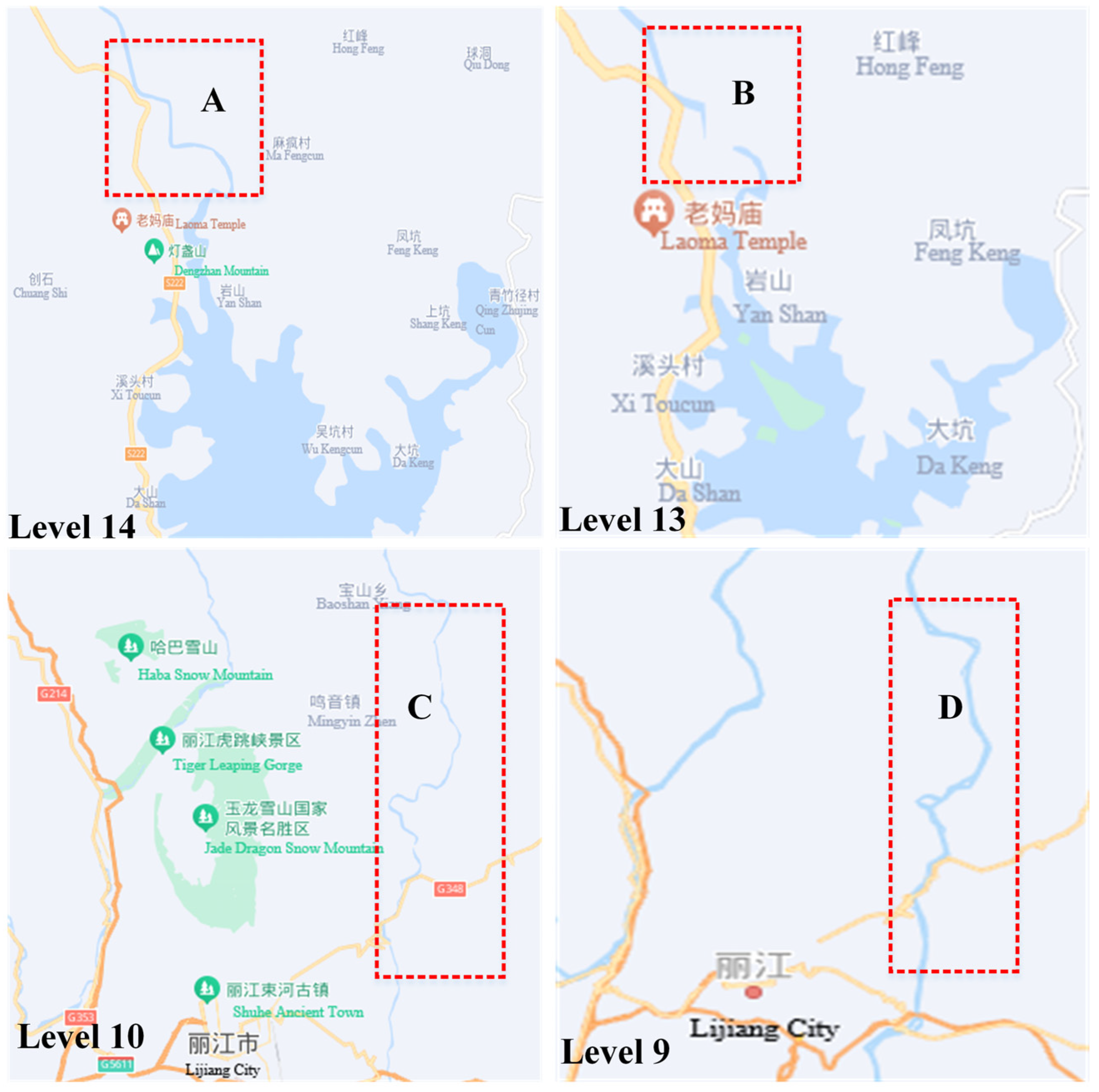
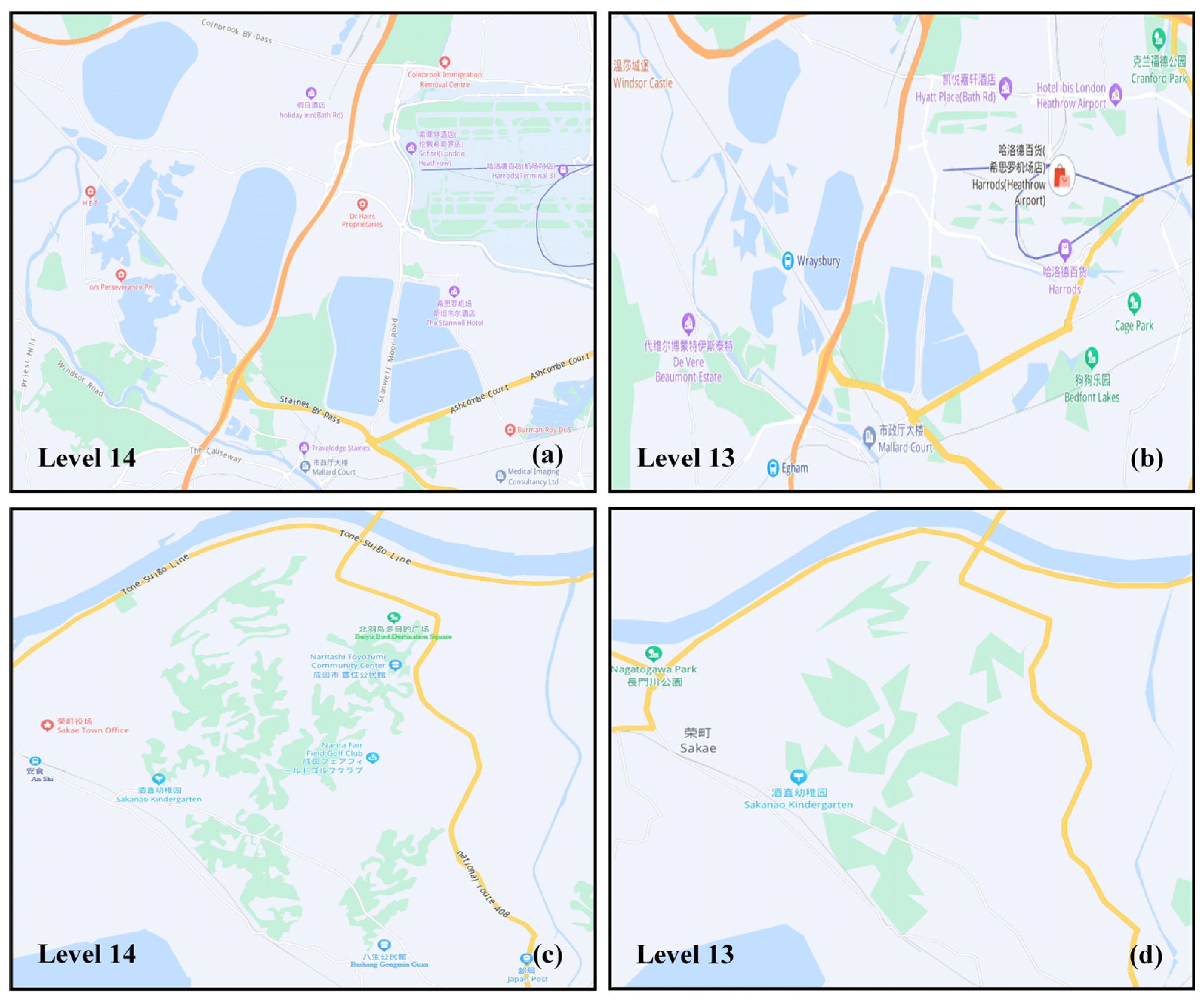
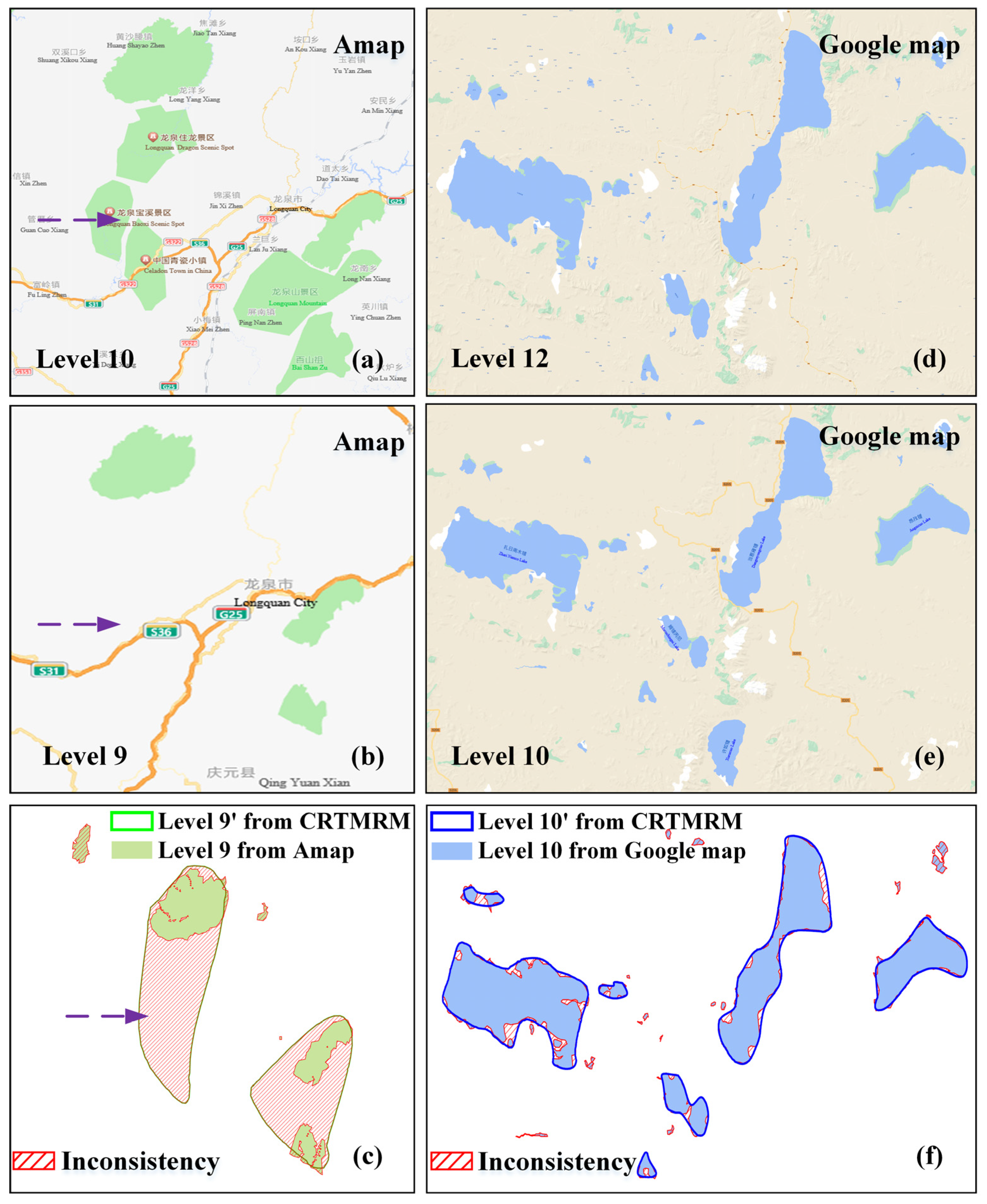
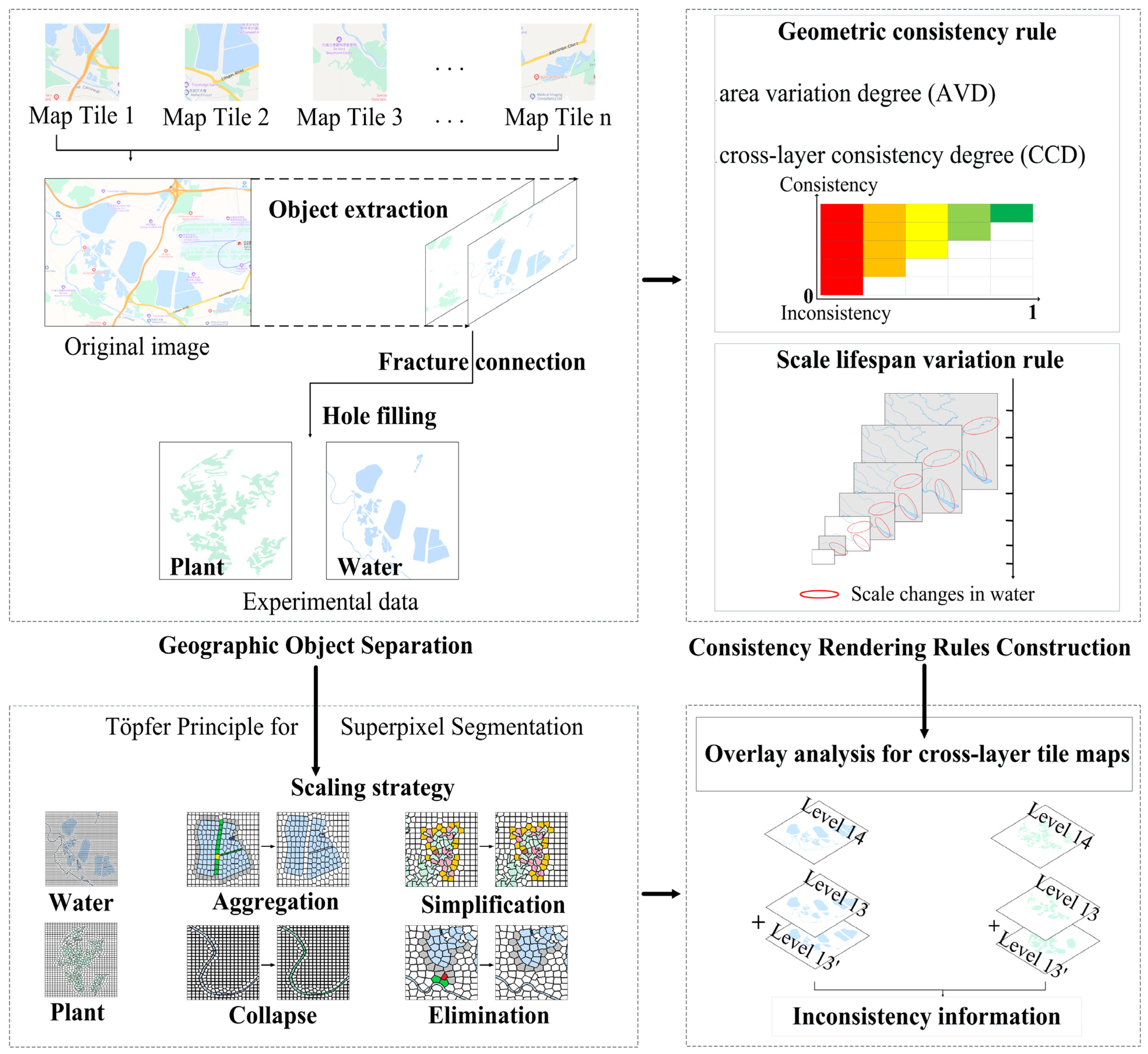
The consistency of geospatial data is of great significance for the application and updating of geographic information in web maps. Due to the multiple data sources and different temporal versions, the tile web maps usually meet the inconsistency question across different layers. This study tries to develop a method to detect this kind of inconsistency utilizing a raster-based scaling approach. Compared with vector-based handling, this method can be directly available for multi-level tile images in a pixel representation form. The proposed cross-layer raster tile map rendering method (CRTMRM) consists of four primary aspects: geographic object separation, consistency rendering rules, data scaling and derivation with super-pixel segmentation, and inconsistency detection. The scale transformation strategy with the super-pixel attempts to obtain a simplified representation. Taking the scale lifespan variation and geometric consistency rules into account, the inconsistency detection of tile maps is conducted between temporal versions, multi-sources, and different scales through actual and derived data overlay analysis. The experiment focuses on features of cross-layer water or vegetation areas with Level 9 to Level 14 in Baidu Maps, Amap, and Google Maps. This method is able to serve as a basis for massive unstructured web map data inconsistency detection and support intelligent web map rendering.
Keywords: consistency detection; tile map; super-pixel; map generalization; web map rendering consistency detection; tile map; super-pixel; map generalization; web map rendering