
Article

Revealing the Spatio-Temporal Heterogeneity of the Association between the Built Environment and Urban Vitality in Shenzhen

1
School of Geography and Remote Sensing, Guangzhou University, Guangzhou 510006, China
2
Fengtu Technology (Shenzhen) Company Limited, Shenzhen 518000, China
*
Author to whom correspondence should be addressed.
ISPRS Int. J. Geo-Inf. 2023, 12(10), 433; https://doi.org/10.3390/ijgi12100433
Submission received: 27 July 2023 / Revised: 10 October 2023 / Accepted: 20 October 2023 / Published: 22 October 2023

Abstract

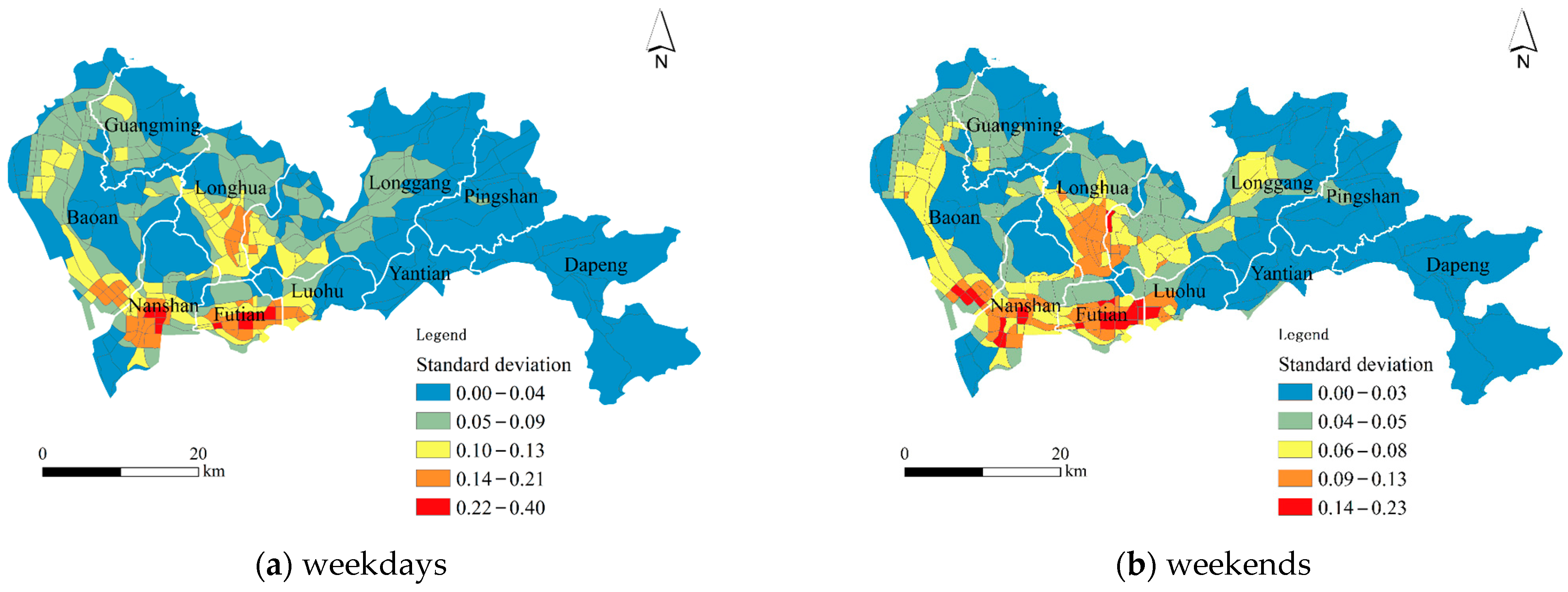
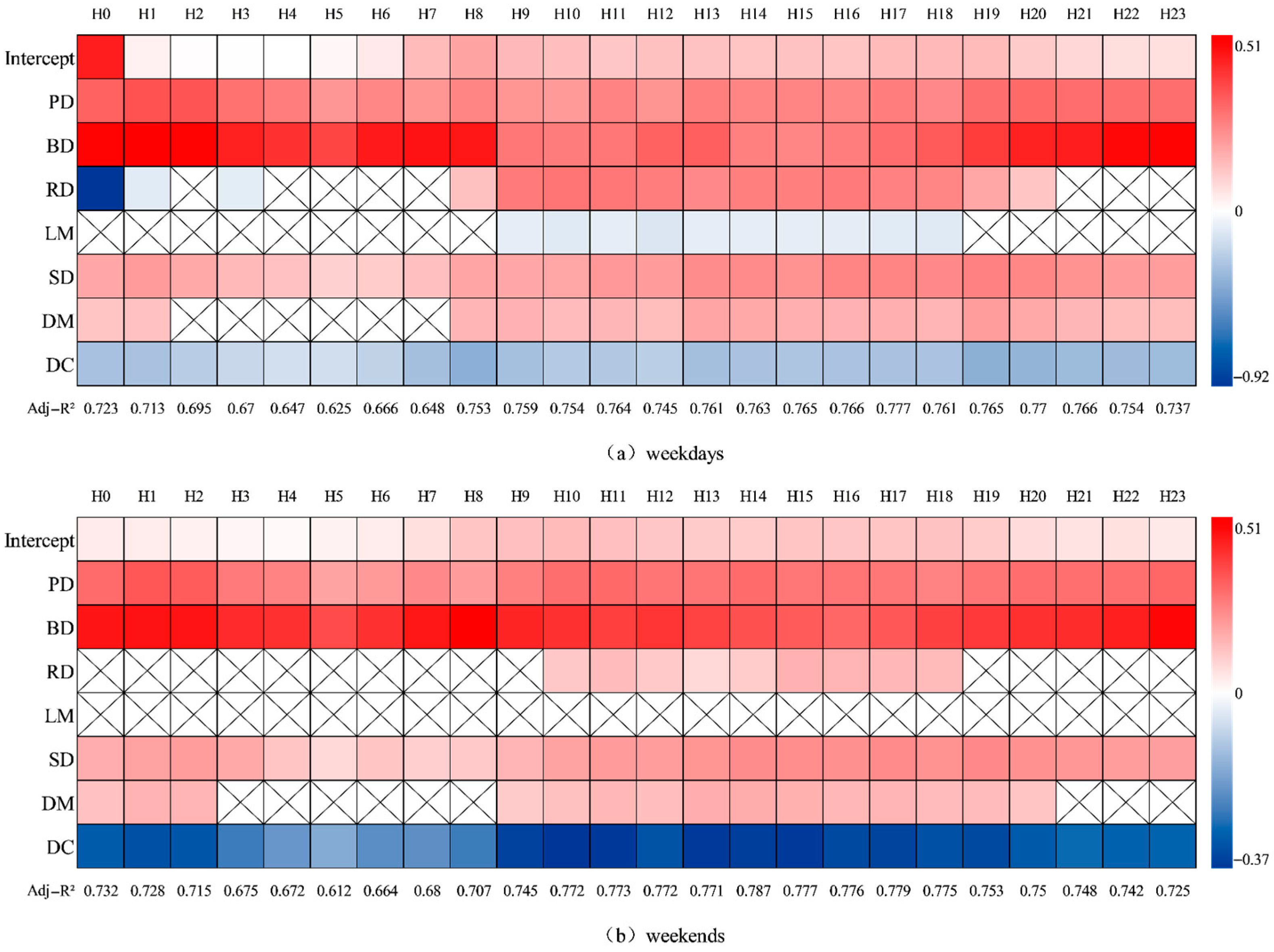
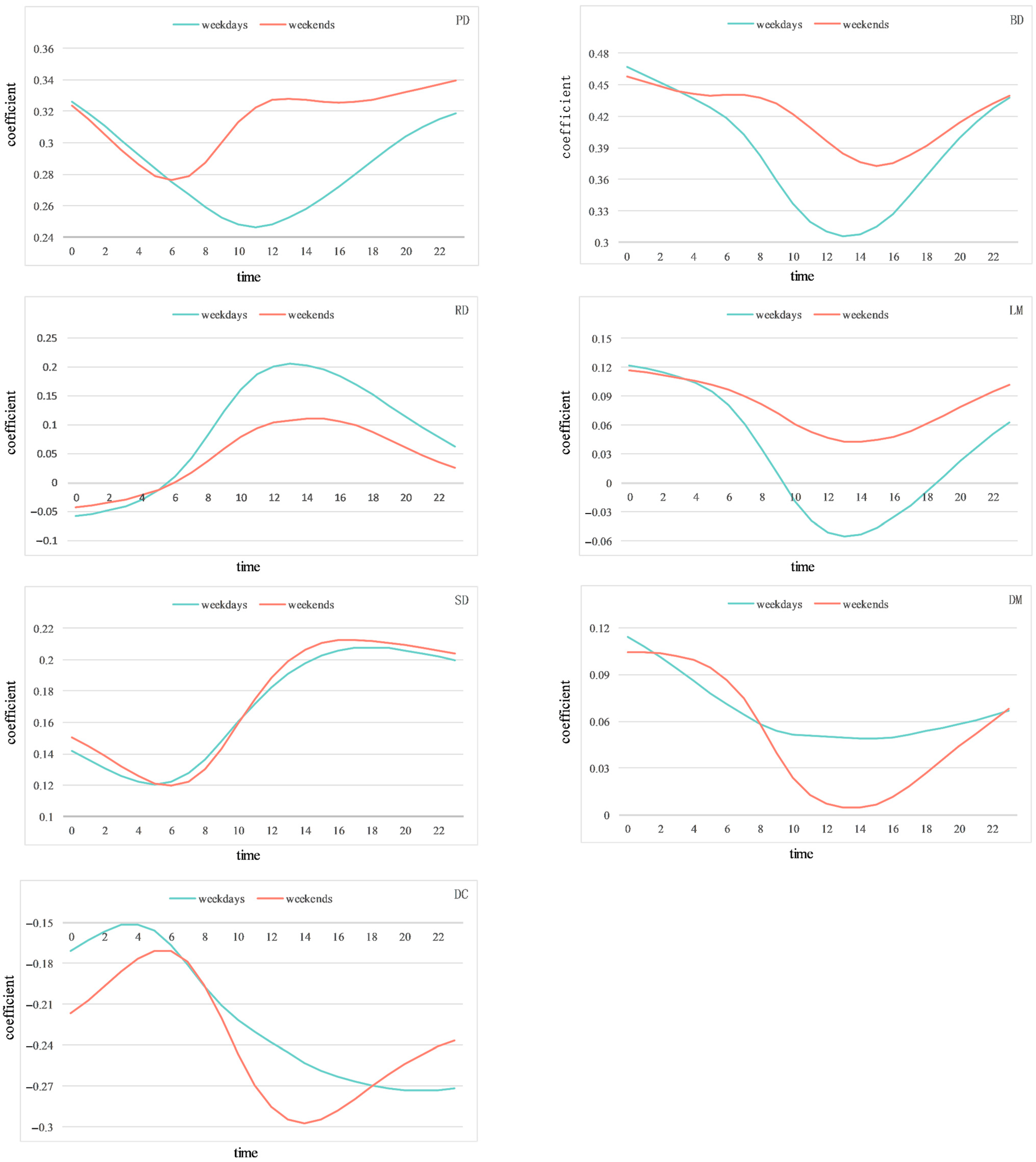
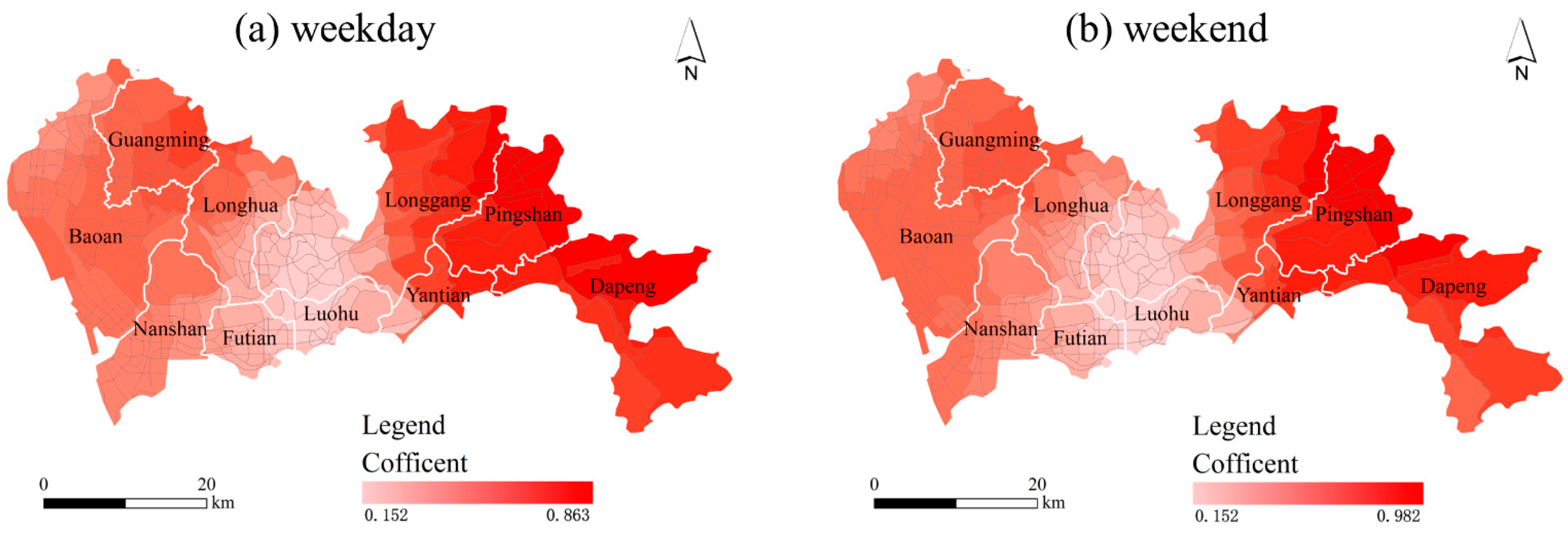
Sensing urban vitality is a useful method for understanding urban development. However, the spatio-temporal characteristics of the association between the built environment and urban vitality in Shenzhen, the youngest mega-city in China, have not yet been explored. In this paper, we examined the effects of built environment indicators on urban vitality by using spatial regression models and multi-source geospatial data. The main research findings were as follows. Firstly, urban vitality displayed a consistent high–low pattern during both weekdays and weekends. Differences in the distribution of urban vitality with time between weekdays and weekends were more significant. Secondly, the effects of various built environment indicators on urban vitality exhibited significant temporal disparities. Within a day, population density, building density, bus station density, and distance to metro stations all exhibited positive effects, while distance to the central business district (CBD) exhibited negative effects, with pronounced diurnal differences. Moreover, the effects of road network density and functional mix on urban vitality were both positive and negative throughout the day. Thirdly, besides population density and building density, road network density, functional mix, bus stop density, and distance from metro stations exhibited positive and negative disparities within the study area. Overall, distance to the CBD had a negative effect on urban vitality. This concludes that planning for urban vitality should consider the spatio-temporal heterogeneity of the association between the built environment and urban vitality.
Keywords: urban vitality; spatio-temporal; built environment; multi-source; GTWR urban vitality; spatio-temporal; built environment; multi-source; GTWR