
Article

Spatial Distribution Assessment of Terrorist Attack Types Based on I-MLKNN Model
1
Beijing Key Laboratory of Big Data Technology for Food Safety, Beijing Technology and Business University, Beijing 100048, China
2
Key Laboratory of Resources Utilization and Environmental Remediation, Institute of Geographic Sciences and Natural Resources Research, Chinese Academy of Sciences, Beijing 100101, China
3
State Grid Information & Telecommunication Group Co., Ltd., Beijing 102211, China
*
Author to whom correspondence should be addressed.
These authors contributed equally to this work.
ISPRS Int. J. Geo-Inf. 2021, 10(8), 547; https://doi.org/10.3390/ijgi10080547
Submission received: 29 June 2021 / Revised: 30 July 2021 / Accepted: 9 August 2021 / Published: 13 August 2021
(This article belongs to the Special Issue Geovisualization and Social Media)

Abstract

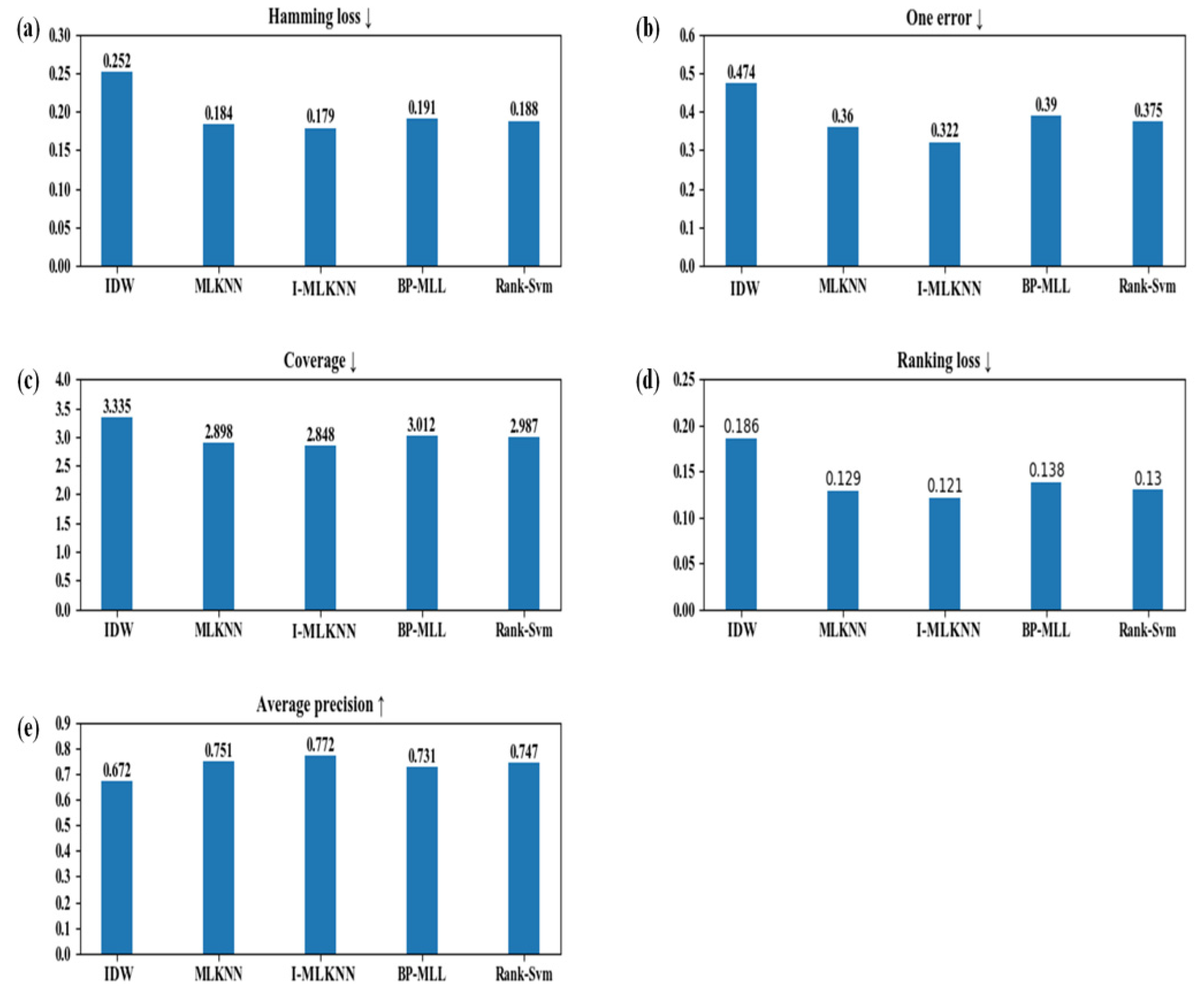
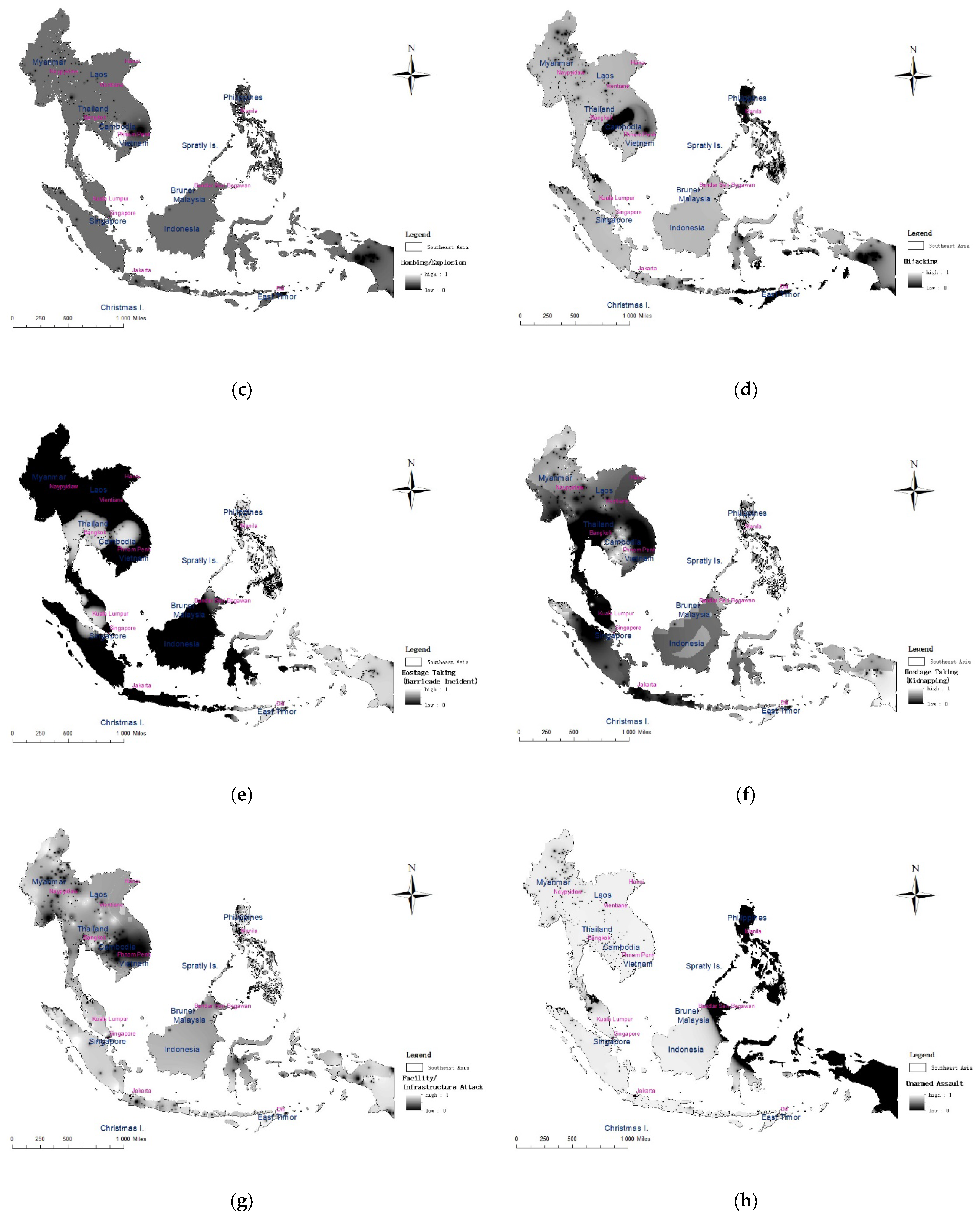
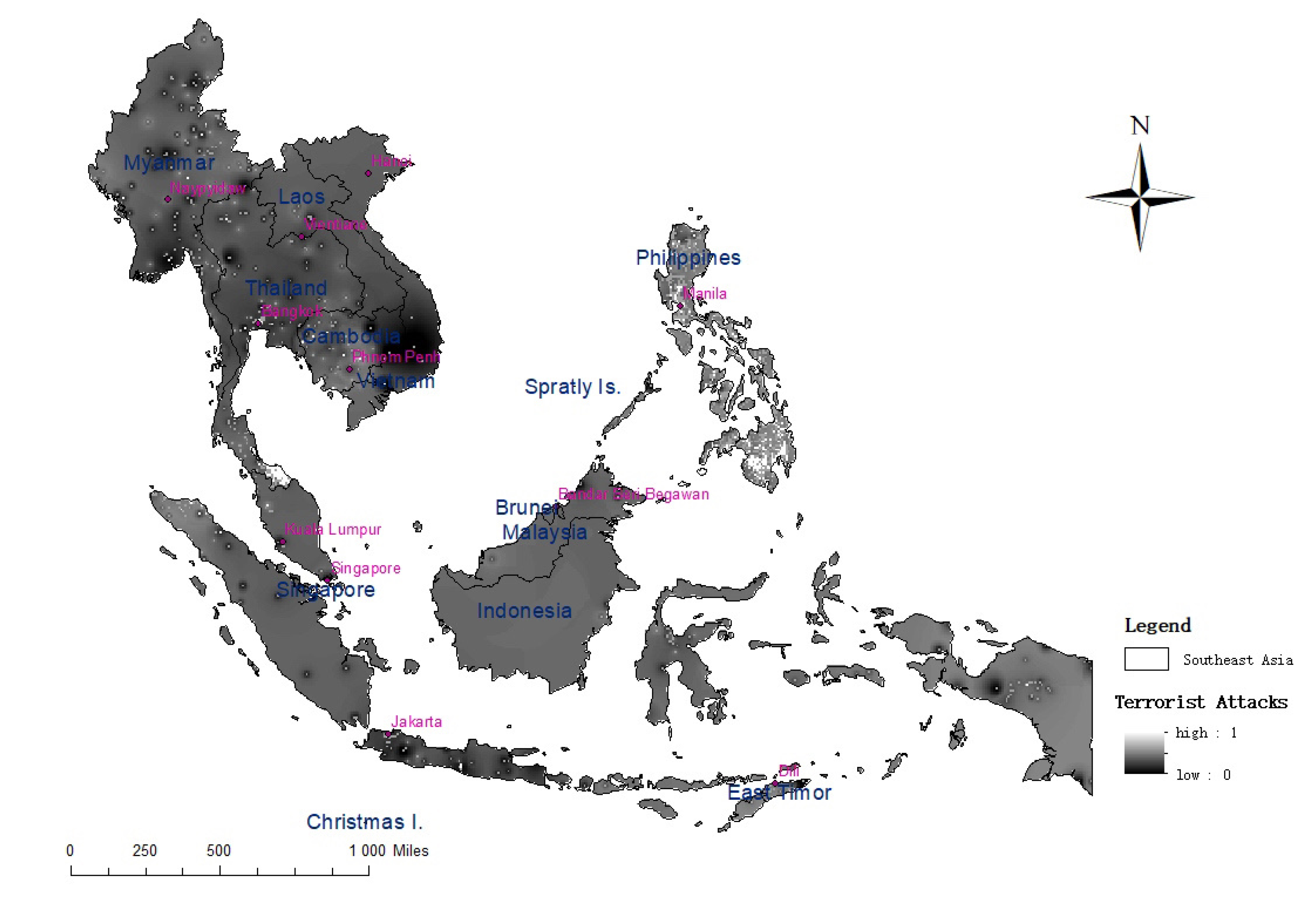
Terrorist attacks are harmful to lives and property and seriously affect the stability of the international community and economic development. Exploring the regularity of terrorist attacks and building a model for assessing the risk of terrorist attacks (a kind of public safety risk, and it means the possibility of a terrorist attack) are of great significance to the security and stability of the international community and to global anti-terrorism. We propose a fusion of Inverse Distance Weighting (IDW) and a Multi-label k-Nearest Neighbor (I-MLKNN)-based assessment model for terrorist attacks, which is in a grid-scale and considers 17 factors of socio-economic and natural environments, and applied the I-MLKNN assessment model to assess the risk of terrorist attacks in Southeast Asia. The results show the I-MLKNN multi-label classification algorithm is proven to be an ideal tool for the assessment of the spatial distribution of terrorist attacks, and it can assess the risk of different types of terrorist attacks, thus revealing the law of distribution of different types of terrorist attacks. The terrorist attack risk assessment results indicate that Armed Attacks, Bombing/Explosions and Facility/Infrastructure Attacks in Southeast Asia are high-risk terrorist attack events, and the southernmost part of Thailand and the Philippines are high-risk terrorist attack areas for terrorism. We do not only provide a reference for incorporating spatial features in multi-label classification algorithms, but also provide a theoretical basis for decision-makers involved in terrorist attacks, which is meaningful to the implementation of the international counter-terrorism strategy.
Keywords: assessment; terrorist attack types; I-MLKNN; multi-source factors assessment; terrorist attack types; I-MLKNN; multi-source factors