Article

Human Semen Samples with High Antioxidant Reservoir May Exhibit Lower Post-Cryopreservation Recovery of Sperm Motility


by
Saleem A. Banihani
* and
Razan F. Alawneh
Department of Medical Laboratory Sciences, Jordan University of Science and Technology, Irbid 22110, Jordan
*
Author to whom correspondence should be addressed.
Biomolecules 2019, 9(3), 111; https://doi.org/10.3390/biom9030111
Submission received: 3 March 2019 / Accepted: 18 March 2019 / Published: 19 March 2019

Abstract

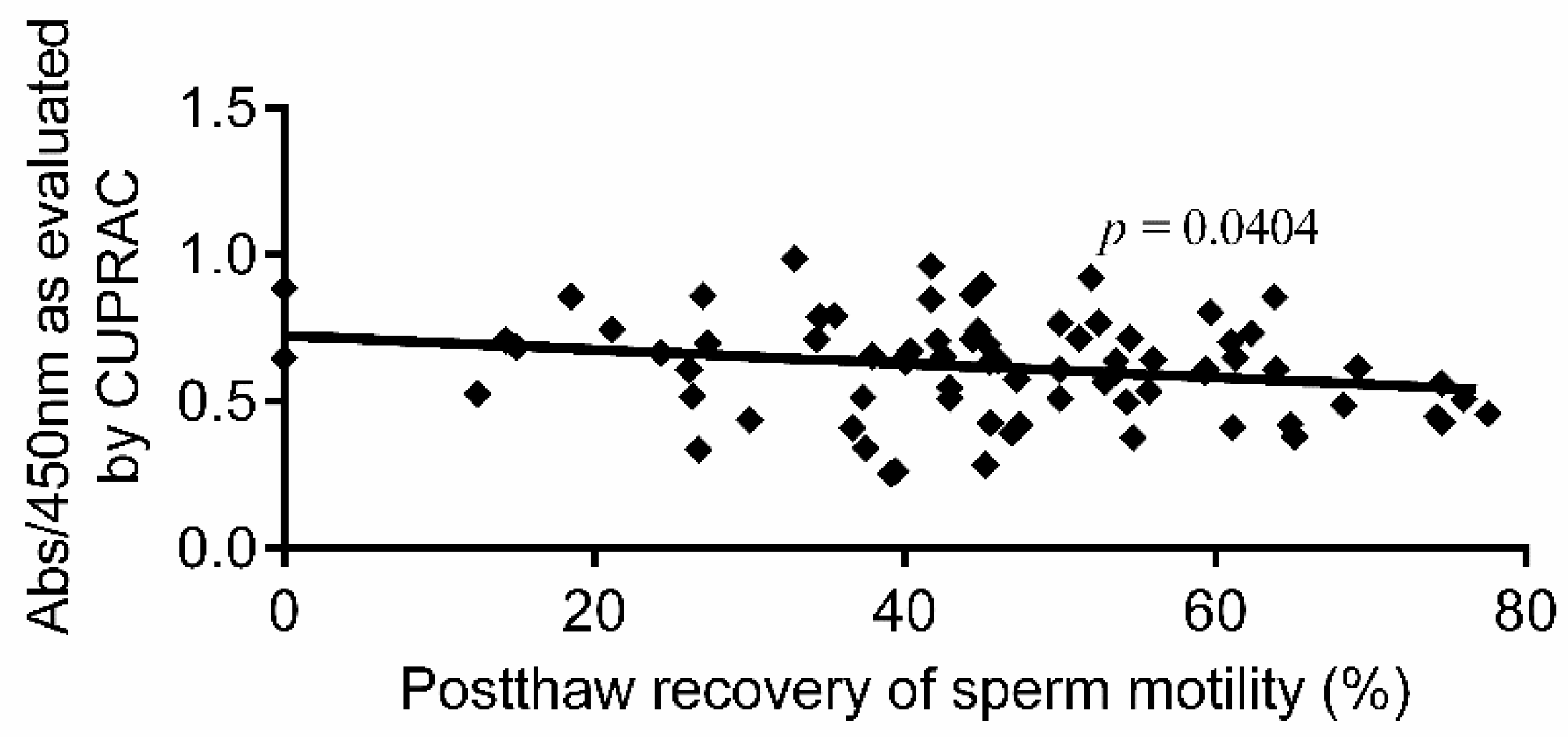
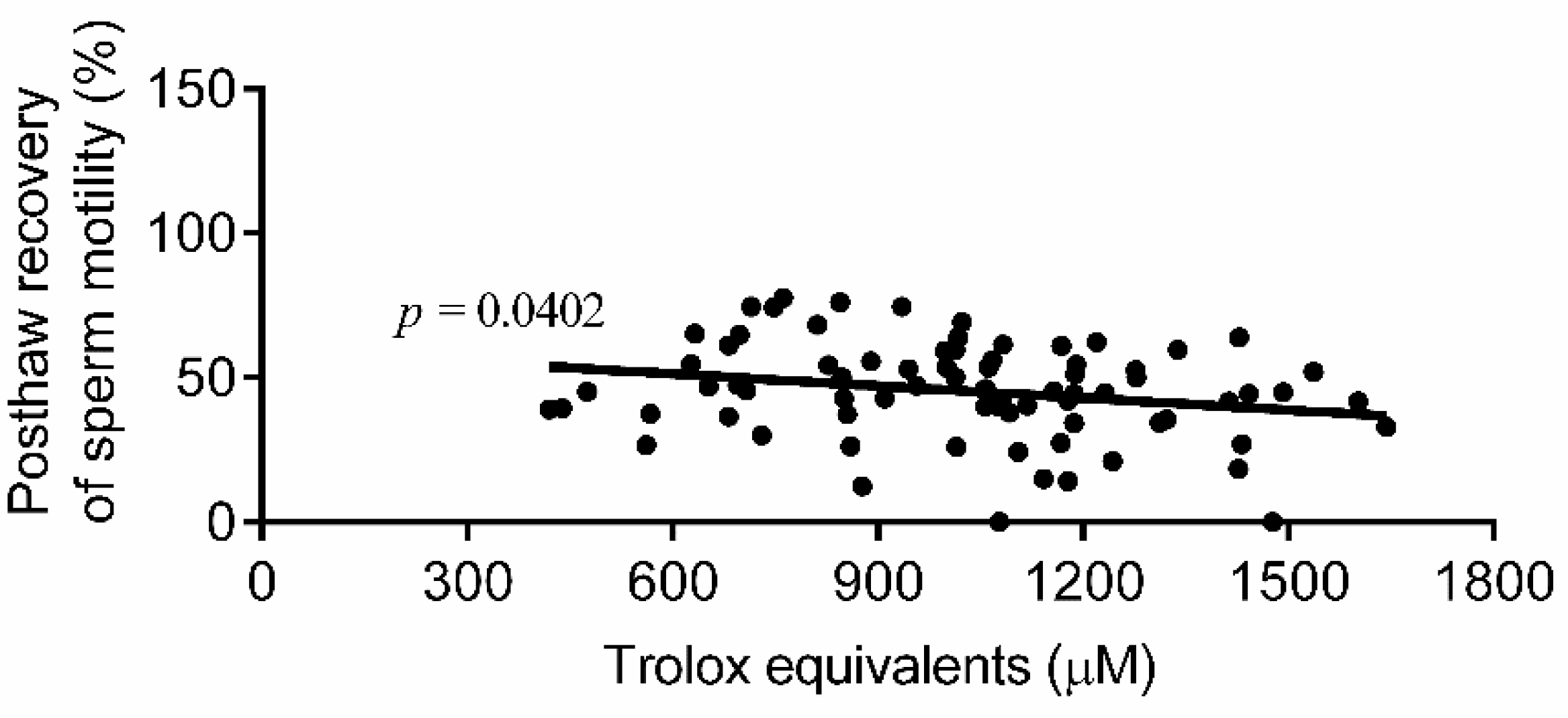
Cryopreservation-thawing of human semen was found to reduce the level of antioxidant activity surrounding the sperm, which may negatively affect post-cryopreservation (post-thaw) recovery of sperm motility. Therefore, the current manufactured cryoprotectant media have been supplemented with certain antioxidants to preserve the loss in seminal antioxidant activity. In this study, we aimed to explore the correlation between total antioxidant capacity (TAC) of human semen samples before cryopreservation and the post-thaw recovery of sperm motility. Normal semen specimens (n = 77) were recruited in this study. Sperm motility was measured for each semen sample before and after cryopreservation and the post-thaw recovery of sperm motility was calculated. Seminal TAC was measured spectrophotometrically before cryopreservation for each semen sample using the sensitive cupric ion-reducing antioxidant capacity (CUPRAC) method. The results from this study showed that the post-thaw recovery of sperm motility is negatively correlated (p = 0.0404, p = 0.0402) with the absorbance at 450 nm and the values of seminal TAC in terms of µM Trolox equivalents, as evaluated by CUPRAC, respectively. In conclusion, the total antioxidant reservoir in each ejaculated semen specimen could be a factor in determining the post-thaw recovery of sperm motility toward lower recovery for semen specimens of high antioxidant content.
Keywords: human semen; cryopreservation; antioxidants; total antioxidant capacity; motility; sperm recovery human semen; cryopreservation; antioxidants; total antioxidant capacity; motility; sperm recovery