Review

Role of HIF-1α in Alcohol-Mediated Multiple Organ Dysfunction


by
Niya L. Morris
1,2 and
Samantha M. Yeligar
1,2,*
1
Division of Pulmonary, Allergy, Critical Care and Sleep Medicine, Department of Medicine, Emory University, Atlanta, GA 30322, USA
2
Division of Pulmonary, Allergy, Critical Care and Sleep Medicine, Department of Medicine, Atlanta Veterans Affairs Health Care System, Decatur, GA 30033, USA
*
Author to whom correspondence should be addressed.
Biomolecules 2018, 8(4), 170; https://doi.org/10.3390/biom8040170
Submission received: 19 October 2018 / Revised: 30 November 2018 / Accepted: 6 December 2018 / Published: 10 December 2018
(This article belongs to the Special Issue Multi-Organ Alcohol-Related Damage: Mechanisms and Treatment)

Abstract

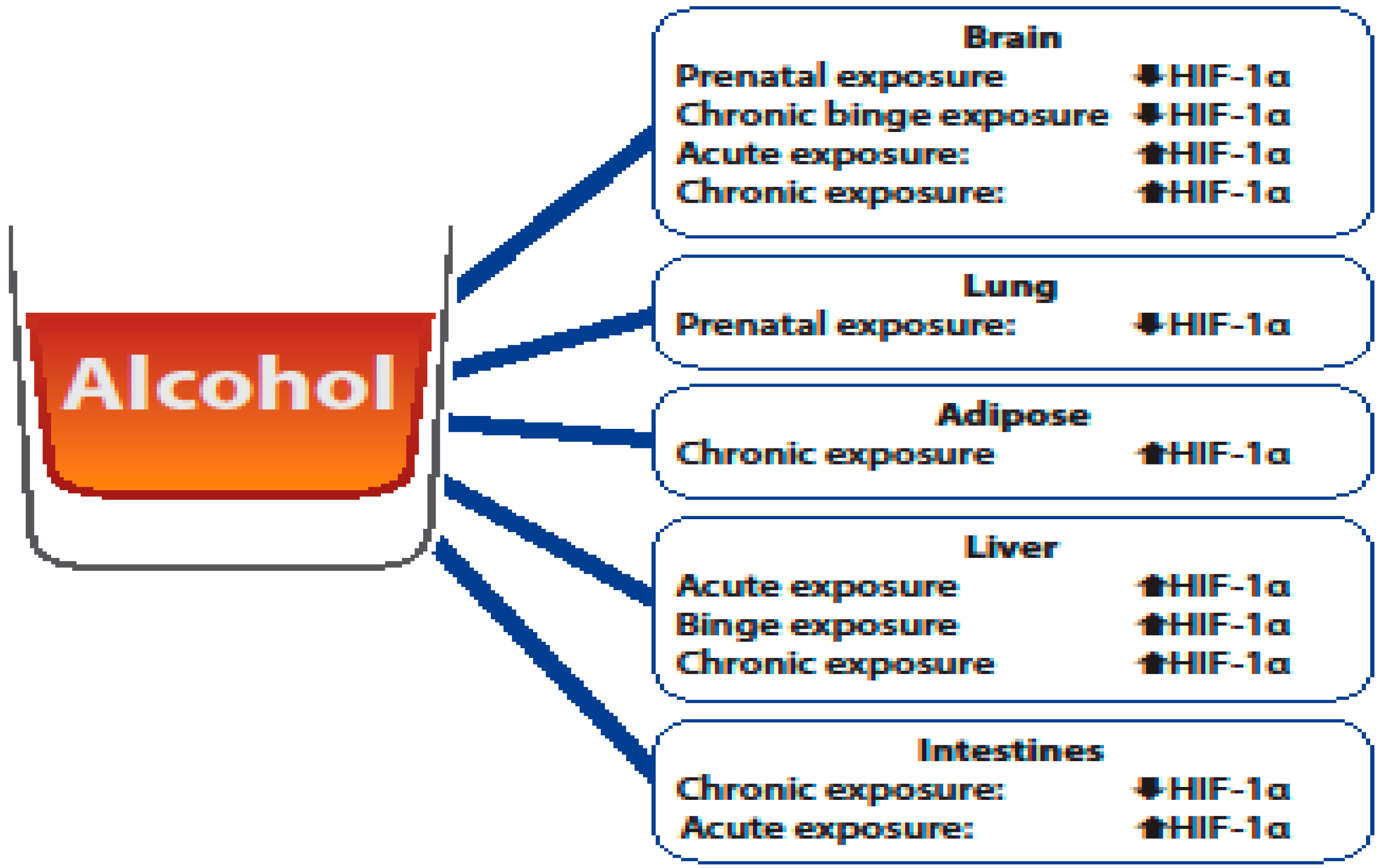
Excess alcohol consumption is a global crisis contributing to over 3 million alcohol-related deaths per year worldwide and economic costs exceeding $200 billion dollars, which include productivity losses, healthcare, and other effects (e.g., property damages). Both clinical and experimental models have shown that excessive alcohol consumption results in multiple organ injury. Although alcohol metabolism occurs primarily in the liver, alcohol exposure can lead to pathophysiological conditions in multiple organs and tissues, including the brain, lungs, adipose, liver, and intestines. Understanding the mechanisms by which alcohol-mediated organ dysfunction occurs could help to identify new therapeutic approaches to mitigate the detrimental effects of alcohol misuse. Hypoxia-inducible factor (HIF)-1 is a transcription factor comprised of HIF-1α and HIF-1β subunits that play a critical role in alcohol-mediated organ dysfunction. This review provides a comprehensive analysis of recent studies examining the relationship between HIF-1α and alcohol consumption as it relates to multiple organ injury and potential therapies to mitigate alcohol’s effects.
Keywords: ethanol; alcohol; HIF-1α ethanol; alcohol; HIF-1α