Review

Molecular Mechanisms and Targeted Therapies of PTPN2 in Metabolic Diseases: A Review
1
Department of Clinical Pharmacy, Xinhua Hospital Affiliated to Shanghai Jiao Tong University School of Medicine, Shanghai 200092, China
2
School of Health Science and Engineering, University of Shanghai for Science and Technology, Shanghai 200093, China
3
Shanghai Frontiers Science Center of Drug Target Identification and Delivery, School of Pharmaceutical Sciences, Shanghai Jiao Tong University, Shanghai 200240, China
*
Authors to whom correspondence should be addressed.
These authors contributed equally to this work.
Biomolecules 2026, 16(7), 1016; https://doi.org/10.3390/biom16071016
Submission received: 12 May 2026 / Revised: 30 June 2026 / Accepted: 6 July 2026 / Published: 12 July 2026
(This article belongs to the Section Biomacromolecules: Proteins, Nucleic Acids and Carbohydrates)

Abstract

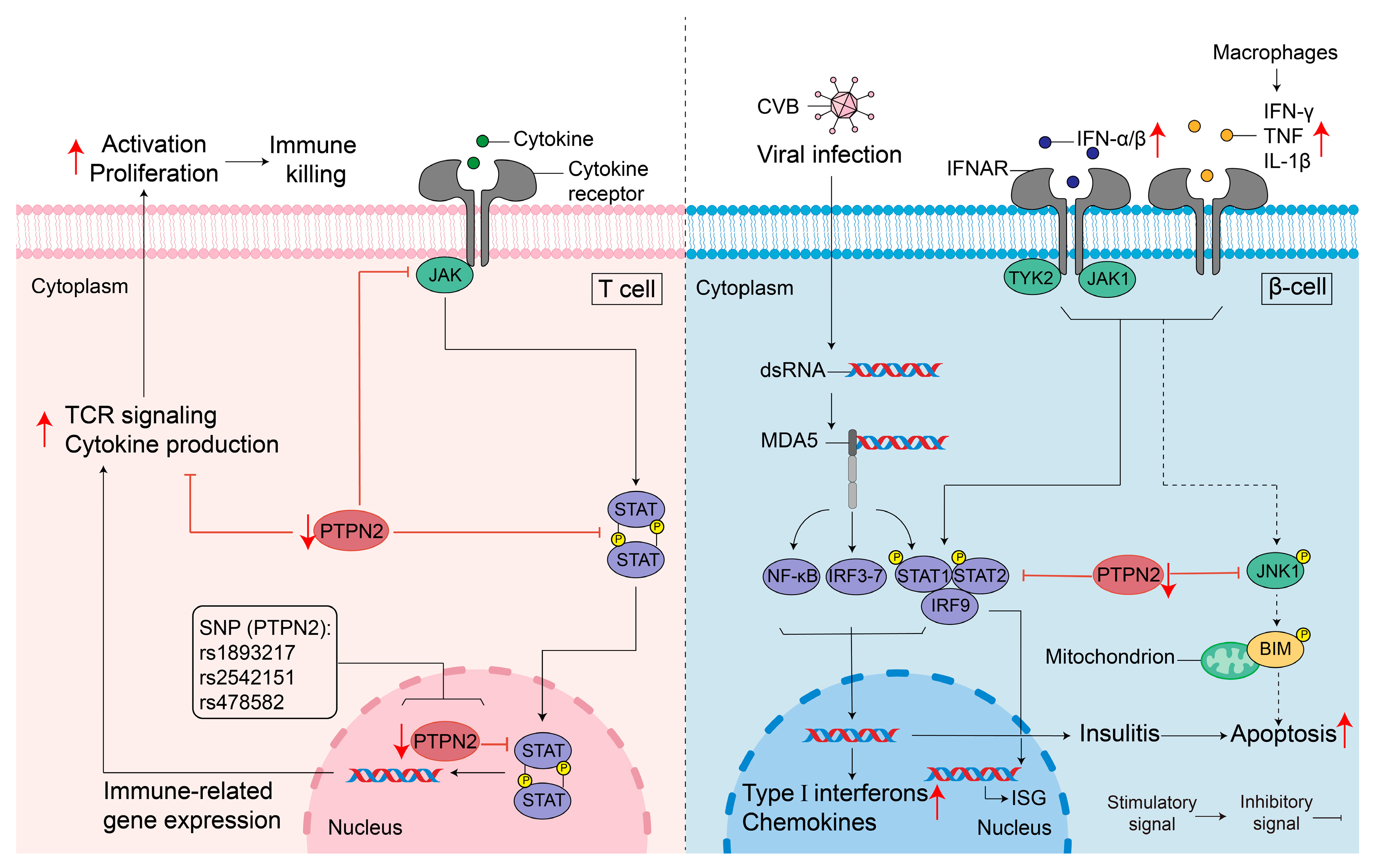
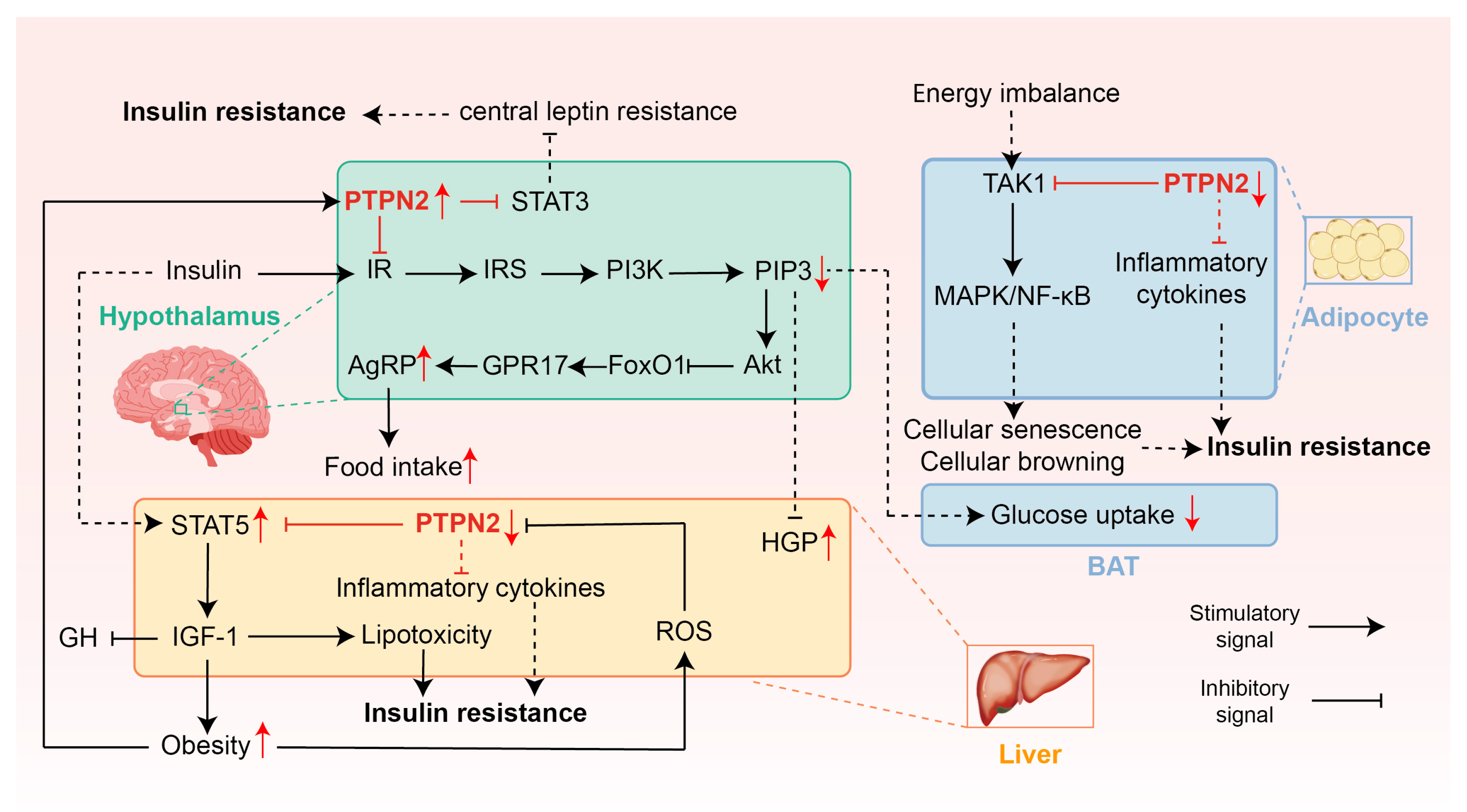
Metabolic disorders encompass a spectrum of pathologies driven by the dysregulation of systemic metabolic homeostasis. Their escalating global prevalence has positioned these conditions at the forefront of contemporary biomedical research. Protein tyrosine phosphatase non-receptor type 2 (PTPN2) regulates cellular tyrosine phosphorylation and links metabolic perturbations to altered signal transduction. Functionally, PTPN2 modulates immune responses, cellular proliferation, and metabolic signaling pathways. Consequently, it influences immunological tolerance, glucose and lipid metabolism, and insulin sensitivity in a context-dependent manner. To facilitate the identification of novel therapeutic targets, this review systematically delineates the molecular mechanisms underlying PTPN2 function across diverse metabolic pathologies. Specifically, we examine its involvement in type 1 diabetes, type 2 diabetes, diabetic complications, and metabolic dysfunction-associated steatohepatitis. Furthermore, we highlight recent advances in PTPN2-targeted interventions, with a particular emphasis on type 2 diabetes research, while critically evaluating existing clinical challenges and future translational prospects. Ultimately, this synthesis provides an integrated perspective for the development of precision medicine strategies in the management of metabolic diseases.
Keywords: PTPN2; metabolic disorders; type 2 diabetes; molecular mechanisms; therapeutic targets PTPN2; metabolic disorders; type 2 diabetes; molecular mechanisms; therapeutic targets