Article

Wheat MYB46-like Transcription Factor Stimulates Cuticular Wax Biosynthesis

College of Life Sciences, Qingdao University, Qingdao 266071, China
*
Author to whom correspondence should be addressed.
These authors contributed equally to this work.
Biomolecules 2026, 16(6), 872; https://doi.org/10.3390/biom16060872 (registering DOI)
Submission received: 7 April 2026 / Revised: 8 June 2026 / Accepted: 8 June 2026 / Published: 15 June 2026

Abstract

Cuticular wax mixtures are the major components of the lipophilic cuticle coating of plant aerial organs during primary growth and they protect plants from environmental stresses. Decoding cuticular wax biosynthesis in bread wheat (Triticum aestivum L.) could contribute to the genetic improvement of this agriculturally important crop. Herein, we revealed that the wheat MYB46-like transcription factor TaMYB46 positively regulates cuticular wax by activating transcription of the long-chain acyl-CoA synthetase 1 (TaLACS1) gene. Knockdown of the wheat TaMYB46 gene resulted in significantly reduced cuticular wax loads and increased permeability of the wheat leaf cuticle. Furthermore, wheat long-chain acyl-CoA synthetase TaLACS1 was identified as a core component of the cuticular lipid biosynthetic machinery. Knockdown of the TaLACS1 gene led to reduced cuticular wax accumulation and increased leaf cuticle permeability. Moreover, the transcription factor TaMYB46 was found to enrich at the TaLACS1 promoter regions and activate TaLACS1 gene transcription. These findings collectively support the conclusion that the transcription factor TaMYB46 stimulates cuticular wax biosynthesis, likely by activating TaLACS1 transcription.

1. Introduction

As an agriculturally important cereal crop, allohexaploid bread wheat (Triticum aestivum L., AABBDD) provides dietary carbohydrates and proteins for humans [1]. Global population growth leads to an increasing demand for wheat grains [2]. However, wheat production is threatened by environmental challenges like drought, salinity, temperature, and ultraviolet stress, which become increasingly severe under climate change [1]. Hydrophobic cuticle coats the plant aerial organs during primary growth and shields plant tissues from the surroundings [3,4,5]. The cuticle not only participates in the plant developmental events, but also plays key roles in the plant adaptation to abiotic and biotic stresses [6,7,8,9]. Decoding the cuticular lipid biosynthesis could contribute to wheat genetic improvement of stress resistance.
Although chemical compositions of the cuticle vary among plant species, cultivars, and organs, and depend on developmental stages and environmental conditions, the lipophilic cuticle is mainly composed of the cutin matrices filled and sealed with wax mixtures [10]. Cutin matrices predominantly comprise crosslinked polyesters of oxygenated long-chain (C16 and C18) fatty acids, whereas cuticular wax mixtures mainly consist of very-long-chain (VLC, >C20) fatty acids, alcohols, aldehydes, alkanes, esters, and ketones [11,12]. As summarized by prior reviews, cuticular wax biosynthesis mainly occurs in the endoplasmic reticulum (ER) of plant epidermal cells [13]. As reported by research in the model plant Arabidopsis thaliana, C16 and C18 fatty acids generated in the plastid are first activated by long-chain acyl-coenzyme A synthases (LACS) to form the C16 and C18 acyl-CoAs, the common precursors for the biosynthesis of cuticular wax and cutin [14,15,16]. These long-chain (C16 and C18) acyl-CoAs are elongated by the fatty acid elongase (FAE) and ECERIFERUM2-LIKE proteins to very-long-chain (VLC, >C20) acyl-CoAs [17,18,19,20,21,22,23,24,25]. Cuticular wax components, VLC aldehydes, alkanes, primary and secondary alcohols, ketones, and esters, are modified from VLC acyl-CoAs via either the alkane-forming pathway or alcohol-forming pathway [26,27,28,29,30,31,32,33,34]. Wax mixtures are transported from the ER to the cuticular regions by the conventional Golgi and trans-Golgi network (TGN)-trafficking pathways, ATP-binding cassette (ABC) transporters, and lipid transfer proteins (LTPs) [35,36,37,38,39,40,41,42,43].
As elucidated by studies of A. thaliana, cuticular wax biosynthesis is modulated by various regulators, including transcription factors [10,11,12]. For instance, the Arabidopsis MYB-type transcription factors AtMYB30, AtMYB16, AtMYB96, and AtMYB106 positively regulate cuticular wax biosynthesis by activating transcription of wax biosynthesis genes like AtECR, AtCER1 and AtKCS1 [44,45,46,47]. Similarly, MYB-type transcription factor AtMYB46 could activate transcription of cuticular lipid biosynthesis gene AtLACS1 and potentiate cuticular wax biosynthesis [48]. It was recently demonstrated that wheat homologs of MYB30, MYB16, MYB96, and MYB106, resembling their counterparts in Arabidopsis, positively regulate wheat cuticular wax biosynthesis [49,50,51]. However, whether and how MYB46-like transcription factor regulates wheat wax biosynthesis remains unknown.
Herein, we aimed to characterize the MYB46-like transcription factor in the regulation of cuticular wax biosynthesis in bread wheat. It was hypothesized that wheat MYB46-like transcription factor, resembling its Arabidopsis homolog, might regulate cuticular wax biosynthesis probably by targeting the wheat LACS1 homologs. Therefore, in this study we identified the wheat MYB46-like transcription factor and examined its effects on cuticular wax accumulation and determined whether TaMYB46 directly regulates TaLACS1 transcription.

2. Materials and Methods

2.1. Wheat Material and Maintenance

Wheat cultivar Yannong 999 was used for the gene transcript accumulation measurement, gene silencing, cuticular lipid composition measurement, cuticle permeability analysis, as well as characterization of protein enrichment at gene promoters, whereas Arabidopsis ecotype Col-0 was employed for the gene promoter activation assay. Wheat cultivar Yannong 999 employed in this study was developed by Shandong Yantai Academy of Agricultural Sciences, and was kindly provided by the Qingdao Xinyijia Seed Industry Co., Ltd. (Qingdao, China). The pedigree of cultivar Yannong 999 is Yanhangxuan 2/Lin 9511//Yan BLU14-15, and its released number is Shandong (2011), South region of Huang-Huai (2016), Shanxi (2018). Yannong 999 and Col-0 seedlings were cultivated in a growth chamber under a 16 h light photoperiod, a 21 °C day/18 °C night cycle, and 70% relative humidity. Four wheat seedlings were cultivated in 300 mL pots containing mixtures of nutritive medium and sterile soil (1:1, v:v). Wheat plants were irrigated with 60 mL of water per pot and fertilized with water-soluble compound fertilizer Huawuque.

2.2. Gene Transcript Accumulation Measurement

Transcript accumulation of TaMYB46 and TaLACS1 genes in wheat leaves was analyzed by reverse transcription-quantitative polymerase chain reaction (RT-qPCR) assay as previously described [52]. EasyPure Plant RNA kit (Transgenbiotech, Beijing, China), TransScript one-step gDNA removal and cDNA synthesis supermix (Transgenbiotech, Beijing, China), and ABI real-time PCR system with the qPCR Master Mix (Invitrogen, Carlsbad, CA, USA) were employed for this study. TaMYB46 and TaLACS1 genes were analyzed using primers 5′CAGGAAACAGCAATGTGG3′/5′GTTGACGATGAGGTCTTC3′ and 5′CAAAGAAGCAGGTTTTCAC3′/5′TGGACGCCATCCAAGCATC3′, respectively. qPCR assay was conducted under the program: 95 °C for 2 min, 40 cycles at 95 °C for 20 s, 56 °C for 20 s, and 72 °C for 15 s, followed by 72 °C for 1 min. Housekeeping gene TaGADPH (using primers 5′TTAGACTTGCGAAGCCAGCA3′/5′ AAATGCCCTTGAGGTTTCCC3′) was employed as a reference for RT-qPCR analysis. Calculation of the relative expression levels was achieved using the Bio-Rad CFX Manager 3.1 software (Bio-Rad Laboratories) with the 2−ΔΔCt method. Three technical replicates of the RT-qPCR assay were statistically analyzed using Student’s t-test, and similar results were obtained for three biological replicates using independently prepared samples.

2.3. Wheat Gene Silencing Assay

TaMYB46 and TaLACS1 genes were, respectively, silenced by barley stripe mosaic virus-induced gene silencing (BSMV-VIGS) techniques in wheat leaves as previously described [53]. About 200 bp fragment of TaMYB46 and TaLACS1 genes were amplified using primers 5′AAGGAAGTTTAAACTCAACTTGGAAATCAAGG3′/5′AACCACCACCACCGTAGTACTGCTGAGGGCACCAC3′ and 5′AAGGAAGTTTAATACTTTGCTTTGTTCGCAGC3′/5′AACCACCACCACCGTGCATGTCCTTAAAGAGCTCG3′, respectively. BSMV-VIGS wheat plants or leaves were employed for the gene transcript accumulation measurement, cuticular lipid composition characterization, and cuticle permeability analysis. Wheat plants infected with BSMV-γ (empty vector) were employed as negative controls and similar results were obtained for three biological replicates using independently prepared samples.

2.4. Cuticular Wax Composition Analysis and Cuticle Permeability Measurement

Cuticular wax composition analysis was performed by gas chromatography-mass spectrometry (GC-MS) as previously described [54,55,56]. Cuticular wax mixtures were extracted from wheat leaves using chloroform (Merck, Rahway, NJ, USA), and analyzed using capillary gas chromatography (GC, 5890 Series II, Agilent Technologies) and a flame ionization detector (FID, 6890 N, Agilent Technologies, Santa Clara, CA, USA), with a mass spectrometer (MS, MSD 5973, Agilent Technologies, Santa Clara, CA, USA).   Three technical replicates of the GC-MS assay were statistically analyzed using Student’s t-test. Cuticle permeability was analyzed by water loss and chlorophyll leaching assay as previously described [54,55,56]. BSMV-VIGS wheat leaves were dipped in ultrapure water for 1 h in the dark, and the leaves were detached for the water loss and chlorophyll leaching assay as described.

2.5. Analysis of Protein Enrichment at Gene Promoters

TaMYB46 protein enrichment at the TaLACS1 gene promoters was analyzed by chromatin immunoprecipitation-quantitative polymerase chain reaction (ChIP-qPCR) as previously described [54,55]. Coding sequence of TaMYB46 genes was amplified using the primers 5′GGGGACAAGTTTGTACAAAAAAGCAGGCTTCATGAGGAAGCCCGTGGAGTG3′/5′GGGGACCACTTTGTACAAGAAAGCTGGGTCCTCAACTTGGAAATCAAGGA3′, and cloned into the vector pCAMBIA1300-HA to create the pCAMBIA1300-TaMYB46-HA. Wheat protoplast preparation and transfection, as well as ChIP-qPCR, were conducted as previously described [54,55]. Promoter fragments of TaLACS1-1A, TaLACS1-1B, and TaLACS1-1D genes were analyzed by ChIP-qPCR using primers 5′GAGAATAAACAGTATAATAG3′/5′ACTCGGCATAATAGTCTTAT3′, 5′TTTCAGAAAAGATAGATATG3′/5′CAAACTAGAGGGTGAAGTAG3′, 5′TTGACAGACGACATGATACA3′/5′TTCTCTCGAGACTATCGCGC3′, 5′CAAGAACTTTTCTGTTCCCA3′/5′GAGGAGAAGAAGAAGAACTA3′, 5′CACTCGATCCAAGCCATCTC3′/5′AGATTGCAGGACAGGAAACT3′, and 5′GATGTGCAGAAAAGTACTAC3′/5′CTCCCCTGAATTTATCAATG3′, respectively. Wheat protoplast cells transfected with RNAi-TaMYB46 were employed as negative controls. Three technical replicates of the ChIP-qPCR assay were statistically analyzed using Student’s t-test, and similar results were obtained for three biological replicates using independently prepared samples.

2.6. Gene Promoter Activation Assay

Activation of the TaLACS1 gene promoter by the transcription factor TaMYB46 was analyzed by the Dual-Luciferase reporter assay as previously described [48,49]. TaLACS1-1A, TaLACS1-1B, and TaLACS1-1D gene promoter regions were amplified using the primers 5′GGGGACAAGTTTGTACAAAAAAGCAGGCTTCTTTTTCCTGAACAGGTCAGT3′/5′GGGGACCACTTTGTACAAGAAAGCTGGGTCCAAACTAGAGGGTGAAGTAG3′, 5′GGGGACAAGTTTGTACAAAAAAGCAGGCTTCCCGCAAACCGAGGCTCGCGA3′/5′GGGGACCACTTTGTACAAGAAAGCTGGGTCCAAACTAGAGGGTGGAGTAT3′, 5′GGGGACAAGTTTGTACAAAAAAGCAGGCTTCTGACAGACGATATGACAGAA3′/5′GGGGACCACTTTGTACAAGAAAGCTGGGTCTCAATGCATAGCACCGACCA3′, and cloned into the vectors 5XGAL4-LUC to generate reporter constructs. Arabidopsis protoplast preparation and transfection, as well as Dual-Luciferase reporter assay, were conducted as previously described. The Dual-Luciferase reporter assay was conducted as described previously [54,55]. Three technical replicates of the Dual-Luciferase reporter assay were statistically analyzed using Student’s t-test, and similar results were obtained for three biological replicates using independently prepared samples.

2.7. Statistical Analysis

For the analysis of gene transcription, protein enrichment at gene promoter regions, cuticular wax accumulation, and leaf cuticle permeability, at least three independent experiments were performed for each experiment, and wheat leaves or protoplasts were randomly chosen for each group. Three technical replicates were analyzed using Student’s t-test, and values represent the mean ± standard deviation (n. s. p > 0.05, * 0.01 < p < 0.05, ** p < 0.01, n. s. represents no significant difference). These assays were repeated in three independent biological replicates using independently prepared samples with similar results.

3. Results

3.1. Identification and Sequence Analysis of Wheat MYB46-like Transcription Factor TaMYB46

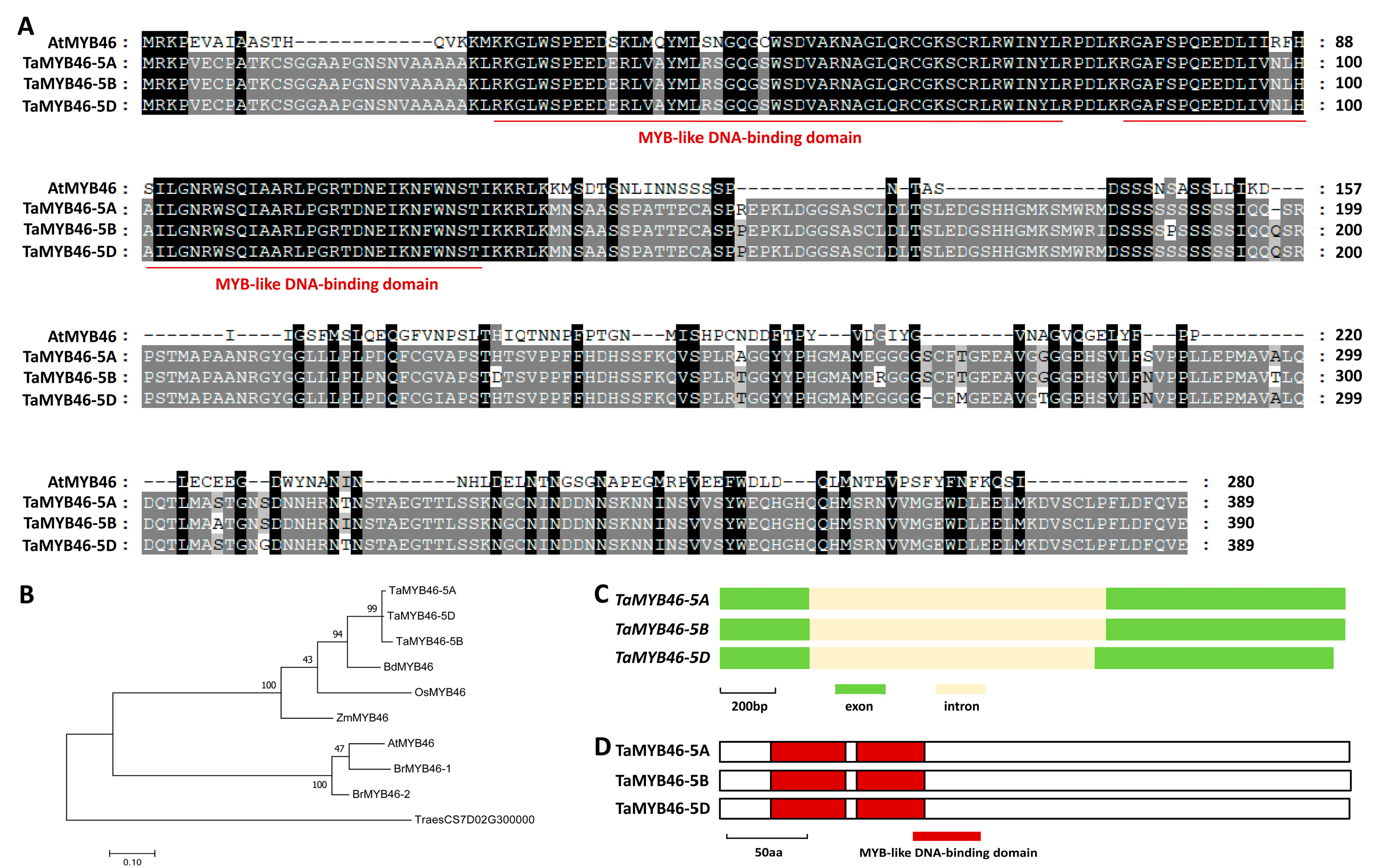
Arabidopsis transcription factor AtMYB46 plays a key role in the regulation of cuticular lipid biosynthesis [48]. Herein, we searched against the wheat protein database using the Arabidopsis AtMYB46 (At5g12870) protein sequence as the query and isolated wheat MYB46-like transcription factor TaMYB46. Three highly homologous TaMYB46 genes, TaMYB46-5A (TraesCS5A02G101000), TaMYB46-5B (TraesCS5B02G105900), and TaMYB46-5D (TraesCS5D02G113300), were separately identified from the wheat 5A, 5B, and 5D chromosomes. Wheat TaMYB46-5A, TaMYB46-5B, TaMYB46-5D and Arabidopsis AtMYB46 proteins share 37% amino acid sequence identity (Figure 1A). Phylogenetic tree reconstruction further validated that TaMYB46-5A, TaMYB46-5B, and TaMYB46-5D are the wheat homologs of Arabidopsis AtMYB46 (Figure 1B). Two exons and one intron exist in the genome sequence of wheat TaMYB46-5A, TaMYB46-5B, and TaMYB46-5D genes (Figure 1C). Two MYB-like DNA-binding domains were identified from the N-terminal parts of wheat TaMYB46-5A, TaMYB46-5B, and TaMYB46-5D proteins (Figure 1D).

3.2. Functional Characterization of TaMYB46 in Wheat Cuticular Wax Biosynthesis

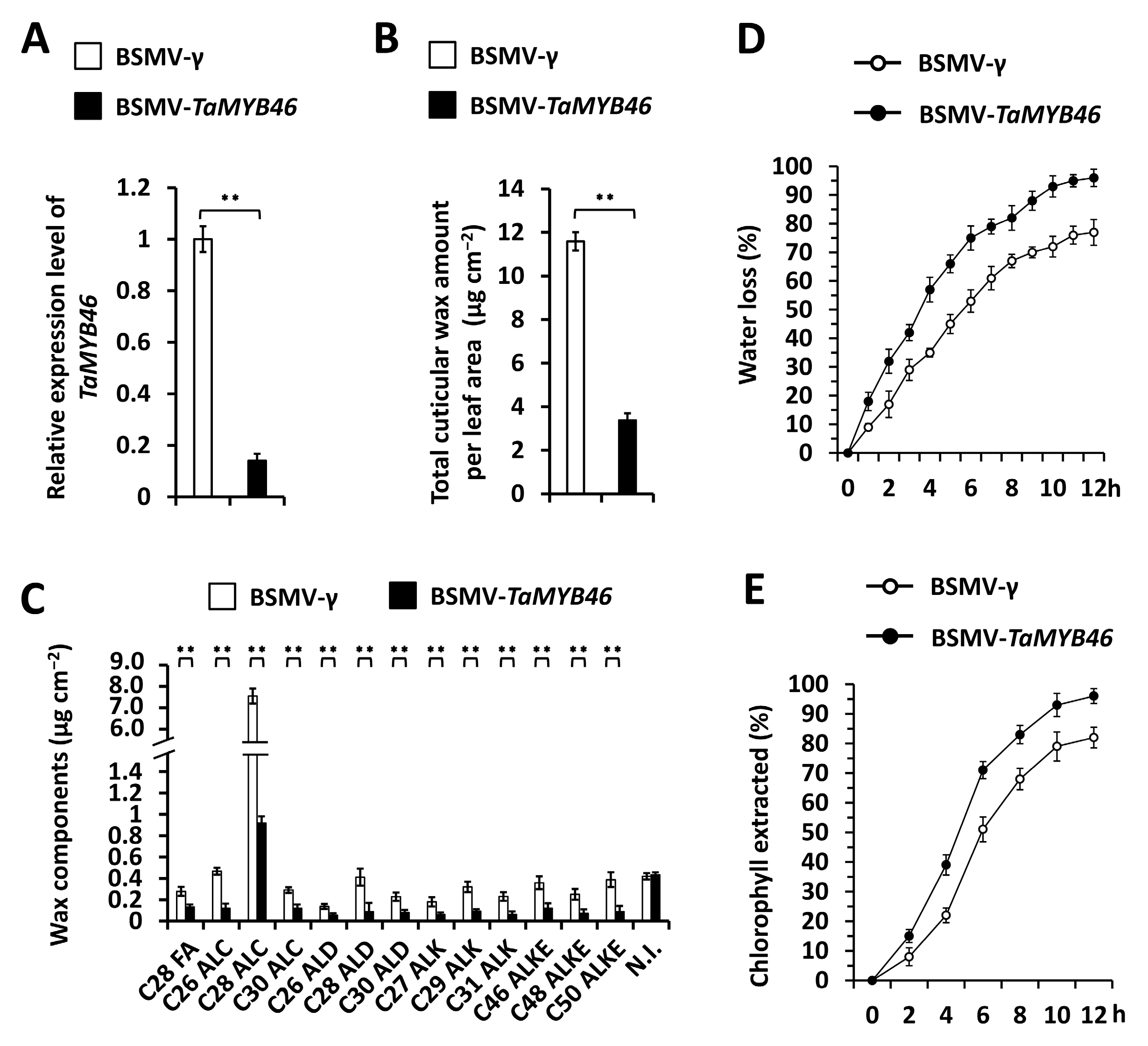
To study the potential roles of the transcription factor TaMYB46 in the regulation of wheat cuticular wax biosynthesis, we conducted the BSMV-VIGS assay to silence all endogenous TaMYB46 genes in the wheat cultivar Yannong 999 plants. As shown in Figure 2A, the accumulation level of the TaMYB46 gene transcript was significantly reduced in the leaves of wheat BSMV-TaMYB46 plants, compared with the leaves of BSMV-γ control plants. Accumulation of cuticular wax on these wheat leaves was determined by the GC-MS assay. As shown in Figure 2B, silencing of TaMYB46 (BSMV-TaMYB46) gene led to the reduction in cuticular wax accumulation to 29.2%. The amounts of major cuticular wax components, including VLC alcohols (ALCs), aldehydes (ALDs), fatty acids (FAs), alkanes (ALKs), alkyl esters (ALKEs), were significantly decreased in the leaves of wheat BSMV-TaMYB46 plants, compared with the leaves of BSMV-γ control plants (Figure 2C). These data suggested that the wheat transcription factor TaMYB46 positively regulates biosynthesis of cuticular lipid wax.
We analyzed the potential regulation of TaMYB46 on the wheat leaf cuticle permeability. As shown in Figure 2D,E, wheat leaves with a silenced TaMYB46 gene displayed enhanced rates of water loss and chlorophyll leaching compared with the leaves of BSMV-γ control plants, suggesting that transcription factor TaMYB46 negatively regulates wheat leaf cuticle permeability. Collectively, these findings imply that wheat transcription factor TaMYB46 potentiates biosynthesis of cuticular wax, positively contributing to the wheat leaf cuticle barrier property.

3.3. Identification and Sequence Analysis of Wheat TaLACS1

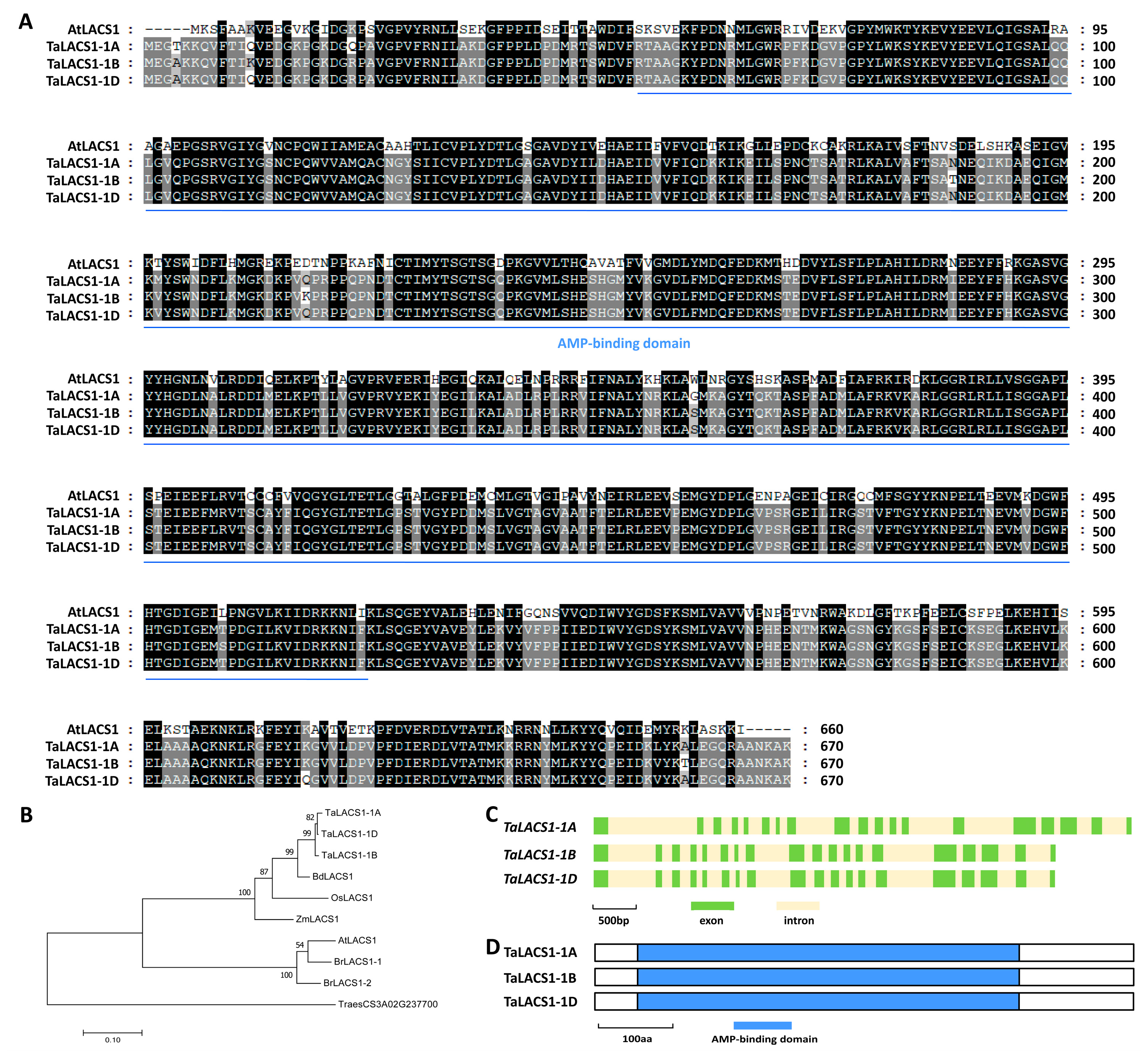
Arabidopsis long-chain acyl-CoA synthetase 1 (AtLACS1) functions as an essential component of cuticular lipid biosynthetic machinery [15]. Herein, we searched against the wheat protein database using the Arabidopsis AtLACS1 (At2g47240) protein sequence as the query and isolated the wheat long-chain acyl-CoA synthetase TaLACS1. Three highly homologous TaLACS1 genes, TaLACS1-1A (TraesCS1A02G075000), TaLACS1-1B (TraesCS1B02G093600), and TaLACS1-1D (TraesCS1D02G077600), were separately identified from the wheat 1A, 1B, and 1D chromosomes. Wheat TaLACS1-1A, TaLACS1-1B, TaLACS1-1D, and Arabidopsis AtLACS1 proteins share 62% amino acid sequence identity (Figure 3A). Phylogenetic tree reconstruction further validated that TaLACS1-1A, TaLACS1-1B, and TaLACS1-1D are wheat homologs of Arabidopsis AtLACS1 (Figure 3B). Nineteen exons and eighteen introns exist in the genome sequence of wheat TaLACS1-1A, TaLACS1-1B, and TaLACS1-1D genes (Figure 3C). One AMP-binding domain was identified from TaLACS1-1A, TaLACS1-1B, and TaLACS1-1D proteins (Figure 3D).

3.4. Functional Characterization of TaLACS1 in Wheat Cuticular Wax Biosynthesis

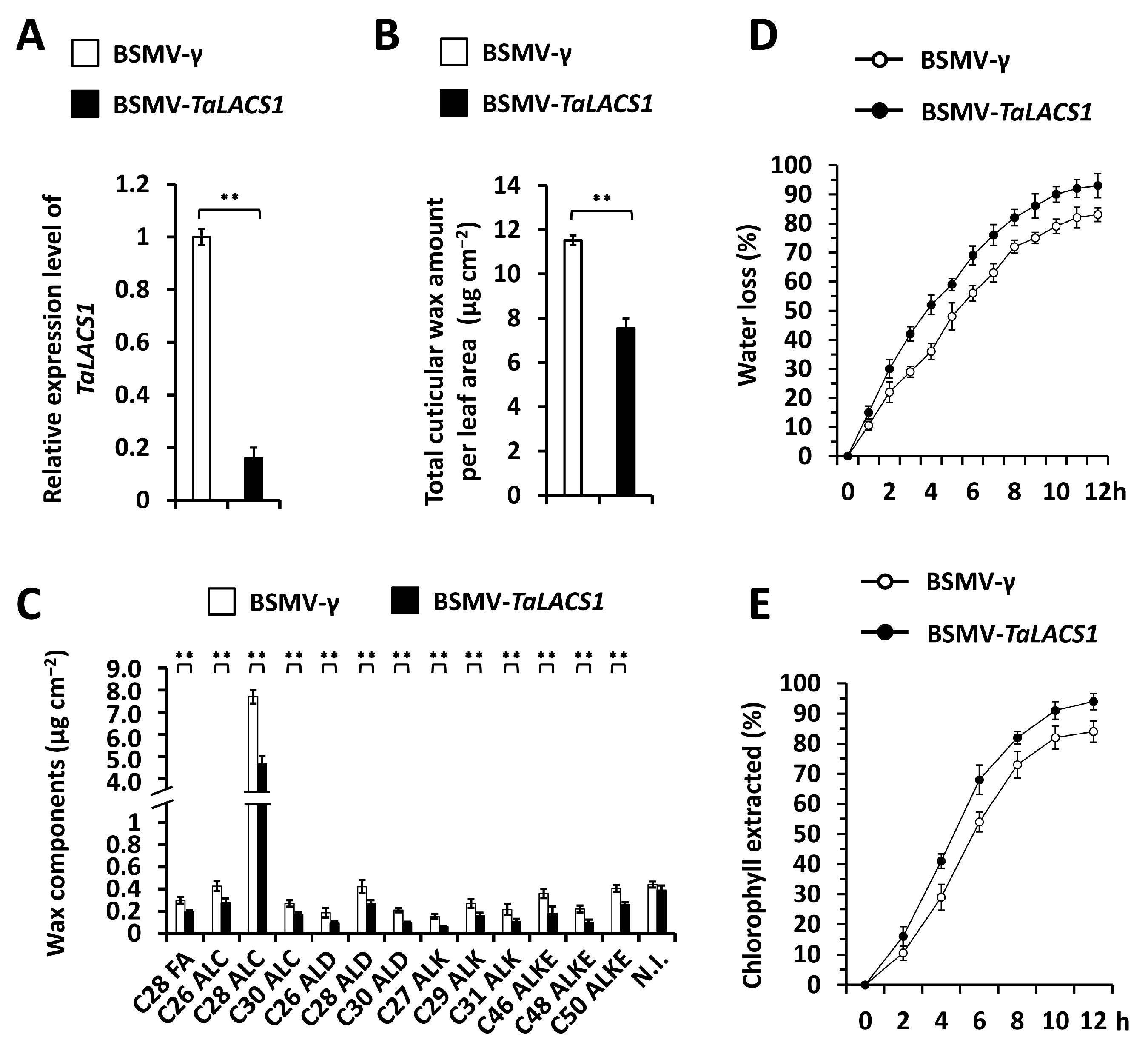
To explore the potential function of long-chain acyl-CoA synthetase TaLACS1 in the biosynthesis of the wheat cuticular lipid, we employed the BSMV-VIGS assay to silence all endogenous TaLACS1 genes in the wheat cultivar Yannong 999 plants. As shown in Figure 4A, the accumulation level of the TaLACS1 gene transcript was significantly reduced in the leaves of wheat BSMV-TaLACS1 plants, compared with the leaves of BSMV-γ control plants. Accumulation of cuticular wax on these wheat leaves was determined by the GC-MS assay. As shown in Figure 4B, silencing of TaLACS1 (BSMV-TaLACS1) gene led to the reduction in cuticular wax accumulation to 65.5%. Amounts of major cuticular wax components, including VLC ALCs, ALDs, FAs, ALKs, and ALKEs, were significantly decreased in the leaves of wheat BSMV-TaLACS1 plants, compared with the leaves of BSMV-γ control plants (Figure 4C). These data suggested that the wheat long-chain acyl-CoA synthetase TaLACS1 plays a key role in the biosynthesis of wheat cuticular wax. We analyzed the potential effect of TaLACS1 on the wheat leaf cuticle permeability. As shown in Figure 4D,E, wheat leaves with a silenced TaLACS1 gene displayed enhanced rates of water loss and chlorophyll leaching compared with the leaves of BSMV-γ control plants, suggesting that long-chain acyl-CoA synthetase TaLACS1 negatively regulates wheat leaf cuticle permeability. These findings collectively implicate that wheat long-chain acyl-CoA synthetase TaLACS1 functions as an essential component of cuticular wax biosynthetic machinery and positively contributes to the wheat leaf cuticle barrier property.

3.5. Regulation Analysis of TaLACS1 Gene Transcription by TaMYB46

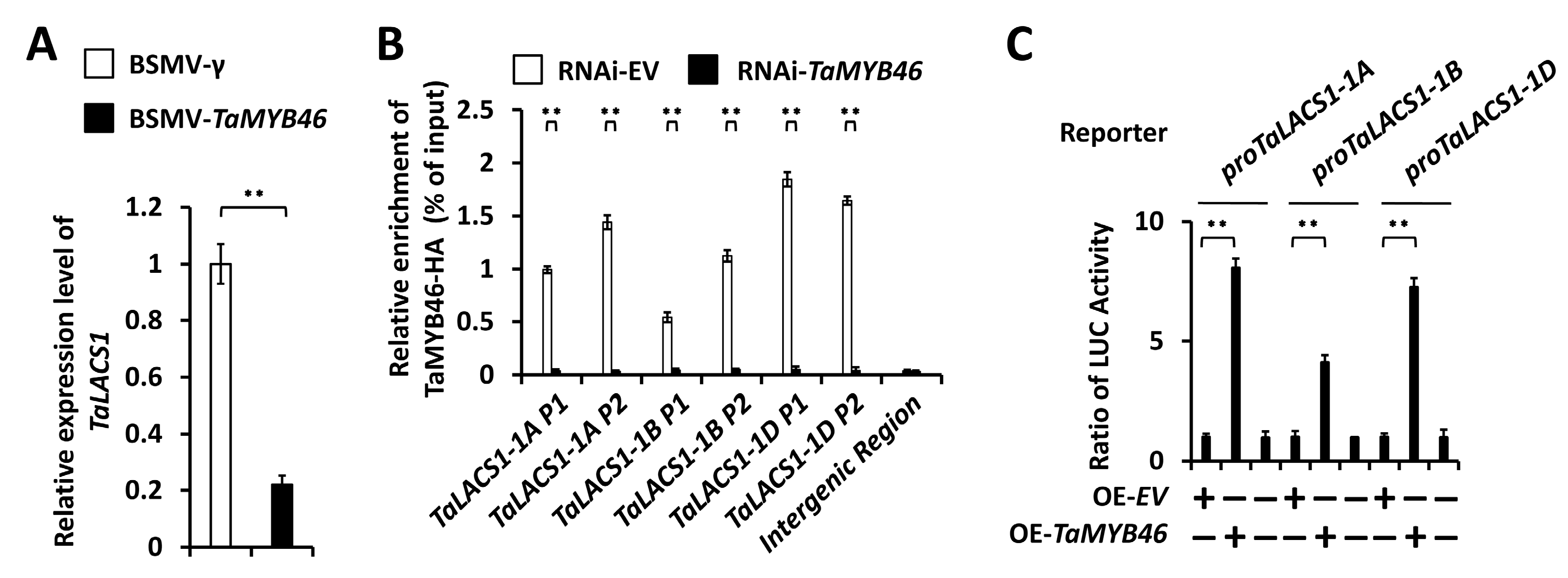
In the dicot model plant Arabidopsis, transcription factor AtMYB46 plays a key role in the regulation of cuticular lipid biosynthesis [51]. To examine the potential regulation of wheat transcription factor TaMYB46 on the expression of cuticular lipid biosynthesis gene TaLACS1, we employed the BSMV-VIGS technique to silence all endogenous TaMYB46 genes in the wheat cultivar Yannong 999 plants and analyzed the accumulation level of the TaLACS1 gene transcript using RT-qPCR. As shown in Figure 5A, the accumulation level of the TaLACS1 gene transcript was significantly reduced in the leaves of wheat BSMV-TaMYB46 plants, compared with the leaves of BSMV-γ control plants, suggesting that the transcription factor TaMYB46 positively regulates the expression of cuticular lipid biosynthesis gene TaLACS1. We asked whether wheat transcription factor TaMYB46 enriches at the promoter region of cuticular lipid biosynthesis gene TaLACS1. To address this question, we transfected the wheat protoplast cells with the TaMYB46-HA construct and examined the enrichment of TaMYB46-HA at the promoter region of TaLACS1 genes using a ChIP-qPCR assay. As shown in Figure 5B, DNA fragments of TaLACS1-1A, TaLACS1-1B, and TaLACS1-1D gene promoters were found to be immunoprecipitated with the antibody against TaMYB46-HA, suggesting that the wheat transcription factor TaMYB46 occupies the promoter regions of the TaLACS1 gene. To examine the potential regulation of wheat transcription factor TaMYB46 on the transcription driven by TaLACS1 gene promoters, we conducted the Dual-Luciferase reporter assay using the Arabidopsis protoplast cells. In the presence of transcription factor TaMYB46, relative activity of LUC reporter gene driven by the TaLACS1 gene promoters increased to above 4.1 compared with 1 for the empty vector control, suggesting that wheat transcription factor TaMYB46 activates the transcription driven by TaLACS1 gene promoters (Figure 5C). Collectively, these findings suggest that wheat transcription factor TaMYB46 activates the transcription of cuticular lipid biosynthesis gene TaLACS1 to stimulate cuticular wax biosynthesis.

4. Discussion

4.1. Wheat Transcription Factor TaMYB46 Potentiates Cuticular Wax Accumulation

In the A. thaliana, transcription factor AtMYB46 plays a key role in the regulation of cuticular lipid biosynthesis [48]. Arabidopsis MYB46 mutants, particularly the myb46-4 (exon T-DNA insertion mutant), exhibited reduced cuticular lipid accumulation and increased cuticle permeability. In contrast, overexpression of AtMYB46 resulted in the reinforced cuticle integrity, increased accumulation of cuticular wax, as well as improved drought tolerance [48]. Herein, we demonstrated that wheat MYB46-like transcription factor TaMYB46 stimulates cuticular wax biosynthesis. Knock-down of wheat TaMYB46 genes resulted in significantly reduced loads of cuticular wax and increased cuticle permeability. These studies support that the positive regulation of MYB46-like transcription factor on cuticular lipid biosynthesis is conserved between the dicot Arabidopsis and the monocot bread wheat.
A plethora of myeloblastosis (MYB) transcription factors were identified to regulate cuticular lipid biosynthesis in the model plant A. thaliana and crop plant T. aestivum [44,45,46,47,48,49,50,51,56,57,58,59]. Arabidopsis R2R3-type MYB transcription factors AtMYB96, AtMYB94, AtMYB30, AtMYB60, AtMYB46, AtMYB49, AtMYB16, and AtMYB106 positively regulate biosynthesis of cuticular wax [44,45,46,47,48,57,58,59]. Similarly, wheat MYB transcription factors TaEPBM1/TaMYB96, TaMYB30, TaMYB60, TaMIXTA1, TaMIXTA2, and TaMYB49 stimulate biosynthesis of cuticular lipids [49,50,51,56]. Accumulating evidence revealed that the cuticular lipid biosynthesis is regulated by the developmental signals and environmental stimuli [7]. Therefore, it is intriguing to examine the potential roles and interplays of these MYB transcription factors in the regulation of cuticular wax biosynthesis in response to the developmental and environmental cues.

4.2. Wheat Long-Chain Acyl-CoA Synthetase TaLACS1 Is Essential for Cuticular Wax Biosynthesis

Nine long-chain acyl-CoA synthetases family members were identified from A. thaliana [14,15,16]. Arabidopsis AtLACS1 is involved in cuticular wax biosynthesis by modifying VLC fatty acids, whereas AtLACS2 plays a key role in the cutin biosynthesis [14,15,16]. SlLACS1, tomato ortholog of AtLACS1, was also identified as an essential component of cuticular wax biosynthesis. The cuticular wax deposition on tomato leaves was remarkably reduced in the SlLACS1-knockout plants, whereas cuticle permeability of tomato leaves was significantly enhanced in SlLACS1-knockout lines [60]. Similarly, heterologous overexpression of apple MdLACS1 in Arabidopsis resulted in the cuticular wax overaccumulation [61]. In this study, we characterized the function of wheat long-chain acyl-CoA synthetase TaLACS1 in cuticular wax biosynthesis. Accumulation levels of total cuticular wax mixtures, as well as major cuticular wax components like VLC ALCs, ALDs, FAs, ALKs, and ALKEs, were significantly decreased in the wheat leaves with silenced TaLACS1 gene. Consistent with this, water loss and chlorophyll extraction assays indicated that cuticle permeability was elevated in TaLACS1-silenced wheat leaves. These findings suggested that, although cuticular wax compositions vary among plant species, the LACS1 gene plays an evolutionarily conserved function in the cuticular wax biosynthesis in the dicots and monocots.

4.3. Wheat Transcription Factor TaMYB46 Stimulates Cuticular Wax Biosynthesis by Activating TaLACS1 Gene Expression

Arabidopsis transcription factor AtMYB46 directly activated cuticular lipid biosynthesis genes like AtLACS1, AtLACS2, AtKCS1, AtKCS19, and AtCER1 to stimulate the cuticle biosynthesis [48]. In this study, we showed that the accumulation level of the TaLACS1 gene transcript was significantly reduced in the leaves of TaMYB46-knockdown wheat plants. The ChIP-qPCR assay revealed that wheat transcription factor TaMYB46 occupies the promoter regions of the TaLACS1 gene, and Dual-Luciferase reporter assay implicated that wheat transcription factor TaMYB46 activates the transcription driven by the TaLACS1 gene promoters. These data suggested that wheat transcription factor TaMYB46, resembling its Arabidopsis homolog, directly activates the cuticular lipid biosynthesis gene TaLACS1 to stimulate cuticular wax biosynthesis. Silencing of TaMYB46 (BSMV-TaMYB46) gene led to the reduction in cuticular wax ac-cumulation to 29.2% (Figure 2B), while silencing of TaLACS1 (BSMV-TaLACS1) gene led to the reduction in cuticular wax accumulation to 65.5% (Figure 4B), suggesting that TaMYB46 might target other wax biosynthesis genes. Therefore, it is intriguing to examine the potential regulation of TaMYB46 on the transcription of other wax biosynthesis genes like TaKCS1, TaKCS19, and TaCER1 in future research.
Through directly activating wax or cutin biosynthesis genes, several wheat transcription factors have been demonstrated to stimulate cuticle biosynthesis [49,50,51]. For instance, wheat MYB transcription factor TaEPBM1 could recognize the MBS and Motif 1 cis-elements to bind to the TaECR and TaCER3 promoters and activate transcription of TaECR and TaCER3 genes, promoting wheat cuticular wax biosynthesis [49]. Similarly, wheat MYB transcription factor TaMYB30 could also recognize the MBS and Motif 1 cis-elements to bind to the TaKCS2 promoters and stimulate TaKCS2 transcription, leading to the potentiated wheat cuticular wax biosynthesis [50]. Wheat AP2-type transcription factor TaSHN1 could recognize the GCC-box cis-elements to bind to the TaCYP86A2 and TaCYP86A4 promoters and activate TaCYP86A2 and TaCYP86A4 transcription, stimulating wheat cutin biosynthesis [52]. In this study, we demonstrated that the wheat transcription factor TaMYB46 directly activates the cuticular lipid biosynthesis gene TaLACS1 to stimulate cuticular wax biosynthesis. Identifying the cis-elements directly recognized by the transcription factor TaMYB46 could provide more insight into the underlying regulatory mechanism in future research.
The waxy cuticle shields plant tissues from the surroundings during the primary growth and facilitates plant resistance against a plethora of abiotic stresses, including water-deficit, salt stress, heat, cold, and ultraviolet B radiation [7]. Cuticular wax-associated traits like increased leaf wax n-alkane concentration were found to be correlated with increased productivity in bread wheat [62]. In this study, we identified transcription factor TaMYB46 and long-chain acyl-CoA synthetase TaLACS1 as positive regulators and essential components of wheat cuticular wax biosynthetic machineries, respectively. As proposed by prior reviews, genetically manipulating cuticle biosynthesis genes using new developed genome editing techniques like CRISPR-Cas9 (clustered regularly interspaced short palindromic repeats-CRISPR associated 9) system, targeted mutation breeding techniques such as targeting induced local lesions (TILLING), or cross breeding approaches like marker-assisted selection (MAS), could facilitate wheat breeding for stress resistance [63,64,65,66,67]. Therefore, genetically manipulating TaMYB46 and TaLACS1 genes using these advanced techniques might represent a new approach for wheat stress resistance breeding in the future.
In this study, we characterized the function of TaMYB46 and TaLACS1 genes in wheat cuticular wax biosynthesis using the BSMV-VIGS technique, generating stable wheat mutants or overexpressing plants of these genes by CRISPR-Cas9 or TILLING might provide more insight into their action mechanisms in future research. In addition, the large-scale genotype analysis of TaMYB46 and TaLACS1 genes in global wheat cultivars and identifying potential Elite haplotypes of these genes suitable for the wheat breeding for stress resistance might contribute to the wheat genetic improvement in future research.

5. Conclusions

In this study, we characterized the MYB46-like transcription factor in the regulation of cuticular wax biosynthesis in bread wheat and found that the wheat MYB46-like transcription factor TaMYB46 stimulates cuticular wax biosynthesis by activating TaLACS1 gene transcription. Silencing of the wheat TaMYB46 and TaLACS1 genes attenuates cuticular wax accumulation. Transcription factor TaMYB46 could enrich at TaLACS1 promoter regions and activate TaLACS1 gene transcription. These findings collectively support that transcription factor TaMYB46 stimulates cuticular wax biosynthesis by activating TaLACS1 gene transcription, and provide important information for the genetic improvement of cuticle-associated traits in bread wheat.

Author Contributions

Conceptualization, L.F., P.Z., J.L., H.L., X.W. and C.C.; methodology, L.F., P.Z., J.L., H.L. and X.W.; validation, L.F., P.Z., J.L., H.L. and X.W.; investigation, L.F., P.Z., J.L., H.L. and X.W.; resources, C.C.; data curation, L.F., P.Z., J.L., H.L. and X.W.; writing—original draft preparation, L.F., P.Z., J.L., H.L. and X.W.; writing—review and editing, C.C.; visualization, L.F., P.Z., J.L., H.L. and X.W.; supervision, C.C.; project administration, C.C.; funding acquisition, C.C. All authors have read and agreed to the published version of the manuscript.

Funding

This research was funded by Shandong Provincial Natural Science Foundation, grant number ZR2022MC008 and ZR2017BC109, Qingdao Science and Technology Bureau Fund, grant number 17-1-1-50-jch, and the Qingdao University Fund, grant number DC1900005385.

Institutional Review Board Statement

Not applicable.

Informed Consent Statement

Not applicable.

Data Availability Statement

The original contributions presented in this study are included in the article. Further inquiries can be directed to the corresponding author.

Conflicts of Interest

The authors declare no conflicts of interest.

References

  1. Levy, A.A.; Feldman, M. Evolution and origin of bread wheat. Plant Cell 2022, 34, 2549–2567. [Google Scholar] [CrossRef]
  2. Lee, R. The outlook for population growth. Science 2011, 333, 569–573. [Google Scholar] [CrossRef]
  3. Li, H.; Chang, C. Evolutionary insight of plant cuticle biosynthesis in bryophytes. Plant Signal. Behav. 2021, 16, 1943921. [Google Scholar] [CrossRef]
  4. Berhin, A.; de Bellis, D.; Franke, R.B.; Buono, R.A.; Nowack, M.K.; Nawrath, C. The root cap cuticle: A cell wall structure for seedling establishment and lateral root formation. Cell 2019, 176, 1367–1378. [Google Scholar] [CrossRef] [PubMed]
  5. Domínguez, E.; Heredia-Guerrero, J.A.; Heredia, A. The plant cuticle: Old challenges, new perspectives. J. Exp. Bot. 2017, 68, 5251–5255. [Google Scholar] [CrossRef]
  6. Lewandowska, M.; Keyl, A.; Feussner, I. Wax biosynthesis in response to danger: Its regulation upon abiotic and biotic stress. New Phytol. 2020, 227, 698–713. [Google Scholar] [CrossRef] [PubMed]
  7. Liu, L.; Wang, X.; Chang, C. Toward a smart skin: Harnessing cuticle biosynthesis for crop adaptation to drought, salinity, temperature, and ultraviolet stress. Front. Plant Sci. 2022, 13, 961829. [Google Scholar] [CrossRef] [PubMed]
  8. Fernández, V.; Guzmán-Delgado, P.; Graça, J.; Santos, S.; Gil, L. Cuticle structure in relation to chemical composition: Re-assessing the prevailing model. Front. Plant Sci. 2016, 7, 427. [Google Scholar] [CrossRef]
  9. Ingram, G.; Nawrath, C. The roles of the cuticle in plant development: Organ adhesions and beyond. J. Exp. Bot. 2017, 68, 5307–5321. [Google Scholar] [CrossRef]
  10. Yeats, T.H.; Rose, J.K. The formation and function of plant cuticles. Plant Physiol. 2013, 163, 5–20. [Google Scholar] [CrossRef]
  11. Lee, S.B.; Suh, M.C. Advances in the understanding of cuticular waxes in Arabidopsis thaliana and crop species. Plant Cell Rep. 2015, 34, 557–572. [Google Scholar] [CrossRef] [PubMed]
  12. Lee, S.B.; Suh, M.C. Regulatory mechanisms underlying cuticular wax biosynthesis. J. Exp. Bot. 2022, 73, 2799–2816. [Google Scholar] [CrossRef] [PubMed]
  13. Samuels, L.; Kunst, L.; Jetter, R. Sealing plant surfaces: Cuticular wax formation by epidermal cells. Annu. Rev. Plant Biol. 2008, 59, 683–707. [Google Scholar] [CrossRef]
  14. Schnurr, J.; Shockey, J.; Browse, J. The acyl-CoA synthetase encoded by LACS2 is essential for normal cuticle development in Arabidopsis. Plant Cell 2004, 16, 629–642. [Google Scholar] [CrossRef]
  15. Lü, S.; Song, T.; Kosma, D.K.; Parsons, E.P.; Rowland, O.; Jenks, M.A. Arabidopsis CER8 encodes LONG-CHAIN ACYL-COA SYNTHETASE 1 (LACS1) that has overlapping functions with LACS2 in plant wax and cutin synthesis. Plant J. 2009, 59, 553–564. [Google Scholar] [CrossRef]
  16. Weng, H.; Molina, I.; Shockey, J.; Browse, J. Organ fusion and defective cuticle function in a lacs1 lacs2 double mutant of Arabidopsis. Planta 2010, 231, 1089–1100. [Google Scholar] [CrossRef]
  17. Millar, A.A.; Clemens, S.; Zachgo, S.; Giblin, E.M.; Taylor, D.C.; Kunst, L. CUT1, an Arabidopsis gene required for cuticular wax biosynthesis and pollen fertility, encodes a very-long-chain fatty acid condensing enzyme. Plant Cell 1999, 11, 825–838. [Google Scholar] [CrossRef]
  18. Todd, J.; Post-Beittenmiller, D.; Jaworski, J.G. KCS1 encodes a fatty acid elongase 3-ketoacyl-CoA synthase affecting wax biosynthesis in Arabidopsis thaliana. Plant J. 1999, 17, 119–130. [Google Scholar] [CrossRef]
  19. Fiebig, A.; Mayfield, J.A.; Miley, N.L.; Chau, S.; Fischer, R.L.; Preuss, D. Alterations in CER6, a gene identical to CUT1, differentially affect long-chain lipid content on the surface of pollen and stems. Plant Cell 2000, 12, 2001–2008. [Google Scholar] [CrossRef] [PubMed]
  20. Hooker, T.S.; Millar, A.A.; Kunst, L. Significance of the expression of the CER6 condensing enzyme for cuticular wax production in Arabidopsis. Plant Physiol. 2002, 129, 1568–1580. [Google Scholar] [CrossRef]
  21. Zheng, H.; Rowland, O.; Kunst, L. Disruptions of the Arabidopsis Enoyl-CoA reductase gene reveal an essential role for very-long-chain fatty acid synthesis in cell expansion during plant morphogenesis. Plant Cell 2005, 17, 1467–1481. [Google Scholar] [CrossRef]
  22. Bach, L.; Michaelson, L.V.; Haslam, R.; Bellec, Y.; Gissot, L.; Marion, J.; Da Costa, M.; Boutin, J.P.; Miquel, M.; Tellier, F.; et al. The very-long-chain hydroxy fatty acyl-CoA dehydratase PASTICCINO2 is essential and limiting for plant development. Proc. Natl. Acad. Sci. USA 2008, 105, 14727–14731. [Google Scholar] [CrossRef]
  23. Beaudoin, F.; Wu, X.; Li, F.; Haslam, R.P.; Markham, J.E.; Zheng, H.; Napier, J.A.; Kunst, L. Functional characterization of the Arabidopsis beta-ketoacyl-coenzyme A reductase candidates of the fatty acid elongase. Plant Physiol. 2009, 150, 1174–1191. [Google Scholar] [CrossRef]
  24. Lee, S.B.; Jung, S.J.; Go, Y.S.; Kim, H.U.; Kim, J.K.; Cho, H.J.; Park, O.K.; Suh, M.C. Two Arabidopsis 3-ketoacyl CoA synthase genes, KCS20 and KCS2/DAISY, are functionally redundant in cuticular wax and root suberin biosynthesis, but differentially controlled by osmotic stress. Plant J. 2009, 60, 462–475. [Google Scholar] [CrossRef]
  25. Kim, J.; Jung, J.H.; Lee, S.B.; Go, Y.S.; Kim, H.J.; Cahoon, R.; Markham, J.E.; Cahoon, E.B.; Suh, M.C. Arabidopsis 3-ketoacyl-coenzyme a synthase9 is involved in the synthesis of tetracosanoic acids as precursors of cuticular waxes, suberins, sphingolipids, and phospholipids. Plant Physiol. 2013, 162, 567–580. [Google Scholar] [CrossRef]
  26. Aarts, M.G.; Keijzer, C.J.; Stiekema, W.J.; Pereira, A. Molecular characterization of the CER1 gene of Arabidopsis involved in epicuticular wax biosynthesis and pollen fertility. Plant Cell 1995, 7, 2115–2127. [Google Scholar] [PubMed]
  27. Chen, X.; Goodwin, S.M.; Boroff, V.L.; Liu, X.; Jenks, M.A. Cloning and characterization of the WAX2 gene of Arabidopsis involved in cuticle membrane and wax production. Plant Cell 2003, 15, 1170–1185. [Google Scholar] [CrossRef]
  28. Rowland, O.; Lee, R.; Franke, R.; Schreiber, L.; Kunst, L. The CER3 wax biosynthetic gene from Arabidopsis thaliana is allelic to WAX2/YRE/FLP1. FEBS Lett. 2007, 581, 3538–3544. [Google Scholar] [CrossRef]
  29. Rowland, O.; Zheng, H.; Hepworth, S.R.; Lam, P.; Jetter, R.; Kunst, L. CER4 encodes an alcohol-forming fatty acyl-coenzyme A reductase involved in cuticular wax production in Arabidopsis. Plant Physiol. 2006, 142, 866–877. [Google Scholar] [CrossRef] [PubMed]
  30. Greer, S.; Wen, M.; Bird, D.; Wu, X.; Samuels, L.; Kunst, L.; Jetter, R. The cytochrome P450 enzyme CYP96A15 is the midchain alkane hydroxylase responsible for formation of secondary alcohols and ketones in stem cuticular wax of Arabidopsis. Plant Physiol. 2007, 145, 653–667. [Google Scholar] [CrossRef] [PubMed]
  31. Bourdenx, B.; Bernard, A.; Domergue, F.; Pascal, S.; Léger, A.; Roby, D.; Pervent, M.; Vile, D.; Haslam, R.P.; Napier, J.A.; et al. Overexpression of Arabidopsis ECERIFERUM1 promotes wax very-long-chain alkane biosynthesis and influences plant response to biotic and abiotic stresses. Plant Physiol. 2011, 156, 29–45. [Google Scholar] [CrossRef]
  32. Bernard, A.; Domergue, F.; Pascal, S.; Jetter, R.; Renne, C.; Faure, J.D.; Haslam, R.P.; Napier, J.A.; Lessire, R.; Joubès, J. Reconstitution of plant alkane biosynthesis in yeast demonstrates that Arabidopsis ECERIFERUM1 and ECERIFERUM3 are core components of a very-long-chain alkane synthesis complex. Plant Cell 2012, 24, 3106–3118. [Google Scholar] [CrossRef]
  33. Pascal, S.; Bernard, A.; Deslous, P.; Gronnier, J.; Fournier-Goss, A.; Domergue, F.; Rowland, O.; Joubès, J. Arabidopsis CER1-LIKE1 functions in a cuticular very-long-chain alkane-forming complex. Plant Physiol. 2019, 179, 415–432. [Google Scholar] [CrossRef] [PubMed]
  34. Yang, X.; Zhao, H.; Kosma, D.K.; Tomasi, P.; Dyer, J.M.; Li, R.; Liu, X.; Wang, Z.; Parsons, E.P.; Jenks, M.A.; et al. The acyl desaturase CER17 is involved in producing wax unsaturated primary alcohols and cutin monomers. Plant Physiol. 2017, 173, 1109–1124. [Google Scholar] [CrossRef] [PubMed]
  35. Bird, D.; Beisson, F.; Brigham, A.; Shin, J.; Greer, S.; Jetter, R.; Kunst, L.; Wu, X.; Yephremov, A.; Samuels, L. Characterization of Arabidopsis ABCG11/WBC11, an ATP binding cassette (ABC) transporter that is required for cuticular lipid secretion. Plant J. 2007, 52, 485–498. [Google Scholar] [CrossRef]
  36. Bessire, M.; Borel, S.; Fabre, G.; Carraça, L.; Efremova, N.; Yephremov, A.; Cao, Y.; Jetter, R.; Jacquat, A.C.; Métraux, J.P.; et al. A member of the PLEIOTROPIC DRUG RESISTANCE family of ATP binding cassette transporters is required for the formation of a functional cuticle in Arabidopsis. Plant Cell 2011, 23, 1958–1970. [Google Scholar] [CrossRef]
  37. Kim, H.; Lee, S.B.; Kim, H.J.; Min, M.K.; Hwang, I.; Suh, M.C. Characterization of glycosylphosphatidylinositol-anchored lipid transfer protein 2 (LTPG2) and overlapping function between LTPG/LTPG1 and LTPG2 in cuticular wax export or accumulation in Arabidopsis thaliana. Plant Cell Physiol. 2012, 53, 1391–1403. [Google Scholar] [CrossRef]
  38. Panikashvili, D.; Savaldi-Goldstein, S.; Mandel, T.; Yifhar, T.; Franke, R.B.; Höfer, R.; Schreiber, L.; Chory, J.; Aharoni, A. The Arabidopsis DESPERADO/AtWBC11 transporter is required for cutin and wax secretion. Plant Physiol. 2007, 145, 1345–1360. [Google Scholar] [CrossRef]
  39. Panikashvili, D.; Shi, J.X.; Schreiber, L.; Aharoni, A. The Arabidopsis ABCG13 transporter is required for flower cuticle secretion and patterning of the petal epidermis. New Phytol. 2011, 190, 113–124. [Google Scholar] [CrossRef] [PubMed]
  40. McFarlane, H.E.; Shin, J.J.; Bird, D.A.; Samuels, A.L. Arabidopsis ABCG transporters, which are required for export of diverse cuticular lipids, dimerize in different combinations. Plant Cell 2010, 22, 3066–3075. [Google Scholar] [CrossRef]
  41. McFarlane, H.E.; Watanabe, Y.; Yang, W.; Huang, Y.; Ohlrogge, J.; Samuels, A.L. Golgi- and trans-Golgi network-mediated vesicle trafficking is required for wax secretion from epidermal cells. Plant Physiol. 2014, 164, 1250–1260. [Google Scholar] [CrossRef]
  42. Pighin, J.A.; Zheng, H.; Balakshin, L.J.; Goodman, I.P.; Western, T.L.; Jetter, R.; Kunst, L.; Samuels, A.L. Plant cuticular lipid export requires an ABC transporter. Science 2004, 306, 702–704. [Google Scholar] [CrossRef]
  43. Buda, G.J.; Barnes, W.J.; Fich, E.A.; Park, S.; Yeats, T.H.; Zhao, L.; Domozych, D.S.; Rose, J.K. An ATP binding cassette transporter is required for cuticular wax deposition and desiccation tolerance in the moss Physcomitrella patens. Plant Cell 2013, 25, 4000–4013. [Google Scholar] [CrossRef] [PubMed]
  44. Seo, P.J.; Lee, S.B.; Suh, M.C.; Park, M.J.; Go, Y.S.; Park, C.M. The MYB96 transcription factor regulates cuticular wax biosynthesis under drought conditions in Arabidopsis. Plant Cell 2011, 23, 1138–1152. [Google Scholar] [CrossRef]
  45. Raffaele, S.; Vailleau, F.; Léger, A.; Joubès, J.; Miersch, O.; Huard, C.; Blée, E.; Mongrand, S.; Domergue, F.; Roby, D.A. MYB transcription factor regulates very-long-chain fatty acid biosynthesis for activation of the hypersensitive cell death response in Arabidopsis. Plant Cell 2008, 20, 752–767. [Google Scholar] [CrossRef]
  46. Oshima, Y.; Mitsuda, N. Enhanced cuticle accumulation by employing MIXTA-like transcription factors. Plant Biotechnol. 2016, 33, 161–168. [Google Scholar] [CrossRef]
  47. Oshima, Y.; Mitsuda, N. The MIXTA-like transcription factor MYB16 is a major regulator of cuticle formation in vegetative organs. Plant Signal. Behav. 2013, 8, e26826. [Google Scholar] [CrossRef]
  48. Jin, S.; Song, Y.; Wang, Y.; Guo, Y.; Fan, S.; Gan, Q.; Luo, N.; Fan, Y.; Ni, Y. MYB46 integrates cuticle and cell wall remodeling to coordinate drought tolerance and pathogen resistance in Arabidopsis. New Phytol. 2025, 248, 2764–2780. [Google Scholar] [CrossRef] [PubMed]
  49. Kong, L.; Zhi, P.; Liu, J.; Li, H.; Zhang, X.; Xu, J.; Zhou, J.; Wang, X.; Chang, C. Epigenetic activation of Enoyl-CoA Reductase by an acetyltransferase complex triggers wheat wax biosynthesis. Plant Physiol. 2020, 183, 1250–1267. [Google Scholar] [CrossRef] [PubMed]
  50. Liu, L.; Li, H.; Wang, X.; Chang, C. Transcription factor TaMYB30 activates wheat wax biosynthesis. Int. J. Mol. Sci. 2023, 24, 10235. [Google Scholar] [CrossRef]
  51. Wang, X.; Fu, Y.; Liu, X.; Chang, C. Wheat MIXTA-like transcriptional activators positively regulate cuticular wax accumulation. Int. J. Mol. Sci. 2024, 25, 6557. [Google Scholar] [CrossRef]
  52. Fang, L.; Wang, X.; Li, H.; Liu, J.; Zhi, P.; Chang, C. Wheat Class I TCP transcription factor TaTCP15 positively regulates cutin and cuticular wax biosynthesis. Biomolecules 2026, 16, 192. [Google Scholar] [CrossRef] [PubMed]
  53. Yuan, C.; Li, C.; Yan, L.; Jackson, A.O.; Liu, Z.; Han, C.; Yu, J.; Li, D. A high throughput barley stripe mosaic virus vector for virus induced gene silencing in monocots and dicots. PLoS ONE 2011, 6, e26468. [Google Scholar] [CrossRef] [PubMed]
  54. Wang, X.; Fu, Y.; Zhi, P.; Liu, X.; Ge, P.; Zhang, W.; Chen, W.; Chang, C. The SAGA histone acetyltransferase complex functions in concert with RNA processing machinery to regulate wheat wax biosynthesis. Plant Physiol. 2025, 198, kiaf153. [Google Scholar] [CrossRef] [PubMed]
  55. Wang, X.; Zhi, P.; Ge, P.; Fu, Y.; Liu, X.; Chen, W.; Chang, C. HISTONE DEACETYLASE 19 interacts with ELONGATED HYPOCOTYL5 to regulate wheat cuticular wax biosynthesis in response to ultraviolet B radiation. Plant J. 2025, 123, e70395. [Google Scholar] [CrossRef]
  56. Wang, X.; Chen, W.; Zhi, P.; Chang, C. Wheat Transcription Factor TaMYB60 Modulates Cuticular Wax Biosynthesis by Activating TaFATB and TaCER1 Expression. Int. J. Mol. Sci. 2024, 25, 10335. [Google Scholar] [CrossRef]
  57. Oshima, Y.; Shikata, M.; Koyama, T.; Ohtsubo, N.; Mitsuda, N.; Ohme-Takagi, M. MIXTA-like transcription factors and WAX INDUCER1/SHINE1 coordinately regulate cuticle development in Arabidopsis and Torenia fournieri. Plant Cell 2013, 25, 1609–1624. [Google Scholar] [CrossRef]
  58. Lee, S.B.; Kim, H.U.; Suh, M.C. MYB94 and MYB96 additively activate cuticular wax biosynthesis in Arabidopsis. Plant Cell Physiol. 2016, 57, 2300–2311. [Google Scholar] [CrossRef]
  59. Lee, S.B.; Suh, M.C. Cuticular wax biosynthesis is up-regulated by the MYB94 transcription factor in Arabidopsis. Plant Cell Physiol. 2015, 56, 48–60. [Google Scholar] [CrossRef]
  60. Wu, P.; Li, S.; Yu, X.; Guo, S.; Gao, L. Identification of long-chain acyl-CoA synthetase gene family reveals that SlLACS1 is essential for cuticular wax biosynthesis in tomato. Int. J. Biol. Macromol. 2024, 277, 134438. [Google Scholar] [CrossRef]
  61. Li, J.J.; Zhang, C.L.; Zhang, Y.L.; Gao, H.N.; Wang, H.B.; Jiang, H.; Li, Y.Y. An apple long-chain acyl-CoA synthase, MdLACS1, enhances biotic and abiotic stress resistance in plants. Plant Physiol. Biochem. 2022, 189, 115–125. [Google Scholar] [CrossRef]
  62. Liu, X.; Feakins, S.J.; Ma, X.F.; Anderson, J.D.; Vidal, E.; Blancaflor, E.B. Crop breeding has increased the productivity and leaf wax n-alkane concentration in a series of five winter wheat cultivars developed over the last 60 years. J. Plant Physiol. 2019, 243, 153056. [Google Scholar] [CrossRef]
  63. McCallum, C.M.; Comai, L.; Greene, E.A.; Henikoff, S. Targeting induced local lesions IN genomes (TILLING) for plant functional genomics. Plant Physiol. 2000, 123, 439–442. [Google Scholar] [CrossRef]
  64. Kurowska, M.; Daszkowska-Golec, A.; Gruszka, D.; Marzec, M.; Szurman, M.; Szarejko, I.; Maluszynski, M. TILLING: A shortcut in functional genomics. J. Appl. Genet. 2011, 52, 371–390. [Google Scholar] [CrossRef]
  65. Chen, L.; Hao, L.; Parry, M.A.; Phillips, A.L.; Hu, Y.G. Progress in TILLING as a tool for functional genomics and improvement of crops. J. Integr. Plant Biol. 2014, 56, 425–443. [Google Scholar] [CrossRef]
  66. Yin, K.; Qiu, J.L. Genome editing for plant disease resistance: Applications and perspectives. Philos. Trans. R. Soc. Lond. B Biol. Sci. 2019, 374, 20180322. [Google Scholar] [CrossRef]
  67. Varshney, R.K.; Sinha, P.; Singh, V.K.; Kumar, A.; Zhang, Q.; Bennetzen, J.L. 5Gs for crop genetic improvement. Curr. Opin. Plant Biol. 2020, 56, 190–196. [Google Scholar] [CrossRef]
Figure 1. Sequence and phylogenetic analysis of wheat TaMYB46. (A) Amino acid sequence comparison of wheat TaMYB46-5A, TaMYB46-5B, TaMYB46-5D, and Arabidopsis AtMYB46. Location of conserved MYB-like DNA-binding domain was underlined in red. (B) Phylogenetic tree reconstruction using wheat TaMYB46, Arabidopsis AtMYB46, mustard BrMYB46, Brachypodium BdMYB46, maize ZmMYB46, and rice OsMYB46. A maximum-likelihood tree and 500 bootstrap replicates were employed. (C) Intron-exon organization of wheat TaMYB46 genes. (D) Domain arrangement of wheat TaMYB46 proteins.
Biomolecules 16 00872 g001
Figure 2. Functional characterization of wheat TaMYB46 genes in cuticular wax biosynthesis. (A) Relative accumulation of TaMYB46 gene transcripts in the wheat leaves with silenced TaMYB46 genes. (B) Loads of cuticular wax on the wheat leaves with knockdown of TaMYB46 genes. (C) Amounts of wax FA (fatty acid), ALC (alcohol), ALD (aldehyde), ALK (alkane), ALKE (alkyl ester), and N.I. (not identified compound) in the wheat leaves with silenced TaMYB46 genes. (D) Water loss and (E) chlorophyll extraction levels were analyzed in wheat leaves with silenced TaMYB46 genes. For (AE), data were statistically analyzed using Student’s t-test, and significant difference was represented by ** (p < 0.01).
Biomolecules 16 00872 g002
Figure 3. Sequence and phylogenetic analysis of wheat TaLACS1. (A) Amino acid sequence comparison of wheat TaLACS1-1A, TaLACS1-1B, TaLACS1-1D, and Arabidopsis AtLACS1. Location of conserved AMP-binding domain is underlined in red. (B) Phylogenetic tree reconstruction using wheat TaLACS1, Arabidopsis AtLACS1, mustard BrLACS1, Brachypodium BdLACS1, maize ZmLACS1, and rice OsLACS1. A maximum-likelihood tree and 500 bootstrap replicates were employed. (C) Intron-exon organization of wheat TaLACS1 genes. (D) Domain arrangement of wheat TaLACS1 proteins.
Biomolecules 16 00872 g003
Figure 4. Functional characterization of wheat TaLACS1 genes in cuticular wax biosynthesis. (A) Relative accumulation of the TaLACS1 gene transcripts in the wheat leaves with silenced TaLACS1 gene. (B) Loads of cuticular wax on the wheat leaves with knockdown of the TaLACS1 gene. (C) Amounts of wax components in the wheat leaves with silenced TaLACS1 gene. (D) Water loss and (E) chlorophyll extraction levels were analyzed in wheat leaves with silenced TaLACS1 gene. For (AE), data were statistically analyzed using Student’s t-test, and significant difference was represented by ** (p < 0.01).
Biomolecules 16 00872 g004
Figure 5. Analyses of TaMYB46 regulation on TaLACS1 gene transcription. (A) Relative accumulation of TaLACS1 gene transcripts in the wheat leaves with silenced TaMYB46 genes. (B) Measurement of TaMYB46 enrichment at TaLACS1 promoter regions. P1 and P2 represent two fragments of the indicated gene promoter regions. (C) Activation of TaLACS1 promoters by TaMYB46. For (AC), data were statistically analyzed using Student’s t-test, and significant difference was represented by ** (p < 0.01).
Biomolecules 16 00872 g005
Disclaimer/Publisher’s Note: The statements, opinions and data contained in all publications are solely those of the individual author(s) and contributor(s) and not of MDPI and/or the editor(s). MDPI and/or the editor(s) disclaim responsibility for any injury to people or property resulting from any ideas, methods, instructions or products referred to in the content.