Engineering the Human Endometrial–Embryo Interface: Breakthroughs in 3D Uterine Models

 ,
,  , and
, and
Abstract
1. Introduction
2. Methodology
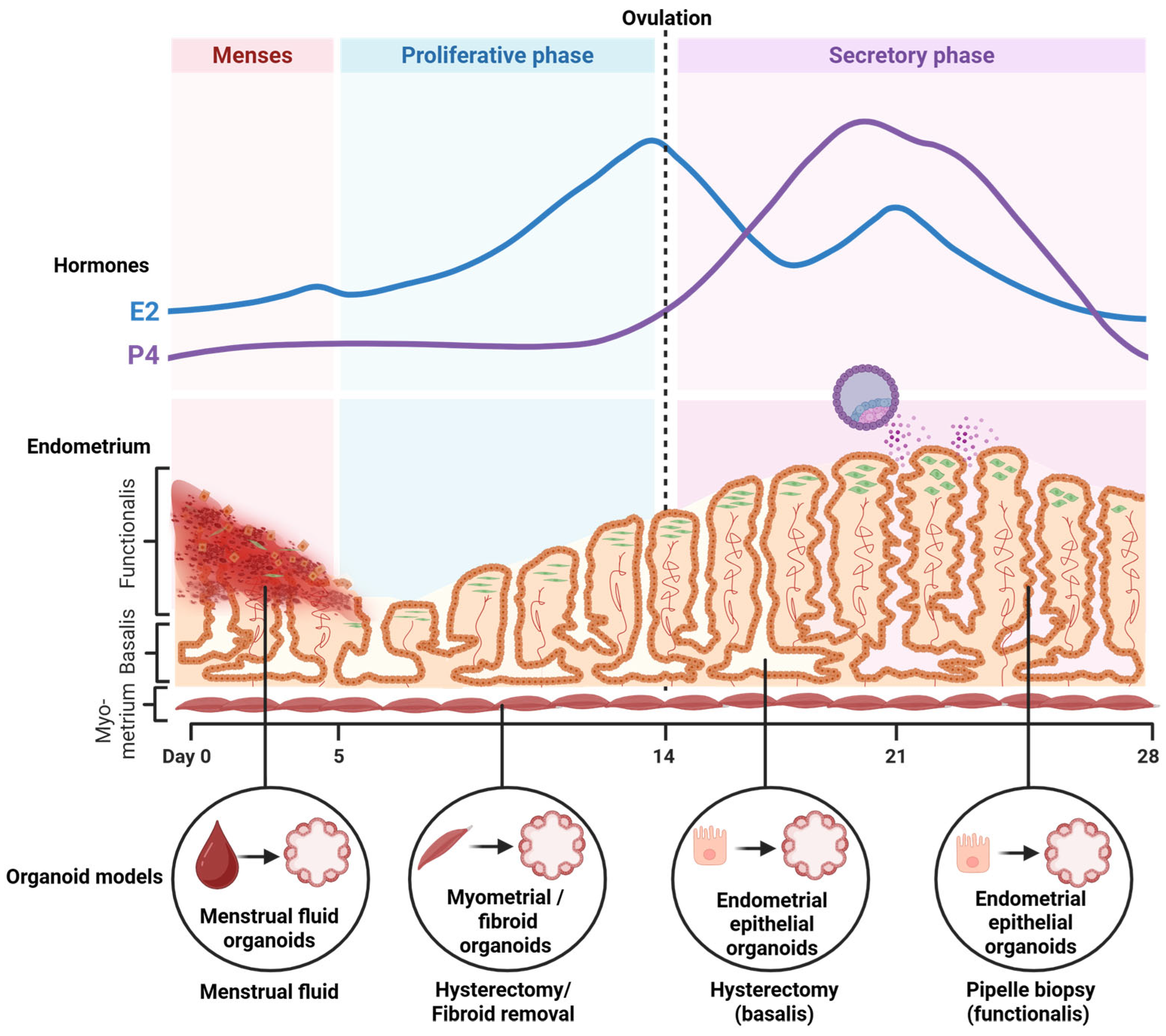
3. Endometrial Epithelial Organoids
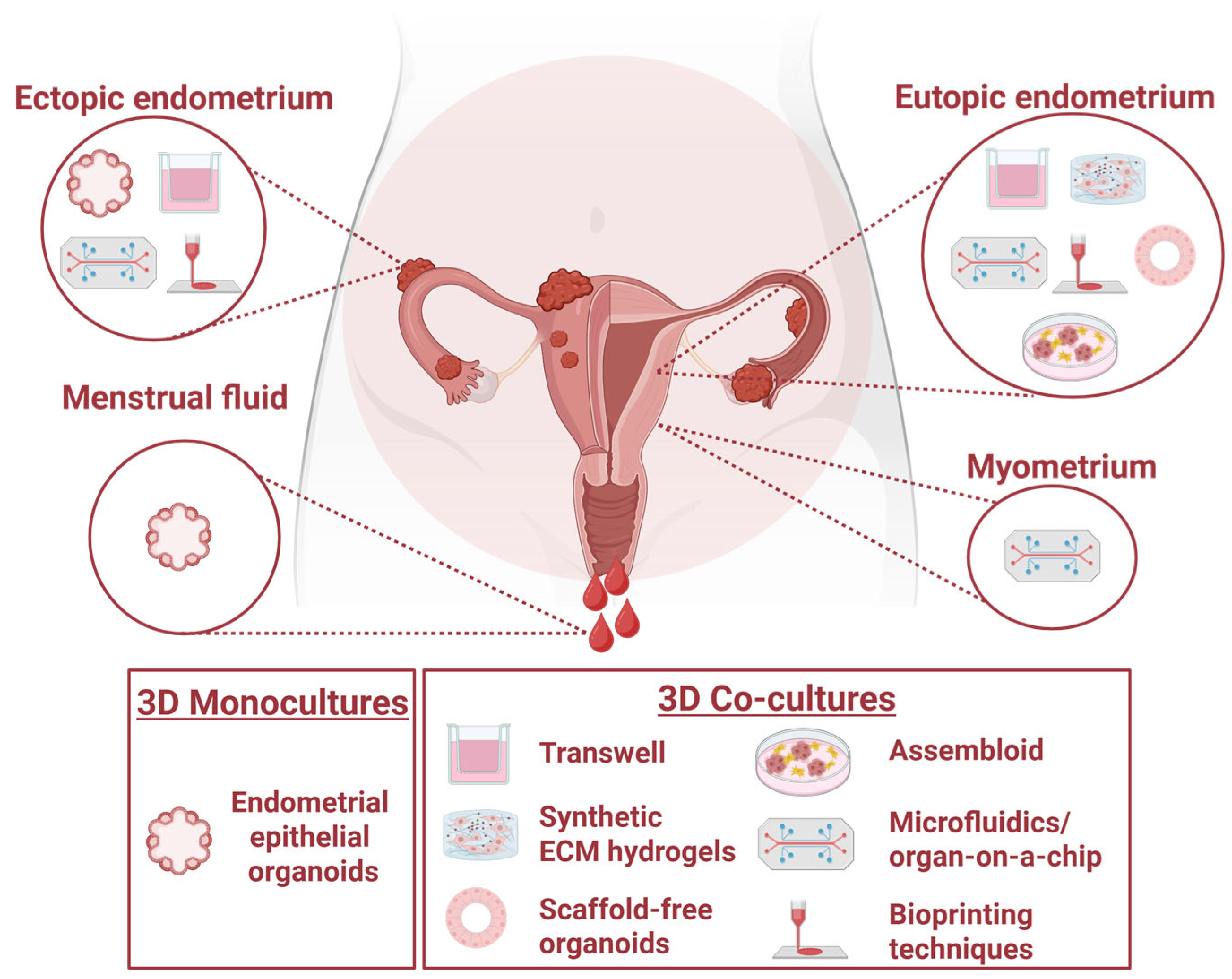
4. Three-Dimensional Co-Culture Models of the Human Endometrium
4.1. Three-Dimensional Co-Culture Models of Epithelial-Stromal Interactions
4.2. Three-Dimensional Co-Culture Models with Maternal Vasculature
4.3. Modelling the Luminal Epithelia
5. Modelling Endometrial Dysfunction in Gynaecological Disease
5.1. Endometriosis
5.2. Adenomyosis
5.3. Polycystic Ovarian Syndrome (PCOS)
5.4. Endometrial Cancer
6. Modelling the Placenta
6.1. Placental Cell Lines
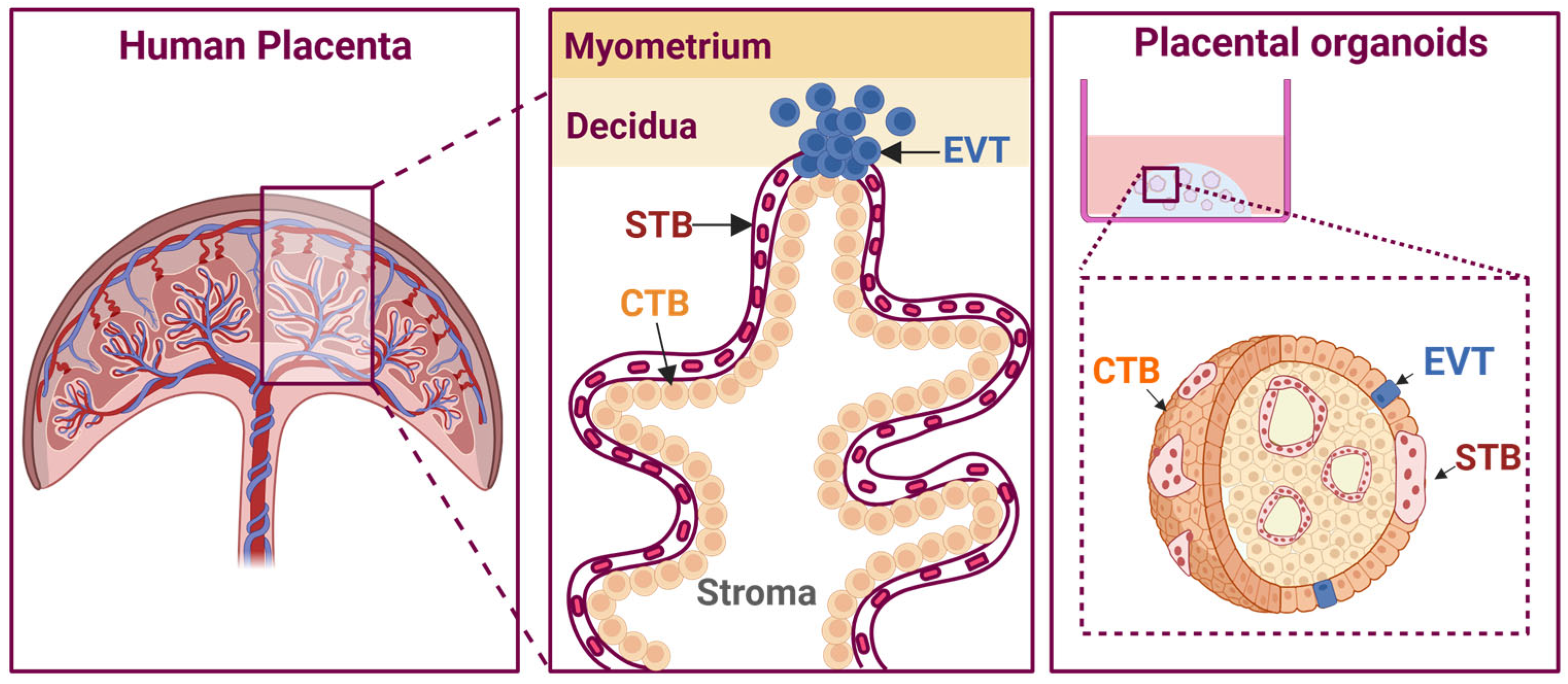
6.2. Trophoblast Organoids
7. Models of Implantation
8. Future Applications
9. Conclusions
Author Contributions
Funding
Institutional Review Board Statement
Informed Consent Statement
Data Availability Statement
Acknowledgments
Conflicts of Interest
References
- Evans, J.; Salamonsen, L.A.; Winship, A.; Menkhorst, E.; Nie, G.; Gargett, C.E.; Dimitriadis, E. Fertile ground: Human endometrial programming and lessons in health and disease. Nat. Rev. Endocrinol. 2016, 12, 654–667. [Google Scholar] [CrossRef] [Scilit]
- Kelleher, A.M.; DeMayo, F.J.; Spencer, T.E. Uterine Glands: Developmental Biology and Functional Roles in Pregnancy. Endocr. Rev. 2019, 40, 1424–1445. [Google Scholar] [CrossRef] [Scilit] [PubMed]
- Schwab, K.E.; Hutchinson, P.; Gargett, C.E. Identification of surface markers for prospective isolation of human endometrial stromal colony-forming cells. Hum. Reprod. 2008, 23, 934–943. [Google Scholar] [CrossRef] [Scilit] [PubMed]
- Nguyen, H.P.T.; Xiao, L.; Deane, J.A.; Tan, K.-S.; Cousins, F.L.; Masuda, H.; Sprung, C.N.; Rosamilia, A.; Gargett, C.E. N-cadherin identifies human endometrial epithelial progenitor cells by in vitro stem cell assays. Hum. Reprod. 2017, 32, 2254–2268. [Google Scholar] [CrossRef] [Scilit] [PubMed]
- Gargett, C.E.; Schwab, K.E.; Zillwood, R.M.; Nguyen, H.P.; Wu, D. Isolation and culture of epithelial progenitors and mesenchymal stem cells from human endometrium. Biol. Reprod. 2009, 80, 1136–1145. [Google Scholar] [CrossRef] [Scilit]
- Burton, G.J.; Watson, A.L.; Hempstock, J.; Skepper, J.N.; Jauniaux, E. Uterine Glands Provide Histiotrophic Nutrition for the Human Fetus during the First Trimester of Pregnancy. J. Clin. Endocrinol. Metab. 2002, 87, 2954–2959. [Google Scholar] [CrossRef]
- Cooke, P.; Buchanan, D.; Young, P.; Setiawan, T.; Brody, J.; Korach, K.; Taylor, J.; Lubahn, D.; Cunha, G. Stromal estrogen receptors mediate mitogenic effects of estradiol on uterine epithelium. Proc. Natl. Acad. Sci. USA 1997, 94, 6535–6540. [Google Scholar] [CrossRef] [Scilit]
- Li, Q.; Kannan, A.; DeMayo, F.J.; Lydon, J.P.; Cooke, P.S.; Yamagishi, H.; Srivastava, D.; Bagchi, M.K.; Bagchi, I.C. The antiproliferative action of progesterone in uterine epithelium is mediated by Hand2. Science 2011, 331, 912–916. [Google Scholar] [CrossRef] [Scilit]
- Chen, J.C.; Erikson, D.W.; Piltonen, T.T.; Meyer, M.R.; Barragan, F.; McIntire, R.H.; Tamaresis, J.S.; Vo, K.C.; Giudice, L.C.; Irwin, J.C. Coculturing human endometrial epithelial cells and stromal fibroblasts alters cell-specific gene expression and cytokine production. Fertil. Steril. 2013, 100, 1132–1143. [Google Scholar] [CrossRef] [Scilit]
- Filant, J.; Spencer, T.E. Endometrial glands are essential for blastocyst implantation and decidualization in the mouse uterus. Biol. Reprod. 2013, 88, 93. [Google Scholar] [CrossRef] [Scilit]
- Dhakal, P.; Fitzgerald, H.C.; Kelleher, A.M.; Liu, H.; Spencer, T.E. Uterine glands impact embryo survival and stromal cell decidualization in mice. FASEB J. 2021, 35, e21938. [Google Scholar] [CrossRef] [Scilit]
- Gray, C.A.; Taylor, K.M.; Ramsey, W.S.; Hill, J.R.; Bazer, F.W.; Bartol, F.F.; Spencer, T.E. Endometrial glands are required for preimplantation conceptus elongation and survival. Biol. Reprod. 2001, 64, 1608–1613. [Google Scholar] [CrossRef] [Scilit]
- Kelleher, A.M.; Milano-Foster, J.; Behura, S.K.; Spencer, T.E. Uterine glands coordinate on-time embryo implantation and impact endometrial decidualization for pregnancy success. Nat. Commun. 2018, 9, 2435. [Google Scholar] [CrossRef] [Scilit]
- Kelleher, A.M.; Peng, W.; Pru, J.K.; Pru, C.A.; DeMayo, F.J.; Spencer, T.E. Forkhead box a2 (FOXA2) is essential for uterine function and fertility. Proc. Natl. Acad. Sci. USA 2017, 114, E1018–E1026. [Google Scholar] [CrossRef] [Scilit]
- Fitzgerald, H.C.; Evans, J.; Johnson, N.; Infusini, G.; Webb, A.; Rombauts, L.J.R.; Vollenhoven, B.J.; Salamonsen, L.A.; Edgell, T.A. Idiopathic infertility in women is associated with distinct changes in proliferative phase uterine fluid proteins. Biol. Reprod. 2018, 98, 752–764. [Google Scholar] [CrossRef] [Scilit]
- Fitzgerald, H.C.; Salamonsen, L.A.; Rombauts, L.J.R.; Vollenhoven, B.J.; Edgell, T.A. The proliferative phase underpins endometrial development: Altered cytokine profiles in uterine lavage fluid of women with idiopathic infertility. Cytokine 2016, 88, 12–19. [Google Scholar] [CrossRef] [Scilit]
- Lédée-Bataille, N.; Laprée-Delage, G.; Taupin, J.-L.; Dubanchet, S.; Frydman, R.; Chaouat, G. Concentration of leukaemia inhibitory factor (LIF) in uterine flushing fluid is highly predictive of embryo implantation. Hum. Reprod. 2002, 17, 213–218. [Google Scholar] [CrossRef] [Scilit]
- Heng, S.; Hannan, N.J.; Rombauts, L.J.F.; Salamonsen, L.A.; Nie, G. PC6 levels in uterine lavage are closely associated with uterine receptivity and significantly lower in a subgroup of women with unexplained infertility. Hum. Reprod. 2011, 26, 840–846. [Google Scholar] [CrossRef] [Scilit]
- Hannan, N.J.; Paiva, P.; Meehan, K.L.; Rombauts, L.J.F.; Gardner, D.K.; Salamonsen, L.A. Analysis of fertility-related soluble mediators in human uterine fluid identifies VEGF as a key regulator of embryo implantation. Endocrinology 2011, 152, 4948–4956. [Google Scholar] [CrossRef] [Scilit]
- Gellersen, B.; Brosens, J.J. Cyclic Decidualization of the Human Endometrium in Reproductive Health and Failure. Endocr. Rev. 2014, 35, 851–905. [Google Scholar] [CrossRef] [Scilit]
- Klemmt, P.A.B.; Carver, J.G.; Kennedy, S.H.; Koninckx, P.R.; Mardon, H.J. Stromal cells from endometriotic lesions and endometrium from women with endometriosis have reduced decidualization capacity. Fertil. Steril. 2006, 85, 564–572. [Google Scholar] [CrossRef] [Scilit] [PubMed]
- Velarde, M.C.; Aghajanova, L.; Nezhat, C.R.; Giudice, L.C. Increased mitogen-activated protein kinase kinase/extracellularly regulated kinase activity in human endometrial stromal fibroblasts of women with endometriosis reduces 3′,5′-cyclic adenosine 5′-monophosphate inhibition of cyclin D1. Endocrinology 2009, 150, 4701–4712. [Google Scholar] [CrossRef] [Scilit] [PubMed]
- Lucas, E.S.; Dyer, N.P.; Murakami, K.; Lee, Y.H.; Chan, Y.W.; Grimaldi, G.; Muter, J.; Brighton, P.J.; Moore, J.D.; Patel, G.; et al. Loss of Endometrial Plasticity in Recurrent Pregnancy Loss. Stem Cells 2016, 34, 346–356. [Google Scholar] [CrossRef] [Scilit] [PubMed]
- Lucas, E.S.; Vrljicak, P.; Muter, J.; Diniz-da-Costa, M.M.; Brighton, P.J.; Kong, C.-S.; Lipecki, J.; Fishwick, K.J.; Odendaal, J.; Ewington, L.J.; et al. Recurrent pregnancy loss is associated with a pro-senescent decidual response during the peri-implantation window. Commun. Biol. 2020, 3, 37. [Google Scholar] [CrossRef] [Scilit]
- Zondervan, K.T.; Becker, C.M.; Missmer, S.A. Endometriosis. N. Engl. J. Med. 2020, 382, 1244–1256. [Google Scholar] [CrossRef] [Scilit]
- Lou, L.; Kong, S.; Sun, Y.; Zhang, Z.; Wang, H. Human Endometrial Organoids: Recent Research Progress and Potential Applications. Front. Cell Dev. Biol. 2022, 10, 844623. [Google Scholar] [CrossRef] [Scilit]
- Guo, J.; Zhou, W.; Sacco, M.; Downing, P.; Dimitriadis, E.; Zhao, F. Using organoids to investigate human endometrial receptivity. Front. Endocrinol. 2023, 14, 1158515. [Google Scholar] [CrossRef] [Scilit]
- Wang, Y.; Guo, Y.; Yang, Y.; Ma, X.; Qin, J. Engineering human endometrial model systems in reproductive health and disease. npj Biomed. Innov. 2025, 2, 43. [Google Scholar] [CrossRef] [Scilit]
- Bashi, A.; Joseph, T.; Schuch, V.; Johnson, E.L. Modeling human placental biology: A review of organoid technologies. Front. Cell Dev. Biol. 2026, 13, 1693923. [Google Scholar] [CrossRef] [Scilit]
- Harrison, A.M.; Bailey-Hytholt, C.M. Recent Progress in 2D, 3D, and On-a-Chip Models of the Placenta. Cells Tissues Organs 2025, 214, 477–511. [Google Scholar] [CrossRef] [Scilit]
- Turco, M.Y.; Gardner, L.; Hughes, J.; Cindrova-Davies, T.; Gomez, M.J.; Farrell, L.; Hollinshead, M.; Marsh, S.G.E.; Brosens, J.J.; Critchley, H.O.; et al. Long-term, hormone-responsive organoid cultures of human endometrium in a chemically defined medium. Nat. Cell Biol. 2017, 19, 568–577. [Google Scholar] [CrossRef] [Scilit]
- Boretto, M.; Cox, B.; Noben, M.; Hendriks, N.; Fassbender, A.; Roose, H.; Amant, F.; Timmerman, D.; Tomassetti, C.; Vanhie, A.; et al. Development of organoids from mouse and human endometrium showing endometrial epithelium physiology and long-term expandability. Development 2017, 144, 1775–1786. [Google Scholar] [CrossRef] [Scilit]
- Kirk, D.; Alvarez, R.B. Morphologically stable epithelial vesicles cultured from normal human endometrium in defined media. In Vitro Cell. Dev. Biol. 1986, 22, 604–614. [Google Scholar] [CrossRef] [Scilit]
- Boretto, M.; Maenhoudt, N.; Luo, X.; Hennes, A.; Boeckx, B.; Bui, B.; Heremans, R.; Perneel, L.; Kobayashi, H.; Van Zundert, I.; et al. Patient-derived organoids from endometrial disease capture clinical heterogeneity and are amenable to drug screening. Nat. Cell Biol. 2019, 21, 1041–1051. [Google Scholar] [CrossRef] [Scilit] [PubMed]
- Haider, S.; Gamperl, M.; Burkard, T.R.; Kunihs, V.; Kaindl, U.; Junttila, S.; Fiala, C.; Schmidt, K.; Mendjan, S.; Knofler, M.; et al. Oestrogen signalling drives ciliogenesis in human endometrial organoids. Endocrinology 2019, 160, 2282–2297. [Google Scholar] [CrossRef] [Scilit] [PubMed]
- Fitzgerald, H.C.; Dhakal, P.; Behura, S.K.; Schust, D.J.; Spencer, T.E. Self-renewing endometrial epithelial organoids of the human uterus. Proc. Natl. Acad. Sci. USA 2019, 116, 23132–23142. [Google Scholar] [CrossRef] [Scilit] [PubMed]
- Luddi, A.; Pavone, V.; Semplici, B.; Governini, L.; Criscuoli, M.; Paccagnini, E.; Gentile, M.; Morgante, G.; Leo, V.; Belmonte, G.; et al. Organoids of Human Endometrium: A Powerful In Vitro Model for the Endometrium-Embryo Cross-Talk at the Implantation Site. Cells 2020, 9, 1121. [Google Scholar] [CrossRef] [Scilit]
- Fitzgerald, H.C.; Kelleher, A.M.; Ranjit, C.; Schust, D.J.; Spencer, T.E. Basolateral secretions of human endometrial epithelial organoids impact stromal cell decidualization. Mol. Hum. Reprod. 2023, 29, gaad007. [Google Scholar] [CrossRef] [Scilit]
- Jiang, Y.; Palomares, A.R.; Munoz, P.; Nalvarte, I.; Acharya, G.; Inzunza, J.; Varshney, M.; Rodriguez-Wallberg, K.A. Proof-of-Concept for Long-Term Human Endometrial Epithelial Organoids in Modeling Menstrual Cycle Responses. Cells 2024, 13, 1811. [Google Scholar] [CrossRef] [Scilit]
- Hewitt, S.C.; Wu, S.P.; Wang, T.; Ray, M.; Brolinson, M.; Young, S.L.; Spencer, T.E.; DeCherney, A.; DeMayo, F.J. The Estrogen Receptor α Cistrome in Human Endometrium and Epithelial Organoids. Endocrinology 2022, 163, bqac116. [Google Scholar] [CrossRef] [Scilit]
- Hewitt, S.C.; Wu, S.P.; Wang, T.; Young, S.L.; Spencer, T.E.; DeMayo, F.J. Progesterone Signaling in Endometrial Epithelial Organoids. Cells 2022, 11, 1760. [Google Scholar] [CrossRef] [Scilit] [PubMed]
- Zhou, W.; Barton, S.; Cui, J.; Santos, L.L.; Yang, G.; Stern, C.; Kieu, V.; Teh, W.T.; Ang, C.; Lucky, T.; et al. Infertile human endometrial organoid apical protein secretions are dysregulated and impair trophoblast progenitor cell adhesion. Front. Endocrinol. 2022, 13, 1067648. [Google Scholar] [CrossRef] [Scilit] [PubMed]
- Simintiras, C.A.; Dhakal, P.; Ranjit, C.; Fitzgerald, H.C.; Balboula, A.Z.; Spencer, T.E. Capture and metabolomic analysis of the human endometrial epithelial organoid secretome. Proc. Natl. Acad. Sci. USA 2021, 118, e2026804118. [Google Scholar] [CrossRef] [Scilit] [PubMed]
- Cindrova-Davies, T.; Zhao, X.; Elder, K.; Jones, C.J.P.; Moffett, A.; Burton, G.J.; Turco, M.Y. Menstrual flow as a non-invasive source of endometrial organoids. Commun. Biol. 2021, 4, 651. [Google Scholar] [CrossRef] [Scilit]
- Filby, C.E.; Wyatt, K.A.; Mortlock, S.; Cousins, F.L.; McKinnon, B.; Tyson, K.E.; Montgomery, G.W.; Gargett, C.E. Comparison of Organoids from Menstrual Fluid and Hormone-Treated Endometrium: Novel Tools for Gynecological Research. J. Pers. Med. 2021, 11, 1314. [Google Scholar] [CrossRef] [Scilit]
- Gnecco, J.S.; Brown, A.; Buttrey, K.; Ives, C.; Goods, B.A.; Baugh, L.; Hernandez-Gordillo, V.; Loring, M.; Isaacson, K.B.; Griffith, L.G. Organoid co-culture model of the human endometrium in a fully synthetic extracellular matrix enables the study of epithelial-stromal crosstalk. Med 2023, 4, 554–579.e9. [Google Scholar] [CrossRef] [Scilit]
- Rawlings, T.M.; Makwana, K.; Taylor, D.M.; Molè, M.A.; Fishwick, K.J.; Tryfonos, M.; Odendaal, J.; Hawkes, A.; Zernicka-Goetz, M.; Hartshorne, G.M.; et al. Modelling the impact of decidual senescence on embryo implantation in human endometrial assembloids. eLife 2021, 10, e69603. [Google Scholar] [CrossRef] [Scilit]
- Francés-Herrero, E.; Juárez-Barber, E.; Campo, H.; López-Martínez, S.; de Miguel-Gómez, L.; Faus, A.; Pellicer, A.; Ferrero, H.; Cervelló, I. Improved Models of Human Endometrial Organoids Based on Hydrogels from Decellularized Endometrium. J. Pers. Med. 2021, 11, 504. [Google Scholar] [CrossRef] [Scilit]
- Jamaluddin, M.F.B.; Ghosh, A.; Ingle, A.; Mohammed, R.; Ali, A.; Bahrami, M.; Kaiko, G.; Gibb, Z.; Filipe, E.C.; Cox, T.R.; et al. Bovine and human endometrium-derived hydrogels support organoid culture from healthy and cancerous tissues. Proc. Natl. Acad. Sci. USA 2022, 119, e2208040119. [Google Scholar] [CrossRef] [Scilit]
- Salisbury, E.; Rawlings, T.M.; Efstathiou, S.; Tryfonos, M.; Makwana, K.; Fitzgerald, H.C.; Gargett, C.E.; Cameron, N.R.; Haddleton, D.M.; Brosens, J.J.; et al. Photo-Cross-linked Gelatin Methacryloyl Hydrogels Enable the Growth of Primary Human Endometrial Stromal Cells and Epithelial Gland Organoids. ACS Appl. Mater. Interfaces 2024, 16, 39140–39152. [Google Scholar] [CrossRef] [Scilit]
- Tian, J.; Yang, J.; Chen, T.; Yin, Y.; Li, N.; Li, Y.; Luo, X.; Dong, E.; Tan, H.; Ma, Y.; et al. Generation of Human Endometrial Assembloids with a Luminal Epithelium using Air–Liquid Interface Culture Methods. Adv. Sci. 2023, 10, 2301868. [Google Scholar] [CrossRef] [Scilit]
- Rizo, J.A.; Davenport, K.M.; Winuthayanon, W.; Spencer, T.E.; Kelleher, A.M. Estrogen receptor alpha regulates uterine epithelial lineage specification and homeostasis. iScience 2023, 26, 107568. [Google Scholar] [CrossRef] [Scilit] [PubMed]
- Abbas, Y.; Brunel, L.G.; Hollinshead, M.S.; Fernando, R.C.; Gardner, L.; Duncan, I.; Moffett, A.; Best, S.; Turco, M.Y.; Burton, G.J.; et al. Generation of a three-dimensional collagen scaffold-based model of the human endometrium. Interface Focus 2020, 10, 20190079. [Google Scholar] [CrossRef] [Scilit] [PubMed]
- Ingber, D.E. Human organs-on-chips for disease modelling, drug development and personalized medicine. Nat. Rev. Genet. 2022, 23, 467–491. [Google Scholar] [CrossRef] [Scilit] [PubMed]
- Kurita, T.; Lee, K.-j.; Cooke, P.S.; Lydon, J.P.; Cunha, G.R. Paracrine Regulation of Epithelial Progesterone Receptor and Lactoferrin by Progesterone in the Mouse Uterus. Biol. Reprod. 2000, 62, 831–838. [Google Scholar] [CrossRef] [Scilit]
- Arnold, J.T.; Kaufman, D.G.; Seppälä, M.; Lessey, B.A. Endometrial stromal cells regulate epithelial cell growth in vitro: A new co-culture model. Hum. Reprod. 2001, 16, 836–845. [Google Scholar] [CrossRef] [Scilit]
- Wiwatpanit, T.; Murphy, A.R.; Lu, Z.; Urbanek, M.; Burdette, J.E.; Woodruff, T.K.; Kim, J.J. Scaffold-Free Endometrial Organoids Respond to Excess Androgens Associated with Polycystic Ovarian Syndrome. J. Clin. Endocrinol. Metab. 2019, 105, 769–780. [Google Scholar] [CrossRef] [Scilit]
- Zambuto, S.G.; Clancy, K.B.H.; Harley, B.A.C. A gelatin hydrogel to study endometrial angiogenesis and trophoblast invasion. Interface Focus 2019, 9, 20190016. [Google Scholar] [CrossRef] [Scilit]
- Gnecco, J.S.; Pensabene, V.; Li, D.J.; Ding, T.; Hui, E.E.; Bruner-Tran, K.L.; Osteen, K.G. Compartmentalized Culture of Perivascular Stroma and Endothelial Cells in a Microfluidic Model of the Human Endometrium. Ann. Biomed. Eng. 2017, 45, 1758–1769. [Google Scholar] [CrossRef] [Scilit]
- Park, J.Y.; Mani, S.; Clair, G.; Olson, H.M.; Paurus, V.L.; Ansong, C.K.; Blundell, C.; Young, R.; Kanter, J.; Gordon, S.; et al. A microphysiological model of human trophoblast invasion during implantation. Nat. Commun. 2022, 13, 1252. [Google Scholar] [CrossRef] [Scilit]
- Dai, Y.; Zhao, F.; Chen, Q.; Zeng, B.; Gu, W.; Zhang, Y.; Sun, F.; Wang, X.; Lin, X.; Liu, N.; et al. Microfluidic chip-integrated vascularized endometrial complexes: Mitochondrial function and paracrine crosstalk enhance regenerative potential. Bioact. Mater. 2025, 54, 551–569. [Google Scholar] [CrossRef] [Scilit]
- Busch, C.; Hill, C.J.; Paterson, K.; Mellin, R.; Zagnoni, M.; Hapangama, D.K.; Sandison, M.E. Functional, patient-derived 3D tri-culture models of the uterine wall in a microfluidic array. Hum. Reprod. 2024, 39, 2537–2550. [Google Scholar] [CrossRef] [Scilit] [PubMed]
- Lee, G.; Lee, Y.-G.; Koo, H.S.; Hwang, S.-Y.; Lee, D.; Lee, J.; Yu, W.J.; Kim, Y.Y.; Ku, S.-Y.; Park, J.-C.; et al. Microengineered patient-derived endometrium-on-a-chip for the evaluation of endometrial receptivity and personalised translational medicine. Nat. Commun. 2025, 16, 10439. [Google Scholar] [CrossRef] [Scilit] [PubMed]
- Evans, J.; Walker, K.J.; Bilandzic, M.; Kinnear, S.; Salamonsen, L.A. A novel “embryo-endometrial” adhesion model can potentially predict “receptive” or “non-receptive” endometrium. J. Assist. Reprod. Genet. 2020, 37, 5–16. [Google Scholar] [CrossRef] [Scilit] [PubMed]
- Zhou, W.; Menkhorst, E.; Dimitriadis, E. Jagged1 regulates endometrial receptivity in both humans and mice. FASEB J. 2021, 35, e21784. [Google Scholar] [CrossRef] [Scilit]
- Kagawa, H.; Javali, A.; Khoei, H.H.; Sommer, T.M.; Sestini, G.; Novatchkova, M.; Scholte op Reimer, Y.; Castel, G.; Bruneau, A.; Maenhoudt, N.; et al. Human blastoids model blastocyst development and implantation. Nature 2022, 601, 600–605. [Google Scholar] [CrossRef] [Scilit]
- Jeong, J.W.; Kwak, I.; Lee, K.Y.; Kim, T.H.; Large, M.J.; Stewart, C.L.; Kaestner, K.H.; Lydon, J.P.; DeMayo, F.J. Foxa2 is essential for mouse endometrial gland development and fertility. Biol. Reprod. 2010, 83, 396–403. [Google Scholar] [CrossRef] [Scilit]
- Sone, M.; Oyama, K.; Mohri, Y.; Hayashi, R.; Clevers, H.; Nishimori, K. LGR4 expressed in uterine epithelium is necessary for uterine gland development and contributes to decidualization in mice. FASEB J. 2013, 27, 4917–4928. [Google Scholar] [CrossRef] [Scilit]
- Stewart, C.L.; Kaspar, P.; Brunet, L.J.; Bhatt, H.; Gadi, I.; Köntgen, F.; Abbondanzo, S.J. Blastocyst implantation depends on maternal expression of leukaemia inhibitory factor. Nature 1992, 359, 76–79. [Google Scholar] [CrossRef] [Scilit]
- Chen, J.R.; Cheng, J.-G.; Shatzer, T.; Sewell, L.; Hernandez, L.; Stewart, C.L. Leukemia Inhibitory Factor Can Substitute for Nidatory Estrogen and Is Essential to Inducing a Receptive Uterus for Implantation But Is Not Essential for Subsequent Embryogenesis. Endocrinology 2000, 141, 4365–4372. [Google Scholar] [CrossRef]
- Kim, J.J.; Jaffe, R.C.; Fazleabas, A.T. Comparative Studies on the In Vitro Decidualization Process in the Baboon (Papio anubis) and Human. Biol. Reprod. 1998, 59, 160–168. [Google Scholar] [CrossRef] [Scilit] [PubMed]
- Salamonsen, L.A.; Evans, J.; Nguyen, H.P.T.; Edgell, T.A. The Microenvironment of Human Implantation: Determinant of Reproductive Success. Am. J. Reprod. Immunol. 2016, 75, 218–225. [Google Scholar] [CrossRef] [Scilit] [PubMed]
- Zhang, R.; Yang, Y.; Li, R.; Ma, Y.; Ma, S.; Chen, X.; Li, B.; Li, B.; Qi, X.; Ha, C. Construction organoid model of ovarian endometriosis and the function of estrogen and progesterone in the model. Sci. Rep. 2025, 15, 6636. [Google Scholar] [CrossRef] [Scilit] [PubMed]
- Juárez-Barber, E.; Francés-Herrero, E.; Corachán, A.; Vidal, C.; Giles, J.; Alamá, P.; Faus, A.; Pellicer, A.; Cervelló, I.; Ferrero, H. Establishment of Adenomyosis Organoids as a Preclinical Model to Study Infertility. J. Pers. Med. 2022, 12, 219. [Google Scholar] [CrossRef] [Scilit]
- Stratopoulou, C.A.; Rossi, M.; Beaussart, C.; Zipponi, M.; Camboni, A.; Donnez, J.; Dolmans, M.M. Generation of epithelial-stromal assembloids as an advanced in vitro model of impaired adenomyosis-related endometrial receptivity. Fertil. Steril. 2025, 123, 350–360. [Google Scholar] [CrossRef] [Scilit]
- Xu, Y.; Cheng, T.; Wang, J.; Qiu, Z.; Guan, X.; Yu, Y.; Shen, J.; Xu, F.; Jiang, X.; Bai, D.; et al. Decoding adenomyosis pathogenesis using an assembloid model. Sci. China Life Sci. 2026, 69, 136–150. [Google Scholar] [CrossRef] [Scilit]
- Juárez-Barber, E.; Corachán, A.; Carbajo-García, M.C.; Faus, A.; Vidal, C.; Giles, J.; Pellicer, A.; Cervelló, I.; Ferrero, H. Transcriptome analysis of adenomyosis eutopic endometrium reveals molecular mechanisms involved in adenomyosis-related implantation failure and pregnancy disorders. Reprod. Biol. Endocrinol. 2024, 22, 10. [Google Scholar] [CrossRef] [Scilit]
- Zhang, Y.; Lu, M.; Han, Y.; Liu, B.; Zhao, R.; Liu, P.; Zhao, H. Deciphering endometrial dysfunction in patients with uterine myoma using endometrial organoids: A pilot study. Reprod. Biomed. Online 2024, 49, 104355. [Google Scholar] [CrossRef] [Scilit]
- Banerjee, S.; Xu, W.; Chowdhury, I.; Driss, A.; Ali, M.; Yang, Q.; Al-Hendy, A.; Thompson, W.E. Human Myometrial and Uterine Fibroid Stem Cell-Derived Organoids for Intervening the Pathophysiology of Uterine Fibroid. Reprod. Sci. 2022, 29, 2607–2619. [Google Scholar] [CrossRef] [Scilit]
- Luyckx, L.; Wei, M.; Saarela, U.; Myllykangas, M.; Kinnunen, J.; Arffman, R.; Lie Fong, S.; Vriens, J.; Vankelecom, H.; Piltonen, T.T. PCOS endometrium-derived epithelial organoids as a novel model to study endometrial dysfunction. Hum. Reprod. 2025, 40, 1535–1549. [Google Scholar] [CrossRef] [Scilit]
- Katcher, A.; Yueh, B.; Ozler, K.; Nizam, A.; Kredentser, A.; Chung, C.; Frimer, M.; Goldberg, G.L.; Beyaz, S. Establishing patient-derived organoids from human endometrial cancer and normal endometrium. Front. Endocrinol. 2023, 14, 1059228. [Google Scholar] [CrossRef] [Scilit] [PubMed]
- Girda, E.; Leiserowitz, G.S.; Smith, L.H.; Huang, E.C. The Use of Endometrial Cancer Patient-Derived Organoid Culture for Drug Sensitivity Testing Is Feasible. Int. J. Gynecol. Cancer 2017, 27, 1701–1707. [Google Scholar] [CrossRef] [Scilit] [PubMed]
- Australian Institute of Health and Welfare (AIHW). Endometriosis; AIHW: Canberra, Australia, 2023. [Google Scholar]
- Prescott, J.; Farland, L.V.; Tobias, D.K.; Gaskins, A.J.; Spiegelman, D.; Chavarro, J.E.; Rich-Edwards, J.W.; Barbieri, R.L.; Missmer, S.A. A prospective cohort study of endometriosis and subsequent risk of infertility. Hum. Reprod. 2016, 31, 1475–1482. [Google Scholar] [CrossRef] [Scilit] [PubMed]
- Barnhart, K.; Dunsmoor-Su, R.; Coutifaris, C. Effect of endometriosis on in vitro fertilization. Fertil. Steril. 2002, 77, 1148–1155. [Google Scholar] [CrossRef] [Scilit]
- Arici, A.; Oral, E.; Bukulmez, O.; Duleba, A.; Olive, D.L.; Jones, E.E. The effect of endometriosis on implantation: Results from the Yale University in vitro fertilization and embryo transfer program. Fertil. Steril. 1996, 65, 603–607. [Google Scholar] [CrossRef] [Scilit]
- Zhong, C.; Gao, L.; Shu, L.; Hou, Z.; Cai, L.; Huang, J.; Liu, J.; Mao, Y. Analysis of IVF/ICSI Outcomes in Endometriosis Patients with Recurrent Implantation Failure: Influence on Cumulative Live Birth Rate. Front. Endocrinol. 2021, 12, 640288. [Google Scholar] [CrossRef] [Scilit]
- Burney, R.O.; Talbi, S.; Hamilton, A.E.; Vo, K.C.; Nyegaard, M.; Nezhat, C.R.; Lessey, B.A.; Giudice, L.C. Gene Expression Analysis of Endometrium Reveals Progesterone Resistance and Candidate Susceptibility Genes in Women with Endometriosis. Endocrinology 2007, 148, 3814–3826. [Google Scholar] [CrossRef] [Scilit]
- Grümmer, R. Animal models in endometriosis research. Hum. Reprod. Update 2006, 12, 641–649. [Google Scholar] [CrossRef] [Scilit]
- D’Hooghe, T.M.; Kyama, C.M.; Chai, D.; Fassbender, A.; Vodolazkaia, A.; Bokor, A.; Mwenda, J.M. Nonhuman Primate Models for Translational Research in Endometriosis. Reprod. Sci. 2009, 16, 152–161. [Google Scholar] [CrossRef] [Scilit]
- Black, V.; Bafligil, C.; Greaves, E.; Zondervan, K.T.; Becker, C.M.; Hellner, K. Modelling Endometriosis Using In Vitro and In Vivo Systems. Int. J. Mol. Sci. 2025, 26, 580. [Google Scholar] [CrossRef] [Scilit]
- Gunther, K.; Liu, D.; Cortesi, M.; Powell, E.; Nesbitt-Hawes, E.; Abbott, J.A.; Ford, C.E. Patient-derived epithelial cell organoids mimic the phenotypic complexity of endometriosis subtypes. Hum. Reprod. 2025, 41, 262–274. [Google Scholar] [CrossRef] [Scilit]
- Revised American Society for Reproductive Medicine classification of endometriosis: 1996. Fertil. Steril. 1997, 67, 817–821. [CrossRef] [Scilit] [PubMed]
- Maldonado Rosas, I.; Mottola, F.; Palmieri, I.; Ibello, L.; Kalita, J.C.; Roychoudhury, S. Molecular Biomarkers of Endometrial Function and Receptivity in Natural and Stimulated Assisted Reproductive Technology (ART) Cycles. Reprod. Med. 2026, 7, 2. [Google Scholar] [CrossRef] [Scilit]
- Knöfler, M.; Pollheimer, J. Human placental trophoblast invasion and differentiation: A particular focus on Wnt signaling. Front. Genet. 2013, 4, 190. [Google Scholar] [CrossRef] [Scilit] [PubMed]
- Chen, X.; Li, J.; Xiang, A.; Guan, H.; Su, P.; Zhang, L.; Zhang, D.; Yu, Q. BMP and activin receptor membrane bound inhibitor: BAMBI has multiple roles in gene expression and diseases (Review). Exp. Ther. Med. 2024, 27, 28. [Google Scholar] [CrossRef] [Scilit]
- Xu, X.; Li, J.; Lin, H.; Lin, Z.; Ji, G. The role of TGF-β superfamily in endometriosis: A systematic review. Front. Immunol. 2025, 16, 1638604. [Google Scholar] [CrossRef] [Scilit]
- Horvat Mercnik, M.; Schliefsteiner, C.; Sanchez-Duffhues, G.; Wadsack, C. TGFβ signalling: A nexus between inflammation, placental health and preeclampsia throughout pregnancy. Hum. Reprod. Update 2024, 30, 442–471. [Google Scholar] [CrossRef] [Scilit]
- Focarelli, R.; Luddi, A.; De Leo, V.; Capaldo, A.; Stendardi, A.; Pavone, V.; Benincasa, L.; Belmonte, G.; Petraglia, F.; Piomboni, P. Dysregulation of GdA Expression in Endometrium of Women with Endometriosis: Implication for Endometrial Receptivity. Reprod. Sci. 2018, 25, 579–586. [Google Scholar] [CrossRef] [Scilit]
- Peric, H.; Fraser, I.S. The symptomatology of adenomyosis. Best Pract. Res. Clin. Obstet. Gynaecol. 2006, 20, 547–555. [Google Scholar] [CrossRef] [Scilit]
- Parazzini, F.; Vercellini, P.; Panazza, S.; Chatenoud, L.; Oldani, S.; Crosignani, P.G. Risk factors for adenomyosis. Hum. Reprod. 1997, 12, 1275–1279. [Google Scholar] [CrossRef] [Scilit]
- Taran, F.A.; Stewart, E.A.; Brucker, S. Adenomyosis: Epidemiology, Risk Factors, Clinical Phenotype and Surgical and Interventional Alternatives to Hysterectomy. Geburtshilfe Frauenheilkd 2013, 73, 924–931. [Google Scholar] [CrossRef] [Scilit] [PubMed]
- Mishra, I.; Melo, P.; Easter, C.; Sephton, V.; Dhillon-Smith, R.; Coomarasamy, A. Prevalence of adenomyosis in women with subfertility: Systematic review and meta-analysis. Ultrasound Obstet. Gynecol. 2023, 62, 23–41. [Google Scholar] [CrossRef] [Scilit] [PubMed]
- Bourdon, M.; Santulli, P.; Oliveira, J.; Marcellin, L.; Maignien, C.; Melka, L.; Bordonne, C.; Millisher, A.-E.; Plu-Bureau, G.; Cormier, J.; et al. Focal adenomyosis is associated with primary infertility. Fertil. Steril. 2020, 114, 1271–1277. [Google Scholar] [CrossRef] [Scilit] [PubMed]
- Kottawatta, K.S.A.; So, K.-H.; Kodithuwakku, S.P.; Ng, E.H.Y.; Yeung, W.S.B.; Lee, K.-F. MicroRNA-212 Regulates the Expression of Olfactomedin 1 and C-Terminal Binding Protein 1 in Human Endometrial Epithelial Cells to Enhance Spheroid Attachment In Vitro. Biol. Reprod. 2015, 93, 109. [Google Scholar] [CrossRef] [Scilit]
- Walker, E.R.; McGrane, M.; Aplin, J.D.; Brison, D.R.; Ruane, P.T. A systematic review of transcriptomic studies of the human endometrium reveals inconsistently reported differentially expressed genes. Reprod. Fertil. 2023, 4, e220115. [Google Scholar] [CrossRef] [Scilit]
- Altmäe, S.; Koel, M.; Võsa, U.; Adler, P.; Suhorutšenko, M.; Laisk-Podar, T.; Kukushkina, V.; Saare, M.; Velthut-Meikas, A.; Krjutškov, K.; et al. Meta-signature of human endometrial receptivity: A meta-analysis and validation study of transcriptomic biomarkers. Sci. Rep. 2017, 7, 10077. [Google Scholar] [CrossRef] [Scilit]
- Han, M.; Cao, Y.; Zhou, W.; Zhou, M.; Zhou, X.; Zhang, D.; Xu, B.; Zhang, A. Increased expression of HMGB1 in the implantation phase endometrium is related to recurrent implantation failure. Mol. Biol. Rep. 2022, 49, 1701–1710. [Google Scholar] [CrossRef] [Scilit]
- Deepak, V.; Ravikumar, N.; Badell, M.L.; Sidell, N.; Rajakumar, A. Transcription factor ID1 is involved in decidualization of stromal cells: Implications in preeclampsia. Pregnancy Hypertens. 2020, 21, 7–13. [Google Scholar] [CrossRef] [Scilit]
- Wu, M.; Yin, Y.; Zhao, M.; Hu, L.; Chen, Q. The low expression of leukemia inhibitory factor in endometrium: Possible relevant to unexplained infertility with multiple implantation failures. Cytokine 2013, 62, 334–339. [Google Scholar] [CrossRef] [Scilit]
- Stener-Victorin, E.; Teede, H.; Norman, R.J.; Legro, R.; Goodarzi, M.O.; Dokras, A.; Laven, J.; Hoeger, K.; Piltonen, T.T. Polycystic ovary syndrome. Nat. Rev. Dis. Primers 2024, 10, 27. [Google Scholar] [CrossRef] [Scilit]
- Piltonen, T.T.; Chen, J.; Erikson, D.W.; Spitzer, T.L.B.; Barragan, F.; Rabban, J.T.; Huddleston, H.; Irwin, J.C.; Giudice, L.C. Mesenchymal Stem/Progenitors and Other Endometrial Cell Types From Women with Polycystic Ovary Syndrome (PCOS) Display Inflammatory and Oncogenic Potential. J. Clin. Endocrinol. Metab. 2013, 98, 3765–3775. [Google Scholar] [CrossRef] [Scilit] [PubMed]
- Pearson-Farr, J.E.; Wheway, G.; Jongen, M.S.A.; Goggin, P.; Lewis, R.M.; Cheong, Y.; Cleal, J.K. Endometrial gland-specific progestagen-associated endometrial protein and cilia gene splicing changes in recurrent pregnancy loss. Reprod. Fertil. 2022, 3, 162–172. [Google Scholar] [CrossRef] [Scilit] [PubMed]
- Eriksson, G.; Li, C.; Sparovec, T.G.; Dekanski, A.; Torstensson, S.; Risal, S.; Ohlsson, C.; Hirschberg, A.L.; Petropoulos, S.; Deng, Q.; et al. Single-cell profiling of the human endometrium in polycystic ovary syndrome. Nat. Med. 2025, 31, 1925–1938. [Google Scholar] [CrossRef] [Scilit]
- Setiawan, V.W.; Yang, H.P.; Pike, M.C.; McCann, S.E.; Yu, H.; Xiang, Y.-B.; Wolk, A.; Wentzensen, N.; Weiss, N.S.; Webb, P.M.; et al. Type I and II Endometrial Cancers: Have They Different Risk Factors? J. Clin. Oncol. 2013, 31, 2607–2618. [Google Scholar] [CrossRef] [Scilit] [PubMed]
- Gillet, J.-P.; Varma, S.; Gottesman, M.M. The Clinical Relevance of Cancer Cell Lines. JNCI J. Natl. Cancer Inst. 2013, 105, 452–458. [Google Scholar] [CrossRef] [Scilit]
- Arrowsmith, J.; Miller, P. Phase II and Phase III attrition rates 2011–2012. Nat. Rev. Drug Discov. 2013, 12, 569. [Google Scholar] [CrossRef] [Scilit]
- Maru, Y.; Tanaka, N.; Itami, M.; Hippo, Y. Efficient use of patient-derived organoids as a preclinical model for gynecologic tumors. Gynecol. Oncol. 2019, 154, 189–198. [Google Scholar] [CrossRef] [Scilit]
- Chen, J.; Zhao, L.; Peng, H.; Dai, S.; Quan, Y.; Wang, M.; Wang, J.; Bi, Z.; Zheng, Y.; Zhou, S.; et al. An organoid-based drug screening identified a menin-MLL inhibitor for endometrial cancer through regulating the HIF pathway. Cancer Gene Ther. 2021, 28, 112–125. [Google Scholar] [CrossRef] [Scilit]
- Vaccarella, S.; Bruno, V.; Orlandi, G.; Covino, D.A.; Frascolla, C.; Pulito, C.; Vizza, R.; Urbani, G.; Allegretti, M.; De Pascale, V.; et al. Dissecting endometrial cancer complexity in response to standard and targeted therapies. Cell Death Dis. 2025, 16, 873. [Google Scholar] [CrossRef] [Scilit]
- Berg, H.F.; Hjelmeland, M.E.; Lien, H.; Espedal, H.; Fonnes, T.; Srivastava, A.; Stokowy, T.; Strand, E.; Bozickovic, O.; Stefansson, I.M.; et al. Patient-derived organoids reflect the genetic profile of endometrial tumors and predict patient prognosis. Commun. Med. 2021, 1, 20. [Google Scholar] [CrossRef] [Scilit]
- Maru, Y.; Kohno, M.; Suzuka, K.; Odaka, A.; Masuda, M.; Araki, A.; Itami, M.; Tanaka, N.; Hippo, Y. Establishment and characterization of multiple patient-derived organoids from a case of advanced endometrial cancer. Hum. Cell 2024, 37, 840–853. [Google Scholar] [CrossRef] [Scilit] [PubMed]
- Kodada, D.; Gergely, L.; Krumpolec, P.; Janoštiaková, N.; Bľandová, G.; Janega, P.; Minárik, G.; Repiská, V. Multigene Analysis in Women with Precancerous Conditions of The Endometrium and in Patients with Endometrial Carcinoma. Bratisl. Med. J. 2025, 126, 1381–1387. [Google Scholar] [CrossRef] [Scilit]
- Levine, D.A.; Getz, G.; Gabriel, S.B.; Cibulskis, K.; Lander, E.; Sivachenko, A.; Sougnez, C.; Lawrence, M.; Kandoth, C.; Dooling, D.; et al. Integrated genomic characterization of endometrial carcinoma. Nature 2013, 497, 67–73. [Google Scholar] [CrossRef] [Scilit] [PubMed]
- Brosens, I.; Pijnenborg, R.; Vercruysse, L.; Romero, R. The “Great Obstetrical Syndromes” are associated with disorders of deep placentation. Am. J. Obstet. Gynecol. 2011, 204, 193–201. [Google Scholar] [CrossRef] [Scilit]
- Wessel, B.M.; Castro, J.N.; Roberts, V.H.J. Trophoblast Organoids: Capturing the Complexity of Early Placental Development In Vitro. Organoids 2024, 3, 174–193. [Google Scholar] [CrossRef] [Scilit]
- Hemberger, M.; Hanna, C.W.; Dean, W. Mechanisms of early placental development in mouse and humans. Nat. Rev. Genet. 2020, 21, 27–43. [Google Scholar] [CrossRef] [Scilit]
- Chen, Y.; Ye, Z.; Lin, M.; Zhu, L.; Xu, L.; Wang, X. Deciphering the Epigenetic Landscape: Placental Development and Its Role in Pregnancy Outcomes. Stem Cell Rev. Rep. 2024, 20, 996–1014. [Google Scholar] [CrossRef] [Scilit]
- Aplin, J.D.; Myers, J.E.; Timms, K.; Westwood, M. Tracking placental development in health and disease. Nat. Rev. Endocrinol. 2020, 16, 479–494. [Google Scholar] [CrossRef] [Scilit]
- Lawless, L.; Qin, Y.; Xie, L.; Zhang, K. Trophoblast Differentiation: Mechanisms and Implications for Pregnancy Complications. Nutrients 2023, 15, 3564. [Google Scholar] [CrossRef] [Scilit]
- Cherubini, M.; Erickson, S.; Haase, K. Modelling the Human Placental Interface In Vitro—A Review. Micromachines 2021, 12, 884. [Google Scholar] [CrossRef] [Scilit]
- Shibata, S.; Kobayashi, E.H.; Kobayashi, N.; Oike, A.; Okae, H.; Arima, T. Unique features and emerging in vitro models of human placental development. Reprod. Med. Biol. 2020, 19, 301–313. [Google Scholar] [CrossRef] [Scilit]
- Yang, L.; Semmes, E.C.; Ovies, C.; Megli, C.; Permar, S.; Gilner, J.B.; Coyne, C.B. Innate immune signaling in trophoblast and decidua organoids defines differential antiviral defenses at the maternal-fetal interface. eLife 2022, 11, e79794. [Google Scholar] [CrossRef] [Scilit]
- Sheridan, M.A.; Fernando, R.C.; Gardner, L.; Hollinshead, M.S.; Burton, G.J.; Moffett, A.; Turco, M.Y. Establishment and differentiation of long-term trophoblast organoid cultures from the human placenta. Nat. Protoc. 2020, 15, 3441–3463. [Google Scholar] [CrossRef] [Scilit]
- Saha, B.; Ganguly, A.; Home, P.; Bhattacharya, B.; Ray, S.; Ghosh, A.; Rumi, M.A.K.; Marsh, C.; French, V.A.; Gunewardena, S.; et al. TEAD4 ensures postimplantation development by promoting trophoblast self-renewal: An implication in early human pregnancy loss. Proc. Natl. Acad. Sci. USA 2020, 117, 17864–17875. [Google Scholar] [CrossRef] [Scilit] [PubMed]
- Turco, M.Y.; Gardner, L.; Kay, R.G.; Hamilton, R.S.; Prater, M.; Hollinshead, M.S.; McWhinnie, A.; Esposito, L.; Fernando, R.; Skelton, H.; et al. Trophoblast organoids as a model for maternal–fetal interactions during human placentation. Nature 2018, 564, 263–267. [Google Scholar] [CrossRef] [Scilit] [PubMed]
- Haider, S.; Meinhardt, G.; Saleh, L.; Kunihs, V.; Gamperl, M.; Kaindl, U.; Ellinger, A.; Burkard, T.R.; Fiala, C.; Pollheimer, J.; et al. Self-Renewing Trophoblast Organoids Recapitulate the Developmental Program of the Early Human Placenta. Stem Cell Rep. 2018, 11, 537–551. [Google Scholar] [CrossRef] [Scilit]
- Kretzschmar, K.; Clevers, H. Organoids: Modeling Development and the Stem Cell Niche in a Dish. Dev. Cell 2016, 38, 590–600. [Google Scholar] [CrossRef] [Scilit] [PubMed]
- Haider, S.; Knöfler, M.; Latos, P.A. Trophoblast Organoids as a Novel Tool to Study Human Placental Development and Function. In Trophoblasts: Methods and Protocols; Raha, S., Ed.; Springer: New York, NY, USA, 2024; pp. 195–222. [Google Scholar]
- Okae, H.; Toh, H.; Sato, T.; Hiura, H.; Takahashi, S.; Shirane, K.; Kabayama, Y.; Suyama, M.; Sasaki, H.; Arima, T. Derivation of Human Trophoblast Stem Cells. Cell Stem Cell 2018, 22, 50–63.e6. [Google Scholar] [CrossRef] [Scilit]
- Lee, C.Q.; Gardner, L.; Turco, M.; Zhao, N.; Murray, M.J.; Coleman, N.; Rossant, J.; Hemberger, M.; Moffett, A. What Is Trophoblast? A Combination of Criteria Define Human First-Trimester Trophoblast. Stem Cell Rep. 2016, 6, 257–272. [Google Scholar] [CrossRef] [Scilit]
- Karvas, R.M.; Khan, S.A.; Verma, S.; Yin, Y.; Kulkarni, D.; Dong, C.; Park, K.-M.; Chew, B.; Sane, E.; Fischer, L.A.; et al. Stem-cell-derived trophoblast organoids model human placental development and susceptibility to emerging pathogens. Cell Stem Cell 2022, 29, 810–825.e8. [Google Scholar] [CrossRef] [Scilit]
- Deloria, A.J.; Haider, S.; Dietrich, B.; Kunihs, V.; Oberhofer, S.; Knöfler, M.; Leitgeb, R.; Liu, M.; Drexler, W.; Haindl, R. Ultra-High-Resolution 3D Optical Coherence Tomography Reveals Inner Structures of Human Placenta-Derived Trophoblast Organoids. IEEE Trans. Biomed. Eng. 2021, 68, 2368–2376. [Google Scholar] [CrossRef] [Scilit] [PubMed]
- Yang, L.; Liang, P.; Yang, H.; Coyne, C.B. Trophoblast organoids with physiological polarity model placental structure and function. J. Cell Sci. 2023, 137, jcs261528. [Google Scholar] [CrossRef] [Scilit] [PubMed]
- Li, Y.; Yang, N.; Chen, J.; Huang, X.; Zhang, N.; Yang, S.; Liu, G.; Liu, G. Next-Generation Porcine Intestinal Organoids: An Apical-Out Organoid Model for Swine Enteric Virus Infection and Immune Response Investigations. J. Virol. 2020, 94, e01006-20. [Google Scholar] [CrossRef] [Scilit] [PubMed]
- Co, J.Y.; Margalef-Català, M.; Monack, D.M.; Amieva, M.R. Controlling the polarity of human gastrointestinal organoids to investigate epithelial biology and infectious diseases. Nat. Protoc. 2021, 16, 5171–5192. [Google Scholar] [CrossRef] [Scilit]
- Ahmad, V.; Yeddula, S.G.R.; Telugu, B.P.; Spencer, T.E.; Kelleher, A.M. Development of polarity-reversed endometrial epithelial organoids. Reproduction 2024, 167, e230478. [Google Scholar] [CrossRef] [Scilit]
- Huang, L.; Tu, Z.; Wei, L.; Sun, W.; Wang, Y.; Bi, S.; He, F.; Du, L.; Chen, J.; Kzhyshkowska, J.; et al. Generating Functional Multicellular Organoids from Human Placenta Villi. Adv. Sci. 2023, 10, 2301565. [Google Scholar] [CrossRef] [Scilit]
- Ding, J.; Maxwell, A.; Adzibolosu, N.; Hu, A.; You, Y.; Liao, A.; Mor, G. Mechanisms of immune regulation by the placenta: Role of type I interferon and interferon-stimulated genes signaling during pregnancy. Immunol. Rev. 2022, 308, 9–24. [Google Scholar] [CrossRef] [Scilit]
- Rawlings, T.M.; Tryfonos, M.; Makwana, K.; Taylor, D.M.; Brosens, J.J.; Lucas, E.S. Endometrial Assembloids to Model Human Embryo Implantation In Vitro. In Embryo Models In Vitro: Methods and Protocols; Zernicka-Goetz, M., Turksen, K., Eds.; Springer: New York, NY, USA, 2024; pp. 63–74. [Google Scholar]
- Kusama, K.; Yamauchi, N.; Yoshida, K.; Azumi, M.; Yoshie, M.; Tamura, K. Senolytic treatment modulates decidualization in human endometrial stromal cells. Biochem. Biophys. Res. Commun. 2021, 571, 174–180. [Google Scholar] [CrossRef] [Scilit]
- Ethics Advisory Board; Department of Health; Education and Welfare. Report and Conclusions: HEW Support of Research Involving Human In Vitro Fertilization and Embryo Transfer; Department of Health, Education and Welfare: Washington, DC, USA, 1979. [Google Scholar]
- Department of Health and Social Security. Report of the Committee of Inquiry into Human Fertilisation and Embryology; Her Majesty’s Stationery Office: London, UK, 1984. [Google Scholar]
- Shibata, S.; Endo, S.; Nagai, L.A.E.; Kobayashi, E.H.; Oike, A.; Kobayashi, N.; Kitamura, A.; Hori, T.; Nashimoto, Y.; Nakato, R.; et al. Modeling embryo-endometrial interface recapitulating human embryo implantation. Sci. Adv. 2024, 10, eadi4819. [Google Scholar] [CrossRef] [Scilit]
- Li, Q.; Yuan, Y.; Zhao, W.; Li, Y.; Shi, J.; Xiu, Y.; Han, M.; Han, Y.; Zhang, J.; Cheng, S.; et al. A 3D in vitro model for studying human implantation and implantation failure. Cell 2026, 189, 70–86.e20. [Google Scholar] [CrossRef] [Scilit]
- Molè, M.A.; Elderkin, S.; Zorzan, I.; Penfold, C.; Horsley, N.; Pokhilko, A.; Polanek, M.; Palomar, A.; Sinha, M.; Wang, Y.; et al. Modeling human embryo implantation in vitro. Cell 2026, 189, 87–105.e28. [Google Scholar] [CrossRef] [Scilit]
- Song, J.; Zhao, R.; Zhang, Y.; Lu, M.; Liu, P.; Li, T.; Li, C.; Yu, R.; Chen, X.; Yang, H.; et al. 3D post-implantation co-culture of human embryo and endometrium. Cell Stem Cell 2026, 33, 58–72.e7. [Google Scholar] [CrossRef] [Scilit] [PubMed]
- Xu, L.; Li, Y.; Sang, Y.; Li, D.-J.; Du, M. Crosstalk Between Trophoblasts and Decidual Immune Cells: The Cornerstone of Maternal-Fetal Immunotolerance. Front. Immunol. 2021, 12, 642392. [Google Scholar] [CrossRef] [Scilit] [PubMed]
- Wang, J.; Han, T.; Zhu, X. Role of maternal–fetal immune tolerance in the establishment and maintenance of pregnancy. Chin. Med. J. 2024, 137, 1399–1406. [Google Scholar] [CrossRef] [Scilit] [PubMed]
- Yang, F.; Zheng, Q.; Jin, L. Dynamic Function and Composition Changes of Immune Cells During Normal and Pathological Pregnancy at the Maternal-Fetal Interface. Front. Immunol. 2019, 10, 2317. [Google Scholar] [CrossRef] [Scilit]
- Griffiths, M.J.; Winship, A.L.; Hutt, K.J. Do cancer therapies damage the uterus and compromise fertility? Hum. Reprod. Update 2019, 26, 161–173. [Google Scholar] [CrossRef] [Scilit]
- Griffiths, M.J.; Marshall, S.A.; Cousins, F.L.; Alesi, L.R.; Higgins, J.; Giridharan, S.; Sarma, U.C.; Menkhorst, E.; Zhou, W.; Care, A.S.; et al. Radiotherapy exposure directly damages the uterus and causes pregnancy loss. JCI Insight 2023, 8, e163704. [Google Scholar] [CrossRef] [Scilit]
- Hajjar, R.; Hatoum, S.; Mattar, S.; Moawad, G.; Ayoubi, J.M.; Feki, A.; Ghulmiyyah, L. Endocrine Disruptors in Pregnancy: Effects on Mothers and Fetuses—A Review. J. Clin. Med. 2024, 13, 5549. [Google Scholar] [CrossRef] [Scilit]
- Triche, E.W.; Hossain, N. Environmental Factors Implicated in the Causation of Adverse Pregnancy Outcome. Semin. Perinatol. 2007, 31, 240–242. [Google Scholar] [CrossRef] [Scilit]
- Xin-Yi, J.; Yan-Ran, W.; Pin-Ru, D.; Shi-Yi, Q.; Hai-Tao, J. Organoids in cancer therapies: A comprehensive review. Front. Bioeng. Biotechnol. 2025, 13, 1607488. [Google Scholar] [CrossRef] [Scilit]
- Di Mascio, D.; Khalil, A.; Saccone, G.; Rizzo, G.; Buca, D.; Liberati, M.; Vecchiet, J.; Nappi, L.; Scambia, G.; Berghella, V.; et al. Outcome of coronavirus spectrum infections (SARS, MERS, COVID-19) during pregnancy: A systematic review and meta-analysis. Am. J. Obstet. Gynecol. MFM 2020, 2, 100107. [Google Scholar] [CrossRef] [Scilit]
- Xu, K.; Sun, W.; Yang, S.; Liu, T.; Hou, N. The impact of COVID-19 infections on pregnancy outcomes in women. BMC Pregnancy Childbirth 2024, 24, 562. [Google Scholar] [CrossRef] [Scilit] [PubMed]
- Hoffmann, M.; Kleine-Weber, H.; Schroeder, S.; Krüger, N.; Herrler, T.; Erichsen, S.; Schiergens, T.S.; Herrler, G.; Wu, N.-H.; Nitsche, A.; et al. SARS-CoV-2 Cell Entry Depends on ACE2 and TMPRSS2 and Is Blocked by a Clinically Proven Protease Inhibitor. Cell 2020, 181, 271–280.e8. [Google Scholar] [CrossRef] [Scilit] [PubMed]
- Robbins, J.R.; Bakardjiev, A.I. Pathogens and the placental fortress. Curr. Opin. Microbiol. 2012, 15, 36–43. [Google Scholar] [CrossRef] [Scilit] [PubMed]
- Likar, I.P.; Jere, K.S.; Možina, T.; Verdenik, I.; Tul, N. Pregnancy Loss After Amniocentesis and Chorionic Villus Sampling: Cohort Study. Slov. J. Public Health 2020, 60, 25–29. [Google Scholar] [CrossRef] [Scilit]
- Horii, M.; Li, Y.; Wakeland, A.K.; Pizzo, D.P.; Nelson, K.K.; Sabatini, K.; Laurent, L.C.; Liu, Y.; Parast, M.M. Human pluripotent stem cells as a model of trophoblast differentiation in both normal development and disease. Proc. Natl. Acad. Sci. USA 2016, 113, E3882–E3891. [Google Scholar] [CrossRef] [Scilit]
- Ganapathy, V. Drugs of abuse and human placenta. Life Sci. 2011, 88, 926–930. [Google Scholar] [CrossRef] [Scilit]
- Salihu, H.M.; Kornosky, J.L.; Lynch, O.N.; Alio, A.P.; August, E.M.; Marty, P.J. Impact of prenatal alcohol consumption on placenta-associated syndromes. Alcohol 2011, 45, 73–79. [Google Scholar] [CrossRef] [Scilit]
- Khan, S.; Ouidir, M.; Lemaitre, N.; Jovanovic, N.; Bayat, S.; Lyon-Caen, S.; Hoffmann, P.; Desseux, M.; Thomsen, C.; Couturier-Tarrade, A.; et al. PFAS exposure during pregnancy: Implications for placental health and functioning. Environ. Int. 2025, 197, 109308. [Google Scholar] [CrossRef] [Scilit]



| Expansion Medium Components a | Author | ||||||||
|---|---|---|---|---|---|---|---|---|---|
| Boretto et al. (2017) [32] | Turco et al. (2017) [31] | Boretto et al. (2019) [34] | Haider et al. (2019) [35] | Fitzgerald et al. (2019) [36] | Luddi et al. (2020) [37] | Fitzgerald et al. (2023) [38] | Jiang et al. (2024) [39] | ||
| EM-O EUT-O ECT-O HYP-O | EC-O | ||||||||
| WNT3A b | + | + | - | - | - | - | - | - | - |
| EGF | + | + | + | + | + | + | + | + | + |
| HGF | - | + | - | + | - | - | + | + | + |
| NICO | + | + | + | + | - | + | + | + | + |
| FGF-10 | + | + | + | - | - | + | + | + | + |
| ITS | + | - | + | - | - | + | + | + | + |
| NOG | + | + | + | + | + | + | + | + | + |
| RSPO | + | + | + | + | + | + | + | + | + |
| A83-01 | + | + | + | + | + | + | + | + | + |
| N2 | + | + | + | + | + | + | + | + | + |
| B27 | + | + | + | + | + | + | + | + | + |
| NAC | + | + | + | + | - | + | + | + | + |
| Y-27632 c | + | + | + | + | + | + | - | + | - |
| Others | E2 d | SB202190 | E2 d, bFGF, SB202190 | E2 d, IL-6 e, IGF-1, Lipid, SB202190 | CHIR99021, PGE2 | - | - | - | - |
| Hormones f | E2, P4 | E2, P4, cAMP, PRL, hCG, hPL | - | - | E2 | E2, MPA, cAMP | E2, P4, cAMP | E2, MPA, PGE2 g | E2, P4, cAMP |
| Matrix | Key Features | Advantages | Limitations | References |
|---|---|---|---|---|
| Matrigel | ECM hydrogel extracted from Engelbreth–Holm–Swarm (EHS) mouse sarcoma rich in laminin, collagen IV, proteoglycans and growth factors; thermally gelates at ~37 °C. |
|
| [31,32,34,35,36,37,38,51] |
| Basement membrane extract (BME), e.g., Cultrex, Geltrex | EHS mouse-sarcoma-derived basement membrane extract similar to Matrigel. |
|
| [39,52] |
| Collagen I (natural hydrogel) | Fibrillar collagen hydrogel reflecting predominant ECM protein. |
|
| [43,47,51,53] |
| Decellularised tissue ECM hydrogels | Hydrogel derived from decellularised endometrial tissue ECM (tissue-specific ECM). |
|
| [49] |
| Synthetic ECM (e.g., PEG-based with adhesion peptides) | Fully defined synthetic hydrogel functionalised with cell-adhesion motifs (e.g., GFOGER, RGD) and tuned mechanics. |
|
| [46] |
| Hybrid/semi-synthetic hydrogels | Hybrids combining natural and synthetic components (e.g., GelMA + ECM proteins). |
|
| [50] |
| Scaffold-free or agarose/micromold approaches | Non-ECM physical scaffolds (e.g., micromolded agarose) to spatially organise organoids or assembloids. |
|
| [54] |
Disclaimer/Publisher’s Note: The statements, opinions and data contained in all publications are solely those of the individual author(s) and contributor(s) and not of MDPI and/or the editor(s). MDPI and/or the editor(s) disclaim responsibility for any injury to people or property resulting from any ideas, methods, instructions or products referred to in the content. |
© 2026 by the authors. Licensee MDPI, Basel, Switzerland. This article is an open access article distributed under the terms and conditions of the Creative Commons Attribution (CC BY) license.
Share and Cite
Douglas, J.A.; Higgins, J.; Wimalasiri, D.H.; Winship, A.L.; Fitzgerald, H.C. Engineering the Human Endometrial–Embryo Interface: Breakthroughs in 3D Uterine Models. Biomolecules 2026, 16, 383. https://doi.org/10.3390/biom16030383
Douglas JA, Higgins J, Wimalasiri DH, Winship AL, Fitzgerald HC. Engineering the Human Endometrial–Embryo Interface: Breakthroughs in 3D Uterine Models. Biomolecules. 2026; 16(3):383. https://doi.org/10.3390/biom16030383
Chicago/Turabian StyleDouglas, Jenna A., Jordan Higgins, Dinasha H. Wimalasiri, Amy L. Winship, and Harriet C. Fitzgerald. 2026. "Engineering the Human Endometrial–Embryo Interface: Breakthroughs in 3D Uterine Models" Biomolecules 16, no. 3: 383. https://doi.org/10.3390/biom16030383
APA StyleDouglas, J. A., Higgins, J., Wimalasiri, D. H., Winship, A. L., & Fitzgerald, H. C. (2026). Engineering the Human Endometrial–Embryo Interface: Breakthroughs in 3D Uterine Models. Biomolecules, 16(3), 383. https://doi.org/10.3390/biom16030383