Modulation and Reprogramming of Adipose Tissue Macrophages in Obesity

Abstract
1. Introduction
2. Overview of Adipose Tissue Macrophages (ATMS) and Metabolic Dysfunction
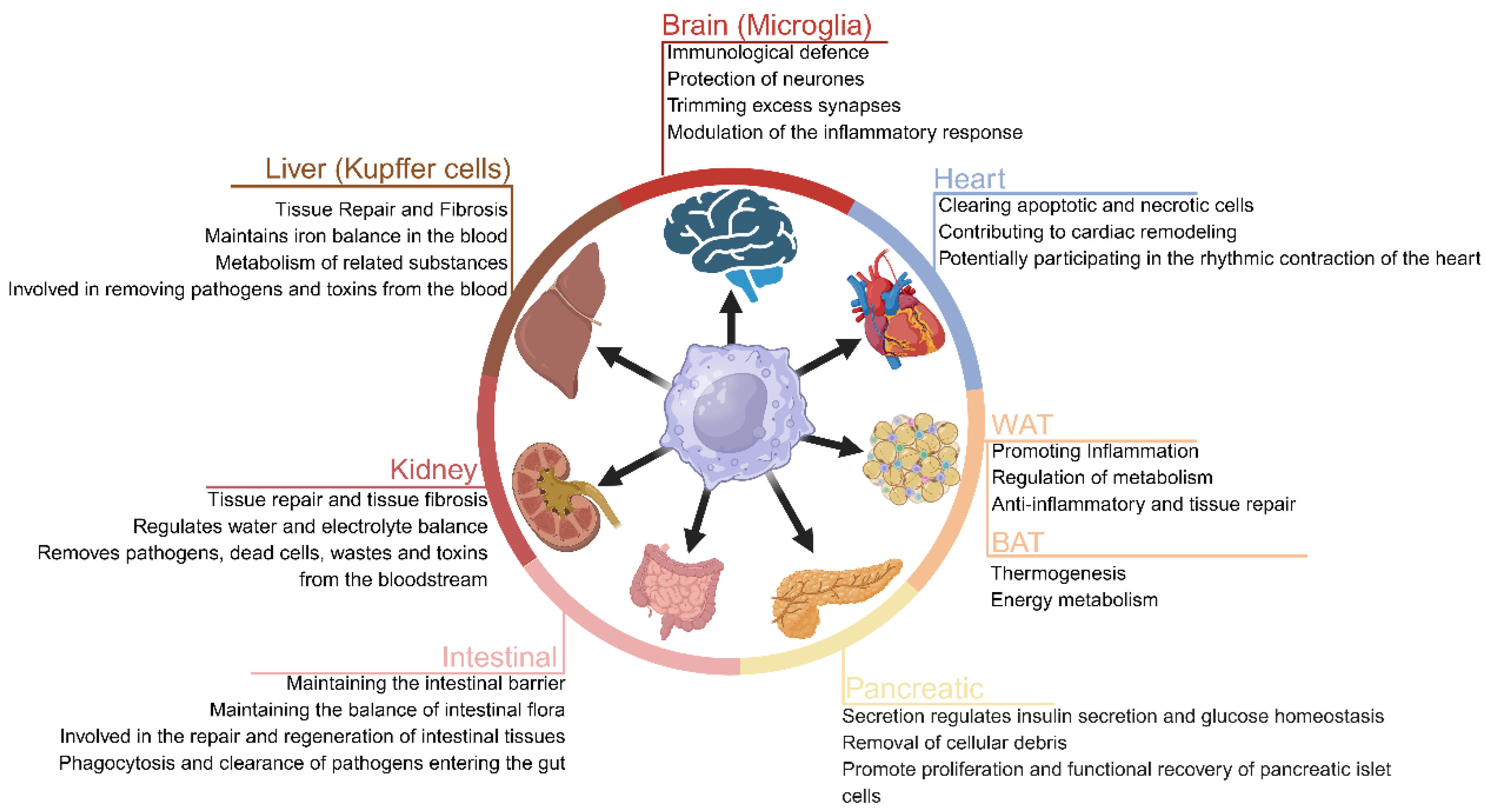
2.1. ATMs
2.2. Diversity of ATMs
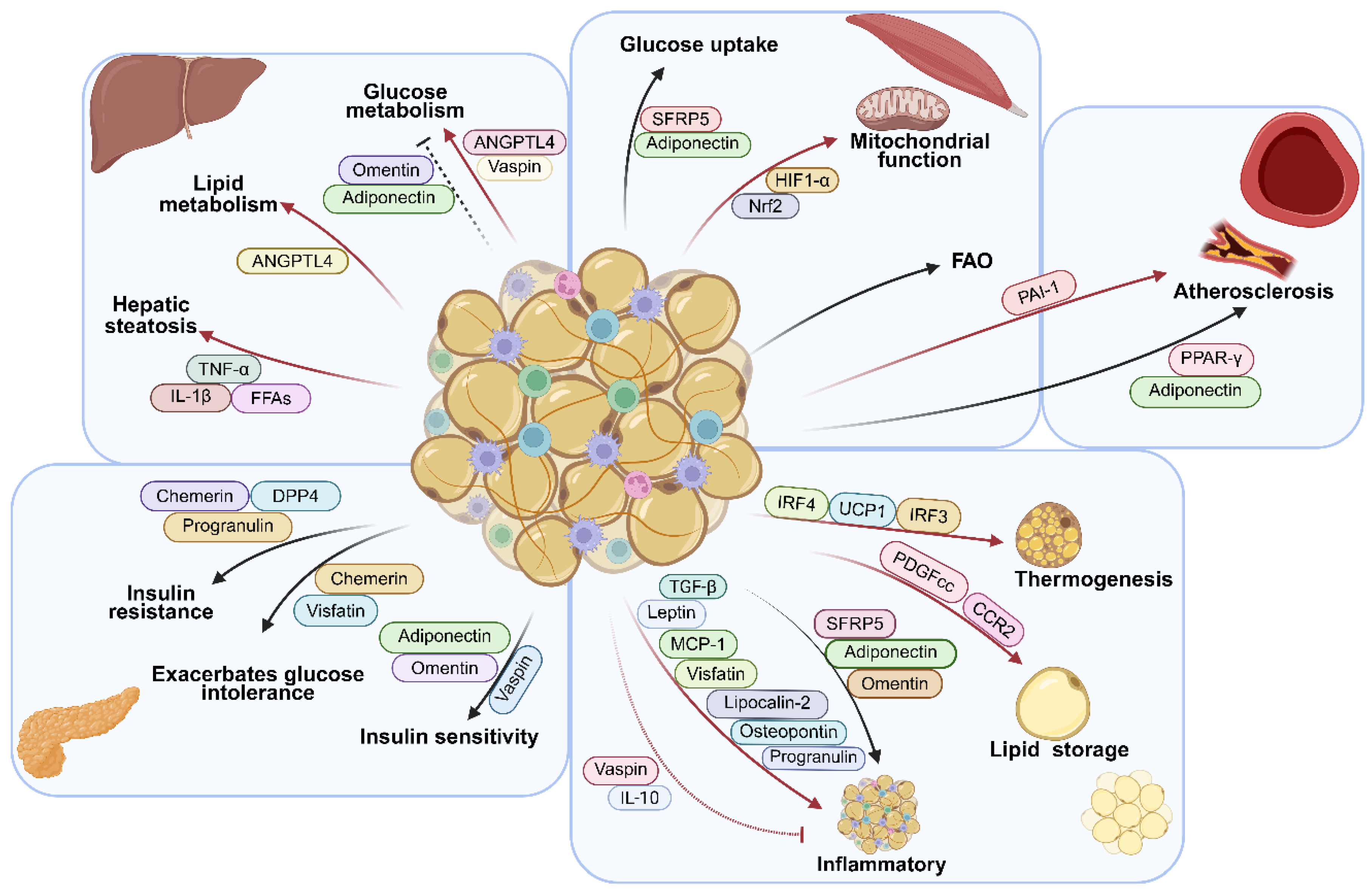
3. Multiple Roles of Macrophages in the Adipose Tissue Microenvironment
3.1. Atms Expansion During Obesity
3.2. Atms, Insulin and Insulin Resistance
3.3. Failure of Adipose Tissue Remodeling
3.4. Macrophage Under Metabolic Stress
3.5. ATMs and WAT Browning
3.6. Metabolic Gene Signatures ATMs in Obesity
4. Macrophage Metabolic Reprogramming
4.1. Key Metabolic Drivers of ATMs Inflammatory Polarization in Obesity: Causative vs. Adaptive Changes
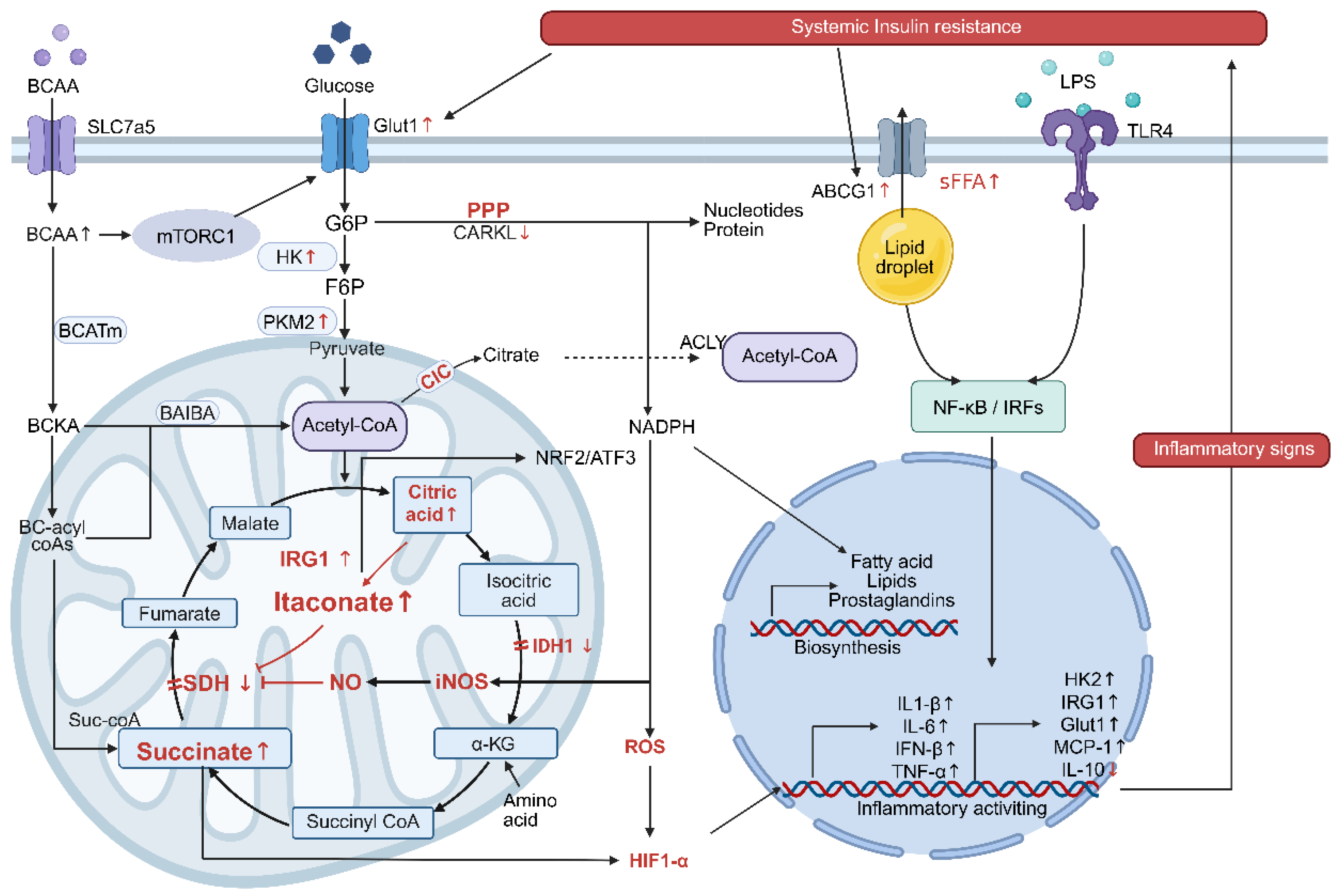
4.2. Glucose Metabolism
4.3. Glycolysis and the PPP
4.4. Disruption of the TCA Cycle
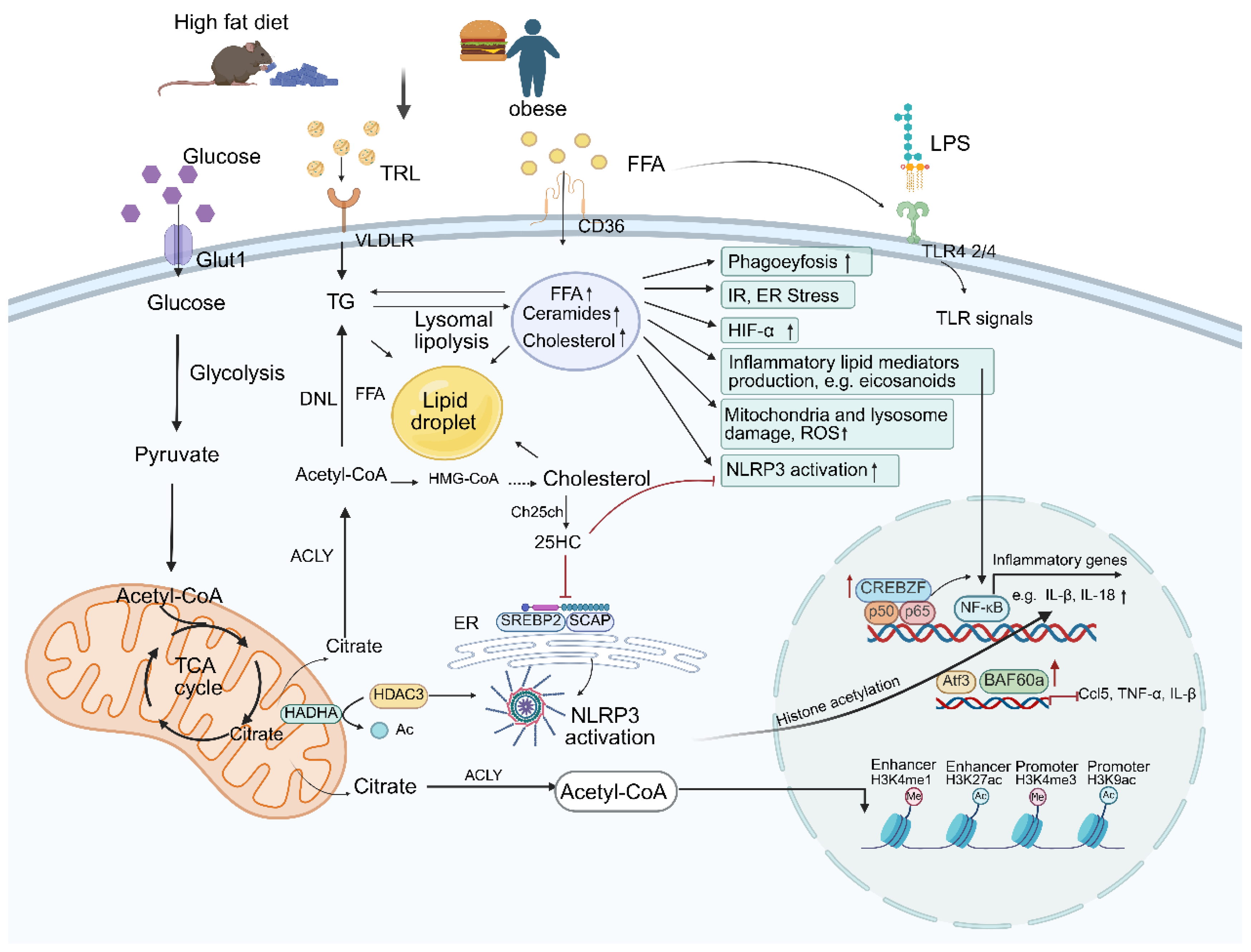
4.5. Lipid Metabolism
4.6. Lipid Biosynthesis Is Essential for Membrane Remodeling and the Synthesis of Inflammatory Mediators
4.7. FAO Promotes Oxidative Metabolism and Histone Acetylation
4.8. Cholesterol
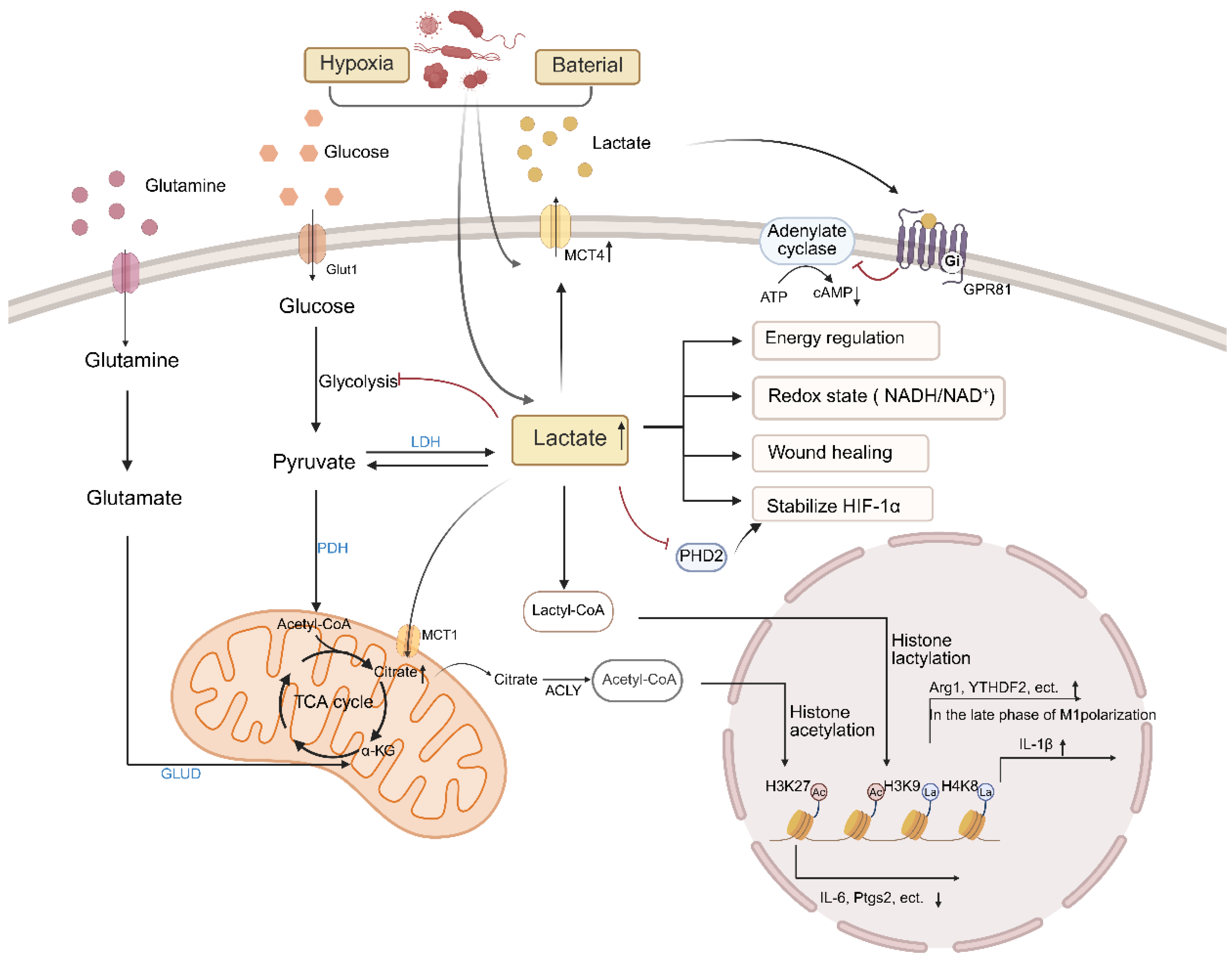
5. Lactic Acid and Macrophage Metabolism
6. Mechanisms of Macrophages Metabolic Reprogramming
6.1. Regulatory Factors of Environmental Sensing and Metabolic Response
6.1.1. Krüppel-Like Factor (KLF)
6.1.2. Interferon Regulatory Factors
6.1.3. Hypoxia-Inducible Factor (HIF) in Macrophages
6.1.4. CREBZF (CREB/ATF Bzip Transcription Factor)
6.1.5. Nrf2
6.2. Post-Translational Modifications
6.2.1. Histone Acetylation, Deacetylation, and Lactylation
6.2.2. Protein Oxygen-Linked Glycosylation (O-Glcnac) Modification and Lipid Metabolism
6.2.3. Neddylation: A Dual Role in the Macrophage Inflammatory Response
6.2.4. S-Palmitoylation
7. Therapeutic Directions on ATMs
8. Conclusions
Author Contributions
Funding
Institutional Review Board Statement
Informed Consent Statement
Data Availability Statement
Conflicts of Interest
References
- Hagberg, C.E.; Spalding, K.L. White adipocyte dysfunction and obesity-associated pathologies in humans. Nat. Rev. Mol. Cell Biol. 2024, 25, 270–289. [Google Scholar] [CrossRef]
- Chen, Y.; Wu, Z.; Huang, S.; Wang, X.; He, S.; Liu, L.; Hu, Y.; Chen, L.; Chen, P.; Liu, S.; et al. Adipocyte IRE1α promotes PGC1α mRNA decay and restrains adaptive thermogenesis. Nat. Metab. 2022, 4, 1166–1184. [Google Scholar] [CrossRef]
- Luo, J.H.; Wang, F.X.; Zhao, J.W.; Yang, C.L.; Rong, S.J.; Lu, W.Y.; Chen, Q.J.; Zhou, Q.; Xiao, J.; Wang, Y.N.; et al. PDIA3 defines a novel subset of adipose macrophages to exacerbate the development of obesity and metabolic disorders. Cell Metab. 2024, 36, 2262–2280. [Google Scholar] [CrossRef]
- Yu, X.; Hu, Y.; Lim, H.Y.; Li, Z.; Jaitin, D.A.; Yang, K.; Kong, W.T.; Xu, J.; Bejarano, D.A.; Bied, M.; et al. Septal LYVE1(+) macrophages control adipocyte stem cell adipogenic potential. Science 2025, 389, eadg1128. [Google Scholar] [CrossRef] [PubMed]
- Pirzgalska, R.M.; Seixas, E.; Seidman, J.S.; Link, V.M.; Sánchez, N.M.; Mahú, I.; Mendes, R.; Gres, V.; Kubasova, N.; Morris, I.; et al. Sympathetic neuron-associated macrophages contribute to obesity by importing and metabolizing norepinephrine. Nat. Med. 2017, 23, 1309–1318. [Google Scholar] [CrossRef]
- Jaitin, D.A.; Adlung, L.; Thaiss, C.A.; Weiner, A.; Li, B.; Descamps, H.; Lundgren, P.; Bleriot, C.; Liu, Z.; Deczkowska, A.; et al. Lipid-Associated Macrophages Control Metabolic Homeostasis in a Trem2-Dependent Manner. Cell 2019, 178, 686–698.e14. [Google Scholar] [CrossRef] [PubMed]
- Keane, J.; Longhi, M.P. Perivascular Adipose Tissue Niches for Modulating Immune Cell Function. Arterioscler. Thromb. Vasc. Biol. 2025, 45, 857–865. [Google Scholar] [CrossRef] [PubMed]
- Murano, I.; Barbatelli, G.; Parisani, V.; Latini, C.; Muzzonigro, G.; Castellucci, M.; Cinti, S. Dead adipocytes, detected as crown-like structures, are prevalent in visceral fat depots of genetically obese mice. J. Lipid Res. 2008, 49, 1562–1568. [Google Scholar] [CrossRef]
- Cinti, S.; Mitchell, G.; Barbatelli, G.; Murano, I.; Ceresi, E.; Faloia, E.; Wang, S.; Fortier, M.; Greenberg, A.S.; Obin, M.S. Adipocyte death defines macrophage localization and function in adipose tissue of obese mice and humans. J. Lipid Res. 2005, 46, 2347–2355. [Google Scholar] [CrossRef]
- Knights, A.J.; Liu, S.; Ma, Y.; Nudell, V.S.; Perkey, E.; Sorensen, M.J.; Kennedy, R.T.; Maillard, I.; Ye, L.; Jun, H.; et al. Acetylcholine-synthesizing macrophages in subcutaneous fat are regulated by β(2) -adrenergic signaling. EMBO J. 2021, 40, EMBJ2020106061. [Google Scholar] [CrossRef]
- Chavakis, T.; Alexaki, V.I.; Ferrante, A.W., Jr. Macrophage function in adipose tissue homeostasis and metabolic inflammation. Nat. Immunol. 2023, 24, 757–766. [Google Scholar] [CrossRef]
- Sárvári, A.K.; Van Hauwaert, E.L.; Markussen, L.K.; Gammelmark, E.; Marcher, A.B.; Ebbesen, M.F.; Nielsen, R.; Brewer, J.R.; Madsen, J.G.S.; Mandrup, S. Plasticity of Epididymal Adipose Tissue in Response to Diet-Induced Obesity at Single-Nucleus Resolution. Cell Metab. 2021, 33, 437–453. [Google Scholar] [CrossRef] [PubMed]
- Lumeng, C.N.; Bodzin, J.L.; Saltiel, A.R. Obesity induces a phenotypic switch in adipose tissue macrophage polarization. J. Clin. Investig. 2007, 117, 175–184. [Google Scholar] [CrossRef]
- Coats, B.R.; Schoenfelt, K.Q.; Barbosa-Lorenzi, V.C.; Peris, E.; Cui, C.; Hoffman, A.; Zhou, G.; Fernandez, S.; Zhai, L.; Hall, B.A.; et al. Metabolically Activated Adipose Tissue Macrophages Perform Detrimental and Beneficial Functions during Diet-Induced Obesity. Cell Rep. 2017, 20, 3149–3161. [Google Scholar] [CrossRef]
- Soedono, S.; Julietta, V.; Nawaz, H.; Cho, K.W. Dynamic Roles and Expanding Diversity of Adipose Tissue Macrophages in Obesity. J. Obes. Metab. Syndr. 2024, 33, 193–212. [Google Scholar] [CrossRef]
- van Furth, R.; Cohn, Z.A.; Hirsch, J.G.; Humphrey, J.H.; Spector, W.G.; Langevoort, H.L. The mononuclear phagocyte system: A new classification of macrophages, monocytes, and their precursor cells. Bull. World Health Organ. 1972, 46, 845–852. [Google Scholar]
- Ginhoux, F.; Guilliams, M. Tissue-Resident Macrophage Ontogeny and Homeostasis. Immunity 2016, 44, 439–449. [Google Scholar] [CrossRef] [PubMed]
- Wu, Y.; Hirschi, K.K. Tissue-Resident Macrophage Development and Function. Front. Cell Dev. Biol. 2020, 8, 617879. [Google Scholar] [CrossRef]
- Lazarov, T.; Juarez-Carreño, S.; Cox, N.; Geissmann, F. Physiology and diseases of tissue-resident macrophages. Nature 2023, 618, 698–707. [Google Scholar] [CrossRef]
- Hoeffel, G.; Chen, J.; Lavin, Y.; Low, D.; Almeida, F.F.; See, P.; Beaudin, A.E.; Lum, J.; Low, I.; Forsberg, E.C.; et al. C-Myb(+) erythro-myeloid progenitor-derived fetal monocytes give rise to adult tissue-resident macrophages. Immunity 2015, 42, 665–678. [Google Scholar] [CrossRef] [PubMed]
- Weisberg, S.P.; McCann, D.; Desai, M.; Rosenbaum, M.; Leibel, R.L.; Ferrante, A.W., Jr. Obesity is associated with macrophage accumulation in adipose tissue. J. Clin. Investig. 2003, 112, 1796–1808. [Google Scholar] [CrossRef]
- Harman-Boehm, I.; Blüher, M.; Redel, H.; Sion-Vardy, N.; Ovadia, S.; Avinoach, E.; Shai, I.; Klöting, N.; Stumvoll, M.; Bashan, N.; et al. Macrophage infiltration into omental versus subcutaneous fat across different populations: Effect of regional adiposity and the comorbidities of obesity. J. Clin. Endocrinol. Metab. 2007, 92, 2240–2247. [Google Scholar] [CrossRef]
- Surmi, B.K.; Hasty, A.H. Macrophage infiltration into adipose tissue: Initiation, propagation and remodeling. Future Lipidol. 2008, 3, 545–556. [Google Scholar] [CrossRef]
- Li, H.; Wu, M.; Zhao, X. Role of chemokine systems in cancer and inflammatory diseases. MedComm 2022, 3, e147. [Google Scholar] [CrossRef]
- Qin, R.; Ren, W.; Ya, G.; Wang, B.; He, J.; Ren, S.; Jiang, L.; Zhao, S. Role of chemokines in the crosstalk between tumor and tumor-associated macrophages. Clin. Exp. Med. 2023, 23, 1359–1373. [Google Scholar] [CrossRef]
- Weisberg, S.P.; Hunter, D.; Huber, R.; Lemieux, J.; Slaymaker, S.; Vaddi, K.; Charo, I.; Leibel, R.L.; Ferrante, A.W., Jr. CCR2 modulates inflammatory and metabolic effects of high-fat feeding. J. Clin. Investig. 2006, 116, 115–124. [Google Scholar] [CrossRef]
- Hotamisligil, G.S.; Shargill, N.S.; Spiegelman, B.M. Adipose expression of tumor necrosis factor-alpha: Direct role in obesity-linked insulin resistance. Science 1993, 259, 87–91. [Google Scholar] [CrossRef] [PubMed]
- Yao, J.; Wu, D.; Qiu, Y. Adipose tissue macrophage in obesity-associated metabolic diseases. Front. Immunol. 2022, 13, 977485. [Google Scholar] [CrossRef] [PubMed]
- Abe, Y.; Kofman, E.R.; Almeida, M.; Ouyang, Z.; Ponte, F.; Mueller, J.R.; Cruz-Becerra, G.; Sakai, M.; Prohaska, T.A.; Spann, N.J.; et al. RANK ligand converts the NCoR/HDAC3 co-repressor to a PGC1β- and RNA-dependent co-activator of osteoclast gene expression. Mol. Cell 2023, 83, 3421–3437. [Google Scholar] [CrossRef] [PubMed]
- Hill, D.A.; Lim, H.W.; Kim, Y.H.; Ho, W.Y.; Foong, Y.H.; Nelson, V.L.; Nguyen, H.C.B.; Chegireddy, K.; Kim, J.; Habertheuer, A.; et al. Distinct macrophage populations direct inflammatory versus physiological changes in adipose tissue. Proc. Natl. Acad. Sci. USA 2018, 115, E5096–E5105. [Google Scholar] [CrossRef]
- Gambaro, S.E.; Zubiría, M.G.; Portales, A.E.; Rey, M.A.; Rumbo, M.; Giovambattista, A. M1 macrophage subtypes activation and adipocyte dysfunction worsen during prolonged consumption of a fructose-rich diet. J. Nutr. Biochem. 2018, 61, 173–182. [Google Scholar] [CrossRef] [PubMed]
- Boroumand, P.; Prescott, D.C.; Mukherjee, T.; Bilan, P.J.; Wong, M.; Shen, J.; Tattoli, I.; Zhou, Y.; Li, A.; Sivasubramaniyam, T.; et al. Bone marrow adipocytes drive the development of tissue invasive Ly6C(high) monocytes during obesity. eLife 2022, 11, 65553. [Google Scholar] [CrossRef] [PubMed]
- Kadl, A.; Meher, A.K.; Sharma, P.R.; Lee, M.Y.; Doran, A.C.; Johnstone, S.R.; Elliott, M.R.; Gruber, F.; Han, J.; Chen, W.; et al. Identification of a novel macrophage phenotype that develops in response to atherogenic phospholipids via Nrf2. Circ. Res. 2010, 107, 737–746. [Google Scholar] [CrossRef]
- Serbulea, V.; Upchurch, C.M.; Ahern, K.W.; Bories, G.; Voigt, P.; DeWeese, D.E.; Meher, A.K.; Harris, T.E.; Leitinger, N. Macrophages sensing oxidized DAMPs reprogram their metabolism to support redox homeostasis and inflammation through a TLR2-Syk-ceramide dependent mechanism. Mol. Metab. 2018, 7, 23–34. [Google Scholar] [CrossRef]
- Gong, S.; Zhai, M.; Shi, J.; Yu, G.; Lei, Z.; Shi, Y.; Zeng, Y.; Ju, P.; Yang, N.; Zhang, Z.; et al. TREM2 macrophage promotes cardiac repair in myocardial infarction by reprogramming metabolism via SLC25A53. Cell Death Differ. 2024, 31, 239–253. [Google Scholar] [CrossRef]
- Zhou, L.; Lu, Y.; Qiu, X.; Chen, Z.; Tang, Y.; Meng, Z.; Yan, C.; Du, H.; Li, S.; Lin, J.D. Lipid droplet efferocytosis attenuates proinflammatory signaling in macrophages via TREM2- and MS4A7-dependent mechanisms. Cell Rep. 2025, 44, 115310. [Google Scholar] [CrossRef]
- Ma, Y.; Jun, H.; Wu, J. Immune cell cholinergic signaling in adipose thermoregulation and immunometabolism. Trends Immunol. 2022, 43, 718–727. [Google Scholar] [CrossRef]
- Knights, A.J.; Kim, E.J.; Liu, S.; Wu, J. Transcriptomic plasticity of cholinergic adipose macrophages in the acute thermogenic response. J. Biol. Chem. 2025, 301, 110925. [Google Scholar] [CrossRef]
- Hubler, M.J.; Erikson, K.M.; Kennedy, A.J.; Hasty, A.H. MFe(hi) adipose tissue macrophages compensate for tissue iron perturbations in mice. Am. J. Physiol. Cell Physiol. 2018, 315, C319–C329. [Google Scholar] [CrossRef]
- Nawaz, A.; Fujisaka, S.; Kado, T.; Jeelani, I.; Tobe, K. Heterogeneity of adipose tissue-resident macrophages-beyond M1/M2 paradigm. Diabetol. Int. 2023, 14, 125–133. [Google Scholar] [CrossRef] [PubMed]
- Li, X.; Ren, Y.; Chang, K.; Wu, W.; Griffiths, H.R.; Lu, S.; Gao, D. Adipose tissue macrophages as potential targets for obesity and metabolic diseases. Front. Immunol. 2023, 14, 1153915. [Google Scholar] [CrossRef] [PubMed]
- Kratz, M.; Coats, B.R.; Hisert, K.B.; Hagman, D.; Mutskov, V.; Peris, E.; Schoenfelt, K.Q.; Kuzma, J.N.; Larson, I.; Billing, P.S.; et al. Metabolic dysfunction drives a mechanistically distinct proinflammatory phenotype in adipose tissue macrophages. Cell Metab. 2014, 20, 614–625. [Google Scholar] [CrossRef] [PubMed]
- Tan, J.; Fan, W.; Liu, T.; Zhu, B.; Liu, Y.; Wang, S.; Wu, J.; Liu, J.; Zou, F.; Wei, J.; et al. TREM2(+) macrophages suppress CD8(+) T-cell infiltration after transarterial chemoembolisation in hepatocellular carcinoma. J. Hepatol. 2023, 79, 126–140. [Google Scholar] [CrossRef]
- Jiang, Y.; Jo, A.Y.; Graff, J.M. SnapShot: Adipocyte life cycle. Cell 2012, 150, 234. [Google Scholar] [CrossRef]
- Mittelheisser, V.; Gensbittel, V.; Bonati, L.; Li, W.; Tang, L.; Goetz, J.G. Evidence and therapeutic implications of biomechanically regulated immunosurveillance in cancer and other diseases. Nat. Nanotechnol. 2024, 19, 281–297. [Google Scholar] [CrossRef] [PubMed]
- Romani, P.; Valcarcel-Jimenez, L.; Frezza, C.; Dupont, S. Crosstalk between mechanotransduction and metabolism. Nat. Rev. Mol. Cell Biol. 2021, 22, 22–38. [Google Scholar] [CrossRef]
- Jokela, T.A.; LaBarge, M.A. Integration of mechanical and ECM microenvironment signals in the determination of cancer stem cell states. Curr. Stem Cell Rep. 2021, 7, 39–47. [Google Scholar] [CrossRef]
- Scherer, P.E. The Multifaceted Roles of Adipose Tissue-Therapeutic Targets for Diabetes and Beyond: The 2015 Banting Lecture. Diabetes 2016, 65, 1452–1461. [Google Scholar] [CrossRef]
- Matz, A.J.; Qu, L.; Karlinsey, K.; Vella, A.T.; Zhou, B. Capturing the multifaceted function of adipose tissue macrophages. Front. Immunol. 2023, 14, 1148188. [Google Scholar] [CrossRef]
- Huggins, D.N.; LaRue, R.S.; Wang, Y.; Knutson, T.P.; Xu, Y.; Williams, J.W.; Schwertfeger, K.L. Characterizing Macrophage Diversity in Metastasis-Bearing Lungs Reveals a Lipid-Associated Macrophage Subset. Cancer Res. 2021, 81, 5284–5295. [Google Scholar] [CrossRef]
- Ahmed, B.; Sultana, R.; Greene, M.W. Adipose tissue and insulin resistance in obese. Biomed. Pharmacother. 2021, 137, 111315. [Google Scholar] [CrossRef]
- Lee, Y.; Kim, M.; Han, J.; Yeom, K.H.; Lee, S.; Baek, S.H.; Kim, V.N. MicroRNA genes are transcribed by RNA polymerase II. EMBO J. 2004, 23, 4051–4060. [Google Scholar] [CrossRef] [PubMed]
- Nguyen, M.T.; Favelyukis, S.; Nguyen, A.K.; Reichart, D.; Scott, P.A.; Jenn, A.; Liu-Bryan, R.; Glass, C.K.; Neels, J.G.; Olefsky, J.M. A subpopulation of macrophages infiltrates hypertrophic adipose tissue and is activated by free fatty acids via Toll-like receptors 2 and 4 and JNK-dependent pathways. J. Biol. Chem. 2007, 282, 35279–35292. [Google Scholar] [CrossRef]
- Fischer-Posovszky, P.; Keuper, M.; Nagel, S.; Hesse, D.; Schürmann, A.; Debatin, K.M.; Strauss, G.; Wabitsch, M. Downregulation of FLIP by cycloheximide sensitizes human fat cells to CD95-induced apoptosis. Exp. Cell Res. 2011, 317, 2200–2209. [Google Scholar] [CrossRef] [PubMed]
- Strissel, K.J.; Stancheva, Z.; Miyoshi, H.; Perfield, J.W., 2nd; DeFuria, J.; Jick, Z.; Greenberg, A.S.; Obin, M.S. Adipocyte death, adipose tissue remodeling, and obesity complications. Diabetes 2007, 56, 2910–2918. [Google Scholar] [CrossRef]
- Jin, C.; Flavell, R.A. Innate sensors of pathogen and stress: Linking inflammation to obesity. J. Allergy Clin. Immunol. 2013, 132, 287–294. [Google Scholar] [CrossRef]
- Vandanmagsar, B.; Youm, Y.H.; Ravussin, A.; Galgani, J.E.; Stadler, K.; Mynatt, R.L.; Ravussin, E.; Stephens, J.M.; Dixit, V.D. The NLRP3 inflammasome instigates obesity-induced inflammation and insulin resistance. Nat. Med. 2011, 17, 179–188. [Google Scholar] [CrossRef] [PubMed]
- Wong, A.; Sun, Q.; Latif, I.I.; Karwi, Q.G. Metabolic flux in macrophages in obesity and type-2 diabetes. J. Pharm. Sci. 2024, 27, 13210. [Google Scholar] [CrossRef]
- Desai, H.R.; Sivasubramaniyam, T.; Revelo, X.S.; Schroer, S.A.; Luk, C.T.; Rikkala, P.R.; Metherel, A.H.; Dodington, D.W.; Park, Y.J.; Kim, M.J.; et al. Macrophage JAK2 deficiency protects against high-fat diet-induced inflammation. Sci. Rep. 2017, 7, 7653. [Google Scholar] [CrossRef]
- Shimobayashi, M.; Albert, V.; Woelnerhanssen, B.; Frei, I.C.; Weissenberger, D.; Meyer-Gerspach, A.C.; Clement, N.; Moes, S.; Colombi, M.; Meier, J.A.; et al. Insulin resistance causes inflammation in adipose tissue. J. Clin. Investig. 2018, 128, 1538–1550. [Google Scholar] [CrossRef]
- Dahik, V.D.; Kc, P.; Materne, C.; Reydellet, C.; Lhomme, M.; Cruciani-Guglielmacci, C.; Denom, J.; Bun, E.; Ponnaiah, M.; Deknuydt, F.; et al. ABCG1 orchestrates adipose tissue macrophage plasticity and insulin resistance in obesity by rewiring saturated fatty acid pools. Sci. Transl. Med. 2024, 16, eadi6682. [Google Scholar] [CrossRef]
- Sakers, A.; De Siqueira, M.K.; Seale, P.; Villanueva, C.J. Adipose-tissue plasticity in health and disease. Cell 2022, 185, 419–446. [Google Scholar] [CrossRef]
- Crewe, C.; An, Y.A.; Scherer, P.E. The ominous triad of adipose tissue dysfunction: Inflammation, fibrosis, and impaired angiogenesis. J. Clin. Investig. 2017, 127, 74–82. [Google Scholar] [CrossRef]
- Cypess, A.M. Reassessing Human Adipose Tissue. N. Engl. J. Med. 2022, 386, 768–779. [Google Scholar] [CrossRef]
- Zhang, Y.; Cheng, Z.; Hong, L.; Liu, J.; Ma, X.; Wang, W.; Pan, R.; Lu, W.; Luo, Q.; Gao, S.; et al. Apolipoprotein E (ApoE) orchestrates adipose tissue inflammation and metabolic disorders through NLRP3 inflammasome. Mol. Biomed. 2023, 4, 47. [Google Scholar] [CrossRef]
- Sun, K.; Kusminski, C.M.; Scherer, P.E. Adipose tissue remodeling and obesity. J. Clin. Investig. 2011, 121, 2094–2101. [Google Scholar] [CrossRef]
- Lindhorst, A.; Raulien, N.; Wieghofer, P.; Eilers, J.; Rossi, F.M.V.; Bechmann, I.; Gericke, M. Adipocyte death triggers a pro-inflammatory response and induces metabolic activation of resident macrophages. Cell Death Dis. 2021, 12, 579. [Google Scholar] [CrossRef] [PubMed]
- Shan, B.; Wang, X.; Wu, Y.; Xu, C.; Xia, Z.; Dai, J.; Shao, M.; Zhao, F.; He, S.; Yang, L.; et al. The metabolic ER stress sensor IRE1α suppresses alternative activation of macrophages and impairs energy expenditure in obesity. Nat. Immunol. 2017, 18, 519–529. [Google Scholar] [CrossRef] [PubMed]
- Wu, D.; Eeda, V.; Maria, Z.; Rawal, K.; Wang, A.; Herlea-Pana, O.; Babu Undi, R.; Lim, H.Y.; Wang, W. Targeting IRE1α improves insulin sensitivity and thermogenesis and suppresses metabolically active adipose tissue macrophages in male obese mice. eLife 2025, 13, 100581. [Google Scholar] [CrossRef] [PubMed]
- Liu, S.; Zhang, X.; Yao, X.; Wang, G.; Huang, S.; Chen, P.; Tang, M.; Cai, J.; Wu, Z.; Zhang, Y.; et al. Mammalian IRE1α dynamically and functionally coalesces with stress granules. Nat. Cell Biol. 2024, 26, 917–931. [Google Scholar] [CrossRef]
- Cereijo, R.; Gavaldà-Navarro, A.; Cairó, M.; Quesada-López, T.; Villarroya, J.; Morón-Ros, S.; Sánchez-Infantes, D.; Peyrou, M.; Iglesias, R.; Mampel, T.; et al. CXCL14, a Brown Adipokine that Mediates Brown-Fat-to-Macrophage Communication in Thermogenic Adaptation. Cell Metab. 2018, 28, 750–763. [Google Scholar] [CrossRef]
- Xie, L.; Wang, H.; Wu, D.; Zhang, F.; Chen, W.; Ye, Y.; Hu, F. CXCL13 promotes thermogenesis in mice via recruitment of M2 macrophage and inhibition of inflammation in brown adipose tissue. Front. Immunol. 2023, 14, 1253766. [Google Scholar] [CrossRef]
- Tsou, T.C.; Yeh, S.C.; Tsai, F.Y.; Chen, P.Y. Palmitic acid and lipopolysaccharide induce macrophage TNFα secretion, suppressing browning regulators and mitochondrial respiration in adipocytes. Toxicol. Appl. Pharmacol. 2025, 500, 117389. [Google Scholar] [CrossRef]
- Lu, Y.; Feng, J.; Yan, Y.; Qiu, J.; Feng, L. LLTH induces white adipose tissue browning via NF κB inhibition in ATM. Sci. Rep. 2025, 15, 37716. [Google Scholar] [CrossRef] [PubMed]
- Kang, G.S.; Kim, Y.E.; Oh, H.R.; Jo, H.J.; Bok, S.; Jeon, Y.K.; Cheon, G.J.; Roh, T.Y.; Chang, Y.T.; Park, D.J.; et al. Hypoxia-inducible factor-1α-deficient adipose-tissue macrophages produce the heat to mediate lipolysis of white adipose tissue through uncoupling protein-1. Lab. Anim. Res. 2024, 40, 37. [Google Scholar] [CrossRef] [PubMed]
- Zhou, R.N.; Zhu, Z.W.; Xu, P.Y.; Shen, L.X.; Wang, Z.; Xue, Y.Y.; Xiang, Y.Y.; Cao, Y.; Yu, X.Z.; Zhao, J.; et al. Rhein targets macrophage SIRT2 to promote adipose tissue thermogenesis in obesity in mice. Commun. Biol. 2024, 7, 1003. [Google Scholar] [CrossRef] [PubMed]
- Liu, Y.; Ge, M.; Xiao, X.; Lu, Y.; Zhao, W.; Zheng, K.; Yu, K.; He, Y.; Zhong, Q.; Zhou, L.; et al. Sarcosine decreases in sarcopenia and enhances muscle regeneration and adipose thermogenesis by activating anti-inflammatory macrophages. Nat. Aging 2025, 5, 1810–1827. [Google Scholar] [CrossRef]
- Emont, M.P.; Jacobs, C.; Essene, A.L.; Pant, D.; Tenen, D.; Colleluori, G.; Di Vincenzo, A.; Jørgensen, A.M.; Dashti, H.; Stefek, A.; et al. A single-cell atlas of human and mouse white adipose tissue. Nature 2022, 603, 926–933. [Google Scholar] [CrossRef]
- Vijay, J.; Gauthier, M.F.; Biswell, R.L.; Louiselle, D.A.; Johnston, J.J.; Cheung, W.A.; Belden, B.; Pramatarova, A.; Biertho, L.; Gibson, M.; et al. Single-cell analysis of human adipose tissue identifies depot and disease specific cell types. Nat. Metab. 2020, 2, 97–109. [Google Scholar] [CrossRef]
- Stansbury, C.M.; Dotson, G.A.; Pugh, H.; Rehemtulla, A.; Rajapakse, I.; Muir, L.A. A lipid-associated macrophage lineage rewires the spatial landscape of adipose tissue in early obesity. JCI Insight 2023, 8, 171701. [Google Scholar] [CrossRef]
- Weinstock, A.; Brown, E.J.; Garabedian, M.L.; Pena, S.; Sharma, M.; Lafaille, J.; Moore, K.J.; Fisher, E.A. Single-Cell RNA Sequencing of Visceral Adipose Tissue Leukocytes Reveals that Caloric Restriction Following Obesity Promotes the Accumulation of a Distinct Macrophage Population with Features of Phagocytic Cells. Immunometabolism 2019, 1, 190008. [Google Scholar] [CrossRef]
- Zeng, R.; Li, S.; Cheng, Y.; Chen, Y. 1742-P: LAMA4-ITGA9/ITGB1 Signaling Mediates Adipocyte–Macrophage Coevolution in Obesity-Related Metabolic Dysfunction. Diabetes 2025, 74, 1742-P. [Google Scholar] [CrossRef]
- Corcoran, S.E.; O’Neill, L.A. HIF1α and metabolic reprogramming in inflammation. J. Clin. Investig. 2016, 126, 3699–3707. [Google Scholar] [CrossRef] [PubMed]
- Pearce, E.L.; Pearce, E.J. Metabolic pathways in immune cell activation and quiescence. Immunity 2013, 38, 633–643. [Google Scholar] [CrossRef] [PubMed]
- Wculek, S.K.; Heras-Murillo, I.; Mastrangelo, A.; Mañanes, D.; Galán, M.; Miguel, V.; Curtabbi, A.; Barbas, C.; Chandel, N.S.; Enríquez, J.A.; et al. Oxidative phosphorylation selectively orchestrates tissue macrophage homeostasis. Immunity 2023, 56, 516–530. [Google Scholar] [CrossRef]
- Park, Y.J.; Choe, S.S.; Sohn, J.H.; Kim, J.B. The role of glucose-6-phosphate dehydrogenase in adipose tissue inflammation in obesity. Adipocyte 2017, 6, 147–153. [Google Scholar] [CrossRef]
- Nagy, C.; Haschemi, A. Time and Demand are Two Critical Dimensions of Immunometabolism: The Process of Macrophage Activation and the Pentose Phosphate Pathway. Front. Immunol. 2015, 6, 164. [Google Scholar] [CrossRef] [PubMed]
- Park, J.; Rho, H.K.; Kim, K.H.; Choe, S.S.; Lee, Y.S.; Kim, J.B. Overexpression of glucose-6-phosphate dehydrogenase is associated with lipid dysregulation and insulin resistance in obesity. Mol. Cell Biol. 2005, 25, 5146–5157. [Google Scholar] [CrossRef]
- Gupte, S.A.; Levine, R.J.; Gupte, R.S.; Young, M.E.; Lionetti, V.; Labinskyy, V.; Floyd, B.C.; Ojaimi, C.; Bellomo, M.; Wolin, M.S.; et al. Glucose-6-phosphate dehydrogenase-derived NADPH fuels superoxide production in the failing heart. J. Mol. Cell Cardiol. 2006, 41, 340–349. [Google Scholar] [CrossRef]
- O’Neill, L.A.; Kishton, R.J.; Rathmell, J. A guide to immunometabolism for immunologists. Nat. Rev. Immunol. 2016, 16, 553–565. [Google Scholar] [CrossRef]
- Wang, T.; Liu, H.; Lian, G.; Zhang, S.Y.; Wang, X.; Jiang, C. HIF1α-Induced Glycolysis Metabolism Is Essential to the Activation of Inflammatory Macrophages. Mediat. Inflamm. 2017, 2017, 9029327. [Google Scholar] [CrossRef]
- Ryan, D.G.; Knatko, E.V.; Casey, A.M.; Hukelmann, J.L.; Dayalan Naidu, S.; Brenes, A.J.; Ekkunagul, T.; Baker, C.; Higgins, M.; Tronci, L.; et al. Nrf2 activation reprograms macrophage intermediary metabolism and suppresses the type I interferon response. iScience 2022, 25, 103827. [Google Scholar] [CrossRef]
- Li, B.; Sun, S.; Li, J.J.; Yuan, J.P.; Sun, S.R.; Wu, Q. Adipose tissue macrophages: Implications for obesity-associated cancer. Mil. Med. Res. 2023, 10, 1. [Google Scholar] [CrossRef] [PubMed]
- Infantino, V.; Convertini, P.; Cucci, L.; Panaro, M.A.; Di Noia, M.A.; Calvello, R.; Palmieri, F.; Iacobazzi, V. The mitochondrial citrate carrier: A new player in inflammation. Biochem. J. 2011, 438, 433–436. [Google Scholar] [CrossRef]
- Mosaoa, R.; Kasprzyk-Pawelec, A.; Fernandez, H.R.; Avantaggiati, M.L. The Mitochondrial Citrate Carrier SLC25A1/CIC and the Fundamental Role of Citrate in Cancer, Inflammation and Beyond. Biomolecules 2021, 11, 141. [Google Scholar] [CrossRef] [PubMed]
- Palmieri, E.M.; Spera, I.; Menga, A.; Infantino, V.; Porcelli, V.; Iacobazzi, V.; Pierri, C.L.; Hooper, D.C.; Palmieri, F.; Castegna, A. Acetylation of human mitochondrial citrate carrier modulates mitochondrial citrate/malate exchange activity to sustain NADPH production during macrophage activation. Biochim. Biophys. Acta 2015, 1847, 729–738. [Google Scholar] [CrossRef]
- Fuhrmann, D.C.; Wittig, I.; Brüne, B. TMEM126B deficiency reduces mitochondrial SDH oxidation by LPS, attenuating HIF-1α stabilization and IL-1β expression. Redox Biol. 2019, 20, 204–216. [Google Scholar] [CrossRef]
- Mills, E.L.; Kelly, B.; Logan, A.; Costa, A.S.H.; Varma, M.; Bryant, C.E.; Tourlomousis, P.; Däbritz, J.H.M.; Gottlieb, E.; Latorre, I.; et al. Repurposing mitochondria from ATP production to ROS generation drives a pro-inflammatory phenotype in macrophages that depends on succinate oxidation by complex II. Cell 2018, 167, 457. [Google Scholar] [CrossRef] [PubMed]
- Mills, E.L.; Kelly, B.; Logan, A.; Costa, A.S.H.; Varma, M.; Bryant, C.E.; Tourlomousis, P.; Däbritz, J.H.M.; Gottlieb, E.; Latorre, I.; et al. Succinate Dehydrogenase Supports Metabolic Repurposing of Mitochondria to Drive Inflammatory Macrophages. Cell 2016, 167, 457–470. [Google Scholar] [CrossRef]
- Tannahill, G.M.; Curtis, A.M.; Adamik, J.; Palsson-McDermott, E.M.; McGettrick, A.F.; Goel, G.; Frezza, C.; Bernard, N.J.; Kelly, B.; Foley, N.H.; et al. Succinate is an inflammatory signal that induces IL-1β through HIF-1α. Nature 2013, 496, 238–242. [Google Scholar] [CrossRef]
- Shi, H.; Kokoeva, M.V.; Inouye, K.; Tzameli, I.; Yin, H.; Flier, J.S. TLR4 links innate immunity and fatty acid-induced insulin resistance. J. Clin. Investig. 2006, 116, 3015–3025. [Google Scholar] [CrossRef]
- Blair, M.C.; Neinast, M.D.; Jang, C.; Chu, Q.; Jung, J.W.; Axsom, J.; Bornstein, M.R.; Thorsheim, C.; Li, K.; Hoshino, A.; et al. Branched-chain amino acid catabolism in muscle affects systemic BCAA levels but not insulin resistance. Nat. Metab. 2023, 5, 589–606. [Google Scholar] [CrossRef] [PubMed]
- Papathanassiu, A.E.; Ko, J.H.; Imprialou, M.; Bagnati, M.; Srivastava, P.K.; Vu, H.A.; Cucchi, D.; McAdoo, S.P.; Ananieva, E.A.; Mauro, C.; et al. BCAT1 controls metabolic reprogramming in activated human macrophages and is associated with inflammatory diseases. Nat. Commun. 2017, 8, 16040. [Google Scholar] [CrossRef]
- Wolfson, R.L.; Chantranupong, L.; Saxton, R.A.; Shen, K.; Scaria, S.M.; Cantor, J.R.; Sabatini, D.M. Sestrin2 is a leucine sensor for the mTORC1 pathway. Science 2016, 351, 43–48. [Google Scholar] [CrossRef] [PubMed]
- Seim, G.L.; Britt, E.C.; John, S.V.; Yeo, F.J.; Johnson, A.R.; Eisenstein, R.S.; Pagliarini, D.J.; Fan, J. Two-stage metabolic remodelling in macrophages in response to lipopolysaccharide and interferon-γ stimulation. Nat. Metab. 2019, 1, 731–742. [Google Scholar] [CrossRef]
- Mills, E.L.; Ryan, D.G.; Prag, H.A.; Dikovskaya, D.; Menon, D.; Zaslona, Z.; Jedrychowski, M.P.; Costa, A.S.H.; Higgins, M.; Hams, E.; et al. Itaconate is an anti-inflammatory metabolite that activates Nrf2 via alkylation of KEAP1. Nature 2018, 556, 113–117. [Google Scholar] [CrossRef] [PubMed]
- Chen, Y.X.; Wu, Y.P.; Zhang, Y.; Ji, P.X.; Hua, J. Modulation of Lipid Metabolism and Keap1-Nrf2 Pathway Activation in Macrophages by Targeting PPARγ Affects NAFLD Progression. J. Gastroenterol. Hepatol. 2025, 40, 2119–2133. [Google Scholar] [CrossRef]
- Weiss, J.M.; Palmieri, E.M.; Gonzalez-Cotto, M.; Bettencourt, I.A.; Megill, E.L.; Snyder, N.W.; McVicar, D.W. Itaconic acid underpins hepatocyte lipid metabolism in non-alcoholic fatty liver disease in male mice. Nat. Metab. 2023, 5, 981–995. [Google Scholar] [CrossRef]
- Yan, J.; Horng, T. Lipid Metabolism in Regulation of Macrophage Functions. Trends Cell Biol. 2020, 30, 979–989. [Google Scholar] [CrossRef]
- Gabani, M.; Shapiro, M.D.; Toth, P.P. The Role of Triglyceride-rich Lipoproteins and Their Remnants in Atherosclerotic Cardiovascular Disease. Eur. Cardiol. 2023, 18, e56. [Google Scholar] [CrossRef]
- Tang, H.; Liu, Z.; Han, G.; Geng, J.; Liu, B.; Zhang, R.; Zhang, Z. Unexpected omega-3 activities in intracellular lipolysis and macrophage foaming revealed by fluorescence lifetime imaging. Proc. Natl. Acad. Sci. USA 2024, 121, e2321255121. [Google Scholar] [CrossRef] [PubMed]
- Das, U.N. Essential Fatty Acids and Their Metabolites in the Pathobiology of Inflammation and Its Resolution. Biomolecules 2021, 11, 1873. [Google Scholar] [CrossRef]
- Tol, M.J.; Shimanaka, Y.; Bedard, A.H.; Sapia, J.; Cui, L.; Colaço-Gaspar, M.; Hofer, P.; Ferrari, A.; Qian, K.; Kennelly, J.P.; et al. Dietary control of peripheral adipose storage capacity through membrane lipid remodelling. Nat. Metab. 2025, 7, 1424–1442. [Google Scholar] [CrossRef]
- Kaviani, E.; Hajibabaie, F.; Abedpoor, N.; Safavi, K. Synergic Effects and Possible Mechanism of Omega-6 Fatty Acids (ω-6) on Immune System, Inflammation, and Cancer. Mol. Nutr. Food Res. 2025, 69, e70092. [Google Scholar] [CrossRef]
- Petkevicius, K.; Virtue, S.; Bidault, G.; Jenkins, B.; Çubuk, C.; Morgantini, C.; Aouadi, M.; Dopazo, J.; Serlie, M.J.; Koulman, A.; et al. Accelerated phosphatidylcholine turnover in macrophages promotes adipose tissue inflammation in obesity. eLife 2019, 8, 47990. [Google Scholar] [CrossRef]
- Mank, M.M.; Zoller, K.A.; Fastiggi, V.A.; Ather, J.L.; Poynter, M.E. Acidosis Licenses the NLRP3 Inflammasome-Inhibiting Effects of Beta-Hydroxybutyrate and Short-Chain Carboxylic Acids. BioRxiv 2025. [Google Scholar] [CrossRef]
- Lin, Z.; Lv, D.; Zha, H.; Liu, H.; Peng, R.; Yang, J.; Li, W.; Liao, X.; Sun, Y.; Zhang, Z. HMGCS2 desuccinylation modulates acetoacetate to drive tubule-macrophage inflammatory crosstalk in diabetic kidney disease. Metab. Clin. Exp. 2026, 177, 156510. [Google Scholar] [CrossRef]
- Batista-Gonzalez, A.; Vidal, R.; Criollo, A.; Carreño, L.J. New Insights on the Role of Lipid Metabolism in the Metabolic Reprogramming of Macrophages. Front. Immunol. 2019, 10, 2993. [Google Scholar] [CrossRef] [PubMed]
- Leishman, S.; Aljadeed, N.M.; Qian, L.; Cockcroft, S.; Behmoaras, J.; Anand, P.K. Fatty acid synthesis promotes inflammasome activation through NLRP3 palmitoylation. Cell Rep. 2024, 43, 114516. [Google Scholar] [CrossRef]
- Liu, Y.; Xu, R.; Gu, H.; Zhang, E.; Qu, J.; Cao, W.; Huang, X.; Yan, H.; He, J.; Cai, Z. Metabolic reprogramming in macrophage responses. Biomark. Res. 2021, 9, 1. [Google Scholar] [CrossRef] [PubMed]
- Liu, S.; Zhang, H.; Li, Y.; Zhang, Y.; Bian, Y.; Zeng, Y.; Yao, X.; Wan, J.; Chen, X.; Li, J.; et al. S100A4 enhances protumor macrophage polarization by control of PPAR-γ-dependent induction of fatty acid oxidation. J. Immunother. Cancer 2021, 9, e002548. [Google Scholar] [CrossRef] [PubMed]
- Covarrubias, A.J.; Aksoylar, H.I.; Yu, J.; Snyder, N.W.; Worth, A.J.; Iyer, S.S.; Wang, J.; Ben-Sahra, I.; Byles, V.; Polynne-Stapornkul, T.; et al. Akt-mTORC1 signaling regulates Acly to integrate metabolic input to control of macrophage activation. eLife 2016, 5, e11612. [Google Scholar] [CrossRef]
- Jung, J.; Zeng, H.; Horng, T. Metabolism as a guiding force for immunity. Nat. Cell Biol. 2019, 21, 85–93. [Google Scholar] [CrossRef]
- Huang, S.C.; Everts, B.; Ivanova, Y.; O’Sullivan, D.; Nascimento, M.; Smith, A.M.; Beatty, W.; Love-Gregory, L.; Lam, W.Y.; O’Neill, C.M.; et al. Cell-intrinsic lysosomal lipolysis is essential for alternative activation of macrophages. Nat. Immunol. 2014, 15, 846–855. [Google Scholar] [CrossRef]
- Gonzalez-Hurtado, E.; Lee, J.; Choi, J.; Selen Alpergin, E.S.; Collins, S.L.; Horton, M.R.; Wolfgang, M.J. Loss of macrophage fatty acid oxidation does not potentiate systemic metabolic dysfunction. Am. J. Physiol. Endocrinol. Metab. 2017, 312, E381–E393. [Google Scholar] [CrossRef]
- Nicholls, H.T.; Kowalski, G.; Kennedy, D.J.; Risis, S.; Zaffino, L.A.; Watson, N.; Kanellakis, P.; Watt, M.J.; Bobik, A.; Bonen, A.; et al. Hematopoietic cell-restricted deletion of CD36 reduces high-fat diet-induced macrophage infiltration and improves insulin signaling in adipose tissue. Diabetes 2011, 60, 1100–1110. [Google Scholar] [CrossRef] [PubMed]
- Chen, Y.; Yang, M.; Huang, W.; Chen, W.; Zhao, Y.; Schulte, M.L.; Volberding, P.; Gerbec, Z.; Zimmermann, M.T.; Zeighami, A.; et al. Mitochondrial Metabolic Reprogramming by CD36 Signaling Drives Macrophage Inflammatory Responses. Circ. Res. 2019, 125, 1087–1102. [Google Scholar] [CrossRef] [PubMed]
- Linton, M.F.; Yancey, P.G.; Tao, H.; Davies, S.S. HDL Function and Atherosclerosis: Reactive Dicarbonyls as Promising Targets of Therapy. Circ. Res. 2023, 132, 1521–1545. [Google Scholar] [CrossRef]
- Yelamanchili, D.; Gillard, B.K.; Gotto, A.M., Jr.; Achirica, M.C.; Nasir, K.; Remaley, A.T.; Rosales, C.; Pownall, H.J. HDL-free cholesterol influx into macrophages and transfer to LDL correlate with HDL-free cholesterol content. J. Lipid Res. 2025, 66, 100707. [Google Scholar] [CrossRef]
- Wei, X.; Song, H.; Yin, L.; Rizzo, M.G.; Sidhu, R.; Covey, D.F.; Ory, D.S.; Semenkovich, C.F. Fatty acid synthesis configures the plasma membrane for inflammation in diabetes. Nature 2016, 539, 294–298. [Google Scholar] [CrossRef]
- Duewell, P.; Kono, H.; Rayner, K.J.; Sirois, C.M.; Vladimer, G.; Bauernfeind, F.G.; Abela, G.S.; Franchi, L.; Nuñez, G.; Schnurr, M.; et al. NLRP3 inflammasomes are required for atherogenesis and activated by cholesterol crystals. Nature 2010, 464, 1357–1361. [Google Scholar] [CrossRef] [PubMed]
- Li, J.; Meng, Q.; Fu, Y.; Yu, X.; Ji, T.; Chao, Y.; Chen, Q.; Li, Y.; Bian, H. Novel insights: Dynamic foam cells derived from the macrophage in atherosclerosis. J. Cell Physiol. 2021, 236, 6154–6167. [Google Scholar] [CrossRef]
- Mocci, G.; Sukhavasi, K.; Örd, T.; Bankier, S.; Singha, P.; Arasu, U.T.; Agbabiaje, O.O.; Mäkinen, P.; Ma, L.; Hodonsky, C.J.; et al. Single-Cell Gene-Regulatory Networks of Advanced Symptomatic Atherosclerosis. Circ. Res. 2024, 134, 1405–1423. [Google Scholar] [CrossRef]
- Lee, J.H.; Phelan, P.; Shin, M.; Oh, B.C.; Han, X.; Im, S.S.; Osborne, T.F. SREBP-1a-stimulated lipid synthesis is required for macrophage phagocytosis downstream of TLR4-directed mTORC1. Proc. Natl. Acad. Sci. USA 2018, 115, E12228–E12234. [Google Scholar] [CrossRef]
- Xiao, J.; Wang, S.; Chen, L.; Ding, X.; Dang, Y.; Han, M.; Zheng, Y.; Shen, H.; Wu, S.; Wang, M.; et al. 25-Hydroxycholesterol regulates lysosome AMP kinase activation and metabolic reprogramming to educate immunosuppressive macrophages. Immunity 2024, 57, 1087–1104. [Google Scholar] [CrossRef] [PubMed]
- Canfrán-Duque, A.; Rotllan, N.; Zhang, X.; Andrés-Blasco, I.; Thompson, B.M.; Sun, J.; Price, N.L.; Fernández-Fuertes, M.; Fowler, J.W.; Gómez-Coronado, D.; et al. Macrophage-Derived 25-Hydroxycholesterol Promotes Vascular Inflammation, Atherogenesis, and Lesion Remodeling. Circulation 2023, 147, 388–408. [Google Scholar] [CrossRef] [PubMed]
- Jiang, J.; Huang, D.; Jiang, Y.; Hou, J.; Tian, M.; Li, J.; Sun, L.; Zhang, Y.; Zhang, T.; Li, Z.; et al. Lactate Modulates Cellular Metabolism Through Histone Lactylation-Mediated Gene Expression in Non-Small Cell Lung Cancer. Front. Oncol. 2021, 11, 647559. [Google Scholar] [CrossRef]
- Li, X.; Yang, Y.; Zhang, B.; Lin, X.; Fu, X.; An, Y.; Zou, Y.; Wang, J.X.; Wang, Z.; Yu, T. Lactate metabolism in human health and disease. Signal Transduct. Target. Ther. 2022, 7, 305. [Google Scholar] [CrossRef]
- Xin, Q.; Wang, H.; Li, Q.; Liu, S.; Qu, K.; Liu, C.; Zhang, J. Lactylation: A Passing Fad or the Future of Posttranslational Modification. Inflammation 2022, 45, 1419–1429. [Google Scholar] [CrossRef]
- Rabinowitz, J.D.; Enerbäck, S. Lactate: The ugly duckling of energy metabolism. Nat. Metab. 2020, 2, 566–571. [Google Scholar] [CrossRef]
- Zhang, D.; Tang, Z.; Huang, H.; Zhou, G.; Cui, C.; Weng, Y.; Liu, W.; Kim, S.; Lee, S.; Perez-Neut, M.; et al. Metabolic regulation of gene expression by histone lactylation. Nature 2019, 574, 575–580. [Google Scholar] [CrossRef] [PubMed]
- Shi, W.; Cassmann, T.J.; Bhagwate, A.V.; Hitosugi, T.; Ip, W.K.E. Lactic acid induces transcriptional repression of macrophage inflammatory response via histone acetylation. Cell Rep. 2024, 43, 113746. [Google Scholar] [CrossRef]
- Feng, T.; Zhao, X.; Gu, P.; Yang, W.; Wang, C.; Guo, Q.; Long, Q.; Liu, Q.; Cheng, Y.; Li, J.; et al. Adipocyte-derived lactate is a signalling metabolite that potentiates adipose macrophage inflammation via targeting PHD2. Nat. Commun. 2022, 13, 5208. [Google Scholar] [CrossRef]
- Choi, C.S.; Kim, Y.B.; Lee, F.N.; Zabolotny, J.M.; Kahn, B.B.; Youn, J.H. Lactate induces insulin resistance in skeletal muscle by suppressing glycolysis and impairing insulin signaling. Am. J. Physiol. Endocrinol. Metab. 2002, 283, E233–E240. [Google Scholar] [CrossRef]
- Cai, H.; Wang, X.; Zhang, Z.; Chen, J.; Wang, F.; Wang, L.; Liu, J. Moderate l-lactate administration suppresses adipose tissue macrophage M1 polarization to alleviate obesity-associated insulin resistance. J. Biol. Chem. 2022, 298, 101768. [Google Scholar] [CrossRef]
- Oishi, Y.; Manabe, I. Krüppel-Like Factors in Metabolic Homeostasis and Cardiometabolic Disease. Front. Cardiovasc. Med. 2018, 5, 69. [Google Scholar] [CrossRef] [PubMed]
- Prosdocimo, D.A.; Sabeh, M.K.; Jain, M.K. Kruppel-like factors in muscle health and disease. Trends Cardiovasc. Med. 2015, 25, 278–287. [Google Scholar] [CrossRef]
- Pestal, K.; Slayden, L.C.; Barton, G.M. Krüppel-like Factor (KLF) family members control expression of genes required for serous cavity and alveolar macrophage identities. BioRxiv 2024. [Google Scholar] [CrossRef]
- Pestal, K.; Slayden, L.C.; Barton, G.M. KLF family members control expression of genes required for tissue macrophage identities. J. Exp. Med. 2025, 222, e20240379. [Google Scholar] [CrossRef]
- Kanno, T.; Katano, T.; Shimura, T.; Tanaka, M.; Nishie, H.; Fukusada, S.; Ozeki, K.; Ogawa, I.; Iwao, T.; Matsunaga, T.; et al. Krüppel-like Factor-4-Mediated Macrophage Polarization and Phenotypic Transitions Drive Intestinal Fibrosis in THP-1 Monocyte Models In Vitro. Medicina 2024, 60, 713. [Google Scholar] [CrossRef] [PubMed]
- Eguchi, J.; Wang, X.; Yu, S.; Kershaw, E.E.; Chiu, P.C.; Dushay, J.; Estall, J.L.; Klein, U.; Maratos-Flier, E.; Rosen, E.D. Transcriptional control of adipose lipid handling by IRF4. Cell Metab. 2011, 13, 249–259. [Google Scholar] [CrossRef]
- Chakravarty, S.; Varghese, M.; Fan, S.; Taylor, R.T.; Chakravarti, R.; Chattopadhyay, S. IRF3 inhibits inflammatory signaling pathways in macrophages to prevent viral pathogenesis. Sci. Adv. 2024, 10, eadn2858. [Google Scholar] [CrossRef]
- Chen, G.; Li, K.; Luo, H.; Zhao, L.; Jiang, Y. IRF7 drives macrophages to kill bacteria and improves septic outcomes via autophagy. JCI Insight 2025, 10, 189420. [Google Scholar] [CrossRef]
- Tang, P.; Virtue, S.; Goie, J.Y.G.; Png, C.W.; Guo, J.; Li, Y.; Jiao, H.; Chua, Y.L.; Campbell, M.; Moreno-Navarrete, J.M.; et al. Regulation of adipogenic differentiation and adipose tissue inflammation by interferon regulatory factor 3. Cell Death Differ. 2021, 28, 3022–3035. [Google Scholar] [CrossRef] [PubMed]
- Kumari, M.; Wang, X.; Lantier, L.; Lyubetskaya, A.; Eguchi, J.; Kang, S.; Tenen, D.; Roh, H.C.; Kong, X.; Kazak, L.; et al. IRF3 promotes adipose inflammation and insulin resistance and represses browning. J. Clin. Investig. 2016, 126, 2839–2854. [Google Scholar] [CrossRef]
- Zhang, S.; Gu, J.; Wang, W.; Sun, L.; Jiang, T.; Yang, X.; Yin, J.; Lin, M.; Lin, D.; Wang, H.; et al. Suppression of SENP3 enhances macrophage alternative activation by mediating IRF4 de-SUMOylation in ESCC progression. Cell Commun. Signal. 2024, 22, 395. [Google Scholar] [CrossRef] [PubMed]
- Miao, J.; Yong, Y.; Zheng, Z.; Zhang, K.; Li, W.; Liu, J.; Zhou, S.; Qin, J.J.; Sun, H.; Wang, Y.; et al. Artesunate Inhibits Neointimal Hyperplasia by Promoting IRF4 Associated Macrophage Polarization. Adv. Sci. 2025, 12, e2408992. [Google Scholar] [CrossRef] [PubMed]
- Li, Y.; Ji, L.; Liu, C.; Li, J.; Wen, D.; Li, Z.; Yu, L.; Guo, M.; Zhang, S.; Duan, W.; et al. TBK1 is involved in M-CSF-induced macrophage polarization through mediating the IRF5/IRF4 axis. FEBS J. 2024, 291, 5214–5235. [Google Scholar] [CrossRef]
- Sindhu, S.; Kochumon, S.; Thomas, R.; Bennakhi, A.; Al-Mulla, F.; Ahmad, R. Enhanced Adipose Expression of Interferon Regulatory Factor (IRF)-5 Associates with the Signatures of Metabolic Inflammation in Diabetic Obese Patients. Cells 2020, 9, 730. [Google Scholar] [CrossRef]
- Orliaguet, L.; Ejlalmanesh, T.; Humbert, A.; Ballaire, R.; Diedisheim, M.; Julla, J.B.; Chokr, D.; Cuenco, J.; Michieletto, J.; Charbit, J.; et al. Early macrophage response to obesity encompasses Interferon Regulatory Factor 5 regulated mitochondrial architecture remodelling. Nat. Commun. 2022, 13, 5089. [Google Scholar] [CrossRef]
- Kochumon, S.; Benobaid, N.; Al Madhoun, A.; Albeloushi, S.; Almansour, N.; Al-Rashed, F.; Sindhu, S.; Al-Mulla, F.; Ahmad, R. Sex-Specific Differences in Adipose IRF5 Expression and Its Association with Inflammation and Insulin Resistance in Obesity. Int. J. Mol. Sci. 2025, 26, 8229. [Google Scholar] [CrossRef]
- Viola, A.; Munari, F.; Sánchez-Rodríguez, R.; Scolaro, T.; Castegna, A. The Metabolic Signature of Macrophage Responses. Front. Immunol. 2019, 10, 1462. [Google Scholar] [CrossRef] [PubMed]
- Russo, S.; Kwiatkowski, M.; Govorukhina, N.; Bischoff, R.; Melgert, B.N. Meta-Inflammation and Metabolic Reprogramming of Macrophages in Diabetes and Obesity: The Importance of Metabolites. Front. Immunol. 2021, 12, 746151. [Google Scholar] [CrossRef]
- Dang, B.; Gao, Q.; Zhang, L.; Zhang, J.; Cai, H.; Zhu, Y.; Zhong, Q.; Liu, J.; Niu, Y.; Mao, K.; et al. The glycolysis/HIF-1α axis defines the inflammatory role of IL-4-primed macrophages. Cell Rep. 2023, 42, 112471. [Google Scholar] [CrossRef]
- Boutens, L.; Hooiveld, G.J.; Dhingra, S.; Cramer, R.A.; Netea, M.G.; Stienstra, R. Unique metabolic activation of adipose tissue macrophages in obesity promotes inflammatory responses. Diabetologia 2018, 61, 942–953. [Google Scholar] [CrossRef] [PubMed]
- Takikawa, A.; Mahmood, A.; Nawaz, A.; Kado, T.; Okabe, K.; Yamamoto, S.; Aminuddin, A.; Senda, S.; Tsuneyama, K.; Ikutani, M.; et al. HIF-1α in Myeloid Cells Promotes Adipose Tissue Remodeling Toward Insulin Resistance. Diabetes 2016, 65, 3649–3659. [Google Scholar] [CrossRef]
- Li, X.; Zhang, X.; Xia, J.; Zhang, L.; Chen, B.; Lian, G.; Yun, C.; Yang, J.; Yan, Y.; Wang, P.; et al. Macrophage HIF-2α suppresses NLRP3 inflammasome activation and alleviates insulin resistance. Cell Rep. 2021, 36, 109607. [Google Scholar] [CrossRef]
- Dehn, S.; DeBerge, M.; Yeap, X.Y.; Yvan-Charvet, L.; Fang, D.; Eltzschig, H.K.; Miller, S.D.; Thorp, E.B. HIF-2α in Resting Macrophages Tempers Mitochondrial Reactive Oxygen Species To Selectively Repress MARCO-Dependent Phagocytosis. J. Immunol. 2016, 197, 3639–3649. [Google Scholar] [CrossRef] [PubMed]
- Zhang, Y.; Wang, X.; Lin, J.; Liu, J.; Wang, K.; Nie, Q.; Ye, C.; Sun, L.; Ma, Y.; Qu, R.; et al. A microbial metabolite inhibits the HIF-2α-ceramide pathway to mediate the beneficial effects of time-restricted feeding on MASH. Cell Metab. 2025, 37, 788. [Google Scholar] [CrossRef]
- Wang, L.; Li, J.; Tang, P.; Zhu, D.; Tai, L.; Wang, Y.; Miyata, T.; Woodgett, J.R.; Di, L.J. GSK3β Deficiency Expands Obese Adipose Vasculature to Mitigate Metabolic Disorders. Circ. Res. 2025, 136, 91–111. [Google Scholar] [CrossRef]
- Jeelani, I.; Moon, J.S.; da Cunha, F.F.; Nasamran, C.A.; Jeon, S.; Zhang, X.; Bandyopadhyay, G.K.; Dobaczewska, K.; Mikulski, Z.; Hosseini, M.; et al. HIF-2α drives hepatic Kupffer cell death and proinflammatory recruited macrophage activation in nonalcoholic steatohepatitis. Sci. Transl. Med. 2024, 16, eadi0284. [Google Scholar] [CrossRef] [PubMed]
- Liu, Y.; Su, W.; Liu, Z.; Hu, Z.; Shen, J.; Zheng, Z.; Ding, D.; Huang, W.; Li, W.; Cai, G.; et al. Macrophage CREBZF Orchestrates Inflammatory Response to Potentiate Insulin Resistance and Type 2 Diabetes. Adv. Sci. 2024, 11, e2306685. [Google Scholar] [CrossRef]
- Cui, A.; Xue, Y.; Su, W.; Lin, J.; Liu, Y.; Cai, G.; Wan, Q.; Jiang, Y.; Ding, D.; Zheng, Z.; et al. Glucose regulation of adipose tissue browning by CBP/p300- and HDAC3-mediated reversible acetylation of CREBZF. Proc. Natl. Acad. Sci. USA 2024, 121, e2318935121. [Google Scholar] [CrossRef]
- Yoon, H.; Gong, Y.L.; Seo, J.; Kim, J.; Uddin, M.S.; Han, S.B.; Cho, S. Anti-inflammatory and antioxidant effects of Pogostemon stellatus (Lour.) Kuntze via MAPK, NF-κB, and Nrf2 signaling pathways in LPS-activated RAW 264.7 macrophages. Front. Pharmacol. 2025, 16, 1679919. [Google Scholar] [CrossRef]
- Lee, H.W.; Gu, M.J.; Kim, D.; Ha, S.K. NRF2 Activation Suppressed Methylglyoxal-Lysine Dimer-Induced Oxidative Stress and Inflammatory Paracrine Interaction between Macrophages and Adipocytes. Prev. Nutr. Food Sci. 2025, 30, 450–458. [Google Scholar] [CrossRef] [PubMed]
- Wang, P.; Geng, J.; Gao, J.; Zhao, H.; Li, J.; Shi, Y.; Yang, B.; Xiao, C.; Linghu, Y.; Sun, X.; et al. Macrophage achieves self-protection against oxidative stress-induced ageing through the Mst-Nrf2 axis. Nat. Commun. 2019, 10, 755. [Google Scholar] [CrossRef]
- Williams, N.C.; O’Neill, L.A. ACLY-matizing Macrophages to Histone Modification during Immunometabolic Reprogramming. Trends Immunol. 2020, 41, 93–94. [Google Scholar] [CrossRef]
- Carrer, A.; Parris, J.L.D.; Trefely, S.; Henry, R.A.; Montgomery, D.C.; Torres, A.; Viola, J.M.; Kuo, Y.M.; Blair, I.A.; Meier, J.L.; et al. Impact of a High-fat Diet on Tissue Acyl-CoA and Histone Acetylation Levels. J. Biol. Chem. 2017, 292, 3312–3322. [Google Scholar] [CrossRef]
- Lee, S.J.; Choi, S.E.; Lee, H.B.; Song, M.W.; Kim, Y.H.; Jeong, J.Y.; Kang, Y.; Kim, H.J.; Kim, T.H.; Jeon, J.Y.; et al. A Class I Histone Deacetylase Inhibitor Attenuates Insulin Resistance and Inflammation in Palmitate-Treated C2C12 Myotubes and Muscle of HF/HFr Diet Mice. Front. Pharmacol. 2020, 11, 601448. [Google Scholar] [CrossRef]
- Gong, L.; Lei, J.; Zhou, Y.; Zhang, J.; Wu, L.; Chen, Y.; Liu, X.; Li, Y. Regulation of Histone Acetylation During Inflammation Resolution. Immuno Targets Ther. 2025, 14, 1145–1158. [Google Scholar] [CrossRef] [PubMed]
- Efthymiadou, A.; Gu, C.; Wang, C.; Wang, H.; Li, Z.; Garcia-Irigoyen, O.; Fan, R.; Treuter, E.; Huang, Z. SMRT anchors the HDAC3 corepressor complex to chromatin to regulate inflammatory and metabolic pathways in macrophages. Nucleic Acids Res. 2025, 53, gkaf880. [Google Scholar] [CrossRef] [PubMed]
- Parada-Venegas, D.; De la Fuente López, M.; Dubois-Camacho, K.; Landskron, G.; Blokzijl, T.; Molina, H.; Casanova, M.C.; Cui, Y.; Liu, M.; Da Costa De Pina, A.M.; et al. Butyrate suppresses mucosal inflammation in inflammatory bowel disease primarily through HDAC3 inhibition in monocytes and macrophages. FEBS J. 2025, 292, 6134–6157. [Google Scholar] [CrossRef]
- Chi, Z.; Chen, S.; Xu, T.; Zhen, W.; Yu, W.; Jiang, D.; Guo, X.; Wang, Z.; Zhang, K.; Li, M.; et al. Histone Deacetylase 3 Couples Mitochondria to Drive IL-1β-Dependent Inflammation by Configuring Fatty Acid Oxidation. Mol. Cell 2020, 80, 43–58. [Google Scholar] [CrossRef]
- Wang, Y.; Jiao, B.; Hu, Z.; Wang, Y. Critical Role of histone deacetylase 3 in the regulation of kidney inflammation and fibrosis. Kidney Int. 2024, 105, 775–790. [Google Scholar] [CrossRef]
- Hu, S.; Kang, H.; Bae, M.; Kim, M.B.; Jang, H.; Corvino, O.; Pham, T.X.; Lee, Y.; Smyth, J.A.; Park, Y.K.; et al. Histone Deacetylase 9 Deletion Inhibits Hepatic Steatosis and Adipose Tissue Inflammation in Male Diet-Induced Obese Mice. J. Gastroenterol. Hepatol. 2025, 40, 741–749. [Google Scholar] [CrossRef]
- Çakır, I.; Hadley, C.K.; Pan, P.L.; Bagchi, R.A.; Ghamari-Langroudi, M.; Porter, D.T.; Wang, Q.; Litt, M.J.; Jana, S.; Hagen, S.; et al. Histone deacetylase 6 inhibition restores leptin sensitivity and reduces obesity. Nat. Metab. 2022, 4, 44–59. [Google Scholar] [CrossRef]
- Robinson, E.L.; Bagchi, R.A.; Major, J.L.; Bergman, B.C.; Matsuda, J.L.; McKinsey, T.A. HDAC11 inhibition triggers bimodal thermogenic pathways to circumvent adipocyte catecholamine resistance. J. Clin. Investig. 2023, 133, 8192. [Google Scholar] [CrossRef]
- Fainshtein, C.A.; Maalumi, O.; De-Leon, K.E.; Barkan-Michaeli, R.; Sharabi, K. HDAC1 deacetylates PGC-1α and its inhibition improves glucose homeostasis in diet-induced obese mice. Am. J. Physiol. Endocrinol. Metab. 2025, 329, E151–E159. [Google Scholar] [CrossRef] [PubMed]
- Zhao, C.; Chen, S.; Chen, D.; Río-Bergé, C.; Zhang, J.; Van Der Wouden, P.E.; Daemen, T.; Dekker, F.J. Histone Deacetylase 3-Directed PROTACs Have Anti-inflammatory Potential by Blocking Polarization of M0-like into M1-like Macrophages. Angew. Chem. 2023, 62, e202310059. [Google Scholar] [CrossRef]
- Kong, Q.; Zou, J.; Zhang, Z.; Pan, R.; Zhang, Z.Y.; Han, S.; Xu, Y.; Gao, Y.; Meng, Z.X. BAF60a Deficiency in Macrophage Promotes Diet-Induced Obesity and Metabolic Inflammation. Diabetes 2022, 71, 2136–2152. [Google Scholar] [CrossRef] [PubMed]
- Yang, K.; Fan, M.; Wang, X.; Xu, J.; Wang, Y.; Tu, F.; Gill, P.S.; Ha, T.; Liu, L.; Williams, D.L.; et al. Lactate promotes macrophage HMGB1 lactylation, acetylation, and exosomal release in polymicrobial sepsis. Cell Death Differ. 2022, 29, 133–146. [Google Scholar] [CrossRef]
- Hu, X.; Huang, X.; Yang, Y.; Sun, Y.; Zhao, Y.; Zhang, Z.; Qiu, D.; Wu, Y.; Wu, G.; Lei, L. Dux activates metabolism-lactylation-MET network during early iPSC reprogramming with Brg1 as the histone lactylation reader. Nucleic Acids Res. 2024, 52, 5529–5548. [Google Scholar] [CrossRef] [PubMed]
- Nakamoto, A.; Ohashi, N.; Sugawara, L.; Morino, K.; Ida, S.; Perry, R.J.; Sakuma, I.; Yanagimachi, T.; Fujita, Y.; Ugi, S.; et al. O-linked N-acetylglucosamine modification is essential for physiological adipose expansion induced by high-fat feeding. Am. J. Physiol. Endocrinol. Metab. 2023, 325, E46–E61. [Google Scholar] [CrossRef] [PubMed]
- Yang, Y.; Li, X.; Luan, H.H.; Zhang, B.; Zhang, K.; Nam, J.H.; Li, Z.; Fu, M.; Munk, A.; Zhang, D.; et al. OGT suppresses S6K1-mediated macrophage inflammation and metabolic disturbance. Proc. Natl. Acad. Sci. USA 2020, 117, 16616–16625. [Google Scholar] [CrossRef]
- Zhang, Y.; Li, H.; Hao, Y.; Chen, J.; Chen, X.; Yin, H. EGR2 O-GlcNAcylation orchestrates the development of protumoral macrophages to limit CD8(+) T cell antitumor responses. Cell Chem. Biol. 2025, 32, 809–825. [Google Scholar] [CrossRef]
- Li, L.; Liu, B.; Dong, T.; Lee, H.W.; Yu, J.; Zheng, Y.; Gao, H.; Zhang, Y.; Chu, Y.; Liu, G.; et al. Neddylation pathway regulates the proliferation and survival of macrophages. Biochem. Biophys. Res. Commun. 2013, 432, 494–498. [Google Scholar] [CrossRef] [PubMed]
- Qin, F.; Tan, H.; Yang, Y.; Xu, L.; Yang, X. Upregulation of Cullin1 neddylation promotes glycolysis and M1 polarization of macrophage via NF-κB p65 pathway in sepsis. Funct. Integr. Genom. 2024, 24, 204. [Google Scholar] [CrossRef]
- Zeng, R.; Lv, B.; Lin, Z.; Chu, X.; Xiong, Y.; Knoedler, S.; Cao, F.; Lin, C.; Chen, L.; Yu, C.; et al. Neddylation suppression by a macrophage membrane-coated nanoparticle promotes dual immunomodulatory repair of diabetic wounds. Bioact. Mater. 2024, 34, 366–380. [Google Scholar] [CrossRef]
- Lu, X.; Kong, X.; Wu, H.; Hao, J.; Li, S.; Gu, Z.; Zeng, X.; Shen, Y.; Wang, S.; Chen, J.; et al. UBE2M-mediated neddylation of TRIM21 regulates obesity-induced inflammation and metabolic disorders. Cell Metab. 2023, 35, 1390–1405. [Google Scholar] [CrossRef]
- Gu, L.; Du, Y.; Nazmul Hasan, M.; Clayton, Y.D.; Li, T. Adipose cullin 3 mediates the antiobesity effect of pan neddylation inhibitors. Proc. Natl. Acad. Sci. USA 2025, 122, e2515947122. [Google Scholar] [CrossRef]
- Wen, X.; Bai, S.; Xiong, G.; Xiu, H.; Li, J.; Yang, J.; Yu, Q.; Li, B.; Hu, R.; Cao, L.; et al. Inhibition of the neddylation E2 enzyme UBE2M in macrophages protects against E. coli-induced sepsis. J. Biol. Chem. 2025, 301, 108085. [Google Scholar] [CrossRef]
- Lin, Y.; Chen, Y.; Feng, W.; Hua, R.; Zhang, J.; Huo, Y.; Jiang, H.; Yin, B.; Yang, X. Neddylation pathway alleviates chronic pancreatitis by reducing HIF1α-CCL5-dependent macrophage infiltration. Cell Death Dis. 2021, 12, 273. [Google Scholar] [CrossRef]
- Zheng, S.; Que, X.; Wang, S.; Zhou, Q.; Xing, X.; Chen, L.; Hou, C.; Ma, J.; An, P.; Peng, Y.; et al. ZDHHC5-mediated NLRP3 palmitoylation promotes NLRP3-NEK7 interaction and inflammasome activation. Mol. Cell 2023, 83, 4570–4585. [Google Scholar] [CrossRef]
- Balasubramanian, A.; Hsu, A.Y.; Ghimire, L.; Tahir, M.; Devant, P.; Fontana, P.; Du, G.; Liu, X.; Fabin, D.; Kambara, H.; et al. The palmitoylation of gasdermin D directs its membrane translocation and pore formation during pyroptosis. Sci. Immunol. 2024, 9, eadn1452. [Google Scholar] [CrossRef]
- Yu, T.; Hou, D.; Zhao, J.; Lu, X.; Greentree, W.K.; Zhao, Q.; Yang, M.; Conde, D.G.; Linder, M.E.; Lin, H. NLRP3 Cys126 palmitoylation by ZDHHC7 promotes inflammasome activation. Cell Rep. 2024, 43, 114070. [Google Scholar] [CrossRef]
- Qu, M.; Zhou, X.; Wang, X.; Li, H. Lipid-induced S-palmitoylation as a Vital Regulator of Cell Signaling and Disease Development. Int. J. Biol. Sci. 2021, 17, 4223–4237. [Google Scholar] [CrossRef]
- Sapoń, K.; Mańka, R.; Janas, T.; Janas, T. The role of lipid rafts in vesicle formation. J. Cell Sci. 2023, 136, 260887. [Google Scholar] [CrossRef]
- Ortiz, A.R.; Nay, K.; Stork, B.A.; Dean, A.M.; Hartig, S.M.; Coarfa, C.; Tegegne, S.; Asquith, C.R.; Frigo, D.E.; York, B.; et al. Myeloid-specific CAMKK2 deficiency protects against diet-induced obesity and insulin resistance by rewiring metabolic gene expression and enhancing energy expenditure. Mol. Metab. 2025, 101, 102250. [Google Scholar] [CrossRef] [PubMed]
- Applegate, C.C.; Kang, Y.; Deng, H.; Chen, D.; Gonzalez Medina, N.Y.; Cui, Y.; Feng, Y.; Kuo, C.W.; Shahoei, S.H.; Kim, H.; et al. Nanomedicine targeting PPAR in adipose tissue macrophages improves lipid metabolism and obesity-induced metabolic dysfunction. Sci. Adv. 2025, 11, eads3731. [Google Scholar] [CrossRef] [PubMed]
- Tao, Y.; Jiang, Q.; Wang, Q. Adipose tissue macrophages in remote modulation of hepatic glucose production. Front. Immunol. 2022, 13, 998947. [Google Scholar] [CrossRef] [PubMed]
- Luoying, W.; Xingcheng, Y.; Donghang, C.; Mengtuan, L.; Ping, W.; Lijuan, Z.; Yupeng, L.; Tianyi, Z.; Hongyu, C.; Song, W.; et al. Macrophage activation of the TREM2-DAP12-SYK pathway shapes the adipose tissue microenvironment in obesity and unveils the therapeutic potential of natural compounds egcg and SMRR. Front. Immunol. 2025, 16, 1694985. [Google Scholar] [CrossRef] [PubMed]



| Types | Activation Environment | Stimulus or Metabolic Stress | Functions | Refs |
|---|---|---|---|---|
 | Inflammatory response and immune defense | LPS, IFN-γ, TNF-α, IL-1β, GM-CSF, IL-6 | Anti-microbial, pro-inflammatory, anti-tumor, promote IR, and T2D | [31] |
 | Metabolic changes and the inflammatory environment of adipose tissue under obesity | Inflammatory cytokine (TNF-α, IL-6, Leptin, Adiponectin) | Promoting inflammatory responses and metabolic disorders | [32] |
 | Hypoxia, IR, inflammatory environment, obesity | CCL2, IL-1α, IL-18, TNF | Phagocytosis and degradation of adipocytes (phagocytosis of fat droplets), inflammatory phenotype | [30] |
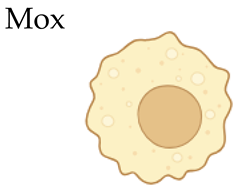 | Oxidative tissue damage, obesity-induced IR | Oxidized lipids, LDL, ROS, Nrf2 | Oxidative stress buffering, atherosclerotic lesion, redox-regulatory genes over-representation | [33,34] |
 | Chronic low-grade inflammation, disturbance of lipid metabolism, induce proinsulin misfolding and endoplasmic reticulum | PDIA3, ROS, FFA, Palmitic acid, TNF-α, MCP-1, IL-6 | Pro-inflammatory, metabolic disorder, promote IR, lead to fat | [3] |
 | Tissue damage, metabolic dysregulation, neurological disorders and the tumor microenvironment | LDL, APOE, TNF-α, IL-6, M-CSF, amyloid, SIP, Obesity | Regulation of macrophage differentiation and survival, phagocytosis and lipid metabolism functions, regulation of metabolic syndrome | [6,35,36] |
 | Cold or excess calorie intake, diet-induced thermogenesis | CHRNA2, Ach, GABPα | Induce adaptive thermogenesis, express crucial genes for ACh synthesis and secretion in mice | [10,37,38] |
 | Iron overload | CD163, Tfrc, Fth1, Ftl1, Slc40a1, Hmox1, Cp | Iron recycling | [39] |
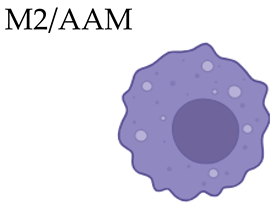 | Tumor microenvironment, wound healing, inflammatory state, high glucose environment | IL-4, IL-10, IL13, Glucocorticosteroid | Anti-inflammatory, tissue repair and remodeling, immunomodulation, promoting the formation and function of beige fat | [40] |
 | Obese adipose tissue, hypoxic and inflammatory microenvironment, lipid-rich and necrotic adipocyte surroundings | Saturated fatty acids | Pro-inflammatory cytokine secretion, lipid buffering and clearance | [41] |
| PTM Types | Enzymes | Target Proteins/Substrates | Functional Consequences /Inflammatory Outcomes | Refs |
|---|---|---|---|---|
| Acetylation | ACLY | Histone H3K27 | ↑ Inflammation | [177] |
| p300/CBP | Histones | ↑ Inflammation resolution | [180,190] | |
| Deacetylation | HDAC3 | HADHA | ↓ FAO ↑ IL-1β production | [183] |
| NF-κB p65 (Lys122) | ↑ Inflammation and fibrosis | [184] | ||
| — | ↑ Anti-inflammatory effects | [189] | ||
| Lactylation | — | Histone H3/Histone Kla | ↑ Inflammation resolution | [141] |
| — | HMGB1 | ↑ Inflammation | [191] | |
| O-GlcNAcylation | OGT | S6K1 (S6 kinase beta-1) | ↓ Inflammation ↑ Healthy adipose tissue expansion | [194] |
| Neddylation | Ubc12/UBE2M | TRIM21 on K129/134 | ↑ Inflammation ↑ Obesity ↑ Insulin resistance | [199] |
| S-palmitoylation | ZDHHC5 | NLRP3 | ↑ Inflammation | [203] |
| ZDHHC7 | NLRP3 (Cys126) | ↓ Inflammation | [205] |
Disclaimer/Publisher’s Note: The statements, opinions and data contained in all publications are solely those of the individual author(s) and contributor(s) and not of MDPI and/or the editor(s). MDPI and/or the editor(s) disclaim responsibility for any injury to people or property resulting from any ideas, methods, instructions or products referred to in the content. |
© 2026 by the authors. Licensee MDPI, Basel, Switzerland. This article is an open access article distributed under the terms and conditions of the Creative Commons Attribution (CC BY) license.
Share and Cite
Liu, Y.; Huang, X.; Sang, L.; Zhang, Y.; Cao, J.; Kong, Q. Modulation and Reprogramming of Adipose Tissue Macrophages in Obesity. Biomolecules 2026, 16, 339. https://doi.org/10.3390/biom16020339
Liu Y, Huang X, Sang L, Zhang Y, Cao J, Kong Q. Modulation and Reprogramming of Adipose Tissue Macrophages in Obesity. Biomolecules. 2026; 16(2):339. https://doi.org/10.3390/biom16020339
Chicago/Turabian StyleLiu, Yan, Xiaoying Huang, Linfeng Sang, Yang Zhang, Jiajie Cao, and Qin Kong. 2026. "Modulation and Reprogramming of Adipose Tissue Macrophages in Obesity" Biomolecules 16, no. 2: 339. https://doi.org/10.3390/biom16020339
APA StyleLiu, Y., Huang, X., Sang, L., Zhang, Y., Cao, J., & Kong, Q. (2026). Modulation and Reprogramming of Adipose Tissue Macrophages in Obesity. Biomolecules, 16(2), 339. https://doi.org/10.3390/biom16020339