Novel Insights into TSC22D Family Genes in Metabolic Diseases and Cancer


Abstract
1. Introduction
2. The Role of the TGF-β Signaling Pathway in the Crosstalk Between Development and Metabolism
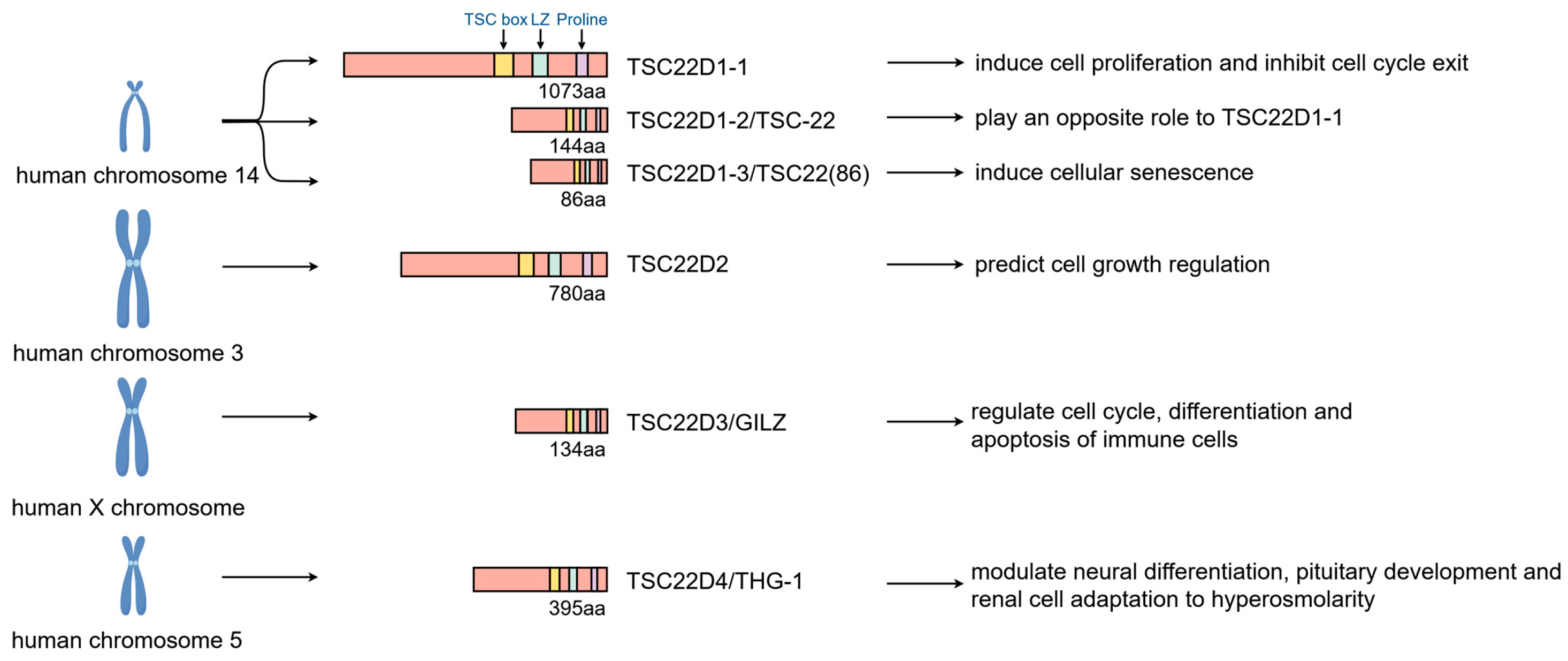
3. The Structure, Function, and Regulation of TSC22D Family Genes
4. The Role of TSC22D Family Genes in Lipid Metabolism
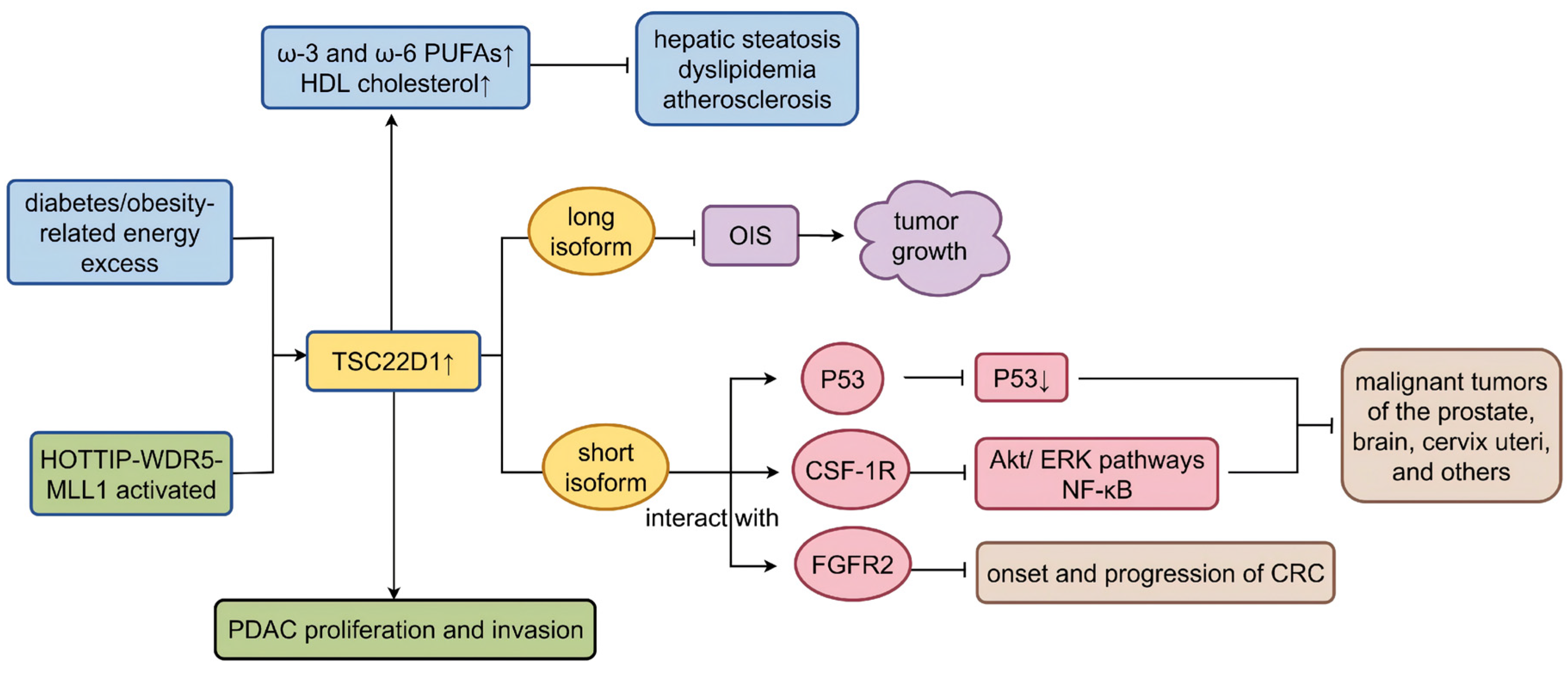
4.1. TSC22D1 and Lipid Metabolism
4.2. TSC22D2 and Lipid Metabolism
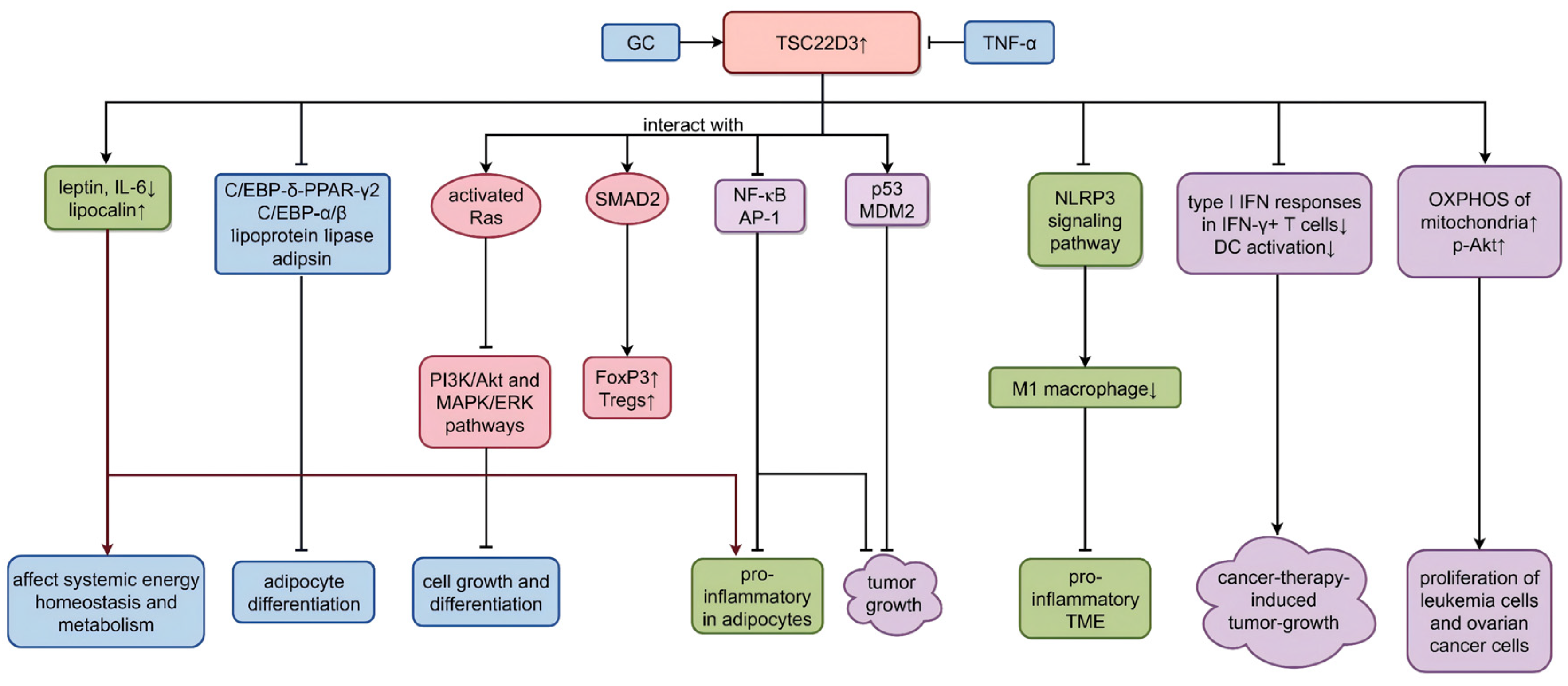
4.3. TSC22D3 and Lipid Metabolism
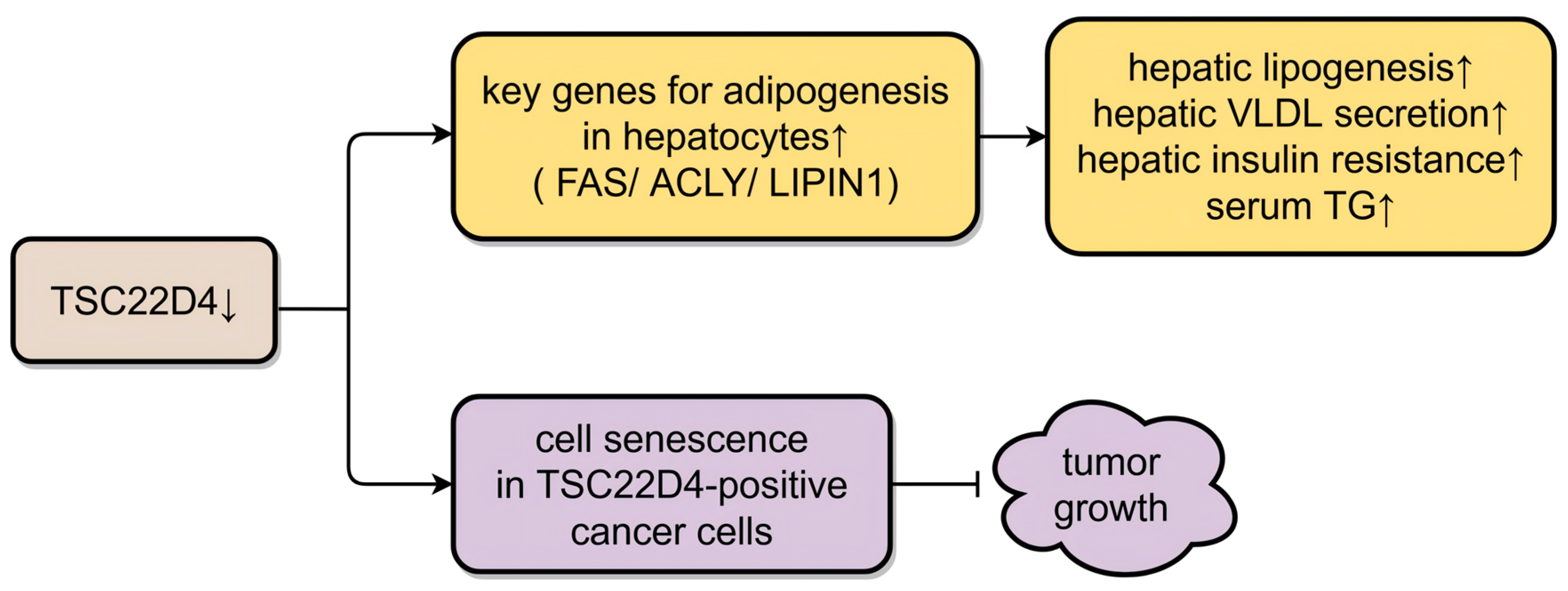
4.4. TSC22D4 and Lipid Metabolism
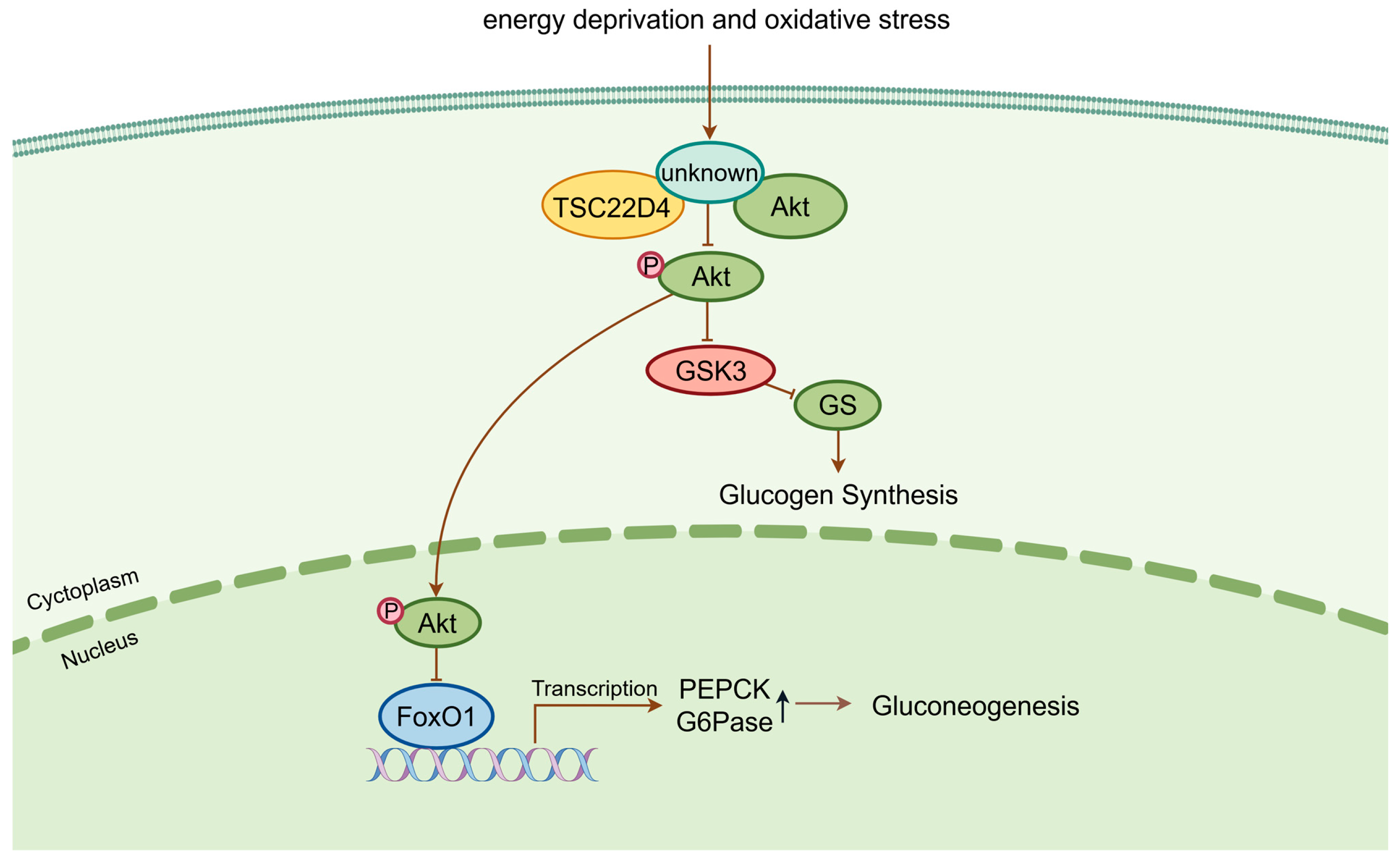
5. The Role of TSC22D Family Genes in Glucose Metabolism
6. The Role of TSC22D Family Genes in Cancer
6.1. TSC22D1 and Cancer
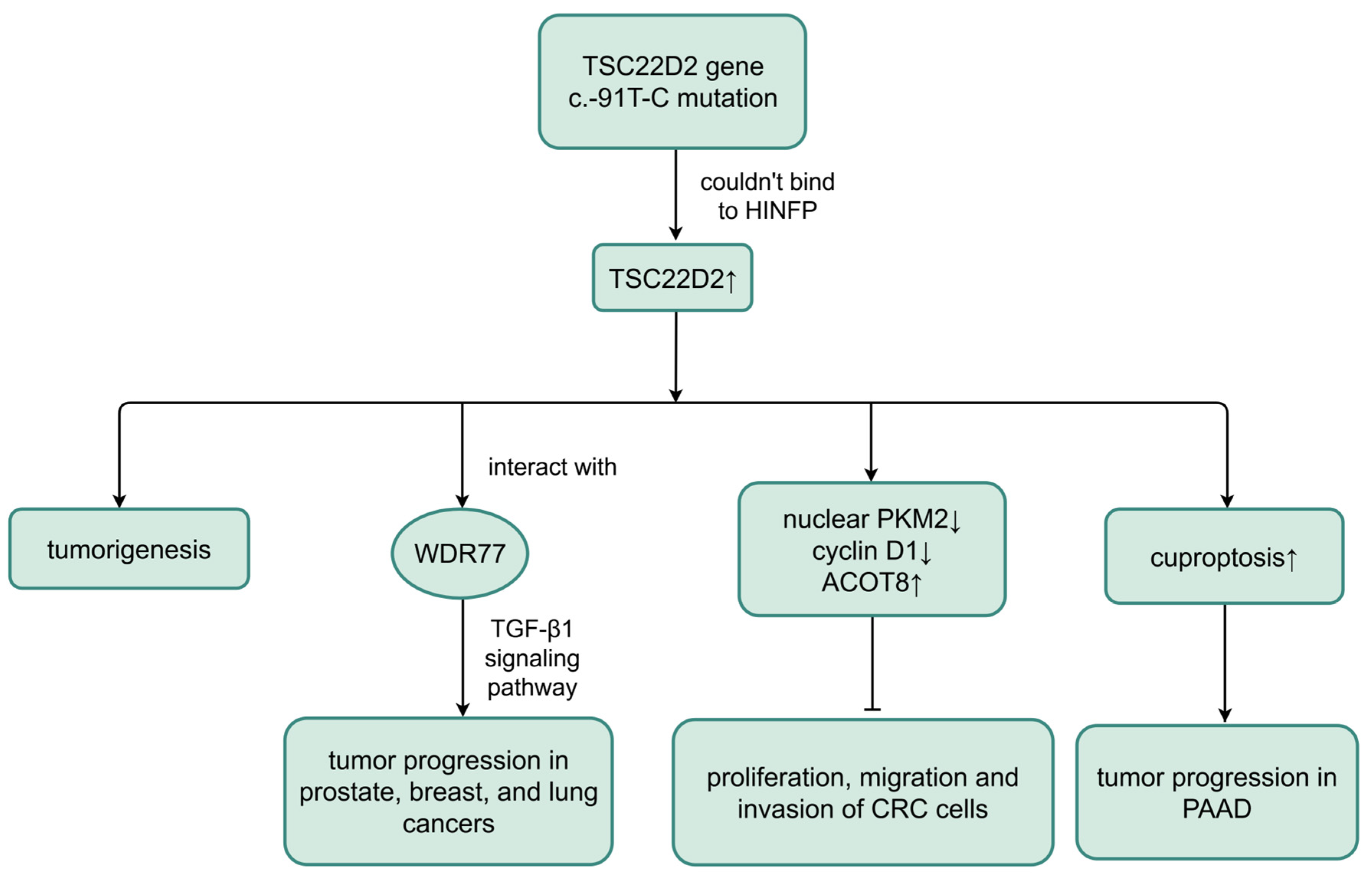
6.2. TSC22D2 and Cancer
6.3. TSC22D3 and Cancer
6.4. TSC22D4 and Cancer
7. TSC22D Family and Other Diseases
8. Conclusions
Author Contributions
Funding
Institutional Review Board Statement
Informed Consent Statement
Data Availability Statement
Conflicts of Interest
References
- Dragotto, J.; Canterini, S.; Del Porto, P.; Bevilacqua, A.; Fiorenza, M.T. The interplay between TGF-β-stimulated TSC22 domain family proteins regulates cell-cycle dynamics in medulloblastoma cells. J. Cell. Physiol. 2019, 234, 18349–18360. [Google Scholar] [CrossRef] [PubMed]
- Kamimura, R.; Uchida, D.; Kanno, S.-I.; Shiraishi, R.; Hyodo, T.; Sawatani, Y.; Shimura, M.; Hasegawa, T.; Tsubura-Okubo, M.; Yaguchi, E.; et al. Identification of Binding Proteins for TSC22D1 Family Proteins Using Mass Spectrometry. Int. J. Mol. Sci. 2021, 22, 10913. [Google Scholar] [CrossRef] [PubMed]
- Hino, S.; Kawamata, H.; Uchida, D.; Omotehara, F.; Miwa, Y.; Begum, N.-M.; Yoshida, H.; Fujimori, T.; Sato, M. Nuclear Translocation of TSC-22 (TGF-β-Stimulated Clone-22) Concomitant with Apoptosis: TSC-22 as a Putative Transcriptional Regulator. Biochem. Biophys. Res. Commun. 2000, 278, 659–664. [Google Scholar] [CrossRef] [PubMed]
- Iyengar, N.M.; Gucalp, A.; Dannenberg, A.J.; Hudis, C.A. Obesity and Cancer Mechanisms: Tumor Microenvironment and Inflammation. J. Clin. Oncol. 2016, 34, 4270–4276. [Google Scholar] [CrossRef]
- Üstünel, B.E.; Friedrich, K.; Maida, A.; Wang, X.; Krones-Herzig, A.; Seibert, O.; Sommerfeld, A.; Jones, A.; Sijmonsma, T.P.; Sticht, C.; et al. Control of diabetic hyperglycaemia and insulin resistance through TSC22D4. Nat. Commun. 2016, 7, 13267. [Google Scholar] [CrossRef]
- Xiao, L.; Wei, F.; Liang, F.; Li, Q.; Deng, H.; Tan, S.; Chen, S.; Xiong, F.; Guo, C.; Liao, Q.; et al. TSC22D2 identified as a candidate susceptibility gene of multi-cancer pedigree using genome-wide linkage analysis and whole-exome sequencing. Carcinogenesis 2019, 40, 819–827. [Google Scholar] [CrossRef]
- Burton, J.B.; Silva-Barbosa, A.; Bons, J.; Rose, J.; Pfister, K.; Simona, F.; Gandhi, T.; Reiter, L.; Bernhardt, O.; Hunter, C.L.; et al. Substantial downregulation of mitochondrial and peroxisomal proteins during acute kidney injury revealed by data-independent acquisition proteomics. Proteomics 2023, 24, e2300162. [Google Scholar] [CrossRef]
- Liu, Q.; Li, R.; Wu, H.; Liang, Z. A novel cuproptosis-related gene model predicts outcomes and treatment responses in pancreatic adenocarcinoma. BMC Cancer 2023, 23, 226. [Google Scholar] [CrossRef]
- Du, L.; Zhu, W.; Zhang, L. Identification and Characterization of the Complete Genome of the TGF-β Gene Family in Tupaia belangeri: Expression and Function of Adipose Tissue Under Cold Acclimation Conditions. Int. J. Mol. Sci. 2025, 26, 6681. [Google Scholar] [CrossRef]
- Takebayashi-Suzuki, K.; Suzuki, A. Intracellular Communication among Morphogen Signaling Pathways during Vertebrate Body Plan Formation. Genes 2020, 11, 341. [Google Scholar] [CrossRef]
- Cao, Z.; Liu, G.; Zhang, H.; Wang, M.; Xu, Y. Nox4 promotes osteoblast differentiation through TGF-beta signal pathway. Free Radic. Biol. Med. 2022, 193, 595–609. [Google Scholar] [CrossRef]
- Xu, X.Y.; Geng, Y.; Xu, H.X.; Ren, Y.; Liu, D.Y.; Mao, Y. Antrodia camphorata-Derived Antrodin C Inhibits Liver Fibrosis by Blocking TGF-Beta and PDGF Signaling Pathways. Front. Mol. Biosci. 2022, 9, 835508. [Google Scholar] [CrossRef] [PubMed]
- Wilson, S.E.; Shiju, T.M.; Sampaio, L.P.; Hilgert, G.S.L. Corneal fibroblast collagen type IV negative feedback modulation of TGF beta: A fibrosis modulating system likely active in other organs. Matrix Biol. 2022, 109, 162–172. [Google Scholar] [CrossRef] [PubMed]
- Gonzalez-Sanchez, E.; Vaquero, J.; Férnandez-Barrena, M.G.; Lasarte, J.J.; Avila, M.A.; Sarobe, P.; Reig, M.; Calvo, M.; Fabregat, I. The TGF-β Pathway: A Pharmacological Target in Hepatocellular Carcinoma? Cancers 2021, 13, 3248. [Google Scholar] [CrossRef] [PubMed]
- Bahn, Y.J.; Wang, Y.; Dagur, P.; Scott, N.; Cero, C.; Long, K.T.; Nguyen, N.; Cypess, A.M.; Rane, S.G. TGF-β antagonism synergizes with PPARγ agonism to reduce fibrosis and enhance beige adipogenesis. Mol. Metab. 2024, 90, 102054. [Google Scholar] [CrossRef] [PubMed]
- Hwang, S.H.; Lee, Y.M.; Choi, Y.; Son, H.E.; Ryu, J.Y.; Na, K.Y.; Chin, H.J.; Jeon, N.L.; Kim, S. Role of Human Primary Renal Fibroblast in TGF-β1-Mediated Fibrosis-Mimicking Devices. Int. J. Mol. Sci. 2021, 22, 10758. [Google Scholar] [CrossRef]
- Ruan, X.; Jin, X.; Sun, F.; Pi, J.; Jinghu, Y.; Lin, X.; Zhang, N.; Chen, G. IGF signaling pathway in bone and cartilage development, homeostasis, and disease. FASEB J. 2024, 38, e70031. [Google Scholar] [CrossRef]
- Zhang, W.; Yang, N.; Shi, X.-M. Regulation of Mesenchymal Stem Cell Osteogenic Differentiation by Glucocorticoid-induced Leucine Zipper (GILZ). J. Biol. Chem. 2008, 283, 4723–4729. [Google Scholar] [CrossRef]
- Uhlén, M.; Fagerberg, L.; Hallström, B.M.; Lindskog, C.; Oksvold, P.; Mardinoglu, A.; Sivertsson, Å.; Kampf, C.; Sjöstedt, E.; Asplund, A.; et al. Tissue-based map of the human proteome. Science 2015, 347, 1260419. [Google Scholar] [CrossRef]
- Kawamata, H.; Nakashiro, K.; Uchida, D.; Hino, S.; Omotehara, F.; Yoshida, H.; Sato, M. Induction of TSC-22 by treatment with a new anti-cancer drug, vesnarinone, in a human salivary gland cancer cell. Br. J. Cancer 1998, 77, 71–78. [Google Scholar] [CrossRef][Green Version]
- Nakashiro, K.; Kawamata, H.; Hino, S.; Uchida, D.; Miwa, Y.; Hamano, H.; Omotehara, F.; Yoshida, H.; Sato, M. Down-regulation of TSC-22 (transforming growth factor beta-stimulated clone 22) markedly enhances the growth of a human salivary gland cancer cell line in vitro and in vivo. Cancer Res. 1998, 58, 549–555. [Google Scholar] [PubMed]
- Uchida, D.; Kawamata, H.; Omotehara, F.; Miwa, Y.; Hino, S.; Begum, N.-M.; Yoshida, H.; Sato, M. Over-Expression of TSC-22 (TGF-β Stimulated Clone-22) Markedly Enhances 5-Fluorouracil-Induced Apoptosis in a Human Salivary Gland Cancer Cell Line. Mod. Pathol. 2000, 80, 955–963. [Google Scholar] [CrossRef] [PubMed][Green Version]
- Hino, S.; Kawamata, H.; Omotehara, F.; Uchida, D.; Miwa, Y.; Begum, N.-M.; Yoshida, H.; Sato, M.; Fujimori, T. Cytoplasmic TSC-22 (Transforming Growth Factor-β-Stimulated Clone-22) Markedly Enhances the Radiation Sensitivity of Salivary Gland Cancer Cells. Biochem. Biophys. Res. Commun. 2002, 292, 957–963. [Google Scholar] [CrossRef] [PubMed]
- Uchida, D.; Omotehara, F.; Nakashiro, K.; Tateishi, Y.; Hino, S.; Begum, N.M.; Fujimori, T.; Kawamata, H. Posttranscriptional regulation of TSC-22 (TGF-beta-stimulated clone-22) gene by TGF-beta 1. Biochem. Biophys. Res. Commun. 2003, 305, 846–854. [Google Scholar] [CrossRef]
- Uchida, D.; Kawamata, H.; Omotehara, F.; Miwa, Y.; Horiuchi, H.; Furihata, T.; Tachibana, M.; Fujimori, T. Overexpression of TSC-22 (transforming growth factor-β-stimulated clone-22) causes marked obesity, splenic abnormality and B cell lymphoma in transgenic mice. Oncotarget 2016, 7, 14310–14323. [Google Scholar] [CrossRef]
- Cho, M.-J.; Lee, J.-Y.; Shin, M.-G.; Kim, H.-J.; Choi, Y.-J.; Rho, S.B.; Kim, B.-R.; Jang, I.S.; Lee, S.-H. TSC-22 inhibits CSF-1R function and induces apoptosis in cervical cancer. Oncotarget 2017, 8, 97990–98003. [Google Scholar] [CrossRef]
- Nakamura, M.; Kitaura, J.; Enomoto, Y.; Lu, Y.; Nishimura, K.; Isobe, M.; Ozaki, K.; Komeno, Y.; Nakahara, F.; Oki, T.; et al. Transforming growth factor-β-stimulated clone-22 is a negative-feedback regulator of Ras/Raf signaling: Implications for tumorigenesis. Cancer Sci. 2012, 103, 26–33. [Google Scholar] [CrossRef]
- Zhou, N.; Guo, C.; Du, J.; Zhang, X.; Xu, Q.; Zheng, X.; Tu, L. TSC22D2 Regulates ACOT8 to Delay the Malignant Progression of Colorectal Cancer. OncoTargets Ther. 2024, 17, 171–180. [Google Scholar] [CrossRef]
- Tan, S.; Li, G. Progress of TSC-22 gene research. Zhong Nan Da Xue Xue Bao Yi Xue Ban. 2011, 36, 592–596. (In Chinese) [Google Scholar]
- Li, Q.; Chen, P.; Zeng, Z.; Liang, F.; Song, Y.; Xiong, F.; Li, X.; Gong, Z.; Zhou, M.; Xiang, B.; et al. Yeast two-hybrid screening identified WDR77 as a novel interacting partner of TSC22D2. Tumor Biol. 2016, 37, 12503–12512. [Google Scholar] [CrossRef]
- Wilson, C.H.; Crombie, C.; van der Weyden, L.; Poulogiannis, G.; Rust, A.G.; Pardo, M.; Gracia, T.; Yu, L.; Choudhary, J.; Poulin, G.B.; et al. Nuclear receptor binding protein 1 regulates intestinal progenitor cell homeostasis and tumour formation. EMBO J. 2012, 31, 2486–2497. [Google Scholar] [CrossRef] [PubMed]
- Pépin, A.; Biola-Vidamment, A.; Latré de Laté, P.; Espinasse, M.A.; Godot, V.; Pallardy, M. Les protéines de la famille TSC-22D—De nouveaux régulateurs de l’homéostasie cellulaire? [TSC-22D proteins: New regulators of cell homeostasis?]. Med. Sci. 2015, 31, 75–83. [Google Scholar] [CrossRef][Green Version]
- D’Adamio, F.; Zollo, O.; Moraca, R.; Ayroldi, E.; Bruscoli, S.; Bartoli, A.; Cannarile, L.; Migliorati, G.; Riccardi, C. A New Dexamethasone-Induced Gene of the Leucine Zipper Family Protects T Lymphocytes from TCR/CD3-Activated Cell Death. Immunity 1997, 7, 803–812. [Google Scholar] [CrossRef] [PubMed]
- La, H.M.; Chan, A.-L.; Legrand, J.M.D.; Rossello, F.J.; Gangemi, C.G.; Papa, A.; Cheng, Q.; Morand, E.F.; Hobbs, R.M. GILZ-dependent modulation of mTORC1 regulates spermatogonial maintenance. Development 2018, 145, dev.165324. [Google Scholar] [CrossRef]
- Ronchetti, S.; Migliorati, G.; Riccardi, C. GILZ as a Mediator of the Anti-Inflammatory Effects of Glucocorticoids. Front. Endocrinol. 2015, 6, 170. [Google Scholar] [CrossRef]
- Bereshchenko, O.; Migliorati, G.; Bruscoli, S.; Riccardi, C. Glucocorticoid-Induced Leucine Zipper: A Novel Anti-inflammatory Molecule. Front. Pharmacol. 2019, 10, 308. [Google Scholar] [CrossRef]
- Lee, M.-J.; Yang, R.-Z.; Karastergiou, K.; Smith, S.R.; Chang, J.R.; Gong, D.-W.; Fried, S.K. Low expression of the GILZ may contribute to adipose inflammation and altered adipokine production in human obesity. J. Lipid Res. 2016, 57, 1256–1263. [Google Scholar] [CrossRef]
- Bruscoli, S.; Riccardi, C.; Ronchetti, S. GILZ as a Regulator of Cell Fate and Inflammation. Cells 2021, 11, 122. [Google Scholar] [CrossRef]
- Kester, H.A.; Blanchetot, C.; Hertog, J.D.; van der Saag, P.T.; van der Burg, B. Transforming Growth Factor-β-stimulated Clone-22 Is a Member of a Family of Leucine Zipper Proteins That Can Homo- and Heterodimerize and Has Transcriptional Repressor Activity. J. Biol. Chem. 1999, 274, 27439–27447. [Google Scholar] [CrossRef]
- Canterini, S.; Bosco, A.; Carletti, V.; Fuso, A.; Curci, A.; Mangia, F.; Fiorenza, M.T. Subcellular TSC22D4 Localization in Cerebellum Granule Neurons of the Mouse Depends on Development and Differentiation. Cerebellum 2010, 11, 28–40. [Google Scholar] [CrossRef]
- Fiorenza, M.T.; Mukhopadhyay, M.; Westphal, H. Expression screening for Lhx3 downstream genes identifies Thg-1pit as a novel mouse gene involved in pituitary development. Gene 2001, 278, 125–130. [Google Scholar] [CrossRef]
- Fiol, D.F.; Mak, S.K.; Kültz, D. Specific TSC22 domain transcripts are hypertonically induced and alternatively spliced to protect mouse kidney cells during osmotic stress. FEBS J. 2006, 274, 109–124. [Google Scholar] [CrossRef]
- Gluderer, S.; Brunner, E.; Germann, M.; Jovaisaite, V.; Li, C.; Rentsch, C.A.; Hafen, E.; Stocker, H. Madm (Mlf1 adapter molecule) cooperates with Bunched A to promote growth in Drosophila. J. Biol. 2010, 9, 9. [Google Scholar] [CrossRef] [PubMed]
- Demir, S.; Wolff, G.; Wieder, A.; Maida, A.; Bühler, L.; Brune, M.; Hautzinger, O.; Feuchtinger, A.; Poth, T.; Szendroedi, J.; et al. TSC22D4 interacts with Akt1 to regulate glucose metabolism. Sci. Adv. 2022, 8, eabo5555. [Google Scholar] [CrossRef] [PubMed]
- Omotehara, F.; Uchida, D.; Hino, S.; Begum, N.M.; Yoshida, H.; Sato, M.; Kawamata, H. In vivo enhancement of chemosensitivity of human salivary gland cancer cells by overexpression of TGF-beta stimulated clone-22. Oncol. Rep. 2000, 7, 737–777. [Google Scholar] [CrossRef] [PubMed]
- Rentsch, C.A.; Cecchini, M.G.; Schwaninger, R.; Germann, M.; Markwalder, R.; Heller, M.; van der Pluijm, G.; Thalmann, G.N.; Wetterwald, A. Differential expression of TGF-beta-stimulated clone 22 in normal prostate and prostate cancer. Int. J. Cancer 2006, 118, 899–906. [Google Scholar] [CrossRef]
- Shostak, K.O.; Dmitrenko, V.V.; Garifulin, O.M.; Rozumenko, V.D.; Khomenko, O.V.; Zozulya, Y.A.; Zehetner, G.; Kavsan, V.M. Downregulation of putative tumor suppressor gene TSC-22 in human brain tumors. J. Surg. Oncol. 2003, 82, 57–64. [Google Scholar] [CrossRef]
- Zheng, Z.; Chen, X.; Cai, X.; Lin, H.; Xu, J.; Cheng, X. RNA-binding protein MEX3D promotes cervical carcinoma tumorigenesis by destabilizing TSC22D1 mRNA. Cell Death Discov. 2022, 8, 250. [Google Scholar] [CrossRef]
- Song, P.; Shen, X. Proteomic analysis of liver in diet-induced Hyperlipidemic mice under Fructus Rosa roxburghii action. J. Proteom. 2021, 230, 103982. [Google Scholar] [CrossRef]
- Jäger, J.; Greiner, V.; Strzoda, D.; Seibert, O.; Niopek, K.; Sijmonsma, T.P.; Schäfer, M.; Jones, A.; De Guia, R.; Martignoni, M.; et al. Hepatic transforming growth factor-β 1 stimulated clone-22 D1 controls systemic cholesterol metabolism. Mol. Metab. 2014, 3, 155–166. [Google Scholar] [CrossRef]
- Wen, W.; Kato, N.; Hwang, J.-Y.; Guo, X.; Tabara, Y.; Li, H.; Dorajoo, R.; Yang, X.; Tsai, F.-J.; Li, S.; et al. Genome-wide association studies in East Asians identify new loci for waist-hip ratio and waist circumference. Sci. Rep. 2016, 6, 17958. [Google Scholar] [CrossRef]
- Dastani, Z.; Hivert, M.-F.; Timpson, N.; Perry, J.R.B.; Yuan, X.; Scott, R.A.; Henneman, P.; Heid, I.M.; Kizer, J.R.; Lyytikäinen, L.-P.; et al. Novel Loci for Adiponectin Levels and Their Influence on Type 2 Diabetes and Metabolic Traits: A Multi-Ethnic Meta-Analysis of 45,891 Individuals. PLoS Genet. 2012, 8, e1002607. [Google Scholar] [CrossRef] [PubMed]
- Liu, W.; Zhou, X.; Li, Y.; Zhang, S.; Cai, X.; Zhang, R.; Gong, S.; Han, X.; Ji, L. Serum leptin, resistin, and adiponectin levels in obese and non-obese patients with newly diagnosed type 2 diabetes mellitus: A population-based study. Medicine 2020, 99, e19052. [Google Scholar] [CrossRef] [PubMed]
- Achari, A.E.; Jain, S.K. Adiponectin, a Therapeutic Target for Obesity, Diabetes, and Endothelial Dysfunction. Int. J. Mol. Sci. 2017, 18, 1321. [Google Scholar] [CrossRef] [PubMed]
- Hjort, R.; Ahlqvist, E.; Andersson, T.; Alfredsson, L.; Carlsson, P.-O.; Grill, V.; Groop, L.; Martinell, M.; Sørgjerd, E.P.; Tuomi, T.; et al. Physical Activity, Genetic Susceptibility, and the Risk of Latent Autoimmune Diabetes in Adults and Type 2 Diabetes. J. Clin. Endocrinol. Metab. 2020, 105, e4112–e4123. [Google Scholar] [CrossRef]
- Habib, S.S.; Sultan, M.; Khan, A.; Al-Khlaiwi, T.; Bashir, S. Circulating Adiponectin and Resistin Levels Are Associated with Adiposity Indices and Physical Fitness in Healthy Adult Males. Med. Sci. Monit. Basic Res. 2021, 27, e930322. [Google Scholar] [CrossRef]
- Dincă, V.-G.; Diaconu, A.; Coculescu, B.-I.; Dincă, A.-L.; Ciuc, D.M.; Bîrlă, R.D.; Marica, C.D.; Tudorache, S.I.; Manole, G.; Coculescu, E.C. Adiponectin—Stratification biomarker in diastolic cardiac dysfunction. J. Enzym. Inhib. Med. Chem. 2023, 38, 2171030. [Google Scholar] [CrossRef]
- Lee, M.-J.; Gong, D.-W.; Burkey, B.F.; Fried, S.K. Pathways regulated by glucocorticoids in omental and subcutaneous human adipose tissues: A microarray study. Am. J. Physiol. Metab. 2011, 300, E571–E580. [Google Scholar] [CrossRef]
- Lee, M.-J.; Fried, S.K. The glucocorticoid receptor, not the mineralocorticoid receptor, plays the dominant role in adipogenesis and adipokine production in human adipocytes. Int. J. Obes. 2014, 38, 1228–1233. [Google Scholar] [CrossRef]
- Bruscoli, S.; Sorcini, D.; Flamini, S.; Gagliardi, A.; Adamo, F.; Ronchetti, S.; Migliorati, G.; Bereshchenko, O.; Riccardi, C. Glucocorticoid-Induced Leucine Zipper Inhibits Interferon-Gamma Production in B Cells and Suppresses Colitis in Mice. Front. Immunol. 2018, 9, 1720. [Google Scholar] [CrossRef]
- Schonthaler, H.B.; Guinea-Viniegra, J.; Wagner, E.F. Targeting inflammation by modulating the Jun/AP-1 pathway. Ann. Rheum. Dis. 2011, 70, i109–i112. [Google Scholar] [CrossRef] [PubMed]
- Yang, H.; Xia, L.; Chen, J.; Zhang, S.; Martin, V.; Li, Q.; Lin, S.; Chen, J.; Calmette, J.; Lu, M.; et al. Stress–glucocorticoid–TSC22D3 axis compromises therapy-induced antitumor immunity. Nat. Med. 2019, 25, 1428–1441. [Google Scholar] [CrossRef] [PubMed]
- Trujillo, M.E.; Scherer, P.E. Adipose Tissue-Derived Factors: Impact on Health and Disease. Endocr. Rev. 2006, 27, 762–778. [Google Scholar] [CrossRef] [PubMed]
- Shi, X.M.; Blair, H.C.; Yang, X.; McDonald, J.M.; Cao, X. Tandem repeat of C/EBP binding sites mediates PPARgamma2 gene transcription in glucocorticoid-induced adipocyte differentiation. J. Cell. Biochem. 2000, 76, 518–527. [Google Scholar] [CrossRef]
- Shi, X.; Shi, W.; Li, Q.; Song, B.; Wan, M.; Bai, S.; Cao, X. A glucocorticoid-induced leucine-zipper protein, GILZ, inhibits adipogenesis of mesenchymal cells. Embo Rep. 2003, 4, 374–380. [Google Scholar] [CrossRef]
- Jones, A.; Friedrich, K.; Rohm, M.; Schäfer, M.; Algire, C.; Kulozik, P.; Seibert, O.; Müller-Decker, K.; Sijmonsma, T.; Strzoda, D.; et al. TSC22D4 is a molecular output of hepatic wasting metabolism. EMBO Mol. Med. 2013, 5, 294–308, Correction in EMBO Mol. Med. 2013, 5, 965. [Google Scholar] [CrossRef]
- Wolff, G.; Sakurai, M.; Mhamane, A.; Troullinaki, M.; Maida, A.; Deligiannis, I.K.; Yin, K.; Weber, P.; Morgenstern, J.; Wieder, A.; et al. Hepatocyte-specific activity of TSC22D4 triggers progressive NAFLD by impairing mitochondrial function. Mol. Metab. 2022, 60, 101487. [Google Scholar] [CrossRef]
- Yıldırım, S.; Mhamane, A.; Lösch, S.; Wieder, A.; Ermis, E.; König, A.; Yilmaz, S.; Hauck, S.M.; Kocabas, F.; Szendroedi, J.; et al. TSC22D1 is a newly identified inhibitor of insulin secretion in pancreatic beta cells. FEBS J. 2025, 292, 6307–6329. [Google Scholar] [CrossRef]
- Boeckx, B.; Shahi, R.B.; Smeets, D.; De Brakeleer, S.; Decoster, L.; Van Brussel, T.; Galdermans, D.; Vercauter, P.; Decoster, L.; Alexander, P.; et al. The genomic landscape of nonsmall cell lung carcinoma in never smokers. Int. J. Cancer 2019, 146, 3207–3218. [Google Scholar] [CrossRef]
- Berndt, A.; Cario, C.L.; Silva, K.A.; Kennedy, V.E.; Harrison, D.E.; Paigen, B.; Sundberg, J.P. Identification of Fat4 and Tsc22d1 as Novel Candidate Genes for Spontaneous Pulmonary Adenomas. Cancer Res. 2011, 71, 5779–5791. [Google Scholar] [CrossRef]
- Wong, C.H.; Li, C.H.; He, Q.; Chan, S.L.; Tong, J.H.-M.; To, K.-F.; Lin, L.-Z.; Chen, Y. Ectopic HOTTIP expression induces noncanonical transactivation pathways to promote growth and invasiveness in pancreatic ductal adenocarcinoma. Cancer Lett. 2020, 477, 1–9. [Google Scholar] [CrossRef] [PubMed]
- Qin, S.; Zhou, Y.; Chen, J.; Luo, Y.; Qiu, Y.; Tu, S.; Zhong, M. Low levels of TSC22 enhance tumorigenesis by inducing cell proliferation in colorectal cancer. Biochem. Biophys. Res. Commun. 2018, 497, 1062–1067. [Google Scholar] [CrossRef] [PubMed]
- Yoon, C.-H.; Rho, S.B.; Kim, S.-T.; Kho, S.; Park, J.; Jang, I.-S.; Woo, S.; Kim, S.S.; Lee, J.-H.; Lee, S.-H. Crucial Role of TSC-22 in Preventing the Proteasomal Degradation of p53 in Cervical Cancer. PLoS ONE 2012, 7, e42006. [Google Scholar] [CrossRef] [PubMed]
- Liang, F.; Li, Q.; Li, X.; Li, Z.; Gong, Z.; Deng, H.; Xiang, B.; Zhou, M.; Li, X.; Li, G.; et al. TSC22D2 interacts with PKM2 and inhibits cell growth in colorectal cancer. Int. J. Oncol. 2016, 49, 1046–1056. [Google Scholar] [CrossRef]
- Yang, W.; Xia, Y.; Hawke, D.; Li, X.; Liang, J.; Xing, D.; Aldape, K.; Hunter, T.; Yung, W.A.; Lu, Z. PKM2 Phosphorylates Histone H3 and Promotes Gene Transcription and Tumorigenesis. Cell 2014, 158, 1210. [Google Scholar] [CrossRef]
- Yang, W.; Xia, Y.; Ji, H.; Zheng, Y.; Liang, J.; Huang, W.; Gao, X.; Aldape, K.; Lu, Z. Nuclear PKM2 regulates β-catenin transactivation upon EGFR activation. Nature 2011, 480, 118–122, Erratum in Nature 2017, 550, 142. [Google Scholar] [CrossRef]
- Chaneton, B.; Gottlieb, E. Rocking cell metabolism: Revised functions of the key glycolytic regulator PKM2 in cancer. Trends Biochem. Sci. 2012, 37, 309–316. [Google Scholar] [CrossRef]
- Luo, W.; Semenza, G.L. Emerging roles of PKM2 in cell metabolism and cancer progression. Trends Endocrinol. Metab. 2012, 23, 560–566. [Google Scholar] [CrossRef]
- Lv, L.; Xu, Y.-P.; Zhao, D.; Li, F.-L.; Wang, W.; Sasaki, N.; Jiang, Y.; Zhou, X.; Li, T.-T.; Guan, K.-L.; et al. Mitogenic and Oncogenic Stimulation of K433 Acetylation Promotes PKM2 Protein Kinase Activity and Nuclear Localization. Mol. Cell 2013, 52, 340–352. [Google Scholar] [CrossRef]
- Yang, W.; Zheng, Y.; Xia, Y.; Ji, H.; Chen, X.; Guo, F.; Lyssiotis, C.A.; Aldape, K.; Cantley, L.C.; Lu, Z. ERK1/2-dependent phosphorylation and nuclear translocation of PKM2 promotes the Warburg effect. Nat. Cell Biol. 2012, 14, 1295–1304, Correction in Nat. Cell Biol. 2013, 15, 124. [Google Scholar] [CrossRef]
- Hung, Y.-H.; Chan, Y.-S.; Chang, Y.-S.; Lee, K.-T.; Hsu, H.-P.; Yen, M.-C.; Chen, W.-C.; Wang, C.-Y.; Lai, M.-D. Fatty acid metabolic enzyme acyl-CoA thioesterase 8 promotes the development of hepatocellular carcinoma. Oncol. Rep. 2014, 31, 2797–2803. [Google Scholar] [CrossRef]
- Xu, C.-L.; Chen, L.; Li, D.; Chen, F.-T.; Sha, M.-L.; Shao, Y. Acyl-CoA Thioesterase 8 and 11 as Novel Biomarkers for Clear Cell Renal Cell Carcinoma. Front. Genet. 2020, 11, 594969. [Google Scholar] [CrossRef]
- Ran, X.; Luo, J.; Zuo, C.; Huang, Y.; Sui, Y.; Cen, J.; Tang, S. Developing metabolic gene signatures to predict intrahepatic cholangiocarcinoma prognosis and mining a miRNA regulatory network. J. Clin. Lab. Anal. 2021, 36, e24107. [Google Scholar] [CrossRef] [PubMed]
- Tsvetkov, P.; Coy, S.; Petrova, B.; Dreishpoon, M.; Verma, A.; Abdusamad, M.; Rossen, J.; Joesch-Cohen, L.; Humeidi, R.; Spangler, R.D.; et al. Copper induces cell death by targeting lipoylated TCA cycle proteins. Science 2022, 375, 1254–1261, Correction in Science 2022, 376, eabq4855. [Google Scholar] [CrossRef] [PubMed]
- Michniewicz, F.; Saletta, F.; Rouaen, J.R.C.; Hewavisenti, R.V.; Mercatelli, D.; Cirillo, G.; Giorgi, F.M.; Trahair, T.; Ziegler, D.; Vittorio, O. Copper: An Intracellular Achilles’ Heel Allowing the Targeting of Epigenetics, Kinase Pathways, and Cell Metabolism in Cancer Therapeutics. ChemMedChem 2021, 16, 2315–2329. [Google Scholar] [CrossRef] [PubMed]
- Oliveri, V. Selective Targeting of Cancer Cells by Copper Ionophores: An Overview. Front. Mol. Biosci. 2022, 9, 841814. [Google Scholar] [CrossRef]
- Tisato, F.; Marzano, C.; Porchia, M.; Pellei, M.; Santini, C. Copper in diseases and treatments, and copper-based anticancer strategies. Med. Res. Rev. 2009, 30, 708–749. [Google Scholar] [CrossRef]
- Cai, M.; Xia, Z.; Shao, C.; Du, W.; Cao, J.; Yang, B.; He, Q.; Xu, X.; Zhang, J.; Shao, X.; et al. P2RY8::TSC22D3 is a novel fusion associated with chemoresistance in leukemia by activating PI3K-AKT pathway. Cancer Lett. 2025, 633, 218040. [Google Scholar] [CrossRef]
- Ayroldi, E.; Cannarile, L.; Delfino, D.V.; Riccardi, C. A dual role for glucocorticoid-induced leucine zipper in glucocorticoid function: Tumor growth promotion or suppression? Cell Death Dis. 2018, 9, 463. [Google Scholar] [CrossRef]
- Li, Y.; Huang, H.; Zhu, Z.; Chen, S.; Liang, Y.; Shu, L. TSC22D3 as an immune-related prognostic biomarker for acute myeloid leukemia. iScience 2023, 26, 107451. [Google Scholar] [CrossRef]
- Ayroldi, E.; Petrillo, M.G.; Bastianelli, A.; Marchetti, M.C.; Ronchetti, S.; Nocentini, G.; Ricciotti, L.; Cannarile, L.; Riccardi, C. L-GILZ binds p53 and MDM2 and suppresses tumor growth through p53 activation in human cancer cells. Cell Death Differ. 2014, 22, 118–130. [Google Scholar] [CrossRef]
- Goto, N.; Suzuki, H.; Zheng, L.; Okano, Y.; Okita, Y.; Watanabe, Y.; Kato, Y.; Kato, M. Promotion of squamous cell carcinoma tumorigenesis by oncogene-mediated THG-1/TSC22D4 phosphorylation. Cancer Sci. 2023, 114, 3972–3983. [Google Scholar] [CrossRef]
- Hwang, J.; Haque, A.; Suzuki, H.; Dijke, P.T.; Kato, M. THG-1 suppresses SALL4 degradation to induce stemness genes and tumorsphere formation through antagonizing NRBP1 in squamous cell carcinoma cells. Biochem. Biophys. Res. Commun. 2020, 523, 307–314. [Google Scholar] [CrossRef] [PubMed]
- Zhang, X.; Koga, N.; Suzuki, H.; Kato, M. Promotion of cellular senescence by THG-1/TSC22D4 knockout through activation of JUNB. Biochem. Biophys. Res. Commun. 2020, 522, 897–902. [Google Scholar] [CrossRef] [PubMed]
- Okano, Y.; Suzuki, H.; Watanabe, Y.; Abdelaziz, M.; Manevich, L.; Kawanishi, K.; Ozaki, H.; Ishii, R.; Matsumoto, S.; Goto, N.; et al. THG-1/TSC22D4 Promotes IL-1 Signaling through Stabilization of TRAF6 in Squamous Cell Carcinoma. Mol. Cancer Res. 2025, 23, 463–476. [Google Scholar] [CrossRef] [PubMed]
- Yan, X.; Zhang, J.; Pan, L.; Wang, P.; Xue, H.; Zhang, L.; Gao, X.; Zhao, X.; Ning, Y.; Chen, Y.-G. TSC-22 Promotes Transforming Growth Factor β-Mediated Cardiac Myofibroblast Differentiation by Antagonizing Smad7 Activity. Mol. Cell. Biol. 2011, 31, 3700–3709. [Google Scholar] [CrossRef]
- Kelloniemi, A.; Aro, J.; Näpänkangas, J.; Koivisto, E.; Mustonen, E.; Ruskoaho, H.; Rysä, J. TSC-22 up-regulates collagen 3a1 gene expression in the rat heart. BMC Cardiovasc. Disord. 2015, 15, 122. [Google Scholar] [CrossRef]
- Vargas, D.M.; De Bastiani, M.A.; Zimmer, E.R.; Klamt, F. Alzheimer’s disease master regulators analysis: Search for potential molecular targets and drug repositioning candidates. Alzheimer’s Res. Ther. 2018, 10, 59. [Google Scholar] [CrossRef]
- Zheng, L.; Ling, W.; Zhu, D.; Li, Z.; Li, Y.; Zhou, H.; Kong, L. Roquin-1 resolves sepsis-associated acute liver injury by regulating inflammatory profiles via miRNA cargo in extracellular vesicles. iScience 2023, 26, 107295. [Google Scholar] [CrossRef]
- Sameni, M.; Mirmotalebisohi, S.A.; Dehghan, Z.; Abooshahab, R.; Khazaei-Poul, Y.; Mozafar, M.; Zali, H. Deciphering molecular mechanisms of SARS-CoV-2 pathogenesis and drug repurposing through GRN motifs: A comprehensive systems biology study. 3 Biotech 2023, 13, 117. [Google Scholar] [CrossRef]
- Li, H.; Jia, X.; Bai, Y.-Q.; Wu, P.; Guo, H.-L.; Yun, K.-M.; Gao, C.-R.; Guo, X.-J. Gene Expression Profiles at Different Time Points after Acute Myocardial Infarction in Mice. Fa Yi Xue Za Zhi 2022, 38, 343–349. [Google Scholar] [CrossRef]
- Yang, X.; Wang, X.; Nan, D.; Jian, Z.; Li, X.; Yuan, L.; Zhao, M.; Wang, F. Proteomic and bioinformatic analysis of human endometrium from polycystic ovarian syndrome with and without insulin resistance. Gynecol. Endocrinol. 2023, 39, 2173948. [Google Scholar] [CrossRef]
- Robert, O.; Boujedidi, H.; Bigorgne, A.; Ferrere, G.; Voican, C.S.; Vettorazzi, S.; Tuckermann, J.P.; Bouchet-Delbos, L.; Tran, T.; Hemon, P.; et al. Decreased expression of the glucocorticoid receptor-GILZ pathway in Kupffer cells promotes liver inflammation in obese mice. J. Hepatol. 2016, 64, 916–924. [Google Scholar] [CrossRef]
- Flamini, S.; Sergeev, P.; de Barros, Z.V.; Mello, T.; Biagioli, M.; Paglialunga, M.; Fiorucci, C.; Prikazchikova, T.; Pagano, S.; Gagliardi, A.; et al. Glucocorticoid-induced leucine zipper regulates liver fibrosis by suppressing CCL2-mediated leukocyte recruitment. Cell Death Dis. 2021, 12, 421. [Google Scholar] [CrossRef]
- Rusev, S.; Thon, P.; Rahmel, T.; Ziehe, D.; Marko, B.; Nowak, H.; Ellger, B.; Limper, U.; Schwier, E.; Henzler, D.; et al. The Association between the rs3747406 Polymorphism in the Glucocorticoid-Induced Leucine Zipper Gene and Sepsis Survivals Depends on the SOFA Score. Int. J. Mol. Sci. 2024, 25, 3871. [Google Scholar] [CrossRef]
- Naeini, S.E.; Bhandari, B.; Gouron, J.; Rogers, H.M.; Chagas, P.S.; Naeini, G.E.; Chagas, H.I.S.; Khodadadi, H.; Salles, É.L.; Seyyedi, M.; et al. Reprofiling synthetic glucocorticoid-induced leucine zipper fusion peptide as a novel and effective hair growth promoter. Arch. Dermatol. Res. 2024, 316, 190. [Google Scholar] [CrossRef]


Disclaimer/Publisher’s Note: The statements, opinions and data contained in all publications are solely those of the individual author(s) and contributor(s) and not of MDPI and/or the editor(s). MDPI and/or the editor(s) disclaim responsibility for any injury to people or property resulting from any ideas, methods, instructions or products referred to in the content. |
© 2026 by the authors. Licensee MDPI, Basel, Switzerland. This article is an open access article distributed under the terms and conditions of the Creative Commons Attribution (CC BY) license.
Share and Cite
Shen, W.; Shen, C.; Jiao, Y.; Deng, X.; Jia, J.; Yuan, G. Novel Insights into TSC22D Family Genes in Metabolic Diseases and Cancer. Biomolecules 2026, 16, 179. https://doi.org/10.3390/biom16010179
Shen W, Shen C, Jiao Y, Deng X, Jia J, Yuan G. Novel Insights into TSC22D Family Genes in Metabolic Diseases and Cancer. Biomolecules. 2026; 16(1):179. https://doi.org/10.3390/biom16010179
Chicago/Turabian StyleShen, Wen, Cong Shen, Yang Jiao, Xia Deng, Jue Jia, and Guoyue Yuan. 2026. "Novel Insights into TSC22D Family Genes in Metabolic Diseases and Cancer" Biomolecules 16, no. 1: 179. https://doi.org/10.3390/biom16010179
APA StyleShen, W., Shen, C., Jiao, Y., Deng, X., Jia, J., & Yuan, G. (2026). Novel Insights into TSC22D Family Genes in Metabolic Diseases and Cancer. Biomolecules, 16(1), 179. https://doi.org/10.3390/biom16010179