Dihydrotanshinone as a Natural Product-Based CYP17A1 Lyase Inhibitor for Hyperandrogenic Disorders



Abstract
1. Introduction
2. Materials and Methods
2.1. Reagents and Materials
2.2. Cell Cultures
2.3. Alamar Blue Assay
2.4. CYP17A1 Assays
2.5. CYP21A2 Assays
2.6. Western Blot
2.7. Computational Details
2.8. Data Analysis
3. Results
3.1. Computational Strategy
3.2. Molecular Docking and Binding Energy Analysis

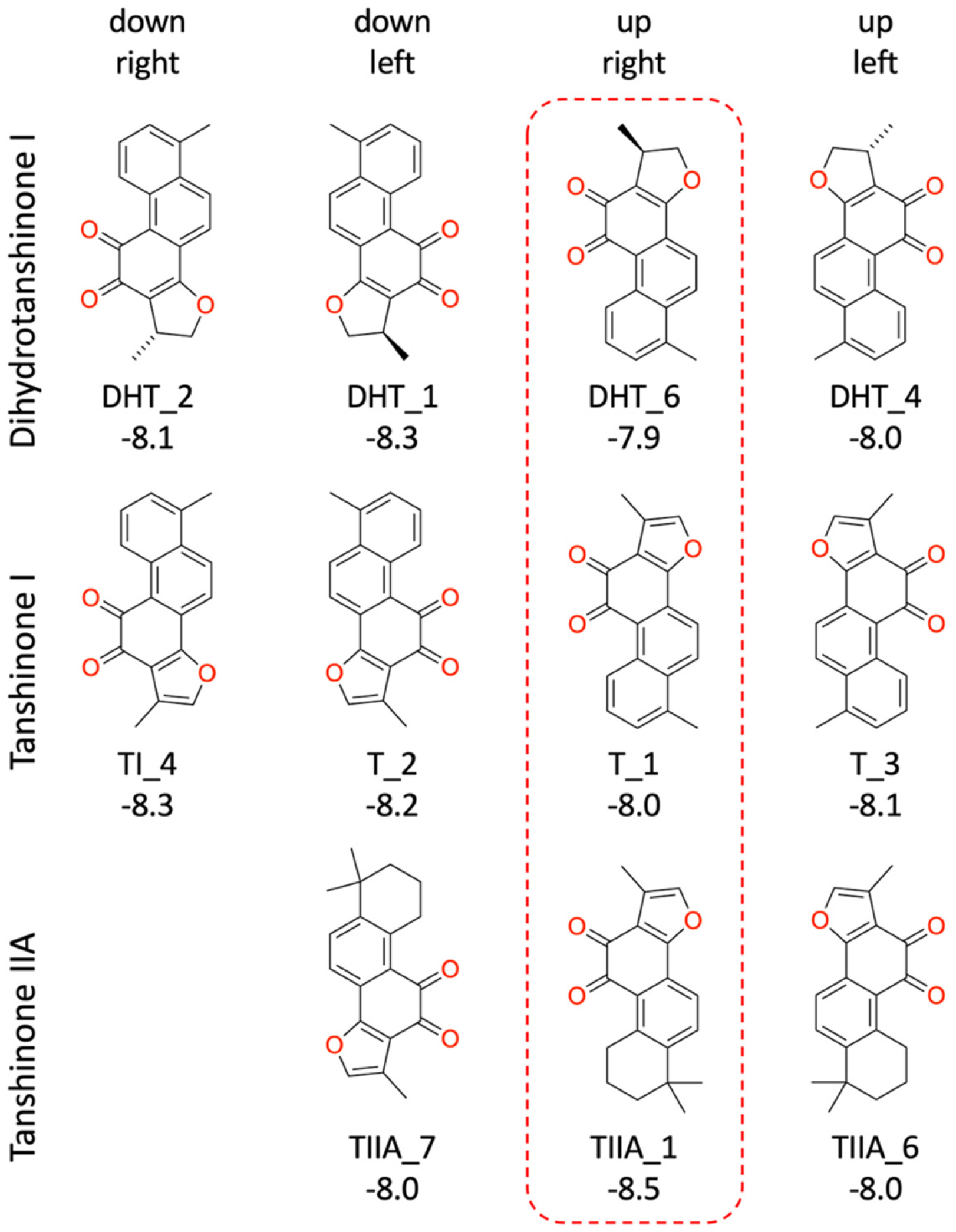
| Compound | Pose | Docking Score | GLIDE Emodel | MMGBSA dG Bind | Binding Mode |
|---|---|---|---|---|---|
| Dihydrotanshinone I | 1 | −8.2 | −62.2 | −39.5 | down–left |
| 2 | −8.1 | −62.1 | −30.6 | down–right | |
| 3 | −8.1 | −62.2 | −41.0 | down–left | |
| 4 | −8.0 | −59.5 | −35.2 | up–left | |
| 5 | −8.0 | −60.6 | −39.4 | down–left | |
| 6 | −7.9 | −58.5 | −39.3 | up–right | |
| 7 | −7.9 | −60.6 | −31.5 | down–right | |
| 8 | −7.8 | −59.9 | −34.2 | up–left | |
| 9 | −7.7 | −58.4 | −39.3 | up–right | |
| 10 | −6.0 | −30.3 | −6.7 | up–right | |
| Tanshinone I | 1 | −8.3 | −62.7 | −44.4 | up–right |
| 2 | −8.2 | −64.6 | −40.8 | down–left | |
| 3 | −8.1 | −61.6 | −36.4 | up–left | |
| 4 | −8.0 | −62.6 | −40.2 | down–right | |
| 5 | −8.0 | −61.4 | −44.4 | up–right | |
| 6 | −7.9 | −58.5 | −42.4 | down–left | |
| 7 | −7.8 | −56.7 | −39.1 | down–left | |
| 8 | −7.6 | −53.8 | −37.9 | up–left | |
| 9 | −7.0 | −50.2 | −44.3 | up–right | |
| 10 | −5.9 | −25.7 | 2.1 | skewed | |
| Tanshinone IIA | 1 | −8.5 | −62.1 | −34.9 | up–right |
| 2 | −8.3 | −59.8 | −41.6 | up–right | |
| 3 | −8.2 | −59.7 | −26.9 | up–left | |
| 4 | −8.1 | −59.8 | −41.8 | up–right | |
| 5 | −8.1 | −59.9 | −47.1 | up–right | |
| 6 | −8.0 | −58.8 | −29.6 | up–left | |
| 7 | −7.9 | −56.7 | −31.6 | down–left | |
| 8 | −7.8 | −56.7 | −26.2 | down–left | |
| 9 | −7.8 | −57.3 | −32.1 | up–left | |
| 10 | −7.6 | −50.9 | −20.1 | down–left |
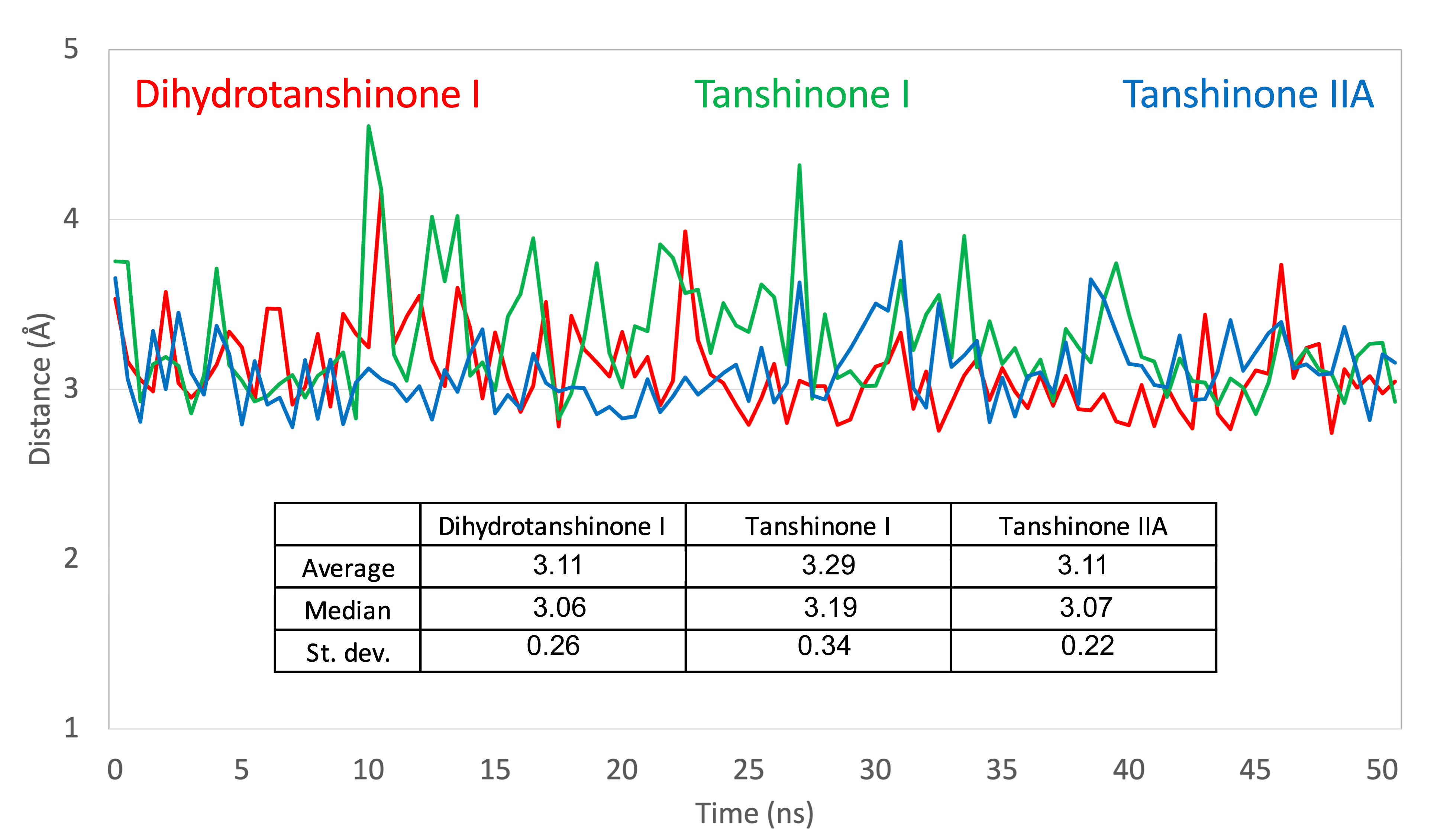
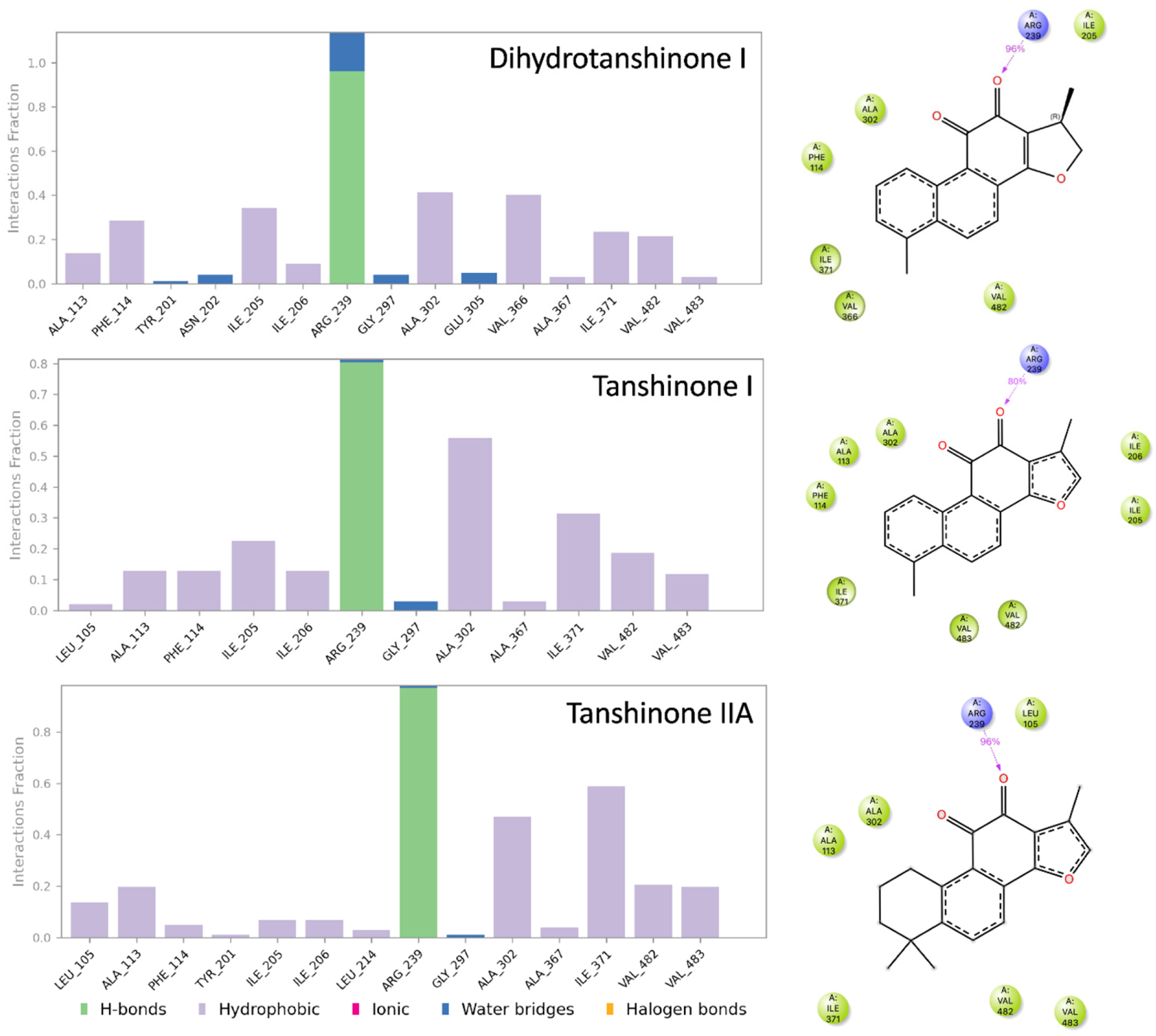
3.3. Molecular Dynamics Simulations
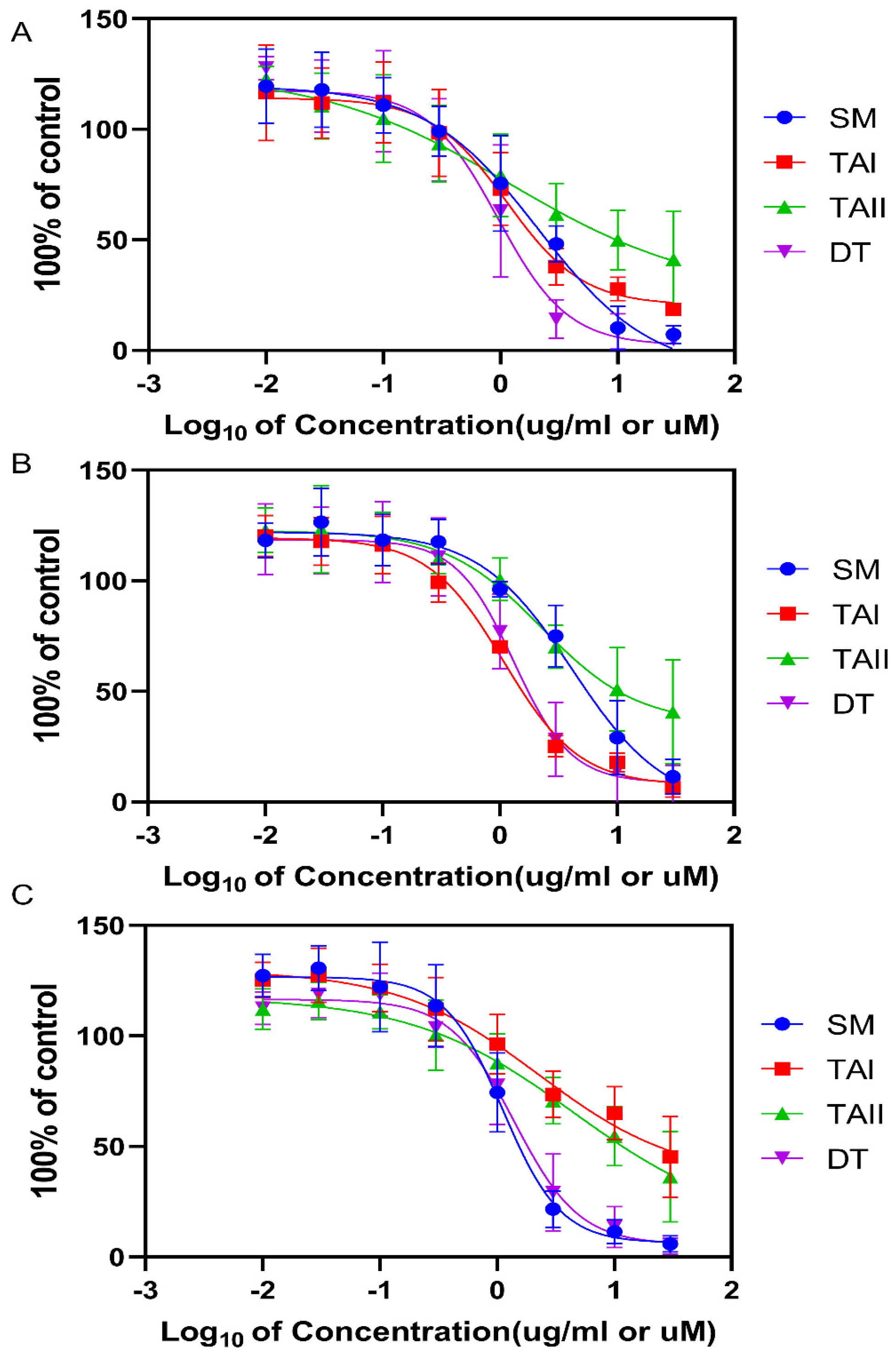
3.4. Cell Lines and Cytotoxicity Assays
3.4.1. Cytotoxicity of Tanshinones in Adrenal, Kidney, and Prostate Cell Lines
3.4.2. In Silico Assessment of Physicochemical Properties and Pharmacokinetic Profile
3.4.3. Predictive Toxicological Assessment
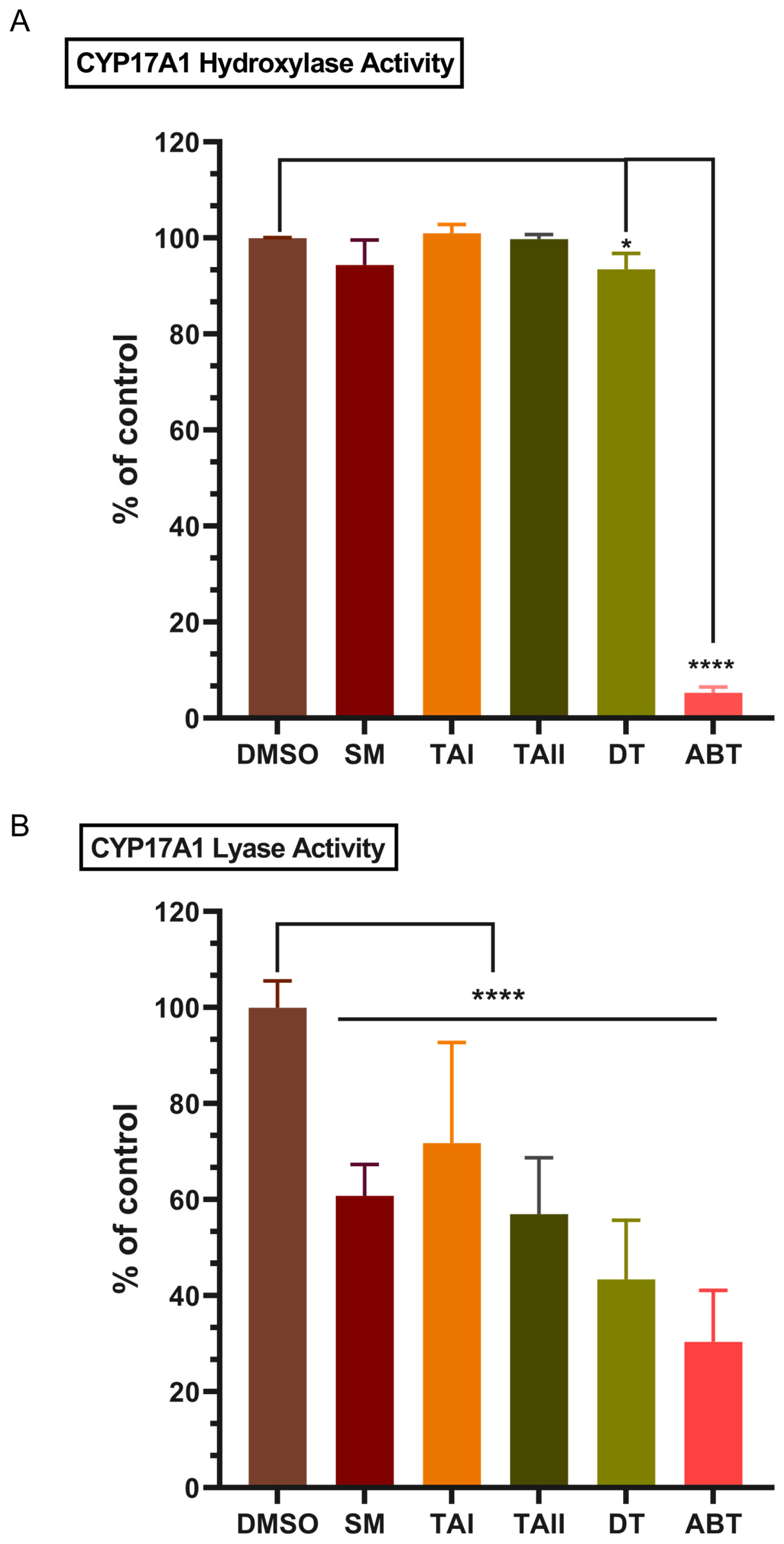
3.5. Tanshinones Selectively Inhibit CYP17A1 17,20-Lyase Activity While Sparing 17α-Hydroxylase Activity
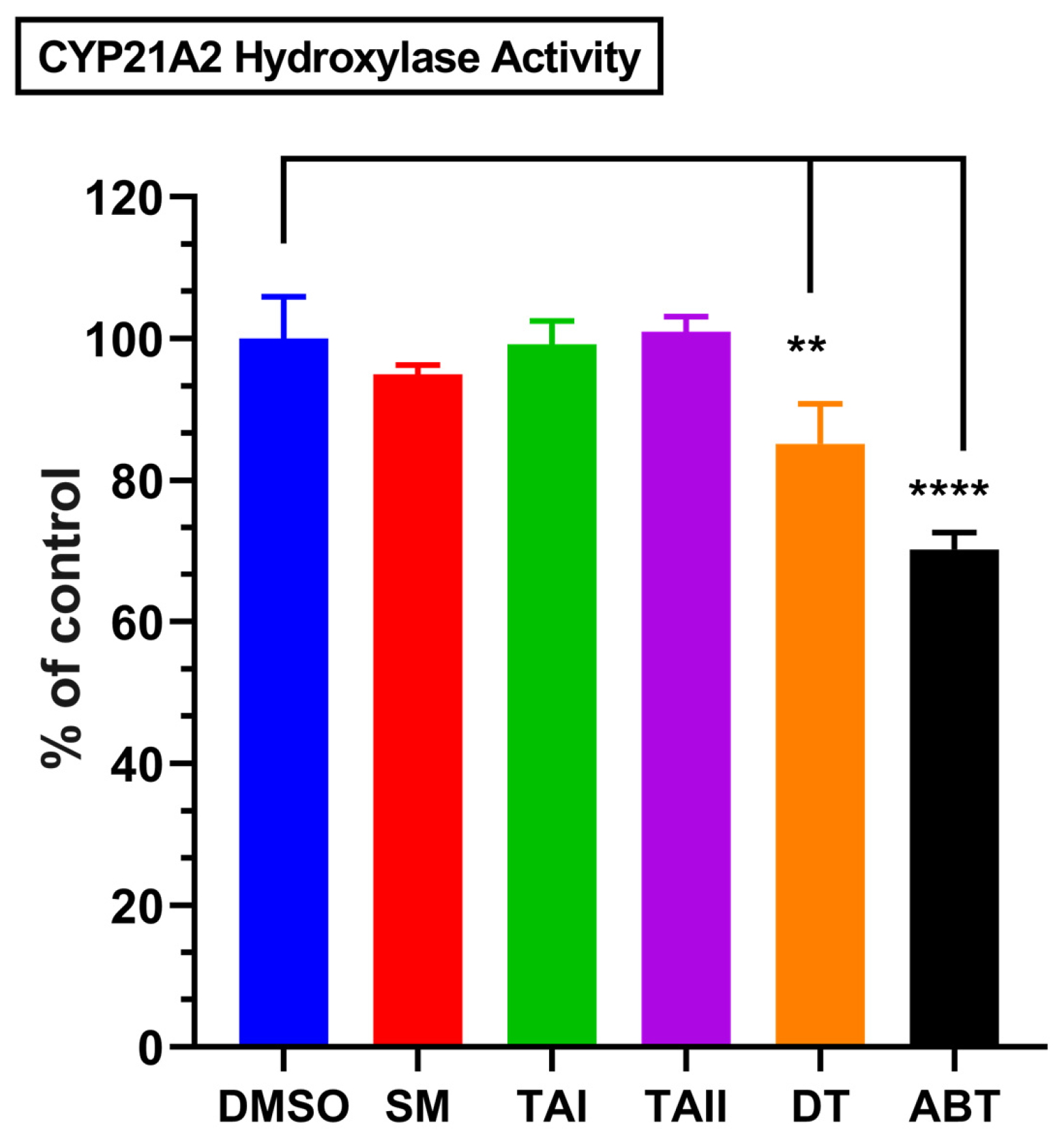
3.6. Tanshinones Exhibit a Favorable Safety Profile with Minimal Inhibition of CYP21A2
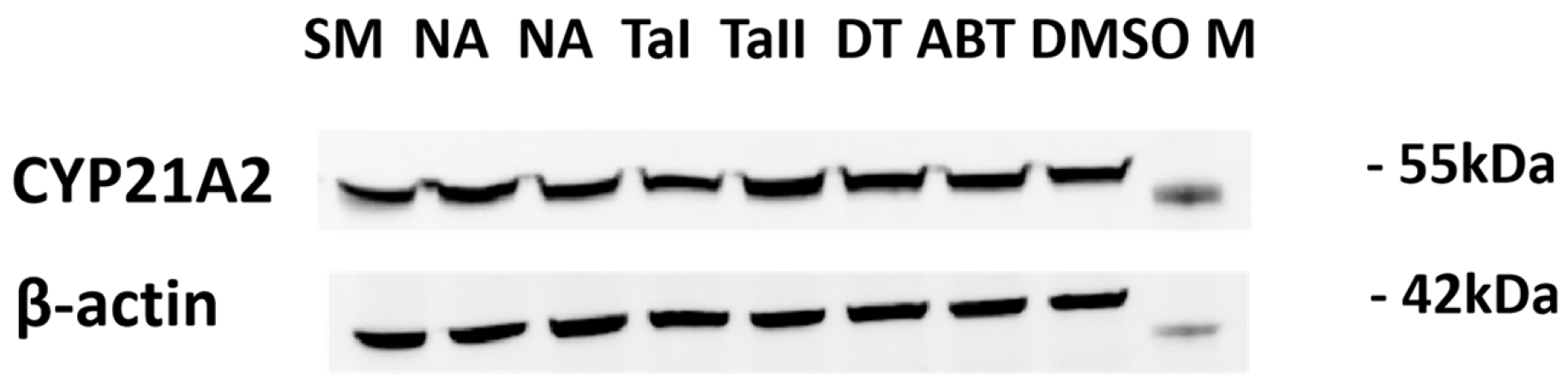
3.7. Inhibition of CYP21A2 Is Mediated by Direct Catalytic Interference, Not Altered Protein Expression
4. Discussion
5. Conclusions
Supplementary Materials
Author Contributions
Funding
Institutional Review Board Statement
Informed Consent Statement
Data Availability Statement
Acknowledgments
Conflicts of Interest
References
- Hatoum, S.; Amiri, M.; Hopkins, D.; Buyalos, R.P.; Bril, F.; Azziz, R. Population-Based vs Health System and Insurer Records: Significant Underdiagnosis of PCOS. J. Clin. Endocrinol. Metab. 2025, 110, e1759–e1766. [Google Scholar] [CrossRef]
- Stener-Victorin, E.; Deng, Q. Epigenetic inheritance of PCOS by developmental programming and germline transmission. Trends Endocrinol. Metab. 2025, 36, 472–481. [Google Scholar] [CrossRef]
- Helvaci, N.; Yildiz, B.O. Polycystic ovary syndrome as a metabolic disease. Nat. Rev. Endocrinol. 2025, 21, 230–244. [Google Scholar] [CrossRef]
- Miller, W.L.; Auchus, R.J. The molecular biology, biochemistry, and physiology of human steroidogenesis and its disorders. Endocr. Rev. 2011, 32, 81–151. [Google Scholar] [CrossRef] [PubMed]
- Vasaitis, T.S.; Bruno, R.D.; Njar, V.C. CYP17 inhibitors for prostate cancer therapy. J. Steroid Biochem. Mol. Biol. 2011, 125, 23–31. [Google Scholar] [CrossRef]
- Pandey, A.V.; Miller, W.L. Regulation of 17,20 lyase activity by cytochrome b5 and by serine phosphorylation of P450c17. J. Biol. Chem. 2005, 280, 13265–13271. [Google Scholar] [CrossRef] [PubMed]
- Pandey, A.V.; Mellon, S.H.; Miller, W.L. Protein phosphatase 2A and phosphoprotein SET regulate androgen production by P450c17. J. Biol. Chem. 2003, 278, 2837–2844. [Google Scholar] [CrossRef] [PubMed]
- Zhang, L.H.; Rodriguez, H.; Ohno, S.; Miller, W.L. Serine phosphorylation of human P450c17 increases 17,20-lyase activity: Implications for adrenarche and the polycystic ovary syndrome. Proc. Natl. Acad. Sci. USA 1995, 92, 10619–10623. [Google Scholar] [CrossRef]
- Tee, M.K.; Miller, W.L. Phosphorylation of human cytochrome P450c17 by p38alpha selectively increases 17,20 lyase activity and androgen biosynthesis. J. Biol. Chem. 2013, 288, 23903–23913. [Google Scholar] [CrossRef]
- Huynh, T.; McGown, I.; Cowley, D.; Nyunt, O.; Leong, G.M.; Harris, M.; Cotterill, A.M. The Clinical and Biochemical Spectrum of Congenital Adrenal Hyperplasia Secondary to 21-Hydroxylase Deficiency. Clin. Biochem. Rev. 2009, 30, 75–86. [Google Scholar]
- Nimkarn, S.; Gangishetti, P.K.; Yau, M.; New, M.I. 21-Hydroxylase-Deficient Congenital Adrenal Hyperplasia. In GeneReviews®; Adam, M.P., Feldman, J., Mirzaa, G.M., Pagon, R.A., Wallace, S.E., Amemiya, A., Eds.; University of Washington: Seattle WA, USA, 1993. [Google Scholar]
- Lord, J.M.; Flight, I.H.K.; Norman, R.J. Metformin in polycystic ovary syndrome: Systematic review and meta-analysis. BMJ Br. Med. J. 2003, 327, 951. [Google Scholar] [CrossRef]
- Lidegaard, Ø.; Løkkegaard, E.; Jensen, A.; Skovlund, C.W.; Keiding, N. Thrombotic Stroke and Myocardial Infarction with Hormonal Contraception. N. Engl. J. Med. 2012, 366, 2257–2266. [Google Scholar] [CrossRef]
- Vitale, S.G.; Di Michele, S.; Tassi, A.; Succu, C.; Angioni, S.; Fulghesu, A.M. Sustained Metabolic Improvements with Low-Dose Metformin Combined with Oral Contraceptives in Female Adolescents with PCOS: A Single-Center Retrospective Cohort Study. Adv. Ther. 2025, 42, 3762–3773. [Google Scholar] [CrossRef]
- Wrobel, T.M.; Grudzinska, A.; Yakubu, J.; du Toit, T.; Sharma, K.; Harrington, J.C.; Bjorkling, F.; Jorgensen, F.S.; Pandey, A.V. Pyridine indole hybrids as novel potent CYP17A1 inhibitors. J. Enzym. Inhib. Med. Chem. 2025, 40, 2463014. [Google Scholar] [CrossRef]
- Wrobel, T.M.; Jorgensen, F.S.; Pandey, A.V.; Grudzinska, A.; Sharma, K.; Yakubu, J.; Bjorkling, F. Non-steroidal CYP17A1 Inhibitors: Discovery and Assessment. J. Med. Chem. 2023, 66, 6542–6566. [Google Scholar] [CrossRef] [PubMed]
- Wrobel, T.M.; Rogova, O.; Sharma, K.; Rojas Velazquez, M.N.; Pandey, A.V.; Jorgensen, F.S.; Arendrup, F.S.; Andersen, K.L.; Bjorkling, F. Synthesis and Structure-Activity Relationships of Novel Non-Steroidal CYP17A1 Inhibitors as Potential Prostate Cancer Agents. Biomolecules 2022, 12, 165. [Google Scholar] [CrossRef]
- Wrobel, T.M.; Rogova, O.; Andersen, K.L.; Yadav, R.; Brixius-Anderko, S.; Scott, E.E.; Olsen, L.; Jorgensen, F.S.; Bjorkling, F. Discovery of Novel Non-Steroidal Cytochrome P450 17A1 Inhibitors as Potential Prostate Cancer Agents. Int. J. Mol. Sci. 2020, 21, 4868. [Google Scholar] [CrossRef] [PubMed]
- Munkboel, C.H.; Christensen, L.R.; Islin, J.; Bonomo, S.; Olsen, L.; Jorgensen, F.S.; Styrishave, B. The anti-epileptic drug lamotrigine inhibits the CYP17A1 lyase reaction in vitro. Biol. Reprod. 2018, 99, 888–897. [Google Scholar] [CrossRef]
- Larsen, M.; Hansen, C.H.; Rasmussen, T.B.; Islin, J.; Styrishave, B.; Olsen, L.; Jorgensen, F.S. Structure-based optimisation of non-steroidal cytochrome P450 17A1 inhibitors. Chem. Commun. 2017, 53, 3118–3121. [Google Scholar] [CrossRef] [PubMed]
- de Bono, J.S.; Logothetis, C.J.; Molina, A.; Fizazi, K.; North, S.; Chu, L.; Chi, K.N.; Jones, R.J.; Goodman, O.B.; Saad, F.; et al. Abiraterone and Increased Survival in Metastatic Prostate Cancer. N. Engl. J. Med. 2011, 364, 1995–2005. [Google Scholar] [CrossRef]
- Attard, G.; Reid, A.H.M.; Auchus, R.J.; Hughes, B.A.; Cassidy, A.M.; Thompson, E.; Oommen, N.B.; Folkerd, E.; Dowsett, M.; Arlt, W.; et al. Clinical and biochemical consequences of CYP17A1 inhibition with abiraterone given with and without exogenous glucocorticoids in castrate men with advanced prostate cancer. J. Clin. Endocrinol. Metab. 2012, 97, 507–516. [Google Scholar] [CrossRef]
- Ryan, C.J.; Smith, M.R.; de Bono, J.S.; Molina, A.; Logothetis, C.J.; de Souza, P.; Fizazi, K.; Mainwaring, P.; Piulats, J.M.; Ng, S.; et al. Randomized Phase 3 Trial of Abiraterone Acetate in Men with Metastatic Castration-Resistant Prostate Cancer and No Prior Chemotherapy. N. Engl. J. Med. 2013, 368, 138–148. [Google Scholar] [CrossRef] [PubMed]
- Malikova, J.; Brixius-Anderko, S.; Udhane, S.S.; Parween, S.; Dick, B.; Bernhardt, R.; Pandey, A.V. CYP17A1 inhibitor abiraterone, an anti-prostate cancer drug, also inhibits the 21-hydroxylase activity of CYP21A2. J. Steroid Biochem. Mol. Biol. 2017, 174, 192–200. [Google Scholar] [CrossRef] [PubMed]
- Udhane, S.S.; Dick, B.; Hu, Q.; Hartmann, R.W.; Pandey, A.V. Specificity of anti-prostate cancer CYP17A1 inhibitors on androgen biosynthesis. Biochem. Biophys. Res. Commun. 2016, 477, 1005–1010. [Google Scholar] [CrossRef] [PubMed]
- Fehl, C.; Vogt, C.D.; Yadav, R.; Li, K.; Scott, E.E.; Aubé, J. Structure-Based Design of Inhibitors with Improved Selectivity for Steroidogenic Cytochrome P450 17A1 over Cytochrome P450 21A2. J. Med. Chem. 2018, 61, 4946. [Google Scholar] [CrossRef]
- McCrea, E.; Sissung, T.M.; Price, D.K.; Chau, C.H.; Figg, W.D. Androgen receptor variation affects prostate cancer progression and drug resistance. Pharmacol. Res. 2016, 114, 152–162. [Google Scholar] [CrossRef]
- Yakubu, J.; Natsaridis, E.; du Toit, T.; Barata, I.S.; Tagit, O.; Pandey, A.V. Nanoparticles with curcumin and piperine modulate steroid biosynthesis in prostate cancer. Sci. Rep. 2025, 15, 13613. [Google Scholar] [CrossRef]
- Sharma, K.; Lanzilotto, A.; Yakubu, J.; Therkelsen, S.; Voegel, C.D.; Du Toit, T.; Jorgensen, F.S.; Pandey, A.V. Effect of Essential Oil Components on the Activity of Steroidogenic Cytochrome P450. Biomolecules 2024, 14, 203. [Google Scholar] [CrossRef]
- Mayr, F.; Moller, G.; Garscha, U.; Fischer, J.; Rodriguez Castano, P.; Inderbinen, S.G.; Temml, V.; Waltenberger, B.; Schwaiger, S.; Hartmann, R.W.; et al. Finding New Molecular Targets of Familiar Natural Products Using In Silico Target Prediction. Int. J. Mol. Sci. 2020, 21, 7102. [Google Scholar] [CrossRef]
- Rodríguez Castaño, P.; Parween, S.; Pandey, A.V. Bioactivity of Curcumin on the Cytochrome P450 Enzymes of the Steroidogenic Pathway. Int. J. Mol. Sci. 2019, 20, 4606. [Google Scholar] [CrossRef]
- Sethi, K.K.; Sahoo, S.K.; Pichikala, J.N.; Suresh, P. Carbonic anhydrase I and II inhibition with natural products: Caffeine and piperine. J. Enzym. Inhib. Med. Chem. 2012, 27, 97–100. [Google Scholar] [CrossRef] [PubMed]
- Sahin, H.; Can, Z.; Yildiz, O.; Kolayli, S.; Innocenti, A.; Scozzafava, G.; Supuran, C.T. Inhibition of carbonic anhydrase isozymes I and II with natural products extracted from plants, mushrooms and honey. J. Enzym. Inhib. Med. Chem. 2012, 27, 395–402. [Google Scholar] [CrossRef]
- Mukanganyama, S.; Bezabih, M.; Robert, M.; Ngadjui, B.T.; Kapche, G.F.; Ngandeu, F.; Abegaz, B. The evaluation of novel natural products as inhibitors of human glutathione transferase P1-1. J. Enzym. Inhib. Med. Chem. 2011, 26, 460–467. [Google Scholar] [CrossRef]
- Liu, J.Y.; Guo, H.Y.; Quan, Z.S.; Shen, Q.K.; Cui, H.; Li, X. Research progress of natural products and their derivatives against Alzheimer’s disease. J. Enzym. Inhib. Med. Chem. 2023, 38, 2171026. [Google Scholar] [CrossRef]
- Sultana, N. Clinically useful anticancer, antitumor, and antiwrinkle agent, ursolic acid and related derivatives as medicinally important natural product. J. Enzym. Inhib. Med. Chem. 2011, 26, 616–642. [Google Scholar] [CrossRef]
- Babhare, A.; Nandurkar, D.; Danao, K.; Warokar, A.; Mahajan, U. Exploration of Herbal Medicinal Plants and Formulations Available for the Treatment of PCOS: A review. JBRA Assist. Reprod. 2025, 29, 367–377. [Google Scholar] [CrossRef]
- Su, P.; Wang, X.; Cai, R.; Yan, C.; Sun, Y. Effects of cryptotanshinone in treatment of polycystic ovary syndrome in rats: A systematic review and meta-analysis. Front. Pharmacol. 2025, 16, 1561164. [Google Scholar] [CrossRef]
- Yuan, J.; Li, Z.; Yu, Y.; Wang, X.; Zhao, Y. Natural compounds in the management of polycystic ovary syndrome: A comprehensive review of hormonal regulation and therapeutic potential. Front. Nutr. 2025, 12, 1520695. [Google Scholar] [CrossRef] [PubMed]
- Shi, W.; Wen, J.; Gao, Y.; Liu, T.; Li, H.; Yang, H.; Zhao, J.; Wei, Z.; Li, C.; Yao, Q.; et al. Dihydrotanshinone I, a main compound of Salvia miltiorrhiza, alleviates autoimmune and inflammatory diseases by directly targeting IRF3. Phytomedicine 2025, 145, 157005. [Google Scholar] [CrossRef]
- Li, A.; Yang, M.; Duan, W.; Wu, B. Dihydrotanshinone I induces necroptosis and cell cycle arrest in gastric cancer through the PTPN11/p38 pathway. Toxicol. Vitr. 2025, 102, 105955. [Google Scholar] [CrossRef] [PubMed]
- Han, B.; Sun, C.; Yang, R.; Li, X.; Kang, J.; Cai, J.; Zhou, S.; Wang, G.; Wang, J.; Zhang, J.; et al. Dihydrotanshinone I inhibits ovarian tumor growth by suppressing ITGB1/FAK-mediated extracellular matrix signaling. Phytomedicine 2025, 145, 157023. [Google Scholar] [CrossRef]
- Dev, A.J.R.; Malhotra, L.; Kashyap, A.; Umar, S.M.; Rathee, M.; Samanta, S.; Kharkwal, R.; Sengupta, D.; Prasad, C.P. Biophysical and molecular characterization of HuR inhibitors, CMLD-2 and Dihydrotanshinone I (DHTS), in Triple Negative Breast Cancer (TNBC). Int. J. Biol. Macromol. 2025, 320, 145848. [Google Scholar] [CrossRef] [PubMed]
- Yue, J.; Hao, D.; Wang, Y.; Guo, J.; Liu, S.; Meng, L.; Liu, J. The multifaceted mechanisms of Dihydrotanshinone I in the treatment of tumors. Biomed. Pharmacother. 2024, 175, 116635. [Google Scholar] [CrossRef]
- Shen, W.; Jin, B.; Pan, Y.; Han, Y.; You, T.; Zhang, Z.; Qu, Y.; Liu, S.; Zhang, Y. The Effects of Traditional Chinese Medicine-Associated Complementary and Alternative Medicine on Women with Polycystic Ovary Syndrome. Evid.-Based Complement. Altern. Med. eCAM 2021, 2021, 6619597. [Google Scholar] [CrossRef] [PubMed]
- Chen, H.; Deng, C.; Meng, Z.; Meng, S. Effects of TCM on polycystic ovary syndrome and its cellular endocrine mechanism. Front. Endocrinol. 2023, 14, 956772. [Google Scholar] [CrossRef] [PubMed]
- Zhang, Y.Z.; Wei, Z.J.; Yu, S.N.; Wang, X.Y.; Wang, Y.; Wu, C.A.; Jiang, X. Dihydrotanshinone I protects human chondrocytes and alleviates damage from spontaneous osteoarthritis in a guinea pig model. Sci. Rep. 2023, 13, 21355. [Google Scholar] [CrossRef]
- Shen, N.; Li, M.; Fang, B.; Li, X.; Jiang, F.; Zhu, T.; Zheng, J.; Zhang, W. ALOX15-Driven Ferroptosis: The key target in Dihydrotanshinone I’s epigenetic Battle in hepatic stellate cells against liver fibrosis. Int. Immunopharmacol. 2025, 146, 113827. [Google Scholar] [CrossRef]
- Molteni, E.; Baldan, F.; Damante, G.; Allegri, L. Dihydrotanshinone I exhibits antitumor effects via beta-catenin downregulation in papillary thyroid cancer cell lines. Sci. Rep. 2024, 14, 7853. [Google Scholar] [CrossRef]
- Hsu, Y.C.; Shih, Y.H.; Ho, C.; Liu, C.C.; Liaw, C.C.; Lin, H.Y.; Lin, C.L. Ethyl Acetate Fractions of Salvia miltiorrhiza Bunge (Danshen) Crude Extract Modulate Fibrotic Signals to Ameliorate Diabetic Kidney Injury. Int. J. Mol. Sci. 2024, 25, 8986. [Google Scholar] [CrossRef]
- Heidarzadehpilehrood, R.; Pirhoushiaran, M.; Abdollahzadeh, R.; Binti Osman, M.; Sakinah, M.; Nordin, N.; Abdul Hamid, H. A Review on CYP11A1, CYP17A1, and CYP19A1 Polymorphism Studies: Candidate Susceptibility Genes for Polycystic Ovary Syndrome (PCOS) and Infertility. Genes 2022, 13, 302. [Google Scholar] [CrossRef]
- Ji, X.Z.; Qin, X.; Wang, W.; Wang, L. A review of tanshinone compounds in prostate cancer treatment. Transl. Androl. Urol. 2024, 13, 1278–1287. [Google Scholar] [CrossRef]
- Rojas Velazquez, M.N.; Lopez Dacal, J.; Jørgensen, F.S.; Sanguineti, N.; Sharma, K.; Marino, R.; Garrido, N.P.; Vaiani, E.; Ramírez, P.; Scaglia, P.; et al. A novel POR G88S mutation causes severe PORD and establishes a critical pharmacogenomic risk profile. J. Clin. Endocrinol. Metab. 2025, dgaf630. [Google Scholar] [CrossRef] [PubMed]
- Prado, M.J.; Singh, S.; Ligabue-Braun, R.; Meneghetti, B.V.; Rispoli, T.; Kopacek, C.; Monteiro, K.; Zaha, A.; Rossetti, M.L.R.; Pandey, A.V. Characterization of Mutations Causing CYP21A2 Deficiency in Brazilian and Portuguese Populations. Int. J. Mol. Sci. 2021, 23, 296. [Google Scholar] [CrossRef]
- Sastry, G.M.; Adzhigirey, M.; Day, T.; Annabhimoju, R.; Sherman, W. Protein and ligand preparation: Parameters, protocols, and influence on virtual screening enrichments. J. Comput. Aided Mol. Des. 2013, 27, 221–234. [Google Scholar] [CrossRef]
- Kim, S.; Chen, J.; Cheng, T.; Gindulyte, A.; He, J.; He, S.; Li, Q.; Shoemaker, B.A.; Thiessen, P.A.; Yu, B.; et al. PubChem 2025 update. Nucleic Acids Res. 2025, 53, D1516–D1525. [Google Scholar] [CrossRef]
- Berman, H.M.; Westbrook, J.; Feng, Z.; Gilliland, G.; Bhat, T.N.; Weissig, H.; Shindyalov, I.N.; Bourne, P.E. The Protein Data Bank. Nucleic Acids Res. 2000, 28, 235–242. [Google Scholar] [CrossRef] [PubMed]
- Petrunak, E.M.; Rogers, S.A.; Aube, J.; Scott, E.E. Structural and Functional Evaluation of Clinically Relevant Inhibitors of Steroidogenic Cytochrome P450 17A1. Drug Metab. Dispos. 2017, 45, 635–645. [Google Scholar] [CrossRef]
- Petrunak, E.M.; DeVore, N.M.; Porubsky, P.R.; Scott, E.E. Structures of human steroidogenic cytochrome P450 17A1 with substrates. J. Biol. Chem. 2014, 289, 32952–32964. [Google Scholar] [CrossRef] [PubMed]
- Chen, Y.C. Beware of docking! Trends Pharmacol. Sci. 2015, 36, 78–95. [Google Scholar] [CrossRef] [PubMed]
- Genheden, S.; Ryde, U. The MM/PBSA and MM/GBSA methods to estimate ligand-binding affinities. Expert Opin. Drug Discov. 2015, 10, 449–461. [Google Scholar] [CrossRef]
- Wang, E.; Sun, H.; Wang, J.; Wang, Z.; Liu, H.; Zhang, J.Z.H.; Hou, T. End-Point Binding Free Energy Calculation with MM/PBSA and MM/GBSA: Strategies and Applications in Drug Design. Chem. Rev. 2019, 119, 9478–9508. [Google Scholar] [CrossRef] [PubMed]
- Pantsar, T.; Poso, A. Binding Affinity via Docking: Fact and Fiction. Molecules 2018, 23, 1899. [Google Scholar] [CrossRef]
- Siebenmorgen, T.; Zacharias, M. Efficient Refinement and Free Energy Scoring of Predicted Protein-Protein Complexes Using Replica Exchange with Repulsive Scaling. J. Chem. Inf. Model. 2020, 60, 5552–5562. [Google Scholar] [CrossRef]
- Kairys, V.; Baranauskiene, L.; Kazlauskiene, M.; Matulis, D.; Kazlauskas, E. Binding affinity in drug design: Experimental and computational techniques. Expert Opin. Drug Discov. 2019, 14, 755–768. [Google Scholar] [CrossRef]
- Daina, A.; Michielin, O.; Zoete, V. SwissADME: A free web tool to evaluate pharmacokinetics, drug-likeness and medicinal chemistry friendliness of small molecules. Sci. Rep. 2017, 7, 42717. [Google Scholar] [CrossRef]
- Banerjee, P.; Kemmler, E.; Dunkel, M.; Preissner, R. ProTox 3.0: A webserver for the prediction of toxicity of chemicals. Nucleic Acids Res. 2024, 52, W513–W520. [Google Scholar] [CrossRef]
- Olsen, L.; Montefiori, M.; Tran, K.P.; Jorgensen, F.S. SMARTCyp 3.0: Enhanced cytochrome P450 site-of-metabolism prediction server. Bioinformatics 2019, 35, 3174–3175. [Google Scholar] [CrossRef]
- Olsen, L.; Oostenbrink, C.; Jorgensen, F.S. Prediction of cytochrome P450 mediated metabolism. Adv. Drug Deliv. Rev. 2015, 86, 61–71. [Google Scholar] [CrossRef]
- Bonomo, S.; Jorgensen, F.S.; Olsen, L. Mechanism of Cytochrome P450 17A1-Catalyzed Hydroxylase and Lyase Reactions. J. Chem. Inf. Model. 2017, 57, 1123–1133. [Google Scholar] [CrossRef] [PubMed]
- Yu, J.; Li, S.; Cheng, S.; Ahmad, M.; Chen, C.; Wan, X.; Wei, S.; Pan, W.; Luo, H. Tanshinone analog inhibits castration-resistant prostate cancer cell growth by inhibiting glycolysis in an AR-dependent manner. J. Biol. Chem. 2024, 300, 107139. [Google Scholar] [CrossRef] [PubMed]
- Zhang, T.; Chen, X.; Ju, X.; Yuan, J.; Zhou, J.; Zhang, Z.; Ju, G.; Xu, D. PPARG is a potential target of Tanshinone IIA in prostate cancer treatment: A combination study of molecular docking and dynamic simulation based on transcriptomic bioinformatics. Eur. J. Med. Res. 2023, 28, 487. [Google Scholar] [CrossRef] [PubMed]
- Shakeri, A.; Hafezian, T.; Kusz, N.; Hohmann, J.; Boozari, M.; Mottaghipisheh, J.; Emami, S.A.; Tayarani-Najaran, Z.; Asili, J. Cytotoxicity, apoptosis inducing activity and Western blot analysis of tanshinone derivatives from Stachys parviflora on prostate and breast cancer cells. Mol. Biol. Rep. 2022, 49, 8251–8258. [Google Scholar] [CrossRef]
- Li, W.; Huang, T.; Xu, S.; Che, B.; Yu, Y.; Zhang, W.; Tang, K. Molecular Mechanism of Tanshinone against Prostate Cancer. Molecules 2022, 27, 5594. [Google Scholar] [CrossRef]
- Sun, G.; Sun, K.; Sun, J. Combination prostate cancer therapy: Prostate-specific membranes antigen targeted, pH-sensitive nanoparticles loaded with doxorubicin and tanshinone. Drug Deliv. 2021, 28, 1132–1140. [Google Scholar] [CrossRef]
- Wu, C.Y.; Yang, Y.H.; Lin, Y.Y.; Kuan, F.C.; Lin, Y.S.; Lin, W.Y.; Tsai, M.Y.; Yang, J.J.; Cheng, Y.C.; Shu, L.H.; et al. Anti-cancer effect of danshen and dihydroisotanshinone I on prostate cancer: Targeting the crosstalk between macrophages and cancer cells via inhibition of the STAT3/CCL2 signaling pathway. Oncotarget 2017, 8, 40246–40263. [Google Scholar] [CrossRef]
- Li, C.; Han, X.; Zhang, H.; Wu, J.; Li, B. The interplay between autophagy and apoptosis induced by tanshinone IIA in prostate cancer cells. Tumour Biol. 2016, 37, 7667–7674. [Google Scholar] [CrossRef]
- Ketola, K.; Viitala, M.; Kohonen, P.; Fey, V.; Culig, Z.; Kallioniemi, O.; Iljin, K. High-throughput cell-based compound screen identifies pinosylvin methyl ether and tanshinone IIA as inhibitors of castration-resistant prostate cancer. J. Mol. Biochem. 2016, 5, 12–22. [Google Scholar]
- Chiu, S.C.; Huang, S.Y.; Chen, S.P.; Su, C.C.; Chiu, T.L.; Pang, C.Y. Tanshinone IIA inhibits human prostate cancer cells growth by induction of endoplasmic reticulum stress in vitro and in vivo. Prostate Cancer Prostatic Dis. 2013, 16, 315–322. [Google Scholar] [CrossRef] [PubMed]
- Won, S.H.; Lee, H.J.; Jeong, S.J.; Lu, J.; Kim, S.H. Activation of p53 signaling and inhibition of androgen receptor mediate tanshinone IIA induced G1 arrest in LNCaP prostate cancer cells. Phytother. Res. PTR 2012, 26, 669–674. [Google Scholar] [CrossRef]
- Liu, W.; Zhou, J.; Geng, G.; Shi, Q.; Sauriol, F.; Wu, J.H. Antiandrogenic, maspin induction, and antiprostate cancer activities of tanshinone IIA and its novel derivatives with modification in ring A. J. Med. Chem. 2012, 55, 971–975. [Google Scholar] [CrossRef] [PubMed]
- Won, S.H.; Lee, H.J.; Jeong, S.J.; Lee, H.J.; Lee, E.O.; Jung, D.B.; Shin, J.M.; Kwon, T.R.; Yun, S.M.; Lee, M.H.; et al. Tanshinone IIA induces mitochondria dependent apoptosis in prostate cancer cells in association with an inhibition of phosphoinositide 3-kinase/AKT pathway. Biol. Pharm. Bull. 2010, 33, 1828–1834. [Google Scholar] [CrossRef] [PubMed]
- Escobar-Morreale, H.F. Polycystic ovary syndrome: Definition, aetiology, diagnosis and treatment. Nat. Rev. Endocrinol. 2018, 14, 270–284. [Google Scholar] [CrossRef]
- Goodarzi, M.O.; Dumesic, D.A.; Chazenbalk, G.; Azziz, R. Polycystic ovary syndrome: Etiology, pathogenesis and diagnosis. Nat. Rev. Endocrinol. 2011, 7, 219–231. [Google Scholar] [CrossRef]
- Li, S.; Teng, F.; Zhang, J.; Zhang, P.; Li, M.; Wang, X.; Li, K. Tanshinone IIA potentiates the chemotherapeutic effect of doxorubicin against breast cancer cells and attenuates the cardiotoxicity of doxorubicin by regulating ERK1/2 pathway. J. Biochem. Mol. Toxicol. 2024, 38, e23851. [Google Scholar] [CrossRef] [PubMed]
- Fengchao, C.; Siya, Z.; Tongtong, Y.; Hongquan, W.; Jie, L.; Qiang, W.; Danish, S.; Kun, L. The enhanced cytotoxicity on breast cancer cells by Tanshinone I-induced photodynamic effect. Sci. Rep. 2023, 13, 18107. [Google Scholar] [CrossRef] [PubMed]
- Lin, H.; Zheng, L.; Li, S.; Xie, B.; Cui, B.; Xia, A.; Lin, Z.; Zhou, P. Cytotoxicity of Tanshinone IIA combined with Taxol on drug-resist breast cancer cells MCF-7 through inhibition of Tau. Phytother. Res. PTR 2018, 32, 667–671. [Google Scholar] [CrossRef]
- Dai, S.; Ding, Y.; Guo, J.; Wang, X. Efficacy and safety of danshen class injections in the treatment of coronary heart disease: A network meta-analysis. Front. Pharmacol. 2024, 15, 1487119. [Google Scholar] [CrossRef]
- Zhu, R.R.; Zhou, X.L.; Liu, Y.W.; Xu, R.; Deng, P.; Liu, Z.Y. Engineered endothelial cells targeting and dihydrotanshinone I loaded bacterial extracellular vesicles for atherosclerosis therapy. Bioeng. Transl. Med. 2025, 10, e70074. [Google Scholar] [CrossRef]
- Xu, R.; Dai, J.; Gong, R.; Tu, R.; Wang, Q.; Zheng, H.; Zhou, L.; Wang, S.; Cai, J.; Sun, H.; et al. Dihydrotanshinone I Targets PGAM1 to Induce SYVN1-Mediated Ubiquitination and Suppress Glycolysis in Hepatocellular Carcinoma. Phytother. Res. PTR 2025, 39, 3762–3783. [Google Scholar] [CrossRef]
- Mahendran, R.; Lim, S.K.; Ong, K.C.; Chua, K.H.; Chai, H.C. Antiproliferative effects of dihydrotanshinone I on autosomal dominant polycystic kidney disease via immunomodulation. J. Pharmacol. Exp. Ther. 2025, 392, 103655. [Google Scholar] [CrossRef]
- Luo, X.; Duan, Y.; He, J.; Huang, C.; Liu, J.; Liu, Y.; Xu, M.; Dai, Q.; Yang, Z. Dihydrotanshinone I enhanced BRAF mutant melanoma treatment efficacy by inhibiting the STAT3/SOX2 signaling pathway. Front. Oncol. 2025, 15, 1429018. [Google Scholar] [CrossRef] [PubMed]
- Lin, H.; Sui, H.; Yu, Y.; Xie, C.; Shen, Y.; Cheng, L.; Wang, J.; Yu, Y.; Xie, C.; Cui, R. Dihydrotanshinone I potentiates the anti-tumor activity of cisplatin by activating ROS-mediated ER stress through targeting HSPD1 in lung cancer cells. Eur. J. Pharmacol. 2025, 994, 177378. [Google Scholar] [CrossRef]
- Huang, X.; Huang, L.; Ni, X.; Wang, Q.Q.; Liu, L.; Shen, Y.; Xiao, L.; Yang, S.; Yuan, R.; Li, X.X.; et al. Dihydrotanshinone Alleviates Lipopolysaccharide-Induced Acute Lung Injury by Targeting NEK7 to Inhibit NLRP3 Inflammasome Activation. Phytother. Res. 2025. [Google Scholar] [CrossRef] [PubMed]
- Wang, X.; Jing, Z.; Huang, X.; Liu, X.; Zhang, Y.; Wang, Z.; Ma, P. PD-L1 antibody conjugated dihydrotanshinone I-loaded polymeric nanoparticle for targeted cancer immunotherapy combining PD-L1 blockade with immunogenic cell death. Int. J. Pharm. 2024, 667, 125004. [Google Scholar] [CrossRef]
- Nie, Y.; Yan, J.; Huang, X.; Jiang, T.; Zhang, S.; Zhang, G. Dihydrotanshinone I targets ESR1 to induce DNA double-strand breaks and proliferation inhibition in hepatocellular carcinoma. Phytomedicine 2024, 130, 155767. [Google Scholar] [CrossRef] [PubMed]
- Muroi, M.; Lee, D.S. Inhibitory Effects of Cryptotanshinone and Dihydrotanshinone I on Intracellular Trafficking of Viral Glycoproteins. J. Microbiol. Biotechnol. 2024, 34, 2457–2464. [Google Scholar] [CrossRef] [PubMed]
- Li, Z.; Mo, R.L.; Gong, J.F.; Han, L.; Wang, W.F.; Huang, D.K.; Xu, J.G.; Sun, Y.J.; Chen, S.; Han, G.C.; et al. Dihydrotanshinone I inhibits gallbladder cancer growth by targeting the Keap1-Nrf2 signaling pathway and Nrf2 phosphorylation. Phytomedicine 2024, 129, 155661. [Google Scholar] [CrossRef]
- Zhang, R.H.; Guo, H.Y.; Deng, H.; Li, J.; Quan, Z.S. Piperazine skeleton in the structural modification of natural products: A review. J. Enzym. Inhib. Med. Chem. 2021, 36, 1165–1197. [Google Scholar] [CrossRef]
- Pandey, A.V. Dataset for: Dihydrotanshinone As a Natural Product-Based CYP17A1 Lyase Inhibitor for Hyperandrogenic Disorders. Harvard Dataverse. 2025. Available online: https://doi.org/10.7910/DVN/YMX0MN (accessed on 1 January 2026).


| Drug | NCI-H295R (IC50) | HEK-293T (IC50) | RWPE-1 (IC50) |
|---|---|---|---|
| SM | 2.11 ± 1.80 μg/mL | 4.17 ± 2.56 μg/mL | 1.12 ± 0.31 μg/mL |
| TAI | 1.13 ± 0.63 μM | 1.08 ± 0.26 μM | 2.27 ± 3.25 μM |
| TAII | 1.20 ± 3.44 μM | 2.26 ± 1.92 μM | 4.50 ± 11.80 μM |
| DT | 0.95 ± 0.48 μM | 1.31 ± 0.47 μM | 1.40 ± 0.42 μM |
| Parameter | Tanshinone I (TAI) | Tanshinone IIA (TAII) | Dihydrotanshinone I (DT) |
|---|---|---|---|
| Formula | C18H12O3 | C19H18O3 | C18H14O3 |
| MW (g/mol) | 276.29 | 294.34 | 278.30 |
| Consensus Log P | 3.40 | 3.80 | 3.03 |
| TPSA (Å2) | 47.28 | 47.28 | 43.37 |
| ESOL Solubility Class | Moderately soluble | Moderately soluble | Soluble |
| GI Absorption | High | High | High |
| BBB Permeant | Yes | Yes | Yes |
| P-gp Substrate | No | Yes | No |
| CYP1A2 Inhibitor | Yes | Yes | Yes |
| CYP2C19 Inhibitor | Yes | Yes | Yes |
| CYP2C9 Inhibitor | No | Yes | Yes |
| CYP2D6 Inhibitor | No | Yes | Yes |
| CYP3A4 Inhibitor | Yes | Yes | Yes |
| Bioavailability Score | 0.55 | 0.55 | 0.85 |
| Lipinski Violations | 0 | 0 | 0 |
| PAINS Alerts | 2 | 2 | 2 |
| Toxicity Endpoint | Tanshinone I (TAI) | Tanshinone IIA (TAII) | Dihydrotanshinone I (DT) |
|---|---|---|---|
| Hepatotoxicity | Inactive (0.63) | Inactive (0.71) | Inactive (0.62) |
| Respiratory Toxicity | Active (0.63) | Active (0.56) | Active (0.66) |
| Carcinogenicity | Inactive (0.51) | Inactive (0.56) | Active (0.50) |
| Immunotoxicity | Inactive (0.66) | Inactive (0.80) | Active (0.98) |
| Mutagenicity | Inactive (0.55) | Inactive (0.70) | Inactive (0.55) |
| GABA Receptor Activity | Active (0.51) | Active (0.59) | Active (0.50) |
| AChE Inhibition | Inactive (0.87) | Inactive (0.77) | Active (0.79) |
| PXR Activation | Inactive (0.59) | Active (0.58) | Active (0.58) |
| Compound | % Inhibition CYP17A1-Lyase | % Inhibition CYP17A1-OH | % Inhibition CYP21A2 | Lyase/OH Selectivity Index a | Lyase/CYP21A2 Selectivity Index b |
|---|---|---|---|---|---|
| SM | 39.2% | 5.6% | 5.0% | 6.96 | 7.82 |
| TAI | 28.2% | <1% | <1% | High c | High c |
| TAII | 43.0% | <1% | <1% | High c | High c |
| DT | 56.6% | 6.5% | 14.9% | 8.67 | 3.80 |
| Abiraterone | 69.6% | 94.7% | 29.8% | 0.73 | 2.34 |
Disclaimer/Publisher’s Note: The statements, opinions and data contained in all publications are solely those of the individual author(s) and contributor(s) and not of MDPI and/or the editor(s). MDPI and/or the editor(s) disclaim responsibility for any injury to people or property resulting from any ideas, methods, instructions or products referred to in the content. |
© 2026 by the authors. Licensee MDPI, Basel, Switzerland. This article is an open access article distributed under the terms and conditions of the Creative Commons Attribution (CC BY) license.
Share and Cite
Li, K.; Yakubu, J.; Jørgensen, F.S.; Pandey, A.V. Dihydrotanshinone as a Natural Product-Based CYP17A1 Lyase Inhibitor for Hyperandrogenic Disorders. Biomolecules 2026, 16, 144. https://doi.org/10.3390/biom16010144
Li K, Yakubu J, Jørgensen FS, Pandey AV. Dihydrotanshinone as a Natural Product-Based CYP17A1 Lyase Inhibitor for Hyperandrogenic Disorders. Biomolecules. 2026; 16(1):144. https://doi.org/10.3390/biom16010144
Chicago/Turabian StyleLi, Kaige, Jibira Yakubu, Flemming Steen Jørgensen, and Amit V. Pandey. 2026. "Dihydrotanshinone as a Natural Product-Based CYP17A1 Lyase Inhibitor for Hyperandrogenic Disorders" Biomolecules 16, no. 1: 144. https://doi.org/10.3390/biom16010144
APA StyleLi, K., Yakubu, J., Jørgensen, F. S., & Pandey, A. V. (2026). Dihydrotanshinone as a Natural Product-Based CYP17A1 Lyase Inhibitor for Hyperandrogenic Disorders. Biomolecules, 16(1), 144. https://doi.org/10.3390/biom16010144