Modelling Neural Disorders with the D. melanogaster Larval Peripheral and Adult Dopaminergic Systems



Abstract
1. Introduction
2. Modelling Peripheral Neuropathies in the Larval Peripheral Nervous System of D. melanogaster
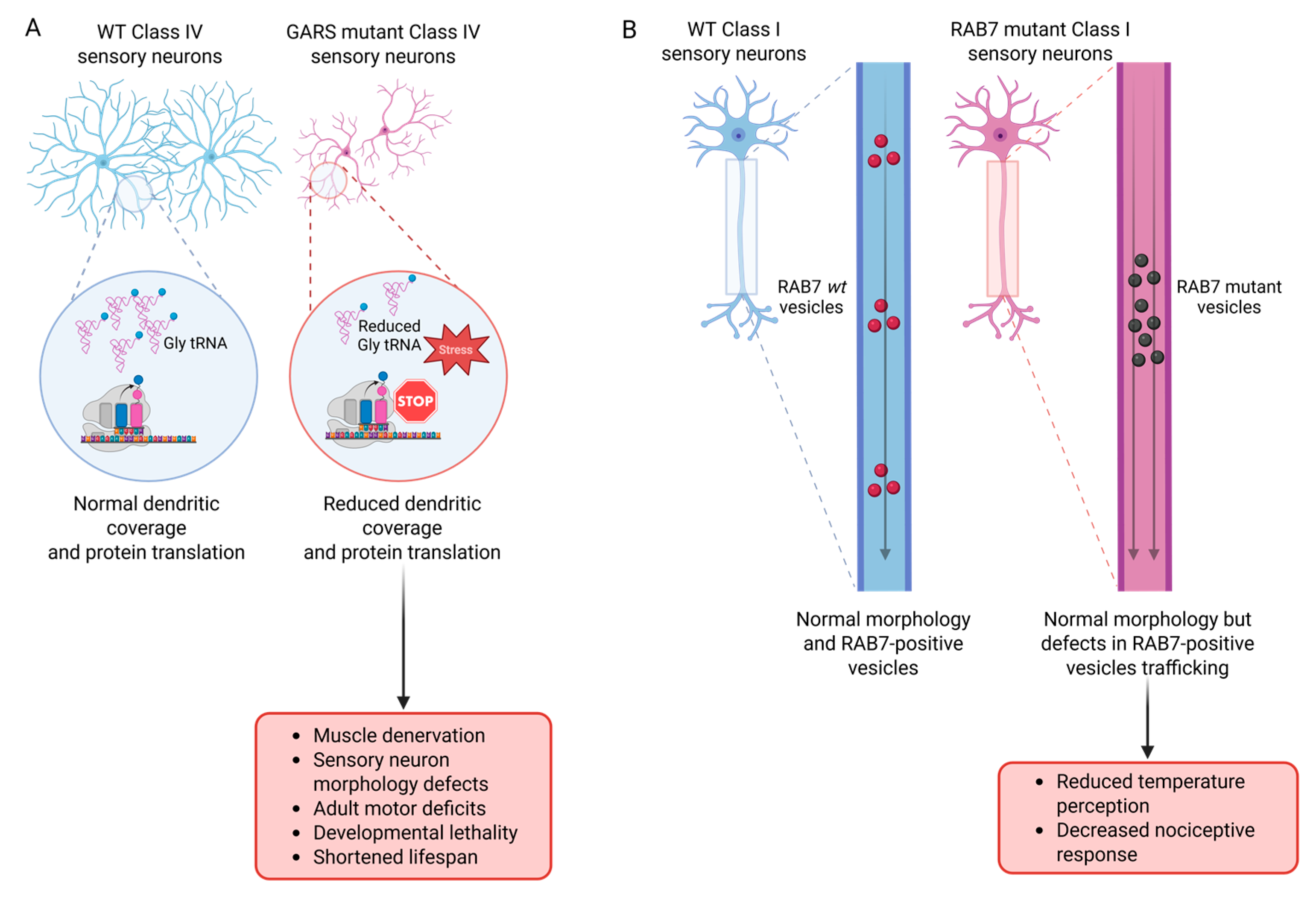
2.1. Charcot–Marie–Tooth
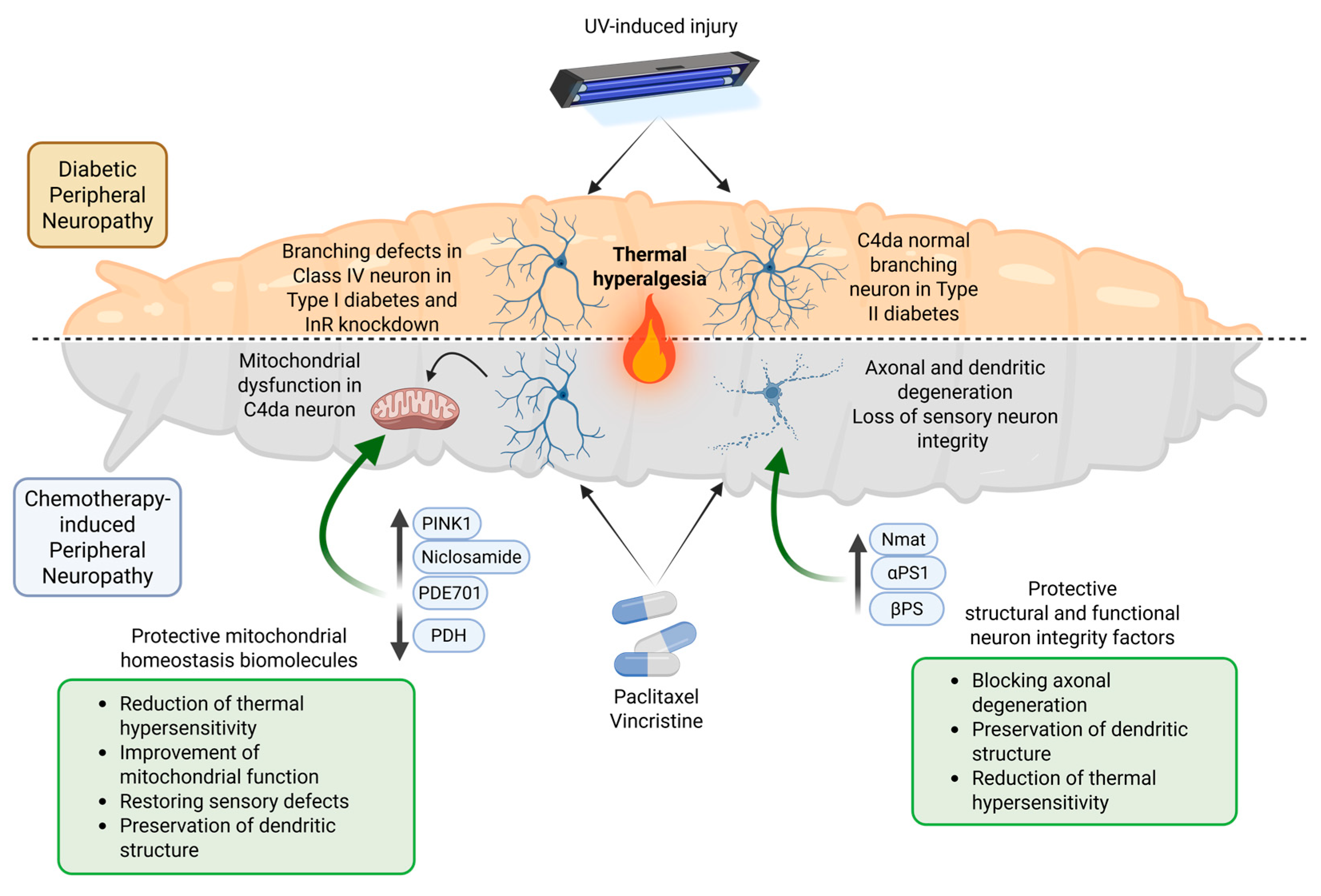
2.2. Peripheral Diabetic Neuropathy and Chemotherapy-Induced Neuropathy
2.3. Amyotrophic Lateral Sclerosis
3. Modelling CNS Neuropathies Using the Dopaminergic System of D. melanogaster
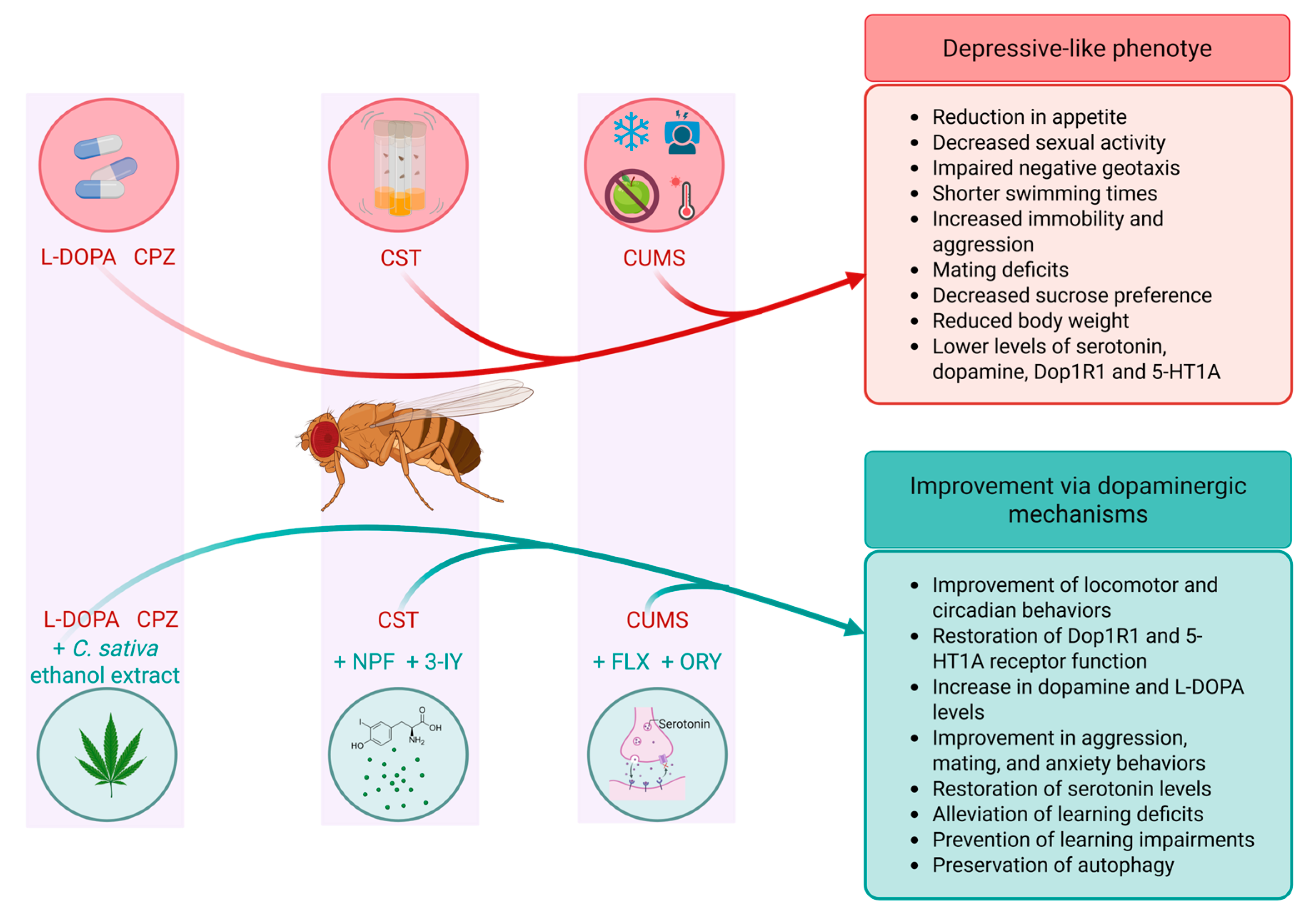
3.1. Depression-like Disorder
3.2. Attention Deficit Hyperactivity Disorder
3.3. Parkinson’s Disease
4. Conclusions
Author Contributions
Funding
Institutional Review Board Statement
Informed Consent Statement
Data Availability Statement
Conflicts of Interest
Abbreviations
| 3-IY | 3-iodotyrosine |
| ADHD | Attention-deficit hyperactivity disorder |
| ALS | Amyotrophic lateral sclerosis |
| ATX | Atomoxetine |
| BPA | Bisphenol A |
| C4da | Class IV dendritic arborization |
| CalpA | Calpain-A |
| Cho | Chordotonal |
| CIPN | Chemotherapy-induced peripheral neuropathy |
| CMT | Charcot–Marie–Tooth |
| CNS | Central nervous system |
| CPZ | Chlorpromazine |
| CrebA | Cyclic-AMP response element-binding protein A |
| CSLD | Chronic-stress-induced learning deficits |
| CST | Chronic stress treatment |
| CUMS | Chronic unpredictable mild stress |
| da | Dendritic arborization |
| DA | Dopamine |
| DEF | Deferiprone |
| DEGS | Differentially Expressed Genes |
| DOPAC | 3,4-dihydroxyphenylacetic acid |
| Dop1R1 | Dopamine 1-like receptor 1 |
| DPN | Diabetic peripheral neuropathy |
| DPRs | Dipeptide repeat proteins |
| FLX | Fluoxetine |
| Fur1 | Furin1 |
| GARS | Glycyl–tRNA synthetase |
| Golgi outposts | Golgi outposts |
| GTP | Ginseng total protein |
| GWAS | Genome-Wide Association Study |
| HE | Ethanol extract |
| HVA | Homovanillic acid |
| InR | Insulin Receptor |
| LBFE | Lycium barbarum fruit extract |
| L-DOPA | Levodopa |
| LRRK2 | Leucine Rich Repeat Kinase 2 |
| md | Multidendritic |
| MPH | Methylphenidate |
| NAC | N-acetylcysteine |
| Nmat | Nicotinamide mononucleotide adenylyltransferase |
| NMD | Nonsense-mediated decay |
| NPF | Neuropeptide F |
| ORY | γ-oryzanol |
| PNS | Peripheral Nervous System |
| PD | Parkinson’s disease |
| PDH | Pyruvate dehydrogenase complex |
| PINK1 | PTEN-induced kinase 1 |
| Sod1 | Superoxide dismutase 1 |
| TDP-43 | TAR DNA-binding protein-43 homologue |
| TBPH | TAR DNA-binding protein 43 |
| TH | Tyrosine hydroxylase |
| VPN | Valosin-Containing Protein |
| α-syn | Alfa-synuclein |
References
- Steinmetz, J.D.; Seeher, K.M.; Schiess, N.; Nichols, E.; Cao, B.; Servili, C.; Cavallera, V.; Cousin, E.; Hagins, H.; Moberg, M.E.; et al. Global, Regional, and National Burden of Disorders Affecting the Nervous System, 1990–2021: A Systematic Analysis for the Global Burden of Disease Study 2021. Lancet Neurol. 2024, 23, 344–381. [Google Scholar] [CrossRef]
- Neziri, S.; Köseoğlu, A.E.; Deniz Köseoğlu, G.; Özgültekin, B.; Özgentürk, N.Ö. Animal Models in Neuroscience with Alternative Approaches: Evolutionary, Biomedical, and Ethical Perspectives. Anim. Models Exp. Med. 2024, 7, 868–880. [Google Scholar] [CrossRef]
- Rooney, T.M.; Freeman, M.R. Drosophila Models of Neuronal Injury. ILAR J. 2014, 54, 291–295. [Google Scholar] [CrossRef]
- Kim, T.; Song, B.; Lee, I.-S. Drosophila Glia: Models for Human Neurodevelopmental and Neurodegenerative Disorders. Int. J. Mol. Sci. 2020, 21, 4859. [Google Scholar] [CrossRef]
- Tanaka, T.; Chung, H.-L. Exploiting Fly Models to Investigate Rare Human Neurological Disorders. Neural Regen. Res. 2025, 20, 21–28. [Google Scholar] [CrossRef]
- Winding, M.; Pedigo, B.D.; Barnes, C.L.; Patsolic, H.G.; Park, Y.; Kazimiers, T.; Fushiki, A.; Andrade, I.V.; Khandelwal, A.; Valdes-Aleman, J.; et al. The Connectome of an Insect Brain. Science 2023, 379, eadd9330. [Google Scholar] [CrossRef] [PubMed]
- Chiba, A. Early Development of the Drosophila Neuromuscular Junction: A Model for Studying Neuronal Networks in Development. Int. Rev. Neurobiol. 1999, 43, 1–24. [Google Scholar] [CrossRef]
- Terada, S.-I.; Matsubara, D.; Onodera, K.; Matsuzaki, M.; Uemura, T.; Usui, T. Neuronal Processing of Noxious Thermal Stimuli Mediated by Dendritic Ca2+ Influx in Drosophila Somatosensory Neurons. eLife 2016, 5, e12959. [Google Scholar] [CrossRef] [PubMed]
- Ugur, B.; Chen, K.; Bellen, H.J. Drosophila Tools and Assays for the Study of Human Diseases. Dis. Model. Mech. 2016, 9, 235–244. [Google Scholar] [CrossRef]
- Bhattacharya, M.R.C. A Nerve-Wracking Buzz: Lessons from Drosophila Models of Peripheral Neuropathy and Axon Degeneration. Front. Aging Neurosci. 2023, 15, 1166146. [Google Scholar] [CrossRef] [PubMed]
- Mauthner, S.E.; Borjon, L.J.; Tracey, W.D. Assaying Nociception Behaviors in Drosophila Larvae During Parasitoid Wasp Attacks. Cold Spring Harb. Protoc. 2025, 2025, pdb.prot108129. [Google Scholar] [CrossRef]
- Gong, J.; Chen, J.; Gu, P.; Shang, Y.; Ruppell, K.T.; Yang, Y.; Wang, F.; Wen, Q.; Xiang, Y. Shear Stress Activates Nociceptors to Drive Drosophila Mechanical Nociception. Neuron 2022, 110, 3727–3742.e8. [Google Scholar] [CrossRef]
- Gu, P.; Wang, F.; Shang, Y.; Liu, J.; Gong, J.; Xie, W.; Han, J.; Xiang, Y. Nociception and Hypersensitivity Involve Distinct Neurons and Molecular Transducers in Drosophila. Proc. Natl. Acad. Sci. USA 2022, 119, e2113645119. [Google Scholar] [CrossRef]
- Hope, K.A.; Berman, A.R.; Peterson, R.T.; Chow, C.Y. An in Vivo Drug Repurposing Screen and Transcriptional Analyses Reveals the Serotonin Pathway and GSK3 as Major Therapeutic Targets for NGLY1 Deficiency. PLoS Genet. 2022, 18, e1010228. [Google Scholar] [CrossRef]
- Stilwell, G.E.; Saraswati, S.; Littleton, J.T.; Chouinard, S.W. Development of a Drosophila Seizure Model for in Vivo High-throughput Drug Screening. Eur. J. Neurosci. 2006, 24, 2211–2222. [Google Scholar] [CrossRef]
- Nanda, S.; Das, R.; Bhattacharjee, S.; Cox, D.N.; Ascoli, G.A. Morphological Determinants of Dendritic Arborization Neurons in Drosophila Larva. Brain Struct. Funct. 2018, 223, 1107–1120. [Google Scholar] [CrossRef]
- Baltruschat, L.; Prisco, L.; Ranft, P.; Lauritzen, J.S.; Fiala, A.; Bock, D.D.; Tavosanis, G. Circuit Reorganization in the Drosophila Mushroom Body Calyx Accompanies Memory Consolidation. Cell Rep. 2021, 34, 108871. [Google Scholar] [CrossRef]
- Dolan, M.-J.; Belliart-Guérin, G.; Bates, A.S.; Frechter, S.; Lampin-Saint-Amaux, A.; Aso, Y.; Roberts, R.J.V.; Schlegel, P.; Wong, A.; Hammad, A.; et al. Communication from Learned to Innate Olfactory Processing Centers Is Required for Memory Retrieval in Drosophila. Neuron 2018, 100, 651–668.e8. [Google Scholar] [CrossRef] [PubMed]
- Thiem, J.; Viskadourou, M.; Gaitanidis, A.; Stravopodis, D.J.; Strauß, R.; Duch, C.; Consoulas, C. Biological Aging of Two Innate Behaviors of Drosophila melanogaster: Escape Climbing versus Courtship Learning and Memory. PLoS ONE 2024, 19, e0293252. [Google Scholar] [CrossRef] [PubMed]
- Ratliff, E.P.; Mauntz, R.E.; Kotzebue, R.W.; Gonzalez, A.; Achal, M.; Barekat, A.; Finley, K.A.; Sparhawk, J.M.; Robinson, J.E.; Herr, D.R.; et al. Aging and Autophagic Function Influences the Progressive Decline of Adult Drosophila Behaviors. PLoS ONE 2015, 10, e0132768. [Google Scholar] [CrossRef] [PubMed]
- Dabool, L.; Juravlev, L.; Hakim-Mishnaevski, K.; Kurant, E. Modeling Parkinson’s Disease in Adult Drosophila. J. Neurosci. Methods 2019, 311, 89–94. [Google Scholar] [CrossRef]
- Costa, M.D.; Maciel, P. Modifier Pathways in Polyglutamine (PolyQ) Diseases: From Genetic Screens to Drug Targets. Cell. Mol. Life Sci. 2022, 79, 274. [Google Scholar] [CrossRef]
- Barwell, T.; Seroude, L. Polyglutamine Disease in Peripheral Tissues. Hum. Mol. Genet. 2023, 32, 3303–3311. [Google Scholar] [CrossRef]
- Singhania, A.; Grueber, W.B. Development of the Embryonic and Larval Peripheral Nervous System of Drosophila. WIREs Dev. Biol. 2014, 3, 193–210. [Google Scholar] [CrossRef] [PubMed]
- Komarov, N.; Sprecher, S.G. The Chemosensory System of the Drosophila Larva: An Overview of Current Understanding. Fly 2022, 16, 1–12. [Google Scholar] [CrossRef] [PubMed]
- Kohsaka, H.; Guertin, P.A.; Nose, A. Neural Circuits Underlying Fly Larval Locomotion. Curr. Pharm. Des. 2017, 23, 1722–1733. [Google Scholar] [CrossRef]
- Vaadia, R.D.; Li, W.; Voleti, V.; Singhania, A.; Hillman, E.M.C.; Grueber, W.B. Characterization of Proprioceptive System Dynamics in Behaving Drosophila Larvae Using High-Speed Volumetric Microscopy. Curr. Biol. 2019, 29, 935–944.e4. [Google Scholar] [CrossRef] [PubMed]
- Turner, H.N.; Armengol, K.; Patel, A.A.; Himmel, N.J.; Sullivan, L.; Iyer, S.C.; Bhattacharya, S.; Iyer, E.P.R.; Landry, C.; Galko, M.J.; et al. The TRP Channels Pkd2, NompC, and Trpm Act in Cold-Sensing Neurons to Mediate Unique Aversive Behaviors to Noxious Cold in Drosophila. Curr. Biol. 2016, 26, 3116–3128. [Google Scholar] [CrossRef]
- Boivin, J.-C.; Zhu, J.; Ohyama, T. Nociception in Fruit Fly Larvae. Front. Pain Res. 2023, 4, 1076017. [Google Scholar] [CrossRef]
- Ma, M.; Li, Y.; Dai, S.; Chu, M.; Sun, L.; Liu, L.; Zhou, J.-C. A Meta-Analysis on the Prevalence of Charcot–Marie–Tooth Disease and Related Inherited Peripheral Neuropathies. J. Neurol. 2023, 270, 2468–2482. [Google Scholar] [CrossRef]
- Schröder, J.M. Neuropathology of Charcot-Marie-Tooth and Related Disorders. NeuroMolecular Med. 2006, 8, 23–42. [Google Scholar] [CrossRef] [PubMed]
- Barisic, N.; Claeys, K.G.; Sirotković-Skerlev, M.; Löfgren, A.; Nelis, E.; De Jonghe, P.; Timmerman, V. Charcot-Marie-Tooth Disease: A Clinico-genetic Confrontation. Ann. Hum. Genet. 2008, 72, 416–441. [Google Scholar] [CrossRef] [PubMed]
- Zuko, A.; Mallik, M.; Thompson, R.; Spaulding, E.L.; Wienand, A.R.; Been, M.; Tadenev, A.L.D.; Van Bakel, N.; Sijlmans, C.; Santos, L.A.; et al. tRNA Overexpression Rescues Peripheral Neuropathy Caused by Mutations in tRNA Synthetase. Science 2021, 373, 1161–1166. [Google Scholar] [CrossRef]
- Niehues, S.; Bussmann, J.; Steffes, G.; Erdmann, I.; Köhrer, C.; Sun, L.; Wagner, M.; Schäfer, K.; Wang, G.; Koerdt, S.N.; et al. Impaired Protein Translation in Drosophila Models for Charcot–Marie–Tooth Neuropathy Caused by Mutant tRNA Synthetases. Nat. Commun. 2015, 6, 7520. [Google Scholar] [CrossRef]
- Meggouh, F.; Bienfait, H.M.E.; Weterman, M.A.J.; De Visser, M.; Baas, F. Charcot-Marie-Tooth Disease Due to a de Novo Mutation of the RAB7 Gene. Neurology 2006, 67, 1476–1478. [Google Scholar] [CrossRef]
- Janssens, K.; Goethals, S.; Atkinson, D.; Ermanoska, B.; Fransen, E.; Jordanova, A.; Auer-Grumbach, M.; Asselbergh, B.; Timmerman, V. Human Rab7 Mutation Mimics Features of Charcot–Marie–Tooth Neuropathy Type 2B in Drosophila. Neurobiol. Dis. 2014, 65, 211–219. [Google Scholar] [CrossRef]
- Seburn, K.L.; Nangle, L.A.; Cox, G.A.; Schimmel, P.; Burgess, R.W. An Active Dominant Mutation of Glycyl-tRNA Synthetase Causes Neuropathy in a Charcot-Marie-Tooth 2D Mouse Model. Neuron 2006, 51, 715–726. [Google Scholar] [CrossRef]
- Mulligan, R.J.; Winckler, B. Regulation of Endosomal Trafficking by Rab7 and Its Effectors in Neurons: Clues from Charcot–Marie–Tooth 2B Disease. Biomolecules 2023, 13, 1399. [Google Scholar] [CrossRef]
- Sun, H.; Saeedi, P.; Karuranga, S.; Pinkepank, M.; Ogurtsova, K.; Duncan, B.B.; Stein, C.; Basit, A.; Chan, J.C.N.; Mbanya, J.C.; et al. IDF Diabetes Atlas: Global, Regional and Country-Level Diabetes Prevalence Estimates for 2021 and Projections for 2045. Diabetes Res. Clin. Pract. 2022, 183, 109119. [Google Scholar] [CrossRef]
- Eid, S.A.; Rumora, A.E.; Beirowski, B.; Bennett, D.L.; Hur, J.; Savelieff, M.G.; Feldman, E.L. New Perspectives in Diabetic Neuropathy. Neuron 2023, 111, 2623–2641. [Google Scholar] [CrossRef] [PubMed]
- Feldman, E.L.; Callaghan, B.C.; Pop-Busui, R.; Zochodne, D.W.; Wright, D.E.; Bennett, D.L.; Bril, V.; Russell, J.W.; Viswanathan, V. Diabetic Neuropathy. Nat. Rev. Dis. Primer 2019, 5, 41. [Google Scholar] [CrossRef]
- Burgess, J.; Ferdousi, M.; Gosal, D.; Boon, C.; Matsumoto, K.; Marshall, A.; Mak, T.; Marshall, A.; Frank, B.; Malik, R.A.; et al. Chemotherapy-Induced Peripheral Neuropathy: Epidemiology, Pathomechanisms and Treatment. Oncol. Ther. 2021, 9, 385–450. [Google Scholar] [CrossRef]
- Im, S.H.; Patel, A.A.; Cox, D.N.; Galko, M.J. Drosophila Insulin Receptor Regulates the Persistence of Injury-Induced Nociceptive Sensitization. Dis. Model. Mech. 2018, 11, dmm034231. [Google Scholar] [CrossRef] [PubMed]
- Dabbara, H.; Schultz, A.; Im, S.H. Drosophila Insulin Receptor Regulates Diabetes-Induced Mechanical Nociceptive Hypersensitivity. MicroPublication Biol. 2021, 2021, 10-17912. [Google Scholar] [CrossRef]
- Wang, Y.; Lopez-Bellido, R.; Huo, X.; Kavelaars, A.; Galko, M.J. The Insulin Receptor Regulates the Persistence of Mechanical Nociceptive Sensitization in Flies and Mice. Biol. Open 2023, 12, bio059864. [Google Scholar] [CrossRef] [PubMed]
- Singla, A.K.; Garg, A.; Aggarwal, D. Paclitaxel and Its Formulations. Int. J. Pharm. 2002, 235, 179–192. [Google Scholar] [CrossRef] [PubMed]
- Bhattacharya, M.R.C.; Gerdts, J.; Naylor, S.A.; Royse, E.X.; Ebstein, S.Y.; Sasaki, Y.; Milbrandt, J.; DiAntonio, A. A Model of Toxic Neuropathy in Drosophila Reveals a Role for MORN4 in Promoting Axonal Degeneration. J. Neurosci. 2012, 32, 5054–5061. [Google Scholar] [CrossRef]
- Brazill, J.M.; Cruz, B.; Zhu, Y.; Zhai, R.G. Nmnat Mitigates Sensory Dysfunction in a Drosophila Model of Paclitaxel-Induced Peripheral Neuropathy. Dis. Model. Mech. 2018, 11, dmm032938. [Google Scholar] [CrossRef]
- Song, H.; Kim, S.; Han, J.E.; Kang, K.; Koh, H. PDH Inhibition in Drosophila Ameliorates Sensory Dysfunction Induced by Vincristine Treatment in the Chemotherapy-Induced Peripheral Neuropathy Models. Biomedicines 2025, 13, 783. [Google Scholar] [CrossRef]
- Kim, Y.Y.; Yoon, J.-H.; Um, J.-H.; Jeong, D.J.; Shin, D.J.; Hong, Y.B.; Kim, J.K.; Kim, D.H.; Kim, C.; Chung, C.G.; et al. Correction: PINK1 Alleviates Thermal Hypersensitivity in a Paclitaxel-Induced Drosophila Model of Peripheral Neuropathy. PLoS ONE 2021, 16, e0257439. [Google Scholar] [CrossRef]
- Jang, H.-J.; Kim, Y.-Y.; Lee, K.-M.; Shin, J.-E.; Yun, J. The PINK1 Activator Niclosamide Mitigates Mitochondrial Dysfunction and Thermal Hypersensitivity in a Paclitaxel-Induced Drosophila Model of Peripheral Neuropathy. Biomedicines 2022, 10, 863. [Google Scholar] [CrossRef] [PubMed]
- Im, S.; Jeong, D.J.; Kim, E.; Choi, J.; Jang, H.; Kim, Y.Y.; Um, J.; Lee, J.; Lee, Y.; Lee, K.; et al. A Novel Marine-derived Mitophagy Inducer Ameliorates Mitochondrial Dysfunction and Thermal Hypersensitivity in Paclitaxel-induced Peripheral Neuropathy. Br. J. Pharmacol. 2024, 181, 4012–4027. [Google Scholar] [CrossRef]
- Shin, G.J.; Pero, M.E.; Hammond, L.A.; Burgos, A.; Kumar, A.; Galindo, S.E.; Lucas, T.; Bartolini, F.; Grueber, W.B. Integrins Protect Sensory Neurons in Models of Paclitaxel-Induced Peripheral Sensory Neuropathy. Proc. Natl. Acad. Sci. USA 2021, 118, e2006050118. [Google Scholar] [CrossRef] [PubMed]
- Klein, I.; Lehmann, H. Pathomechanisms of Paclitaxel-Induced Peripheral Neuropathy. Toxics 2021, 9, 229. [Google Scholar] [CrossRef]
- Schreiber, A.K. Diabetic Neuropathic Pain: Physiopathology and Treatment. World J. Diabetes 2015, 6, 432. [Google Scholar] [CrossRef]
- Feldman, E.L.; Goutman, S.A.; Petri, S.; Mazzini, L.; Savelieff, M.G.; Shaw, P.J.; Sobue, G. Amyotrophic Lateral Sclerosis. Lancet 2022, 400, 1363–1380. [Google Scholar] [CrossRef]
- Bombaci, A.; Lupica, A.; Pozzi, F.E.; Remoli, G.; Manera, U.; Di Stefano, V. Sensory Neuropathy in Amyotrophic Lateral Sclerosis: A Systematic Review. J. Neurol. 2023, 270, 5677–5691. [Google Scholar] [CrossRef]
- Rubio, M.A.; Herrando-Grabulosa, M.; Navarro, X. Sensory Involvement in Amyotrophic Lateral Sclerosis. Int. J. Mol. Sci. 2022, 23, 15521. [Google Scholar] [CrossRef]
- Riancho, J.; Gonzalo, I.; Ruiz-Soto, M.; Berciano, J. Why Do Motor Neurons Degenerate? Actualisation in the Pathogenesis of Amyotrophic Lateral Sclerosis. Neurol. Engl. Ed. 2019, 34, 27–37. [Google Scholar] [CrossRef]
- Lu, Y.; Ferris, J.; Gao, F.-B. Frontotemporal Dementia and Amyotrophic Lateral Sclerosis-Associated Disease Protein TDP-43 Promotes Dendritic Branching. Mol. Brain 2009, 2, 30. [Google Scholar] [CrossRef] [PubMed]
- Park, J.H.; Chung, C.G.; Park, S.S.; Lee, D.; Kim, K.M.; Jeong, Y.; Kim, E.S.; Cho, J.H.; Jeon, Y.-M.; Shen, C.-K.J.; et al. Cytosolic Calcium Regulates Cytoplasmic Accumulation of TDP-43 through Calpain-A and Importin A3. eLife 2020, 9, e60132. [Google Scholar] [CrossRef]
- Rumpf, S.; Bagley, J.A.; Thompson-Peer, K.L.; Zhu, S.; Gorczyca, D.; Beckstead, R.B.; Jan, L.Y.; Jan, Y.N. Drosophila Valosin-Containing Protein Is Required for Dendrite Pruning through a Regulatory Role in mRNA Metabolism. Proc. Natl. Acad. Sci. USA 2014, 111, 7331–7336. [Google Scholar] [CrossRef]
- DeJesus-Hernandez, M.; Mackenzie, I.R.; Boeve, B.F.; Boxer, A.L.; Baker, M.; Rutherford, N.J.; Nicholson, A.M.; Finch, N.A.; Flynn, H.; Adamson, J.; et al. Expanded GGGGCC Hexanucleotide Repeat in Noncoding Region of C9ORF72 Causes Chromosome 9p-Linked FTD and ALS. Neuron 2011, 72, 245–256. [Google Scholar] [CrossRef]
- Renton, A.E.; Majounie, E.; Waite, A.; Simón-Sánchez, J.; Rollinson, S.; Gibbs, J.R.; Schymick, J.C.; Laaksovirta, H.; van Swieten, J.C.; Myllykangas, L.; et al. A Hexanucleotide Repeat Expansion in C9ORF72 Is the Cause of Chromosome 9p21-Linked ALS-FTD. Neuron 2011, 72, 257–268. [Google Scholar] [CrossRef]
- Burguete, A.S.; Almeida, S.; Gao, F.-B.; Kalb, R.; Akins, M.R.; Bonini, N.M. GGGGCC Microsatellite RNA Is Neuritically Localized, Induces Branching Defects, and Perturbs Transport Granule Function. eLife 2015, 4, e08881. [Google Scholar] [CrossRef]
- Freibaum, B.D.; Taylor, J.P. The Role of Dipeptide Repeats in C9ORF72-Related ALS-FTD. Front. Mol. Neurosci. 2017, 10, 35. [Google Scholar] [CrossRef]
- Park, J.H.; Chung, C.G.; Seo, J.; Lee, B.-H.; Lee, Y.-S.; Kweon, J.H.; Lee, S.B. C9orf72-Associated Arginine-Rich Dipeptide Repeat Proteins Reduce the Number of Golgi Outposts and Dendritic Branches in Drosophila Neurons. Mol. Cells 2020, 43, 821–830. [Google Scholar] [CrossRef]
- Şahin, A.; Held, A.; Bredvik, K.; Major, P.; Achilli, T.-M.; Kerson, A.G.; Wharton, K.; Stilwell, G.; Reenan, R. Human SOD1 ALS Mutations in a Drosophila Knock-In Model Cause Severe Phenotypes and Reveal Dosage-Sensitive Gain- and Loss-of-Function Components. Genetics 2017, 205, 707–723. [Google Scholar] [CrossRef] [PubMed]
- Held, A.; Major, P.; Sahin, A.; Reenan, R.A.; Lipscombe, D.; Wharton, K.A. Circuit Dysfunction in SOD1-ALS Model First Detected in Sensory Feedback Prior to Motor Neuron Degeneration Is Alleviated by BMP Signaling. J. Neurosci. 2019, 39, 2347–2364. [Google Scholar] [CrossRef] [PubMed]
- Philips, T.; Rothstein, J.D. Rodent Models of Amyotrophic Lateral Sclerosis. Curr. Protoc. Pharmacol. 2015, 69, 5.67.1–5.67.21. [Google Scholar] [CrossRef] [PubMed]
- Wang, X.; Hu, Y.; Xu, R. The Pathogenic Mechanism of TAR DNA-Binding Protein 43 (TDP-43) in Amyotrophic Lateral Sclerosis. Neural Regen. Res. 2024, 19, 800–806. [Google Scholar] [CrossRef]
- Giacomelli, E.; Vahsen, B.F.; Calder, E.L.; Xu, Y.; Scaber, J.; Gray, E.; Dafinca, R.; Talbot, K.; Studer, L. Human Stem Cell Models of Neurodegeneration: From Basic Science of Amyotrophic Lateral Sclerosis to Clinical Translation. Cell Stem Cell 2022, 29, 11–35. [Google Scholar] [CrossRef]
- Mao, Z. Eight Different Types of Dopaminergic Neurons Innervate the Drosophila Mushroom Body Neuropil: Anatomical and Physiological Heterogeneity. Front. Neural Circuits 2009, 3, 612. [Google Scholar] [CrossRef]
- Kasture, A.S.; Hummel, T.; Sucic, S.; Freissmuth, M. Big Lessons from Tiny Flies: Drosophila melanogaster as a Model to Explore Dysfunction of Dopaminergic and Serotonergic Neurotransmitter Systems. Int. J. Mol. Sci. 2018, 19, 1788. [Google Scholar] [CrossRef] [PubMed]
- Hamon, M.; Blier, P. Monoamine Neurocircuitry in Depression and Strategies for New Treatments. Prog. Neuro-Psychopharmacol. Biol. Psychiatry 2013, 45, 54–63. [Google Scholar] [CrossRef]
- Grace, A.A. Dysregulation of the Dopamine System in the Pathophysiology of Schizophrenia and Depression. Nat. Rev. Neurosci. 2016, 17, 524–532. [Google Scholar] [CrossRef] [PubMed]
- Zhao, T.; Liu, T.; Wang, L.; Xie, K.; Tang, H.; Tang, M. Dysfunction of Neurotransmitter Metabolism Is Associated with the Severity of Depression in First-Diagnosed, Drug-Naïve Depressed Patients. J. Affect. Disord. 2024, 349, 332–341. [Google Scholar] [CrossRef]
- Ahn, Y.; Han, S.H.; Kim, M.G.; Hong, K.-B.; Kim, W.J.; Suh, H.J.; Jo, K. Anti-Depressant Effects of Ethanol Extract from Cannabis Sativa (Hemp) Seed in Chlorpromazine-Induced Drosophila melanogaster Depression Model. Pharm. Biol. 2021, 59, 996–1005. [Google Scholar] [CrossRef]
- Moulin, T.C.; Ferro, F.; Hoyer, A.; Cheung, P.; Williams, M.J.; Schiöth, H.B. The Drosophila melanogaster Levodopa-Induced Depression Model Exhibits Negative Geotaxis Deficits and Differential Gene Expression in Males and Females. Front. Neurosci. 2021, 15, 653470. [Google Scholar] [CrossRef] [PubMed]
- Jiang, M.-D.; Zheng, Y.; Wang, J.-L.; Wang, Y.-F. Drug Induces Depression-like Phenotypes and Alters Gene Expression Profiles in Drosophila. Brain Res. Bull. 2017, 132, 222–231. [Google Scholar] [CrossRef] [PubMed]
- Araujo, S.M.; Poetini, M.R.; Bortolotto, V.C.; De Freitas Couto, S.; Pinheiro, F.C.; Meichtry, L.B.; De Almeida, F.P.; Santos Musachio, E.A.; De Paula, M.T.; Prigol, M. Chronic Unpredictable Mild Stress-Induced Depressive-like Behavior and Dysregulation of Brain Levels of Biogenic Amines in Drosophila melanogaster. Behav. Brain Res. 2018, 351, 104–113. [Google Scholar] [CrossRef]
- Araujo, S.M.; Bortolotto, V.C.; Poetini, M.R.; Dahleh, M.M.M.; Couto, S.D.F.; Pinheiro, F.C.; Meichtry, L.B.; Musachio, E.A.S.; Ramborger, B.P.; Roehrs, R.; et al. γ-Oryzanol Produces an Antidepressant-like Effect in a Chronic Unpredictable Mild Stress Model of Depression in Drosophila melanogaster. Stress 2021, 24, 282–293. [Google Scholar] [CrossRef] [PubMed]
- Jia, J.; He, L.; Yang, J.; Shuai, Y.; Yang, J.; Wu, Y.; Liu, X.; Chen, T.; Wang, G.; Wang, X.; et al. A Pair of Dopamine Neurons Mediate Chronic Stress Signals to Induce Learning Deficit in Drosophila melanogaster. Proc. Natl. Acad. Sci. USA 2021, 118, e2023674118. [Google Scholar] [CrossRef]
- Chen, T.; Zhang, M.; Ding, Z.; Hu, J.; Yang, J.; He, L.; Jia, J.; Yang, J.; Yang, J.; Song, X.; et al. The Drosophila NPY-like System Protects against Chronic Stress–Induced Learning Deficit by Preventing the Disruption of Autophagic Flux. Proc. Natl. Acad. Sci. USA 2023, 120, e2307632120. [Google Scholar] [CrossRef] [PubMed]
- Shen, B.; Wang, Z.; Yu, H.; Shen, X.; Li, L.; Ru, Y.; Yang, C.; Du, G.; Lai, C.; Gao, Y. Medicinal Cannabis Oil Improves Anxiety-like and Depressive-like Behaviors in CCS Mice via the BDNF/TRPC6 Signaling Pathway. Behav. Brain Res. 2024, 467, 115005. [Google Scholar] [CrossRef]
- Vahid-Ansari, F.; Albert, P.R. Chronic Fluoxetine Induces Activity Changes in Recovery From Poststroke Anxiety, Depression, and Cognitive Impairment. Neurotherapeutics 2018, 15, 200–215. [Google Scholar] [CrossRef] [PubMed]
- Thapar, A.; Cooper, M. Attention Deficit Hyperactivity Disorder. Lancet 2016, 387, 1240–1250. [Google Scholar] [CrossRef]
- Thomas, R.; Sanders, S.; Doust, J.; Beller, E.; Glasziou, P. Prevalence of Attention-Deficit/Hyperactivity Disorder: A Systematic Review and Meta-Analysis. Pediatrics 2015, 135, e994–e1001. [Google Scholar] [CrossRef]
- Faraone, S.V.; Bellgrove, M.A.; Brikell, I.; Cortese, S.; Hartman, C.A.; Hollis, C.; Newcorn, J.H.; Philipsen, A.; Polanczyk, G.V.; Rubia, K.; et al. Attention-Deficit/Hyperactivity Disorder. Nat. Rev. Dis. Primer 2024, 10, 11. [Google Scholar] [CrossRef]
- Kim, J.H.; Kim, J.Y.; Lee, J.; Jeong, G.H.; Lee, E.; Lee, S.; Lee, K.H.; Kronbichler, A.; Stubbs, B.; Solmi, M.; et al. Environmental Risk Factors, Protective Factors, and Peripheral Biomarkers for ADHD: An Umbrella Review. Lancet Psychiatry 2020, 7, 955–970. [Google Scholar] [CrossRef]
- ADHD Working Group of the Psychiatric Genomics Consortium (PGC); Early Lifecourse & Genetic Epidemiology (EAGLE) Consortium; 23andMe Research Team; Demontis, D.; Walters, R.K.; Martin, J.; Mattheisen, M.; Als, T.D.; Agerbo, E.; Baldursson, G.; et al. Discovery of the First Genome-Wide Significant Risk Loci for Attention Deficit/Hyperactivity Disorder. Nat. Genet. 2019, 51, 63–75. [Google Scholar] [CrossRef]
- Van Der Voet, M.; Harich, B.; Franke, B.; Schenck, A. ADHD-Associated Dopamine Transporter, Latrophilin and Neurofibromin Share a Dopamine-Related Locomotor Signature in Drosophila. Mol. Psychiatry 2016, 21, 565–573. [Google Scholar] [CrossRef]
- Klein, M.; Singgih, E.L.; Van Rens, A.; Demontis, D.; Børglum, A.D.; Mota, N.R.; Castells-Nobau, A.; Kiemeney, L.A.; Brunner, H.G.; Arias-Vasquez, A.; et al. Contribution of Intellectual Disability–Related Genes to ADHD Risk and to Locomotor Activity in Drosophila. Am. J. Psychiatry 2020, 177, 526–536. [Google Scholar] [CrossRef]
- Musachio, E.A.S.; De Freitas Couto, S.; Poetini, M.R.; Bortolotto, V.C.; Dahleh, M.M.M.; Janner, D.E.; Araujo, S.M.; Ramborger, B.P.; Rohers, R.; Guerra, G.P.; et al. Bisphenol A Exposure during the Embryonic Period: Insights into Dopamine Relationship and Behavioral Disorders in Drosophila melanogaster. Food Chem. Toxicol. 2021, 157, 112526. [Google Scholar] [CrossRef]
- Rohde, P.D.; Jensen, I.R.; Sarup, P.M.; Ørsted, M.; Demontis, D.; Sørensen, P.; Kristensen, T.N. Genetic Signatures of Drug Response Variability in Drosophila melanogaster. Genetics 2019, 213, 633–650. [Google Scholar] [CrossRef]
- Qu, S.; Zhou, X.; Wang, Z.; Wei, Y.; Zhou, H.; Zhang, X.; Zhu, Q.; Wang, Y.; Yang, Q.; Jiang, L.; et al. The Effects of Methylphenidate and Atomoxetine on Drosophila Brain at Single-Cell Resolution and Potential Drug Repurposing for ADHD Treatment. Mol. Psychiatry 2024, 29, 165–185. [Google Scholar] [CrossRef]
- Kim, S.; Lee, H.-S.; Park, Y. Perinatal Exposure to Low-Dose Imidacloprid Causes ADHD-like Symptoms: Evidences from an Invertebrate Model Study. Food Chem. Toxicol. 2017, 110, 402–407. [Google Scholar] [CrossRef] [PubMed]
- Janner, D.E.; Gomes, N.S.; Poetini, M.R.; Poleto, K.H.; Musachio, E.A.S.; De Almeida, F.P.; De Matos Amador, E.C.; Reginaldo, J.C.; Ramborger, B.P.; Roehrs, R.; et al. Oxidative Stress and Decreased Dopamine Levels Induced by Imidacloprid Exposure Cause Behavioral Changes in a Neurodevelopmental Disorder Model in Drosophila melanogaster. NeuroToxicology 2021, 85, 79–89. [Google Scholar] [CrossRef] [PubMed]
- Janner, D.E.; De Moura Brinck, A.; Marquez De Figueiredo, F.; Santos Musachio, E.A.; Meichtry, L.B.; Fernandes, E.J.; Piardi De Almeida, P.; Filho, C.B.; Kemmerich, M.; De Carvalho, A.S.; et al. Modulation of Dopamine, Serotonin, and Behavior by Lutein Carrier Nanoparticles in a Drosophila melanogaster Model of Neurodevelopmental Disorders. Chem. Biol. Interact. 2025, 414, 111500. [Google Scholar] [CrossRef] [PubMed]
- Bloem, B.R.; Okun, M.S.; Klein, C. Parkinson’s Disease. Lancet 2021, 397, 2284–2303. [Google Scholar] [CrossRef]
- Agostini, F.; Bubacco, L.; Chakrabarti, S.; Bisaglia, M. α-Synuclein Toxicity in Drosophila melanogaster Is Enhanced by the Presence of Iron: Implications for Parkinson’s Disease. Antioxidants 2023, 12, 261. [Google Scholar] [CrossRef]
- Narwal, S.; Singh, A.; Tare, M. Analysis of α-Syn and Parkin Interaction in Mediating Neuronal Death in Drosophila Model of Parkinson’s Disease. Front. Cell. Neurosci. 2024, 17, 1295805. [Google Scholar] [CrossRef]
- Yi, S.; Wang, L.; Ho, M.S.; Zhang, S. The Autophagy Protein Atg9 Functions in Glia and Contributes to Parkinsonian Symptoms in a Drosophila Model of Parkinson’s Disease. Neural Regen. Res. 2024, 19, 1150–1155. [Google Scholar] [CrossRef]
- Moore, J.; Wu, T.; Dhindsa, J.; El Fadel, O.; Le, A.; Perez, A.; Amoh, B.; Tarkunde, A.; Zhu, K.F.; Avalos, M.; et al. Longitudinal Multi-Omics in Alpha-Synuclein Drosophila Model Discriminates Disease- from Age-Associated Pathologies in Parkinson’s Disease. npj Park. Dis. 2025, 11, 46. [Google Scholar] [CrossRef]
- Maksoud, E.; Liao, E.H.; Haghighi, A.P. A Neuron-Glial Trans-Signaling Cascade Mediates LRRK2-Induced Neurodegeneration. Cell Rep. 2019, 26, 1774–1786.e4. [Google Scholar] [CrossRef]
- Nguyen, H.N.; Galleri, G.; Rassu, A.; Ciampelli, C.; Bernardoni, R.; Galioto, M.; Albani, D.; Crosio, C.; Iaccarino, C. Evaluation of Neuroinflammatory Contribution to Neurodegeneration in LRRK2 Drosophila Models. Biomedicines 2024, 12, 1555. [Google Scholar] [CrossRef]
- Qiao, J.-D.; Mao, Y.-L. Knockout of PINK1 Altered the Neural Connectivity of Drosophila Dopamine PPM3 Neurons at Input and Output Sites. Invert. Neurosci. 2020, 20, 11. [Google Scholar] [CrossRef]
- Bai, X.-L.; Luo, Y.-J.; Fan, W.-Q.; Zhang, Y.-M.; Liao, X. Neuroprotective Effects of Lycium Barbarum Fruit Extract on Pink1B9Drosophila melanogaster Genetic Model of Parkinson’s Disease. Plant Foods Hum. Nutr. 2023, 78, 68–75. [Google Scholar] [CrossRef] [PubMed]
- Liu, M.; Yu, S.; Wang, J.; Qiao, J.; Liu, Y.; Wang, S.; Zhao, Y. Ginseng Protein Protects against Mitochondrial Dysfunction and Neurodegeneration by Inducing Mitochondrial Unfolded Protein Response in Drosophila melanogaster PINK1 Model of Parkinson’s Disease. J. Ethnopharmacol. 2020, 247, 112213. [Google Scholar] [CrossRef] [PubMed]
- Stephano, F.; Nolte, S.; Hoffmann, J.; El-Kholy, S.; Von Frieling, J.; Bruchhaus, I.; Fink, C.; Roeder, T. Impaired Wnt Signaling in Dopamine Containing Neurons Is Associated with Pathogenesis in a Rotenone Triggered Drosophila Parkinson’s Disease Model. Sci. Rep. 2018, 8, 2372. [Google Scholar] [CrossRef] [PubMed]
- Ayajuddin, M.; Phom, L.; Koza, Z.; Modi, P.; Das, A.; Chaurasia, R.; Thepa, A.; Jamir, N.; Neikha, K.; Yenisetti, S.C. Adult Health and Transition Stage-Specific Rotenone-Mediated Drosophila Model of Parkinson’s Disease: Impact on Late-Onset Neurodegenerative Disease Models. Front. Mol. Neurosci. 2022, 15, 896183. [Google Scholar] [CrossRef]
- Volta, M.; Melrose, H. LRRK2 Mouse Models: Dissecting the Behavior, Striatal Neurochemistry and Neurophysiology of PD Pathogenesis. Biochem. Soc. Trans. 2017, 45, 113–122. [Google Scholar] [CrossRef]
- Innos, J.; Hickey, M.A. Using Rotenone to Model Parkinson’s Disease in Mice: A Review of the Role of Pharmacokinetics. Chem. Res. Toxicol. 2021, 34, 1223–1239. [Google Scholar] [CrossRef] [PubMed]
- Mohammad, A.; Ibrahim, M.; Akram, M.; Mohsin, H.; Imran, M.T.; Khan Alizai, H.N. N-Acetylcysteine for Parkinson’s Disease: A Translational Systematic Review of Mechanistic and Early Clinical Data. Neurodegener. Dis. Manag. 2025, 1–12. [Google Scholar] [CrossRef] [PubMed]
- Rassu, M.; Biosa, A.; Galioto, M.; Fais, M.; Sini, P.; Greggio, E.; Piccoli, G.; Crosio, C.; Iaccarino, C. Levetiracetam Treatment Ameliorates LRRK2 Pathological Mutant Phenotype. J. Cell. Mol. Med. 2019, 23, 8505–8510. [Google Scholar] [CrossRef] [PubMed]



| Disease Model | Genetic/Chemical Manipulation | Observed Phenotypes | Validated Interventions |
|---|---|---|---|
| CMT—GARS mutant | Expression of mutant GARS in motor and C4da neurons | Disrupted neuromuscular junction integrity; progressive muscle denervation; impaired neuronal function via translational dysregulation; reduced dendritic coverage; decreased protein translation; developmental lethality; shortened lifespan | Overexpression of Glycine tRNA partially restores translation, reduces denervation, improves sensory morphology, motor function, and survival |
| CMT—RAB7A mutant | Expression of human mutant Rab7 in sensory neurons | Reduced temperature perception; decreased nociceptive response; no dendritic alteration; accumulation of Rab7-positive vesicles in axons; reduced vesicle stationary time | None reported in flies |
| DPN—InR mutant | InR mutants | Persistent thermal hyperalgesia | None reported in flies |
| DPN—Diabetes type 1 | Silencing the insulin-producing cells | Persistent thermal hyperalgesia; reduced C4da dendritic length and branch number | None reported in flies |
| DPN—Diabetes type 2 | High sugar diet | Persistent thermal hyperalgesia; no major dendritic changes | None reported in flies |
| DPN—Sensory neuron-specific | InR knockdown in md neurons | Persistent thermal hyperalgesia; reduced baseline dendritic length; elevated calcium responses in C4da neurons | Restoring insulin-like signalling in md neurons rescues persistent nociceptive hypersensitivity |
| CIPN—Paclitaxel | Feeding larvae paclitaxel | Thermal hypersensitivity; C4da dendritic defects; axonal loss; disrupted integrin-mediated adhesion and trafficking, causing dendritic branch crossing; mitochondrial dysfunction. | Pink1 overexpression in C4da neurons restores mitochondrial homeostasis and alleviates thermal hypersensitivity. Niclosamide and PDE701 similarly improve mitochondrial function, with PDE701 additionally reducing thermal hyperalgesia. Nmnat overexpression prevents axonal degeneration and mitigates nociceptive hypersensitivity. Enhanced expression of αPS1 and βPS integrins preserves dendritic integrity and protects against thermal sensitivity. |
| CIPN—Vincristine | Feeding larvae vincristine | Thermal hypersensitivity; structural alterations in C4da neurons; mitochondrial and sensory dysfunction | PDH knockdown rescues mitochondrial and sensory defects |
| ALS—TBPH | Upregulation of TBPH Downregulation of TBPH G287S TDP-43 mutant | Excessive dendritic branching in C4da neurons (overexpression); reduced dendritic branching in C4da neurons (downregulation); altered nuclear–cytoplasmic localization (G287S mutant impairs calcium-dependent transport) | None reported in flies |
| ALS—Calcium-dependent regulators | Silencing Calmodulin, Protein kinase C, or CalpainA in sensory neurons | TBPH cytoplasmic retention in pupal sensory neurons | Overexpression of Importin α3 and β1 enhances nuclear translocation |
| ALS—C9orf72 | Expression of UAS-(GGGGCC)48 RNA in C4da neurons | Late-stage severe dendritic loss; defective local RNA translation | Silencing dFMR1 or Orb2 rescues dendritic branching defects. Overexpression of dFMR1 or CrebA increases the branching abnormalities |
| ALS—DPRs (PR36, GR36) | Expression of PR36 or GR36 in C4da neurons | Loss of dendritic branch points; reduced GOPs; impaired plasma membrane supply; PR36 causes CrebA downregulation | CrebA overexpression restores GOPs and plasma membrane supply in neurons that express PR36 but fails to recover dendritic morphology or prevent degeneration |
| ALS—Sod1 mutant | Expression of mutant Sod1 | Early stage: sensory feedback defects preceded motor degeneration; late stage: motor neuron degeneration; motor impairment | BMP signalling activation in proprioceptive neurons rescues early and partially late phenotypes |
| Disease Model | Genetic/Chemical Manipulation | Observed Phenotypes | Validated Interventions |
|---|---|---|---|
| Depression-like—L-DOPA | Feeding larvae L-DOPA | Reduction in appetite; decreased sexual activity; negative geotaxis deficits; CG4269 upregulation in males; downregulation of CG6821 in females | None reported in flies |
| Depression-like—CPZ | Feeding larvae CPZ | Reduction in appetite; decreased sexual activity; CG4269 upregulation and CG6821 downregulation in males; reduced Dop1R1 and 5-HT1A; lower dopamine and L-DOPA levels | C. sativa HE improves locomotor and circadian behaviours, restores Dop1R1/5-HT1A, and increases dopamine/L-DOPA |
| Depression-like—CUMS | Chronic unpredictable stressors (10 days of multiple stressors: heat, cold, sleep deprivation, starvation) | Shorter swimming times; increased immobility; heightened aggression; mating deficits; decreased sucrose preference; reduced body weight; more time in dark box; lower serotonin and dopamine | FLX and ORY improve aggression, mating, anxiety, restore serotonin and partially dopamine levels |
| Depression-like—CST/CSLD | Repeated mechanical stress | Impaired olfactory learning and memory; behavioural impairments; maladaptive dopaminergic signalling; disrupted autophagy flux in neurons | 3-IY alleviates learning deficits. Blocking DA neuron transmission prevents learning deficits. NPF signalling confers resilience, preserving autophagy |
| ADHD—DAT, LPHN3, NF1 knockdown | Pan-neuronal knockdown of DAT, LPHN3, Nf1 | Elevated activity; reduced sleep during darkness | MPH reversed behavioural abnormalities |
| ADHD—Mef2 and TRAPPC9 knockdown | Knockdown of Mef2 and TRAPPC9 in pan-neuronal, dopaminergic, or circadian populations | Pan-neuronal and dopaminergic MEF2 knockdown: Increased night activity; reduced sleep under constant darkness; delayed sleep onset. TRAPPC9 silencing in dopaminergic neurons: decreased activity; increased daytime sleep with elevated activity in darkness. TRAPPC9 silencing in circadian neurons: increased night activity and reduced sleep | None reported in flies |
| ADHD—Bisphenol A | BPA feeding parental flies | Reduced eclosion rate; smaller body size, morphological abnormalities, and decreased lifespan in pupae; elevated aggression and hyperactivity; reduced dopamine levels; increased production of reactive oxygen species. | None reported in flies |
| ADHD—MPH | Exposing flies to MPH | Increased locomotor activity; altered carbohydrate metabolism; selective upregulation of dopamine receptor genes and dopamine metabolism genes; suppression of glutamate and GABA receptor genes; suppression of synaptic signalling molecules | None reported in flies |
| ADHD—imidacloprid | Exposing flies to imidacloprid | Disruption of social interaction; increased locomotor activity; reduction in dopamine levels; oxidative stress increase; impairment of dopaminergic function by decreasing TH activity | Lutein carrier nanoparticles restore DA synthesis and TH activity |
| PD—α-Syn | Pan-neural expression of human α-Syn | Aggregation of ubiquitin-conjugated proteins; loss of DA neurons; reduced locomotor activity; shortened lifespan; reduction in parkin transcript levels; suppression of glycolysis, insulin signalling, oxidative phosphorylation, and complex I biogenesis; impairing energy metabolism; alterations in NMD pathway | DEF and NAC restore antioxidant capacity, improving dopaminergic neuron survival, motor behaviour, and lifespan |
| PD—α-Syn and parkin | α-Syn overexpression and parkin downregulation | Significant loss of dopaminergic neurons in the PPL1 and PPM1/2 clusters; mitochondrial fragmentation | None reported in flies |
| PD—Pink1 B9 | Pink1 B9 | Dopamine PPM3 electrophysiological defects; motor impairments; reduced brain dopamine levels; reduced lifespan. | LBFE and GTP improve lifespan, locomotor ability, reduce dopamine neuron loss, and increase dopamine brain levels. |
| PD—Atg9 | Silencing Atg9 in glial cells | Impaired autophagic flux; progressive, age-dependent dopaminergic neuron degeneration; locomotor deficits; glial activation | None reported in flies |
| PD—Mutated LRRK2 | Overexpression of mutated LRRK2 in DA neurons | Age-dependent neuron loss; elevated Fur1 in DA neurons; activation of BMP signalling in glia; DA neurodegeneration | Furin1 reduction rescues DA neuron survival, climbing behaviour, and lifespan; knockdown of Gbb or BMP pathway components in glia prevents DA neuron loss. |
| PD—paraquat | Exposure to paraquat | Age-dependent neuron loss; elevated Fur1 in DA neurons; activation of BMP signalling in glia; DA neurodegeneration | Reducing Fur1 or BMP pathway prevents DA neuron loss |
| PD—Mutated LRRK2 | Overexpression of mutated LRRK2 in glia | Age-dependent DA neuron loss in PPL1 clusters; locomotor deficits; neuroinflammatory responses | Levetiracetam exposure restores dopaminergic survival, locomotor performance, and reduces inflammatory markers. |
| PD—rotenone | Exposure to rotenone | Changes in locomotor behaviour without DA neuron loss; reduction in TH synthesis in DA neurons; decreased DA levels in the brain; reduction in DOPAC and increase in HVA; increased oxidative dopamine turnover; upregulation of MAPK/EGFR and TGF-β pathways; Wnt pathway suppression. | Wnt pathway activation rescues motor phenotype |
Disclaimer/Publisher’s Note: The statements, opinions and data contained in all publications are solely those of the individual author(s) and contributor(s) and not of MDPI and/or the editor(s). MDPI and/or the editor(s) disclaim responsibility for any injury to people or property resulting from any ideas, methods, instructions or products referred to in the content. |
© 2025 by the authors. Licensee MDPI, Basel, Switzerland. This article is an open access article distributed under the terms and conditions of the Creative Commons Attribution (CC BY) license (https://creativecommons.org/licenses/by/4.0/).
Share and Cite
Tendero-Lopez, D.; Dominguez, M.; Aguilar-Aragon, M. Modelling Neural Disorders with the D. melanogaster Larval Peripheral and Adult Dopaminergic Systems. Biomolecules 2025, 15, 1677. https://doi.org/10.3390/biom15121677
Tendero-Lopez D, Dominguez M, Aguilar-Aragon M. Modelling Neural Disorders with the D. melanogaster Larval Peripheral and Adult Dopaminergic Systems. Biomolecules. 2025; 15(12):1677. https://doi.org/10.3390/biom15121677
Chicago/Turabian StyleTendero-Lopez, Daniel, Maria Dominguez, and Mario Aguilar-Aragon. 2025. "Modelling Neural Disorders with the D. melanogaster Larval Peripheral and Adult Dopaminergic Systems" Biomolecules 15, no. 12: 1677. https://doi.org/10.3390/biom15121677
APA StyleTendero-Lopez, D., Dominguez, M., & Aguilar-Aragon, M. (2025). Modelling Neural Disorders with the D. melanogaster Larval Peripheral and Adult Dopaminergic Systems. Biomolecules, 15(12), 1677. https://doi.org/10.3390/biom15121677