Biphasic Response of Astrocytic Brain-Derived Neurotrophic Factor Expression following Corticosterone Stimulation

 ,
, 

Abstract
1. Introduction
2. Materials and Methods
2.1. Reagents
2.2. Primary Astrocytic Cultures
2.3. Treatments and Primary Outcomes
2.4. qRT-PCR
2.5. Western Blot Analysis (WB)
2.6. Immunocytochemistry
2.7. ELISA
2.8. Statistical Analysis
3. Results
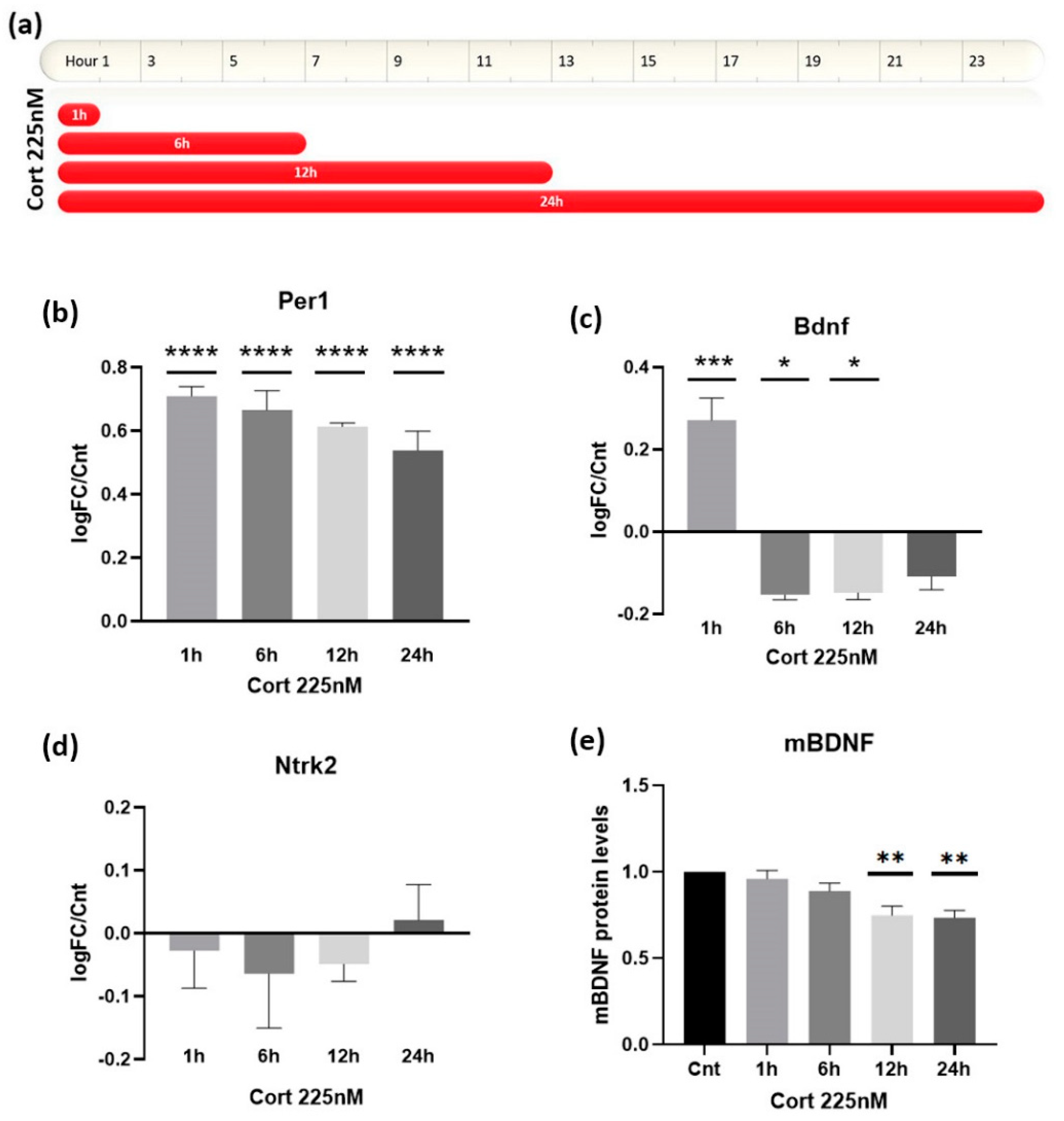
3.1. Cort Stimulation Regulates a Temporally Distinct Two-Stage Response with Opposite Effects on BDNF Expression in Astrocytes
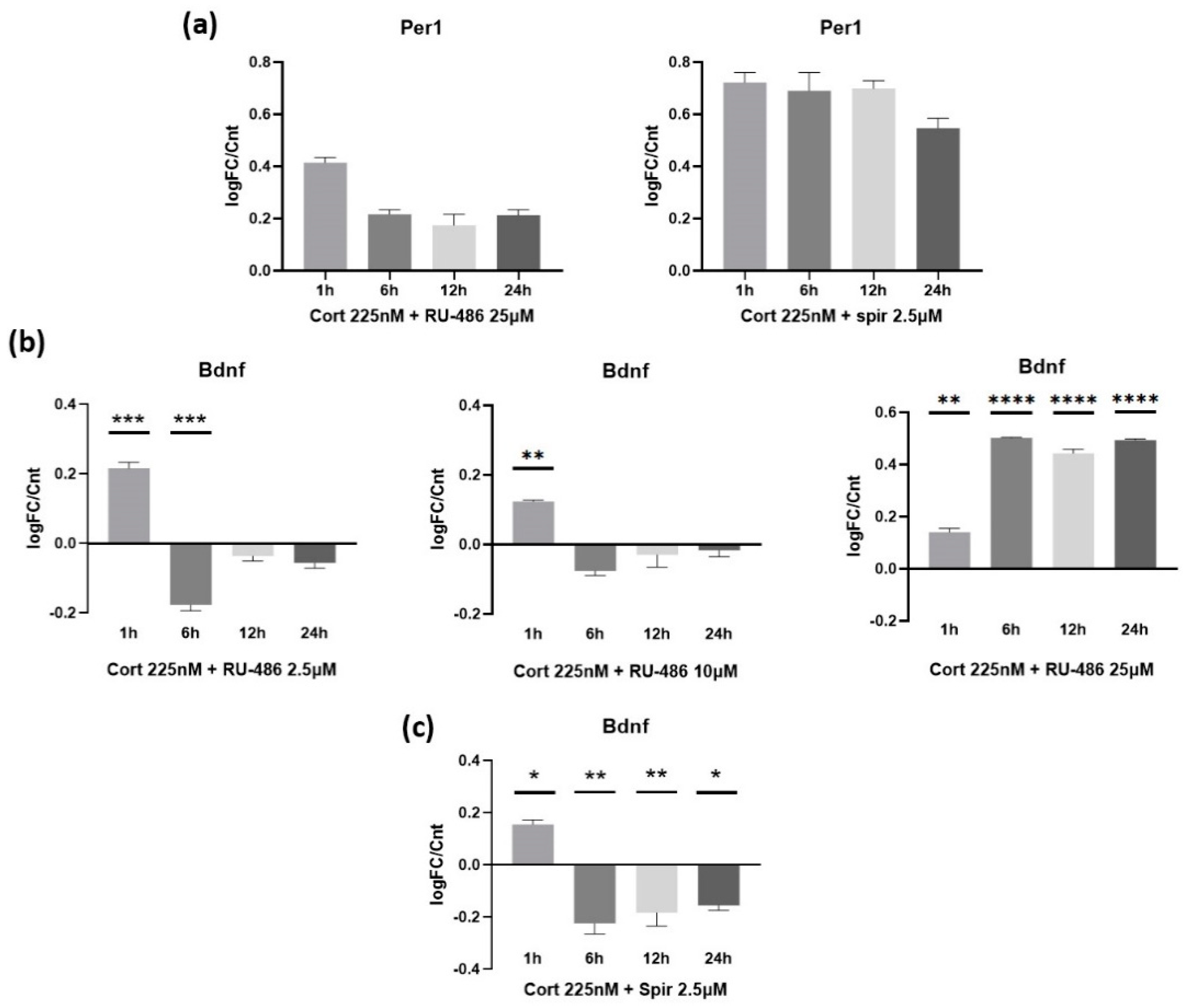
3.2. GR Mediates the Late Response Inhibiting Bdnf Expression
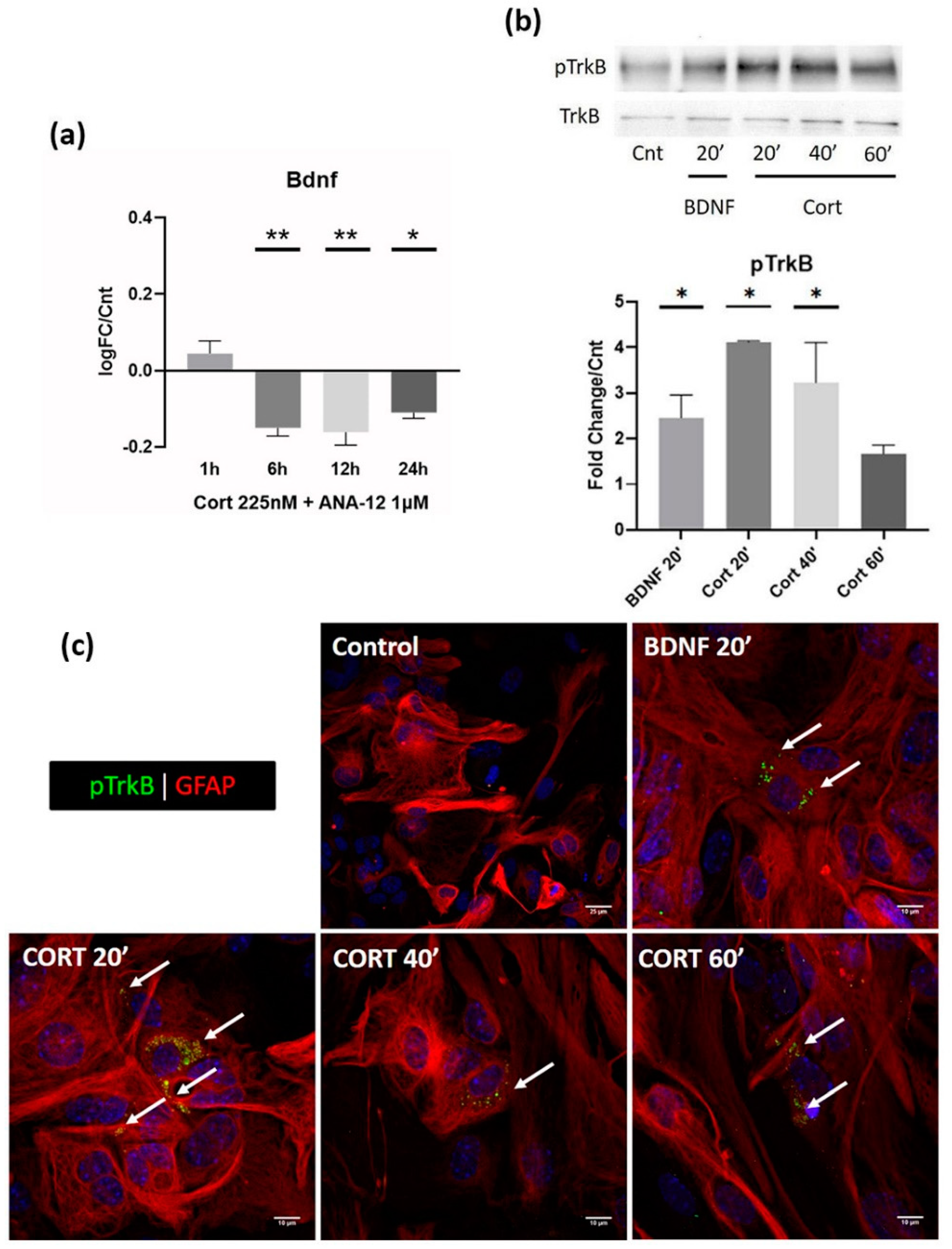
3.3. Astrocytic TrkB Receptor Is Necessary for the Regulation of BDNF Overexpression in the Early Response to Cort Treatment
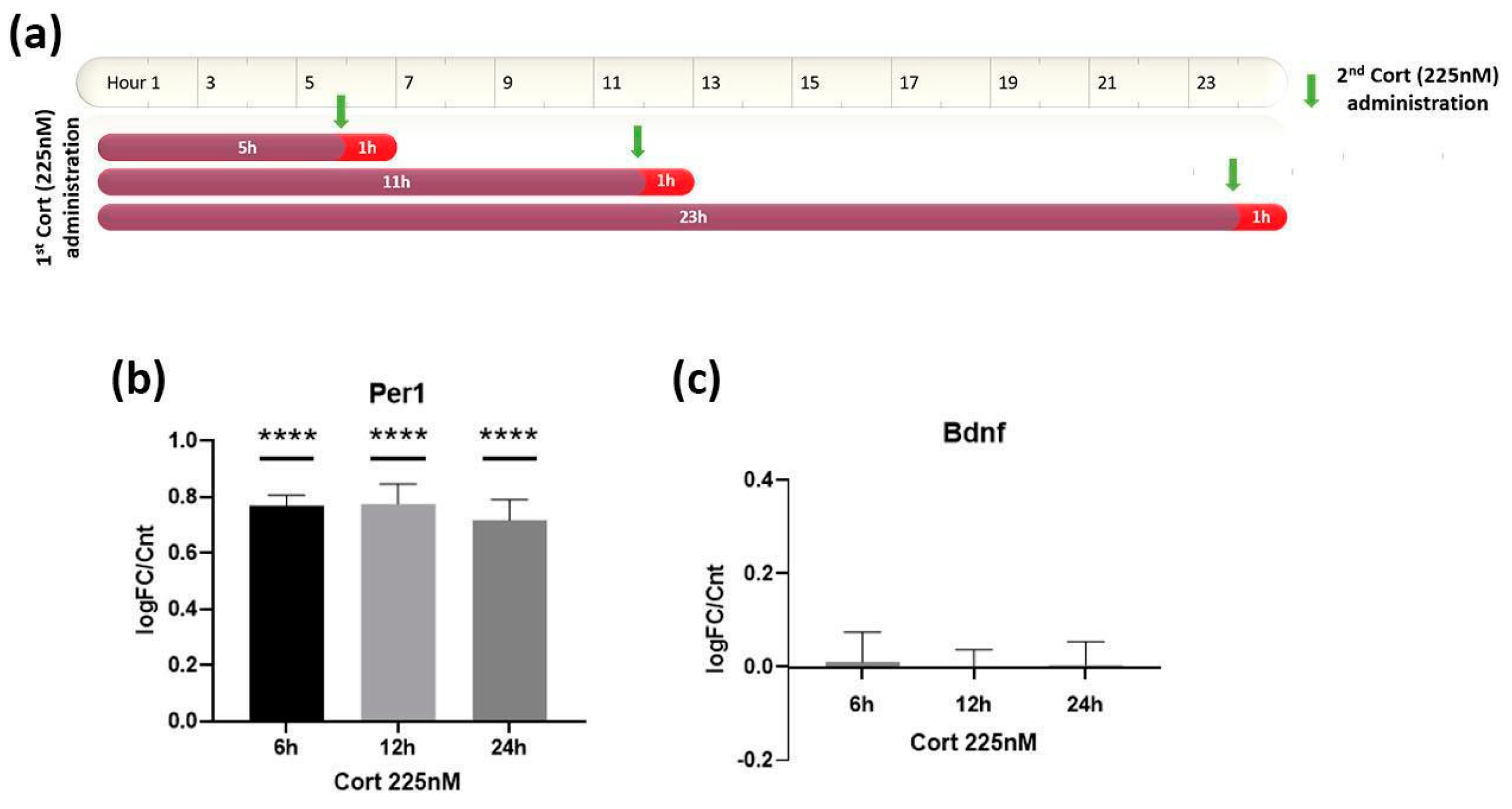
3.4. A Second Cort Pulse Normalizes Bdnf Expression in Astrocytes
4. Discussion
5. Conclusions
Supplementary Materials
Author Contributions
Funding
Institutional Review Board Statement
Informed Consent Statement
Data Availability Statement
Conflicts of Interest
References
- Kalafatakis, K.; Russell, G.M.; Zarros, A.; Lightman, S.L. Temporal control of glucocorticoid neurodynamics and its relevance for brain homeostasis, neuropathology and glucocorticoid-based therapeutics. Neurosci. Biobehav. Rev. 2016, 61, 12–25. [Google Scholar] [CrossRef] [Scilit] [PubMed]
- Kalafatakis, K.; Russell, G.M.; Lightman, S.L. Mechanisms in endocrinology: Does circadian and ultradian glucocorticoid exposure affect the brain? Eur. J. Endocrinol. 2019, 180, R73–R89. [Google Scholar] [CrossRef] [Scilit] [PubMed]
- Vielkind, U.; Walencewicz, A.; Levine, J.M.; Bohn, M.C. Type II glucocorticoid receptors are expressed in oligodendrocytes and astrocytes. J. Neurosci. Res. 1990, 27, 360–373. [Google Scholar] [CrossRef] [Scilit] [PubMed]
- Bohn, M.C.; Howard, E.; Vielkind, U.; Krozowski, Z. Glial cells express both mineralocorticoid and glucocorticoid receptors. J. Steroid Biochem. Mol. Biol. 1991, 40, 105–111. [Google Scholar] [CrossRef] [Scilit]
- Sánchez, M.M.; Young, L.J.; Plotsky, P.M.; Insel, T.R. Distribution of corticosteroid receptors in the rhesus brain: Relative absence of glucocorticoid receptors in the hippocampal formation. J. Neurosci. 2000, 20, 4657–4668. [Google Scholar] [CrossRef] [Scilit]
- Russell, G.M.; Kalafatakis, K.; Lightman, S.L. The importance of biological oscillators for hypothalamic-pituitary-adrenal activity and tissue glucocorticoid response: Coordinating stress and neurobehavioural adaptation. J. Neuroendocrinol. 2015, 27, 378–388. [Google Scholar] [CrossRef] [Scilit]
- Liu, J.; DeFranco, D.B. Chromatin recycling of glucocorticoid receptors: Implications for multiple roles of heat shock protein 90. Mol. Endocrinol. 1999, 13, 355–365. [Google Scholar] [CrossRef]
- Conway-Campbell, B.L.; Sarabdjitsingh, R.A.; McKenna, M.A.; Pooley, J.R.; Kershaw, Y.M.; Meijer, O.C.; De Kloet, E.R.; Lightman, S.L. Glucocorticoid ultradian rhythmicity directs cyclical gene pulsing of the clock gene period 1 in rat hippocampus. J. Neuroendocrinol. 2010, 22, 1093–1100. [Google Scholar] [CrossRef] [Scilit]
- Liston, C.; Cichon, J.M.; Jeanneteau, F.; Jia, Z.; Chao, M.V.; Gan, W.-B. Circadian glucocorticoid oscillations promote learning-dependent synapse formation and maintenance. Nat. Neurosci. 2013, 16, 698–705. [Google Scholar] [CrossRef] [Scilit]
- Sarabdjitsingh, R.A.; Jezequel, J.; Pasricha, N.; Mikasova, L.; Kerkhofs, A.; Karst, H.; Groc, L.; Joëls, M. Ultradian corticosterone pulses balance glutamatergic transmission and synaptic plasticity. Proc. Natl. Acad. Sci. USA 2014, 111, 14265–14270. [Google Scholar] [CrossRef] [Scilit]
- Haller, J.; Halasz, J.; Mikics, É.; Kruk, M.R.; Makara, G.B. Ultradian corticosterone rhythm and the propensity to behave aggressively in male rats. J. Neuroendocrinol. 2000, 12, 937–940. [Google Scholar] [CrossRef] [Scilit] [PubMed]
- Sarabdjitsingh, R.A.; Conway-Campbell, B.L.; Leggett, J.D.; Waite, E.J.; Meijer, O.C.; De Kloet, E.R.; Lightman, S.L. Stress responsiveness varies over the ultradian glucocorticoid cycle in a brain-regionspecific manner. Endocrinology 2010, 151, 5369–5379. [Google Scholar] [CrossRef] [Scilit] [PubMed]
- Sarabdjitsingh, R.A.; Spiga, F.; Oitzl, M.S.; Kershaw, Y.; Meijer, O.C.; Lightman, S.L.; De Kloet, E.R. Recovery from disrupted ultradian glucocorticoid rhythmicity reveals a dissociation between hormonal and behavioural stress responsiveness. J. Neuroendocrinol. 2010, 22, 862–871. [Google Scholar] [PubMed]
- Huzard, D.; Rappeneau, V.; Meijer, O.C.; Touma, C.; Arango-Lievano, M.; Garabedian, M.J.; Jeanneteau, F. Experience and activity-dependent control of glucocorticoid receptors during the stress response in large-scale brain networks. Stress 2021, 24, 130–153. [Google Scholar] [CrossRef] [Scilit]
- Arango-Lievano, M.; Lambert, W.M.; Bath, K.G.; Garabedian, M.J.; Chao, M.V.; Jeanneteau, F. Neurotrophic-priming of glucocorticoid receptor signaling is essential for neuronal plasticity to stress and antidepressant treatment. Proc. Natl. Acad. Sci. USA 2015, 112, 15737–15742. [Google Scholar] [CrossRef] [Scilit] [PubMed]
- Jeanneteau, F.D.; Lambert, W.M.; Ismaili, N.; Bath, K.G.; Lee, F.S.; Garabedian, M.J.; Chao, M.V. BDNF and glucocorticoids regulate corticotrophin-releasing hormone (CRH) homeostasis in the hypothalamus. Proc. Natl. Acad. Sci. USA 2012, 109, 1305–1310. [Google Scholar] [CrossRef] [Scilit] [PubMed]
- Lambert, W.M.; Xu, C.-F.; Neubert, T.A.; Chao, M.V.; Garabedian, M.J.; Jeanneteau, F.D. Brain-derived neurotrophic factor signaling rewrites the glucocorticoid transcriptome via glucocorticoid receptor phosphorylation. Mol. Cell Biol. 2013, 33, 3700–3714. [Google Scholar] [CrossRef] [Scilit]
- Chen, D.Y.; Bambah-Mukku, D.; Pollonini, G.; Alberini, C.M. Glucocorticoid receptors recruit the CaMKIIα-BDNF-CREB pathways to mediate memory consolidation. Nat. Neurosci. 2012, 15, 1707–1714. [Google Scholar] [CrossRef] [Scilit]
- Numakawa, T.; Kumamaru, E.; Adachi, N.; Yagasaki, Y.; Izumi, A.; Kunugi, H. Glucocorticoid receptor interaction with TrkB promotes BDNF-triggered PLC-gamma signaling for glutamate release via a glutamate transporter. Proc. Natl. Acad. Sci. USA 2009, 106, 647–652. [Google Scholar] [CrossRef] [Scilit]
- Numakawa, T.; Adachi, N.; Richards, M.; Chiba, S.; Kunugi, H. Brain-derived neurotrophic factor and glucocorticoids: Reciprocal influence on the central nervous system. Neuroscience 2013, 239, 157–172. [Google Scholar] [CrossRef] [Scilit]
- McEwen, B.S.; De Kloet, E.R.; Rostene, W. Adrenal steroid receptors and actions in the nervous system. Physiol. Rev. 1986, 66, 1121–1188. [Google Scholar] [CrossRef] [Scilit] [PubMed]
- Sivukhina, E.V.; Jirikowski, G.F. Adrenal steroids in the brain: Role of the intrinsic expression of corticosteroid-binding globulin (CBG) in the stress response. Steroids 2014, 81, 70–73. [Google Scholar] [CrossRef] [Scilit] [PubMed]
- Lee, H.G.; Wheeler, M.A.; Quintana, F.J. Function and therapeutic value of astrocytes in neurological diseases. Nat. Rev. Drug Discov. 2022, 21, 339–358. [Google Scholar] [CrossRef] [Scilit]
- Finding Primers Specific to Your PCR Template (Using Primer3 and BLAST). Available online: http://www.ncbi.nlm.nih.gov/tools/primer-blast/ (accessed on 30 April 2022).
- Teilmann, A.C.; Kalliokoski, O.; Sorensen, D.B.; Hau, J.; Abelson, K.S. Manual versus automated blood sampling: Impact of repeated blood sampling on stress parameters and behavior in male NMRI mice. Lab. Anim. 2014, 48, 278–291. [Google Scholar] [CrossRef] [Scilit] [PubMed]
- Gong, S.; Miao, Y.L.; Jiao, G.Z.; Sun, M.J.; Li, H.; Lin, J.; Luo, M.J.; Tan, J.H. Dynamics and correlation of serum cortisol and corticosterone under different physiological or stressful conditions in mice. PLoS ONE 2015, 10, e0117503. [Google Scholar] [CrossRef] [Scilit] [PubMed]
- Reddy, T.E.; Gertz, J.; Crawford, G.E.; Garabedian, M.J.; Myers, R.M. The hypersensitive glucocorticoid response specifically regulates period 1 and expression of circadian genes. Mol. Cell Biol. 2012, 32, 3756–3767. [Google Scholar] [CrossRef] [Scilit] [PubMed]
- Jeanneteau, F.; Garabedian, M.J.; Chao, M.V. Activation of Trk neurotrophin receptors by glucocorticoids provides a neuroprotective effect. Proc. Natl. Acad. Sci. USA 2008, 105, 4862–4867. [Google Scholar] [CrossRef] [Scilit]
- Lin, L.; Herselman, M.F.; Zhou, X.F.; Bobrovskaya, L. Effects of corticosterone on BDNF expression and mood behaviours in mice. Physiol. Behav. 2022, 247, 113721. [Google Scholar] [CrossRef] [Scilit]
- Jeanneteau, F.; Borie, A.; Chao, M.V.; Garabedian, M.J. Bridging the Gap between Brain-Derived Neurotrophic Factor and Glucocorticoid Effects on Brain Networks. Neuroendocrinology 2019, 109, 277–284. [Google Scholar] [CrossRef] [Scilit]
- Lana, D.; Ugolini, F.; Nosi, D.; Wenk, G.L.; Giovannini, M.G. The Emerging Role of the Interplay Among Astrocytes, Microglia, and Neurons in the Hippocampus in Health and Disease. Front. Aging Neurosci. 2021, 13, 651973. [Google Scholar] [CrossRef] [Scilit]
- Clarke, L.E.; Barres, B.A. Emerging roles of astrocytes in neural circuit development. Nat. Rev. Neurosci. 2013, 14, 311–321. [Google Scholar] [CrossRef] [Scilit] [PubMed]
- Jeanneteau, F.; Chao, M.V. Are BDNF and glucocorticoid activities calibrated? Neuroscience 2013, 239, 173–195. [Google Scholar] [CrossRef] [Scilit] [PubMed]
- Dwivedi, Y. Brain-derived neurotrophic factor: Role in depression and suicide. Neuropsychiatr. Dis. Treat. 2009, 5, 433–449. [Google Scholar] [CrossRef] [Scilit] [PubMed]
- Smith, M.A.; Makino, S.; Kvetnansky, R.; Post, R.M. Stress and glucocorticoids affect the expression of brain-derived neurotrophic factor and neurotrophin-3 mRNAs in the hippocampus. J. Neurosci. 1995, 15 Pt 1, 1768–1777. [Google Scholar] [CrossRef] [Scilit]
- Ueyama, T.; Kawai, Y.; Nemoto, K.; Sekimoto, M.; Toné, S.; Senba, E. Immobilization stress reduced the expression of neurotrophins and their receptors in the rat brain. Neurosci. Res. 1997, 28, 103–110. [Google Scholar] [CrossRef] [Scilit]

Publisher’s Note: MDPI stays neutral with regard to jurisdictional claims in published maps and institutional affiliations. |
© 2022 by the authors. Licensee MDPI, Basel, Switzerland. This article is an open access article distributed under the terms and conditions of the Creative Commons Attribution (CC BY) license (https://creativecommons.org/licenses/by/4.0/).
Share and Cite
Tsimpolis, A.; Kokkali, M.; Logothetis, A.; Kalafatakis, K.; Charalampopoulos, I. Biphasic Response of Astrocytic Brain-Derived Neurotrophic Factor Expression following Corticosterone Stimulation. Biomolecules 2022, 12, 1322. https://doi.org/10.3390/biom12091322
Tsimpolis A, Kokkali M, Logothetis A, Kalafatakis K, Charalampopoulos I. Biphasic Response of Astrocytic Brain-Derived Neurotrophic Factor Expression following Corticosterone Stimulation. Biomolecules. 2022; 12(9):1322. https://doi.org/10.3390/biom12091322
Chicago/Turabian StyleTsimpolis, Alexandros, Maria Kokkali, Aris Logothetis, Konstantinos Kalafatakis, and Ioannis Charalampopoulos. 2022. "Biphasic Response of Astrocytic Brain-Derived Neurotrophic Factor Expression following Corticosterone Stimulation" Biomolecules 12, no. 9: 1322. https://doi.org/10.3390/biom12091322
APA StyleTsimpolis, A., Kokkali, M., Logothetis, A., Kalafatakis, K., & Charalampopoulos, I. (2022). Biphasic Response of Astrocytic Brain-Derived Neurotrophic Factor Expression following Corticosterone Stimulation. Biomolecules, 12(9), 1322. https://doi.org/10.3390/biom12091322