Review

Cytosolic Hsp90 Isoform-Specific Functions and Clinical Significance

Département de Biologie Moléculaire et Cellulaire, Université de Genève, Sciences III, Quai Ernest-Ansermet 30, CH-1211 Geneve, Switzerland
*
Author to whom correspondence should be addressed.
Biomolecules 2022, 12(9), 1166; https://doi.org/10.3390/biom12091166
Submission received: 9 August 2022 / Revised: 18 August 2022 / Accepted: 19 August 2022 / Published: 23 August 2022
(This article belongs to the Special Issue Hsp90 Structure, Mechanism and Disease)

Abstract

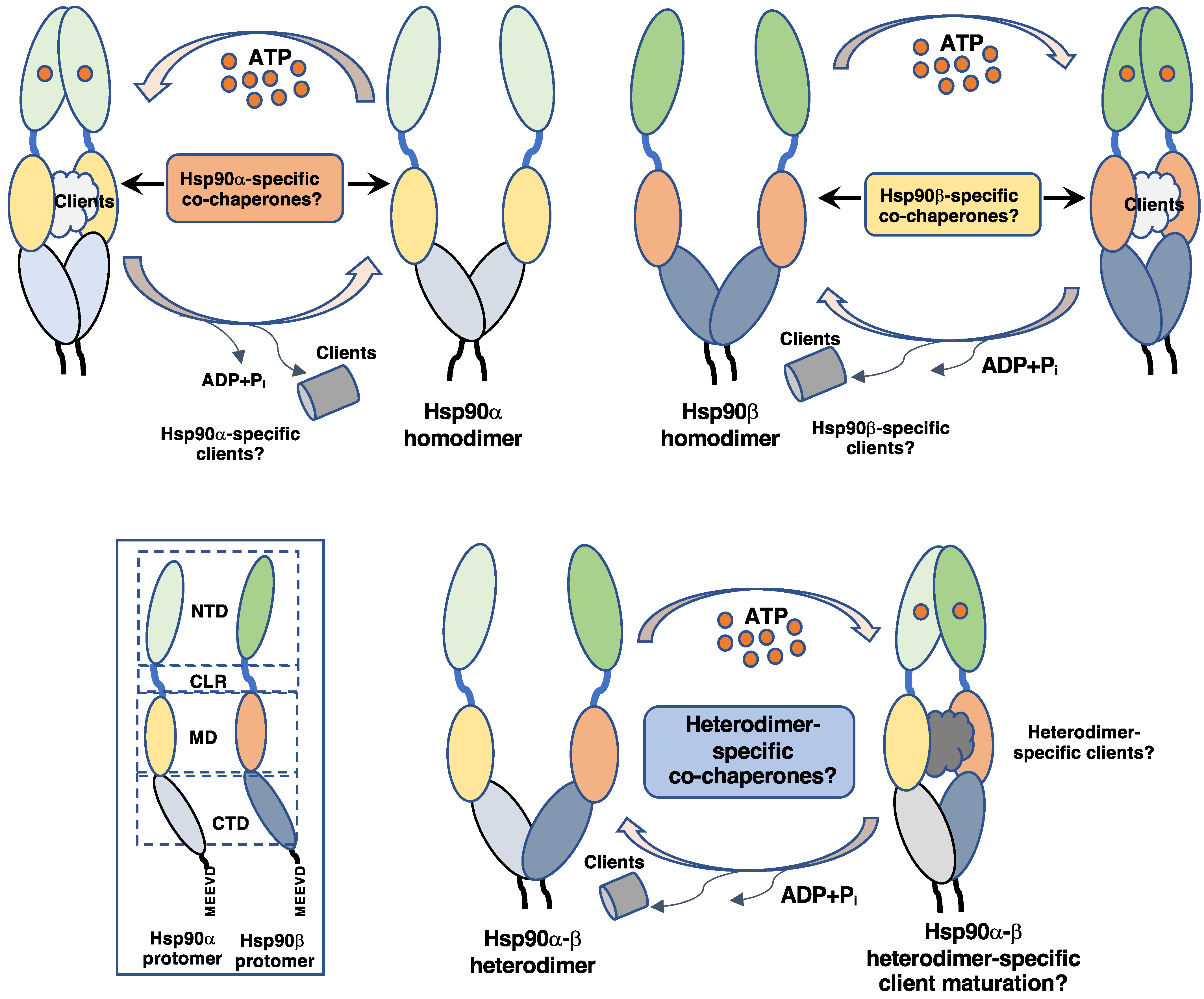
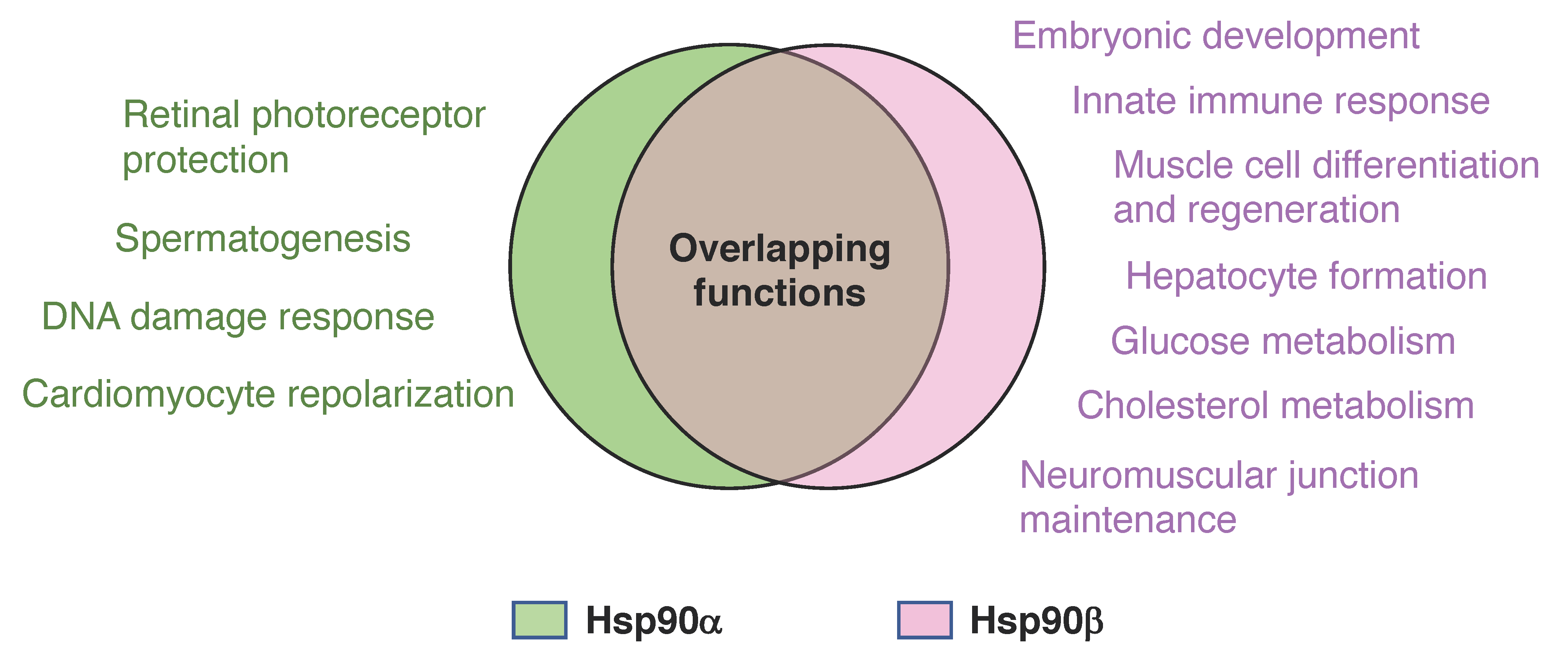
The heat shock protein 90 (Hsp90) is a molecular chaperone and a key regulator of proteostasis under both physiological and stress conditions. In mammals, there are two cytosolic Hsp90 isoforms: Hsp90α and Hsp90β. These two isoforms are 85% identical and encoded by two different genes. Hsp90β is constitutively expressed and essential for early mouse development, while Hsp90α is stress-inducible and not necessary for survivability. These two isoforms are known to have largely overlapping functions and to interact with a large fraction of the proteome. To what extent there are isoform-specific functions at the protein level has only relatively recently begun to emerge. There are studies indicating that one isoform is more involved in the functionality of a specific tissue or cell type. Moreover, in many diseases, functionally altered cells appear to be more dependent on one particular isoform. This leaves space for designing therapeutic strategies in an isoform-specific way, which may overcome the unfavorable outcome of pan-Hsp90 inhibition encountered in previous clinical trials. For this to succeed, isoform-specific functions must be understood in more detail. In this review, we summarize the available information on isoform-specific functions of mammalian Hsp90 and connect it to possible clinical applications.
Keywords: molecular chaperone; paralog; Hsp90 isoforms; Hsp90α; Hsp90β; Hsp90-isoform specific inhibitors; clinical relevance molecular chaperone; paralog; Hsp90 isoforms; Hsp90α; Hsp90β; Hsp90-isoform specific inhibitors; clinical relevance