Article

Spreading of P301S Aggregated Tau Investigated in Organotypic Mouse Brain Slice Cultures
Laboratory of Psychiatry and Experimental Alzheimer’s Research, Medical University of Innsbruck, 6020 Innsbruck, Austria
*
Author to whom correspondence should be addressed.
Biomolecules 2022, 12(9), 1164; https://doi.org/10.3390/biom12091164
Submission received: 24 May 2022 / Revised: 6 July 2022 / Accepted: 16 August 2022 / Published: 23 August 2022
(This article belongs to the Special Issue Molecular and Cellular Basis of Alzheimer's Disease)

Abstract

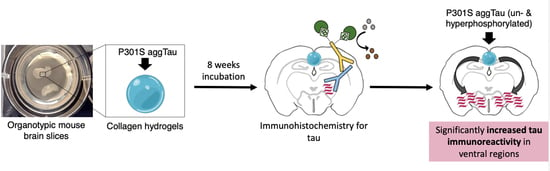
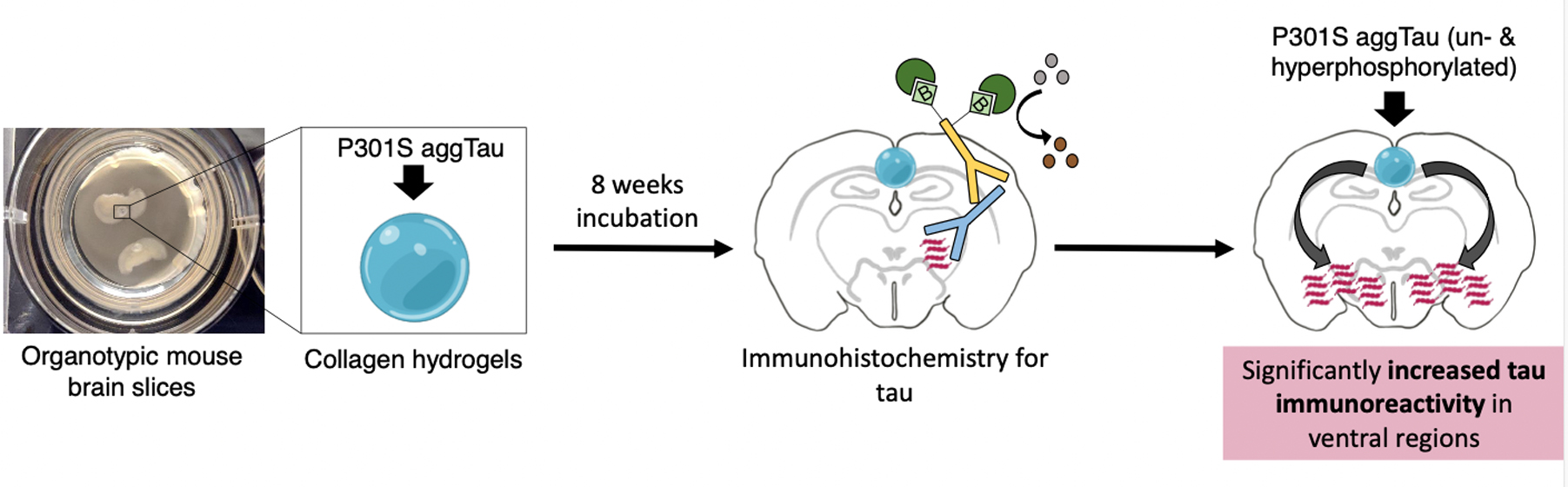
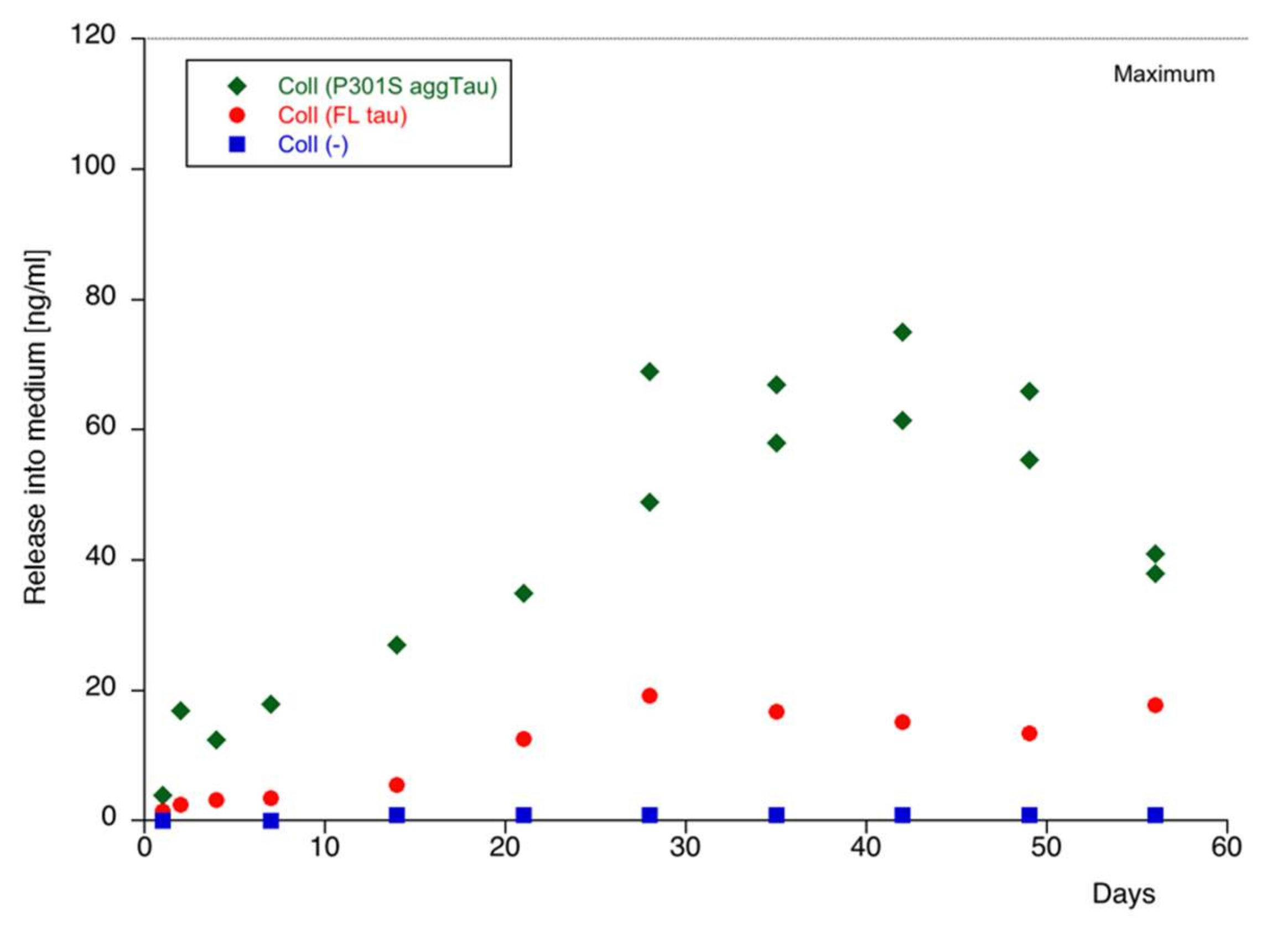
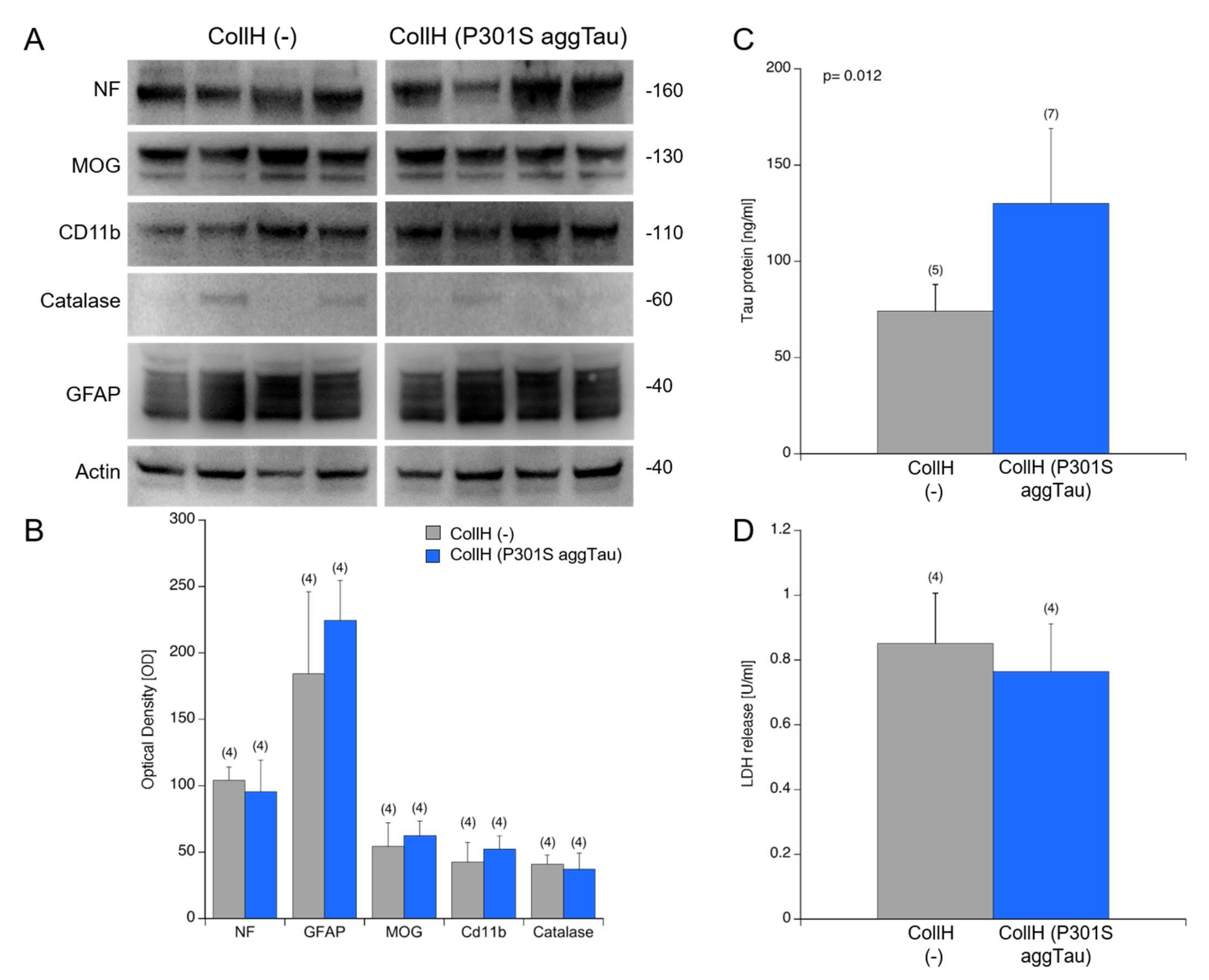
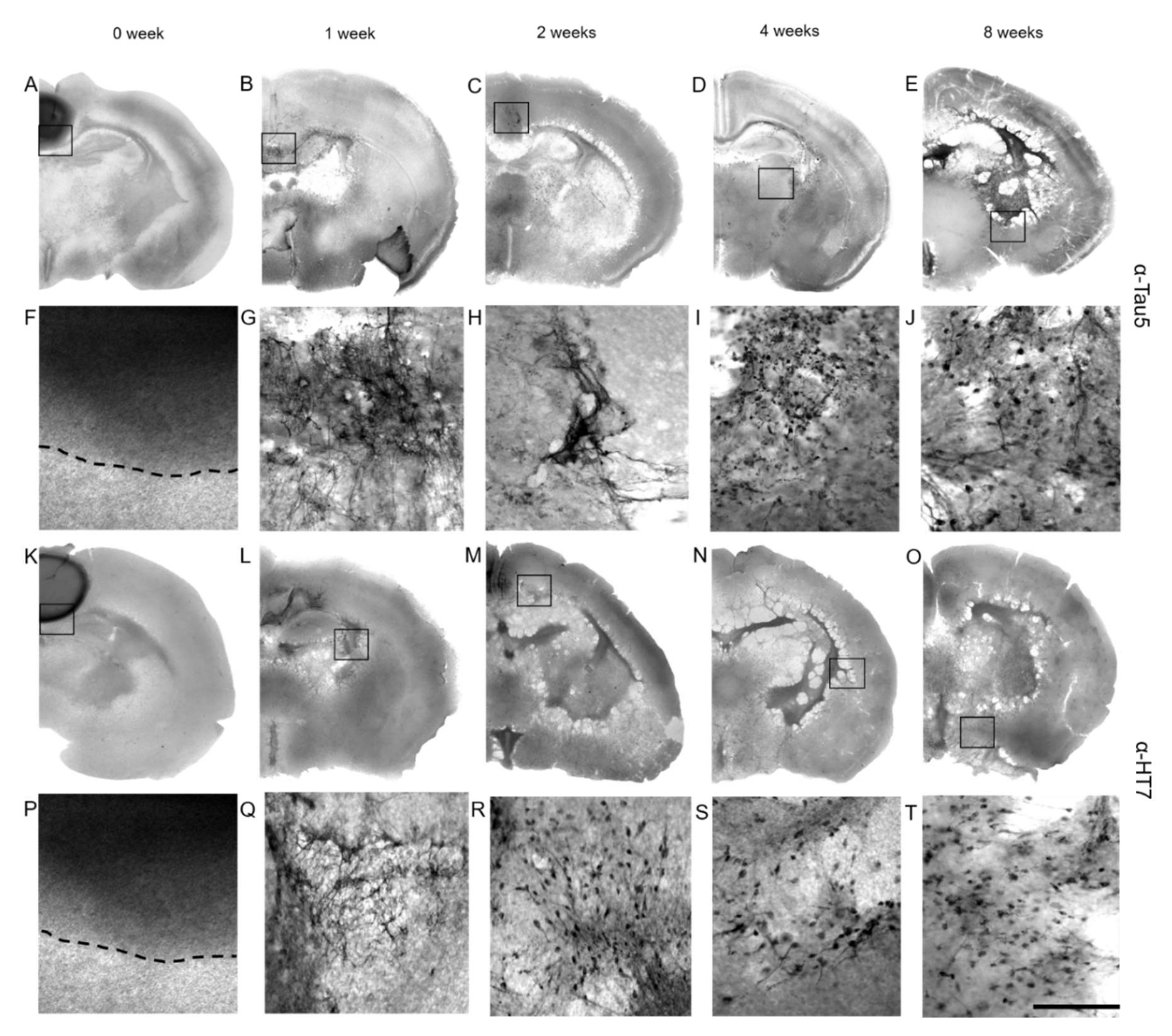
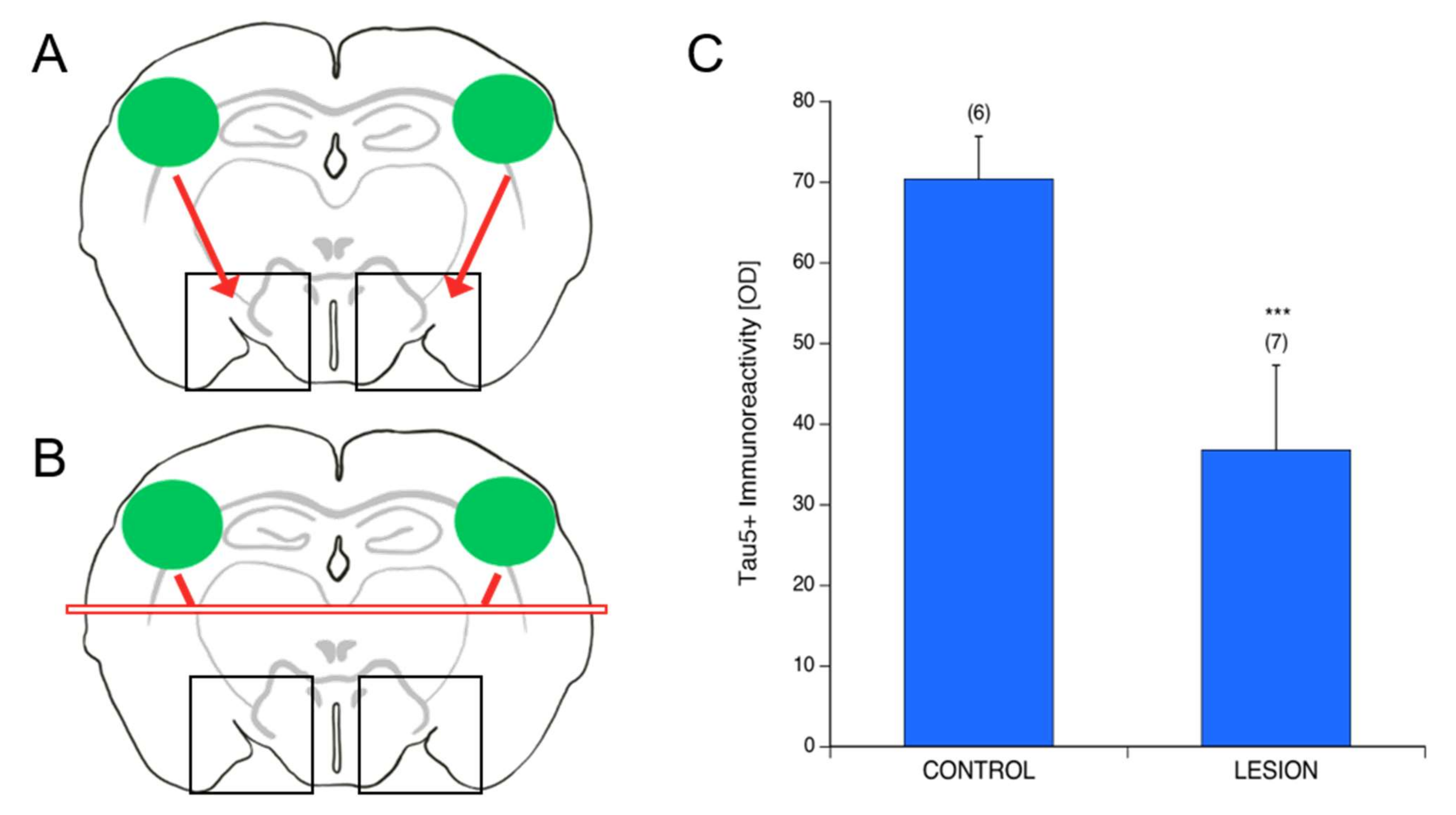
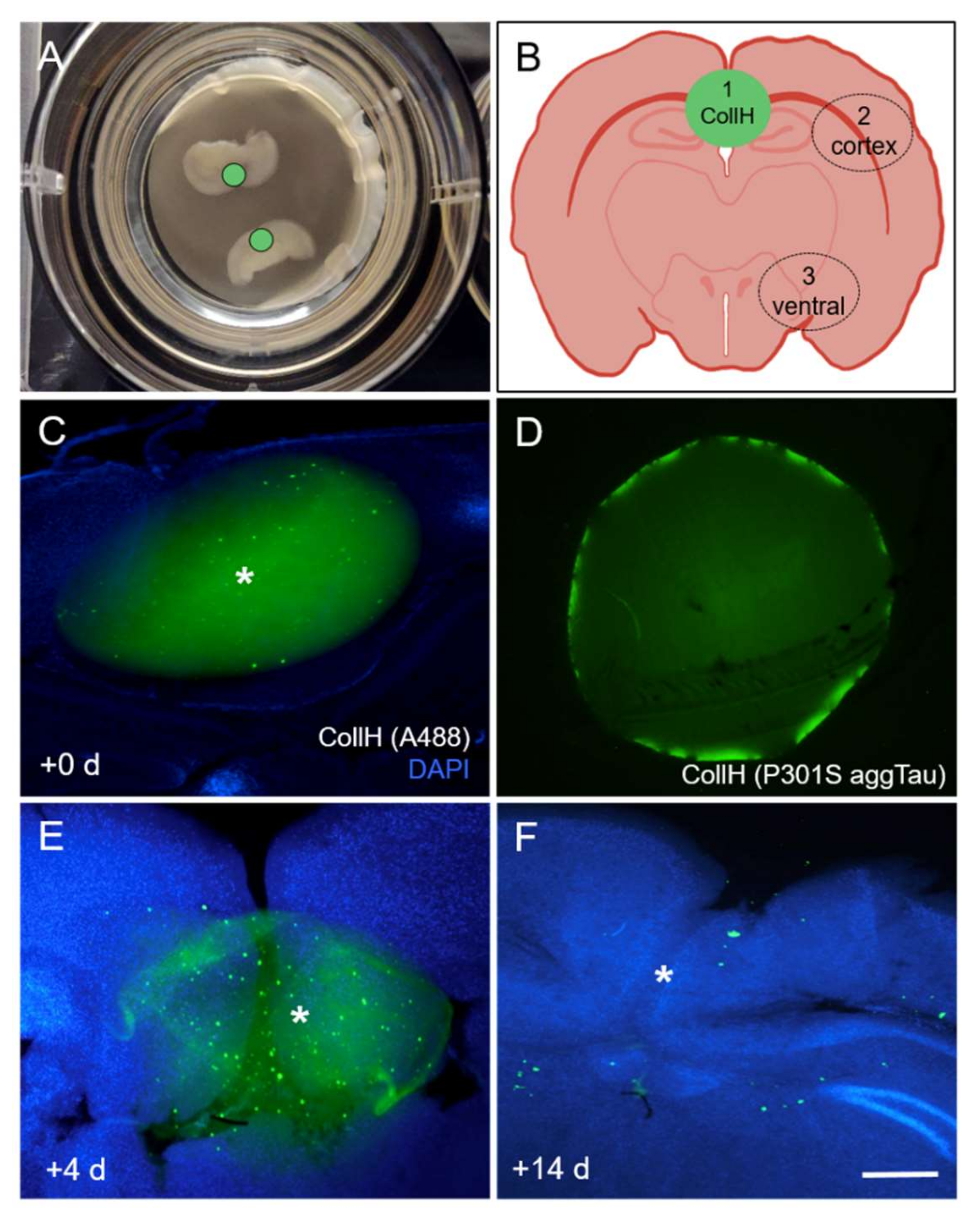
Tau pathology extends throughout the brain in a prion-like fashion through connected brain regions. However, the details of the underlying mechanisms are incompletely understood. The present study aims to examine the spreading of P301S aggregated tau, a mutation that is implicated in tauopathies, using organotypic slice cultures. Coronal hippocampal organotypic brain slices (170 µm) were prepared from postnatal (day 8–10) C57BL6 wild-type mice. Collagen hydrogels loaded with P301S aggregated tau were applied to slices and the spread of tau was assessed by immunohistochemistry after 8 weeks in culture. Collagen hydrogels prove to be an effective protein delivery system subject to natural degradation in 14 days and they release tau proteins up to 8 weeks. Slices with un- and hyperphosphorylated P301S aggregated tau demonstrate significant spreading to the ventral parts of the hippocampal slices compared to empty collagen hydrogels after 8 weeks. Moreover, the spread of P301S aggregated tau occurs in a time-dependent manner, which was interrupted when the neuroanatomical pathways are lesioned. We illustrate that the spreading of tau can be investigated in organotypic slice cultures using collagen hydrogels to achieve a localized application and slow release of tau proteins. P301S aggregated tau significantly spreads to the ventral areas of the slices, suggesting that the disease-relevant aggregated tau form possesses spreading potential. Thus, the results offer a novel experimental approach to investigate tau pathology.
Keywords: Alzheimer; tauopathy; tau; organotypic brain slices; spreading; collagen hydrogels Alzheimer; tauopathy; tau; organotypic brain slices; spreading; collagen hydrogels
Graphical Abstract