Communication

A Multi-Chamber Paper-Based Platform for the Detection of Amyloid β Oligomers 42 via Copper-Enhanced Gold Immunoblotting

1
School of Medicine and Pharmacy, The University of Danang, Danang 550000, Vietnam
2
Department of Electronic Engineering, Gachon University, Seongnam 13120, Gyeonggi-do, Korea
3
Department of Health Sciences and Technology, GAIHST, Gachon University, Incheon 21999, Korea
*
Authors to whom correspondence should be addressed.
Biomolecules 2021, 11(7), 948; https://doi.org/10.3390/biom11070948
Submission received: 26 May 2021 / Revised: 16 June 2021 / Accepted: 22 June 2021 / Published: 26 June 2021
(This article belongs to the Special Issue Biomolecular Investigations of Alzheimer's Diseases)

Abstract

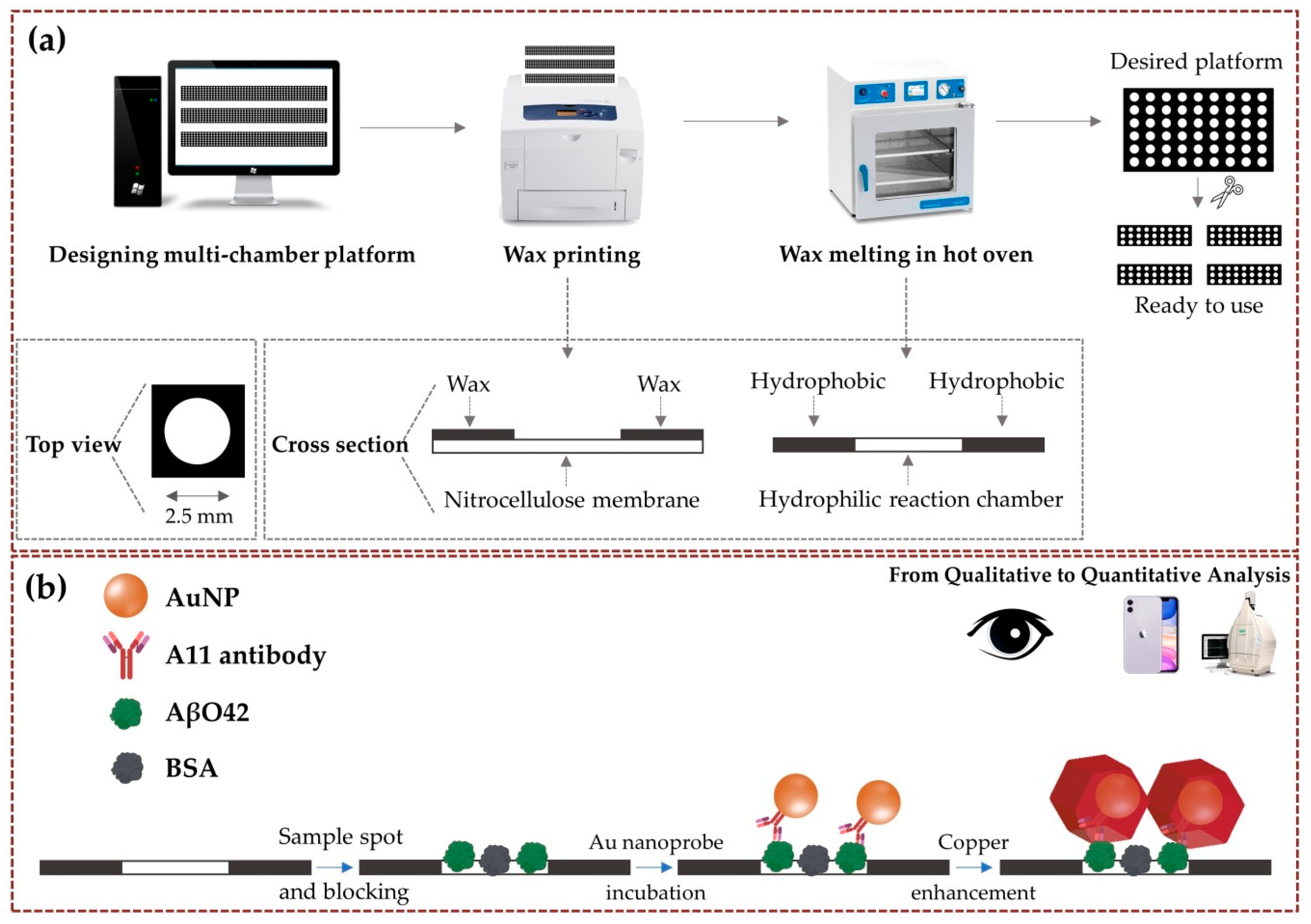
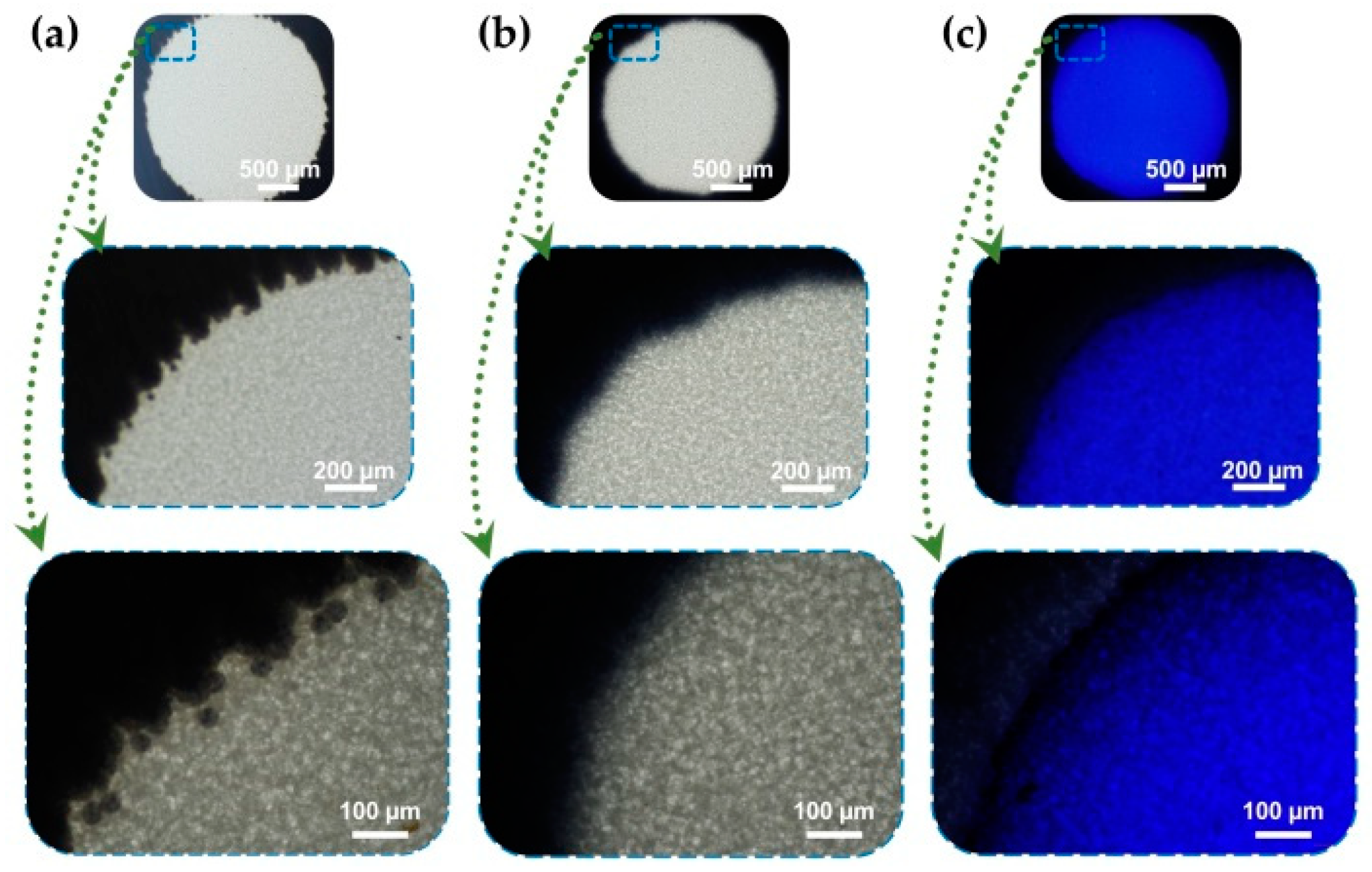
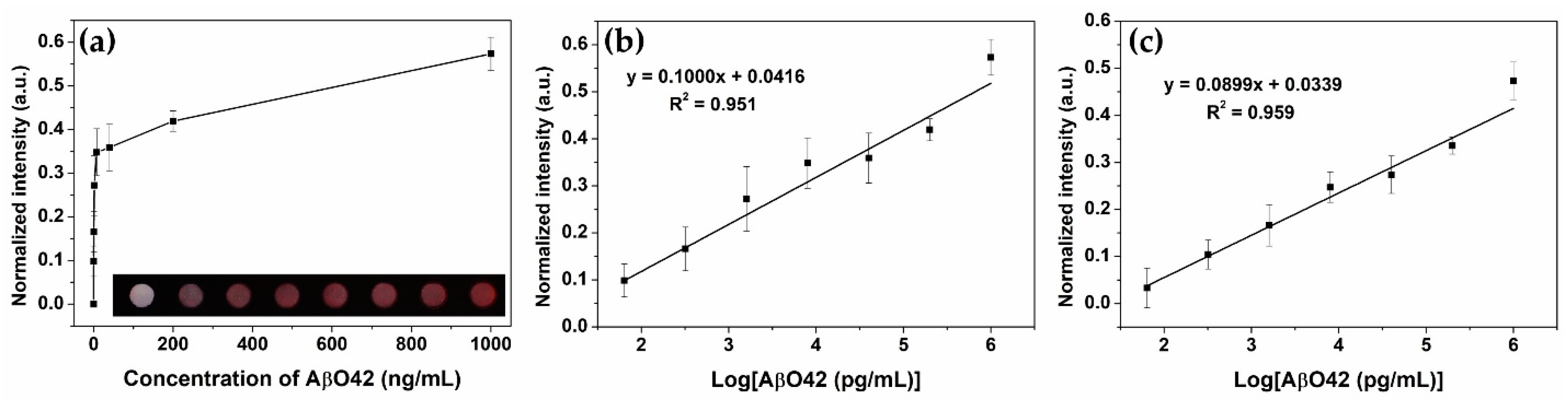
The early diagnosis of Alzheimer’s disease (AD) remains a challenge for medical scientists worldwide, leading to a number of research efforts that focus on biosensor development for AD biomarkers. However, the application of these complicated biosensors is limited in medical diagnosis, due to the difficulties in robust sensing platform development, high costs, and the necessity for technical professionals. We successfully developed a robust straightforward manufacturing process for the fabrication of multi-chamber paper devices using the wax printing method and exploited it to detect amyloid beta 42 oligomers (AβO42, a significant biomarker of AD) using copper-enhanced gold nanoprobe colorimetric immunoblotting. Small hydrophilic reaction chambers could concentrate the target sample to the desired size to improve the sensing performance. The copper-enhanced gold nanoprobe immunoblot using the designed multi-chamber platform exhibited a highly sensitive performance with a limit of detection of 320 pg/mL by the naked eye and 23.7 pg/mL by a smartphone camera. This process from sensing manufacture to sensing conduction is simple to perform whenever medical technicians require time- and cost-savings, without complicated instruments or the need for technical professionals, making it feasible to serve as a diagnostic tool worldwide for the early monitoring of AD and scalable devices for the sensing application of various biomarkers in clinical settings.
Keywords: Alzheimer’s disease; amyloid beta 42 oligomers; multi-chamber; wax printing; copper-enhanced gold nanoprobe; colorimetric immunoblot Alzheimer’s disease; amyloid beta 42 oligomers; multi-chamber; wax printing; copper-enhanced gold nanoprobe; colorimetric immunoblot