
Article

Hints for a Gravitational Transition in Tully–Fisher Data
by
George Alestas
,
Ioannis Antoniou
and
Leandros Perivolaropoulos
*
Department of Physics, University of Ioannina, 45110 Ioannina, Greece
*
Author to whom correspondence should be addressed.
Universe 2021, 7(10), 366; https://doi.org/10.3390/universe7100366

Submission received: 2 September 2021 / Revised: 22 September 2021 / Accepted: 23 September 2021 / Published: 29 September 2021
(This article belongs to the Section Cosmology)

Abstract

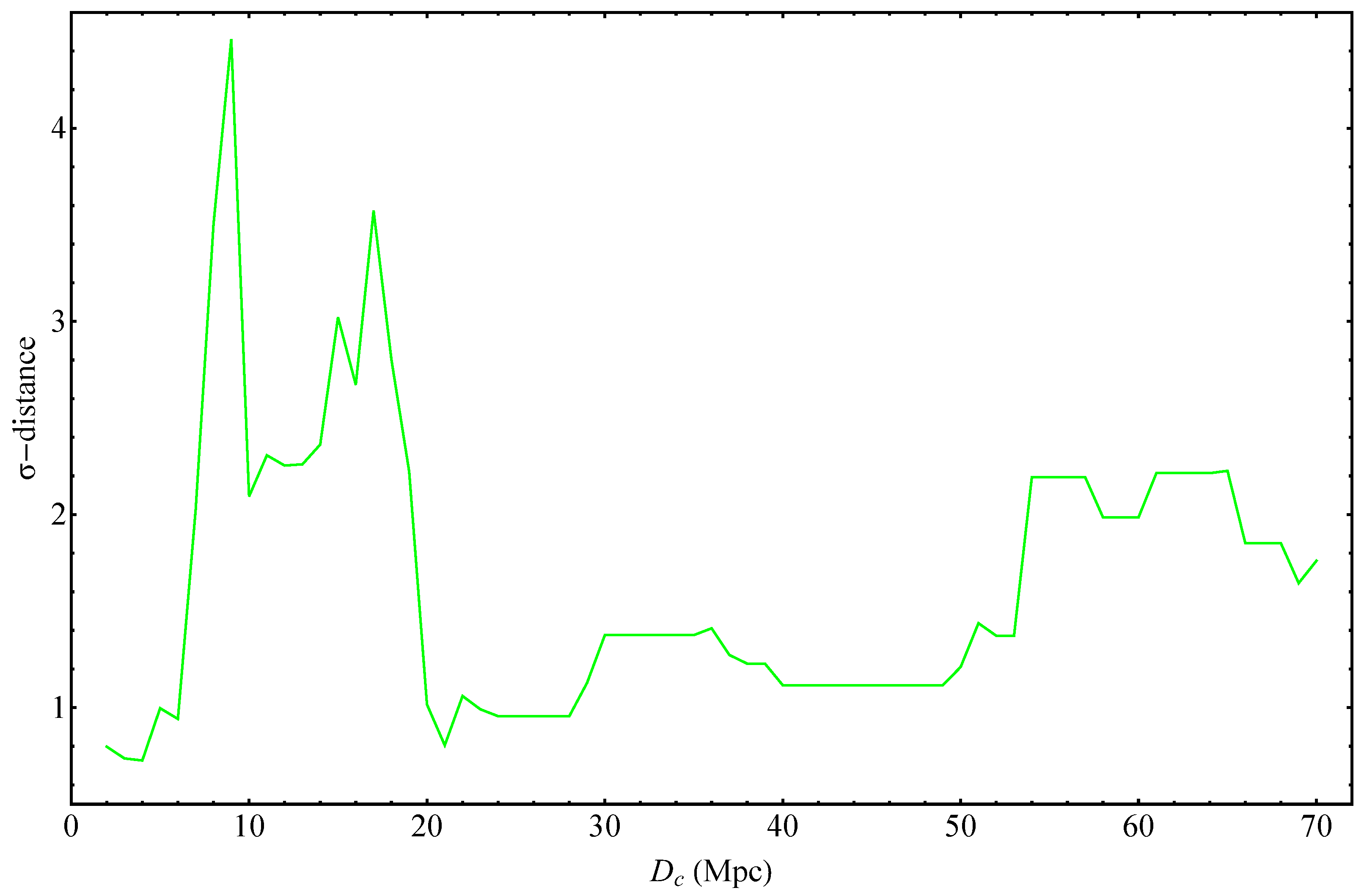
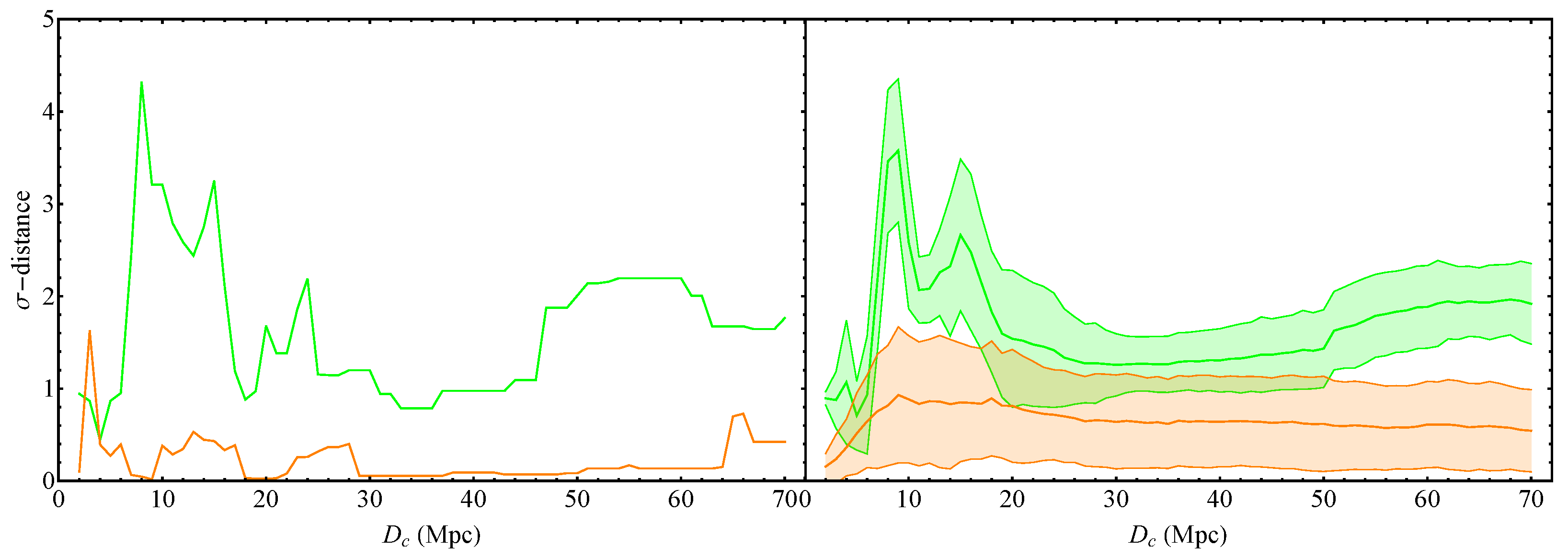
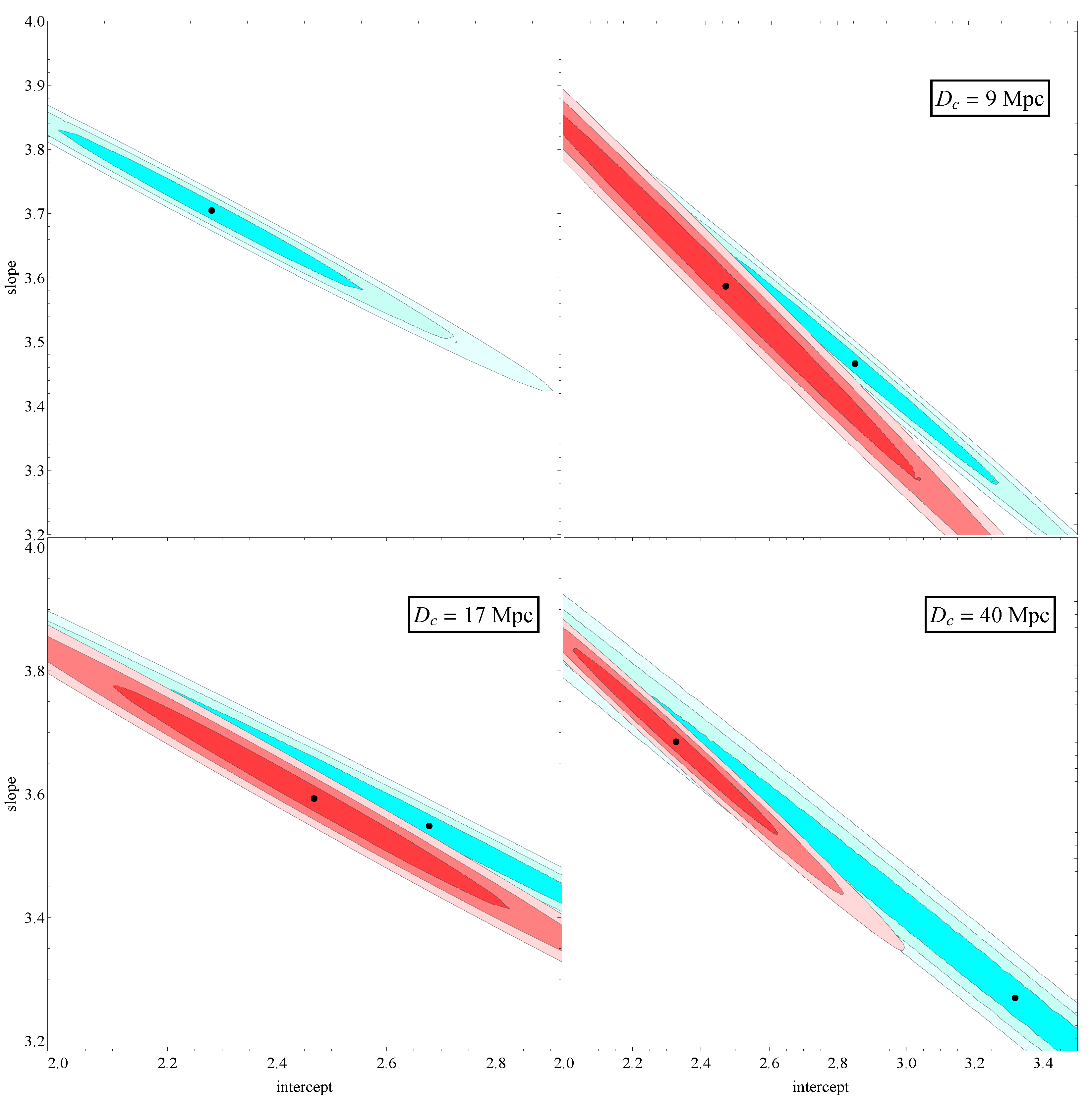
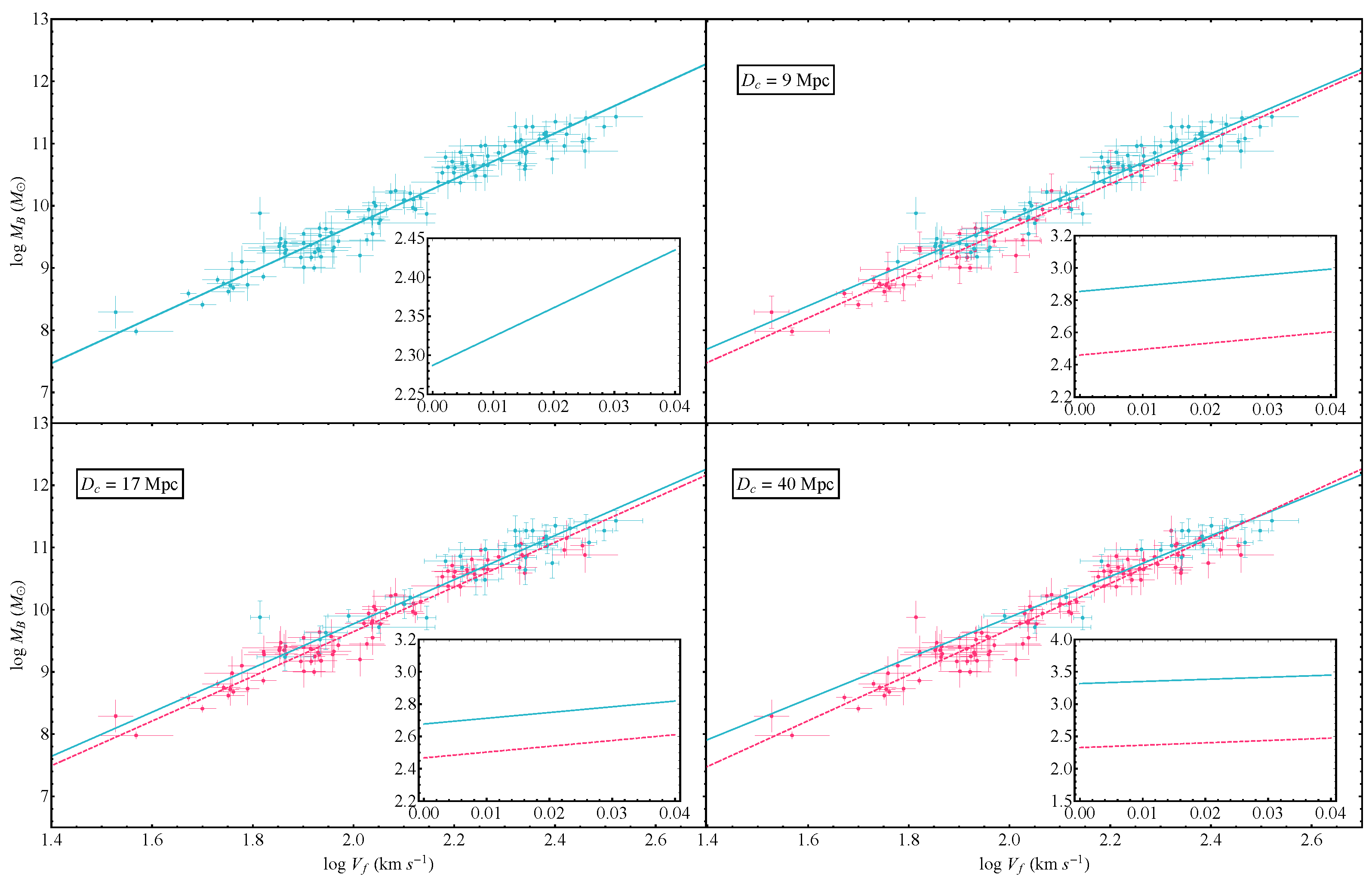
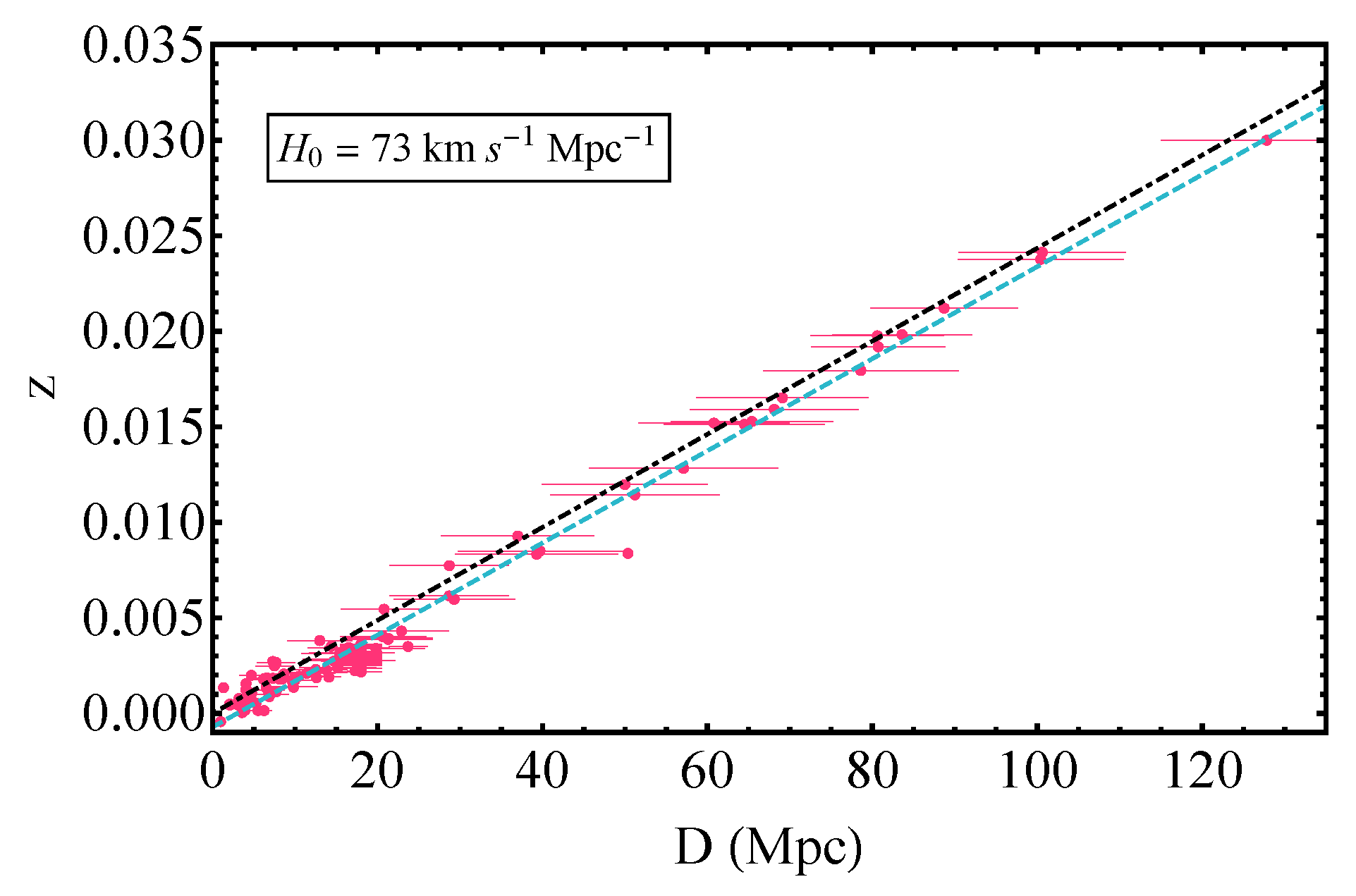
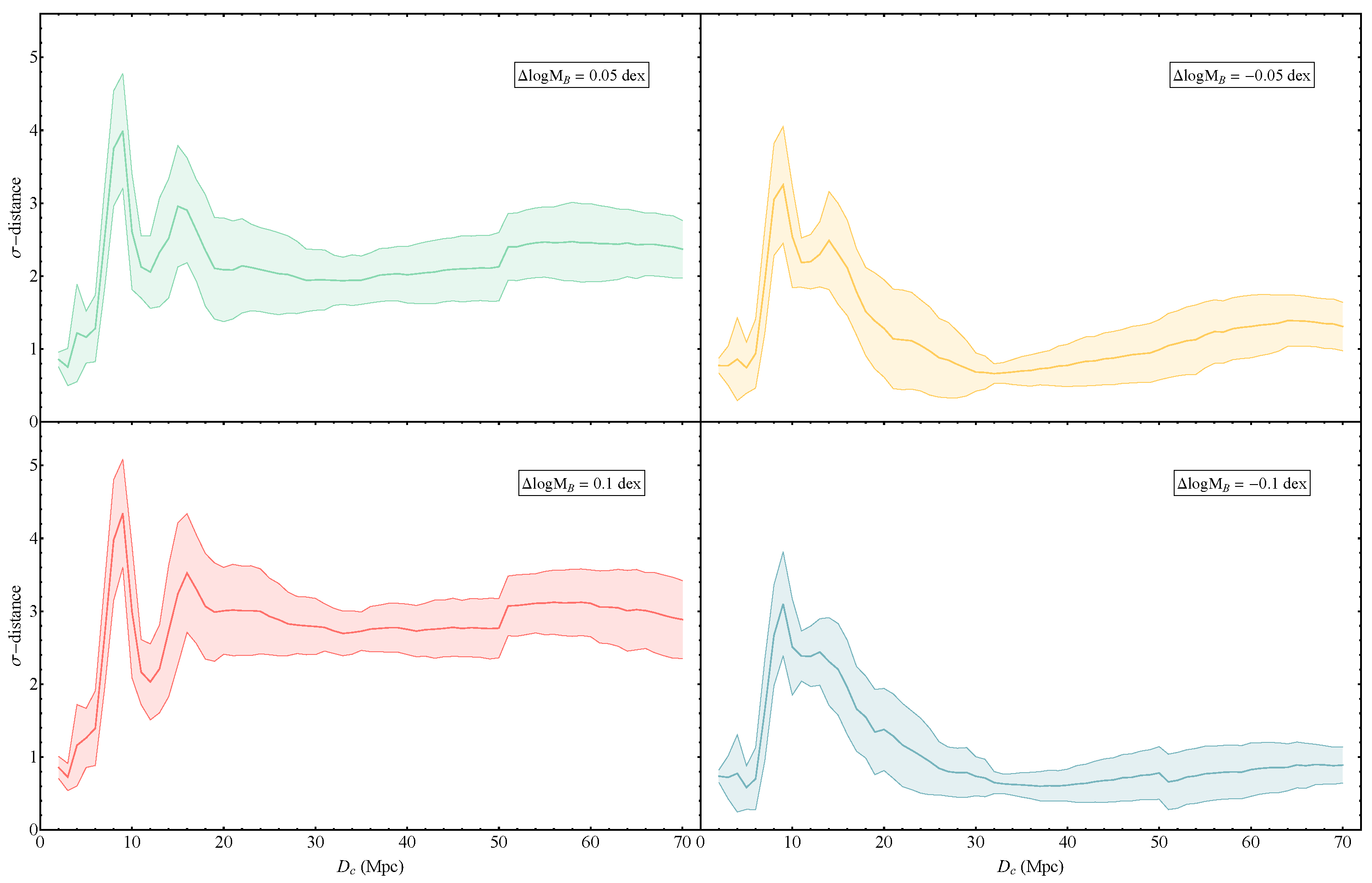
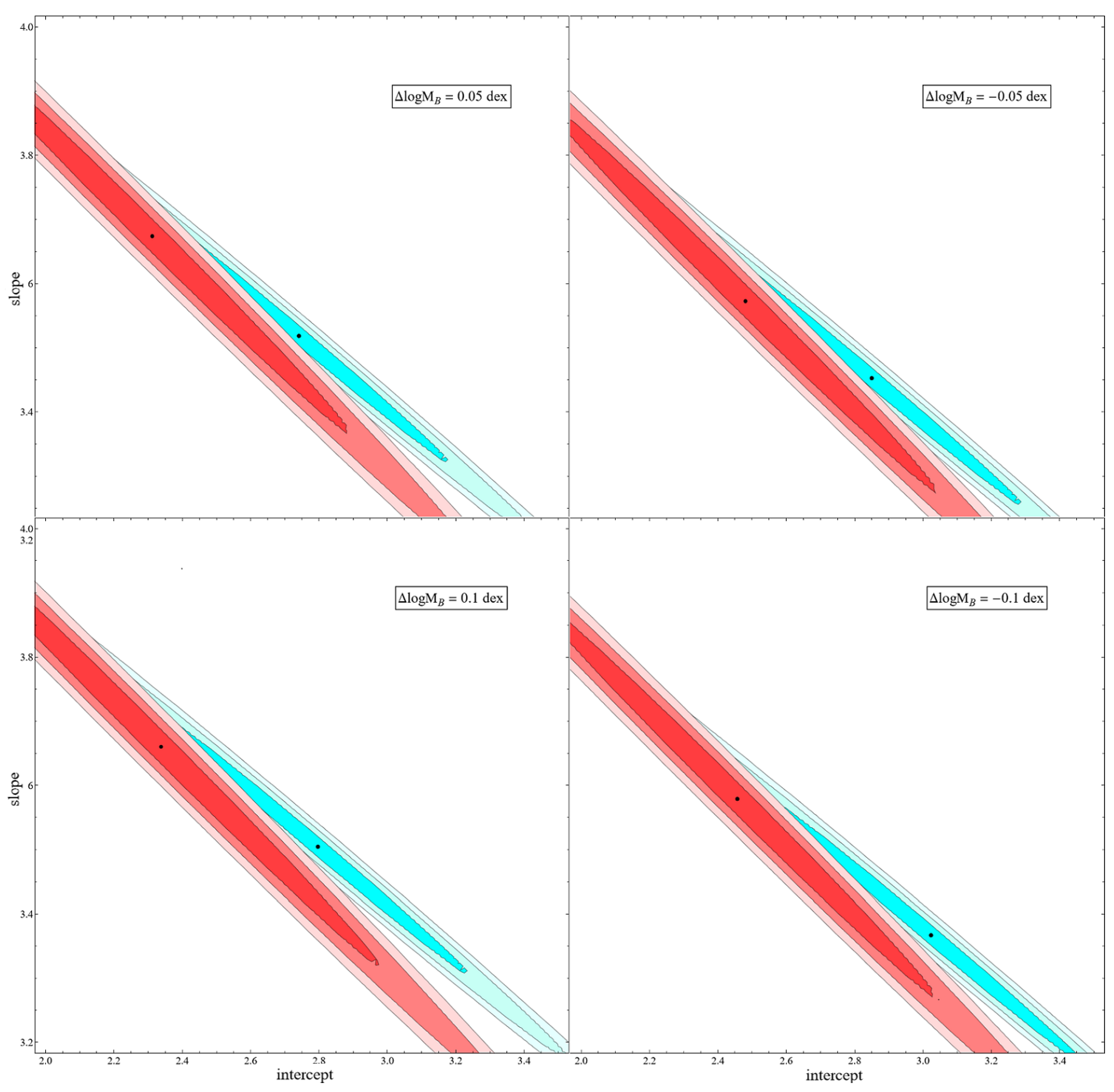
We use an up-to-date compilation of Tully–Fisher data to search for transitions in the evolution of the Tully–Fisher relation. Using an up-to-date data compilation, we find hints at 3σ level for a transition at critical distances Dc9 Mpc and Dc17 Mpc. We split the full sample in two subsamples, according to the measured galaxy distance with respect to splitting distance Dc, and identify the likelihood of the best-fit slope and intercept of one sample with respect to the best-fit corresponding values of the other sample. For Dc9 Mpc and Dc17 Mpc, we find a tension between the two subsamples at a level of Δχ2>17(3.5σ). Using Monte Carlo simulations, we demonstrate that this result is robust with respect to random statistical and systematic variations of the galactic distances and is unlikely in the context of a homogeneous dataset constructed using the Tully–Fisher relation. If the tension is interpreted as being due to a gravitational strength transition, it would imply a shift in the effective gravitational constant to lower values for distances larger than Dc by ΔGG0.1. Such a shift is of the anticipated sign and magnitude but at a somewhat lower distance (redshift) than the gravitational transition recently proposed to address the Hubble and growth tensions (ΔGG0.1 at the transition redshift of zt0.01 (Dc40 Mpc)).
Keywords: cosmology; galaxies; Tully–Fisher relation; gravitational transition cosmology; galaxies; Tully–Fisher relation; gravitational transition