1. Introduction
Nutritional supplementation is widely used to support exercise performance, but the evidential strength varies substantially across compounds and dosing strategies [
1]. Creatine monohydrate (CR) and L-arginine (LA) have each been studied as ergogenic aids, with stronger and more consistent evidence for multi-day creatine supplementation than for acute LA supplementation [
2,
3,
4,
5,
6,
7]. Multi-ingredient strategies are increasingly common, yet combining two plausible ergogenic agents does not necessarily yield additive or synergistic effects [
8].
LA is a conditionally essential amino acid and a substrate for nitric oxide (NO) synthesis, with potential effects on vascular tone and exercise hyperemia [
9,
10]. LA also participates in pathways related to guanidinoacetate/creatine and agmatine metabolism [
10,
11,
12,
13]. However, the ergogenic response to oral LA is heterogeneous and appears sensitive to dose, bioavailability, participant characteristics, and exercise modality [
14,
15]. NO signaling can influence skeletal-muscle glucose metabolism, mitochondrial redox biology, calcium-dependent contractile processes, and muscle force production, but these effects are context dependent rather than uniformly ergogenic [
16,
17,
18,
19,
20,
21,
22].
Creatine is concentrated in skeletal muscle and contributes to rapid ATP buffering through the phosphocreatine (PCr) system during high-intensity exercise [
23,
24]. Established loading protocols increase intramuscular total creatine and PCr and can improve repeated high-intensity performance [
25,
26,
27,
28]. In contrast, the physiological basis for a performance effect from a single pre-exercise creatine bolus is less certain, because conventional muscle-loading protocols require repeated dosing over several days [
2,
27,
28]. Creatine has also been studied in relation to brain energetics and cognition, although results in healthy young adults are mixed and may depend on baseline creatine status or metabolic stress [
29,
30,
31,
32,
33].
Direct evidence on combined CR and LA administration is sparse [
34,
35]. This creates a reasonable empirical question, but the novelty is primarily treatment-combination and outcome-specific rather than the discovery of a new biological pathway.
A mechanistic rationale for co-administration can be proposed because LA may influence NO-related vascular responses and CR supports cellular energy buffering [
36]. However, current evidence does not establish that acute LA ingestion increases skeletal-muscle or brain creatine uptake. Neurovascular coupling and exercise-fatigue physiology are complex processes [
37,
38], so any interaction between LA and CR should be tested empirically rather than assumed from pathway complementarity.
The brain has high energetic requirements, and neuronal function depends on tightly regulated ATP production and buffering [
39,
40]. Creatine transport and the cerebral creatine–phosphocreatine system may contribute to neuronal energy homeostasis [
41,
42]. These observations provide a rationale for including a cognitive task, but a single Stroop outcome cannot establish a broad cognitive-enhancement effect [
43].
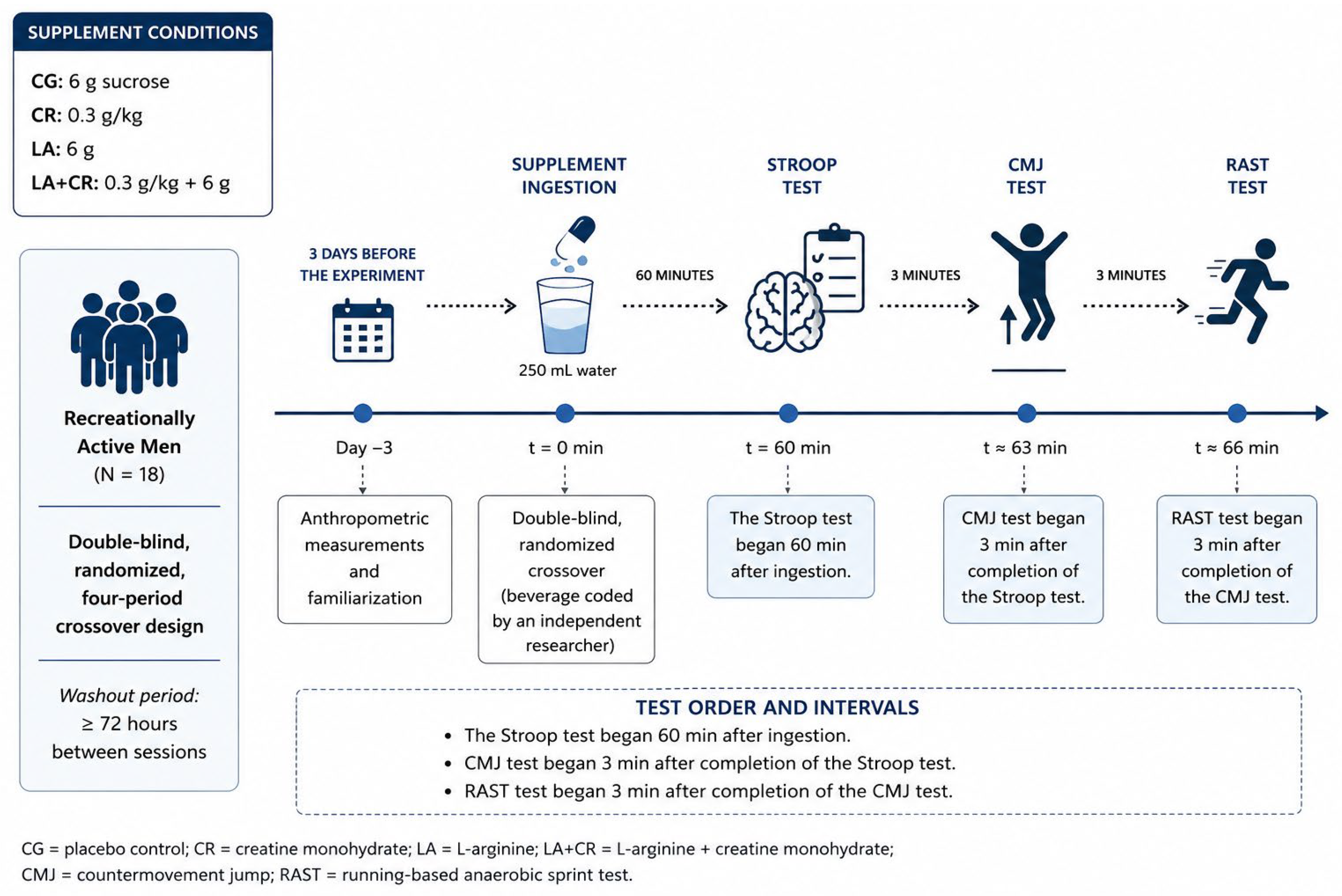
Accordingly, this study compared the acute effects of placebo, CR, LA, and LA+CR on repeated-sprint power, CMJ height, and incongruent Stroop reaction time in recreationally active men. The four co-primary outcomes listed in the registry were RAST AP, RAST PP, CMJ height, and incongruent Stroop median RT. We hypothesized that LA+CR would produce more favorable acute responses than either single-agent condition or placebo; mechanistic interpretations were considered secondary and hypothesis-generating.
4. Discussion
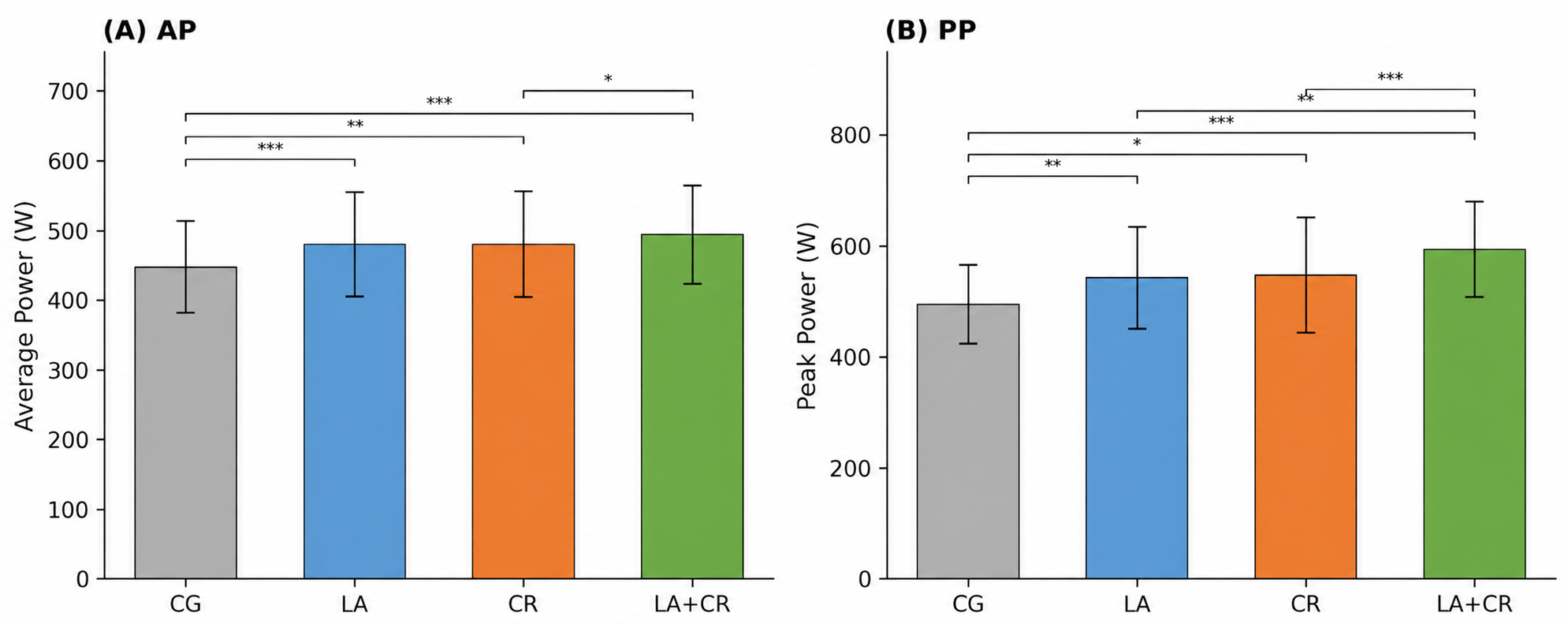
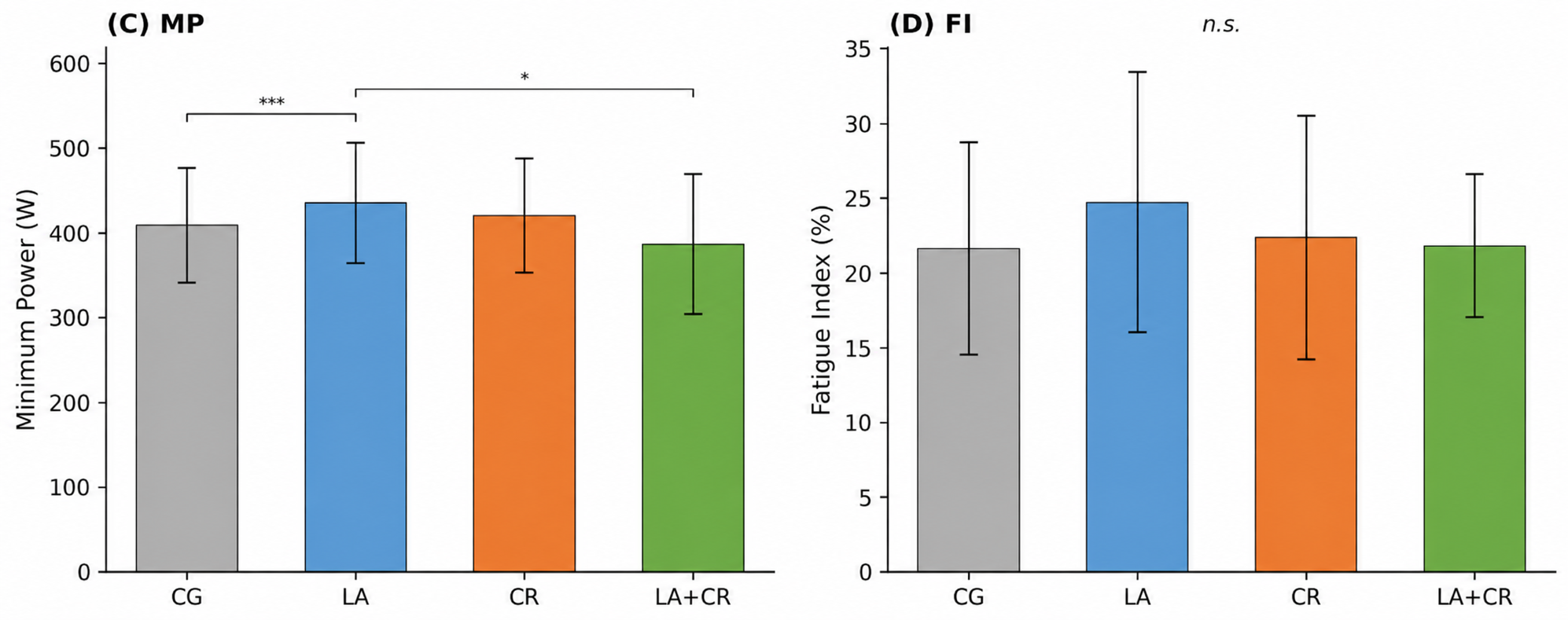
This randomized, double-blind, four-period crossover trial compared acute placebo, creatine monohydrate (CR), L-arginine (LA), and combined LA+CR conditions across repeated-sprint, countermovement jump (CMJ), and Stroop outcomes. The response pattern was outcome-specific rather than uniformly favorable to the combined condition. LA+CR produced the highest RAST peak power (PP) and the greatest CMJ height, with both outcomes exceeding placebo and either single-agent condition. Average power (AP) was higher with LA+CR than with placebo and CR, but the LA+CR versus LA contrast did not remain significant after Bonferroni adjustment. LA alone produced the highest minimum power (MP), whereas fatigue index (FI) did not differ among conditions. For Stroop performance, LA+CR yielded the fastest incongruent reaction time (RT), but it did not differ significantly from LA, and accuracy was unchanged. These findings therefore support selective acute performance differences rather than a generalized combined-supplement advantage.
The data also do not demonstrate biological synergy. The secondary factorial decomposition formally estimated CR×LA interactions for the four co-primary outcomes, and none remained statistically significant after Holm correction (all pHolm ≥ 0.104). Moreover, the combined condition was not consistently superior across endpoints: it was clearly favorable for PP and CMJ in condition-wise comparisons, only partly distinguishable from LA for AP and Stroop RT, and not favorable for MP. Because period and sequence effects could not be modelled in the retained analysis dataset, the factorial estimates should be interpreted as sensitivity contrasts rather than a complete crossover model. This interpretation is consistent with the limited direct literature on combined CR and LA administration [
34,
35] and with the broader principle that combining two plausible ergogenic agents does not necessarily produce additive effects [
8].
The RAST results suggest that the intervention influenced different expressions of anaerobic performance differently. LA+CR increased PP by 99.01 W relative to placebo and also exceeded both single-agent conditions. Creatine is mechanistically relevant to short-duration high-intensity exercise because the creatine-phosphocreatine system supports rapid ATP buffering [
23,
24]. However, the strongest ergogenic evidence for creatine is based on repeated dosing that increases intramuscular total creatine and phosphocreatine [
25,
26,
27,
28,
44]. The present CR dose of 0.3 g·kg
−1 was administered as a single bolus; therefore, the PP response should not be interpreted as proof that muscle phosphocreatine stores increased sufficiently within the pre-test interval to explain the effect. A single-session observation cannot be assumed to reproduce the mechanism of conventional loading.
The AP, MP, and FI findings further argue against a uniform fatigue-resistance effect. Although LA+CR produced the highest mean AP, it did not differ significantly from LA after multiplicity adjustment. LA alone produced the highest MP and exceeded both placebo and LA+CR in selected contrasts, while FI was unchanged. Acute LA studies have likewise produced heterogeneous performance responses [
7,
48,
49]. LA may influence NO production, vascular tone, and ammonia handling [
10,
14,
15,
50], but these mechanisms were not measured here. The divergence between PP, MP, and FI therefore indicates that the observed effects were specific to certain power characteristics rather than evidence of a general improvement in repeated-sprint fatigue resistance.
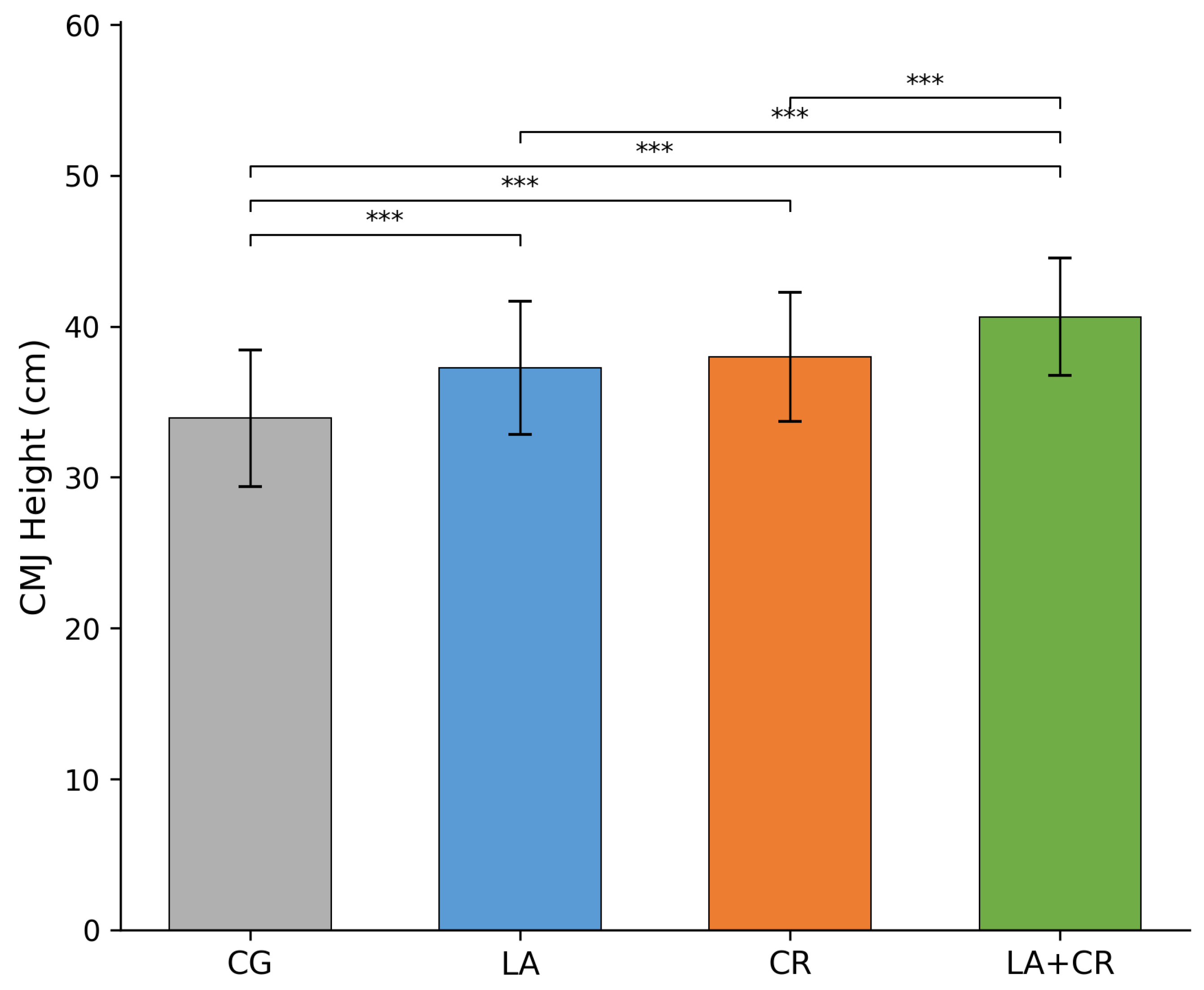
CMJ height showed the largest and most consistent combined-condition response. LA+CR exceeded placebo by 6.72 cm and was also higher than LA and CR alone; both single-agent conditions exceeded placebo but did not differ from each other. Creatine supplementation has been associated with improvements in jumping and high-intensity performance when exposure is sufficient to increase muscle creatine availability [
3,
27,
51]. Nevertheless, those studies cannot establish an identical mechanism for a single acute bolus. NO-related pathways may also influence skeletal-muscle contractile function and perfusion [
19,
20,
21,
22], but no vascular or muscle biochemical markers were obtained. The magnitude of the present CMJ difference is substantial for a one-session nutritional intervention and should therefore be replicated before being considered a stable or practice-changing effect.
The CMJ protocol was standardized and demonstrated good reliability, which supports within-participant consistency. Even so, a best-of-three jump outcome may remain sensitive to motivation, learning, and repeated exposure in a four-visit crossover study. Because the Stroop task always preceded CMJ, CMJ also occurred later than the nominal 60-min post-ingestion start time. These factors do not invalidate the result, but they reinforce the need to interpret it within the exact timing and repeated-measures structure of the present protocol.
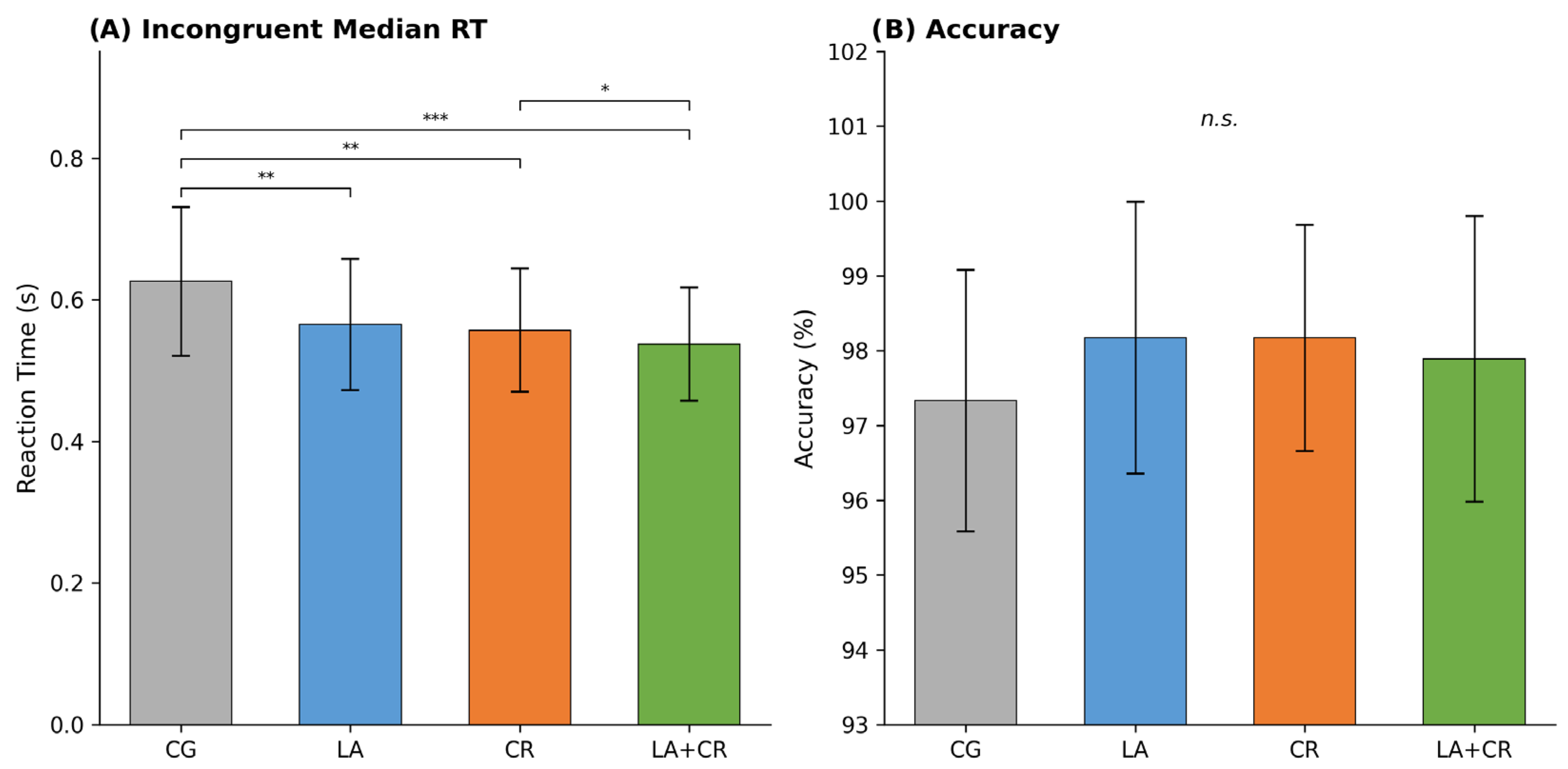
The Stroop findings indicate a task-specific RT difference rather than broad cognitive enhancement. All active conditions were faster than placebo, and LA+CR produced the lowest mean incongruent RT; however, LA+CR did not differ significantly from LA. Accuracy remained statistically similar and was already very high, suggesting a ceiling effect. A cognitive rationale for creatine is plausible because the brain relies on ATP buffering and cerebral creatine-phosphocreatine metabolism [
30,
41,
42], yet evidence for cognitive benefits in healthy individuals remains mixed [
29,
31,
33]. The absence of a clear LA+CR advantage over LA also argues against attributing the RT finding specifically to an acute cerebral creatine effect.
LA has a plausible relationship with vascular and neurovascular function because oral LA can increase circulating arginine relatively rapidly [
52,
53], and NO participates in vascular regulation and neurovascular coupling [
37]. Nevertheless, the trial did not measure plasma arginine, nitrate/nitrite, cerebral blood flow, or neurophysiological responses. In addition, the Stroop task was administered in English to Turkish-speaking participants, and repeated exposure across four visits may have contributed to practice effects. Accordingly, the cognitive conclusion should remain limited to incongruent Stroop response speed under the tested conditions rather than being generalized to executive function or cognition as a whole [
47,
54].
The 60-min pre-test interval was chosen because pharmacokinetic studies show relatively rapid increases in circulating L-arginine after oral administration, with peak concentrations occurring around the first hour [
52,
53]. Short-term hemodynamic effects have also been reported after oral LA [
55], although findings from clinical populations cannot be directly extrapolated to healthy recreational athletes. Importantly, only the Stroop task began at approximately 60 min; CMJ and RAST occurred sequentially thereafter. Thus, the three performance domains were not evaluated at an identical post-ingestion time.
The temporal issue is more uncertain for CR because conventional creatine efficacy is primarily supported by repeated loading and maintenance strategies [
2,
27,
44]. Direct evidence on combined LA and CR remains sparse [
34,
35], and current evidence does not establish that acute LA accelerates muscle or brain creatine uptake. Without plasma arginine, NO-related metabolites, or muscle/brain creatine measurements, the present findings cannot identify the mechanism responsible for the performance pattern. Future mechanistic trials should directly measure exposure and tissue-level intermediates rather than infer them from performance changes alone.
Several features strengthen the study: prospective registration, randomization, double blinding, a within-participant crossover structure, counterbalanced treatment order, standardized testing time, and efforts to control diet and caffeine. Assessing sprint power, explosive jump performance, and interference-control RT also provided a broader view of acute responses than a single endpoint would have offered. These strengths improve within-participant comparability and make the contrasting outcome pattern scientifically informative.
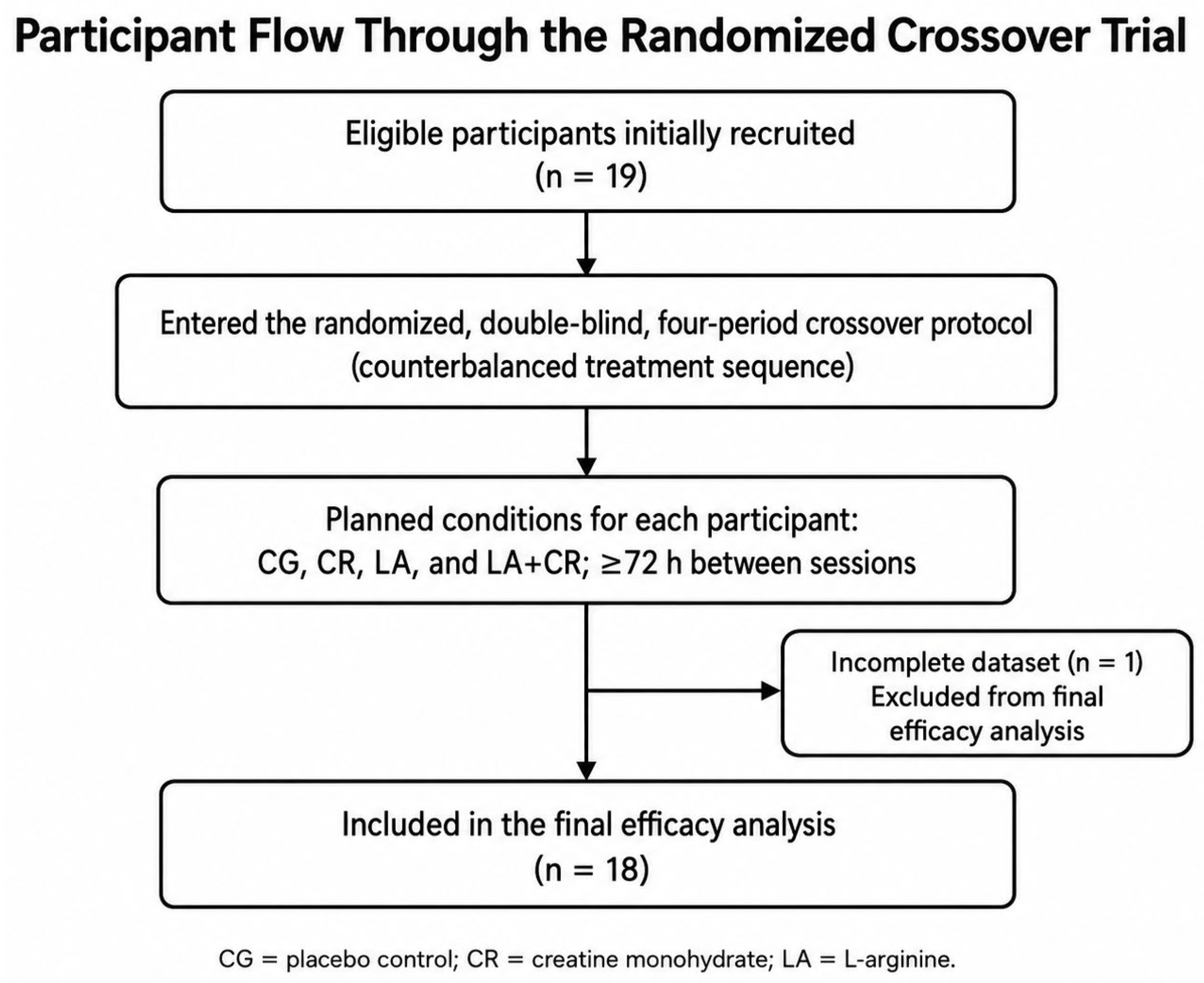
The limitations are nevertheless substantial. First, the retained analysis dataset did not include randomized-sequence or period identifiers, so period, sequence, treatment-by-period, and first-order carryover effects could not be estimated. In addition, the ≥72-h washout may be insufficient to exclude creatine-related carryover. After conventional loading, elevated muscle creatine can persist for considerably longer than several days [
44]. A single bolus may produce less accumulation, but no muscle creatine measurement was available to verify return to baseline. Second, Holm correction controlled the family-wise error rate across the four co-primary omnibus tests and separately across each factorial-effect family, while post hoc tests were Bonferroni-adjusted within outcome. Nevertheless, the original sample-size calculation was not multiplicity-adjusted, and multiplicity was not controlled across the entire collection of secondary and exploratory analyses. The findings should therefore be regarded as exploratory.
Third, the placebo was matched for volume, flavor, and appearance but was not mass-matched or iso-osmotic, and blinding efficacy was not formally assessed. Fourth, no plasma arginine, nitrate/nitrite, muscle creatine/phosphocreatine, or related mechanistic biomarkers were measured. Fifth, dietary and caffeine compliance relied partly on self-report, and habitual pre-study creatine/arginine exposure was not characterized in sufficient detail. Sixth, the sample was small, male-only, recreationally active, and drawn from a single center, limiting generalizability. Large within-subject standardized effects also require caution because paired standardized effects can become large when the variability of within-person differences is small [
56]. Finally, the fixed Stroop → CMJ → RAST sequence and repeated exposure may have introduced practice or task-order effects. Although no corrected CR×LA interaction was detected, the absence of a significant interaction does not prove additivity, synergy, or antagonism, particularly when period and sequence effects remain unmodelled.
From an applied perspective, the PP, CMJ, and Stroop RT differences are potentially relevant to activities requiring explosive actions and rapid information processing, but the present data are insufficient to recommend acute LA+CR co-supplementation for competition or routine training. Athletes should not interpret the results as showing that a single large creatine dose approximately 60 min before exercise is an established alternative to conventional creatine-loading or maintenance strategies [
44]. A confirmatory study should prespecify one primary outcome, use a sample size and multiplicity plan based on that endpoint, employ a pharmacokinetically justified washout or a parallel-group design, formally test CR × LA interaction effects, assess blinding and tolerability, and include sex-inclusive samples with mechanistic biomarkers.
Overall, acute LA+CR was associated with favorable changes in selected high-intensity and task-specific outcomes, especially PP and CMJ, but the evidence does not establish a unified mechanism or a general performance advantage. The main contribution of the present study is therefore hypothesis generation: it identifies specific signals that warrant targeted replication in designs capable of resolving carryover, interaction effects, and biological mediation.




 ,
,