4. Discussion
In this study, three cell models corresponding to early, intermediate and late glycation damage were established using HFF-1 fibroblasts.
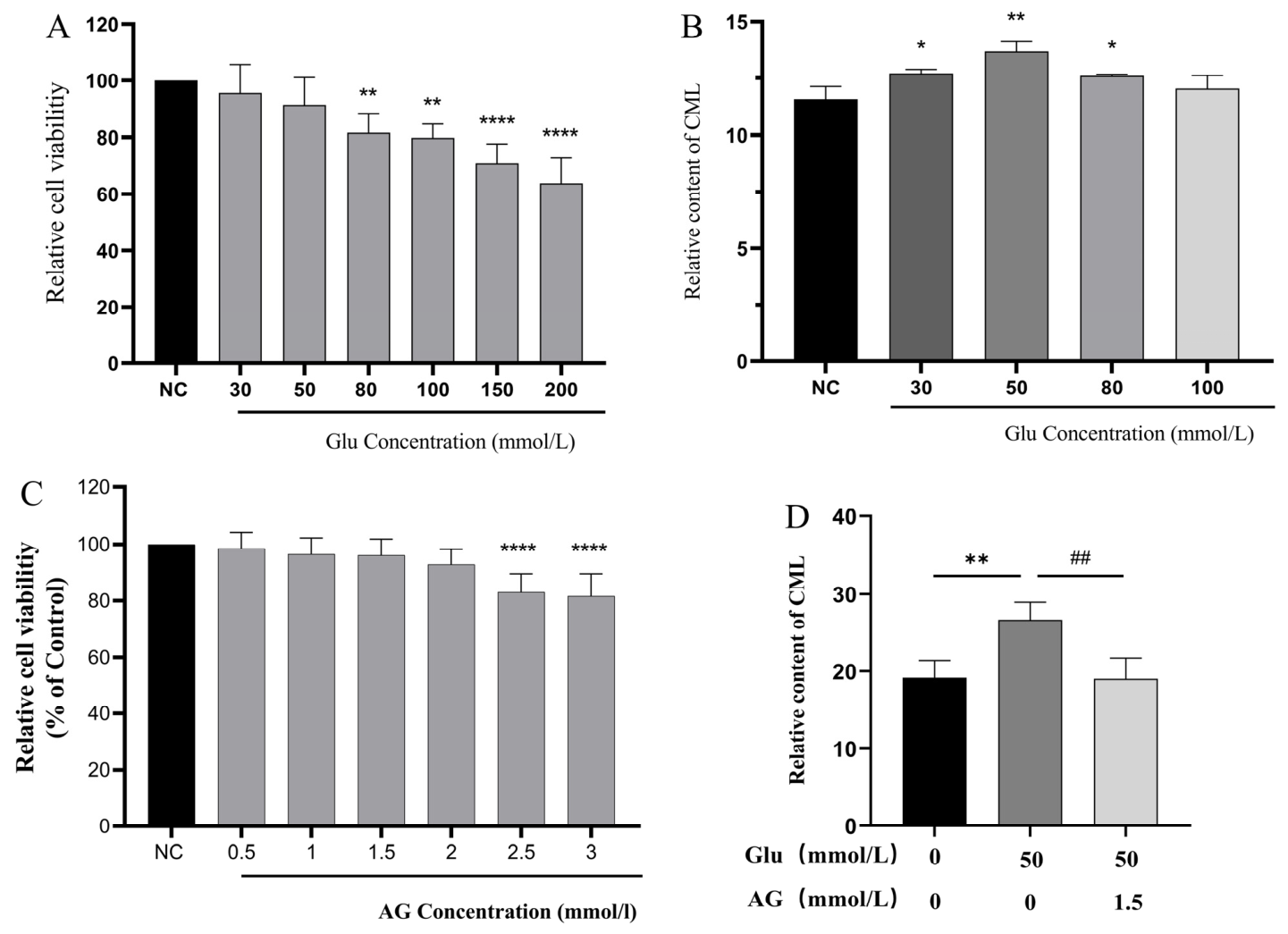
For the early-stage model, 50 mM glucose was administered for 48 h to induce early glycation, with CML selected as the core evaluation biomarker. This strategy effectively recapitulated the early glycation process, and 1.5 mM aminoguanidine was applied as the positive control to alleviate cellular damage. Elevated glucose levels accelerate the glycation process and promote the progression of the downstream AGEs cascade [
15,
16]. High-glucose stimulation also facilitates intracellular AGE accumulation and exacerbates glycation injury in skin cells [
17]. The glucose concentration and treatment duration adopted herein are consistent with classic protocols for constructing early glycation models in fibroblasts [
4], confirming the rationality and reproducibility of our model system.
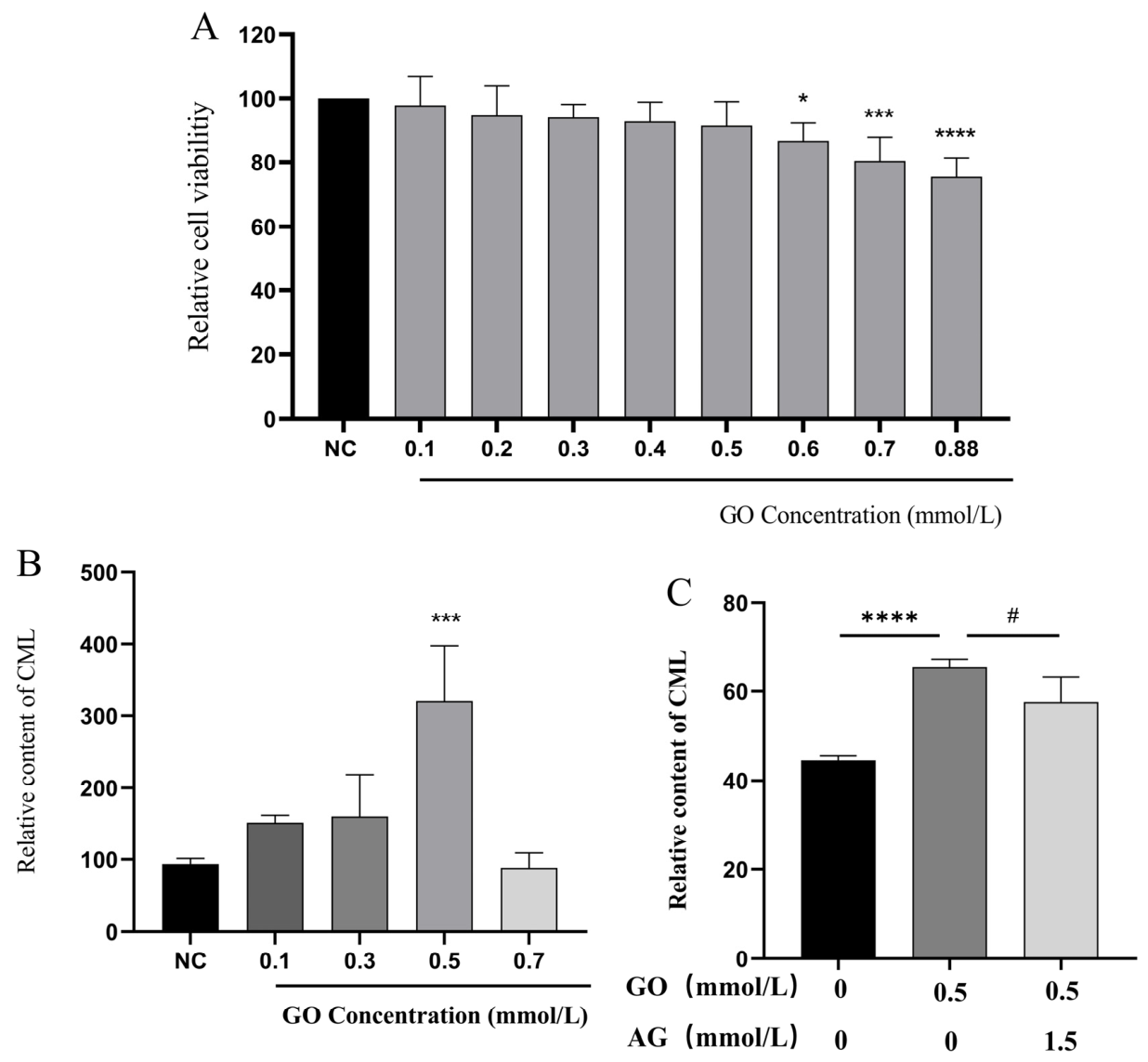
For the intermediate-stage model, 0.5 mM glyoxal (GO) was used to induce intermediate glycation injury in HFF-1 cells for 48 h. CML was also adopted as the biological marker, and 1.5 mM aminoguanidine served as the positive control. This intervention successfully mimicked the phenotypic characteristics of intermediate glycation. The glyoxal concentration used in this study falls within the optimal range for triggering intermediate glycation in dermal fibroblasts [
10], and the treatment duration and biomarker selection are consistent with mainstream research protocols [
4], further validating the reliability of this model.
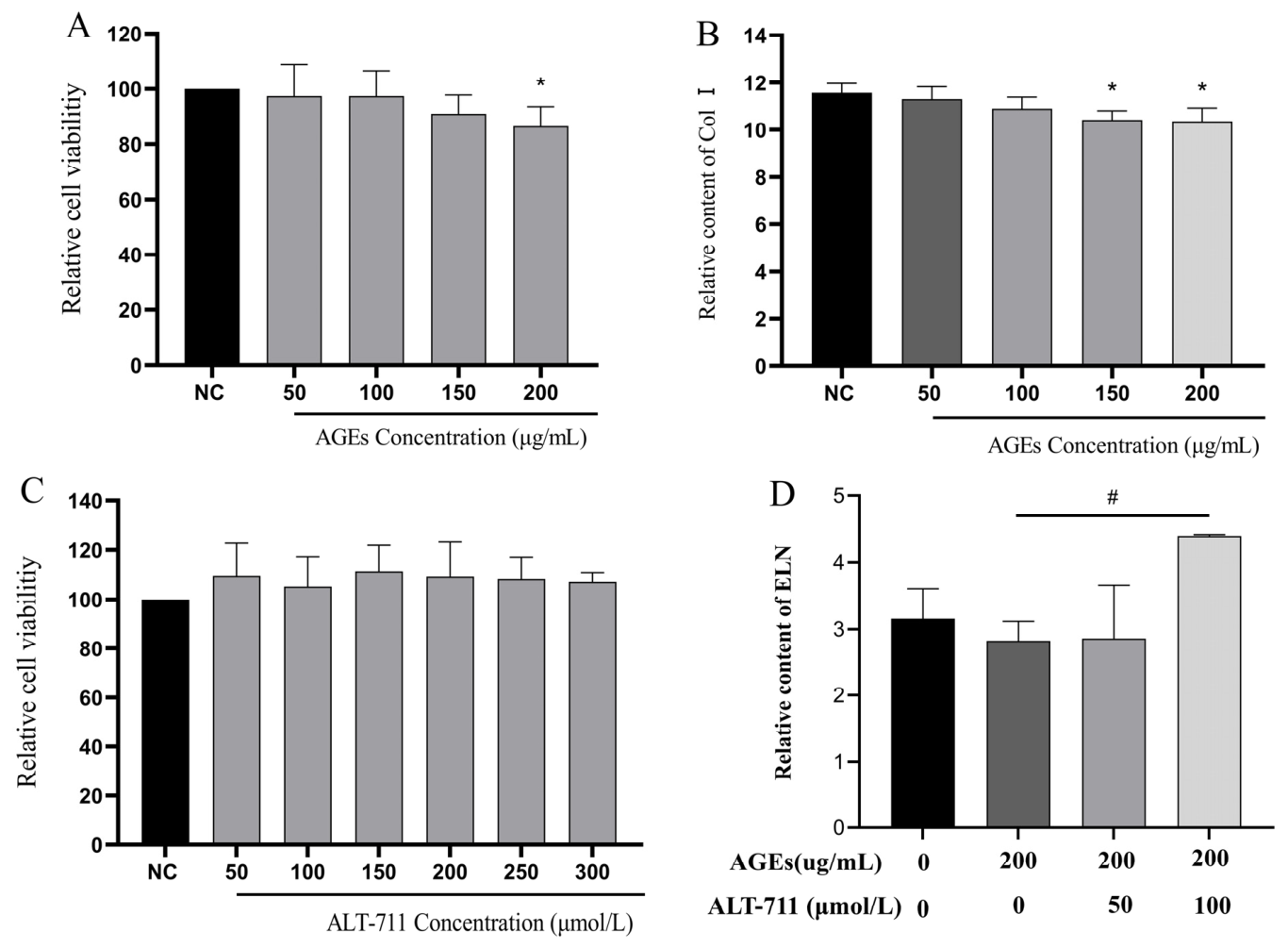
For the late-stage model, HFF-1 cells were stimulated with 200 μg/mL AGEs for 24 h, with type I collagen chosen as the evaluation biomarker. A dose of 100 μmol/L ALT-711 was used as the positive control, which effectively rescued late glycation-associated cellular damage. Both the AGEs treatment concentration and incubation duration complied with well-recognized modeling conditions for late glycation in skin cells [
10,
17]. In addition, the 100 μmol/L ALT-711 selected in our study is consistent with the effective in vitro dose reported to reverse AGE cross-linking [
13].
It should be noted that the three glycation models adopted different induction durations (24 h and 48 h), which were determined by the inherent kinetic properties of each inducer rather than arbitrary experimental design. Glucose and GO trigger a gradual intracellular non-enzymatic glycation cascade, including Schiff base formation, Amadori rearrangement and dicarbonyl generation; a 48 h intervention is required to establish stable early- and intermediate-stage glycation injury. In contrast, exogenous AGEs are mature terminal glycation products that directly activate the RAGE pathway without dependence on intracellular stepwise biosynthesis. A 24 h incubation is sufficient to induce reliable late-stage damage, while prolonged 48 h treatment causes excessive cellular injury and a marked decline in cell viability [
4,
10].
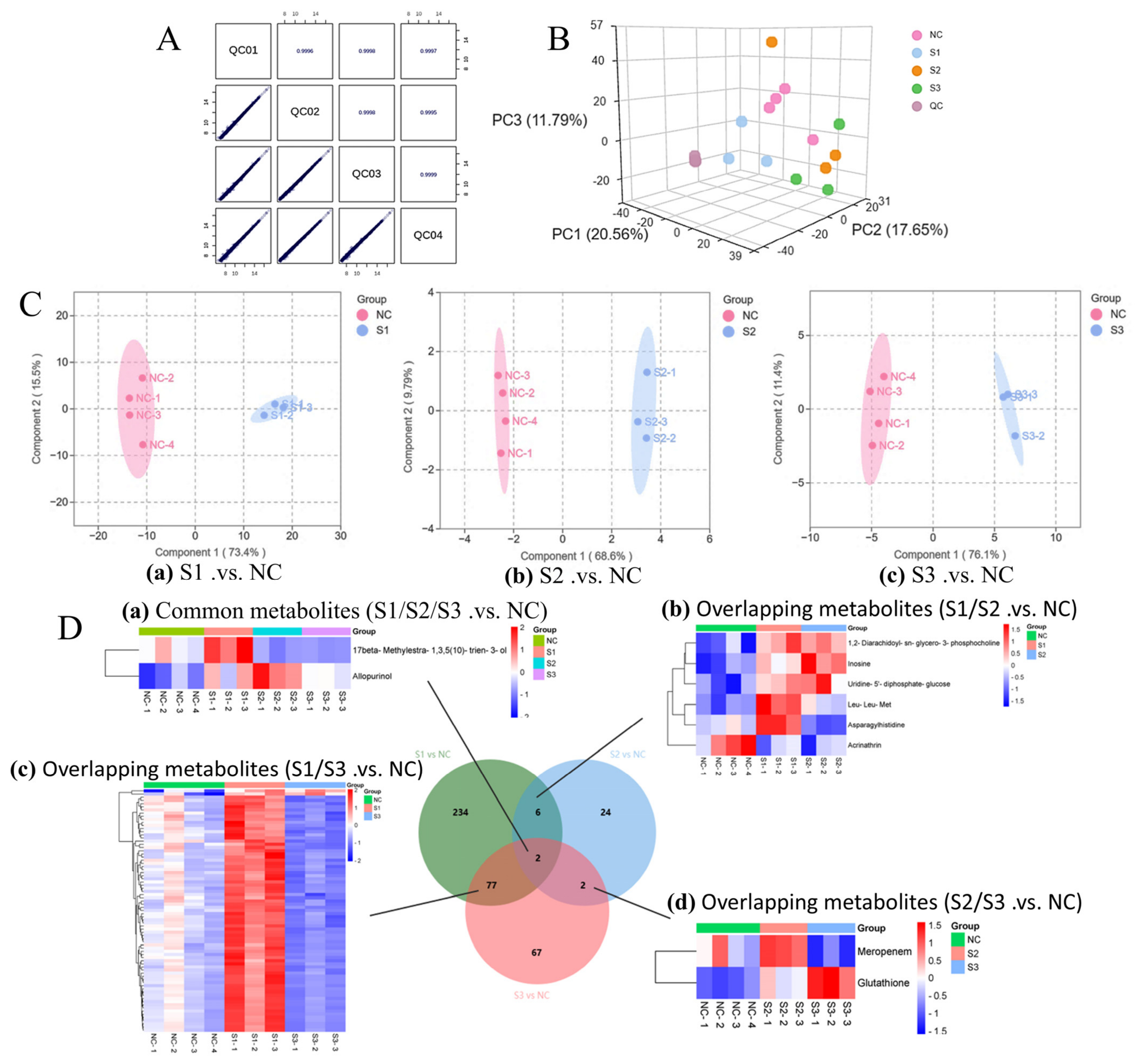
Notably, the early and intermediate models received identical 48 h incubation but exhibited distinct metabolic profiles and pathway perturbations. PCA and OPLS-DA clustering clearly separated samples according to glycation stage rather than incubation time, verifying that the observed molecular differences originated from stage-dependent glycation effects, rather than variations in treatment duration.
Furthermore, the 50 mM glucose used in this study is a classic supraphysiological concentration widely adopted for in vitro early glycation modeling, which does not correspond to the physiological hyperglycemic level in vivo (typically 10–20 mM). Although high glucose slightly increases medium osmolarity, the alterations in cell viability, CML content and metabolic profiles are mainly attributed to glucose-triggered glycation and oxidative stress, rather than hyperosmotic stress. The prominent protective effect of aminoguanidine further confirms that the biological changes stem from glycation injury rather than osmotic interference [
5,
7].
Here we clarify the rationale for classifying the three models into early, intermediate and late glycation stages, and further validate that they represent a unified sequential glycation cascade rather than three independent biological processes. First, the staging strictly follows the canonical non-enzymatic glycation pathway: glucose initiates early glycation through Schiff base and Amadori product formation; glyoxal functions as a key dicarbonyl intermediate driving the intermediate glycation phase; exogenous AGEs mimic irreversible protein crosslinking in the late stage [
2,
3,
4]. Second, core biomarkers including CML, type I collagen and elastin exhibited progressive, stage-dependent changes across the three models, which align with the natural temporal progression of glycation damage. Third, PCA and OPLS-DA showed a continuous gradient separation from the normal control group to early, intermediate and late models. The early and intermediate groups shared overlapping differential metabolites and consistent perturbation of purine metabolism, while the late model presented unique pathway characteristics. Collectively, these results confirm that the three models recapitulate successive phases of an integrated glycation cascade, rather than three unrelated biological processes.
A total of two common metabolites were shared among early-, middle-, and late-stage glycation injury groups (
Table 4), namely 17β-methyl-1,3,5(10)-estratrien-3-ol and allopurinol. The abundance of 17β-methyl-1,3,5(10)-estratrien-3-ol displayed distinct alteration patterns under different stimulations: it was upregulated in the glucose group but downregulated in the glyoxal and AGE groups, implying its predominant involvement in the early glycation response [
14,
15]. The metabolite annotated as allopurinol showed the lowest abundance in the normal control group and was differentially upregulated after glucose, glyoxal and AGEs intervention, with the most pronounced increase observed in the glyoxal-treated group. As an endogenous purine structural analog annotated via spectral matching, its elevation reflects the disruption of purine metabolism under glycation stress. Relevant evidence indicates that purine metabolite perturbation can modulate NF-κB signaling and immune homeostasis in skin keratinocytes, implying that different stages of glycation injury may interfere with cutaneous immune regulation by reshaping intracellular purine metabolic profiles [
18].
Five overlapping metabolites were identified between early- and middle-stage glycation groups (
Table 5). L-leucine-L-leucine-L-methionine, a bioactive small peptide, acts as a vital signaling molecule and participates in protein–protein interaction regulation across biological systems [
19]. Inosine, a purine nucleoside containing hypoxanthine, can be generated via adenine hydrolytic deamination in mammalian cells [
20]. UDP-glucose functions as a key glucose donor for glycosylation reactions and biosynthesis of bioactive compounds [
21]. 1,2-Dipalmitoyl-sn-glycerol-3-phosphocholine is a major membrane phospholipid, which maintains cell membrane integrity and modulates multiple intracellular signaling cascades [
21]. The levels of these four metabolites were significantly upregulated after glucose and glyoxal intervention. The elevated glucose/glyoxal may increase the supply of protein precursors, glucose donors, nucleotides and lipids. The interaction of glucose/glyoxal with biological macromolecules (proteins, nucleic acids and lipids) further accelerates the progression of glycation reactions [
1,
15,
21].
A total of 75 metabolites overlapped between early- and late-stage glycation groups (
Table 6). Among them, methyl stearate and 2-oleoylglycerol were markedly upregulated under glucose and AGEs stimulation. As a typical glycerolipid, 2-oleoylglycerol participates in lipid storage and transport [
22]. It is hypothesized that glucose and AGE treatment accelerates intracellular glycation, elevates energy consumption, and promotes lipid transport to sustain the progression of glycation processes. The remaining 73 overlapping metabolites exhibited opposite expression trends: they were upregulated in the glucose-induced early glycation group but downregulated in the AGE-induced late glycation group. These metabolites mainly modulate the core glycation process of HFF-1 cells, with limited involvement in downstream events such as AGE–collagen crosslinking and receptor–ligand interaction-mediated signaling reprogramming. Based on previous reports, these differential metabolites are speculated to primarily regulate the AGEs/RAGE, Mitogen-Activated Protein Kinase (MAPK), NF-κB and collagen metabolism pathways in fibroblasts [
17,
23,
24,
25]. In the early glycation triggered by high glucose, upregulated metabolites mainly initiate intracellular glycation and mild oxidative stress without excessive activation of downstream inflammatory and fibrotic pathways. In contrast, the downregulated metabolites in the AGE group are closely linked to persistent AGEs/RAGE axis activation, which further induces MAPK cascade phosphorylation and NF-κB nuclear translocation, ultimately aggravating collagen crosslinking, inflammatory responses and functional impairment of skin fibroblasts [
8,
17,
24,
25].
One metabolite was shared between middle- and late-stage glycation groups (
Table 7). Glutathione is a multifunctional molecule with antioxidant properties, which regulates DNA synthesis and repair, protects protein thiol groups, stabilizes cell membranes and mediates xenobiotic detoxification [
26]. Omics analysis showed that glutathione abundance was the lowest in the control group and significantly upregulated in glyoxal and AGE groups. It is speculated that glyoxal and AGE-induced glycation injury triggers massive ROS accumulation in HFF-1 cells, which further stimulates intracellular glutathione synthesis as a compensatory antioxidant response.
In the early glycation model, purine metabolism and sphingolipid metabolism were markedly disturbed. In purine metabolism, glucose intervention upregulated multiple differential metabolites including L-glutamine, 5′-phosphoribosylglycinamide, IMP, inosine and adenosine, triggering purine metabolic disorder. Such metabolic perturbation aggravates oxidative stress and promotes glycation-associated skin aging [
20,
27,
28]. In sphingolipid metabolism, glucose increased the levels of sphingosine, dihydroceramide and phytosphingosine, facilitating ceramide synthesis and precursor accumulation in HFF-1 cells [
29,
30,
31]. This perturbs sphingolipid homeostasis, enhances cell apoptosis and oxidative stress, and ultimately accelerates glycation-induced premature skin aging [
32,
33,
34].
The middle-stage glycation model also exhibited obvious dysregulation of purine metabolism. GO stimulation elevated inosine and guanosine abundance, leading to purine metabolic disturbance, oxidative stress exacerbation and subsequent glycation injury [
20,
27,
28].
By contrast, the late-stage AGE model showed abnormal alterations in pyrimidine metabolism, nicotinate and nicotinamide metabolism, arachidonic acid metabolism, and steroid hormone biosynthesis.
In pyrimidine metabolism, AGEs increased 2′-deoxycytidine-5′-monophosphate while decreasing 5-uracil nucleotides, which induced pyrimidine synthesis disorder, aggravated apoptosis and impaired mitochondrial function [
35,
36].
In nicotinate and nicotinamide metabolism, AGEs suppressed the levels of nicotinic acid mononucleotide and imidazole aspartate, disturbed pathway homeostasis and reduced NAD production, thereby promoting cellular senescence and death [
37,
38]. In arachidonic acid metabolism, AGEs downregulated arachidonic acid, prostaglandin G2 and leukotriene B4, which aggravated oxidative stress, disrupted immune balance and triggered inflammatory responses [
8,
39,
40,
41].
In steroid hormone biosynthesis, multiple metabolites including androstenedione, testosterone and estrone were decreased upon AGE treatment. This induces hormonal imbalance, inhibits collagen synthesis, amplifies oxidative stress and inflammation, and accelerates fibroblast aging [
8,
17].
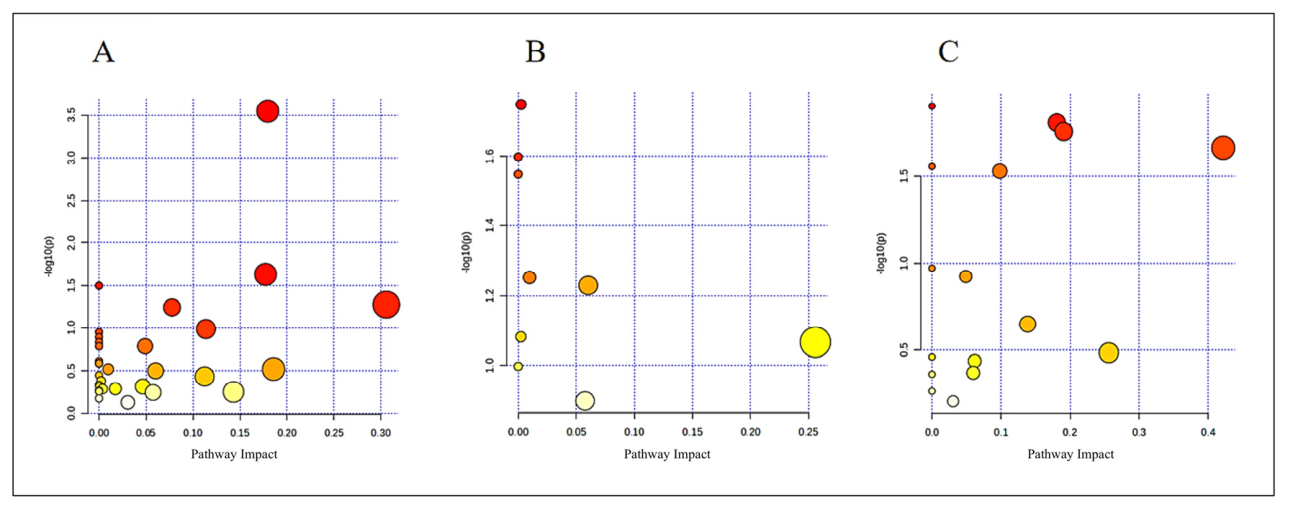
Pathway analysis revealed consistent purine metabolic dysregulation in both early and middle models, implying shared underlying mechanisms of glucose- and glyoxal-induced glycation damage. However, the late AGE model displayed distinct metabolic pathway signatures, indicating that the glycation injury mechanism triggered by AGEs differs substantially from that induced by glucose and glyoxal.
Early and middle models partially recapitulate the cellular functional alterations during the initial glycation process, whereas the late model better mimics the damage caused by macromolecular crosslinking products derived from non-enzymatic glycation.
In summary, this study established three classic skin glycation models induced by glucose, GO and AGEs, which are widely adopted in anti-glycation research. Despite partial similarities, the three models present distinct metabolic characteristics corresponding to different glycation stages and action mechanisms. Our findings provide a rational reference for the selection of appropriate in vitro glycation models according to research purposes.