
Chronic Nitrous Oxide Exposure Disrupts Metabolism in Mice: A Plasma Untargeted Metabolomics Study

Abstract
1. Introduction
2. Materials and Methods
2.1. Chemicals and Reagents
2.2. Establishment of the Mouse Model
2.3. Sample Preparation and Extraction
2.4. UPLC Conditions
2.5. MS Conditions
2.6. Processing and Statistical Analysis
3. Results
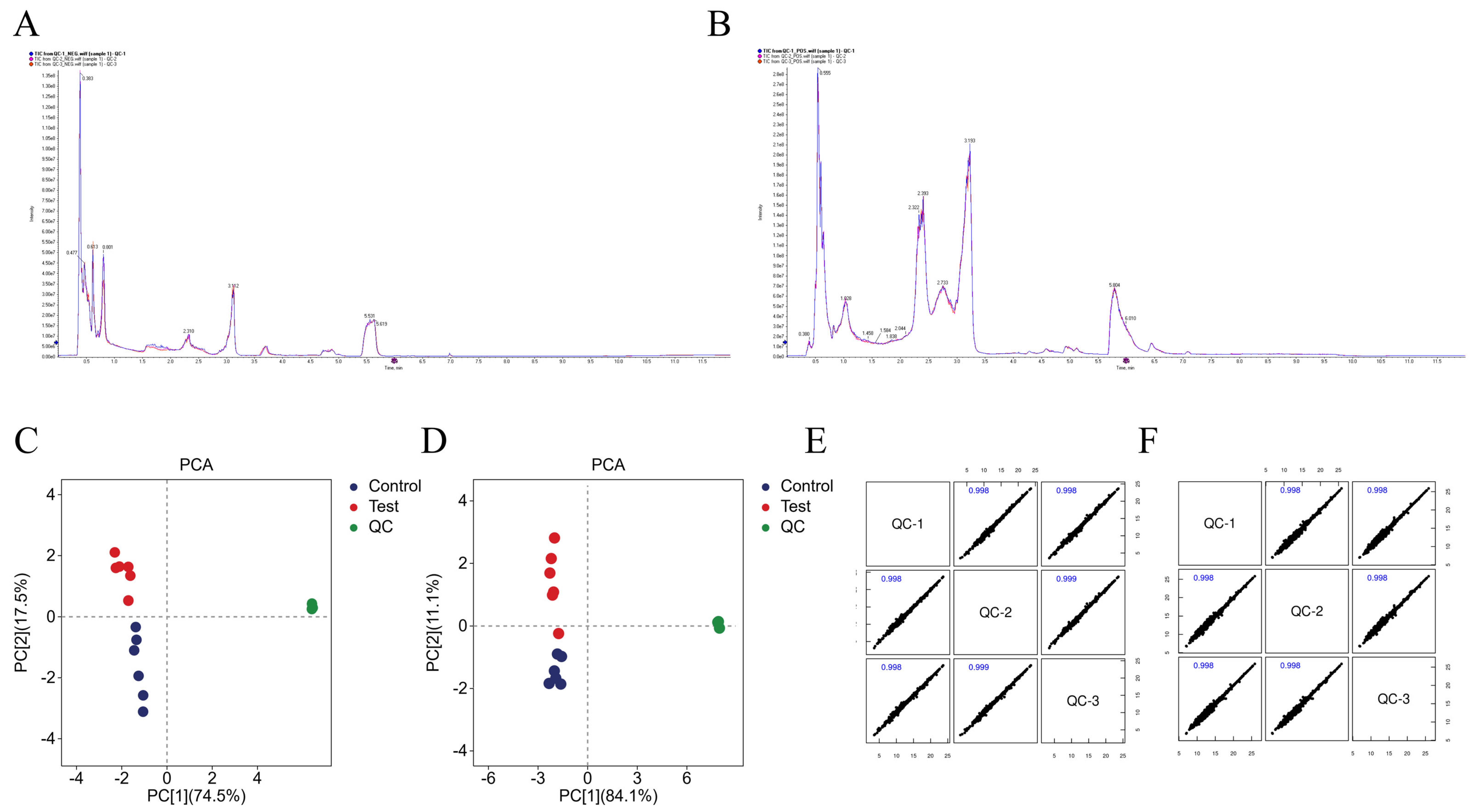
3.1. Stability and Reliability Analysis of Detection Method
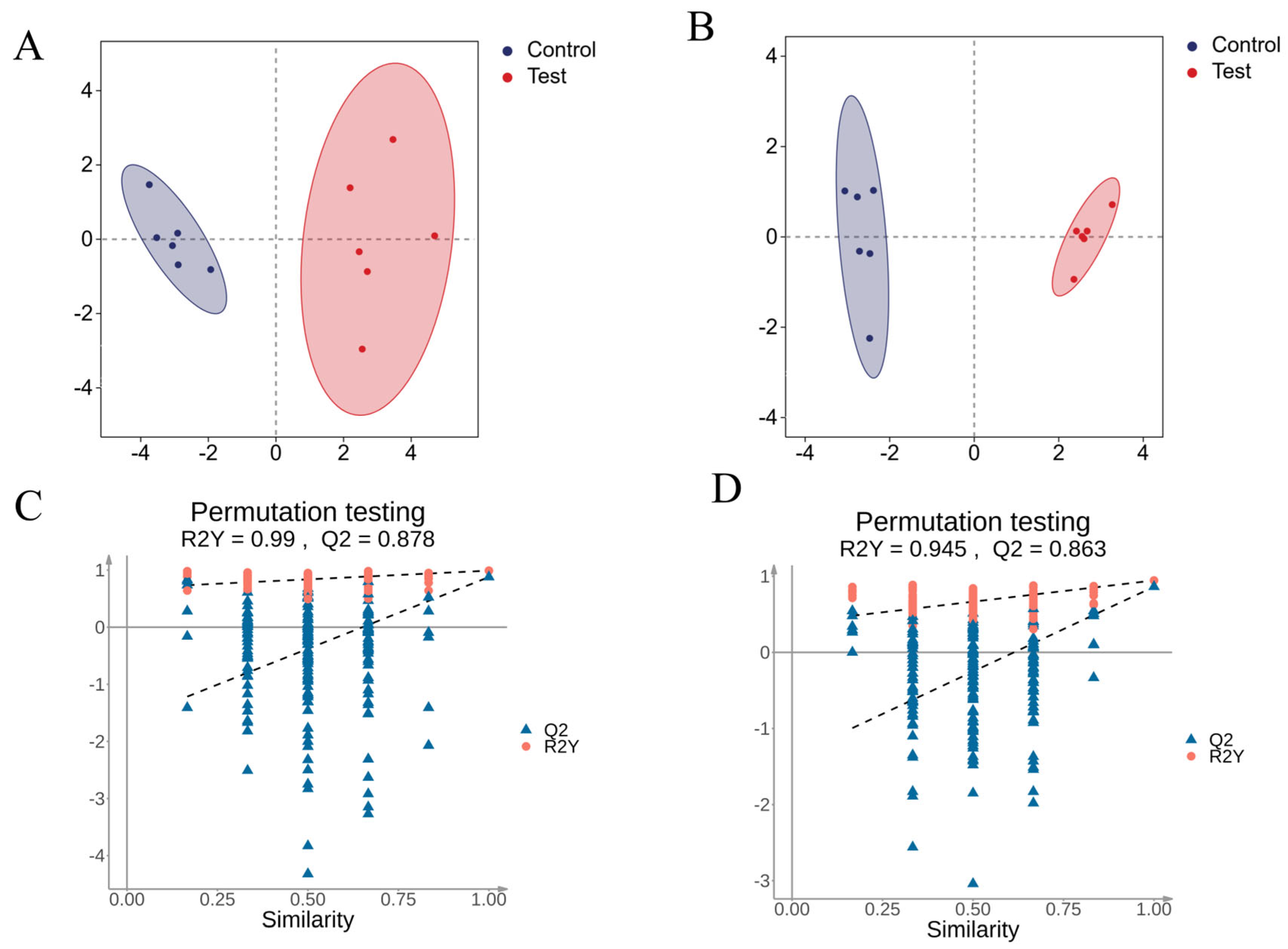
3.2. Stability and Applicability Analysis of Model
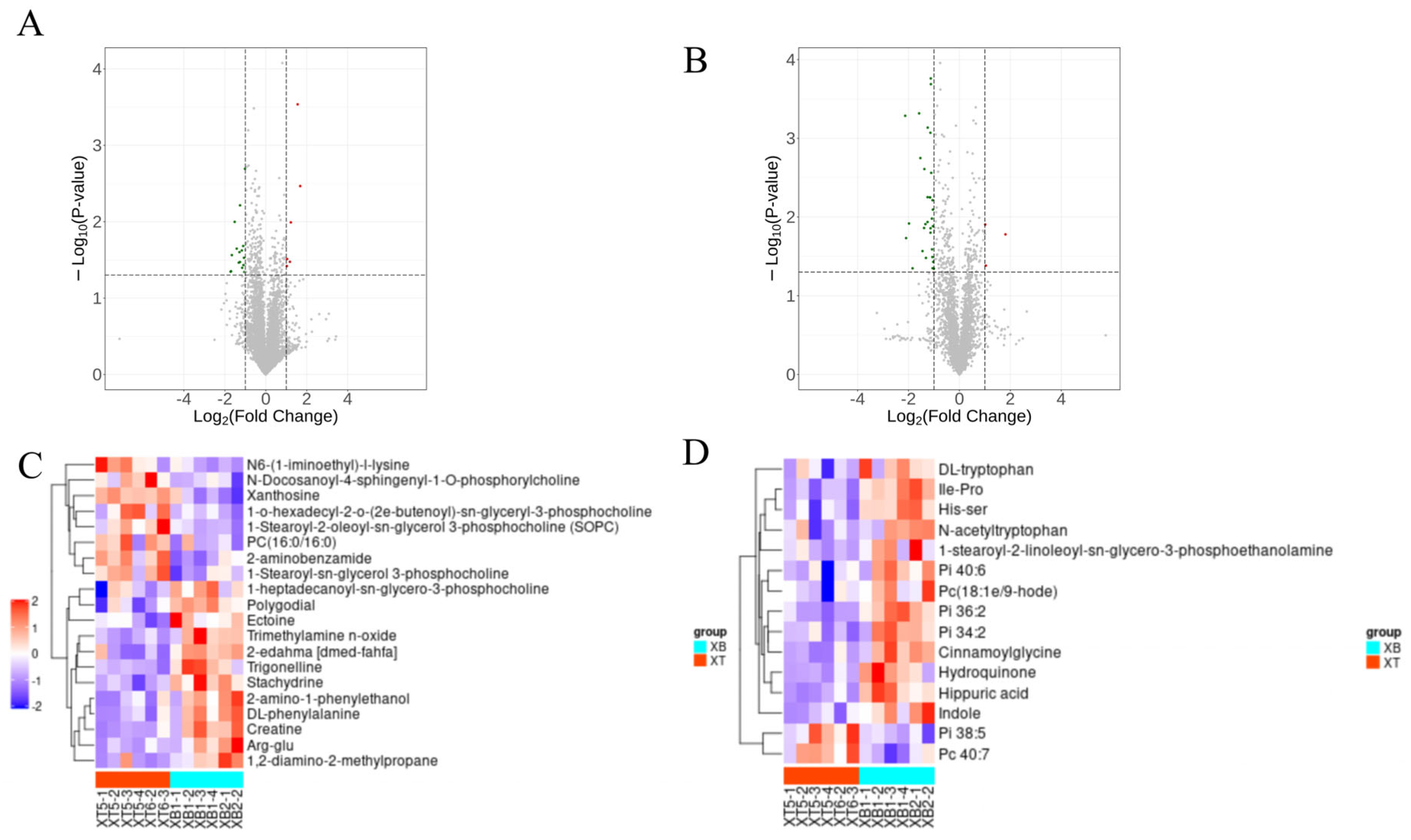
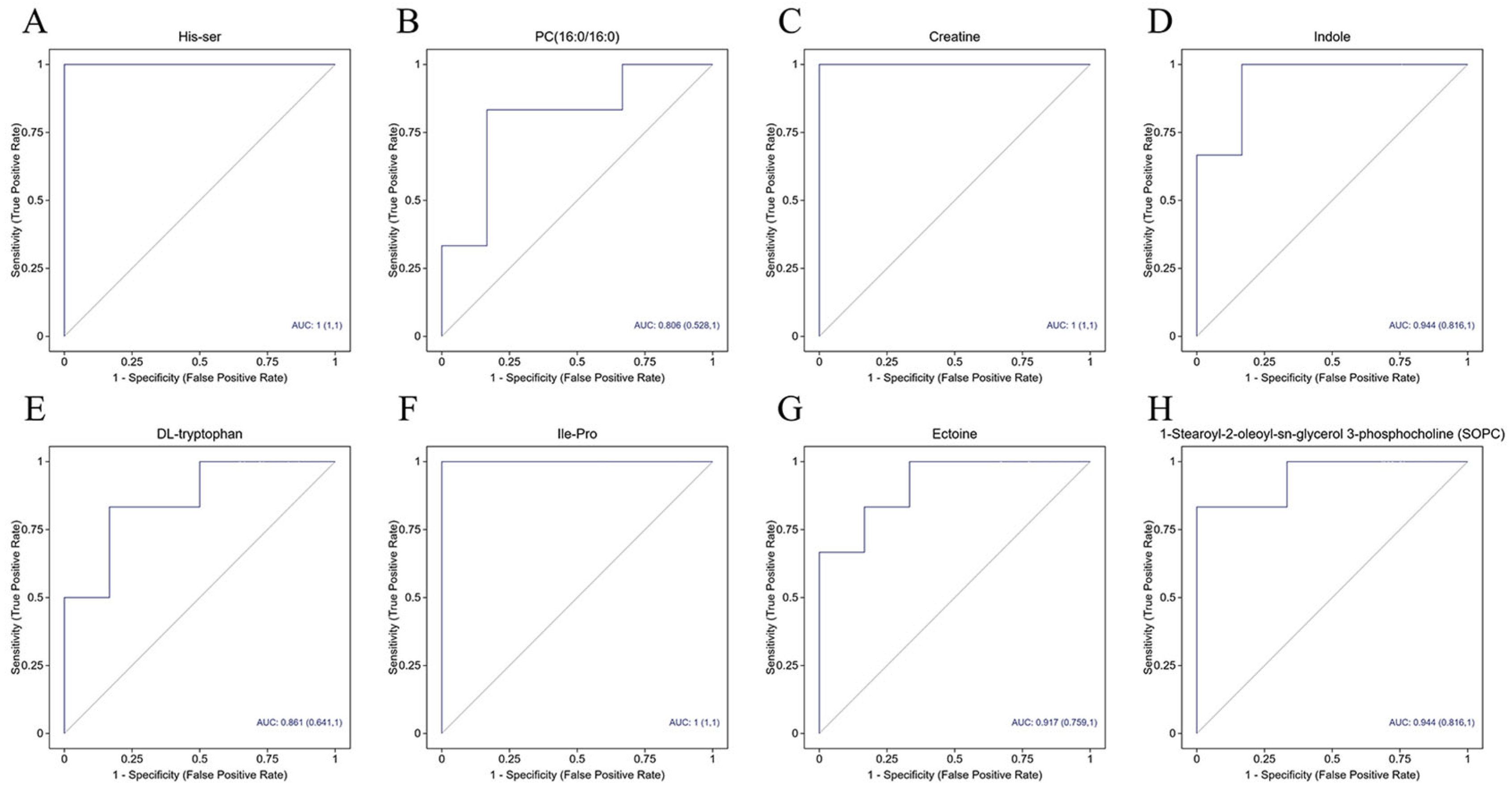
3.3. Untargeted Metabolomics Analysis of Mice
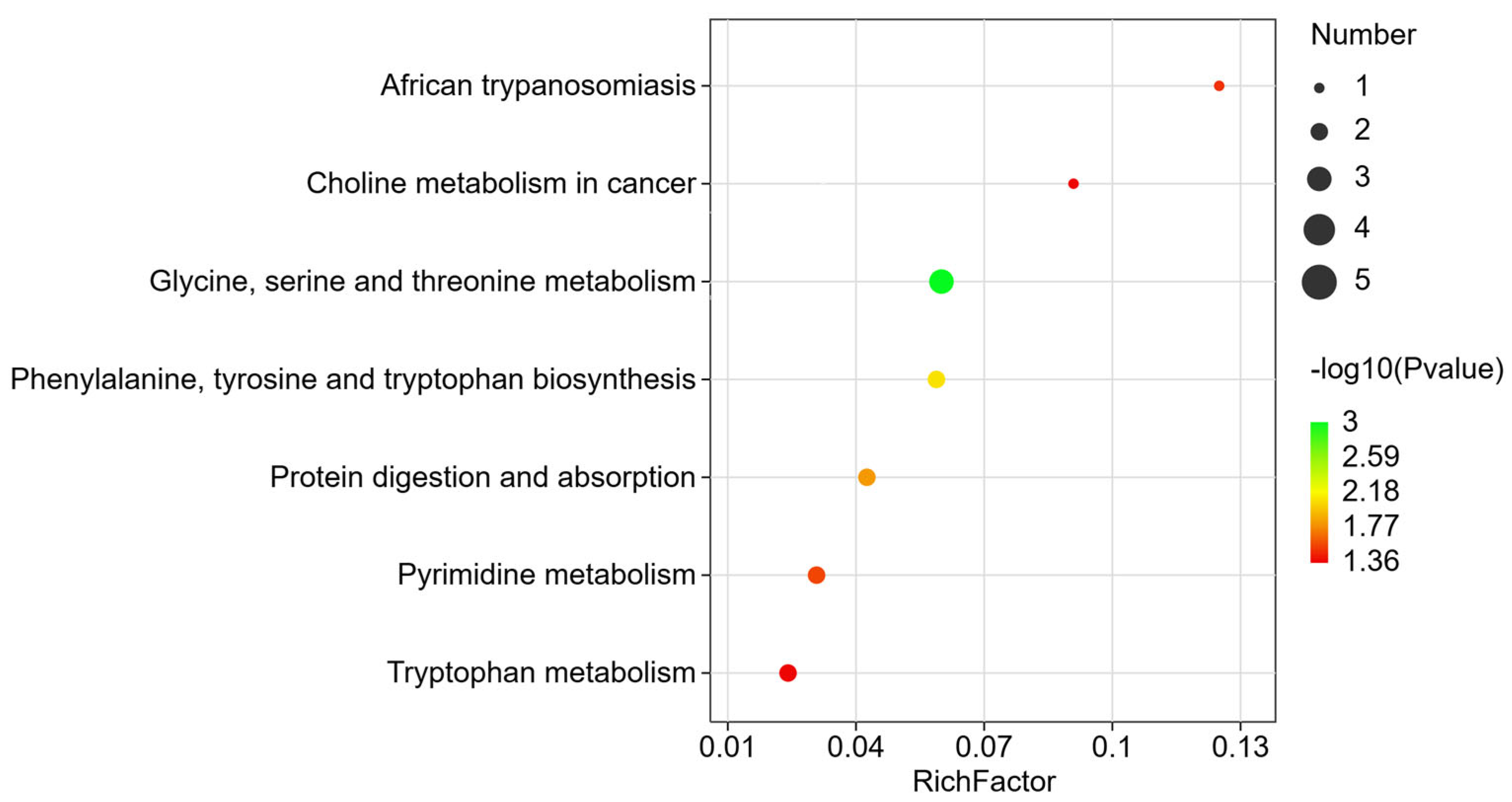
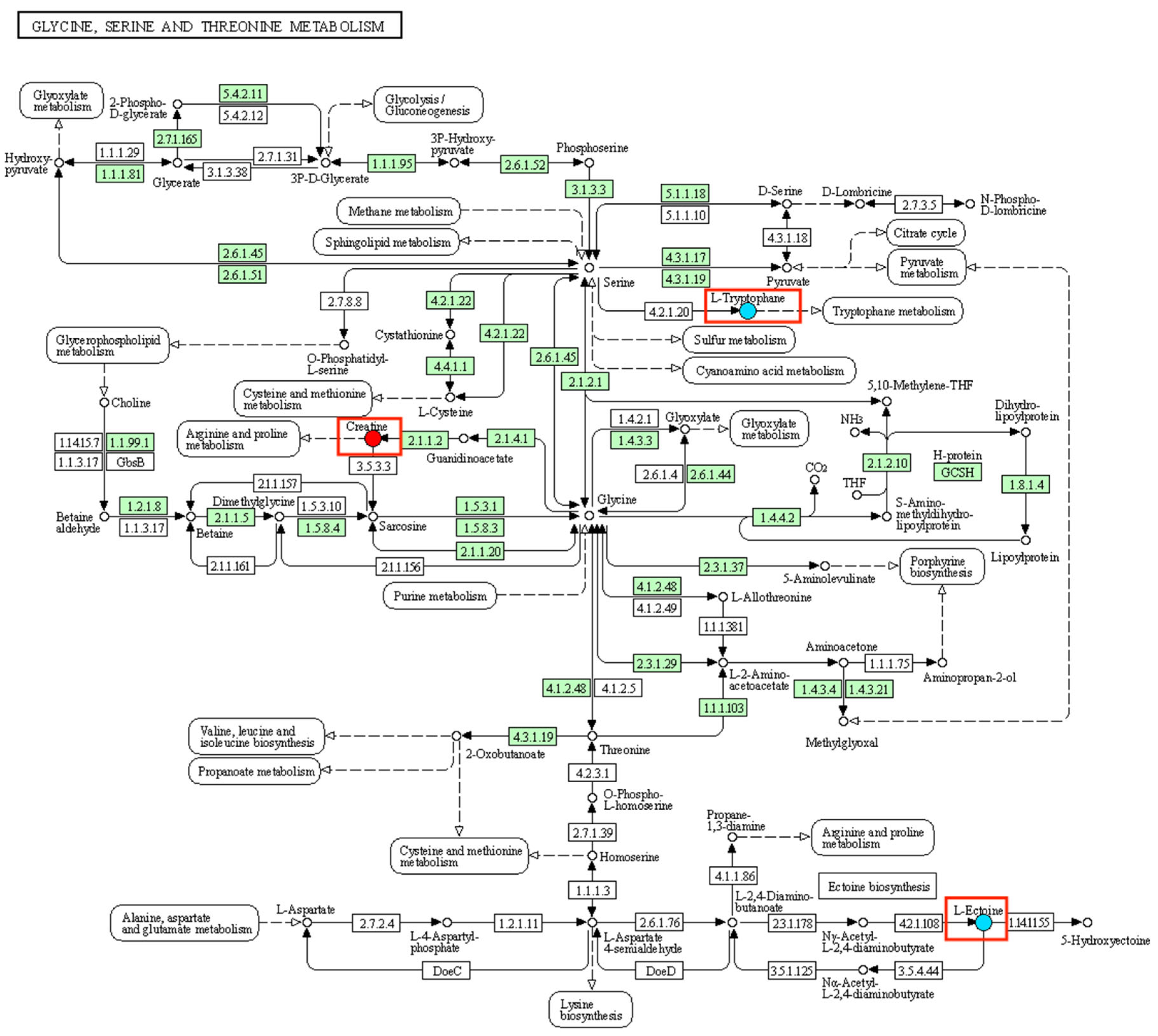
3.4. Enrichment Analysis of Metabolic Pathways for Differential Markers
4. Discussion
5. Conclusions
Author Contributions
Funding
Institutional Review Board Statement
Informed Consent Statement
Data Availability Statement
Conflicts of Interest
References
- Acharya, A.; Basnett, I.; Gutteridge, C.; Noyce, A. Laughter isn’t always the best medicine. BMJ 2018, 363, k4579. [Google Scholar] [CrossRef]
- Xiang, Y.; Li, L.; Ma, X.; Li, S.; Xue, Y.; Yan, P.; Chen, M.; Wu, J. Recreational Nitrous Oxide Abuse: Prevalence, Neurotoxicity, and Treatment. Neurotox. Res. 2021, 39, 975–985. [Google Scholar] [CrossRef] [PubMed]
- Allan, J.; Cameron, J.; Bruno, J. A Systematic Review of Recreational Nitrous Oxide Use: Implications for Policy, Service Delivery and Individuals. Int. J. Environ. Res. Public Health 2022, 19, 11567. [Google Scholar] [CrossRef] [PubMed]
- Zaloum, S.A.; Mair, D.; Paris, A.; Smith, L.J.; Patyjewicz, M.; Onen, B.L.; Noyce, A.J. Tackling the growing burden of nitrous oxide-induced public health harms. Lancet Public Health 2025, 10, e257–e263. [Google Scholar] [CrossRef]
- D’Orazio, A.L.; Bierly, J.J.; Midthun, K.M. The rise of nitrous oxide in toxicological casework: No laughing matter. J. Anal. Toxicol. 2026, 50, bkaf108. [Google Scholar] [CrossRef] [PubMed]
- Cornelio, V.C.; Lail, G.; Go, K.; Kaur, K.; Slowik, P. Impact of Nitrous Oxide on Neuropsychiatric Impairment in Adolescents: A Scoping Review. Cureus 2025, 17, e89448. [Google Scholar] [CrossRef]
- Zheng, D.; Ba, F.; Bi, G.; Guo, Y.; Gao, Y.; Li, W. The sharp rise of neurological disorders associated with recreational nitrous oxide use in China: A single-center experience and a brief review of Chinese literature. J. Neurol. 2020, 267, 422–429. [Google Scholar] [CrossRef]
- Campdesuner, V.; Teklie, Y.; Alkayali, T.; Pierce, D.; George, J. Nitrous Oxide-Induced Vitamin B12 Deficiency Resulting in Myelopathy. Cureus 2020, 12, e9088. [Google Scholar] [CrossRef]
- Kim, S.; Lee, S.H.; Bang, M. Double-sidedness of “laughing gas” on the N-methyl-d-aspartate receptor: A case report of acute psychosis associated with nitrous oxide-induced hyperhomocysteinemia. Schizophr. Res. 2019, 208, 475–476. [Google Scholar] [CrossRef]
- Lucas, A.; Noyce, A.J.; Gernez, E.; El Khoury, J.M.; Garcon, G.; Cavalier, E.; Antherieu, S.; Grzych, G. Nitrous oxide abuse direct measurement for diagnosis and follow-up: Update on kinetics and impact on metabolic pathways. Clin. Chem. Lab. Med. 2024, 62, 2356–2372. [Google Scholar] [CrossRef]
- Paulus, M.C.; Wijnhoven, A.M.; Maessen, G.C.; Blankensteijn, S.R.; van der Heyden, M.A.G. Does vitamin B12 deficiency explain psychiatric symptoms in recreational nitrous oxide users? A narrative review. Clin. Toxicol. 2021, 59, 947–955. [Google Scholar] [CrossRef] [PubMed]
- Barmak, F.; Numan, J.; Shabih, M.; Nolte, J.; Adams, J.; Ferguson, P.; Inam, S.H.A. Nitrous Oxide-Induced Vitamin B12 Deficiency and Myelopathy in Whippets Abusers: A Report of Two Cases. Cureus 2024, 16, e73807. [Google Scholar] [CrossRef]
- Grzych, G.; Deheul, S.; Gernez, E.; Davion, J.B.; Dobbelaere, D.; Carton, L.; Kim, I.; Guichard, J.C.; Girot, M.; Humbert, L.; et al. Comparison of biomarker for diagnosis of nitrous oxide abuse: Challenge of cobalamin metabolic parameters, a retrospective study. J. Neurol. 2023, 270, 2237–2245. [Google Scholar] [CrossRef]
- Krasemann, S.; Madore, C.; Cialic, R.; Baufeld, C.; Calcagno, N.; El Fatimy, R.; Beckers, L.; O’Loughlin, E.; Xu, Y.; Fanek, Z.; et al. The TREM2-APOE Pathway Drives the Transcriptional Phenotype of Dysfunctional Microglia in Neurodegenerative Diseases. Immunity 2017, 47, 566–581.e569. [Google Scholar] [CrossRef] [PubMed]
- Wishart, D.S. Metabolomics for Investigating Physiological and Pathophysiological Processes. Physiol. Rev. 2019, 99, 1819–1875. [Google Scholar] [CrossRef]
- Pang, H.; Hu, Z. Metabolomics in drug research and development: The recent advances in technologies and applications. Acta Pharm. Sin. B 2023, 13, 3238–3251. [Google Scholar] [CrossRef]
- Prakash, C.; Moran, P.; Mahar, R. Pharmacometabolomics: An emerging platform for understanding the pathophysiological processes and therapeutic interventions. Int. J. Pharm. 2025, 675, 125554. [Google Scholar] [CrossRef]
- Nicholson, J.K.; Connelly, J.; Lindon, J.C.; Holmes, E. Metabonomics: A platform for studying drug toxicity and gene function. Nat. Rev. Drug Discov. 2002, 1, 153–161. [Google Scholar] [CrossRef]
- Patti, G.J.; Yanes, O.; Siuzdak, G. Innovation: Metabolomics: The apogee of the omics trilogy. Nat. Rev. Mol. Cell Biol. 2012, 13, 263–269. [Google Scholar] [CrossRef] [PubMed]
- Schrimpe-Rutledge, A.C.; Codreanu, S.G.; Sherrod, S.D.; McLean, J.A. Untargeted Metabolomics Strategies-Challenges and Emerging Directions. J. Am. Soc. Mass. Spectrom. 2016, 27, 1897–1905. [Google Scholar] [CrossRef]
- He, Z.; Dony, L.; Fleck, J.S.; Szałata, A.; Li, K.X.; Slišković, I.; Lin, H.C.; Santel, M.; Atamian, A.; Quadrato, G.; et al. An integrated transcriptomic cell atlas of human neural organoids. Nature 2024, 635, 690–698. [Google Scholar] [CrossRef]
- Lou, Y.; Sun, Z.; Chai, Y.; Qin, H.; Hu, Q.; Liu, Y.; Zheng, X.; Hu, Y.; Bao, M.; Gu, J.; et al. Simultaneous quantification of donafenib, sorafenib, and their N-oxide metabolites in rat plasma using a HPLC-MS/MS method. J. Chromatogr. B 2023, 1229, 123871. [Google Scholar] [CrossRef]
- Wen, X.; Shang, P.; Chen, H.; Guo, L.; Rong, N.; Jiang, X.; Li, X.; Liu, J.; Yang, G.; Zhang, J.; et al. Evolutionary study and structural basis of proton sensing by Mus GPR4 and Xenopus GPR4. Cell 2025, 188, 653–670.e24. [Google Scholar] [CrossRef]
- Yang, T.; Chen, Y.; Wang, M.; Ren, R.; Yan, F.; Xu, P.; Di, B. Multi-omics Analysis Reveals miR-7220-5p Alleviates N(2)O Addictive Behaviors via NR2B/ERK/CREB Signaling. J. Neurosci. 2025, 45, e1410242025. [Google Scholar] [CrossRef]
- Pukoli, D.; Vécsei, L. Kynurenines and Mitochondrial Disturbances in Multiple Sclerosis. Int. J. Mol. Sci. 2025, 26, 5098. [Google Scholar] [CrossRef]
- Xue, C.; Li, G.; Zheng, Q.; Gu, X.; Shi, Q.; Su, Y.; Chu, Q.; Yuan, X.; Bao, Z.; Lu, J.; et al. Tryptophan metabolism in health and disease. Cell Metab. 2023, 35, 1304–1326. [Google Scholar] [CrossRef] [PubMed]
- Eichinger, A.; Danecka, M.K.; Möglich, T.; Borsch, J.; Woidy, M.; Büttner, L.; Muntau, A.C.; Gersting, S.W. Secondary BH4 deficiency links protein homeostasis to regulation of phenylalanine metabolism. Hum. Mol. Genet. 2018, 27, 1732–1742. [Google Scholar] [CrossRef]
- Roager, H.M.; Licht, T.R. Microbial tryptophan catabolites in health and disease. Nat. Commun. 2018, 9, 3294. [Google Scholar] [CrossRef] [PubMed]
- Pérez-Torres, I.; Zuniga-Munoz, A.M.; Guarner-Lans, V. Beneficial Effects of the Amino Acid Glycine. Mini Rev. Med. Chem. 2017, 17, 15–32. [Google Scholar] [CrossRef]
- Razak, M.A.; Begum, P.S.; Viswanath, B.; Rajagopal, S. Multifarious Beneficial Effect of Nonessential Amino Acid, Glycine: A Review. Oxid. Med. Cell Longev. 2017, 2017, 1716701. [Google Scholar] [CrossRef] [PubMed]
- Zhong, Z.; Wheeler, M.D.; Li, X.; Froh, M.; Schemmer, P.; Yin, M.; Bunzendaul, H.; Bradford, B.; Lemasters, J.J. L-Glycine: A novel antiinflammatory, immunomodulatory, and cytoprotective agent. Curr. Opin. Clin. Nutr. Metab. Care 2003, 6, 229–240. [Google Scholar] [CrossRef] [PubMed]
- Amin, F.U.; Shah, S.A.; Kim, M.O. Glycine inhibits ethanol-induced oxidative stress, neuroinflammation and apoptotic neurodegeneration in postnatal rat brain. Neurochem. Int. 2016, 96, 1–12. [Google Scholar] [CrossRef]
- McCarty, M.F.; O’Keefe, J.H.; DiNicolantonio, J.J. Dietary Glycine Is Rate-Limiting for Glutathione Synthesis and May Have Broad Potential for Health Protection. Ochsner J. 2018, 18, 81–87. [Google Scholar]
- Zhao, Q.; Li, S.; Lv, P.; Sun, S.; Ma, C.; Xu, P.; Su, H.; Yang, C. High ectoine production by an engineered Halomonas hydrothermalis Y2 in a reduced salinity medium. Microb. Cell Factories 2019, 18, 184. [Google Scholar] [CrossRef]
- Li, X.; Chen, F.; Chen, Y. Gcluster: A simple-to-use tool for visualizing and comparing genome contexts for numerous genomes. Bioinformatics 2020, 36, 3871–3873. [Google Scholar] [CrossRef]
- Hartleben, G.; Schorpp, K.; Kwon, Y.; Betz, B.; Tsokanos, F.F.; Dantes, Z.; Schäfer, A.; Rothenaigner, I.; Monroy Kuhn, J.M.; Morigny, P.; et al. Combination therapies induce cancer cell death through the integrated stress response and disturbed pyrimidine metabolism. EMBO Mol. Med. 2021, 13, e12461. [Google Scholar] [CrossRef]
- Müller, B.; Seifart, C.; von Wichert, P.; Barth, P.J. Adaptation of rat type II pneumocytes to NO2: Effects of NO2 application mode on phosphatidylcholine metabolism. Am. J. Respir. Cell Mol. Biol. 1998, 18, 712–720. [Google Scholar] [CrossRef] [PubMed]
- Joncquel Chevalier-Curt, M.; Grzych, G.; Tard, C.; Lannoy, J.; Deheul, S.; Hanafi, R.; Douillard, C.; Vamecq, J. Nitrous oxide abuse in the emergency practice, and Review of toxicity mechanisms and potential markers. Food Chem. Toxicol. 2022, 162, 112894. [Google Scholar] [CrossRef] [PubMed]
- Hathout, L.; El-Saden, S. Nitrous oxide-induced B12 deficiency myelopathy: Perspectives on the clinical biochemistry of vitamin B12. J. Neurol. Sci. 2011, 301, 1–8. [Google Scholar] [CrossRef]



| Compound | VIP | FC | p-Value | Type |
|---|---|---|---|---|
| DL-tryptophan * | 2.270543059 | 0.822417968 | 0.036658805 | ↓ |
| His-ser * | 5.39015581 | 0.570812231 | 0.002208979 | ↓ |
| Ile-Pro * | 3.880749431 | 0.459798765 | 0.000205238 | ↓ |
| Indole * | 1.517294523 | 0.722993645 | 0.005911255 | ↓ |
| 1-stearoyl-2-linoleoyl-sn-glycero-3-phosphoethanolamine | 1.486682125 | 0.482374208 | 0.044721063 | ↓ |
| Cinnamoylglycine | 1.849343246 | 0.345705745 | 0.001782968 | ↓ |
| Hippuric acid | 1.423062144 | 0.421756098 | 0.000731456 | ↓ |
| Hydroquinone | 1.442359082 | 0.420150824 | 0.005596572 | ↓ |
| N-acetyltryptophan | 1.147914388 | 0.651807706 | 0.044526372 | ↓ |
| Pc 40:7 | 1.129434401 | 1.275815744 | 0.012353977 | ↑ |
| Pc(18:1e/9-hode) | 2.393534726 | 0.772096354 | 0.049595697 | ↑ |
| Pi 34:2 | 4.739809184 | 0.538354064 | 0.007570857 | ↑ |
| Pi 36:2 | 6.459955298 | 0.458817378 | 0.000173552 | ↑ |
| Pi 38:5 | 1.449694777 | 1.998131363 | 0.016594159 | ↑ |
| Pi 40:6 | 1.137356434 | 0.75936702 | 0.033076979 | ↑ |
| 1-Stearoyl-2-oleoyl-sn-glycerol 3-phosphocholine (SOPC) * | 6.754721173 | 1.303295249 | 0.017777616 | ↑ |
| Creatine * | 2.436692331 | 0.697139971 | 0.00316503 | ↓ |
| Ectoine * | 1.943389118 | 0.577586943 | 0.020956843 | ↓ |
| PC(16:0/16:0) * | 5.094645395 | 1.227967388 | 0.046586036 | ↑ |
| 1-heptadecanoyl-sn-glycero-3-phosphocholine | 3.15992551 | 0.834126868 | 0.049949782 | ↓ |
| 1-o-hexadecyl-2-o-(2e-butenoyl)-sn-glyceryl-3-phosphocholine | 4.527289364 | 1.256692825 | 0.035536814 | ↑ |
| 1-Stearoyl-sn-glycerol 3-phosphocholine | 12.44580581 | 1.182846193 | 0.012812851 | ↑ |
| 1,2-diamino-2-methylpropane | 1.18694568 | 0.802422286 | 0.033860116 | ↓ |
| 2-amino-1-phenylethanol | 2.090094068 | 0.859157666 | 0.021316046 | ↓ |
| 2-aminobenzamide | 1.097319299 | 1.623018453 | 0.005205103 | ↑ |
| 2-edahma [dmed-fahfa] | 1.047672188 | 0.518301664 | 0.001830615 | ↓ |
| Arg-glu | 2.073750104 | 0.379954376 | 0.018220506 | ↓ |
| DL-phenylalanine | 1.949294435 | 0.840082925 | 0.007941554 | ↓ |
| N-Docosanoyl-4-sphingenyl-1-O-phosphorylcholine | 2.16056361 | 1.25682719 | 0.02727306 | ↑ |
| N6-(1-iminoethyl)-l-lysine | 4.474650652 | 1.926394568 | 0.027526138 | ↑ |
| Polygodial | 2.918300151 | 0.720790659 | 0.006298095 | ↓ |
| Stachydrine | 2.540478092 | 0.643506685 | 0.000893755 | ↓ |
| Trigonelline | 5.366086618 | 0.628267972 | 0.003109119 | ↓ |
| Trimethylamine n-oxide | 2.970676217 | 0.492690064 | 0.004250201 | ↓ |
| Xanthosine | 3.916561099 | 1.715063471 | 0.000877951 | ↑ |
Disclaimer/Publisher’s Note: The statements, opinions and data contained in all publications are solely those of the individual author(s) and contributor(s) and not of MDPI and/or the editor(s). MDPI and/or the editor(s) disclaim responsibility for any injury to people or property resulting from any ideas, methods, instructions or products referred to in the content. |
© 2026 by the authors. Licensee MDPI, Basel, Switzerland. This article is an open access article distributed under the terms and conditions of the Creative Commons Attribution (CC BY) license.
Share and Cite
Jia, J.; Zhang, F.; Zhang, W.; Liu, C.; Yun, K.; Wang, Y.; Yan, J. Chronic Nitrous Oxide Exposure Disrupts Metabolism in Mice: A Plasma Untargeted Metabolomics Study. Metabolites 2026, 16, 324. https://doi.org/10.3390/metabo16050324
Jia J, Zhang F, Zhang W, Liu C, Yun K, Wang Y, Yan J. Chronic Nitrous Oxide Exposure Disrupts Metabolism in Mice: A Plasma Untargeted Metabolomics Study. Metabolites. 2026; 16(5):324. https://doi.org/10.3390/metabo16050324
Chicago/Turabian StyleJia, Juan, Fenglin Zhang, Wen Zhang, Congying Liu, Keming Yun, Yujin Wang, and Jiangwei Yan. 2026. "Chronic Nitrous Oxide Exposure Disrupts Metabolism in Mice: A Plasma Untargeted Metabolomics Study" Metabolites 16, no. 5: 324. https://doi.org/10.3390/metabo16050324
APA StyleJia, J., Zhang, F., Zhang, W., Liu, C., Yun, K., Wang, Y., & Yan, J. (2026). Chronic Nitrous Oxide Exposure Disrupts Metabolism in Mice: A Plasma Untargeted Metabolomics Study. Metabolites, 16(5), 324. https://doi.org/10.3390/metabo16050324