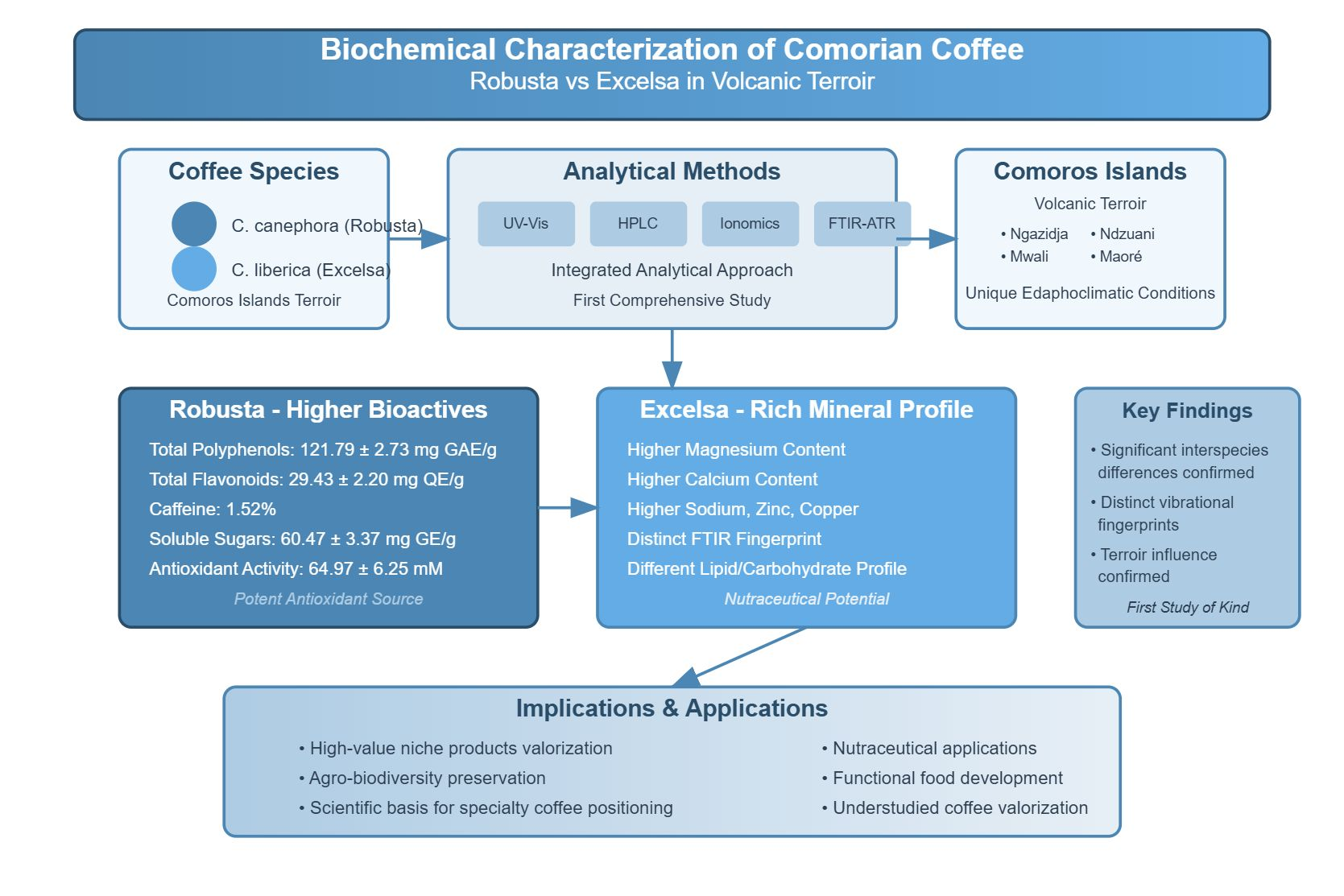
Nutraceutical Profiles and FTIR Fingerprints of Comorian Coffea canephora and Coffea liberica var. dewevrei


 , , , and
Abstract
1. Introduction
2. Materials and Methods
2.1. Sample Preparation
2.2. UV-Vis Spectrophotometric Analysis
2.2.1. Hydroethanolic Preparation for Phenolic, Sugar, Tannin, and Antioxidant Analyses
2.2.2. Determination of Total Phenolic Content
2.2.3. Determination of Total Flavonoid Content
2.2.4. Determination of Total Soluble Sugars
2.2.5. Determination of Hydrolysable Tannins
2.2.6. Antioxidant Activity Assay
2.3. High-Performance Liquid Chromatography (HPLC) Analysis
2.3.1. Extraction Procedure
2.3.2. Determination of Caffeine
2.4. Determination of Protein Content
2.5. Analysis of Mineral Composition
2.6. Fourier Transform Infrared (FTIR) Spectroscopy
2.7. Statistical Analysis
3. Results
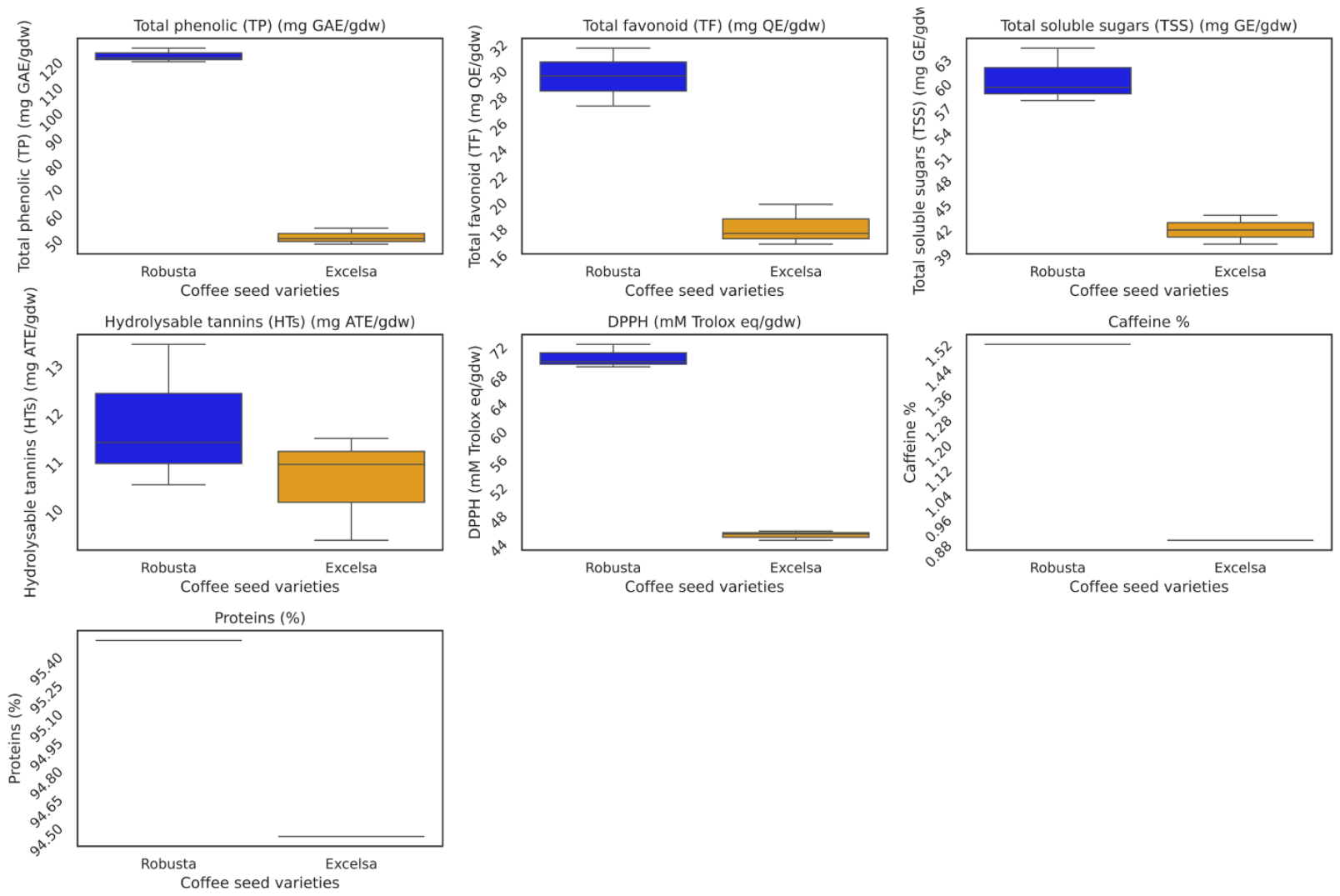
3.1. Total Phenolics, Total Flavonoids, Soluble Sugars, Tannins, Antioxidant Activity & Caffeine
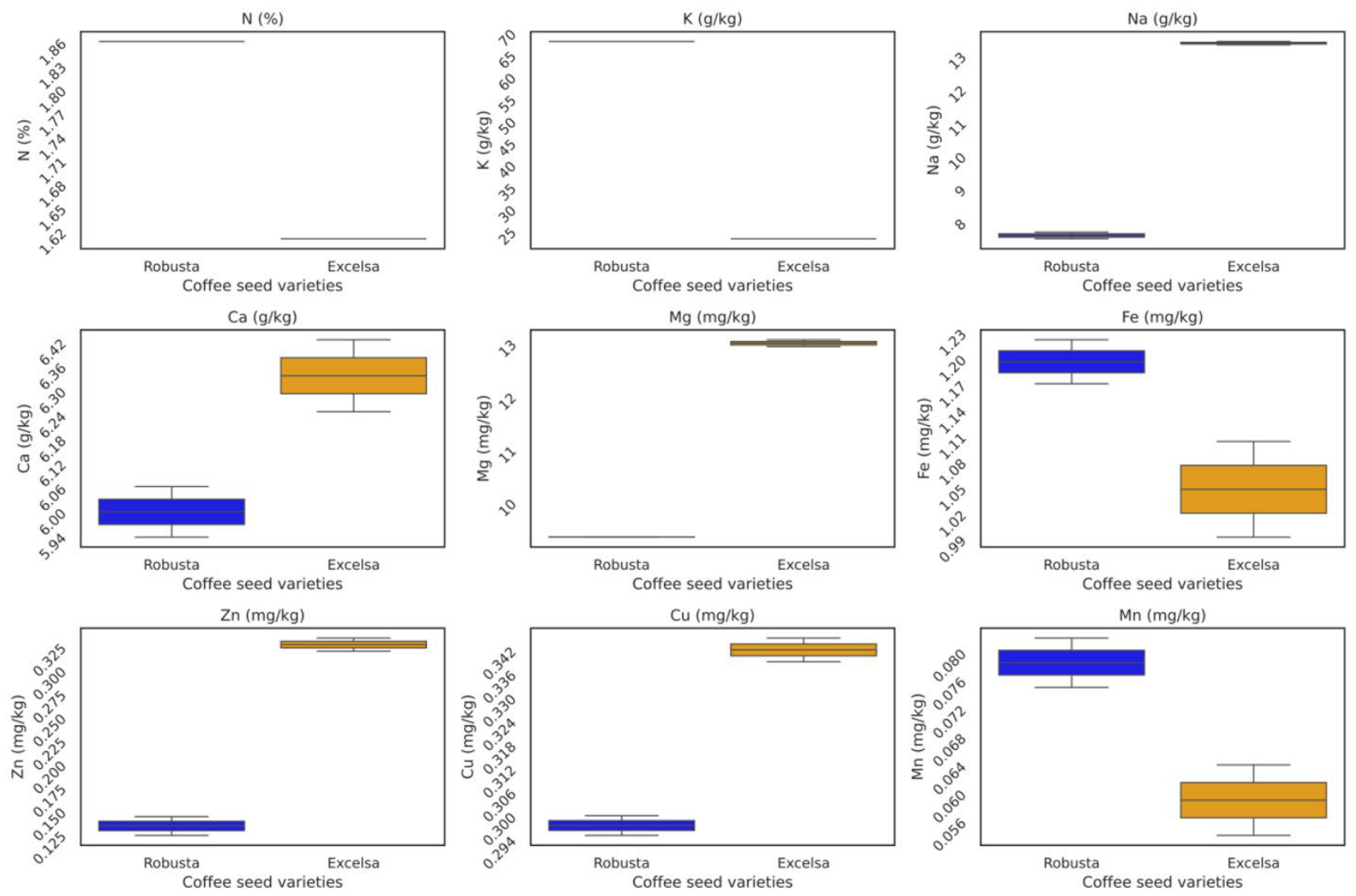
3.2. Nutritional and Mineral Composition
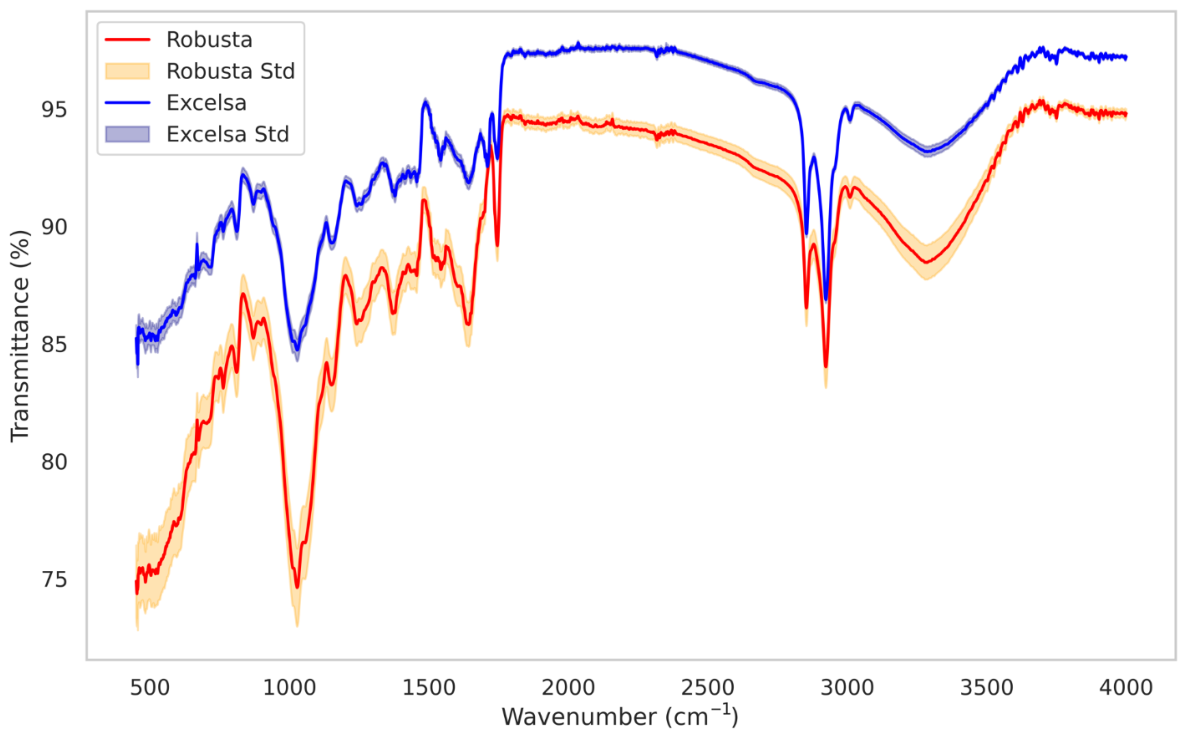
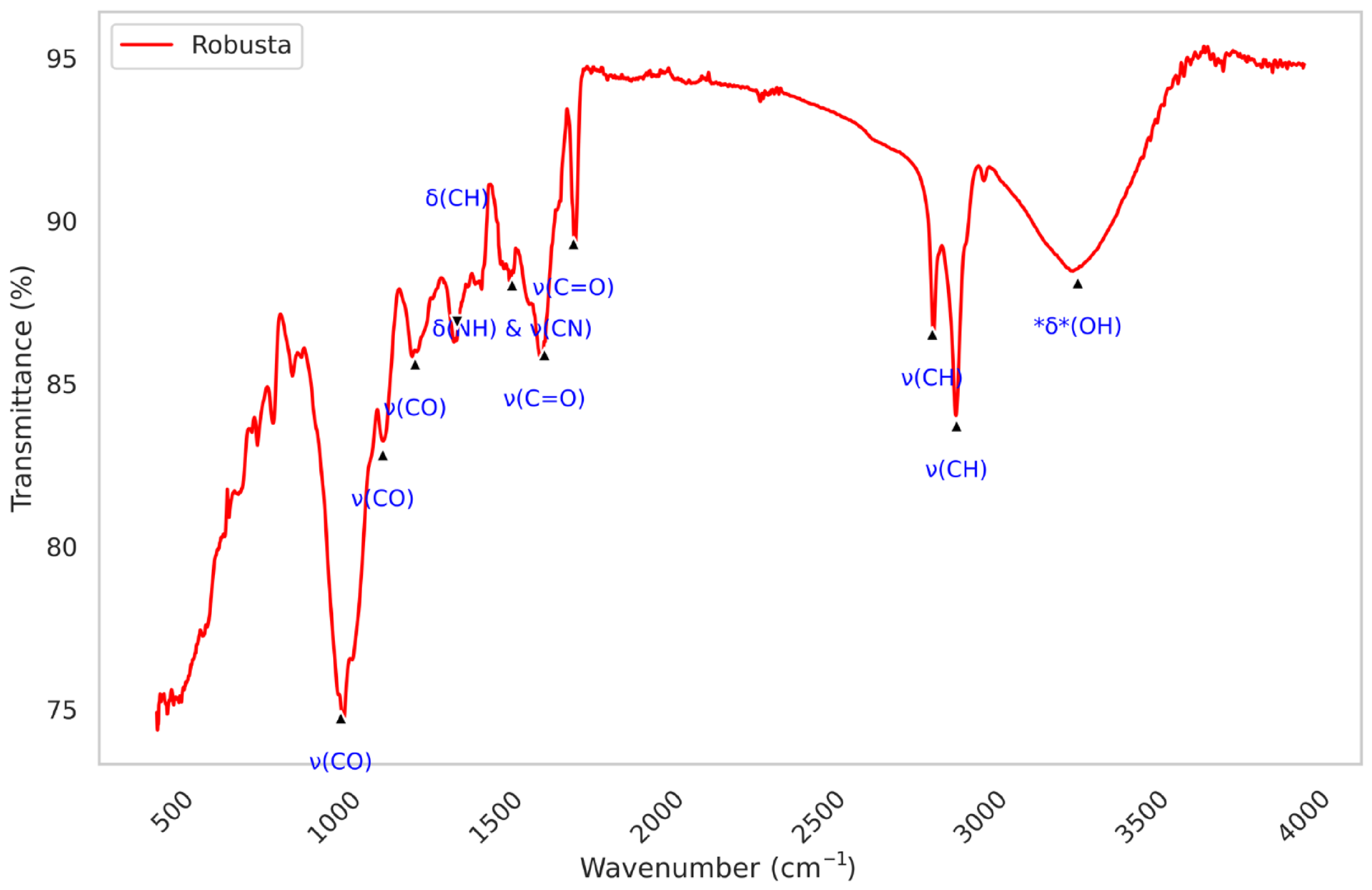
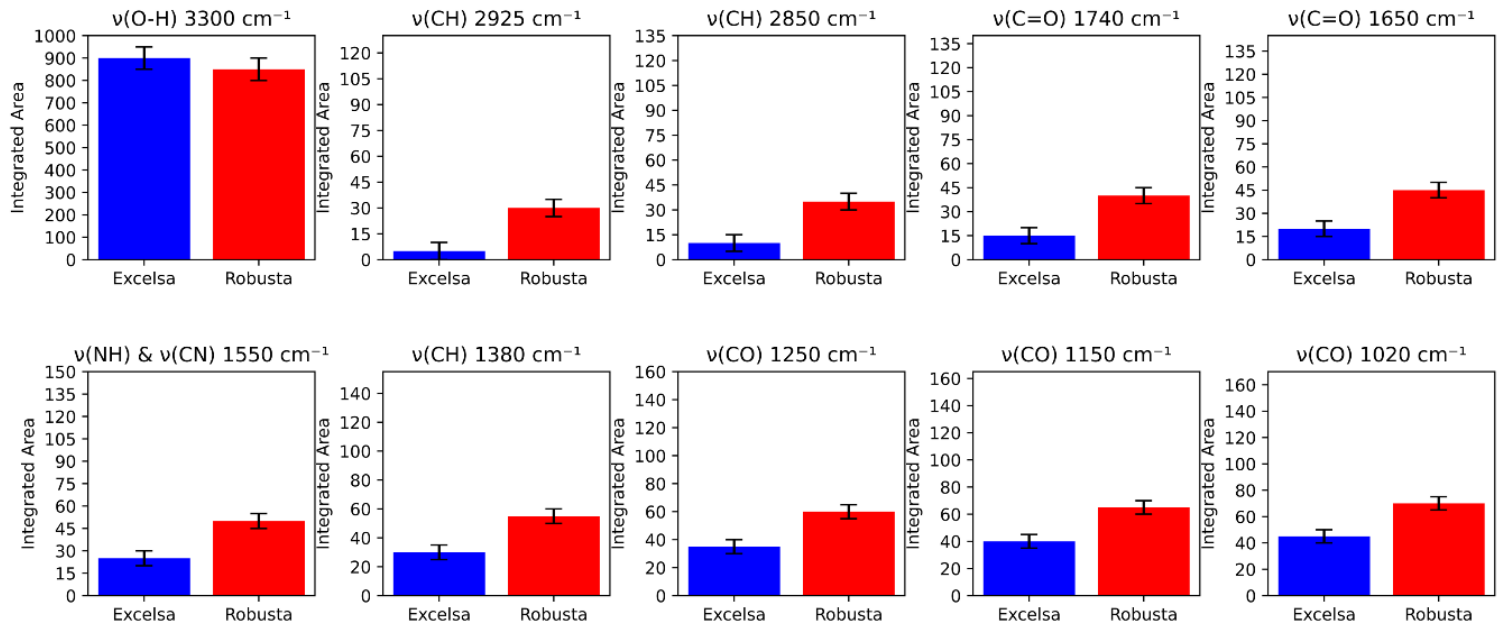
3.3. FTIR Spectroscopic Profiles
4. Discussion
4.1. Phytochemical Distinctiveness of Comorian Robusta and Excelsa
4.2. Nutritional and Mineral Fingerprinting of Comorian Coffea Robusta and Excelsa
4.3. FTIR Spectroscopic Interpretation
5. Conclusions
Author Contributions
Funding
Institutional Review Board Statement
Informed Consent Statement
Data Availability Statement
Acknowledgments
Conflicts of Interest
References
- Huang, X.; Bai, X.; Xie, Z.; Fahad, S.; Gbokie, T.J.; Lu, Y.; Guo, T.; Li, J.; Zhang, Z.; Wu, W.; et al. De novo transcriptome assembly of Coffea liberica reveals phylogeny and expression atlas of phenylalanine ammonia-lyase genes in Coffea species. Ind. Crops Prod. 2023, 192, 116029. [Google Scholar] [CrossRef] [Scilit]
- Lim, T.K. Edible Medicinal And Non-Medicinal Plants: Volume 5, Fruits; Springer: Dordrecht, The Netherlands, 2012; pp. 710–714. [Google Scholar]
- Crisafulli, P.; Guercia, E.; Navarini, L. Discrimination of Coffea liberica and Coffea liberica var. dewevrei: Silverskin morphological traits and seed diterpenes content. Trop. Plant Biol. 2022, 15, 247–259. [Google Scholar] [CrossRef] [Scilit]
- Herawati, D.; Loisanjaya, M.O.; Kamal, R.H.; Adawiyah, D.R.; Andarwulan, N. Profile of bioactive compounds, aromas, and cup quality of Excelsa coffee (Coffea liberica var. dewevrei) prepared from diverse postharvest processes. Int. J. Food Sci. 2022, 2022, 2365603. [Google Scholar] [CrossRef] [Scilit] [PubMed]
- International Coffee Organization (ICO). Coffee Market Report June 2022; ICO: London, UK, 2022. [Google Scholar]
- Pascal, O.; Labat, J.N.; Pignal, M.; Soumille, O. Diversité, affinités phytogéographiques et origines présumées de la flore de Mayotte (Archipel des Comores). Syst. Geogr. Plants 2001, 71, 1101–1123. [Google Scholar] [CrossRef] [Scilit]
- Yashin, A.; Yashin, Y.; Xia, X.Y.; Nemzer, B. Chromatographic methods for coffee analysis: A review. J. Food Sci. 2017, 82, 1010–1020. [Google Scholar] [CrossRef] [Scilit]
- Olechno, E.; Puścion-Jakubik, A.; Socha, K.; Zujko, M.E. Coffee brews: Are they a source of macroelements in human nutrition? Foods 2021, 10, 1328. [Google Scholar] [CrossRef] [Scilit]
- Carlström, M.; Larsson, S.C. Coffee consumption and reduced risk of developing type 2 diabetes: A systematic review with meta-analysis. Nutr. Rev. 2018, 76, 395–417. [Google Scholar] [CrossRef] [Scilit] [PubMed]
- Popat, R.A.; Van Den Eeden, S.K.; Tanner, C.M.; Kamel, F.; Umbach, D.M.; Marder, K.; Mayeux, R.; Ritz, B.; Ross, G.W.; Petrovitch, H.; et al. Coffee, ADORA2A, and CYP1A2: The caffeine connection in Parkinson’s disease. Eur. J. Neurol. 2011, 18, 756–765. [Google Scholar] [CrossRef] [Scilit]
- Tugnolo, A.; Beghi, R.; Giovenzana, V.; Guidetti, R. Characterization of green, roasted beans, and ground coffee using near infrared spectroscopy: A comparison of two devices. J. Near Infrared Spectrosc. 2019, 27, 93–104. [Google Scholar] [CrossRef] [Scilit]
- Debastiani, R.; Dos Santos, C.E.I.; Ramos, M.M.; Souza, V.S.; Amaral, L.; Yoneama, M.L.; Dias, J.F. Elemental analysis of Brazilian coffee with ion beam techniques: From ground coffee to the final beverage. Food Res. Int. 2019, 119, 297–304. [Google Scholar] [CrossRef] [Scilit]
- Janda, K.; Jakubczyk, K.; Baranowska-Bosiacka, I.; Kapczuk, P.; Kochman, J.; Rębacz-Maron, E.; Gutowska, I. Mineral composition and antioxidant potential of coffee beverages depending on the brewing method. Foods 2020, 9, 121. [Google Scholar] [CrossRef] [Scilit]
- Ferraro, P.M.; Taylor, E.N.; Gambaro, G.; Curhan, G.C. Caffeine intake and the risk of kidney stones. Am. J. Clin. Nutr. 2014, 100, 1596–1603. [Google Scholar] [CrossRef] [Scilit]
- Dranoff, J.A. Coffee consumption and prevention of cirrhosis: In support of the caffeine hypothesis. Gene Expr. 2018, 18, 1–3. [Google Scholar] [CrossRef] [Scilit] [PubMed]
- Tamura, T.; Hishida, A.; Wakai, K. Coffee consumption and liver cancer risk in Japan: A meta-analysis of six prospective cohort studies. Nagoya J. Med. Sci. 2019, 81, 143–150. [Google Scholar]
- Hayat, U.; Siddiqui, A.A.; Okut, H.; Afroz, S.; Tasleem, S.; Haris, A. The effect of coffee consumption on the non-alcoholic fatty liver disease and liver fibrosis: A meta-analysis of 11 epidemiological studies. Ann. Hepatol. 2021, 20, 100254. [Google Scholar] [CrossRef] [Scilit] [PubMed]
- Kennedy, O.J.; Fallowfield, J.A.; Poole, R.; Hayes, P.C.; Parkes, J.; Roderick, P.J. All coffee types decrease the risk of adverse clinical outcomes in chronic liver disease: A UK Biobank study. BMC Public Health 2021, 21, 970. [Google Scholar] [CrossRef] [Scilit]
- Gómez-Ruiz, J.Á.; Leake, D.S.; Ames, J.M. In vitro antioxidant activity of coffee compounds and their metabolites. J. Agric. Food Chem. 2007, 55, 6962–6969. [Google Scholar] [CrossRef] [Scilit]
- Yashin, A.; Yashin, Y.; Wang, J.Y.; Nemzer, B. Antioxidant and antiradical activity of coffee. Antioxidants 2013, 2, 230–245. [Google Scholar] [CrossRef] [Scilit] [PubMed]
- Liang, N.; Kitts, D.D. Antioxidant property of coffee components: Assessment of methods that define mechanisms of action. Molecules 2014, 19, 19180–19208. [Google Scholar] [CrossRef] [Scilit]
- Lockhart, E.E. Chemistry of Coffee; Coffee Brewing Institute: Tokyo, Japan, 1957. [Google Scholar]
- Hamdouche, Y. Discrimination des Procédés de Transformation Post-Récolte du Cacao et du Café par Analyse Globale de L’écologie Microbienne. Ph.D. Thesis, Montpellier SupAgro, Montpellier, France, 2015. [Google Scholar]
- Yu, J.M.; Chu, M.; Park, H.; Park, J.; Lee, K.G. Analysis of volatile compounds in coffee prepared by various brewing and roasting methods. Foods 2021, 10, 1347. [Google Scholar] [CrossRef] [Scilit]
- De Vivo, A.; Genovese, A.; Tricarico, M.C.; Aprea, A.; Sacchi, R.; Sarghini, F. Volatile compounds in espresso resulting from a refined selection of particle size of coffee powder. J. Food Compos. Anal. 2022, 114, 104779. [Google Scholar] [CrossRef] [Scilit]
- Gonzalez-Rios, O.; Suarez-Quiroz, M.L.; Boulanger, R.; Barel, M.; Guyot, B.; Guiraud, J.P.; Schorr-Galindo, S. Impact of “ecological” post-harvest processing on the volatile fraction of coffee beans: I. Green coffee. J. Food Compos. Anal. 2007, 20, 289–296. [Google Scholar] [CrossRef] [Scilit]
- Freitas, A.C.; Mosca, A.I. Coffee geographic origin—An aid to coffee differentiation. Food Res. Int. 1999, 32, 565–573. [Google Scholar] [CrossRef] [Scilit]
- Anderson, K.A.; Smith, B.W. Chemical profiling to differentiate geographic growing origins of coffee. J. Agric. Food Chem. 2002, 50, 2068–2075. [Google Scholar] [CrossRef] [Scilit]
- Anthony, F.; Combes, M.C.; Astorga, C.; Bertrand, B.; Graziosi, G.; Lashermes, P. The origin of cultivated Coffea arabica, L. varieties revealed by AFLP and SSR markers. Theor. Appl. Genet. 2002, 104, 894–900. [Google Scholar] [CrossRef] [Scilit]
- Muñiz-Valencia, R.; Jurado, J.M.; Ceballos-Magaña, S.G.; Alcázar, Á.; Hernández-Díaz, J. Characterization of Mexican coffee according to mineral contents by means of multilayer perceptrons artificial neural networks. J. Food Compos. Anal. 2014, 34, 7–11. [Google Scholar] [CrossRef] [Scilit]
- Miclean, M.; Cadar, O.; Levei, E.A.; Roman, R.; Ozunu, A.; Levei, L. Metal (Pb, Cu, Cd, and Zn) transfer along food chain and health risk assessment through raw milk consumption from free-range cows. Int. J. Environ. Res. Public Health 2019, 16, 4064. [Google Scholar] [CrossRef] [Scilit] [PubMed]
- Kalschne, D.L.; Silva, N.K.; Canan, C.; Benassi, M.D.T.; Flores, E.L.M.; Leite, O.D. Main minerals and organic compounds in commercial roasted and ground coffee: An exploratory data analysis. Quím. Nova 2021, 44, 70–75. [Google Scholar] [CrossRef] [Scilit]
- Sanders, T.H.; McMichael, R.W.; Hendrix, K.W. Occurrence of resveratrol in edible peanuts. J. Agric. Food Chem. 2000, 48, 1243–1246. [Google Scholar] [CrossRef] [Scilit]
- Xie, L.; Bolling, B.W. Characterisation of stilbenes in California almonds (Prunus dulcis) by UHPLC-MS. Food Chem. 2014, 148, 300–306. [Google Scholar] [CrossRef] [Scilit]
- Waterhouse, A.L. Determination of total phenolics. Curr. Protoc. Food Anal. Chem. 2002, 6, I1.1.1–I1.1.8. [Google Scholar]
- Barreira, J.C.; Ferreira, I.C.; Oliveira, M.B.; Pereira, J.A. Antioxidant activities of the extracts from chestnut flower, leaf, skins and fruit. Food Chem. 2008, 107, 1106–1113. [Google Scholar] [CrossRef] [Scilit]
- Dubois, M.; Gilles, K.A.; Hamilton, J.K.; Rebers, P.A.; Smith, F. Colorimetric method for determination of sugars and related substances. Anal. Chem. 1956, 28, 350–356. [Google Scholar] [CrossRef] [Scilit]
- Willis, R. Improved method for measuring hydrolyzable tannins using potassium iodate. Analyst 1998, 123, 435–439. [Google Scholar] [CrossRef] [Scilit]
- Kumar, B.; Smita, K.; Cumbal, L.; Debut, A. Ficus carica (Fig) fruit mediated green synthesis of silver nanoparticles and its antioxidant activity: A comparison of thermal and ultrasonication approach. BioNanoScience 2016, 6, 15–21. [Google Scholar] [CrossRef] [Scilit]
- Belguidoum, K.; Amira-Guebailia, H.; Boulmokh, Y.; Houache, O. HPLC coupled to UV–vis detection for quantitative determination of phenolic compounds and caffeine in different brands of coffee in the Algerian market. J. Taiwan Inst. Chem. Eng. 2014, 45, 1314–1320. [Google Scholar] [CrossRef] [Scilit]
- Lemos, M.F.; de Andrade Salustriano, N.; de Souza Costa, M.M.; Lirio, K.; da Fonseca, A.F.A.; Pacheco, H.P.; Endringer, D.C.; Fronza, M.; Scherer, R. Chlorogenic acid and caffeine contents and anti-inflammatory and antioxidant activities of green beans of conilon and arabica coffees harvested with different degrees of maturation. J. Saudi Chem. Soc. 2022, 26, 101467. [Google Scholar] [CrossRef] [Scilit]
- Brunetto, M.R.; Gutiérrez, L.; Delgado, Y.; Gallignani, M.; Zambrano, A.; Gómez, Á.; Ramos, G.; Romero, C. Determination of theobromine, theophylline and caffeine in cocoa samples by a high-performance liquid chromatographic method with on-line sample cleanup in a switching-column system. Food Chem. 2007, 100, 459–467. [Google Scholar]
- Estefan, G.; Sommer, R.; Ryan, J. Methods of Soil, Plant, and Water Analysis: A manual for the West Asia and North Africa Region, 3rd ed.; ICARDA: Beirut, Lebanon, 2013; p. 244. [Google Scholar]
- Knudsen, D.; Peterson, G.A.; Pratt, P.F. Lithium, sodium, and potassium. In Methods of Soil Analysis: Part 2 Chemical and Microbiological Properties, 2nd ed.; Page, A.L., Ed.; ASA: Madison, WI, USA; SSSA: Madison, WI, USA, 1982; pp. 225–246. [Google Scholar]
- Szakonyi, G.; Zelkó, R. Water content determination of superdisintegrants by means of ATR-FTIR spectroscopy. J. Pharm. Biomed. Anal. 2012, 63, 106–111. [Google Scholar] [CrossRef] [Scilit]
- De Nardo, T.; Shiroma-Kian, C.; Halim, Y.; Francis, D.; Rodriguez-Saona, L.E. Rapid and simultaneous determination of lycopene and β-carotene contents in tomato juice by infrared spectroscopy. J. Agric. Food Chem. 2009, 57, 1105–1112. [Google Scholar] [CrossRef] [Scilit]
- Tahir, H.E.; Zou, X.; Li, Z.; Shi, J.; Zhai, X.; Wang, S.; Mariod, A.A. Rapid prediction of phenolic compounds and antioxidant activity of Sudanese honey using Raman and Fourier transform infrared (FT-IR) spectroscopy. Food Chem. 2017, 226, 202–211. [Google Scholar] [CrossRef] [Scilit] [PubMed]
- Farah, A.; Donangelo, C.M. Phenolic compounds in coffee. Braz. J. Plant Physiol. 2006, 18, 23–36. [Google Scholar] [CrossRef] [Scilit]
- Ludwig, I.A.; Clifford, M.N.; Lean, M.E.; Ashihara, H.; Crozier, A. Coffee: Biochemistry and potential impact on health. Food Funct. 2014, 5, 1695–1717. [Google Scholar] [CrossRef] [Scilit] [PubMed]
- Farah, A.; dos Santos, T.F. The coffee plant and beans: An introduction. In Coffee in Health and Disease Prevention; Preedy, V.R., Ed.; Academic Press: Cambridge, MA, USA, 2015; pp. 5–10. [Google Scholar]
- Caballero, B.; Trugo, L.; Finglas, P. (Eds.) Encyclopedia of Food Sciences and Nutrition, 2nd ed.; Academic Press: Oxford, UK, 2003. [Google Scholar]
- Anh-Dao, L.T.; Minh-Huy, D.; Bui-Phuc, T.; Nhut-Truong, N.; Tu-Chi, T.; Thi-Hoa, L.; Diem-My, H.-L.; Thanh-Nho, N.; Cong-Hau, N. Determination of caffeine, chlorogenic acid, total phenolic contents, and antioxidant capacities for Arabica and Robusta coffee from Vietnam. Anal. Lett. 2024, 57, 2855–2869. [Google Scholar] [CrossRef] [Scilit]
- Farah, A. Coffee constituents. In Coffee: Emerging Health Effects and Disease Prevention; Chu, Y.F., Ed.; Wiley-Blackwell: Hoboken, NJ, USA, 2012; pp. 22–58. [Google Scholar]
- Bote, A.D.; Struik, P.C. Effects of shade on growth, production and quality of coffee (Coffea arabica) in Ethiopia. J. Hortic. For. 2011, 3, 336–341. [Google Scholar]
- Worku, M.; De Meulenaer, B.; Duchateau, L.; Boeckx, P. Effect of altitude on biochemical composition and quality of green arabica coffee beans can be affected by shade and postharvest processing method. Food Res. Int. 2018, 105, 278–285. [Google Scholar] [CrossRef] [Scilit]
- Tolessa, K.; D’heer, J.; Duchateau, L.; Boeckx, P. Influence of growing altitude, shade and harvest period on quality and biochemical composition of Ethiopian specialty coffee. J. Sci. Food Agric. 2017, 97, 2849–2857. [Google Scholar] [CrossRef] [Scilit]
- Joët, T.; Laffargue, A.; Descroix, F.; Doulbeau, S.; Bertrand, B.; Dussert, S. Influence of environmental factors, wet processing and their interactions on the biochemical composition of green Arabica coffee beans. Food Chem. 2010, 118, 693–701. [Google Scholar] [CrossRef] [Scilit]
- Campa, C.; Doulbeau, S.; Dussert, S.; Hamon, S.; Noirot, M. Qualitative relationship between caffeine and chlorogenic acid contents among wild Coffea species. Food Chem. 2005, 93, 135–139. [Google Scholar] [CrossRef] [Scilit]
- Mishra, M.K. Current progress in tissue culture and transgenic research in coffee (Coffea spp.). In Coffee Science; Lashermes, P., Ed.; CRC Press: Boca Raton, FL, USA, 2022; pp. 235–248. [Google Scholar]
- Geromel, C.; Ferreira, L.P.; Guerreiro, S.M.C.; Cavalari, A.A.; Pot, D.; Pereira, L.F.P.; Leroy, T.; Vieira, L.G.E.; Mazzafera, P.; Marraccini, P. Biochemical and genomic analysis of sucrose metabolism during coffee (Coffea arabica) fruit development. J. Exp. Bot. 2006, 57, 3243–3258. [Google Scholar] [CrossRef] [Scilit]
- Mondolot, L.; La Fisca, P.; Buatois, B.; Talansier, E.; De Kochko, A.; Campa, C. Evolution in caffeoylquinic acid content and histolocalization during Coffea canephora leaf development. Ann. Bot. 2006, 98, 33–40. [Google Scholar] [CrossRef] [Scilit]
- Leroy, T.; Ribeyre, F.; Bertrand, B.; Charmetant, P.; Dufour, M.; Montagnon, C.; Marraccini, P.; Pot, D. Genetics of coffee quality. Braz. J. Plant Physiol. 2006, 18, 229–242. [Google Scholar] [CrossRef] [Scilit]
- Muzaifa, M.; Hasni, D.; Rahmi, F. What is kopi luwak? A literature review on production, quality and problems. IOP Conf. Ser. Earth Environ. Sci. 2019, 365, 012041. [Google Scholar] [CrossRef] [Scilit]
- Cheng, B.; Furtado, A.; Smyth, H.E.; Henry, R.J. Influence of genotype and environment on coffee quality. Trends Food Sci. Technol. 2016, 57, 20–30. [Google Scholar] [CrossRef] [Scilit]
- Hariri, R.A.; Harini, N. Analysis on the added value of Excelsa coffee (Coffea liberica var. dewevrei) in Wonosalam, Jombang. Agriecobis J. Agric. Socioecon. Bus. 2023, 6, 105–116. [Google Scholar] [CrossRef] [Scilit]
- Cruz, R.; Morais, S.; Casal, S. Mineral composition variability of coffees: A result of processing and production. In Processing and Impact on Active Components in Food; Preedy, V.R., Ed.; Academic Press: Cambridge, MA, USA, 2015; pp. 549–558. [Google Scholar]
- Mehari, B.; Redi-Abshiro, M.; Chandravanshi, B.S.; Combrinck, S.; McCrindle, R.; Atlabachew, M. GC-MS profiling of fatty acids in green coffee (Coffea arabica, L.) beans and chemometric modeling for tracing geographical origins from Ethiopia. J. Sci. Food Agric. 2019, 99, 3811–3823. [Google Scholar] [CrossRef] [Scilit]
- Esquivel, P.; Jiménez, V.M. Functional properties of coffee and coffee by-products. Food Res. Int. 2012, 46, 488–495. [Google Scholar] [CrossRef] [Scilit]
- Davis, A.P.; Shepherd-Clowes, A.; Cheek, M.; Moat, J.; Wei Luo, D.; Kiwuka, C.; Kalema, J.; Tchiengué, B.; Viruel, J. Genomic data define species delimitation in Liberica coffee with implications for crop development and conservation. Nat. Plants 2025, 11, 1–10. [Google Scholar] [CrossRef] [Scilit]
- Craig, A.P.; Franca, A.S.; Oliveira, L.S. Evaluation of the potential of FTIR and chemometrics for separation between defective and non-defective coffees. Food Chem. 2012, 132, 1368–1374. [Google Scholar] [CrossRef] [Scilit]
- Craig, A.P.; Franca, A.S.; Oliveira, L.S. Discrimination between defective and non-defective roasted coffees by diffuse reflectance infrared Fourier transform spectroscopy. LWT-Food Sci. Technol. 2012, 47, 505–511. [Google Scholar] [CrossRef] [Scilit]
- Munyendo, L.; Njoroge, D.; Hitzmann, B. The potential of spectroscopic techniques in coffee analysis—A review. Processes 2021, 10, 71. [Google Scholar] [CrossRef] [Scilit]
- Ribeiro, J.S.; Salva, T.J.; Ferreira, M.M. Chemometric studies for quality control of processed Brazilian coffees using drifts. J. Food Qual. 2010, 33, 212–227. [Google Scholar] [CrossRef] [Scilit]
- Ribeiro, J.S.; Ferreira, M.M.; Salva, T.J.G. Chemometric models for the quantitative descriptive sensory analysis of Arabica coffee beverages using near infrared spectroscopy. Talanta 2011, 83, 1352–1358. [Google Scholar] [CrossRef] [Scilit] [PubMed]
- Reis, N.; Franca, A.S.; Oliveira, L.S. Performance of diffuse reflectance infrared Fourier transform spectroscopy and chemometrics for detection of multiple adulterants in roasted and ground coffee. LWT-Food Sci. Technol. 2013, 53, 395–401. [Google Scholar] [CrossRef] [Scilit]
- Craig, A.P.; Franca, A.S.; Oliveira, L.S.; Irudayaraj, J.; Ileleji, K. Application of elastic net and infrared spectroscopy in the discrimination between defective and non-defective roasted coffees. Talanta 2014, 128, 393–400. [Google Scholar] [CrossRef] [Scilit]
- Rodriguez, Y.F.B.; Calderon, K.T.S.; Hernández, J.G. Comparison of sensory attributes and chemical markers of the infrared spectrum between defective and non-defective Colombian coffee samples. Coffee Sci. 2020, 15, e151659. [Google Scholar] [CrossRef] [Scilit]
- Kemsley, E.K.; Ruault, S.; Wilson, R.H. Discrimination between Coffea arabica and Coffea canephora variant robusta beans using infrared spectroscopy. Food Chem. 1995, 54, 321–326. [Google Scholar] [CrossRef] [Scilit]
- Briandet, R.; Kemsley, E.K.; Wilson, R.H. Approaches to adulteration detection in instant coffees using infrared spectroscopy and chemometrics. J. Sci. Food Agric. 1996, 71, 359–366. [Google Scholar] [CrossRef]
- Dias, R.C.E.; Valderrama, P.; Março, P.H.; dos Santos Scholz, M.B.; Edelmann, M.; Yeretzian, C. Quantitative assessment of specific defects in roasted ground coffee via infrared-photoacoustic spectroscopy. Food Chem. 2018, 255, 132–138. [Google Scholar] [CrossRef] [Scilit]
- Abreu, M.B.; Marcheafave, G.G.; Bruns, R.E.; Scarminio, I.S.; Zeraik, M.L. Spectroscopic and chromatographic fingerprints for discrimination of specialty and traditional coffees by integrated chemometric methods. Food Anal. Methods 2020, 13, 2204–2212. [Google Scholar] [CrossRef] [Scilit]
- Flores-Valdez, M.; Meza-Márquez, O.G.; Osorio-Revilla, G.; Gallardo-Velázquez, T. Identification and quantification of adulterants in coffee (Coffea arabica, L.) using FT-MIR spectroscopy coupled with chemometrics. Foods 2020, 9, 851. [Google Scholar] [CrossRef] [Scilit]
- Barbosa, L.C. Espectroscopia no Infravermelho na Caracterização de Compostos Orgânicos; Editora UFV: Viçosa, Brazil, 2007; 189p. [Google Scholar]
- Craig, A.P.; Botelho, B.G.; Oliveira, L.S.; Franca, A.S. Mid infrared spectroscopy and chemometrics as tools for the classification of roasted coffees by cup quality. Food Chem. 2018, 245, 1052–1061. [Google Scholar] [CrossRef] [Scilit]
- Pavia, D.L.; Lampman, G.M.; Kriz, G.S.; Vyvyan, J.R. Introdução à Espectroscopia; Cengage Learning: Washington, DC, USA, 2010. [Google Scholar]
- Lyman, D.J.; Benck, R.; Dell, S.; Merle, S.; Murray-Wijelath, J. FTIR-ATR analysis of brewed coffee: Effect of roasting conditions. J. Agric. Food Chem. 2003, 51, 3268–3272. [Google Scholar] [CrossRef] [Scilit]
- Paradkar, M.M.; Irudayaraj, J. Rapid determination of caffeine content in soft drinks using FTIR–ATR spectroscopy. Food Chem. 2002, 78, 261–266. [Google Scholar] [CrossRef] [Scilit]
- Wang, J.; Jun, S.; Bittenbender, H.C.; Gautz, L.; Li, Q.X. Fourier transform infrared spectroscopy for Kona coffee authentication. J. Food Sci. 2009, 74, C385–C391. [Google Scholar] [CrossRef] [Scilit]
- Naumann, D. Infrared spectroscopy in microbiology. In Encyclopedia of Analytical Chemistry; Meyers, R.A., Ed.; John Wiley & Sons: Chichester, UK, 2000; pp. 102–131. [Google Scholar]
- Boulet, J.C.; Williams, P.; Doco, T. A Fourier transform infrared spectroscopy study of wine polysaccharides. Carbohydr. Polym. 2007, 69, 79–85. [Google Scholar] [CrossRef] [Scilit]
- Barth, A. Infrared spectroscopy of proteins. Biochim. Biophys. Acta Bioenerg. 2007, 1767, 1073–1101. [Google Scholar] [CrossRef] [Scilit] [PubMed]
- Barbin, D.F.; Felicio, A.L.D.S.M.; Sun, D.W.; Nixdorf, S.L.; Hirooka, E.Y. Application of infrared spectral techniques on quality and compositional attributes of coffee: An overview. Food Res. Int. 2014, 61, 23–32. [Google Scholar] [CrossRef] [Scilit]
- Craig, A.P.; Franca, A.S.; Oliveira, L.S.; Irudayaraj, J.; Ileleji, K. Fourier transform infrared spectroscopy and near infrared spectroscopy for the quantification of defects in roasted coffees. Talanta 2015, 134, 379–386. [Google Scholar] [CrossRef] [Scilit]
- Reis, N.; Botelho, B.G.; Franca, A.S.; Oliveira, L.S. Simultaneous detection of multiple adulterants in ground roasted coffee by ATR-FTIR spectroscopy and data fusion. Food Anal. Methods 2017, 10, 2700–2709. [Google Scholar] [CrossRef] [Scilit]
- Obeidat, S.M.; Hammoudeh, A.Y.; Alomary, A.A. Application of FTIR spectroscopy for assessment of green coffee beans according to their origin. J. Appl. Spectrosc. 2018, 84, 1051–1055. [Google Scholar] [CrossRef] [Scilit]
- Urgert, R.; Katan, M.B. The cholesterol-raising factor from coffee beans. Annu. Rev. Nutr. 1997, 17, 305–324. [Google Scholar] [CrossRef] [Scilit]
- Esteban-Díez, I.; González-Sáiz, J.M.; Pizarro, C. Prediction of sensory properties of espresso from roasted coffee samples by near-infrared spectroscopy. Anal. Chim. Acta 2004, 525, 171–182. [Google Scholar] [CrossRef] [Scilit]
- Wang, N.; Lim, L.T. Fourier transform infrared and physicochemical analyses of roasted coffee. J. Agric. Food Chem. 2012, 60, 5446–5453. [Google Scholar] [CrossRef] [Scilit] [PubMed]
- Illy, A.; Viani, R. Espresso Coffee: The Chemistry of Quality; Academic Press: London, UK, 1995. [Google Scholar]
- Baker, M.J.; Trevisan, J.; Bassan, P.; Bhargava, R.; Butler, H.J.; Dorling, K.M.; Fielden, P.R.; Fogarty, S.W.; Fullwood, N.J.; Heys, K.A.; et al. Using Fourier transform IR spectroscopy to analyze biological materials. Nat. Protoc. 2014, 9, 1771–1791. [Google Scholar] [CrossRef] [Scilit]
- Gniechwitz, D.; Brueckel, B.; Reichardt, N.; Blaut, M.; Steinhart, H.; Bunzel, M. Coffee dietary fiber contents and structural characteristics as influenced by coffee type and technological and brewing procedures. J. Agric. Food Chem. 2007, 55, 11027–11034. [Google Scholar] [CrossRef] [Scilit]
- Portillo, O.R.; Arévalo, A.C. Coffee’s carbohydrates. A critical review of scientific literature. Bionatura 2022, 7, 11. [Google Scholar] [CrossRef] [Scilit]
- Silverstein, R.M.; Webster, F.X.; Kiemle, D.J. Identificação Espectrométrica de Compostos Orgánicos, 7th ed.; LTC: Rio de Janeiro, Brazil, 2010. [Google Scholar]
- Clifford, M.N.; Kirkpatrick, J.O.; Kuhnert, N.; Roozendaal, H.; Salgado, P.R. LC–MSn analysis of the cis isomers of chlorogenic acids. Food Chem. 2008, 106, 379–385. [Google Scholar] [CrossRef] [Scilit]
- Zhang, C.; Wang, C.; Liu, F.; He, Y. Mid-Infrared Spectroscopy for Coffee Variety Identification: Comparison of Pattern Recognition Methods. J. Spectrosc. 2016, 2016, 7927286. [Google Scholar] [CrossRef] [Scilit]
- Bruno, T.J. Sampling accessories for infrared spectrometry. Appl. Spectrosc. Rev. 1999, 34, 91–120. [Google Scholar] [CrossRef] [Scilit]
- Femenia, A.; Sánchez, E.S.; Simal, S.; Rosselló, C. Effects of drying pretreatments on the cell wall composition of grape tissues. J. Agric. Food Chem. 1998, 46, 271–276. [Google Scholar] [CrossRef] [Scilit]
- Himmelsbach, D.S.; Akin, D.E. Near-infrared Fourier-transform Raman spectroscopy of flax (Linum usitatissimum, L.) stems. J. Agric. Food Chem. 1998, 46, 991–998. [Google Scholar] [CrossRef] [Scilit]
- Hrebičik, M.; Suchanek, M.; Volka, K.; Novak, P.; Scotter, C.N.G. The potential of diffuse reflectance FTIR spectroscopy in the examination of small chemical changes in polyethylene and dry foods. J. Mol. Struct. 1995, 347, 485–494. [Google Scholar] [CrossRef] [Scilit]
- Kizil, R.; Irudayaraj, J.; Seetharaman, K. Characterization of irradiated starches by using FT-Raman and FTIR spectroscopy. J. Agric. Food Chem. 2002, 50, 3912–3918. [Google Scholar] [CrossRef] [Scilit] [PubMed]
- Arasi, A.Y.; Jeyakumari, J.J.L.; Sundaresan, B.; Dhanalakshmi, V.; Anbarasan, R. The structural properties of poly (aniline)—Analysis via FTIR spectroscopy. Spectrochim. Acta A Mol. Biomol. Spectrosc. 2009, 74, 1229–1234. [Google Scholar] [CrossRef] [Scilit]
- Bertrand, B.; Villarreal, D.; Laffargue, A.; Posada, H.; Lashermes, P.; Dussert, S. Comparison of the effectiveness of fatty acids, chlorogenic acids, and elements for the chemometric discrimination of coffee (Coffea arabica, L.) varieties and growing origins. J. Agric. Food Chem. 2008, 56, 2273–2280. [Google Scholar] [CrossRef] [Scilit]
- Franca, A.S.; Oliveira, L.S. Latest developments on coffee discrimination by species, quality, and geographic origin. In Coffee Science; Chu, Y.F., Ed.; CRC Press: Boca Raton, FL, USA, 2022; pp. 177–191. [Google Scholar]
- Mubarak, A.; Croft, K.D.; Bondonno, C.P.; Din, N.S. Comparison of liberica and arabica coffee: Chlorogenic acid, caffeine, total phenolic and DPPH radical scavenging activity. Asian J. Agric. Biol. 2019, 7, 130–136. [Google Scholar]



| Variable (Unit) | Group | Mean | SD | CV (%) | F-Statistic | p-Value | Tukey Sig. |
|---|---|---|---|---|---|---|---|
| Total phenolics, total flavonoids, soluble sugars, tannins, antioxidant activity & caffeine | |||||||
| Total phenolics (TP) (mg GAE/g DW) | Excelsa | 49.08 | 4.25 | 8.67% | 620.64 | 1.50 × 10⁻⁵ | Yes b |
| Robusta | 121.79 | 2.73 | 2.24% | 620.64 | 1.50 × 10⁻⁵ | Yes a | |
| Total flavonoids (TF) (mg QE/g DW) | Excelsa | 15.98 | 3.26 | 20.42% | 35.03 | 0.0041 | Yes b |
| Robusta | 29.43 | 2.20 | 7.46% | 35.03 | 0.0041 | Yes a | |
| Total soluble sugars (TSS) (mg GE/g DW) | Excelsa | 41.09 | 2.84 | 6.92% | 57.93 | 0.0016 | Yes b |
| Robusta | 60.47 | 3.37 | 5.58% | 57.93 | 0.0016 | Yes a | |
| Hydrolysable tannins (HTs) (mg TAE/g DW) | Excelsa | 8.88 | 2.79 | 31.48% | 0.21 | 0.6721 | No a |
| Robusta | 10.06 | 3.54 | 35.12% | 0.21 | 0.6721 | No a | |
| DPPH antioxidant activity (mM Trolox eq/g DW) | Excelsa | 41.74 | 5.29 | 12.67% | 24.12 | 0.0080 | Yes b |
| Robusta | 64.97 | 6.25 | 9.63% | 24.12 | 0.0080 | Yes a | |
| Caffeine (%) | Excelsa | 0.89 | 0.000 | —% | 1.58 × 1037 | 2.41 × 10−56 | Yes a |
| Robusta | 1.52 | 0.000 | —% | 1.58 × 1037 | 2.41 × 10−56 | Yes b | |
| Proximate composition: proteins & nitrogen | |||||||
| Proteins (%) | Excelsa | 94.45 | 0.000 | —% | 5.25 × 1033 | 2.17 × 10−49 | Yes a |
| Robusta | 95.48 | 0.000 | —% | 5.25 × 1033 | 2.17 × 10−49 | Yes b | |
| Total nitrogen (N) (%) | Excelsa | 1.61 | 0.000 | —% | 2.54 × 1036 | 9.33 × 10−55 | Yes a |
| Robusta | 1.86 | 0.000 | —% | 2.54 × 1036 | 9.33 × 10−55 | Yes b | |
| Macroelements (g/kg DW) | |||||||
| Potassium (K) (g/kg DW) | Excelsa | 31.20 | 0.000 | —% | 2.13 × 1038 | 1.32 × 10−58 | Yes a |
| Robusta | 67.90 | 0.000 | —% | 2.13 × 1038 | 1.32 × 10−58 | Yes b | |
| Sodium (Na) (g/kg DW) | Excelsa | 13.35 | 0.05 | 0.37% | 7.94 × 10⁹ | 0.095 | Yes a |
| Robusta | 7.60 | 0.10 | 1.32% | 7.94 × 10⁹ | 0.095 | Yes b | |
| Calcium (Ca) (g/kg DW) | Excelsa | 6.34 | 0.09 | 1.40% | 28.72 | 0.0058 | Yes a |
| Robusta | 6.00 | 0.06 | 1.04% | 28.72 | 0.0058 | Yes b | |
| Magnesium (Mg) (g/kg DW) | Excelsa | 12.99 | 0.07 | 0.50% | 9.43 × 10⁹ | 0.067 | Yes a |
| Robusta | 9.34 | 0.003 | 0.03% | 9.43 × 10⁹ | 0.067 | Yes b | |
| Microelements (mg/kg DW) | |||||||
| Iron (Fe) (mg/kg DW) | Excelsa | 1.05 | 0.06 | 5.30% | 17.61 | 0.0137 | Yes b |
| Robusta | 1.20 | 0.03 | 2.13% | 17.61 | 0.0137 | Yes a | |
| Zinc (Zn) (mg/kg DW) | Excelsa | 0.33 | 0.007 | 2.14% | 749.98 | 1.10 × 10⁻⁵ | Yes a |
| Robusta | 0.13 | 0.010 | 7.46% | 749.98 | 1.10 × 10⁻⁵ | Yes b | |
| Copper (Cu) (mg/kg DW) | Excelsa | 0.34 | 0.003 | 0.88% | 389.56 | 3.90 × 10⁻⁵ | Yes a |
| Robusta | 0.30 | 0.003 | 0.84% | 389.56 | 3.90 × 10⁻⁵ | Yes b | |
| Manganese (Mn) (mg/kg DW) | Excelsa | 0.059 | 0.005 | 8.47% | 30.62 | 0.0052 | Yes b |
| Robusta | 0.079 | 0.004 | 4.46% | 30.62 | 0.0052 | Yes a | |
| Wavenumber (cm−1) | Functional Groups | Mode of Vibration | Intensity | Spectral Assignments | References |
|---|---|---|---|---|---|
| ~3300 | O-H | ν(O-H) | Broad | Hydroxyl stretching vibrations of phenolic acids (chlorogenic acid), polysaccharides and residual water | [70,71,78,79,80,81,82] |
| ~2925 | CH2 | νas(CH2) | Strong | Asymmetric stretching vibrations of lipid methyl groups and C–H bonds in caffeine molecules | [70,71,83,84] |
| ~2850 | CH2 | νs(CH2) | Strong | Symmetrical stretching of methylene groups in lipids and C–H bonds in caffeine molecules | [70,71,83,84] |
| ~1740 | C=O | ν(C=O) | Strong | Carboxylate ester stretching vibrations (triglycerides, lipid esters) | [83,85] |
| ~1650 | C=O, C=C | ν(C=O), ν(C=C) | Strong | Amide I (protein) and/or caffeine C=O/C=C stretching vibrations | [70,71,78,79,86,87,88] |
| ~1550 | N-H, C-N | δ(N-H) + ν(C-N) | Average | N-H bending + C-N stretching of amide II (proteins) | [70,71,78,89,90,91] |
| ~1380 | CH2, CH3 | δas(CH3), δs(CH2) | Average | Asymmetric CH3 stretching and symmetric CH2 stretching vibrations of lipids | [70,71,89] |
| ~1250 | C-O-C | ν(C-O) | Strong | Stretching vibration of the C-O bond in secondary and primary hydroxyl groups of polysaccharides (cellulose, hemicellulose) and polyphenols | [90] |
| ~1150 | C-O | ν(C-O) | Average | C-O stretching (phenol-ether) of chlorogenic acids | [70,71,78,79,85,86,88,92,93] |
| ~1020 | C-O | ν(C-O) | Average | C-O stretching (primary alcohol) in quinic acid, carbohydrates and polysaccharides | [70,71,72,94] |
Disclaimer/Publisher’s Note: The statements, opinions and data contained in all publications are solely those of the individual author(s) and contributor(s) and not of MDPI and/or the editor(s). MDPI and/or the editor(s) disclaim responsibility for any injury to people or property resulting from any ideas, methods, instructions or products referred to in the content. |
© 2026 by the authors. Licensee MDPI, Basel, Switzerland. This article is an open access article distributed under the terms and conditions of the Creative Commons Attribution (CC BY) license.
Share and Cite
Irchad, A.; Kassimi, C.E.-d.; Salmata, I.; Mansouri, H.; Thabiti, Y.; Hadday, S.; Mohamed, F.A.; Aboutayeb, R.; Abdou Azali, H.; Delsart, C.; et al. Nutraceutical Profiles and FTIR Fingerprints of Comorian Coffea canephora and Coffea liberica var. dewevrei. Metabolites 2026, 16, 303. https://doi.org/10.3390/metabo16050303
Irchad A, Kassimi CE-d, Salmata I, Mansouri H, Thabiti Y, Hadday S, Mohamed FA, Aboutayeb R, Abdou Azali H, Delsart C, et al. Nutraceutical Profiles and FTIR Fingerprints of Comorian Coffea canephora and Coffea liberica var. dewevrei. Metabolites. 2026; 16(5):303. https://doi.org/10.3390/metabo16050303
Chicago/Turabian StyleIrchad, Ahmed, Charaf Ed-dine Kassimi, Ibrahim Salmata, Hidaya Mansouri, Yssoufa Thabiti, Souhaila Hadday, Fayida Ahmed Mohamed, Rachid Aboutayeb, Hamza Abdou Azali, Cristèle Delsart, and et al. 2026. "Nutraceutical Profiles and FTIR Fingerprints of Comorian Coffea canephora and Coffea liberica var. dewevrei" Metabolites 16, no. 5: 303. https://doi.org/10.3390/metabo16050303
APA StyleIrchad, A., Kassimi, C. E.-d., Salmata, I., Mansouri, H., Thabiti, Y., Hadday, S., Mohamed, F. A., Aboutayeb, R., Abdou Azali, H., Delsart, C., & Hssaini, L. (2026). Nutraceutical Profiles and FTIR Fingerprints of Comorian Coffea canephora and Coffea liberica var. dewevrei. Metabolites, 16(5), 303. https://doi.org/10.3390/metabo16050303