

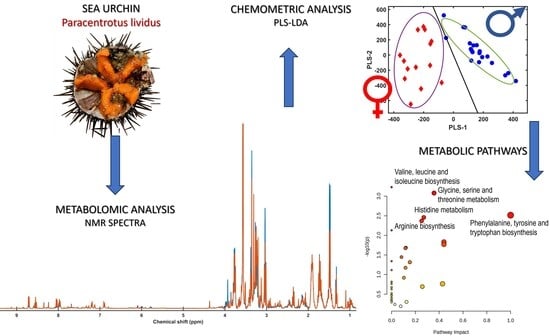
Sex-Driven Variation in Polar Metabolites and Lipid Motifs of Paracentrotus lividus Gonads Profiled by 1H NMR
 and
and
Highlights
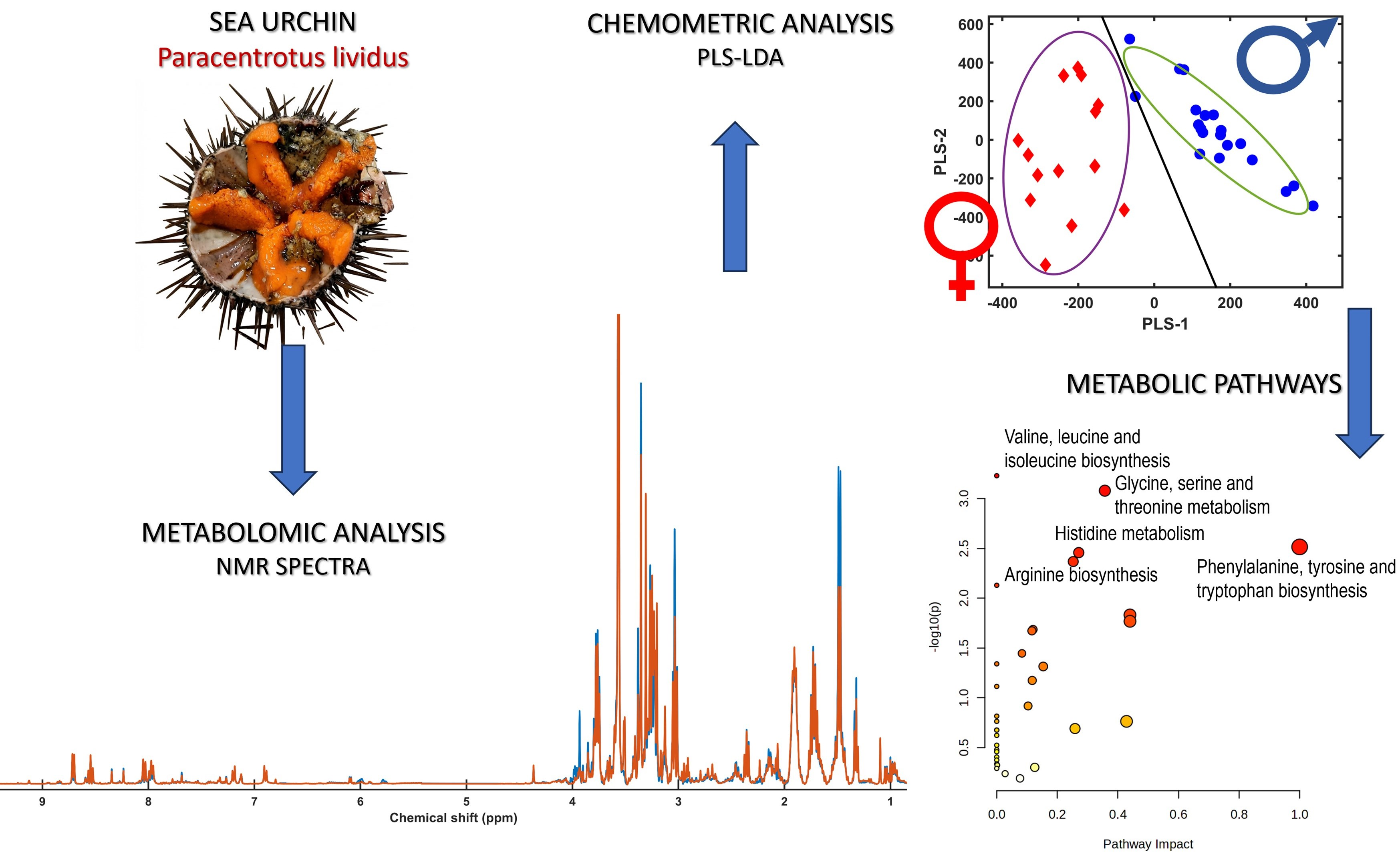
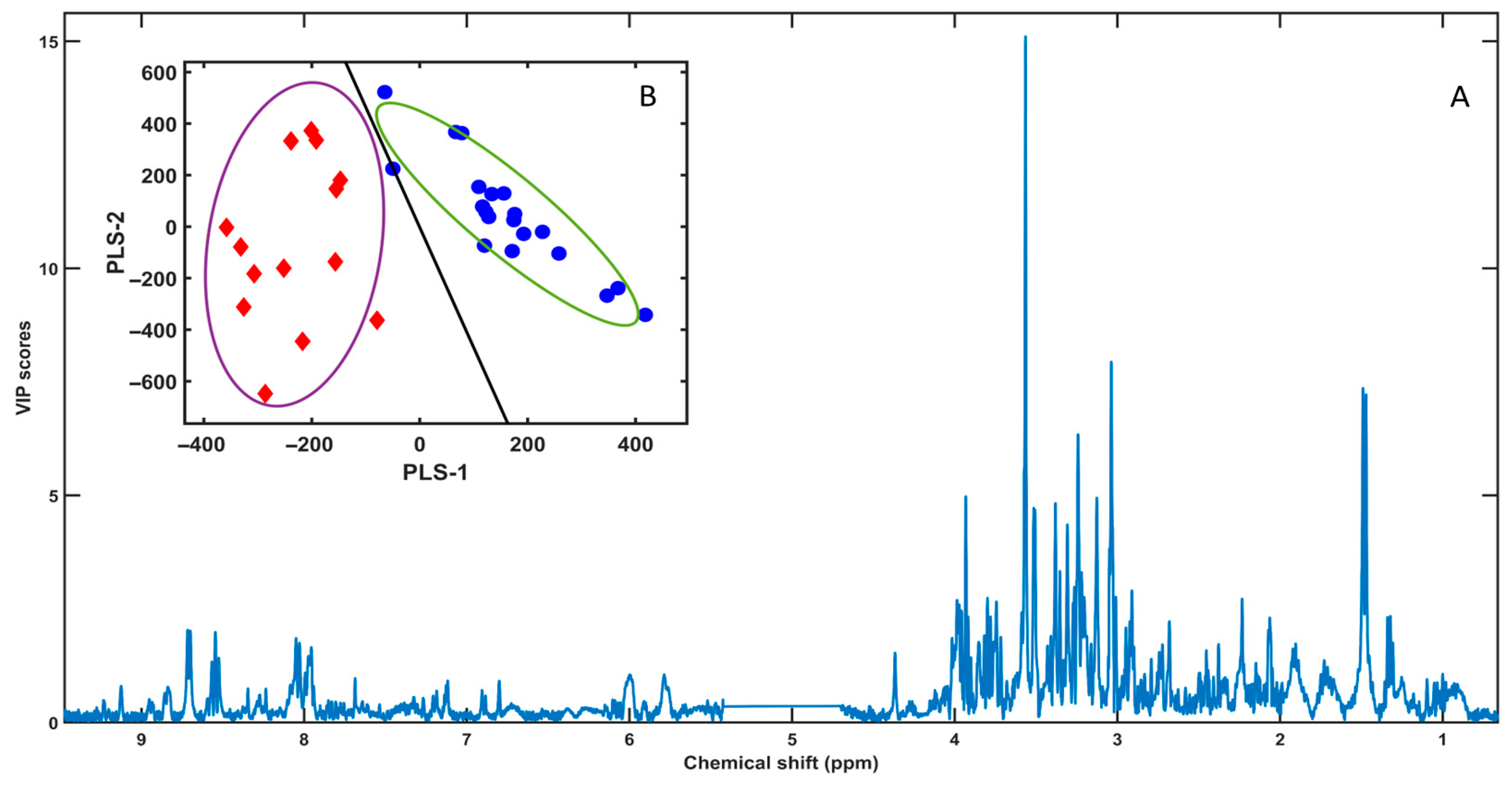
- Paracentrotus lividus gonads show clear sex-linked 1H NMR fingerprints when polar and apolar fractions are profiled together.
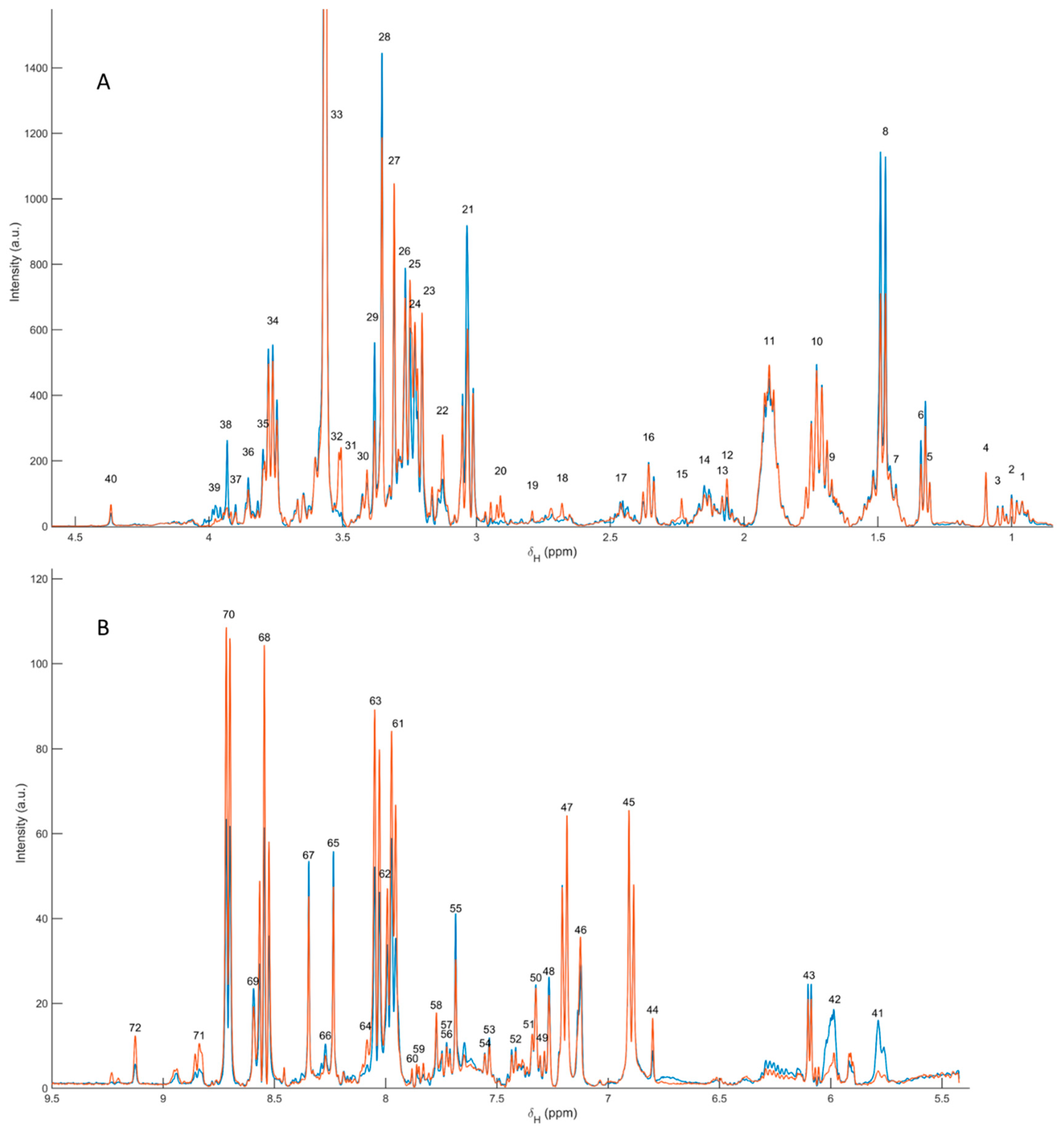
- A curated polar metabolite annotation is provided (37 metabolites; 71 assigned resonances), supported by 1D NMR and HSQC confirmation.
- The curated peak list and reporting workflow offer a reusable reference framework for reproducible NMR metabolomics in sea urchin gonads and related matrices.
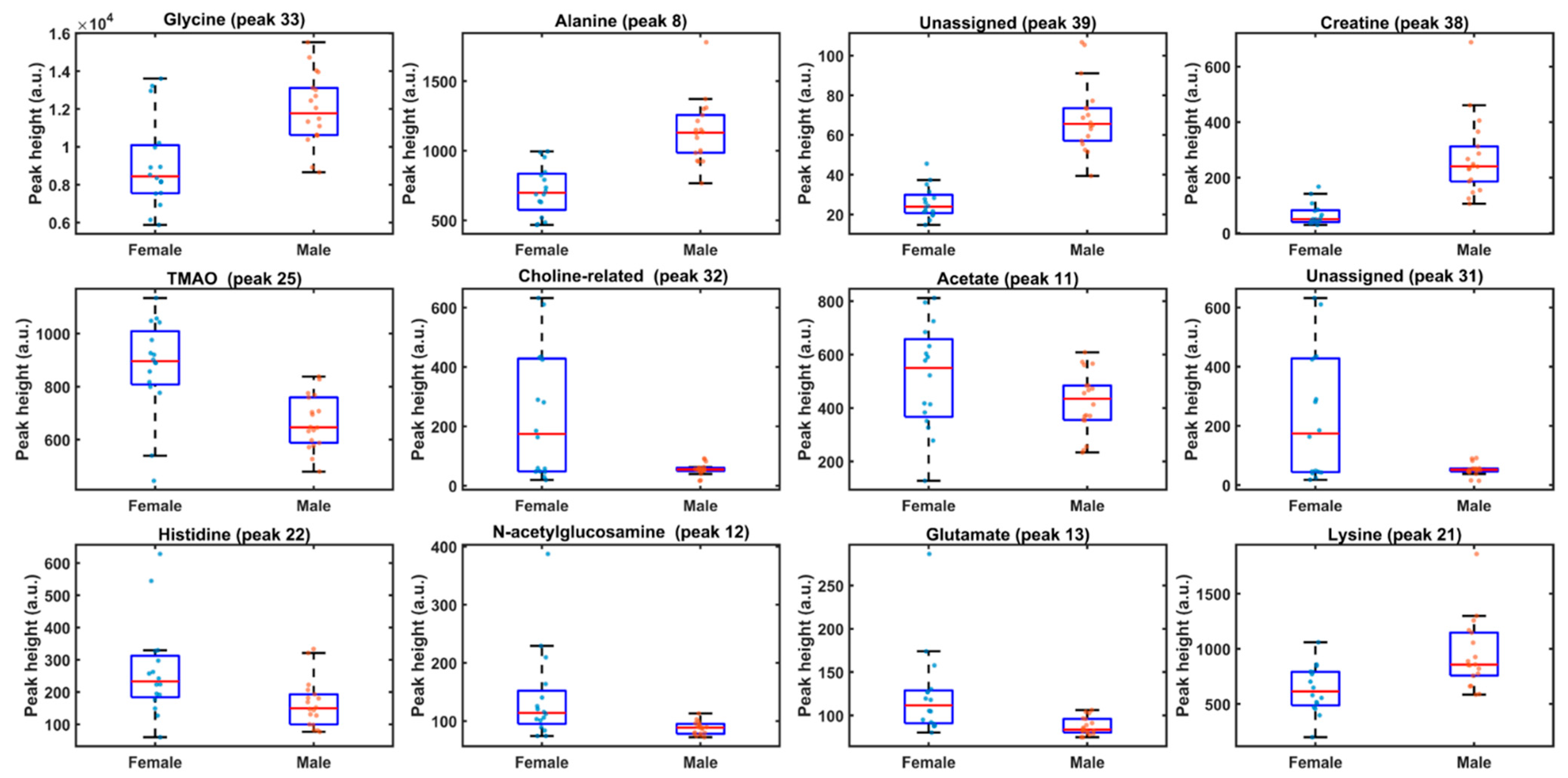
- Sex-linked markers and lipid-motif readouts can be cited as a baseline for comparative studies (season, diet, site, aquaculture conditions) and for future authentication/quality investigations.
Abstract
1. Introduction
2. Materials and Methods
2.1. Biological Material and Study Design
2.2. Lyophilization and Sample Preparation
2.3. Biphasic Extraction of Polar and Apolar Metabolites
2.4. NMR Sample Preparation
2.5. 1H NMR Data Acquisition
2.6. Spectral Processing and Data Handling
2.7. Metabolite Annotation Strategy
2.8. Statistical Analysis and Chemometric Modelling
2.9. Pathway Analysis (MetaboAnalyst)
2.10. Apolar Extract Quantification and Lipid Index Calculation
3. Results
3.1. 1H NMR Spectral Overview and Metabolite Annotation (Polar Extracts)
3.2. PLS-LDA Model
3.3. SPA-Based Variable Selection and COSS Ranking
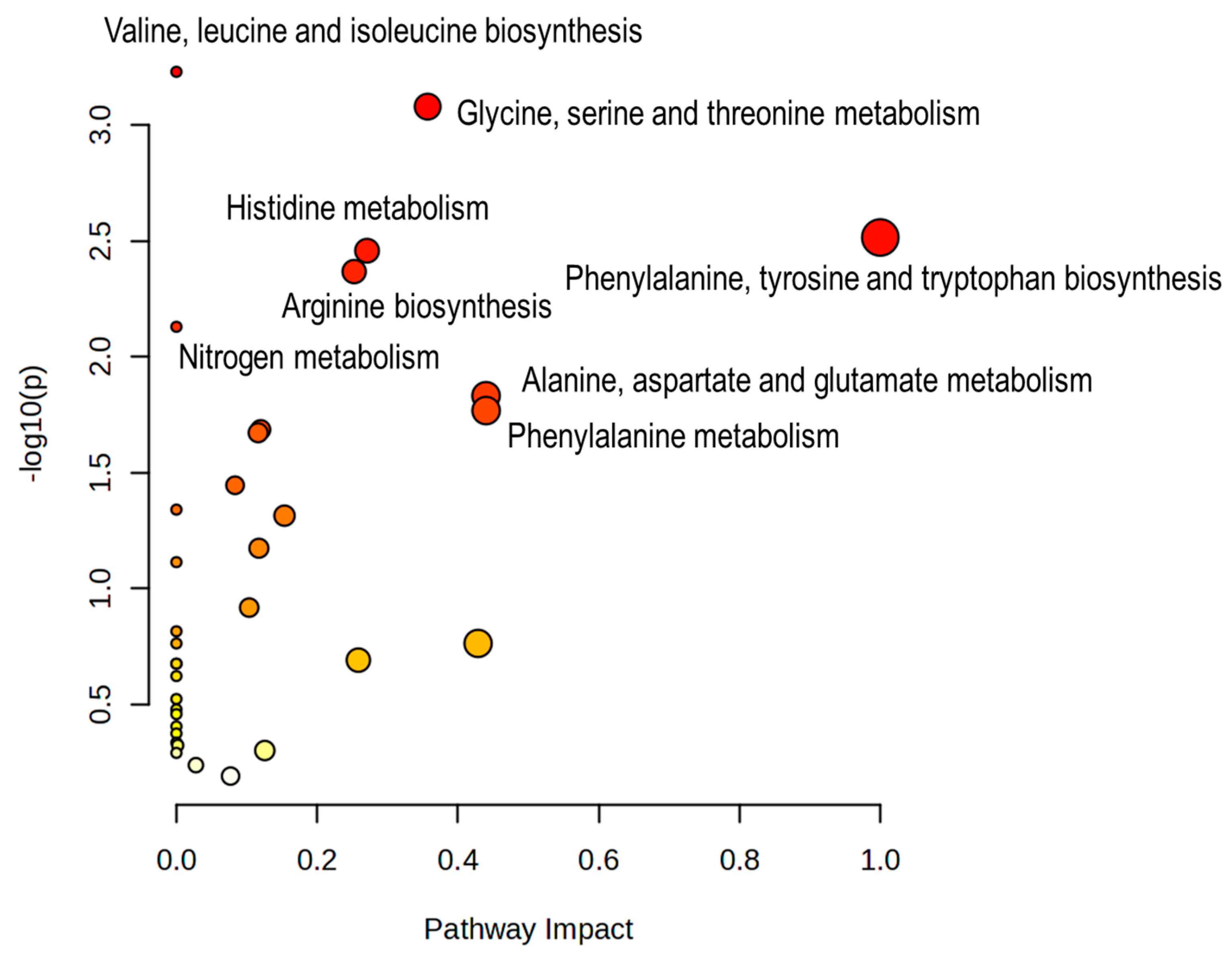
3.4. MetaboAnalyst Pathway Representation of the Annotated Polar Metabolome
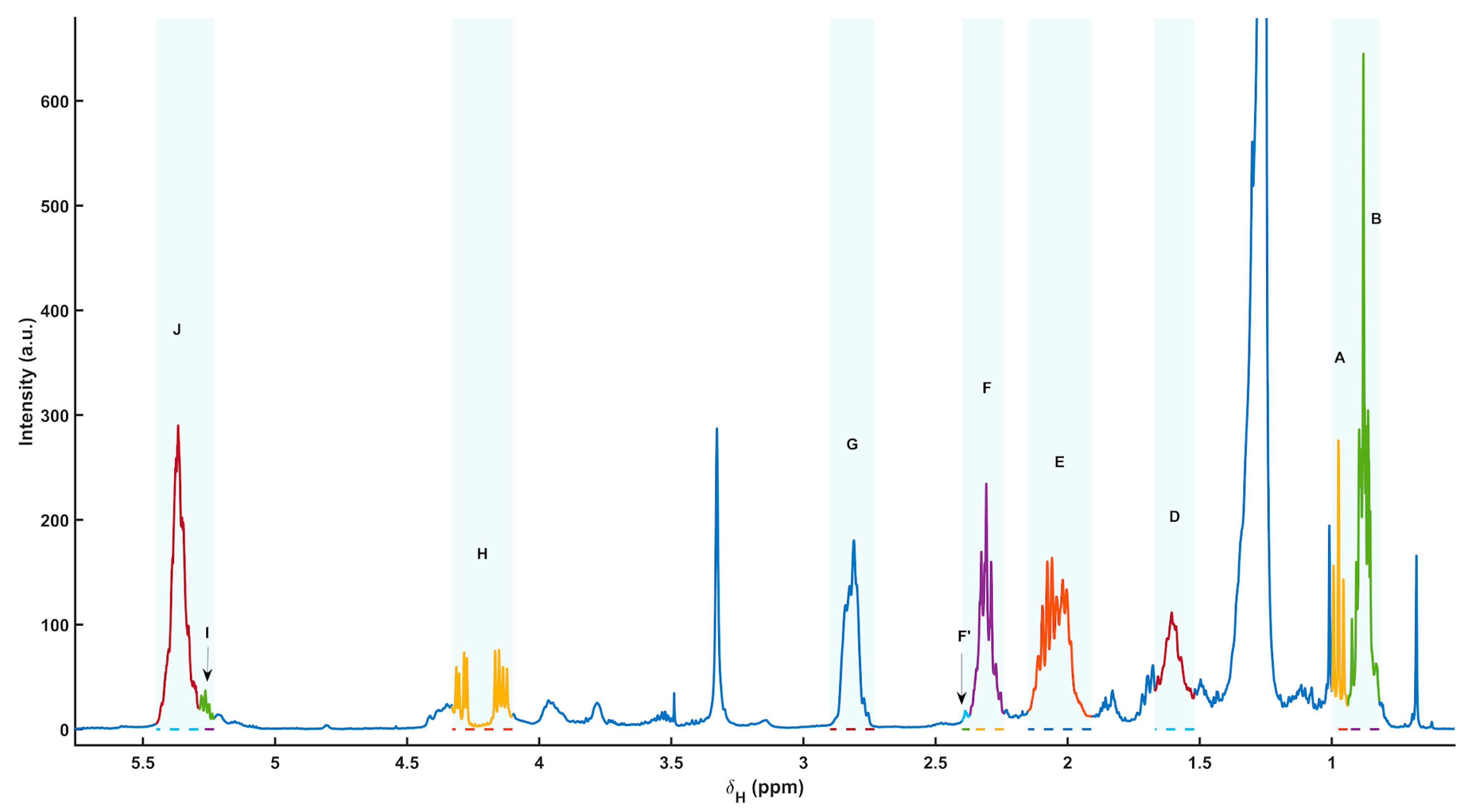
3.5. 1H NMR Spectral Overview and Metabolite Annotation (Apolar Extracts)
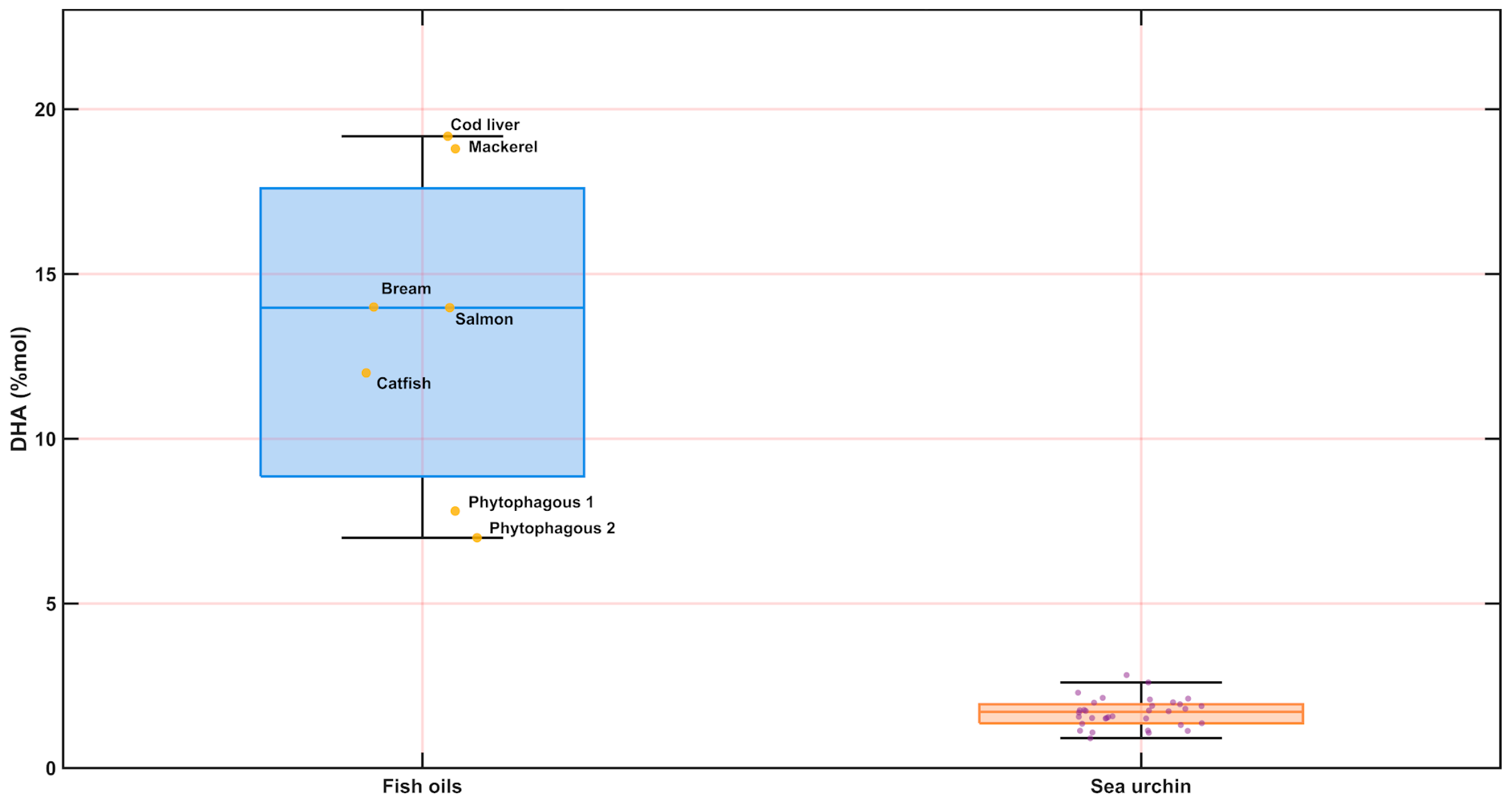
3.6. Lipid Class Estimation Using Bratu Equations and Comparison with Fish Oils
3.7. Sex-Related Differences and Multivariate Separability (Apolar Metrics)
4. Discussion
4.1. Multivariate Evidence of Robust Sex Separation and Model Validation
4.2. Discriminant Variables Converge on Osmolyte Balance, Amino-Acid Pools, and Energy Buffering
4.3. Pathway Analysis: Strong Amino-Acid and One-Carbon Signatures, with an Important Caveat on Directionality
4.4. Integrating Sex Biology of P. lividus Gonads with the Observed Metabolite Shifts
4.5. Interpretive Scope, Limitations, and Recommended Confirmatory Steps
4.6. Interpreting Apolar 1H NMR Lipid Signatures in Paracentrotus lividus Gonads: Ecological Drivers, Limitations, and Next Steps
5. Conclusions
Supplementary Materials
Author Contributions
Funding
Institutional Review Board Statement
Informed Consent Statement
Data Availability Statement
Acknowledgments
Conflicts of Interest
References
- Baião, L.F.; Moura, A.P.; Rocha, C.; Valente, L.M.P.; Cunha, L.M. Dimensions for the valorisation of sea urchin (Paracentrotus lividus) gonads production through the eyes of experienced chefs. Int. J. Gastron. Food Sci. 2021, 26, 100438. [Google Scholar] [CrossRef]
- Camacho, C.; Correia, T.; Teixeira, B.; Mendes, R.; Valente, L.M.P.; Pessoa, M.F.; Nunes, M.L.; Gonçalves, A. Nucleotides and free amino acids in sea urchin Paracentrotus lividus gonads: Contributions for freshness and overall taste. Food Chem. 2023, 404, 134505. [Google Scholar] [CrossRef]
- Rocha, F.; Baião, L.F.; Moutinho, S.; Reis, B.; Oliveira, A.; Arenas, F.; Maia, M.R.G.; Fonseca, A.J.M.; Pintado, M.; Valente, L.M.P. The effect of sex, season and gametogenic cycle on gonad yield, biochemical composition and quality traits of Paracentrotus lividus along the North Atlantic coast of Portugal. PeerJ 2019, 9, 2994. [Google Scholar] [CrossRef]
- Powers, R.; Andersson, E.R.; Bayless, A.L.; Brua, R.B.; Chang, M.C.; Cheng, L.L.; Clendinen, C.S.; Cochran, D.; Copié, V.; Cort, J.R.; et al. Best Practices in NMR Metabolomics: Current State. Trends Anal. Chem. 2024, 171, 117478. [Google Scholar] [CrossRef]
- Sumner, L.W.; Amberg, A.; Barrett, D.; Beale, M.H.; Beger, R.; Daykin, C.A.; Fan, T.W.M.; Fiehn, O.; Goodacre, R.; Griffin, J.L.; et al. Proposed minimum reporting standards for chemical analysis. Metabolomics 2007, 3, 211–221. [Google Scholar] [CrossRef] [PubMed]
- Nagana Gowda, G.A.; Raftery, D. Quantitative NMR Methods in Metabolomics. Handb. Exp. Pharmacol. 2023, 277, 143–164. [Google Scholar] [CrossRef]
- Carbonell-Garzón, E.; Ibanco-Cañete, R.; Sanchez-Jerez, P.; Egea, F.C.M. Osmolytes vs. Anabolic Reserves: Contrasting Gonadal Metabolomes in Two Sympatric Mediterranean Sea Urchins. Metabolites 2025, 15, 787. [Google Scholar] [CrossRef] [PubMed]
- Wang, H.; Zhao, W.; Ding, B.; Zhang, Y.; Huang, X.; Liu, X.; Zuo, R.; Chang, Y.; Ding, J. Comparative lipidomics profiling of the sea urchin, Strongylocentrotus intermedius. Comp. Biochem. Physiol. Part D Genom. Proteom. 2021, 40, 100900. [Google Scholar] [CrossRef] [PubMed]
- Amai, S.; Yuki, K.; Gowda, S.G.B.; Gowda, D.; Hui, S.-P. Lipidomic Profiling of Edible Japanese Sea Urchins by LC–MS. Foods 2025, 14, 2268. [Google Scholar] [CrossRef]
- Haug, K.; Cochrane, K.; Nainala, V.C.; Williams, M.; Chang, J.; Jayaseelan, K.V.; O’Donovan, C. MetaboLights: A resource evolving in response to the needs of its scientific community. Nucleic Acids Res. 2020, 48, D440–D444. [Google Scholar] [CrossRef]
- Bingol, K.; Li, D.W.; Zhang, B.; Brüschweiler, R. Comprehensive Metabolite Identification Strategy Using Multiple Two-Dimensional NMR Spectra of a Complex Mixture Implemented in the COLMARm Web Server. Anal. Chem. 2016, 88, 12411–12418. [Google Scholar] [CrossRef] [PubMed]
- Badaoui, W.; Marhuenda-Egea, F.C.; Valero-Rodriguez, J.M.; Sanchez-Jerez, P.; Arechavala-Lopez, P.; Toledo-Guedes, K. Metabolomic and Lipidomic Tools for Tracing Fish Escapes from Aquaculture Facilities. ACS Food Sci. Technol. 2024, 4, 871–879. [Google Scholar] [CrossRef] [PubMed]
- Aursand, M.; Standal, I.B.; Gribbestad, I.S.; Martinez, I. Omega-3 fatty acid content of intact muscle of farmed Atlantic salmon (Salmo salar) examined by 1H MAS NMR spectroscopy. In Modern Magnetic Resonance; Webb, G., Ed.; Springer: Cham, Switzerland, 2018; pp. 1917–1925. [Google Scholar] [CrossRef]
- Igarashi, T.; Aursand, M.; Sacchi, R.; Paolillo, L.; Nonaka, M.; Wada, S. Determination of docosahexaenoic acid and n-3 fatty acids in refined fish oils by H-1-NMR spectroscopy: IUPAC interlaboratory study. J. AOAC Int. 2002, 85, 1341–1354. [Google Scholar] [CrossRef]
- Cravero, B.H.; Prez, G.; Lombardo, V.A.; Guastaferri, F.V.; Delprato, C.B.; Altabe, S.; de Mendoza, D.; Binolfi, A. A high-resolution 13C NMR approach for profiling fatty acid unsaturation in lipid extracts and in live Caenorhabditis elegans. J. Lipid Res. 2024, 65, 100618. [Google Scholar] [CrossRef]
- Nieva-Echevarría, B.; Goicoechea, E.; Manzanos, M.J.; Guillén, M.D. Usefulness of 1H NMR in assessing the extent of lipid digestion. Food Chem. 2015, 179, 182–190. [Google Scholar] [CrossRef]
- Ibanco-Cañete, R.; Carbonell-Garzón, E.; Sanchez-Jerez, P.; Marhuenda Egea, F.C. Identification of Sex-Dependent Aroma Compounds in Gonads of Commercially Valuable Sea Urchins: Implications for Gastronomical Use of Paracentrotus lividus. J. Mar. Sci. Eng. 2025, 13, 2160. [Google Scholar] [CrossRef]
- Bligh, E.G.; Dyer, W.J. A Rapid Method of Total Lipid Extraction and Purification. Can. J. Biochem. Physiol. 1959, 37, 911–917. [Google Scholar] [CrossRef] [PubMed]
- Li, H.D.; Xu, Q.S.; Liang, Y.Z. libPLS: An integrated library for partial least squares regression and linear discriminant analysis. Chemom. Intell. Lab. Syst. 2018, 176, 34–43. [Google Scholar] [CrossRef]
- Li, H.-D.; Zeng, M.-M.; Tan, B.-B.; Liang, Y.-Z.; Xu, Q.-S.; Cao, D.-S. Recipe for revealing informative metabolites based on model population analysis. Metabolomics 2010, 6, 353–361. [Google Scholar] [CrossRef]
- Wang, Q.; Li, H.-D.; Xu, Q.-S.; Liang, Y.-Z. Noise incorporated subwindow permutation analysis for informative gene selection using support vector machines. Analyst 2011, 136, 1456–1463. [Google Scholar] [CrossRef]
- Pang, Z.; Lu, Y.; Zhou, G.; Hui, F.; Xu, L.; Viau, C.; Spigelman, A.F.; MacDonald, P.E.; Wishart, D.S.; Li, S.; et al. MetaboAnalyst 6.0: Towards a unified platform for metabolomics data processing, analysis and interpretation. Nucleic Acids Res. 2024, 52, W398–W406. [Google Scholar] [CrossRef] [PubMed]
- Kanehisa, M.; Goto, S. KEGG: Kyoto Encyclopedia of Genes and Genomes. Nucleic Acids Res. 2000, 28, 27–30. [Google Scholar] [CrossRef]
- Bratu, A.; Mihalache, M.; Hanganu, A.; Chira, N.; Todasca, C.; Rosca, S. Quantitative determination of fatty acids from fish oils using GC-MS method and 1H-NMR spectroscopy. UPB Sci. Bull. Ser. B Chem. Mater. Sci. 2013, 75, 23–32. [Google Scholar]
- Szymańska, E.; Saccenti, E.; Smilde, A.K.; Westerhuis, J.A. Double-check: Validation of diagnostic statistics for PLS-DA models in metabolomics studies. Metabolomics 2012, 8, 3–16. [Google Scholar] [CrossRef] [PubMed]
- Broadhurst, D.I.; Kell, D.B. Statistical strategies for avoiding false discoveries in metabolomics and related experiments. Metabolomics 2006, 2, 171–196. [Google Scholar] [CrossRef]
- Westerhuis, J.A.; Hoefsloot, H.C.J.; Smit, S.; Vis, D.J.; Smilde, A.K.; van Velzen, E.J.J.; van Duijnhoven, J.P.M.; van Dorsten, F.A. Assessment of PLSDA cross validation. Metabolomics 2008, 4, 81–89. [Google Scholar] [CrossRef]
- Podbielski, I.; Schmittmann, L.; Sanders, T.; Melzner, F. Acclimation of marine invertebrate osmolyte systems to low salinity: A systematic review & meta-analysis. Front. Mar. Sci. 2022, 9, 934378. [Google Scholar] [CrossRef]
- Yancey, P.H. Organic osmolytes as compatible, metabolic and counteracting cytoprotectants in high osmolarity and other stresses. J. Exp. Biol. 2005, 208, 2819–2830. [Google Scholar] [CrossRef]
- Ellington, W.R. Arginine Kinase and Creatine Kinase Appear to be Present in the Same Cells of an Echinoderm Muscle. J. Exp. Biol. 1991, 158, 591–597. [Google Scholar] [CrossRef]
- Martínez-Pita, I.; García, F.J.; Pita, M.-L. The Effect of Seasonality on Gonad Fatty Acids of the Sea Urchins Paracentrotus lividus and Arbacia lixula (Echinodermata: Echinoidea). J. Shellfish Res. 2010, 29, 517–525. [Google Scholar] [CrossRef]
- Anedda, R.; Siliani, S.; Melis, R.; Loi, B.; Baroli, M. Lipid metabolism of sea urchin Paracentrotus lividus in two contrasting natural habitats. Sci. Rep. 2021, 11, 14174. [Google Scholar] [CrossRef]
- Siliani, S.; Melis, R.; Loi, B.; Guala, I.; Baroli, M.; Sanna, R.; Uzzau, S.; Roggio, T.; Addis, M.F.; Anedda, R. Influence of seasonal and environmental patterns on the lipid content and fatty acid profiles in gonads of the edible sea urchin Paracentrotus lividus from Sardinia. Mar. Environ. Res. 2016, 113, 124–133. [Google Scholar] [CrossRef]
- Sanna, R.; Siliani, S.; Melis, R.; Loi, B.; Baroli, M.; Roggio, T.; Uzzau, S.; Anedda, R. The role of fatty acids and triglycerides in the gonads of Paracentrotus lividus from Sardinia: Growth, reproduction and cold acclimatization. Mar. Environ. Res. 2017, 130, 113–121. [Google Scholar] [CrossRef] [PubMed]
- Rodríguez-Bernaldo de Quiros, A.; López-Hernández, J.; Simal-Lozano, J. Separation of phospholipid classes in sea urchin, Paracentrotus lividus by high-performance liquid chromatography. J. Chromatogr. B 2002, 770, 71–75. [Google Scholar] [CrossRef] [PubMed]
- Montero-Torreiro, M.F.; Garcia-Martinez, P. Seasonal changes in the biochemical composition of body components of the sea urchin, Paracentrotus lividus, in Lorbé (Galicia, north-western Spain). J. Mar. Biol. Assoc. United Kingd. 2003, 83, 575–581. [Google Scholar] [CrossRef]
- Raposo, A.I.G.; Ferreira, S.M.F.; Ramos, R.; Santos, P.M.; Anjos, C.; Baptista, T.; Tecelão, C.; Costa, J.L.; Pombo, A. Effect of three diets on the gametogenic development and fatty acid profile of Paracentrotus lividus (Lamarck, 1816) gonads. Aquac. Res. 2019, 50, 2023–2038. [Google Scholar] [CrossRef]
- Baião, L.F.; Rocha, F.; Costa, M.; Sá, T.; Oliveira, A.; Maia, M.R.G.; Fonseca, A.J.M.; Pintado, M.; Valente, L.M.P. Effect of protein and lipid levels in diets for adult sea urchin Paracentrotus lividus (Lamarck, 1816). Aquaculture 2019, 506, 127–138. [Google Scholar] [CrossRef]



| Variable | Males | Females |
|---|---|---|
| Gonad samples analyzed, n | 23 | 14 |
| Test diameter (mm) | 48.7 ± 6.5 (31.0–58.0) | 52.5 ± 6.5 (41.0–65.0) |
| Test height (mm) | 27.5 ± 3.7 (19.0–32.0) | 29.6 ± 4.2 (24.0–38.0) |
| Total wet weight (g) | 50.0 ± 15.4 (19.2–75.7) | 54.5 ± 20.5 (25.0–100.1) |
| Gonad weight (g) | 4.0 ± 2.3 (0.91–8.83) | 3.7 ± 2.7 (0.90–11.91) |
| Gonadosomatic index (GSI, %) | 7.4 ± 2.9 (3.92–12.87) | 6.5 ± 2.9 (2.55–12.45) |
| Peak No. | δH (ppm) | Mult. | Metabolite | Moiety |
|---|---|---|---|---|
| 1 | 0.9587 | d | Valine | γ-CH3/γ′-CH3 (isopropyl methyls) |
| 2 | 1.0000 | s | Isoleucine (tentative) | δ-CH3 (terminal methyl) |
| 3 | 1.0521 | d | Valine | γ-CH3/γ′-CH3 (isopropyl methyls) |
| 4 | 1.0955 | — | Unassigned | — |
| 5 | 1.3061 | d | Threonine | γ-CH3 |
| 6 | 1.3390 | d | Lactate | β-CH3 |
| 7 | 1.4315 | m | Lysine (tentative) | Side-chain CH2 envelope (β/γ/δ overlap) |
| 8 | 1.4715 | d | Alanine | β-CH3 |
| 9 | 1.6708 | m | Arginine (tentative) | β/γ-CH2 (side-chain methylenes) |
| 10 | 1.7280 | m | Lysine | δ-CH2 (side-chain methylene) |
| 11 | 1.9052 | s | Acetate | CH3 |
| 12 | 2.0630 | s | N-acetylglucosamine (putative) | NAc-CH3 (acetamide methyl) |
| 13 | 2.0816 | m | Glutamate | β-CH2 |
| 14 | 2.1488 | m | Glutamine | β-CH2 |
| 15 | 2.2327 | s | Unassigned | — |
| 16 | 2.3570 | t | Glutamate | γ-CH2 |
| 17 | 2.4600 | — | Glutamine (tentative) | γ-CH2 |
| 18 | 2.6797 | s | Methylamine | CH3–NH3+ (methyl) |
| 19 | 2.7913 | s | Trimethylamine (tentative) | N(CH3)3 |
| 20 | 2.9100 | m | Choline (tentative)/methylamine region | N-methyl region (overlap) |
| 21 | 3.0362 | t | Lysine | ε-CH2 (adjacent to NH3+) |
| 22 | 3.1273 | t | Histidine | β-CH2 |
| 23 | 3.2040 | s | Choline/choline derivatives | N+(CH3)3 (trimethylammonium) |
| 24 | 3.2298 | s | Betaine | N+(CH3)3 |
| 25 | 3.2488 | (s) | Trimethylamine oxide (TMAO) | N+(CH3)3 (amine oxide) |
| 26 | 3.2665 | t | Taurine | CH2–NH3+ |
| 27 | 3.3074 | s | 3,7-Dimethyluric acid (putative) | N-CH3 (xanthine/urate scaffold) |
| 28 | 3.3539 | s | Methanol | CH3OH |
| 29 | 3.3813 | — | Methanol (shoulder)/unassigned | — |
| 30 | 3.410 | s | Unassigned | |
| 31 | 3.5042 | m | Unassigned | CH2–O (carbohydrate/ribose/glycerol-type) |
| 32 | 3.5101 | m | Choline-related (probable) | CH2–O (choline moiety) |
| 33 | 3.5648 | s | Glycine | α-CH2 |
| 34 | 3.7611 | t | Lysine | Hα (backbone CH) |
| 35 | 3.7979 | — | Alanine | Hα (backbone CH) |
| 36 | 3.8532 | m | Trehalose/carbohydrate (putative) | Sugar ring CH envelope |
| 37 | 3.9000 | — | Betaine (tentative) | CH2–COO− |
| 38 | 3.9323 | s | Creatine | CH2 (adjacent to guanidino system) |
| 39 | 3.9800 | — | Unassigned | — |
| 40 | 4.3665 | s | Trigonelline | N-CH3 (quaternary N-methyl) |
| 41 | 5.7910 | d/m | Uridine | H-5 (pyrimidine CH) |
| 42 | 5.9940 | d/m | Pyrimidine nucleoside (uridine/cytidine-like) | H-5 (pyrimidine CH) |
| 43 | 6.1000 | d | Purine riboside/ribonucleotide (inosine/IMP-like) | H-1′ (ribose anomeric proton) |
| 44 | 6.8000 | s | Phenolic aromatic (vanillic/vanillin-like, putative) | Aromatic ring CH |
| 45 | 6.9070 | d | Tyrosine | H-3,5 (AA′BB′ ring CH) |
| 46 | 7.1260 | s | Histidine | Imidazole CH (H-δ2) |
| 47 | 7.1850 | d | Tyrosine | H-2,6 (AA′BB′ ring CH) |
| 48 | 7.2662 | m | Phenylalanine | Aromatic ring CH envelope |
| 49 | 7.2870 | d/m | Tryptophan | Indole ring CH (H-5) |
| 50 | 7.3250 | m | Phenylalanine (tentative) | Aromatic ring CH envelope |
| 51 | 7.3410 | s | Imidazole | Ring CH (H-4/H-5) |
| 52 | 7.4160 | m | Phenylalanine | Aromatic ring CH envelope |
| 53 | 7.5340 | d/m | Tryptophan | Indole ring CH (H-7) |
| 54 | 7.5500 | S | Uracil | H-6 (pyrimidine CH) |
| 55 | 7.6850 | s | Unassigned | Aromatic CH (unknown) |
| 56 | 7.7260 | s/m | Xanthine and/or Tryptophan | Purine H-8 and/or indole aromatic CH |
| 57 | 7.7730 | s | Anserine (putative) | Imidazole CH (histidine-derived) |
| 58 | 7.8510 | s | N-acetyl-L-histidine (putative) | Imidazole CH |
| 59 | 7.8620 | d | Uridine | H-6 (pyrimidine CH) |
| 60 | 7.882 | s | Unassigned | Aromatic CH (unknown) |
| 61 | 7.9730 | t | Kynurenine-like (HSQC-consistent; downfield-shifted) | Aromatic ring CH |
| 62 | 8.0000 | s | Hypoxanthine | H-8 (purine CH) |
| 63 | 8.0283 | d | Kynurenine | -- |
| 64 | 8.0840 | m | Trigonelline (reported) | Pyridinium ring CH |
| 65 | 8.2351 | s | Purine riboside/ribonucleotide (inosine/IMP-like) | Purine H-8 (ring CH) |
| 66 | 8.2710 | s | Imidazole | Ring CH (H-4/H-5) |
| 67 | 8.3460 | s | Purine riboside/ribonucleotide (inosine/IMP-like) | Purine H-2 (ring CH) |
| 68 | 8.5454 | t | Kynurenine | Pyridinium ring CH (overlapped) |
| 69 | 8.5936 | s | Adenine nucleotide (AMP-like) | Adenine H-8 (purine CH) |
| 70 | 8.6998 | m | Kynurenine | |
| 71 | 8.8380 | m | Trigonelline | Pyridinium ring CH (downfield member) |
| 72 | 9.1260 | s/m | Trigonelline | Pyridinium ring CH (most downfield) |
| Peak No. | δH (ppm) | Moiety | Main Lipid Class(es) | Proposed Assignment (Functional Group/Structural Element) |
|---|---|---|---|---|
| 1 | 0.6803 | Sterol methyl (C18–CH3) | Sterols (cholesterol-like) | Sterol “angular” methyl (18-CH3) |
| 2 | 0.8806 | Terminal –CH3 | FA in TAG/DAG/MAG/PL | Terminal methyl of fatty acyl chains (major lipid methyl envelope) |
| 3 | 0.9739 | ω-3 terminal –CH3 | ω-3 PUFA in TAG/PL | ω-3 methyl (EPA/DHA-type chains) |
| 4 | 1.1150 | Aliphatic methyl/methylene | Sterols/FA (minor) | Minor aliphatic resonance (sterol methyls/overlapping lipid methylenes) |
| 5 | 1.2563 | –(CH2)n– | FA in TAG/DAG/MAG/PL | Bulk methylene envelope of fatty acyl chains |
| 6 | 1.3022 | –(CH2)n– | FA in TAG/DAG/MAG/PL | Bulk methylene envelope of fatty acyl chains |
| 7 | 1.4978 | Aliphatic –CH2– | TAG/PL (overlap) | Mixed aliphatic region |
| 8 | 1.6032 | β-CH2 to C=O | TAG/PL (non-DHA enriched) | β-CH2 to carbonyl (acyl groups; “general” lipid region) |
| 9 | 1.6757 | β-CH2 to C=O | PUFA-enriched TAG/PL | β-CH2 to carbonyl (often increases with PUFA-rich acyl distributions) |
| 10 | 1.8282 | Aliphatic/allylic overlap | TAG/PL/sterols | Minor overlapped aliphatic signal |
| 11 | 2.0202 | Allylic –CH2–CH=CH– | UFA in TAG/PL | Allylic methylene (unsaturated acyl chains) |
| 12 | 2.0780 | Allylic –CH2–CH=CH– | UFA in TAG/PL | Allylic methylene (unsaturated acyl chains) |
| 13 | 2.3079 | α-CH2 to C=O | TAG/PL/FFA | α-CH2 to carbonyl (acyl groups; broad “F1-like” region) |
| 14 | 2.3869 | α-CH2 to C=O (DHA-sensitive window) | DHA-containing TAG/PL and/or DHA (FFA) | DHA marker window (α-CH2 near carbonyl for DHA acyl groups/DHA region) |
| 15 | 2.4764 | Minor | Trace/unknown | Unassigned weak resonance |
| 16 | 2.7722 | Bis-allylic –CH=CH–CH2–CH=CH– | PUFA (ω-6/ω-3) | Bis-allylic methylene (PUFA) |
| 17 | 2.8094 | Bis-allylic –CH=CH–CH2–CH=CH– | PUFA (ω-6/ω-3) | Bis-allylic methylene (PUFA) |
| 18 | 2.8424 | Bis-allylic –CH=CH–CH2–CH=CH– | PUFA (ω-6/ω-3) | Bis-allylic methylene (PUFA) |
| 19 | 3.1409 | Headgroup methylenes | PL (PE/others) | Putative ethanolamine-related methylenes (PE-type region) |
| 20 | 3.3273 | N+(CH3)3 | PL (PC/SM) | Choline trimethylammonium (PC/SM “total choline” region) |
| 21 | 3.4892 | Residual solvent proton(s) | — | MeOH trace (residual solvent/contamination) |
| 22 | 3.5343 | Sterol H-3 (–CHOH) | Sterols | Sterol C3 proton (H-3, cholesterol-like) |
| 23 | 3.7723 | –CH2–O– (backbone) | DG/MG and/or PL | Glycerol/PL backbone region (overlap: DG/MG glycerol + PL backbone methylenes) |
| 24 | 3.9490 | –CH2–O–P– (phosphodiester-linked methylene) | PL | Phospholipid backbone region (CH2O–P/adjacent backbone methylenes) |
| 25 | 4.1673 | –CH2–O– (glycerol) | DG/MG and/or PL | Glycerol backbone methylenes (MG/DG) with possible PL overlap |
| 26 | 4.2848 | –CH2–O– (glycerol) | DG (1,2-DG) and/or PL | DG/PL backbone methylenes (often used for partial glycerides; overlaps PL) |
| 27 | 4.3841 | –CH2–CH2–N+(CH3)3 (choline methylenes) | PL (PC/SM) | Choline methylene region (PC/SM headgroup side-chain) |
| 28 | 5.2784 | sn-2 glycerol –CH–O– | TAG (± overlap) | TAG glycerol sn-2 CH |
| 29 | 5.3654 | Olefinic –CH=CH– (± sterol H-6 overlap) | UFA in TAG/PL + sterols | Olefinic protons of unsaturated acyl chains; can overlap sterol H-6 |
Disclaimer/Publisher’s Note: The statements, opinions and data contained in all publications are solely those of the individual author(s) and contributor(s) and not of MDPI and/or the editor(s). MDPI and/or the editor(s) disclaim responsibility for any injury to people or property resulting from any ideas, methods, instructions or products referred to in the content. |
© 2026 by the authors. Licensee MDPI, Basel, Switzerland. This article is an open access article distributed under the terms and conditions of the Creative Commons Attribution (CC BY) license.
Share and Cite
Ibanco-Cañete, R.; Carbonell-Garzón, E.; Amorós-Trujillo, S.; Sanchez-Jerez, P.; Marhuenda Egea, F.C. Sex-Driven Variation in Polar Metabolites and Lipid Motifs of Paracentrotus lividus Gonads Profiled by 1H NMR. Metabolites 2026, 16, 211. https://doi.org/10.3390/metabo16030211
Ibanco-Cañete R, Carbonell-Garzón E, Amorós-Trujillo S, Sanchez-Jerez P, Marhuenda Egea FC. Sex-Driven Variation in Polar Metabolites and Lipid Motifs of Paracentrotus lividus Gonads Profiled by 1H NMR. Metabolites. 2026; 16(3):211. https://doi.org/10.3390/metabo16030211
Chicago/Turabian StyleIbanco-Cañete, Ricardo, Estela Carbonell-Garzón, Sergio Amorós-Trujillo, Pablo Sanchez-Jerez, and Frutos Carlos Marhuenda Egea. 2026. "Sex-Driven Variation in Polar Metabolites and Lipid Motifs of Paracentrotus lividus Gonads Profiled by 1H NMR" Metabolites 16, no. 3: 211. https://doi.org/10.3390/metabo16030211
APA StyleIbanco-Cañete, R., Carbonell-Garzón, E., Amorós-Trujillo, S., Sanchez-Jerez, P., & Marhuenda Egea, F. C. (2026). Sex-Driven Variation in Polar Metabolites and Lipid Motifs of Paracentrotus lividus Gonads Profiled by 1H NMR. Metabolites, 16(3), 211. https://doi.org/10.3390/metabo16030211