1. Introduction
Tomato (
Solanum lycopersicum L.) is one of the most widely consumed fresh vegetables globally, valued for its rich content of essential nutrients, antioxidants, and phytochemicals that contribute to human health. Specifically, tomato fruits are rich in bioactive components including enzymes, vitamins, sugars, monounsaturated fatty acids (linoleic and linolenic acids), amino acids, phenolics, carotenoids, and flavonoids, which collectively define their nutritional and commercial importance [
1]. As a staple in daily diets, improving tomato fruit quality—encompassing nutritional value, aroma, taste, and health-promoting properties—has long been a key focus in horticultural and agricultural research, given its direct implications for consumer health and market competitiveness.
Fruit quality and nutritional value are largely determined by metabolite composition at harvest. Among these metabolites, antioxidants and health-beneficial compounds such as vitamin C, vitamin E, lycopene, β-carotene, lutein, and flavonoids (e.g., quercetin) are particularly critical, as they are closely associated with reduced risks of chronic diseases in humans [
2]. Previous studies have shown that variations in early fruit development and metabolite composition can significantly influence the taste and overall quality of ripe tomatoes, highlighting the importance of understanding the regulatory mechanisms underlying fruit metabolic homeostasis [
3].
The ubiquitin–proteasome system (UPS) is widely recognized as a central regulatory pathway governing nearly all aspects of plant growth and development [
4,
5], including seed size determination, cell signal transduction, programmed cell death, responses to biotic and abiotic stresses, circadian rhythms, and developmental transitions [
6]. Within the UPS, proteasomes—multisubunit protein complexes responsible for degrading unneeded or damaged proteins via proteolysis—play a pivotal role in maintaining cellular protein homeostasis. Recent advances in tomato research have revealed that silencing the proteasome subunit PBB2 can delay fruit ripening [
7], a process tightly linked to changes in fruit quality. However, despite growing knowledge of PBB2’s role in ripening, its specific impact on tomato nutritional quality and associated metabolic changes remains largely unexplored, representing a significant knowledge gap in the field [
8].
Notably, although the UPS has been extensively studied in plant growth and stress responses, there is limited consensus on how individual proteasome subunits regulate specific fruit quality traits. Controversies persist regarding the tissue-specific functions of proteasome subunits: some studies suggest that proteasome-mediated regulation is highly conserved across plant organs [
9], while others propose organ-specific regulatory networks that may differ between vegetative tissues and reproductive organs (e.g., fruits) [
10]. This discrepancy underscores the need for targeted investigations into proteasome subunits in fruit-specific contexts.
Metabolomics has emerged as a powerful tool in systems biology, enabling the comprehensive profiling and quantification of small-molecule metabolites in biological samples. This approach facilitates the identification of metabolic changes induced by genetic modifications or environmental treatments, thereby providing insights into underlying physiological and biochemical processes in plants. Given the lack of research on PBB2 in tomato nutritional quality, high-resolution untargeted metabolomics offers an ideal strategy to elucidate metabolic perturbations associated with PBB2 silencing.
In this study, we aimed to investigate the effect of the proteasome subunit PBB2 on tomato fruit quality and related metabolic pathways using high-resolution untargeted metabolomics. Our findings demonstrate that PBB2 silencing leads to significant alterations in key metabolic pathways, including those involved in carbon fixation and energy metabolism, thereby influencing tomato nutritional quality. This study addresses the existing knowledge gap regarding the link between proteasome function and fruit nutritional quality and provides novel theoretical support for developing strategies to improve tomato nutritional value.
4. Discussion
In plants, the ubiquitin–26S proteasome system (UPS) serves as a crucial post-translational regulatory pathway for protein degradation. Its substrate range is exceptionally broad, encompassing nearly all aspects of the plant life cycle, including cell signaling, growth and development, circadian rhythms, and responses to biotic and abiotic stresses [
14,
15]. However, our understanding of UPS function, particularly its role in pigment metabolism during fruit ripening, remains limited [
16,
17,
18].
A hallmark of fruit ripening is the transformation of chloroplasts into chromoplasts, a process involving chlorophyll degradation, thylakoid disassembly, and carotenoid accumulation [
19]. The UPS regulates chloroplast proteome assembly and composition through multiple mechanisms [
20]. First, within the nucleus, transcription factors such as Golden2-like (Glk) promote the expression of nuclear-encoded photosynthetic preproteins, thereby facilitating chloroplast biogenesis [
21]. Second, in the cytosol, unimported preproteins are targeted for degradation by the UPS—a process mediated by the chaperone Hsc70-4 and the E3 ligase CHIP—to prevent cytotoxic aggregation [
22,
23]. Third, under low-gibberellin conditions, unassembled Toc159 can be degraded by the UPS following DELLA factor binding, thereby inhibiting premature chloroplast development prior to germination [
24]. Finally, chloroplast-resident proteins themselves may be selectively degraded via the CHLORAD (chloroplast-associated protein degradation) system during specific developmental phases or under stress conditions [
25,
26,
27].
Recent studies have identified several UPS components that directly regulate pigment metabolism. The plastid outer membrane-localized RING-type E3 ligase SP1 (Suppressor of ppi1 locus 1) mediates the selective degradation of plastid proteins, thereby influencing plastid transition during ripening [
26]. Similarly, the E3 ligase SPL1 promotes chloroplast-to-chromoplast conversion. In tomato, the CUL4–DDB1–DET1 E3 ligase complex modulates plastid levels and pigment accumulation by targeting transcription factors such as SlGLK2 and SlBBX20 for degradation [
28]. This regulatory network is further fine-tuned through the interaction of the CUL4–DDB1–DET1 complex with the methylation-recognition protein SlMBD5 [
29]. Beyond tomatoes, UPS-mediated chlorophyll degradation has been documented in other fruits: In apples, the ethylene-responsive module MdPUB24–MdBEL7 regulates this process during storage [
30]. In bananas, UPS-dependent chlorophyll breakdown involves multiple regulatory layers: the RING-type E3 ligase MaLUL2 contributes to chlorophyll catabolism, while high-temperature-induced “green ripening” is driven by the MaASR3–MaHDT1–MaNIP1 complex, which inhibits chlorophyll degradation through histone deacetylation [
31]. Concurrently, elevated temperatures also promote MaNIP1-mediated ubiquitination and proteasomal degradation of the chlorophyll-catabolizing enzyme MaNYC1, further modulating the degreening process [
32]. These findings collectively illustrate the complexity and species specificity of UPS-related regulatory networks in controlling fruit chlorophyll metabolism under varying physiological and environmental conditions.
Carotenoid accumulation is equally critical for fruit ripening. In tomato, the stability of PSY1—a key rate-limiting enzyme in carotenoid biosynthesis—is post-translationally controlled through ubiquitination by the E3 ligase PPSR1 and subsequent 26S proteasomal degradation, thereby modulating carotenoid levels [
33]. In watermelons, lycopene accumulation is negatively regulated by lycopene β-cyclase (ClLCYB), which converts lycopene to β-carotene. Naturally occurring missense mutations in ClLCYB reduce protein abundance by altering its ubiquitination-mediated turnover, leading to the distinct red, yellow, and white flesh phenotypes observed in different watermelon varieties [
34].
Collectively, these findings underscore the UPS as a central, multifaceted regulator of pigment metabolism during fruit ripening. It operates at multiple levels—from transcriptional regulation and protein import to the targeted turnover of metabolic enzymes—to coordinate the complex physiological transition from chloroplasts to chromoplasts. Future research should focus on elucidating the specific E3 ligase–substrate networks and signaling cascades that integrate UPS activity with hormonal and environmental cues to precisely control ripening-associated pigment changes across diverse fruit species.
Author Contributions
Conceptualization, C.W.; methodology, C.W.; software, L.J.; validation, C.W., L.J., D.F. and W.T.; formal analysis, W.T.; investigation, C.W.; resources, D.F.; data curation, C.W.; writing—original draft preparation, C.W.; writing—review and editing, D.F.; visualization, W.T.; supervision, W.T. All authors have read and agreed to the published version of the manuscript.
Funding
This research was funded by the R&D Program of Beijing Municipal Education Commission (KM202410858001), Beijing Natural Science Foundation (6264029) and the National Natural Science Foundation of China (32460613).
Institutional Review Board Statement
Not applicable.
Informed Consent Statement
Not applicable.
Data Availability Statement
The original contributions presented in the study are included in the article/
Supplementary Material. Further inquiries can be directed to the corresponding authors.
Acknowledgments
We gratefully acknowledge Shanghai Applied Protein Technology Co., Ltd. (APTBIO) for their professional metabolomics analysis services. The high-quality metabolomic data provided were crucial for the success of this research project. Their technical expertise and efficient service significantly contributed to our data interpretation and experimental progress.
Conflicts of Interest
The authors declare no conflicts of interest.
Abbreviations
The following abbreviations are used in this manuscript:
| KEGG | Kyoto Encyclopedia of Genes and Genomes |
| UPS | Ubiquitin–proteasome system |
| DPA | Days post-anthesis |
| TIC | Total ion chromatogram |
| QC | Quality control |
| PCA | Principal Component Analysis |
| PLS-DA | The partial least squares–discriminant analysis |
| RSD | Relative standard deviation |
| OPLS- DA | Orthogonal projections to latent structures discriminant analysis |
References
- Ali, M.Y.; Sina, A.A.I.; Khandker, S.S.; Neesa, L.; Tanvir, E.M.; Kabir, A.; Khalil, M.I.; Gan, S.H. Nutritional Composition and Bioactive Compounds in Tomatoes and Their Impact on Human Health and Disease: A Review. Foods 2020, 10, 45. [Google Scholar] [CrossRef] [PubMed]
- Gürbüz Çolak, N.; Eken, N.T.; Ülger, M.; Frary, A.; Doğanlar, S. Mapping of quantitative trait loci for antioxidant molecules in tomato fruit: Carotenoids, vitamins C and E, glutathione and phenolic acids. Plant Sci. 2020, 292, 110393. [Google Scholar] [CrossRef]
- Mounet, F.; Moing, A.; Garcia, V.; Petit, J.; Maucourt, M.; Deborde, C.; Bernillon, S.; Le Gall, G.; Colquhoun, I.; Defernez, M.; et al. Gene and Metabolite Regulatory Network Analysis of Early Developing Fruit Tissues Highlights New Candidate Genes for the Control of Tomato Fruit Composition and Development. Plant Physiol. 2009, 149, 1505–1528. [Google Scholar] [CrossRef]
- Bard, J.A.M.; Goodall, E.A.; Greene, E.R.; Jonsson, E.; Dong, K.C.; Martin, A. Structure and Function of the 26S Proteasome. Annu. Rev. Biochem. 2018, 87, 697–724. [Google Scholar] [CrossRef]
- Hua, Z.; Vierstra, R.D. The Cullin-RING Ubiquitin-Protein Ligases. Annu. Rev. Plant Biol. 2011, 62, 299–334. [Google Scholar] [CrossRef]
- Hua, Z.; Yu, P. Diversifying Evolution of the Ubiquitin-26S Proteasome System in Brassicaceae and Poaceae. Int. J. Mol. Sci. 2019, 20, 3226. [Google Scholar] [CrossRef] [PubMed]
- Zhang, P.; Wang, C.; Jia, W.; Jiang, C.; Fu, D. 26S Proteasome Subunit SlPBB2 Regulates Fruit Development and Ripening in Tomato. J. Agric. Food Chem. 2025, 73, 2991–2998. [Google Scholar] [CrossRef]
- Jia, W.; Liu, G.; Zhang, P.; Li, H.; Peng, Z.; Wang, Y.; Jemrić, T.; Fu, D. The Ubiquitin–26S Proteasome Pathway and Its Role in the Ripening of Fleshy Fruits. Int. J. Mol. Sci. 2023, 24, 2750. [Google Scholar] [CrossRef]
- Sahu, P.P.; Sharma, N.; Puranik, S.; Chakraborty, S.; Prasad, M. Author Correction: Tomato 26S Proteasome subunit RPT4a regulates ToLCNDV transcription and activates hypersensitive response in tomato. Sci. Rep. 2024, 14, 24773. [Google Scholar] [CrossRef] [PubMed]
- Yu, H.; Cao, Y.; Yang, Y.; Shan, J.; Ye, W.; Dong, N.; Kan, Y.; Zhao, H.; Lu, Z.; Guo, S.; et al. SCE1 module integrates ubiquitination and SUMOylation to regulate heat tolerance in rice. Mol. Plant 2024, 17, 1899–1918. [Google Scholar] [CrossRef]
- Powell, A.L.T.; Nguyen, C.V.; Hill, T.; Cheng, K.L.; Figueroa-Balderas, R.; Aktas, H.; Ashrafi, H.; Pons, C.; Fernández-Muñoz, R.; Vicente, A.; et al. Uniform ripening Encodes a Golden 2-like Transcription Factor Regulating Tomato Fruit Chloroplast Development. Science 2012, 336, 1711–1715. [Google Scholar] [CrossRef]
- Fraser, P.D.; Truesdale, M.R.; Bird, C.R.; Schuch, W.; Bramley, P.M. Carotenoid Biosynthesis during Tomato Fruit Development (Evidence for Tissue-Specific Gene Expression). Plant Physiol. 1994, 105, 405–413. [Google Scholar] [CrossRef] [PubMed]
- Aviram, R.; Manella, G.; Kopelman, N.; Neufeld-Cohen, A.; Zwighaft, Z.; Elimelech, M.; Adamovich, Y.; Golik, M.; Wang, C.; Han, X.; et al. Lipidomics Analyses Reveal Temporal and Spatial Lipid Organization and Uncover Daily Oscillations in Intracellular Organelles. Mol. Cell 2016, 62, 636–648. [Google Scholar] [CrossRef]
- Linden, K.J.; Callis, J. The ubiquitin system affects agronomic plant traits. J. Biol. Chem. 2020, 295, 13940–13955. [Google Scholar] [CrossRef]
- Doroodian, P.; Hua, Z. The Ubiquitin Switch in Plant Stress Response. Plants 2021, 10, 246. [Google Scholar] [CrossRef]
- Yuan, Y.; Huang, L.; Lu, H.; Xia, C.; Ramirez, C.; Gao, M.; Zhang, C.; Xiao, F. The ubiquitin ligase SINA3 and the transcription factor WOX14 regulate tomato growth and development. Plant Cell 2025, 37, koaf096. [Google Scholar] [CrossRef] [PubMed]
- Yu, Y.; Meng, X.; Guo, D.; Yang, S.; Zhang, G.; Liang, Z. Grapevine U-Box E3 Ubiquitin Ligase VlPUB38 Negatively Regulates Fruit Ripening by Facilitating Abscisic-Aldehyde Oxidase Degradation. Plant Cell Physiol. 2020, 61, 2043–2054. [Google Scholar] [CrossRef] [PubMed]
- Wang, Y.; Feng, G.; Zhang, Z.; Liu, Y.; Ma, Y.; Wang, Y.; Ma, F.; Zhou, Y.; Gross, R.; Xu, H.; et al. Overexpression of Pti4, Pti5, and Pti6 in tomato promote plant defense and fruit ripening. Plant Sci. 2021, 302, 110702. [Google Scholar] [CrossRef]
- Sadali, N.M.; Sowden, R.G.; Ling, Q.; Jarvis, R.P. Differentiation of chromoplasts and other plastids in plants. Plant Cell Rep. 2019, 38, 803–818. [Google Scholar] [CrossRef]
- Sun, Y.; Jarvis, R.P. Chloroplast Proteostasis: Import, Sorting, Ubiquitination, and Proteolysis. Annu. Rev. Plant Biol. 2023, 74, 259–283. [Google Scholar] [CrossRef]
- Tokumaru, M.; Adachi, F.; Toda, M.; Ito-Inaba, Y.; Yazu, F.; Hirosawa, Y.; Sakakibara, Y.; Suiko, M.; Kakizaki, T.; Inaba, T. Ubiquitin-Proteasome Dependent Regulation of the GOLDEN2-LIKE 1 Transcription Factor in Response to Plastid Signals. Plant Physiol. 2016, 173, 524–535. [Google Scholar] [CrossRef]
- Shen, G.; Adam, Z.; Zhang, H. The E3 ligase AtCHIP ubiquitylates FtsH1, a component of the chloroplast FtsH protease, and affects protein degradation in chloroplasts. Plant J. 2007, 52, 309–321. [Google Scholar] [CrossRef]
- Shen, G.; Yan, J.; Pasapula, V.; Luo, J.; He, C.; Clarke, A.K.; Zhang, H. The chloroplast protease subunit ClpP4 is a substrate of the E3 ligase AtCHIP and plays an important role in chloroplast function. Plant J. 2007, 49, 228–237. [Google Scholar] [CrossRef]
- Shanmugabalaji, V.; Chahtane, H.; Accossato, S.; Rahire, M.; Gouzerh, G.; Lopez-Molina, L.; Kessler, F. Chloroplast Biogenesis Controlled by DELLA-TOC159 Interaction in Early Plant Development. Curr. Biol. 2018, 28, 2616–2623. [Google Scholar] [CrossRef]
- Ling, Q.; Huang, W.; Baldwin, A.; Jarvis, P. Chloroplast Biogenesis Is Regulated by Direct Action of the Ubiquitin-Proteasome System. Science 2012, 338, 655–659. [Google Scholar] [CrossRef] [PubMed]
- Ling, Q.; Sadali, N.M.; Soufi, Z.; Zhou, Y.; Huang, B.; Zeng, Y.; Rodriguez-Concepcion, M.; Jarvis, R.P. The chloroplast-associated protein degradation pathway controls chromoplast development and fruit ripening in tomato. Nat. Plants 2021, 7, 655–666. [Google Scholar] [CrossRef]
- Watson, S.J.; Li, N.; Ye, Y.; Wu, F.; Ling, Q.; Jarvis, R.P.; McFarlane, H.E.; Kleine-Vehn, J.; Schnell, D. Crosstalk between the chloroplast protein import and SUMO systems revealed through genetic and molecular investigation in Arabidopsis. ELife 2021, 10, e60960. [Google Scholar] [CrossRef] [PubMed]
- Xiong, C.; Luo, D.; Lin, A.; Zhang, C.; Shan, L.; He, P.; Li, B.; Zhang, Q.; Hua, B.; Yuan, Z.; et al. A tomato B-box protein SlBBX20 modulates carotenoid biosynthesis by directly activating PHYTOENE SYNTHASE 1, and is targeted for 26S proteasome-mediated degradation. New Phytol. 2019, 221, 279–294. [Google Scholar] [CrossRef]
- Li, Y.; Deng, H.; Miao, M.; Li, H.; Huang, S.; Wang, S.; Liu, Y. Tomato MBD5, a methyl CpG binding domain protein, physically interacting with UV-damaged DNA binding protein-1, functions in multiple processes. New Phytol. 2016, 210, 208–226. [Google Scholar] [CrossRef]
- Wei, Y.; Jin, J.; Xu, Y.; Liu, W.; Yang, G.; Bu, H.; Li, T.; Wang, A. Ethylene-activated MdPUB24 mediates ubiquitination of MdBEL7 to promote chlorophyll degradation in apple fruit. Plant J. 2021, 108, 169–182. [Google Scholar] [CrossRef] [PubMed]
- Luo, Q.; Wei, W.; Zhang, Y.; Kuang, J.; Chen, J.; Lu, W.; Cai, Z.; Shan, W. The MaASR3–MaHDT1 module modulates high-temperature-inhibited chlorophyll breakdown in banana fruit by suppressing the E3 ligase MaNIP1. Hortic. Res. 2025, 12, uhaf172. [Google Scholar] [CrossRef] [PubMed]
- Luo, Q.; Wei, W.; Yang, Y.; Wu, C.; Chen, J.; Lu, W.; Kuang, J.; Shan, W. E3 ligase MaNIP1 degradation of NON-YELLOW COLORING1 at high temperature inhibits banana degreening. Plant Physiol. 2023, 192, 1969–1981. [Google Scholar] [CrossRef] [PubMed]
- Wang, P.; Wang, Y.; Wang, W.; Chen, T.; Tian, S.; Qin, G. Ubiquitination of phytoene synthase 1 precursor modulates carotenoid biosynthesis in tomato. Commun. Biol. 2020, 3, 730. [Google Scholar] [CrossRef] [PubMed]
- Zhang, J.; Sun, H.; Guo, S.; Ren, Y.; Li, M.; Wang, J.; Zhang, H.; Gong, G.; Xu, Y. Decreased Protein Abundance of Lycopene β-Cyclase Contributes to Red Flesh in Domesticated Watermelon1. Plant Physiol. 2020, 183, 1171–1183. [Google Scholar] [CrossRef]
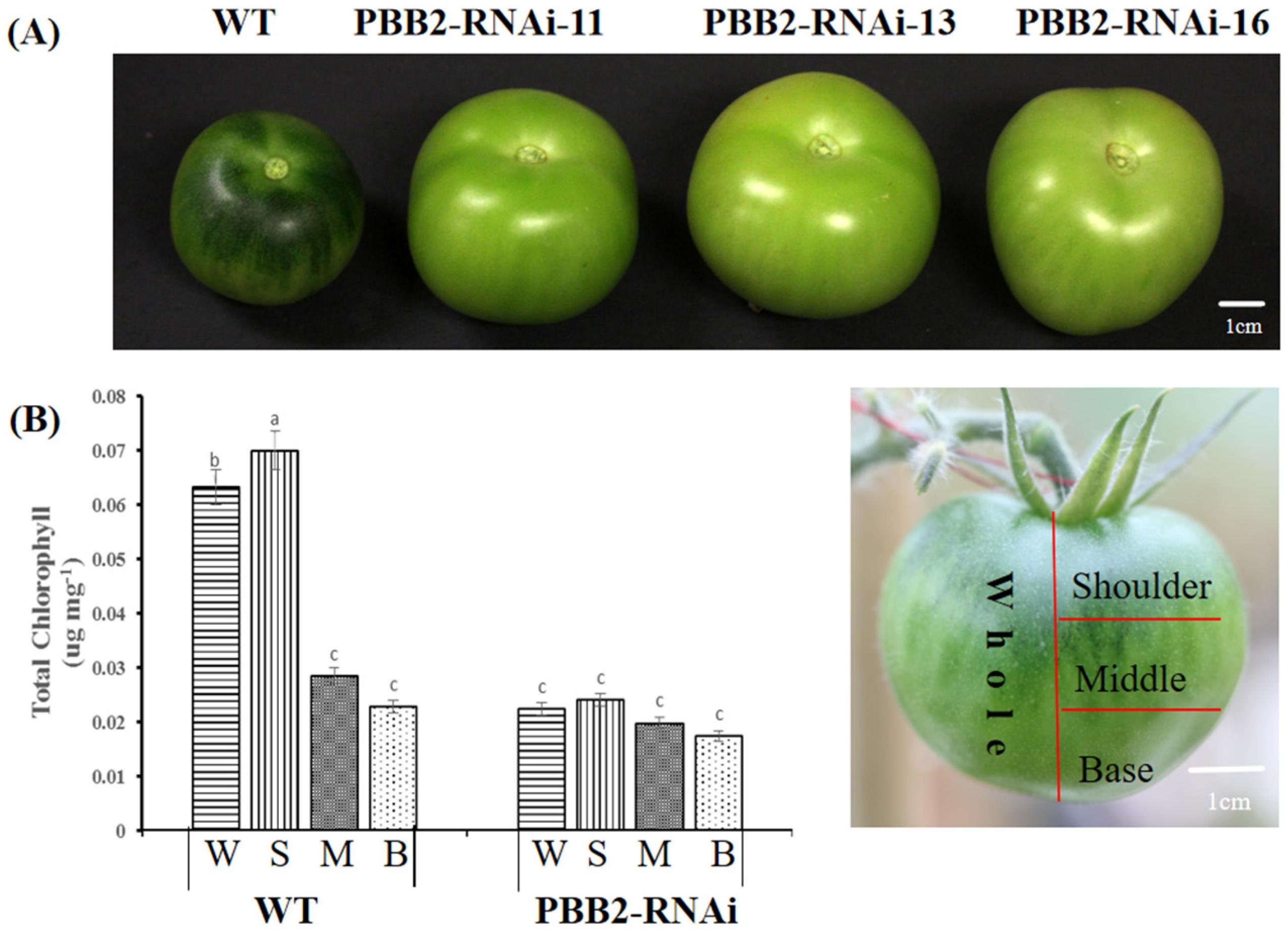
Figure 1.
Fruit phenotype and chlorophyll content in the PBB2 RNAi. (A) Variation in fruit phenotype between Ailsa Craig wild type (WT) and PBB2-RNAi at 30 days post-anthesis. Scale bar, 1 cm. (B) Chlorophyll content in the pericarp isolated from the whole (W), shoulder (S), middle (M) and base (B) of Ailsa Craig wild-type (WT) and PBB2-RNAi fruit at 30 days post-anthesis. Values are presented as means ± standard deviation (SD) of three independent biological replicate. Different letters indicate significant differences (p < 0.05) relative to the WT values by Duncan’s multiple range test.
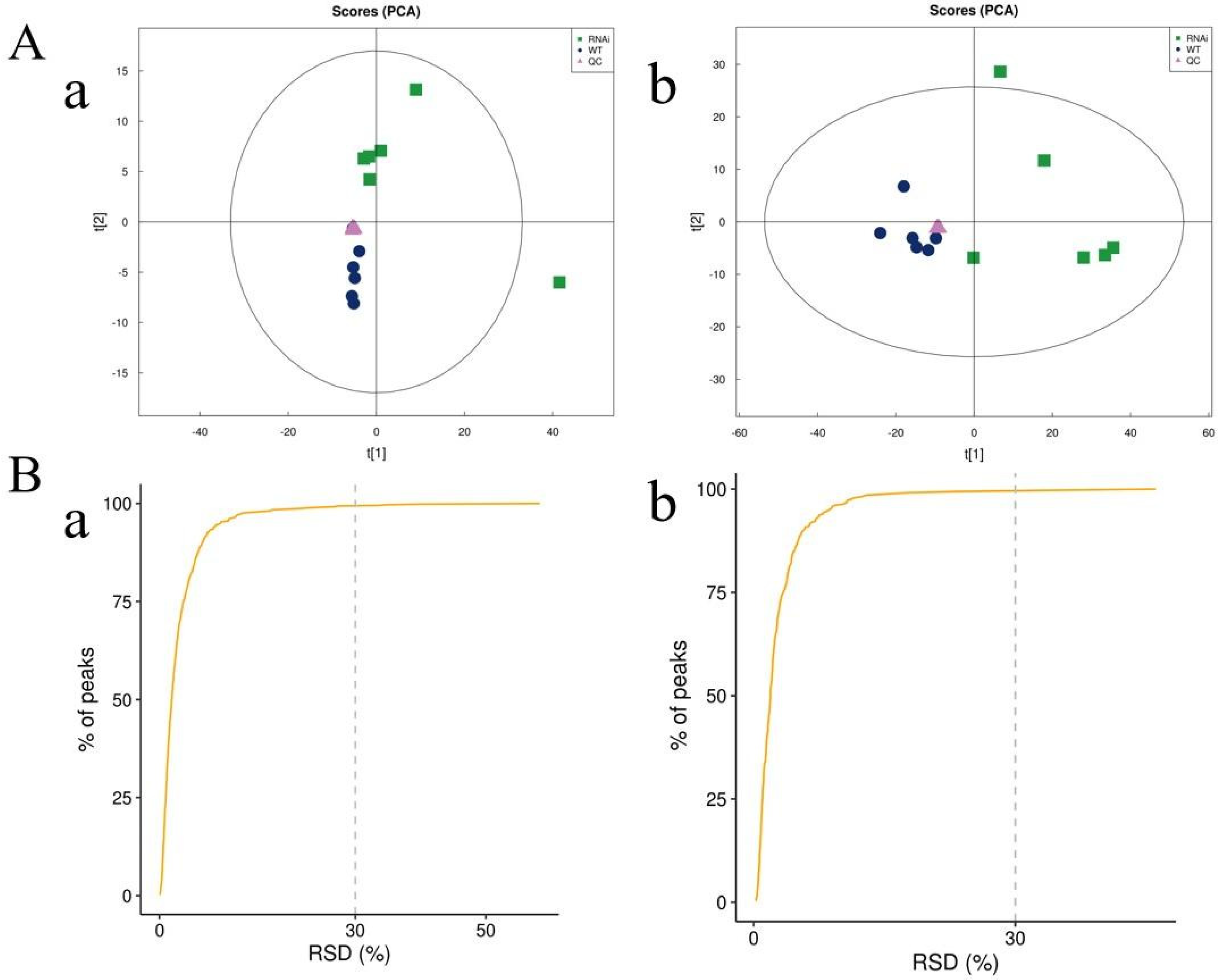
Figure 2.
Quality control assessment of metabolomics data. (A) PCA score plots of QC samples in (a) positive and (b) negative ion modes. t[1] and t[2] represent principal component 1 and 2, respectively. The ellipse indicates the 95% confidence interval. Dots of the same color represent individual biological replicates, and their distribution reflects inter− and intra−group variation. (B) Distribution of relative standard deviation (RSD) for peaks in QC samples from (a) positive and (b) negative ion modes.
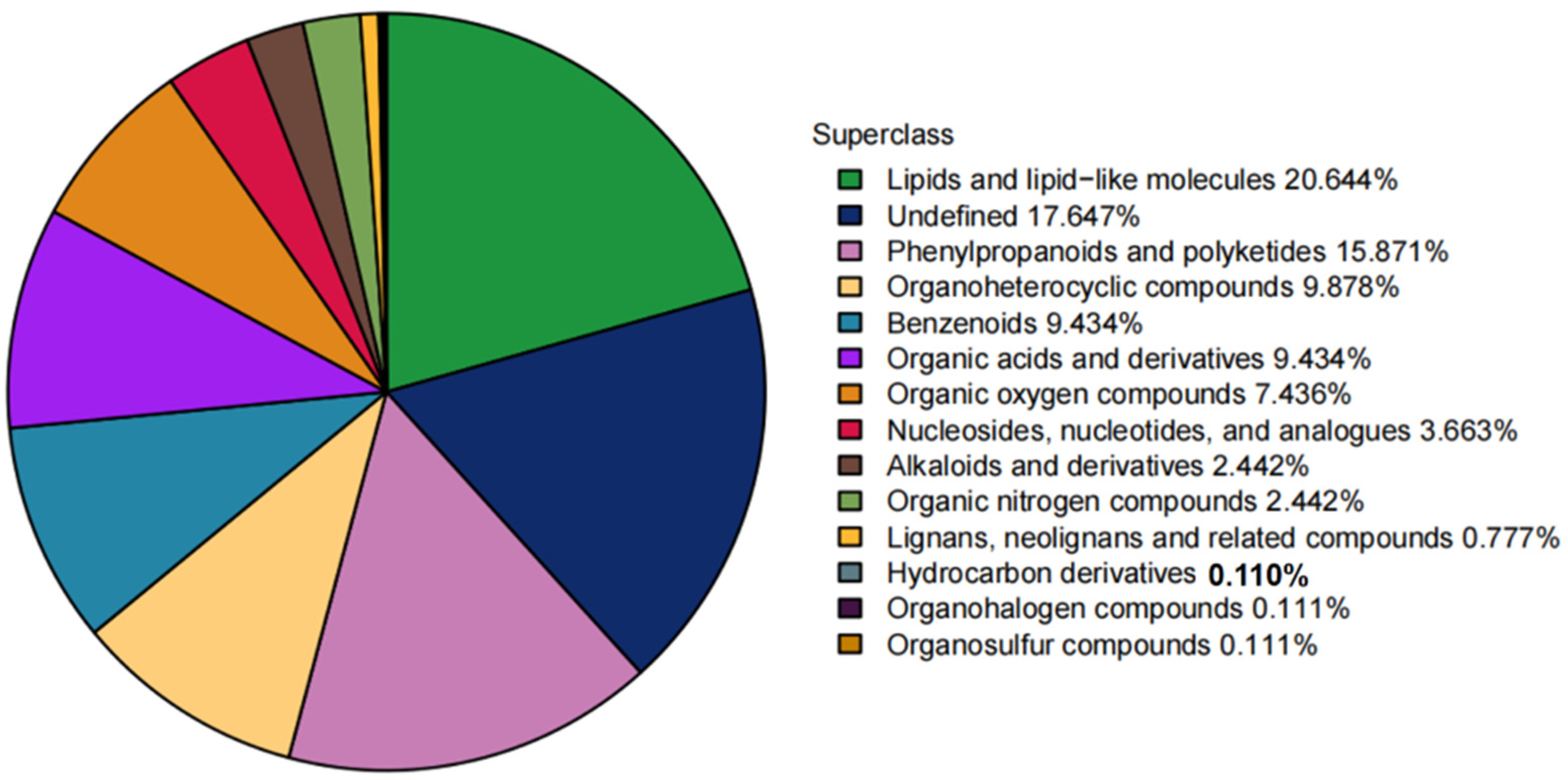
Figure 3.
Quantitative distribution of identified metabolites across chemical classes. Different colored segments represent distinct chemical classification categories. Percentages indicate the proportion of metabolites within each category relative to the total number of identified metabolites.
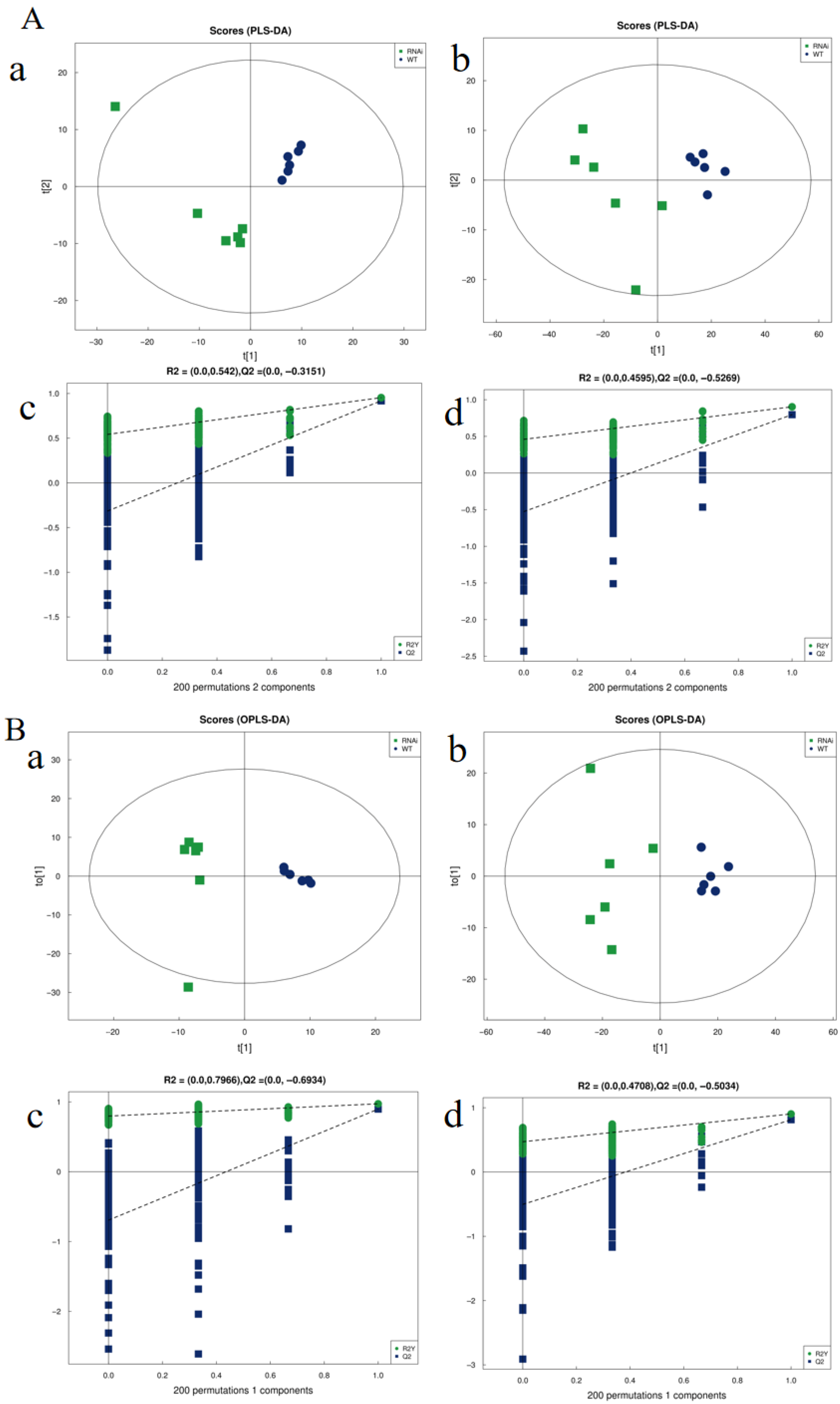
Figure 4.
Multivariate statistical analysis. (A) PLS-DA score plots for (a) positive and (b) negative ion modes. Corresponding permutation test results for (c) positive and (d) negative ion modes. (B) OPLS-DA score plots for (a) positive and (b) negative ion modes. Corresponding permutation test results for (c) positive and (d) negative ion modes.
Figure 5.
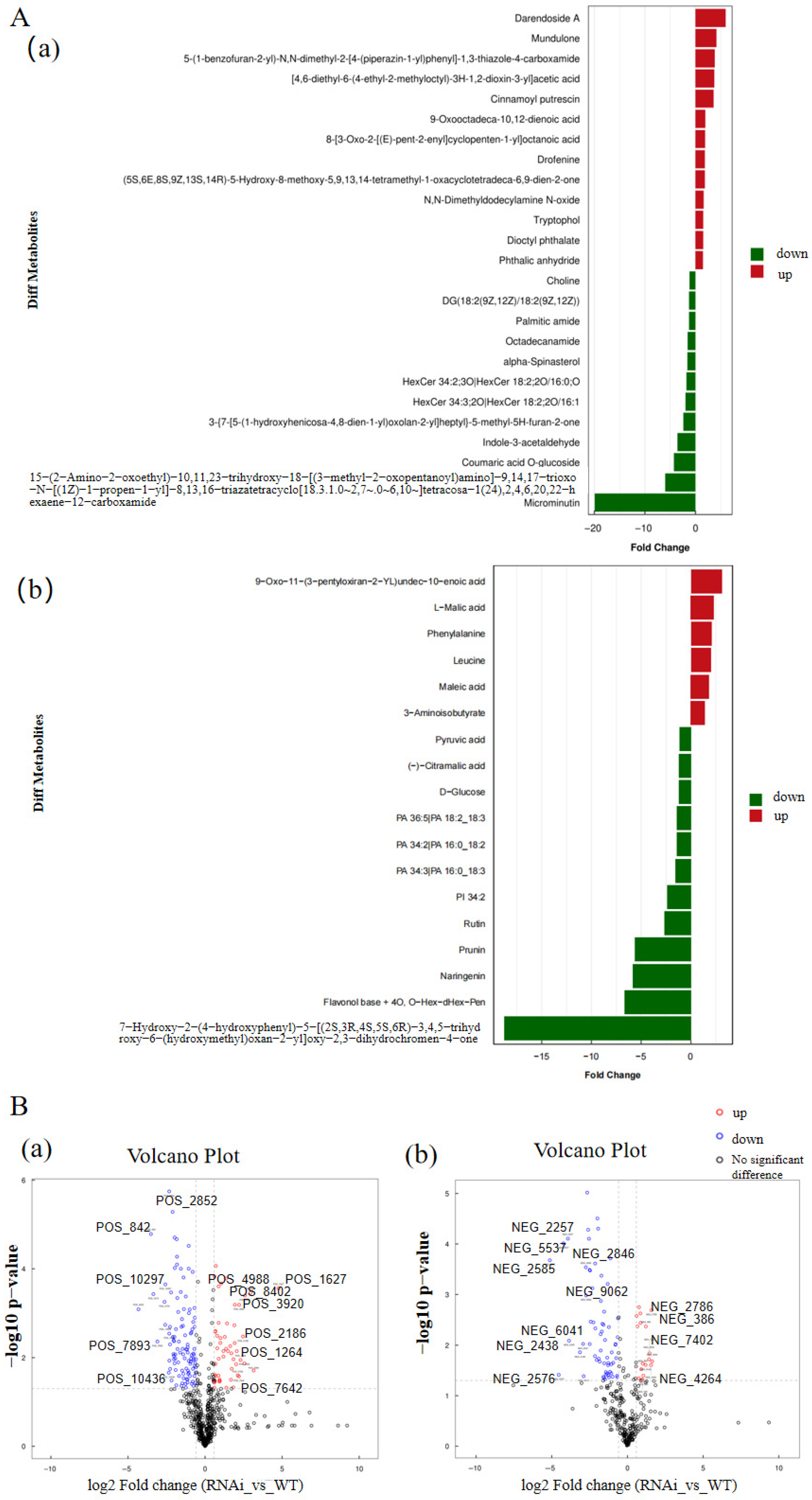
Visualization of differential metabolites. (A) Bar charts showing the fold-change of significantly different metabolites in (a) positive and (b) negative ion modes. (B) Volcano plots of all detected metabolites in (a) positive and (b) negative ion modes. Differential metabolites were defined by fold-change (FC) > 1.5 or FC < 0.67 and p-value < 0.05. Red dots indicate upregulated metabolites, blue dots indicate downregulated metabolites, and gray dots represent non-significant metabolites.
Figure 6.
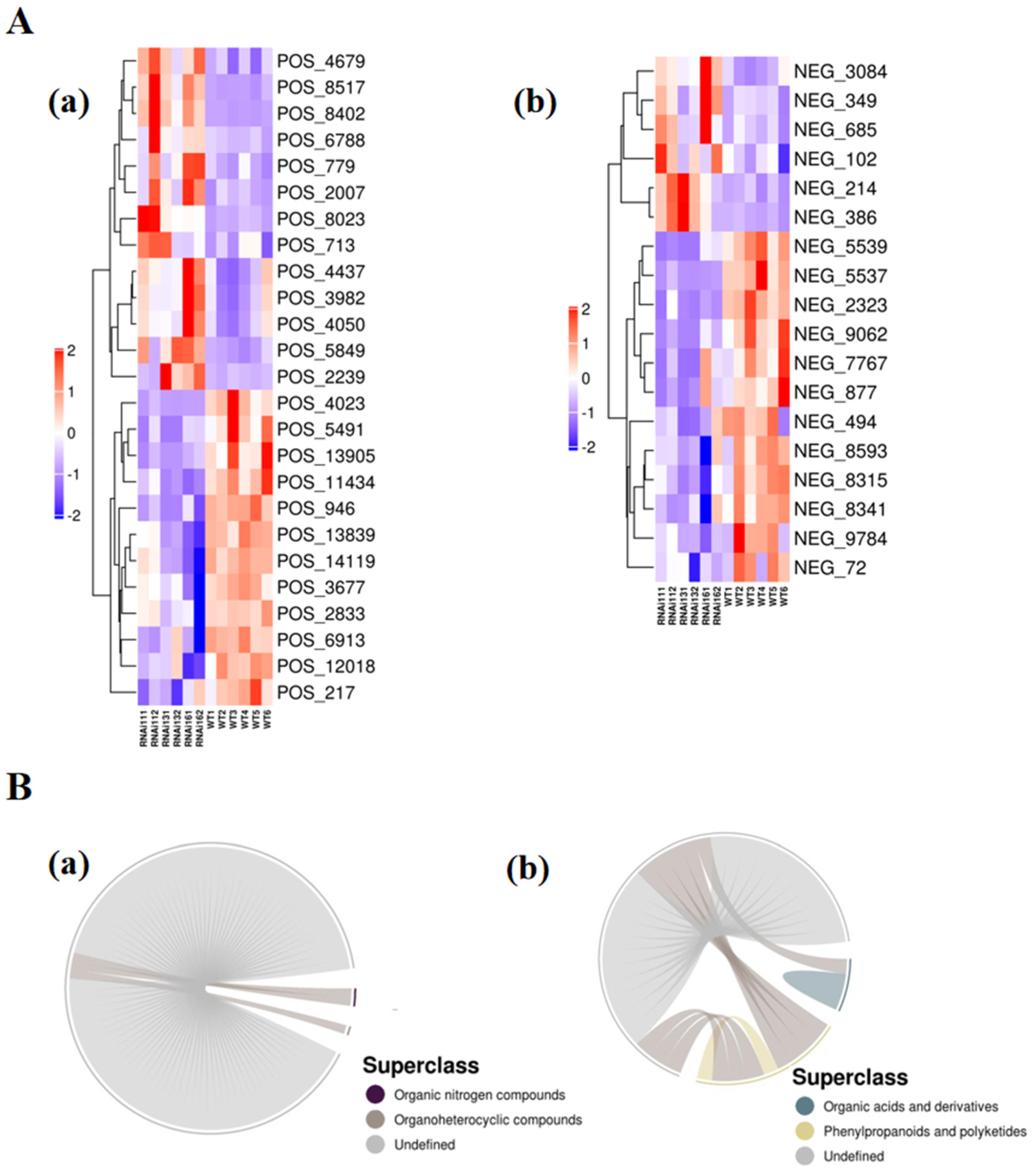
Cluster and correlation analysis of significant differential metabolites. (A) Hierarchical clustering heatmaps of significant differential metabolites in (a) positive and (b) negative ion modes. Each row represents a metabolite, and each column represents a sample group. Red and blue indicate upregulation and downregulation, respectively, with color intensity reflecting the degree of change. (B) Chord diagrams visualizing significant correlations (|r| > 0.8, p < 0.05) among metabolites in (a) positive and (b) negative ion modes. The inner circle represents individual metabolites, the outer arcs represent metabolite classes, and colored links denote correlations, with dark gray lines indicating inter-class correlations.
Figure 7.
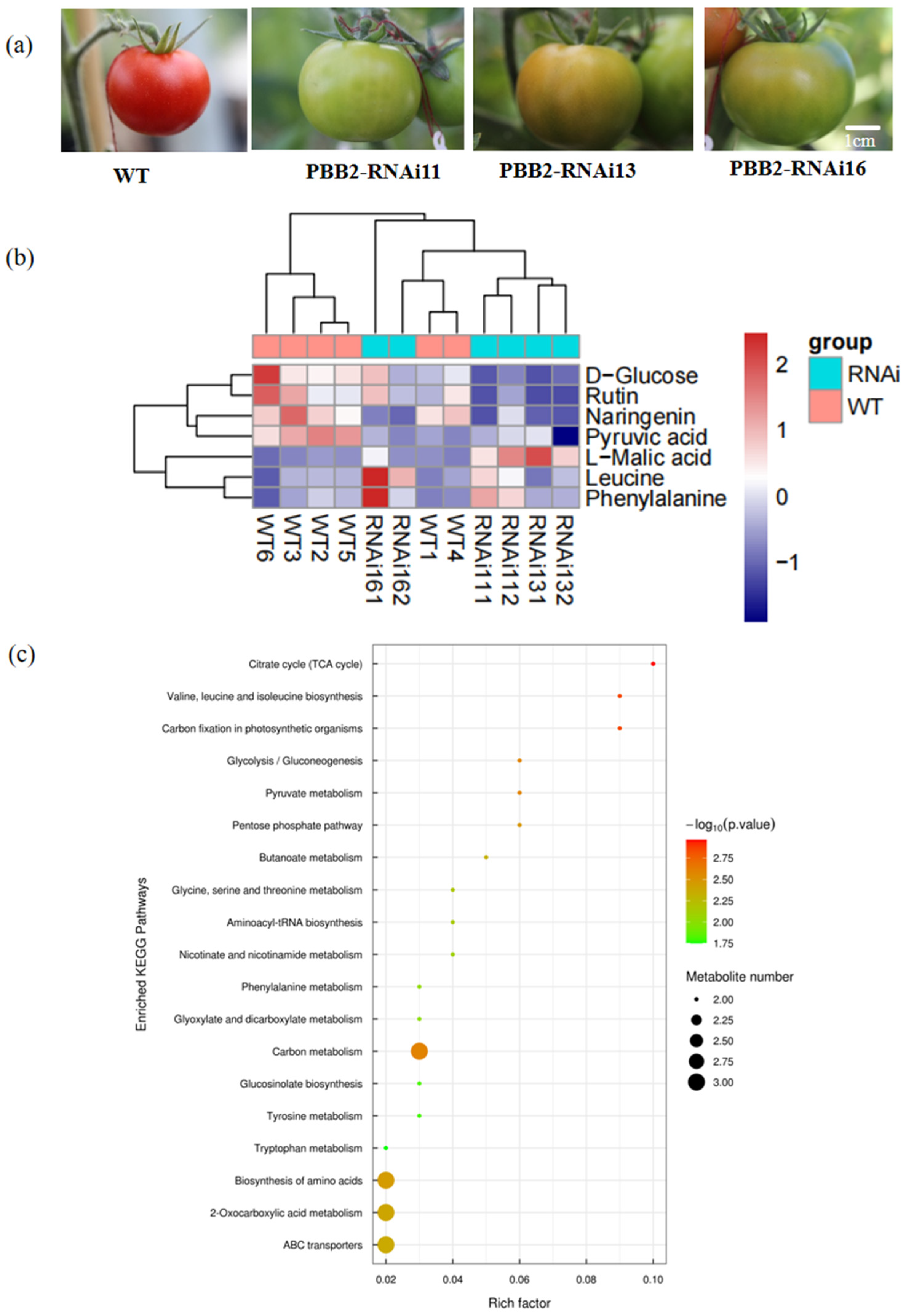
KEGG pathway annotation and enrichment analysis. (a) Tomato fruit phenotypic differences between Wild-Type (WT) and PBB2-RNAi at 43 days post-anthesis (Scale Bar = 1 cm) (b) Heatmap of differential metabolites clustered according to their associated KEGG pathways. Each row represents a metabolite, and each column represents a sample group. Color coding indicates upregulation (red) or downregulation (blue). (c) Bubble plot of enriched KEGG pathways (top 20 by significance). The x-axis and bubble size represent the pathway impact value from topological analysis. The y-axis and bubble color represent the enrichment significance (−log10(p-value)), with darker colors indicating greater significance.
| Disclaimer/Publisher’s Note: The statements, opinions and data contained in all publications are solely those of the individual author(s) and contributor(s) and not of MDPI and/or the editor(s). MDPI and/or the editor(s) disclaim responsibility for any injury to people or property resulting from any ideas, methods, instructions or products referred to in the content. |