Article

Characterization of Arabidopsis thaliana Coq9 in the CoQ Biosynthetic Pathway

1
Co-Innovation Center for Sustainable Forestry in Southern China, College of Biology and the Environment, Nanjing Forestry University, Nanjing 210037, China
2
Shanghai Key Laboratory of Plant Functional Genomics and Resources, Shanghai Chenshan Botanical Garden, Shanghai 201602, China
3
School of Life Sciences, Shanghai Normal University, Shanghai 200234, China
*
Author to whom correspondence should be addressed.
These authors contributed equally to this work.
Metabolites 2023, 13(7), 813; https://doi.org/10.3390/metabo13070813

Submission received: 12 June 2023 / Revised: 27 June 2023 / Accepted: 27 June 2023 / Published: 30 June 2023
(This article belongs to the Section Plant Metabolism)

Abstract

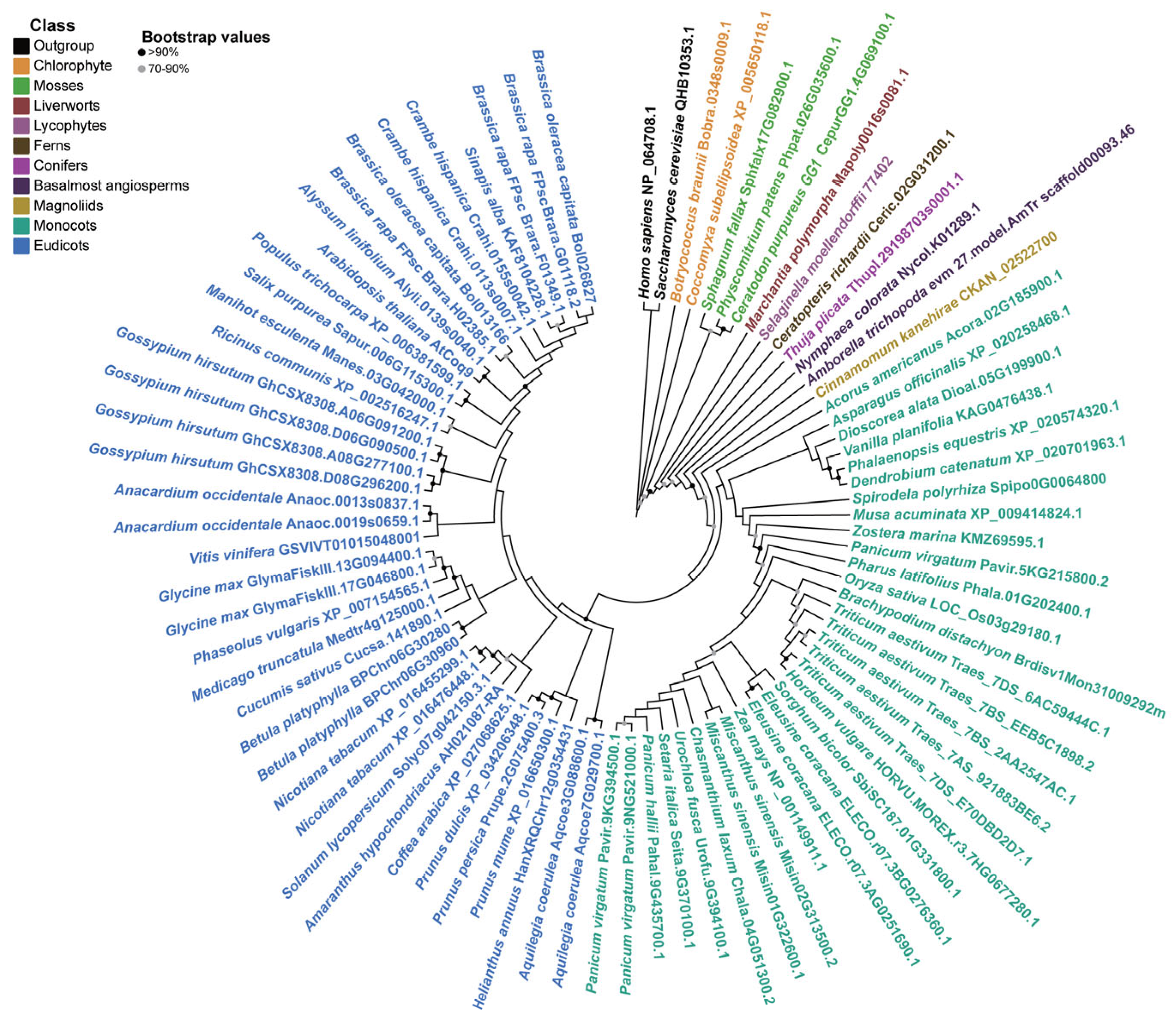
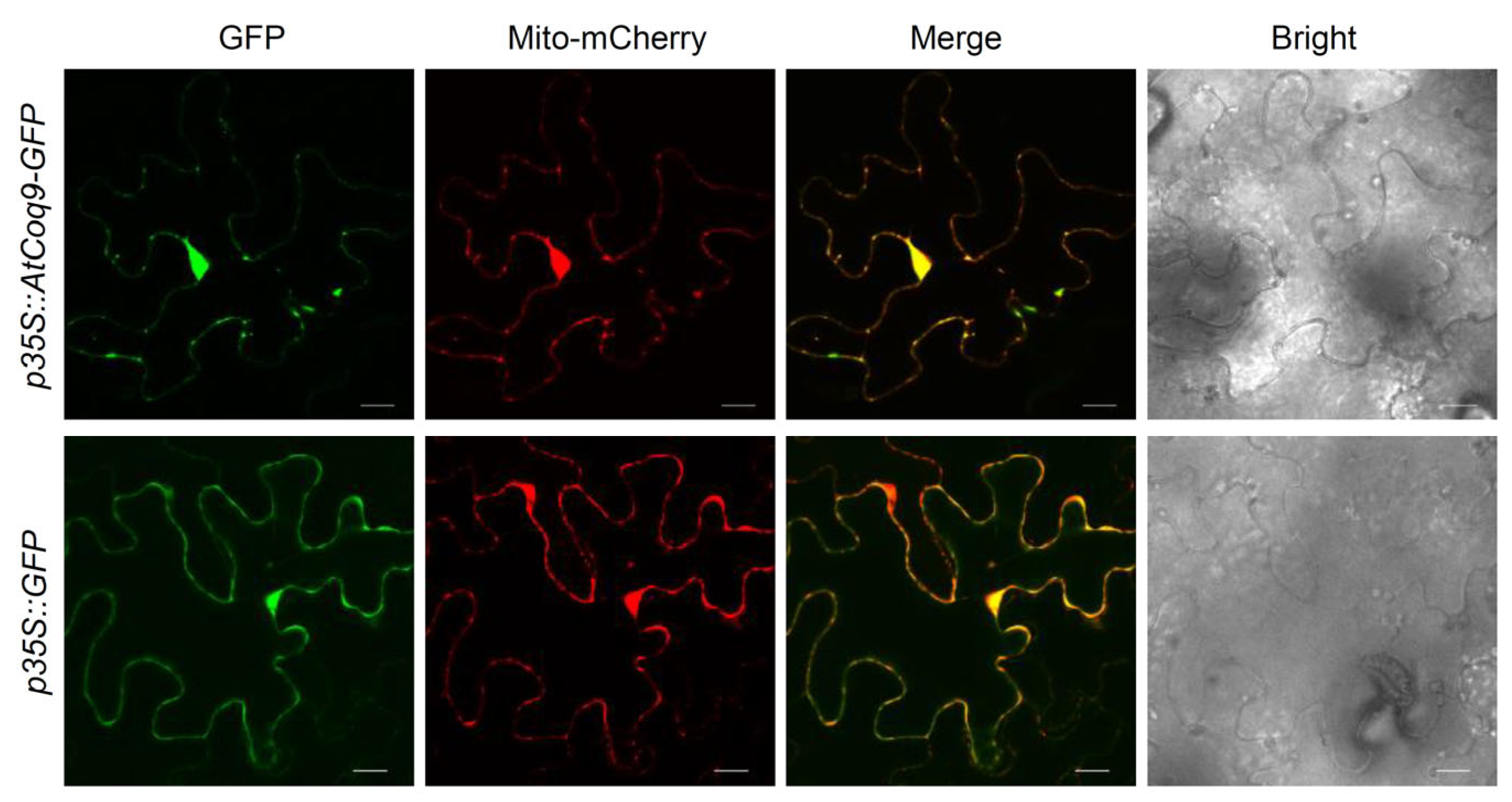
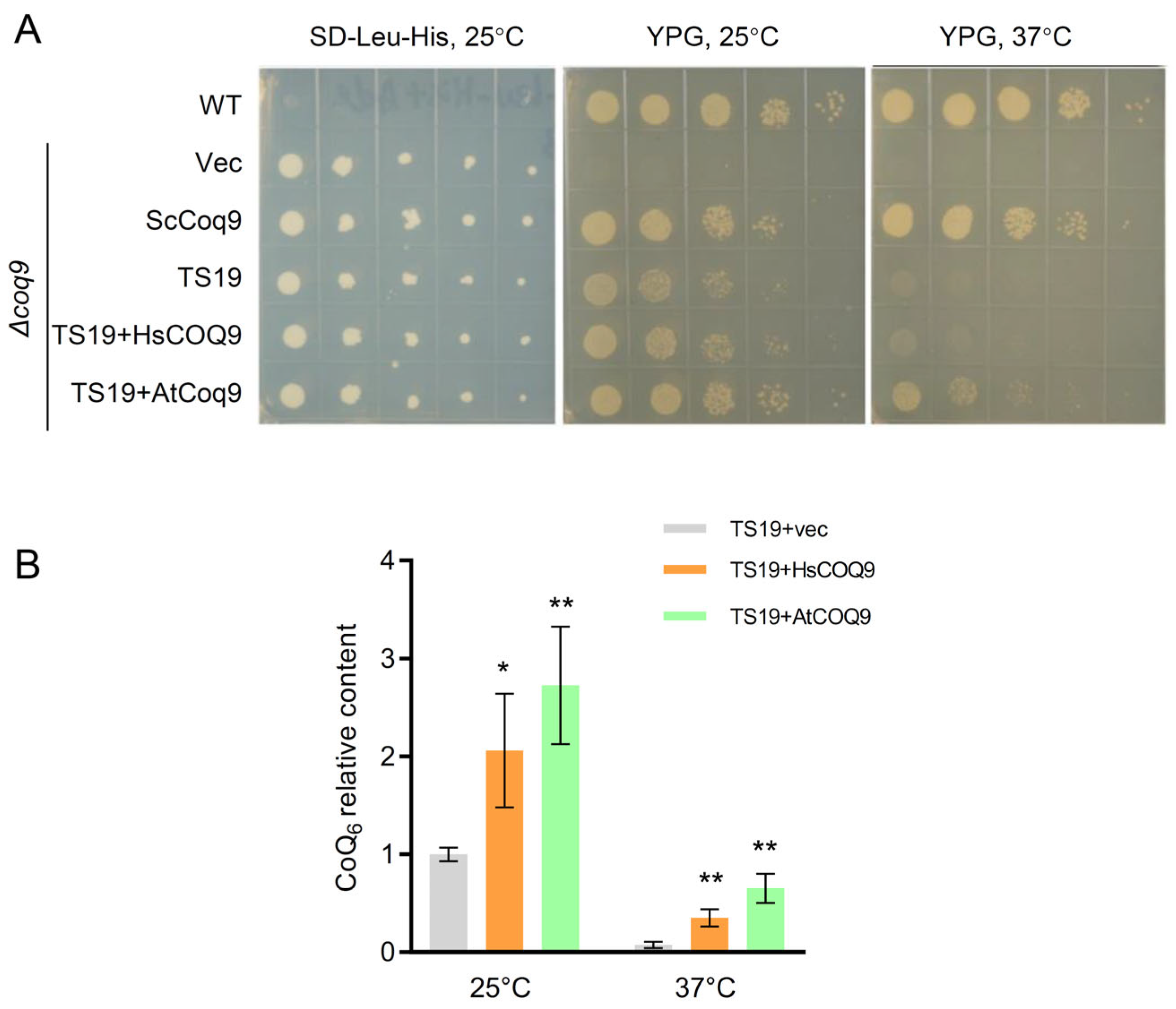
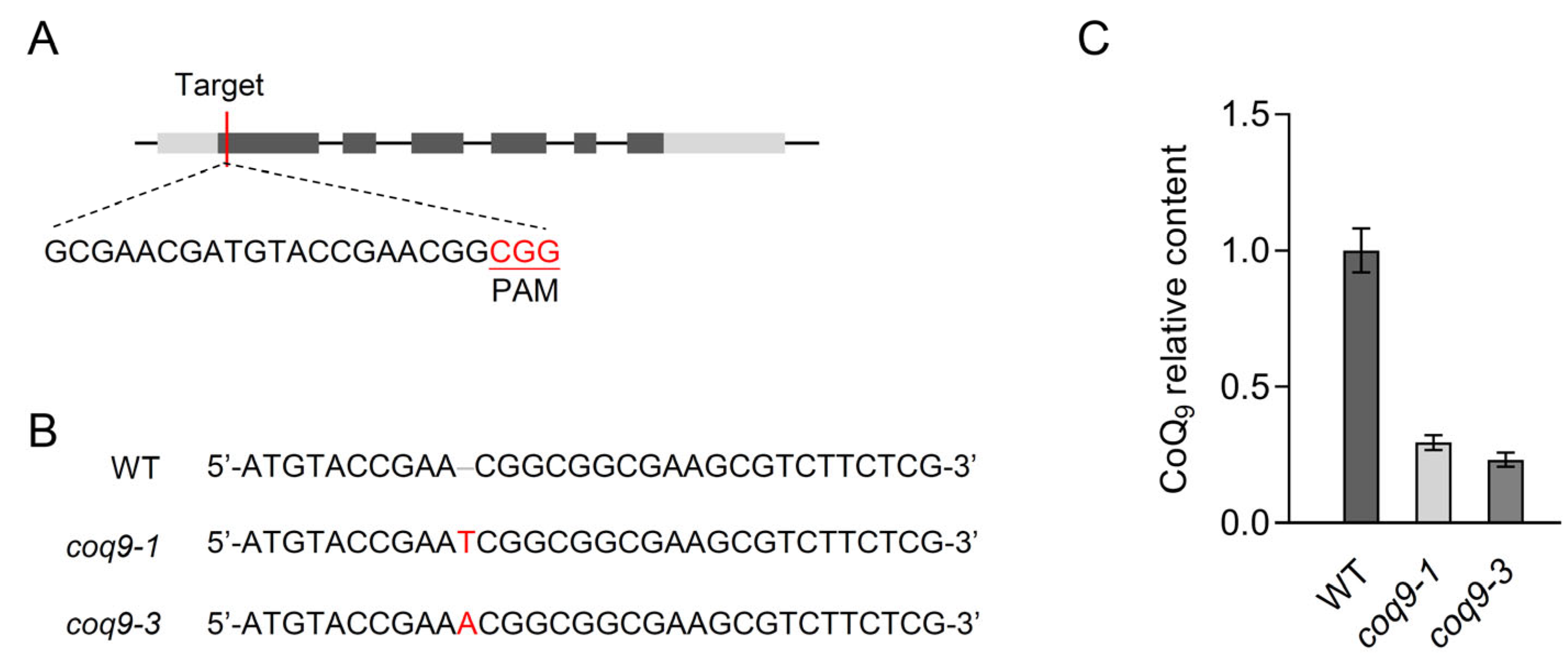
Coenzyme Q, also known as ubiquinone, is a fat-soluble isoprene quinone that serves as a cofactor for numerous enzymes across all domains of life. However, the biosynthetic pathway for this important molecule in plants has been examined in only a limited number of studies. In yeast and mammals, Coq9, an isoprenoid-lipid-binding protein, is essential for CoQ biosynthesis. Previous studies showed that Arabidopsis thaliana Coq9 failed to complement the fission yeast Schizosaccharomyces pombe coq9 null mutant, and its function in plants remains unknown. In this study, we demonstrated that expression of Arabidopsis Coq9 rescued the growth of a yeast temperature-sensitive coq9 mutant and increased CoQ content. Phylogenetic analysis revealed that Coq9 is widely present in green plants. Green fluorescent protein (GFP) fusion experiments showed that Arabidopsis Coq9 is targeted to mitochondria. Disruption of the Coq9 gene in Arabidopsis results in lower amounts of CoQ. Our work suggests that plant Coq9 is required for efficient CoQ biosynthesis. These findings provide new insights into the evolution of CoQ biosynthesis in plants. The identification of Coq9 as a key player in CoQ biosynthesis in plants opens up new avenues for understanding the regulation of this important metabolic pathway.
Keywords: coenzyme Q; plant metabolism; Coq9; Arabidopsis; mitochondria coenzyme Q; plant metabolism; Coq9; Arabidopsis; mitochondria