
Article

Changes in Uterine Metabolome Associated with Metritis Development and Cure in Lactating Holstein Cows

by
Eduardo B. de Oliveira
1,2,
Hugo F. Monteiro
1,
Jessica M. V. Pereira
2,3,
Deniece R. Williams
2,
Richard V. Pereira
1,
Noelia Silva Del Rio
1,2,
Paulo R. Menta
4,
Vinicius S. Machado
4 and
Fabio S. Lima
1,*
1
Department of Population Health and Reproduction, School of Veterinary Medicine, University of California, Davis, CA 95106, USA
2
Veterinary Medicine Teaching and Research Center, Tulare, CA 93274, USA
3
Department of Animal Science, Federal University of Viçosa, Viçosa 36570-900, Brazil
4
Department of Veterinary Sciences, Texas Tech University, Lubbock, TX 79409, USA
*
Author to whom correspondence should be addressed.
Metabolites 2023, 13(11), 1156; https://doi.org/10.3390/metabo13111156

Submission received: 28 September 2023 / Revised: 26 October 2023 / Accepted: 14 November 2023 / Published: 16 November 2023

Abstract

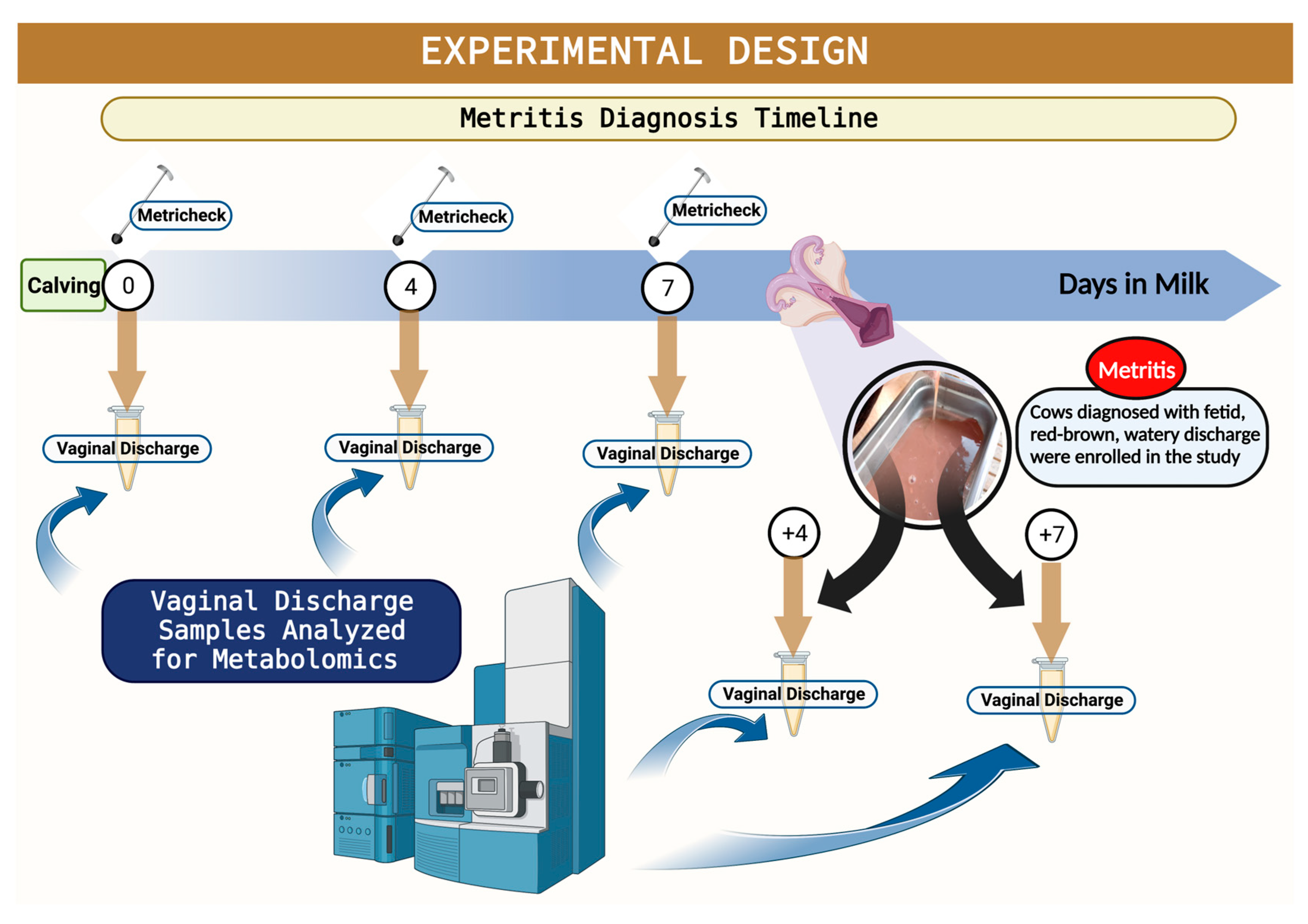
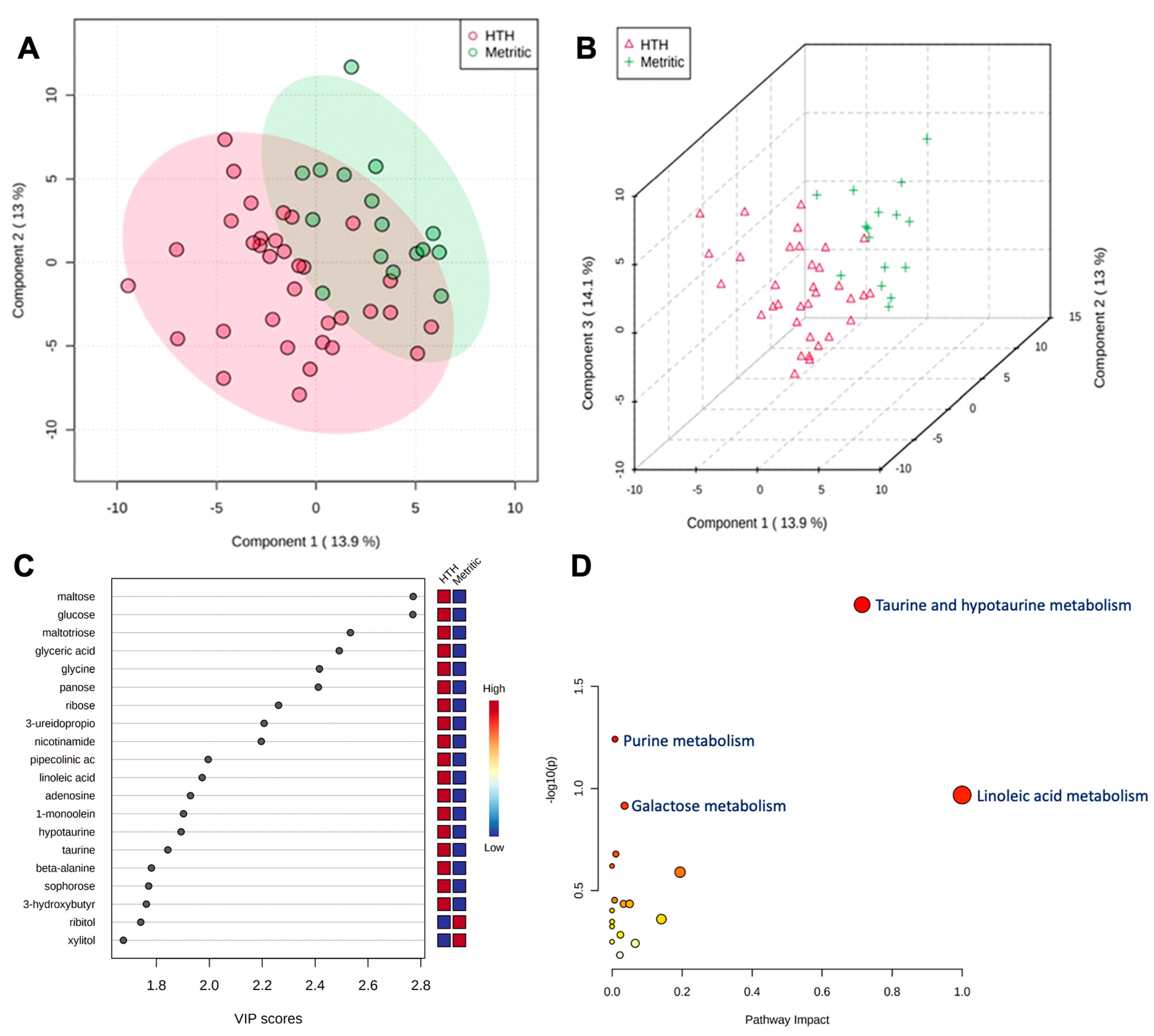
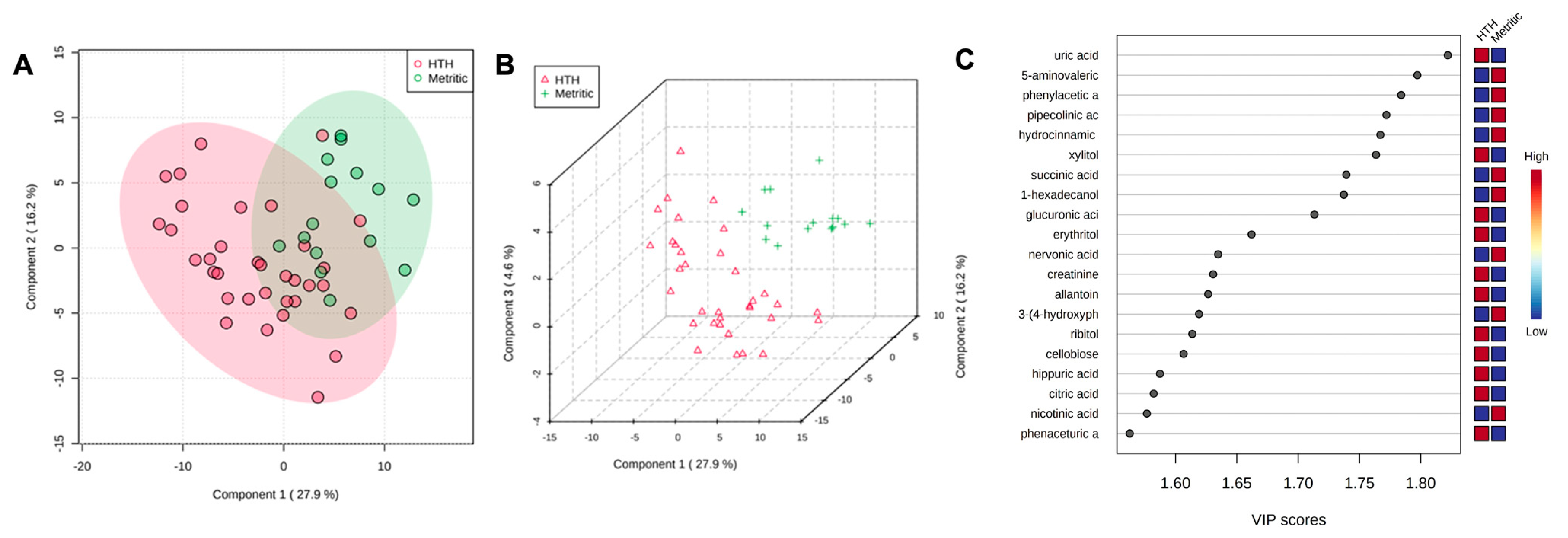
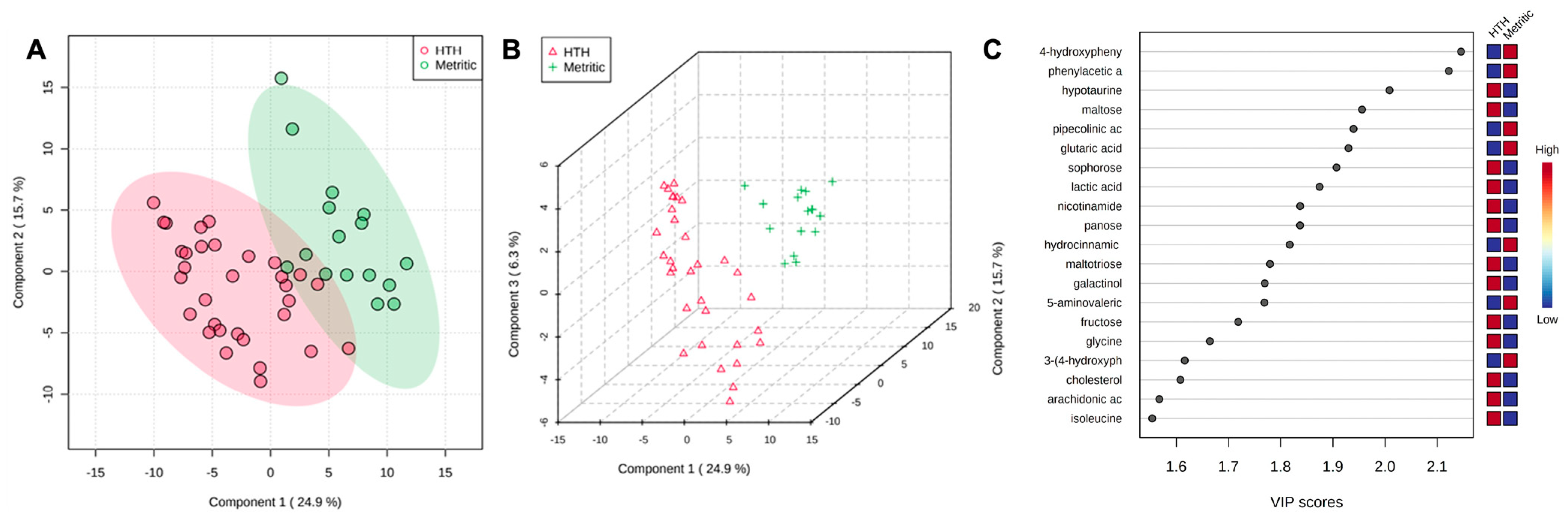
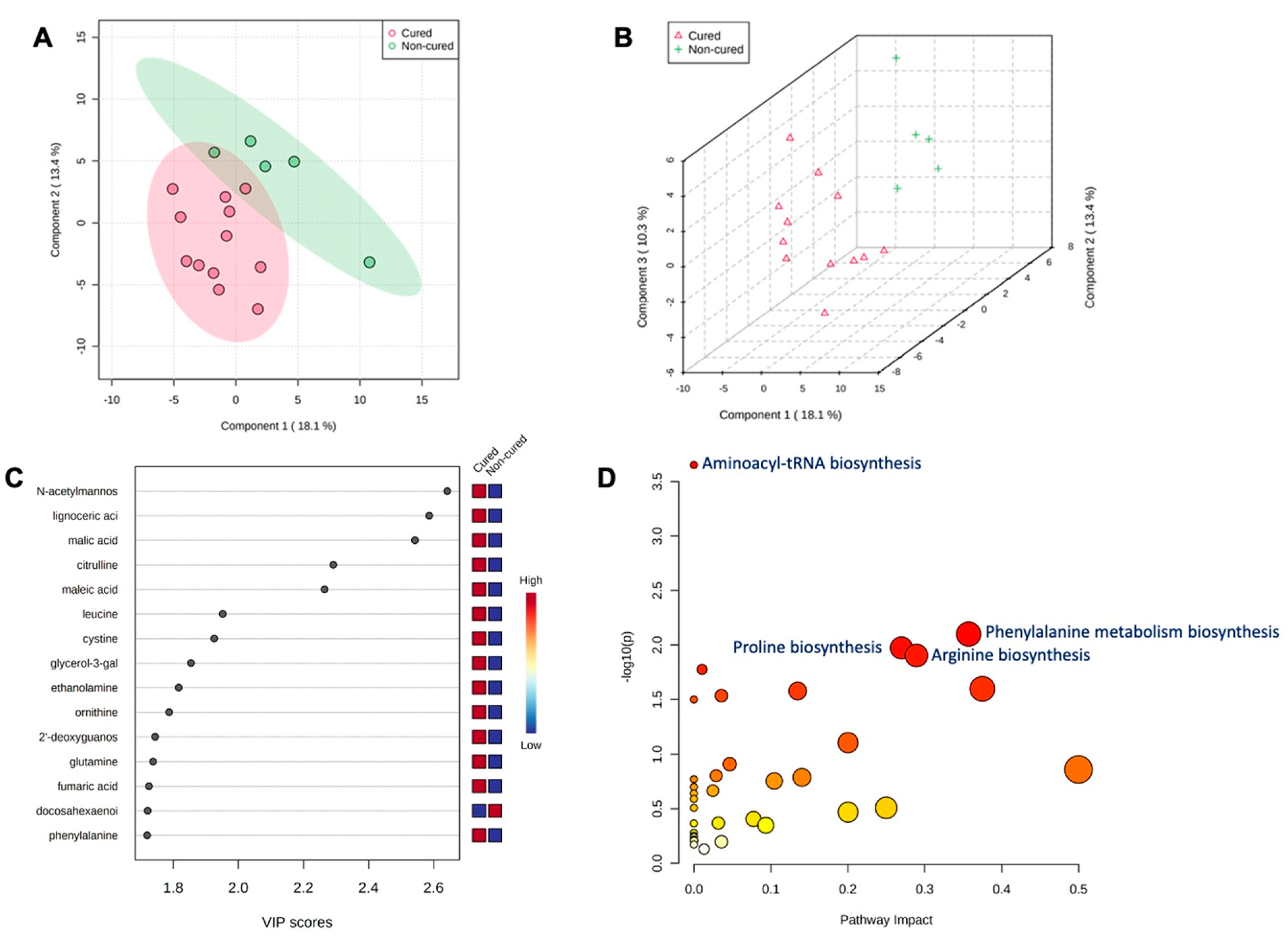
The objective of this study was to identify alterations in the vaginal discharge (VD) metabolome and potential biomarkers to predict metritis development and a cure in dairy cows. This prospective cohort study was conducted on two dairies located in CA and TX. Vaginal discharge was evaluated and collected using the Metricheck® device. Cows were examined for metritis at 4, 7, and 9 days in milk (DIM). Cows with a fetid, watery, and reddish-brown uterine discharge were classified as having metritis and randomized to receive ceftiofur (n = 10) or remain untreated (n = 7). A cure was defined as the absence of a fetid, watery, reddish-brown uterine discharge at 14 d after enrollment. Vaginal discharge samples were collected from 86 cows within 6 h after parturition, at 4 and 7 DIM, at metritis diagnosis, and at 4 and 7 days after metritis diagnosis. Cows with metritis (MET; n = 17) were paired with counterparts without metritis (HTH) of a similar DIM and parity (n = 34). The uterine metabolome was evaluated using untargeted gas chromatography time-of-flight mass spectrometry (GC-TOF-MS). Metabolomic data were analyzed using the MetaboAnalyst 5.0. Data were log-transformed and auto-scaled for normalization. Univariate analyses, including the fold-change, were performed to identify the metabolites linked to metritis development and its cure and principal component analysis and partial least squares discriminant analysis were performed to explain metabolite variance between animals developing or not developing metritis and being cured or not being cured of metritis. Comparing HTH with MET cows at calving, 12 metabolites were upregulated, and one was downregulated. At four and seven DIM, 51 and 74 metabolites, respectively, were altered between MET and HTH cows. After metritis development, three and five metabolites were upregulated in cows that were cured and in cows that received treatment and were cured, respectively. In all scenarios, the metabolites lignoceric, malic, and maleic acids, ornithine, and hypotaurine, which are associated with arginine/aminoacyl-tRNA biosynthesis and taurine/purine metabolism, were upregulated in HTH cows. Metritis was associated with changes in the uterine metabolome. Cows not being cured of metritis had changes in the uterus metabolome independent of receiving ceftiofur or remaining untreated. Metabolome analysis may be an important tool to understand the vaginal discharge changes during postpartum and the dynamics of metritis development and cures and help to identify biomarkers to predict metritis being cured.
Keywords: metabolomics; uterine health; metritis; maleic acid; ornithine metabolomics; uterine health; metritis; maleic acid; ornithine