

Bioactive Properties and Pharmaceutical Potential of New World Mistletoes of the Genus Tristerix: A Review

 ,
,  , , , , and
Abstract
1. Introduction
2. Material and Methods
- Inclusion and Exclusion Criteria:
3. Results and Discussion
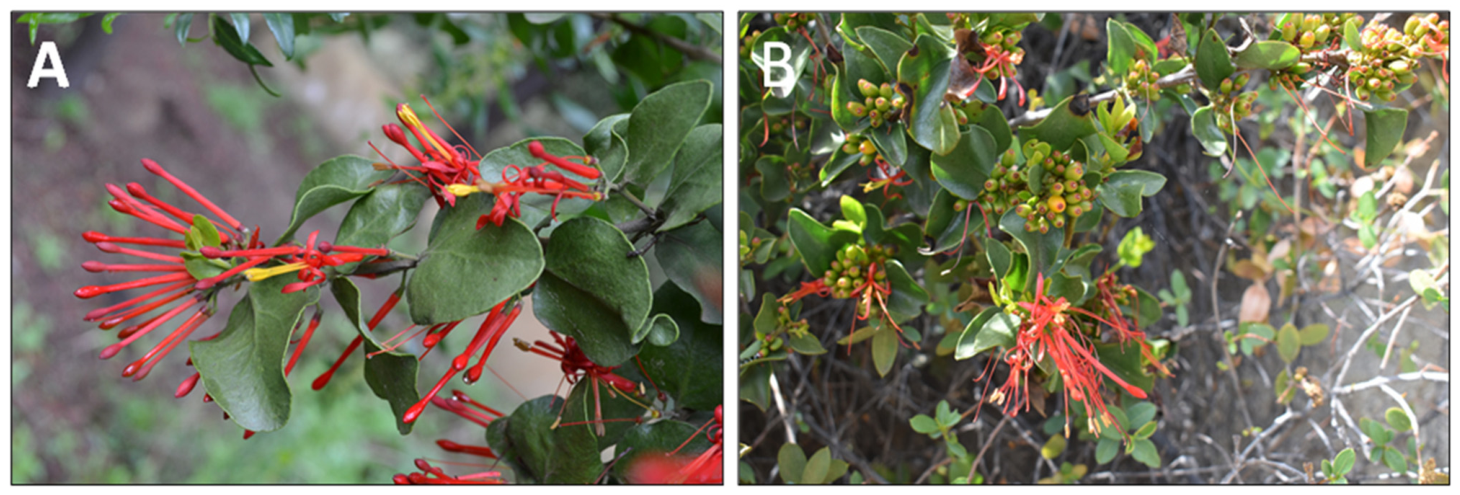
3.1. Botanical Characteristics, Ecology, and Host Association of Tristerix Species
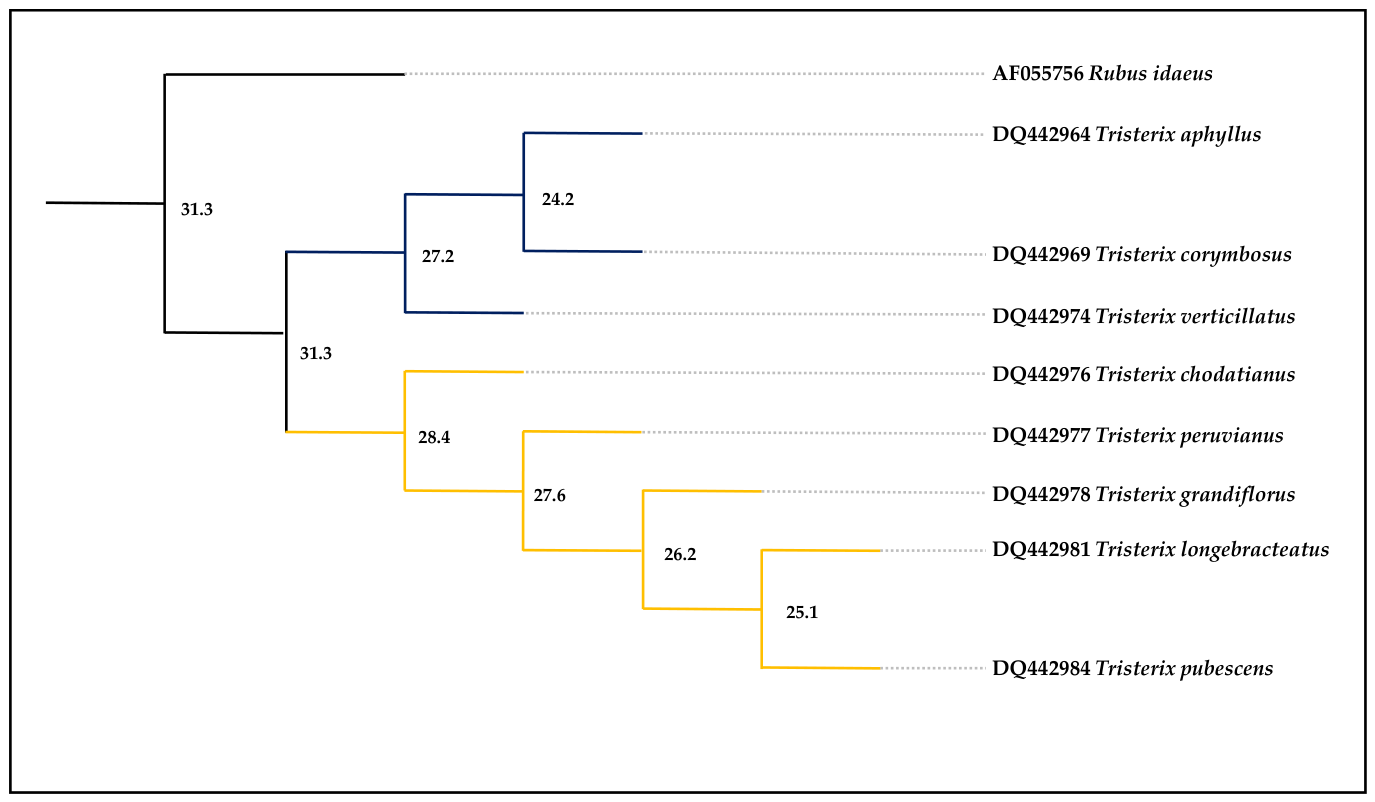
3.2. Phylogenetic Relationships of Chilean Tristerix Species
3.3. Chemical Constituents of Tristerix spp. Extracts
3.4. Biological Properties of Tristerix spp. Extracts
3.4.1. Antioxidant Properties
3.4.2. Antimicrobial Properties
3.4.3. Cytotoxic Properties
3.4.4. Analgesic Properties
4. Patent Data
5. Conclusions
Author Contributions
Funding
Data Availability Statement
Conflicts of Interest
References
- Salehi, B.; Sharifi-Rad, J.; Herrera-Bravo, J.; Salazar, L.A.; Delporte, C.; Barra, G.V.; Cazar Ramirez, M.-E.; López, M.D.; Ramírez Alarcón, K.; Martins, N.; et al. Ethnopharmacology, phytochemistry and biological activities of native Chilean plants. Curr. Pharm. Des. 2020, 26, 953–970. [Google Scholar] [CrossRef] [Scilit] [PubMed]
- Otero, C.; Klagges, C.; Morales, B.; Sotomayor, P.; Escobar, J.; Fuentes, J.A.; Moreno, A.A.; Llancalahuen, F.M.; Arratia-Perez, R.; Gordillo-Fuenzalida, F.; et al. Anti-Inflammatory Chilean endemic plants. Pharmaceutics 2023, 15, 897. [Google Scholar] [CrossRef] [Scilit] [PubMed]
- Scherson, R.A.; Albornoz, A.A.; Moreira-Muñoz, A.S.; Urbina-Casanova, R. Endemicity and evolutionary value: A study of Chilean endemic vascular plant genera. Ecol. Evol. 2014, 4, 806–816. [Google Scholar] [CrossRef] [Scilit] [PubMed]
- Moreira-Muñoz, A. Plant Geography of Chile; Springer: Dordrecht, The Netherlands, 2011; p. 366. [Google Scholar]
- Díaz-Forestier, J.; León-Lobos, P.; Marticorena, A.; Celis-Diez, J.L.; Giovannini, P. Native useful plants of Chile: A review and use patterns. Econ. Bot. 2019, 73, 112–126. [Google Scholar] [CrossRef] [Scilit]
- Kuijt, J.; Hansen, B. Flowering Plants. Eudicots: Santalales, Balanophorale; The Families and Genera of Vascular Plants; Springer: Cham, Switzerland, 2015; Volume 12, pp. 1–213. [Google Scholar]
- Kuijt, J. Revision of Tristerix (Loranthaceae); Systematic Botany Monographs; American Society of Plant Taxonomists: Laramie, WY, USA, 1988; Volume 19, p. 1. [Google Scholar]
- Barlow-Canberra, B. Loranthaceae. Flora Malesiana; Series 1, Spermatophyta; National Herbarium of The Netherlands: Leiden, The Netherlands, 1997; Volume 13, pp. 209–401. [Google Scholar]
- Marticorena, A.; Alarcón, D.; Abello, L.; Atala, C. Plantas Trepadoras, Epífitas y Parásitas Nativas de Chile: Guía de Campo; CORMA: Mumba, India, 2010; ISBN 9789568398040. [Google Scholar]
- Rodríguez, R.; Marticorena, C.; Alarcón, D.; Baeza, C.; Cavieres, L.; Finot, V.L.; Fuentes, N.; Kiessling, A.; Mihoc, M.; Pauchard, A.; et al. Catálogo de las plantas vasculares de Chile. Gayana Botán. 2018, 75, 1–430. [Google Scholar] [CrossRef] [Scilit]
- Amico, G.C.; Rodriguez-Cabal, M.A.; Aizen, M.A. Geographic variation in fruit colour is associated with contrasting seed disperser assemblages in a south-Andean mistletoe. Ecography 2011, 34, 318–326. [Google Scholar]
- Cordero, S.; Gálvez, F.; Abello, L. Usos Tradicionales de la Flora de Chile. Volumen I, Nativas; Ediciones Botánicas, Editorial Planeta de Papel Ltd.a.: Valparaíso, Chile, 2020. [Google Scholar]
- Chateauneuf, R.; Benavides, M. Plantas Medicinales y Medicina Natural; Ocho Libros: Santiago, Chile, 2015; pp. 41–54. [Google Scholar]
- Hoffmann, A.; Arroyo, M.K.; Liberona, F.; Muñoz, M.; Watson, J. Plantas Altoandinas en la Flora Silvestre de Chile; Ediciones Fundación Claudio Gay: Santiago, Chile, 1998. [Google Scholar]
- Burgos, A.N.; Morales, M.A. Qualitative study of use medicinal plants in a complementary or alternative way with the use of among of rural population of the Bulnes city, Bío-Bío Region. Bol. Latinoam. Caribe Plantas Med. Aromat. 2010, 9, 377–387. [Google Scholar]
- Montenegro, G. Nuestra Flora Útil: Guía de Plantas de Uso Apícola, en Medicina Folklórica, Artesanal y Ornamental; Fundación Claudio Gay: Santiago, Chile, 2002; p. 267. [Google Scholar]
- Amico, G.C.; Vidal-Russell, R.; Nickrent, D.L. Phylogenetic relationships and ecological speciation in the mistletoe Tristerix (Loranthaceae): The influence of pollinators, dispersers, and hosts. Am. J. Bot. 2007, 94, 558–567. [Google Scholar] [CrossRef] [Scilit] [PubMed]
- Nicoletti, M. The anti-inflammatory activity of Viscum album. Plants 2023, 12, 1460. [Google Scholar] [CrossRef] [Scilit] [PubMed]
- Kleszken, E.; Timar, A.V.; Memete, A.R.; Miere, F.; Vicas, S.I. On overview of bioactive compounds, biological and pharmacological effects of mistletoe (Viscum album L). Pharmacophore 2022, 13, 10–26. [Google Scholar] [CrossRef] [Scilit]
- Amico, G.C.; Nickrent, D.L. population structure and phylogeography of the mistletoes Tristerix corymbosus and T. aphyllus (Loranthaceae) using chloroplast DNA sequence variation. Am. J. Bot. 2009, 96, 1571–1580. [Google Scholar] [CrossRef] [Scilit] [PubMed]
- Troncoso, A.J.; Cabezas, N.J.; Faúndez, E.H.; Urzúa, A.; Niemeyer, H.M. Host-mediated volatile polymorphism in a parasitic plant influences its attractiveness to pollinators. Oecologia 2009, 162, 413–425. [Google Scholar] [CrossRef] [Scilit] [PubMed]
- Lucero, F.; Botto-Mahan, C.; Medel, R.; Fontúrbel, F.E. Nuevas evidencias sobre el muérdago Tristerix aphyllus (Loranthaceae): Interacción con especies frugívoras diurnas y nocturnas. Gayana Bot. 2014, 71, 270–272. [Google Scholar] [CrossRef] [Scilit]
- Del Rio, C.M.; Hourdequin, M.; Silva, A.; Medel, R. The influence of cactus size and previous infection on bird deposition of mistletoe seeds. Austral Ecol. 1995, 20, 571–576. [Google Scholar] [CrossRef] [Scilit]
- Medel, R. Assessment of parasite-mediated selection in a host-parasite system in plants. Ecology 2000, 81, 1554. [Google Scholar] [CrossRef] [Scilit]
- Silva, A.; del Rio, C.M.; del Rio, C.M. Effects of the mistletoe Tristerix aphyllus (Loranthaceae) on the reproduction of its cactus host Echinopsis chilensis. Oikos 1996, 75, 437. [Google Scholar] [CrossRef] [Scilit]
- Medel, R.; Botto-Mahan, C.; Smith-Ramírez, C.; Méndez, M.A.; Ossa, C.G.; Caputo, L.; Gonzáles, W.L. Historia natural cuantitativa de una relación parásito-hospedero: El sistema Tristerix-cactáceas en Chile semiárido. Rev. Chil. Hist. Nat. 2002, 75, 127–140. [Google Scholar] [CrossRef] [Scilit]
- Kraus, R.; Trimborn, P.; Ziegler, H. Tristerix aphyllus, a holoparasitic Loranthacea. Naturwissenschaften 1995, 82, 150–151. [Google Scholar] [CrossRef] [Scilit]
- Ojeda, S.; Arancibia, M.; Gómez, F.; Sepúlveda, I.B.; Orellana, J.I.; Fontúrbel, F.E. Spatial aggregation patterns in four mistletoe species: Ecological and environmental determinants. Plant Biol. 2023, 25, 1186–1195. [Google Scholar] [CrossRef] [Scilit] [PubMed]
- Hoffmann, A.J.; Fuentes, E.R.; Cortés, I.; Liberona, F.; Costa, V. Tristerix tetrandrus (Loranthaceae) and its host-plants in the Chilean matorral: Patterns and mechanisms. Oecologia 1986, 69, 202–206. [Google Scholar] [CrossRef] [Scilit] [PubMed]
- Aizen, M.A. Breeding system of Tristerix corymbosus (Loranthaceae), a winter-flowering mistletoe from the southern Andes. Aust. J. Bot. 2005, 53, 357–361. [Google Scholar] [CrossRef] [Scilit]
- Fontúrbel, F.E.; Franco, M.; Rodríguez-Cabal, M.A.; Rivarola, M.D.; Amico, G.C. Ecological consistency across space: A synthesis of the ecological aspects of Dromiciops gliroides in Argentina and Chile. Naturwissenschaften 2012, 99, 873–881. [Google Scholar] [CrossRef] [Scilit] [PubMed]
- Fontúrbel, F.E.; Medel, R. Frugivore-mediated selection in a habitat transformation scenario. Sci. Rep. 2017, 7, 45371. [Google Scholar] [CrossRef] [Scilit] [PubMed]
- Fontúrbel, F.E.; Bruford, M.W.; Salazar, D.A.; Cortés-Miranda, J.; Vega-Retter, C. The hidden costs of living in a transformed habitat: Ecological and evolutionary consequences in a tripartite mutualistic system with a keystone mistletoe. Sci. Total Environ. 2019, 651, 2740–2748. [Google Scholar] [CrossRef] [Scilit] [PubMed]
- Fajardo, A.; Reyes-Bahamonde, C.; Fontúrbel, F.E.; Piper, F.I.; Callaway, R.M. Shining a new light on parasitic plants: Resistance to invasion. New Phytol. 2025, 247, 470–476. [Google Scholar] [CrossRef] [Scilit] [PubMed]
- Piwowarczyk, R.; Ochmian, I.; Lachowicz, S.; Kapusta, I.; Sotek, Z.; Błaszak, M. Phytochemical parasite-host relations and interactions: A Cistanche armena case study. Sci. Total Environ. 2020, 716, 137071. [Google Scholar] [CrossRef] [Scilit] [PubMed]
- Simirgiotis, M.J.; Quispe, C.; Areche, C.; Sepúlveda, B. Phenolic compounds in Chilean mistletoe (quintral, Tristerix tetrandus) analyzed by UHPLC–Q/Orbitrap/MS/MS and its antioxidant properties. Molecules 2016, 21, 245. [Google Scholar] [CrossRef] [Scilit] [PubMed]
- Torres, P.; Saldaña, C.; Ortega, R.; González, C.; Torres, P.; Saldaña, C.; Ortega, R.; González, C. Determination of reducing power and phytochemical profile of the Chilean mistletoe “quintral” (Tristerix corymbosus (L) kuijt) hosted in “maqui” (Aristotelia chilensis), “huayún” (Rhaphitamnus spinosus) and “poplar” (Populus nigra). J. Chil. Chem. Soc. 2019, 64, 4645–4650. [Google Scholar] [CrossRef] [Scilit]
- Cifuentes-Araya, N.; Simirgiotis, M.; Sepúlveda, B.; Areche, C. Green separation by using nanofiltration of Tristerix tetrandus fruits and identification of its bioactive molecules through MS/MS Spectrometry. Plants 2024, 13, 1521. [Google Scholar] [CrossRef] [Scilit] [PubMed]
- Velásquez, P.; Muñoz–Carvajal, E.; Luengo, M.; Bustos, D.; Galdames, F.; Gómez, M.; Montenegro, G.; Giordano, A. Phytochemical screening and biological properties of quintral flower polyphenolic fractions. Nat. Prod. Res. 2024, 40, 1612–1616. [Google Scholar] [CrossRef] [Scilit] [PubMed]
- Alarcón-Acuña, J.D. Estudio Fitoquímico y Evaluación de la Actividad Antioxidante del Extracto Etanólico de Hojas de la Especie Tristerix chodatianus (Patschovsky) Kuijt “Pupa”; Universidad Nacional San Luis Gonzaga: Ica, Peru, 2021. [Google Scholar]
- Cabezas, N.J.; Urzúa, A.M.; Niemeyer, H.M. Translocation of isoquinoline alkaloids to the hemiparasite, Tristerix verticillatus from its host, Berberis montana. Biochem. Syst. Ecol. 2009, 37, 225–227. [Google Scholar] [CrossRef] [Scilit]
- Mølgaard, P.; Holler, J.G.; Asar, B.; Liberna, I.; Rosenbæk, L.B.; Jebjerg, C.P.; Jørgensen, L.; Lauritzen, J.; Guzman, A.; Adsersen, A.; et al. Antimicrobial evaluation of huilliche plant medicine used to treat wounds. J. Ethnopharmacol. 2011, 138, 219–227. [Google Scholar] [CrossRef] [Scilit] [PubMed]
- Vidal-Pérez, D. Efectos del Quintral (Tristerix corymbosus) Extractos de Hoja y de Flor en la Viabilidad y Muerte Celular de Líneas Celulares de Cáncer de Mama, Próstata y Gástrico In Vitro. 2019. Available online: https://repositoriobibliotecas.uv.cl/serveruv/api/core/bitstreams/7956d1ec-66d2-4e63-b0cb-47b4ebc17be9/content (accessed on 7 March 2025).
- Anicama-Lizarzaburo, C.L. Evaluación de La Actividad Analgésica y Citotoxicidad del Extracto Etanólico de Hojas de la Especie Tristerix chodatianus (Patsch.) Kuijt “Pupa”; Universidad Nacional San Luis Gonzaga: Ica, Peru, 2022. [Google Scholar]
- Pincheira, J.; Villarroel, J.; Orellana, J.I.; Fontúrbel, F.E. A tale of two mistletoes: Phenology and fauna associated with two sympatric species. Botany 2024, 102, 98–107. [Google Scholar] [CrossRef] [Scilit]
- Li, Y.; Yao, J.; Han, C.; Yang, J.; Chaudhry, M.T.; Wang, S.; Liu, H.; Yin, Y. Quercetin, inflammation and immunity. Nutrients 2016, 8, 167. [Google Scholar] [CrossRef] [Scilit] [PubMed]
- Merecz-Sadowska, A.; Sitarek, P.; Kowalczyk, T.; Zajdel, K.; Jęcek, M.; Nowak, P.; Zajdel, R. Food anthocyanins: Malvidin and its glycosides as promising antioxidant and anti-inflammatory agents with potential health benefits. Nutrients 2023, 15, 3016. [Google Scholar] [CrossRef] [Scilit] [PubMed]
- Ganeshpurkar, A.; Saluja, A. The pharmacological potential of catechin. Indian J. Biochem. Biophys. 2020, 57, 505–511. [Google Scholar] [CrossRef] [Scilit]
- Kahkeshani, N.; Farzaei, F.; Fotouhi, M.; Alavi, S.S.; Bahramsoltani, R.; Naseri, R.; Momtaz, S.; Abbasabadi, Z.; Rahimi, R.; Farzaei, M.H.; et al. Pharmacological effects of gallic acid in health and diseases: A mechanistic review. Iran. J. Basic Med. Sci. 2019, 22, 225. [Google Scholar] [CrossRef] [Scilit] [PubMed]
- Pavlíková, N. Caffeic acid and diseases-mechanisms of action. Int. J. Mol. Sci. 2022, 24, 588. [Google Scholar] [CrossRef] [Scilit] [PubMed]
- Magnani, C.; Isaac, V.L.B.; Correa, M.A.; Salgado, H.R.N. Caffeic acid: A review of its potential use in medications and cosmetics. Anal. Methods 2014, 6, 3203–3210. [Google Scholar] [CrossRef] [Scilit]
- Maryam, S.; Khalid, S.; Arshad, A.; Abid, S.; Iqbal, L.Z.; Amjad, Y.; Faisal, S.; Maryam, S.; Khalid, S.; Arshad, A.; et al. luteolin: A versatile flavonoid for anti-inflammatory, anti-cancer, and neuroprotective therapies. GSC Biol. Pharm. Sci. 2024, 29, 119–137. [Google Scholar] [CrossRef] [Scilit]
- Iriti, M.; Varoni, E.M.; Vitalini, S. Bioactive compounds in health and disease—Focus on rutin. Bioact. Compd. Health Dis. 2023, 6, 235–242. [Google Scholar] [CrossRef] [Scilit]
- Ogwu, M.C.; Izah, S.C.; Joshua, M.T. Ecological and environmental determinants of phytochemical variability in forest trees. Phytochem. Rev. 2025, 24, 5109–5137. [Google Scholar] [CrossRef] [Scilit]
- Liebelt, D.J.; Jordan, J.T.; Doherty, C.J. Only a matter of time: The impact of daily and seasonal rhythms on phytochemicals. Phytochem. Rev. 2019, 18, 1409–1433. [Google Scholar] [CrossRef] [Scilit]
- Zamani, S.; Bakhshi, D.; Ebadi, M.T.; Sahraroo, A. Phytochemical profile and antioxidant activity of Dracocephalum kotschyi boiss. affected by environmental conditions of cultivation regions. BMC Plant Biol. 2025, 25, 968. [Google Scholar] [CrossRef] [Scilit] [PubMed]



| Species | Native Hosts | Introduced Host | References |
|---|---|---|---|
| T. aphyllus | Leucostele spp. (Cactaceae), Eulychnia spp. (Cactaceae), rarely species of Copiapoa and Opuntia (Cactaceae) | Not known | [7,22,23,25,26,27] |
| T. corymbosus | Gevuina avellana (Proteaceae), Kageneckia oblonga (Rosaceae), Aristotelia chilensis (Elaeocarpaceae), Retanilla trinervia (Rhamnaceae), Azara integrifolia (Salicaceae), Peumus boldus (Monimiaceae), Rhaphithamnus spinosus (Verbenaceae), Berberis darwinii (Berberidaceae), Colletia hystrix (Rhamnaceae), Maytenus boaria (Celastraceae), Colliguaja odorifera (Euphorbiaceae) and Luma apiculata (Myrtaceae) | Salix spp. (Salicaceae), Populus spp. (Salicaceae), Acacia dealbata and A. melanoxylon (Fabaceae) | [7,11,28,29,30] |
| T. verticillatus | Ephedra andina (Ephedraceae), Schinus polygama (Anacardiaceae), Colletia hystrix (Rhamnaceae), Quillaja saponaria (Quillajaceae), Vachellia caven (Fabaceae), Escallonia illinita (Escalloniaceae) Luma apiculata (Myrtaceae) Discaria chacaye (Rhamnaceae), Schinus montanus (Anacardiaceae), Fabiana imbricata (Solanaceae) and Berberis montana (Berberidaceae) | Not known | [7,17,21,28] |
| Specie | Plant Organ | Extraction Solvent/Method | Analytical Technique | Major Identified Compounds | Collection Site/Host | Reference |
|---|---|---|---|---|---|---|
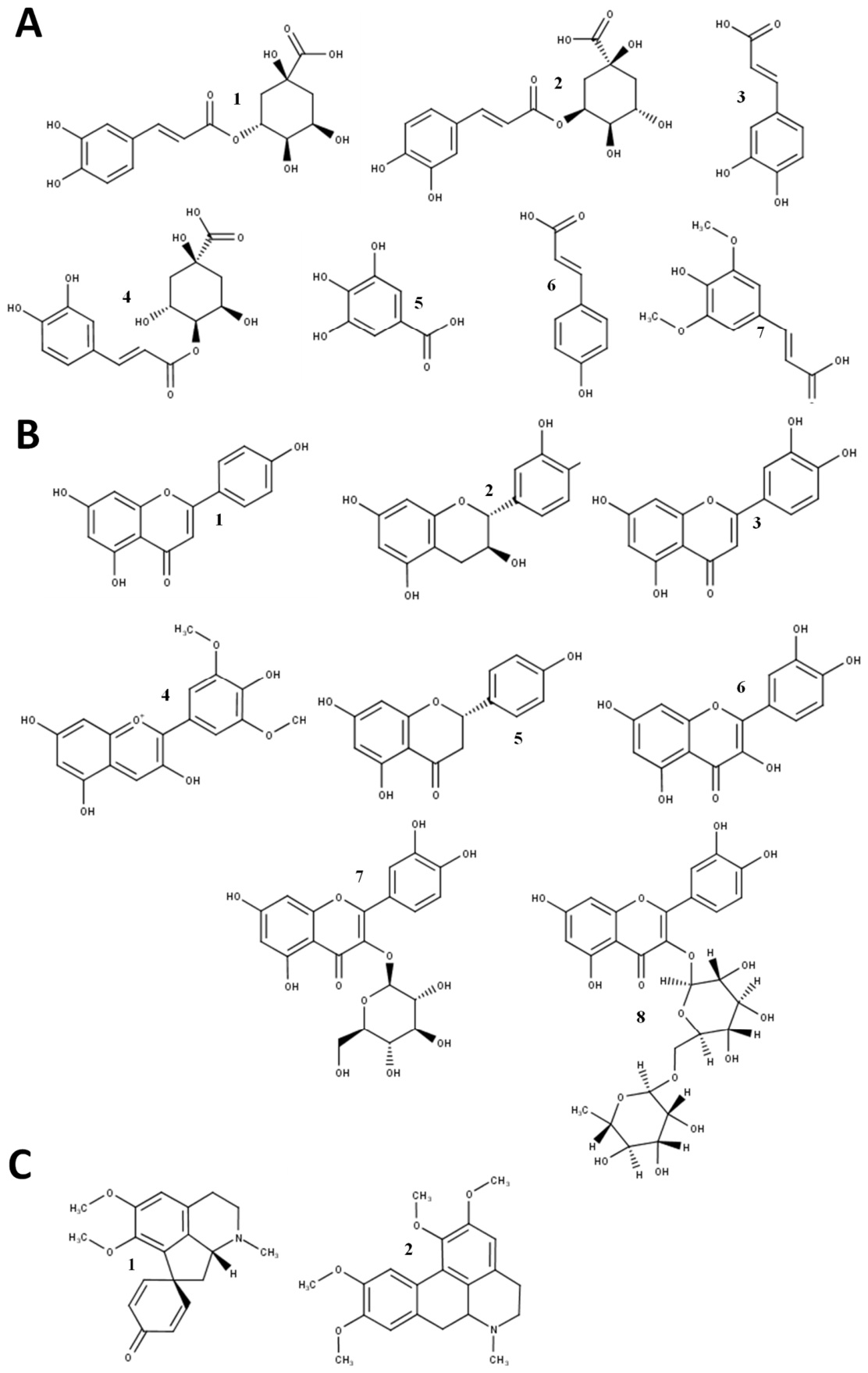
| Tristerix tetrandus | Leaves and flowers | Methanolic extracts for antioxidant assays | UHPLC-PDA-HESI-Orbitrap MS | Chlorogenic acid, catechin, rutin, quercetin-3-O-glucoside, quercetin-3-O-pentose, 5-O-caffeoylquinic acid, cyanidin-3-glucoside, malvidin, quercetin, luteolin, naringenin, apigenin | Not reported | [36] |
| Tristerix corymbosus | Leaves and flowers | Sequential extraction with hexane, dichloromethane, ethyl acetate and methanol | Qualitative phytochemical screening | Tannins, flavonoids, steroids, quinones, saponins, triterpenes, cardiac glycosides | Hosts: Populus nigra, Aristotelia chilensis, Rhaphithamnus spinosus (Chile) | [37] |
| Tristerix tetrandus | Fruits | Nanofiltration (polyamide-TFC NF membranes) | UHPLC-ESI-MS/MS | Gallic acid, cryptochlorogenic acid, chlorogenic acid, caffeic acid, p-coumaric acid, rutin, quercetin | Not reported | [38] |
| Tristerix corymbosus | Flowers | Fractionation into free, esterified and insoluble phenolic fractions | Phenolic profiling | Chlorogenic acid, p-coumaric acid, sinapic acid | Not reported | [39] |
| Tristerix chodatianus | Leaves | Ethanolic extraction | Phytochemical screening | Phenolic compounds, flavonoids, triterpenes, steroids, leucoanthocyanidins, saponins | Polylepis spp., Peru | [40] |
| Tristerix verticillatus | Leaves | Alkaloid extraction | Alkaloid analysis/comparative phytochemical analysis | Pronuciferine, glaucine | Host comparison: Berberis montana vs. Schinus montanus | [41] |
| Specie | Plant Organ | Extract/Fraction | Experimental Model | Biological Activity | Main Findings | Reference |
|---|---|---|---|---|---|---|
| T. tetrandus | Leaves and flowers | Methanolic extracts | DPPH, FRAP | Antioxidant | Leaves showed higher DPPH radical scavenging activity, whereas flowers exhibited greater FRAP reducing power associated with higher anthocyanin content. | [36] |
| T. corymbosus | Leaves and flowers from different hosts | Methanol, ethyl acetate and other solvents | Reducing power assay | Antioxidant | Antioxidant capacity varied according to host species, plant organ, and extraction solvent, reflecting differences in secondary metabolite composition | [37] |
| T. corymbosus | Different fractions | Free, esterified and insoluble fractions | DPPH, ABTS, FRAP | Antioxidant | All fractions exhibited antioxidant activity, with variations depending on phenolic composition. | [39] |
| T. chodatianus | Leaves | Ethanolic extract | DPPH, FRAP | Antioxidant | Dose-dependent antioxidant activity (DPPH IC50 = 0.242 mg/mL; FRAP TEAC = 0.642 ± 0.008 mg/mL). | [40] |
| T. corymbosus | Different fractions | Free and esterified fractions | E. coli, S. enterica serovar Typhi, S. aureus | Antimicrobial | Antibacterial activity correlated with chlorogenic, sinapic and p-coumaric acids. | [39] |
| T. corymbosus | Stem leaves | Methanolic extract | S. aureus (TLC agar overlay) | Antimicrobial | Minimal inhibitory amount of approximately 1 mg. | [42] |
| T. corymbosus | Leaves and flowers from different hosts | Dichloromethane, ethyl acetate, methanol | AGS, PC-3, MCF-7 cell lines | Cytotoxic | Flower extracts showed stronger cytotoxicity than leaf extracts. Activity depended on host species, extraction solvent, and cancer cell line. | [43] |
| T. chodatianus | Leaves | Ethanolic extract | Artemia salina and Lactuca sativa | Cytotoxic | No significant toxicity under evaluated conditions. | [44] |
| T. chodatianus | Leaves | Ethanolic extract | Hot-plate test (mice) | Analgesic | Significant analgesic effect, greatest response at 400 mg/kg. | [44] |
Disclaimer/Publisher’s Note: The statements, opinions and data contained in all publications are solely those of the individual author(s) and contributor(s) and not of MDPI and/or the editor(s). MDPI and/or the editor(s) disclaim responsibility for any injury to people or property resulting from any ideas, methods, instructions or products referred to in the content. |
© 2026 by the authors. Published by MDPI on behalf of the Österreichische Pharmazeutische Gesellschaft. Licensee MDPI, Basel, Switzerland. This article is an open access article distributed under the terms and conditions of the Creative Commons Attribution (CC BY) license.
Share and Cite
Poulsen-Silva, E.; Otero, M.C.; Verdugo-Igor, D.; González, G.; Díaz-Cornejo, S.; Fuentes, C.; Rodríguez-Díaz, M.; Atala, C.; Gordillo-Fuenzalida, F. Bioactive Properties and Pharmaceutical Potential of New World Mistletoes of the Genus Tristerix: A Review. Sci. Pharm. 2026, 94, 66. https://doi.org/10.3390/scipharm94030066
Poulsen-Silva E, Otero MC, Verdugo-Igor D, González G, Díaz-Cornejo S, Fuentes C, Rodríguez-Díaz M, Atala C, Gordillo-Fuenzalida F. Bioactive Properties and Pharmaceutical Potential of New World Mistletoes of the Genus Tristerix: A Review. Scientia Pharmaceutica. 2026; 94(3):66. https://doi.org/10.3390/scipharm94030066
Chicago/Turabian StylePoulsen-Silva, Erick, María Carolina Otero, Diego Verdugo-Igor, Gloria González, Sofía Díaz-Cornejo, Camila Fuentes, Maite Rodríguez-Díaz, Cristian Atala, and Felipe Gordillo-Fuenzalida. 2026. "Bioactive Properties and Pharmaceutical Potential of New World Mistletoes of the Genus Tristerix: A Review" Scientia Pharmaceutica 94, no. 3: 66. https://doi.org/10.3390/scipharm94030066
APA StylePoulsen-Silva, E., Otero, M. C., Verdugo-Igor, D., González, G., Díaz-Cornejo, S., Fuentes, C., Rodríguez-Díaz, M., Atala, C., & Gordillo-Fuenzalida, F. (2026). Bioactive Properties and Pharmaceutical Potential of New World Mistletoes of the Genus Tristerix: A Review. Scientia Pharmaceutica, 94(3), 66. https://doi.org/10.3390/scipharm94030066