Article

Evaluation of Plantago lanceolata (Ribwort Plantain) and StrepCough Plantain-Dry Cough Syrup in In Vitro Models of Pharyngitis and Cough


by
Olumayokun A. Olajide
1,*,
Uzeme P. Aluta
1,†,
Emmanuel Mfotie Njoya
1,
Hope A. Ogiogio
1 and
Thomas Hallett
2
1
Department of Pharmacy, School of Applied Sciences, University of Huddersfield, Huddersfield HD1 3DH, UK
2
Reckitt Benckiser Health Ltd., Dansom Lane, Hull HU8 7DS, UK
*
Author to whom correspondence should be addressed.
Current address: Department of Marine Sciences, Faculty of Science, University of Lagos, Lagos 101017, Nigeria
Sci. Pharm. 2026, 94(2), 47; https://doi.org/10.3390/scipharm94020047
Submission received: 27 March 2026 / Revised: 27 May 2026 / Accepted: 3 June 2026 / Published: 9 June 2026
(This article belongs to the Topic Natural Products and Drug Discovery—2nd Edition)

Abstract

Symptoms of respiratory tract infections (RTI) caused by viral or bacterial triggers include sore throat and cough. Plantago lanceolata (ribwort plantain) is used in herbal medicine to treat symptoms of RTI. This study evaluated the pharmacological actions of P. lanceolata extract (PL) and StrepCough Plantain-Dry cough syrup (PLS) in in vitro models of sore throat and cough. Human tonsil epithelial cells (HTEpiC) cells were stimulated with a combination of lipoteichoic acid and peptidoglycan in the presence or absence of PL or PLS. Levels of TNF-α, IL-6, PGE2, and COX-2 were measured using ELISA, while phospho-p65 protein levels were measured using Lumit® immunoassay. The effects of PL and PLS on bradykinin-induced inflammation and increased intracellular Ca2+ were investigated in bronchial epithelial cells (BEAS-2B), cells over-expressing TRPV1. Results showed that the pre-treatment of HTEpiC cells with PL and PLS resulted in a significant (p < 0.05) reduction in the LTA + PGN-induced increased production of TNFα, IL-6, PGE2, as well as COX-2 and phospho-p65 protein levels. Bradykinin-induced increased levels of TNFα, IL-6, and PGE2 in BEAS-2B cells over-expressing TRPV1 were also reduced by PL and PLS, while reducing levels of intracellular Ca2+. This study has demonstrated that extract of P. lanceolata and StrepCough Plantain-Dry cough syrup reduce inflammation in human tonsil epithelial cells. The extract and syrup also reduced TRPV1-mediated inflammation and increased intracellular Ca2+ in BEAS-2B bronchial epithelial cells. This study has provided pharmacological evidence for the use of P. lanceolata in healthcare interventions to treat symptoms of respiratory tract infection.

1. Introduction

Acute upper respiratory tract infections (URTI) can be caused by viral and bacterial pathogens [1] and represent some of the most common respiratory complaints worldwide [2]. Despite the benign nature of these illnesses, acute URTIs have a major impact on healthcare systems and the economy in terms of hospital visits, medication use, absenteeism, and reduced productivity [3].
One of the symptoms of URTI is pharyngitis or sore throat. Viral causes of sore throat are usually rhinovirus and influenza [4], while Streptococcus pyogenes is the most common cause of bacterial pharyngitis [5]. Conventional treatments for sore throat include antibiotics, which may be abused, resulting in an imbalance in the throat microflora (dysbacteriosis) and an increased risk of further infection. Furthermore, the prescription of antibiotics for sore throat has been linked to antibiotic resistance [6,7].
An acute cough is the most troublesome symptom associated with viral and bacterial respiratory tract infections [8,9,10] and is one of the most common reasons for GP visits in the UK [11]. Bradykinin is a pro-inflammatory peptide mediator which has been linked to cough and other conditions of the respiratory airways [12]. A study reported by Hewitt et al. (2016), specifically showed that bradykinin-induced cough response in guinea pigs, and suggested that this action was mediated by bradykinin B2 receptors [13]. Furthermore, research has shown that bradykinin triggers the cough reflex through the activation of the transient potential vanilloid receptor 1 (TRPV1) [14,15], which is known to be present in airway epithelial cells [16]. Bradykinin-induced cough is also known to be linked to cyclooxygenase-2 (COX-2)-mediated prostaglandin E2 (PGE2) production [17], and B2 receptor-mediated stimulation of bronchial epithelial (BEAS-2) cells induce the production of pro-inflammatory cytokines and chemokines [18] possibly through the activation of the nuclear factor kappa-light-chain-enhancer of the activated B cells (NF-κB) pathway [19]. Interestingly, the TRPV1 channel was reported to mediate lung inflammation and hyper-responsiveness [20]. Consequently, targeting TRPV1-mediated bradykinin-induced inflammation in the lungs may be an important strategy in cough treatment.
An international survey has proposed that herbal medicines could be used in the symptomatic management of URTIs such as sore throat, thus reducing the inappropriate use of antibiotics [21]. Furthermore, a review published by Ciuman (2012) suggests that herbal medicines have a well-established role in the treatment of URTI symptoms such as sore throat [22] and cough [23]. Consequently, the evidence-based application of herbal products is a viable and reliable approach in the symptomatic treatment of this condition.
Plantago lanceolata (ribwort plantain), belonging to the family Plantaginaceae, is a common grassland weed found in most parts of the world [24]. It is also cultivated in grasslands for feeding animals and used in cough syrups and herbal candies [25], and is reputed for its use in traditional medicine for treating the inflammation of the upper respiratory tract [26].
Mucilage polysaccharides such as galactose, arabinose, glucose, mannose, rhamnose, galacturonic acid, glucuronic acid, and xylose have been reported as some of the main chemical constituents in P. lanceolata [27,28]. Other studies have reported the presence of iridoid glycosides such as aucubin and catalpol [29,30]. Phenylethanoids such as acteoside (verbascoside), cistanoside F, lavandulifolioside, plantamajoside, and isoacteoside have been isolated from P. lanceolata [31]. Flavonoids, mainly apigenin and luteolin glucuronides [32,33], as well as isorhamnetin 3-O- and 3,4′-O-glycosides [34], have been identified in the inflorescences of P. lanceolata.
Studies have linked P. lanceolata to a wide variety of pharmacological activities. Investigations on an extract of P. lanceolata administered to guineapigs showed significant anti-tussive effects [35], while some studies have also suggested that the plant promotes wound healing [36,37], and produces antioxidant and anti-inflammatory activities [38].
Based on the reported use of P. lanceolata in traditional medicine for treating the inflammation of the upper respiratory tract, this is the first study investigating the anti-inflammatory effects of an extract of P. lanceolata (PL) and StrepCough Plantain-Dry cough syrup (PLS) in human tonsil epithelial cells stimulated with Streptococcus pyogenes-associated lipoteichoic acid and peptidoglycan. This study also evaluated the effects of P. lanceolata in an in vitro model of cough, using bronchial epithelial cells.

2. Methods

2.1. Herbal Product Preparation

P. lanceolata L. extract (PL) was prepared according to the Committee on Herbal Medicinal Products (HMPC) community herbal monograph [26] as a dry ethanol extract (drug extract ratio 3–5:1).
P. lanceolata was also formulated as StrepCough Plantain-Dry cough syrup® (PLS) containing 30 mg/mL of the dry extract (drug extract ratio 3–5:1). The syrup also contains the following excipients: maltodextrin, maltitol liquid (E 965), xanthan gum (E 415), potassium sorbate (E 202), citric acid (E 330), natural flavour, and purified water.
Extract and formulated product were dissolved in sterile water for pharmacological studies.

2.2. HPLC Fingerprinting of PL and PLS

HPLC analyses of verbascoside (VER) standards (10, 20, 40, 60, 80, and 100 μg/mL), PL (1 mg/mL), and PLS (1 mg/mL) were carried out using a reversed-phase Luna 3 µm C18(2) 100 Å, LC Column 250 × 4.6 mm (00G-4251-E0, Phenomenex, Macclesfield, UK). The mobile phase was made of a binary mixture of solvent-A (ultrapure water containing + 0.1% formic acid) and solvent-B (acetonitrile: ultrapure water (80:20). The separation time was 35 min, starting with a gradient from 1%B to 30%B (0–10 min), followed by another gradient from 30%B to 70%B (10–30 min), finally back to the initial conditions 1%B (30–32 min), and reconditioning for 3 min. The UV detector was adjusted at 332 nm. Standards, PL, and PLS were injected three times in the HPLC system.
The identification of verbascoside in PL and PLS was done by comparing the retention time with the pure standard, while its concentration was obtained through interpolation with the established calibration curve. The content of verbascoside in PL and PLS was expressed as a percentage (%). The accuracy of the identification method was confirmed by spiking 1 mg/mL of PL or PLS with verbascoside (10 μg/mL) at 1:1, 2:1, and 2:3 (v/v) ratios.

2.3. Cell Culture

HTEpiC cells (Generon Ltd., Slough, UK) were cultured in Tonsil Epithelial Cell Medium (ScienCell, Carlsbad, CA, USA) in a poly-L-lysine (Sigma, Gillingham, UK) coated flask.
BEAS-2B cells (CLS Cell Lines Service GmbH, Eppelheim, Germany) were cultured as described previously [18].

2.4. Cell Viability Assays

HTEpiC cells were treated with PL (25, 50 and 100 mg/mL) or PLS (0.125, 0.25 and 0.5% v/v). Control cells were treated with equal volumes of sterile water. One hour later, cells were stimulated with lipoteichoic acid (LTA; 10 mg/mL) and peptidoglycan (PGN; 5 mg/mL) for a further 24 h. Similar experiments were conducted in BEAS-2B cells stimulated with bradykinin (10 μM). Cell viability was determined as earlier described [39].

2.5. LTA/PGN-Induced Release of Pro-Inflammatory Mediators in Human Tonsil Epithelial Cells

HTEpiC cells were treated with PL (25, 50 and 100 µg/mL) or PLS (0.125%, 0.25% and 0.5% v/v). Cells were then stimulated with LTA (10 µg/mL) and PGN (5 µg/mL) for a further 24 h. At the end of the experiments, cell supernatants were collected by centrifugation. Levels of tumour necrosis factor-alpha (TNFα) and interleukin-6 (IL-6) were evaluated in supernatants using human TNFα, and IL-6 ELISA kits (Thermo Scientific, Paisley, UK). Levels of prostaglandin E2 (PGE2) were analysed using an enzyme immunoassay (EIA) kit for PGE2 (Arbor Assays, Ann Arbor, MI, USA).

2.6. In-Cell Western ELISA for COX-2 Protein Expression

In-cell western assays were used to determine the effects of PL on COX-2 protein expression in HTEpiC cells, as earlier described [19]. Cells were treated with PL (25, 50 and 100 µg/mL) or PLS (0.125%, 0.25% and 0.5% v/v), prior to stimulation with LTA (10 µg/mL) and PGN (5 µg/mL) for a further 24 h. At the end of the stimulation, in-cell western ELISA analyses were carried as earlier described [40].

2.7. Lumit® Immunoassay to Evaluate Effects of PL and PLS on Phospho-p65 Protein Expression in Human Tonsil Epithelial Cell

HTEpiC cells were treated with PL (25, 50 and 100 µg/mL) or PLS (0.125%, 0.25% and 0.5% v/v) for 60 min prior to stimulation with LTA (10 µg/mL) and PGN (5 µg/mL) for a further 60 min. At the end of the experiment, Lumit® immunoassay (Promega, Southampton, UK) was conducted as earlier described [40].

2.8. Bradykinin-Induced Production of Pro-Inflammatory Mediators in BEAS-2B Cells Over-Expressing TRPV1

The human TRPV1 gene (pCMV3-C-GFPSpark) and control vector (C-terminal GFPSpark-tagged) were purchased from Sino Biological (Eschborn, Germany). Lyophilised plasmids were re-suspended in sterile water. TRPV1 and control plasmids were transfected into BEAS-2B cells using lipofectamine LTX transfection reagent (Thermo Scientific, UK). BEAS-2B cells over-expressing TRPV1 were then treated with PL (25, 50 and 100 µg/mL), prior to stimulation with bradykinin (10 μM) for 24 h. Similar experiments were conducted in BEAS-2B cells treated with PLS (0.125, 0.25 and 0.5% v/v) prior to stimulation with bradykinin (10 μM). Culture supernatants were analysed for levels of TNFa, IL-6, and PGE2.

2.9. Bradykinin-Induced Increased Intracellular Ca2+ Influx in BEAS-2B Cells Over-Expressing TRPV1

Effects of PL and PLS on changes in intracellular Ca2+ concentrations were investigated in bradykinin-stimulated BEAS-2B cells overexpressing TRPV1. Cells were treated with PL (25, 50 and 100 µg/mL) or PLS (0.125, 0.25 and 0.5% v/v), followed by stimulation with bradykinin (10 μM) for 24 h. Intracellular Ca2+ concentrations were then detected using Screen Quest™ Calbryte-520 kit (Stratech, Ely, UK).

2.10. Statistical Analysis

Data were analysed using one-way analysis of variance (ANOVA) with post hoc Dunnett’s multiple comparison test. Values with p < 0.05 (compared with LTA/PGN or bradykinin stimulation) were considered statistically significant. Statistical analyses were conducted using GraphPad Prism software (version 10.6.1).

3. Results

3.1. PL and PLS Did Not Affect the Viability of HTEpiC and BEAS-2B Cells

Results of MTS cell viability assays in Figure 1A,B show that the treatment of LTA + PGN-stimulated HTEpiC cells with PL (25, 50 and 100 µg/mL) or PLS (0.125, 0.25 and 0.5% v/v) did not affect the viability of the cells. Similarly, results in Figure 1C,D show that the treatment of BEAS-2B cells with either PL or PLS prior to stimulation with bradykinin (10 μM) did not result in a reduction in cell viability. These concentrations of the PL and PLS were therefore used in subsequent pharmacological experiments.

3.2. Effects of PL and PLS on PGE2 Production and COX-2 Protein Levels in LTA + PGN-Stimulated HTEpiC Cells

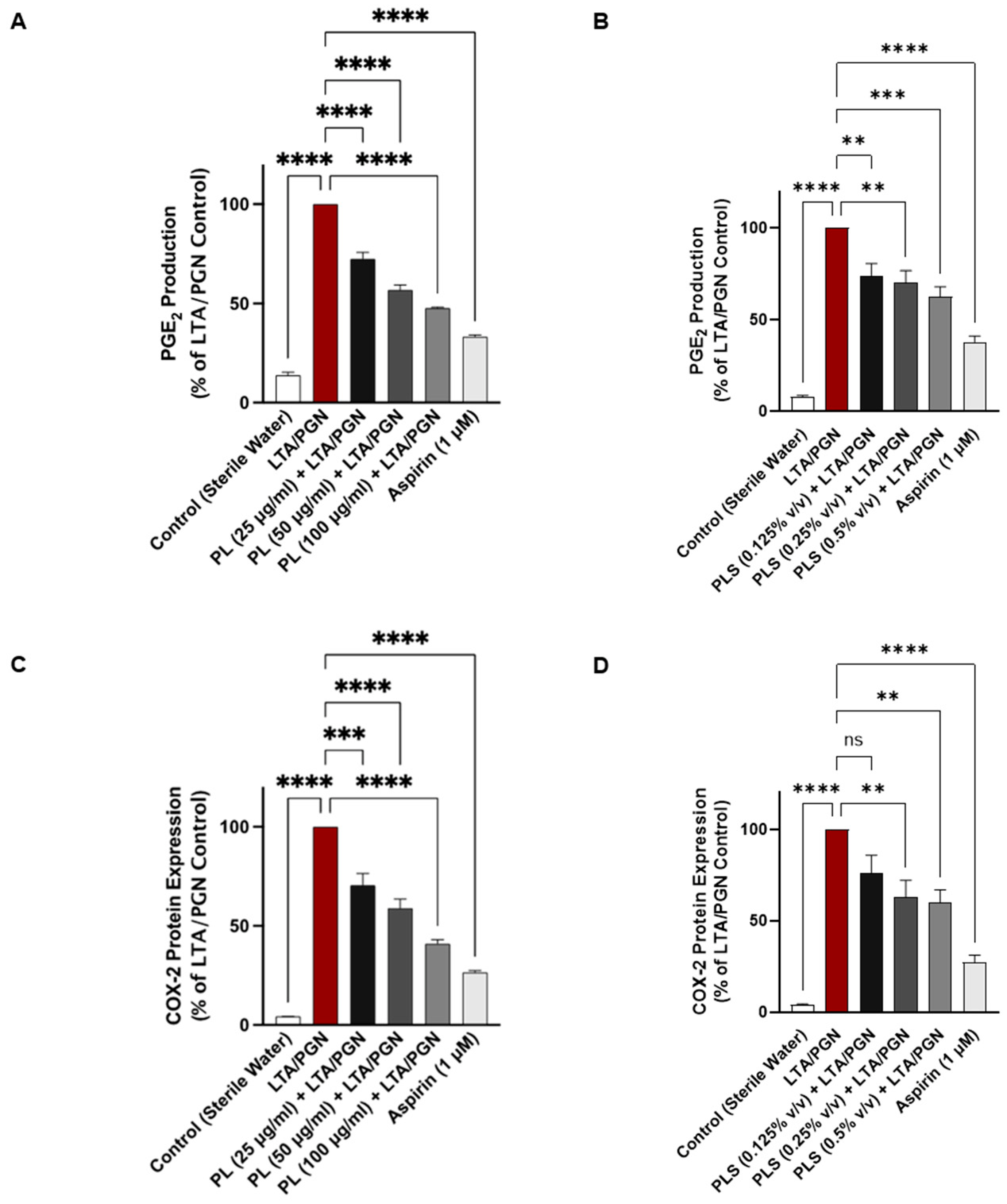
The incubation of HTEpiC cells with a combination of LTA and PGN resulted in significant (p < 0.0001) elevation in the production of PGE2 (Figure 2A,B). Furthermore, treatment with PL (Figure 2A) and PLS (Figure 2B) produced a significant (p < 0.001) reduction in the elevated levels of PGE2 production (Figure 2A). Aspirin (1 µM), which was used as reference treatment, reduced PGE2 production to ~26.8%, when compared with inflammatory stimulation (100%).
Further experiments were conducted to determine whether PL and PLS reduced PGE2 production through the modulation of COX-2 protein expression. Results in Figure 2C show that the stimulation of HTEpiC cells with LTA + PGN resulted in a significant (p < 0.0001) increase in COX-2 protein expression in comparison with unstimulated cells. However, treatment with PL (25, 50 and 100 µg/mL) prior to stimulation with LTA + PGN resulted in a significant (p < 0.0001) and concentration-dependent reduction in COX-2 protein expression.
The lowest concentration (0.125% v/v) of PLS did not produce a significant (p < 0.05) reduction in COX-2 protein expression. On increasing the concentration of the syrup to 0.25% and 0.5% (v/v), there was significant (p < 0.01) downregulation of COX-2 expression (Figure 2D). Treatments with 0.25% and 0.5% (v/v) of the syrup correspond to an ~30% reduction in COX-2 protein expression when compared with 100% in stimulated cells.

3.3. Effects of PL on Elevated TNFα and IL-6 Release in LTA + PGN-Stimulated HTEpiC Cells

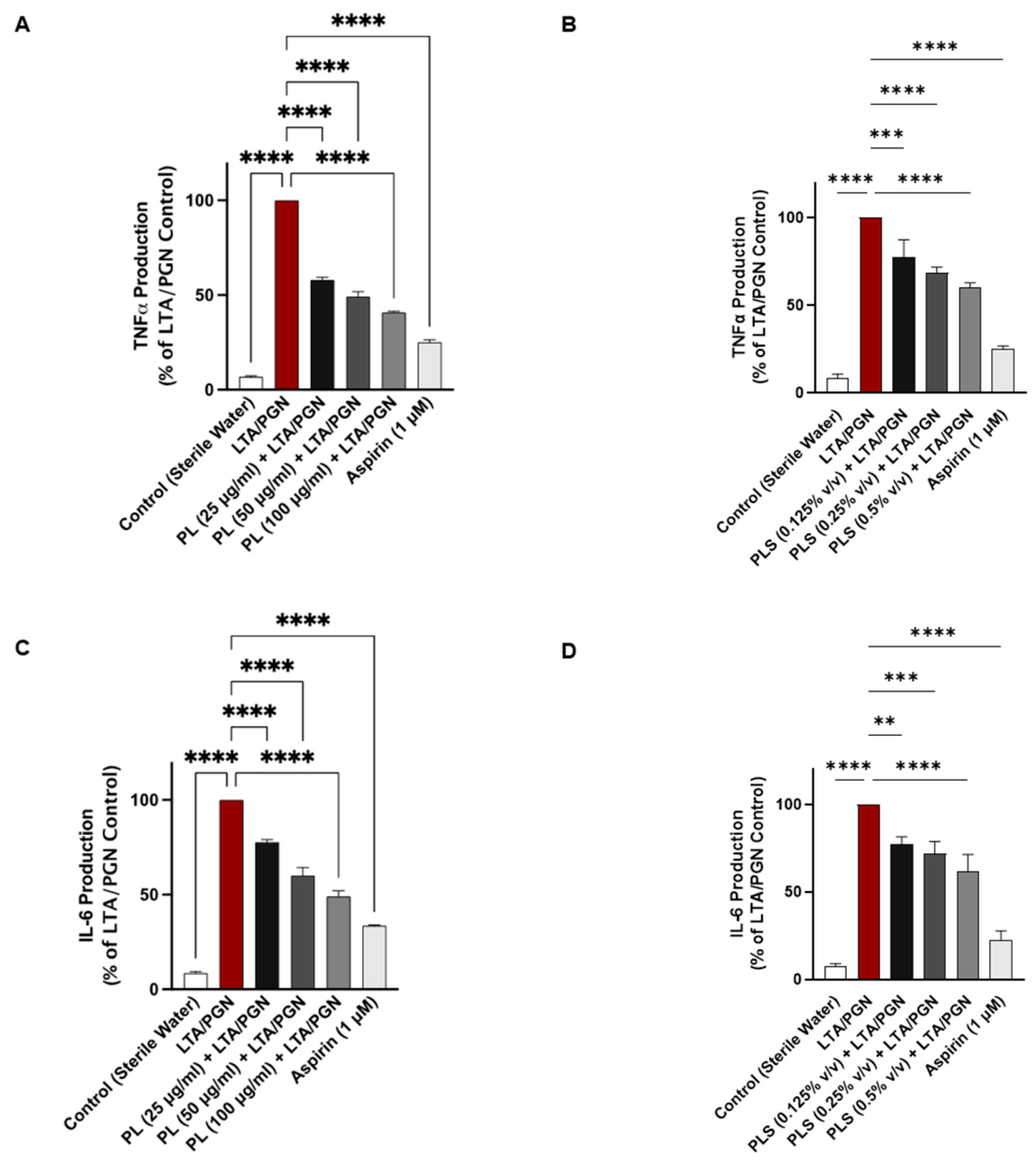
To further establish the anti-inflammatory profiles of both PL and PLS in LTA + PGN-stimulated HTEpiC cells, their effects on the release of pro-inflammatory cytokines, TNFα, and IL-6 were investigated. The results depicted in Figure 3A,B show that the incubation of HTEpiC cells with a combination of LTA + PGN for 24 h resulted in an ~14–16-fold increase in TNFα secretion. Pre-treatment with 25, 50, and 100 µg/mL of PL reduced TNFα production to 58%, 49.1%, and 40.7% respectively (Figure 3A). Also, treating cells with all concentrations of PLS resulted in a significant (p < 0.001) reduction in LTA + PGN-induced increased production of TNFα (Figure 3B).
Similar results were obtained in experiments to determine the effects of PL and PLS on IL-6 production following the stimulation of HTEpiC cells with LTA + PGN for 24 h (Figure 3C,D).

3.4. Anti-Inflammatory Activities of PL and PLS Are Mediated Through Inhibition of NF-κB Activation

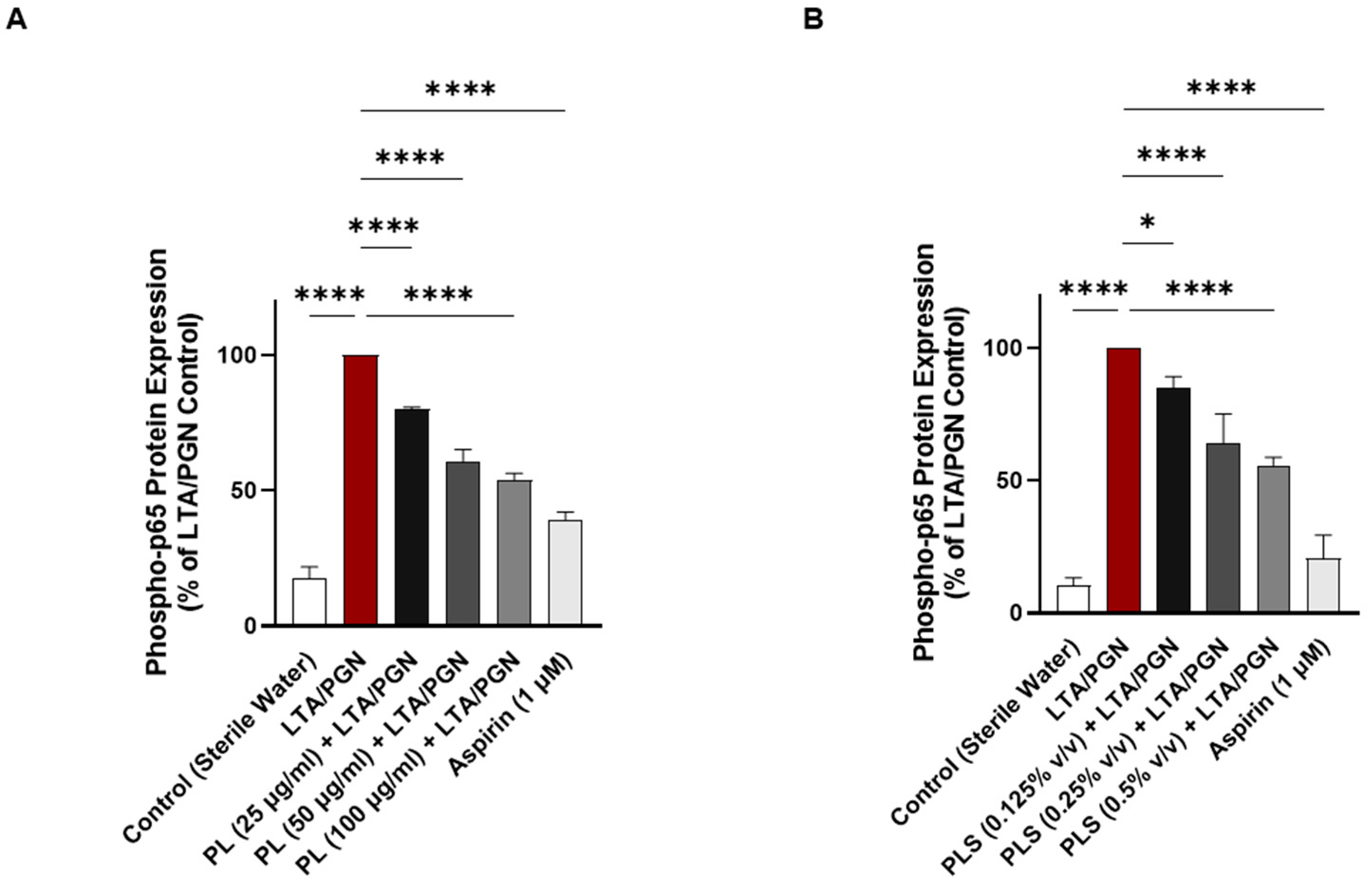
Based on results showing that PL and PLS reduced the production of pro-inflammatory mediators in HTEpiC cells stimulated with LTA + PGN, experiments were conducted to determine whether these effects were mediated through the inhibition of NF-κB activation. Results showed that the stimulation of HTEpiC cells with LTA (10 µg/mL) and PGN (5 µg/mL) caused a significant (p < 0.0001) increase in the levels of phospho-65 NF-κB (Figure 4A,B). Results further showed that treating the cells with either PL (12.5, 25 and 50 µg/mL) or PLS (0.125, 0.25 and 0.5% v/v), prior to LTA + PGN stimulation, resulted in a concentration-dependent reduction in the levels of phospho-p65 protein, in comparison with stimulated cells (Figure 4A,B).

3.5. PL and PLS Reduced Bradykinin-Induced Production of Pro-Inflammatory Mediators and Ca2+ Levels in BEAS-2B Cells Over-Expressing TRPV1

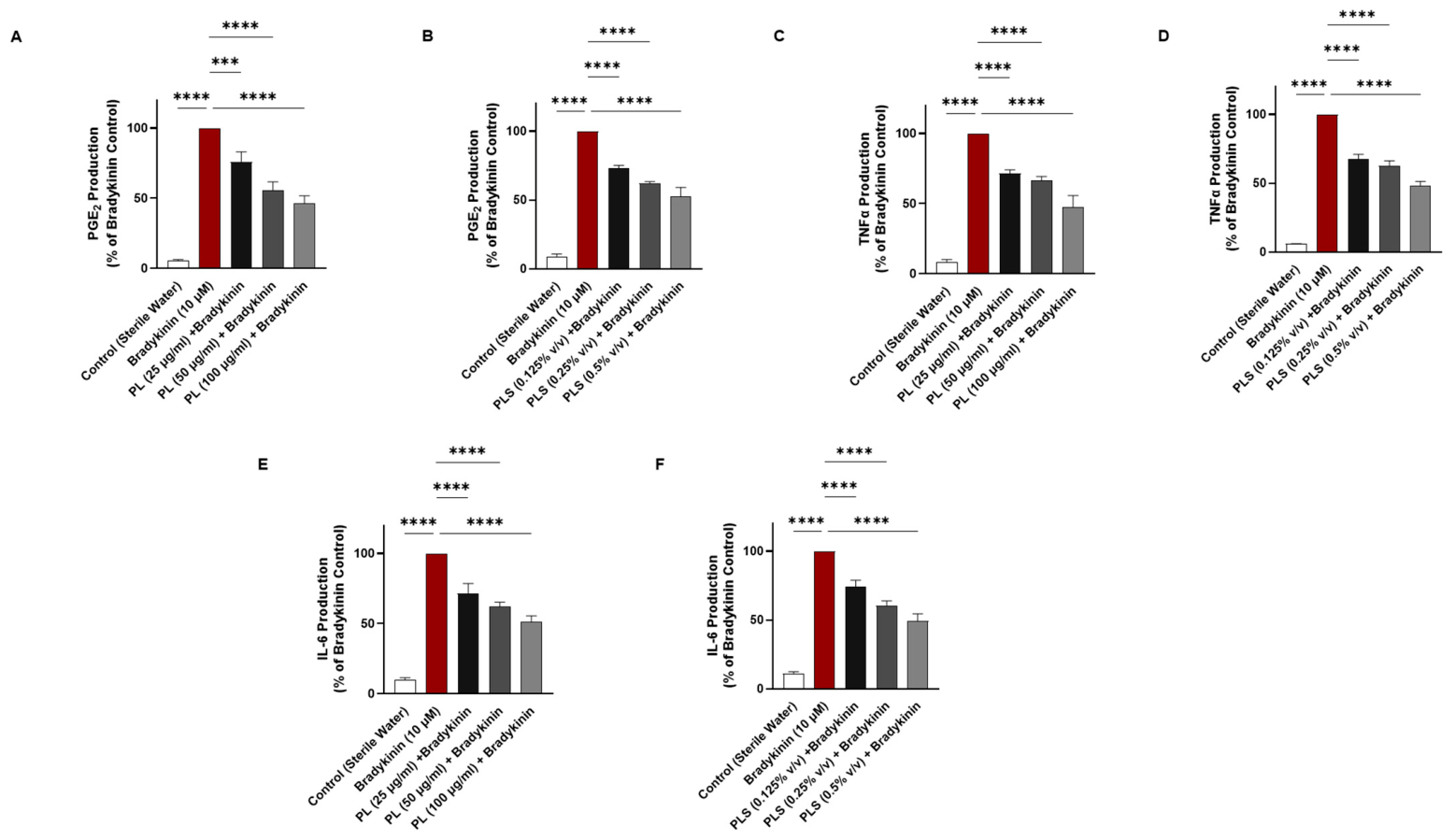
In experiments to evaluate the effects of PL and PLS in in vitro models of cough, BEAS-2B bronchial epithelial cells were transfected with a TRPV1 over-expression plasmid. Stimulation of these cells with bradykinin (10 μM) resulted in a significant (p < 0.0001) increase in levels of TNFα, IL-6, and PGE2, as seen in Figure 5A–F. However, pre-treating the cells with either PL (Figure 5A,C,E) or PLS (Figure 5B,D,F), resulted in a reduction in all pro-inflammatory mediators measured.
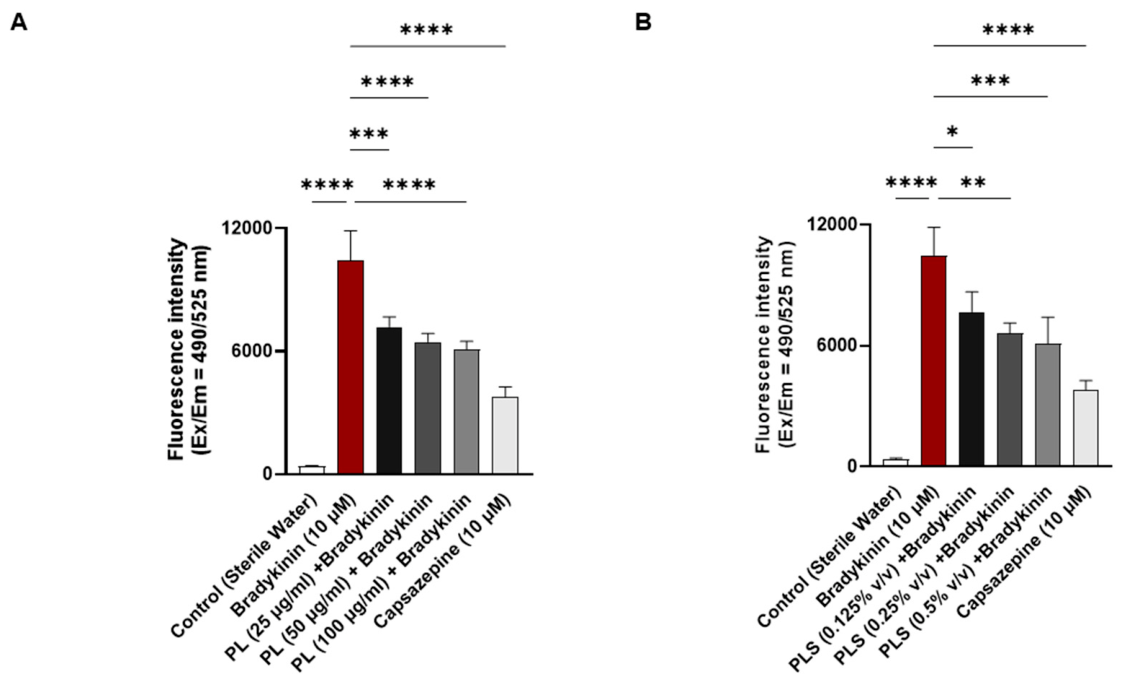
Bradykinin stimulation of BEAS-2B cells over-expressing TRPV1 resulted in a significant increase in intracellular Ca2+, as measured by the intensity of the green-fluorescent calcium indicator, Calbryte™ 520 AM (Figure 6A,B). In the presence of PL (12.5, 25, and 50 µg/mL), Calbryte™ 520 AM fluorescence intensity was significantly (p < 0.001) reduced (Figure 6A). Pre-treating cells with PLS (0.125, 0.25, and 0.5% v/v) similarly resulted in significant (p < 0.05) reductions in bradykinin-induced increase in intracellular Ca2+ (Figure 6B).

3.6. Results of HPLC Fingerprinting of PL and PLS

Verbascoside was detected as the major peak in PL and PLS at the retention time of 20.72 ± 0.01 min, and 20.77 ± 0.01 min, comparable to 20.75 ± 0.01 min for the pure standard (Supplementary Materials). Moreover, it was found that PL and PLS contain 14.03 ± 0.05 μg; and 15.67 ± 0.04 μg of verbascoside per mg of product, representing 1.40% and 1.56% of verbascoside, respectively. After spiking PL and PLS with verbascoside, the percentage recovery ranged between 100.61% and 101.18%, which indicates the accuracy of the quantification method.

4. Discussion

In this study, a combination of two bacterial pathogen-associated molecular patterns (PAMPs), lipoteichoic acid, and peptidoglycan were used to model streptococcal pharyngitis in HTEpiC human tonsil epithelial cells. Following the colonisation of the tonsil by bacteria, PAMPs like lipoteichoic acid and peptidoglycan induced innate immune reactions resulting in the secretion of pro-inflammatory mediators (TNFα and IL-6) and eicosanoids (PGE2) [5]. This study demonstrates that in response to 24 h incubation with a combination of lipoteichoic acid and peptidoglycan, tonsil epithelial cells secreted pro-inflammatory mediators PGE2/COX-2, TNFα, and IL-6. These observations are consistent with reports linking Group A streptococcal (GAS) infections of the pharynx to the increased secretion of pro-inflammatory mediators such as PGE2 and cytokines [5]. Furthermore, studies have demonstrated that in pharyngitis induced by Staphylococcus aureus, inflammatory responses in macrophages resulted in the production of pro-inflammatory cytokines [41,42,43].
Results also showed that the extract and StrepCough Plantain-Dry cough syrup with P. lanceolata extract reduced inflammation in tonsil epithelial cells stimulated with both lipoteichoic acid and peptidoglycan. This is an unsurprising outcome as extracts of this plant have been previously shown to produce anti-inflammatory effects in other cell types. For example, P. lanceolata was reported to produce the inhibition of PGE2/COX-2 production in LPS/IFNg-stimulated J774A.1 macrophages [44]. Furthermore, anti-inflammatory effects of P. lanceolata were observed in studies employing LPS-stimulated U937 monocytes [45]. Furthermore, an extract of P. lanceolata produced in vivo anti-inflammatory activity by reducing paw oedema while suppressing COX-2 expression [46]. To our knowledge, this is the first report demonstrating the anti-inflammatory effect of P. lanceolata in an in vitro model of bacterial pharyngitis.
Differences in the extraction methods and solvents used have been shown to determine the concentrations of bioactive constituents, and consequently pharmacological activities of various P. lanceolata preparations [47]. In a study conducted to compare the antimicrobial activities of water, methanol, and acetone extracts of P. lanceolata, results showed that the methanol extract exhibited the greatest antimicrobial activity against the majority of the tested pathogens [48]. Abate et al. summarised that catalpol, aucubin, and verbascoside are the most important bioactive compounds obtained from P. lanceolata [47].
Interestingly, HPLC fingerprinting analyses of both P. lanceolata extract and syrup used in this study revealed the significant presence of verbascoside. Interestingly, verbascoside has been reported to produce anti-inflammatory activity both in vitro and in vivo [49,50], thus providing a plausible explanation for the observed anti-inflammatory effects of P. lanceolata in this study. While verbascoside has been mainly detected in the Verbascum species [51], it has also been isolated from P. lanceolata [52,53]. In fact, a study published by Jankovic et al. demonstrated that P. lanceolata contained significantly higher quantities of verbascoside compared to the Plantago species investigated [54].
In reducing PGE2 and COX-2 production in lipoteichoic acid and peptidoglycan-stimulated HTEpiC cells, the P. lanceolata extract and StrepCough Plantain-Dry cough syrup used in this study showed profiles similar to that of flurbiprofen, a non-steroidal anti-inflammatory drug which is used in the symptomatic relief of sore throat. In a study reported by Lambkin-Williams et al. (2020), flurbiprofen-containing lozenges were shown to reduce viral- and lipopolysaccharide/peptidoglycan-induced increased PGE2 production in A549 bronchial epithelial cells [55].
Research suggests that the adhesion and internalisation of S. pyogenes could stimulate the activation of the transcription factor NF-κB [56]. Inflammatory responses involving the release of pro-inflammatory mediators such as PGE2/COX-2, TNFα, and IL-6 in S. pyogenes-infected epithelial cells have also been proposed to be controlled by NF-κB [57]. Our study showed that the stimulation of human tonsil epithelial cells with lipoteichoic acid and peptidoglycan resulted in the cytoplasmic activation of NF-κB, as demonstrated with an increase in the phosphorylation of the p65 sub-unit. Interestingly, this process was reduced in the presence of both P. lanceolata extract and syrup, suggesting that the inhibition of NF-κB activation may be contributing to the anti-inflammatory effects of P. lanceolata in tonsil epithelial cells.
URTI is a major cause of cough [58]. In this respect, the release of pro-inflammatory mediators like bradykinin in the airways has been linked to the sensitisation of the cough response to cough stimuli [59,60]. Furthermore, the inhalation of bradykinin or treatment with angiotensin converting enzyme inhibitors (ACEIs) has been linked with the cough reflex [15]. There is evidence suggesting that the activation of the transient receptor potential vanilloid 1 (TRPV1) by bradykinin could be used as a pre-clinical model in cough research [61].
The stimulation of BEAS-2B bronchial epithelial cells over-expressing TRPV1 resulted in the increased production of TNFα, IL-6, and PGE2, which were then reduced when cells were pre-treated with P. lanceolata extract and StrepCough Plantain-Dry cough syrup. This outcome suggests that P. lanceolata may be interfering with the bradykinin-induced and TRPV1 channels-mediated sensitisation of the cough reflex during infections because of its anti-inflammatory activity in the airways. Furthermore, both P. lanceolata extract and StrepCough Plantain-Dry cough syrup were shown to reduce bradykinin-induced increased intracellular Ca2+, thus providing further evidence of their potential to interfere with TRPV1-mediated cough responses, considering the roles of intracellular Ca2+ in TRPV1-mediated [62].

5. Conclusions

This study has demonstrated that P. lanceolata extract and StrepCough Plantain-Dry cough syrup suppress the inflammatory mediator release induced by PAMPs associated with bacterial infections of the pharynx. It is further suggested that the anti-inflammatory effects of these extracts were mediated through the inhibition of NF-κB activation. P. lanceolata extract and StrepCough Plantain-Dry cough syrup also reduced bradykinin-mediated inflammatory responses and increased intracellular Ca2+ in bronchial epithelial cells, suggesting the potential benefits in interfering with cough responses in the lungs. P. lanceolata syrup (Strepcough) is a registered herbal medicine in the EU but this work describes for the first time novel mechanisms of action as well as generating important data on the potential onset and duration of oropharyngeal relief that this product could provide to cough and sore throat sufferers. Consequently, P. lanceolata could be developed for healthcare applications to treat symptoms of upper respiratory tract infections, such as sore throat and cough. The outcomes of this study warrant clinical investigations to confirm the health benefits of P. lanceolata in treating the symptoms of URTIs.

Supplementary Materials

The following supporting information can be downloaded at: https://www.mdpi.com/article/10.3390/scipharm94020047/s1, Figure S1: HPLC fingerprinting of PL and PLS.

Author Contributions

Conceptualisation: O.A.O. and T.H.; Experiments: O.A.O., U.P.A. H.A.O. and E.M.N.; Writing—Original Draft Preparation, O.A.O.; Writing—Review and Editing: O.A.O. and T.H.; Supervision: O.A.O. All authors have read and agreed to the published version of the manuscript.

Funding

This study was funded by Reckitt Benckiser Health Ltd.

Data Availability Statement

The datasets used and/or analysed during the current study are available from the corresponding author on reasonable request.

Acknowledgments

The authors thank Philippa Peters, Tom Rainforth, and Giovanna Maraula for their help in editing this manuscript.

Conflicts of Interest

O.A.O., U.P.A., and E.M.N. are employees of the University of Huddersfield, which received funding from Reckitt Benckiser Health Ltd. for this work. T.H. is employed by Reckitt Benckiser Health Ltd. The sponsors were involved in the design of the study and reviewed the content of the article but had no role in the analysis and interpretation of data.

References

  1. Cui, C.; Timbrook, T.T.; Polacek, C.; Heins, Z.; Rosenthal, N.A. Disease burden and high-risk populations for complications in patients with acute respiratory infections: A scoping review. Front. Med. 2024, 11, 1325236. [Google Scholar] [CrossRef] [PubMed]
  2. Rogan, M. Respiratory Infections, Acute. In International Encyclopedia of Public Health; Academic Press: Cambridge, MA, USA, 2017; pp. 332–336. [Google Scholar]
  3. Mulholland, K. Global burden of acute respiratory infections in children: Implications for interventions. Pediatr. Pulmonol. 2003, 36, 469–474. [Google Scholar] [CrossRef] [PubMed]
  4. Leyva-Grado, V.; Pugach, P.; Sadeghi-Latefi, N. A novel anti-inflammatory treatment for bradykinin-induced sore throat or pharyngitis. Immun. Inflamm. Dis. 2021, 9, 1321–1335. [Google Scholar] [CrossRef]
  5. Soderholm, A.T.; Barnett, T.C.; Sweet, M.J.; Walker, M.J. Group A streptococcal pharyngitis: Immune responses involved in bacterial clearance and GAS-associated immunopathologies. J. Leukoc. Biol. 2018, 103, 193–213. [Google Scholar] [CrossRef]
  6. Wesgate, R.; Evangelista, C.; Atkinson, R.; Shepard, A.; Adegoke, O.; Maillard, J.-Y. Understanding the risk of emerging bacterial resistance to over-the-counter antibiotics in topical sore throat medicines. J. Appl. Microbiol. 2020, 129, 916–925. [Google Scholar] [CrossRef]
  7. Essack, S.; Bell, J.; Burgoyne, D.S.; Duerden, M.; Shephard, A. Topical (local) antibiotics for respiratory infections with sore throat: An antibiotic stewardship perspective. J. Clin. Pharm. Ther. 2019, 44, 829–837. [Google Scholar] [CrossRef] [PubMed]
  8. Curley, F.J.; Irwin, R.S.; Pratter, M.R.; Stivers, D.H.; Doern, G.V.; Vernaglia, P.A.; Larkin, A.B.; Baker, S.P. Cough and the common cold. Am. Rev. Respir. Dis. 1988, 138, 305–311. [Google Scholar] [CrossRef]
  9. Irwin, R.S.; Boulet, L.-P.; Cloutier, M.M.; Fuller, R.; Gold, P.M.; Hoffstein, V.; Ing, A.J.; McCool, F.D.; O’byrne, P.; Poe, R.H.; et al. Managing cough as a defense mechanism and as a symptom. Chest 1998, 114, 133S–181S. [Google Scholar] [CrossRef]
  10. Murgia, V.; Manti, S.; Licari, A.; De Filippo, M.; Ciprandi, G.; Marseglia, G.L. Upper Respiratory Tract Infection-Associated Acute Cough and the Urge to Cough: New Insights for Clinical Practice. Pediatr. Allergy Immunol. Pulmonol. 2020, 33, 3–11. [Google Scholar] [CrossRef]
  11. Bonvini, S.J.; Birrell, M.A.; Smith, J.A.; Belvisi, M.G. Targeting TRP channels for chronic cough: From bench to bedside. Naunyn-Schmiedeberg’s Arch. Pharmacol. 2015, 388, 401–420. [Google Scholar] [CrossRef]
  12. Amorim, M.A.; Jentsch Matias de Oliveira, J.R.; Souza Oliveira, V.H.; Cabrini, D.A.; Otuki, M.F.; André, E. Role of nitric oxide, bradykinin B2 receptor, and TRPV1 in the airway alterations caused by simvastatin in rats. Eur. J. Pharmacol. 2021, 912, 174591. [Google Scholar] [CrossRef] [PubMed]
  13. Hewitt, M.M.; Adams, G., Jr.; Mazzone, S.B.; Mori, N.; Yu, L.; Canning, B.J. Pharmacology of bradykinin evoked coughing in guinea pigs. J. Pharmacol. Exp. Ther. 2016, 357, 620–628. [Google Scholar] [CrossRef] [PubMed]
  14. Grace, M.; Birrell, M.A.; Dubuis, E.; Maher, S.A.; Belvisi, M.G. Transient receptor potential channels mediate the tussive response to prostaglandin E2 and bradykinin. Thorax 2012, 67, 891–900. [Google Scholar] [CrossRef]
  15. Al Shamlan, F.; El Hashim, A.Z. Bradykinin Sensitizes the Cough Reflex via a B2 Receptor Dependent Activation of TRPV1 and TRPA1 Channels Through Metabolites of Cyclooxygenase and 12 Lipoxygenase. Respir. Res. 2019, 20, 110. [Google Scholar] [CrossRef]
  16. Bonvini, S.J.; Belvisi, M.G. Cough and airway disease: The role of ion channels. Pulm. Pharmacol. Ther. 2017, 47, 21–28. [Google Scholar] [CrossRef] [PubMed]
  17. Yanaga, F.; Hirata, M.; Koga, T. Evidence for coupling of bradykinin receptors to a guanine nucleotide binding protein to stimulate arachidonate liberation in the osteoblast like cell line, MC3T3 E1. Biochim. Biophys. Acta 1991, 1094, 139–146. [Google Scholar]
  18. Ricciardolo, F.L.; Sorbello, V.; Benedetto, S.; Defilippi, I.; Sabatini, F.; Robotti, A.; van Renswouw, D.C.; Bucca, C.; Folkerts, G.; De Rose, V. Bradykinin and lipopolysaccharide induced bradykinin B2 receptor expression, interleukin 8 release, and “nitrosative stress” in bronchial epithelial cells BEAS 2B: Role for neutrophils. Eur. J. Pharmacol. 2012, 694, 30–38. [Google Scholar] [CrossRef]
  19. Chen, B.-C.; Yu, C.-C.; Lei, H.-C.; Chang, M.-S.; Hsu, M.-J.; Huang, C.-L.; Chen, M.-C.; Sheu, J.-R.; Chen, T.-F.; Chen, T.-L.; et al. Bradykinin B2 receptor mediates NF-κB activation and cyclooxygenase 2 expression via the Ras/Raf 1/ERK pathway in human airway epithelial cells. J. Immunol. 2004, 173, 5219–5228. [Google Scholar] [CrossRef]
  20. Li, C.; Zhang, H.; Wei, L.; Liu, Q.; Xie, M.; Weng, J.; Wang, X.; Chung, K.F.; Adcock, I.M.; Chen, Y.; et al. Role of TRPA1/TRPV1 in acute ozone exposure–induced murine model of airway inflammation and bronchial hyperresponsiveness. J. Thorac. Dis. 2022, 14, 2698–2711. [Google Scholar] [CrossRef]
  21. Salatino, S.; Gray, A. Integrative management of pediatric tonsillopharyngitis: An international survey. Complement. Ther. Clin. Pract. 2016, 22, 29–32. [Google Scholar] [CrossRef]
  22. Ciuman, R.R. Phytotherapeutic and naturopathic adjuvant therapies in otorhinolaryngology. Eur. Arch. Otorhinolaryngol. 2012, 269, 389–397. [Google Scholar] [CrossRef][Green Version]
  23. Lee, B.; Kwon, C.-Y.; Kim, Y.J.; Kim, J.H.; Kim, K.-I.; Lee, B.-J.; Lee, J.-H. Research status of east Asian traditional medicine treatment for chronic cough: A scoping review. PLoS ONE 2024, 19, e0296898. [Google Scholar] [CrossRef]
  24. Pol, M.; Schmidtke, K.; Lewandowska, S. Plantago lanceolata—An overview of its agronomically and healing valuable features. Open Agric. 2021, 6, 479–488. [Google Scholar] [CrossRef]
  25. Rosłon, W.; Gontar, Ł.; Kosakowska, O.; Osińska, E. Yield and quality of plantain (Plantago major L.) herb in the second year of cultivation. Hortic. Landsc. Archit. 2015, 36, 21–32. [Google Scholar]
  26. European Medicines Agency. Community Herbal Monograph on Plantago lanceolata L., Folium; EMA/HMPC: Amsterdam, The Netherlands, 2014. [Google Scholar]
  27. Bräutigam, M.; Franz, G. Structural features of Plantago lanceolata mucilage. Planta Med. 1985, 51, 293–297. [Google Scholar] [CrossRef]
  28. Kardošová, A. Polysaccharides from the Leaves of Plantago lanceolata L., Var. LIBOR: An α-D-Glucan. Chem. Pap. 1992, 46, 127–130. [Google Scholar]
  29. Darrow, K.; Bowers, M.D. Phenological and population variation in iridoid glycosides of Plantago lanceolata (Plantaginaceae). Biochem. Syst. Ecol. 1997, 25, 1–11. [Google Scholar] [CrossRef]
  30. Handjieva, N.; Saadi, H.; Evstatieva, L. Iridoid glycosides from Plantago altissima L., Plantago lanceolata L., Plantago atrata Hoppe and Plantago argentea Chaix. Z. Naturforsch. C 1991, 46, 963–965. [Google Scholar] [CrossRef]
  31. Murai, M.; Tamayama, Y.; Nishibe, S. Phenylethanoids in the herb of Plantago lanceolata and inhibitory effect on arachidonic acid-induced mouse ear edema. Planta Med. 1995, 61, 479–480. [Google Scholar] [CrossRef]
  32. Kawashty, S.A.; Gamal-el-Din, E.; Abdalla, M.F.; Saleh, N.A.M. Flavonoids of Plantago species in Egypt. Biochem. Syst. Ecol. 1994, 22, 729–733. [Google Scholar] [CrossRef]
  33. Fleer, H.; Verspohl, E.J. Antispasmodic activity of an extract from Plantago lanceolata L. and some isolated compounds. Phytomedicine 2007, 14, 409–415. [Google Scholar] [CrossRef]
  34. Budzianowska, A.; Budzianowski, J. A new flavonoid, a new phenylethanoid glycoside and related compounds isolated from the inflorescences of Plantago lanceolata L. Nat. Prod. Res. 2022, 36, 3813–3824. [Google Scholar] [CrossRef]
  35. Boskabady, M.; Rakhshandah, H.; Afiat, M.; Aelami, Z.; Amiri, S. Antitussive effect of Plantago lanceolata in guinea pigs. Iran. J. Med. Sci. 2006, 31, 143–146. [Google Scholar]
  36. Kováč, I.; Ďurkáč, J.; Hollý, M.; Jakubčová, K.; Peržeľová, V.; Mučaji, P.; Švajdlenka, E.; Sabol, F.; Legáth, J.; Belák, J.; et al. Plantago lanceolata L. water extract induces transition of fibroblasts into myofibroblasts and increases tensile strength of healing skin wounds. J. Pharm. Pharmacol. 2015, 67, 117–125. [Google Scholar] [CrossRef]
  37. Činč Ćurić, L.; Hostnik, G.; Cokan, K.L.; Bren, U.; Milojević, M.; Vesenjak, M.; Dobnik-Dubrovski, P.; Novak, N.; Maver, U.; Maver, T. P. lanceolata L. and P. major L. extracts in 3D printed polysaccharide dressings for improved wound healing in vitro. Int. J. Biol. Macromol. 2026, 344, 150536. [Google Scholar] [CrossRef]
  38. Beara, I.N.; Lesjak, M.M.; Orčić, D.Z.; Simin, N.Đ.; Četojević Simin, D.D.; Božin, B.N.; Mimica Dukić, N.M. Comparative analysis of phenolic profile, antioxidant, anti-inflammatory, and cytotoxic activity of two closely related plantain species: Plantago altissima L. and Plantago lanceolata L. LWT–Food Sci. Technol. 2012, 47, 64–70. [Google Scholar] [CrossRef]
  39. Olajide, O.A.; Ogiogio, H.A. The selective ERβ agonist AC 186 reduces polyinosinic:polycytidylic acid (poly I:C)-induced inflammatory responses in BEAS-2B lung epithelial cells. Front. Pharmacol. 2025, 16, 1706638. [Google Scholar] [CrossRef]
  40. Iwuanyanwu, V.U.; Banjo, O.W.; Babalola, K.T.; Olajide, O.A. Neuroprotection by Alstonia boonei De Wild., Anacardium occidentale L., Azadirachta indica A.Juss. and Mangifera indica L. J. Ethnopharmacol. 2023, 310, 116390. [Google Scholar] [CrossRef]
  41. Gowrishankar, S.; Thenmozhi, R.; Balaji, K.; Pandian, S.K. Emergence of methicillin-resistant, vancomycin-intermediate Staphylococcus aureus among patients associated with group A Streptococcal pharyngitis infection in southern India. Infect. Genet. Evol. 2013, 14, 383–389. [Google Scholar] [CrossRef]
  42. Chen, M.S.; Lin, W.C.; Yeh, H.T.; Hu, C.L.; Sheu, S.M. Propofol specifically suppresses IL-1β secretion but increases bacterial survival in Staphylococcus aureus-infected RAW264.7 cells. Mol. Cell. Biochem. 2018, 449, 117–125. [Google Scholar] [CrossRef]
  43. Jia, G.; Liu, X.; Che, N.; Xia, Y.; Wang, G.; Xiong, Z.; Zhang, H.; Ai, L. Human-origin Lactobacillus salivarius AR809 protects against immunosuppression in S. aureus-induced pharyngitis via Akt-mediated NF-κB and autophagy signaling pathways. Food Funct. 2020, 11, 270–284. [Google Scholar] [CrossRef] [PubMed]
  44. Vigo, E.; Cepeda, A.; Gualillo, O.; Perez-Fernandez, R. In-vitro anti-inflammatory activity of Pinus sylvestris and Plantago lanceolata extracts: Effect on inducible NOS, COX-1, COX-2 and their products in J774A.1 murine macrophages. J. Pharm. Pharmacol. 2005, 57, 383–391. [Google Scholar] [CrossRef]
  45. Majkić, T.; Bekvalac, K.; Beara, I. Plantain (Plantago L.) species as modulators of prostaglandin E2 and thromboxane A2 production in inflammation. J. Ethnopharmacol. 2020, 262, 113140. [Google Scholar] [CrossRef] [PubMed]
  46. Fakhrudin, N.; Astuti, E.D.; Sulistyawati, R.; Santosa, D.; Susandarini, R.; Nurrochmad, A.; Wahyuono, S. n-Hexane insoluble fraction of Plantago lanceolata exerts anti-inflammatory activity in mice by inhibiting cyclooxygenase-2 and reducing chemokines levels. Sci. Pharm. 2017, 85, 12. [Google Scholar] [CrossRef]
  47. Abate, L.; Bachheti, R.K.; Tadesse, M.G.; Bachheti, A. Ethnobotanical uses, chemical constituents, and application of Plantago lanceolata L. J. Chem. 2022, 2022, 1532031. [Google Scholar] [CrossRef]
  48. Brantner, A.; Grein, E. Antibacterial Activity of Plant Extracts Used Externally in Traditional Medicine. J. Ethnopharmacol. 1994, 44, 35–40. [Google Scholar] [CrossRef]
  49. Nannoni, G.; Volterrani, G.; Mattarocci, A.; Alì, A.; Bertona, M.; Emanuele, E. A proprietary herbal extract titred in verbascoside and aucubin suppresses lipopolysaccharide-stimulated expressions of cyclooxygenase-2 in human neutrophils. Cent. Eur. J. Immunol. 2020, 45, 125–129. [Google Scholar] [CrossRef]
  50. Kim, K.H.; Kim, S.; Jung, M.Y.; Ham, I.H.; Whang, W.K. Anti-inflammatory phenylpropanoid glycosides from Clerodendron trichotomum leaves. Arch. Pharm. Res. 2009, 32, 7–13. [Google Scholar] [CrossRef] [PubMed]
  51. Alipieva, K.; Korkina, L.; Orhan, I.E.; Georgiev, M.I. Verbascoside—A Review of its occurrence, (bio)synthesis and pharmacological significance. Biotechnol. Adv. 2014, 32, 1065–1076. [Google Scholar] [CrossRef]
  52. Hausmann, M.; Obermeier, F.; Paper, D.H.; Balan, K.; Dunger, N.; Menzel, K.; Falk, W.; Schoelmerich, J.; Herfarth, H.; Rogler, G. In vivo treatment with the herbal phenylethanoid acteoside ameliorates intestinal inflammation in dextran sulphate sodium-induced colitis. Clin. Exp. Immunol. 2007, 148, 373–381. [Google Scholar] [CrossRef]
  53. Bahadori, M.B.; Sarikurkcu, C.; Kocak, M.S.; Calapoglu, M.; Uren, M.C.; Ceylan, O. Plantago lanceolata as a source of health-beneficial phytochemicals: Phenolics profile and antioxidant capacity. Food Biosci. 2020, 34, 100536. [Google Scholar] [CrossRef]
  54. Janković, T.; Zdunić, G.; Beara, I.; Balog, K.; Pljevljakušić, D.; Stešević, D.; Šavikin, K. Comparative study of some polyphenols in Plantago species. Biochem. Syst. Ecol. 2012, 42, 69–74. [Google Scholar] [CrossRef]
  55. Lambkin-Williams, R.; Mann, A.; Shephard, A. Inhibition of viral and bacterial trigger-stimulated prostaglandin E2 by a throat lozenge containing flurbiprofen: An in vitro study using a human respiratory epithelial cell line. SAGE Open Med. 2020, 8, 2050312120960568. [Google Scholar] [CrossRef] [PubMed]
  56. Medina, E.; Anders, D.; Chhatwal, G.S. Induction of NF-κB nuclear translocation in human respiratory epithelial cells by group A streptococci. Microb. Pathog. 2002, 33, 307–313. [Google Scholar] [CrossRef]
  57. Tsai, P.-J.; Chen, Y.-H.; Hsueh, C.-H.; Hsieh, H.-C.; Liu, Y.-H.; Wu, J.-J.; Tsou, C.-C. Streptococcus pyogenes induces epithelial inflammatory responses through NF-κB/MAPK signaling pathways. Microbes Infect. 2006, 8, 1440–1449. [Google Scholar] [CrossRef]
  58. Dicpinigaitis, P.V.; Bhat, R.; Rhoton, W.A.; Tibb, A.S.; Negassa, A. Effect of viral upper respiratory tract infection on the urge-to-cough sensation. Respir. Med. 2011, 105, 615–618. [Google Scholar] [CrossRef]
  59. Choudry, N.B.; Fuller, R.W.; Pride, N.B. Sensitivity of the human cough reflex: Effect of inflammatory mediators prostaglandin E2, bradykinin, and histamine. Am. Rev. Respir. Dis. 1989, 140, 137–141. [Google Scholar] [CrossRef]
  60. Fox, A.J.; Lalloo, U.G.; Belvisi, M.G.; Bernareggi, M.; Chung, K.F.; Barnes, P.J. Bradykinin-evoked sensitization of airway sensory nerves: A mechanism for ACE inhibitor cough. Nat. Med. 1996, 2, 814–817. [Google Scholar] [CrossRef]
  61. Grace, M.S.; Dubuis, E.; Birrell, M.A.; Belvisi, M.G. Pre-clinical studies in cough research: Role of Transient Receptor Potential (TRP) channels. Pulm. Pharmacol. Ther. 2013, 26, 498–507. [Google Scholar] [CrossRef] [PubMed]
  62. Harford, T.J.; Grove, L.; Rezaee, F.; Scheraga, R.; Olman, M.A.; Piedimonte, G. RSV infection potentiates TRPV1-mediated calcium transport in bronchial epithelium of asthmatic children. Am. J. Physiol. Lung Cell. Mol. Physiol. 2021, 320, L1074–L1084. [Google Scholar] [CrossRef]
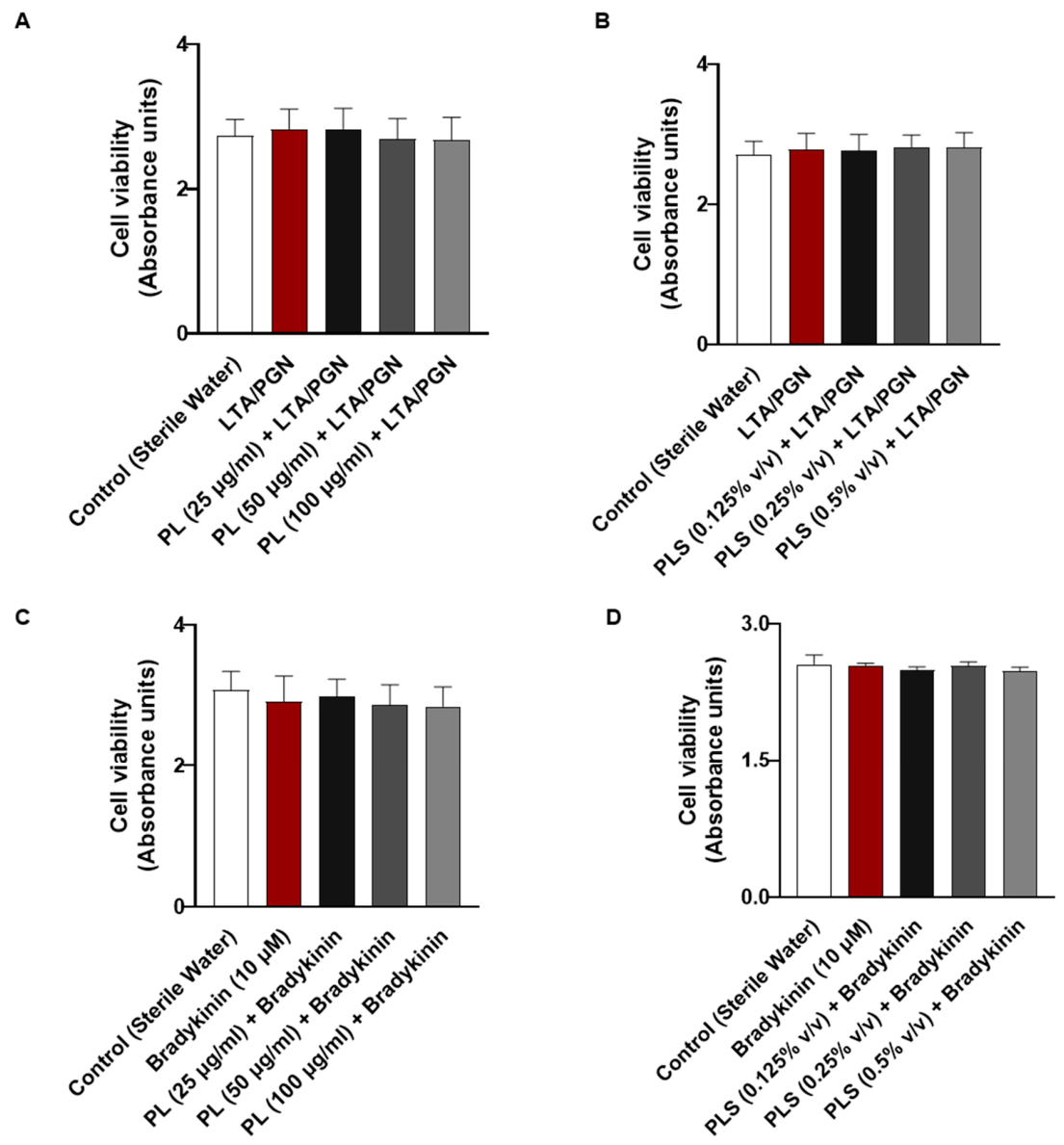
Figure 1. MTS assay showing the effects of PL (25, 50 and 100 µg/mL) and PLS (0.125, 0.25 and 0.5% v/v) on the viability of LTA +PGN-stimulated HTEpiC cells (A,B), and bradykinin-stimulated BEAS-2B cells (C,D).
Scipharm 94 00047 g001
Figure 2. Effects of PL (A) and PLS (B) on the increased production of PGE2 in LTA + PGN-stimulated HTEpiC cells. PL (C) and PLS (D) reduced COX-2 protein levels. ns (not significant), ** p < 0.01, *** p < 0.001, **** p < 0.0001, treatments vs. LTA + PGN stimulation; one-way ANOVA with post hoc Dunnett’s test (n = 3).
Scipharm 94 00047 g002
Figure 3. Effects of PL and PLS on increased production of TNFα (A,B) and IL-6 (C,D) in LTA + PGN-stimulated HTEpiC cells. ** p < 0.01, *** p < 0.001, **** p < 0.0001, treatments vs. LTA + PGN stimulation; one-way ANOVA with post hoc Dunnett’s test (n = 3).
Scipharm 94 00047 g003
Figure 4. Effects of PL (A) and PLS (B) on increased phospho-p65 protein levels in LTA + PGN-stimulated HTEpiC cells. Values are mean ± SEM for at least 3 independent experiments. * p < 0.05, **** p < 0.0001, treatments vs. LTA + PGN stimulation; one-way ANOVA with post hoc Dunnett’s test (n = 3).
Scipharm 94 00047 g004
Figure 5. PL and PLS treatment reduced the production of PGE2 (A,B), TNFα (C,D), and IL-6 (E,F) in bradykinin-stimulated BEAS-2B cells over-expressing TRPV1. Values are mean ± SEM for at least three independent experiments. *** p < 0.001, **** p < 0.0001, treatments vs. bradykinin stimulation; one-way ANOVA with post hoc Dunnett’s test (n = 3).
Scipharm 94 00047 g005
Figure 6. PL (A) and PLS (B) treatment reduced bradykinin-induced increase in intracellular Ca2+ in BEAS-2B cells over-expressing TRPV1. Values are mean ± SEM for at least three independent experiments. * p < 0.05, ** p < 0.01, *** p < 0.001, **** p < 0.0001, treatments vs. bradykinin stimulation; one-way ANOVA with post hoc Dunnett’s test (n = 3).
Scipharm 94 00047 g006
Disclaimer/Publisher’s Note: The statements, opinions and data contained in all publications are solely those of the individual author(s) and contributor(s) and not of MDPI and/or the editor(s). MDPI and/or the editor(s) disclaim responsibility for any injury to people or property resulting from any ideas, methods, instructions or products referred to in the content.