Article

Yield of Multimodal Imaging in Iris Amelanotic Lesions: A Masked Case-Control Study

by
Rachel Shemesh
1,2,
Iris Moroz
1,2,
Meira Neudorfer
1,3 and
Vicktoria Vishnevskia-Dai
1,2,4,*
1
Faculty of Medical & Health Sciences, Tel Aviv University, Tel Aviv 69978, Israel
2
Ocular Oncology, Goldschleger Eye Institute, Sheba Medical Center, Ramat-Gan 5262000, Israel
3
Department of Ophthalmology, Tel Aviv Sourasky Medical Center, Tel Aviv 6423906, Israel
4
The Chaim Sheba Medical Center, Tel Hashomer 52621, Israel
*
Author to whom correspondence should be addressed.
Diseases 2025, 13(4), 99; https://doi.org/10.3390/diseases13040099

Submission received: 16 January 2025 / Revised: 17 March 2025 / Accepted: 25 March 2025 / Published: 28 March 2025

Abstract

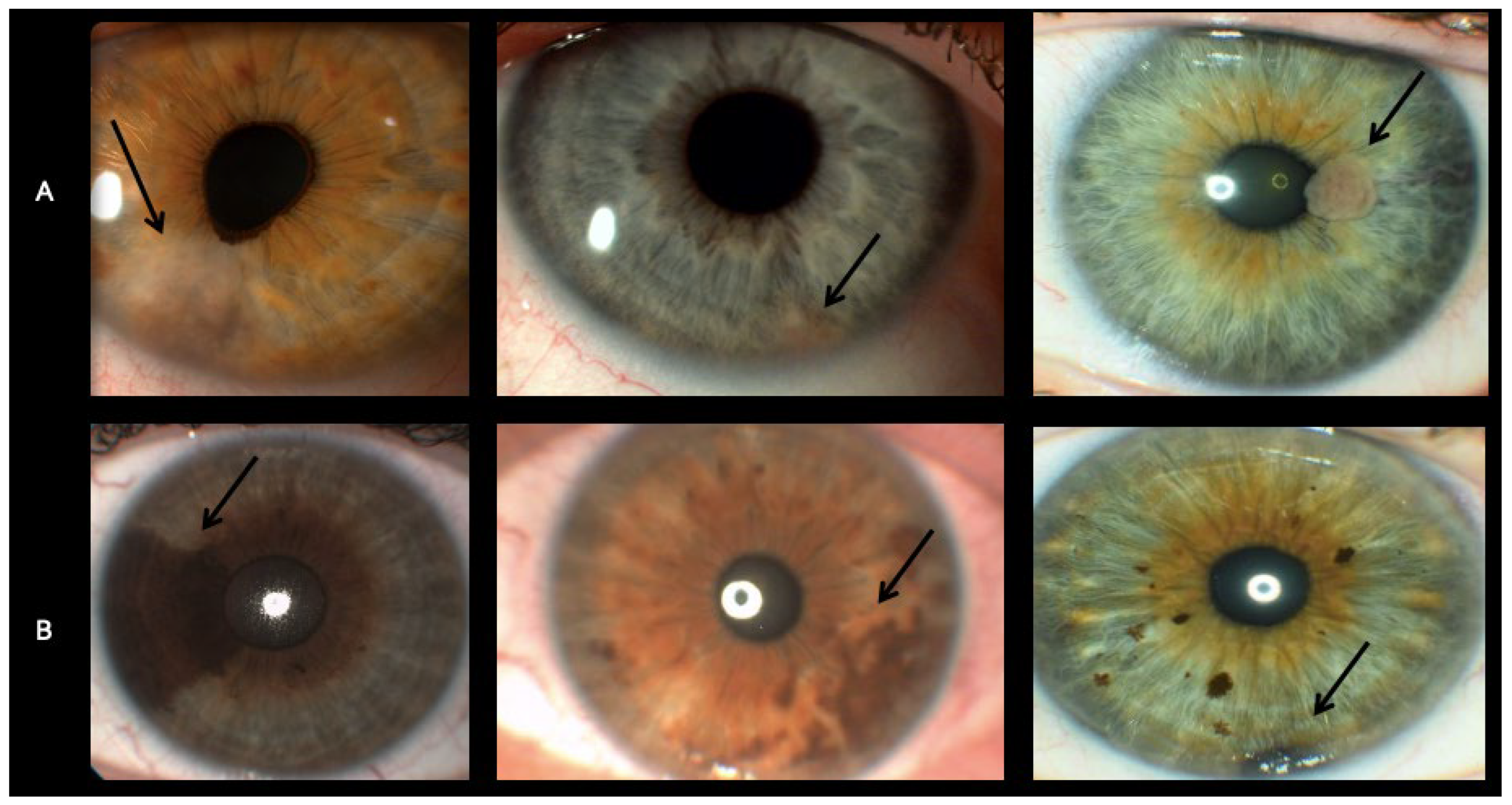
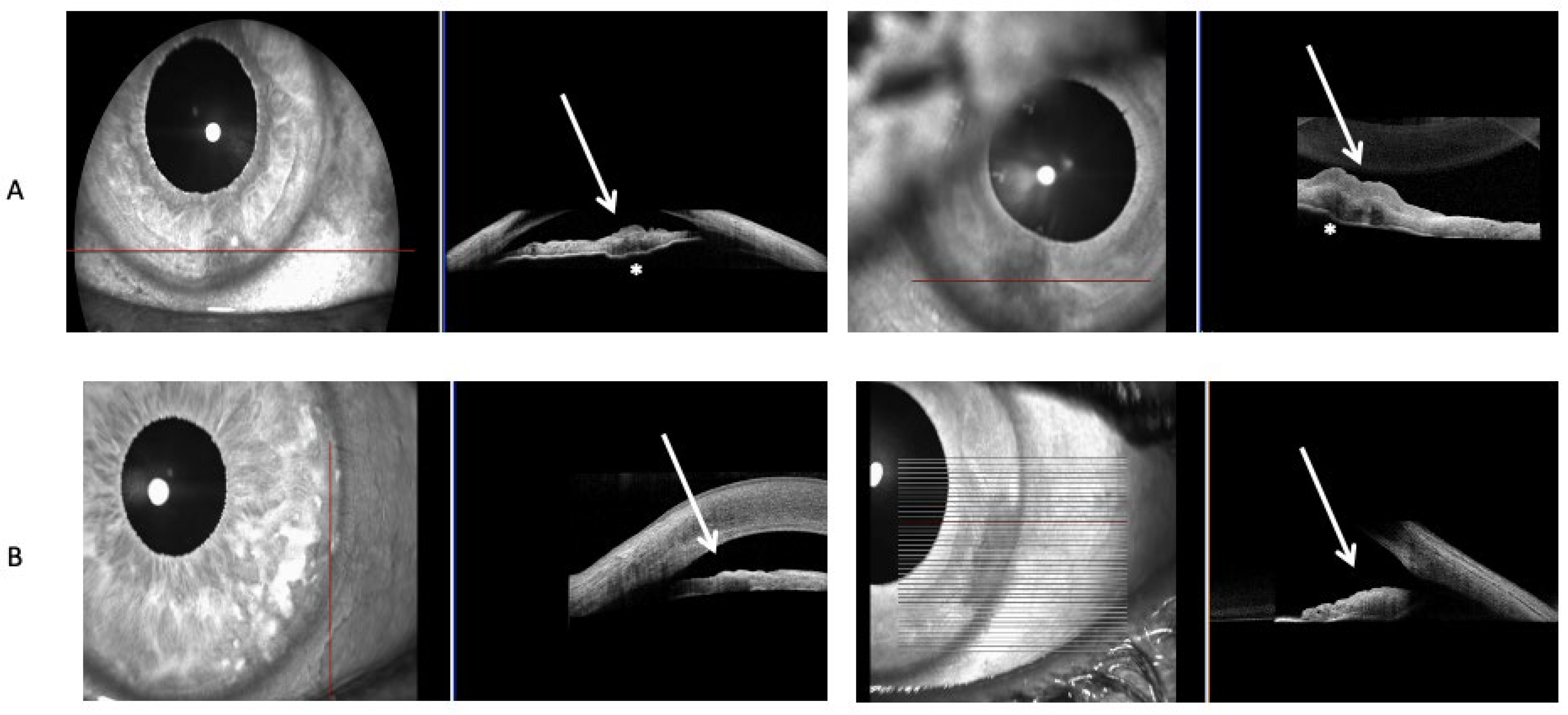
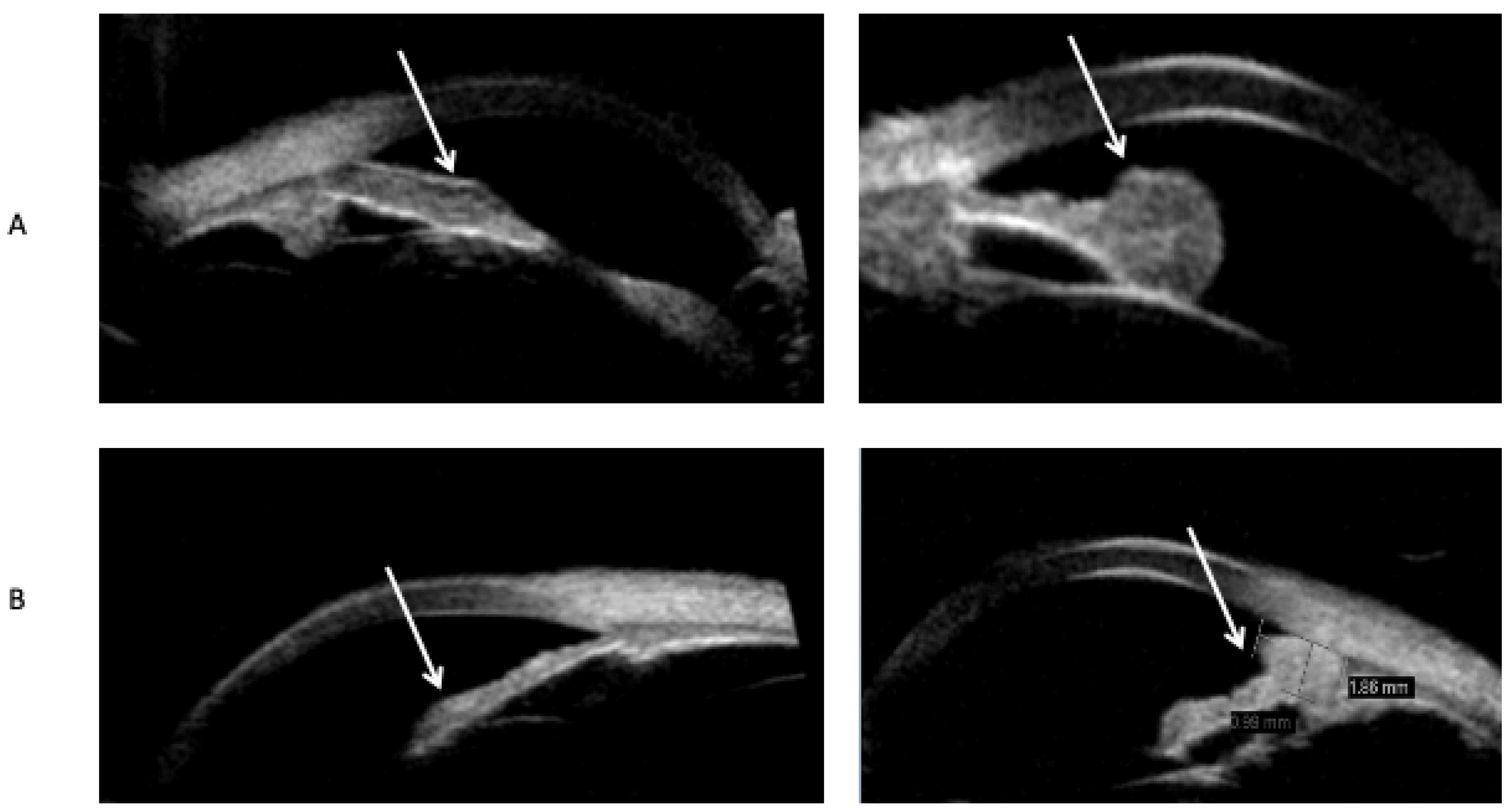
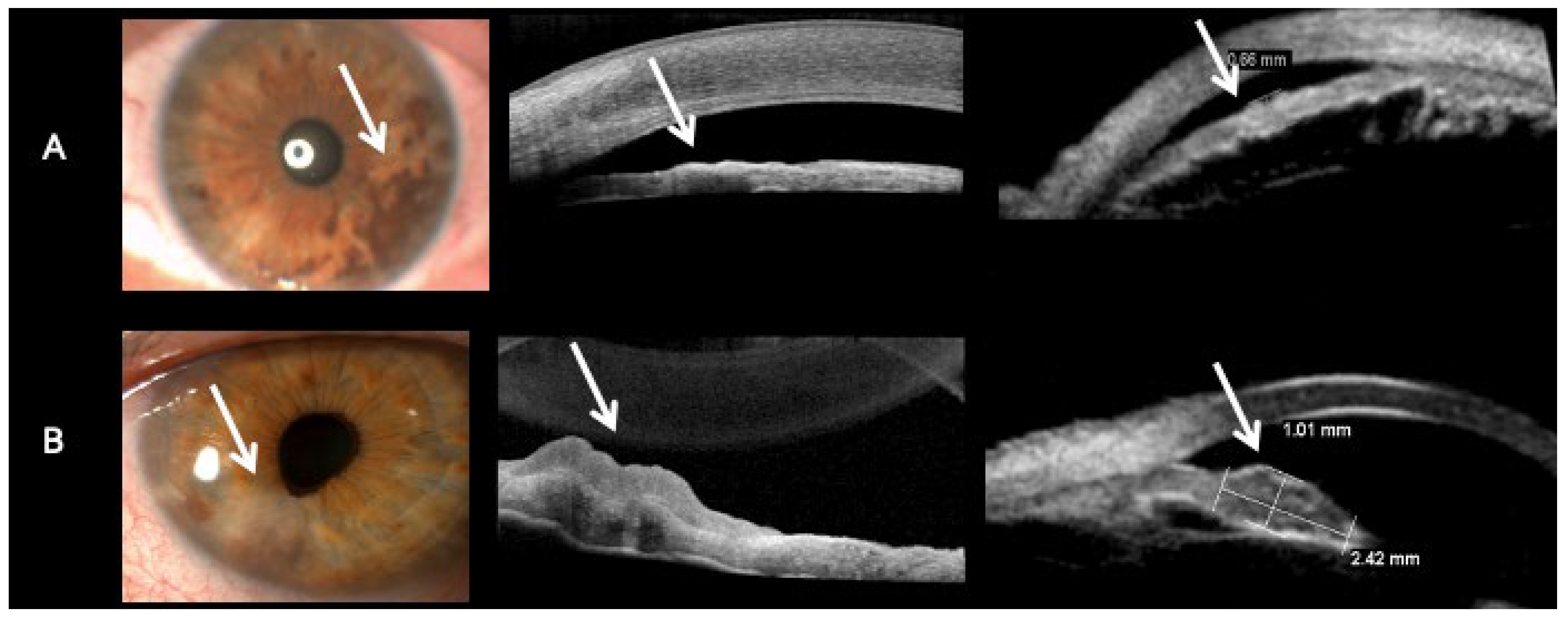
Objectives: To examine the yield of multimodal imaging of iris amelanotic lesions and evaluate the clinical relevance of these imaging techniques. Methods: In this masked case-control study, imaging, including slit lamp photos, ultrasound biomicroscopy (UBM), and anterior segment optical coherence tomography (AS-OCT) scans of patients diagnosed with iris amelanotic lesions were examined. Seven patients diagnosed with an iris amelanotic lesion were matched by gender and age to seven melanotic iris nevi of similar size and location. Two ocular imaging experts assessed the images in a masked manner and identified which lesion was melanotic and which was amelanotic based on their characteristics. Results: From 2010 to 2021, seven patients were diagnosed with amelanotic iris lesions. All were female; the mean (±SD) age at presentation was 46.3 years (±18). These patients were matched with seven female patients with pigmented iris lesions, with a mean (±SD) age of 49.8 years (±20). Hypopigmented lesions were hyporreflective and had minimal shadowing of the iris behind them, and the basement membrane of the iris could be seen on AS-OCT. Hypopigmented lesions could be delineated from the iris stroma on AS-OCT. In contrast, hyperpigmented lesions were hyperreflective, with significant shadowing blocking the basement membrane and iris stroma. Conclusions: AS-OCT is non-touch and provides substantial information about diagnosing amelanotic nevi. It is more widely available and, in many countries, it is performed by technicians, thus freeing the physician’s time and increasing productivity.
Keywords: iris amelanotic lesions; iris melanoma; iris nevi; multimodal imaging; anterior segment optical coherence tomography (AS-OCT); ultrasound biomicroscopy (UBM) iris amelanotic lesions; iris melanoma; iris nevi; multimodal imaging; anterior segment optical coherence tomography (AS-OCT); ultrasound biomicroscopy (UBM)