
Musculoskeletal Sequelae of Post-COVID-19 Syndrome: A Systematic Review

 ,
,  , , and
Abstract
1. Introduction
2. Methods
2.1. Eligibility Criteria
2.2. Exclusion Criteria
2.3. Data Sources and Search Strategies
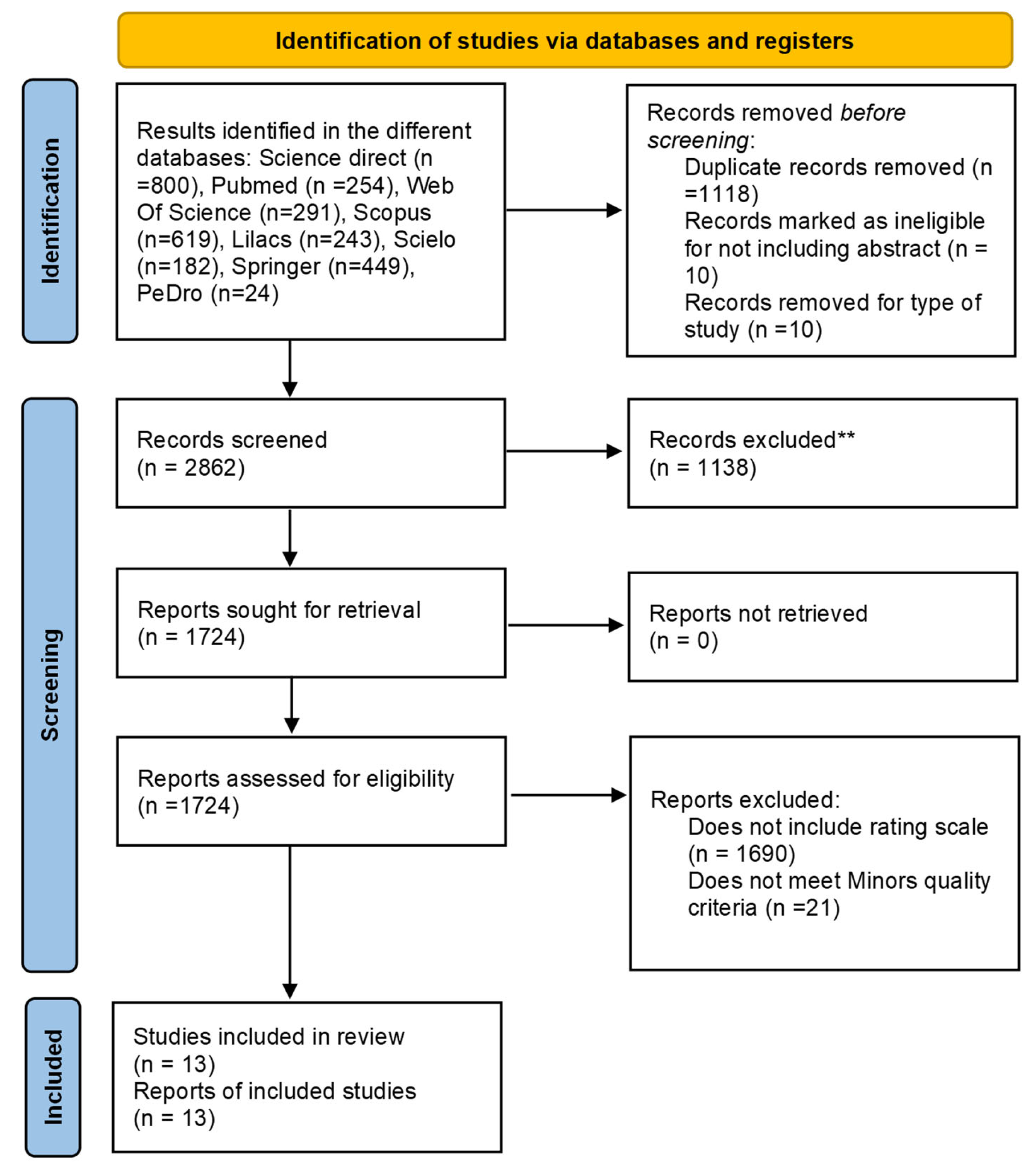
2.4. Study Selection
2.5. Data Collection Process
2.6. Quality Assessment
2.7. Risk of Bias
3. Results
3.1. Characteristics of the Included Studies

| Authors/Year | Country | Sample/ %PCC | Clinical Data | Time of Hospitalization in Days | Sex | and S | Type of Study | Sequelae Assessed | Outcome Assessment Methods | |
|---|---|---|---|---|---|---|---|---|---|---|
| M | F | |||||||||
| Battistella 2022 [22] | Brazil | 801/ 100% PCC | No O2 support (10%), O2 support (48.1%), intubation (41.5%) | Median of 15.2 (IQR 10.3; 21.6) | 52.5% | 47.4% | 55.35 ± 14.58 | Cohorts | Muscle strength, fatigue, HRQoL | Performed on average x = 6.56 (S = 1.58) months after hospital discharge, through a series of tests included in a hospital protocol |
| De Azevedo Vieira 2023 [23] | Brazil | 350/61% PCC | Previous hospitalization (41.7%), Admitted in ICU (21.7%), non-hospitalization (36.6%). | NR | 38.9% | 61.1% | 55.5 | Longitudinal observational | Muscle strength, fatigue, HRQoL | Patients received telemonitoring for 12 weeks, followed by clinical reassessment at a median of 96 days. Persistent symptoms prompted evaluations at six, nine, and twelve months during follow-up. |
| Galluzzo 2023 [24] | Italy | 1846/ 100% PCC | Previous hospitalization no O2 support (11%), Previous hospitalization O2 support (21%), Previous hospitalization NIV, CPAP (19%), Admitted in ICU (6%), non-hospitalization (43%). | Median of 18.9 (IQR 18.6; 19.3) | 53% | 47% | 55.2 ± 14.4 | Cohorts | Muscle strength | Participants reported physical activity levels pre- and post-COVID-19, including resistance training (≥150 min/week over 3 months). They were categorized as inactive, formerly active, or consistently active based on their activity patterns. |
| Ghosn 2023 [25] | France | 737/ 100% PCC | Previous hospitalization O2 support (65%), Previous hospitalization NIV, CPAP (17%), Admitted in ICU (32.8%). In patients with O2 support, are included admitted and not admitted to the ICU. | Median of 9 (IQR 5; 17) | 65% | 35% | 61 ± 8.3 | Cohorts | Muscle Strength, HRQoL | Follow-up was planned with a physician’s visit at month 3, month 6 and month 12 after hospital admission. At the M12-visit, a measure of the functional independence, muscle strength of each limb, health-related quality of life and on their psychological distress. |
| Coscia 2023 [33] | Italy | 506/ 100% PCC | 100% non-hospitalized. 88% are physically active, 12% sedentary people. | 0 | 73% | 27% | 33 ± 14.4 | Cases and controls | Fatigue | The study included active individuals with varying aerobic and anaerobic activity levels who completed a stress test pre-infection, grouped as cross-country athletes, mountain amateurs, ski instructors, or sedentary controls. |
| De Castro 2024 [26] | Brazil | 227/66% PCC | 100% required hospitalization. 33% without decreased lung function; 43% without decreased lung function but with fatigue; 26% with decreased lung function and fatigue | Median of 12.8 (IQR 5; 18.5) | 45% | 55% | 52 ± 15.2 | Cases and Controls. Observational cross-sectional | Muscle strength | After ≅6 to 12 months (median of 202 days) of hospital discharge, patients who were hospitalized in 2020, during the first wave were invited to follow-up assessment. Data from the hospitalization period were obtained from the medical records of each volunteer. |
| De Oliveira 2022 [34] | Brazil | 37/ 100% PCC | 100% non-hospitalized | 0 | 0 | 100% | 52.9 ± 12.8 | Observational cross-sectional | Muscle strength, fatigue, HRQoL | The tests were applied 8.1 ± 3.2 months after the diagnosis of COVID-19, in physically active women according to the IPAQ test. |
| Gunnarsson 2023 [27] | Denmark | 292/ 100% PCC | 50% non-hospitalized; 50% hospitalized | Median 8 (IQR 5–14) | 43.8% | 56.2% | 51.9 ± 15.2 | Observational cross-sectional | Muscle strength | Patients at the post-COVID-19 clinic underwent physical, cognitive, and physician evaluations. Beforehand, they completed nurse-conducted telephone questionnaires, with assessments occurring 217.2 ± 111.5 days post-infection diagnosis. |
| Stavrou 2022 [30] | Greece | 60/66% PCC | 50% hospitalized; 50% without history of or active COVID-19 but with obstructive sleep Apnea Syndrome | NR | 83% | 17% | 51.7 ± 6.5 | Observational cross-sectional | Muscle strength, HRQoL | The tests were carried out in the same laboratory, between 9:30 a.m. and 1:30 p.m., after the evaluation of anthropometric characteristics and body composition, with controlled temperature and humidity. |
| De Lorenzo 2022 [31] | Italy | 97/ 100% PCC | 100% COVID-19 survivors hospitalized during the first pandemic wave who underwent a CT scan and had baseline and 6-month clinical and anthropometric data available for analyses | Median 16.5 (9.9; 28.4) | 79.5% | 20.5% | 60 ± 8.4 | Observational cross-sectional | Muscle mass HRQoL | The 6-month follow-up included an internal medicine assessment, anthropometric measurements, and a CT scan conducted during hospitalization. Follow-up occurred 184.8 days (IQR 176.5–192) post-discharge. |
| Do Amaral 2024 [28] | Brazil | 113/ 100% PCC | 6.7% ICU on admission, 5.3% invasive mechanical ventilation on admission, 93.3% Hospitalized with oxygen support on admission | NR | 46% | 54% | 48 ± 12.8 | Longitudinal observational | Muscle strength, HRQoL | COVID-19 patients were followed up after hospitalization and performed pulmonary function and physical capacity tests 120 days after discharge. Muscle strength was evaluated with dynamometry on day 1 of admission to hospitalization and on day 120 after hospital discharge. |
| Martone 2022 [29] | Italy | 541/ 100% PCC | 39% home, 19% hospitalized-no O2 support, 27% hospitalized-O2 support. 10% Hospital NIV or CPAP, 5% invasive ventilation | Median 16.3 (IQR 14.9; 21.4) | 49% | 51% | 53.1 ± 15.2 | Observational cross-sectional | Muscle strength | Follow-up visits occurred at least 3 months after COVID-19 onset, offering comprehensive medical assessments, including detailed histories and physical exams. Muscle strength was independently assessed by a physiotherapist unaffiliated with the project. |
| Silva, 2024 [32] | Brazil | 50/84% PCC | 100% hospitalized, without the need for admission to an intensive care unit. | NR | 100% | 0 | 52 ± 10.6 | Observational cross-sectional | Muscle strength, HRQoL | There is an important recovery of functional capacity, with less than one-third of population showing an abnormal handgrip strenght and quadriceps strength. After three years of COVID-19 hospitalization only one-third of patients have mechanical and/or diffusion pulmonary changes. However, most of them maintain some damage in muscle strength, and QoL remains deteriorated. |
3.2. Quality Assessment
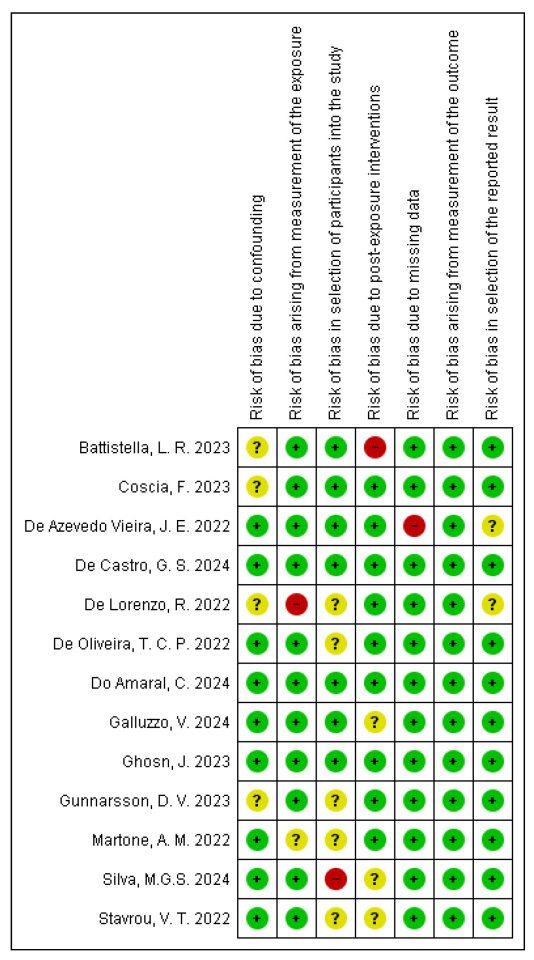
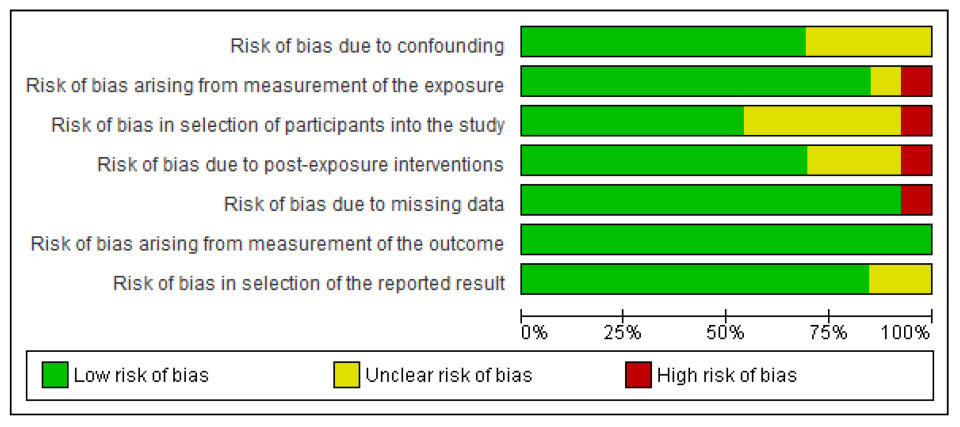
3.3. Risk of Bias
3.4. Characteristics of Comorbidities in Patients with PCS
3.5. Peripheral Muscle Strength Sequelae in Patients with PCS
3.6. Muscle Fatigue in Patients with PCS
3.7. Quality of Life-Related Sequelae in Patients with PCS
4. Discussion
5. Conclusions
Author Contributions
Funding
Data Availability Statement
Acknowledgments
Conflicts of Interest
References
- Tascón, J.; Orozco, J.; Serrato, D.; Sanchez, J. Manifestaciones musculares y articulares en la enfermedad por coronavirus 2019 (COVID-19). Rev. Clínica De Med. De Fam. 2021, 14, 120–121. Available online: https://scielo.isciii.es/pdf/albacete/v14n2/1699-695X-albacete-14-02-120.pdf (accessed on 4 September 2024).
- World Health Organization. WHO Health Emergencies Program. 2024. WHO COVID-19 Dashboard. Available online: https://data.who.int/dashboards/covid19/deaths?n=c (accessed on 2 December 2024).
- Mendoza-Cano, O.; Lugo-Radillo, A.; Bricio-Barrios, J.A.; Quintanilla-Montoya, A.L.; Cuevas-Arellano, H.B.; Uribe-Ramos, J.M.; Solano Barajas, R.; Camacho-delaCruz, A.; Murillo Zamora, E. The burden of COVID-19 in Latin American and Caribbean countries: An analysis based on the Global Burden of Disease Study 2021. Public Health 2024, 236, 1–6. [Google Scholar] [CrossRef]
- Protección M (Ministerio de S y). Colombia Confirma Primera Muerte por Coronavirus. Boletin de Prensa No 086. 2020. Available online: https://www.minsalud.gov.co/Paginas/Colombia-confirma-primera-muerte-por-coronavirus.aspx (accessed on 4 December 2024).
- Ruiz Bravo, A.; Jimenez Valera, M. SARS-CoV-2 y Pandemia de Síndrome Respiratorio Agudo (COVID-19). Available online: https://revistaseug.ugr.es/index.php/ars/article/view/15177/13124 (accessed on 13 September 2024).
- Greve, J.; Brech, G.; Quintana, M.; Soares, A.; Alonso, A. Impacts of COVID-19 on the immune, neuromuscular, and musculoskeletal systems and rehabilitation. Rev. Bras. De Med. Do Esporte 2020, 26, 285–288. [Google Scholar] [CrossRef]
- Tuzun, S.; Keles, A.; Okutan, D.; Yildiran, T.; Palamar, D. Assessment of musculoskeletal pain, fatigue and grip strength in hospitalized patients with COVID-19. Eur. J. Phys. Rehabil. Med. 2021, 57, 653–662. [Google Scholar] [CrossRef]
- Cheval, B.; Sieber, S.; Maltagliati, S.; Millet, G.; Formánek, T.; Chalabaev, A.; Cullati, S.; Boisgointier, M. Muscle strength is associated with COVID-19 hospitalization in adults 50 years of age or older. J. Cachexia Sarcopenia Muscle 2021, 5, 1136–1143. [Google Scholar] [CrossRef]
- Ekiz, T.; Kara, M.; Özçakar, L. Measuring grip strength in COVID-19: A simple way to predict overall frailty/impairment. Heart Lung 2020, 49, 853–854. [Google Scholar] [CrossRef] [PubMed]
- Bellan, M.; Soddu, D.; Balbo, P.; Baricich, A.; Zeppegno, P.; Avanzi, G.; Baldon, G.; Bartolomei, G.; Battaglia, M.; Battistini, S.; et al. Respiratory and psychophysical sequelae among patients with COVID-19 four months after hospital discharge. JAMA Netw. Open 2021, 4, e2036142. [Google Scholar] [CrossRef] [PubMed]
- Montes-Ibarra, M.; Oliveira, C.; Orsso, C.; Landi, F.; Marzetti, E.; Prado, C. The Impact of Long COVID-19 on Muscle Health. Clin. Geriatr. Med. 2022, 38, 545–557. [Google Scholar] [CrossRef]
- Kirwan, R.; McCullough, D.; Butler, T.; Perez de Heredia, F.; Davies, I.G.; Stewart, C. Sarcopenia during COVID-19 lockdown restrictions: Long-term health effects of short-term muscle loss. Geroscience 2020, 42, 1547–1578. [Google Scholar] [CrossRef]
- Ocak, Ö.; Şahin, E. Fatigue in long-COVID; frequency, severity and impact on quality of life. Troia Med. J. 2024, 5, 74–81. [Google Scholar] [CrossRef]
- Carlile, O.; Briggs, A.; Henderson, A.; Butler-Cole, B.; Tazare, J.; Tomlinson, L.; Marks, M.; Jits, M.; Yu, L.; Bates, C.; et al. Impact of long COVID on health-related quality-of-life: An OpenSAFELY population cohort study using patient-reported outcome measures (OpenPROMPT). Lancet Reg. Health Eur. 2024, 40, 100908. [Google Scholar] [CrossRef]
- Wesley, E.; Brown, L.; Fineberg, H. Long Covid Defined. N. Engl. J. Med. 2024, 391, 1746–1753. [Google Scholar] [CrossRef]
- Copley, M.; Kozminski, B.; Gentile, N.; Geyer, R.; Friedly, J. Postacute Sequelae of SARS-CoV-2: Musculoskeletal Conditions and Pain. Phys. Med. Rehabil. Clin. N. Am. 2023, 34, 585–605. [Google Scholar] [CrossRef]
- Arienti, C.; Lazzarini, S.; Andrenelli, E.; Cordani, C.; Negrini, F.; Pollini, E.; Ceravolo, M.; The international Multiprofessional Steering Committee of Cochrane Rehabilitation REH-COVER action. Rehabilitation and COVID-19: Systematic review by Cochrane Rehabilitation. Eur. J. Phys. Rehabil. Med. 2023, 59, 800–818. [Google Scholar] [CrossRef] [PubMed]
- Arienti, C.; Cordani, C.; Lazzarini, S.; Del Furia, M.; Negrini, S.; Kiekens, C. Fatigue, post-exertional malaise and orthostatic intolerance: A map of Cochrane evidence relevant to rehabilitation for people with post COVID-19 condition. Eur. J. Phys. Rehabil. Med. 2022, 58, 857–863. [Google Scholar] [CrossRef] [PubMed]
- Ceravolo, M.; Arienti, C.; de Sire, A.; Andrenelli, E.; Negrini, F.; Lazzarini, S.; Patrini, M.; Negrini, S.; The international Multiprofessional Steering Committee of Cochrane Rehabilitation REH-COVER action. Rehabilitation and COVID-19: The Cochrane rehabilitation 2020 rapid living systematic review. Eur. J. Phys. Rehabil. Med. 2020, 56, 839–845. [Google Scholar] [CrossRef]
- Slim, K.; Nini, E.; Forestier, D.; Kwiatkowski, F.; Panis, Y.; Chipponi, J. Metodological index for non-randomized studies: Minors: Development and validation of a new instrument. ANZ J. Surg. 2003, 73, 712–716. [Google Scholar] [CrossRef]
- Higgins, J.; Morgan, R.; Rooney, A.; Taylor, K.; Thayer, K.; Silva, R.; Lemeris, C.; Akl, E.; Bateson, T.; Berkman, N.; et al. A tool to assess risk of bias in non-randomized follow-up studies of exposure effects (ROBINS-E). Environ. Int. 2024, 186, 108602. [Google Scholar] [CrossRef] [PubMed]
- Battistella, L.; Imamura, M.; De Pretto, L.; Van Cauwenbergh, S.; Ramos, V.; Uchiyama, S.; Matheus, D.; Kuhn, F.; de Oliveira, A.; Naves, G.; et al. Long-term functioning status of COVID-19 survivors: A prospective observational evaluation of a cohort of patients surviving hospitalisation. BMJ Open 2022, 12, e057246. [Google Scholar] [CrossRef]
- De Azevedo Vieira, J.; Mafort, T.; Monnerat, L.; da Cal, M.; Ghetti, A.; Lopes, A. Assessment of short- and long-term functionality and quality of life in patients with post-acute COVID-19 syndrome. J. Back Musculoskelet. Rehabil. 2023, 36, 541–550. [Google Scholar] [CrossRef]
- Galluzzo, V.; Zazzara, M.; Ciciarello, F.; Tosato, M.; Martone, A.; Pais, C.; Savera, G.; Calvani, R.; Picca, A.; Marzetti, E.; et al. Inadequate Physical Activity Is Associated with Worse Physical Function in a Sample of COVID-19 Survivors with Post-Acute Symptoms. J. Clin. Med. 2023, 12, 2517. [Google Scholar] [CrossRef] [PubMed]
- Ghosn, J.; Bachelet, D.; Livrozet, M.; Cervantes-Gonzalez, M.; Poissy, J.; Goehringer, F.; Gandonniere, C.; Maillet, M.; Bani-Sadr, F.; Marton-Blondel, G.; et al. Prevalence of post-acute coronavirus disease 2019 symptoms twelve months after hospitalization in participants retained in follow-up: Analyses stratified by gender from a large prospective cohort. Clin. Microbiol. Infect. 2023, 29, e7–e254. [Google Scholar] [CrossRef]
- De Castro, G.; Gama, L.; Ramos, A.; Gatti da Silva, G.; Teixeira, A.; Cunha-Neto, E.; da Souza, H.; Marie, S.; Talib, L.; Coelho, V.; et al. Post-COVID-19 condition: Systemic inflammation and low functional exercise capacity. Front. Nutr. 2024, 11, 1295026. [Google Scholar] [CrossRef]
- Gunnarsson, D.; Miskowiak, K.; Pedersen, J.; Hansen, H.; Podlekareva, D.; Johnsen, S.; Dall, C. Physical Function and Association with Cognitive Function in Patients in a Post-COVID-19 Clinic—A Cross-Sectional Study. Int. J. Environ. Res. Public Health 2023, 20, 5866. [Google Scholar] [CrossRef]
- Do Amaral, C.; da Luz Goulart, C.; da Silva, B.; Valente, J.; Rezende, A.; Fernandes, E.; Cubas-Vega, N.; Borba, M.; Sampaio, V.; Monteiro, W.; et al. Low handgrip strength is associated with worse functional outcomes in long COVID. Sci. Rep. 2024, 14, 2049. [Google Scholar] [CrossRef]
- Martone, A.; Tosato, M.; Ciciarello, F.; Galluzzo, V.; Zazzara, M.; Pais, C.; Savera, G.; Calvani, R.; Marzeti, E.; Robles, M.; et al. Sarcopenia as potential biological substrate of long COVID-19 syndrome: Prevalence, clinical features, and risk factors. J. Cachexia Sarcopenia Muscle 2022, 13, 1974–1982. [Google Scholar] [CrossRef]
- Stavrou, V.T.; Vavougios, G.; Boutlas, S.; Tourlakopoulos, K.; Papayianni, E.; Astara, K.; Stavrou, I.; Daniil, Z.; Gourgoulianis, K. Physical Fitness Differences, Amenable to Hypoxia-Driven and Sarcopenia Pathophysiology, between Sleep Apnea and COVID-19. Int. J. Environ. Res. Public Health 2022, 19, 669. [Google Scholar] [CrossRef]
- De Lorenzo, R.; Palmisano, A.; Esposito, A.; Gnasso, C.; Nicoletti, V.; Leone, R.; Vignale, D.; Falbo, E.; Ferrante, M.; Cilia, M.; et al. Myosteatosis Significantly Predicts Persistent Dyspnea and Mobility Problems in COVID-19 Survivors. Front. Nutr. 2022, 9, 846901. [Google Scholar] [CrossRef] [PubMed]
- Silva, M.; Carvalho, T.; de Azevedo Vieira, J.; da Costa, L.; da Silva, D.; Barcellos Costa, A.; Soares dos Anjos, H.; Lopes, A. Evaluating performance on the Glittre-ADL test in men with long COVID 3 years after a SARS-CoV-2 infection. J. Exerc. Sci. Fit. 2024, 22, 271–277. [Google Scholar] [CrossRef] [PubMed]
- Coscia, F.; Mancinelli, R.; Gigliotti, P.; Checcaglini, F.; Fanò-Illic, G. Physical Activity Effects on Muscle Fatigue in Sport in Active Adults with Long COVID-19: An Observational Study. Diagnostics 2023, 13, 1336. [Google Scholar] [CrossRef]
- De Oliveira, T.; Gardel, D.; Ghetti, A.; Lopes, A. The Glittre-ADL test in non-hospitalized patients with post-COVID-19 syndrome and its relationship with muscle strength and lung function. Clin. Biomech. 2022, 100, 105797. [Google Scholar] [CrossRef] [PubMed]
- Banić, M.; Makek, M.; Samaržija, M.; Muršić, D.; Boras, Z.; Trkeš, V.; Baričević, D.; Koršić, M.; Basara, L.; Glunčić, T.; et al. Risk factors and severity of functional impairment in long COVID: A single-center experience in Croatia. Croat. Med. J. 2022, 63, 27–35. [Google Scholar] [CrossRef]
- González-Islas, D.; Robles-Hernández, R.; Flores-Cisneros, L.; Orea-Tejeda, A.; Galicia-Amor, S.; Hernández-López, N.; Valdés-Moreno, M.; Sánchez-Santillán, R.; García-Hernández, J.; Castorera-Maldonado, A. Association between muscle quality index and pulmonary function in post-COVID-19 subjects. BMC Pulm. Med. 2023, 23, 442. [Google Scholar] [CrossRef]
- Orea-Tejeda, A.; Robles-Hernández, R.; González-Islas, D.; Jimenez-Gallardo, L.; Gochicoa-Rangel, L.; Castorena-Maldonado, A.; Hernández-Zenteno, R.; Montañez-Orozco, A.; Valderrábano-Salas, B. Dynapenia and sarcopenia in post-COVID-19 syndrome hospitalized patients are associated with severe reduction in pulmonary function. J. Clin. Med. 2023, 12, 6466. [Google Scholar] [CrossRef]
- Rodríguez-Pérez, M.; Sánchez-Herrera, P.; Rodríguez-Ledo, P.; Serrada-Tejeda, S.; García-Bravo, C.; Pérez-de-Heredia-Torres, M. Headaches and dizziness as disabling, persistent symptoms in patients with long COVID–A national multicentre study. J. Clin. Med. 2022, 11, 5904. [Google Scholar] [CrossRef]
- Sahin, M.; Satar, S.; Ergün, P. Predictors of reduced incremental shuttle walk test performance in patients with long post-COVID-19. J. Bras. Pneumol. 2024, 49, e20220438. [Google Scholar] [CrossRef]
- Honchar, O.; Ashcheulova, T. Spontaneous physical functional recovery after hospitalization for COVID-19: Insights from a 1 month follow-up and a model to predict poor trajectory. Front. Med. 2023, 10, 1212678. [Google Scholar] [CrossRef]
- Nielsen, T.; Leth, S.; Pedersen, M.; Harbo, H.; Nielsen, C.; Laursen, C.; Schiøttz-Christensen, B.; Oestergaard, L. Mental fatigue, activities of daily living, sick leave and functional status among patients with long covid: A cross-sectional study. Int. J. Environ. Res. Public Health 2022, 19, 14739. [Google Scholar] [CrossRef] [PubMed]
- Ida, F.; Ferreira, H.; Vasconcelos, A.; Furtado, I.; Fontenele, C.; Pereira, A. Post-COVID-19 syndrome: Persistent symptoms, functional impact, quality of life, return to work, and indirect costs—A prospective case study 12 months after COVID-19 infection. Cad. Saude Publica 2024, 40, 14739. [Google Scholar] [CrossRef] [PubMed]
- Hossain, M.; Hossain, K.; Saunders, K.; Uddin, Z.; Walton, L.; Raigangar, V.; Sakel, M.; Shafin, R.; Hossain, M.; Kabir, M.; et al. Prevalence of Long COVID symptoms in Bangladesh: A prospective Inception Cohort Study of COVID-19 survivors. BMJ Global Health 2021, 6, e006838. [Google Scholar] [CrossRef] [PubMed]
- Jimeno-Almazán, A.; Martínez-Cava, A.; Buendía-Romero, Á.; Franco-López, F.; Sánchez-Agar, J.; Sánchez-Alcaraz, B.; Tufano, J.; Pallarés, J.; Courel-Ibáñez, J. Relationship between the severity of persistent symptoms, physical fitness, and cardiopulmonary function in post-COVID-19 condition. A population-based analysis. Intern. Emerg. Med. 2022, 17, 2199–2208. [Google Scholar] [CrossRef]
- Ferrara, M.; Zarcone, C.; Tassistro, E.; Rebora, P.; Rossi, E.; Luppi, F.; Foti, G.; Squillace, N.; Lettino, M.; Strepparava, M.; et al. Frailty and long-COVID: Is COVID-19 responsible for a transition in frailty status among older adults who survived hospitalization for COVID-19? Aging Clin. Exp. Res. 2023, 35, 455–461. [Google Scholar] [CrossRef]
- Strassmann, A.; Steurer-Stey, C.; Lana, K.; Zoller, M.; Turk, A.; Suter, P.; Puhan, M. Population-based reference values for the 1-min sit-to-stand test. Int. J. Public Health 2013, 58, 949–953. [Google Scholar] [CrossRef]
- Klok, F.; Boon, G.; Barco, S.; Endres, M.; Miranda Geelhoed, J.; Knauss, S.; Rezek, S.; Spruit, M.; Vehreschild, J.; Siegerink, B. The post-COVID-19 functional status scale: A tool to measure functional status over time after COVID-19. Eur. Respir. J. 2020, 56, 2001494. [Google Scholar] [CrossRef] [PubMed]
- Micklewright, D.; Gibson, A.; Gladwell, V.; Al Salman, A. Development and Validity of the Rating-of-Fatigue Scale. Sports Med. 2017, 47, 2375–2393. [Google Scholar] [CrossRef]
- Satar, S.; Şahin, M.; Ergün, P. Health related quality of life and its determinants in COVID-19 patients. Tuberk. Toraks 2023, 71, 250–260. [Google Scholar] [CrossRef] [PubMed]
- Fernández-Gonzalo, S.; Navarra-Ventura, G.; Gomà, G.; Godoy-González, M.; Oliveras, L.; Ridao Sais, N.; Espnal, C.; Fortià, C.; De Haro, C.; Ochagavía, A.; et al. Characterization of postintensive care syndrome in a prospective cohort of survivors of COVID-19 critical illness: A 12-month follow-up study. Can. J. Anesth. 2024, 71, 1282–1301. [Google Scholar] [CrossRef]
- Zalewska, A.; Gałczyk, M. Fatigue and Physical Activity in People after COVID-19 in Poland. J. Pers. Med. 2023, 13, 1369. [Google Scholar] [CrossRef]
- Kowal, M.; Morgiel, E.; Winiarski, S.; Dymarek, R.; Bajer, W.; Madej, M.; Sebastian, A.; Madziarski, M.; Wedel, N.; Proc, K.; et al. Ebbing Strength, Fading Power: Unveiling the Impact of Persistent Fatigue on Muscle Performance in COVID-19 Survivors. Sensors 2024, 24, 1250. [Google Scholar] [CrossRef]
- Gérard, M.; Mahmutovic, M.; Malgras, A.; Michot, N.; Scheyer, N.; Jaussaud, R.; Nguyen-Thi, P.-L.; Quilliot, D. Long-term evolution of malnutrition and loss of muscle strength after COVID-19: A major and neglected component of long COVID-19. Nutrients 2021, 13, 3964. [Google Scholar] [CrossRef] [PubMed]
- Almazán, M.S.; Perez de Inestroza, T.; Blasco, T.; Martinez del Valle, M.; Recio, S.; Aranz, I. Experiencia del paciente afectado por COVID-19 persistente acerca de la utilidad y características de las escalas de valoración clínica de los síntomas derivados de su enfermedad. Med. Gen. 2021, 10, 69–78. [Google Scholar] [CrossRef]
- Ziauddeen, N.; Gurdasani, D.; O’Hara, M.; Hastie, C.; Roderick, P.; Yao, G.; Alwan, N. Characteristics and impact of Long Covid: Findings from an online survey. PLoS ONE 2022, 17, e0264331. [Google Scholar] [CrossRef]
- Bohannon, R. Hand-grip dynamometry predicts future outcomes in aging adults. J. Geriatr. Phys. Ther. 2008, 31, 3–10. [Google Scholar] [CrossRef]
- Peluso, M.; Deeks, S. Early clues regarding the pathogenesis of long-COVID. Trends Immunol. 2022, 43, 268–270. [Google Scholar] [CrossRef] [PubMed]
- Noonong, K.; Chatatikun, M.; Surinkaew, S.; Kotepui, M.; Hossain, R.; Bunluepuech, K.; Noothong, C.; Tedasen, A.; Klangbud, W.; Imai, M.; et al. Mitochondrial oxidative stress, mitochondrial ROS storms in long COVID pathogenesis. Front. Immunol. 2023, 14, 1275001. [Google Scholar] [CrossRef]
- Piotrowicz, K.; Gąsowski, J.; Michel, J.; Veronese, N. Post-COVID-19 acute sarcopenia: Physiopathology and management. Aging Clin. Exp. Res. 2021, 33, 2887–2898. [Google Scholar] [CrossRef]
- Viddeleer, A.; Raaphorst, J.; Min, M.; Beenen, L.; Scheerder, M.; Vlaar, A.; Amsterdam UMCCOVID-19 Biobank Beudel, M.; Hemke, R. Intramuscular adipose tissue at level Th12 is associated with survival in COVID-19. J. Cachexia Sarcopenia Muscle 2021, 12, 823–827. [Google Scholar] [CrossRef]
- Jing, X.; Tan, L.; Fu, H.; Yang, L.; Yang, M. Associations of ADL disability with trunk muscle mass and muscle quality indicators measured by opportunistic chest computed tomography imaging among older inpatients. Front. Med. 2021, 28, 743698. [Google Scholar] [CrossRef]
- Rossi, A.; Gottin, L.; Donadello, K.; Schweiger, V.; Brandimarte, P.; Zamboni, G.; Florio, A.; Boetti, R.; Pavan, G.; Zamboni, M.; et al. Intermuscular adipose tissue as a risk factor for mortality and muscle injury in critically ill patients affected by COVID-19. Front. Physiol. 2021, 12, 651167. [Google Scholar] [CrossRef] [PubMed]
- Da Silveira, A.; Scolari, F.; Saadi, M.; Brahmbhatt, D.; Milani, M.; Milani, J.; Junior, G.; Sartor, I.; Zavaglia, G.; Tonini, M.; et al. Long-term reduced functional capacity and quality of life in hospitalized COVID-19 patients. Front. Med. 2023, 10, 1289454. [Google Scholar] [CrossRef] [PubMed]
- Elkan, M.; Dvir, A.; Zaidenstein, R.; Keller, M.; Kagansky, D.; Hochman, C.; Koren, R. Patient-reported outcome measures after hospitalization during the COVID-19 pandemic: A survey among COVID-19 and non-COVID-19 patients. Int. J. Gen. Med. 2021, 14, 4829–4836. [Google Scholar] [CrossRef]
- Cruz-Jentoft, A.; Bahat, G.; Bauer, J.; Boirie, Y.; Bruyère, O.; Cederholm, T.; Cooper, C.; Landi, F.; Rolland, Y.; Sayer, A.; et al. Sarcopenia: Revised European consensus on definition and diagnosis. Age Ageing 2019, 48, 16–31. [Google Scholar] [CrossRef]
- Ali, M.; Bonna, A.; Sarkar, A.; Islam, M.; Rahman, N. SARS-CoV-2 infection is associated with low back pain: Findings from a community-based case-control study. Int. J. Infect. Dis. 2022, 122, 144–151. [Google Scholar] [CrossRef]
- Enax-Krumova, E.; Forsting, J.; Rohm, M.; Schwenkreis, P.; Tegenthoff, M.; Meyer-Frießem, C.; Schlaffke, L. Quantitative muscle magnetic resonance imaging depicts microstructural abnormalities but no signs of inflammation or dystrophy in post-COVID-19 condition. Eur. J. Neurol. 2023, 30, 970–981. [Google Scholar] [CrossRef]
- Ramírez-Vélez, R.; Legarra-Gorgoñon, G.; Oscoz-Ochandorena, S.; García-Alonso, Y.; García-Alonso, N.; Oteiza, J.; Lorea, A.; Correa-Rodriguez, M.; Izquierdo, M. Reduced muscle strength in patients with long-COVID-19 syndrome is mediated by limb muscle mass. J. Appl. Physiol. 2023, 134, 50–58. [Google Scholar] [CrossRef]
- De Aguiar, G.; Dourado, K.; de Andrade, M.; Júnior, I.; Barros-Neto, J.; Vasconcelos, S.; Petribu, M.; dos Santos, C.; de Moura, M.; Aguiar, C.; et al. Frequency and factors associated with sarcopenia prediction in adult and elderly patients hospitalized for COVID-19. Exp. Gerontol. 2022, 168, 111945. [Google Scholar] [CrossRef] [PubMed]
- Huang, C.; Huang, L.; Wang, Y.; Li, X.; Ren, L.; Gu, X.; Kang, L.; Guo, L.; Liu, M.; Zhou, X.; et al. 6-month consequences of COVID-19 in patients discharged from hospital: A cohort study. Lancet 2023, 401, e21–e33. [Google Scholar] [CrossRef] [PubMed]
- Johnsen, S.; Sattler, S.; Miskowiak, K.; Kunalan, K.; Victor, A.; Pedersen, L.; Andreassen, H.; Jørgensen, B.; Heebøll, H.; Andersern, M.; et al. Descriptive analysis of long COVID sequelae identified in a multidisciplinary clinic serving hospitalised and non-hospitalised patients. ERJ Open Res. 2021, 7, 1–12. [Google Scholar] [CrossRef] [PubMed]
- Vaes, A.; Goërtz, Y.; van Herck, M.; Machado, F.; Meys, R.; Delbressine, J.; Houben-Wilke, S.; Gaffron, S.; Maier, D.; Burtin, C.; et al. Recovery from COVID-19: A sprint or marathon? 6-month follow-up data from online long COVID-19 support group members. ERJ Open Res. 2021, 7, 1–12. [Google Scholar] [CrossRef]
- Herrero-Montes, M.; Fernández-de-las-Peñas, C.; Ferrer-Pargada, D.; Izquierdo-Cuervo, S.; Abascal-Bolado, B.; Valera-Calero, J.A.; Paras-Bravo, P. Association of Kinesiophobia with Catastrophism and Sensitization-Associated Symptoms in COVID-19 Survivors with Post-COVID Pain. Diagnostics 2023, 13, 847. [Google Scholar] [CrossRef]
- Kalak, G.; Jarjou’I, A.; Bohadana, A.; Wild, P.; Rokach, A.; Amiad, N.; Abderlrahman, N.; Arish, N.; Chen-Shuali, C.; Izbicki, G. Prevalence and Persistence of Symptoms in Adult COVID-19 Survivors 3 and 18 Months after Discharge from Hospital or Corona Hotels. J. Clin. Med. 2022, 11, 7413. [Google Scholar] [CrossRef] [PubMed]
- Kaplan, M.; Çelik, M.; Özer, M. Effects of long COVID-19 among young adults in Turkey: A cross-sectional study. J. Acute Dis. 2023, 12, 151–156. [Google Scholar] [CrossRef]
- Neto, R.; Reis, L.; Ferreira, A.; Alexandre, D.; de Almeida, R. Hospital admission is associated with disability and late musculoskeletal pain in individuals with long COVID. Front. Rehabil. Sci. 2023, 4, 1186499. [Google Scholar] [CrossRef]
- Ye, Y.; Xiong, C.; Dai, Y.; Wang, Y.; Yang, X.; Cheng, L.; Hou, C.; Nie, N.; Tang, H.; Ma, X.; et al. Assessment of post-COVID-19 fatigue among female survivors 2 years after hospital discharge: A nested case–control study. BMC Public Health 2023, 23, 2455. [Google Scholar] [CrossRef] [PubMed]
- Chadda, K.; Puthucheary, Z. Persistent inflammation, immunosuppression, and catabolism syndrome (PICS): A review of definitions, potential therapies, and research priorities. Br. J. Anaesth. 2024, 132, 507–518. [Google Scholar] [CrossRef] [PubMed]
- Chadda, K.; Blakey, E.; Davies, T.; Puthucheary, Z. Risk factors, biomarkers, and mechanisms for persistent inflammation, immunosuppression, and catabolism syndrome (PICS): A systematic review and meta-analysis. Br. J. Anaesth. 2024, 133, 538–549. [Google Scholar] [CrossRef]
- Patel, S.; Foster, C.; Patel, K.; Hunter, M.; Isales, C.M.; Fulzele, S. Musculoskeletal Complications in COVID-19: Exploring the Role of Key Biomarkers. Int. J. Mol. Sci. 2025, 26, 8569. [Google Scholar] [CrossRef]
- Fernández-De-las-Peñas, C.; Palacios-Ceña, D.; Gómez-Mayordomo, V.; Palacios-Ceña, M.; Rodríguez-Jiménez, J.; de-La-Llave, A.; Velasco-Arribas, A.; Fuensalida-Novo, S.; Ambiente-Quesada, S.; Guijarro, C.; et al. Fatigue and Dyspnea as Main Persistent Post-COVID-19 Symptoms in Previously Hospitalized Patients: Related Functional Limitations and Disability. Respiration 2022, 101, 132–141. [Google Scholar] [CrossRef]

| P (POPULATION) | I (INTERVENTION /EXPOSITION) | C (COMPARISON) | O (OUTCOMES) |
|---|---|---|---|
| Adult patients with symptoms related to COVID-19 (without another possible explanation) persist for more than 12 weeks. Studies including both hospitalized and non-hospitalized populations were eligible. | Exposure to SARS-CoV-2 infection confirmed by PCR, antigen, or serological testing, followed by the onset of post-COVID-19 musculoskeletal sequelae. | Comparisons were established based on sex, age, and presence of comorbidities, when reported, as well as between symptomatic and asymptomatic individuals or between varying severity levels of the acute infection. | Primary outcomes: muscle strength (handgrip dynamometry, lower limb strength). Secondary outcomes: fatigue (PCFS, FACIT-F, ROF), physical function (SF-36, SF-12, EQ-5D-5L), physical role, and overall quality of life. |
| Author | Year | Researcher 1 | Researcher 2 | Consensus |
|---|---|---|---|---|
| Battistella 2022 [22] | 2022 | 16 | 16 | 16 |
| De Azevedo Vieira 2023 [23] | 2023 | 16 | 16 | 16 |
| Galluzzo 2023 [24] | 2023 | 16 | 16 | 16 |
| Ghosn 2023 [25] | 2023 | 16 | 16 | 16 |
| Coscia 2023 [33] | 2023 | 24 | 24 | 24 |
| De Castro 2024 [26] | 2024 | 24 | 24 | 24 |
| De Oliveira 2022 [34] | 2022 | 24 | 24 | 24 |
| Gunnarsson 2023 [27] | 2023 | 24 | 24 | 24 |
| Stavrou 2022 [30] | 2022 | 23 | 23 | 23 |
| De Lorenzo 2022 [31] | 2022 | 23 | 23 | 23 |
| Do Amaral 2024 [28] | 2024 | 23 | 23 | 23 |
| Martone 2022 [29] | 2022 | 24 | 24 | 24 |
| Silva, 2024 [32] | 2024 | 12 | 12 | 12 |
| Authors | Year | Characteristics of the Comorbidities Post-COVID-19 Syndrome Population. | |||||
|---|---|---|---|---|---|---|---|
| HTN | T2DM | Coronary Heart Disease | BMI | Chronic Kidney Disease | COPD | ||
| Battistella 2022 [22] | 2022 | 57.68% | 36.45% | NR | NR | (31–34) NR | NR |
| De Azevedo Vieira 2023 [23] | 2023 | 48% | 25.10% | 8.60% | † 28.7 Range (25–33) | NR | 6.30% |
| Galluzzo 2023 [24] | 2023 | 33% | 10% | 2% | † 26.5 Range (21.7–31.3) | 2% | 7% |
| Ghosn 2023 [25] | 2023 | 39% | 19% | 16% | NR | 8% | NR |
| Coscia 2023 [33] | 2023 | NR | NR | NR | † 21.8 Range (18–25.5) | NR | NR |
| De Castro 2024 [26] | 2024 | 78% | 88% | 26% | † 29.9 Range (24.9–37.9) | NR | 2% |
| De Oliveira 2022 [34] | 2022 | 45.90% | 27% | 2.70% | † 31.1 Range (23.4–38.5) | NR | 13.50% |
| Gunnarsson 2023 [27] | 2023 | NR | NR | NR | † 27.3 Range (18.3–39.1) | NR | 3.20% |
| Stavrou 2022 [30] | 2022 | NR | NR | NR | † 29.7 Range (25.4–39.5) | NR | NR |
| De Lorenzo 2022 [31] | 2022 | 38.50% | 20.30% | 8.20% | † 29.7 Range (24.8–33.8) | 12.70% | 6.50% |
| Do Amaral 2024 [28] | 2024 | 34.50% | 23.90% | NR | † 33.2 Range (31.9–34.4) | NR | 7.40% |
| Martone 2022 [29] | 2022 | 29% | 8% | 2% | † 25.7 Range (21.1–30) | 8% | 8% |
| Silva 2024 [32] | 2024 | 38.1% | 23.8% | NR | † 30.1 Range (24.7–35.4) | NR | NR |
| Authors | Year | Strength Sequelae | Measurement Scale |
|---|---|---|---|
| Battistella 2022 [22] | 2022 | † 19 Rep. | 1MSTST |
| † 21.22 Kgf ± 12.70 | Manual dynamometry | ||
| De Azevedo Vieira 2023 [23] | 2023 | † 25.45 kgf ± 0.64 | Manual dynamometry |
| Galluzzo 2023 [24] | 2023 | † 24.8 Rep. | 1MSTST |
| † 27.85 Kgf ± 0.44 | Manual dynamometry | ||
| De Castro 2024 [26] | 2024 | † 15.6 Rep. | 1MSTST |
| † 23.28 kgf ± 20.96 | Manual dynamometry | ||
| De Oliveira 2022 [34] | 2022 | † 31 kgf ± 3.8 | Manual dynamometry |
| † 24.9 kgf ± 9 | Lower limb dynamometry | ||
| Gunnarsson 2023 [27] | 2023 | † 14.3 ± 6 Rep. | 30SSTST |
| † 33.0 ± 12 | Manual dynamometry | ||
| Stavrou 2022 [30] | 2022 | † 39.2 ± 10.3 | Manual dynamometry |
| Do Amaral 2024 [28] | 2024 | † 30.2 kgf ± 6.2 | Manual dynamometry |
| Martone 2022 [29] | 2022 | † 26.2 kgf ± 8 | Manual dynamometry |
| † 26.2 ± 8.9 Rep. | 1MSTST | ||
| Silva 2024 [32] | 2024 | † 25.3 Kgf ± 4.1 | Manual dynamometry |
| † 34.1 Kgf ± 1.5 | Quadriceps dynamometry |
| Authors | Year | Fatigue Sequelae | Measurement Scale |
|---|---|---|---|
| Battistella 2023 [22] | 2023 | 70.86% of the population with limitations in ABVD, 5.62% are severe | PCFS |
| De Azevedo Vieira 2022 [23,33] | 2022 | Median of 28 (20–36) | FACIT-F |
| Coscia 2023 [33] | 2023 | It had a score of 7 at 6 months post-COVID-19; at 12 months, it decreased between 4 and 5 points for the active group and between 3.6 and 3.9 for the sedentary group | ROF |
| De Oliveira 2022 [34] | 2022 | 2.7% severe functional limitation, 37.9% moderate limitation, 32.4% little limitation, 27% no limitation | PCFS |
| Soares 2024 [32] | 2024 | Total time observed (min) 3.3 (3.1–4.1) Total time predicted (min) 3 (2.7–3.4) | TGlittre-ADL Test |
| Gunnarsson 2023 [27] | 2023 | 73% of patients reported a score between 2 and 3 (slight to moderate) | PCFS |
| Authors | Year | Health-Related Quality of Life | Measuring Scale | |
|---|---|---|---|---|
| Battistella 2022 [22] | 2022 | 0 | 29% | EQ-5D-5L |
| 1 | 39.60% | |||
| 2 | 17.00% | |||
| 3 | 8.62% | |||
| 4 | 5.62% | |||
| De Azevedo Vieira 2023 [23] | 2023 | Physical function | 50 ± 25.1 | SF-36 |
| Physical role | 30.8 ± 15.5 | |||
| Body pain | 40.1 ± 17.2 | |||
| General health perception | 45.9 ± 17.5 | |||
| Vitality | 42.3 ± 18.6 | |||
| Social function | 53 ± 23.1 | |||
| Limitations in the emotional role | 38.2 ± 24.3 | |||
| Mental health | 56 ± 17.4 | |||
| Ghosn 2023 [25] | 2023 | Physical component | 49% | SF-12 |
| Mental component | 31% | |||
| De Oliveira 2022 [34] | 2022 | Physical function | † 35 (17.5–50) | SF-36 |
| Physical role | † 0 (0–25) | |||
| Body pain | † 40 (20–62) | |||
| General health perception | † 45.6 (30–70) | |||
| Vitality | † 48.6 (22.5–70) | |||
| Social function | † 56.21 (25–75) | |||
| Limitations in the emotional role | † 27.7 (0–91.7) | |||
| Mental health | † 63.3 (40–81) | |||
| De Lorenzo 2022 [31] | 2022 | Mobility | 40% with alteration | EQ-5D |
| Self-care | 20% with alteration | |||
| Usual activities | 30% with alteration | |||
| Body pain | 48% with presence | |||
| Anxiety/depression | 30% with presence | |||
| Dyspnea | 35% with presence | |||
| Silva 2024 [32] | 2024 | Symptoms: Complaints of respiratory problems | Symptoms score 0.121 | SGRQ |
| Activity: Activities that cause dyspnea | Activity scores 0.327 | |||
| Impacts: Interference with activities of daily living | Impacts scores 0.212 Total scores 0.266 | |||
Disclaimer/Publisher’s Note: The statements, opinions and data contained in all publications are solely those of the individual author(s) and contributor(s) and not of MDPI and/or the editor(s). MDPI and/or the editor(s) disclaim responsibility for any injury to people or property resulting from any ideas, methods, instructions or products referred to in the content. |
© 2025 by the authors. Licensee MDPI, Basel, Switzerland. This article is an open access article distributed under the terms and conditions of the Creative Commons Attribution (CC BY) license (https://creativecommons.org/licenses/by/4.0/).
Share and Cite
Zuñiga-Jimenez, C.T.; Rojas-Esguerra, D.F.; Muñoz-Martinez, A.P.; Mendoza-Guzman, D.C.; Daza-Arana, J.E. Musculoskeletal Sequelae of Post-COVID-19 Syndrome: A Systematic Review. Diseases 2025, 13, 391. https://doi.org/10.3390/diseases13120391
Zuñiga-Jimenez CT, Rojas-Esguerra DF, Muñoz-Martinez AP, Mendoza-Guzman DC, Daza-Arana JE. Musculoskeletal Sequelae of Post-COVID-19 Syndrome: A Systematic Review. Diseases. 2025; 13(12):391. https://doi.org/10.3390/diseases13120391
Chicago/Turabian StyleZuñiga-Jimenez, Claudia Tatiana, Diego Fernando Rojas-Esguerra, Aida Paola Muñoz-Martinez, Diana Carolina Mendoza-Guzman, and Jorge Enrique Daza-Arana. 2025. "Musculoskeletal Sequelae of Post-COVID-19 Syndrome: A Systematic Review" Diseases 13, no. 12: 391. https://doi.org/10.3390/diseases13120391
APA StyleZuñiga-Jimenez, C. T., Rojas-Esguerra, D. F., Muñoz-Martinez, A. P., Mendoza-Guzman, D. C., & Daza-Arana, J. E. (2025). Musculoskeletal Sequelae of Post-COVID-19 Syndrome: A Systematic Review. Diseases, 13(12), 391. https://doi.org/10.3390/diseases13120391